
Short films have always been the training ground for young directors who are starting their independent film career. Conventionally, all films that last less than 40 minutes are considered short films, according to the Academy who awards the Oscar.

Directors almost always start by producing their own short films alone or with a small funding from relatives, friends or associations. Even Martin Scorsese,for example, started autoproducendo short film The Big Shave,which brought him to the attention of some manufacturers to make his first feature film.
David Lynch has a very long production of extraordinary shorts both at the beginning of his career and afterwards. For David Lynch, who is a director who loves to experiment from painting to TV series to video clips, short film is one of his favorite forms of expression.

There history of cinema was born with short films. Thomas Edison He was one of the first to propose them with the individual vision model of the kinethoscope. Following the invention of the Cinematograph by the Lumière brothers, all films screened in public in collective mode were short films. They also lasted less than a minute.
The duration limit of the film reels was in fact a few minutes. Making feature films was a complicated and expensive business, difficult to achieve with the post-production technologies of that era.
Many of the short films shot by the operators that the Lumière brothers sent all over the world were short travel documentaries, formed from a single take, without any editing.
Many production companies in the silent era produced only short films. The film show was in fact conceived as a package that included a main film and a short film, which was usually shown before the feature film.
Der Führer’s Face (1943)

Donald Duck dreams he is a worker in Nazi Germany, forced to toil endlessly in a munitions factory under the oppressive thumb of fascist overseers. He must salute Hitler’s portrait at every turn and is denied even the smallest comfort. The nightmare grows increasingly frantic until Donald awakens in his American bedroom, overwhelmed with gratitude for the freedoms he enjoys.
This Academy Award-winning Disney short is a remarkable wartime propaganda piece that manages to be both genuinely funny and sharply critical. Director Jack Kinney uses Donald Duck’s everyman frustration to satirize the dehumanizing machinery of totalitarianism with surprising bite. Rather than simply demonizing the enemy through fear, the film employs absurdist humor and psychological horror to expose fascism’s soul-crushing repetition. Decades later, it stands as a fascinating historical document and a demonstration of animation’s power as a political tool.
Helezon Akışkan
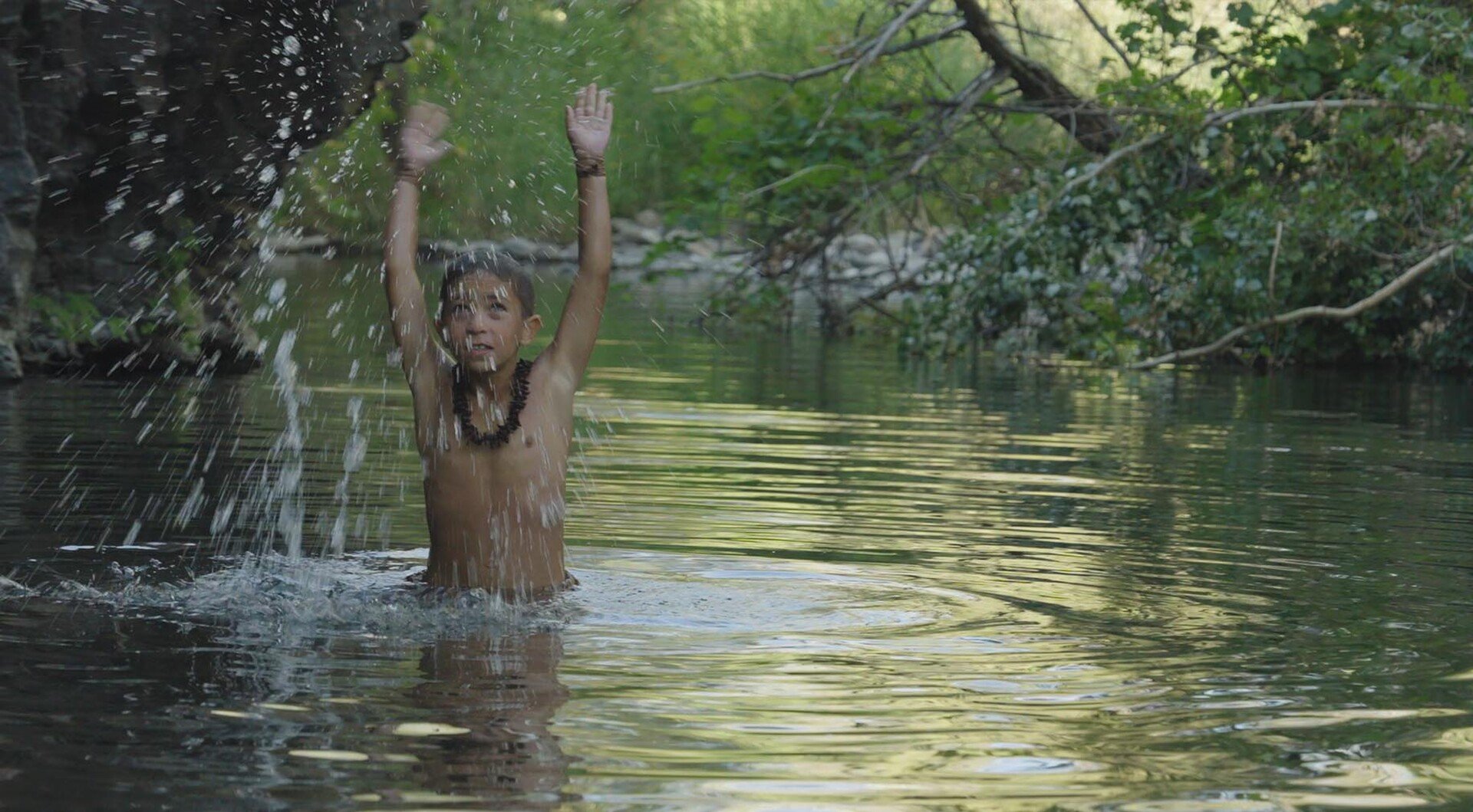
Drama, short film, by Cihan Abdal, Türkiye, 2025.
A woman and a child living in ancient times, separated from their tribe, are looking for water. After the woman faints, the boy begins to search alone. The boy eventually finds water, but when he returns he will encounter a bad situation.
The purpose of the Helezon short film series is to remind humanity, which embraces the realities of the modern world and turns its back on nature, of its essence. It is a four-film series based on the premise that 'the water, fire, earth, and air that humans seek in nature are within themselves.' 'Helezon Akışkan' tells the story of water, with the main character's behaviors paralleling those of water.
Director Biography - Cihan Abdal
After graduating from Gazi University and starting work at TRT, Cihan Abdal joined the camera crew for Turkey's 2024 Oscar submission, the TRT co-production 'Hayat' (directed by Zeki Demirkubuz). He later worked as an editor on the TRT co-productions 'Gülizar' (directed by Belkıs Bayrak) and 'Kanto' (directed by Ensar Altay).
WITHOUT DIALOGUES
Famous Short Films
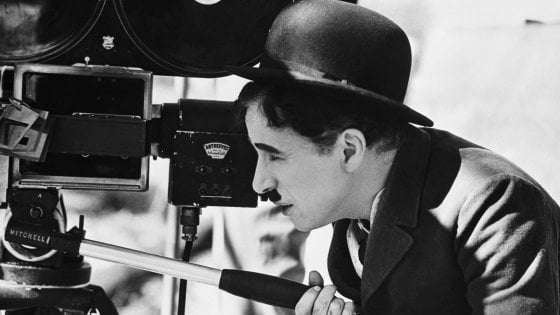
Charlie Chaplin started his career exclusively making The Famous Comic Shorts featuring the character of Charlot. The comic short was one of the most famous and popular shows of the silent era. Comedians Laurel and Hardy also made shorts almost exclusively until the late 1930s, when production shifted completely to feature films.
Other popular shorts of the time were Joe McDoakes’ films and animated shorts from studios such as Walt Disney Productions and Warner Bros. Cartoons. By the mid-1950s the short film had completely disappeared, while the animated short films will continue to be famous and popular.
Animated Short Films
In fact, short films were also the preferred format for television to broadcast animated films. Short films such as those of Hanna Barbera and the Pink Panther produced by large studios continued to be distributed on television for decades, with new episodes up to the 1980s and reruns during the 1990s.
Today the most important production company that continues the tradition of short film is Pixar. In 2007 Pixar was acquired by Disney which continues to produce live-action shorts such as theseries Muppets and other shorts made for the YouTube channel.
Short Films in Festivals
Short Films have often been relegated to the Festival circuit. Almost all the most prestigious and important festivals have a category reserved for short films, including the Academy Award. In recent years there has been an increasing importance of short films in the Festival circuit, thanks to digital channels that allow you to watch short films and films outside the traditional length formats.
Indeed, since the 2000s, the supremacy of feature film as a standard format is losing importance. Many digital platforms have emerged that place great emphasis on distribution of short films.
Discover Short Films on Indiecinema
Amateur Short Films
Another huge phenomenon is the production of amateur shorts, facilitated by new digital technologies and the mass use of smartphones that now produce videos of the highest quality. There is no doubt that there are some shorts made with a smartphone that are superior to professional shorts made by a studio with a big budget.
It is a clear example of how the ideas, emotions, sensitivity and worldview of an amateur short film can sometimes be much more interesting than a professional film with famous actors. Packaging is not essential: with the development of technology that democratizes the art of cinema this is becoming more and more evident.
The big studios, however, are now securing a monopoly through the distribution, marketing and public loyalty. There digital technology is in fact,not enough to convince the public to watch a short film or an independent film.
Through complex strategies of homologation of preferences public. Piloting the mass audience remains a fairly simple operation when there is no widespread critical consciousness.
Arthouse Short Films
There is no doubt that the author short film is one of the most made films by the great masters of cinema at the beginning of their career. From this point of view, one of the reasons is that the author’s short film allows you to experiment beyond the feature film, more expensive and difficult to make.
The short film is the ideal territory for experimental and arthouse cinema, to build new avant-garde forms. In the world of auteur short films we find films with a strong visual component, devoid of a traditional narrative, sometimes devoid of dialogue.
Even the format of the short film itself forces directors to invent new things, to seek the cinematic synthesis of events, often with a symbolic and metaphorical value.

The list of the best short films to watch, absolutely
Here is a curated selection of films that perfectly embody the power and versatility of the short form: a journey through works that have broken conventions, touched the soul with animation, documented the unspeakable, and captured fragments of life with ruthless clarity. These are short films you absolutely must watch, masterpieces that prove that sometimes, the shortest stories are the ones that stay with us the longest.
Hope in Vein
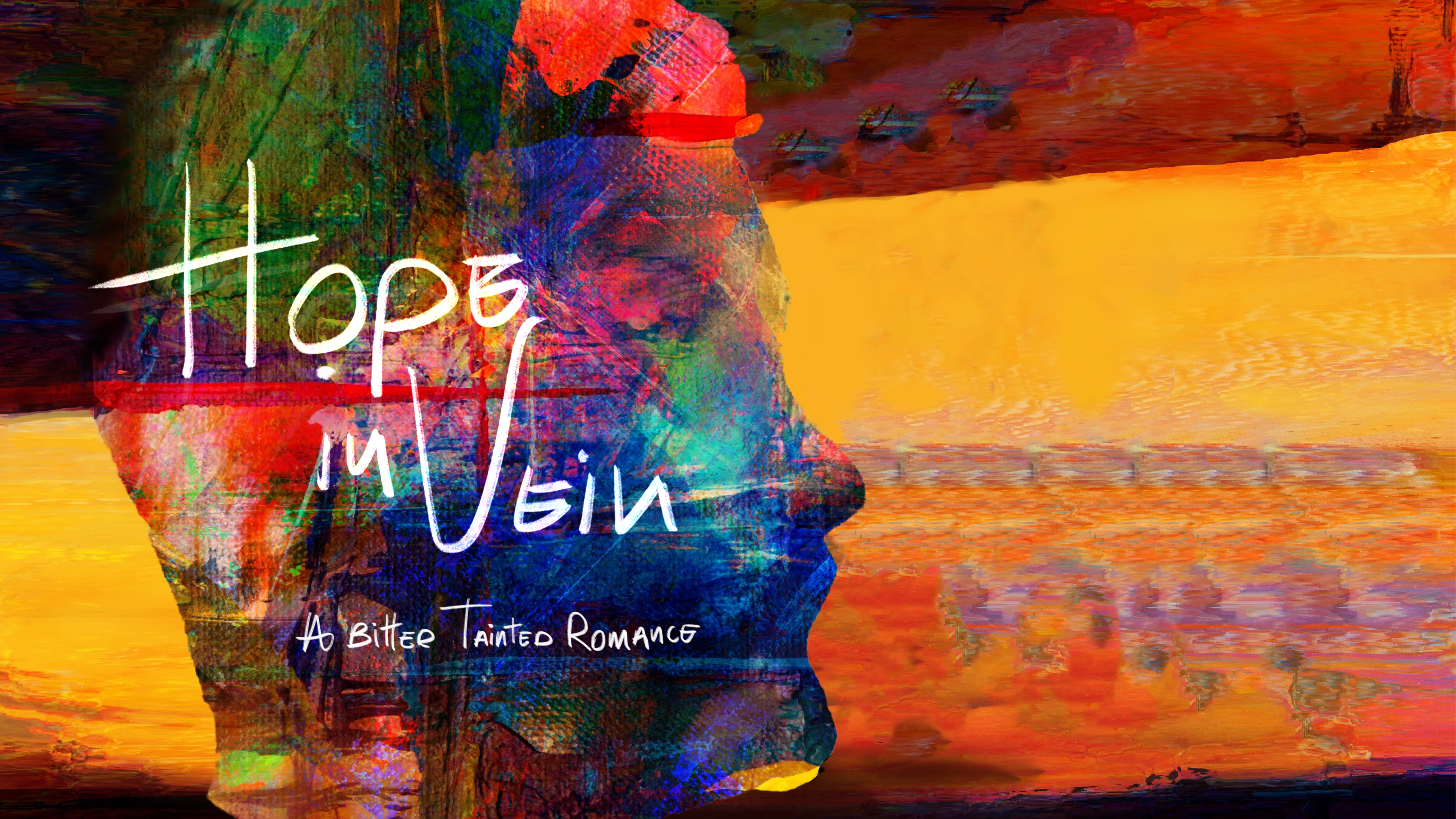
Drama, romantic, by Marc-Antoine Turcotte, Canada, 2022.
The film follows the journey of Matt Davis (Joshua Bilbao), a young man dealing with the profound stigma associated with living with HIV after contracting the virus from his longtime partner. “Hope in Vein” delves into the layers of emotions and challenges that emerge following Matt's diagnosis, highlighting the social and physical repercussions he encounters as he navigates his new condition. Seamlessly weaving together the complexities of Matt's experiences, the film offers viewers an intimate and touching perspective.
“I had heard about it; distant stories of anguish. It seemed that medical discoveries had faded the discussion. You will soon find that stigma continues to affect progress. Every experience is different, yet we can all feel the same contamination," says director Turcotte. "I approached this film with the desire to open up the conversation and lighten it up a little." Through the disparate obstacles that constantly remind Matt of stigma she faces, Hope in Vein explores the theme of forgiveness as a powerful channel for rekindling hope. With a talented cast and a heartfelt script, the film presents a compelling narrative that will leave audiences captivated and inspired.
LANGUAGE: English
SUBTITLES: Spanish, French, German, Portuguese
Un Chien Andalou

Born from an encounter between two dreams—Luis Buñuel’s of an eye sliced by a razor and Salvador Dalí’s of ants swarming from a hand—Un Chien Andalou is a sixteen-minute assault on narrative logic. Devoid of a linear plot, the film proceeds through free association and shocking images, from a man dragging pianos laden with rotting donkeys to a hand pierced by emerging insects, defying any rational interpretation.
This short film is not just a movie; it’s a manifesto. The iconic and brutal opening sequence, in which an eye is slit, is a programmatic statement: to enter this new cinematic world, the viewer must abandon their conventional gaze, they must accept being wounded in their perception. Buñuel and Dalí, following the strict rule of rejecting any image that could have a rational or cultural explanation, use the short form to unleash the pure power of the unconscious, of the psychic automatism theorized by the Surrealists. It is an act of violent liberation that demonstrates how the short film can be not only a vehicle for stories, but a tool to radically alter consciousness.
Meshes of the Afternoon

A woman, played by director Maya Deren herself, returns home, dozes off in an armchair, and sinks into a labyrinthine dream. Within this dream, she obsessively relives the same sequence of events, but each time with increasingly sinister variations. Everyday objects—a key, a knife, a telephone—become charged with menace, while the protagonist duplicates, triplicates, pursued by a mysterious hooded figure with the face of a mirror.
If Un Chien Andalou was an external attack, a surrealist explosion directed against society, Meshes of the Afternoon represents a crucial evolution: the implosion of the avant-garde into interiority. Maya Deren, the godmother of American experimental cinema, uses the short film to map the psyche, transforming the domestic space into a theater of the unconscious. The film becomes a “poetic psychodrama,” where the circular narrative and repetition are not meant to shock, but to explore themes like identity, duality, and existential angst from a exquisitely feminine perspective. Deren domesticates surrealism, brings it within the walls of the home, and proves that the short form is the perfect tool for the deepest and most personal of introspections.
The Kindest Man in the World
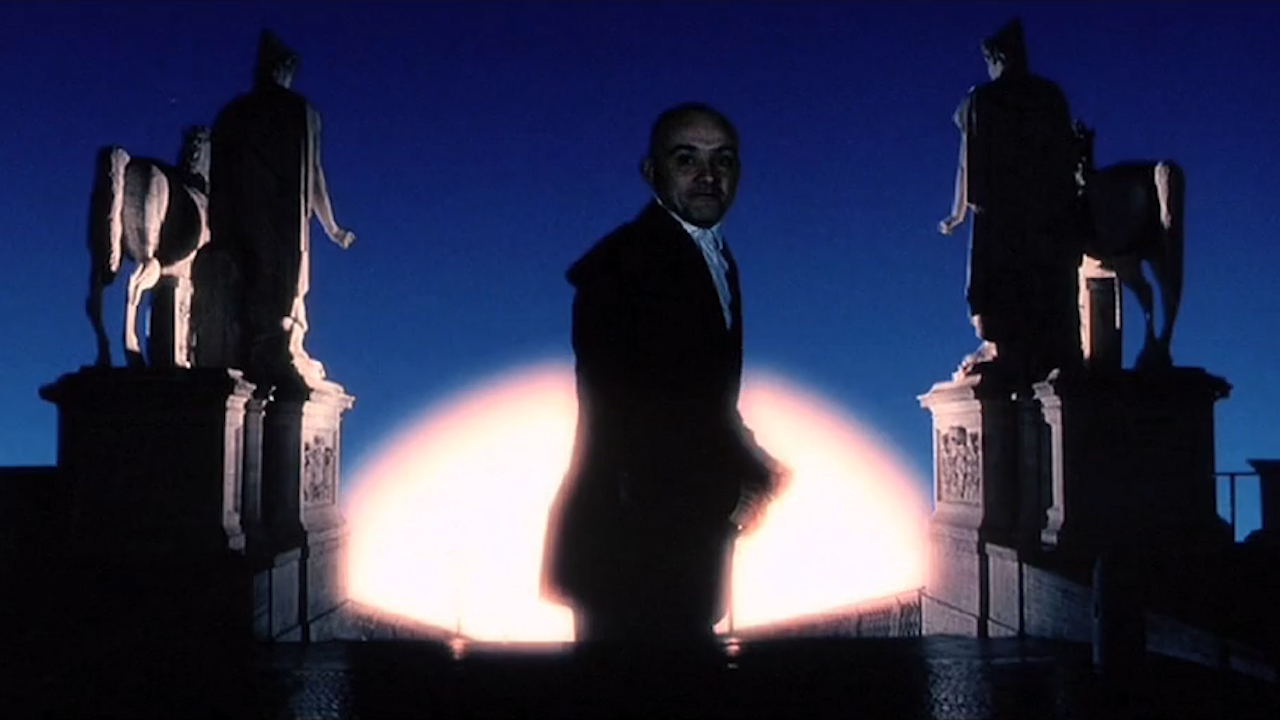
Short film, action, by Edo Tagliavini, Italy, 2003.
Danilo Conti, named 'the kindest man in the world', receives as a reward a very powerful bomb that is attached to his wrist. He only has eight minutes to get to a point in the city and defuse the bomb before it goes off. Incredulous, he starts his race but along the way, despite the inexorable passing of the seconds, his instinct as the best man in the world 'obliges' him to help people who are in difficulty. but the more time passes, the more something begins to change in Danilo and, less than a minute from being blown up, he understands that if he wants to survive ...
LANGUAGE: Italian
SUBTITLES: English
A vision curated by a filmmaker, not an algorithm
In this video I explain our vision
La Jetée

In a subterranean, post-apocalyptic Paris, a man is haunted by an image from his childhood: the face of a woman and the death of a man on the pier (“la jetée”) of Orly Airport. This memory, so powerful, makes him the ideal candidate for a time travel experiment. He is sent to the past, where he finds and falls in love with that woman, in a temporal loop destined to close tragically on that very same pier.
Chris Marker calls his work a “photo-roman,” a photo-novel. And indeed, La Jetée is composed almost entirely of still photographs, a montage of frozen moments accompanied by a narrator’s voice. This stylistic choice is not a whim, but the beating heart of the film. Marker deactivates the primary mechanism of cinema—the illusion of movement—to force us to reflect on the very nature of time and memory. Memory is not a continuous flow, but a collection of moments, of photographs imprinted on the mind. The film’s form is a perfect metaphor for its content. In this masterpiece of philosophical science fiction, the short film becomes the ideal laboratory for a radical experiment on cinematic language, proving that the most powerful emotion can arise not from what is shown, but from what is denied.
Luxo Jr.

In a dark room, a large desk lamp, Luxo Sr., watches his small and hyperactive offspring, Luxo Jr., play with a colorful ball. The little one’s enthusiasm is such that he accidentally deflates his toy. After a moment of despair, Luxo Jr. disappears and reappears triumphantly, pushing a much larger beach ball, under the resigned and affectionate gaze of his parent.
These two minutes changed the history of animation. Born as a technical demo to showcase the capabilities of the Pixar Image Computer, particularly its handling of self-shadowing, Luxo Jr. became Pixar’s foundational myth. John Lasseter, by applying the classic principles of Disney animation to inanimate geometric shapes, performed a miracle: he gave a soul to two lamps. The short film demonstrated that computer graphics were not just a cold, technical tool, but a new medium for telling stories and conveying emotions. It is the birth certificate of the Pixar philosophy: technology at the service of character and heart.
Cracolice
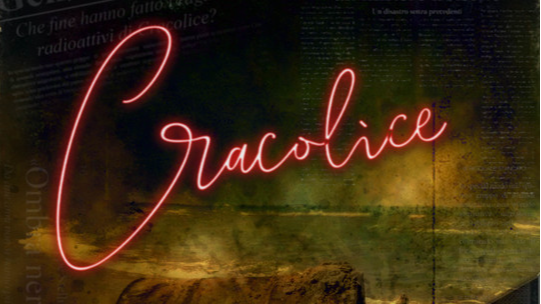
Documentary, by Fabio Serpa, Italy, 2020.
Calabria, late 1980s and first half of the 1990s. Cracolice, a seaside village in the Tyrrhenian Sea, is sadly known in the news for an event that broke out in the early 90s, never denied or confirmed: following the landing of the famous "ships of poisons", the young population suddenly stopped growing, creating of eternal adolescents. Environmental disaster or mafia-like conspiracy? The tragic event involved boats full of toxic and nuclear waste made to sink off the Tyrrhenian and Mediterranean. Over the years, the repercussions on the territory and on the health of the inhabitants of the area were serious. The citizens, unaware, were struck by all kinds of illness: pancreatic lymphoma, dermatitis, tumors and so on. "The Cracolice case", however, caused even more sensation as a surreal event occurred: in the summer of 1997, the youngest citizens physically stopped growing, remaining "trapped" in 20-year-old bodies. Perhaps the fault of the landing of the famous ships? After initially becoming the protagonists on all the national TVs and newspapers due to the clamor of the event, no one was more concerned about those young people by abandoning them to themselves. After years of investigations by scientists, reporters and simply curious, the small town of Cracolice is isolated by the authorities. The discovery of the truth about the strange case thus becomes even further away. Born from a true story, Cracolice, in the form of a "mocumentary", reveals the sad background of a territory polluted by radioactive waste.
LANGUAGE: Italian
SUBTITLES: English
Vincent

Vincent Malloy is a seven-year-old boy, polite and kind. But in his mind, he is his idol, the actor Vincent Price. He locks himself in his room, transforming it into a gothic laboratory where he conducts experiments on his dog Abercrombie and mourns the loss of his beloved, buried alive, inspired by the tales of Edgar Allan Poe. His macabre fantasy clashes with the mundane reality of a mother who simply wants him to go outside and play in the sun.
Made in stop-motion and in an expressionistic black and white while he was working as an animator at Disney, Vincent is the Rosetta Stone of Tim Burton‘s entire filmography. In these six minutes, his whole universe is already present: the dreaming outcast, the fascination with the macabre, the contrast between a dark imagination and the colorful banality of the suburbs, the love for the gothic. The short form allowed Burton to create a pure distillate of his aesthetics and obsessions, a personal and intimate manifesto. To watch Vincent is to access the source code of an author who would define the imagination of entire generations.
Bao

A Chinese-Canadian mother, lonely and suffering from empty nest syndrome, is preparing baozi, the typical steamed buns. Suddenly, one of them comes to life. The woman raises it as a son, obsessively protecting it from the outside world. But the “dumpling-boy” grows up, becomes a rebellious teenager, and one day decides to leave home with his fiancée. In a desperate and shocking gesture, the mother grabs him and eats him.
Winner of the Academy Award, Bao marks a fundamental evolution in Pixar’s short films. If works like Luxo Jr. spoke a universal, almost wordless language, Domee Shi’s film is rooted in a profoundly specific cultural experience. The story, inspired by the director’s life, uses food and the family dynamics of the Chinese immigrant community in Canada to tell a universal metaphor about maternal love and the pain of letting go. The success of Bao proved that audiences were ready for more personal and diverse narratives, acting as a perfect “proof of concept” that paved the way for Shi to direct the feature film Turning Red.
World of Tomorrow

A little girl named Emily is contacted by her third-generation clone from 227 years in the future. The adult clone takes young Emily on a surreal journey through her memories, stored in a kind of future internet called the “Outernet.” As the clone recounts, in a melancholic and detached tone, a life of lost loves, jobs on the moon, and the search for immortality, little Emily responds with the naive and absurd ramblings typical of a four-year-old.
Don Hertzfeldt accomplishes a miraculous feat: he creates one of the most profound and moving works of science fiction of recent decades using minimalist, almost childlike animation with stick-figure characters. The genius of World of Tomorrow lies precisely in this contrast: the philosophical complexity of the clone’s monologue (which addresses themes of memory, mortality, technology, and the meaning of life) clashes with the disarming simplicity of the little girl’s reactions (voiced by Hertzfeldt’s real four-year-old niece). This short film proves that you don’t need colossal budgets and special effects to explore the great questions of existence. Sometimes, a stick figure is all it takes to get straight to the heart of the human condition.
B-52
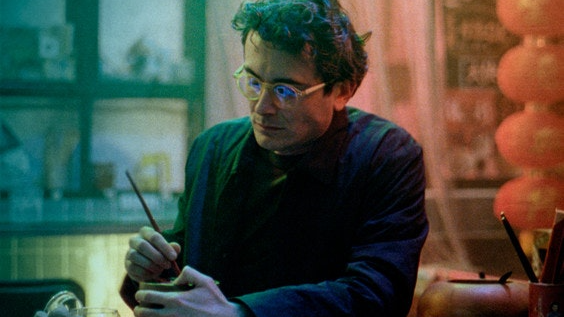
Short film, drama, by Flavio Nani, Italy, 2021.
In the near future, new technology makes us even more alienated and hyper-connected. Marco, crushed by a boring and monotonous life, seeks his place in the world. When he meets Nico at a bar counter, he thinks he has finally found him. But it will end up being just one piece of a bigger game, with disturbing implications. A fictional short film to denounce the dangerous cultural drift behind hate crimes with a racist and xenophobic background, a constantly growing social drama - in Italy and in the rest of the world - and potentially capable of generating an endless vicious circle . B 52 is the spirits cocktail that owes its name to the Boeing B-52 bomber, used by the Americans in the Vietnam War to drop napalm bombs. The short film directed by director Flavio Nani, sponsored by Amnesty International Italia on the occasion of the International Day for the Elimination of Racial Discrimination. Set in the near future, the film highlights some dynamics that are taking place in the world we live in. Racial integration and its promoters become a target to be eliminated, in an evil scheme where the boundary between victim and executioner becomes difficult to identify. The truthfulness of the B-52 narrative is able to restore the cultural drift that we already have before our eyes. The dystopian context reinforces the authenticity of the story. This is not a science fiction film: the viewer is led to wonder how imminent is the scenario described in the film.
LANGUAGE: Italian
SUBTITLES: English
Le Ballon Rouge

A young boy named Pascal finds a large red balloon tied to a lamppost in the gray and austere streets of post-war Paris. He frees the balloon, which turns out to have a will and consciousness of its own. They become inseparable friends: the balloon follows Pascal to school, on the bus, at home, like a faithful pet. Their magical friendship, however, attracts the envy of a group of bullies, who end up destroying the balloon with stones.
Winner of the Palme d’Or for best short film and, in a unique case in history, the Oscar for best original screenplay, Le Ballon Rouge is a work of pure visual poetry. Albert Lamorisse creates an almost silent film, where the narrative is entrusted entirely to the images. The chromatic contrast between the vibrant red of the balloon and the desaturated tones of the city creates a powerful visual metaphor for innocence, imagination, and childhood joy clashing with the prosaic and cruel adult world. The ending, in which all the balloons of Paris come to lift Pascal and carry him into the sky, is a moment of cinematic transcendence that consecrates the film as a timeless allegory on loss and hope.
Nuit et Brouillard

Ten years after the liberation of the Nazi extermination camps, Alain Resnais‘s camera moves slowly, with fluid, color tracking shots, through the silent, verdant ruins of Auschwitz and Majdanek. These images of the present (1955), peaceful and almost pastoral, are contrasted with sharp cuts to terrifying black-and-white archival footage of life and death in the camps. A calm, almost clinical narrator comments on the horror, asking questions about memory, responsibility, and oblivion.
Nuit et Brouillard (Night and Fog) is not a documentary, but a philosophical essay, an “anti-documentary” that questions the very act of remembering. Resnais understands that the horror of the Holocaust is unrepresentable in its entirety and that any attempt at dramatization would risk trivializing it. The short film’s power lies precisely in its dialectical structure: the unbearable contrast between the tranquility of the present and the atrocity of the past. The color images of the empty camps are perhaps more frightening than the archival ones, because they show us how easily grass can grow over horror, how quickly memory can fade. The film is a powerful warning, a call to the viewer’s responsibility, forcing them to confront a terrible question: if it happened once, why couldn’t it happen again?
Wasp

Zoë is a young single mother with four small children and no money. Her life is a constant struggle for survival in a run-down English council estate. One day, she runs into an old friend, Dave, who asks her out. Desperate for a moment of normalcy and escape, Zoë accepts, but she doesn’t know who to leave the children with. She brings them along, telling Dave she’s just babysitting, and leaves them outside the pub with a bag of sugar for dinner, waiting for her to finish her date.
Winner of the Oscar, Wasp is a masterpiece of social realism, a punch to the gut that captures the desperation of poverty with an almost documentary-like clarity. Director Andrea Arnold, with her handheld camera glued to the characters, immerses us in Zoë’s life without filters and without judgment. The short form is perfect for this kind of “slice of life” narrative: there’s no need for a complex story arc or a resolution. The film’s 24 minutes are enough to convey the anguish, the hunger (both literal and metaphorical), and the impossible choices of a woman trapped in a cycle from which there seems to be no escape. It is a human, empathetic, and devastating portrait.
The Gunfighter (2014)

A lone cowboy walks into a frontier saloon, and suddenly a deep, authoritative narrator’s voice begins describing his thoughts aloud for everyone in the bar to hear. The cowboy cannot silence the narrator, and soon every patron’s darkest secrets and hidden intentions are exposed to the entire room. What begins as comic embarrassment rapidly escalates into deadly confrontation, as the omniscient voice gleefully accelerates the chaos.
Directed by Eric Kissack and featuring the voice of Nick Offerman, The Gunfighter is a brilliantly constructed meta-comedy that deconstructs the very conventions of cinematic narration. By making the narrator audible to the characters themselves, the film exposes the artificiality of storytelling devices while generating relentless comedic momentum. The writing is razor-sharp, escalating absurdity with perfect timing. It represents the short film format at its most inventive: a single, audacious comedic premise executed with impeccable craft, demonstrating that genuine wit can achieve more in ten minutes than many features manage in two hours.
Ninnao
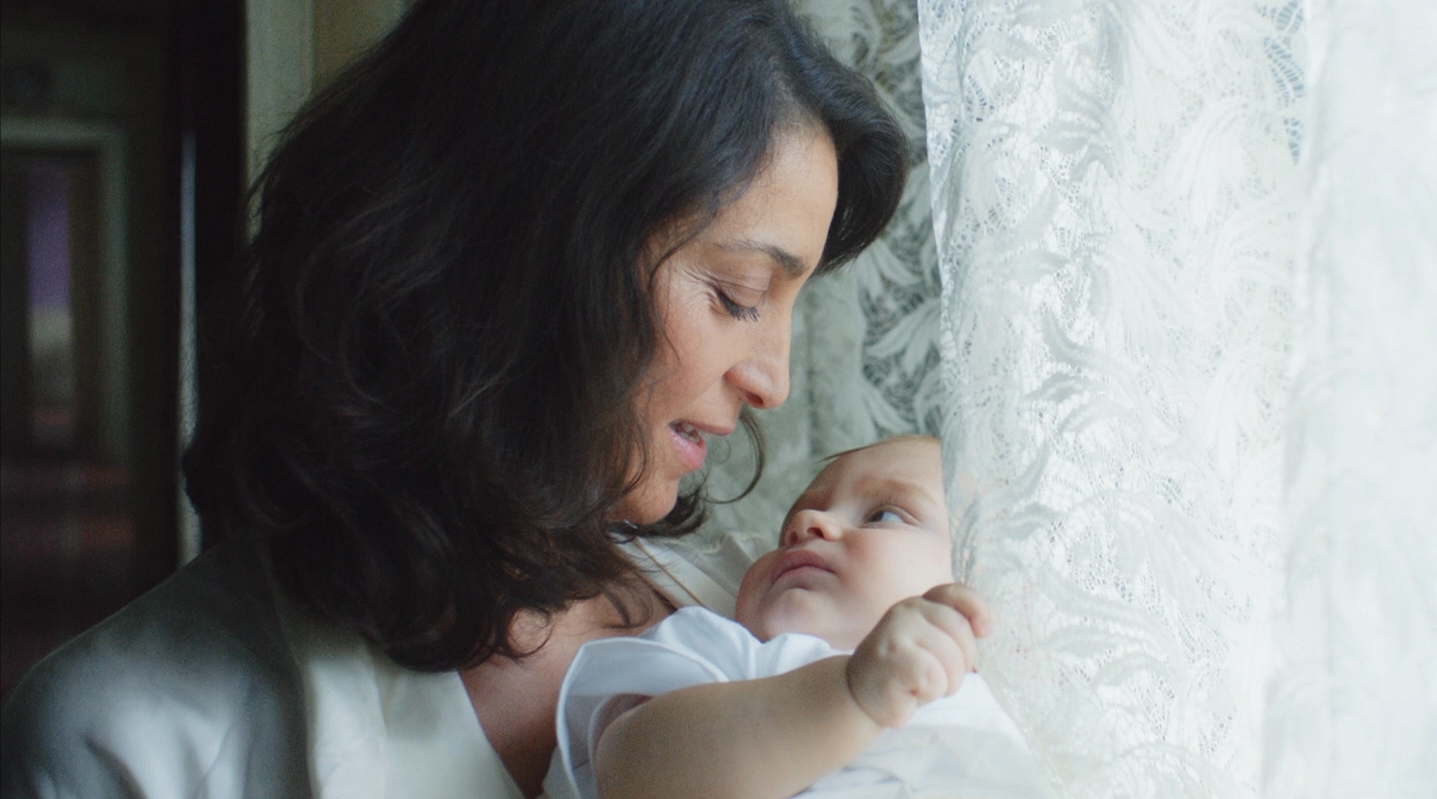
Short film, drama, by Ernesto M. Censori, Italy, 2020.
Ninnaò tackles the theme of milk mothers in a direct and raw way, highlighting in an original way the relationships that are established between two women who will end up competing for the baby. You will win that you will be able to take advantage of the situation more. Produced by the Experimental Center of Cinematography in Rome, it is a film on the theme of the family, which tells of the intimate roots of the human being and family dynamics. Shot at Palazzo De Stefani, in Ciriaco, a historic residence dating back to the end of the eighteenth century in a small town in the heart of Calabria, Girifalco. The story takes place mainly in a single location, with a completely female cast. The protagonists are her mistress and her servant, two mothers and a child to breastfeed who becomes a reason for intrigues and secrets. Ninnaò's main actresses are Angela Fontana and Donatella Finocchiaro. The reality of Calabrian places, characters and traditions are rooted in history. Calabria in the early twentieth century for the director is the 'fertile ground' to bring to light the family dynamics of the aristocracy, whose life was often intertwined and enveloped with that of his humble servants, children of the people.
LANGUAGE: Italian
SUBTITLES: English
Six Shooter

A man named Donnelly, his face a mask of restrained grief, has just lost his wife. During the sad train journey home, he finds himself sharing a compartment with a young couple devastated by the death of their newborn son and with a talkative, foul-mouthed, and clearly psychotic young man. The ensuing conversation is a surreal and macabre ballet of pain, sudden violence, and pitch-black humor, culminating in a shootout and an ending as tragic as it is absurd.
With his directorial debut, playwright Martin McDonagh creates a work that is a perfect distillation of his entire creative universe. Six Shooter is a black comedy that constantly walks a tightrope, mixing the deepest tragedy with bizarre dialogue and grotesque situations (like the story of a cow that exploded from intestinal gas). The short film functions as a laboratory in which McDonagh experiments with and perfects the tonal acrobatics that would become his trademark in films like In Bruges and Three Billboards Outside Ebbing, Missouri. It is a demonstration of how the short form can be used to forge a unique and unmistakable authorial voice.
Stutterer (2015)

A young man with a severe stutter navigates London’s busy streets, his rich and articulate inner monologue standing in sharp contrast to his near-inability to speak aloud. He has maintained an online relationship for six months with a woman he has never met in person. When she announces she is coming to the city, he must decide whether to face his greatest fear and meet her face to face.
Winner of the Academy Award for Best Live Action Short Film, Stutterer is a quietly devastating character study directed by Benjamin Cleary. The film’s most inspired technique is its use of voiceover to reveal the protagonist’s eloquent inner world, creating a poignant and painful gap between who he is inside and how the world perceives him. It handles its subject with remarkable sensitivity and avoids sentimentality, building to a conclusion of genuine emotional power. It is an empathetic reminder of the courage required in everyday human connection.
The Neighbors’ Window
Alli, a middle-aged mother overwhelmed by family routine, finds an unexpected escape by watching her new neighbors from her window: a beautiful, free, and vibrant couple in their twenties. Her initial curiosity soon turns into a voyeuristic obsession, a mix of envy and nostalgia for her lost youth. Day after day, she spies on their passion, their parties, their apparent perfection. But one day, the spectacle changes, and Alli becomes a witness to a tragedy that will completely overturn her perspective.
Inspired by a true story and winner of the Oscar, The Neighbors’ Window is a masterful example of how a short film can orchestrate a powerful emotional reversal. For much of its 20 minutes, the film skillfully builds a universal and relatable feeling: the idea that the grass is always greener on the other side. We identify with Alli’s envy. Then, in the finale, the revelation of the young neighbor’s illness shatters this perception, transforming envy into empathy and, finally, into gratitude for her own life, with all its imperfections. The film’s strength lies precisely in this narrative economy: the ability to build and then deconstruct a single, powerful emotional premise with an efficiency that a feature film could hardly match.
Fresh Guacamole (2012)

In under two minutes, a pair of hands prepares a bowl of guacamole using the most unexpected ingredients. A grenade is sliced open, dice are used instead of salt, and a golf ball becomes a tomato. This playfully surreal stop-motion animation transforms the mundane ritual of cooking into a whimsical sequence of visual puns, delighting the viewer with each impossible substitution.
Directed by PES, Fresh Guacamole is a brilliant exercise in conceptual simplicity elevated to an art form. Nominated for an Academy Award, the film demonstrates how constraint — in this case, a runtime of barely ninety seconds — can become a creative superpower. PES’s signature technique of replacing real objects with visually similar but absurdly unrelated items generates constant surprise and laughter. It is a testament to how inventive filmmaking can transform the most ordinary subject into something genuinely cinematic and memorable.
La Luna (2011)

A young boy embarks on his first night of work with his father and grandfather, sailing out to a mysterious island beneath a full moon. There, he discovers the family’s unique occupation: sweeping fallen stars off the moon’s surface. Caught between two generations with opposing methods, the boy must find his own way to approach the task, discovering his identity in the process.
Directed by Enrico Casarosa, this Pixar short is a masterclass in visual storytelling, conveying an entire coming-of-age narrative without a single word of intelligible dialogue. The film’s luminous animation creates a dreamlike atmosphere that feels timeless, drawing on Italian folklore and personal memory. Its central metaphor — finding your own path between the traditions of those who came before you — resonates with universal emotional depth, making it one of Pixar’s most poetic and enduring achievements.
A vision curated by a filmmaker, not an algorithm
In this video I explain our vision
Emperian
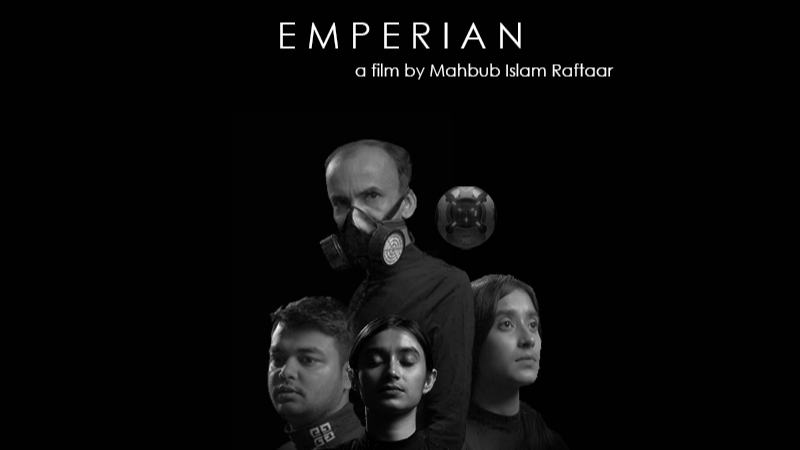
Sci-fi, by Mahbub Islam Raftaar, Bangladesh, 2021.
Earth was destroyed due to famine, war, starvation and human devastation, but some people who remained in space survived and later formed a colony called "Emperian". Years later they have discovered a way to go back in time. Therefore, they decided to send a girl named Amaya. The Emperians believe they are saving the earth by saving Jesus Christ. Then they send Amaya to Earth to travel back in time before Jesus Christ was even born. But due to the time machine error, Amaya landed in a different timeline, which is 2021.
LANGUAGE: English
SUBTITLES: Spanish, French, German, Portuguese
Simon of The Desert

Comedy, by Luis Bunuel, Mexico, 1963
Simón, a long-bearded holy man, lives on a column in the middle of the desert, almost in total fasting. People worship him as a Messiah. He performs miracles, undergoes temptations from Satan, who torments him under the guise of a handsome woman. A series of grotesque, surreal, magical and picaresque scenes. The best Bunuel in just 45 minutes.
Food for thought
Those who withdraw from the world to find a spiritual life are doomed to failure. Temptations will follow him, the need to relate to others will not abandon him. Only his ego will be satisfied by a false spirituality. True spirituality is found in everyday life, in the society in which we live, in everyday life, among the people we meet every day.
LANGUAGE: Spanish
SUBTITLES: English, French, German, Italian, Portuguese
Tao
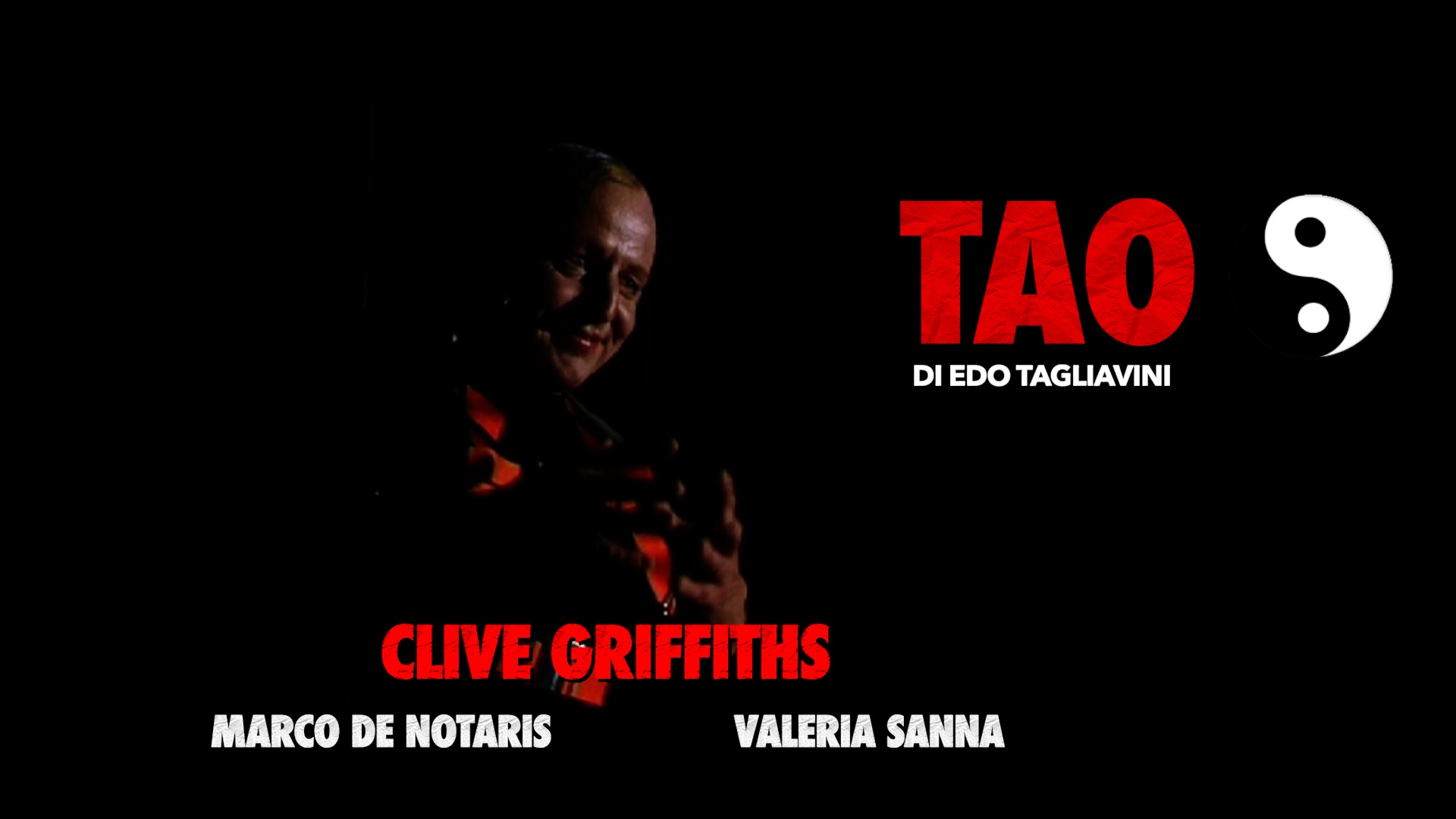
Short film, sci-fi, by Edo Tagliavini, Italy.
In the near future, Europe and USA are united in a "Democratic Federation": the only way to become a member of this federation is to attend the TV show "Tao" and to fight against other competitors for the green card.
Food for thought
Tao means "the way", but not in reference to a goal. There is nothing to achieve, you just have to be here and now, and celebrate life. Life has no purpose or goal. The Tao refers to universal laws, not those made by man. The Tao is the only true law, the principle that holds existence together. It is a Cosmos that holds together an immense intrinsic order, the harmony of the Whole. The most suitable synonym for the word Tao is Nature with a capital N.
LANGUAGE: English
SUBTITLES: Italian

