

The Devil’s Bath (Des Teufels Bad) (2024)

Austria, 1750. Agnes, a deeply religious young woman, marries a stranger and moves to an isolated village. Oppressed by loneliness and depression mistaken for sin, Agnes discovers a terrifying legal and theological “loophole” of the time: suicide is an unforgivable sin leading to hell, but if one commits murder and confesses before execution, the soul can be saved. Based on real historical records of “suicide by proxy,” the film recounts the horror of a dogma that drove women to kill innocents just to be executed.
From the directors of Goodnight Mommy (Veronika Franz and Severin Fiala), this is arguably the most heartbreaking and rigorous horror film of the year. There are no demons, only the brutality of history and superstition. It is a “folk horror” based on true events, visually pictorial but emotionally devastating, exploring how mental illness was interpreted (and punished) in a world dominated by the fear of God.
Halloween
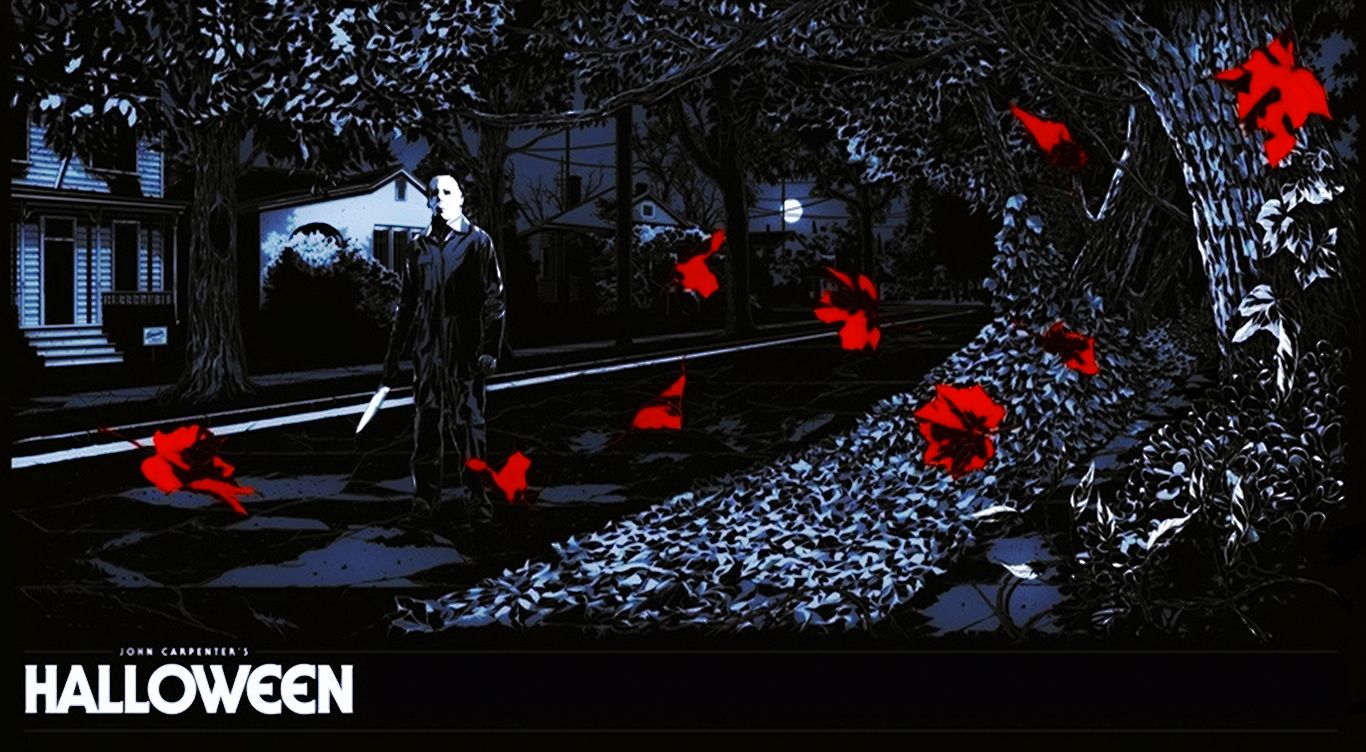
Horror, by John Carpenter, United States, 1978.
An independent film shot on a very small budget, it grossed over $ 80 million worldwide at the time. It is the most successful slasher movie and one of the 5 most profitable films in the history of cinema, which has become a cult with countless sequels and reboots. Carpenter describes the remote American province in an extraordinary way and raises the tension for over an hour, without anything happening, with a linear and effective direction, and with hypnotic music created by himself. A brilliant director who manages, with a few simple elements and a small production, to create a horror destined to remain in the worldwide cinematic imagination.
LANGUAGE: English
SUBTITLES: Spanish, French, German, Portuguese
Woman of the Hour (2024)

Los Angeles, 1978. Sheryl Bradshaw, an aspiring actress, participates in the popular TV show “The Dating Game” to gain exposure. Among the three bachelors hidden behind the wall, she chooses the charismatic and funny Bachelor Number 3. What no one knows is that the man is Rodney Alcala, an active serial killer who has already murdered several women and is participating in the show in the midst of his killing spree.
Anna Kendrick‘s directorial debut is a thriller that slips into pure horror precisely because the story is true. The film alternates the gloss of the TV studio with the brutality of Alcala’s murders, creating unbearable tension. It is not the usual killer movie, but a chilling analysis of the systemic misogyny that allowed a monster to hide in plain sight, under the spotlights and the applause of the audience.

Megalomaniac (2023)

Martha and Félix are the children of the “Butcher of Mons,” a serial killer (never caught in reality) who terrorized Belgium in the 90s leaving bags of human remains on roadsides. Now adults, the two live in the old family home, crushed by their father’s bloody legacy. While Félix follows in his father’s footsteps yielding to homicidal urges, Martha, a victim of workplace abuse, begins a descent into madness that will lead her to claim her role in the dynasty of evil.
Winner at the Fantasia Film Festival, this Belgian film is a gut punch. Karim Ouelhaj imagines what it means to grow up in the shadow of absolute evil. It is a dirty, gothic, and disturbing psychological horror that questions whether violence is genetic or learned. It is not a reconstruction of the Butcher’s crimes, but a terrifying hypothesis on the psychological consequences of living with an unpunished monster.
Godless: The Eastfield Exorcism (2023)

Lara is a woman tormented by visions and erratic behavior that modern medicine seems unable to cure. Her husband, pushed by a fanatical religious community, decides to subject her to an unauthorized exorcism in the Australian countryside. Based on true Australian news cases (particularly the Joan Gidney case in the 90s), the film shows how superstition can turn into legalized torture.
Forget Hollywood’s heroic priests fighting the devil. In this Australian indie film, the true horror is the exorcism itself. Director Nick Kozakis stages the ritual not as a spiritual battle, but as an act of physical and psychological abuse on a sick woman. It is a raw film that scares because it shows the vulnerability of the human body in the face of blind fanaticism.
📰 When News Beats Fiction
Pure terror is born when the words “based on a true story” appear on screen. But reality isn’t limited to supernatural horror: it extends to crime, deviant psychology, and modern myths. If you want to investigate beyond the boundary between fact and fiction, here are the next stops in your inquiry.
Thriller Movies
Many horror movies based on true stories are, at heart, true crime borrowed by cinema. If you are fascinated by the minds of serial killers, impossible investigations, and the dark side of human nature without necessarily the supernatural element, this is your section.
👉 GO TO THE LIST: Thriller Movies
Cult Movies
Masterpieces like The Texas Chain Saw Massacre or Psycho were born from real news events (the Ed Gein case) to become immortal legends. Here you will find the films that transformed reality into cinematic mythology, defining the rules of fear for decades.
👉 GO TO THE LIST: Cult Movies
Indie Horror
Independent cinema often tackles true stories with a less sensationalist and more documentary-like, raw, and disturbing approach. Explore our streaming catalog to discover auteur reconstructions that seek not the jump scare, but psychological truth.
👉 BROWSE THE CATALOG: Stream True Story Horror Movies
A vision curated by a filmmaker, not an algorithm
In this video I explain our vision
📰 Roots of Evil: The Classics
The Texas Chain Saw Massacre (1974)

A group of five friends traveling through rural Texas runs out of gas near an old farmhouse. Looking for help, they stumble upon a family of deranged cannibals, including the terrifying Leatherface, a giant who wears a mask made of human skin and wields a chainsaw. Their day turns into a survival nightmare. Although the plot is fictional, the fundamental inspiration for the character of Leatherface and the macabre decor of his home comes directly from the real “Butcher of Plainfield,” Ed Gein. But the true genius of Tobe Hooper‘s film lies in how its independent and guerrilla production created an atmosphere of suffocating authenticity. Shot on 16mm under the scorching Texas sun, with a deafening and relentless sound design, the film feels less like fiction and more like a raw document of a real event. The absence of explicit gore, contrary to its reputation, forces the viewer to imagine the horror, making it even more powerful. It is proof that the most effective terror does not need big budgets, but an uncompromising vision.
The Entity (1982)

Carla Moran, a single mother, is brutally and repeatedly sexually assaulted by an invisible and violent force in her own home. As the attacks become increasingly ferocious, she seeks help from both a skeptical psychiatrist, who believes it is a self-induced hallucination, and a team of parapsychologists who attempt to document the phenomenon. Inspired by the terrifying case of Doris Bither, which occurred in Culver City in 1974, The Entity is a film of shocking audacity. Its independent production allowed it to tackle such a delicate subject with a frankness that would have been unthinkable for a studio. The film functions as a powerful and heartbreaking allegory for sexual violence and the trauma of not being believed. The horror lies not only in the supernatural attacks, depicted in a raw and terrifying way, but also in the institutional gaslighting the protagonist suffers from the medical community. It is a film that explores terror on two fronts: the inexplicable one and the all-too-human one of doubt and isolation.
Angst (1983)
![Angst (1983) Original Trailer [FHD]](https://blog.indiecinema.co/wp-content/plugins/wp-youtube-lyte/lyteCache.php?origThumbUrl=https%3A%2F%2Fi.ytimg.com%2Fvi%2FP5MSigtzSjY%2F0.jpg)
Fresh out of prison, a nameless psychopath wanders in search of his next victim. He breaks into an isolated house, where he terrorizes a family. The film follows his killing spree almost entirely from his point of view, through a detached and analytical inner narration describing his impulses and actions. This disturbing Austrian film, the only feature by director Gerald Kargl, is based on the crimes of Werner Kniesek. What makes it a masterpiece of arthouse horror is its radical form. Kargl uses experimental filming techniques, such as cameras mounted on the actor’s body and dizzying camera movements, to completely immerse the viewer in the killer’s subjective perspective. There is no psychological distance, no catharsis. We are trapped in his mind, forced to see the world through his eyes. It is an exhausting and deeply unsettling cinematic experience, a formal exploration of the mechanics of psychosis that remains unmatched for its boldness and impact.
Henry: Portrait of a Serial Killer (1986)

A chilling and detached look at the daily life of a nomadic serial killer, Henry, and his dim-witted accomplice, Otis. The two move through a landscape of random and motiveless violence, committing murders with the same coldness with which one performs everyday chores. The film offers an unfiltered portrait of a mind devoid of empathy. Inspired by the confessions, later largely recanted, of real-life killers Henry Lee Lucas and Ottis Toole, John McNaughton’s masterpiece is a milestone of extreme cinema. Shot on a shoestring budget in 16mm, the film possesses a visual grain that amplifies its almost documentary realism. Michael Rooker‘s flat and affectless performance is terrifying precisely because it denies the viewer any psychological foothold. Henry is neither an evil genius nor a charismatic monster; he is a void, a man for whom violence is as banal as breathing. The film redefined the serial killer genre, stripping it of any romanticism and forcing the audience to look at horror in its most squalid and depressing form.
The Mothman Prophecies (2002)

After the tragic death of his wife, journalist John Klein mysteriously finds himself in the small town of Point Pleasant, West Virginia, with no memory of how he got there. There, he discovers that the local population is tormented by strange sightings of a winged creature, the Mothman, and disturbing premonitions of an impending disaster. Inspired by journalist John Keel’s investigations into the real events that occurred in Point Pleasant between 1966 and 1967, culminating in the collapse of the Silver Bridge, Mark Pellington‘s film is a unique work. It is not a monster movie. It is a film about a state of mind: profound psychological terror and ontological uncertainty. Pellington uses a disorienting visual style, with fragmented editing, oppressive sound design, and expressionistic use of color to immerse the viewer in the protagonist’s confusion and anguish. The true horror is not seeing the Mothman, but receiving a message from the unknown that cannot be understood, a warning that cannot be deciphered in time to avoid tragedy.
Open Water (2003)

Based on a true story, the film follows a couple on vacation in the Caribbean. During a scuba diving trip, they are accidentally left behind in the open ocean by their tour boat. Left alone in the middle of the ocean, they must face dehydration, hunger, marine wildlife, and, above all, the terrifying realization of their total powerlessness. Inspired by the tragic disappearance of Tom and Eileen Lonergan, Chris Kentis’ film is a masterpiece of minimalism. Shot on a very low budget in digital video and using real sharks, it creates an experience of terrifying realism. Its power lies not in the animal attacks, but in the psychological horror of abandonment and insignificance in the face of vast and indifferent nature. It is a film about the slow and agonizing erosion of hope, a chilling reminder of how a small human error can lead to unimaginable consequences.
Monster (2003)

The film tells the tragic story of Aileen Wuornos, a Florida street prostitute marked by a life of abuse. After killing a client in self-defense, she begins a spiral of murders against other men. At the center of her descent into hell is her desperate and fragile love relationship with young Selby Wall. Patty Jenkins‘ film is an extraordinary vehicle for one of the greatest performances in cinema history. Charlize Theron disappears completely into the role of Aileen Wuornos, offering a raw, vulnerable, and terrifying portrait. The film’s independent spirit lies in its refusal to offer easy judgments. Jenkins neither sanctifies Wuornos nor condemns her as a one-dimensional monster. Instead, she presents her as the final product of a system that abused, exploited, and abandoned her. Monster elevates the true crime genre to a powerful and complex character study, exploring how trauma can generate more violence in a seemingly endless cycle.
Wolf Creek (2005)

Three young backpackers venture into the Australian desert to visit the Wolf Creek crater. When their car breaks down, they are rescued by a friendly bushman named Mick Taylor. The man offers to help them, but soon reveals his true nature: a sadistic predator who will drag them into a deadly game of hunting and torture. The character of Mick Taylor is an amalgam of two notorious Australian killers: Ivan Milat, who targeted tourists, and Bradley Murdoch. Director Greg McLean uses the vast and indifferent landscape of the Outback as a character in itself, a place where civilization fades and no one can hear you scream. The film’s structure is one of its most effective weapons: a first half that feels like a slow road trip movie, lulling the viewer into a false sense of security, before plunging them headfirst into visceral and uncompromising survival horror. It is a prime example of how modern independent cinema is not afraid to push the limits of the representation of violence to create an experience of pure and primal terror.
The Exorcism of Emily Rose (2005)

Lawyer Erin Bruner, an agnostic, takes on the difficult task of defending Father Moore, a priest charged with negligent homicide. The prosecution claims that his medical negligence caused the death of young Emily Rose during an exorcism. The defense, however, argues that the girl was genuinely possessed by demonic forces. Based on the tragic true story of Anneliese Michel in Germany, Scott Derrickson‘s film is a work of ingenious conception. Instead of being a conventional horror, it chooses the structure of a courtroom drama. This narrative decision allows both interpretations of events—the scientific and medical versus the spiritual and demonic—to be presented on equal footing, letting evidence and testimony clash in the courtroom. The viewer is put in the position of the jury, forced to weigh the evidence and decide what to believe. It is a perfect example of a horror film based on a true story that prioritizes intellectual and moral terror over simple scares.
Them (Ils) (2006)

Clémentine and Lucas, a French couple, live in a large isolated house in the Romanian countryside. One night, their tranquility is shattered by sinister noises. They soon realize they are not alone. A long and terrifying siege begins by invisible and silent intruders, forcing them into a desperate struggle for survival. The film claims to be inspired by a true story, that of an Austrian couple murdered by three teenagers in their vacation home in the Czech Republic. Whether true or not, Them (Ils) is a masterclass in suspense within the home invasion subgenre. Directors David Moreau and Xavier Palud use sound, shadows, and long takes to build almost unbearable tension. The horror comes from the unknown: who are the attackers? What do they want? The final revelation, in its simplicity, is chilling and offers a powerful reflection on the motiveless and terrifying nature of certain violence.
The Girl Next Door (2007)

In a quiet suburban town in the 1950s, young David helplessly witnesses the torture and murder of young Meg Loughlin. The girl, an orphan, is held captive and systematically abused by her unstable aunt, Ruth, with the active and passive participation of her children and other neighborhood kids. This film, to be handled with extreme caution, is the direct adaptation of one of the most heinous crimes in American history: the murder of Sylvia Likens. It is a work of almost unbearable psychological brutality, a ruthless portrait of human cruelty and the bystander effect. Its independent nature was fundamental to its existence; no traditional studio would have ever produced such a bleak and uncompromising film. It is an extreme example of how horror can be used as a tool for social commentary, to explore the darkness that hides behind the facade of suburban normality and the terrifying capacity of ordinary people to commit unspeakable acts.
Black Water (2007)

Grace, her husband Adam, and her sister Lee decide to take a fishing tour in the mangrove swamps of northern Australia. Their excursion turns into a nightmare when their small boat is capsized by a massive crocodile. Trapped in a tree, they must find a way to survive and escape the predator waiting for them in the murky water. Based on several true stories of crocodile attacks in Australia, Black Water distinguishes itself sharply from more sensationalistic “creature features.” Its approach is rooted in realism. Using real crocodiles and focusing on psychological tension and the strategic battle between humans and the animal, the film creates authentic and palpable suspense. Its independent production allows it to adopt a patient pace, where horror does not come from jump scares, but from the slow and terrifying realization of being prey in an unforgiving environment.
The Strangers (2008)

After a failed marriage proposal, a young couple, Kristen and James, retreat to the remote family summer home. Their night of tension and sadness is interrupted by the arrival of three masked strangers, who begin to terrorize them with a cruel and violent psychological game, with no apparent motive. Director Bryan Bertino drew inspiration from multiple real events: the atmosphere of senseless violence of the Manson Family murders and an experience from his childhood, when strangers knocked on his door asking for a person who didn’t live there. The Strangers is a masterpiece of minimalist terror. Its power lies in the masterful use of negative space, sound design, and the violation of domestic space, the place that by definition should be safe. The horror is amplified by the attackers’ response to the question “Why are you doing this to us?”: “Because you were home.” This phrase encapsulates the terrifying randomness of real-world violence.
The Haunting in Connecticut (2009)

To be closer to the hospital where their teenage son Matt is receiving cancer treatment, the Campbell family moves into a large house at a bargain price. They soon discover the reason for the low cost: the house was once a funeral home where séances and necromancy were practiced. Matt begins to experience terrifying visions that seem connected to the building’s dark past. The film is based on the story of the Snedeker family, made famous by paranormal investigators Ed and Lorraine Warren. Although the authenticity of the case has been widely debated, the film uses its premise effectively. The true strength of the narrative lies in the parallel between Matt’s physical illness and the spiritual corruption of the house. His vulnerability, weakened by chemotherapy, makes him a perfect vessel for the entities infesting the place. The horror is not just external, but also internal, blurring the symptoms of the disease with supernatural manifestations in a powerful and disturbing combination.
The Fourth Kind (2009)

In the remote town of Nome, Alaska, psychologist Abbey Tyler investigates a series of mysterious disappearances. Using hypnosis on her patients, who all suffer from sleep disorders, she uncovers terrifying and consistent accounts of alien abductions. These events seem linked to the tragic death of her husband. This film generated much controversy for its marketing, which presented it as based on real events, drawing on a series of disappearances that actually occurred in Nome. Its most interesting feature is its hybrid format, which mixes dramatized scenes with actors and alleged “real archival footage” of the hypnosis sessions. Regardless of the authenticity of this footage, the technique directly involves the viewer in a debate about belief and evidence, forcing them to decide what is real and what is not. It is a fascinating, albeit divisive, example of found footage horror that plays with our perception of truth.
Kill List (2011)
Jay, an ex-soldier turned hitman, is pushed by his wife to accept a new assignment. Together with his partner, Gal, he receives a list of three people to eliminate. As they proceed with the murders, the mission becomes increasingly strange and violent, dragging them into a vortex of conspiracy, pagan rituals, and folk horror. Although not based on a single event, Ben Wheatley‘s film draws heavily from real-world anxieties about secret societies and ancient conspiracies operating beneath the surface of modern society. Its disorienting power comes from its abrupt and unpredictable tonal shifts. It begins as a gritty family drama, transforms into a brutal crime thriller, and finally descends into a waking occult nightmare. This narrative instability reflects the protagonist’s descent into madness, making Kill List a visceral and baffling experience, a gut punch that leaves the viewer breathless and full of questions.
The Snowtown Murders (2011)

In a desolate Australian suburb, teenager Jamie is taken under the protective wing of John Bunting, a charismatic and terrifying father figure. Soon, Jamie is sucked into a spiral of violence as John leads a group of vigilantes in a series of brutal murders, hiding the victims’ bodies in barrels. Based on the real “Bodies in Barrels” murders that shocked Australia, Justin Kurzel’s film is a work of oppressive heaviness. Kurzel chooses not to focus so much on the police investigation, but on the atmosphere of social and economic degradation that allowed a manipulator like John Bunting to thrive. The direction is claustrophobic, the photography desaturated, and the sound design creates a constant sense of threat. The choice to use non-professional actors from the same geographical area adds another layer of authenticity. More than a serial killer film, it is a terrifying study of male vulnerability, the need for belonging, and the ease with which toxic charisma can transform desperation into ferocity.
Martha Marcy May Marlene (2011)

A young woman, Martha, escapes from an abusive cult in the Catskill Mountains and seeks refuge with her older sister, Lucy, and her husband. As she tries to readjust to a normal life, she is tormented by painful memories and growing paranoia, unable to distinguish between real threats and imagined ones related to her past. Inspired by the dynamics of groups like the Manson Family, Sean Durkin‘s film is a psychological thriller of rare finesse. Its brilliance lies in the non-linear editing, which seamlessly blends the past in the cult and the present with the family, perfectly reflecting the protagonist’s fractured psyche. The real horror of the film is internal. It is the terror of not knowing if the danger is over, the fear that her former tormentors might return, and the chilling realization that even if one manages to physically escape a cult, it never leaves you psychologically. Elizabeth Olsen‘s performance is a revelation.
Sound of My Voice (2011)

Peter and Lorna, a couple of aspiring documentary filmmakers, decide to infiltrate a secret cult in the San Fernando Valley. The group is led by Maggie, an enigmatic and charismatic young woman who claims to be from the year 2054 to prepare her followers for a future devastated by civil war. While a fictional story, the film written by Brit Marling and Zal Batmanglij is one of the sharpest explorations of the psychology of cults and belief systems. Its strength lies in the masterful ambiguity it maintains from beginning to end. Is Maggie a con artist or is she really who she says she is? The film never gives a definitive answer, forcing the protagonists—and with them the audience—to confront their own skepticism and desire to believe. The tension comes not from physical threats, but from the psychological game, the seduction of faith, and the fear of being deceived or, worse, missing a chance to be part of something extraordinary.
Silent House (2011)

Sarah goes with her father and uncle to the old family lake house to renovate it before selling it. Left alone inside, she begins to hear strange noises. Soon she finds herself trapped and terrorized by a menacing presence. The film is shot to appear as a single, uninterrupted take, following Sarah in real time. A remake of the Uruguayan film La Casa Muda, itself inspired by an unsolved crime from the 1940s, Silent House uses its bold technical choice for a precise purpose. The “single continuous take” is not simple virtuosity, but a powerful tool to create a subjective, claustrophobic, and relentless horror experience. The viewer is trapped with the protagonist, without cuts, without pauses, without escape. We live her terror in real time, making the descent into panic and madness an incredibly immersive and nerve-wracking experience.
Compliance (2012)

In a fast food restaurant, a phone call shakes up the routine. A man, claiming to be a police officer, accuses a young female employee of theft. He convinces the restaurant manager to detain the girl in an office and conduct an increasingly invasive and humiliating investigation, pushing the limits of obedience to authority. Based on the series of scam calls that actually occurred in various fast food restaurants across the United States, Craig Zobel‘s film is a terrifying psychological experiment. The horror is neither supernatural nor violent in the traditional sense. It is a social horror, exploring the frightening human tendency to obey an authority figure, even when the orders given defy logic, morality, and decency. Shot in a single location, the film creates almost unbearable tension, forcing the viewer to ask: “What would I have done in that situation?”. The answer is profoundly unsettling.
The Conspiracy (2012)

Two young filmmakers begin shooting a documentary about a conspiracy theorist named Terrance. When Terrance disappears mysteriously, the two decide to continue his research, uncovering clues that lead them to infiltrate a powerful secret society that might be more real and dangerous than they ever imagined. This film draws directly from the world of real conspiracy theories and secret groups like the Bilderberg Group. Its effective use of the found footage format lends an air of unsettling authenticity to its paranoid narrative. The film cleverly plays with the genre: it starts as a detached and skeptical documentary, but slowly transforms into a terrifying thriller as the filmmakers lose their objectivity and become part of the story they are telling. It is a work that perfectly captures the anxiety of the internet age, where the line between information, disinformation, and paranoia has become dangerously blurred.
The Conjuring (2013)
![The Conjuring - Official Main Trailer [HD]](https://blog.indiecinema.co/wp-content/plugins/wp-youtube-lyte/lyteCache.php?origThumbUrl=https%3A%2F%2Fi.ytimg.com%2Fvi%2Fk10ETZ41q5o%2F0.jpg)
In 1971, the Perron family moves into an old farmhouse in Rhode Island and is soon besieged by an increasingly violent demonic presence. Desperate, they turn to renowned paranormal investigators Ed and Lorraine Warren, who find themselves facing the most terrifying case of their career. Based on one of the most famous cases from the Warrens’ files, The Conjuring became a phenomenon. Although made with a higher budget than many indie films, its spirit lies in director James Wan‘s approach. Wan prioritizes classic horror techniques and the use of practical effects over CGI, building tangible tension and a sense of old-school terror. The film’s true success, however, is its emotional heart. By anchoring the story in the drama of two families—the Perrons under siege and the Warrens risking everything to help them—Wan ensures that the supernatural events have real, human weight, making the fear much deeper.
Holy Ghost People (2013)

Searching for her missing sister, young Charlotte infiltrates an isolated community of Pentecostals who practice handling poisonous snakes in the Appalachian Mountains. Led by the charismatic and authoritarian Brother Billy, the community lives by its own rules, immersed in an ecstatic and dangerous faith. Inspired by the real and documented practices of some fundamentalist American churches, the film uses the found footage aesthetic to create a sense of almost anthropological authenticity. Initially, the viewer feels like an outside observer of a strange but fascinating world. However, as Charlotte delves deeper into the community, the atmosphere becomes increasingly oppressive and menacing. The film explores the terrifying power of ecstatic faith, showing the thin line separating religious fervor from a dangerous and self-destructive delusion, where proving one’s devotion can lead to death.
The Sacrament (2013)

A group of journalists from VICE magazine travel to “Eden Parish,” a utopian and isolated commune founded by a religious sect, to document the life of a colleague’s sister. Initially welcomed by a seemingly peaceful community, they soon discover the sinister reality hidden beneath the control of the charismatic and paranoid leader, “Father.” With obvious and chilling parallels to the Jonestown massacre, Ti West‘s film is a masterful exercise in tension. Using the mockumentary format, West builds a sense of dread that grows slowly, almost imperceptibly. The familiarity of the VICE documentary style lulls the viewer, making the descent into horror even more shocking. The film is a powerful exploration of the human need for belonging and faith, and demonstrates with terrifying clarity how utopian ideals can be distorted by paranoia and power, until they transform into a collective death wish.
Faults (2014)

Ansel Roth is a disgraced cult and deprogramming expert, reduced to holding seminars in cheap motels. One day, he is approached by a desperate couple who hire him to “kidnap” and deprogram their daughter, Claire, who has been brainwashed by a mysterious cult known as “Faults.” Anchored in the real practice of “deprogramming,” popular in the 70s and 80s, the film is a tense and claustrophobic psychological thriller, set almost entirely in a motel room. It functions as a psychological duel between Ansel and Claire, a battle of wills where the lines between manipulator and manipulated, between faith and delusion, become terribly blurred. The film explores with intelligence and black humor the fragility of the human mind and the ease with which our certainties can be dismantled. It is a work that demonstrates how the most effective horror can be born simply from the power of words.
Hounds of Love (2016)

In 1980s Perth, teenager Vicki Maloney is lured and kidnapped by a deranged couple, John and Evelyn White. Held captive in their suburban home, Vicki realizes that her captors have a toxic and unstable relationship. Her only hope of survival is to exploit the cracks in their relationship, turning one against the other. Inspired by the real crimes of David and Catherine Birnie, Ben Young‘s film is a psychological thriller of rare intelligence and tension. Instead of focusing on explicit violence, Young builds terror through spatial claustrophobia and the psychological war played out between the three characters. The independent nature of the production allows the film to explore the complex and sick co-dependency of the killer couple with a depth that a studio film would avoid. The horror stems not only from Vicki’s physical captivity but from her forced immersion into a dynamic of abuse and manipulation, making her struggle for survival as mental as it is physical.
A Dark Song (2016)

A determined and grieving young woman, Sophia, rents an isolated house in the Welsh countryside. There, she hires a cynical occultist, Joseph, to guide her through a grueling and dangerous black magic ritual that will last for months. Her goal is to contact her guardian angel to speak one last time with her deceased son. Although not based on a single event, Liam Gavin‘s film is meticulously rooted in real-world occult practice, particularly the Abramelin ritual. Its independent nature allows it to be a horror film unlike any other. The terror does not come from jump scares or monsters, but from its rigorous procedural realism and psychological intensity. The viewer witnesses the physical and emotional toll that the long and arduous ritual exacts from the protagonists. It is a terrifying exploration of faith, grief, and the price one is willing to pay to get what they desire, making it an intellectually rigorous and deeply disturbing work.
My Friend Dahmer (2017)

Adapted from the autobiographical graphic novel by Derf Backderf, a high school classmate of Jeffrey Dahmer, the film recounts the teenage years of the future monster. We follow a lonely and disturbed young Dahmer as he struggles with a dysfunctional family, dark impulses, and growing social isolation that will push him toward the abyss. Unlike countless other depictions, Marc Meyers’ film does not focus on the macabre murders, but on the unsettling prologue. It is an analysis of the origins of pathology, a portrait of a soul slowly corrupting. Using the visual codes of an independent coming-of-age drama, the film creates an emotional short circuit in the viewer. Ross Lynch‘s performance is masterful in capturing Dahmer’s awkwardness and sadness without ever making him sympathetic, but showing the warning signs that no one could or wanted to see. It is a psychological thriller based on a true story that asks a terrible question: are monsters born or made?
A vision curated by a filmmaker, not an algorithm
In this video I explain our vision

