
The Silent Contract of Blood
You are sitting across from someone you have known longer than you have known language, and he is a stranger. Not the comfortable kind of stranger you meet on a train, whose foreignness is a relief precisely because it asks nothing of you. This is the stranger who knows the exact pitch of your childhood crying, who remembers the house before the renovation, who carries in his body the same genetic miscalculation that will eventually betray you both. You pass the bread. He takes it without looking up. Something has been said, or not said, and the silence between you is not empty — it is dense with everything that cannot be taken back and everything that was never said in the first place. Your mother is talking about something inconsequential, her voice doing the structural work that voices do at family tables, holding the architecture up by sheer persistence. And you sit there thinking: when did this happen? As though there was a specific afternoon, a single hinge moment, rather than the slow geological pressure of years folding against years.

What nobody prepares you for is the contractual nature of brotherhood. Not a contract you signed, but one that was signed on your behalf, before you had opinions about anything, by biology and proximity and the shared address that structured your earliest understanding of what the world was. George Murdock, in his 1949 survey Social Structure, documented kinship systems across 250 societies and found that sibling bonds are among the most universally regulated relationships in human culture — more elaborately governed by taboo, obligation, and ritual than almost any other lateral tie. This is not accidental. The stakes are high precisely because the exit is so difficult. You can divorce a spouse. You cannot divorce a brother in any way that the body entirely believes.
The psychoanalytic tradition noticed something adjacent but described it badly. Freud reduced sibling dynamics mostly to their triangulated function — brothers as competitors for parental attention, as displaced versions of the father-threat — which flattened the relationship into a supporting role in someone else’s drama. It took Juliet Mitchell’s 2003 work Siblings: Sex and Violence to argue seriously that the sibling bond is a primary trauma in its own right, not derivative of anything, but structurally distinct: the first experience of lateral otherness, the first encounter with someone who is simultaneously you and not you. A sibling is the original uncanny. He wears your face in a funhouse mirror and you cannot stop looking.
What this means practically is that the conflict between brothers operates on a frequency most conflict resolution tools are not calibrated to detect. Therapists are trained to ask about needs and communication styles. But brotherhood conflict is rarely about a failure to communicate. Often it is about a surplus of communication — decades of it, layered and compacted into a sedimentary record where every present argument contains the fossils of every previous one. The man across the table is not just refusing to acknowledge your professional choices or your politics or your grief. He is refusing you in a language that predates your adult vocabulary, and you feel it somewhere below the sternum, in the place where old things live.
Sociologists studying intergenerational family systems have documented what they call the parentification trap — the way childhood role allocations, the responsible one, the wild one, the invisible one, calcify into permanent identity assignments that adult siblings enforce on each other long after any of it was useful. Murray Bowen’s family systems theory, developed across decades of clinical work at the National Institute of Mental Health, described differentiation of self as the central challenge of family life: the capacity to remain in emotional contact with the family system without being absorbed back into it. Most people, he observed, never fully manage it.
Along For The Ride

Drama, Comedy, by Bryan Simon, USA, 2001.
Two brothers, Terry (Randy Batinkoff) and Vance (Dylan Haggerty), embark on a journey into the desert with the body of their recently deceased father. Their goal is to find a burial site for him, but along the way unresolved family conflicts resurface. Terry, a successful former baseball player, has always exerted a dominant influence on the younger Vance, a humble mailman. Both carry within themselves the burden of a complicated relationship with their father, Jake (J.E. Freeman), a former professional player obsessed with sports. Even after his death, Jake appears to his children in dream sequences, but instead of offering wise advice, he continues to be distant and authoritarian. The journey thus becomes not only a physical but an emotional journey, in which the two brothers confront their mutual grudges and the emotional legacy of their father.
The film, directed by Bryan Simon with a budget of 150,000 dollars, was shot in extreme weather conditions, with a screenplay adapted by Jim Moores from a work by Randall Wheatley. The film also explores the role of sport as a vehicle for communication between father and son. For many men, expressing feelings is difficult, while talking about sport is a natural and shared language. "Along for the Ride" addresses these issues with sensitivity and realism, resulting in a touching work for those who have experienced similar family dynamics. An indie not to be missed for lovers of quality independent cinema.
LANGUAGE: English
SUBTITLES: Spanish, French, German, Portuguese
Brotherhood as Social Construction
You are sitting across from your brother at a table that has hosted twenty years of silences, and you feel the pull of something that has no name — not quite love, not quite obligation, something older and more demanding than either. What you cannot know, seated there, is that the feeling itself was engineered.
The Roman gens was not a family in any sense the modern world would recognize. It was a legal and political entity, a cluster of households bound by a shared name and a shared claim to ancestral property, managed through ritual obligation and enforced loyalty. What held it together was not affection but fas — divine law — and the threat of social annihilation for those who broke from it. When Roman jurists in the second century BCE began codifying the duties of fratres, they were not describing an emotional reality; they were manufacturing one, installing loyalty as a civic virtue so that it could be harvested as a military and political resource. The feeling came later, as it always does, trailing behind the institution like a shadow that eventually convinces itself it came first.
This pattern — institution precedes sentiment, sentiment forgets its origins — repeats with a regularity that should disturb anyone who has ever said the words “blood is blood” with genuine conviction. In medieval Europe, the sworn brotherhood known as confraternitas was a legal contract, witnessed, notarized, and enforceable in ecclesiastical courts. Men who were biologically unrelated could enter into a formal bond of brotherhood that carried the same inheritance rights and mutual obligations as biological kinship. The church endorsed it, the state recorded it, and within a generation the descendants of these contractual brothers remembered only that they were family. The legal scaffolding had been absorbed so completely into lived memory that it disappeared, leaving only the myth of natural solidarity.
By the time nationalist movements began reorganizing Europe in the nineteenth century, the manipulation of fraternal language had reached a new level of sophistication. Giuseppe Mazzini, whose Young Italy movement launched in 1831 became the template for nationalist mobilization across the continent, understood that men would die for a brother before they would die for an abstraction. His writings, particularly his 1844 essay “On the Duties of Man,” explicitly frame the nation as a family of brothers, with duties of sacrifice that mirror filial obligation. He was not being metaphorical. He was performing a deliberate transfer of emotional allegiance from the biological unit to the political one, knowing that the intensity of fraternal feeling was a resource waiting to be redirected. Tens of thousands of men in the following decades marched into violence carrying a vocabulary of brotherhood that had been handed to them by theorists who understood exactly what they were doing.
What is striking is not the cynicism of these constructions but their sincerity. Mazzini believed. The Roman jurists believed. The medieval churchmen believed. The mechanism does not require bad faith to function — in fact, it works better without it. When the architects of fraternal mythology are themselves inside the mythology, the seams become invisible. The most powerful social constructions are the ones that have convinced even their creators.
This is why the feeling at that table is so disorienting, so difficult to interrogate. It arrives without a history attached. It presents itself as prior to everything — prior to memory, prior to language, prior to choice. But the very intensity of that feeling, its apparent naturalness, its resistance to analysis, is itself a product of centuries of institutional reinforcement so thorough that the institution has become indistinguishable from instinct. What you experience as the most private and unchosen of bonds was assembled, piece by piece, by people who needed you to feel exactly this way before you were ever born.

Freud, Rivalry, and the Myth of Original Love
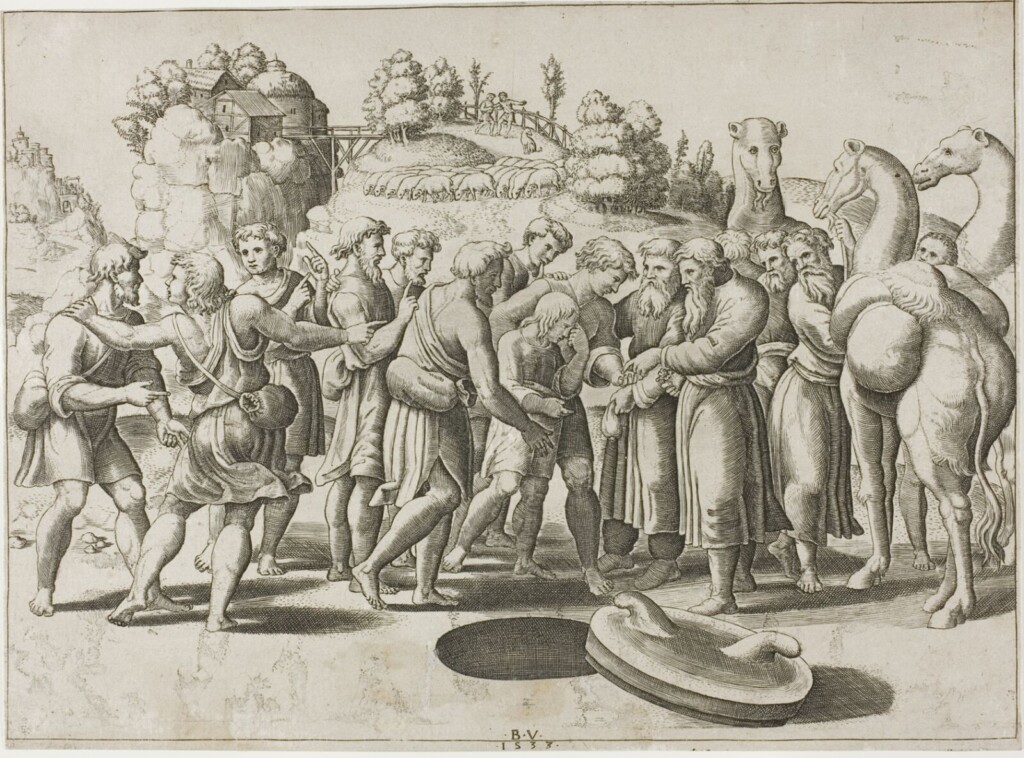
You are sitting at a table you have eaten at a thousand times, and the person across from you who shares your blood and your childhood bedroom and the particular smell of your parents’ house is, at this moment, someone you could genuinely hate. Not the theatrical hatred of strangers. The specific, surgical hatred of someone who knows exactly where you are soft.
Sigmund Freud would not have found this surprising. In Totem and Taboo, published in 1913, he constructed a founding myth for civilization itself — a band of brothers who collectively murder their tyrannical father, then are seized by guilt so profound it generates the twin pillars of human social life: prohibition and mourning. The story is not meant as archaeology. It is meant as structure. What Freud is diagnosing is the condition in which brothers require a common enemy to achieve solidarity, and when that enemy disappears, they turn the violence inward, toward each other. The fraternal bond is not prior to the conflict. The conflict is what produces the bond in the first place.
This is what shatters the comfortable story most families tell themselves — that love came first and rivalry appeared later as a corruption, a failure of character, a wound inflicted by some external event. The psychoanalytic reading reverses the timeline entirely. Brothers are rivals before they are allies. The alliance is always a secondary formation, built on top of a more primary antagonism that never fully dissolves, only gets managed. When someone tells you that their relationship with their sibling “used to be fine until money got involved,” or “until the inheritance,” or “until one of us had children,” they are not describing the introduction of conflict into something previously pure. They are describing the moment the management system broke down and the original structure became visible.
Alfred Adler, who broke with Freud in 1911 and developed what he called individual psychology, tracked this through the concept of birth order — not as an astrological curiosity but as a radical reorganization of the child’s perceived universe. The firstborn child, in Adler’s account, experiences the arrival of a sibling as a genuine dethronement. The word he used was Entthronung. There is no softer translation. A kingdom is lost. And the dethroned ruler does not forget the usurper, even when they grow up to share dinners and holidays and the mutual performance of family harmony.
What makes this genuinely unsettling is the way it implicates not just the brothers themselves but the institution that surrounds them. The nuclear family, as it consolidated in Western societies through the nineteenth century, promised to be a refuge from competition — a space organized by affection rather than interest. But it achieved this promise by concentrating the most intense competition imaginable into the smallest possible arena, then insisting that the competition was not happening. Parents who treat their children “equally” are not eliminating the stakes. They are raising them. Because now the children must compete for something that is officially not scarce, which means any evidence of unequal treatment becomes not just a practical grievance but a metaphysical betrayal. René Girard, developing his theory of mimetic desire in Violence and the Sacred in 1972, showed that rivalry does not emerge from difference but from sameness — from two people wanting the same thing because they want what the other one wants. Brothers, by definition, occupy the same symbolic position in a family. They are not rivals because they are different. They are rivals because they are mirrors.
The family photograph that hangs on the wall — everyone arranged, everyone smiling, the younger one leaning slightly into the older one’s shoulder — is not a lie exactly. It is a monument to the enormous labor required to hold that pose for even a fraction of a second, and to the complete silence maintained about what it cost.
The Inheritance Economy
You are sitting across from your brother at a lawyer’s table, and the man speaking is not describing your father — he is describing an estate, a sum, a division of assets, and somewhere in the legal vocabulary of “intestate succession” and “equitable distribution,” the person you grew up with has become a claimant.
The inheritance dispute is the oldest economic theater in Western civilization, older than capitalism, older than contract law, older than the very idea of the individual as a rights-bearing subject. Roman law dedicated entire sections of the Twelve Tables — codified around 450 BCE — to the question of who receives what when a paterfamilias dies, because Roman jurists understood something that modern grief counselors prefer to obscure: the moment a parent dies, the family does not mourn together. It divides. The mourning is real, but beneath it, something else is operating with cold precision, something that has been calculating for years, possibly decades, waiting for exactly this moment to become visible.
The numbers are not sentimental. A 2021 study published by the American College of Trust and Estate Counsel estimated that inheritance disputes had increased by roughly 40 percent over the preceding two decades in the United States, with the majority of contested estates involving siblings rather than spouses or children of the deceased. In the United Kingdom, data from the Ministry of Justice showed that probate litigation rose by over 700 percent between 2005 and 2019. These figures are not evidence that money corrupts people. They are evidence that the mechanisms of resentment, favoritism, and unspoken hierarchies that structured family life for thirty or forty years finally acquire a legal form that forces acknowledgment. The money does not introduce anything new. It simply grants permission to say what was already true.
Tocqueville, writing in 1835 in Democracy in America, noted that the abolition of primogeniture in the United States — unlike in Europe where the eldest son inherited everything — would have profound consequences not just for wealth distribution but for the emotional architecture of sibling relationships. He was right in a way he could not have fully anticipated: when all children are theoretically equal heirs, the question of who was actually loved more becomes inseparable from the question of who receives more. The will becomes a document of emotional truth, or at least is treated as one, which is why a bequest of ten thousand dollars more to one child can detonate a relationship that survived forty years of ordinary life.
Pierre Bourdieu’s concept of symbolic capital, developed across his work from the 1970s onward, helps locate why this detonation feels so total. What siblings fight over is rarely only money — it is the retroactive confirmation of their position within the family’s internal hierarchy. The parent who leaves slightly more to one child has, in death, finally spoken. The will is interpreted not as a financial document but as a verdict, a posthumous declaration of preference that validates or annihilates everything one sibling always suspected about how they were seen. Bourdieu understood that families are not unified by love but by the management of scarce symbolic resources — recognition, approval, visibility — and that money is simply the most legible translation of those resources into a form that courts can adjudicate.
What this means practically is that the rupture between brothers at the lawyer’s table is not caused by greed. Greed is the diagnosis that lets everyone off the hook, that reduces something structurally produced over a lifetime into a moral failing that appeared only at the end. The brother who contests the will is not a different person than the one who sat at Christmas dinner for thirty years. He is exactly the same person, finally operating in a context where the rules permit total honesty about what the family actually was.
Loyalty Asymmetries and the Debt Nobody Named
You kept score without knowing you were keeping score. The ledger was never written down, never acknowledged, never even named — and that is precisely why it became impossible to settle.
Arlie Hochschild, in her 1983 work “The Managed Heart,” argued that emotional labor — the work of managing one’s feelings to fulfill the emotional requirements of a role — was systematically extracted from certain people while others remained oblivious to its cost. She was writing about flight attendants, but families had been running the same extraction economy for centuries before anyone thought to document it. Inside the household, someone was always absorbing what the others could not carry: the parent’s anxiety, the sibling’s failure, the collective shame that needed a place to live. That someone rarely received acknowledgment, because acknowledgment would have required the family to see itself honestly, and most families have built their coherence precisely on not doing that.
The brother who stayed close to home, who answered the phone calls at midnight, who drove to the hospital when no one else could — he accumulated something. Not resentment, not immediately. First it was simply weight, a density in his daily life that the brother who left for another city did not feel. The one who left often experienced this freedom as a personal achievement, a sign of independence or ambition, without recognizing that his lightness was structurally produced by the other’s heaviness. When the crisis finally arrives — a parent’s illness, a financial collapse, a death — the asymmetry detonates. Not because one brother suddenly becomes selfish, but because the debt that was never named gets called in at the worst possible moment, with no shared vocabulary to process it.
Sociologist David Cheal, in his 1988 study “The Gift Economy,” demonstrated that gift exchange within families is never symmetrical and is almost never acknowledged as a system of obligation. What looks like generosity is often a claim — a way of accruing moral credit that can later be leveraged, consciously or not. The son who always remembered birthdays, who showed up for graduations, who sent money quietly during hard years, built a case without meaning to. When he finally asks for something — recognition, a decision made in his favor, a debt repaid — and receives nothing, he doesn’t experience it as a misunderstanding. He experiences it as a verdict on his entire life.
The asymmetry in how children are loved is perhaps the most politically charged silence in family life. Research by developmental psychologist Judy Dunn, published in her 1985 work “Sisters and Brothers,” found that differential treatment by parents — even when slight, even when entirely unconscious — is perceived with extraordinary precision by children. They do not need to be told that one sibling was the protected one, the golden one, the one whose failures were explained away. They feel it in texture and temperature, in which absences were noticed and which were forgiven before they were even committed. That differential treatment does not disappear when the children become adults. It migrates. It becomes the invisible architecture of every subsequent interaction between brothers, the unspoken reason a look across a table can carry forty years of grievance.
What makes the ledger so explosive is that it requires two people to agree it exists before either one can contest it, and that agreement almost never comes. One person experienced sacrifice as sacrifice. The other experienced the same period as simply the way things were. Neither is lying. They inhabited the same family the way two people can inhabit the same city and never once walk the same streets — sharing a geography, a name, a set of common references, while living inside entirely different emotional economies whose exchange rate was never fixed and whose debts compound silently, invisibly, until the interest becomes the whole story.
A vision curated by a filmmaker, not an algorithm
In this video I explain our vision
The Violence of Resemblance

You are sitting across from him at a table you have shared your entire life, and you cannot explain why his laugh makes your jaw tighten, why the way he holds his fork produces something close to revulsion, why a person who has never threatened you, never stolen from you, never raised a hand against you, can make you feel more endangered than any stranger ever has.
The standard explanations offer themselves readily: old grievances, parental favoritism, competition over inheritance, the accumulated sediment of childhood slights. René Girard spent decades arguing that these explanations are precisely the kind of stories we tell to avoid a more disturbing truth. In “Deceit, Desire, and the Novel,” published in 1961, he demonstrated that desire is not spontaneous — it is triangular, borrowed, mediated through a model whose proximity to us determines the intensity of the rivalry. The closer the model, the more violent the mimetic charge. Which means that the brother, positioned at the absolute minimum distance from the self, occupies a uniquely catastrophic place in the architecture of desire.
What Girard’s framework reveals, when pressed against the specific texture of fraternal conflict, is that the brother does not provoke you because he is alien. He provokes you because he is the living record of a fork in the road you both reached and took in opposite directions — or worse, a fork you believed you took alone, only to discover he arrived at the same destination by a different path. The rage this produces is not about him. It is about the sudden collapse of the story you built around your own choices, the story in which those choices were necessary, inevitable, uniquely yours.
There is a cruelty specific to resemblance that no external enemy can replicate. An enemy confirms your boundaries. A brother who resembles you dissolves them. When he fails, you see the failure you escaped by margins too thin to be called virtue. When he succeeds, you are confronted with the possibility that your own divergent path was not destiny but accident, not courage but drift. The psychoanalyst Daniel Stern, in his work on the interpersonal world of the infant, identified a phenomenon he called “affective attunement” — the mirroring process through which identity first consolidates itself in relation to another. The brother is the first sustained mirror after the mother, and like all mirrors, he can only be tolerated at certain angles.
The sociologist Randall Collins, writing on interaction ritual chains in 2004, noted that the highest-intensity emotional exchanges occur between people who share the most overlapping social and emotional fields. Brothers do not merely share history — they share the specific density of a family’s emotional atmosphere, its unspoken rules, its inherited silences. This means that the conflict between them is never simply about the surface event that triggers it. It carries the full load of everything that could never be said inside the original container, and the brother becomes the figure onto whom that entire unprocessed weight is discharged.
What makes this unbearable to examine is that the violence of resemblance is also a form of recognition, and recognition is what every human being most deeply craves and most deeply fears simultaneously. To be seen by a stranger is exposure. To be seen by a brother — who knows the raw material before the construction, who witnessed the first drafts of the person you became — is something closer to annihilation of the self-concept you have spent decades stabilizing. The hostility is not incidental to the intimacy. It is the intimacy, turned inside out, pressed to its logical extreme, where love and threat become structurally indistinguishable from each other and the only available response is a fury that neither of you can quite justify to yourselves or to anyone watching from the outside.
Cultural Scripts and the Pressure to Reconcile
You are at the dinner table again, the one you have sat at for thirty years, and someone across from you says it with that particular softness that functions as a blade: “He’s still your brother.” The sentence lands not as information but as instruction. It tells you that whatever happened — whatever was taken, dismissed, betrayed, or simply never acknowledged — must now be filed under a category that supersedes it. The category is called family, and inside it, the normal rules of human accountability do not apply.
What makes that phrase so difficult to resist is precisely that it does not announce itself as coercion. It arrives dressed in love, in warmth, in the rhetoric of loyalty. Pierre Bourdieu spent much of his career mapping this exact mechanism — in “Language and Symbolic Power,” published in 1991, he described how ordinary speech acts carry within them entire structures of domination that go unnoticed because they appear natural, even tender. Symbolic violence, in his framework, is not the violence of the raised fist but the violence of the raised eyebrow, the gentle reminder, the phrase repeated so many times it begins to feel like gravity. The person who says “he’s still your brother” is not lying. They are transmitting a social code so thoroughly internalized that they experience it as simple truth.
The code itself has a history. Kinship systems across most of recorded human civilization were not primarily emotional arrangements — they were economic and political ones. Brothers were bound to one another because brothers shared land, inheritance, military obligation, and tribal survival. The emotional warmth we now associate with siblinghood was largely retrofitted onto structures that were originally about resource consolidation and collective defense. When feudal European law held brothers jointly liable for each other’s debts well into the fifteenth century, the injunction to maintain family unity was not sentimental — it was fiscal. What has happened in the centuries since is that the economic rationale has dissolved while the loyalty demand has remained, floating free of its original justification and now sustained entirely by cultural repetition.
This is why the pressure to reconcile so frequently ignores the content of the conflict entirely. The mediating relative, the anxious parent, the well-meaning friend — none of them are necessarily asking whether the grievance was real, whether harm was done, whether an apology has been offered or refused. They are asking you to subordinate the particular to the categorical. Your specific wound matters less than the abstract noun “brotherhood,” which must be preserved not because it serves you but because its preservation serves the group’s image of itself as a functional unit. Family cohesion is a collective performance, and the person who refuses to reconcile is not just opting out of a relationship — they are threatening the narrative the entire family tells about who it is.
The sociologist Arlie Hochschild, writing in “The Managed Heart” in 1983, identified the labor involved in producing emotional states on demand — what she called emotional labor, the work of feeling the right thing in the right context for the benefit of others. What she observed in service workers navigating customer interactions applies with brutal precision to the adult sibling sitting across from an estranged brother at a forced holiday dinner, manufacturing a warmth they do not feel because the absence of that warmth makes everyone else uncomfortable. The labor is invisible, chronic, and entirely unreimbursed. And unlike the flight attendant who clocks out, the family member carries the performance home, carries it into sleep, carries it into the quiet moments when the question surfaces of what it would cost to simply stop.
The answer to that question is almost always social. To stop performing reconciliation is to become the difficult one, the one who holds grudges, the one who broke the family — and that designation follows a person through decades of gatherings, casual mentions, and the particular silence that fills a room when their name is said.
What Survives the Fracture
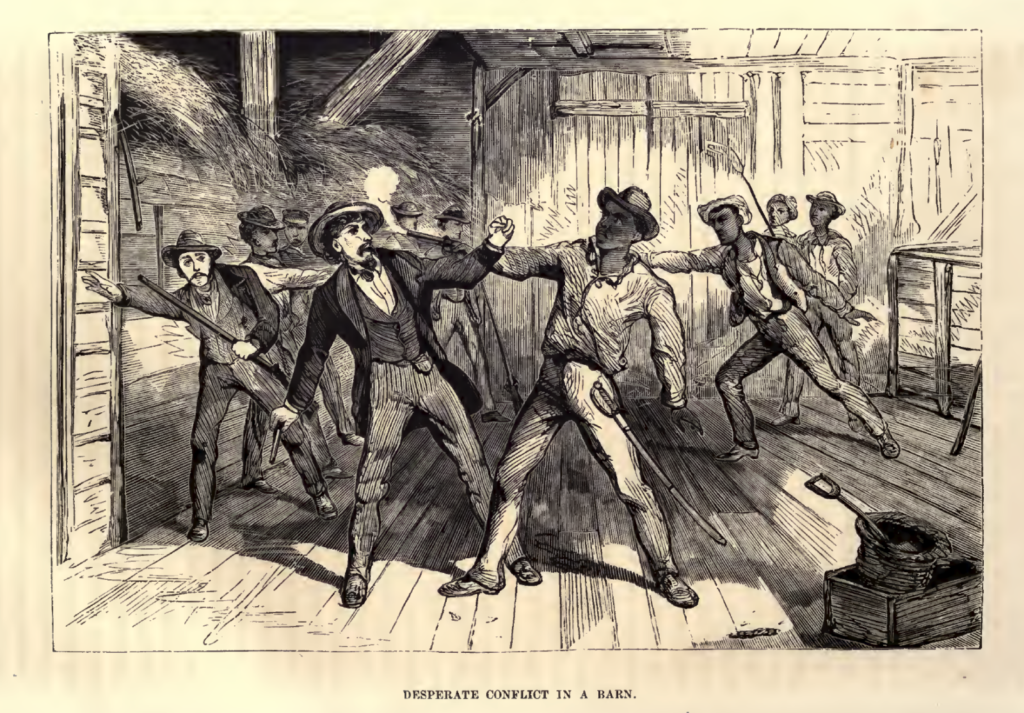
She has not spoken to her brother in eleven years. You would not know it by looking at her life — she does not perform the absence, does not fill it with compensatory closeness toward other men, does not mention it at dinner parties the way some people display old injuries to make themselves interesting. She built a business, raised a child with someone she chose carefully, and when people ask if she has siblings she says yes, a brother, and leaves it there. The silence that follows is hers. She is not healing. She is not waiting. She is simply a person who made a calculation that culture told her she was not allowed to make, and then made it anyway.
What she broke was not a relationship. It was a story — the story that said the bond formed by shared parents is categorically different from any other bond a human being can choose or refuse. That story has enormous institutional support. It lives inside inheritance law, inside hospital visitation rights, inside the language of crisis counselors who speak of “estrangement” as though distance from a blood relative were itself a symptom requiring treatment. The psychologist Lucy Blake, whose research on family estrangement published in the early 2010s challenged decades of clinical assumption, found that adult children who cut contact with parents or siblings reported not chaos but, frequently, relief — and that this relief was durable, not a phase. The therapeutic establishment had largely framed cutting family ties as a failure of individuation, a wound that would eventually demand return. Blake’s data suggested something far more uncomfortable: that for a significant portion of people, the rupture was the resolution.
The discomfort this produces in observers is worth examining precisely because it is so rapid and so visceral. When someone announces a divorce, culture extends sympathy. When someone announces that they have ended a friendship that became corrosive, culture nods with understanding. When someone announces they no longer speak to a sibling, culture reaches immediately for explanation, for the hidden wound, for the thing that must have happened to make such a decision comprehensible. The implication is that absent a catastrophic reason, the severance is itself the catastrophe. This logic does not apply to any other category of human relationship. It is reserved exclusively for blood.
Anthropologists have documented across dozens of kinship systems the degree to which biological relation was historically a political and economic category before it was an emotional one. In many pre-modern European contexts, the sibling bond was structurally significant because property moved through it, because alliances were cemented through it, because survival in conditions of material scarcity often depended on it. The emotional weight we now assign to siblinghood — the assumption that it must be preserved, that its loss registers as grief, that the person who walks away from it is somehow diminished — is in large part the residue of those structural necessities long after the structures themselves have dissolved.
What that woman’s life actually demonstrates is not coldness, not damage, not a self-protective retreat from intimacy. It demonstrates that the human capacity for chosen connection is robust enough to organize a full life without the particular architecture that accident of birth installed. Her son will not inherit her estrangement as trauma. He will inherit, perhaps, something rarer: the knowledge that love is a practice that can be built, that loyalty is a decision rather than a debt, and that the people who remain in your life deserve to remain there not because biology made the case for them but because they earned the room they occupy. The fracture in her family did not produce a wound that spread forward in time. It produced a boundary that held, and behind it, something unhurried and quietly intact.
🔥 Blood Ties: When Family Bonds Break and Burn
Brotherhood and family conflict are among the oldest and most devastating forces in human drama. From loyalty that suffocates to betrayal that liberates, the bonds of blood carry extraordinary psychological and emotional weight. These pieces explore the deepest tensions hidden within family structures, identity, and the wounds we inherit.
Betrayal as a Theme in World Literature
Betrayal in literature almost always finds its most devastating form within the family circle, where trust is absolute and its rupture therefore catastrophic. From Cain and Abel to King Lear, writers across centuries have returned obsessively to the moment when someone you love becomes someone who destroys you. This article traces betrayal as a universal literary theme and illuminates why it continues to haunt our storytelling.
GO TO THE SELECTION: Betrayal as a Theme in World Literature
The Double Life in Psychology: When the Past Returns to Claim You
The double life is not merely a narrative device but a profound psychological condition, one that emerges most urgently when family and past demand a reckoning with who we truly are. When secrets accumulated over years finally surface, they often do so through family relationships that can no longer contain the weight of hidden truths. This article explores the psychology of living split between two selves and the moment the past refuses to stay buried.
GO TO THE SELECTION: The Double Life in Psychology: When the Past Returns to Claim You
Golding’s Lord of the Flies: Analysis
Golding’s Lord of the Flies strips away the comforting myths of childhood innocence to reveal how power, rivalry, and tribalism corrupt even the closest bonds between brothers in arms. The novel’s group of boys recreates the dynamics of family conflict on a savage scale, with loyalty fracturing under the pressure of fear and dominance. This analysis unpacks one of literature’s most chilling portraits of brotherhood turned monstrous.
GO TO THE SELECTION: Golding’s Lord of the Flies: Analysis
William Faulkner and the Decadent American South
William Faulkner built his literary universe around the slow collapse of Southern families haunted by guilt, pride, and the sins passed from one generation to the next. His decadent dynasties are laboratories of family dysfunction, where brothers wound each other across decades and fathers curse their sons with impossible legacies. This article examines how Faulkner transformed family conflict into a mythic portrait of an entire civilization’s self-destruction.
GO TO THE SELECTION: William Faulkner and the Decadent American South
Discover the Cinema of Family, Identity and Conflict
If these themes of brotherhood, betrayal, and family fracture speak to something deep in you, Indiecinema streaming is the place to take that journey further. Our curated selection of independent and auteur films explores these human conflicts with honesty, complexity, and emotional power you won’t find in mainstream cinema. Come and discover the stories that dare to look unflinchingly at the bonds that define and destroy us.
👉 EXPLORE THE CATALOG: Watch Indie Films in Streaming
A vision curated by a filmmaker, not an algorithm
In this video I explain our vision

