
The Waiting Room as Total Institution
You arrive early, because they told you to arrive early, and you sit in a chair that was designed for no particular body, holding a form that asks you to translate the private grammar of your suffering into checkboxes. The room smells of something scrubbed away. Around you, others wait with the same performed patience, each one having surrendered some portion of their ordinary selfhood at the automatic door — the version of themselves that makes decisions, that moves through the world with intention, that knows what they need. In here, you do not know what you need. That determination belongs to someone else, someone with credentials framed on a wall you will never see, who will appear briefly, speak in a register calibrated to inform without quite explaining, and then disappear again. You are not a person being healed. You are a case being processed.

This is not a failure of the healthcare system. It is the healthcare system working precisely as it was designed to work.
Ivan Illich understood this with a clarity that his contemporaries found either visionary or intolerable, depending on how much they had invested in the institutional arrangements he was dismantling. In 1975, he published Medical Nemesis — later expanded and retitled Limits to Medicine — and the argument he made was not the familiar leftist critique about access and inequality, nor the libertarian complaint about cost and bureaucracy. His claim was stranger and more unsettling than either: that modern medicine, at the scale and with the authority it had assumed by the mid-twentieth century, had become a primary cause of suffering. Not through malpractice. Not through negligence. Through success.
He borrowed the term iatrogenesis from clinical medicine, where it already had a narrow technical meaning — harm caused by medical intervention itself — and he exploded it into three dimensions. Clinical iatrogenesis was the familiar one: the adverse drug reactions, the hospital-acquired infections, the unnecessary surgeries. By the early 1970s, studies were already showing that somewhere between fifteen and twenty percent of hospital patients experienced some form of injury directly attributable to their treatment. But Illich was less interested in this layer than in what sat beneath it. Social iatrogenesis described the process by which medicine colonizes ordinary human experience, transforming aging, grief, anxiety, birth, and death into medical events requiring professional management. And structural iatrogenesis — the deepest and most irreversible level — named the erosion of the individual’s capacity to suffer, to heal, and to die on their own terms, the systematic destruction of what Illich called the cultural matrix that had, for millennia, allowed human beings to make meaning of their own vulnerability.
The waiting room is not incidental to this argument. It is the architecture of the argument made physical. Erving Goffman, in Asylums, published in 1961, described what he called the total institution — a place that strips its entrants of their prior identity through a series of mortifying procedures: the removal of personal effects, the donning of institutional clothing, the adoption of a new name or number, the submission to a schedule not of one’s making. The asylum, the prison, the military barracks. What Illich recognized, and what Goffman’s framework allows us to see in clinical settings, is that the hospital and its antechambers operate through a softer but structurally identical logic. You are not strip-searched. You are simply asked to wait, to undress when told, to describe your pain on a scale of one to ten, to accept that the numbers on your chart constitute a more authoritative account of your condition than anything you could say about how it actually feels to live inside your own skin.
The genius of this system is that it feels like care. And because it feels like care, the damage it does arrives without the resistance that overt coercion would provoke.
Stem Cell
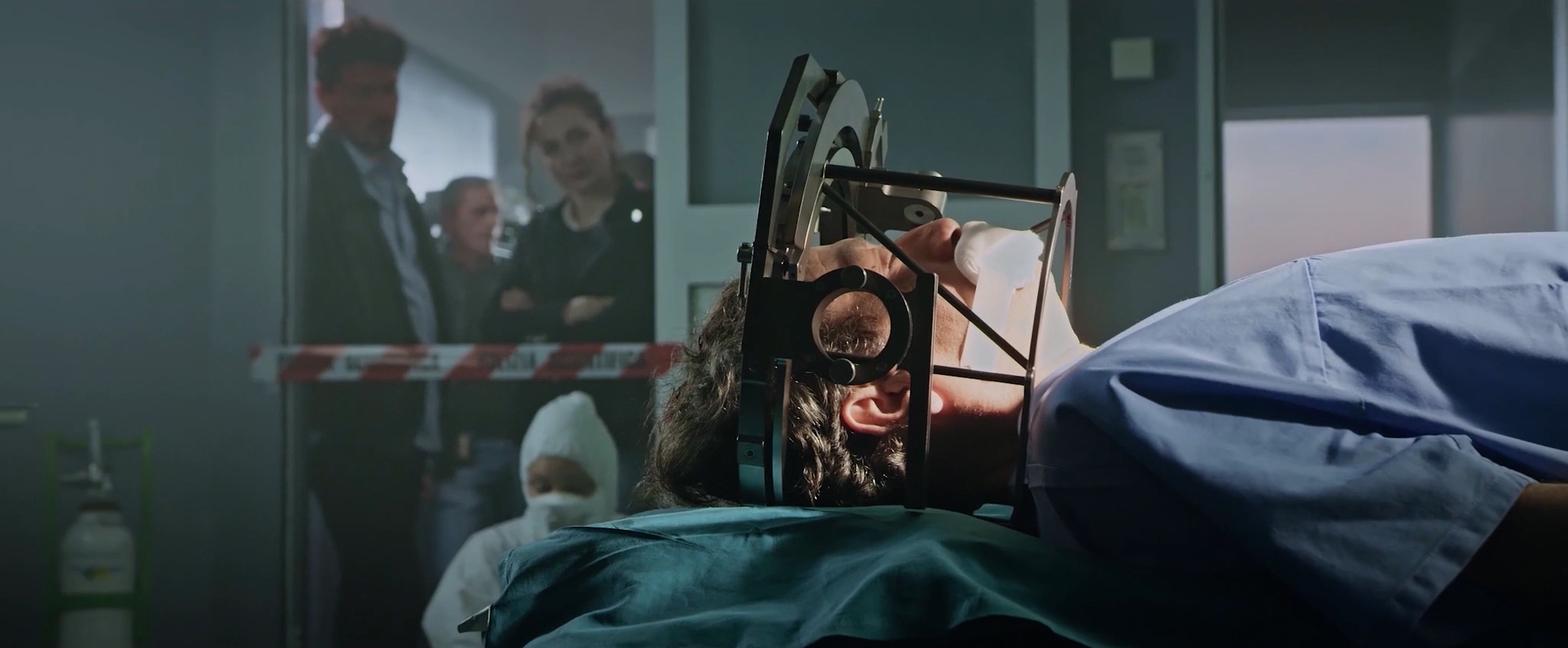
Stem Cell, directed by Giuseppe Di Giorgio, Italy, 2020.
A brilliant neurosurgeon is found murdered in his own operating room. The scene is gruesome. His killer used the very tools of his trade. Who is the murderer? A psychopath? Someone from within the institute? Commissioner Lorenzo Aliprandi and his team find themselves in a race against time to stop a killer who continues to murder using the same heinous methods, targeting other prominent doctors, leaving no trace behind except a trail of blood. New knowledge, intense experiences, and the race against time will test the strong character of Commissioner Aliprandi, who determined to uncover the murderers, will face every challenge head-on.
Based on the novel of the same name by Paolo Gaetani, a neurosurgeon by profession, Stem Cell addresses the major issues facing healthcare and its institutions, with a more poignant relevance than ever. Cinema thus complements the narrative and becomes a powerful tool for in-depth analysis and dissemination, exploring questions and proposing answers. It does so through the powerful tools of a fast-paced thriller rhythm and meticulous, bold cinematography. Alongside the main theme, the crimes unfold along with the intrigues, betrayals, economic interests, stories, and psychologies of all the characters.
Language: Italian
SUBTITLES: English, Spanish, French, German, Portuguese
Illich's Diagnosis of the Diagnostic Machine

You are sitting in a waiting room that smells of antiseptic and recycled air, holding a number like a supplicant at a bureaucratic altar, and somewhere between the fluorescent hum above you and the laminated poster advising you to wash your hands for twenty seconds, you have already surrendered something you cannot name. You came in with a symptom. You will leave with a diagnosis. These are not the same thing, and the distance between them is where Ivan Illich spent the better part of his intellectual life.
In 1975, Illich published Medical Nemesis — the title itself a provocation, invoking the Greek goddess of retribution against those who overstep their mortal boundaries — and what he argued there was not that doctors were incompetent or that hospitals were cruel. His argument was structurally more devastating: that industrial medicine had passed a threshold beyond which its institutional expansion actively generated the suffering it claimed to treat. He called this iatrogenesis, a word borrowed from clinical vocabulary but stretched by Illich far beyond its original meaning of doctor-induced illness. For him, the harm was not merely a botched surgery or a drug with side effects. It was a civilizational condition.
Clinical iatrogenesis, the most visible layer, is measurable. By the mid-1970s, studies Illich cited were already documenting that hospital-acquired infections, adverse drug reactions, and surgical complications constituted a significant cause of death and disability in the industrialized world. A 1974 report in the New England Journal of Medicine found that nearly one in five patients admitted to a university hospital suffered an iatrogenic illness, and in 7 percent of those cases the episode was considered life-threatening. These numbers, alarming as they were, interested Illich only as evidence for a deeper pathology.
Social iatrogenesis described the way medicine colonizes everyday life — the medicalization of birth, death, grief, anxiety, aging, and dissatisfaction. What had once been managed by community, ritual, or simple endurance became, across the twentieth century, a clinical problem requiring professional intervention. Childbirth migrated from the home to the hospital between 1900 and 1950 in the United States with a speed that felt like progress and functioned, Illich argued, as a dispossession. Women who had given birth attended by midwives and female kin for centuries were repositioned as patients, their bodies as sites of potential pathology requiring continuous monitoring. The competence that had resided in communities was transferred to institutions, and with it went a form of autonomy so ordinary it had never been recognized as freedom until it was gone.
But Illich reserved his most corrosive analysis for what he called cultural iatrogenesis — the erosion of the human capacity to face pain, illness, and death without institutional mediation. This is where his argument stops being sociological and becomes something closer to existential. Every culture, he insisted, had developed symbolic resources for transforming suffering into a meaningful experience: religious frameworks, narrative traditions, communal practices of mourning and endurance. Industrial medicine did not merely compete with these resources. It systematically dismantled them by reclassifying their territory as medical jurisdiction. Pain became a problem to be eliminated rather than a signal to be interpreted. Death became a clinical failure rather than a passage that demanded witness. The person who endures, who sits with suffering and extracts something human from it, was replaced by the patient, a figure defined entirely by dependence on expertise.
What makes this argument resistant to easy dismissal is that Illich was not romanticizing pre-modern suffering. He was not suggesting that people should decline anesthesia or reject antibiotics. He was identifying a specific moment in the history of institutions where the logic of a system begins to serve its own perpetuation rather than the needs it was designed to meet — and pointing out, with uncomfortable precision, that medicine had already crossed that line before most people noticed it was approaching.

The Expropriation of Pain
You are handed a diagnosis before you have finished describing the sensation. The doctor’s pen is already moving.
There is a version of suffering that belongs to you — not in the sentimental sense of ownership, but in the structural sense that your capacity to endure it, interpret it, and eventually integrate it into a life story is part of what makes you a self-governing person rather than a managed body. Ivan Illich understood, with a precision that still unsettles, that the twentieth century conducted a systematic transfer of that capacity away from individuals and toward institutions. He called the result iatrogenesis, and he was careful to distinguish three forms of it: clinical, social, and cultural — each one a deeper layer of dispossession than the last.
Clinical iatrogenesis is the most legible. It is the infection acquired in the hospital, the drug that produces a second disease, the surgical intervention that creates the condition it was meant to cure. The numbers Illich marshaled in Medical Nemesis, published in 1974 and expanded in 1976, were already alarming for his era: iatrogenic illness was by some estimates the third leading cause of death in the United States, a figure that later research by Barbara Starfield in the Journal of the American Medical Association in 2000 would put even higher, attributing roughly 225,000 annual deaths in America alone to medical care itself. But Illich was not primarily interested in malpractice. He was interested in something far less visible.
Social iatrogenesis is what happens when the medical system colonizes the vocabulary of everyday life. When pregnancy becomes a pathology requiring management, when grief acquires a diagnostic code, when the ordinary depletion of aging is reframed as a condition to be pharmacologically corrected, people stop learning to navigate these experiences through cultural tradition, community, or personal resilience. They outsource the interpretation. A population that cannot recognize sorrow except as a symptom is a population that has been rendered, in a precise and measurable sense, less capable — not because it lacks intelligence, but because the institutional apparatus has made autonomous interpretation unnecessary and eventually impossible.
Cultural iatrogenesis is where the argument becomes genuinely radical. It is the destruction of the traditional frameworks — religious, philosophical, communal — through which human beings have historically made suffering bearable by making it meaningful. The Stoic injunction to distinguish between what is in your power and what is not, the medieval Christian theology of redemptive pain, even the secular existentialist insistence that anguish is the price of consciousness — all of these are cultural technologies for metabolizing adversity without dissolving the self. Medicalization does not merely compete with these frameworks. It systematically delegitimizes them, teaching people that turning inward, or toward ritual, or toward narrative, is a kind of denial — that the correct response to pain is always a pharmaceutical or procedural one.
What Illich was tracing was a civilizational shift in the locus of authority over the body that unfolded across roughly a hundred years, accelerating sharply after the Second World War when the prestige of scientific medicine reached its cultural apex. Before the late nineteenth century, the physician was one voice among many — the priest, the midwife, the herbalist, the elder — and the sick person retained interpretive sovereignty over their own experience. The consolidation of medical licensing, the rise of the hospital as the normative site of birth and death, and the emergence of pharmaceutical corporations as the primary definers of what constitutes a treatable condition progressively contracted that sovereignty to nearly nothing.
The person who cannot suffer without professional permission is not simply dependent. They have been made, in a structural and not merely psychological way, incapable of a certain kind of adulthood — the kind that requires sitting with something unresolvable long enough to understand what it is telling you about how you have been living.
When the Expert Becomes the Hazard

You go to the doctor once, and something shifts that never quite shifts back. Not because you were misdiagnosed or mistreated — the visit may have gone perfectly well by every measurable standard — but because you leave with a new relationship to your own body. Before, the chest tightness was something you lived through. After, it is a symptom requiring monitoring. The body has been translated into a text that only specialists can read, and you have forgotten, gradually, that you were ever fluent in it yourself.
This is not a conspiracy. It is a structural outcome, and the numbers confirm it with a kind of cold indifference. Between 1990 and 2020, global pharmaceutical consumption roughly doubled, measured in defined daily doses per thousand inhabitants, according to studies tracking medicine use across high-income countries published in journals including The Lancet. Antidepressant prescriptions in OECD nations increased by over 130 percent in the two decades following 2000. This did not happen because human suffering multiplied at the same rate. It happened because the diagnostic categories expanded to meet the medications that already existed, a reversal of the expected sequence so complete it barely registers as strange anymore.
Peter Conrad, the sociologist who spent decades mapping what he called the medicalization of deviance and ordinary life, showed in his 2007 work The Medicalization of Society that conditions once understood as biographical difficulties — shyness, inattention, grief, sexual variation — were progressively reconstituted as medical entities requiring pharmaceutical management. What Conrad tracked was not a corruption of science but a logical consequence of how the therapeutic system incentivizes expansion: every new diagnosis creates a new market, every new patient creates a dependency, and every dependency generates a return visit. The system does not need malice to produce harm. It needs only its own ordinary functioning.
Antibiotic resistance makes this visible at the scale of biological catastrophe. The World Health Organization projected in 2019 that drug-resistant infections could kill ten million people annually by 2050, surpassing cancer as a cause of death. That trajectory was not produced by ignorance. It was produced by decades of routine overprescription — antibiotics distributed for viral infections they cannot touch, for precautionary purposes, for patient satisfaction scores, for the structural pressure on physicians to act rather than wait. The treatment, in aggregate, has been preparing the conditions of its own failure for half a century.
What the pharmaceutical industry calls an adherence problem — patients who stop their medications, who do not follow protocols, who resist treatment plans — might equally be read as an immune response of a different kind. René Dubos, the microbiologist who preceded much of this conversation in his 1959 book Mirage of Health, argued that health was never a stable state to be achieved but a continuous adaptation between organism and environment. When medicine positions itself as the permanent mediator of that adaptation, it does not support life — it substitutes for it. The patient who cannot regulate their own sleep without pharmacological assistance, who cannot tolerate anxiety without a prescription, who must calibrate their diet through clinical surveillance rather than appetite, is not a healthier person than their grandparent. They are a more thoroughly managed one.
Diagnostic inflation operates by the same logic, quietly and systematically. When the threshold for hypertension was lowered in American clinical guidelines in 2017, thirty-one million additional Americans became patients overnight — not because their blood pressure had changed, but because the definition had. They did not fall ill. They were reclassified into illness, and with that reclassification came the entire apparatus: monitoring, medication, follow-up, risk stratification, a new vocabulary for their own existence.
The Death That Medicine Stole
You are sedated when you die now. Not metaphorically — chemically, medically, managerially. The final hours that every civilization before ours treated as the most consequential passage a person would ever make have been converted into a clinical procedure, timed and titrated, witnessed not by those who loved you but by rotating staff whose job is to ensure you do not disturb the ward.
This is not a failure of medicine. It is medicine succeeding at exactly what it set out to do.
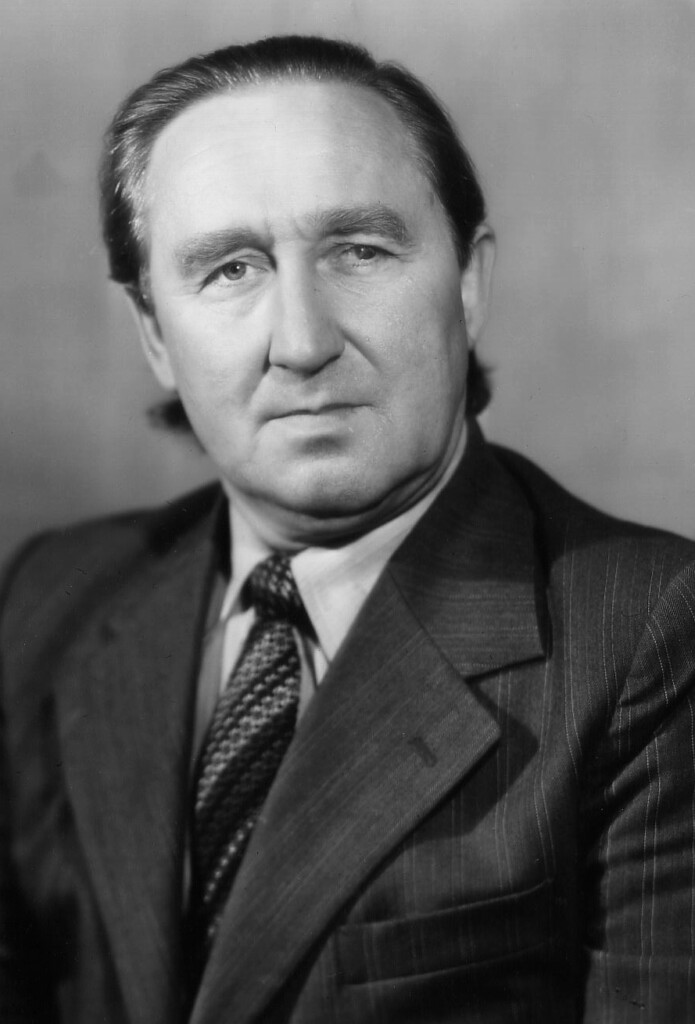
Ivan Illich understood in 1975, when he published Nemesis, that the expropriation of death was the terminal stage of a much longer colonization. He had already watched institutions strip people of their capacity to learn for themselves, to move under their own power, to build their own shelter. But the medicalization of dying was different in kind, not merely degree. Death had always been the event around which human cultures organized their deepest meanings — the rituals, the gods, the stories told to children, the architecture of grief. To remove it from human hands was not to improve a biological process. It was to dissolve the existential grammar through which communities had made sense of existence itself.
The numbers confirm what Illich intuited philosophically. In the United States in 1900, roughly 85 percent of people died at home. By 1980, that figure had inverted: nearly 80 percent died in institutions. In contemporary Britain, despite decades of palliative care advocacy, more than half of all deaths still occur in hospitals, the majority of those in conditions the dying person never chose and often explicitly feared. The machinery of intensive intervention — ventilators, vasopressors, central lines — is applied routinely to people in their final days because the system is structured around the imperative to treat, and because ceasing to treat requires a bureaucratic courage that the institution systematically discourages.
What gets lost is not comfort. Palliative medicine genuinely reduces physical pain, and that matters enormously. What gets lost is agency — the ancient human capacity to meet death as a participant rather than a patient. Philippe Ariès, whose monumental 1977 study The Hour of Our Death traced Western attitudes toward dying from the early Middle Ages to the twentieth century, documented how the “tame death” of medieval Europe — accepted publicly, narrated personally, surrounded by community — gave way across several centuries to what he called the “invisible death,” expelled from social life and relocated to the hospital precisely because its visibility had become intolerable to a culture that had staked its identity on indefinite progress.
The dying person in the medieval tradition knew they were dying, said so, arranged their affairs, said goodbye to those they loved, and made their peace with whatever metaphysics they inhabited. This was not resignation. It was a form of authorship — the final act of a self that had been, throughout its life, the protagonist of its own story. The ICU death is something else: a story that other people finish for you, in language you do not speak, following protocols you never approved, toward an ending nobody wanted but nobody was structurally positioned to prevent.
Illich called this iatrogenesis at its most profound level — not the doctor who prescribes the wrong drug, but the entire civilizational arrangement that makes it impossible to die as a human being rather than as a case. The Greek myth embedded in his title said it clearly: Nemesis was the goddess who punished those who transgressed divine limits, who reached for what belonged to the gods. Medicine reached for death, claimed jurisdiction over it, and in doing so did not conquer mortality — it simply ensured that when death finally arrives, the person it comes for has already been, in every meaningful sense, replaced by a body under management.
A vision curated by a filmmaker, not an algorithm
In this video I explain our vision
🏥 When Systems Harm: Power, Medicine, and the Body
Ivan Illich’s Medical Nemesis is not merely a critique of healthcare—it is a philosophical indictment of how modern institutions colonize human experience and strip individuals of their autonomy. The articles below explore the same territory from different angles: the counterproductive machinery of industrial society, the body’s revolt against alienated life, and the thinkers who dared to name the damage done.
Ivan Illich: Life and Works
Ivan Illich spent his life dismantling the myths of progress, arguing that institutions designed to serve humanity inevitably end up controlling and disabling it. This article explores his biography and the full arc of his thought, from critiques of schooling to energy use to medicine itself. Understanding Illich the man is essential to grasping why Medical Nemesis remains one of the most radical texts of the twentieth century.
GO TO THE SELECTION: Ivan Illich: Life and Works
Illich’s Tools for Conviviality: Analysis
In Tools for Conviviality, Illich develops the theoretical framework that underlies Medical Nemesis: the idea that beyond a certain threshold, tools and institutions become counterproductive and destroy the very values they were meant to promote. This analysis of the text unpacks Illich’s concept of ‘conviviality’ as a radical alternative to industrial overreach. It is the essential companion piece to understanding how medicine, in his view, crossed the line from healing to harm.
GO TO THE SELECTION: Illich’s Tools for Conviviality: Analysis
Illness as Awakening: When the Body Says Enough
Illness as Awakening examines the phenomenon where the body’s breakdown becomes a threshold moment—a refusal to continue living in ways that are unsustainable and alienating. This perspective resonates deeply with Illich’s argument that much modern suffering is iatrogenic, produced by the very systems meant to eliminate it. The article invites a rethinking of disease not as enemy to be conquered but as signal to be heard.
GO TO THE SELECTION: Illness as Awakening: When the Body Says Enough
Discover the Cinema That Questions Everything
If these ideas shake something loose in you, independent cinema can take you further. On Indiecinema you will find films that confront institutional power, bodily autonomy, and the human cost of progress with the same unflinching honesty that Illich brought to the page—stories that no mainstream platform would dare to tell.
👉 EXPLORE THE CATALOG: Watch Indie Films in Streaming
A vision curated by a filmmaker, not an algorithm
In this video I explain our vision

