
The Body That Remembers What the Mind Prefers to Forget
You are lying on a treatment table in a room that smells of synthetic lavender and clean linen, and a stranger’s hands are pressing into the muscles of your lower back with a precision that feels almost accusatory. The physiotherapist says nothing for a moment. She simply presses, reads, adjusts. And in that silence you become aware of something you have spent considerable effort not noticing: your body has been keeping records you never authorized.

Every hesitation at the top of a staircase, every morning when the feet needed thirty seconds on the floor before they could be trusted to hold you, every unconscious recalibration of how you lower yourself into a chair — the body registered all of it, filed it, held it in the tissue and the joint and the tendon. The physiotherapist’s hands are not healing you so much as reading you aloud. And that is the part that is genuinely difficult to bear.
Western culture has constructed an elaborate and largely successful architecture of denial around the aging body. It does not happen through cruelty but through a kind of anxious optimism that pathologizes stillness and markets movement as the solution to time itself. The wellness industry, valued at approximately 5.6 trillion dollars globally as of 2022 according to the Global Wellness Institute, does not sell you health. It sells you the convincing sensation that biological decline is a lifestyle problem, correctable with sufficient intention and the right subscription. This is not a conspiracy. It is something far more ordinary: a civilization that decided, somewhere in the twentieth century, that the appropriate response to mortality was a better morning routine.
Simone de Beauvoir understood this mechanism with a clarity that most gerontologists have still not matched. In her 1970 work La Vieillesse, she argued that old age is not a natural state that society neutrally observes but a condition that society actively produces and then refuses to see — rendering the aged body simultaneously hypervisible as spectacle and invisible as a subject with interior life. The old person in the physiotherapy clinic is looked at constantly: assessed, measured, scored on functional scales. What is almost never invited is their account of what it feels like to inhabit a body that the culture around them has already begun to mourn.
The clinical encounter in physiotherapy is one of the very few spaces in contemporary life where this mourning is performed in real time, without euphemism. Grip strength is measured, balance is tested, range of motion is recorded with an angle meter as if the shoulder joint’s story can be told in degrees. And it can, partially. The science is real. Research published in journals like Age and Ageing has consistently demonstrated that targeted physiotherapy interventions reduce fall risk, delay functional decline, and preserve independence in older adults in ways that pharmacological approaches alone cannot replicate. None of this is in dispute. What is worth examining is the frame around the data — the unspoken assumption that what is being restored is a deviation from a norm, rather than a renegotiation with a body that has simply arrived somewhere new.
There is a philosophical distinction that matters here, between a body that is broken and a body that is different. Modern rehabilitative medicine, for all its genuine competence, was architecturally designed around the first model. It emerged from the trauma wards of the First and Second World Wars, from the urgent task of returning young men to functional capacity as rapidly as possible. The conceptual scaffolding it built — deficit, restoration, baseline — was never dismantled when the patient population shifted from the war-wounded to the very old. It was simply applied to a different kind of body, one that does not want what that scaffolding was built to deliver.
Rehabilitation as a Modern Theological Project
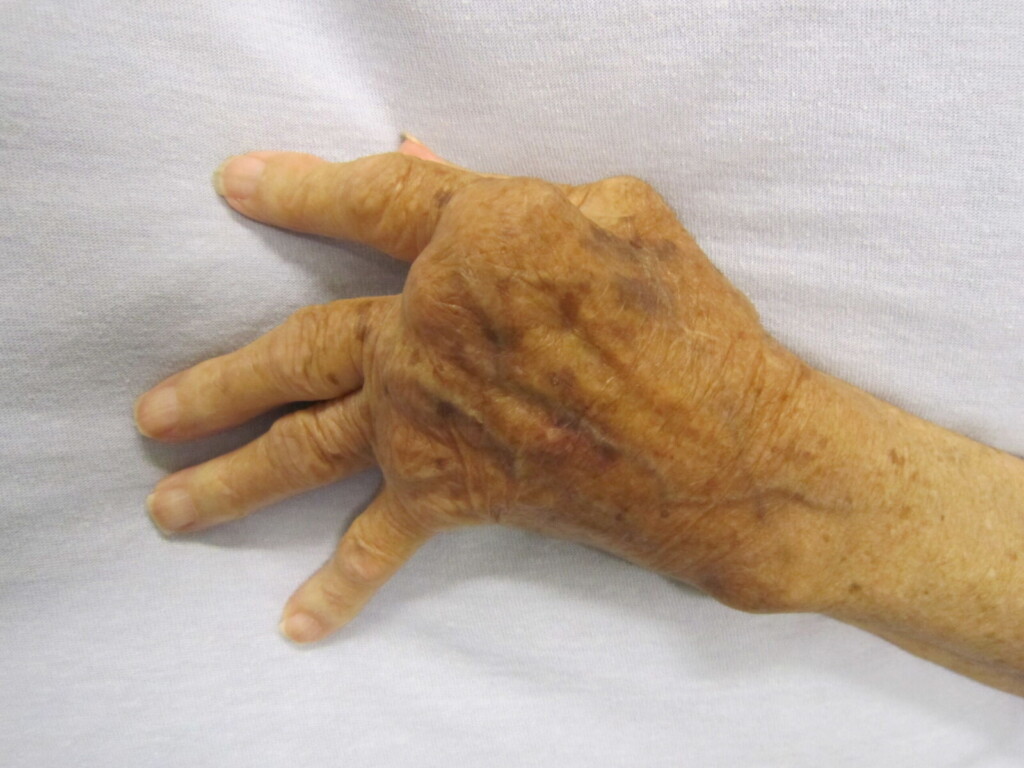
You arrive at the clinic on a Tuesday, the same Tuesday as every other week, and the physiotherapist asks you to raise your arm above your head. You cannot reach the point you reached last Tuesday. Nobody says anything alarming. They simply write it down, adjust the protocol, and schedule you for the following Tuesday.
The word “rehabilitation” entered clinical language carrying a promise that most people accepted without examination. It derives from the Latin habilis — capable, fit — and its prefix re- insists on return, on the restoration of something prior. This etymology is not neutral. It presupposes that the body had a legitimate previous state to which it can and should be returned, and that any deviation from that state is a problem awaiting correction rather than a condition awaiting understanding. When the World Health Organization formalized its definitions of disability and functional impairment through the 1950s and into the landmark 1980 International Classification of Impairments, Disabilities and Handicaps, it did not merely describe human bodies — it ranked them against an invisible standard of productive normalcy, and then commissioned an entire medical apparatus to close the distance between what bodies were and what they were supposed to remain.
Georges Canguilhem published The Normal and the Pathological in 1943, though its full cultural weight arrived later, and what he argued disturbed the foundations of clinical medicine without ever quite toppling them. He demonstrated that “normal” is not a biological fact but a normative judgment — that when medicine declares a body pathological, it is not discovering a truth already present in the tissue but imposing a value borrowed from social life. The aging body, in this framework, became the site where that imposition was most aggressive and most invisible. What geriatric rehabilitation encoded, particularly in its rapid institutional expansion through the 1960s and ’70s when specialized units proliferated across North America and Western Europe, was the conviction that the losses accompanying old age were essentially errors — deviations from a standard that had itself been constructed around the productive adult male body of mid-century industrial society.
There is something structurally theological in this conviction, and not by accident. The great rehabilitation pioneers, figures like Howard Rusk, who built his model at New York University through the 1950s and became the discipline’s most prominent evangelist, spoke explicitly about restoring patients to “useful lives.” The criterion was usefulness. The body that could not return to function — to work, to independence, to economic legibility — was a body that had failed a moral test disguised as a medical one. Rusk’s framework was humane in its intentions and coercive in its logic, two qualities that have always cohabited comfortably inside institutions designed to manage bodies that have drifted from expectation.
What makes this harder to see is that rehabilitation genuinely relieves suffering. A hip replaced at seventy-eight, a shoulder mobilized after months of frozen pain, a stroke patient relearning the grip that allows them to hold a cup — these are not illusions. The relief is real. But relief and restoration are not the same operation, and confusing them has consequences. When a clinic’s success is measured by the distance between a patient’s current functional capacity and a standardized normal range, the patient’s own relationship to their changed body becomes clinically irrelevant. Their adaptation, their negotiation, their hard-won familiarity with what they can now do rather than what they once could — this is reclassified as insufficient progress, sometimes as resignation, occasionally as depression requiring its own intervention.
The seventy-three-year-old woman sitting across from her physiotherapist with a chart showing declining grip strength is not simply receiving medical care; she is being measured against a standard she had no part in constructing, and found wanting by a system that has already decided what her body should be able to do.

The Political Economy of Upright Posture
You have been doing the exercises for three weeks. The physiotherapist marks something on her clipboard each time you manage to rise from the chair without using your hands, and you feel, briefly, like you have passed a test whose grading criteria you never agreed to. The satisfaction is real. So is the question underneath it: who decided that standing unassisted was the threshold, and what happens to the person who can no longer clear it.
Physiotherapy presents itself as a clinical discipline oriented around function and relief. What it also is, without announcing itself as such, is a mechanism for managing the social cost of bodies that stop performing. The distinction matters enormously. When a system of care is organized around restoring independence, the word independence carries freight that has nothing to do with the patient’s own desires and everything to do with what an aging person costs when they require sustained human attention. In welfare states built on the postwar compact between productivity and entitlement, the citizen who can no longer contribute is tolerated provided they do not demand too much. Mobility is the threshold. Ambulate, transfer, perform basic self-care — and you remain, in administrative terms, a manageable case. Lose those capacities and you become what health economists call a high-dependency patient, which is a technical phrase for a person who has become expensive in a way the system did not budget for generously enough.
Norbert Elias, writing in 1982 in “The Loneliness of the Dying,” observed something that clinicians rarely say aloud: that dying people in modern societies make the living deeply uncomfortable, not because of grief, but because they embody the failure of the central modern promise, which is that individual autonomy can be indefinitely maintained. The old and the dependent do not merely remind us of our mortality. They expose the fragility of the entire architecture of self-sufficiency on which liberal citizenship is built. Elias noticed that this discomfort produces a kind of social quarantine — the dependent body gets moved, institutionalized, managed — and that this quarantine is rationalized as care. The physiotherapy session, in this light, is not only treatment. It is also a negotiation between the patient and the system about how much longer the patient can remain on the acceptable side of the threshold.
The productivity of a nation was, from the mid-twentieth century onward, measured in units that presupposed a working-age body. The Beveridge Report of 1942, which shaped the architecture of the British welfare state, calculated social insurance around a model citizen who labored, contributed, and then died in a reasonably compact timeframe after retirement. What Beveridge could not have fully anticipated was the demographic extension of life past usefulness, the thirty or forty years of post-productive existence that became common by the end of the century. The systems built on his assumptions were not designed for a population that lives long enough to become structurally inconvenient, and the gap between the system’s design and the population’s reality is now managed, in part, by insisting on rehabilitation — on the therapeutic return of functional capacity — as though every body that has stopped walking simply needs the right protocol to walk again.
What gets lost in this insistence is that dependence is not always a failure. In many cultures and across most of human history, being cared for by others in old age was not a shameful deviation from personhood but its natural culmination, the moment at which accumulated social bonds became visible as acts of reciprocal care. The terror embedded in physical dependence today is not a universal human response to frailty. It is a historically specific anxiety, produced by systems that have monetized self-sufficiency and left people with no dignified script for needing help.
Touch Without Witness

She has been doing this for eleven years, and her hands no longer hesitate. The man on the bed is eighty-three, post-stroke, his left side partially unresponsive, his skin the color and texture of old paper left near a window. She lifts his arm with a grip that is precise, practiced, and entirely without warmth — not because she is indifferent, but because the institution has trained her into a form of touch that is categorically distinct from every other kind of touch a human being will receive in a lifetime. She rotates the shoulder joint through its arc, notes the resistance, logs the range. The man looks at the ceiling. Neither of them speaks. What passes between their bodies in that room is real physical contact — sustained, repeated, intentional — and yet it resembles intimacy the way a surgical incision resembles a caress.
Drew Leder, writing in 1990, built an entire phenomenology around a single observation: that the body, when functioning normally, disappears from consciousness. We do not feel our liver processing glucose, do not sense the constant labor of the diaphragm. The body recedes so that the self can project outward into the world. Pain reverses this — it forces the body back into awareness with a violence that Leder called “dys-appearance,” a sudden, unwanted return of the flesh as object, as burden, as the thing that traps you. What he did not fully excavate is what happens when that returning body is also old, and the only hands that meet it are clinical ones.
There is a particular grammar to therapeutic touch that strips the encounter of its most disturbing potential: mutual recognition. When a lover or a friend touches you, something is at stake for both bodies in the room. Clinical touch operates precisely by evacuating that stake. The physiotherapist is trained to be present without being affected, to handle without handling in the full human sense. This is not cruelty — it is a professional architecture designed to make the work sustainable. But it also functions as a cultural technology, a way of managing the profound discomfort that aged and damaged flesh produces in those who must encounter it daily. The neutrality is not neutral. It is a solution to a problem that nobody in the institution will name aloud.
Western medical culture inherited from Descartes a body conceived as mechanism — extensible, divisible, ultimately separable from the person it houses. When that framework meets the geriatric ward, it becomes useful in a very specific way: it allows the clinician to touch what society would prefer not to see. The loosened skin, the contractured limbs, the flesh that has outlived its social legibility — these can be managed as long as they are managed as matter. The moment touch is allowed to carry recognition, the encounter becomes unbearable, because recognition would require acknowledging that what lies on that bed is not a body in decline but a person inside a body in decline, which is an entirely different ethical situation, one that the ward’s staffing ratios and documentation requirements cannot accommodate.
Merleau-Ponty argued in the Phenomenology of Perception that the touching hand and the touched hand are never fully separable — to touch is always, in some degree, to be touched. The clinical apparatus that physiotherapy has constructed around therapeutic contact is, in part, a sustained effort to make one side of that equation disappear. The physiotherapist’s hand must not register what it touches in the way a human hand registers things. And the extraordinary, unexamined cost of this is that the patient on the receiving end receives contact that the nervous system codes as touch but that carries none of touch’s oldest biological signal — the signal that says: you have been perceived, you are not alone in your body, someone knows you are here.
What Endurance Has Never Been Asked to Justify

You go to the appointments. You do the exercises. You fill the logbook with small marks that mean you showed up, that the body was managed, that nothing was surrendered without a fight. And somewhere in that diligence lives an assumption so foundational it has never needed to announce itself: that keeping the body functional is, obviously, unambiguously, the right thing to do.
Nobody designed that assumption. It arrived pre-installed, carried inside the institutional logic of rehabilitation medicine, inside the cultural grammar of “healthy aging,” inside the 1990 World Health Organization frameworks that redefined aging itself as a modifiable risk factor rather than a condition of existence. When function becomes the measure of successful aging, its loss ceases to be something that happens and becomes something that fails to be prevented. The entire clinical apparatus of physiotherapy in advanced age rests on this single quiet axiom, and the axiom is never examined because examining it would feel, to almost everyone in the room, like abandoning the patient on the floor.
Yet the body in advanced age does something physiotherapy tends to read as malfunction. It slows. It contracts its radius. It sleeps more, needs more stillness, releases grip on tasks that once organized entire decades. The gerontologist Lars Tornstam spent twenty years documenting what he called gerotranscendence — a late-life shift, reported consistently across cultures, away from social engagement and material concerns toward states of solitude, cosmic identification, and a diminished interest in superfluous activity. His 1997 synthesis, published in the Journal of Aging Studies, drew on longitudinal data spanning Swedish cohorts from the 1980s onward. He was largely ignored by rehabilitation medicine, because his findings suggested that some of what clinical frameworks classify as withdrawal or decline might be the body and psyche completing something, rather than failing at something.
The discomfort that idea produces is itself diagnostic. Physiotherapy operates inside a civilization that has no cultural technology for purposeful diminishment. The anthropologist David Graeber observed, before his death in 2020, that Western institutional systems are structurally incapable of recognizing value in the cessation of activity — every bureaucracy can measure output, and none can measure the worth of stillness. What this means in practice is that the 78-year-old woman who reports that she no longer wants to walk to the market, that she prefers the window, that the world at a distance feels more true than the world underfoot, enters a clinical system that will immediately classify her preference as a symptom and move to correct it. Her interiority is not consulted. Her body’s apparent negotiation with its own late chapter is reframed as a problem requiring professional intervention.
This is not a charge of malice. The physiotherapist in that room is working from training, from evidence-based protocols, from a genuine wish to help. But evidence-based medicine is only as wide as the questions it has agreed to ask, and the question of whether reduced function might sometimes be the body’s own coherent response to the final decades of its existence has not been granted the status of a clinical question. It remains, at best, a philosophical aside, safely quarantined from the treatment plan.
What physiotherapy has never been asked to justify is the premise that the body’s direction, in extreme age, should always be reversed when it turns inward. Every tool in the discipline was forged to restore, to rebuild, to return. None was made to sit beside someone and ask whether the turning was, this time, the body knowing something the institution does not.
A vision curated by a filmmaker, not an algorithm
In this video I explain our vision
🧠 Body, Age, and the Healing Path
Physiotherapy in advanced age is not merely a question of muscles and joints — it is a profound encounter between the aging body, personal history, and the desire to remain present in the world. These related articles explore the wider cultural and philosophical landscape surrounding health, bodily experience, and the meaning of care in later life.
Ivan Illich and Medical Nemesis: When Medicine Does Harm
Ivan Illich’s radical critique of modern medicine offers an essential counterpoint to any discussion of physiotherapy and aging. In ‘Medical Nemesis’, he argues that institutionalized healthcare often disempowers patients rather than restoring their autonomy. For those working with elderly bodies, his thought invites a deeper reflection on what true healing and self-determination really mean.
GO TO THE SELECTION: Ivan Illich and Medical Nemesis: When Medicine Does Harm
Illness as Awakening: When the Body Says Enough
The idea that the body can speak when the mind refuses to listen is at the heart of this exploration of illness as awakening. When chronic pain or physical limitation arrives in advanced age, it often carries a deeper message about lifestyle, emotional repression, and unlived choices. Physiotherapy, in this light, becomes not just rehabilitation but a form of listening to what the body has long been trying to say.
GO TO THE SELECTION: Illness as Awakening: When the Body Says Enough
Anthroposophic Medicine: Healing the Body through the Spirit
Anthroposophic medicine offers a holistic vision of healing that extends well beyond the physical, considering the spiritual and emotional dimensions of the human being at every stage of life. Its approach to the aging body resonates powerfully with physiotherapeutic practice that seeks to honor the whole person rather than simply treat a symptom. This article traces the philosophical foundations of a medicine that sees illness as part of a meaningful biographical journey.
GO TO THE SELECTION: Anthroposophic Medicine: Healing the Body through the Spirit
Matisse and the Papiers Découpés: Art in Old Age
Henri Matisse’s late creative explosion — achieved entirely through cut paper after illness confined him to a wheelchair — stands as one of the most moving testimonies to artistic vitality in old age. His story demonstrates that physical limitation need not extinguish creative or vital force, offering an inspiring parallel to the goals of physiotherapy in advanced age. The body, even when diminished, can become the site of extraordinary transformation and expression.
GO TO THE SELECTION: Matisse and the Papiers Découpés: Art in Old Age
Discover Cinema That Explores the Human Body and Its Stories
If these themes resonate with you, Indiecinema offers a carefully curated selection of independent and documentary films that explore aging, the body, healing, and the search for meaning in later life. Step beyond mainstream narratives and discover cinema that asks the questions that matter most — stream it now on Indiecinema.
👉 EXPLORE THE CATALOG: Watch Indie Films in Streaming
A vision curated by a filmmaker, not an algorithm
In this video I explain our vision

