
The Tattooed Body as Social Contract
You are kneeling on a tatami mat that has absorbed decades of incense and silence, and the needle has been working your back for six hours, and you have not moved, because moving is not an option — not because someone would stop you, but because stillness is the entire point. The pain is the document. Every line driven into your dermis in the tebori style, the wooden handle tapped with deliberate rhythm by a master who will never sign his name to the work, is a clause being written into a contract that no court would recognize and no court would need to. By the time the session ends, you belong somewhere. That belonging is the only currency that matters in a country where the official institutions have already demonstrated, with spectacular finality, that they do not belong to you.

Japan in 1945 was not simply defeated; it was epistemically shattered. The emperor had spoken on the radio in a voice most citizens had never heard, and what he said dissolved the metaphysical architecture that had organized every social relation in the country. Roughly six million soldiers and civilians were repatriated over the following years into cities that were, in many cases, geometrically absent — firebombed into grids of ash. The formal labor market absorbed almost none of them with any dignity. The yakuza syndicates, many of which had roots in the tekiya street-vendor guilds and bakuto gambling organizations documented as far back as the Edo period, stepped into this institutional vacuum not as criminal enterprises in the Western sense but as parallel governance structures. They ran food markets, mediated disputes, provided employment, and collected debts in neighborhoods where the postwar American occupation had created a legal order that was simultaneously omnipresent and completely alien.
The postwar Japanese cinema that first gave serious aesthetic attention to this world understood something that later, more sensationalist treatments would lose: the tattoo was not an act of defiance toward society. It was a form of enrollment into an alternative one. Kinji Fukasaku, whose sprawling Battles Without Honor and Humanity cycle began in 1973 and drew directly on the memoir of a real yakuza survivor of the Hiroshima aftermath, built his visual grammar around bodies that were already marked before the violence began. The tattoo in his films reads on screen the way a military rank reads on a uniform — as a statement of obligation, hierarchy, and mutual accountability. The difference is that no Geneva Convention governs it and no discharge is possible.
Sociologist Ikuya Sato, in his 1991 study of Japanese youth subcultures, observed that tattoo practices in Japan historically operated as what he called a form of “embodied membership,” a mechanism for making social bonds irreversible precisely because they could not be removed without destroying the tissue that carried them. This is structurally different from the Western reading of the tattoo as self-expression. The irezumi covering a yakuza member’s torso from collar to mid-thigh, sparing only the hands and neck to allow the wearer to pass in civilian clothes, is not about what the individual wants to say. It is about what the group has written onto the individual, in a grammar of carp and dragons and cherry blossoms whose iconographic rules predate the Meiji Restoration.
What postwar Japanese cinema grasped, and what made it genuinely disturbing to domestic audiences who recognized the social logic on screen, was that this alternative contract was in many ways more honest than the one the modernizing state had offered and then catastrophically defaulted on. The soldier who returned to Hiroshima or Osaka or Yokohama in 1946 had already signed his body to one abstraction — the nation, the emperor, the imperial project — and that abstraction had consumed everything and returned nothing. The tattooed skin offered a second inscription, but this one enforced by people who were physically present, who shared the same catastrophe, and who would, under the terms of the contract, actually show up.
Ninkyo Eiga and the Postwar Moral Vacuum
You have just watched a man refuse to draw his sword even as his allies die around him — not because he is afraid, but because drawing it would violate a code older than the law demanding he stand down. He watches. He grieves. He does nothing that the modern world permits him to call honorable, and yet he is the most honorable figure on the screen.
Toei Studios began producing ninkyo eiga in earnest around 1963, launching what would become one of the most commercially and ideologically loaded cycles in Japanese film history. The word itself collapses two concepts that Western audiences tend to keep separate: chivalry and duty, the personal and the structural. These were not gangster films in the American sense, not morality plays about ambition corroding a soul. They were something stranger and more specifically historical — a form of cultural surgery performed on a wound Japan was not officially allowed to acknowledge.
Article 9 of the 1947 constitution, written under American occupation and renouncing war as a sovereign right, did not merely dismantle an army. It restructured what a Japanese man was permitted to be. Entire symbolic architectures of sacrifice, loyalty, and martial virtue — the vocabulary through which generations of men had narrated their worth — were declared incompatible with the new democratic subject. The economic miracle that followed, producing double-digit GDP growth through the 1950s and 1960s, offered a replacement mythology: the salaryman, the company loyalist, the man whose battlefield was a desk. Ruth Benedict had argued in “The Chrysanthemum and the Sword” in 1946 that Japanese culture operated through shame rather than guilt, through external code rather than internal conscience. What she could not fully anticipate was the psychic cost of stripping that external code away from an entire generation of men who had been trained, literally under pain of death, to embody it.
The honorable yakuza of ninkyo eiga stepped into that vacuum not as a fantasy of criminality but as a vessel for displaced mourning. Ken Takakura and Koji Tsuruta, the faces of the genre across dozens of Toei productions, played figures who operated by a pre-Meiji logic of giri and ninjo — obligation and human feeling — against a postwar world that had made such logic commercially and legally obsolete. The tragedy was never that they broke the law. The tragedy was that their code was more coherent, more demanding, more genuinely sacrificial than anything the constitutional order had replaced it with. Audiences packed theaters not to celebrate crime but to grieve something they were forbidden to name directly.
Historian Marilyn Ivy, writing about modernity and the spectral in Japanese culture, identified a recurring pattern of what she called “vanishing” — the way Japan continually staged its own disappearing traditions as objects of desire precisely because modernization had made them impossible. The ninkyo yakuza is a perfect instance of this logic. He cannot survive the contemporary moment. He always dies or submits to an authority that has no moral right to demand his submission. His defeat is the point. Audiences needed to watch something worthy of grief actually being lost, because the official narrative of postwar reconstruction had no language for loss — only for progress, growth, reconciliation.
What made the genre’s moral architecture so sophisticated, and so dangerous to dismiss as mere nostalgia, was its consistent refusal to make the yakuza’s world attractive in practical terms. The chivalric code in these films costs everything and delivers nothing that the modern economy recognizes as value. A man honors his oath and loses his life, his family, his future. The film never suggests he was wrong to do so, and it never suggests the system that destroyed him was right — which left audiences sitting in the dark with a contradiction they could neither resolve nor escape, carrying it home into a Japan that had officially declared such contradictions resolved.

Giri and Ninjo as Structural Ideology
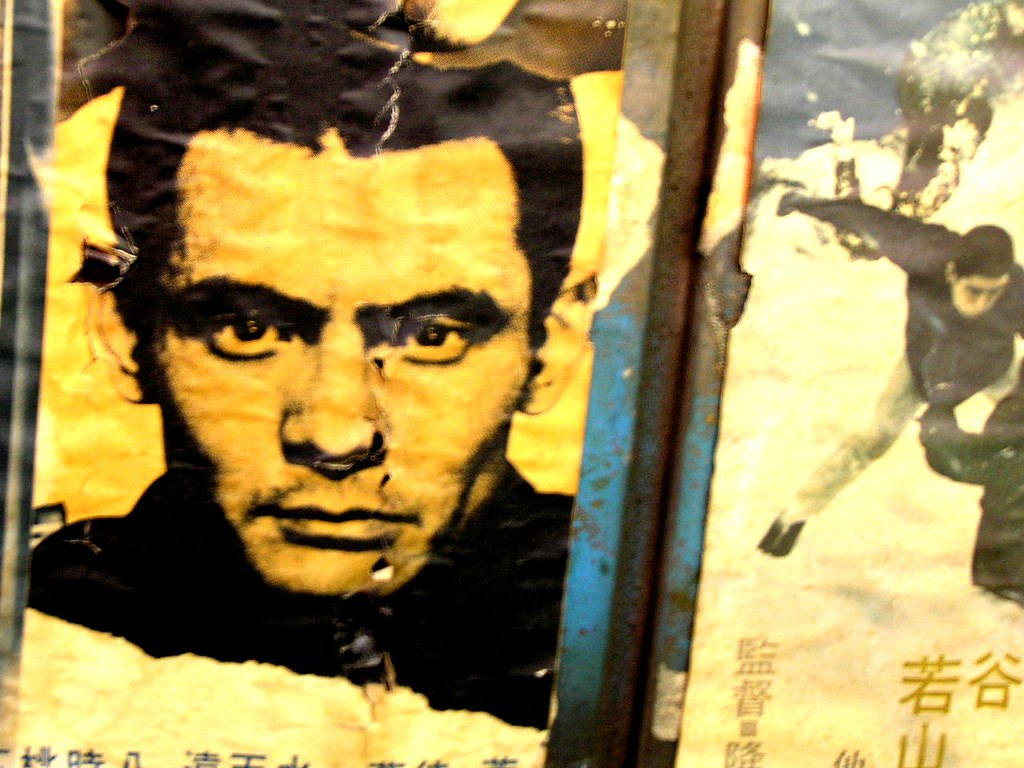
You already know how this ends before the first punch is thrown. The yakuza protagonist stands at the intersection of two obligations that cannot coexist, and the audience settles into their seats with the quiet comfort of people who have come to watch a man drown in slow motion — not despite knowing the outcome, but because of it. This foreknowledge is not a flaw in the storytelling. It is the mechanism. The film requires your complicity, and it gets it before you have had time to object.
Ruth Benedict, writing in 1946 for the United States Office of War Information, produced The Chrysanthemum and the Sword as an intelligence document before it became an anthropological landmark. Her analysis of Japanese social obligation identified giri — the debt owed to the world, to hierarchy, to the network of reciprocal duties that structures a life — as something categorically distinct from ninjo, the raw current of human feeling that runs beneath every social performance. Benedict was not romanticizing this division. She was mapping a psychological architecture that she believed produced a particular kind of suffering, one where individuals experienced their own desires as shameful intrusions into a moral order that preceded and would outlast them. What she could not have fully anticipated was how thoroughly this framework would be adopted, aestheticized, and weaponized by postwar Japanese filmmakers looking for a way to make violence feel sacred rather than criminal.
The genius of the yakuza film as a genre lies in how completely it naturalizes the destruction of its protagonists by encoding that destruction as the only honorable outcome available. When a character chooses giri over ninjo — when he abandons the woman, kills the friend, walks toward the ambush he knows is waiting — the film frames this not as tragedy but as integrity. The audience is trained to read self-annihilation as dignity. And here is the trap that springs without announcement: once you have accepted the premise that duty and feeling are genuinely irreconcilable, you have also accepted that the institutions enforcing duty are beyond critique. The crime organization, the hierarchical clan, the unspoken codes that demand sacrifice — none of these are examined. They are simply the weather. The protagonist suffers not because these structures are unjust but because he is human enough to feel the cost.
Sociologist Eiko Ikegami, in The Taming of the Samurai published in 1995, traced how warrior codes of honor in Japan were historically used to subordinate individual will to collective institutional power, and how this subordination was aestheticized precisely at the moments when it was most coercive. The yakuza film performs an identical operation in a modern register. The organization becomes the clan becomes the feudal lord, and the audience’s emotional investment in the protagonist’s loyalty prevents them from asking who benefits from that loyalty. By the time the final reel arrives, viewers have spent two hours learning to mourn a system rather than question it.
This is what makes the giri-ninjo structure ideological in the technical sense — not merely cultural, not merely dramatic, but functionally conservative in its effects regardless of the filmmaker’s intentions. It produces in the viewer a state that the psychoanalyst Silvan Tomkins, writing in his 1963 Affect Imagery Consciousness, would have recognized as shame-driven paralysis: the internalization of an external prohibition so complete that transgressing it feels not like freedom but like self-violation. The yakuza protagonist cannot leave the organization not because of physical constraint but because leaving would require him to become someone he cannot recognize as himself. And the audience cannot rage against the structure that destroys him because they have already absorbed its logic as emotional truth.
What the cinema never shows you is the meeting where someone decided that this was the only story worth telling.
The Jitsuroku Turn and the Collapse of Mythic Violence
You are watching a man eat. He crouches in the rubble of postwar Hiroshima, 1945, shoveling rice into his mouth with the concentrated desperation of someone who has learned that dignity is a luxury that expires before hunger does. He is not a samurai fallen from grace. He is not a tragic figure animated by some ancient code. He is simply a man who survived the bomb and now survives the black market, and the distinction between those two acts of survival is almost imperceptible.
Kinji Fukasaku was fourteen years old when American firebombs fell on the munitions factory where he and his classmates had been conscripted to work. He spent the aftermath dragging bodies. This is not biographical color — it is the epistemological foundation of everything that would follow in his cinema, because a director who has personally hauled corpses does not reach for noble metaphors when depicting violence. What emerged in 1973 with the first film of the Battles Without Honor and Humanity cycle was not merely a stylistic shift but a documentary indictment: yakuza as historical product rather than mythological constant, men shaped by specific material conditions rather than bearers of a floating ethical code transmitted across centuries.
The ninkyo eiga that dominated the 1960s had performed a peculiar cultural operation, one that Roland Barthes had already anatomized in Mythologies in 1957 — the transformation of history into nature. When Ken Takakura stood impassive against a winter sky, his loyalty rendered in chiaroscuro and shamisen, the yakuza appeared not as a social formation with traceable origins in Tokugawa-era gambling syndicates and traveling peddlers but as a timeless human type, the noble outlaw who exists outside and before modernity. Myth works precisely by erasing its own historical conditions, presenting what is contingent as eternal, what is constructed as given. The formal beauty of those films was not decorative; it was ideological. The slow compositions, the ceremonial violence, the lacquered color palette — all of it conspired to lift the yakuza outside time and place him inside archetype.
Fukasaku’s camera refused this transaction entirely. The five films of the Jingi naki tatakai cycle, released between 1973 and 1974 in extraordinarily rapid succession, were based on the serialized memoirs of Kozo Mino, a real yakuza who had survived the Hiroshima underworld. The handheld footage lurched. Characters died without ceremony, without the slow operatic collapse of the ninkyo hero — they were simply shot, mid-sentence, and the frame moved on. The organizational structures depicted were not hierarchies of honor but bureaucracies of opportunism, internal politics driven by fear and profit masquerading as loyalty precisely long enough to produce betrayal. The jitsuroku approach — documentary realism, a term that positioned itself explicitly against fiction — refused to supply the aesthetic distance that transforms brutality into beauty.
What this revealed, and what made the cycle genuinely destabilizing beyond mere stylistic iconoclasm, is that the noble outlaw myth had always been performing a specific social function during the very years of Japan’s postwar economic miracle. While the country reorganized itself around corporate hierarchies, suppressed labor movements, and submitted individual autonomy to institutional loyalty — what sociologist Chie Nakane had described in 1967 in Tate shakai no ningen kankei as Japan’s vertical society — the yakuza film offered a compensatory fantasy. The idea that submission to hierarchy could be ennobled by a code, that loyalty to a boss was participation in something transcendent rather than something merely structural, did not only describe the fictional yakuza. It described the salaryman. It described the factory worker. The myth was never really about gangsters.
When Fukasaku stripped the code down to its functional skeleton — men using the language of honor to maneuver through chaos they did not create and cannot control — what became visible was how thoroughly the aesthetic had been doing ideological labor for a society that needed its own submission to feel heroic.
The State's Shadow in the Criminal Organization
You are watching a bureaucrat sign a document. His suit is immaculate, his office overlooks a garden, and the pen moves with the casual authority of someone who has never doubted that the room belongs to him. What the camera does not show — what Japanese audiences in the 1970s understood without being told — is that the hand signing the document and the hand collecting the envelope in the back room of a Kobe gambling den belong, in every meaningful structural sense, to the same body.
The Liberal Democratic Party’s entanglement with organized crime in postwar Japan was not a series of scandals but a system. Jake Adelstein, whose investigative work culminated in the 2009 book Tokyo Vice, documented with granular precision how yakuza syndicates functioned as a parallel infrastructure of social control — suppressing labor unrest, managing urban reconstruction contracts, and absorbing the violence that a rapidly modernizing state preferred not to perform in its own name. The LDP, which governed Japan almost without interruption from 1955 onward, did not merely tolerate this arrangement; it depended on it. Certain faction leaders maintained direct relationships with oyabun figures that were poorly concealed and never prosecuted. The state did not look away from organized crime — it delegated to it.
What this produced in cinema was a representational problem of extraordinary sophistication. The directors working in the yakuza genre through the 1960s and 1970s could not accuse politicians directly — defamation law, studio pressure, and the residual censorship culture of the postwar settlement all foreclosed that route. What they could do, and what the best of them did with devastating consistency, was construct the yakuza boss as a figure whose authority was structurally identical to legitimate power: hierarchical, hereditary in spirit, dependent on ritual obedience, and ultimately founded on the credible threat of violence rather than on consent. The audience was not being asked to admire criminals. It was being asked to recognize that the distinction between criminality and governance was a question of which uniform you wore to the ceremony.
This encoding required an audience that could read it, and that audience existed in vast numbers. The ninkyo eiga — the chivalry films of the early genre — derived their moral grammar from a population that had watched the postwar American occupation install and then protect conservative politicians who had served imperial militarism, men whose wartime records were quietly buried in exchange for their usefulness against the communist left. The yakuza’s code of loyalty and obligation, rendered on screen as almost sacred, held up an ironic mirror to a political class that had rebuilt its legitimacy on amnesia. Honor, the films suggested, had migrated from the institutions that claimed it into the criminal underground that at least acknowledged what it was.
The passage of the Anti-Boryokudan Act in 1992 fractured this visual economy in ways that remain underappreciated. The law — the first systematic legislative attempt to designate and restrict recognized criminal organizations — did not emerge from a sudden moral awakening. It emerged from a real estate collapse and a political crisis in which the yakuza’s visible wealth and open social presence had become an international embarrassment during Japan’s asset bubble implosion. The state moved against organized crime precisely when the financial utility of the relationship had been exhausted. The films that followed processed this rupture with considerable unease: the yakuza protagonist became increasingly marginal, hunted not by rival gangs but by regulatory mechanisms, stripped of the grandeur that had made him legible as a displaced portrait of sovereign power.
What the genre lost at that moment was not nostalgia for crime but a specific critical vocabulary — the ability to put a man in a suit before a subordinate who knelt in prescribed ritual, and have every viewer in the theater understand that this tableau was not located only in the underworld.
A vision curated by a filmmaker, not an algorithm
In this video I explain our vision
Takeshi Kitano and the Aesthetics of Bureaucratic Murder

You are waiting for something to happen, and then a man is shot through the eye socket with the calmness of someone stapling papers, and nothing swells in the score, nothing tilts in the camera, and you realize the film is not going to help you process what you just saw.
Takeshi Kitano entered yakuza cinema at a moment when the genre had already been aestheticized to the point of baroque exhaustion. Where Kinji Fukasaku’s ninkyo eiga successors had pushed screen violence toward operatic crescendo, Kitano’s directorial debut Violent Cop in 1989 introduced a different grammar: stillness before impact, silence after, and a protagonist whose brutality registered less as passion than as professional habit. The violence in his films does not erupt — it occurs, the way administrative decisions occur, without ceremony and without remorse. His gangsters do not kill because they feel something. They kill because it is next on the list.
Hannah Arendt, reporting from Jerusalem in 1961 on the trial of Adolf Eichmann for The New Yorker — essays later compiled in Eichmann in Jerusalem: A Report on the Banality of Evil in 1963 — described a man who was not a monster but a bureaucrat, someone for whom the machinery of extermination was essentially a logistics problem. What disturbed her was not his hatred but his absence of it: he organized death the way one organizes supply chains, through compliance, routine, and a complete subordination of moral imagination to institutional role. Kitano’s yakuza bosses and enforcers inhabit precisely this cognitive architecture. In Sonatine from 1993, the yakuza sent to Okinawa do not debate the ethics of their assignments — they play on the beach between killings with the detachment of men on a company retreat, waiting for the paperwork to clear.
This procedural flatness is not nihilism for aesthetic effect. It is a formal argument. When violence is stripped of cathartic music, meaningful close-ups, and the narrative satisfaction of consequence, the viewer is denied the psychological distance that lets them experience screen death as safely fictional. Kitano forces a confrontation with the viewer’s own complicity in institutional harm — the way ordinary people move through systems that produce suffering at a remove they never have to witness. The man who approves the budget that funds the policy that destroys the neighborhood does not feel like a killer, and Kitano’s camera agrees with him while showing you the body.
Outrage, released in 2010, pressed this logic into something almost satirical in its bureaucratic precision. The internecine warfare between yakuza clans unfolds through memos of grievance, meetings of middle management, and a chain of command in which no individual can be held responsible for any specific death because everyone was simply following instructions passed down from someone who was also following instructions. The film contains no hero, no moral center, no character whose survival the viewer is permitted to invest in — a structural choice that Kitano described in interviews as deliberate, because attaching the audience to a protagonist would restore exactly the moral comfort he was trying to remove.
What makes this cinematically radical is that it runs against the deepest convention of genre filmmaking: the assumption that identification requires sympathy, and sympathy requires moral legibility. Classical yakuza cinema, even in its most brutal iterations, offered codes — loyalty, betrayal, honor’s debt — that gave the audience a scaffold on which to hang their responses. Kitano removes the scaffold and leaves the audience suspended in a space where they cannot cheer, cannot mourn, and cannot feel relieved when violence resolves. The only available response is recognition: this is how systems work, this is what they feel like from the inside, and the inside is where you already live, carrying out instructions, managing outcomes, at a careful procedural distance from whatever it is, exactly, that you are making happen.
Transnational Yakuza and the Export of Shame
You are watching a man walk slowly through rain toward someone who will kill him, and the choreography is so precise, so liturgical, that you feel something close to grief without knowing why. The slow motion, the bilateral symmetry of two gunmen facing each other across a corridor, the white doves released into the air as if violence were a sacrament — this is the visual grammar that John Woo carried into his heroic bloodshed films of the late 1980s, and almost none of the audiences who adored The Killer in 1989 understood that they were watching a Hong Kong director process a Japanese obsession. Woo has spoken explicitly about Kinji Fukasaku’s influence on his sense of male loyalty under institutional betrayal, and the debt runs deep enough to be structural: the yakuza film’s central wound, the man who cannot survive the organization that made him, migrated intact into a Hong Kong context where it fused with Cantonese opera aesthetics and Cold War anxiety and produced something so beautiful that its origins became invisible.
Invisibility is precisely the mechanism worth examining. When a cultural artifact travels far enough from its source, it sheds the referential weight that gave it meaning and retains only its formal power. Fukasaku made Battles Without Honor and Humanity between 1973 and 1974 as a direct indictment of postwar Japanese society, drawing on the testimonies of actual yakuza who had survived the chaos of 1945 and built criminal empires from the rubble of a nation that had surrendered its own moral coherence. The five-film cycle was not entertainment for its original audience in any simple sense — it was accusation, a mirror held up to the generation that had rebuilt prosperity on the graves of principles. Exported, stripped of that specific gravity, it became a template for kinetic filmmaking.
South Korean cinema engaged with this inheritance more self-consciously and with considerably more ambivalence. The Korean gangster films that emerged through the late 1990s and into the 2000s were produced in a country that had lived under Japanese colonial rule until 1945 and retained a cultural memory of that occupation as a living grievance rather than a historical abstraction. Directors like Jee-woon Kim absorbed the stylistic vocabulary of the yakuza film while simultaneously registering an unease about its source, producing work that simultaneously celebrated and interrogated the idiom. This is a more honest transaction than what happened in Hollywood, where the assimilation was purely formal and the discomfort entirely absent.
Hollywood absorbed the yakuza film the way it absorbs everything — by reducing it to its most marketable surface. Ridley Scott’s Black Rain, released in 1989 with a budget that dwarfed any Japanese production of the era, used the yakuza as exotic antagonists in an American narrative about American moral authority, which is to say it inverted the entire critical project of the films it superficially resembled. The Japanese characters exist to threaten and to be defeated, and the cultural complexity that Japanese filmmakers had spent decades building into the figure of the gangster is replaced with a photogenic menace. This is not cultural exchange. It is extraction.
What the export economy of yakuza cinema ultimately reveals is something uncomfortable about the way aesthetic pleasure operates across historical distance. The guilt encoded in these films — guilt about wartime conduct, about the emperor system, about the betrayal of ordinary men by nationalist ideology — is not portable. It belongs to specific bodies, specific silences at specific dinner tables in Osaka and Hiroshima and Yokohama. When that guilt is aestheticized and exported, the aesthetics travel but the accountability stays behind, and foreign audiences receive the catharsis without ever having to confront what the catharsis was originally designed to process. They get the rain, the slow motion, the doves, and the feeling of something profound — which is perhaps the most elegant description of what laundering looks like when it happens at the level of art rather than money.
Contemporary Genre Decay and What Fills the Void
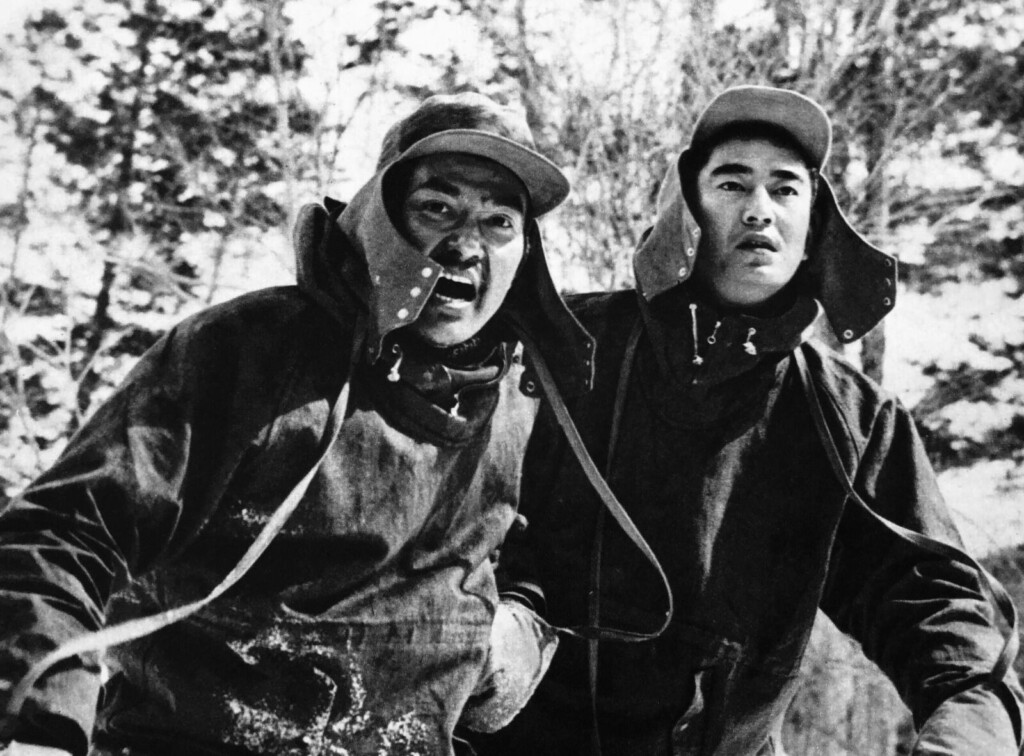
You are watching a film released in 2003, and the yakuza boss on screen looks tired in a way that has nothing to do with acting — he looks tired the way institutions look tired when they have outlasted their own necessity, presiding over rituals whose original violence has long since curdled into theater.
The numbers confirm what the imagery had already begun to suggest. Yakuza membership, which had swelled to an estimated 180,000 in 1963 — the precise historical moment when Seijun Suzuki and Kinji Fukasaku were finding cinematic grammar adequate to that world’s brutality — had collapsed to under 28,000 by 2022, a contraction so severe it resembles not decline but something closer to structural extinction. Organized crime enforcement laws passed in 1992 and progressively tightened through the 2000s made it illegal in many prefectures for civilians to conduct ordinary financial transactions with known gang members, which meant the yakuza were being expelled not from the streets but from the economy itself, stripped of the commercial oxygen that had always sustained their social function. A criminal organization that cannot open a bank account, rent an office, or receive a wire transfer does not disappear — it becomes incoherent.
What cinema does with incoherence is revealing. The yakuza film did not end so much as it stopped meaning anything. Takeshi Kitano’s Outrage trilogy, which concluded in 2017, performed a kind of controlled demolition on what remained of the genre’s symbolic architecture — every loyalty exposed as transactional, every hierarchy revealed as an improvised fiction maintained through mutual terror. There was nothing elegiac in those films, no mourning for a lost code, because Kitano understood that mourning requires believing the code was ever real. The genre’s audience had grown too sophisticated, or perhaps too exhausted, to receive the old myths as myths rather than as manipulations, and once a genre loses the audience’s willingness to half-believe its conventions, it can only survive as autopsy.
What fills the space is not emptiness but displacement. The anxieties that the yakuza film once gave a name and a face — the betrayal of institutional loyalty, the obsolescence of masculine self-sacrifice, the violence required to maintain hierarchies that no longer justify themselves — have migrated into corporate thriller narratives, into horror films structured around workplace humiliation, into domestic dramas where the salary-man discovers that his lifelong devotion to a company has left him incapable of existing outside it. Sociologist Zygmunt Bauman’s concept of liquid modernity, elaborated across several works from 1999 onward, described exactly this condition: the dissolution of solid institutional structures that once gave individuals a legible role, replaced by fluid arrangements that demand flexibility while offering nothing in return. The yakuza boss and the middle manager facing mandatory early retirement are experiencing the same catastrophe from opposite ends of the same social collapse, and contemporary Japanese cinema has begun registering this without quite admitting it.
The danger in that migration is the loss of visibility. When the yakuza film named its anxieties explicitly — through the body of a man who swore an oath and watched it be broken, through the ritual of cutting a finger to purchase forgiveness for a failure the organization had itself engineered — it offered the audience a way to see the mechanism. Genre, at its most functional, is a technology of recognition. Horror films about the office do not offer the same clarity, because the violence in them is ambient, procedural, dressed in the language of performance review and restructuring. The loyalty demanded is still total, the betrayal is still institutional, the masculine body is still being sacrificed to a collective that will not remember it — but the genre now calls this normal, and so does everyone inside it.
🎌 Shadows, Honor, and Violence in Japanese Cinema
The yakuza tradition in Japanese cinema draws on deep cultural roots — codes of loyalty, betrayal, and blood that echo across history and representation. To fully understand these films, one must explore the broader landscape of Japanese aesthetics, feudal history, and the cinematic languages that shaped them. The articles below offer essential context for anyone tracing the origins and meanings of yakuza imagery on screen.
The Sengoku Period: History and Culture of Feudal Japan
The Sengoku period of feudal Japan forged the warrior codes and hierarchical loyalties that would later resurface in yakuza mythology. Understanding this era of constant civil war and shifting alliances helps decode the moral universe of yakuza cinema, where honor and violence are inseparable. The samurai ethos did not disappear — it transformed, finding new expression in the criminal brotherhoods depicted on screen.
GO TO THE SELECTION: The Sengoku Period: History and Culture of Feudal Japan
Japanese Aesthetics: Wabi-Sabi Mono no Aware and Yugen
Japanese aesthetics — wabi-sabi, mono no aware, and yūgen — permeate even the most violent yakuza films, lending them a melancholic beauty rarely found in Western crime cinema. Directors like Kinji Fukasaku and Takeshi Kitano infuse brutality with a profound awareness of transience, turning bloodshed into a kind of elegy. This aesthetic sensibility is inseparable from how Japanese cinema represents the yakuza as tragic, doomed figures.
GO TO THE SELECTION: Japanese Aesthetics: Wabi-Sabi Mono no Aware and Yugen
Colonial cinema: history and representations
Colonial cinema offers a crucial comparative framework for understanding how dominant cultures construct and mythologize marginal or criminal figures on screen. Like yakuza films, colonial cinema reveals how representation is always shaped by power, ideology, and the need to define an ‘other.’ Examining these dynamics across different national traditions illuminates the political unconscious embedded in genre filmmaking.
GO TO THE SELECTION: Colonial cinema: history and representations
Experimental cinema: history and avant-gardes
Experimental cinema and the Japanese avant-garde have repeatedly intersected with yakuza imagery, subverting genre conventions to expose social critique beneath the surface of genre entertainment. Directors operating at the margins of mainstream Japanese studio production used crime and transgression as metaphors for postwar disillusionment and cultural rupture. This experimental lineage enriches our reading of yakuza films as more than genre exercises.
GO TO THE SELECTION: Experimental cinema: history and avant-gardes
Discover Japanese and World Cinema on Indiecinema
If these themes have sparked your curiosity, Indiecinema is the streaming platform where independent and international cinema finds its rightful home. From Japanese classics to contemporary world cinema, Indiecinema offers a carefully curated catalog for viewers who want to see beyond the mainstream. Join the community and explore the films that dare to tell the stories others overlook.
👉 EXPLORE THE CATALOG: Watch Indie Films in Streaming
A vision curated by a filmmaker, not an algorithm
In this video I explain our vision

