

Far from big productions, there is a territory where crime is not just action, but a sharp scalpel that cuts into the cracks of society and the human soul. It is a cinema that explores moral ambiguity, social critique, and psychological depth with a rawness that mainstream cinema rarely touches. The inability to compete on spectacle forces auteurs to focus on the screenplay, the performances, and ingenious narrative solutions.
👮 New Police Movies
Rebel Ridge (2024)

Terry Richmond, an ex-marine and martial arts expert, arrives in the small town of Shelby Springs to post bail for his cousin. But he is stopped by local police who, using a legal pretext (“civil asset forfeiture”), confiscate all the cash intended for bail. In Rebel Ridge, what starts as bureaucratic abuse turns into a silent war between Terry and Police Chief Sandy Burnne (Don Johnson), revealing a web of systemic corruption holding the entire town hostage.
Jeremy Saulnier (Green Room) directs a police thriller as tight as a violin string. It is not the usual “one against all” action movie: it is an intelligent investigation into the legal mechanisms allowing police to abuse power. Aaron Pierre offers a magnetic, controlled, and lethal performance. It is a modern and cerebral First Blood, where tension stems from dialogue and glances before bullets even fly.

The Night of the 12th (2023)
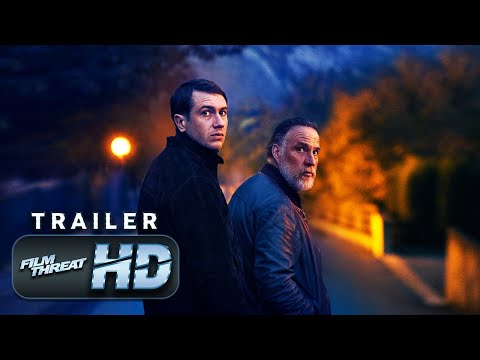
In a quiet mountain village near Grenoble, a girl named Clara is horribly murdered (burned alive) while walking home from a party. The case is assigned to Captain Yohan Vivès, a meticulous and melancholic detective. In The Night of the 12th, the investigation drags on for years without finding a culprit, despite numerous suspects (all toxic ex-lovers of the girl). The film does not focus on resolution, but on how the cold case digs into the cops’ souls, becoming an obsession that consumes them.
Dominik Moll signs the best polar (French police procedural) of the last ten years, winner of 6 César awards. It is the European answer to Zodiac: a realistic and frustrating procedural film using murder to question the systemic misogyny of society and law enforcement. Do not look for chases, but the raw reality of police work: paperwork, dead ends, and the weight of ghosts.
Only the River Flows (2023)
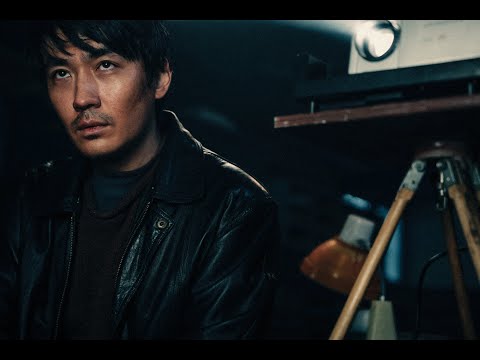
Rural China, 1990s. Police Chief Ma Zhe investigates a series of murders along the river in a rainy, gray town. The investigation seems simple and quickly leads to an arrest, but Ma Zhe is unconvinced. In Only the River Flows, his obsessive search for the truth leads him to clash with superiors who want to close the case quickly and with his own sanity, as reality begins to crumble into a surreal and Kafkaesque nightmare.
Shot on 16mm film to capture the dirty grain of 90s Asian cinema, Wei Shujun’s film is a noir gem for cinephiles. It is an anti-police procedural: investigation does not bring order, but chaos. The atmosphere is everything: incessant rain, abandoned buildings, and cigarette smoke create a world where detective logic fails. A visual masterpiece paying homage to Memories of Murder.
Longlegs (2024)

Lee Harker, a young and talented FBI agent with alleged clairvoyant gifts, is assigned to the cold case of a serial killer known as “Longlegs.” The killer does not kill his victims directly but drives fathers to slaughter their wives and children, leaving behind letters in Satanic code. In Longlegs, Harker discovers a personal and terrifying link to the killer (played by an unrecognizable Nicolas Cage), in a race against time blending federal investigative procedure with pure occultism.
Osgood Perkins directs the buzz movie of the year, a perfect hybrid between The Silence of the Lambs and supernatural horror. The structure is that of the police procedural (code breaking, stakeouts, FBI archives), but the atmosphere is pure terror. Maika Monroe plays the federal agent with a traumatized rigidity that makes the investigation incredibly realistic and disturbing.
A vision curated by a filmmaker, not an algorithm
In this video I explain our vision
👮♂️ Law and Disorder: Choose your case
The police movie is the backbone of action and tension cinema. But there isn’t just one way to wear the badge. There are meticulous procedurals analyzing evidence, psychological thrillers where the detective risks their sanity, and stories of pure urban action. To help you find the right investigation for you, here are our essential guides exploring the world of justice (and its absence) on the big screen.
Independent Crime Movies
Independent cinema tells police work like it is: bureaucracy, frustration, dirty streets, and impossible moral choices. If you are looking for realism, corruption, and stories that stick to you like a second skin, this is your precinct.
👉 BROWSE THE CATALOG: Stream Crime Movies
Thriller Movies
When the police movie becomes a race against time. If for you the investigation must be a clockwork mechanism made of suspense, serial killers, and plot twists that take your breath away, here you will find the films that turn the manhunt into pure psychological adrenaline.
👉 GO TO THE LIST: Thriller Movies
Noir Movies
This is where it all began. Before forensics and SWAT teams, there were private investigators in trench coats, femmes fatales, and cities where it always rains. Discover the roots of the genre, where the line between cop and criminal is as thin as cigarette smoke.
👉 GO TO THE LIST: Noir Movies
Gangster Movies
There is no cop without an enemy. To truly understand the law, you must look into the eyes of those who break it. If you want to cross the barricade and see crime from the perspective of bosses, families, and organized gangs, this is the list for you.
👉 GO TO THE LIST: Gangster Movies
Cult Movies
From The French Connection to Heat, there are police movies that defined the aesthetic of urban violence and rewrote the rules of action. The essential masterpieces that made car chases, shootouts, and interrogations legendary.
👉 GO TO THE LIST: Cult Movies
🚔 The Law of the Street: Police Movie Classics
Before digital investigations and DNA, justice was served on the asphalt, with intuition, stakeouts, and often with rough methods. The police movie traversed the century, transforming into a mirror of society: from the solitary detectives of classic noir to the violent anti-heroes of the 70s, up to the psychological procedural thrillers of the 90s. In this section, we celebrate the films that defined the iconography of the badge, amidst legendary car chases and impossible moral investigations.
The Big Sleep (1946)
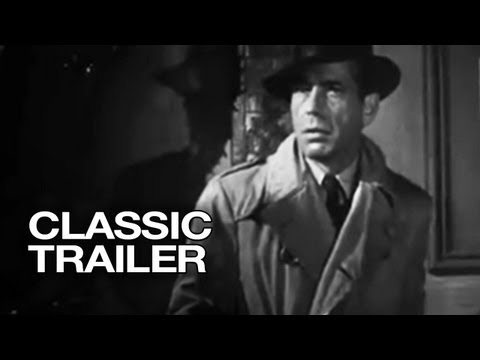
Private detective Philip Marlowe is summoned by the wealthy and elderly General Sternwood to resolve a blackmail case involving his younger daughter, Carmen. What seems like a simple gambling debt case soon turns into a labyrinth of murder, underground pornography, and deceit, in which the charming older daughter, Vivian, is also involved. In The Big Sleep, Marlowe must navigate the moral fog of Los Angeles, where every clue leads to another corpse and no one tells the truth.
Howard Hawks directs the definitive film on the hard-boiled detective, based on Raymond Chandler’s novel. The plot is notoriously so complex that not even the screenwriters (including William Faulkner) knew who killed the chauffeur, but it doesn’t matter: the film is a masterpiece of atmosphere, razor-sharp dialogue, and sexual tension. The chemistry between Humphrey Bogart and Lauren Bacall is legendary, forever defining the iconography of the cynical yet honorable investigator in a corrupt world.
The Naked City (1948)

A model is found dead in her bathtub in New York. Lieutenant Dan Muldoon, a homicide veteran, and young detective Jimmy Halloran are assigned to the case. Unlike solitary private eyes, here we see teamwork: endless interrogations, forensic analysis, exhausting stakeouts, and the hunt for a suspect across the city’s bridges. The Naked City does not focus on the “stroke of genius,” but on the methodical and tiresome police procedure to catch the culprit.
Jules Dassin revolutionizes the genre by inventing the police procedural. Filmed entirely on real locations on the streets of New York (an absolute novelty for the time), the film has an almost documentary and neorealist style. The famous voiceover (“There are eight million stories in the naked city”) and the final chase on the Williamsburg Bridge established the visual standard for all police films and TV series to come, from Law & Order onwards.
Touch of Evil (1958)
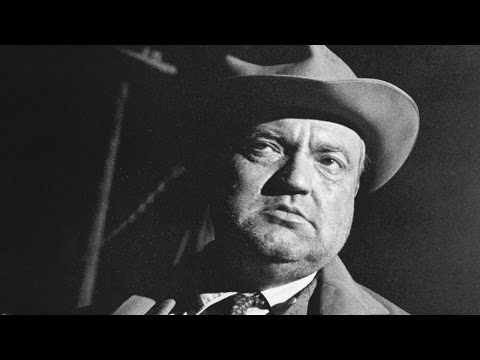
In a town on the Mexico-US border, a car bomb explodes, killing a wealthy entrepreneur. Mike Vargas (Charlton Heston), an honest Mexican narcotics official on his honeymoon, clashes with local police captain Hank Quinlan (Orson Welles). Quinlan is an obese, racist, and corrupt giant who fabricates evidence to close cases quickly. In Touch of Evil, Vargas must fight not only to solve the murder but to protect his wife from the machinations of Quinlan, who tries to destroy him by framing him.
Orson Welles writes, directs, and stars in one of the most baroque and technically daring noirs in history (famous for the opening three-minute long take). It is the film that marks the end of the classic noir era and the beginning of a dirtier and morally ambiguous police genre. Quinlan is one of cinema’s most tragic “villains”: a monster who believes he is serving justice by violating the law, anticipating the “bad cop” figure that would dominate the 70s.
In the Heat of the Night (1967)
![In the Heat of the Night (1967) ORIGINAL TRAILER [HD 1080p]](https://blog.indiecinema.co/wp-content/plugins/wp-youtube-lyte/lyteCache.php?origThumbUrl=https%3A%2F%2Fi.ytimg.com%2Fvi%2FVIlxY-LUhkE%2F0.jpg)
Virgil Tibbs (Sidney Poitier), an expert homicide detective from Philadelphia, is accidentally arrested in a Mississippi station simply for being black and well-dressed. Once his identity is clarified, he is forced to collaborate with local police chief Bill Gillespie (Rod Steiger) to solve the murder of a white industrialist. In In the Heat of the Night, the investigation becomes a racial battlefield: Tibbs must find the killer while dodging Ku Klux Klan lynch mobs and the contempt of colleagues, proving his intellectual superiority.
Winner of 5 Academy Awards, this film is a masterpiece of social tension. It is not just a perfect mystery, but a brutal snapshot of segregationist America. The scene where Tibbs returns a slap to a wealthy white landowner is a historic moment in cinema. The dynamic between Poitier and Steiger, moving from hatred to mutual respect, is written and acted masterfully, making the film a timeless classic of civil rights police cinema.
Bullitt (1968)

Lieutenant Frank Bullitt (Steve McQueen) of the San Francisco police receives the assignment to protect a key witness in a trial against the Chicago mafia for 48 hours. When hitmen manage to enter the safe house and critically wound the witness, Bullitt realizes there is a mole and decides to hide the man’s death to flush out the masterminds. In Bullitt, the detective bypasses his superiors and ambitious politicians to conduct a personal investigation culminating in a high-speed car chase through the city’s hills.
This film forever changed the aesthetic of the action police movie. The plot is almost secondary to the style: Steve McQueen, with his turtlenecks and shoulder holster, embodies absolute “cool.” The chase sequence between Bullitt’s Ford Mustang and the killers’ Dodge Charger (without music, only engine roars) is considered the best ever filmed. Bullitt shifted the genre’s focus from deductive riddles to kinetic action and urban realism.
Investigation of a Citizen Above Suspicion (1970)
![Investigation of a Citizen Above Suspicion (1970) ORIGINAL TRAILER [HD 1080p]](https://blog.indiecinema.co/wp-content/plugins/wp-youtube-lyte/lyteCache.php?origThumbUrl=https%3A%2F%2Fi.ytimg.com%2Fvi%2FPfXZVqdLKcE%2F0.jpg)
On the day of his promotion to head of the Political Bureau, a high-ranking police commissioner (Gian Maria Volonté) slits the throat of his mistress Augusta in her apartment. Instead of erasing tracks, he voluntarily leaves clues everywhere (fingerprints, threads from his tie) to challenge his colleagues and prove a delusional thesis: as a representative of Power, he is untouchable. In Investigation of a Citizen Above Suspicion (Indagine su un cittadino al di sopra di ogni sospetto), we witness a grotesque investigation where the police ignore the evidence to avoid accusing their own boss, while he sinks into a delirium of omnipotence and paranoia.
Elio Petri signs a masterpiece of Italian political cinema, winner of the Oscar for Best Foreign Language Film. It is an inverted police movie: we know who the killer is from the first minute. The tension arises from the absurdity of the self-protecting system. Gian Maria Volonté delivers a neurotic and frightening performance, accompanied by Ennio Morricone’s famous score. A prophetic film on the authoritarian nature of power and institutional impunity.
The French Connection (1971)

Jimmy “Popeye” Doyle (Gene Hackman) is a New York narcotics detective with brutal methods, racist and obsessive. Along with his partner “Cloudy” Russo, he uncovers a massive heroin trafficking ring coming from France, managed by the elusive Alain Charnier. In The French Connection, Doyle begins an exhausting surveillance that turns into a desperate manhunt, willing to violate every rule and put civilians at risk just to stop the drugs.
William Friedkin brings New Hollywood dirty realism to its peak. Inspired by a true story, the film is shot like a war documentary in the cold and degraded streets of New York. Gene Hackman creates an unpleasant yet magnetic anti-hero, light years away from the elegant detectives of the past. The chase scene between Doyle’s car and the elevated subway is a piece of cinema history, edited with a pace that leaves you breathless.
Serpico (1973)
![Serpico (1973) ORIGINAL TRAILER [HD 1080p]](https://blog.indiecinema.co/wp-content/plugins/wp-youtube-lyte/lyteCache.php?origThumbUrl=https%3A%2F%2Fi.ytimg.com%2Fvi%2FavLhMiVq0hM%2F0.jpg)
Frank Serpico (Al Pacino) enters the New York police force full of idealism but soon discovers that corruption is endemic: bribes, protection money from criminals, and gratuitous violence are the norm accepted by all colleagues. Refusing to take his share of dirty money, Serpico is isolated, threatened, and transferred from precinct to precinct. In Serpico, his integrity turns him into a target for other cops, until he decides to break the code of silence and testify, risking his life in a suspicious ambush during an arrest.
Sidney Lumet directs the true story of the cop who exposed NYPD corruption. It is an intense urban drama exploring the loneliness of the honest man in a rotten system. Al Pacino, with his hippie look (beard and long hair), deconstructs the image of the reactionary cop. It is not an action movie, but a psychological thriller on paranoia and the moral cost of heroism. Fundamental to understanding the collapse of trust in institutions in the 70s.
Thief (1981)
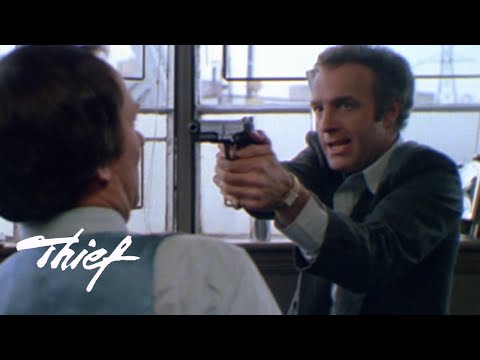
Frank is a professional safecracker in Chicago with a strict code and a dream of normalcy. After a major diamond heist, he goes into business with a powerful mob boss, Leo, believing this could be his last job before retiring. He soon discovers that getting out of the game is much harder than getting in, and that the freedom he seeks comes at a very high price.
Thief is the manifesto of modern neo-noir and the dazzling directorial debut of Michael Mann. The film sets a new standard for the genre, blending an almost documentary-like realism in its depiction of safecracking techniques with a dreamlike, almost abstract aesthetic, amplified by the pulsating soundtrack of Tangerine Dream. Frank’s quest for a bourgeois life is an existential struggle doomed to fail, a theme that would become central to the anti-hero of independent cinema. Mann doesn’t just tell a crime story, but the drama of a man trapped between his nature and his aspirations, in a nocturnal Chicago that is as much an urban landscape as it is a state of mind.
Blood Simple (1984)

In a desolate Texas town, a bar owner, Julian Marty, hires a slimy and amoral private investigator, Loren Visser, to kill his adulterous wife, Abby, and her lover, Ray. But in the world of the Coen brothers, no plan is simple and no action is without consequences. A tangle of double-crosses, misunderstandings, and clumsy violence drags all the characters into a spiral of paranoia and death.
With their debut, winner of the Grand Jury Prize at Sundance, Joel and Ethan Coen don’t just pay homage to the literary noir of James M. Cain and Dashiell Hammett; they dismantle and reconstruct it with a dark, macabre humor. The title itself, taken from Hammett’s novel Red Harvest, describes the confused and paranoid state of mind that follows an act of violence, a psychological condition that becomes the true engine of the narrative. Blood Simple is a dark comedy of errors, where crime is less an act of calculation and more the result of stupidity and greed, setting the tragicomic tone that would define the Coens’ career.
Bad Lieutenant (1992)

A New York police lieutenant, nameless and morally bankrupt, navigates a personal hell of gambling debts, drugs, and depravity. When he is assigned the case of a young nun’s brutal sexual assault, his wavering Catholic faith is put to the test. The obsession with the case pushes him deeper into his abyss, toward a possible, and terrible, form of redemption.
Abel Ferrara directs a film that is not a crime story, but a spiritual crisis disguised as one. With a total and unfiltered performance by Harvey Keitel, Bad Lieutenant pushes the genre to its most extreme and transgressive limits. Ferrara’s New York is a hellish landscape, a Dantean circle of sin and filth. The film explores themes like Catholic guilt, sin, and the possibility of grace even in the most abject circumstances, transforming a criminal investigation into a powerful and disturbing religious allegory. It is a work that refuses all compromise, a punch to the gut that questions the viewer on the nature of forgiveness and salvation.
Brick (2005)

Brendan Frye is a high school loner who moves on the fringes of his world. When his ex-girlfriend, Emily, contacts him in a panic and then disappears, Brendan delves into the criminal underbelly of his high school to find the truth. Speaking in hard-boiled detective slang from the 1940s, he navigates among drug dealers, bullies, and teenage femme fatales to solve the mystery of her death.
Rian Johnson performs a bold and brilliant operation, transposing the codes and language of Dashiell Hammett and Raymond Chandler’s noir into the hallways of a Californian high school. Brick is a stylistically impeccable film, where the contrast between the suburban setting and the detective dialogue creates a strange and fascinating effect. It is a film about the loss of innocence, where genre clichés are used to tell a story of adolescent pain and loneliness. The film demonstrates how independent cinema can reinvent genres in unexpected and deeply original ways.
Le Samouraï (1967)

Jef Costello is a methodical and solitary hitman who lives by a code of honor reminiscent of a samurai. After carrying out a contract killing in a nightclub, his near-perfect alibi begins to unravel when several witnesses, including the club’s pianist, fail to identify him with certainty. Hunted by the police and betrayed by his own employers, Jef finds himself trapped in a gray and spectral Paris.
Jean-Pierre Melville’s masterpiece is the archetype of the modern hitman film and a pinnacle of minimalist style. Alain Delon embodies an icon of existential coldness, a man defined not by his emotions, but by his rituals: the trench coat, the hat, the white gloves. Le Samouraï is an almost silent film, where gestures and glances matter more than words. Melville creates an atmosphere of deep solitude and fatalism, influencing generations of directors, from Walter Hill to John Woo, and defining the “cool killer” aesthetic for decades to come.
City of God (2002)

Through the eyes of Buscapé, an aspiring photographer who grew up in the violent Rio de Janeiro favela known as “City of God,” the film traces nearly twenty years of organized crime. From the naive robberies of the “Tender Trio” in the 1960s to the bloody rise of the drug lord Li’l Zé in the 1980s, the film tells an epic story of friendship, love, betrayal, and death, where life has a very low price.
City of God is an explosion of cinematic energy, an overwhelming work that combines the rawness of a documentary with the vitality of a music video. Directors Fernando Meirelles and Kátia Lund use frantic editing, saturated photography, and a driving soundtrack to immerse the viewer in the chaos of the favela. The use of non-professional actors, many from the same communities, gives the film a shocking authenticity. More than just a gangster film, it is a social fresco that analyzes the unstoppable cycle of violence and poverty, a masterpiece of South American cinema that has left an indelible mark.
Animal Kingdom (2010)

After his mother’s death from an overdose, seventeen-year-old Joshua “J” Cody goes to live in Melbourne with his grandmother, Smurf, and his uncles, a notorious criminal family. J quickly finds himself immersed in a world of armed robbery and violence, while a determined detective tries to save him and use him to bring down the family. J must learn to navigate this “animal kingdom” to survive.
Inspired by real events, David Michôd’s debut film is a tense and suffocating psychological thriller. The atmosphere is claustrophobic, and the Cody family is portrayed as a dysfunctional and self-destructive ecosystem. Jacki Weaver’s performance as the matriarch Smurf, affectionate on the surface but ruthless deep down, is terrifying and subverts the maternal archetype. Animal Kingdom is a Shakespearean reflection on evil, where family loyalty clashes with the instinct for survival, and the real threat is not the police, but the family itself.
Headhunters (Hodejegerne) (2011)

Roger Brown is a successful headhunter, but to maintain his luxurious lifestyle and his beautiful wife, he moonlights as an art thief. When he meets Clas Greve, a former mercenary who owns a priceless Rubens painting, Roger plans the heist of a lifetime. However, he soon discovers he has targeted the wrong man and finds himself in a ruthless and bloody manhunt.
Based on a novel by Jo Nesbø, Headhunters is a perfect example of Nordic Noir, a thriller that mixes tension, brutal violence, and a very dark, almost slapstick humor. The film constantly subverts expectations, turning its arrogant anti-hero into a desperate prey, forced to survive a series of increasingly grotesque and lethal situations. It is an intelligent and adrenaline-fueled work that plays with genre clichés to create something fresh, unpredictable, and tremendously entertaining.
Victoria (2015)

Victoria, a young Spanish woman in Berlin, leaves a club and meets four local guys. What begins as a night of flirting and adventure quickly turns into a nightmare when the guys involve her in a bank robbery to pay off a debt. The camera never leaves her, following her in real time as her night descends into chaos.
The technical virtuosity of Victoria is not just a gimmick but the very essence of the film. Shot entirely in a single, uninterrupted take of over two hours, Sebastian Schipper’s film creates an experience of total immersion and escalating tension. The viewer is trapped with the protagonist, experiencing her same anxiety and panic as the consequences of her choices become inescapable. Form and content coincide perfectly in an adrenaline-pumping thriller that is one of the most audacious cinematic feats of recent years.
Green Room (2015)

A broke punk rock band, the “Ain’t Rights,” accepts a last-minute gig at a remote club in the Oregon woods. They discover too late that the audience is composed entirely of neo-Nazi skinheads. When they witness a murder in the backstage, the band barricades themselves in the “green room,” besieged by the club’s owner, a cold and calculating white supremacist leader, and his henchmen.
After Blue Ruin, Jeremy Saulnier delivers another masterpiece of tension. Green Room is a claustrophobic and brutal survival thriller, a full-blown siege that pits punk nihilism against fascist ideology in a no-holds-barred fight for survival. The violence is graphic, realistic, and terrifying. Patrick Stewart, in an unusual role, is terrifying in his calm and methodical evil. It is an adrenaline-pumping, ruthless, and incredibly effective film in creating a sense of panic and desperation.
Good Time (2017)

After a botched robbery, Nick, a young man with developmental disabilities, is arrested, while his brother Connie manages to escape. Obsessed with guilt and a toxic brotherly love, Connie embarks on a desperate and adrenaline-fueled one-night odyssey through the criminal underworld of Queens, trying to raise bail money and break his brother out.
The Safdie brothers create an immersive and anxiety-inducing cinematic experience. Shot in a guerrilla urban style, with neon photography and a pounding electronic soundtrack, Good Time is a waking nightmare. The camera is glued to Robert Pattinson, who delivers a feverish and charismatic performance, dragging the viewer into his race against time. The film is a heart-pounding thriller, a powerful portrait of distorted brotherly love, and a reflection on desperation and privilege.
Uncut Gems (2019)

Howard Ratner is a charismatic jeweler in New York’s Diamond District and a compulsive gambler. Always looking for the big score that can solve all his problems, he finds himself juggling loan sharks, risky deals, and a shattered family life. When he comes into possession of a rare, uncut black opal, he believes he finally has victory in his grasp, but his addiction to risk pushes him ever closer to the abyss.
The Safdie brothers and A24 deliver a thriller that is not a film, but a 135-minute panic attack. Uncut Gems is a total and suffocating cinematic experience, built on overlapping dialogue, an incessant soundtrack, and claustrophobic photography that leaves no room to breathe. Adam Sandler gives the performance of his career, embodying a man trapped in a self-made prison of anxiety and bad decisions. The film is the pinnacle of the aesthetics of tension, an exhausting and masterful work on the self-destructive nature of addiction.
A vision curated by a filmmaker, not an algorithm
In this video I explain our vision

