

But beyond the narrative of triumph and fall, money is also something else. It is a system, an invisible force field that governs lives, shapes consciences, and dictates the rules of an almost always-rigged game. A cinema exists that performs a radical act: it shows money not for what it buys, but for what it does.
Part 1: The Collapse of the System: Voices from the Financial Crisis
Margin Call (2011)

At a major Wall Street investment bank, a junior analyst discovers that the firm’s risk models are catastrophically flawed. The discovery triggers a frantic and claustrophobic night of decisions, as the bank’s top executives confront an imminent collapse that could not only destroy the company but also trigger a global financial crisis.
Margin Call is a chamber thriller that unfolds almost entirely over 24 hours, within the sterile confines of a Manhattan skyscraper. J.C. Chandor transforms complex financial terminology into tense, lethal dialogue, where the fate of the world economy is tied to a mathematical formula. The film excels at showing the inhumanity of a system where the impending catastrophe is not perceived in terms of human suffering, but as a problem of “liquidating toxic assets.” The characters, played by an extraordinary ensemble cast, are not monsters, but professionals trapped in a moral dilemma where the only way to save themselves is to condemn millions of strangers.

Inside Job (2010)

Narrated by Matt Damon, this Oscar-winning documentary meticulously and relentlessly analyzes the causes of the 2008 financial crisis. Through interviews with financiers, politicians, journalists, and academics, Charles Ferguson’s film builds a damning indictment against the rampant deregulation, systemic greed, and corruption that brought the global economy to the brink of collapse.
Inside Job is the definitive essay on the financial crisis. With the clarity of a journalistic investigation and the pace of a thriller, the film doesn’t just point fingers at bankers but unveils a web of complicity that extends to the highest levels of political and academic power. Ferguson demonstrates how decades of deregulation created a “government of Wall Street,” where conflicts of interest are not the exception but the rule. It is a fundamental work that exposes the crisis not as an accident, but as the inevitable result of a system designed to enrich a few at the expense of many.
99 Homes (2014)

Dennis Nash, an honest construction worker, is brutally evicted from his home along with his mother and young son. The man putting him on the street is Rick Carver, a charismatic and ruthless real estate broker who thrives on the foreclosure crisis. In desperation, Nash agrees to work for the man who ruined his life, becoming an eviction enforcer himself and learning the tricks of a cruel trade.
If Margin Call and Inside Job show the crisis from the top down, Ramin Bahrani’s 99 Homes tells it from the bottom up, from the lawn of a house where a family’s furniture is being thrown out. The film is a modern Faustian pact, a moral drama of rare power that explores economic desperation and ethical compromise. Nash’s descent into Carver’s world is a tragic parable about how a predatory system forces its victims to become accomplices to survive. There are no easy answers, only the heartbreaking question: what would you be willing to do to get your home back?
The Corporation (2003)

This provocative documentary starts from a premise as simple as it is brilliant: if the law considers corporations to be legal persons, what kind of person would a corporation be? By applying the diagnostic criteria of the Diagnostic and Statistical Manual of Mental Disorders (DSM-IV), the film reaches a startling conclusion: the modern corporation is a psychopath.
The Corporation is a foundational text for understanding the inherent logic of corporate capitalism. Through a series of case studies, interviews, and historical analysis, the film demonstrates how a corporation’s legal obligation to place its shareholders’ profit above all other considerations leads it to exhibit psychopathic traits: disregard for the feelings of others, inability to maintain lasting relationships, reckless disregard for the safety of others, and an inability to feel guilt. It is a radical analysis that provides the grammar for deciphering the behaviors seen in many other films on this list.
A vision curated by a filmmaker, not an algorithm
In this video I explain our vision
Cosmopolis (2012)

Twenty-eight-year-old billionaire Eric Packer travels across a Manhattan paralyzed by traffic and anti-capitalist protests, enclosed in his hyper-technological, soundproof limousine. His goal is a simple haircut from his childhood barber, but the journey transforms into an existential and self-destructive odyssey as his financial empire collapses due to a bad bet on the yuan.
Based on the novel by Don DeLillo, David Cronenberg’s Cosmopolis is a cold and stylized allegory of late capitalism. Packer’s limousine is a metaphor for the bubble in which the financial elite lives, a non-place disconnected from physical reality, where money is a flow of abstract data on a screen. The film explores the profound alienation of a man who has lost all contact with the material and human world. His search for “something more” is a desperate death drive, the desire of a system that, having consumed everything else, can only begin to consume itself.
Part 2: Surviving on the Margins: Tales of Precariousness and Poverty
Far from the stock charts and the abstractions of finance, there is the human cost. This section explores the lives of those who inhabit the margins of the American dream, where survival is a daily struggle. A recurring stylistic and thematic element in these works is the juxtaposition of childhood innocence and the squalor of poverty. By showing precarity through the eyes of a child, or of those forced to protect one, these directors create a powerful emotional short-circuit. The play, adventure, and wonder of childhood clash with the reality of hunger, eviction, and adult desperation, posing a fundamental ethical question: what kind of society allows the magic of childhood to be threatened by such tangible brutality?
These films also subvert one of the founding myths of American identity: the open road as a symbol of freedom and opportunity. In these narratives, the road is not an escape route to a better future, but a closed circuit of precarity. It becomes the landscape of the gig economy, a non-place where mobility is not a choice but a necessity, an endless cycle of low-wage seasonal jobs. The frontier, once a promise of infinite possibilities, thus transforms into a trap, a symbol not of liberation but of continuous exploitation.
The Florida Project (2017)

In the purple shadow of Disney World’s Magic Kingdom, little Moonee lives a summer of adventures and mischief with her friends. Their home is the “Magic Castle,” a pastel-colored motel that houses families in extremely precarious conditions. While Moonee explores her world with the energy and wonder of her six years, her mother Halley struggles desperately to pay the weekly rent.
With an immersive and almost neorealistic style, Sean Baker creates a masterpiece of empathy and social critique. The Florida Project contrasts the artificial, pay-to-play fantasy of Disney World with the harsh reality of the poverty that festers at its gates. The film, shot at a child’s eye level, allows us to experience the joy and resilience of childhood, making the awareness of the looming precarity even more heartbreaking. It is an unforgettable portrait of an invisible America, which builds fairy-tale castles while ignoring those who live on its margins.
Nomadland (2020)
After losing everything in the Great Recession, Fern, a woman in her sixties, packs her van and hits the road, exploring a life outside of conventional society as a modern-day nomad. Traversing the vast landscapes of the American West, Fern joins a community of other nomads, finding seasonal work and learning to survive on the fringes.
Winner of the Golden Lion and three Academy Awards, Chloé Zhao’s Nomadland is a hybrid work, halfway between fiction and documentary, that gives a voice to a forgotten generation. The film explores the complex dialectic between freedom and necessity, showing how life “on the road” is as much a spiritual choice as it is a consequence of economic precarity. The implicit critique of giants like Amazon, which thrive on this flexible, low-cost workforce, is subtle but powerful. It is a visual poem about resilience, the search for community, and human dignity in the face of the American dream’s failure.
Wendy and Lucy (2008)
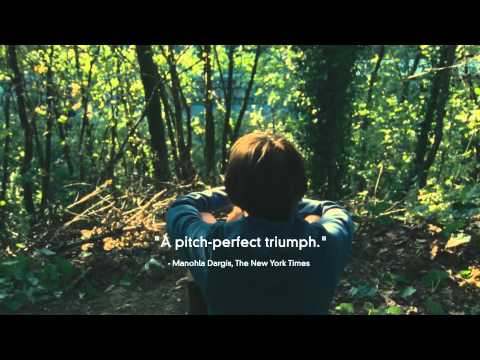
Wendy is driving to Alaska in search of a summer job at a cannery, with only her beloved dog, Lucy, for company. When her old car breaks down in a small Oregon town, a series of small but catastrophic misfortunes befalls her. An arrest for shoplifting dog food separates her from Lucy, and her fragile financial stability quickly unravels.
Kelly Reichardt’s minimalist cinema reaches one of its peaks here. Wendy and Lucy is a heartbreaking portrait of economic precarity, where every dollar counts and a single unforeseen event can lead to total ruin. Michelle Williams‘ quiet and desperate performance perfectly captures the anxiety of living without a safety net. The film is a powerful critique of a society that blames poverty and offers no support to those in trouble, showing how economic fragility can lead to the loss of everything, even the dearest affections.
Winter’s Bone (2010)

Ree Dolly, a seventeen-year-old girl in the Ozarks, cares for her two younger siblings and her catatonic mother. When she discovers that her father, a meth producer, has put their house up for his bail bond and then disappeared, Ree must venture into the dangerous and secretive world of her community to find him, dead or alive, before the family loses everything.
Winter’s Bone is a “country noir” of relentless harshness, which revealed Jennifer Lawrence’s talent to the world. Debra Granik’s film is an unfiltered immersion into rural American poverty, where the illegal drug economy has replaced all other forms of sustenance. Ree’s determination is an act of fierce resilience in a world governed by scarcity, violence, and a ruthless code of honor. It is a work that shows survival not as an aspiration, but as a daily war fought with courage and desperation.
American Honey (2016)

Star, a teenager from a broken home, escapes a life with no future by joining a “mag crew,” a group of young misfits who travel across the American Midwest selling magazine subscriptions door-to-door. Pulled into a whirlwind of parties, lawlessness, and precarious love, Star searches for her place in the world on the fringes of the American dream.
Andrea Arnold directs an epic on-the-road poem, a vibrant and sensory portrait of America’s forgotten youth. Shot in an almost documentary style, American Honey captures the chaotic energy and desperation of a generation living day-to-day. The film is a critique of capitalism from the perspective of those who have been cast out, showing a subculture based on mutual exploitation that, paradoxically, also offers a fleeting sense of freedom, community, and belonging. It is an immersive and unforgettable cinematic experience.
Blue Ruin (2013)

Dwight is a homeless man living in his old blue Pontiac. His existence on the margins is upended when he learns that the man who killed his parents is about to be released from prison. Driven by a long-dormant desire for revenge, Dwight, a clumsy and terrified man, embarks on a bumbling and bloody mission that unleashes a violent feud with a ruthless family.
Blue Ruin brilliantly deconstructs the revenge movie genre, anchoring it in the harsh reality of poverty. Director Jeremy Saulnier shows violence not as a cathartic and stylized act, but as a dirty, difficult, and terrifying endeavor, especially for someone who lacks the economic and social resources to carry it out. Dwight’s incompetence makes his revenge all the more distressing and realistic. The film is a powerful reflection on how the lack of money transforms DIY justice from a heroic fantasy into a brutal, dead-end nightmare.
Part 3: The Invisible Hierarchy: Class Struggle and Social Inequality
Money doesn’t just create wealth or poverty; it builds hierarchies, invisible walls that separate worlds. The films in this section, from various national cinemas, use the language of film to make the abstraction of class struggle tangible. A common device is the use of space and architecture as a metaphor for inequality. Homes are not mere backdrops but physical manifestations of the social structure: people live up high or down low, in open, bright spaces or in cramped, dark basements. The very act of going up or down stairs becomes a visual commentary on social mobility, demonstrating that inequality is not just an economic condition, but a built environment that confines and defines existences.
In these brutally unjust systems, another deep and pessimistic theme emerges: virtue does not pay. Goodness, dignity, and innocence are not rewarded but systematically exploited or annihilated. These films stage the failure of meritocracy, suggesting that in a profoundly unequal society, personal qualities are not enough to survive, let alone thrive. The system itself is amoral, and those who try to navigate it while keeping their integrity intact are often the first to be broken.
Parasite (Gisaengchung) (2019)

The Kim family lives in a squalid semi-basement apartment, struggling to survive. When their son, Ki-woo, gets a job as a tutor for the daughter of the wealthy Park family, a window of opportunity opens. With cunning and deceit, the Kims infiltrate the luxurious villa one by one, creating a precarious symbiosis that is destined to erupt into a grotesque and violent tragedy.
Winner of the Palme d’Or at Cannes and the first non-English language film to win the Oscar for Best Picture, Bong Joon-ho’s Parasite is a masterpiece of tension, black humor, and social critique. The director orchestrates a perfect allegory of class struggle, where the architecture of the Parks’ villa, with its clean lines and overlapping levels, becomes the stage for inequality. The film masterfully explores the invisible lines of smell and status that separate the two worlds, showing how the aspiration for a better life can turn into a ruthless war when legitimate paths are closed.
Shoplifters (Manbiki Kazoku) (2018)

On the margins of Tokyo, a makeshift “family” lives on schemes, petty theft, and the grandmother’s pension. Despite poverty and illegality, the bonds that unite them are strong and affectionate. Their precarious harmony is challenged when they take in a mistreated little girl, an act of kindness that will ultimately unveil the secrets upon which their existence is founded.
With his usual delicacy and depth, Hirokazu Kore-eda directs another Palme d’Or winner that questions the very concept of family. Shoplifters is a subtle but powerful critique of a Japanese society that prefers not to see its own poverty and criminalizes those who live on the margins. The film poses a fundamental question: what defines a family? Blood ties or care, affection, and shared survival? It is a work of heartbreaking humanity that finds warmth and dignity in precarity.
I, Daniel Blake (2016)

Daniel Blake, a carpenter from Newcastle in his late fifties, suffers a major heart attack, and his doctors forbid him from returning to work. Despite this, the state welfare system deems him fit for work, denying him sickness benefits. To receive any support, he is forced to navigate a digital bureaucratic labyrinth and search for a job he cannot accept, a Kafkaesque struggle for his own dignity.
Ken Loach, a master of social realism, wins his second Palme d’Or with a film of devastating political and human power. I, Daniel Blake is an indictment of austerity policies and the dehumanization of bureaucracy, which turns citizens into numbers and solidarity into an anomaly. Daniel’s fight is not just for money, but for respect. It is a film that gives a face and a voice to those crushed by a system designed to frustrate and humiliate, a cry of anger and a plea for compassion.
The Snows of Kilimanjaro (Les Neiges du Kilimandjaro) (2011)

Michel, a union delegate in Marseille, lives a peaceful life with his wife Marie-Claire, surrounded by friends and family. Their happiness is brutally interrupted when they are robbed in their home. The biggest shock comes when Michel discovers that one of the assailants is a young worker whom he himself, through a lottery, had helped to lay off. This event triggers a deep crisis of conscience.
Inspired by a poem by Victor Hugo, Robert Guédiguian’s film is a touching reflection on class consciousness, solidarity, and the generational divide. The work explores the moral dilemma of a “settled” working class, enjoying a certain economic stability, when confronted with the desperation and anger of those left behind. It is a profoundly human film that questions the values of the left, asking what remains of solidarity when fear and resentment take over.
Part 4: The Economy of Crime: When Desperation Becomes Violence
When the doors of the legal economy close, the doors of the criminal world often open. The films in this section explore the gray area where economic desperation turns into violence. These works demystify the cinematic gangster figure, stripping it of any romantic aura. Crime is no longer a path to power or unbridled wealth, but another form of precarious work. A bank robbery becomes a poorly planned “gig” to make ends meet; drug dealing, a side hustle to supplement an insufficient income. The protagonists are not charismatic bosses, but low-cost “employees” of a criminal enterprise, easily replaceable and constantly at risk.
In this portrayal, a disturbing truth emerges: the logic of predatory capitalism and that of the underworld are not opposites, but mirror images. Both operate on principles of ruthless efficiency, market control, and profit maximization at any human cost. The world of crime thus becomes a distorted mirror reflecting the violence and amorality inherent in an unregulated economic system. Whether using a gun or a subprime mortgage, the ultimate goal remains the same: the accumulation of capital, indifferent to the lives it destroys along the way.
Good Time (2017)

After a botched bank robbery, Nick, a young man with cognitive disabilities, is arrested and locked up on Rikers Island. His brother Connie, desperate and on the run, embarks on an adrenaline-fueled, nocturnal odyssey through the underbelly of New York to find the bail money and free him. Every attempt to solve one problem creates a worse one, in a spiral of violence and chaos.
The Safdie brothers direct a neon-drenched thriller, a shot of pure kinetic energy that leaves no room to breathe. Good Time is a portrait of febrile desperation, where crime is not a strategic choice but a series of failed improvisations. The frantic direction and pulsating soundtrack immerse us in Connie’s mind, an opportunist who uses and discards people like resources. The film is a fierce critique of a system that offers no way out, where crime is just another low-paying gig in the economy of the marginalized.
Gomorrah (Gomorra) (2008)

Inspired by Roberto Saviano’s investigative book, the film weaves together five stories of life and death in the shadow of the Camorra, in the suburbs of Naples and Caserta. From teenagers who dream of becoming like Tony Montana, to a tailor who works for high fashion, a young lookout, a “bookkeeper” who distributes pensions to the families of prisoners, and traffickers of toxic waste.
Matteo Garrone creates a monumental and chilling work that demolishes every romanticized representation of the mafia. Gomorrah adopts an almost documentary-like style to show the Camorra not as a “family” with a code of honor, but as a ruthless and pervasive capitalist enterprise. The “System” is an economic entity that controls every aspect of the territory, from fashion to waste, treating people as disposable human capital. It is a film that shows crime as an industry and life as a commodity.
Dogman (2018)

In a desolate coastal suburb, Marcello, a mild-mannered man who runs a dog grooming shop, tries to live a quiet life, divided between his love for his daughter and a small-time cocaine dealing business. His existence is turned upside down by his toxic friendship with Simoncino, a violent and brutal ex-boxer who terrorizes him and drags him into a vortex of humiliation and crime, leading to an unexpected explosion of revenge.
Matteo Garrone returns to the peripheries of the soul with an urban western of rare power. Dogman is a study of economic desperation and the victim-perpetrator dynamic. Marcello Fonte’s performance, awarded at Cannes, is extraordinary in embodying a good man crushed by violence and necessity. The film explores how the struggle for dignity in a forgotten corner of the economy can lead to dehumanization, where the only language left is that of violence.
Killing Them Softly (2012)

When a mob-protected poker game is robbed by two lowlifes, the entire local criminal economy plunges into crisis. Trust has been broken, and money stops circulating. To restore order and “market confidence,” the mob hires Jackie Cogan, a cynical and pragmatic professional hitman. His job is to find the culprits and eliminate them, but his actions are constantly commented on in the background by politicians’ speeches about the 2008 financial crisis.
Andrew Dominik directs a nihilistic and stylized crime thriller that functions as an explicit allegory of American capitalism. The film uses the language of the underworld to talk about the financial crisis, the bailout, and market logic. The mob doesn’t act out of revenge, but to “restore consumer confidence.” Brad Pitt’s final monologue, delivered while Barack Obama speaks of national unity, is one of the most ferocious and lucid condemnations of the American dream ever seen on film: “America’s not a country. It’s a business. Now fucking pay me.
Part 5: Satire and the Grotesque: The Distorting Mirror of Capitalism
Sometimes, to describe a reality that has surpassed all logic, the only adequate tool is satire. The films in this section use black humor, surrealism, and the grotesque to expose the absurdity of contemporary capitalism. A prime target is language. Corporate jargon, motivational rhetoric, or the pretentious lexicon of the art world are unmasked as empty shells, tools to conceal a reality of exploitation and vacuity. These directors take this absurdity literally, push it to its extreme consequences, and in doing so, reveal its hidden violence.
Another common thread is the irruption of a primordial, instinctive force that shatters the fragile facade of “civilized,” affluent society. Whether it’s a man behaving like an ape at a gala dinner or a father sabotaging his daughter’s career with demented pranks, these explosions of chaos reveal the hypocrisy and fear lurking beneath the surface of bourgeois order. They suggest that our sophisticated social and economic structures are just a thin veil hiding a more basic, and often much less noble, human nature.
Sorry to Bother You (2018)

In an alternate version of Oakland, Cassius “Cash” Green is a broke telemarketer struggling to make a sale. His life changes when an older colleague reveals the secret to success: using his “white voice.” With this new skill, Cash quickly climbs the corporate ladder, discovering a macabre and surreal universe that forces him to choose between wealth and his conscience.
The directorial debut of musician and activist Boots Riley is an explosive anti-capitalist satire, a wild and brilliant work that mixes comedy, science fiction, and political critique. Sorry to Bother You uses absurdity to talk about real issues like racism, labor exploitation, and cultural assimilation. The “white voice” is a brilliant metaphor for code-switching, while the secret hidden at the top of the company is a grotesque and terrifying representation of the ultimate logic of profit.
The Square (2017)

Christian is the curator of a prestigious contemporary art museum in Stockholm. As he prepares a new installation called “The Square,” a work that invites altruism and trust, his life falls apart after his cell phone is stolen. His clumsy attempts to retrieve it drag him into a series of embarrassing and morally ambiguous situations that expose the hypocrisy of his world.
With this ruthless, Palme d’Or-winning satire, Ruben Östlund skewers the contemporary art world, the liberal elite, and the emptiness of performative social responsibility. The film is a sequence of memorable and cringe-worthy scenes, including a gala dinner terrorized by a performance artist impersonating a primate. The Square is a sharp and uncomfortable reflection on the gap between our ideals and our actions, in a world where solidarity is often just an art installation.
Force Majeure (Turist) (2014)

A model Swedish family is on vacation at a luxurious ski resort in the French Alps. During lunch on a terrace, a controlled avalanche seems about to engulf them. In the general panic, the father, Tomas, grabs his iPhone and flees, abandoning his wife and children. The avalanche stops, but something in the family dynamic has been broken forever.
Ruben Östlund directs a black comedy of rare intelligence, a surgical dissection of modern masculinity and the fragility of bourgeois well-being. The film explores the consequences of a single act of cowardice, which shatters the image of the man as the family protector. With glacial humor and relentless psychological precision, Force Majeure analyzes social expectations, gender roles, and the inability to face the truth, showing how a moment of primal fear can destroy an entire life built on stability and appearance.
Toni Erdmann (2016)

Winfried, a retired music teacher with a penchant for pranks, is worried about his daughter Ines, a straight-laced corporate consultant working in Bucharest who seems to have lost all joy in life. To try to reconnect with her, Winfried invents an alter ego: “Toni Erdmann,” an extravagant life coach with a wig and fake teeth, who begins to infiltrate his daughter’s professional world.
Maren Ade’s masterpiece is a unique work, a nearly three-hour film that manages to be hilarious, moving, and deeply critical. Toni Erdmann is a powerful analysis of alienation in globalized corporate culture, where efficiency and profit have suffocated all forms of authenticity. The irruption of chaos and absurdity, embodied by Toni, becomes an act of resistance, a desperate attempt to reintroduce humanity, humor, and love into a world that has forgotten them.
Capitalism: A Love Story (2009)

Twenty years after taking on General Motors in Roger & Me, Michael Moore returns to the central theme of his career: the devastating impact of corporate dominance on the lives of Americans. This time, the culprit is the system itself: capitalism. The film is an investigation into the roots of the 2008 financial crisis and a radical critique of an economic system that Moore calls “evil.
With his polemical and unmistakable style, Moore builds a passionate and personal indictment. Capitalism: A Love Story highlights the stories of the human victims of corporate greed, from families facing unjust foreclosures to employees on whose lives companies take out secret insurance policies (“dead peasants insurance”). Despite its simplifications, the film has the great merit of asking a fundamental and uncomfortable question: is it possible to reconcile capitalism with democracy?
Part 6: Roots and Frontiers: The American Dream Laid Bare
This final section gathers films that, through glimpses into the past or the analysis of everyday dramas, question the founding myths of capitalism and the “American dream.” Instead of focusing on the mechanics of money, these works explore what we might call the “economics of happiness.” They challenge the direct correlation between financial well-being and emotional fulfillment, suggesting that social connections, inner resilience, and one’s worldview are far more valuable forms of capital.
These films challenge the fundamental assumption that the pursuit of wealth is synonymous with the pursuit of happiness. By creating characters whose emotional states are disconnected from their economic conditions, they suggest that the true poverty of modern life is often a poverty of relationships, a profound loneliness. In this sense, the most important assets are not monetary, but human: friendship, empathy, the ability to find joy beyond consumption. It is a philosophical critique that shifts the focus from the economic system to the individual and their ability to define their own concept of “value.”
First Cow (2019)

In 1820s Oregon, a lonely cook and a Chinese immigrant on the run form a deep friendship. Together, they start a successful business selling fried cakes, made delicious by a secret ingredient: the milk they secretly steal from the only cow in the territory, owned by the wealthy local factor. Their small and fragile entrepreneurial dream soon collides with the harsh reality of the frontier.
Kelly Reichardt directs a quiet and profound parable about the origins of American capitalism. First Cow portrays enterprise not as a heroic and individualistic act, but as a precarious adventure built on friendship and, inevitably, theft. The film questions the very nature of the “American dream,” showing how the drive for profit can jeopardize the most precious asset: human connection. It is a work of melancholic beauty that reflects on history to speak about our present.
Another Year (2010)

Tom and Gerri are a happily married middle-aged couple. Their life, marked by work, tending their garden, and dinners with friends, is an island of stability and contentment. Around them, however, orbits a universe of loneliness and unhappiness: their friend Mary, desperately searching for a love to save her from alcoholism and aging, and their old friend Ken, drowning in depression and junk food.
Mike Leigh is a master at creating human portraits of staggering depth and truth. Another Year, structured around the passing of the four seasons, is a bittersweet meditation on happiness, friendship, and loneliness. The film subtly explores the gap between those who have found balance and those who have lost their way, questioning the link between middle-class comfort and genuine personal fulfillment. It offers no judgments, only a compassionate and sharp observation of the human condition.
Happy-Go-Lucky (2008)

Poppy is a thirty-year-old primary school teacher in London, endowed with a seemingly unshakeable optimism and a contagious laugh. Her worldview, always positive and open to others, is tested daily, particularly by her driving instructor, Scott, a man consumed by anger, racism, and conspiracy theories.
Mike Leigh again, but with a completely different tone. Happy-Go-Lucky is a complex and fascinating study of the nature of happiness. Is Poppy’s optimism a choice, a disposition, or a form of willful denial? The film doesn’t give an easy answer. Through Sally Hawkins’ extraordinary performance, the work explores happiness as a possible act of political resistance, a way to oppose a world that seems to encourage cynicism and misery. It is a film that challenges the viewer, sometimes irritatingly so, but leaves them with profound questions about our way of being in the world.
A vision curated by a filmmaker, not an algorithm
In this video I explain our vision

