

Yol (The Road) (1982)

The film follows five prisoners who are granted a week’s leave to return home. Traversing a Turkey under military rule, each man confronts his own personal tragedies, clashing with rigid patriarchal laws, state oppression, and the elusive nature of freedom. Their individual journeys intertwine to paint a choral and desolate portrait of a nation in chains.
Yol is not just a film; it is an act of artistic rebellion and a historical document of capital importance. Winner of the Palme d’Or at Cannes in 1982, it projected modern Turkish cinema onto the world stage, becoming the spiritual precursor to the entire generation of independent authors that would emerge in the following decade. Its creation is legendary: director Yılmaz Güney, imprisoned for political reasons, wrote the screenplay and provided detailed instructions from prison to his collaborator Şerif Gören, who physically directed the shoot. Güney then managed to escape, retrieve the negatives, and complete the editing in exile. This tormented genesis is reflected in every frame of the film, which exudes a deep “homesickness for freedom.” The work is an extraordinary odyssey through the geographical and human landscapes of Turkey, a universal allegory on the tragedy of distances: those imposed by a military state and those rooted in a culture that still demands the punishment of adulterous women. Its visual poetry and immense compassion for human suffering make it the essential starting point for understanding the anxieties and themes that would animate the New Turkish Cinema.
Kış Uykusu (Winter Sleep) (2014)

Aydın, a retired actor, runs an isolated hotel amidst the evocative rock formations of Cappadocia. His intellectual arrogance and emotional distance separate him from his young wife Nihal and his sister Necla. With the arrival of snow, which isolates them from the world, tensions explode in long, merciless conversations that lay bare moral hypocrisies, class conflicts, and repressed resentments.
Winner of the Palme d’Or, Winter Sleep is Nuri Bilge Ceylan’s magnum opus, a deep and literary immersion into the human soul that evokes masters of theater like Chekhov and cinema like Bergman. Its monumental duration, almost 200 minutes, is not a whim but a deliberate artistic choice to envelop the viewer in the same psychological claustrophobia as the characters. The film is a masterful example of the “cinema of the unsaid,” where dialogue becomes a double-edged sword, a means to wound and to defend, revealing more in the subtext than in the words themselves. Through the dynamics of this dysfunctional family, Ceylan examines the deep rift between the rich and the poor, the powerful and the powerless, that characterizes contemporary Turkey. Aydın’s hotel, carved into the rock, becomes a stage where a universal drama of loneliness, incommunicability, and disillusionment unfolds.

Bir Zamanlar Anadolu’da (Once Upon a Time in Anatolia) (2011)

In the heart of the night, a convoy of men—a doctor, a prosecutor, policemen, and a murder suspect—wanders the Anatolian steppes in search of a dead body. What begins as a routine investigation slowly transforms into a hypnotic existential meditation. Through tired chatter and fragmented conversations, the personal stories, secrets, and moral burdens of each character emerge, while the truth remains constantly elusive.
Awarded the Grand Prix at Cannes, this film is a lesson in atmosphere and subtext. Ceylan takes the elements of a police procedural and transfigures them into a profound philosophical inquiry into life, death, and the nature of truth. The inspiration, based on the real experience of one of the co-writers, lends the story an almost documentary-like authenticity. The vast, dark landscape of Anatolia is not just a backdrop but a character in itself, a mirror to the desolate souls of the men who traverse it. Ceylan demonstrates his mastery in finding universal mysteries in “daily minutiae,” transforming a night of searching into a journey into the darkness of the human soul, where every detail, every glance, and every silence contributes to a work of extraordinary complexity and beauty.
Ahlat Ağacı (The Wild Pear Tree) (2018)

Sinan, a young aspiring writer, returns to his provincial hometown after graduation, dreaming of finding the funds to publish his first novel. However, he clashes with a disillusioning reality, marked by his father’s gambling debts and eccentricity. Through a series of long and profound conversations with locals, two imams, and an old flame, Sinan is forced to reckon with his artistic ambitions and his complicated family legacy.
With The Wild Pear Tree, Ceylan creates his most personal and verbose work, a total immersion into the conflict between youthful ambition and the weight of one’s origins. The film is a dense and philosophical exploration of the father-son relationship, but also a reflection on the role of the artist in contemporary society, the tensions between Islam and secularism, and the eternal divide between the center and the periphery in modern Turkey. The wild pear tree of the title becomes a powerful metaphor for the irregular, resilient, and inescapable nature of family and roots, something one can never truly be free of. Each dialogue is an intellectual and emotional duel, forcing Sinan and the viewer to question the meaning of art, faith, and one’s place in the world.
Uzak (Distant) (2002)

The solitary and methodical life of Mahmut, a disillusioned commercial photographer living in Istanbul, is disrupted by the arrival of Yusuf, his uncultured cousin from the countryside in search of work. Forced to live together in a small apartment, the two men, separated by a cultural and emotional abyss, struggle to communicate. Their forced proximity only amplifies the profound distance that separates them, against the backdrop of a snowy and alienating city.
Winner of the Grand Prix at Cannes, Uzak is the work that established Ceylan internationally and represents the quintessential example of the urban-rural dichotomy in New Turkish Cinema. The film’s power lies in its “unbearable silences” and its masterful depiction of metropolitan alienation. Ceylan’s exquisite and melancholic photography transforms Istanbul into a landscape of inner exile, a gray-on-gray city that reflects the emptiness of its characters. Uzak is a near-perfect affirmation of cinematic realism as an art form, a work that captures with heartbreaking precision the loneliness of modern man and the impossibility of true human connection.
A vision curated by a filmmaker, not an algorithm
In this video I explain our vision
İklimler (Climates) (2006)

The film documents the painful disintegration of the relationship between İsa, a selfish university professor, and his younger partner, Bahar. After a tense summer vacation where they decide to separate, the narrative follows İsa through the changing seasons. From the suffocating heat of summer to the snows of winter, the man is forced to confront his own loneliness and his chronic inability to love and connect with others.
Climates is a work of almost autobiographical intensity, made even rawer by Ceylan’s choice to star as the protagonist alongside his wife, Ebru Ceylan. This decision lends the film an almost unbearable realism. The film’s analysis focuses on how the changing seasons and landscapes become a mirror of the characters’ inner “climates.” For the first time, Ceylan uses high-definition video, creating a ruthless visual intimacy where sharp close-ups alternate with long shots that emphasize the alienation and distance between the two protagonists. It is a dark and disenchanted portrait of modern relationships, an unfiltered exploration of male selfishness and the fragility of emotional bonds.
Helezon Akışkan
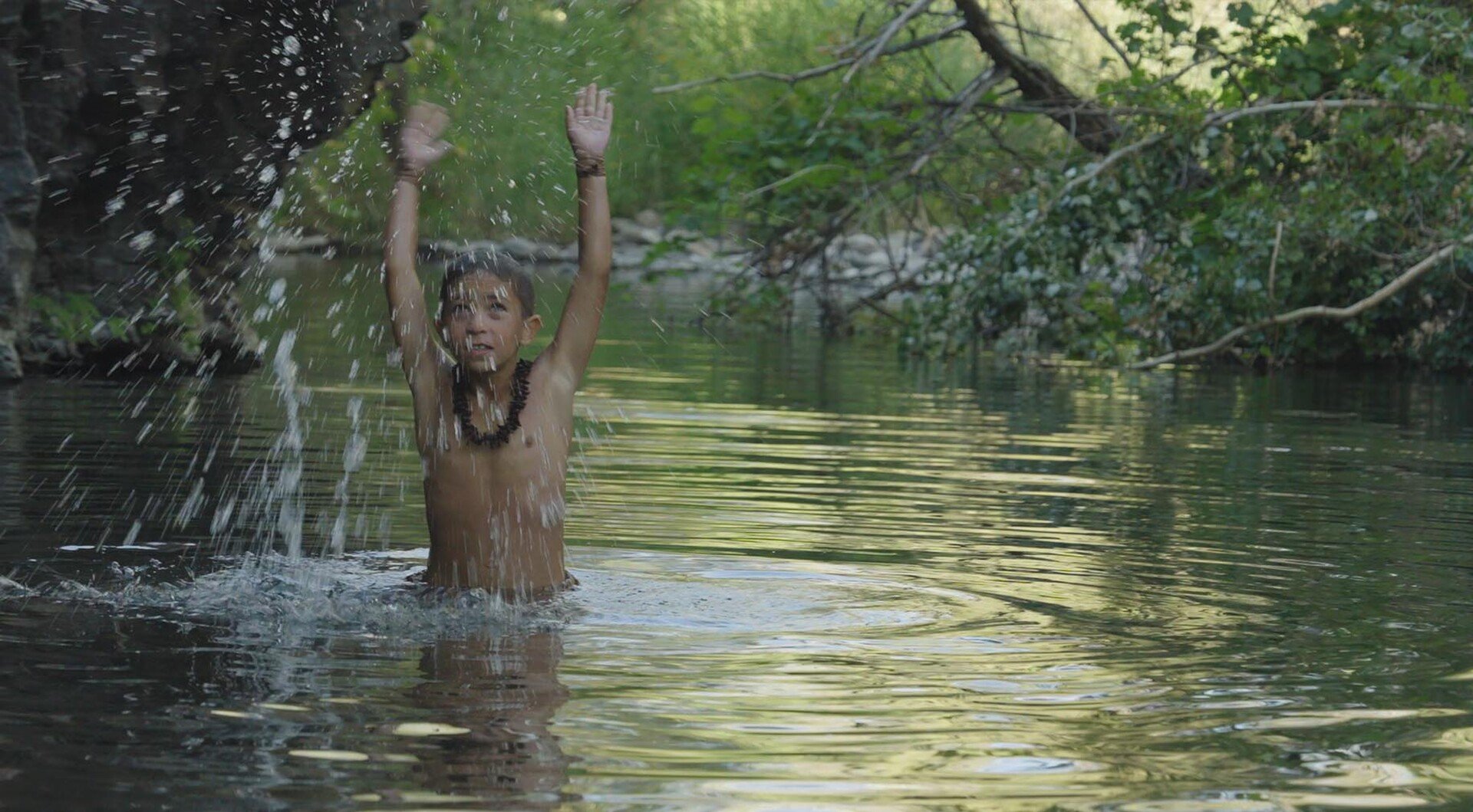
Drama, short film, by Cihan Abdal, Türkiye, 2025.
A woman and a child living in ancient times, separated from their tribe, are looking for water. After the woman faints, the boy begins to search alone. The boy eventually finds water, but when he returns he will encounter a bad situation.
The purpose of the Helezon short film series is to remind humanity, which embraces the realities of the modern world and turns its back on nature, of its essence. It is a four-film series based on the premise that 'the water, fire, earth, and air that humans seek in nature are within themselves.' 'Helezon Akışkan' tells the story of water, with the main character's behaviors paralleling those of water.
Director Biography - Cihan Abdal
After graduating from Gazi University and starting work at TRT, Cihan Abdal joined the camera crew for Turkey's 2024 Oscar submission, the TRT co-production 'Hayat' (directed by Zeki Demirkubuz). He later worked as an editor on the TRT co-productions 'Gülizar' (directed by Belkıs Bayrak) and 'Kanto' (directed by Ensar Altay).
WITHOUT DIALOGUES
Üç Maymun (Three Monkeys) (2008)

To protect his boss, a politician running for election, driver Eyüp agrees to take the blame for a fatal car accident in exchange for money. While serving his sentence in prison, his wife and son become involved in a dangerous relationship with the same politician. The family adopts the “three monkeys” policy—see no evil, hear no evil, speak no evil—to survive, but their lies will drag them into a spiral of tragedy.
With Three Monkeys, which earned him the Best Director award at Cannes, Ceylan ventures into noir territory, using the genre’s conventions to explore the moral consequences of deceit and self-delusion. The film is a stylistically impeccable work, where painterly compositions and desolate landscapes with cloud-laden skies create a sense of inescapable fatalism. The characters are trapped not only by circumstances but also by their unconfessed desires and the lies they tell themselves. It is a painfully incisive representation of human nature, a thriller of the soul where the real suspense lies not in the events, but in the slow and inexorable moral collapse of a family.
Kader (Destiny) (2006)

A prequel to Innocence, this film takes us back in time to reveal the origins of the tragic love triangle. A young Bekir falls hopelessly in love with Uğur, who in turn is attached to Zagor, a violent criminal. When Zagor ends up in prison, Bekir sees a glimmer of hope, but this is only the beginning of a years-long pursuit, a self-destructive journey in search of a merciless love that will consume him completely.
Kader delves deeper into Demirkubuz’s core theme: love as a condemnation, an inescapable destiny. The film traces with heartbreaking clarity Bekir’s descent from innocent hope to the resigned acceptance of a passion that can never be satisfied. It is a minimalist and powerful representation of how destiny is forged by obsessive choices. We see the events that transformed the characters into the broken figures we met in Innocence, offering an even more tragic context to their story. Demirkubuz shows us that their “destiny” was not written in the stars, but by their own inability to escape a love that is, ultimately, a form of imprisonment.
Duvara Karşı (Head-On) (2004)

Cahit, a self-destructive forty-something Turkish-German, and Sibel, a young woman desperate to escape her conservative family, meet in a psychiatric hospital and decide to enter into a marriage of convenience. This arrangement allows Sibel to taste freedom, but their chaotic cohabitation gradually transforms into a violent, tragic, and all-consuming love story that will push them against the wall of their own lives.
Winner of the Golden Bear at the Berlin Film Festival, Head-On is a raw, brutal, and energetic punk rock love story. Fatih Akın’s film captures with overwhelming force the feeling of being suspended “between two cultures,” a central theme for the Turkish diaspora in Germany. Its explicit violence and raw emotionality represent a stark contrast to Ceylan’s contemplative style, showing another face of Turkish cinematic identity. It is a powerful exploration of identity, freedom, and self-destruction, a film that pulses with life, pain, and passion, marking a pivotal moment for European cinema in the new millennium.
Yaşamın Kıyısında (The Edge of Heaven) (2007)

The stories of six characters intertwine between Germany and Turkey. A Turkish-German professor travels to Istanbul to find the daughter of his father’s deceased partner. Meanwhile, the girl, a political activist, flees to Germany and is taken in by a young German student. Their lives intersect and diverge through chance, tragedy, and the search for forgiveness, creating a mosaic of connected destinies.
With this film, Akın demonstrates remarkable narrative maturity, using a complex structure reminiscent of works like Babel to explore themes such as redemption, globalization, and intercultural connections. The film portrays the transnational mobility and “time-space compression” of the contemporary world, questioning the very idea of a purely national cinema. It is a story about how individuals cope with loss and seek atonement across geographical and cultural borders, a choral tale that investigates the possibility of connection and forgiveness in a fragmented world, where each character is on the verge of falling or finding salvation.
Soul Kitchen (2009)

Zinos, the Greek-German owner of a popular but run-down restaurant in Hamburg, is going through a personal and professional crisis. When he hires a new, eccentric but brilliant chef, the place transforms into a trendy hotspot, but his life becomes even more complicated. It is a chaotic and vital comedy about friendship, community, and the love of food, set against the backdrop of a multicultural city.
Akın’s first comedy, Soul Kitchen is a modern “Heimatfilm” (homeland film), a declaration of love to the vibrant and multi-ethnic Hamburg. The film uses a lighter tone to address serious themes like gentrification, cultural identity, and the meaning of “home” in a globalized world. The extraordinary soundtrack and strong sense of place are key elements that make the film a joyful and infectious experience. Akın proves he can tell stories not only of drama and tragedy but also of the resilience and vitality of communities that form in urban spaces, where food and music become a universal language.
Bal (Honey) (2010)

Six-year-old Yusuf lives an almost magical existence in the mountainous forests of Anatolia, bound by a deep affection for his father, a beekeeper. When the man leaves for a distant forest and does not return, Yusuf’s world collapses. The boy retreats into an impenetrable silence, only to find the courage to venture alone into the wilderness in search of his father, on a journey into the unknown.
Winner of the Golden Bear in Berlin, Honey is the chronologically initial chapter of Semih Kaplanoğlu’s “Yusuf Trilogy,” but it represents the entry point into its protagonist’s soul. The film is a work of almost absolute “spiritual realism,” characterized by the absence of music and sparse dialogue. This stylistic choice immerses the viewer in the sounds of nature and the child’s perspective. The forest is not just a place but an enchanted realm, and the father-son bond is portrayed with a poignant tenderness, making its rupture an event of cosmic proportions. It is a film that requires the viewer to surrender to its slow, contemplative rhythm to grasp its profound visual poetry and its touching reflection on the loss of innocence.
Süt (Milk) (2008)

Yusuf, now a high school graduate, has failed his university entrance exam and dreams of becoming a poet while earning a living selling milk produced with his mother. His adolescent world, suspended between dreams and reality, is shattered when he discovers his mother is having a secret affair. This revelation forces him to confront the pain of growing up, the uncertainty of the future, and the end of family idealization.
The central chapter of the trilogy, Milk explores the crucial moment of the loss of innocence. The film analyzes Yusuf’s inner conflict, torn between the tradition of a rural life and the modernity represented by his poetic ambitions. Poetry is his attempt to escape, a way to transcend a reality that feels too small for him. The discovery of his mother’s relationship, however, brings him abruptly back to earth, shattering the protective image of the family nest. The film’s tone is meditative and melancholic, perfectly capturing the anxieties of a young man trapped between a past that no longer belongs to him and a future he doesn’t know how to build.
Yumurta (Egg) (2007)

Yusuf, now an established poet on the threshold of forty, is forced to return to his hometown after his mother’s death. There he meets Ayla, a young relative he never knew existed, who informs him of his mother’s last wish: that he perform a ritual sacrifice. Trapped by guilt and the slow rhythms of provincial life, Yusuf must confront the ghosts of a past he had tried to forget.
The first film of the trilogy in order of release, Egg introduces the themes of memory, guilt, and the difficult relationship with one’s roots. The return home forces Yusuf to confront everything he had fled from. The title itself, “Egg,” is a clear reference to the maternal bond and the origin of life, making the film a reflection on origins and the obligations that bind us to our past. Kaplanoğlu begins his backward exploration starting from an adult man whose apparent success hides a deep sense of uprooting, suggesting that to understand the present, it is necessary to return to the beginning.
Mustang (2015)

In a remote Turkish village, the lives of five orphaned sisters are turned upside down when, after innocently playing with boys on the beach, they are accused of obscene behavior. Their conservative guardians lock them in the house, transforming their home into a “wife factory” where they are prepared for arranged marriages. United by a common passion for freedom, the sisters find increasingly bold ways to rebel.
Nominated for an Oscar and the debut feature of Deniz Gamze Ergüven, Mustang is a visceral, powerful, and emotionally charged tale of female resilience. The film is a scathing and uncompromising critique of patriarchal oppression, a theme often latent in Turkish cinema but here addressed with disruptive force. The cinematography, bright and fluid in the rare moments of freedom and claustrophobic during their confinement, perfectly mirrors the girls’ emotional journey. Mustang is a vital counter-narrative in the Turkish cinematic landscape, often dominated by male perspectives, and stands as a universal anthem to sisterhood and the indomitable desire for freedom.
Güneşe Yolculuk (Journey to the Sun) (1999)

Mehmet, a young man from western Turkey, forms a deep friendship with Berzan, a Kurd, in the outskirts of Istanbul. When Mehmet is mistaken for a Kurd and unjustly arrested, his life falls apart. His loyalty to his friend will push him to undertake a dangerous journey to the east to return Berzan’s body to his native village, defying bureaucracy and prejudice.
A courageous and prescient work by Yeşim Ustaoğlu, this film addresses the delicate Kurdish issue with rare sensitivity. Journey to the Sun uses the powerful story of a friendship to critique systemic racism and state oppression in Turkey. The almost documentary-like style gives the story a raw and concrete force, transforming a personal story into a powerful political statement. It is a film that gives a voice to those who have long been silenced, exploring themes of identity, belonging, and human solidarity in a context of profound social injustice.
Pandora’nın Kutusu (Pandora’s Box) (2008)

Three middle-aged siblings, living separate and alienated lives in Istanbul, are forced to reunite and return to their hometown when their elderly mother disappears. After finding her, they bring her back to the city, only to discover she has Alzheimer’s. Her presence reopens old conflicts and forces them to confront the emptiness of their bourgeois existences.
Pandora’s Box is a profound study of family dysfunction, memory loss, and the alienation of modern life. The mother’s illness acts as a catalyst that opens the “Pandora’s box” of family resentments, revealing the children’s inability to connect with each other and with their roots. The film critiques a society that, in its race towards modernity, has lost touch with “Mother Nature,” with its rhythms and values. The unexpected bond that forms between the elderly grandmother and her rebellious grandson offers a glimmer of hope, a bridge between generations that seems to point a possible way out of emotional isolation.
Sivas (2014)

Aslan, an eleven-year-old boy living in a desolate Anatolian village, finds a powerful fighting dog named Sivas, wounded and abandoned after a fight. The boy saves the dog and develops a strong bond with him, starting to enter him in brutal local fights. For Aslan, the dog’s success becomes a way to assert himself, gain respect, and impress a schoolmate.
Winner of the Special Jury Prize at Venice, Sivas is a raw and unflinching coming-of-age story. The film uses the world of dog fighting as a powerful metaphor for the macho culture and toxic masculinity that permeates the region. The relationship between the boy and the dog is not a sentimental tale, but a rapid and brutal apprenticeship to the harsh realities of the adult world. Director Kaan Müjdeci offers a documentary-like look at a violent practice, transforming it into an anthropological analysis of a society where strength and domination are the only recognized values.
Tepenin Ardı (Beyond the Hill) (2012)

In a remote Anatolian valley, an elderly and solitary landowner, Faik, reunites with his son and grandsons. The family’s life is dominated by Faik’s paranoid struggle against a group of nomads who, he claims, live “beyond the hill” and threaten his property. However, these enemies are never shown, raising the doubt that they may just be a projection of the man’s fears.
Emin Alper’s debut feature is a masterful psychological thriller about paranoia and the construction of the “enemy.” The film constantly plays with ambiguity: the nomads, always present in conversation but absent from the screen, become a powerful allegory for the human tendency to create an “other” to strengthen the identity of one’s own group and justify aggression. Beyond the Hill is a tense and unsettling political fable that not only critiques Turkish society but also reflects universally on how reality itself can be a fiction built on fear and the need for an invisible enemy.
Abluka (Frenzy) (2015)

In an Istanbul gripped by political violence, Kadir is released from prison on the condition that he works as an informant, sifting through garbage for bomb-making materials. He reconnects with his younger brother, Ahmet, who works for the municipality exterminating stray dogs. As paranoia grows, Kadir begins to suspect his brother, and their lives spiral into a claustrophobic madness.
Alper’s second film is a dystopian and compelling political thriller. The director creates a suffocating atmosphere of paranoia that serves as a critique of the political polarization in contemporary Turkey. The closed and obsessive world of the two brothers becomes a microcosm of a repressive society where anyone can be a threat. The story, though rooted in the Turkish context, takes on a universal value, narrating psychological disintegration in unstable societies dominated by fear. It is a powerful and visually impressive work that confirms Alper as one of the most important voices in modern Turkish cinema.
Sarmaşık (Ivy) (2015)

The crew of a cargo ship is stranded off the coast of Egypt after the shipowner’s bankruptcy. With their passports confiscated, six men are forced to remain on board indefinitely. As supplies run out and isolation takes its toll, the ship transforms into a pressure cooker of toxic masculinity, where small conflicts escalate into a terrifying struggle for survival.
A clever and terrifying psychological thriller, Ivy uses its single location with extraordinary effectiveness. The ship becomes an allegory for the power struggles and political polarization within Turkey itself. The character of “Kürt,” a Kurd who chooses silence as a form of resistance, becomes the catalyst for the crew’s anxieties, representing the unresolved tensions related to Kurdish identity in the national consciousness. Tolga Karaçelik’s film is a claustrophobic journey into madness, a timeless tale about the disintegration of social order when men are left to their own devices.
Sonbahar (Autumn) (2008)

After ten years in prison as a political prisoner, Yusuf is released for health reasons. He returns to his hometown on the Black Sea, but finds a world he no longer recognizes: his father is dead, his sister has moved away, and the village is populated only by the elderly. In this autumnal and melancholic landscape, his encounter with Eka, a young Georgian prostitute, represents a final, desperate attempt to cling to life.
Özcan Alper’s debut feature, Autumn is one of the most sublime and poignant films of modern Turkish cinema. It is a visual poem of melancholic beauty, telling the story of two souls on the margins seeking meaning in their lives. The film portrays the bittersweet nature of love while simultaneously revealing the violence of the Turkish political landscape of the late 1990s. The autumnal landscape, with its muted colors and atmosphere of decay, perfectly reflects Yusuf’s state of mind, a man whose spirit has been broken but who still seeks a glimmer of warmth before the final winter arrives.
Çoğunluk (Majority) (2010)

Mertkan, a young man from Istanbul, leads an empty and aimless life, working in his father’s construction company and spending his evenings with friends. His apathetic existence is shaken by his encounter with Gül, a Kurdish girl from a humble background. For the first time, Mertkan seems to find a glimmer of authenticity, but the relationship clashes with his father’s racism and authoritarianism, who staunchly opposes any connection with “those people.”
Seren Yüce’s debut feature is a powerful and subtle critique of patriarchal society and the “majority” mentality in Turkey. The film treats its moral tale with great finesse, building emotional resonance through the extraordinary performance of Bartu Küçükçağlayan as Mertkan. The character embodies the inertia of a generation raised in the shadow of authoritarian fathers, incapable of developing critical thinking or rebelling. Majority is a chilling portrait of how prejudice and conformity are passed down from father to son, suffocating any possibility of change and true human connection.
Kosmos (Cosmos) (2010)
A mysterious man named Kosmos arrives in a snowy and isolated border town, saving a boy from drowning. Hailed as a miracle worker, Kosmos is a bizarre figure: he seems neither to eat nor sleep, climbs trees like an animal, and seeks love in a primordial way. Initially welcomed, he is later rejected by the community when his “miracles” prove ambiguous and his nature unpredictable.
Reha Erdem’s work is a bold and visually spectacular allegory, a profoundly imaginative cinematic journey. The film asks questions without offering easy answers: Is Kosmos a messiah, a charlatan, a visitor from another world, or a holy fool? His presence disrupts the order of the small community, laying bare its hopes, fears, and hypocrisies. Although at times dense and cryptic, Kosmos is a fascinating work that challenges the viewer, an example of auteur cinema that is not afraid to venture into unknown territories and explore the boundaries between faith, madness, and mystery.
Kelebeğin Rüyası (The Butterfly’s Dream) (2013)

In 1940s Turkey, two young poets, Rüştü and Muzaffer, suffering from tuberculosis, try to survive in a mining town, clinging to poetry and love. They both fall for the same girl, the daughter of a wealthy businessman, and make a bet: whoever manages to win her over with their verses will be the winner. Their life, marked by illness and poverty, is an ode to idealism and the fragility of dreams.
Written and directed by Yılmaz Erdoğan, this film is a lavish and moving work that celebrates the power of poetry in a gray and oppressive world. It is a tribute to friendship, artistic competition, and love as the last anchor of salvation. Erdoğan, a poet himself, manages to balance humor and tragedy, criticizing a society that romanticizes artists but lets them die in poverty. The verses written on scraps of paper and recited in smoky taverns become acts of rebellion against an adverse fate, in a film that firmly believes that beauty can flourish even in the most desperate circumstances.
Takva (A Man’s Fear of God) (2006)
Muharrem is a humble and deeply devout man who lives a solitary existence, marked by prayer and abstinence. His extraordinary faith attracts the attention of the leaders of a powerful and wealthy religious group in Istanbul, who offer him a job as a rent collector for their numerous properties. Suddenly thrust into the modern world, Muharrem finds himself facing temptations, hypocrisies, and the weight of power.
Takva is an intriguing and slow meditation on faith, modernity, and human fragility. The film explores the inner conflict of a man whose spiritual peace is shattered by contact with money and worldly interests. Erkan Can’s performance as Muharrem is an extraordinary portrayal of an ordinary man overwhelmed by a task greater than himself. The film offers no easy judgments but shows how difficult it is to balance the ideals of religion with the desires and contradictions of human nature. It is a work that poses profound questions about spirituality in the contemporary world, without ever mentioning the word “terrorism,” but focusing on the inner struggle of a single man.
Güneşi Gördüm (I Saw the Sun) (2009)

A Kurdish family is uprooted from their village in southeastern Turkey due to armed conflict. Forced to disperse, some members move to Istanbul, where they struggle to adapt to an urban life they do not understand, while others undertake a perilous journey as refugees to Norway. The film follows their parallel destinies, exploring the pain of uprooting and the search for a new home.
Directed by Mahsun Kırmızıgül, I Saw the Sun is an emotionally overwhelming and politically charged ensemble drama. The film courageously confronts the complex realities of the Kurdish conflict and its devastating human consequences. By telling the story from multiple perspectives, the film highlights the different challenges faced by the family members: the fight against prejudice in Istanbul, the difficulties of integration, and the dangers of the journey to Europe. It is a powerful work that gives a human face to a political tragedy, exploring the universal themes of family, identity, and hope in the face of crushing despair.
Anons (The Announcement) (2017)

On the night of May 22, 1963, a group of disgruntled military officers plans a coup to overthrow the government in Ankara. Their mission is to reach the national radio station in Istanbul and broadcast the announcement of the coup to the country. However, a series of unforeseen obstacles and surreal encounters turns their meticulously planned operation into a tragicomic farce.
Based on real events, Mahmut Fazıl Coşkun’s film is a sharp political satire and a comedy of the absurd that ironically comments on Turkey’s unstable political past. With a rigorous visual style and deadpan humor, the film stages the ineptitude of the conspirators, highlighting the gap between their grand ambitions and chaotic reality. The Announcement is an original and intelligent work that uses black humor to reflect on the cyclical nature of coups and the absurdity of power, heralding its director as a major talent in contemporary cinema.
Gişe Memuru (Toll Booth) (2010)

Kenan is a quiet and solitary 35-year-old tollbooth attendant whose life is divided between a suffocating home with an authoritarian father and the monotony of his work cubicle. Tormented by surreal fantasies and visions that interrupt his routine, Kenan struggles to maintain contact with reality, as his traumatic past slowly re-emerges, offering a key to understanding his strange behavior.
The debut feature by Tolga Karaçelik (director of Ivy), Toll Booth is a subtle character study and a modern parable. The film uses recurring visual and sound motifs to create a path back into Kenan’s dismantled past, exploring trauma and alienation with a touch of black humor and surrealism. Serkan Ercan’s performance as Kenan is extraordinary in capturing the inner struggle of a man trapped between reality and the projections of his mind. It is a fascinating debut that foreshadows the director’s mastery in creating claustrophobic atmospheres and investigating the depths of the human psyche.
Bizim Büyük Çaresizliğimiz (Our Grand Despair) (2011)

The peaceful cohabitation of Ender and Çetin, two thirty-something bachelor friends, is interrupted when they agree to host Nihal, the sister of a friend, who was orphaned after a tragic accident. The presence of the girl, initially withdrawn in her grief, brings new life to their home, but soon both men fall in love with her, severely testing their deep friendship and creating a delicate emotional triangle.
Adapted from a critically acclaimed novel by Barış Bıçakçı, Seyfi Teoman’s film is a touching and melancholic portrait of a complex male bond and platonic love. Set in a beautifully photographed Ankara, the film explores with grace and sensitivity the moments of ecstasy and sadness that characterize this unusual living arrangement. Far from clichés, Our Grand Despair is a mature reflection on friendship, responsibility, and the elusive nature of happiness, a work that captivates with its delicacy and profound humanity.
A vision curated by a filmmaker, not an algorithm
In this video I explain our vision

