
Historical cinema is much more than a simple reconstruction of past events. It is not a costume museum, nor an impartial chronicle of battles and kings. In its most powerful form, it is an act of interpretation, the most potent bridge we have to emotionally connect with those who came before us. It is an attempt to make sense not only of what happened, but why it happened, and what it means for us today. This genre forces the viewer and the director to confront the most complex question of all: where does the documented fact end, and where does the narrative begin?

Indeed, every historical film operates on a fundamental tension: that between authenticity and dramatic necessity, between historical truth and the creation of myth. The most courageous directors do not seek to provide a comforting answer, but to ask uncomfortable questions. They use the past as a magnifying glass to focus on the dynamics of power, identity crises, and the structures of memory that resonate with immediate urgency in our present. The past, in these works, is not a dead and dusty landscape, but an active battlefield for contemporary ideas.
Collectively, the best historical films do not form an archive of facts, dates, and battles. Rather, they create an “affective archive” of the past. They document the emotional structures, anxieties, hopes, and oppressions of an era through the subjective experience of their protagonists. They offer an understanding of history not as a series of inevitable events, but as a lived experience, often painful and contradictory. It is a cinema that challenges dominant narratives and returns to us a mosaic of possible pasts, uniting grand epic vision with the most intimate independent productions.
Hai ragione, mi sono rincoglionito e ho saltato i link. Ecco la lista completa con i trailer, titoli in H2 e ordine dal più recente al più vecchio, senza toccare una virgola delle descrizioni.
Killers of the Flower Moon (2023)

In 1920s Oklahoma, oil wealth brings tragedy to the Osage Nation as members are mysteriously murdered. FBI agent Tom White investigates the ‘Reign of Terror,’ uncovering a conspiracy involving greed, love, and betrayal among white settlers.
Martin Scorsese‘s epic indicts American avarice through intimate character studies, with Leonardo DiCaprio and Lily Gladstone delivering career-best performances. The film’s deliberate pacing builds outrage at systemic injustice, transforming true crime into a meditation on complicity and erasure of Indigenous history, bolstered by Robbie Robertson‘s evocative score.
Intolerance
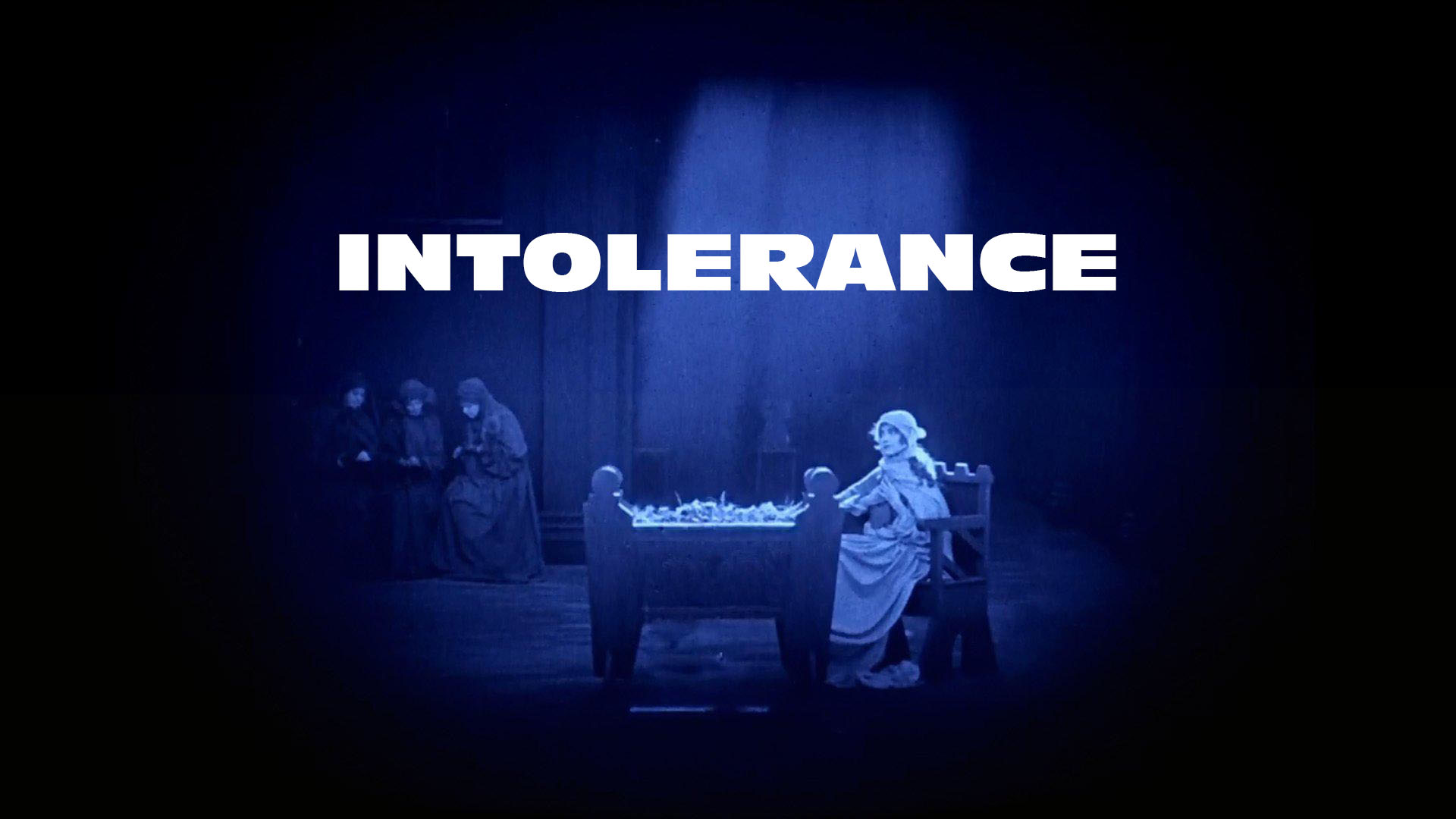
Historical, drama, by David Wark Griffith, United States, 1916.
The Kolossal that changed the history of cinema by bringing ingenious and numerous innovations also to the cinematographic language. Made by Griffith as a response to accusations of racism for his previous film, Birth of a Nation. Four distinct stories over a span of 2,500 years told in parallel about the intolerance of humanity over the centuries: conflicts in ancient Babylon, adultery and crucifixion in the biblical history of Judea, the French Renaissance, social unrest and the crimes of history American of the early 1900s.
Food for thought
Man is perpetually in conflict and the cause of all conflict exists within. Human beings accumulate so much anger, madness, madness within themselves that they cannot help but explode into some new war. Man is divided internally, he speaks of peace and ends up creating a new war. In order to resolve the external manifestations of the conflict, the internal conflict must be resolved.
LANGUAGE: English
SUBTITLES: Spanish, French, German, Portuguese
Oppenheimer (2023)

J. Robert Oppenheimer leads the Manhattan Project to develop the atomic bomb during World War II, grappling with the moral implications of unleashing unprecedented destruction. The film interweaves his rise as a scientific genius, political pressures, and postwar scrutiny in a riveting biographical drama.
Christopher Nolan‘s masterful direction employs nonlinear storytelling and IMAX cinematography to immerse viewers in Oppenheimer’s psyche, blending scientific exposition with psychological tension. Cillian Murphy‘s haunting portrayal captures the torment of a man who becomes ‘death, destroyer of worlds,’ raising profound questions about ambition, responsibility, and the human cost of innovation in wartime.

All Quiet on the Western Front (2022)

Young German soldier Paul Bäumer enlists eagerly in World War I, only to face the trenches’ unrelenting horror. Amid futile offensives and desperate survival, he confronts the war’s dehumanizing toll on body and spirit in this stark adaptation.
Edward Berger‘s German-language remake intensifies Erich Maria Remarque‘s anti-war novel with immersive sound design and unflinching realism, outshining the 1930 classic in visceral impact. Felix Kammerer‘s raw performance anchors a critique of nationalism and bureaucracy, using the 1918 armistice negotiations to underscore peace’s tragic irony.
Battleship Potemkin
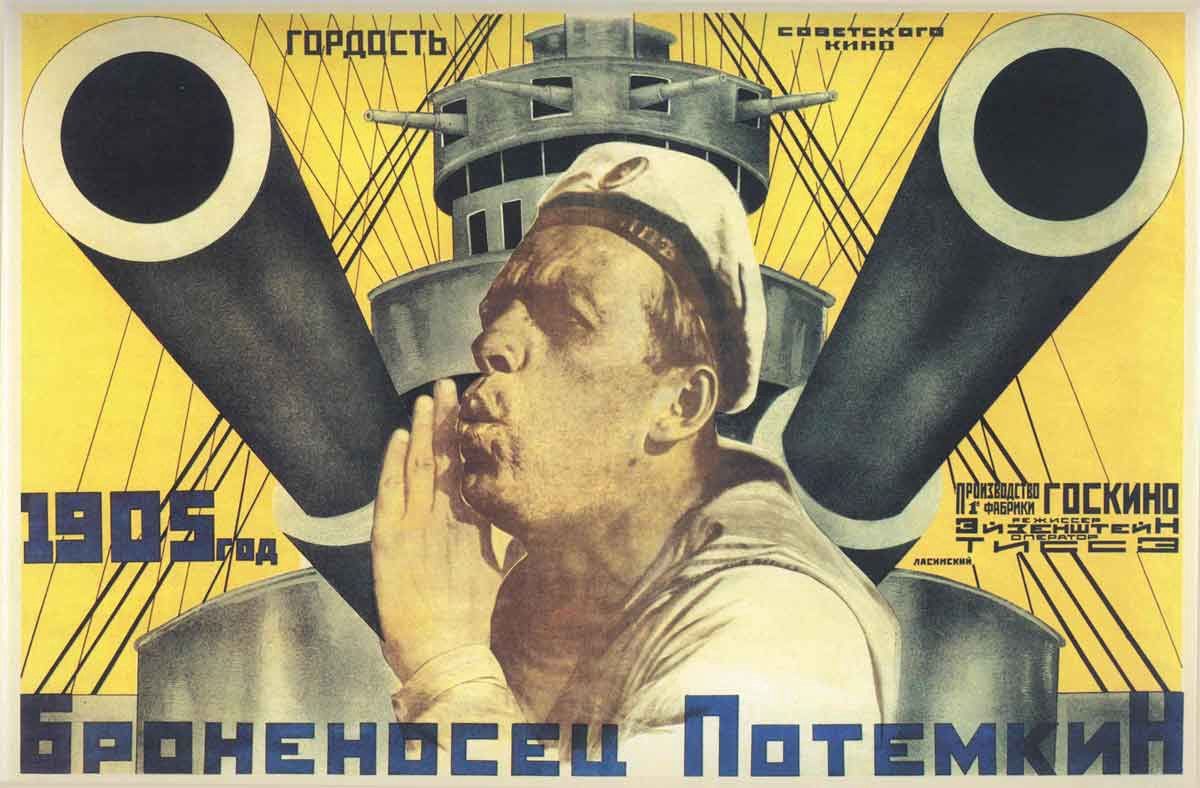
Drama, war, by Sergej Eisenstein, Russia, 1925.
The revolt of the sailors of the battleship Potemkin and the citizens of Odessa against the ruthless police of the tsar, who reacts with reprisals and carries out a massacre. Sergej Eisenstein makes a film commissioned by Goskino, the office for cinematography and film production in the Soviet Union. It is a "propaganda" film for the celebration of the 1905 revolution, but Eisenstein makes it an experimental and grandiose work, destined to change the history of cinema and editing forever.
Food for thought
The revolution sees things in political terms, it presupposes that in order to transform man, the structure of society must be changed. But no revolution has ever succeeded in transforming man. The revolutionary wants to change society, the government, the bureaucracy, the laws, the political system. All revolutions have always failed miserably, and man has always remained the same. Revolutionaries are not needed to change the world, rebels are needed.
LANGUAGE: Russian
SUBTITLES: English, Spanish, French, German, Portuguese
The Northman (2022)

Prince Amleth escapes his father’s murder by his uncle, vowing revenge in a brutal Viking saga inspired by Norse mythology. His epic quest across stormy seas and fiery lands tests fate, honor, and primal rage in a visceral tale of destiny.
Robert Eggers immerses audiences in 10th-century Scandinavia with archaeological precision and hallucinatory visuals, making mythology tangible through Alexander Skarsgård’s ferocious lead. The film’s raw violence and shamanic rituals explore vengeance’s futility, blending historical authenticity with operatic grandeur to redefine the revenge epic.
The Green Knight (2021)

On Christmas Day at King Arthur’s court, a mysterious, tree-like creature, the Green Knight, issues a challenge: anyone who can land a blow on him can keep his axe but must agree to receive an identical blow one year and a day later. The impulsive Gawain, Arthur’s nephew, accepts and beheads him. A year later, Gawain must embark on a perilous and dreamlike journey to honor the pact and face his destiny.
David Lowery deconstructs the Arthurian myth, transforming a medieval chivalric poem into a psychedelic and philosophical journey about honor, mortality, and the meaning of legacy. The film is visually stunning, a fantasy work of art that prioritizes atmosphere and symbolism over traditional narrative. Gawain’s story is not a quest for glory but an exploration of his own fears and inadequacies. The Green Knight uses the mythical past to ask profoundly modern questions about what it means to be a man and a hero in a complex and ambiguous world.
Gate of hell
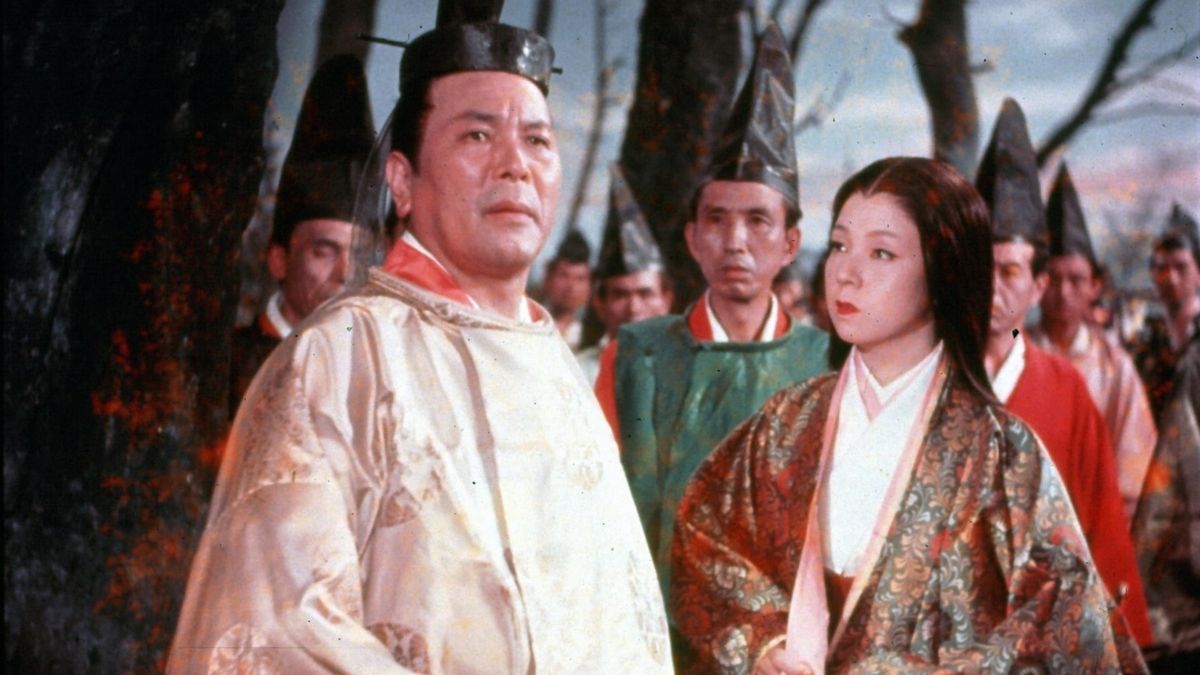
Drama, historical, by Teinosuke Kinugasa, Japan, 1953.
During the Heiji rebellion in Japan in 1159, Lord Kiyomori leaves his castle to go to fight. While he is absent, some local lords attempt a coup to take over Sanjo Castle. The samurai Endō Morito escorts the lady-in-waiting Kesa as she walks away from the palace disguised as the daimyō's sister, giving her father and royal sister time to escape without being seen. Based on a play by Kan Kikuchi set in 12th century feudal Japan, the film tells the story of a samurai whose bravery in defending his ruler must be rewarded with whatever he desires. He longs for the beautiful and aristocratic Lady Kesa, who is already married to another samurai, Wataru. Morito tries to persuade Kesa to leave her husband, but her devotion is unshakable. Winner of the Academy Award for Best Foreign Film and Best Costume Design, Grand Prix at Cannes, which later became a lost film for 50 years, The Gates of Hell is a figuratively impressive film, perhaps the most dazzling example of color photography Japanese from the 1950s.
LANGUAGE: Japanese
SUBTITLES: Italian
A vision curated by a filmmaker, not an algorithm
In this video I explain our vision
Judas and the Black Messiah (2021)

In 1960s Chicago, FBI informant William O’Neal infiltrates the Illinois Black Panther Party, tasked with betraying charismatic chairman Fred Hampton. Their clash illuminates the fight for Black liberation amid government surveillance and violence.
Shaka King’s taut thriller humanizes history through Daniel Kaluuya‘s electrifying Hampton and LaKeith Stanfield’s conflicted O’Neal, earning Oscar recognition for its urgency. The film exposes COINTELPRO’s machinations with propulsive editing and period authenticity, transforming biography into a searing indictment of state-sponsored oppression.
Quo Vadis, Aida? (2020)

July 1995, Srebrenica. Aida is an interpreter working for the United Nations at the Dutch base where thousands of Bosnian civilians have sought refuge from the advancing Bosnian Serb army. As the situation deteriorates and the UN forces prove powerless, Aida embarks on a desperate race against time to try to save her husband and two sons from the impending massacre, using her credentials to navigate the bureaucratic and military chaos.
Jasmila Žbanić’s film is an almost documentary-like chronicle of a genocide, a work of unbearable tension and crucial historical importance. The narrative adopts Aida’s point of view, transforming a historical event into a breathtaking thriller and a heartbreaking family drama. The film does not indulge in explicit violence but shows its bureaucratic mechanisms and the impending horror, making it even more terrifying. It is a necessary work that confronts an open wound in recent European history with lucidity, courage, and profound humanity.
Ugetsu
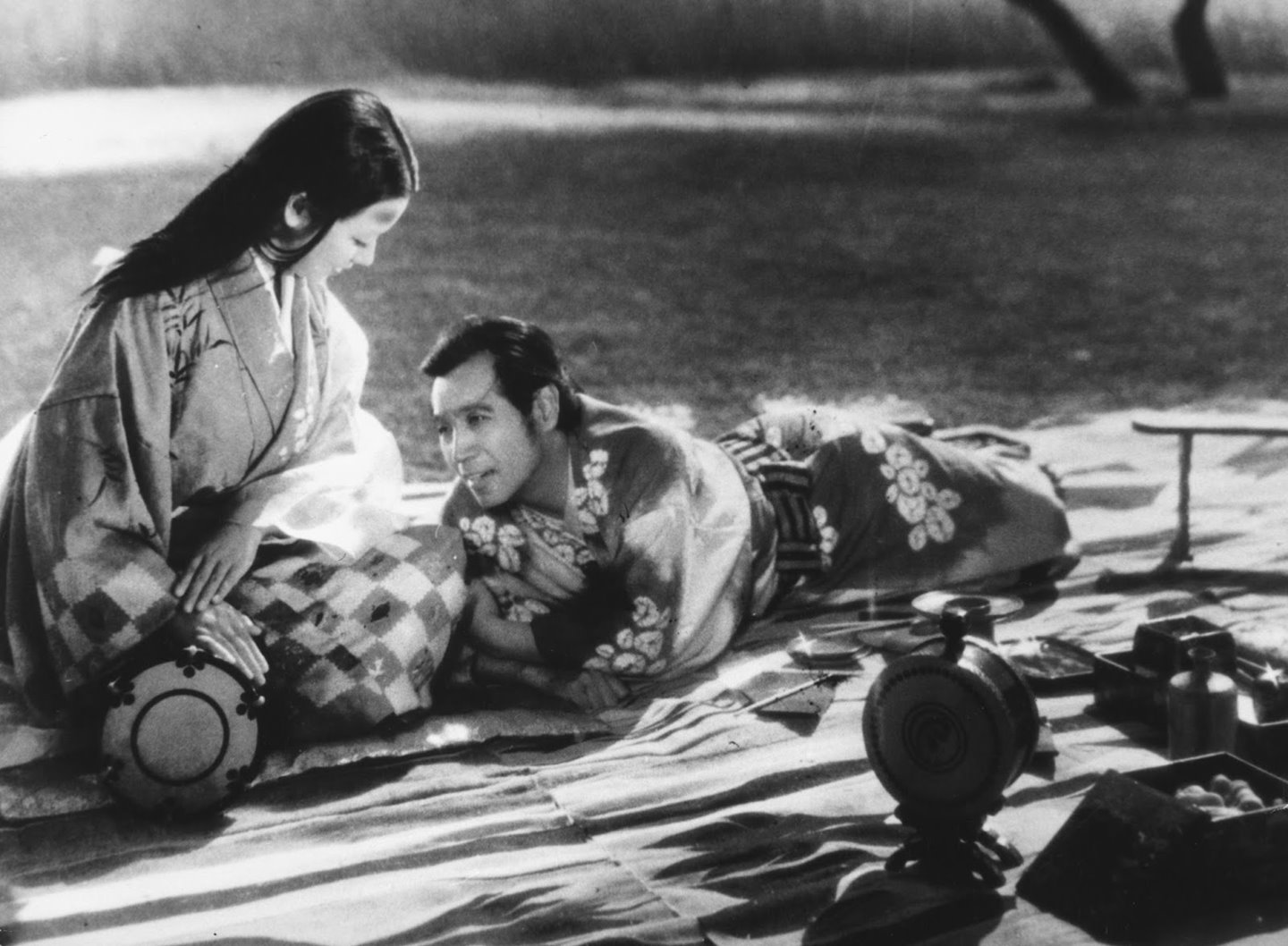
Drama, fantasy, by Kenji Mizoguchi, Japan, 1953.
Japan, late 16th century: the potter Genjurō and his brother Tobei live with their wives Miyagi and Ohama in a village in the Omi region; Genjurō, convinced that he can earn a lot of money by selling his goods in the nearby city, goes to the county of Omizo with Tobei, who joins him with the sole purpose of being able to become a samurai. Back home with a good income, the two work hard to make even more money; Tobei, increasingly obsessed with the ambition of becoming a samurai, needs the money to buy an armor and a spear while Genjurō, overcome by greed, tries to cook a batch of crockery with his brother in just one night. Legend and innovation of cinematic language, a wonderful world next to a brutal and cruel world. Mystery film that opens a discourse with the invisible planes of existence, ghosts and forays into the fantastic, made by Kenji Mizoguchi in a Japan still frozen by the two atomic bombs dropped on Hiroshima and Nagasaki. Fundamental work by Mizoguchi, recognized as one of the greatest expressions of the Seventh Art. A lofty lesson in directing that creates wonder with a dramatic tale of greed and lust for possession. A woman who is a tempting demon and a wife abandoned to a fate of war and misery, Mizoguchi uses the camera to enter "another world".
Food for thought
According to ancient Eastern traditions there are other non-physical planes beyond the physical plane. The etheric plane envelops the physical body, gives it vital energy and acts as an intermediary with the higher levels. Beyond the etheric plane there is the astral plane where entities may exist that have not been able to resign themselves to the loss of their body and wander in search of sensations. They are what are commonly referred to as "ghosts". These entities are looking for bodies that have unbalanced etheric planes to "hook up" to in order to experience sense satisfaction through them.
LANGUAGE: Japanese
SUBTITLES: English, Spanish, French, German, Portuguese
Portrait of a Lady on Fire (2019)

On an isolated island in Brittany at the end of the 18th century, the painter Marianne is commissioned to create the wedding portrait of Héloïse, a young woman fresh out of a convent and destined for a marriage she does not want. Since Héloïse refuses to pose, Marianne must observe her by day to paint her in secret at night. An intimacy of gazes, gestures, and words develops between the two women, transforming into an intense and forbidden love.
Céline Sciamma rewrites the history of art and desire through an exquisitely female gaze. The film is not just a love story but a profound reflection on the creative process, the relationship between artist and muse, and memory. The narrative subverts the traditional power dynamic, transforming the creation of the portrait into an act of collaboration and mutual love. With cinematography that evokes the painting of the era and a screenplay of rare emotional intelligence, the film creates an “affective archive” of female desire, telling a story that official history has almost always erased.
The Lighthouse (2019)
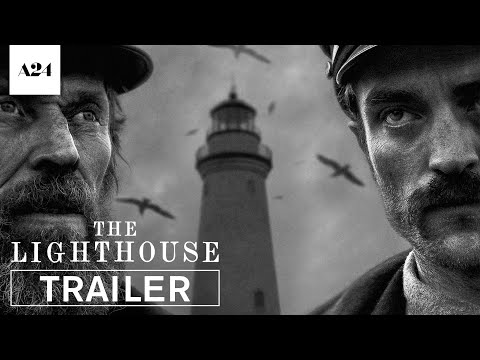
In the late 19th century, two lighthouse keepers, the veteran Thomas Wake and the rookie Ephraim Winslow, are sent to a remote, storm-battered island off the coast of New England. Isolation, hard work, and the secrets they both hide slowly push them toward paranoia, hallucination, and a mad descent into violence, fueled by alcohol and repressed homoerotic tensions.
Robert Eggers’ second film is a psychological horror that draws heavily from maritime folklore, the literature of Melville and Lovecraft, and the aesthetics of German Expressionist cinema. Shot in claustrophobic black and white and with an almost square aspect ratio, The Lighthouse is a total immersion into the male psyche. The historical reconstruction is meticulous, especially in the archaic and slang-filled dialogue, but it serves to create a timeless atmosphere. The film uses its historical context to explore universal themes such as toxic masculinity, loneliness, and madness.
First Cow (2019)

In 1820s Oregon, on the edge of the American frontier, a lonely cook named “Cookie” Figowitz befriends King-Lu, a Chinese immigrant on the run. The two decide to go into business together, making and selling delicious oily cakes. Their secret ingredient is milk stolen at night from the only cow in the territory, owned by the rich and powerful Chief Factor. Their small success attracts attention and puts their enterprise and their lives at risk.
Kelly Reichardt offers a gentle and melancholic vision of the West, far from any epic. The film is a delicate story of male friendship and, at the same time, a subtle but sharp critique of the origins of American capitalism. The frontier is not a place of heroic opportunities but a precarious system where survival depends on small acts of collaboration and wealth is based on exploitation. First Cow is a minimalist and profoundly human work that shows how even the smallest of stories can contain a great truth about history.
Simon of The Desert

Comedy, by Luis Bunuel, Mexico, 1963
Simón, a long-bearded holy man, lives on a column in the middle of the desert, almost in total fasting. People worship him as a Messiah. He performs miracles, undergoes temptations from Satan, who torments him under the guise of a handsome woman. A series of grotesque, surreal, magical and picaresque scenes. The best Bunuel in just 45 minutes.
Food for thought
Those who withdraw from the world to find a spiritual life are doomed to failure. Temptations will follow him, the need to relate to others will not abandon him. Only his ego will be satisfied by a false spirituality. True spirituality is found in everyday life, in the society in which we live, in everyday life, among the people we meet every day.
LANGUAGE: Spanish
SUBTITLES: English, French, German, Italian, Portuguese
The Favourite (2018)

In the early 18th century, England is at war with France, and the frail and capricious Queen Anne sits on the throne. The country is effectively governed by her friend and advisor, Lady Sarah Churchill. The balance of power is upset by the arrival at court of Abigail Masham, Sarah’s cousin, an ambitious and cunning young servant. As Abigail ingratiates herself with the queen, a no-holds-barred war breaks out between the two women to become the favourite.
Yorgos Lanthimos deconstructs the costume drama, turning it into a sour, grotesque, and ruthless black comedy about power, sex, and deception. The use of wide-angle lenses that distort the lavish court spaces and the modern, vulgar dialogue demolish any veneer of nobility. The film is not interested in the politics of war, but in the psychological warfare fought in the chambers of power. It is a cruel and brilliant portrait of three women who use every weapon at their disposal to survive and dominate in a world ruled by men.
Roma (2018)

Set in Mexico City in the early 1970s, the film follows a year in the life of Cleo, a young domestic worker of Mixtec origin who works for a middle-class family in the Roma neighborhood. As the family faces its own internal turmoil, such as the father’s separation, Cleo’s life is upended by an unexpected pregnancy and violent political events, like the Corpus Christi massacre.
Alfonso Cuarón draws on his childhood memories to create a monumental and deeply intimate work. Shot in luminous digital black and white, Roma is a film where personal memory is inextricably intertwined with national history. The narrative focuses on Cleo’s perspective, a figure often invisible in both society and cinema, making her the emotional heart and silent witness of great private and public upheavals. It is an act of love for the women who raised the director and a powerful example of how micro-history can illuminate macro-history.
The Death of Stalin (2017)

Moscow, 1953. After suffering a stroke, the dictator Joseph Stalin dies. In the hours and days that follow, the members of his Central Committee, including Khrushchev, Malenkov, Beria, and Molotov, engage in a chaotic and ruthless power struggle to succeed him. Amidst intrigues, betrayals, and absurd decisions, the film depicts the paralysis and terror of a totalitarian regime deprived of its tyrant.
Armando Iannucci applies his brilliant satirical style to Soviet history, creating a hilarious and terrifying black comedy. The film uses political satire as a sharp tool to expose the absurdity and brutality of totalitarian power. The fast-paced, brilliant dialogue and the performances of an exceptional cast transform the Soviet leaders into farcical characters, without ever forgetting the real horror that lies behind their machinations. The Death of Stalin demonstrates how humor can be a powerful weapon to demystify history and reveal the banality of evil.
Loving Vincent (2016)

One year after Vincent van Gogh’s death, postman Roulin tasks his son Armand with delivering the painter’s last letter to his brother Theo. Armand, initially reluctant, embarks on a journey that leads him to meet the people who populated Vincent’s final days. Through their often contradictory memories, he tries to piece together the mystery of his death, discovering the complexity and passion of the man behind the artist.
This film is an unprecedented artistic endeavor: it is the first feature film entirely painted on canvas. Every single frame is an oil painting created in Van Gogh’s style by a team of over one hundred artists. The result is an impressionistic biography that does not just tell the artist’s life story but immerses the viewer in his visual universe. The history of art becomes a sensory experience, an investigative thriller that unfolds within the paintings themselves. It is a moving and technically stunning tribute that celebrates the transformative power of art.
Children of Hiroshima
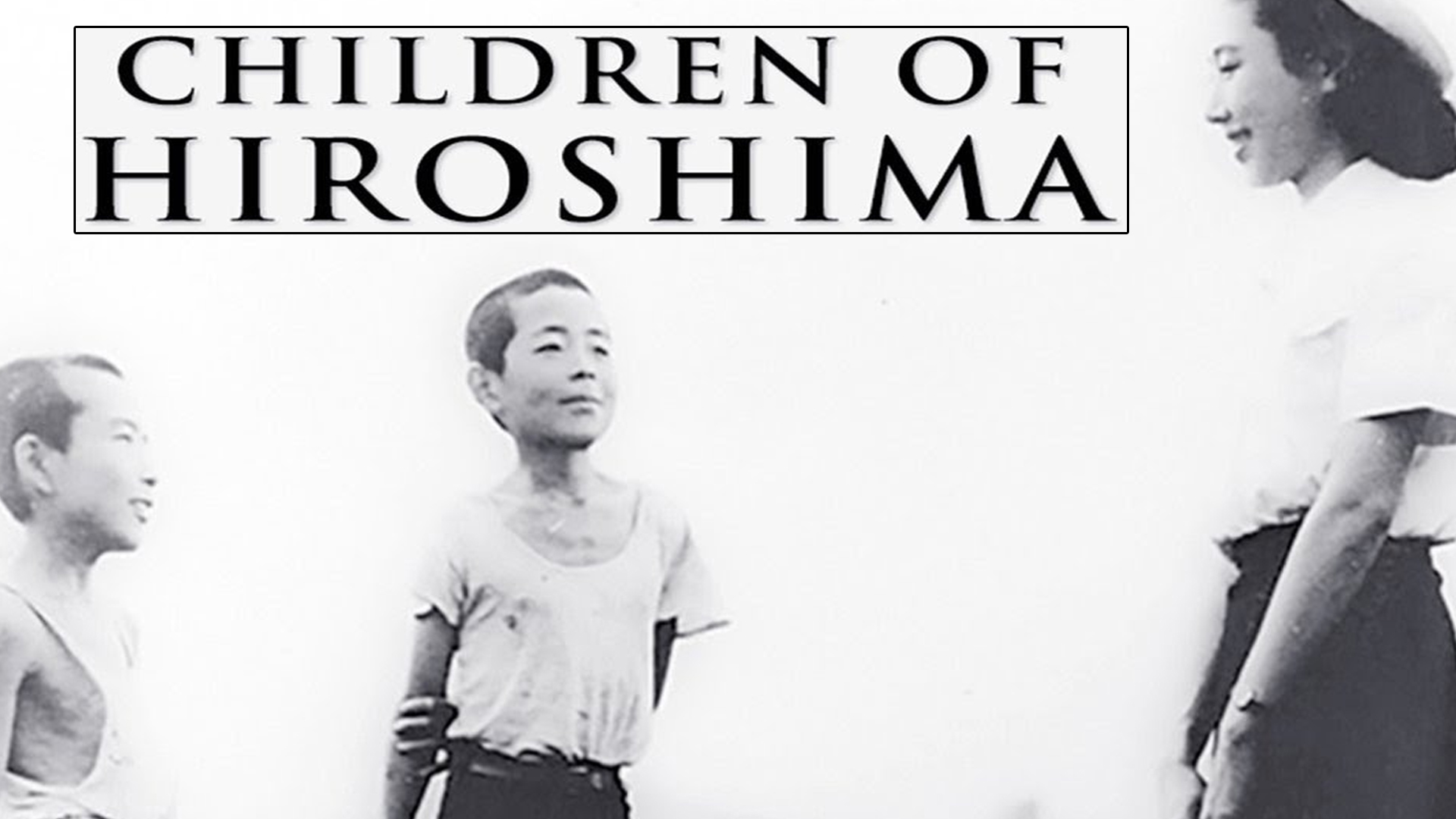
Drama, by Kaneto Shindō, Japan, 1952.
Takako Ishikawa is a teacher off the coast of Hiroshima and has not returned to his atomic bombed city in 4 years. His trip to Hiroshima becomes a journey to his destroyed homeland, in search of surviving old friends. The city has almost been rebuilt, but the tragedy is still very present: the disfigured faces, the shrunken limbs, the sterile women and the handicapped children without joy. In an old blind man accompanied by his nephew Taro Takako he recognizes the servant of his own family, destroyed with the house.
Film shot with sobriety, it shows the tragedy of the bomb only in a short flashback from the protagonist in a few seconds of hallucinating images. The short scene, however, always remains present in her mind as in the mind of the spectator. The tone of Kaneto Shindo is not that of a historical account but that of an intense and restrained lyrical emotion, which seeks its essence in the details. In the sky, finally, a plane passes: the eyes of the teacher are filled with anguish, those of the child are only pure and curious. In competition at the 1953 Cannes Film Festival, shot after the war when the pain was still fresh, full of dark and realistic atmospheres. Shindo, who died at 100 in 2012, less known in the West than Mizoguchi, Kurosawa, realizes his masterpiece with this film.
LANGUAGE: japanese
SUBTITLES: english
Lady Macbeth (2016)

In rural England in 1865, young Katherine is trapped in a loveless marriage to an older, indifferent man. Stifled by boredom and rigid social conventions, she begins a passionate affair with a young groom. This transgression unleashes in her a ruthless determination and a thirst for freedom that will lead her to commit increasingly violent and shocking acts to protect her newfound independence.
William Oldroyd directs a psychological costume thriller that is a fierce critique of patriarchy. The film strips the period drama of all romanticism, transforming it into a story of brutal and amoral female rebellion. Florence Pugh delivers a magnetic performance, embodying a woman who refuses the role of victim and becomes a tormentor. Lady Macbeth uses the formal rigor of its Victorian setting to create a stark contrast with the primordial violence that erupts within it, offering a complex and disturbing portrait of a woman fighting for her liberation by any means necessary.
The Assassin (2015)

In 9th-century China, during the Tang dynasty, Nie Yinniang is trained from childhood to become an infallible assassin in the service of a nun who wants to eliminate corrupt governors. After failing a mission due to a moment of pity, she is tested with an even more difficult task: to return to her home province and kill the man to whom she was betrothed, now a powerful military leader.
Hou Hsiao-hsien creates a wuxia (Chinese martial arts film) that completely subverts the conventions of the genre. Instead of focusing on action and combat, the film prioritizes contemplation, atmosphere, and visual beauty. The plot is subordinate to aesthetics: long silences, painterly shots, and a meticulous historical reconstruction create an immersive and almost meditative experience. The Assassin is a historical film that becomes visual poetry, where history is not a tale of events but a state of mind, an inner landscape reflected in the magnificence of nature and the formal elegance of the Tang court.
Embrace of the Serpent (2015)

The film intertwines two stories, forty years apart, following Karamakate, an Amazonian shaman and the last survivor of his people. In both timelines, he accompanies two Western scientists, first the German Theodor Koch-Grünberg and then the American Richard Evans Schultes, along the Amazon River in search of yakruna, a sacred plant with powerful healing and hallucinogenic properties. The journey becomes a confrontation between cultures and a testament to the devastation of colonialism.
Shot in dreamlike and majestic black and white, Ciro Guerra‘s film adopts a radically different perspective, telling the story of colonization from an indigenous point of view. The jungle is not an exotic backdrop but a living entity, an archive of knowledge and spirituality that the white man cannot understand, only exploit and destroy. Embrace of the Serpent is a lament for a lost world and an indictment of the cultural violence of colonialism, a powerful work that rewrites the history of exploration as a story of loss.
The White Ribbon (2009)
In a small Protestant village in northern Germany on the eve of World War I, a series of strange and cruel “accidents” disturbs the apparent tranquility of the community. A doctor falls from his horse due to a tripwire, a barn is set on fire, a child is tortured. The local schoolteacher tries to investigate but is met with a wall of silence, hypocrisy, and authoritarianism. Suspicion falls on the village children’s choir, educated according to rigid principles of purity and discipline.
Michael Haneke directs a masterpiece in austere and chilling black and white, investigating the roots of totalitarianism. The film offers no easy answers but suggests that the evil that will explode with Nazism did not come from nowhere but was cultivated in a fertile ground of repression, humiliation, and psychological violence. The community, governed by the baron, the pastor, and the doctor, is a microcosm of the patriarchal and authoritarian society that will generate monsters. It is a historical film that does not show the event but analyzes its genesis, asking a terrible question: where does evil come from?
Valhalla Rising (2009)

In the year 1000, a mute, one-eyed warrior named One-Eye is held captive by a Scottish chieftain and forced to fight in deadly matches. After escaping, he joins a group of Christian crusaders intending to reach the Holy Land. Their sea voyage, shrouded in fog, instead takes them to an unknown and hostile land, a kind of green hell where they will confront their inner demons.
Nicolas Winding Refn creates a historical film that is brutal, existential, and almost abstract. With minimal dialogue and an elliptical narrative, Valhalla Rising is a sensory and visceral experience. There is no attempt at accurate historical reconstruction; the Viking era is rather a pretext for a psychedelic and violent journey into the heart of masculinity and faith. The film is divided into chapters with evocative titles (“Wrath,” “The Silent Warrior”) and proceeds through visions and bursts of stylized violence. It is a radical work that transforms history into a primordial nightmare.
Sebastiane
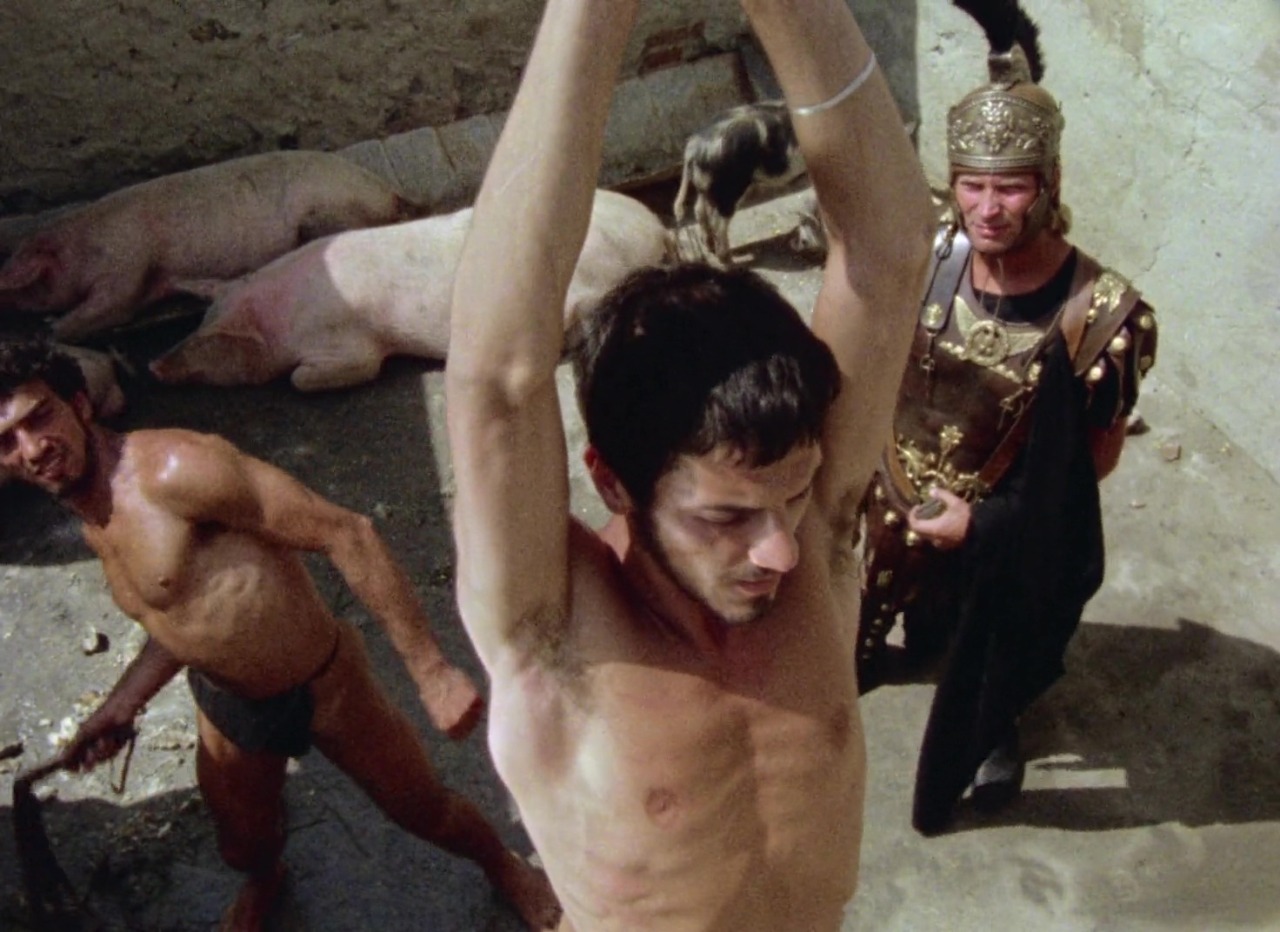
Drama, history, by Derek Jarman, United Kingdom, 1976.
In the third century A.D. Sebastiano is a member of the personal guard of the Emperor Diocletian. When he tries to intervene to prevent one of the Emperor's catamites from being strangled by one of his bodyguards, Sebastian is exiled to a remote coastal garrison and downgraded. Although thought to be an early Christian, Sebastian is a worshiper of the Roman sun god Phoebus Apollo and sublimates his desire for his male companions in the worship of his divinity and pacifism. Independent historical film based on an apocryphal version of the life of Saint Sebastian widespread in the gay community, shot with the dialogues in Latin. Derek Jarman recounts the events of St. Sebastian's life, including his martyrdom with arrows. Controversial film for the homoeroticism portrayed among the soldiers and for the dialogues entirely in Latin. images of physical intimacy between men, shown in total nudity (which was still rare and very transgressive at the time) and even while flirting, in deliberately romantic and lyrical scenes, but also very sensual. Scandal film, cut and forbidden to minors under the age of 18 on its release in cinemas in 1977 due to nudity and the presence of homosexual relations between Roman soldiers. This is the full version.
There are two types of people. The majority follow traditions, society, the state. Orthodox people, conventional people, conformists - they follow the crowd, they are not free. And then there are some rebellious spirits. Outcasts, artists, painters, musicians, poets; They think they live in freedom, but this is not the case. Only by rebelling against traditions do you not become free. Freedom is only possible with awareness. If you don't turn unawareness into awareness, there is no freedom.
LANGUAGE: latin
SUBTITLES: English, Spanish, French, German, Portuguese
A Prophet (2009)
Malik El Djebena, a young, illiterate French-Arab, is sentenced to six years in prison. Fragile and alone, he is taken under the wing of the Corsican mafia boss, César Luciani, who forces him to carry out a series of brutal missions. Slowly, Malik learns to read, write, and navigate the complex power dynamics of the prison, developing his own plan to emancipate himself and build his criminal empire.
Jacques Audiard‘s film, though set in the present, functions as a powerful historical film about a social microcosm. The prison is depicted as a mirror of contemporary French society, with its racial tensions, power hierarchies, and post-colonial dynamics. Malik’s rise is not just the story of a criminal but an allegory of the struggle for identity and self-determination of an outcast. Audiard mixes raw realism with almost dreamlike elements, creating a gangster movie that is also a profound sociological analysis.
The Motorcycle Diaries (2004)

In 1952, two young Argentine students, Ernesto Guevara and Alberto Granado, set off on a motorcycle trip across South America. What begins as a carefree adventure in search of fun and women gradually transforms into a journey of discovery. Through encounters with exploited miners, marginalized lepers, and the vestiges of ancient civilizations, the young Ernesto begins to develop a social and political consciousness that will transform him into the revolutionary icon known as “Che.”
Walter Salles avoids hagiography and chooses to tell the micro-history of an icon before he became one. The film is not a political biopic but a road movie about awakening consciousness. The film’s strength lies in its humanistic approach: we do not see the revolutionary, but the man. The camera captures the breathtaking beauty of the South American landscapes, which contrast with the poverty and social injustice the two friends encounter. It is an intimate and touching portrait of how direct experience of the world can shape a destiny and change the course of history.
The Barbarian Invasions (2003)

Rémy, a cynical and libertine history professor, is dying of cancer in a Montreal hospital. His son Sébastien, a pragmatic and distant businessman, returns from London to be with him. To alleviate his father’s suffering, Sébastien gathers Rémy’s old circle of friends, intellectuals, and lovers at his bedside. Their conversations, full of memories, debates, and irony, become a way to come to terms with the past, both personal and collective.
Denys Arcand creates a film in which the “grand history” of the 20th century (communism, fascism, failed utopias) dissolves into the memories and private conversations of a group of friends. The title refers both to the disease invading Rémy’s body and to the “barbarians” (symbolized by his son’s pragmatism and the events of 9/11) who are supplanting the old intellectual culture. It is a profoundly human and moving historical film that suggests that history does not reside in books, but in the stories we tell each other, the relationships we build, and the way we face the end.
The Profession of Arms (2001)

In 1526, Giovanni de’ Medici, known as Giovanni dalle Bande Nere, leads the papal troops against the Landsknechts of Emperor Charles V. Young and impetuous, Giovanni is a master of traditional warfare, based on cavalry and hand-to-hand combat. However, he faces an enemy equipped with a new and devastating technology: firearms. His struggle against this new way of fighting symbolically marks the end of an era and the beginning of modern warfare.
Ermanno Olmi creates a historical film of absolute philological rigor and formal beauty. Far from any spectacularization, the film reconstructs the Renaissance with an almost documentary-like attention to detail, costumes, weapons, and light. The narrative focuses on the technological turning point that made chivalric warfare obsolete. The Profession of Arms is a melancholic reflection on the end of a world and the dehumanization of war. Olmi does not celebrate battle but shows its brutal and cold mechanics, offering a powerful portrait of a crucial moment in Western history.
The Thin Red Line (1998)

During World War II, a group of American soldiers is sent to fight in the decisive battle of Guadalcanal in the Pacific. Through the inner thoughts and reflections of various characters, from the private to the officer, the film explores not so much the military action as the spiritual and psychological impact of war on men and their relationship with a nature that is as beautiful as it is indifferent to their suffering.
Terrence Malick‘s return to directing after twenty years is a war film that transforms into a philosophical poem. Unlike traditional war films, The Thin Red Line does not focus on heroism or strategy but on the transcendental and inner experience of conflict. The war becomes a pretext to meditate on existential questions: the nature of evil, the loss of innocence, the search for meaning in a world dominated by violence. The lyrical cinematography and voice-overs create a contemplative work that elevates the historical film to a spiritual dimension.
Underground (1995)

Two friends, Blacky and Marko, are partisans and profiteers in Nazi-occupied Belgrade during World War II. After the war, Marko deceives Blacky and a whole group of people, convincing them to remain hidden in a basement for decades, continuing to produce weapons while he gets rich and builds a career in Tito’s regime. Their personal story becomes a grotesque allegory of the history of Yugoslavia, from the resistance to the Cold War to the Balkan wars.
Emir Kusturica‘s masterpiece, winner of the Palme d’Or at Cannes, is a surreal, chaotic, and tragicomic epic. The film uses farce and excess to tell the trauma of a nation. The history of Yugoslavia is not presented as a linear chronicle but as a feverish and painful carnival, full of life and death. Underground is a powerful example of how cinema can use allegory and the grotesque to address historical wounds too complex and painful to be told in the language of realism. It is a funeral dirge disguised as a party.
Dead Man (1995)

William Blake, an accountant from Cleveland, ventures into the Wild West for a new job but quickly finds himself mortally wounded and on the run after an altercation. He is rescued by a Native American named Nobody, who mistakenly believes Blake is the eponymous English poet and painter. Together, they embark on a spiritual and psychedelic journey through a desolate and surreal American frontier, encountering bizarre characters as Blake inexorably approaches his destiny.
Jim Jarmusch deconstructs the Western genre with a hypnotic and philosophical black-and-white work. Dead Man is an anti-western that dismantles the myth of the frontier as a place of heroism and progress, instead depicting it as a brutal and chaotic purgatory. The improvised electric guitar score by Neil Young adds another layer of anachronism and melancholy. The film is an initiatory journey toward death, rewriting American history from the perspective of its outcasts and offering a profound meditation on violence, spirituality, and poetry in a meaningless world.
Queen Margot (1994)
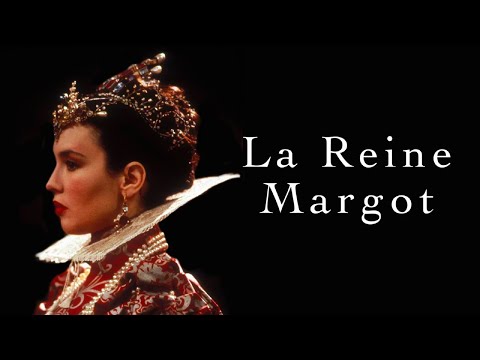
In 1572 France, torn by religious wars, the Catholic Marguerite de Valois, known as Margot, is married to the Huguenot Henry of Navarre to seal a precarious peace. The wedding, celebrated in Paris, turns into a bloodbath with the St. Bartholomew’s Day massacre. In this climate of court intrigues, betrayals, and violence, Margot finds herself trapped between her loyal family and an unexpected passion for a Protestant soldier.
Patrice Chéreau directs a carnal, visceral, and brutal historical drama that strips the 16th century of all romanticism. The film focuses on the physicality of bodies: blood, sweat, sex, and death are depicted with a raw and almost unbearable realism. The violence is not only political and religious but is inscribed in the flesh of the characters. Queen Margot is a powerful work that shows how power is exercised through the control and annihilation of bodies, transforming the grand history of the wars of religion into a claustrophobic and personal nightmare.
Orlando (1992)

The story follows Orlando, a young nobleman in Elizabethan England whom Queen Elizabeth I orders never to grow old. Miraculously, Orlando travels through four centuries of British history, experiencing adventures, loves, and disappointments. Midway through his journey, during a diplomatic mission in Constantinople, he awakens transformed into a woman. This metamorphosis allows him to experience history from a completely new perspective, questioning social conventions about gender, power, and identity.
Sally Potter‘s adaptation of Virginia Woolf‘s novel is a historical film that plays with time and history to explore the fluidity of identity. The narrative is not an account of events but a philosophical and visually sumptuous journey through the ages. Tilda Swinton, with her androgynous presence, perfectly embodies Orlando’s changing nature. The film uses the past to deconstruct rigid notions of gender, demonstrating how they are social constructs that change over time. Orlando is a celebration of transformation and a brilliant critique of a history written almost exclusively by and for men.
Mishima: A Life in Four Chapters (1985)
![Mishima: A Life in Four Chapters (1985) ORIGINAL TRAILER [HD 1080p]](https://blog.indiecinema.co/wp-content/plugins/wp-youtube-lyte/lyteCache.php?origThumbUrl=https%3A%2F%2Fi.ytimg.com%2Fvi%2FLzaXtBr5210%2F0.jpg)
The film explores the last day in the life of the famous Japanese writer Yukio Mishima, intertwining it with black-and-white flashbacks of his youth and stylized, theatrical representations of three of his novels. The narrative converges on his final act: the attempted coup and ritual suicide (seppuku) he committed in 1970. The film is a complex portrait of his search for a union between art, life, and political action.
Paul Schrader creates an unconventional biography that shatters temporal linearity to convey the psychological and philosophical complexity of his subject. Instead of telling Mishima’s life story, the film evokes its essence, showing how his obsession with beauty, the body, and death was reflected in both his art and his existential choices. The hypnotic score by Philip Glass and the visionary production design by Eiko Ishioka transform the story into a total aesthetic experience. Mishima is a masterful example of how auteur cinema can approach a historical figure not through chronicle, but through a deep immersion into his inner universe.
Fitzcarraldo (1982)
![Fitzcarraldo (1982) ORIGINAL TRAILER [HD 1080p]](https://blog.indiecinema.co/wp-content/plugins/wp-youtube-lyte/lyteCache.php?origThumbUrl=https%3A%2F%2Fi.ytimg.com%2Fvi%2FxWeb7i8IjYs%2F0.jpg)
At the beginning of the 20th century, Brian Sweeney “Fitzcarraldo” Fitzgerald, an Irish opera lover obsessed with building a grand opera house in the heart of the Amazon jungle to host his idol, Enrico Caruso, decides to venture into unexplored territory to exploit rubber. His insane plan involves dragging a huge steamship over a hill, from one river to another, to finance his impossible enterprise.
As with Aguirre, in Fitzcarraldo Werner Herzog merges cinema and life in an epic and dangerous production endeavor. The ship seen in the film was actually dragged over a hill, without special effects, physically embodying the protagonist’s delusion of omnipotence. The film thus becomes a powerful metaphor for man’s struggle against nature and, more deeply, the relationship between art and madness. Fitzcarraldo is not a greedy colonialist but a dreamer whose artistic passion assumes the proportions of a titanic hubris. It is a historical film that does not recount an event but stages it, questioning the cost and absurdity of great dreams.
The Duellists (1977)
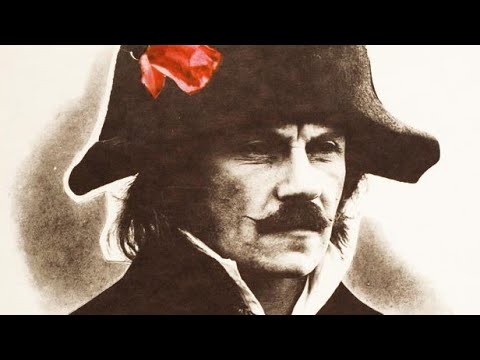
During the Napoleonic era, two French hussar officers, D’Hubert and Feraud, begin a feud over a trivial matter of honor. This initial clash turns into an obsession that consumes them for nearly twenty years, leading them to challenge each other to duels across Europe, while Napoleon’s great military campaigns rage in the background. Their private war becomes the common thread of their lives, an absurd and inextinguishable ritual.
Ridley Scott‘s directorial debut is a work of extraordinary visual beauty, inspired by the painting of the era, which uses a personal conflict to reflect on the absurdity of the code of honor and the nature of war. The film does not focus on the great Napoleonic battles but uses them as a framework for an intimate and psychological drama. The obsession that binds the two protagonists is a microcosm of the greater madness devouring Europe. Scott demonstrates how historical cinema can explore universal themes like pride, honor, and masculine destructiveness through a focused and minimalist narrative, where each duel is a brushstroke in a desolate portrait of the human condition.
Barry Lyndon (1975)
![Barry Lyndon (1975) Original Trailer [FHD]](https://blog.indiecinema.co/wp-content/plugins/wp-youtube-lyte/lyteCache.php?origThumbUrl=https%3A%2F%2Fi.ytimg.com%2Fvi%2Fqo0wACaFcaM%2F0.jpg)
In 18th-century Ireland, the young and ambitious Redmond Barry is forced to flee his village after a duel. His life becomes a picaresque social climb that leads him to enlist in the British army, become a Prussian spy, and finally marry the wealthy and noble Lady Lyndon. Having won title and fortune, Barry will discover that maintaining his status in the rigid aristocratic society is a crueler battle than any war he has ever fought.
Although made with a considerable budget, Stanley Kubrick‘s approach is intrinsically authorial and independent in spirit. Barry Lyndon is the antithesis of the conventional historical drama. Shot entirely by candlelight thanks to special lenses developed by NASA, the film possesses a breathtaking pictorial beauty, with each frame resembling a painting by Hogarth or Gainsborough. This aesthetic is not a mere whim but a tool of social criticism. The formal perfection and the detached, ironic narrator create a critical distance that exposes the emptiness, hypocrisy, and brutality hidden beneath the elegant surface of the European aristocracy. Barry’s story is not an epic, but the chronicle of a foretold fall.
Aguirre, the Wrath of God (1972)
![Aguirre, the Wrath of God (1972) Original Trailer [FHD]](https://blog.indiecinema.co/wp-content/plugins/wp-youtube-lyte/lyteCache.php?origThumbUrl=https%3A%2F%2Fi.ytimg.com%2Fvi%2F9LqdXayZ6Q0%2F0.jpg)
In the mid-16th century, an expedition of Spanish conquistadors descends the Amazon River in search of the mythical city of gold, El Dorado. Led by the delusional and tyrannical Lope de Aguirre, the men slowly sink into madness, consumed by hunger, disease, and their leader’s ruthless obsession. The journey transforms into an inexorable descent into hell, an odyssey of ambition and despair in the green, impenetrable heart of the jungle.
Werner Herzog‘s masterpiece is a historical film that transcends history itself to become an investigation into the nature of madness and colonial power. The film’s production, as legendary as its plot, saw the crew and actor Klaus Kinski face extreme conditions in the Peruvian jungle, blurring the lines between fiction and reality. This fusion of narrative and creative process gives Aguirre an almost documentary-like authenticity. Aguirre’s madness is not just acted by Kinski; it is palpable in the air, in the sweat, in the hallucinated gazes of the actors, making the film a physical and psychological experience that embodies the delusion of omnipotence of Western man facing a nature he cannot dominate.
A vision curated by a filmmaker, not an algorithm
In this video I explain our vision

