
Cinema, from its very origins, has used the female face as its most powerful mirror, capable of expressing entire worlds of beauty, pain, and rebellion. The collective imagination is marked by unforgettable female figures: action heroines who redefine strength, romantic icons who dream of freedom, and protagonists of stories of triumph against all odds. These monumental works have created universal myths.

But beyond these figures, a universe of more complex stories exists, often told far from the spotlight. It is a cinema that is not content to show woman as “muse,” but explores her as “creator,” investigating her psyche, her fight for self-determination, and her unique voice. It is a cinema that tackles quiet rebellion, fragmented identity, and complex power dynamics.
This guide is a journey across the entire spectrum of female representation. It is a path that unites the great masterpieces that defined the genre with the most courageous independent works. A complete portrait of the female condition captured by the camera, exploring what it means to be a woman, a mother, an artist, or a rebel, in all its magnificent and contradictory complexity.
Women in films at the origins of cinema

One of the pioneering women in the history of cinema was Alice Guy, recognized as the first female director to create feature films. She attended screenings by the Lumière Brothers in Paris and believed that cinema held not only documentary and scientific potential but, more importantly, narrative potential. Captivated by this remarkable invention, she quickly sought opportunities in the emerging film industry.
Alice initially worked as a secretary for Gaumont camera dealers before becoming one of the most notable figures in French cinema. She began her career as a director of reproduction and later transitioned to directing films. Her first film, The Cabbage Fairy, was released in 1896, followed by many other notable works. In 1907, she moved to the United States with her husband and founded her own production company.
Watch Alice Guy Blanche
Women movies: Helene Gardner
Another important figure in the evolution of the history of cinema was Helen Gardner. She is credited with creating the prototype of the Femme Fatale, often portraying women with strong,complex characters.
Helene Gardner was not just an actress; she had a profound love for cinema. Actually, she was also a producer, set designer, costume designer, and editor of the films in which she appeared. An artist who fully expressed herself through film, she was among the pioneers dedicated to feature films during a time when they were still relatively unknown.
Mabel Normand was one of the first movie star. I play several roles in the first films of Charlie Chaplin, helping to start his success. Film of which she was also the screenwriter and director. He died at the age of 37. One of the stars of the Hollywood Walk of Fame is dedicated to her.
Women movies: Julia Crawford Ivers
Julia Crawford Ivers was one of Hollywood’s pioneering directors and screenwriters during the conversion of the Los Angeles area from a barren landscape into a cinematic hub. As the film industry flourished, it became synonymous with prestigious filmwriting. She also collaborated on numerous films with her son, James Van Trees, who handled the cinematography.
Women movies: Cleo Madison
Cleo Madison was one of the pioneering women who became a Hollywood star through films that showcased a distinctly feminine outlook. She was among the first actresses to take on roles that highlighted social issues, addressing discrimination against women and advocating for women’s emancipation, all while challenging the prevailing machismo of her time. In 1915, she was also hired by Global as a director for both short and feature films.
In the following years, the Hollywood movie industry evolved into a multimillion-dollar business, and the presence of women in key roles diminished substantially. the most influential positions within the industry were predominantly occupied by men. By the mid-1930s, most women were relegated to secondary roles, such as publishing and production secretaries.
Aside from their roles as actresses and screenwriters, women today occupy only a small percentage of positions in the film industry, especially in the United States and within mainstream cinema.
the executives at major production companies are predominantly men, and they tend to finance projects that reflect a male outlook of the world. As an inevitable result, only a handful of female directors have had the prospect to make their mark in the history of cinema as they truly deserve.
Self Defence
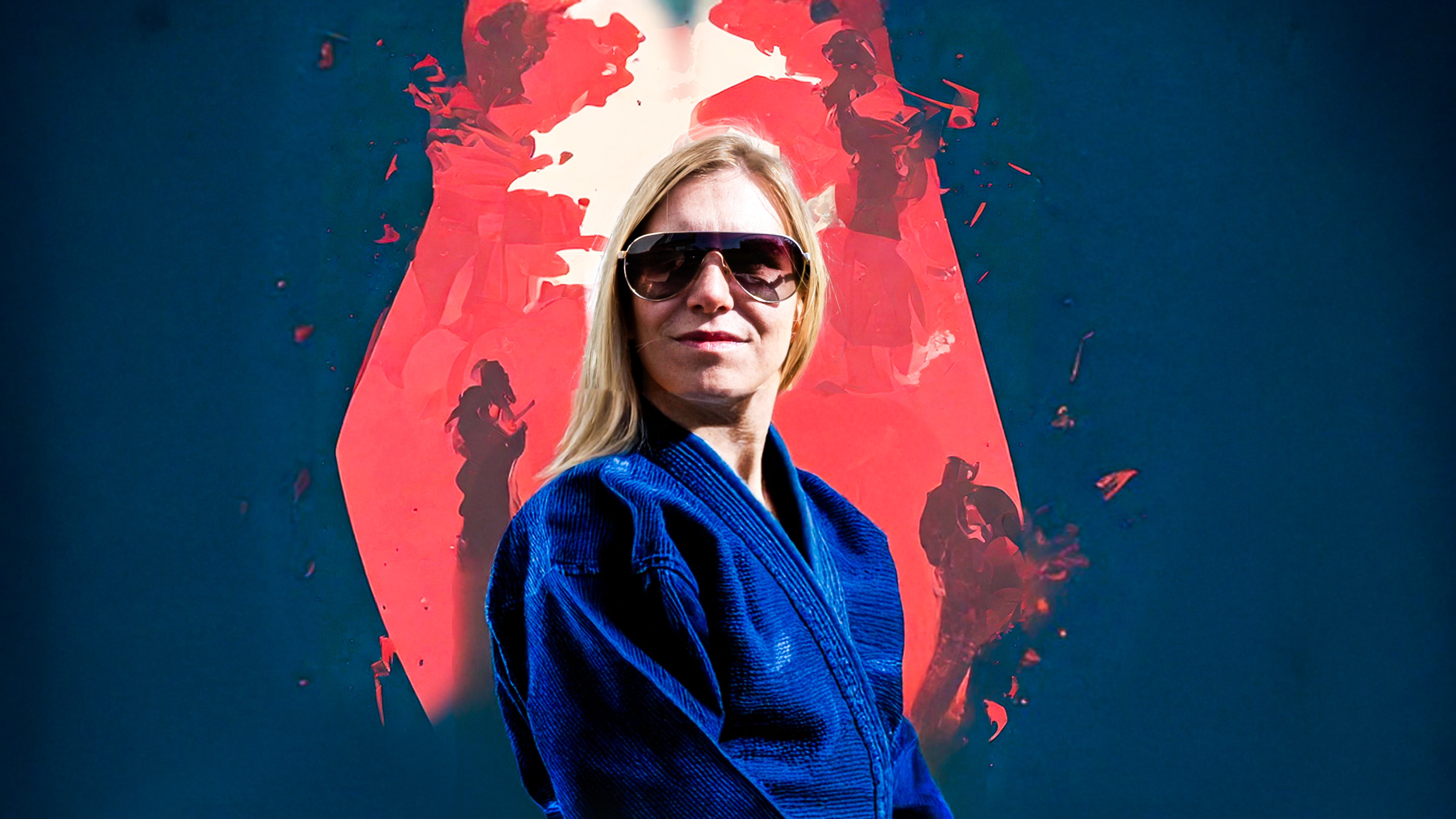
Documentary, by Olaf de Fleur, Iceland, 2025.
Self-Defence follows the story of Imma Helga, a self-defence instructor in Iceland who turned her teenage struggles with prejudice, homophobia, and depression into a mission of empowerment. Together with her brother Jón Viðar, she teaches a practical, real-world approach to self-defence, helping women feel more aware, capable, and confident. Through classes, testimonies, and their social media presence with over a million followers, the film shows how self-defence is not a heroic act but a basic, accessible skill: a way to protect oneself, reclaim space, and affirm presence. By weaving together teaching moments and Imma’s personal journey, Self-Defence explores the connection between inner growth and physical protection, revealing how learning to stand your ground also means regaining strength, self-respect, and freedom.
LANGUAGE: Icelandic
SUBTITLES: English, Spanish, French, German, Portuguese
Nomadland (2020)

After losing everything in the Great Recession, Fern, a woman in her sixties, decides to leave her ghost town in Nevada and embark on a journey through the American West. Living in her van, which she calls “Vanguard,” she joins a community of modern-day nomads, people who have abandoned conventional life to seek seasonal work and a new form of freedom and community on the road.
Chloé Zhao’s Oscar-winning film is a poetic and melancholic portrait of a woman trying to rebuild her life on the fringes of the broken American dream. Shot in a quasi-documentary style and featuring real nomads playing themselves, Nomadland is a work of rare authenticity, exploring loss, resilience, and the search for a new meaning of “home.”
Fern’s strength, played with extraordinary intensity by Frances McDormand, is quiet and tenacious. She is not a rebel, but a survivor. Her nomadism is not an ideological choice, but a necessity that transforms into a form of liberation. She learns to be self-sufficient, to repair her van, to find work in places like Amazon warehouses, a symbol of an economy that exploits and discards.

Promising Young Woman (2020)
![PROMISING YOUNG WOMAN - Official Trailer [HD] - This Christmas](https://blog.indiecinema.co/wp-content/plugins/wp-youtube-lyte/lyteCache.php?origThumbUrl=https%3A%2F%2Fi.ytimg.com%2Fvi%2F7i5kiFDunk8%2F0.jpg)
Cassie was a promising medical student, but she dropped out after her best friend, Nina, was the victim of a rape that destroyed her life. Now, Cassie lives a double life: by day she works in a coffee shop, by night she frequents bars, pretending to be drunk to expose the “nice guys” who try to take advantage of her. Her mission of revenge takes a new turn when a former classmate re-enters her life.
Emerald Fennell delivers a bold and unsettling work, a revenge thriller that subverts the clichés of the genre and the romantic comedy to launch a fierce critique of rape culture. Promising Young Woman is an uncomfortable film that uses a pop, colorful aesthetic to tell a story of trauma, anger, and grief.
Portrait of a Lady on Fire (2019)

At the end of the 18th century, the painter Marianne is hired to create the wedding portrait of Héloïse, a young woman who has just left the convent and is destined for a marriage she does not want. Since Héloïse refuses to pose, Marianne must observe her secretly during their walks and then paint her in secret. Between the two women, in almost total isolation on a Breton island, a deep intimacy is born, made of gazes, art, and love.
Céline Sciamma’s film is the purest and most powerful manifestation of the female gaze in contemporary cinema. It is a work built entirely on the act of looking, but one that subverts centuries of art and film history in which the woman was the passive muse and the man the creative artist. Here, the relationship between artist and model is reciprocal, an exchange of equals. When you look at me, who do I look at?” Héloïse asks, dismantling the hierarchy of the gaze.
Chasing Butterflies
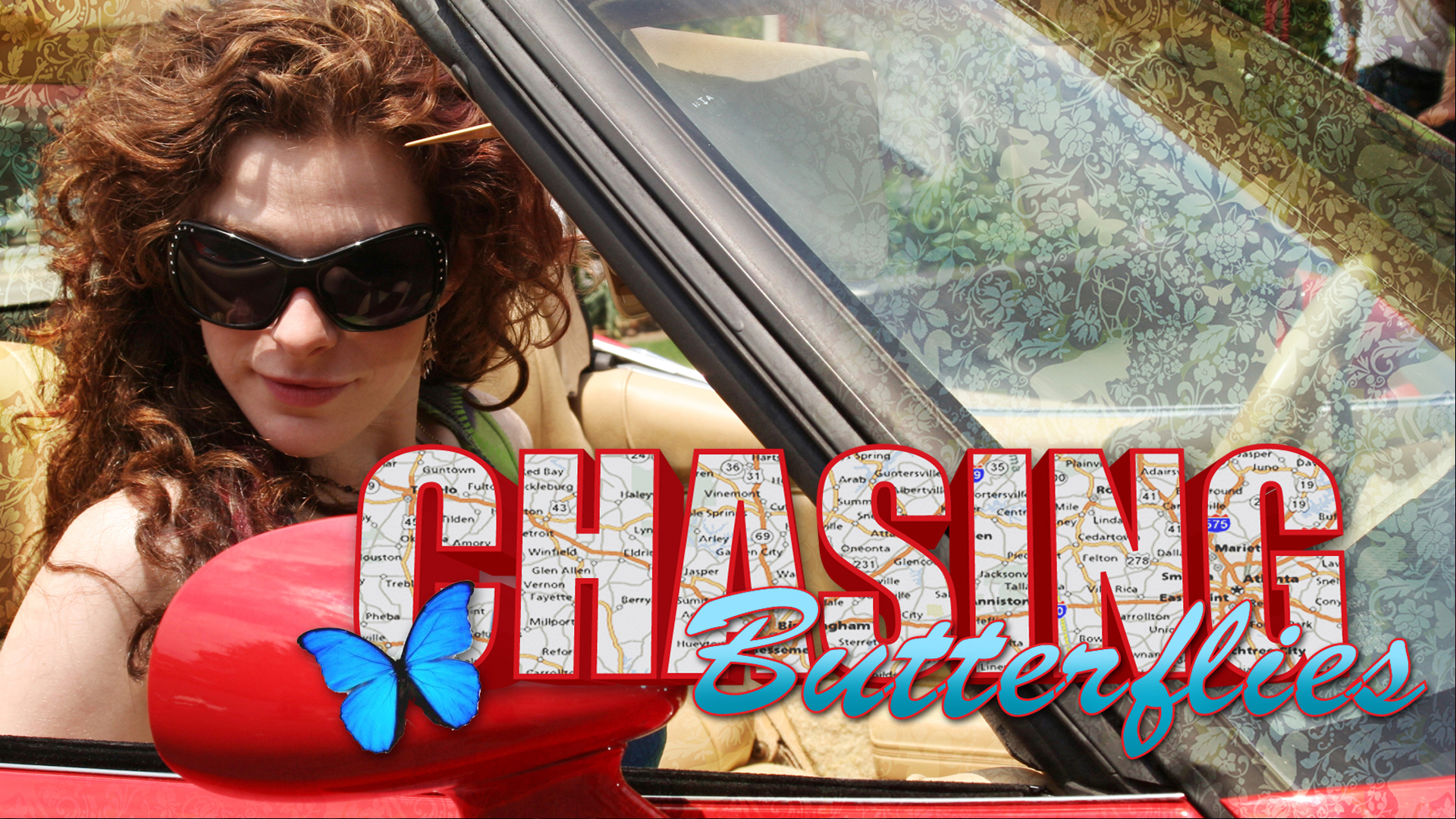
Comedy, romantic, by Rod Bingaman, United States, 2009.
Nina runs away from home hours before her wedding. In order not to postpone her mother's wedding ceremony, she pretends to be Nina and marries her boyfriend. Soon after they begin their search to find Nina and bring her back: Nina's husband is convinced that she no longer loves him. A fifteen-year-old nerdy boy meets Nina on the street and tries to impress her with his father's Corvette that he sneaked away without having her driver's license. Meanwhile, a rebellious young woman and her boyfriend who has escaped from prison meet the boy and steal his Corvette, sowing panic with a series of thefts as they head to Canada, in search of a better life and money to make their living. love dream. Meanwhile, Nina meets on a bus a man on the run from a failed marriage: a famous local radio broadcaster who has been abandoned by his wife. But the bus will be the target of a robbery by the engaged couple "Natural Born Killers".
Chasing the Butterflies is an action-packed romantic comedy populated by characters destined to cross paths. Love gives them energy or scares them, everyone is on the run in search of a better life or because they don't know how to deal with responsibilities. Everyone refuses to be imprisoned in social conventions even when they themselves have sought them, even when the social convention is that of a marriage to a man you still love. An on the road littered with grotesque situations and hilarious dialogues, often in American slang, made independently, with a very interesting cast.
LANGUAGE: English
SUBTITLES: Spanish, French, German, Portuguese
Spencer (2021)

It’s Christmas 1991, and the royal family is gathered at the Sandringham estate. For Princess Diana, these three days are a nightmare of suffocating rituals and family tensions. Her marriage to Prince Charles is on its last legs. Hounded by paparazzi, tormented by bulimia, and trapped in a role that is destroying her, Diana fights an internal battle for her sanity and identity, finding comfort only in her children and the ghost of Anne Boleyn.
Pablo Larraín does not create a traditional biopic, but a “fable from a true tragedy.” Spencer is a psychological horror, a claustrophobic immersion into the mind of a woman on the brink. The film is not interested in the chronicle of events, but in the emotional experience of imprisonment. Sandringham is not a palace, but a gilded cage, where every gesture is controlled, every outfit imposed, every meal an ordeal.
A vision curated by a filmmaker, not an algorithm
In this video I explain our vision
The Favourite (2018)

In the early 18th century, England is at war with France. The frail and unstable Queen Anne sits on the throne, but the country is effectively ruled by her close friend and advisor, Lady Sarah. The arrival at court of Abigail, Sarah’s disgraced cousin, upsets the balance. Abigail uses her charm to ingratiate herself with the Queen, sparking a ruthless rivalry with Sarah to become the new “favourite.”
Yorgos Lanthimos transforms the costume drama into a black, acidic, and grotesque comedy about the dynamics of power. The Favourite is a film in which men are marginal figures, pawns in a ruthless chess game conducted entirely by three women. Power is not a political abstraction, but a personal struggle, fought with cunning, manipulation, sex, and psychological cruelty.
Lady Bird (2017)

Christine McPherson, who insists on being called “Lady Bird,” is a teenager in her senior year at a Catholic school in Sacramento in 2002. She dreams of escaping her city, which she considers boring, to attend a prestigious college on the East Coast. The film follows her year of transition, through friendships, first loves, disappointments, and, above all, a turbulent, conflicting, and deeply loving relationship with her mother, Marion.
Greta Gerwig, with her directorial debut, creates a coming-of-age story of disarming sincerity and acuity. Lady Bird stands out for how it shifts the genre’s focus: the real conflict, the real love story, is not with the boys, but between a daughter and her mother. Their relationship is the beating heart of the film, a battlefield of daily misunderstandings and, at the same time, an unbreakable bond.
Hollywood Dreams
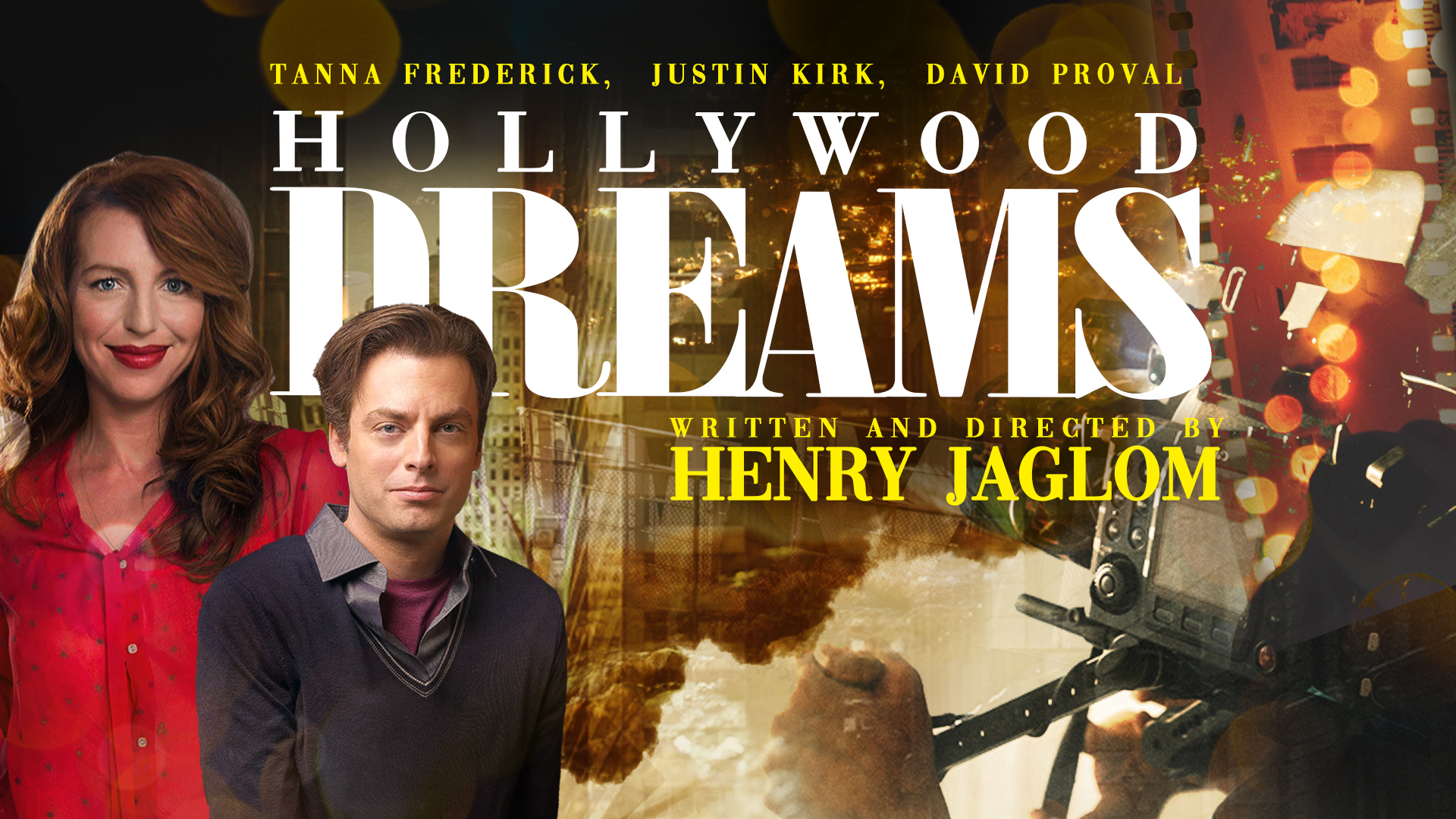
Comedy, drama, by Henry Jaglom, United States, 2007.
Aspiring actress Margie Chizek seeks stardom in Hollywood. She is rejected by the cinema scene, falls in love, discovers the deceptions behind the world of film advertising and understands her identity better than her. Saved from ruin by a kind producer, Margie manages to enter the world of the rich in Hollywood and falls in love with a young actor, who is building her career by pretending to be gay. The couple will face show business and sexual identity manipulation. Hollywood Dreams engages the audience thanks to the extraordinary performance of Tanna Frederick and her character as a tormented and emotionally unstable actress, a surprising and moving performance. The character of a fragile woman, a prisoner of false myths, at times repellent and bizarre. In the hands of the nonconformist independent director Henry Jaglom the charm of the false illusions of success is told in an exemplary and irresistible way.
The history of cinema is full of films about people making films, which can be interpreted as a universal story: everyone strives for success, recognition and fame in a competitive field. Henry Jaglom's Hollywood Dreams is a subversive film, a satire of an industry based on deception. Inspired by the productive freedom and improvisation of the actors of John Cassavetes' independent cinema, more rigorous and exciting than Henry Jaglom's other films, Hollywood Dreams focuses on a smiling actress who suddenly becomes famous. The director, in his fifteenth film, becomes more melancholy, and takes a journey between cinematic memories and gender identity confusion. The style is always the realistic one, almost a documentary, of other Jaglom films. One of the best known American independent directors in a nostalgic mood, reflecting on the negative aspects of fame and success.
LANGUAGE: English
SUBTITLES: Spanish, French, German, Portuguese
I, Tonya (2017)

The film tells the true, absurd, and tragic story of figure skater Tonya Harding. Raised in an environment of poverty and abuse, under the control of a violent and unaffectionate mother, Tonya emerges as an extraordinary talent, the first American woman to perform a triple axel in competition. Her career, however, is irreparably compromised by her involvement in the attack on her rival, Nancy Kerrigan.
I, Tonya is not a conventional biopic. Using a mockumentary style, with contradictory interviews of the protagonists breaking the fourth wall, Craig Gillespie‘s film explores the subjective nature of truth and fiercely criticizes the way media and society build and destroy their idols.
Toni Erdmann (2016)

Winfried, a retired music teacher with a penchant for pranks, is worried about his daughter Ines, an ambitious and workaholic corporate consultant living in Bucharest. Sensing that she has lost her sense of humor and joy for life, Winfried decides to pay her a surprise visit. After a failed first attempt, he reinvents himself as “Toni Erdmann,” an eccentric life coach with a wig and fake teeth, and begins to stalk her at her business meetings and social outings.
Maren Ade‘s film is a comedy as hilarious as it is deeply moving about the disconnection between a father and a daughter, and a sharp critique of the inhumanity of the modern corporate world. The long and digressive narrative takes its time to explore the complex dynamics of a family relationship worn down by distance and opposing lifestyles.
Arrival (2016)

When twelve mysterious alien spacecraft land at different points across the globe, the U.S. military recruits Dr. Louise Banks, an expert linguist, to establish communication. As the world teeters on the brink of a global war, Louise must decipher their complex, non-linear language, a process that will not only reveal the purpose of their visit but will forever change her perception of time and life.
Arrival is a science fiction film that centers not on action or technology, but on intelligence, empathy, and communication. The protagonist, Dr. Louise Banks, is a radically different hero from the genre’s standards. Her strength is not physical, but intellectual and emotional. She saves the world not with weapons, but with words, with her ability to listen, to understand, and to build a bridge between two species.
Denis Villeneuve‘s film is a profound meditation on language and how it shapes our thoughts and our reality. The Sapir-Whorf hypothesis, which posits that the language we speak influences our worldview, is the narrative heart of the film. By learning the circular language of the aliens, Louise begins to perceive time in a non-linear way, experiencing past, present, and future simultaneously.
The House is Black
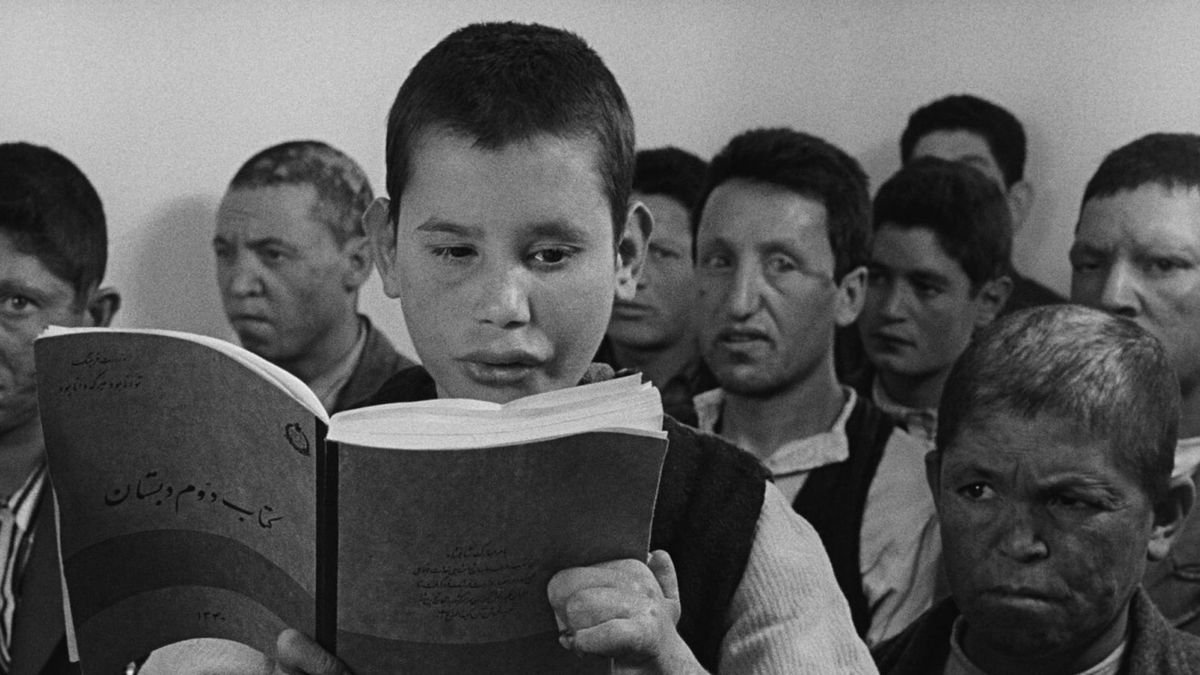
Documentary, by Forough Farrokhzad, Iran, 1963.
The House is Black is a lyrical, transcendent film that places a gaze full of compassion and religiosity towards a suffering humanity. The only source of harmony is found outside the leper colony, in nature: suffering reigns inside. Not even religious faith is able to give relief. A documentary on life and suffering in a leper hospital in Esperan, in the central district of Tabriz County, where time seems to have stopped, where the daily routine repeats itself endlessly, deprived of all hope. The film merges the images with the poetry of director Forough Farrokhzad and with quotations from the Old Testament and the Koran. During the filming, the director became fond of Hossein Mansouri, a child whose parents were suffering from leprosy, and she decided to adopt him. Little known at the time of its release, The House is Black became the benchmark of Iranian cinema in the following years. It can be considered the first film that gave birth to the Iranian New Wave movement. Forugh Farrokhzad, a famous Iranian feminist poet with a controversial and modernist style, was one of the most important female voices in Iranian poetry and cinema. Her authoritative and charismatic personality was severely tested by ostracism and disapproval from the conservatives and Islamic government, who banned her poems more than a decade after her death in a tragic car accident at is only 32 years old. The house is black is her only film. Farugh Farrokhzad, uses her sensitivity to approach the camera towards what should not be looked at, towards the lepers and the marginalized, with absolute respect. Movies not to be missed.
LANGUAGE: Persian
SUBTITLES: English, Spanish, French, German, Portuguese
Elle (2016)
![ELLE by Paul Verhoeven | Official Trailer - Cannes Film Festival 2016 [HD]](https://blog.indiecinema.co/wp-content/plugins/wp-youtube-lyte/lyteCache.php?origThumbUrl=https%3A%2F%2Fi.ytimg.com%2Fvi%2FH-iBBgcp7PY%2F0.jpg)
Michèle Leblanc, a successful businesswoman at the head of a video game company, is raped in her home by a masked assailant. Instead of reporting the incident to the police or collapsing under the weight of the trauma, Michèle reacts in a completely unexpected way. With coldness and pragmatism, she continues her life, trying to discover the identity of her attacker and engaging in a perverse and dangerous psychological game with him.
Paul Verhoeven directs a provocative and morally ambiguous thriller that demolishes every stereotype about female victimization. Elle is a film that constantly challenges the viewer, forcing them to question their expectations of how a woman “should” react to violence. Michèle’s reaction is neither fear nor submission; it is curiosity, control, almost defiance.
Hidden Figures (2016)

In the 1960s, amidst racial segregation and the space race, three brilliant African-American mathematicians work at NASA. Katherine Johnson, Dorothy Vaughan, and Mary Jackson are the bright minds behind one of the greatest operations in history: the launch of astronaut John Glenn into orbit. The three women must contend not only with numbers but also with racial and gender barriers in an environment dominated by white men.
Hidden Figures is a crucial story of emancipation that operates on a dual track: the fight for civil rights and the struggle for gender recognition. The strength of its protagonists is primarily intellectual. In an era when women, and particularly black women, were relegated to the margins, Katherine, Dorothy, and Mary prove that genius has no color or sex.
Suffragette (2015)

In early 20th-century London, Maud Watts is a young laundress, wife, and mother whose life is turned upside down when she becomes involved, almost by chance, in the nascent and increasingly radical suffragette movement. Initially fearful, Maud transforms into a passionate militant, willing to sacrifice her job, family, and freedom for the fight for women’s right to vote.
Suffragette translates a great historical battle into an intimate and personal experience. The film avoids the trap of the hagiographic biopic by focusing not on the leaders of the movement, but on an ordinary woman, a worker whose politicization is a gradual and painful process. Maud’s strength is not innate; it is an achievement, forged in the fire of injustice and sacrifice.
Mustang (2015)

In a remote Turkish village, five orphaned sisters live with their grandmother and uncle. After being seen playing innocently on the beach with some boys, their conservative family reacts with brutality. The house is turned into a prison: the girls are withdrawn from school, forced to learn domestic chores, and prepared for arranged marriages. But the sisters, united by an unbreakable bond, do not give up and fight for their freedom.
Mustang is a powerful and heartbreaking film, a coming-of-age story that takes on the tones of an escape thriller. Deniz Gamze Ergüven’s film is a fierce denunciation of patriarchal and religious oppression, which sees female vitality and sexuality as a threat to be controlled and repressed. The five sisters, like the wild horses of the title, represent a vital energy that refuses to be tamed.
Ninnao
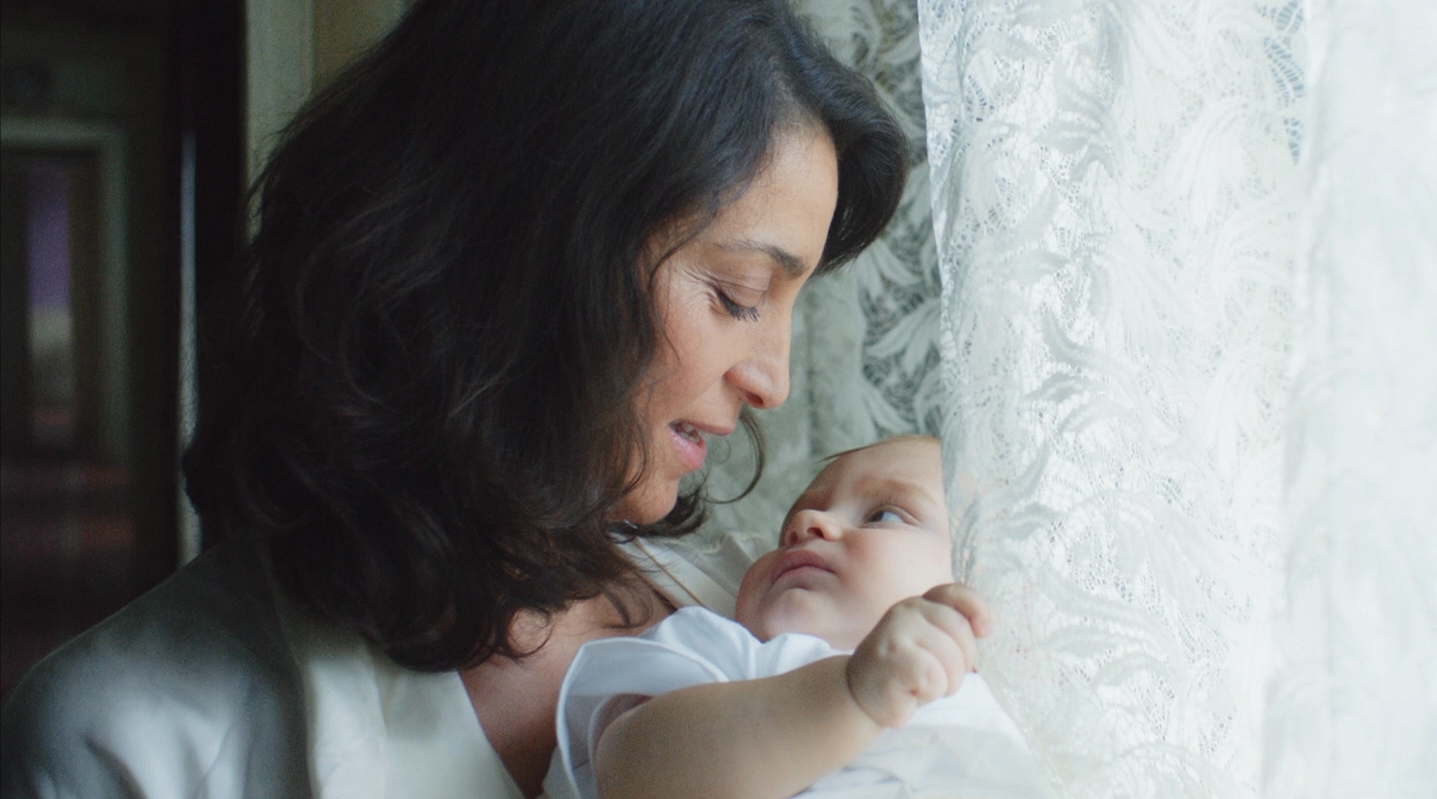
Short film, drama, by Ernesto M. Censori, Italy, 2020.
Ninnaò tackles the theme of milk mothers in a direct and raw way, highlighting in an original way the relationships that are established between two women who will end up competing for the baby. You will win that you will be able to take advantage of the situation more. Produced by the Experimental Center of Cinematography in Rome, it is a film on the theme of the family, which tells of the intimate roots of the human being and family dynamics. Shot at Palazzo De Stefani, in Ciriaco, a historic residence dating back to the end of the eighteenth century in a small town in the heart of Calabria, Girifalco. The story takes place mainly in a single location, with a completely female cast. The protagonists are her mistress and her servant, two mothers and a child to breastfeed who becomes a reason for intrigues and secrets. Ninnaò's main actresses are Angela Fontana and Donatella Finocchiaro. The reality of Calabrian places, characters and traditions are rooted in history. Calabria in the early twentieth century for the director is the 'fertile ground' to bring to light the family dynamics of the aristocracy, whose life was often intertwined and enveloped with that of his humble servants, children of the people.
LANGUAGE: Italian
SUBTITLES: English
Carol (2015)

In New York in the early 1950s, Therese, a young aspiring photographer, works in a department store during the Christmas holidays. There she meets Carol, an elegant and sophisticated woman trapped in an unhappy marriage. An immediate and deep attraction sparks between them, which turns into a clandestine love affair, challenging the rigid social and moral conventions of a deeply repressive era.
Todd Haynes directs a melodrama of extraordinary visual refinement and emotional depth. Carol is a film that tells a forbidden love story not through grand declarations, but through the unsaid, the secret language of glances, gestures, and silences laden with meaning. In an era when this kind of love had no name, nor a place in society, every touch of a hand on a shoulder, every prolonged gaze, becomes an act of courage and transgression.
A Girl Walks Home Alone at Night (2014)

In the desolate and spectral Iranian town of Bad City, a lone vampire, dressed in a chador that billows like a cape, roams the night. She targets men who disrespect women: drug dealers, pimps, violent men. Her immortal and solitary existence is shaken by her encounter with Arash, a kind and melancholic young man, also a lost soul in that hopeless place.
Billed as “the first Iranian Vampire Western,” Ana Lily Amirpour‘s debut film is a cult work, a stylistic black-and-white gem that mixes genres and influences to create something unique. The vampire, known only as “the Girl,” is a fascinating and powerful figure, a feminist metaphor for revenge and protection.
In a patriarchal society, the Girl subverts power dynamics. It is she who hunts, who inspires terror. Her chador, a symbol of modesty and oppression in some contexts, is transformed here into an icon of supernatural power, a superhero’s cape as she glides through the dark streets. She is an avenging angel who punishes the worst of toxic masculinity.
Under the Skin (2013)

An alien entity, in the guise of a woman, roams the streets of Scotland to lure and abduct men.
A unique cinematic experience, this film follows an alien entity that lures and “collects” men. The horror is not in the “scares,” but in the dehumanization and the terrifying alien perspective on our species, viewed as mere slaughterhouse meat. The film is a profound meditation on sexuality, identity, and empathy, and on the thin line that separates observer from involvement, using hidden cameras to blur the line between fiction and documentary.
Zero Dark Thirty (2012)

After the September 11th attacks, the CIA begins a decade-long manhunt for Osama bin Laden. At the center of this operation is Maya, a young and brilliant analyst who dedicates her entire existence to this mission. Working in a male-dominated environment and facing skepticism and bureaucratic obstacles, Maya tenaciously pursues a single lead that will eventually lead to the discovery and elimination of the al-Qaeda leader.
Maya is a character defined by an absolute, almost obsessive professional focus. In Zero Dark Thirty, directed by Kathryn Bigelow, the protagonist’s strength is purely intellectual and resilient. She is not a soldier, but she is the one who directs the soldiers. Her mission becomes her identity, to the point of emotional exhaustion. Maya represents a form of female leadership based on analytical rigor and a refusal to give up, even when surrounded by doubt.
Wadjda (2012)

Wadjda is a lively and enterprising ten-year-old girl living in a suburb of Riyadh, Saudi Arabia. Her greatest desire is to own a green bicycle so she can race her friend Abdullah. But in her society, bicycles are not considered suitable for girls, as they could compromise their virtue. Determined, Wadjda decides to earn the money herself by entering a Quran competition at school.
In its seemingly simple gesture, Wadjda encapsulates a revolution. The first feature film shot entirely in Saudi Arabia by a female director, Haifaa al-Mansour, uses a young girl’s desire for a common object as a powerful metaphor for the struggle for freedom and female self-determination in one of the world’s most conservative societies.
Miss Oyu
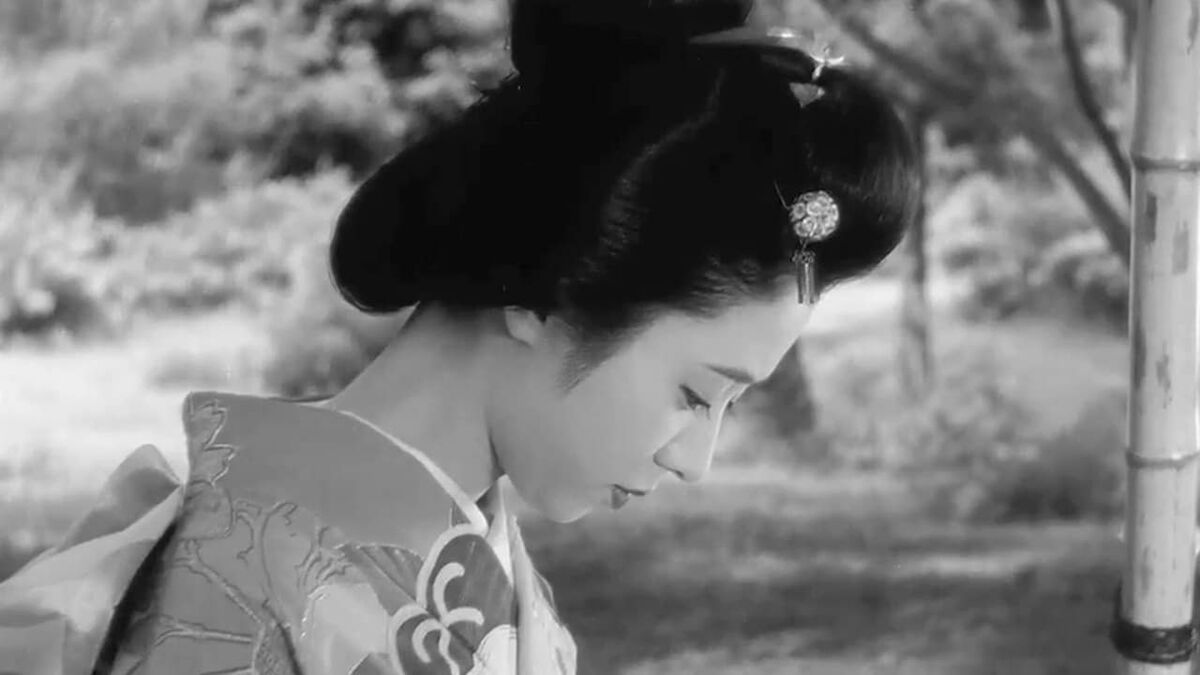
Drama, by Kenji Mizoguchi, Japan, 1951.
Bachelor Shinnosuke falls in love with Miss Oyu, the companion of his younger sister Shizu who visits him as a future bride. The family taboo prevents Shinnosuke from marrying Oyu. He marries Shizu without consummating their marriage so that Shinnosuke can remain faithful to the unconscious Oyu. However, the couple's commitment to appearances has a cost. The lack of sexuality and the malicious rumors about the ménage-a-trois lead to recrimination, separation and further pain. Miss Oyu is a radical reworking by Mizoguchi and his screenwriter Yoshikata Yoda of Junichiro Tanizaki's novel The Reed Cutter (1932). Miss Oyu moves in the aura of high art and good taste: opening credits beyond paintings of clouds, compositions of Chinese and Japanese art masterpieces, interiors decorated with refined furnishings and art objects, Japanese classical music recitals and songs derived from Japanese poetry, references to Heian costume, history and literature, historical and natural beauties; Japanese rituals such as ikebana, bonsai and tea ceremonies. A grand depiction of exotic and picturesque Japanese culture, Ms. Oyu was the first of the 1950s costume dramas that would make Mizoguchi famous outside of Japan.
LANGUAGE: Japanese language
SUBTITLES: English, Spanish, French, German, Portuguese
Fish Tank (2009)

Mia, a hot-tempered and isolated fifteen-year-old, lives in a council estate in Essex with her single mother and younger sister. Expelled from school and estranged from her former friends, her only passion and escape is hip-hop dancing, which she practices alone in an empty apartment. Her monotonous and confrontational life is turned upside down by the arrival of Connor, her mother’s new and charming boyfriend, who seems to be the first person to notice her and encourage her talent.
Andrea Arnold‘s cinema is characterized by a raw realism and a deep empathy for her characters, especially young women living on the margins. Fish Tank is a powerful and unfiltered portrait of a difficult adolescence, an immersion into a world of limited opportunities and dysfunctional affections.
Persepolis (2007)

Through stylized and powerful black-and-white animation, Marjane Satrapi recounts her childhood and adolescence in Iran during and after the Islamic Revolution. Raised in a progressive family, the young and rebellious Marji witnesses the fall of the Shah, the rise of the ayatollahs’ regime, and the war with Iraq. Sent to Europe for her safety, she confronts a new form of alienation before returning to a homeland she no longer recognizes.
Persepolis is a coming-of-age story that is both deeply political and intensely personal. Marjane’s story is that of a woman fighting for her identity and freedom in a world that constantly seeks to define and repress her. The veil, imposed by the new regime, becomes the most powerful symbol of this oppression, an attempt to erase the individuality and voice of women.
Kill Bill: Vol. 1 (2003)

A woman, known only as “the Bride,” awakens from a four-year coma. A former member of an elite assassination squad, she was betrayed and left for dead on her wedding day by her boss and lover, Bill. Now, driven by an implacable thirst for revenge, she begins a bloody path to eliminate, one by one, all those responsible for the massacre.
If Ripley represents the strength of survival, Quentin Tarantino‘s Bride embodies the strength of revenge. Kill Bill is a postmodern work that draws heavily from genre cinema, but its beating heart is one of the purest representations of female fury ever brought to the screen. Violence is not just a tool, but a language, the only one possible to express such an all-encompassing pain and betrayal.
The Piano Teacher (2001)
![The Piano Teacher (2001) trailer - Michael Haneke [unofficial, fan-made]](https://blog.indiecinema.co/wp-content/plugins/wp-youtube-lyte/lyteCache.php?origThumbUrl=https%3A%2F%2Fi.ytimg.com%2Fvi%2FZ-frdy3mYHo%2F0.jpg)
Erika Kohut is a respected piano teacher at the Vienna Conservatory. By day, she is an austere and uncompromising figure, but her private life is an abyss of psychological repression and sexual perversions, dominated by a possessive and suffocating mother. The arrival of a young and talented student, Walter, who falls in love with her, unleashes her sadomasochistic fantasies, dragging them both into a dangerous and destructive game.
Michael Haneke‘s cinema is ruthless, a clinical dissection of the pathologies of bourgeois society. The Piano Teacher is perhaps his most disturbing and radical work, an uncompromising exploration of female repression and its devastating consequences. Isabelle Huppert‘s performance is chillingly precise, a portrait of a woman whose intelligence and artistic sensitivity have been twisted into a weapon of self-destruction.
Erin Brockovich (2000)

Erin Brockovich, an unemployed single mother and twice-divorced, after losing a car accident lawsuit, tenaciously convinces her lawyer to give her a job as a file clerk. While investigating a real estate case, she uncovers massive groundwater contamination by a large corporation, Pacific Gas & Electric, which is causing serious illnesses among the residents of a small town.
Erin Brockovich’s strength lies not in physical ability or heroic gestures, but in her determination, empathy, and refusal to conform. In a world, the legal one, dominated by men in suits who judge her for her provocative clothing and direct manners, Erin represents a radically different form of female power. She does not try to imitate men to be accepted; on the contrary, she uses her identity as a working-class woman, her frankness, and even her sensuality as weapons.
Osaka Elegy
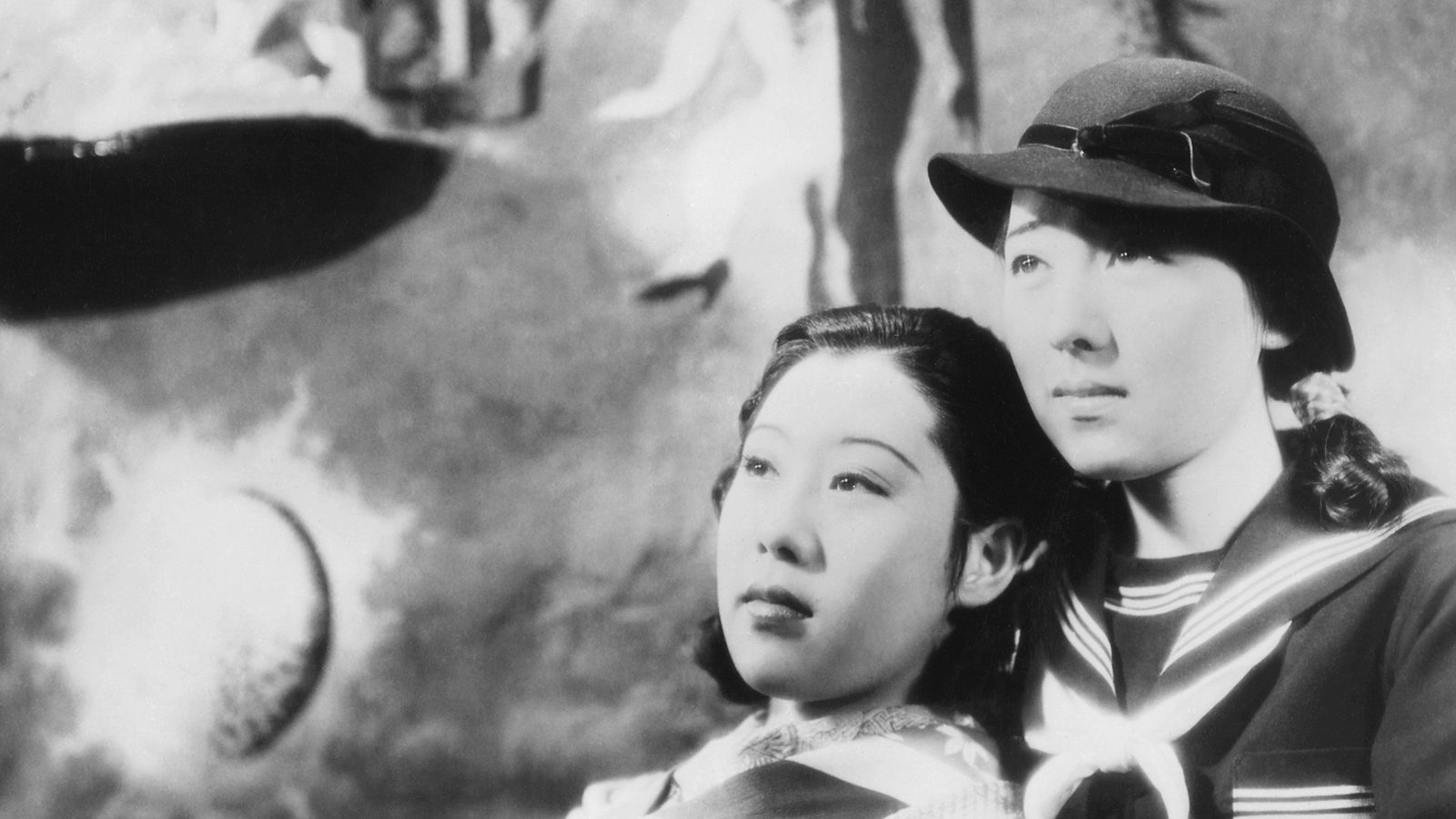
Drama, by Kenji Mizoguchi, Japan, 1936.
Ayako Murai is a telephone operator for the pharmaceutical company Asai, in the city of Osaka in 1930. To pay the debts of her father, unemployed and threatened with arrest for not repaying a loan, she agrees to become her employer's mistress. work. After paying the debts of her father, her relationship with Mr. Asai is interrupted due to the jealousy of the latter's wife, Sonosuke, who categorically forbids her husband to see her again with her lover. However Ayako, in an attempt to help pay her brother Hiroshi's college tuition, continues to make her the lover she maintained at the expense of another firm admirer, Mr. Fujino.
Film about the condition of women, as a large part of Mizoguchi's filmography. The protagonist is a victim of a patriarchal and male chauvinist society where money is the dominant value. Masterful film for the realistic description of the city of Osaka, lyrical and lucidity in its social criticism. Mizoguchi referring to this film, said: "Only when I was forty did I find my way". The simplicity of the story and of the style is exemplary in Osaka Elegy. The film was banned after 1940 by the militarists, it is an unparalleled masterpiece of cinematic realism.
LANGUAGE: Japanese
SUBTITLES: English, Spanish, French, German, Portuguese
Bread and Tulips (2000)

Rosalba, a housewife from Pescara, is forgotten at a highway rest stop during a family trip. Instead of waiting for her husband and sons to come back for her, in an impulsive act of rebellion, she decides to hitchhike and finds herself in Venice. There, she starts a new life, finding a job at a florist, lodging with a melancholic Icelandic waiter, and a new circle of eccentric friends. Her escape transforms into a journey of self-discovery.
Silvio Soldini‘s film is a delicate and poetic comedy, a modern fable about the possibility of reinventing oneself. Bread and Tulips tells of a quiet revolution, that of a woman who for years has been invisible to her family, taken for granted, reduced to the role of wife and mother. The incident at the rest stop is the spark that allows her to see herself as an individual again.
Orlando (1992)

The story begins in Elizabethan England with the young nobleman Orlando, whom the Queen orders never to grow old. Miraculously, Orlando lives through four centuries of history, experiencing adventures, loves, and disappointments. Midway through his journey, during a diplomatic mission in Constantinople, he awakens transformed into a woman. He will continue to live through the ages, experiencing the different restrictions and expectations imposed on both sexes.
Sally Potter‘s adaptation of Virginia Woolf‘s novel is a visually sumptuous and intellectually bold exploration of gender identity and its fluidity. Orlando is a radical film that dismantles the idea that gender is a fixed biological characteristic, presenting it instead as a social construction, a performance that changes with the changing customs and eras.
Thelma & Louise (1991)

Thelma, a naive and submissive housewife, and Louise, a disillusioned and pragmatic waitress, set off for a weekend vacation to escape their routine. A traumatic event at a bar turns their brief getaway into a desperate run across America, pursued by the law but animated by a new, intoxicating sense of freedom. Their journey becomes an epic of self-determination and unbreakable friendship.
Few films have marked a cultural breaking point like Ridley Scott‘s masterpiece. Thelma & Louise is more than a road movie; it is a manifesto. Its power lies in being an intrinsically reactive narrative of liberation. The entire story is an escape from something: from Thelma’s oppressive husband, from Louise’s past trauma, from a society that first ignores and then condemns them. Their freedom is not born in a vacuum but is defined in direct opposition to a patriarchal world that wants them passive and silent.
Alien (1979)

The crew of the spaceship Nostromo, awakened from hibernation to respond to a distress signal from an unknown planet, encounters a lethal alien life form. As the creature begins to eliminate them one by one, Warrant Officer Ellen Ripley emerges as the only one capable of confronting the threat, fighting for her own survival in a claustrophobic nightmare in deep space.
Ellen Ripley is not just a “strong woman”; she is a character who rewrote the rules of female representation in science fiction and action cinema. Her genesis is emblematic: the role was originally conceived for a man. This chance occurrence allowed for the creation of a protagonist defined not by her gender, but by her competence, pragmatism, and intelligence. Ripley is not there to be someone’s love interest or the damsel in distress. She is a professional doing her job.
A Woman Under the Influence (1974)

Mabel is a loving wife and mother, but her eccentric behavior and growing emotional instability test the patience of her husband Nick, a construction worker, and create turmoil in her family. Unable to conform to the social expectations of a “good wife,” Mabel is deemed “crazy” and committed to an institution. Her return home will reveal all the cracks in a family and social system incapable of handling her uniqueness.
John Cassavetes‘ masterpiece is a raw and unfiltered immersion into the psyche of a woman who doesn’t fit in the world. Gena Rowlands‘ performance is monumental, a heartbreaking portrait of a fragility that is mistaken for madness. Mabel’s strength is not in her ability to resist, but in her desperate and authentic search for love and connection, in an environment that responds only with confusion and fear.
Early Summer
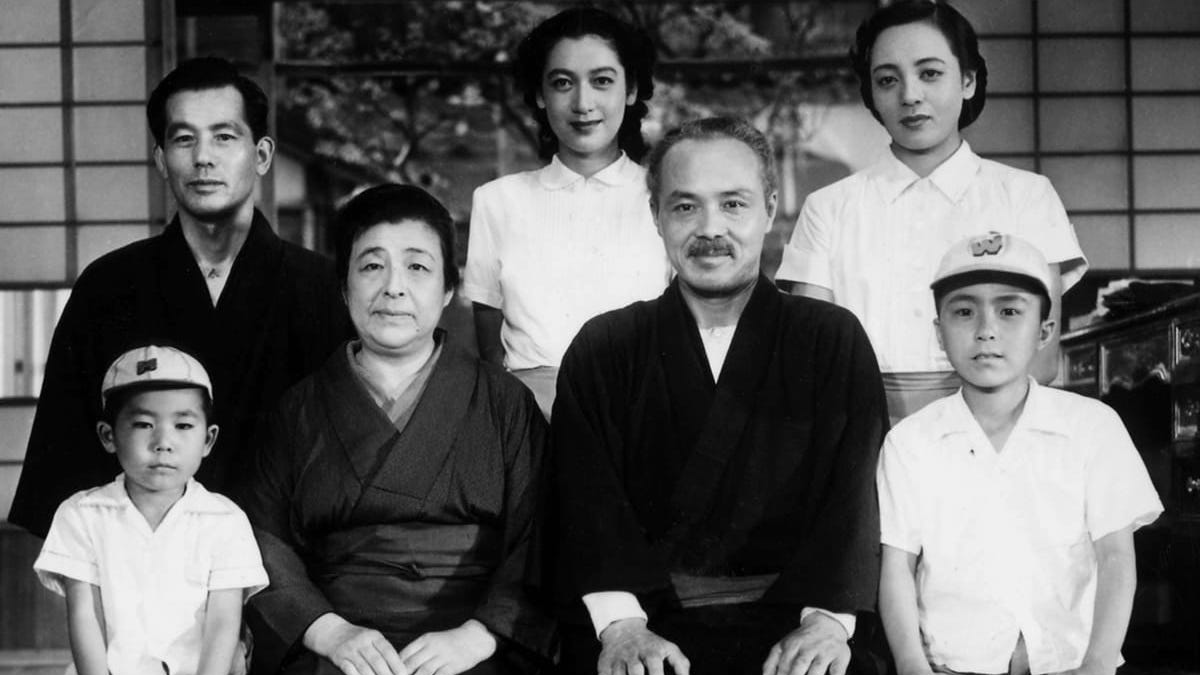
Drama, by Yasujirō Ozu, Japan, 1951.
Noriko, a secretary from Tokyo, resides in Kamakura with her family along with her parents Shūkichi and Shige, her elder brother Kōichi, a doctor, her wife Fumiko and their 2 boys Minoru and Isamu. Noriko's friends are divided into 2 groups, married and single, who constantly tease each other, with Aya Tamura being her close ally in the single group. Noriko's family pressures Noriko into accepting Satake's proposed marriage, agreeing that it's time for her to get married and thinking that marriage is perfect for someone her age. When Yabe's mother Tami impulsively asks Noriko to marry Yabe and follow them on their move north, Noriko accepts her proposal. The family accepts Noriko's decision with resignation and, before she leaves, they take a picture together. Gorgeous drama about family unity that is part of Ozu's thematic trilogy called The Noriko Trilogy: Late Spring, Time of the Wheat Harvest and Journey to Tokyo, all starring Setsuko Hara as a character named Noriko, on the theme of the family on the verge of a great change.
Food for thought
Love never suspects, it is never jealous. Love never interferes in the freedom of the other. Love never imposes anything on the other. Love gives freedom, and freedom can only exist if there is space. Love should be a gift given and taken in freedom, but there should be no claim. If you can have freedom and love at the same time, you won't need anything else. You will have obtained everything, everything you live for will have been given to you.
LANGUAGE: Japanese
SUBTITLES: English, Spanish, French, German, Portuguese
Jeanne Dielman, 23 quai du Commerce, 1080 Bruxelles (1975)

For three days, we observe the meticulously ordered life of Jeanne Dielman, a middle-aged Belgian widow. Her existence is a ritual of domestic chores: she prepares meals, makes the bed, polishes her son’s shoes, with almost mechanical precision. To support herself, she receives a different client each afternoon for a sexual encounter. But slowly, small cracks begin to appear in her perfect routine, leading to an implosion as inevitable as it is shocking.
Chantal Akerman‘s magnum opus is a milestone of feminist cinema, a film that changed the way time, labor, and female oppression are represented. Its power lies not in action or dialogue, but in what is unsaid and what is shown with almost unbearable patience. Akerman elevates domestic work, usually invisible and taken for granted, to a central cinematic event.
Cléo from 5 to 7 (1962)

Cléo, a young and beautiful pop singer, wanders the streets of Paris for ninety minutes, from five to six-thirty on a summer afternoon, while awaiting the results of a biopsy that could diagnose her with cancer. In this time, her perception of herself and the world changes radically: her beauty, her fame, and her superficial certainties crumble in the face of the fear of death.
Agnès Varda, a pioneer of the Nouvelle Vague, creates an existentialist film of disconcerting modernity. Cléo’s journey is a transformation from object to subject. At the beginning of the film, she is defined by the gaze of others: she is a spoiled doll, a beauty to be admired, an image reflected in countless mirrors. Her identity is performative, constructed for others’ consumption. As long as I’m beautiful, I’m alive,” she declares, tying her existence to her appearance.
Frida (2002)

The film traces the bold and tormented life of the Mexican artist Frida Kahlo. From the near-fatal accident that marked her forever in body and art, to her tumultuous and passionate relationship with the muralist Diego Rivera. The narrative weaves her surrealist art, born from pain, with her communist political beliefs, her fluid sexuality, and her struggle to establish herself as an artist in a male-dominated world.
Julie Taymor‘s Frida is a biopic that succeeds in capturing the vibrant and revolutionary essence of its protagonist. The film does not merely recount Frida Kahlo’s life but seeks to enter her imagination, bringing her paintings to life through visually powerful sequences that blend reality and surrealism. Her art is not a mere accessory but the language through which she expresses her physical pain, her passion, and her worldview.
13 Ghosts (1960)
![13 Ghosts (1960) Original Trailer [FHD]](https://blog.indiecinema.co/wp-content/plugins/wp-youtube-lyte/lyteCache.php?origThumbUrl=https%3A%2F%2Fi.ytimg.com%2Fvi%2FXokuP7uN4kU%2F0.jpg)
Occultist Dr. Plato Zorba gives his poor nephew Cyrus a large home. Together with his wife Hilda, teenage daughter Medea and younger boy Buck, Cyrus is informed that the house is haunted by the ghosts that Dr. Zorba has brought from all over the world. The will specifies that the family must stay in the house and cannot sell it. Family members are shocked to find that the house is indeed haunted by 12 ghosts. The estate also comes with the fearsome caretaker Elaine and a surprise ton of cash hidden somewhere in the building.
Similar to many of his most popular productions, producer William Castle used a gimmick to promote 13 Ghosts: the ability to see ghosts in 3D. In theaters, many scenes remained black and white, but the ghost scenes were shown in with an effect called “Illusion-O.” The components of the frame with the characters and the sets, apart from the ghosts, had a blue filter, while the ghosts had a red filter and were superimposed on the frame. The audience watched with glasses with red and blue filters. Unlike early 3D glasses with one eye red and the other cyan or blue, Illusion-O had a single color for both eyes.
A vision curated by a filmmaker, not an algorithm
In this video I explain our vision
The Naked Kiss
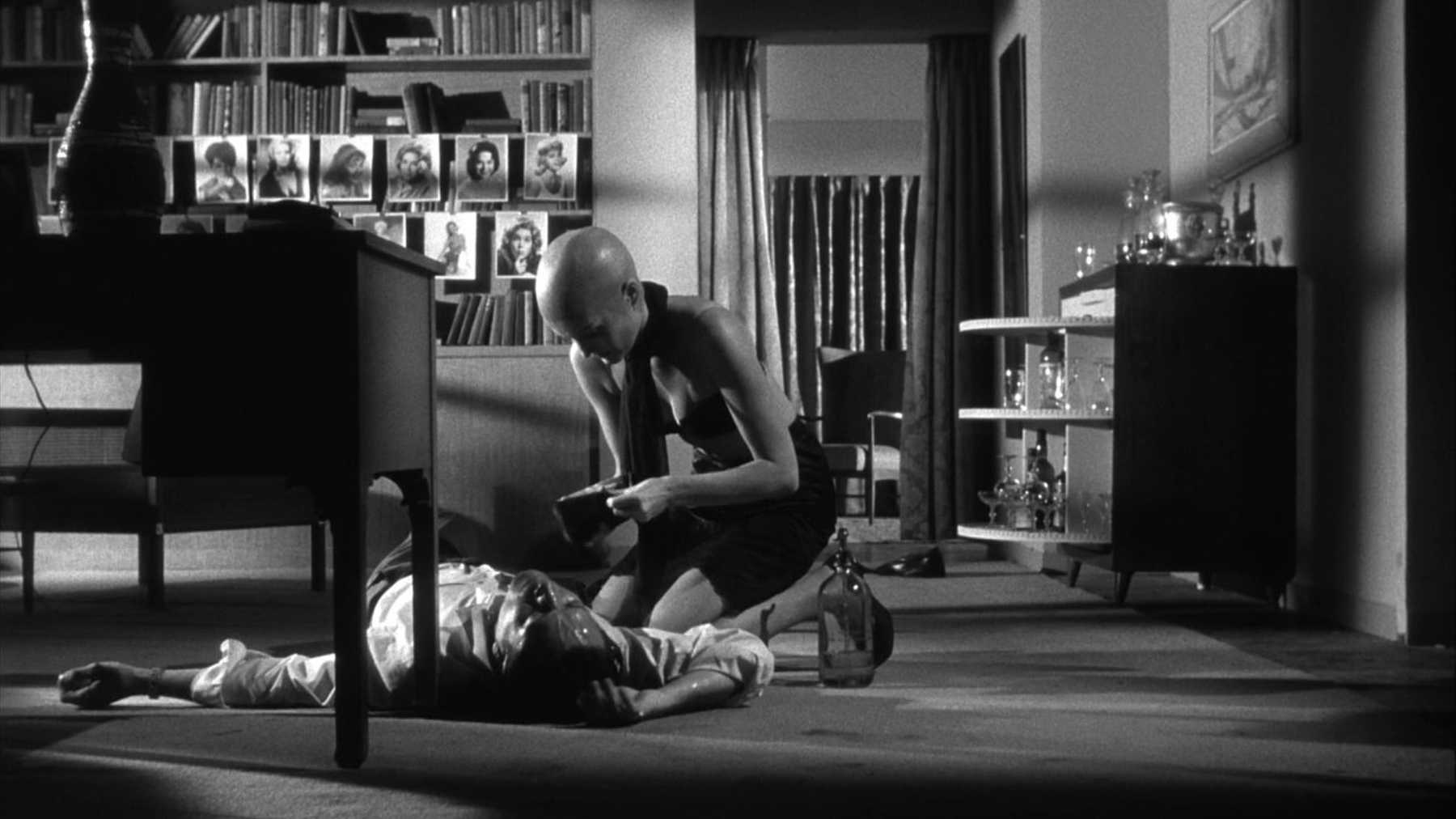
Drama, Noir, by Samuel Fuller, 1964, United States.
Kelly is a prostitute who arrives by bus in the small town of Grantville, after moving away from the big city to escape her former protector. She meets her local police captain Griff who hosts her in her apartment, but then invites her to leave town. Kelly, on the other hand, wants to abandon her previous life and become a nurse in a hospital for disabled children. Griff thinks she is opportunism, he doesn't trust her and keeps trying to send her out of town. Kelly falls in love with Grant, the rich scion of the most important family in the city, a friend of her friend, Griff. After an extraordinary courtship in which not even Kelly's tale of her dark past can discourage Grant, the two decide to get married. Kelly manages to convince Griff that she truly loves Grant and has given up prostitution permanently, and her friend agrees to be their best man.
Food for thought
Sometimes we choose to change our lives because our existence no longer satisfies, and we choose to pursue something we like or that makes our days easier. But after making the change we realize that new conflicts and different problems arise. Often the best change is not what you like best, but the choice of a new lifestyle supported by real values. An ethical change of life. There will be new problems, new difficulties, but the satisfaction will be immediate.
LANGUAGE: English
SUBTITLES: Spanish, French, German, Portuguese
Festival in Cannes
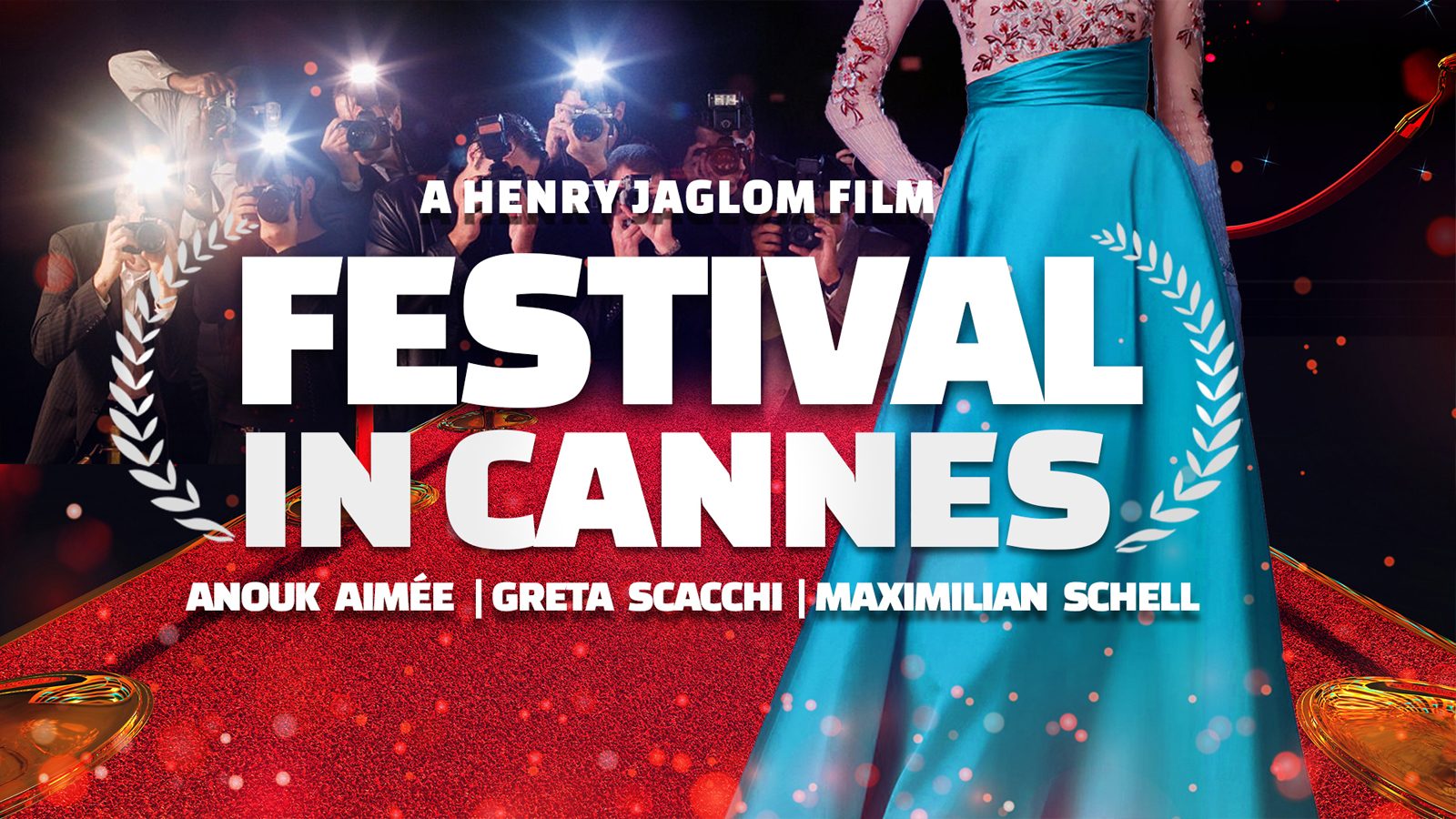
Sentimental comedy, by Henry Jaglom, United States, 2001.
Cannes, 1999. Alice, an actress, wants to direct an independent film, and is looking for financiers. She meets Kaz, a talkative businessman, who promises her $ 3 million if she uses Millie, a French star who has passed her youth and no longer finds interesting roles. Alice tells the story of the film to Millie and the actress falls in love with the project. But Rick, a prominent producer working for a large Hollywood studio, needs Millie for a small part in a film due to shoot in the fall, or else he'll lose her star, Tom Hanks. Is Kaz a real producer or is he a charlatan? Rick is actually not as rich as he used to be and he absolutely has to convince Alice to give up Millie in order to close the big project deal with Tom Hanks. Millie is undecided about what to choose: an indie film she loves but with no big money or a small part in the Hollywood movie that pays very well? Meanwhile, a young actress named Blue becomes the star of the festival and Kaz discovers a new love. The wheel of life, and of show business, turns, between feelings, existential budgets and film business. A film shot with great stylistic freedom, like a documentary, during the 1999 edition of the festival, which focuses on the performances of the actors with a spontaneous and fluid improvisation method, inspired by Cassavetes' cinema. A light and moving sentimental comedy, where the conflicts and frailties of the stars of the show business gradually emerge, bringing the important themes of life to the surface.
Food for thought
Working as a cog in a system or for your own vision? Dependence or independence? Both are not completely real: the reality that happens everywhere, in any industry, in any natural event, is interdependence. We are all absolutely interdependent, not only between men, not only between nations, but between trees and humans, between animals and trees, between birds and sun, between moon and oceans, everything is intertwined with everything else. The humanity of the past did not understand this fundamental law, and it created big problems.
LANGUAGE: English
SUBTITLES: Spanish, French, German, Portuguese
Dementia
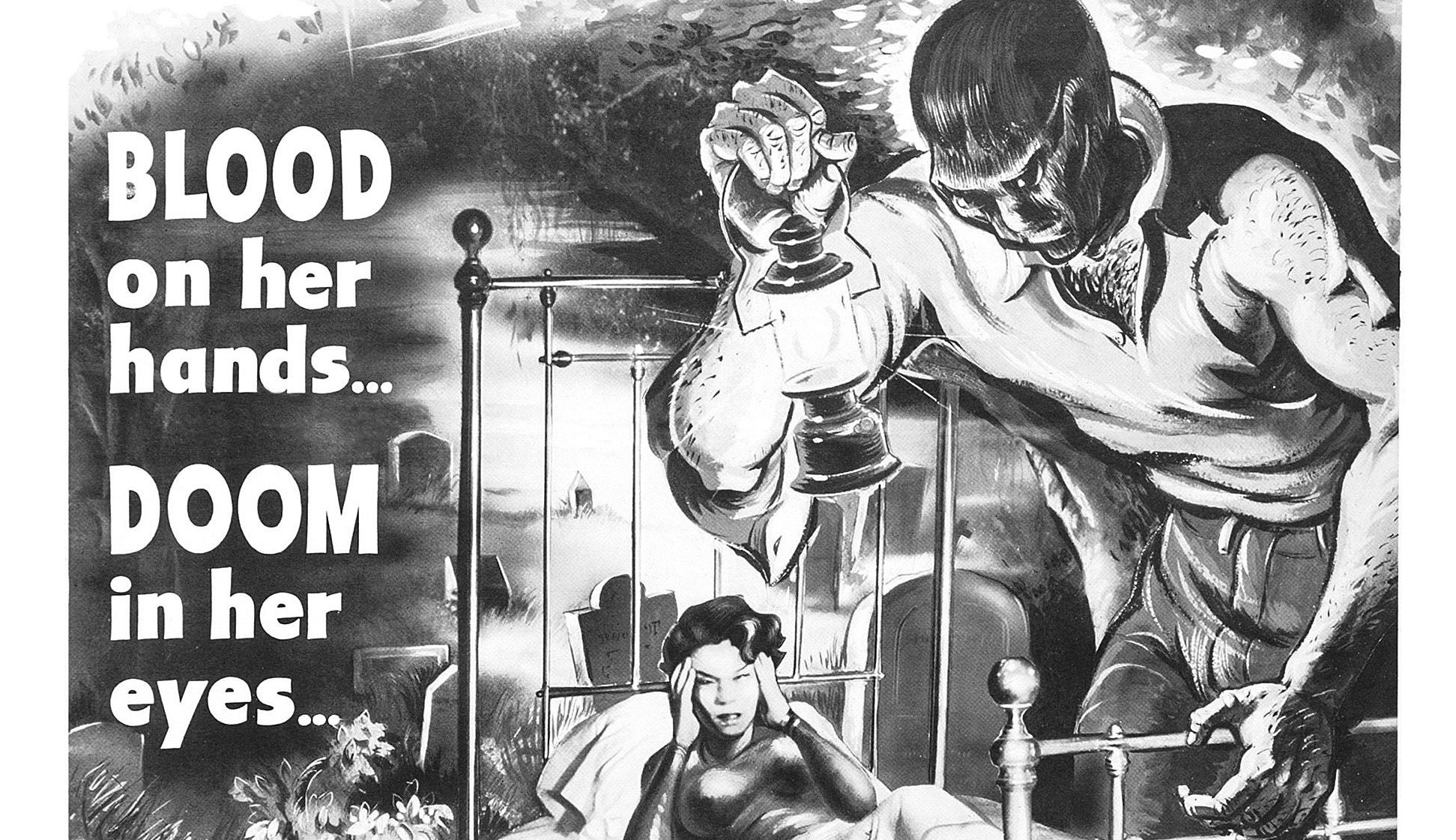
Horror, noir, by John Parker, United States, 1955.
It's night. A woman suddenly wakes up from a nightmare in a seedy hotel in the Los Angeles suburbs. She leaves the room and wanders the neighborhood. She meets a dwarf who sells newspapers with the title "Mysterious Stabbing". In a dark alley, a drunkard harasses her and a policeman rescues her. She then she meets a smartly dressed man with a thin mustache. The man gives her a flower and convinces her to get into the limo with a rich fat guy. As they drive through the city, the man thinks back to his childhood trauma and the violent father who stabbed him with a knife after he shot his unfaithful mother. The rich man takes her to have fun in several nightclubs and then to her apartment. He first ignores the woman while she gorges herself with a big meal. She seduces him, and he approaches her excitedly.
A visionary and hallucinatory nightmare, without dialogue, during a night of a lonely woman in Los Angeles. Between horror, film noir and expressionist film, initially conceived as a short film by Parker based on a dream told him by his secretary, Barrett, who also became the film's interpreter. The film was blocked by the New York State Film Board before being released in theaters in 1955. Later Jack H. Harris bought it and created a new version, with a different cut of editing, also adding a voiceover. and changing the title. This is the original version.
Without dialogue

