
Here is a curated selection of films that perfectly embody the essence of the psychological thriller: bold, complex works that venture into the depths of the human psyche, exploring the darkest territories of the mind. There are the canonical masterpieces that made the genre famous—and you will find them here—but the true heart of this cinema is not content to just scare; it aims to disturb, to question our certainties, and to leave an indelible mark.

The psychological thriller doesn’t rely solely on external monsters. Its battlefield is the soul, its horror existential. It is a cinema that feeds on ambiguity, paranoia, unresolved trauma, and fragmented identities. Visionary directors like David Lynch, Darren Aronofsky, Roman Polanski, and Park Chan-wook have used their freedom to create unconventional narratives, mental labyrinths where the viewer is invited to get lost. These are not simple “mind-game films”; they are immersive experiences that force us to confront our most hidden fears.
The rise of this genre, particularly thanks to studios like A24, is no accident. In an era marked by uncertainty and the crisis of collective narratives, cinema has turned inward, discovering that the greatest horror is not hidden in the shadows, but in the glaring light of our own consciousness. This definitive guide is a path that unites the fundamental pillars, from the most famous films to the most unknown independent cinema. Prepare to gaze into the abyss, because these films will not only gaze back, but will follow you long after the credits roll.

According to director John Madden, psychological thrillers focus on storytelling, character growth, choice and ethical dispute; both fear and anxiety drive psychological tension by unpredictable means. Psychological thrillers are full of suspense by taking advantage of the unpredictability about intentions, sincerity and the way they view the world of the characters.
James N. Frey calls psychological thrillers a style rather than a subgenre; Frey states that good thrillers focus on the psychology of their antagonists and slowly build suspense through ambiguity. Film creators and / or distributors or publishers seeking to distance themselves from the negative connotations of horror often classify their work as a psychological thriller. The same situation can occur when critics label a work as a psychological thriller in order to elevate its perceived literary value.
Mechanisms of Psychological Thriller
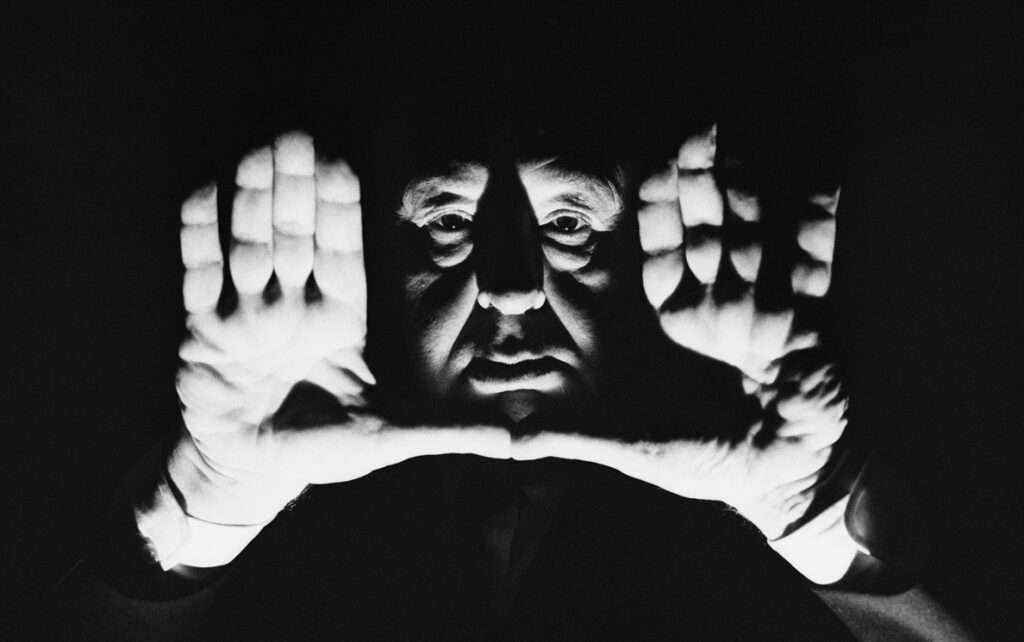
Twist: Films like Psycho have bet everything on twists and also asked audiences to refrain from spoilers.
The Unreliable Narrator: Andrew Taylor identifies the unreliable narrator as a common literary tool used in psychological thrillers and traces it back to Edgar Allan Poe‘s impact on the genre.
MacGuffin: Alfred Hitchcock created the MacGuffin principle, a goal or thing that starts or otherwise advances history. MacGuffin is often only slightly hinted at and can be used to build suspense.
False Lead: The false lead was used by William Cobbett as a kind of misunderstanding which is a useless argument introduced to divert attention from the real conflict. A red herring is used to trick the public into making wrong assumptions and misleading their perception of the truth.
Styles of the Psychological Thriller
In recent years, many psychological thrillers have emerged, made in numerous media. Despite these very different forms of representation, general fashions have actually appeared in all of the stories. Some of these regular styles include: fatality, identification, mindset, perception, reality.
In psychological thrillers, characters often have to fight an inner struggle. Feeling novels, examples of early psychological thrillers, were considered irresponsible due to their themes of sex and violence. Peter Hutchings defines detective stories, an Italian sub-genre of psychological thrillers, as mysterious, violent murders that focus on style and spectacle rather than rationality.
Katabasis
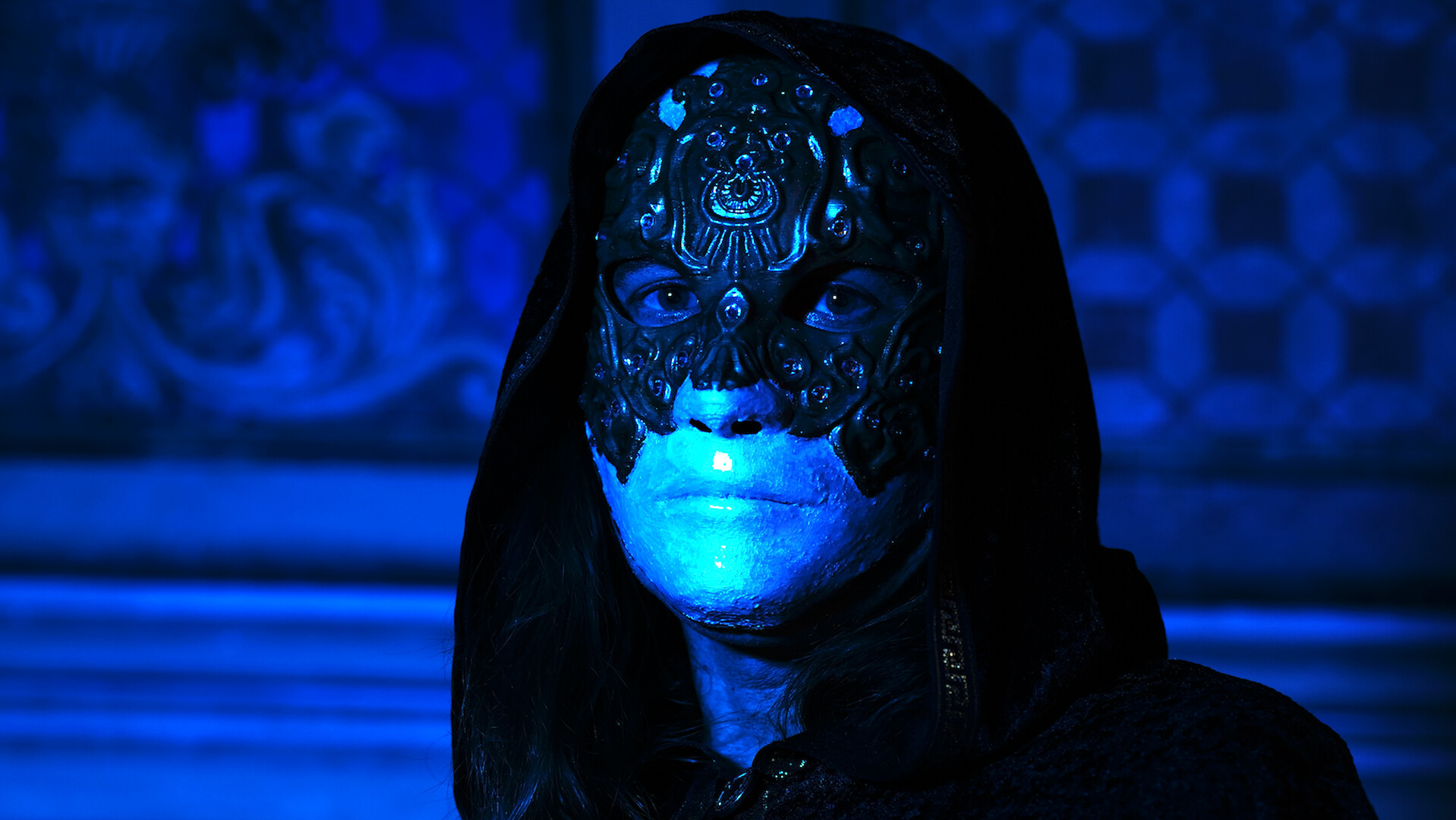
Drama, Mystery, by Samantha Casella, Italy, 2025.
“Katabasis” is a journey into the underworld. Nora experienced that dark realm as a child, when she suffered abuse. This marked her, shaping her into an ambiguous and manipulative woman, dangerous in her inscrutability, constantly seeking disturbing situations to relive the only condition she has profoundly internalized: pain. And the love story between Nora and Aron is tormented, strictly secret. Aron is a young orphan oppressed by the star system which, orchestrated by Jacob, a cynical manager, made him a star and imposes another façade of life on him. In fact, only the people who revolve around the house-prison where the couple lives are aware of Nora's existence. That majestic villa is the stage for secrets, lies, deceit, as well as unsettling episodes, since Nora is able to communicate with the souls from the beyond.
Director Biography – Samantha Casella
Samantha Casella studied various aspects of cinema, including screenwriting, directing, cinematography, and acting, across Turin, Florence, Rome, and Los Angeles. Her directing thesis, the short film "Juliette," won 19 awards, including the "European Massimo Troisi Award." She continued her path directing surreal short films including "Silenzio Interrotto," "Memoria all'Isola dei Morti," and "Agape." In 2019, she directed "I Am Banksy." At the charismatic TCL Chinese Theater in Los Angeles, at the Golden State Film Festival, she won the award for Best International Short Film. In 2020, she directed the short film "A un Dio Sconosciuto." "Santa Guerra" is her feature film debut.
LANGUAGE: Italian
SUBTITLES: English, Spanish, French, German, Portuguese
Masterpieces of the psychological thriller genre

Apartment 7A (2024)

A young dancer’s aspirations transform into paranoia when she discovers her dream New York apartment harbors dark secrets and oppressive supernatural presences that isolate and psychologically torment her.
Director Natalie Erika James constructs escalating dread through environmental claustrophobia and ambiguous malevolence. The film examines vulnerability and displacement through psychological horror, where the apartment becomes a character itself—a manifestation of urban alienation and the protagonist’s disintegrating mental security.
Darkness, This Is my Revenge

Thriller, by Giuseppe Di Giorgio, Italy, 2022.
The film tells the story of a mysterious killer who begins murdering women, leaving a message behind: "This is my revenge." Commissioner Soavi investigates, but is unable to find any clues that point him in the right direction. One thing that all the victims have in common is that they frequent a gym, but despite interrogating Nico, the gym's manager, and the other trainers, nothing useful emerges. Retired commissioner Taddei, who was involved in an unsolved case twenty years earlier, sees similarities between the two cases and tells Soavi about them. Meanwhile, the killer continues to murder.
The murders are shown in a quick, brutal, and visually effective manner. The film is based on a novel by David Pratelli, and it blends elements of thriller and detective fiction, with psycho-thriller influences in the concluding development. The narrative takes place on two different but interconnected timelines. The film keeps the audience's attention until the discovery of the culprit, and it is a well-made and suspenseful thriller.
LANGUAGE: italian
SUBTITLES: English, Spanish, French, German, Portuguese
Smile (2022)

A psychiatrist becomes plagued by a supernatural curse transmitted through inexplicable smiling faces, blurring the distinction between psychological breakdown and supernatural horror.
Parker Finn‘s debut exploits the uncanny power of a distorted smile to generate sustained dread and paranoia. The film ambiguously oscillates between the protagonist’s deteriorating mental state and genuine supernatural threat, leaving viewers unsettled regarding the nature of reality and psychological integrity.
Nightmare Alley (2021)

A carnival con-man and manipulator becomes entangled with a ruthless psychologist in a film noir psychological thriller exploring deception, ambition, and the dangerous consequences of exploitation.
Guillermo del Toro’s visually sumptuous yet morally corrupt narrative examines power dynamics and psychological manipulation with gothic precision. The film challenges viewers to identify with an increasingly despicable protagonist, forcing uncomfortable complicity while dissecting the thin line between predator and victim.
The Sands

Science fiction, by Noah Paganotto, Argentina, 2022.
In an undetermined location on planet Earth, in an unknown time, Zoilo lives with his family in a wasteland surrounded by ruins. They live uprooted, without mothers, knowing that pregnancy for women is synonymous with death. For them there is only one collective routine; keep the fire alive. Only Zoilo escapes this logic, observing, intrigued, details that others do not see and therefore do not appreciate. Zoilo's personal search for answers will increase the differences with his relatives, increasingly revealing an empty world of interiority.
Avant-garde film that burns slowly in the first part and then reveals in the second the profound conflicts of a family prisoner of archaic beliefs. It is a dystopian and visionary work, with wonderful photography and images of rare power that allow us to grasp the depth of the story and its poetic potential. The faces of the actors, especially the protagonist boy, are perfect. The Sands metaphorically represents the world we live in: an alienated society, where what keeps us alive is demonized and blamed for death. In opposition to the fast pace of the typical mainstream film, The Sands is a meditative journey into the depths of images. The film was shot in natural environments in the city of Necochea, Buenos Aires province, Argentina.
LANGUAGE: Spanish
SUBTITLES: English, Spanish, French, German, Portuguese
A vision curated by a filmmaker, not an algorithm
In this video I explain our vision
Joker (2019)

An isolated, struggling man experiences a psychological descent through societal indifference, mental illness, and relentless bullying, culminating in his transformation into a violent antihero.
Todd Phillips‘s unflinching character study refuses sentimentality while examining systemic neglect and the fragility of mental stability. Joaquin Phoenix‘s transformative performance creates visceral discomfort, challenging audiences to confront uncomfortable truths about compassion, alienation, and societal responsibility.
Parasite (2019)

The Kim family—father Ki-taek, mother Chung-sook, daughter Ki-jung, and son Ki-woo—lives in a cramped semi-basement in Seoul, struggling with precarious jobs. Their luck shifts when Ki-woo fakes a university degree to become a tutor for the wealthy Park family. Soon, the Kims orchestrate a plan to infiltrate the Parks’ household by posing as highly qualified, unrelated professionals, systematically replacing the original staff through deception.
Bong Joon-ho’s masterpiece is a biting social satire and psychological thriller that explores class conflict with clinical precision. The film famously pivoted South Korean cinema into the global spotlight, becoming the first non-English language film to win the Academy Award for Best Picture. Its tension arises not just from the threat of exposure, but from the metaphorical “smell” of poverty that the Kims cannot wash off, leading to a violent and tragic collision between the two families.
The stranger
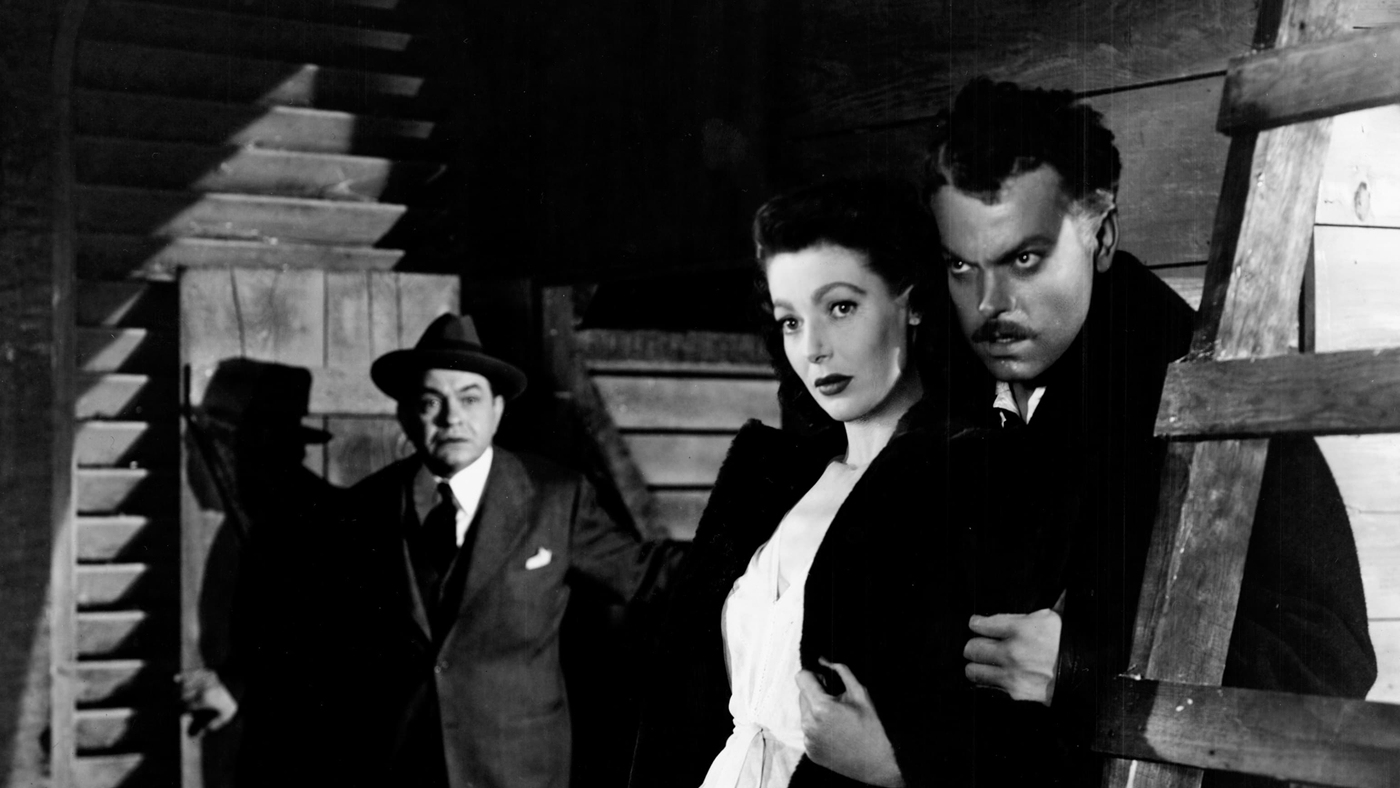
Thriller, by Orson Welles, United States, 1946.
Orson Welles, a filmmaker who has always been against the Hollywood system, did not like this film made inside the studios, but strangely he managed to create a commercial product beyond his own expectations, managing to insert his unmistakable style into it, leaving us an amazing movie. In the small town of Harper, lives Charles Rankin, who is about to marry the daughter of an important judge. But Charles Rankin is actually Frank Kindle, a Third Reich criminal who has created a new identity for himself. However, Inspector Wilson is on the trail of him.
Food for thought
Forget the untruths. For a while, you may feel a certain boredom, fear or lack of motivation: while what is false disappears, it takes time for what is real to assert itself. There will be a transition period. Let it happen, and hold on. Sooner or later your masks will fall, the falsehoods will dissolve, and your true face will appear.
LANGUAGE: english
SUBTITLES: Spanish, French, Germa, Italian, Portuguese
The Lighthouse (2019)

In the late 19th century, two lighthouse keepers—veteran Thomas Wake and rookie Ephraim Winslow—begin a four-week shift on a remote, inhospitable New England island. Isolation, grueling labor, and copious amounts of alcohol push them into a feverish spiral of paranoia and hallucinations. As a relentless storm traps them, the boundaries between reality and maritime myth dissolve into a struggle for power and sanity.
Robert Eggers crafted a visually stunning and psychologically oppressive work, shot in expressionistic black-and-white with a nearly square aspect ratio. The performances by Willem Dafoe and Robert Pattinson are titanic, creating an acting duel that veers between the grotesque and the tragic. The film is a cauldron of Greek mythology and maritime folklore, serving as a visceral exploration of the darkest recesses of masculinity and the contagious nature of madness.
Midsommar (2019)

Dani, a young woman reeling from a devastating family tragedy, joins her distant boyfriend Christian and his friends on a trip to a legendary midsummer festival in an isolated Swedish commune. What begins as an idyllic retreat in a land of perpetual sunlight slowly transforms into an unsettling nightmare as the community’s pagan rituals grow increasingly violent. The blinding light of the sun offers no protection from the sinister intentions of the Hårga cult.
Ari Aster delivers a “folk-horror fairy tale” about the agonizing end of a toxic relationship and the processing of grief. The commune acts as a metaphor for a dysfunctional family that offers Dani the empathy and sense of belonging her boyfriend cannot provide. Dani’s journey is a perverse path of emancipation; the final, haunting image of her smile amidst the horror suggests a liberation found through total immersion in a community that shares her pain physically and vocally.
Hereditary (2018)

Following the death of her secretive mother, artist Annie Graham struggles to process her complicated grief. Her family’s stability is shattered by a second, unthinkable tragedy involving her daughter, Charlie, which triggers a descent into madness. Annie begins to uncover dark secrets about her maternal lineage, revealing a terrifying and inescapable destiny that has been orchestrated for generations, threatening to consume every member of the household.
Ari Aster’s directorial debut is a masterpiece of contemporary horror, functioning as a devastating family drama disguised as a supernatural tale. The film explores hereditary trauma and mental illness, suggesting that these “hauntings” are passed down like a cursed inheritance. Toni Collette’s monumental performance as Annie captures the raw, unfiltered pain of a mother, while Aster’s surgical precision in building tension proves that the true haunted house is built of blood ties.
Silent night, bloody night
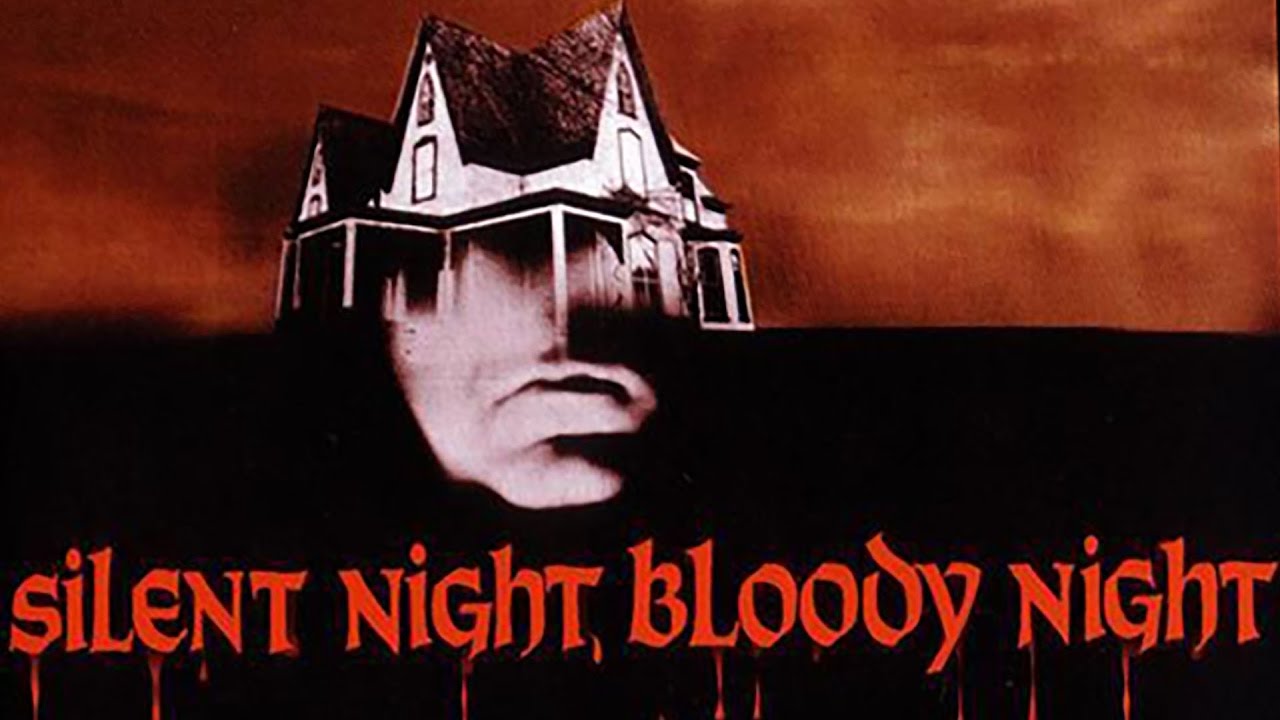
Horror, by Theodore Gershuny, United States, 1972.
1972 American Slasher, is a forerunner horror genre several years before Carpenter's Halloween, with a complex script and first person shooting of the killer, which inspired many subsequent films. Its originality and its narration are what manage to make it a small and little known pearl of the genre. A series of murders in a small New England town on Christmas Eve after a man inherits a family estate that was once a madhouse. Many of the cast and crew members were former Warhol superstars: Mary Woronov, Ondine, Candy Darling, Kristen Steen, Tally Brown, Lewis Love, director Jack Smith, and graduate Susan Rothenberg.
LANGUAGE: english
SUBTITLES: italian, french, spanish
Get Out (2017)

Chris, a talented African-American photographer, travels with his girlfriend Rose Armitage to her family’s estate for a weekend getaway. While the welcome from her “progressive” parents initially feels overly accommodating, the atmosphere quickly shifts as Chris notices the unsettling behavior of the estate’s Black staff and the disturbing guests at a large family gathering. After Rose’s mother subjects him to a forced hypnosis session, Chris uncovers a sinister plot involving the physical and mental subjugation of Black individuals.
Jordan Peele’s directorial debut redefined the genre by using psychological thriller tropes to deliver a searing social critique of racism and liberal performativity. The “Sunken Place”—a state of total physical paralysis where the consciousness is silenced—serves as a powerful metaphor for systemic oppression and the loss of autonomy. By blending traditional suspense with “social gaslighting,” Peele demonstrates that true horror often resides within the polite veneers of society rather than in supernatural monsters.
The Killing of a Sacred Deer (2017)

Steven Murphy, a brilliant cardiothoracic surgeon, leads a perfectly ordered life with his ophthalmologist wife and two children. This existence is disrupted when he befriends Martin, a strange teenager whose father died on Steven’s operating table years prior. Martin eventually reveals a sinister ultimatum: Steven must sacrifice one of his family members to “restore the balance,” or they will all succumb to a mysterious, progressive paralysis.
Yorgos Lanthimos transposes the Greek tragedy of Iphigenia to an aseptic American suburb, creating a cold and ruthless parable about guilt and retribution. The film is defined by surreal, monotone dialogue and a clinical direction that utilizes wide-angle lenses to create a sense of detachment. It explores the conflict between the rationality of science and the irrationality of archaic justice, forcing the protagonist to confront the consequences of his past actions through an impossible, atrocious choice.
The Invitation (2015)

Will reluctantly attends a dinner party hosted by his ex-wife, Eden, at their former home—the site of their young son’s tragic death years earlier. Throughout the evening, Will grows increasingly suspicious of the overly cheerful guests and Eden’s new partner, who speak enthusiastically about a mysterious spiritual group called “The Invitation.” Will’s trauma-induced paranoia makes it impossible for him to tell if the danger is real or a product of his own grief.
Karyn Kusama directs a masterful chamber thriller that builds tension to an almost unbearable degree within a single setting. The viewer is trapped in Will’s mind, forced to doubt his perception as his friends dismiss his concerns as symptoms of his unresolved pain. The film is a sharp exploration of denial and the vulnerability of the human spirit, culminating in a violent explosion that reveals the horror was not an isolated event but part of a much larger, terrifying plan.
Gone Girl (2014)
![Gone Girl | Official Trailer [HD] | 20th Century FOX](https://blog.indiecinema.co/wp-content/plugins/wp-youtube-lyte/lyteCache.php?origThumbUrl=https%3A%2F%2Fi.ytimg.com%2Fvi%2F2-_-1nJf8Vg%2F0.jpg)
On his fifth wedding anniversary, Nick Dunne returns home to find his wife, Amy, missing under violent circumstances. As the investigation into the disappearance of “Amazing Amy” becomes a national media frenzy, Nick’s strange behavior and history of lies make him the primary suspect in what appears to be a homicide. However, the discovery of Amy’s hidden diary reveals a much darker reality: a carefully orchestrated plan of revenge designed to destroy Nick’s life.
David Fincher’s adaptation of Gillian Flynn‘s novel is a cold, cynical dissection of the “performative” nature of modern marriage and media manipulation. The film shifts from a standard procedural into a psychological war between two sociopaths, centered on the famous “Cool Girl” monologue. Amy uses her understanding of public psychology to craft a narrative that makes her a victim and her husband a villain, illustrating how the truth in the digital age is often secondary to the most compelling story told.
Scarlet Street
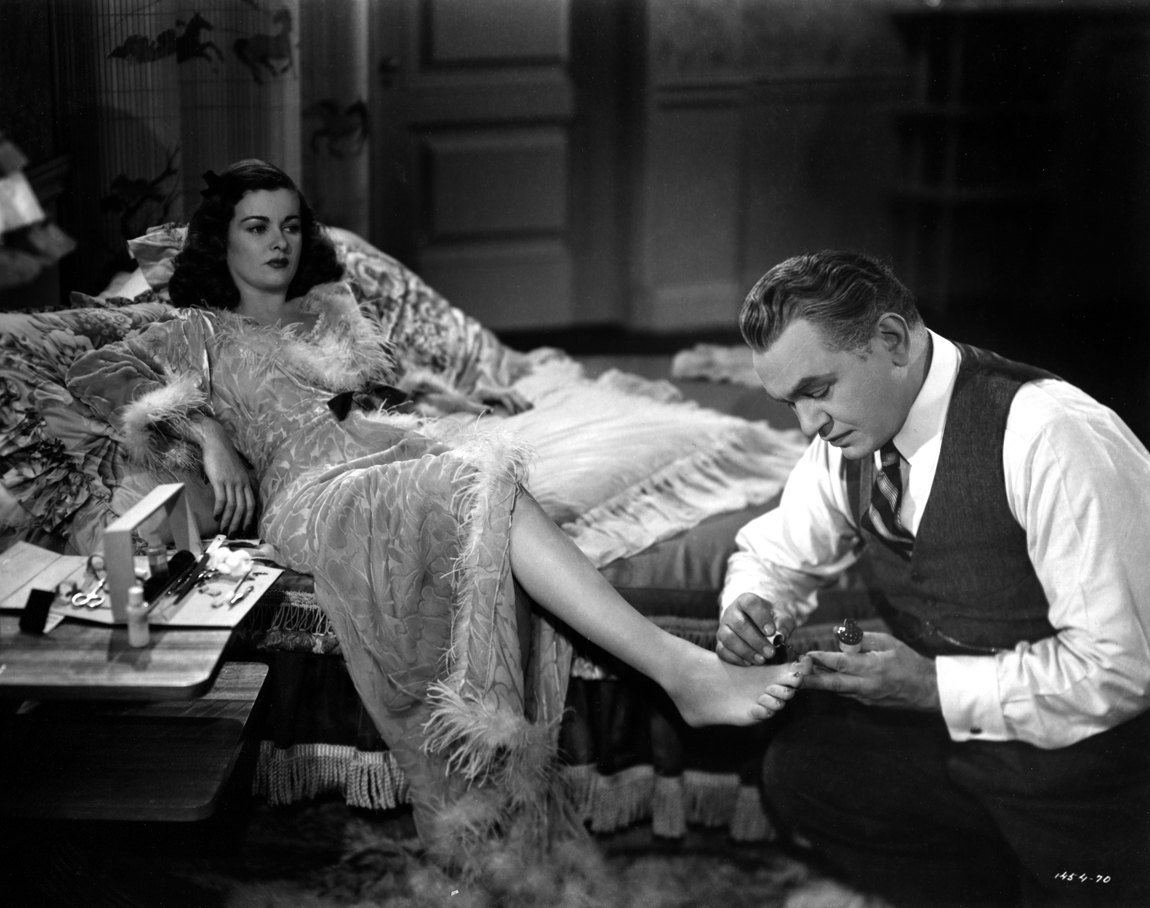
Thriller, by Fritz Lang, United States, 1945.
Lang reprises the cast and the ambiguous triangle from "The Woman in the Portrait" and makes one of his best films, telling a story of guilt and degradation. A senior bank employee, Christopher Cross, has an insufferable wife and only one pastime: painting. One day he meets a woman, Kitty, who begins to exploit him discovering that the paintings the cashier paints can be sold at a good price.
LANGUAGE: italian
SUBTITLES: english
Goodnight Mommy (2014)

Twin brothers Elias and Lukas live in an isolated modern house and await their mother’s return from cosmetic surgery. When she arrives with her face entirely wrapped in bandages, her behavior is uncharacteristically cold and strict. The boys become convinced that the woman behind the mask is an impostor and resort to increasingly violent methods to force her to reveal the truth about their “real” mother’s whereabouts.
This Austrian thriller is a glacial exploration of grief and identity. The mother’s bandaged face serves as a powerful symbol of the “unknown” infiltrating the familiar. The film plays with the viewer’s perception, using the aseptic, minimalist design of the house to heighten the sense of unease. It is a cruel study of trauma from a child’s perspective, leading to a devastating twist that redefines the entire narrative as a tragic failure of communication.
Enemy (2013)

Adam Bell, a dour and repetitive history professor, spots a minor actor in a film who is his exact physical double. His curiosity turns into an obsession as he tracks down the man, Anthony Claire. The encounter between the two men—one timid and repressed, the other confident and impulsive—leads to a dangerous blurring of identities. Their lives and relationships become inextricably entangled in a web of paranoia and psychological warfare.
Denis Villeneuve’s adaptation of José Saramago’s The Double is a surrealist psychological thriller set in a jaundiced, sepia-toned Toronto. The film is less a literal story of twins and more an allegorical dive into a fragmented psyche. Filled with spider motifs representing the trap of domesticity and subconscious fear, the film concludes with one of the most famous and debated final shots in modern cinema, symbolizing the cyclical nature of male infidelity and repression.
Under the Skin (2013)

An alien entity takes the form of a beautiful woman and wanders the roads of Scotland in a van, seducing lonely men and luring them into a black void where they are consumed. As she continues her hunt, she begins to develop a profound curiosity about humanity and the female body she inhabits. This burgeoning self-awareness leads her to question her mission and her nature, ultimately making her vulnerable to the very world she came to exploit.
Jonathan Glazer’s film is a sensory, hypnotic experience that uses an alien lens to examine the human condition. Utilizing hidden cameras and non-actors for many of the seduction scenes, Glazer creates a detached, documentary-like atmosphere that contrasts with abstract, surreal sequences of the “trap.” It is a haunting meditation on loneliness, the objectification of the body, and the fragility of identity, anchored by a transformative and minimalist performance from Scarlett Johansson.
Coherence (2013)

Eight friends gather for a dinner party on the night a comet passes close to Earth. Following a sudden power outage, they discover that a nearby house is an identical version of their own. As they investigate, they realize the comet has fractured reality into infinite parallel universes that are now overlapping. Paranoia and mistrust quickly erode the group’s bond as they struggle to identify which version of their friends—and themselves—they are interacting with.
Shot in just five nights on a minimal budget, Coherence is a brilliant science-fiction thriller driven by the Schrödinger’s cat paradox. The tension arises not from an external monster, but from the instability of identity and the dark secrets that emerge when the characters face alternative versions of their lives. It is a compelling intellectual puzzle that questions the foundations of existence, suggesting that the most frightening thing is the choice of which reality one is willing to steal.
Compliance (2012)
![Compliance - Official® Trailer [HD]](https://blog.indiecinema.co/wp-content/plugins/wp-youtube-lyte/lyteCache.php?origThumbUrl=https%3A%2F%2Fi.ytimg.com%2Fvi%2FevOfy-MawrU%2F0.jpg)
Sandra, a fast-food restaurant manager, receives a phone call from “Officer Daniels,” who accuses a young employee named Becky of stealing from a customer. Under the caller’s telephonic instructions, Sandra detains Becky and subjects her to a series of increasingly degrading and intrusive searches. What begins as a routine inquiry spirals into a nightmare of psychological and physical abuse as the staff blindly obeys the voice on the phone.
Inspired by true events, Craig Zobel’s film is an essential exploration of the psychology of obedience and the abuse of power. It lacks conventional thriller tropes, opting instead for a claustrophobic drama that exposes how ordinary people can become complicit in evil acts when pressured by an authority figure. The horror lies in the film’s frightening plausibility, echoing real-world psychological studies like the Milgram experiment and demonstrating the terrifying fragility of social defense mechanisms.
A Better Life
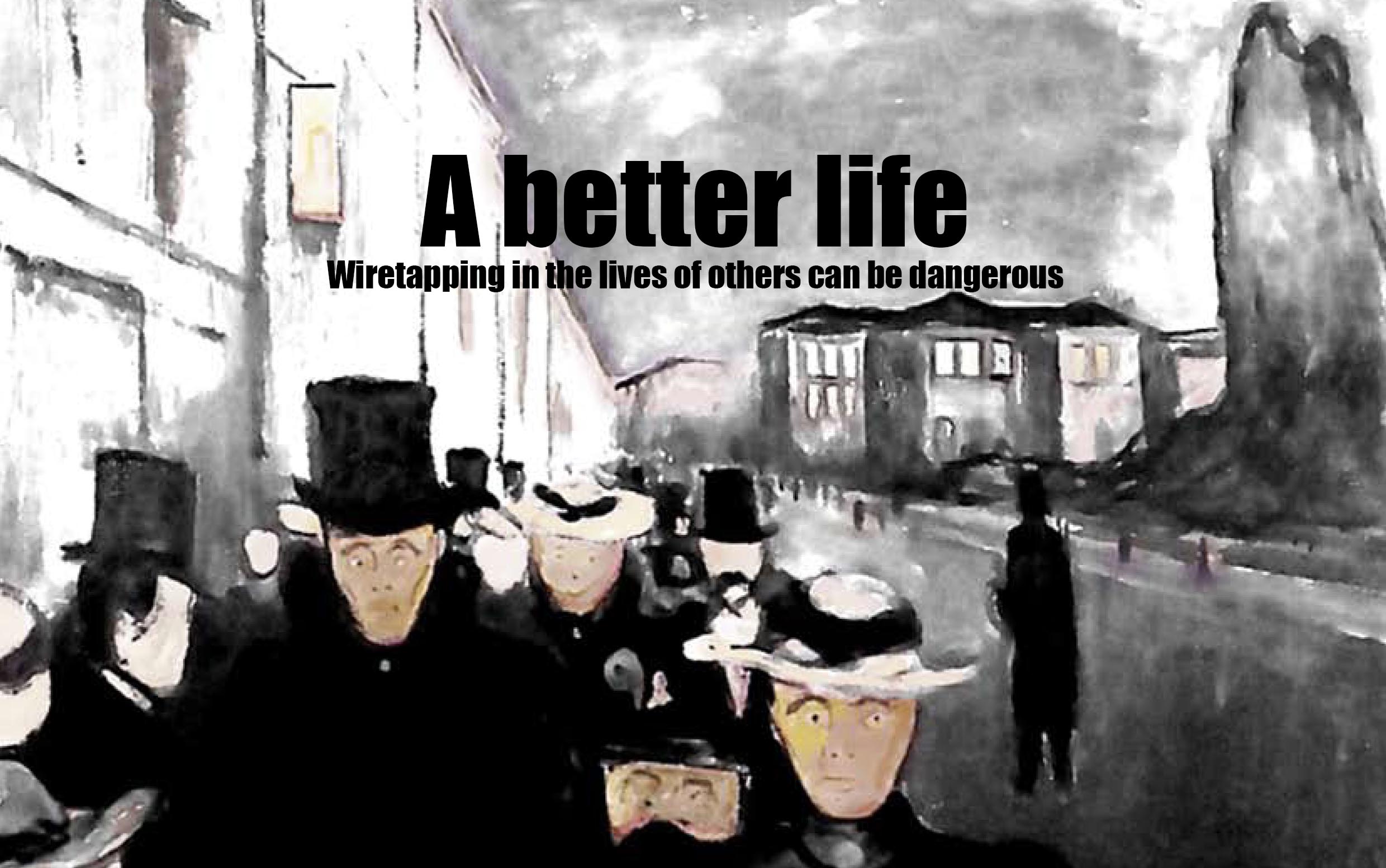
Drama, thriller, by Fabio Del Greco, Italy, 2007.
Rome: Andrea Casadei is a young investigator specializing in audio wiretapping who conducts investigations commissioned by husbands betrayed by their wives, or by parents worried about what their children are doing outside the home. But what interests him most is understanding the human soul, listening to casual conversations in the streets, knowing what people think. He often meets in Piazza Navona with his friend Gigi, a frustrated street artist obsessed with success at all costs, with whom he shares a passion for wiretapping. Shocked by the mystery of the disappearance of Ciccio Simpatia, another street artist common friend, Andrea decides to abandon the commissioned works to seek a better life and reflect on his own and others' existence. He will meet the actress Marina and with a bug he will slowly enter her life until he discovers her most unthinkable secrets. The film deals with an important theme of contemporary Western society: the lack of love. The mysterious and tormented figure of Marina is reflected in a gloomy and soulless Rome.
Director Fabio Del Greco declared about his film: "Perhaps this film is a reflection on the art of observing, of listening, in short, of what one does when one leaves the real world to tell about it. Perhaps he wants to talk about the subtle relationship between the mirages of success touted by today's society, power and the most authentic human relationships.A 'dark cloud' hangs over the city: it is engulfing everyone in a sort of indistinct, uniform mass, where everyone thinks the same things, where everyone they are more alone. Where is the truest part that makes us unique? Maybe you can try to intercept it only secretly."
LANGUAGE: Italian
SUBTITLES: English, Spanish, French, German, Portuguese, Dutch.
Berberian Sound Studio (2012)

Gilderoy, a shy and meticulous English sound engineer, is hired to work in Italy on the mixing of a horror film titled “The Equestrian Vortex.” Accustomed to nature documentaries, Gilderoy finds himself uncomfortable in the visceral and violent world of Italian giallo cinema. As he is forced to create sounds of torture and murder using vegetables and makeshift tools, his sanity begins to waver, and the line between the film’s fiction and his reality becomes increasingly blurred.
Berberian Sound Studio is a meta-cinematic homage and a sensory immersion into the world of 70s giallo. Director Peter Strickland makes a radical and brilliant choice: never to show a single image of the film Gilderoy is working on. The horror is entirely evoked through sound. We hear bloodcurdling screams, stabbings, drownings, but we only see Gilderoy stabbing cabbages, smashing watermelons, and boiling vegetables. This dissociation between image and sound creates a profoundly unsettling experience, exploring our own complicity in creating and consuming violence.
Martha Marcy May Marlene (2011)

Martha escapes a cult in the Catskill Mountains and seeks refuge with her estranged sister, Lucy. As she tries to assimilate back into a “normal” life at a luxurious lake house, she is haunted by fractured memories of her time in the commune under the charismatic leader, Patrick. Her identity is shattered—reflected in the multiple names she has used—leaving her unable to distinguish between the safety of the present and the lingering threat of her past.
Sean Durkin’s debut is a subtle, devastating portrait of post-traumatic stress disorder. The film uses fluid, almost imperceptible transitions between past and present to immerse the audience in Martha’s fragmented psyche. Elizabeth Olsen’s extraordinary performance captures the vulnerability of a woman whose reality has been distorted. The film avoids easy answers, concluding with an ambiguous open ending that leaves both the protagonist and the viewer suspended in a state of lingering terror.
Kill List (2011)

Jay, a former soldier turned hitman, is haunted by a failed job in Kiev. Under financial pressure, he accepts a new contract involving a “kill list” of three targets. As Jay and his partner Gal carry out the assignments, the nature of the job becomes increasingly bizarre and unsettling. Jay’s growing paranoia and violent outbursts eventually lead him into a dark world of ancient pagan rituals where he is no longer the hunter, but the prey.
Ben Wheatley blends family drama, crime thriller, and folk horror to create a profoundly disturbing work. The film begins with a realistic portrait of post-traumatic stress before descending into a Lovecraftian nightmare. The violence is raw and visceral, serving as an expression of Jay’s fractured psyche. The nihilistic ending reveals a grand, sinister manipulation, positioning Jay as a sacrificial figure in a terrifying ritual that he unknowingly helped complete.
Black Swan (2010)

Nina Sayers is a fragile ballerina in a prestigious New York company who lands the lead in Swan Lake. While she is perfect for the innocent White Swan, her director doubts her ability to embody the sensual and dangerous Black Swan. Under the immense pressure of the role and the perceived threat of a vibrant rival, Lily, Nina begins to lose her grip on reality, experiencing vivid hallucinations and physical transformations that mirror her internal decay.
Darren Aronofsky’s film is a visceral exploration of the “artist’s madness,” serving as a companion piece to his earlier work, The Wrestler. Natalie Portman‘s Oscar-winning performance captures a psyche splintering under the weight of perfectionism and maternal repression. The film utilizes body horror elements to externalize Nina’s mental state, culminating in a tragic performance where the lines between the dancer and the swan vanish entirely into a pursuit of “perfection.”
Shutter Island (2010)
!["Shutter Island" - Official Trailer [HD]](https://blog.indiecinema.co/wp-content/plugins/wp-youtube-lyte/lyteCache.php?origThumbUrl=https%3A%2F%2Fi.ytimg.com%2Fvi%2F5iaYLCiq5RM%2F0.jpg)
In 1954, U.S. Marshal Teddy Daniels and his partner arrive at Ashecliffe Hospital for the criminally insane on a remote island to investigate the disappearance of a patient. Teddy is also secretly searching for the man he believes killed his wife. As a hurricane traps them on the island, Teddy uncovers clues pointing to unethical medical experiments, but his own worsening migraines and traumatic war memories begin to undermine his grasp on the investigation.
Martin Scorsese’s homage to gothic horror and film noir is a labyrinthine study of trauma and denial. The film uses a claustrophobic atmosphere and visual cues to signal Teddy’s growing disorientation. The final revelation challenges the viewer’s perception of the entire narrative, concluding with a poignant ethical dilemma about the nature of the self: “Which would be worse? To live as a monster, or to die as a good man?”
Mystery of an Employee

Drama, thriller, by Fabio Del Greco, Italy, 2019.
Someone wants to control the life of the employee Giuseppe Russo: the products he buys, his political and religious faith, his private life, even his dreams. But he will do anything to escape control and find his true self. Giuseppe is a man of around 45, married, with a stable job and a home of his own. His life flows seemingly peacefully when he meets a mysterious tramp who gives him some old VHS video cassettes. Giuseppe begins to see video tapes in which he is filmed in some moments of his life since he was a child, then as a teenager and as a young man. Who shot those videos that he remembers nothing about? Giuseppe has the strange sensation of being constantly observed and begins to investigate what is happening. Through his investigation of him, he begins to rediscover his true identity and become aware of who he truly is.
Employee's Mystery is a film that highlights the danger of social control and shows a society where everyone is constantly monitored and conditioned in their deepest selves. The film is also an analysis of human nature and identity. Fabio Del Greco, who plays Giuseppe, gives an engaging performance. Equally good is Chiara Pavoni, in the role of Giada Rubin and Roberto Pensa in the role of the tramp. Employee's Mystery is a film that addresses important themes in an original way, a psychological thriller that keeps the viewer glued to the screen until the end: a metaphor for contemporary society, in which people are increasingly monitored and conditioned by the media and technologies . It is a courageous and provocative work, which addresses important themes in an original way.
LANGUAGE: Italian
SUBTITLES: English, Spanish, French, German, Portuguese
Dogtooth (2009)

A patriarch keeps his three adult children isolated from the world within a fenced villa, educating them with a distorted vocabulary—where “sea” means an armchair and “zombie” is a yellow flower. The siblings believe they can only leave when their “dogtooth” falls out. This fragile, manufactured reality begins to crack when an outsider, brought in to satisfy the son’s sexual needs, introduces elements of pop culture into the household.
Yorgos Lanthimos launched the “Greek Weird Wave” with this chilling satire on authority and family control. The horror is entirely human, stemming from the absurdity of the rules and the apathy with which the children commit acts of self-harm or incest. It serves as a terrifying social experiment, showing how a total control of language and information can create a domestic prison that is nearly impossible to escape without profound self-mutilation.
Funny Games (2007)
![Funny Games (1997) ORIGINAL TRAILER [HD 1080p]](https://blog.indiecinema.co/wp-content/plugins/wp-youtube-lyte/lyteCache.php?origThumbUrl=https%3A%2F%2Fi.ytimg.com%2Fvi%2FbH2HS6uWIhQ%2F0.jpg)
A wealthy family arrives at their lakeside vacation home, only to be visited by two polite young men in white, Paul and Peter. What starts as a trivial request for eggs turns into a sadistic hostage situation where the family is forced to play “games” for their lives. The tormentors offer no motive for their cruelty, treating the family’s suffering as a form of casual entertainment for themselves and the audience.
Michael Haneke’s American remake of his own Austrian original is a chilling meta-cinematic critique of media violence. One of the tormentors, Paul, frequently breaks the fourth wall to address the viewer, making them complicit in the family’s agony. By “rewinding” the film to undo the family’s only moment of triumph, Haneke denies the audience any catharsis, forcing a reflection on the viewer’s own thirst for violent spectacle. (Note: This refers to the 2007 English-language remake; the original was released in 1997).
Primer (2004)

Two engineers, Aaron and Abe, accidentally discover a side effect in their garage-built technology that allows for time travel. They build a machine large enough for a human and begin using it to manipulate the stock market. However, their increasing use of the device leads to overlapping timelines, paradoxical doubles, and a complete breakdown of their friendship as they lose track of which “version” of reality they actually inhabit.
Produced on a shoestring budget of $7,000, Primer is one of the most intellectually rigorous science-fiction films ever made. It makes no concessions to the viewer, utilizing dense technical jargon and an intricate, non-linear structure. The horror is purely conceptual: the terrifying loss of control over one’s own identity and the realization that forbidden knowledge has irreparably fractured the fabric of their lives.
Oldboy (2003)

Oh Dae-su, a man kidnapped and imprisoned in a private cell for 15 years without explanation, is suddenly released and given five days to discover the identity and motivation of his captor. Armed with a hammer and fueled by a decade and a half of rage, he begins a violent quest for revenge while falling in love with a young chef named Mi-do. However, he soon realizes that his release was not an escape, but the next phase of a meticulously planned psychological trap.
Park Chan-wook’s masterpiece is a visceral, neo-noir tragedy that examines the toxic weight of memory and the futility of vengeance. Unlike many thrillers, the antagonist’s goal is not to kill the hero, but to force him to undergo a psychological awakening that is far more painful than death. The final revelation is one of cinema’s most morally challenging twists, transforming a story of physical revenge into a philosophical meditation on guilt and the irreversible consequences of a single, thoughtless act from the past.
Session 9 (2001)

An asbestos removal crew takes a high-stakes job to clean the abandoned Danvers State Hospital in just one week. As the workers struggle with personal tensions and the oppressive atmosphere of the asylum, one member discovers a series of therapy tapes belonging to a former patient with multiple personalities. The crew’s mental states begin to unravel as the building’s dark history seems to seep into their own fractured psyches.
Brad Anderson’s low-budget thriller proves that atmosphere can be more frightening than any monster. The decaying Danvers State Hospital serves as the film’s true antagonist, its physical rot mirroring the psychological disintegration of the men. By intertwining the workers’ story with the patient’s recordings, the film suggests that evil is not a supernatural presence, but a latent energy that preys upon the “weak and the wounded.”
Donnie Darko (2001)

Donnie Darko is a troubled teenager who narrowly escapes death when a jet engine crashes into his bedroom. He begins having visions of a giant, menacing rabbit named Frank, who tells him the world will end in 28 days. Guided by Frank, Donnie performs acts of vandalism that expose the hypocrisy of his suburban town, while he obsessively studies the philosophy of time travel to understand his role in a looming apocalypse.
Richard Kelly’s cult classic is a unique blend of teen drama, science fiction, and psychological thriller. The film captures the profound angst of adolescence and the alienation of a young man who may be a schizophrenic or a savior in a tangent universe. Its dreamlike atmosphere and iconic imagery—particularly the rabbit Frank—have made it a generational touchstone for those exploring themes of loneliness, destiny, and the search for meaning.
Memento (2000)

Leonard Shelby is a man obsessed with finding his wife’s killer, but he suffers from anterograde amnesia, leaving him unable to form new memories. To track his progress, he uses a system of Polaroid photos, annotated notes, and tattoos on his own body to remind him of the “facts” of his investigation. The film follows two timelines: one in black-and-white moving forward, and one in color moving backward, eventually meeting at the moment of the film’s climax.
Christopher Nolan uses this unique non-linear structure to force the audience to experience Leonard’s disorientation firsthand, as we never know the immediate context of any given scene. The film serves as a deconstruction of identity, arguing that without memory, we are prone to self-manipulation and the creation of our own personal mythologies. The ultimate psychological horror lies in the realization that Leonard’s “system” is not a tool for justice, but a way to provide himself with a permanent, albeit false, sense of purpose.
Mulholland Drive (2001)

Betty Elms, a wide-eyed aspiring actress, arrives in Los Angeles and finds a mysterious woman hiding in her aunt’s apartment. The woman, who calls herself “Rita,” has developed amnesia following a car crash on Mulholland Drive. As the two women attempt to solve the mystery of Rita’s identity using a purse full of cash and a strange blue key, the narrative begins to fracture, leading to a Hollywood director’s downfall and a series of surreal, nightmarish encounters.
Originally filmed as a television pilot, David Lynch reworked the footage into a feature film that is now considered one of the greatest works of the 21st century. The film functions like a dream, utilizing a non-linear structure and symbolic imagery to explore the dark side of the Hollywood “dream factory.” It is a masterpiece of cinematic psychological analysis, moving from a sunny noir mystery into a dark, heartbreaking descent into guilt, jealousy, and lost identity.
The Sixth Sense (1999)
![The Sixth Sense (1999) Original Trailer [HD]](https://blog.indiecinema.co/wp-content/plugins/wp-youtube-lyte/lyteCache.php?origThumbUrl=https%3A%2F%2Fi.ytimg.com%2Fvi%2FHXG4HTIlc1U%2F0.jpg)
Dr. Malcolm Crowe is a child psychologist who takes on the case of Cole Sear, a terrified boy who claims to “see dead people.” Malcolm, seeking to redeem himself after failing a previous patient, works patiently to gain Cole’s trust. As their relationship deepens, Malcolm helps Cole realize that his frightening visions may be an opportunity to help those who have passed on, while Malcolm himself tries to reconcile with his increasingly estranged wife.
M. Night Shyamalan’s breakout film is a quintessential psychological thriller, famous for its world-altering twist. Beyond the shock ending, the film is a quiet, atmospheric study of grief and the need for communication. It succeeds because the “twist” is not a mere gimmick but a profound emotional revelation that forces both the protagonist and the audience to re-evaluate every preceding scene through a lens of loss.
Fight Club (1999)

A nameless insurance investigator suffering from chronic insomnia finds relief by meeting Tyler Durden, a charismatic soap salesman who believes that self-improvement is for the weak and self-destruction is the answer. They establish “Fight Club,” an underground society where men engage in recreational violence to feel alive in a numbing, consumerist world. The club eventually evolves into “Project Mayhem,” a domestic terrorist organization aimed at dismantling modern civilization.
David Fincher’s film is a biting satire of toxic masculinity and the void left by late-stage capitalism at the end of the millennium. The twist—that Tyler Durden is a dissociated projection of the Narrator’s own psyche—functions as a diagnosis of social schizophrenia. The Narrator creates a more “perfect” and anarchic version of himself to cope with his own impotence, making the audience complicit in his madness by making Tyler’s philosophy seem initially attractive before revealing its inherent danger.
Pi (1998)

Max Cohen is a solitary and paranoid mathematical genius, convinced that everything in nature can be understood through numbers. Using a self-built supercomputer, Euclid, he tries to identify a mathematical pattern in the stock market. His research leads him to discover a mysterious 216-digit number that seems to be the key to the universe. This discovery attracts the attention of both an aggressive Wall Street firm and a group of Kabbalistic Jews who believe the number represents the true name of God.
Shot in grainy, low-budget black and white, Darren Aronofsky’s debut is a feverish and pounding intellectual thriller. Pi is an exploration of obsession in its purest form: the pursuit of knowledge as a path to madness. Max’s paranoia is not just a character trait, but becomes contagious, transmitted to the viewer through frantic editing, a techno-industrial soundtrack, and direction that completely immerses us in his fragmented mind.
Seven (1995)

In a dark and perpetually rainy city, veteran detective William Somerset is days away from retirement when he is paired with the impulsive David Mills. They are called to a series of gruesome crime scenes where a serial killer, “John Doe,” is executing victims based on the seven deadly sins. The investigation becomes a psychological descent into hell as they realize the killer isn’t just murdering people, but staging a grand, nihilistic sermon on the depravity of modern society.
David Fincher’s Se7en is a landmark of the neo-noir genre, recognized for its oppressive atmosphere and uncompromisingly bleak ending. The film’s power lies in its intelligence; John Doe is a patient, methodical antagonist who manipulates the detectives’ own psychological flaws. The “What’s in the box?” finale remains one of the most devastating moments in cinema history, where the killer achieves a total moral and psychological victory over his pursuers.
The Usual Suspects (1995)

Following a deadly explosion on a ship in San Pedro, Customs Agent Dave Kujan interrogates Roger “Verbal” Kint, one of the only survivors and a small-time con man with cerebral palsy. Verbal tells a complex tale of how he and four other criminals were blackmailed by the legendary, myth-like crime lord Keyser Söze into performing a series of heists. Kujan remains skeptical of the myth, convinced that one of the other criminals was the mastermind behind the entire operation.
The film is a definitive exploration of the “unreliable narrator,” where the suspense is built entirely on the act of storytelling itself. By the time the credits roll, the audience realizes that the entire plot was a fabrication constructed from the details in the interrogation room, proving Verbal’s own line: “The greatest trick the Devil ever pulled was convincing the world he didn’t exist.” It is a psychological game that challenges the viewer’s desire for a logical explanation, replacing it with the power of a perfectly crafted lie.
The Silence of the Lambs (1991)

FBI trainee Clarice Starling is sent to interview Dr. Hannibal Lecter, a brilliant psychiatrist turned cannibalistic serial killer, in hopes that he can help profile a new murderer known as “Buffalo Bill.” Lecter agrees to help only if Clarice engages in a “quid pro quo” exchange, trading her own traumatic childhood memories for his psychological insights. As Clarice hunts Buffalo Bill, she must navigate the dangerous mental landscape of Lecter, who seeks to dissect her psyche from behind a glass wall.
This film elevated the thriller genre to high art by focusing on the intellectual and psychological duel between its leads rather than physical action. It contrasts the physical horror of Buffalo Bill’s crimes with the sophisticated, “surgical” psychological manipulation of Lecter. The true tension lies in Clarice’s vulnerability; to catch a monster, she must allow another monster into her mind, risking her own psychological integrity for the sake of the mission.
Blue Velvet (1986)

After finding a severed human ear in a vacant lot, college student Jeffrey Beaumont is drawn into a dark criminal underworld lurking beneath his idyllic hometown. With the help of the police detective’s daughter, Sandy, Jeffrey begins spying on Dorothy Vallens, a lounge singer under the thumb of the sadistic, gas-huffing criminal Frank Booth. Jeffrey’s curiosity leads him into a voyeuristic nightmare of sexual violence and kidnapping.
David Lynch’s Blue Velvet is a seminal work of surrealist noir that exposes the rot beneath the surface of small-town Americana. The film is famous for the stark contrast between its bright, “Leave It to Beaver” opening and the dark, perverted reality of Frank Booth. It explores themes of voyeurism, lost innocence, and the duality of human nature, anchored by Dennis Hopper’s terrifying performance as the embodiment of pure, unbridled id.
Blow Out (1981)

Jack Terry is a sound effects technician for low-budget horror movies who, while recording audio on a bridge, captures the sound of a tire blowout followed by a car plunging into a creek. After rescuing a woman from the car, Jack realizes his recording also captured a gunshot before the crash. He soon becomes embroiled in a vast political conspiracy involving a presidential candidate, realizing that his evidence makes him a target for a ruthless professional cleaner.
Brian De Palma created a masterpiece of technical virtuosity and political paranoia with Blow Out. Influenced by Antonioni’s Blowup and the real-world trauma of Watergate and the JFK assassination, the film is a tragic study of powerlessness. Its ending is notoriously haunting, as Jack’s personal tragedy is transformed into a hollow “scream” for a cheap movie, perfectly encapsulating the cold cynicism of the thriller genre.
Possession (1981)

Mark, a spy, returns home to West Berlin, divided by the Wall, to find that his wife Anna wants a divorce. Her request is inexplicable and violent, and she begins to exhibit increasingly erratic and terrifying behavior. Obsessed, Mark hires a private investigator to follow her, discovering that Anna takes refuge in a dilapidated apartment where she hides a monstrous secret: a tentacled creature with which she has a symbiotic and sexual relationship.
Andrzej Żuławski’s Possession is an extreme work, a cinematic experience that transcends genres to become a primal scream about the pain of separation. The film is the most visceral and terrifying metaphor ever made about the end of a marriage. The Berlin divided by the Wall is not just a backdrop, but a mirror of the irreparable fracture between the two protagonists. Isabelle Adjani‘s performance is legendary, a physical and emotional tour de force that culminates in the infamous miscarriage scene in the subway underpass, a moment of pure body horror that represents the physical birth of psychological trauma.
Dressed to Kill (1980)

Following the brutal elevator murder of a sexually frustrated housewife named Kate Miller, a high-class prostitute who witnessed the crime and the victim’s young son team up to find the killer. Their investigation leads them to a mysterious woman in sunglasses and a psychiatrist, Dr. Robert Elliott, who is being stalked by a former patient. As more bodies drop, the line between victim and predator becomes increasingly blurred.
Brian De Palma’s Dressed to Kill is a stylish, baroque homage to Hitchcock’s Psycho. The film is celebrated for its elaborate, wordless set pieces—such as the museum chase—and its bold exploration of voyeurism and sexual identity. Despite the controversy surrounding its depiction of gender, it remains a high-water mark for De Palma’s visual flair and his ability to manipulate audience expectations through masterful suspense.
The Shining (1980)

Jack Torrance, an aspiring writer and recovering alcoholic, takes a job as the off-season caretaker of the isolated Overlook Hotel. He moves in with his wife, Wendy, and their son, Danny, who possesses “the shining,” a psychic ability to see the hotel’s horrific past. As a snowstorm traps them, the hotel’s malevolent spirits begin to influence Jack, preying on his frustrations and driving him into a homicidal rage against his own family.
Stanley Kubrick’s adaptation of Stephen King’s novel is a masterpiece of psychological horror that prioritizes atmosphere over traditional scares. Through the use of Steadicam and disorienting set design, Kubrick creates a sense of “domestic claustrophobia” that mirrors Jack’s mental collapse. The film is less about ghosts and more about the cyclical nature of violence, trauma, and the internal demons that isolation brings to the surface.
The Conformist (1970)

In 1938 Italy, Marcello Clerici is a man desperate to fit in, haunted by a childhood trauma he believes makes him “abnormal.” He joins the Fascist secret police and agrees to assassinate his former professor, an anti-fascist living in exile in Paris. Using his honeymoon as a cover, Marcello travels to France, but his resolve is tested when he falls for the professor’s young wife, forcing him to choose between his burgeoning desires and his need for social conformity.
Bernardo Bertolucci’s Il Conformista is a visual marvel, renowned for Vittorio Storaro’s cinematography and its influence on the New Hollywood era. It is a profound psychological study of the “banality of evil,” suggesting that fascism is not just a political choice, but a psychological refuge for those who fear their own perceived deviance. Marcello doesn’t kill out of conviction, but out of a pathetic, desperate need to be “normal.”
Rosemary’s Baby (1968)

Rosemary and Guy Woodhouse move into a New York apartment building with a reputation for dark occurrences, shortly before Rosemary becomes pregnant. As her pregnancy progresses, she becomes increasingly isolated and paranoid, suspecting that her overly friendly neighbors and even her own husband are members of a Satanic coven. Her physical health declines as she is subjected to strange rituals and medications, leading her to fear for the soul of her unborn child.
Roman Polanski’s masterpiece is the definitive study of paranoia and “gaslighting,” a form of psychological abuse where the victim is made to doubt their own sanity. The horror is derived from the betrayal of the people Rosemary trusts most—her husband and her doctors—who dismiss her valid concerns as “pregnancy hysteria.” By grounding the supernatural threat in a very real, claustrophobic domestic setting, the film explores the loss of bodily autonomy and the terrifying reality of being sane in a world that insists you are mad.
Repulsion (1965)
![Repulsion (1965) Original Trailer [FHD]](https://blog.indiecinema.co/wp-content/plugins/wp-youtube-lyte/lyteCache.php?origThumbUrl=https%3A%2F%2Fi.ytimg.com%2Fvi%2F-jdUAZ-tstk%2F0.jpg)
Carol, a beautiful and withdrawn young Belgian woman living in London, suffers from a deep-seated revulsion toward men and sexuality. When her sister and roommate goes away on vacation, Carol is left alone in their apartment. Her mental state rapidly deteriorates, and she begins to experience terrifying hallucinations—cracking walls, hands reaching from the darkness, and phantom intruders—leading to a violent and tragic mental break.
Roman Polanski’s first English-language film is a terrifying, first-person descent into schizophrenia. The apartment becomes a character in its own right, physically transforming to reflect Carol’s crumbling psyche. Unlike typical thrillers, the audience is trapped within the protagonist’s distorted perspective, making the horror of her isolation and her eventual violent outbursts feel both inevitable and deeply unsettling.
Psycho (1960)

Marion Crane, a Phoenix secretary, steals $40,000 to help her lover pay off his debts and flees the city. Exhausted by a rainstorm, she stops at the Bates Motel, run by the polite but repressed Norman Bates. After a brief conversation about Norman’s “invalid” mother, Marion is murdered in the shower. The investigation into her disappearance leads to a dark Victorian house on the hill and a revelation about the true nature of the “mother” who rules the Bates Motel.
Alfred Hitchcock’s Psycho is the definitive psychological thriller, famous for rewriting the rules of narrative by killing its lead star in the first act. It introduced the concept of the “mother-fixated” killer to the mainstream and utilized a Bernard Herrmann score that redefined the sound of suspense. The film’s exploration of a fractured psyche and its shocking final twist established the blueprint for the modern slasher and psychological horror genres.
Vertigo (1958)

Scottie Ferguson is a San Francisco detective who retires after his acrophobia (fear of heights) leads to the death of a fellow officer. He is hired to tail Madeleine Elster, a woman who seems possessed by a suicidal ancestor. Scottie falls in love with the ethereal Madeleine, only to witness her death. Later, he meets a woman named Judy who bears a striking resemblance to Madeleine and becomes obsessed with transforming her into the woman he lost.
Considered by many critics to be the greatest film ever made, Vertigo is a haunting masterpiece about obsession, necrophilia, and the male gaze. Hitchcock used the “dolly zoom” to create a visual sensation of Scottie’s vertigo, but the film’s real power lies in its psychological depth. It is a tragic look at a man who prefers a fantasy over a living human being, leading to a devastating cycle of guilt and loss that can never be truly escaped.
Diaboliques (1955)

Michel is the cruel headmaster of a boys’ boarding school who mistreats both his wife, Christina, and his mistress, Nicole. In an unlikely alliance, the two women conspire to murder him. They lure him away, drug him, and drown him in a bathtub, later dumping the body in the school’s overgrown swimming pool. However, when the pool is drained, the body has vanished, and a series of strange sightings lead the terrified women to believe Michel is haunting them.
Henri-Georges Clouzot’s thriller is a landmark of suspense, famously ending with a title card pleading with the audience not to reveal the twist to their friends. The film is a masterclass in atmosphere and the psychological toll of guilt. Its success was so great that it famously motivated Alfred Hitchcock to seek out the rights to Psycho to prove he was still the master of the genre.
Kiss Me Deadly (1955)

Hard-boiled private investigator Mike Hammer picks up a hitchhiker named Christina, who has escaped from a mental institution. After they are run off the road and Christina is tortured to death, Hammer survives and begins an investigation into “the great whatsit.” His search leads him through a gritty Los Angeles underworld to a mysterious box that emits a blinding light and a deadly heat, leading to an apocalyptic conclusion on a beach.
Robert Aldrich’s adaptation of Mickey Spillane’s novel is a nihilistic, atomic-age noir that strips away the romanticism of the private eye. Mike Hammer is depicted not as a hero, but as a thuggish, narcissistic opportunist. The film is a stark reflection of Cold War paranoia, where the “mystery” at the center of the plot is literally a box of radioactive death, signaling the end of the traditional detective era and the start of a more cynical, neurotic age of cinema.
Suddenly (1954)

A group of assassins, led by the psychopathic John Baron, poses as FBI agents to take over the Benson home in the town of Suddenly, California. The house sits on a hill overlooking the train station where the President of the United States is scheduled to stop. Baron holds the family hostage, waiting for his shot, while the local sheriff tries to find a way to stop the assassination without getting the hostages killed.
This tense, claustrophobic thriller features a career-defining performance by Frank Sinatra as the cold-blooded Baron. The film is a fascinating psychological study of a man who kills not for ideology, but because he was “taught to kill” in the war and now finds it profitable and exhilarating. It serves as an early example of the “home invasion” subgenre, focusing on the psychological pressure exerted by a predator on an ordinary family.
M – A City Searches for a Murderer (1931)

In Berlin, a serial killer who targets children has the city in a state of terror. The intense police presence is so disruptive to the local criminal underworld that the city’s crime bosses decide to organize their own manhunt to capture the killer themselves. They use a network of street beggars to monitor the city, eventually cornering the killer, Hans Beckert, and bringing him before a kangaroo court of criminals.
Fritz Lang’s first sound film is a revolutionary masterpiece that introduced many tropes of the psychological thriller. Peter Lorre’s portrayal of Beckert is haunting, particularly his final monologue where he explains that he cannot control his murderous urges. The film explores the thin line between justice and vengeance, as well as the collective psychology of a city under siege, remaining as powerful and relevant today as it was in 1931.
A vision curated by a filmmaker, not an algorithm
In this video I explain our vision

