
How awful is it to be betrayed by your own mind? These asylum horror and thriller films explore the abyss of madness and tackle this issue with unthinkable mental fears. Some of them are independent and arthouse films, many others are just scary entertainment, still others are hilarious trash movies to watch for their weirdness. Most of the horror film tells the horror of the outside world: devils, ghosts, killers and cruel ex-lovers with revenge in mind. Mental fear appears to be much deeper, because the danger comes from within. If it’s bad to be betrayed by someone else, how much worse is it to be betrayed by your own brain?

The asylum was the precursor of the contemporary psychiatric hospital. The fall of the asylum and its definitive replacement with contemporary psychiatric hospitals coincides with organized and institutional psychiatry. While there were previous organizations, the conclusion that institutionalization was the appropriate option for dealing with individuals deemed “insane” came in the 19th century.
In the Islamic world, in the medieval period, the bimaristas were described by European tourists who described their wonder at the care and generosity reserved for the mad. In 872, Ahmad ibn Tulun built a health center in Cairo that offered treatment to the insane, which included music therapy. In Europe, however, throughout the Middle Ages, the mentally ill were often locked up in cages or kept within the city walls, or were forced to entertain members of the wealthier class. The development of Dave Sheppard’s mental health law and practice begins in 1285 with a case that linked “the instigation of the devil” with being insane.
The level of institutional organization for the treatment and control of insane remained limited in the early 18th century. Madness was seen primarily as a private matter that families and parishes dealt with. At the end of the 17th century, things changed and independently run asylums for the insane began to expand and multiply. Prisoners who were considered troubling or dangerous were chained.
During the Age of Enlightenment, the mentality towards the mentally ill began to change. It was regarded as a condition that needed thoughtful treatment that would aid in the patient’s rehabilitation. Mental disorder was seen as something that could be addressed and treated. In 1792 Pinel was the general practitioner of the Bicêtre hospital in Le Kremlin-Bicêtre, near Paris. Prior to his arrival, the prisoners were chained in confined cell-like spaces where there was poor ventilation, led by a man named Jackson “Brutis” Taylor. Taylor was killed by the prisoners and was replaced by Pinel.
In 1797, Jean-Baptiste Pussin first freed patients from their chains and prohibited physical punishment, although straitjackets could be used. Patients were able to move around the health center premises, and eventually the dark basements were replaced with warm, well-ventilated spaces. Pinel argued that the mental disorder was the result of extreme direct exposure to mental and social tensions, genetics and physiological damage.
By the 1800s it was clear that psychiatric institutions were hotbeds of abuse and sadism that would drive a completely normal individual mad. The following films address the double fear of being tortured by one’s mind while locked up in an organization where employees seem determined to never get back in touch with reality.
Deadstream (2022)

Shawn, a YouTuber specializing in extreme challenges, has been “cancelled” by his sponsors and audience after one of his stunts went wrong. To regain his fame and followers, he decides to organize his grand comeback: spending a night in a haunted house, broadcasting everything via live stream. Armed with GoPros and an irritating attitude, Shawn will find himself facing not only his personal demons but also the very real and vindictive ones that inhabit the house.
Deadstream is the perfect fusion of horror and comedy for the digital age. The film is genuinely scary, with creature designs inspired by Sam Raimi and a successful haunted house atmosphere, but it is also incredibly funny. The protagonist, played by Joseph Winter (who is also co-director), is a hilarious anti-hero whose cowardice and narcissism generate continuous gags. The integration of live-streaming elements, such as chat comments appearing on screen, is handled in a clever and dynamic way, making the film a fresh and engaging experience.
A Page Of Madness
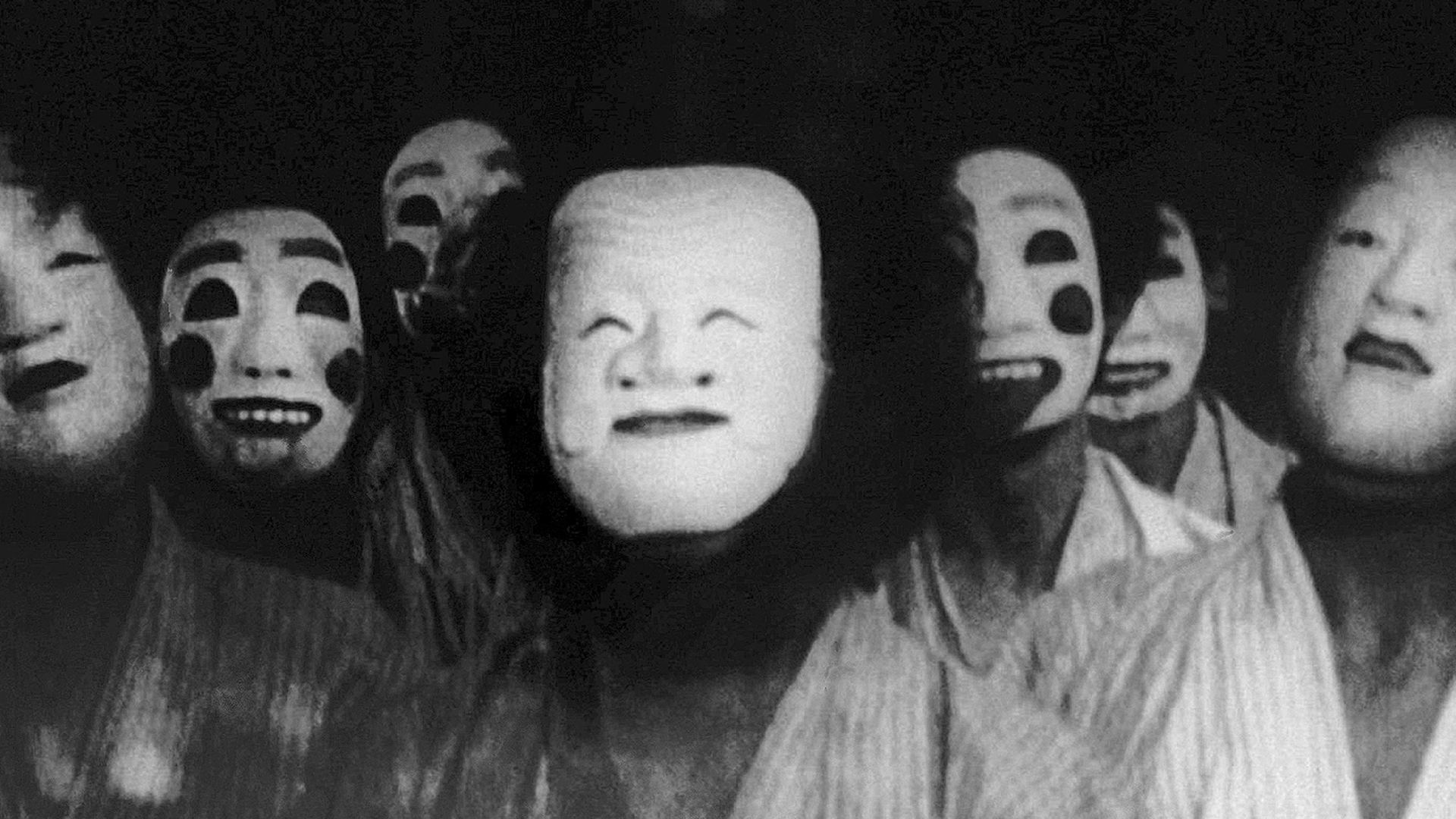
Drama, horror, by Teinosuke Kinugasa, Japan, 1926.
A page of madness is an independent film shot on a nearly non-existent budget and then lost for forty-five years. Fortunately the director rediscovered it in his archive in 1971. It is a film made by a group of Japanese avant-garde artists, the School of new perceptions. A movement that had as its objective to overcome the naturalistic representation. In a country asylum, in torrential rain, the caretaker meets patients with mental illness. The next day a young woman arrives who is surprised to find her father there who works as a caretaker. The woman's mother first went mad because of her husband when she was a sailor. The husband has decided to change jobs to stay close to his wife in the asylum and take care of her. Her daughter tells her father that she will marry soon, but the father is worried because he fears, according to popular rumors of the time, that the mother's mental illness will be inherited by her daughter. If the young husband and his family found out about his mother's madness, the marriage would fall apart. The caretaker tries to take care of his wife during her work as she gets beaten up by other inmates, but this interferes with her role and is scolded by the head of the asylum. Slowly the keeper loses contact with reality and its boundaries from the dream. He begins to daydream about winning the lottery when his daughter meets him again to tell him that his marriage is in trouble. The man thinks of taking his wife out of the asylum to hide her existence and solve every problem. Teinosuke Kinugasa is the director of some of the best Japanese films of the 1920s. A page of madness has been compared to the great German expressionist films. It is an experimental film, of extreme avant-garde, which seems to anticipate the atmospheres and themes that would have made David Lynch famous many years later. Nightmares, distortions, blurs, double exposures and photographic deformations: a film that explores the furthest boundaries of moving images. Then there are those masks set in an eternal succession of bars, locks and corridors that fuel the sense of fear and loss of the various protagonists to excess.Yasunari Kawabata, the writer of the story, won the Nobel Prize for literature in the 1968.
Without dialogue
Spree (2020)

Kurt Kunkle is a young man desperately hungry for internet fame. He works as a driver for a ride-sharing app called Spree and has equipped his car with cameras to live stream his adventures. To finally get the attention he craves, he devises a deadly plan: “#TheLesson,” a series of live murders that will turn his night of work into a viral bloodbath. As the number of viewers increases, Kurt sinks deeper into his killing spree, all for a like.
Spree is a dark and hyperkinetic satire on influencer culture and the toxicity of social media. Using a frantic edit of livestreams, smartphone screens, and dashcams, the film perfectly captures the chaotic aesthetic and performance anxiety of the digital world. Joe Keery‘s performance is magnetic and disturbing, embodying a character who is both pathetic and terrifying. It is a merciless critique of a society where a person’s value is measured by their online popularity and where violence becomes just another type of “content.”

Butterfly Kisses (2018)

A failed director named Gavin finds a box of old videotapes in the basement of his new home. The tapes contain the documentary project of two film students obsessed with a local urban legend, “Peeping Tom,” an entity that manifests if you stare at a tunnel for an hour without blinking. Convinced he has the next The Blair Witch Project on his hands, Gavin decides to edit the material and complete the documentary, but his obsession with the truth of the footage drags him into a spiral of paranoia and self-destruction.
Butterfly Kisses is a brilliant and complex deconstruction of the found footage genre. It is a film about found footage, questioning our own willingness to believe what we see. The nested structure (a documentary about a director editing found footage) is a perfect mechanism for exploring themes of obsession, the ambiguity of “truth,” and the viral nature of legends. The participation of Blair Witch director Eduardo Sánchez, playing himself, adds a further layer of meta-reflection, making it one of the smartest and most original films in the genre.
Halloween
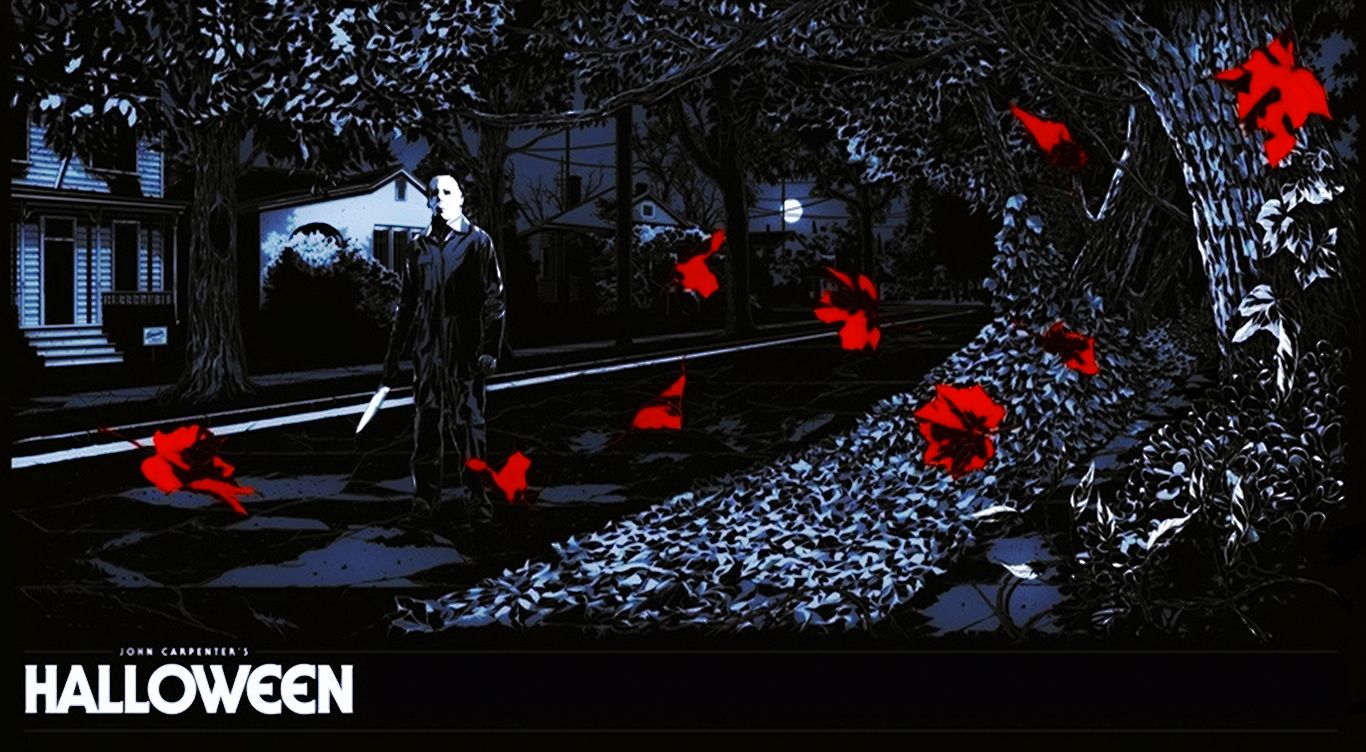
Horror, by John Carpenter, United States, 1978.
An independent film shot on a very small budget, it grossed over $ 80 million worldwide at the time. It is the most successful slasher movie and one of the 5 most profitable films in the history of cinema, which has become a cult with countless sequels and reboots. Carpenter describes the remote American province in an extraordinary way and raises the tension for over an hour, without anything happening, with a linear and effective direction, and with hypnotic music created by himself. A brilliant director who manages, with a few simple elements and a small production, to create a horror destined to remain in the worldwide cinematic imagination.
LANGUAGE: English
SUBTITLES: Spanish, French, German, Portuguese
The Dead Center (2018)

An emergency room doctor, Daniel Forrester, is haunted by the suicide of a patient he couldn’t save. His life takes a terrifying turn when the corpse of another suicide, an unidentified man, mysteriously awakens in the morgue and is admitted, in a catatonic state, to the hospital’s psychiatric ward. As Daniel tries to uncover the patient’s identity, he realizes that the man has not simply come back to life: he has brought something dark and malevolent with him.
The Dead Center is a gem of independent horror cinema that masterfully blends the procedural realism of a medical drama with cosmic and supernatural horror. Director Billy Senese creates an atmosphere of clinical authenticity, where medical jargon and hospital routines make the intrusion of the inexplicable even more chilling. The horror creeps in slowly through the patient’s disturbing behavior and the growing paranoia of Dr. Forrester, played with nervous intensity by indie auteur Shane Carruth.
Clinical (2017)

Dr. Jane Mathis, a psychiatrist specializing in exposure therapy, is deeply traumatized after being brutally attacked by a young patient, Nora. Suffering from post-traumatic stress disorder and panic attacks, Jane tries to rebuild her life. Reluctantly, she agrees to take on a new patient, Alex, a man horribly disfigured in an accident. The sessions with Alex, however, reopen her psychological wounds, triggering terrifying visions and a growing paranoia that leads her to doubt everything and everyone.
Produced by Netflix, Clinical is a psychological thriller that cleverly inverts the traditional perspective of the genre. Instead of focusing on the patient’s madness, the film explores the trauma and vulnerability of the psychiatrist. The narrative stages the concept of psychological transference in a literal and terrifying way, suggesting that pain and darkness can be contagious. Vinessa Shaw delivers an intense and convincing performance, portraying a woman who, in an attempt to heal others, loses control of her own mind.
The Cabinet of Dr. Caligari
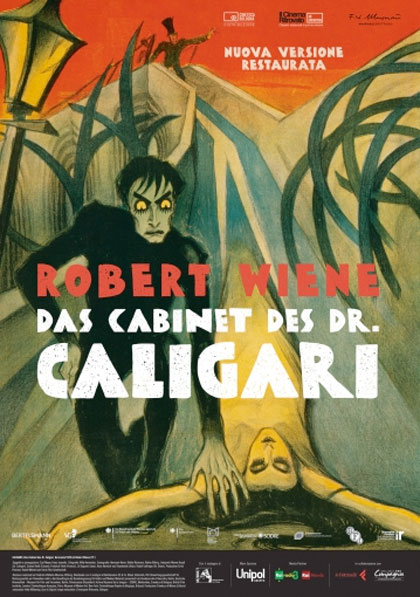
Horror, fantasy, by Robert Wiene, Germany, 1920.
The symbolic film of cinematic expressionism. Francis tells a story to a man: in 1830, in a small town, a guy named Caligari, plays the barker at the fair to present the attraction of him, a sleepwalker that he holds under hypnosis in a coffin. The doctor argues that the sleepwalker is able to know the past and predict the future. Unreal atmospheres and deformed sets, stylized acting, split personality, confusion between dream and reality.
Food for thought
Personality from the Greek person means mask. Person comes from the word personality. Individuality is a gift of existence, personality is imposed by society. Personality follows the flock of sheep, individuality is a lion moving on its own. Until you let go of your personality you won't be able to find your individuality.
LANGUAGE: German
SUBTITLES: English, Spanish, French, Portuguese
A vision curated by a filmmaker, not an algorithm
In this video I explain our vision
Nise: The Heart of Madness (2016)

This film challenges the fears of frontal lobotomy and electroshock therapy. It is a Brazilian docudrama based on the real story of Dr. Nise da Silveira, a physician who worked in a psychiatric hospital in 1944. She refused to perform electroshock and lobotomies as she considered them inhumane. Instead, she won the patients’ trust by treating them as people rather than animals and sought to free them from their mental torture through empathy and creative expression.
Be My Cat: A Film for Anne (2015)

Adrian, a young and aspiring Romanian director, is obsessed with Hollywood actress Anne Hathaway. To convince her to star in his auteur film, “Be My Cat,” he decides to shoot a “behind the scenes” look at his creative process, using three local actresses to show Anne his working method. However, his passion for cinema and the actress soon turns into a murderous frenzy, and the line between fiction and reality completely dissolves, turning his “film” into actual evidence of his crimes.
Be My Cat is an extreme and deeply disturbing meta-cinematic work, one of the most courageous and upsetting films in the genre. Director and star Adrian Țofei delivers an all-consuming performance, blurring the lines between himself and his character so convincingly that it is chilling. The film explores the darkest sides of artistic obsession and fanaticism, turning the camera into a tool of manipulation and violence. It is a voyeuristic experience that makes you uncomfortable—a raw journey into the mind of a sociopath.
Mystery of an Employee

Drama, thriller, by Fabio Del Greco, Italy, 2019.
Someone wants to control the life of the employee Giuseppe Russo: the products he buys, his political and religious faith, his private life, even his dreams. But he will do anything to escape control and find his true self. Giuseppe is a man of around 45, married, with a stable job and a home of his own. His life flows seemingly peacefully when he meets a mysterious tramp who gives him some old VHS video cassettes. Giuseppe begins to see video tapes in which he is filmed in some moments of his life since he was a child, then as a teenager and as a young man. Who shot those videos that he remembers nothing about? Giuseppe has the strange sensation of being constantly observed and begins to investigate what is happening. Through his investigation of him, he begins to rediscover his true identity and become aware of who he truly is.
Employee's Mystery is a film that highlights the danger of social control and shows a society where everyone is constantly monitored and conditioned in their deepest selves. The film is also an analysis of human nature and identity. Fabio Del Greco, who plays Giuseppe, gives an engaging performance. Equally good is Chiara Pavoni, in the role of Giada Rubin and Roberto Pensa in the role of the tramp. Employee's Mystery is a film that addresses important themes in an original way, a psychological thriller that keeps the viewer glued to the screen until the end: a metaphor for contemporary society, in which people are increasingly monitored and conditioned by the media and technologies . It is a courageous and provocative work, which addresses important themes in an original way.
LANGUAGE: Italian
SUBTITLES: English, Spanish, French, German, Portuguese
Reel Evil (2012)
![Reel Evil / Specters (2012) TRAILER [HD 1080p]](https://blog.indiecinema.co/wp-content/plugins/wp-youtube-lyte/lyteCache.php?origThumbUrl=https%3A%2F%2Fi.ytimg.com%2Fvi%2F_i3KY5hVThU%2F0.jpg)
The film tells the story of three directors who try to shoot a documentary in an asylum and discover that it is haunted by ghosts. Struggling filmmakers—Kennedy, Cory, and James—try to shoot a “behind the scenes” documentary for a large studio production. Their task becomes complicated when they visit an asylum and discover something far worse than anything Hollywood can produce. Caught inside the asylum with no escape route, the team is tortured by evil presences.
Asylum Blackout (2011)

George, Max, and Ricky are three friends and bandmates who, to make ends meet, work as cooks in the kitchen of a maximum-security institution for the criminally insane, the Sans Asylum. During a violent storm, a total blackout knocks out all security systems, including the electronic cell locks. The cooks find themselves trapped inside the building, besieged by a horde of sadistic and violent patients who take control of the asylum, turning the corridors into a slaughterhouse.
Also known as The Incident, Asylum Blackout is a brutal and uncompromising survival horror, written by S. Craig Zahler (director of Bone Tomahawk). The film is a perfect example of the “siege” subgenre, where the horror is not supernatural but terrifyingly human. Zahler’s screenplay is nihilistic and ruthless, devoid of heroes or easy moralizing. The protagonists are ordinary people thrown into an extreme situation, and their only concern is survival. Alexandre Courtès’ direction is tense and claustrophobic, creating a sense of panic and suffocation.
Megan Is Missing (2011)

Megan and Amy, due to their American teenage lives, document everything through webcams, video messages, and party footage. When Megan disappears after meeting a man she met online, Amy begins a desperate search that leads her to an unbearable truth.
Michael Goi constructs an uncomfortable and deliberately gut-wrenching work that uses the digital found footage aesthetic to investigate the vulnerability of teenagers in the social media era. Controversial for the rawness of its final images, the film works as a chilling sociological document on the predatory anonymity of the internet, refusing any narrative consolation.
Gonjiam: Haunted Asylum (2011)

The host of a popular horror web show, “Horror Times,” recruits a group of young people to explore the infamous Gonjiam Psychiatric Hospital, one of South Korea’s most haunted places, via live stream. The goal is to reach one million views and make a fortune. To enhance the show, some team members plan to stage paranormal events to scare the other participants. However, the group soon discovers that the horrors of Gonjiam are all too real and that their show is turning into a fight for survival.
Gonjiam: Haunted Asylum updates the asylum found footage formula for the era of live-streaming and influencers. The South Korean film is a terrifying reflection on the thirst for fame and the monetization of fear in the digital world. From a technical standpoint, the film is a tour de force: the use of multiple cameras creates an immersive and chaotic experience. The second half of the film is an escalation of pure terror, culminating in one of the most iconic and genuinely disturbing scenes in recent horror cinema.
The Ward (2010)

John Carpenter tells the story of a girl in a psychiatric institution from the 1960s. Horror genius John Carpenter directed this thriller about a troubled girl (Amber Heard) locked up in a psychiatric institution who gradually recognizes that she and other patients are being physically brutalized by hidden forces. With terror, she realizes that the hidden force is the ghost of a woman previously hospitalized in the asylum named Alice.
Ward No. 6 (2009)

This is a Russian film whose title refers to Ward No. 6 run by a psychiatrist in an asylum. A psychiatrist gradually goes mad after listening to a patient’s ideas. Thought-provoking and nihilistic at the same time, Ward No. 6 is based on a story by Chekhov, in which a psychiatric doctor ends up being a patient in his own asylum. Set in modern Russia, the film is a mix of puzzles, tension, and suspense, showing how simple it is to become what we fear.
Cloverfield (2008)

During a farewell party in Manhattan, a massive monstrous entity attacks the city. A group of friends tries to survive and escape, filming everything with a camcorder amidst chaos, rubble, and terror.
Matt Reeves, produced by J.J. Abrams, brings the kaiju film into the territory of found footage with surprising results. The choice to tell the catastrophe from below, through ordinary and frightened eyes, gives a human and almost neorealistic dimension to urban destruction, radically subverting the conventions of Hollywood monster movies.
The Jacket (2005)

Jack Starks, a Gulf War veteran suffering from amnesia, is wrongly accused of murder and committed to a psychiatric institution. There, he is subjected to an experimental and brutal treatment: drugged, bound in a straitjacket, and locked for hours in a morgue drawer. During these sessions, Jack discovers he can travel through time, projecting himself into the future. He learns that he died in 1993 and must use his travels to solve the mystery of his own death.
The Jacket is a complex and fascinating psychological thriller that mixes science fiction, mystery, and a poignant love story. Produced by Steven Soderbergh and George Clooney, the film is distinguished by its non-linear narrative and its ability to tackle profound themes such as destiny, memory, and trauma. Adrien Brody‘s performance is intense and moving, conveying all the suffering and determination of a man trapped both physically and mentally.
Lunacy (2005)

A Czech film set in an asylum inspired by the work of Edgar Allan Poe and the Marquis de Sade that blurs the lines between the mentally ill and the world of a psychiatric hospital. Jean Berlot is a deeply distressed boy haunted by violent hallucinations of being put in a straitjacket after the death of his mother. While organizing her funeral, Jean meets a man who claims to be the Marquis de Sade and lives as if he were in 18th-century France. Jean forms a friendship with the marquis but is frightened by his debauchery.
Madhouse (2004)

Clark Stevens is a young and promising psychiatry intern who begins his training at the Cunningham Hall Mental Institute, a dilapidated psychiatric hospital. Upon his arrival, he discovers that the facility is in a state of chaos, with an atmosphere of fear and paranoia pervading the corridors. Soon, a series of brutal murders begins to decimate the staff and patients, and Clark realizes that a dark and malevolent force, possibly linked to the institute’s past, has been awakened.
Madhouse is a solid independent horror film that draws heavily from the tradition of the psychological thriller and the Italian giallo. The film effectively uses all the classic tropes of the genre: the naive protagonist venturing into a dangerous place, the gothic and decaying setting of the hospital, and a series of gruesome murders. William Butler‘s direction is skilled at building suspense, and the cast, which includes Lance Henriksen and Natasha Lyonne, delivers convincing performances.
Hypnos (2004)

Beatriz Varga, a young psychiatrist, starts working at a disturbing children’s psychiatric hospital in a remote location. On the day of her arrival, a patient dies under mysterious circumstances. As she tries to settle in, Beatriz discovers that the institute’s director uses controversial treatment methods based on hypnosis. Attracted and at the same time frightened by these techniques, Beatriz finds herself involved in a dangerous psychological game where the boundaries between reality, dream, and memory begin to blur.
Hypnos is an elegant and disorienting Spanish psychological thriller that uses the theme of hypnosis as a metaphor for the power of narrative and mind manipulation. The film creates an atmosphere of paranoia and claustrophobia, where nothing is as it seems. The protagonist, and with her the viewer, is constantly misled, unable to distinguish between real events and hypnotic suggestions. It is a psychological puzzle that explores the fragility of memory and identity.
Frailty (2001)
![Frailty (2001) Original Trailer [FHD]](https://blog.indiecinema.co/wp-content/plugins/wp-youtube-lyte/lyteCache.php?origThumbUrl=https%3A%2F%2Fi.ytimg.com%2Fvi%2FsNAGZqvASdk%2F0.jpg)
A man walks into the FBI office in Dallas, claiming to know the identity of the infamous serial killer “God’s Hand”: his brother Adam, who has just committed suicide. In a long flashback, Fenton recounts his childhood in a small Texas town, where his widowed father one day received a vision from an angel. Convinced he was chosen by God, the father began to “destroy demons” hiding in human bodies, forcing his two sons to participate in his ritualistic murders.
Frailty, the directorial debut of Bill Paxton, is one of the most powerful psychological thrillers about madness and faith. The entire structure of the film is that of a confession, exploring the concept of the “family asylum”—a toxic and isolated unit where a parent’s psychosis is transmitted to the children as religious dogma. The horror lies in the terrible inner struggle of young Fenton, who knows his father is insane but is powerless against his unwavering faith. The final twist forces the viewer to reconsider everything they have seen.
Session 9 (2001)

An asbestos removal crew wins a seemingly advantageous contract: to clean up the enormous, abandoned Danvers State Hospital in just one week. As work pressures and personal tensions begin to erode the relationships within the group, the discovery of a series of old psychiatric session recordings with a patient named Mary Hobbes triggers a slow and inexorable descent into madness, suggesting that the evil of the hospital has never truly left.
Directed by Brad Anderson, Session 9 is a masterpiece of psychological terror that rejects easy jump scares to build an almost unbearable atmosphere of desolation and decay. The abandoned psychiatric hospital is not a simple container of ghosts but a true genius loci, an entity whose history of suffering has permeated the walls. The discovery of the nine recorded sessions functions as a sinister parallel narrative that intertwines with the present. The real fear lies not in what hides in the dark corridors, but in the terrifying possibility that madness is a waiting echo, ready to resonate in the most vulnerable mind.
The Blair Witch Project (1999)

Three film students enter the Maryland woods to film a documentary about the legend of the Blair Witch. They disappear. A year later, their footage is found. What it shows is chilling.
Daniel Myrick and Eduardo Sánchez reinvented horror with a tiny budget and a radical idea: terror comes from what you don’t see. The improvised acting, growing sense of disorientation, and clever use of off-screen space create authentic visceral anguish, turning the forest into a psychological labyrinth with no exit.
In the Mouth of Madness (1994)

A patient in an asylum tries to persuade his therapist that a well-known author’s books are driving people crazy. In the midst of an indefinite catastrophe, Dr. Wrenn goes to John Trent, a client in a psychiatric hospital. Trent, a freelance insurance detective, tells his story: he was hired to investigate a claim from Arcane Publishing regarding their largest client, Sutter Cane. During the investigation, Trent is attacked by a man with altered eyes wielding an ax who asks if he knows the famous horror writer.
Ghostwatch (1992)

The BBC broadcasts a live television special from a haunted house in the London suburbs. Real presenters, calls from the public, and hidden cameras: everything seems authentic. But Halloween night hides something no one expected.
Produced by the BBC and directed by Lesley Manning, this pseudo-documentary television special caused panic in the British public who believed they were watching real events. Anticipating The Blair Witch Project by years, Ghostwatch intelligently explores the relationship between the media, public credulity, and the spectacle of terror.
Santa Sangre (1989)

Fenix is confined in a psychiatric hospital, traumatized by a childhood spent in a grotesque circus. After escaping from the asylum, Fenix reunites with his mother, now armless and the leader of a cult. Becoming his mother’s “arms,” Fenix begins to commit a series of ritualistic murders, trapped in a deadly Oedipal relationship.
Santa Sangre is the visionary and surreal masterpiece of Alejandro Jodorowsky, a work that transcends all genres to become a unique cinematic experience. The film is a psychedelic and Freudian odyssey that uses the aesthetics of the circus, Mexican melodrama, and the giallo to explore themes such as childhood trauma, religious fanaticism, and creative madness. It is a visual poem about the horror of the soul, a beautiful and hallucinatory journey into the heart of madness.
Chattahoochee (1989)
![Chattahoochee (1989) Original Trailer [FHD]](https://blog.indiecinema.co/wp-content/plugins/wp-youtube-lyte/lyteCache.php?origThumbUrl=https%3A%2F%2Fi.ytimg.com%2Fvi%2FC0bYclLdVFI%2F0.jpg)
Based on true events, a Korean War veteran suffers a breakdown and is committed to the notorious Chattahoochee state hospital in Florida, where he endures brutal conditions and systematic abuse. Refusing to be broken, he mounts a courageous campaign to expose the institution’s horrifying cruelties.
Mick Jackson‘s film is a grimly powerful and underappreciated indictment of institutional abuse. Gary Oldman delivers a characteristically committed performance, conveying both vulnerability and stubborn moral dignity. The film documents systemic psychiatric horror with documentary sobriety rather than exploitation, situating it firmly within the tradition of social realist cinema about institutional violence and patient advocacy.
Dogra Magra (1988)
![Dogra Magraドグラ・マグラ (1988) BLU-RAY TRAILER [FHD]](https://blog.indiecinema.co/wp-content/plugins/wp-youtube-lyte/lyteCache.php?origThumbUrl=https%3A%2F%2Fi.ytimg.com%2Fvi%2F01cDlNCiNGU%2F0.jpg)
A surrealist artwork by Japanese director Toshio Matsumoto showing a psychologically troubled boy who is disappointed that the doctors in his asylum try to treat him from an “oriental” point of view. A man kills his wife on her wedding day and goes mad. He wakes up in an asylum devoid of memories, at the mercy of two mysterious doctors who relate his condition to his biological identity.
Doom Asylum (1987)

A group of teenagers go to an asylum and discover a problem. This is a crazy 80s slasher movie, and those with a sense of humor will appreciate the fun and terribly tacky storyline. A group of teenagers cross over to a deserted asylum, where they encounter a lesbian punk band with communist symbols on their instruments. What will happen in this crazy fight? There’s even a crazy coroner on the property. It’s a trashy movie that doesn’t depict actual mental disorders; it is pure camp.
Frances (1982)

Starring Jessica Lange as Hollywood starlet Frances Farmer, who suffered a psychological breakdown after being blacklisted. Born in Seattle, Frances Elena Farmer is a rebel from a young age. Chosen to become a starlet, Frances doesn’t want to play the Hollywood game: she refuses to give in to promotional stunts and insists on appearing on screen without makeup. She marries Dwayne Steele despite being advised not to, however, she cheats on him with the avowed Communist Harry York.
Next of Kin (1982)

After her mother’s death, young Linda Stevens inherits Montclare, a large country estate now used as a retirement home. While sorting through her mother’s belongings, Linda finds her old diaries, in which she reads about strange events and mysterious deaths that occurred in the house years before. Soon, the events described in the diaries begin to repeat themselves in the present, and Linda finds herself trapped in a nightmare.
Hailed by Quentin Tarantino as a masterpiece, Next of Kin is a forgotten gem of Ozploitation. The retirement home functions as a unique variation of the institution, a place where the horror is not madness, but decay, loneliness, and the looming presence of death. Director Tony Williams is a master at creating an atmosphere of foreboding and unease, using long dark corridors and ambiguous sounds to build almost unbearable suspense.
The Ninth Configuration (1980)

Colonel Kane, a military psychiatrist, is sent to a remote gothic castle converted into a psychiatric hospital for American soldiers who have had nervous breakdowns during the Vietnam War. Kane adopts an unusual therapeutic approach, indulging their bizarre fantasies. However, as he tries to cure his patients, particularly a former astronaut terrified of the moon, Kane must confront his own demons and a deep crisis of faith.
Written and directed by William Peter Blatty (author of The Exorcist), this film mixes black comedy, war drama, and profound theological reflection. The asylum-castle becomes a surreal stage where Blatty asks fundamental questions about the existence of God and the nature of good and evil. It is a bold and deeply personal work that questions who is truly “insane” in a universe that seems to have lost all meaning.
The Fifth Floor (1978)

The prisoners rule the asylum in The Fifth Floor. A sane college student named Kelly overdoses while dancing in a nightclub, is misdiagnosed as suicidal, and is then sent to the 5th floor of a psychiatric hospital, where a perverted man takes an interest in her. Most of the fear comes from the girl realizing that she is sane, yet no one—not even her love—will believe her.
I Never Promised You a Rose Garden (1977)
![I Never Promised You a Rose Garden (1977) Original Trailer [HD]](https://blog.indiecinema.co/wp-content/plugins/wp-youtube-lyte/lyteCache.php?origThumbUrl=https%3A%2F%2Fi.ytimg.com%2Fvi%2FyIWJrd4Ybcs%2F0.jpg)
Based on a popular novel about a schizophrenic teenager from a wealthy family who stays three years in an asylum after a suicide attempt. At 16, Deborah is a borderline schizophrenic who spends most of her waking hours in a strange dream world. After a suicide attempt, she ends up in a psychiatric institution where the environment threatens to further destabilize her. Through the attention of supportive Dr. Fried, Deborah slowly becomes able to distinguish dreams from truth once again.
Don’t Look in the Basement (1973)

Nurse Charlotte Beale accepts a job at Stephens Sanitarium, an isolated rural institution. On the day of her arrival, the head doctor is brutally murdered by a patient. His successor decides to continue an experiment allowing the patients to live out their psychoses freely. Charlotte finds herself in an increasingly chaotic environment where patients begin to die one by one.
Also known as The Forgotten, this film is a raw gem of 70s exploitation cinema. Shot in an almost documentary style, the film immerses the viewer in a world of unfiltered madness. Despite its exploitation nature, the film presents surprising depth in the characterization of Sam, a lobotomized patient who becomes the unlikely hero. It possesses a hypnotic power that has made it a timeless cult classic.
Horror Hospital (1973)

Lobotomy is the theme of this film set in an asylum, which also features zombies. This horror comedy shows a group of individuals being sent to “Brittlehurst Manor,” which is apparently a health clinic but is actually a “Horror Hospital” where an evil doctor lobotomizes kidnapped hippies. It’s a wacky and fun horror movie—not a masterpiece, but with the right mindset, you could enjoy this little indie film.
Images (1972)
![Images (1972) ORIGINAL TRAILER [HD 1080p]](https://blog.indiecinema.co/wp-content/plugins/wp-youtube-lyte/lyteCache.php?origThumbUrl=https%3A%2F%2Fi.ytimg.com%2Fvi%2FBCEdP2ObHGA%2F0.jpg)
Cathryn, a children’s book author suffering from schizophrenia, retreats to a remote Irish country house. However, the isolation exacerbates her state; she is tormented by visions of former lovers and her doppelgänger. Her perception shatters, making it impossible to distinguish between reality and the products of her mind.
A unique horror from Robert Altman, Images explores mental illness as an aesthetic experience. Using dreamlike logic, mirrors, reflections, and a dissonant score, Altman immerses the viewer in the fragmented subjectivity of the protagonist. The horror arises from the implosion of Cathryn’s psyche, challenging the viewer to question their own perception.
Asylum (1972)
![Asylum (1972) ORIGINAL TRAILER [HD 1080p]](https://blog.indiecinema.co/wp-content/plugins/wp-youtube-lyte/lyteCache.php?origThumbUrl=https%3A%2F%2Fi.ytimg.com%2Fvi%2F9yig3s-S-iY%2F0.jpg)
A young doctor, Dr. Martin, shows up for a job interview at an isolated psychiatric hospital. The director proposes a challenge: he must interview four of the most dangerous patients and figure out which one of them is Dr. Starr, the former head of the institution who went mad and now lives among the inmates under a new identity. Martin accepts, listening to a series of terrifying tales.
Produced by Amicus, the British rival of Hammer, Asylum is one of the best examples of anthology horror. Written by Robert Bloch (author of Psycho), the film turns the entire narrative into a diagnostic puzzle, actively involving the viewer in solving the mystery. Each segment explores a different type of horror, all characterized by a typically British gothic atmosphere and a first-rate cast including Peter Cushing and Charlotte Rampling.
Let’s Scare Jessica to Death (1971)

After being released from a psychiatric institution, the fragile Jessica moves with her husband and a friend to an old, isolated house in Connecticut. Soon, her stability is undermined by strange events: she hears whispers, sees a mysterious blonde girl, and discovers that the elderly inhabitants of the nearby town are hostile. Jessica doesn’t know if the house is haunted by a vampire or if she is simply relapsing into madness.
A masterpiece of 70s folk horror, the film’s strength lies in its sustained ambiguity. It can be read as a vampire story or as a metaphor for gaslighting and the fear of not being believed. Zohra Lampert‘s performance is extraordinary, conveying a vulnerability that draws the viewer’s empathy into her psychological labyrinth.
The King of Hearts (1966)

A film about World War I and mental hospitals. Alan Bates plays an Englishman sent to a deserted French town during the war to watch for adversaries. The only residents are mentally ill patients who have left a health facility and mistake him for their king. As he endures their madness, he searches for a bomb hidden by the Germans. Though unsuccessful at the time of its release, it became a staple of “Midnight Movies” in the 1970s.
Lilith (1964)
![Lilith (1964) Original Trailer [FHD]](https://blog.indiecinema.co/wp-content/plugins/wp-youtube-lyte/lyteCache.php?origThumbUrl=https%3A%2F%2Fi.ytimg.com%2Fvi%2FliluY8g2B9g%2F0.jpg)
A young veteran takes a job as a trainee therapist at a private psychiatric institution and becomes dangerously enthralled by one of its most enigmatic patients, the beautiful and manipulative Lilith. His obsession deepens until the boundary between caregiver and patient begins to disappear entirely.
Robert Rossen‘s final film is a hauntingly lyrical and largely forgotten masterpiece. Shot in luminous black and white by Eugen Schüfftan, it examines the seductive pull of madness with genuine ambiguity. Warren Beatty and Jean Seberg give complex, restrained performances. The film refuses easy psychological resolution, treating mental illness as a mysterious and almost mythological force.
Strait-Jacket (1964)

Joan Crawford plays a mother who returns home to her daughter after spending 20 years in an asylum for murder. After discovering her partner in bed with another woman, Lucy Harbin beheaded them both with an ax. Her daughter, Carol, witnessed the murders. Twenty years later, Lucy is released and settles on her brother’s farm where Carol, now an artist, also lives.
Shock Corridor (1963)

Determined to win the Pulitzer Prize, ambitious journalist Johnny Barrett has himself committed to a psychiatric hospital to solve an unsolved murder. Posing as insane, Barrett immerses himself in a world of despair, questioning three patients who witnessed the crime. However, constant exposure to the trauma of the institution begins to erode his own sanity, turning his investigation into a struggle not to lose himself.
A masterpiece of exploitation cinema from Samuel Fuller, Shock Corridor is a fierce critique of 1960s America. The psychiatric hospital becomes a microcosm of society’s tensions: the three witnesses represent the nation’s open wounds, including a soldier who betrayed his country and a Black man traumatized by racism. The film is a punch to the gut, demonstrating how the line between sanity and madness is dangerously thin.
David and Lisa (1962)

Unfolds the poignant tale of a young couple residing within a psychiatric asylum, endeavoring to maintain their grasp on freedom. David Clemens, a youth troubled by mental challenges, is tormented by the belief that physical contact can be fatal. Emotionally cold, he directs his attention towards academic pursuits and the study of timepieces. He is haunted by a recurring nightmare where he becomes a murderer using a colossal clock as his instrument of death.
Through a Glass Darkly (1961)
![Through a Glass Darkly (1961) ORIGINAL TRAILER [HD 1080p]](https://blog.indiecinema.co/wp-content/plugins/wp-youtube-lyte/lyteCache.php?origThumbUrl=https%3A%2F%2Fi.ytimg.com%2Fvi%2F6AmG2Dq5OGM%2F0.jpg)
A young woman recently released from a psychiatric facility retreats with her family to a remote island, where her fragile recovery slowly disintegrates. As she experiences increasingly vivid religious hallucinations and hears voices behind a crumbling wallpapered door, those closest to her watch helplessly.
Ingmar Bergman‘s chamber drama is a devastating and intimate portrait of schizophrenia and familial helplessness. Harriet Andersson‘s performance is extraordinary in its rawness and physicality. Bergman frames mental collapse not as spectacle but as spiritual crisis, using stark island landscapes and chamber music to create unbearable psychological tension.
Possessed (1947)

A woman is found wandering the streets of Los Angeles in a dissociative state and is admitted to a psychiatric hospital. Told through flashback, the film unravels her obsessive love affair and psychological unraveling, blending noir atmosphere with a surprisingly clinical portrayal of mental illness.
Directed by Curtis Bernhardt, this underappreciated noir stands apart for its relatively serious engagement with psychiatric treatment and dissociative disorders. Joan Crawford delivers one of her finest performances, balancing glamour with genuine psychological fragility. The film uses the asylum frame not as horror spectacle but as a genuine narrative device for exploring trauma and unreliable memory.
A vision curated by a filmmaker, not an algorithm
In this video I explain our vision

