
In Italian cinema, the thriller has been an important trend that has produced some of the movies to see absolutely. The Giallo movies is a mix of previously existing genres: there may be elements of mystery films, thriller, horror and slasher movies, crime stories, psychological thrillers and sometimes supernatural elements.

The Giallo film mixes the fictional thriller with components ofhorror genre and eroticism, and typically includes a killer whose identity isn’t revealed until the film’s last act. The category established between the mid to late 1960s peaked in the 1970s and then declined in industrial mainstream cinema over the next few years, although they continue to be produced even today. Giallo movie was a predecessor and had a major impact on the next category of American slasher films.
The term Giallo derives from a series of police-mysterious pulp books entitled Il giallo Mondadori, published by Mondadori in Italy since 1929 and which take their name from the characteristic yellow background of the cover. The series consisted of Italian translations of books by American and British authors: Agatha Christie, Ellery Queen, Edgar Wallace, Ed McBain, Rex Stout, Edgar Allan Poe and Raymond Chandler.
Released as economic paperbacks, the success of Giallo books quickly began to attract the attention of other Italian publishing houses. They released their collections and simulated the yellow covers. The fascination of these series eventually developed the word Giallo as a synonym in Italian for a mystery book with murderer. In colloquial and media usage in Italy, it also applies to an unresolved or strange matter.
🆕 Auteur Enigmas: Best Recent Mystery Movies (2023-2025)
Mystery of an Employee
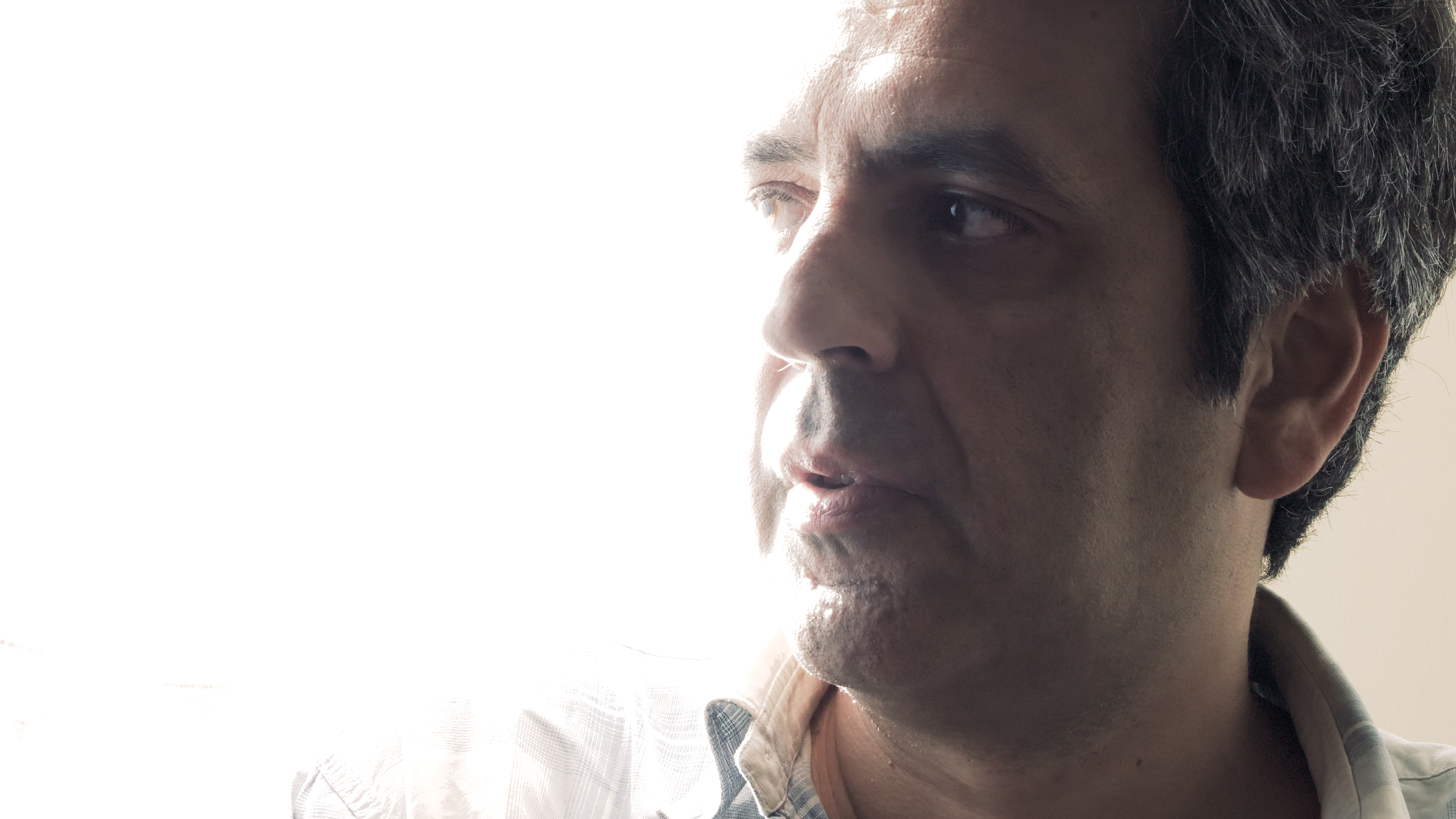
Drama, thriller, by Fabio Del Greco, Italy, 2019.
Someone wants to control the life of the employee Giuseppe Russo: the products he buys, his political and religious faith, his private life, even his dreams. But he will do anything to escape control and find his true self. Giuseppe is a man of around 45, married, with a stable job and a home of his own. His life flows seemingly peacefully when he meets a mysterious tramp who gives him some old VHS video cassettes. Giuseppe begins to see video tapes in which he is filmed in some moments of his life since he was a child, then as a teenager and as a young man. Who shot those videos that he remembers nothing about? Giuseppe has the strange sensation of being constantly observed and begins to investigate what is happening. Through his investigation of him, he begins to rediscover his true identity and become aware of who he truly is.
Employee's Mystery is a film that highlights the danger of social control and shows a society where everyone is constantly monitored and conditioned in their deepest selves. The film is also an analysis of human nature and identity. Fabio Del Greco, who plays Giuseppe, gives an engaging performance. Equally good is Chiara Pavoni, in the role of Giada Rubin and Roberto Pensa in the role of the tramp. Employee's Mystery is a film that addresses important themes in an original way, a psychological thriller that keeps the viewer glued to the screen until the end: a metaphor for contemporary society, in which people are increasingly monitored and conditioned by the media and technologies . It is a courageous and provocative work, which addresses important themes in an original way.
LANGUAGE: Italian
SUBTITLES: English, Spanish, French, German, Portuguese
Anatomy of a Fall (2023)

Samuel is found dead in the snow outside his isolated chalet near Grenoble. Did he fall? Did he jump? Or was he pushed? The only suspect is his wife Sandra (Sandra Hüller), a successful German writer. In Anatomy of a Fall, the ensuing trial is not just a legal investigation, but a brutal vivisection of their relationship, observed through the confused eyes of their visually impaired son Daniel, the only uncertain witness to an elusive truth.
Winner of the Palme d’Or at Cannes and the Oscar for Best Original Screenplay, Justine Triet‘s film is the definitive mystery of our time. It flips the rules of the courtroom drama: there are no sensational twists, but the horror of recorded words and domestic arguments. It is a film about the impossibility of truly knowing those we love, where the “solution” to the mystery matters less than the narrative construction we choose to believe.

Decision to Leave (2022)

A man falls from a mountain peak. Detective Hae-jun, sleepless and meticulous, investigates the death and meets the victim’s widow, Seo-rae, a mysterious Chinese woman who doesn’t seem upset at all. In Decision to Leave, the interrogation soon turns into a game of seduction and obsession: the detective falls in love with his prime suspect, losing his professional clarity while evidence accumulates and contradicts itself in a labyrinth of feelings and manipulations.
Korean master Park Chan-wook (Oldboy) signs a Hitchcockian noir of shocking visual elegance. Awarded Best Director at Cannes, the film uses the language of the police procedural to tell an impossible and tragic love story. Every shot is a clue, every editing cut a heartbeat. It is a refined and sensual mystery that requires total attention from the viewer to grasp the nuances of a passion that destroys everything it touches.
Monster (2023)

A widowed mother notices strange behavior in her pre-adolescent son Minato and discovers that a teacher has verbally and physically assaulted him. The woman confronts the school demanding justice. However, in Monster, the story rewinds and is told three times from three different points of view: the mother’s, the teacher’s, and finally the child’s. Each shift in perspective completely flips the truth, revealing that the titular “monster” might not be who we think, or perhaps doesn’t exist at all.
Kore-eda Hirokazu constructs a delicate and heartbreaking Rashomon-style mystery. There is no dead body (at least not initially), but there is the mystery of childhood and incommunicability. It is a psychological and social mystery investigating prejudices and the lies we tell to protect ourselves or others. The soundtrack, the last composed by the legendary Ryūichi Sakamoto, accompanies a revelatory ending of rare beauty and sadness.
Conclave (2024)

The Pope is dead. Behind the locked doors of the Sistine Chapel, the most powerful cardinals in the world gather to elect a successor. Cardinal Lawrence (Ralph Fiennes), tasked with overseeing the process, finds himself managing not only a spiritual election but a political conspiracy made of blackmail, unspeakable secrets, and sexual scandals that emerge as voting proceeds. In Conclave, the arrival of a mysterious unknown cardinal created in pectore by the late pontiff throws the entire Vatican into panic.
Edward Berger (All Quiet on the Western Front) directs a highly tense ecclesiastical thriller that functions like a classic Agatha Christie whodunit, but set in the halls of absolute power. Ralph Fiennes is monumental in the role of a detective in a cassock who must save the Church from itself. It is an elegant, wordy film full of twists, treating faith like a deadly game of chess.
A vision curated by a filmmaker, not an algorithm
In this video I explain our vision
🕵️♂️ Which puzzle do you want to solve?
The search for truth in cinema is a maze with many entrances. There isn’t just the classic detective with a magnifying glass: mystery hides in psychological tension, police procedures, shadows of the past, and auteur narratives that defy the rules. To help you choose the perfect investigation for your evening, here are our essential guides to the genres that make suspense their winning weapon.
Independent Thrillers & Mysteries
The most fascinating mysteries are the ones where you don’t know how they will end. Independent cinema doesn’t have to answer to Hollywood’s commercial logic, so it can afford uncomfortable endings, ambiguous protagonists, and plots that leave you doubting. If you are looking for an investigation outside the box, start here.
👉 BROWSE THE CATALOG: Stream Thriller & Mystery Movies
Thriller Movies
If for you investigation is not an intellectual game but a matter of survival, Thriller is the right genre. Here the question isn’t just “whodunit?”, but “will they survive?”. Discover films that bet everything on adrenaline, psychological twists, and tension that keeps you glued to your seat.
👉 GO TO THE LIST: Thriller Movies
Crime Movies
On the side of the law (mostly). The police genre shifts focus from the pure puzzle to procedure: interrogations, manhunts, corruption, and precinct life. If you love street realism and the challenge between detective and criminal, this is your list.
👉 GO TO THE LIST: Crime Movies
Noir Movies
The roots of mystery lie here. Before modern profilers, there were cynical private eyes, femmes fatales, and cities shrouded in fog. Noir is the quintessential atmosphere of investigation: elegant, disillusioned, and morally gray. For those who love style and stories where no one is truly innocent.
👉 GO TO THE LIST: Noir Movies
Cult Movies
There are investigations that have entered cinema legend. From Rear Window to The Usual Suspects, these are the masterpieces that rewrote the rules of suspense and the final plot twist. The mandatory titles every mystery lover must see at least once.
👉 GO TO THE LIST: Cult Movies
🔍 The Art of Murder: Classic Mystery Movies (1931-2000)
Before modern forensics and DNA evidence, solving the case was an art relying on intuition, deduction, and psychology. The classic “Whodunit” is a perfect clockwork mechanism, where the viewer is challenged to solve the puzzle before the detective. From Fritz Lang’s expressionist shadows to Hitchcock’s unbearable suspense, up to the aesthetic and bloody revolution of the Italian Giallo by Dario Argento. Here are the masterpieces that invented the rules of the game, turning murder into one of the fine arts.
M (1931)
![M (1931) Original Trailer [HD]](https://blog.indiecinema.co/wp-content/plugins/wp-youtube-lyte/lyteCache.php?origThumbUrl=https%3A%2F%2Fi.ytimg.com%2Fvi%2FDdR07aN3uoc%2F0.jpg)
A German city is terrorized by a child serial killer whom the police cannot catch. The intensification of investigations and raids disturbs the local organized crime’s business, so they decide to take matters into their own hands. In M, the two opposing forces of society—the law and the underworld—begin a parallel manhunt to find the killer, Hans Beckert (Peter Lorre), and subject him to two different types of justice.
Fritz Lang directs the first true masterpiece of the psychological and procedural thriller. It is a revolutionary film that shifts the focus from the “whodunit?” enigma (the killer is revealed almost immediately) to “how to catch him?”. The use of sound (the whistling of In the Hall of the Mountain King) and expressionist shadows creates unbearable tension. It is the mother of all serial killer and manhunt movies.
The Maltese Falcon (1941)

Sam Spade is a cynical and tough private investigator in San Francisco. When his partner is killed while investigating a seemingly banal case, Spade finds himself involved in an international web of eccentric criminals, all searching for a priceless statuette: the Maltese Falcon. In The Maltese Falcon, Spade must navigate through lies, femmes fatales (Mary Astor), and ruthless men (Peter Lorre and Sydney Greenstreet) to discover who killed his partner and where the treasure is, without getting framed by the police.
John Huston‘s directorial debut is the film that defined Film Noir. Humphrey Bogart, with his trench coat and cigarette, becomes the archetype of the private eye: morally ambiguous but faithful to a personal code of honor. The dialogue is rapid-fire, and the plot is a labyrinth of deceit. It is the perfect deductive mystery, where everyone is guilty of something and “the stuff that dreams are made of” is just lead.
Laura (1944)
![Laura (1944) ORIGINAL TRAILER [HD 1080p]](https://blog.indiecinema.co/wp-content/plugins/wp-youtube-lyte/lyteCache.php?origThumbUrl=https%3A%2F%2Fi.ytimg.com%2Fvi%2FKgGtRJY516E%2F0.jpg)
Detective Mark McPherson investigates the murder of Laura Hunt, a beautiful advertising executive found dead in her apartment with her face disfigured by a shotgun blast. By interrogating the men in her life—the ambiguous critic Waldo Lydecker and playboy fiancé Shelby—and reading her diary, McPherson begins to fall in love with the ghost victim. In Laura, the twist comes halfway through the film when the woman everyone believed dead reappears alive on her doorstep, turning the investigation into an even denser mystery about the identity of the corpse and the killer.
Otto Preminger directs one of the most elegant and perverse noirs in history. It is not the usual action mystery, but an investigation into obsession and psychological manipulation. The obsessive soundtrack and glossy cinematography hide a dark heart. It is the definitive film about the power the dead (or the idea we have of them) exercise over the living, with a detective who makes the fatal mistake of falling in love with the case.
The Third Man (1949)

Holly Martins, an American writer of cheap western novels, arrives in post-war Vienna, divided into four occupation zones, at the invitation of his old friend Harry Lime. Upon arrival, he discovers that Harry died in a suspicious car accident. Investigating to clear his friend’s memory, in The Third Man, Martins discovers that Harry is not only alive but has become a monstrous criminal trafficking in adulterated penicillin, killing innocent children for profit.
Written by Graham Greene and directed by Carol Reed, it is a masterpiece of atmosphere and suspense. The ruined Vienna, the long shadows in the sewers, and the famous zither soundtrack create a world where all morality has collapsed. Orson Welles, as Harry Lime, appears for only a few minutes but steals the show with the cuckoo clock monologue. It is a political and moral mystery where the hero must choose between loyalty to friendship and justice.
Les Diaboliques (1955)

In a French boys’ boarding school, fragile Christina is the owner, but her husband Michel, the headmaster, is a sadistic tyrant who openly cheats on her with teacher Nicole. The two women, victim and mistress, ally to kill the man: they drug him, drown him in a bathtub, and dump the body in the school pool to simulate an accident. But in Les Diaboliques (Diabolique), when the pool is drained, the body is gone. Thus begins a nightmare of paranoia: Is Michel alive? Is he a ghost? Or is someone playing with their minds?
Henri-Georges Clouzot signs the thriller that beat Hitchcock at his own game (the English master wanted the rights to the book). It is a perfect, claustrophobic, and cruel suspense mechanism, culminating in one of the scariest and most famous endings in cinema history ( the bathtub scene). Fundamental to the genre, it introduced the concept of the psychological plot twist that completely flips the viewer’s perspective.
Rear Window (1954)

L.B. Jefferies (James Stewart), an action photographer confined to a wheelchair by a broken leg, spends his recovery spying with a telephoto lens on the lives of neighbors in the courtyard of his Greenwich Village building. Between lonely hearts and dancers, his attention is caught by a traveling salesman, Lars Thorwald, and his sick wife who suddenly disappears. In Rear Window, Jefferies becomes convinced that Thorwald killed his wife, but without a body, he must use only his gaze and the help of his girlfriend Lisa (Grace Kelly) to solve the puzzle.
Alfred Hitchcock realizes the definitive film on voyeurism and the very nature of cinema (we viewers are Jefferies). It is a mystery in “unity of place” where tension grows without the camera ever leaving the protagonist’s apartment. A masterpiece of visual narrative construction, where every window tells a story and every detail (a disturbed flowerbed, a wedding ring) is a vital clue.
Anatomy of a Murder (1959)
![Anatomy of a Murder (1959) ORIGINAL TRAILER [HD 1080p]](https://blog.indiecinema.co/wp-content/plugins/wp-youtube-lyte/lyteCache.php?origThumbUrl=https%3A%2F%2Fi.ytimg.com%2Fvi%2FmeHflk7RYkk%2F0.jpg)
Paul Biegler (James Stewart), a small-town lawyer with a passion for fishing and jazz, agrees to defend Lieutenant Manion, accused of killing a bartender who allegedly raped his wife Laura. Manion does not deny the murder, but the defense relies on “temporary insanity.” In Anatomy of a Murder, the trial becomes a chess game between prosecution and defense, where the truth is slippery and the clients are not the immaculate heroes they seem.
Otto Preminger directs the most realistic and bold legal thriller of the era (using words like “sperm” and “panties” in court for the first time, challenging censorship). It is not the classic whodunit, but an investigation into how truth is manipulated and constructed in a courtroom. Ambiguous, cynical, and modern, with a jazz soundtrack by Duke Ellington, it leaves the viewer with the moral doubt of whether justice was truly served.
High and Low (1963)

Kingo Gondo, a wealthy shoe company executive, is about to invest his entire fortune to take control of the company. Just then, he receives a phone call: his son has been kidnapped. But the kidnapper made a mistake: he took the son of Gondo’s chauffeur. In High and Low (Anatomia di un rapimento), Gondo faces an atrocious moral dilemma: pay the ransom and face ruin to save an employee’s son, or save his career and condemn the child? The second part of the film follows the police in a procedural and meticulous manhunt through the slums of Yokohama.
Akira Kurosawa adapts an Ed McBain novel creating the perfect police procedural. The film is geometrically divided: the first part, theatrical and static, takes place in Gondo’s luxury penthouse; the second, frenetic and dynamic, in the sweltering city. It is a ruthless analysis of the gap between rich and poor and a masterpiece of investigative tension, influencing directors like Steven Spielberg and Bong Joon-ho.
Charade (1963)

Regina Lampert (Audrey Hepburn) returns to Paris from a holiday decided on asking for a divorce, but discovers her husband has been murdered and had stolen a fortune in gold during the war. At his funeral, three mysterious former comrades appear, wanting the loot back and convinced Regina knows where it is. In Charade (Sciarada), her only ally seems to be the charming Peter Joshua (Cary Grant), but he too changes names and identities every time they meet.
Directed by Stanley Donen, it is often called “the best Hitchcock movie Hitchcock never directed.” It is a sophisticated mystery mixing suspense, romantic comedy, and thriller in perfect balance. Between chases in the Paris metro, killers with hooks, and brilliant dialogue, the film is a clockwork mechanism of false clues and plot twists, a precursor to modern intelligent entertainment cinema.
The Girl Who Knew Too Much (1963)

Directed by Italian director Mario Bava, the film stars John Saxon as Dr. Marcello Bassi and Letícia Román as Nora Davis . The plot centers on a girl named Nora, who takes a trip to Rome and witnesses a murder. Numerous other murders follow, linked to a series of victims selected in alphabetical order. The Girl Who Knew Too Much is considered the first ever detective film, a category of films with a mix of sensuality, horror and thriller.
On vacation, Nora Davis (Letícia Román) flew to Rome to visit her sick elderly aunt. Nora’s aunt is treated by Dr. Marcello Bassi (John Saxon). Nora’s aunt dies on the evening of Nora’s arrival and she goes to the nearby health facility to inform Dr. Bassi. During the trip, she is robbed in Piazza di Spagna. She sees the body of a dead woman lying on the ground next to her; a bearded male pulls a knife from the woman’s back. Nora reports him to the authorities, but they don’t discover any evidence and believe he is hallucinating.
Blood and Black Lace (1964)

Blood and Black Lace is a 1964 Giallo movie directed by Mario Bava and starring Eva Bartok and Cameron Mitchell. The story follows the merciless murders of a masked killer in a desperate attempt to acquire a scandal-revealing diary. Isabella, a model for Christian Haute Couture, a Roman fashion house, is strolling the property’s premises in the evening when she is eliminated by a killer wearing a white mask, black hat and raincoat. Police inspector Silvestri interrogates Massimo Morlacchi, who co-manages the hairdresser with the recently widowed Countess Cristiana Cuomo. Silvestri discovers that the girl was a drug addict and that she had tried to fight her addiction.
The Young, the Evil and the Savage (1968)

A detective film by Antonio Margheriti. A lady is drowned in a bathtub and later placed in a trunk on a pickup truck bound for St. Hilda College. Among the instructors is Mrs. Clay, a science instructor. Also, there is a young instructor, Richard Barrett, a diving instructor. There are only 7 women in the institute, while the others are traveling. Arrived on the spot, the trunk is placed in the basement.
Betty Ann enters the basement and is strangled and taken away. The search for the missing lady begins. All women are advised not to leave the site, however one, Lucille, has a consultation with her instructor Richard, with whom she is having an affair. Lucille decides to go out and goes to a small house on a hill, where she discovers the body of Betty Ann and runs away. She meets Richard and informs him of what happened but Betty Ann’s body is gone when they return.
Orgasmo (1969)

Orgasmo is a 1969 Giallo movie directed by Umberto Lenzi and starring Carroll Baker, Lou Castel and Colette Descombes. American Catherine West arrives in Italy from New York expected by many reporters following the death in a car accident of her husband Robert, a Texas oil baron who left her his $ 200 million estate. He retires to an Italian vacation home rented by his austere lawyer, Brian Sanders. Catherine meets Peter Donovan, a young American from Boston whose car broke down nearby. Catherine, who at first is cold towards her romantic advances. Peter quickly manages to seduce her and the two begin a passionate relationship.
Sweet … So Perverse (1969)

So sweet … so perverse) is a detective film directed by Umberto Lenzi and written by Ernesto Gastaldi, starring Carroll Baker and Jean-Louis Trintignant. Set in Paris, it tells the story of a wife who plots to eliminate a rich husband, but is herself the victim of her accomplices.
Jean, a wealthy industrialist from Paris, married Danielle, but now she rejects him. In revenge, he lets himself be seduced by a guest’s wife at a party. An attractive woman moves into the apartment above them and in some cases they hear someone scolding and beating her. Jean tries to protect her, and they enter into intimacy. She is Nicole and her abusive ex is Klaus. He warns him that Klaus will try to kill him, which happens soon. His charred body is found in a burned-out vehicle. Nicole, who is actually Danielle’s accomplice, reveals that Jean had provided her with her share of the reward. Danielle begins to be stalked and while on the phone with Nicole, Klaus walks into the house and shoots her. In the absence of clues, the police inspector hesitantly accepts the hypothesis of suicide.
One on Top of the Other (1969)

One on top of the other (One on the other), is a 1969 Italian Giallo movies directed by Lucio Fulci and starring Jean Sorel, Marisa Mell, Elsa Martinelli, Alberto de Mendoza and John Ireland. The first real Giallo movie directed by Fulci, its plot is about George Dummurrier (Sorel), a dishonest San Francisco doctor who thinks he is causing the death of his asthmatic wife Susan (Mell) for an insurance policy. The film has been listed as the inspirer of famous films by Hollywood like Basic Instinct and Body of Evidence.
George Dumurrier is a wealthy doctor who runs a center with his younger brother Henry, however he leaves the care of his asthma-ill wife Susan to his sister Martha and a nurse. He was in a relationship with Jane, Larry’s personal assistant, a professional photographer. Very much in love with George, Jane is doubtful about the future of their relationship. George and Jane take a trip out of town for a romantic getaway in Reno. After arriving at the casino, George receives a call from Henry, who tells him that Susan died of a violent asthma attack. Returning home to his luxurious San Francisco home, George is consoled by Henry. A $ 1 million insurance policy left by Susan is a timely bonus for George’s business venture. An insurance coverage representative starts following George, discovers his relationship with Jane, and brings his suspicions to the police investigator, Inspector Wald.
The Bird with the Crystal Plumage (1970)

It is a 1970 Giallo movie directed by Dario Argento, in his directorial debut. The film is the progenitor of the Italian Giallo movie category. Upon its release, the film was a notable success earning 1,650,000,000 Italian lire. It was also a success outside Italy. Sam Dalmas is an American author on vacation in Rome with his English girlfriend, Julia, who is experiencing writer’s block and is on the verge of returning to America, however he witnesses the assault of a lady in an art gallery by a strange fellow in black gloves wearing a raincoat. Trying to reach him, Sam is trapped between 2 mechanically operated glass doors and can simply watch the man escape. The lady, Monica Ranieri, was attacked and the police seized Sam’s passport to prevent him from leaving the country. The assailant is thought to be a serial killer who is killing girls across town and Sam is a crucial witness.
What Have You Done to Solange? (1972)

What did you do to Solange? is a 1972 Giallo movie directed by Massimo Dallamano and starring Fabio Testi, Karin Baal, Joachim Fuchsberger, Cristina Galbó and Camille Keaton. The plot follows a series of violent murders that take place in a Catholic girls’ school in London.
While on a boat with her teacher Enrico Rosseni, Elizabeth Seccles sees a boy stab a woman in the woods on the nearby coast. Rosseni convinces Elizabeth to keep quiet about what she saw. Another girl, a student at the same college, is later killed by the same killer. Soon after, Elizabeth is killed in her bathroom. Authorities think it was Rosseni, who confesses his relationship with the sexually repressed Herta in hopes of getting her help. But Rosseni is cleared: the victims had all seen a priest and were friends with a girl named Solange, who had started attending school the previous semester but had inexplicably disappeared.
Giallo (2009)

Giallo is a 2009 horror crime film written and directed by Dario Argento and starring Adrien Brody, Emmanuelle Seigner and Elsa Pataky. Turin, Italy: French flight attendant Linda and Italian-American investigator Enzo Avolfi team up to investigate Linda’s younger sister, Celine. Celine was kidnapped by a serial killer known as “Giallo” who kidnaps beautiful foreign women in his unlicensed taxi. After drugging them, the killer continues to maim and eventually kill them. Enzo receives a phone call from a colleague, who discovers the body of an Asian woman outside a church. They discover that she is still alive and starts speaking in Japanese. Enzo and Linda start looking for a translator, who tells them that the lady repeats the word “yellow. They go to the morgue, where Linda acknowledges that the killer’s face may be yellow, and the coroner informs Enzo that the yellow skin is a sign of liver disease.
Hatchet for the Honeymoon (1970)

Hatchet for the Honeymoon is a 1970 Giallo movie directed by Mario Bava and starring Stephen Forsyth, Dagmar Lassander, Laura Betti and Femi Benussi. The story follows John Harrington, an ax-wielding madman who kills young brides due to juvenile trauma. Production on the film was troubled due to tensions between cast and crew, location issues, and a noticeable break in filming when the budget went out. It didn’t launch until a year after its conclusion and was mostly ignored by both audiences and critics alike, remaining among Bava’s many weird films even after his work achieved cult appeal.
John Harrington is a good-looking 30-year-old boy who feels compelled to kill young brides for juvenile trauma. John resides in a spacious vacation home outside Paris, where he runs a wedding dress factory from his missing mother and financially supported by his wife Mildred. He and Mildred don’t get along, however she refuses to consider divorce. Whenever he hears that a woman among the models working in the dress factory has to get married, he kills her with a cleaver while she is trying on her wedding dress, burns the body and uses the ashes as fertilizer. Each murder gives him a somewhat clearer picture of his traumatic memory. Inspector Russell often comes to question John about the 6 models who have disappeared but with the absence of evidence he is unable to arrest him.
A Bay of Blood (1971)

A Bay of Blood is a 1971 Giallo movie and slasher film directed by Mario Bava. Bava wrote the screenplay for the film with Giuseppe Zaccariello, Filippo Ottoni and Sergio Canevari. The film stars Claudine Auger, Luigi Pistilli, Brigitte Skay, Nicoletta Elmi and Laura Betti. Carlo Rambaldi produced the gruesome special effects. The story shows a series of ritual murders that take place around a bay. It is a film that influenced the slasher films that would follow years later, considered among the 50 greatest crime / horror films of all time.
During the night in her estate on the bay, Countess Federica Donati in a wheelchair is attacked and strangled to death by her partner, Filippo Donati. A few minutes later, Philip himself is stabbed to death by an attacker, and his remains are then dragged into the bay. After an examination, the cops discover what they think is a farewell note written by the countess, however Philip’s murder is not discovered. Real estate rep Frank Ventura and his fiancée Laura plot to take over the bay. After the countess refused to offer them the house, the couple came up with a plan with Philip to kill her husband. To complete their strategy, Ventura requires Philip to sign a series of legal files. They have no idea, however, that Philip himself was actually killed.
A Quiet Place in the Country (1968)

A Quiet Place in the Country is a 1968 Giallo movie directed by Elio Petri and starring Franco Nero and Vanessa Redgrave. Based on the short story “The Beckoning Fair One” by Oliver Onions, the plot follows an artist who moves into a rural vacation home with his wife, where he begins to experience increasingly frightening and supernatural situations.
Eager to leave the hustle and bustle of the city, visual artist Leonardo Ferri prepares to move from Milan to a rural estate in the Italian countryside with his British girlfriend, a gallery owner named Flavia. His real estate consultant offers him a large house, but Leonardo finds himself drawn to a large, seedy rental property nearby. One afternoon Leonardo reaches the fenced property and meets Attilio, his caretaker, who informs him that the owners could rent it. Leonardo eventually rented the house and immediately began work to restore it.
The Possessed (1965)

The Possessed (La donna del lago) is a 1965 Italian Giallo movie written and directed by Luigi Bazzoni and Franco Rossellini and starring Peter Baldwin, Virna Lisi, Pia Lindstrom and Philippe Leroy. It is based on the novel La donna del lago by Giovanni Comisso. Bernard (Peter Baldwin), a famous writer, shows up in an Italian town near a lake for a winter trip. He explores an old hotel owned by Enrico and his daughter Irma (Valentina Cortese), secretly wishing to find their maid Tilde: the last time he was there he had a crush on her he had even persecuted her. He is stunned to hear that Tilde (Virna Lisi) committed suicide the previous winter season after discovering she was pregnant. She ingested poison and even cut her throat.
Tenebrae (1982)
![Tenebrae (1982) - International Trailer [HD]](https://blog.indiecinema.co/wp-content/plugins/wp-youtube-lyte/lyteCache.php?origThumbUrl=https%3A%2F%2Fi.ytimg.com%2Fvi%2FOkUpGi2N8wo%2F0.jpg)
Tenebrae is a 1982 Italian Giallo movie written and directed by Dario Argento. The film stars Anthony Franciosa as American author Peter Neal, who, while in Rome promoting his latest book on murders and mysteries, ends up getting involved in the search for a serial killer who may have been motivated to kill by his book. The film has been defined as a story of dualism and sexual aberration and has strong metaphysical components. Tenebrae represented the director’s return to the horror thriller subgenre, which he helped promote in the 1970s. Argento was influenced by a series of events: A fan phoned the director to blame him for the destructive mental results of his previous work. The phone call culminated in death threats against Argento, who incorporated experience into writing Tenebrae. Similarly, the director wanted to tell the nonsense of the murders he had actually seen and learned about while staying in Los Angeles in 1980.
Peter Neal, an American author of violent and horror books, he arrives in Italy to promote his latest work, Tenebrae. He is accompanied by his literary representative, Bullmer and his assistant, Anne. Neal is not informed that he was followed in Rome by his ex-girlfriend, Jane. Shortly before Neal arrived in Rome, Elsa, a young thief, was killed with a razor. The killer sends Neal a letter informing him that his books influenced him to carry out murders. Neal is contacted by Detective Germani and his colleague, Inspector Altieri.
Do Not Torture a Duckling (1972)
![Don't Torture a Duckling (1972) ORIGINAL TRAILER [HD 1080p]](https://blog.indiecinema.co/wp-content/plugins/wp-youtube-lyte/lyteCache.php?origThumbUrl=https%3A%2F%2Fi.ytimg.com%2Fvi%2FJsJlTgYqCFs%2F0.jpg)
A 1972 Italian Giallo movie directed by Lucio Fulci, starring Florinda Bolkan, Tomas Milian and Barbara Bouchet. The plot follows an investigator examining a series of child murders in an island town in southern Italy. The soundtrack of the film was composed by Riz Ortolani with the voice of Ornella Vanoni. Launched in the autumn of 1972 in Italy, Don’t Torture a Duckling is notable in Fulci’s filmography as it is among the very first films in which he began using violent gore impacts. The “duckling” in the film’s title describes a Donald Duck doll whose head was cut off by a mad woman, offering an idea for the murders.
In the town of Accendura, in southern Italy, there are 3 children, Bruno, Michele and Tonino. Giuseppe Barra, a simpleton who spies on 2 fellow citizens who go with a prostitute, gets angry when the 3 kids who are seeing him start making fun of him. On the hills surrounding the town, La Magiara, a lonely witch, performs black magic rituals, initially exhuming the remains of a child and then sticking pins between the heads of 3 small clay dolls. The ritual is connected to the 3 boys who ridicule Joseph.
Your House with Laughing Windows (1976)

is a 1976 Italian Giallo movie written and directed by Pupi Avati. The film was shot in Lido degli Scacchi in the province of Ferrara. Stefano (Lino Capolicchio) arrives in a village in the Comacchio Valleys where he was called to restore a fresco depicting what appears to be the martyrdom of San Sebastiano, which was actually painted on a ruined wall of the church by a strange artist who died from time called Legnani.
While residing momentarily in the house that was actually previously owned by the 2 brothers of the missing painter, Stefano begins a love affair with Francesca (Francesca Marciano), and discovers that the painter had actually been a fool. In particular, Stefano discovers that the artist, aided by his 2 equally crazy brothers, had been a murderer. Some villagers are killed, including his partner, and Stephen believes the killer is trying to stop him from finding the truth behind the painting’s artist.
Brief Night of Glass Dolls, 1971

Brief Night of Glass Dolls is an Italian Giallo movie from 1971. It is the launch of the direction of Aldo Lado and stars Ingrid Thulin, Jean Sorel and Barbara Bach. The remains of journalist Gregory Moore (Jean Sorel) are discovered in a Prague square and delivered to the morgue. Instead, Moore is alive, trapped in his corpse, and frantically recalls how the disappearance of his gorgeous girlfriend (Barbara Bach) led to a frightening conspiracy.
He begins to enter his mind. He investigates and finds a club where occult rituals take place. He ends up going to the club and explores the place where the lifeless body of his girlfriend Mira has disappeared, lying in a secret room covered in flowers. As Moore leaves without finding her, the keeper of the club looks at Mira’s body and thinks how charming she too is after her death. Eventually, the whole truth bounces back to Moore, and it comes to a jaw-dropping and disturbing end.
Spasm (1974)

Spasmo is a 1974 Italian Giallo movie directed by Umberto Lenzi and starring Robert Hoffmann and Suzy Kendall. Christian and his girlfriend go to a beach to have sex where they find a hanged woman: in reality it is a mutilated mannequin. Then they come across a woman’s body, this time face down. She is not dead, her name is Barbara and without saying how she got there she quickly vanishes. Christian can’t get Barbara out of her mind: he finds her on a boat moored in a marina. He and his girlfriend go to a party aboard the boat, where they meet Barbara and her lover, Alex.
The Genre of Giallo Movies
In the cinematic context, for the Italian audience Giallo movie describes any type of mysterious murder or horror thriller. English-speaking audiences have actually used the term thriller to specifically refer to a category of Italian-made thriller-horror films presented to Italian audiences as an Italian Giallo.
In the English-speaking world, Italian Giallo movies are often described as Spaghetti Thriller or Spaghetti Slashers, in a similar way that Italian westerns and cop films have been described as Spaghetti Western and Spaghetti Giallo. The Giallo subgenre of Italian cinema began as real adaptations of Giallo books. Filmmakers quickly began to make the most of modern cinematic strategies to produce a special category that kept the mystery and fiction of mystery books, however, they also went into the territory of the psychological thrillers or psychological horror. Some of the common attributes of these films were integrated into the next category of American slasher.
Giallo movie often feature an unknown man witnessing a murder who ends up being the killer’s target when he tries to find out more about the crime. Other times the Giallo movie includes a female protagonist who is involved in a more psychological and sexual story, usually focused on her sexuality, mind and mood. The detective stories often include criminal offenses and investigative investigations but should not be confused with the other popular Italian Giallo category of the 1970s, the policemen, which consists of more action-oriented films about law enforcement officers fighting the organized crime.
Actors and directors often moved between the two categories and there is some overlap between them. While many cops have recounted the clashes between the Mafia and the police, some early examples in the category have focused on murder investigations, and in particular cases where a woman is killed in sexual situations. These films were more psychological than action-driven, and got different styles and themes than thrillers, such as In A Citizen Above Suspicion (1970). Some films could also be thought of under the banner of both categories, such as Naked Violence (1969) by Fernando Di Leo and The Police Asking for Help by Massimo Dallamano from 1974 (What Have They Done to Your Daughters?).
Characteristics of the Giallo Movies
Giallo movies are usually grisly murder and mystery thrillers that integrate the thriller components of investigative fiction with horror scenes. The stereotypical Giallo storyline includes a mysterious assassin in black gloves who kills a series of women. While many Giallo include a human killer, some also include a da look supernatural film.
The Giallo main character is typically a visitor, traveler, castaway, or disgraced private investigator, and often a girl who is alone in a strange situation or in a strange environment. The secret is the identity of the killer, who is often exposed in the climax. He hides his identity with a camouflage: hat, mask, sunglasses, gloves, raincoat. Thus, the literary thriller aspect of the Giallo books is maintained, while aspects of the horror movies and the staging of blood and violence.
Some films, for example Mario Bava’s Hatchet for the Honeymoon from 1970, which includes the killer as the protagonist, significantly change the conventional structure or abandon it altogether, retaining only the themes or the style. A constant component of the category is an uncommon lack of focus on the logical or coherent narrative. While many have a little secret structure, there are often seemingly nonsensical or bizarre plot aspects and a fundamental disregard for realism in the acting, dialogue and characters.
The images of the Giallo Movies
The Giallo are often linked to strong technical cinematography and elegant images, bright colors and unusual camera angles, excessive panning and garish tracking shots, chaotic framing and structure, close-ups of shaking eyes and unusual objects. In addition to the famous images of shadowy assassins in black gloves, Giallo often use very elegant and even surreal uses of color. Directors Dario Argento and Mario Bava are particularly known for theirs impressionistic images and the use of strong colors, although other Giallo directors such as Lucio Fulci have used more sober and realistic styles.
In addition to the custom of the Giallo books, the early Giallo movie were influenced by the German “krimi” films of the early 1960s. Produced by the Danish / German studio Rialto Film, these black and white films based on the stories of Edgar Wallace included secret plots with a masked killer, yet they had little of the extreme stylization and blood of Italian Giallo movies. Swedish director Arne Mattsson has also been singled out as a possible inspiration for the detective story, most notably his 1958 film Mannequin in Red. The film shares narrative and stylistic similarities with subsequent Giallo movie, most notably its use of color and its multiple murder plot.
The period of Giallo Movies
The first real crime film ever is thought to be Mario Bava’s The Girl Who Knew Too Much (1963). Shot in black and white and devoid of the violence and sexuality that would define detective films later, the film was credited with establishing the essential structure of the genre: in it, a young American tourist in Rome witnesses a murder , finds her testimony rejected by the authorities and must try to discover the identity of the killer herself. Bava used the custom of German krimi films along with the Hitchcockian design referenced in the title, and the structure of the film functioned as the standard design model for most of the thrillers that would follow.
Bava, after The Girl Who Knew Too Much, shot the influential and elegant Blood and Black Lace (1964) the following year. The film featured a variety of aspects that ended up being emblematic of the category: a masked stalker with a weapon in his black gloved hand killing a string of attractive women. The film was not a financial success at the time, the tropes it introduced such as the black-gloved killer, provocative sexuality and bold use of color would become iconic of the genre.
Numerous similar-themed Giallo/ thriller films followed over the next two years, consisting of the first films by directors Antonio Margheriti, Umberto Lenzi, and Lucio Fulci, who would later become significant directors in the growing Giallo category. Dario Argento’s first feature film, in 1970, transformed the thriller into a great cultural phenomenon. That film, The Bird with the Crystal Plumage, was heavily influenced by Blood and Black Lace, and presented a language of elegant violence and thriller that helped redefine the movie genre. The film was a success and was widely imitated. Its success resulted in a long line of similar Italian films, with murderous, violent and sexually intriguing plots. Argento made 3 more in the following 5 years.
The Giallo category had its first success from 1968 to 1978. The most famous period, however, was the five-year interval between 1971 and 1975, during which 96 different Giallo films were produced. Directors such as Bava, Argento, Fulci, Lenzi and Margheriti continued to produce Giallo movies throughout the 1970s and beyond, and other important directors were quickly hired including Sergio Martino, Paolo Cavara, Armando Crispino, Ruggero Deodato and the son of Bava Lamberto Bava. The category also plagued Spain in the early 1970s, leading to films such as La residencia (The House That Screamed) (1969) and Los Ojos Azules de la Muñeca Rota (Blue Eyes Of The Broken Doll) (1973).
Influence of the Giallo Movies
Giallo movies continued to be produced in the 1970s and 1980s, but slowly their appeal waned and film budget plans began to decline. Director Pupi Avati parodied the category in 1977 with a Giallo slapstick titled All dead … except the dead. Giallo movie dropped drastically in the 1990s and saw few titles in the 2000s. Italian Giallo fiction actually made a lasting impact on the production of horror films and murder mysteries by creating the basis for the American slasher and splatter films that ended up being popular in the early 1980s. Even Alfred Hitchcock with Brian De Palma‘s Frenzy (1972) and Dressed to Kill (1980) are clearly inspired by the category.
A vision curated by a filmmaker, not an algorithm
In this video I explain our vision

