
Suspense cinema is not a genre; it is a philosophy. It is the art of manipulating time, evoking anxiety, and delaying the inevitable. The collective imagination is marked by the great masters, from Alfred Hitchcock to David Fincher, who transformed tension into a visual epic. These masterpieces defined the rules of the game, creating a universal language of fear and anticipation.

But beyond narrative tension, a deeper suspense exists, one not based on action, but on atmosphere. It is an investigation into the human soul, into the unknown that lurks not in external monsters, but in the cracks of our own psyche. It is here that the lack of expensive special effects is compensated by an iron-clad script, character depth, and a masterful use of light, sound, and editing.
This “aesthetic of scarcity” generates a more visceral authenticity. This guide is a journey across the entire spectrum. It is a path that unites the great masterpieces of the genre with the most innovative independent works. These are films that do not just tell stories, but question, disorient, and leave an indelible mark, proving that true suspense is not what is shown, but what is suggested.
Parasite (2019)

The Kim family lives in a squalid semi-basement apartment, struggling for survival. When the son, Ki-woo, gets a job as an English tutor for the daughter of the wealthy Park family, he devises a plan to get all his family members hired, pretending they don’t know each other. The infiltration is successful, but their precarious symbiosis is threatened by a shocking discovery hidden in the foundations of the luxurious villa.
Although Parasite is a masterpiece that blends black comedy, drama, and social satire, its second half transforms into a suspense thriller of rare intensity. Bong Joon-ho is a master at using space and architecture as a metaphor for class struggle. The Park’s villa, with its modern and airy aesthetic, is built on a vertical hierarchy that reflects the social one: the Parks live on the upper floors, the Kims infiltrate the ground floor, and an even darker secret lurks in the basement. The suspense is generated by the precariousness of the Kims’ plan. The threat of being discovered is constant and culminates in one of the most tense sequences in modern cinema: the one where they hide under the living room coffee table while the Parks, unaware, discuss their “smell,” an indelible mark of their social class that they cannot wash away. In Parasite, the real “monster” is not a person, but the systemic inequality of capitalism, an invisible force that drives people to desperate acts. The film demonstrates how the most effective suspense can arise not from the fear of physical danger, but from the anxiety of losing one’s place in the world.
Halloween
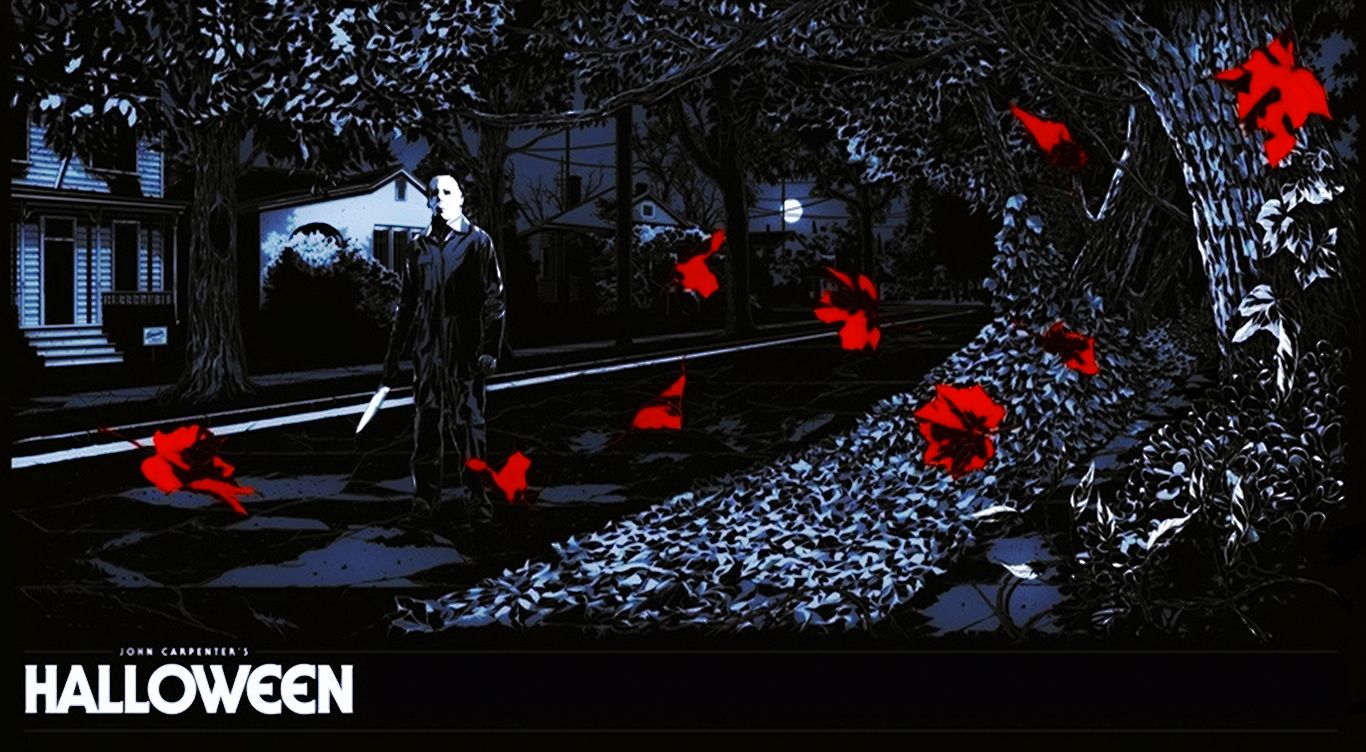
Horror, by John Carpenter, United States, 1978.
An independent film shot on a very small budget, it grossed over $ 80 million worldwide at the time. It is the most successful slasher movie and one of the 5 most profitable films in the history of cinema, which has become a cult with countless sequels and reboots. Carpenter describes the remote American province in an extraordinary way and raises the tension for over an hour, without anything happening, with a linear and effective direction, and with hypnotic music created by himself. A brilliant director who manages, with a few simple elements and a small production, to create a horror destined to remain in the worldwide cinematic imagination.
LANGUAGE: English
SUBTITLES: Spanish, French, German, Portuguese
The Lighthouse (2019)

In the late 19th century, two lighthouse keepers, the old and gruff Thomas Wake and the young Ephraim Winslow, begin a four-week shift on a remote, storm-battered island. The isolation, hard work, and the secrets they both hide lead to a rapid descent into madness, fueled by alcohol, mythological hallucinations, and growing paranoia.
Robert Eggers imprisons us in a claustrophobic and feverish nightmare, a psychological thriller that explores the fragility of the human psyche under conditions of extreme isolation. The Lighthouse is a total sensory experience. The choice to shoot in an expressionistic black and white and in an almost square aspect ratio (1.19:1) is not a mere stylistic whim, but a tool to amplify the feeling of oppression and entrapment. The suspense is existential and hallucinatory. Reality deforms, the boundaries between the two men blur, and the island itself seems like a living, malevolent creature. The film is steeped in maritime mythology and literary references, from Prometheus to Proteus, which transform the struggle for sanity into an archetypal battle between man and unknowable forces. The tension grows in a crescendo of drunkenness, violence, and grotesque visions, culminating in the obsessive question that haunts Winslow: what is in the lighthouse’s light? The answer, when it comes, offers no clarity, only the abyss of madness.

Hereditary (2018)

After the death of her enigmatic mother, miniature artist Annie Graham tries to process her grief with her family. However, a series of tragic and terrifying events begins to haunt them, revealing dark secrets about their lineage. The family finds themselves fighting against a sinister and seemingly inescapable force that threatens to destroy them from within, revealing that some legacies cannot be refused.
Ari Aster‘s debut is a work of surgical cruelty and precision, a film that blends family drama with occult horror in an almost unbearable way. Hereditary is terrifying not only for its shocking images but because it roots its horror in an incredibly real emotional pain. The suspense is built on a foundation of unbearable grief. The first half of the film is a devastating portrait of a family disintegrating under the weight of tragedy, guilt, and unexpressed resentment. The supernatural element emerges from these psychological wounds, transforming generational trauma and mental illness into a literal curse. Toni Collette‘s performance is monumental, a tour de force that traces a woman’s descent into madness, or perhaps, into an even more frightening truth. Aster grants no respite, building a sense of inevitability that becomes increasingly suffocating. Every detail, every miniature created by Annie, is a piece of a diabolical puzzle that comes together in the end. Hereditary is a film that demonstrates how the deepest horror is not the fear of death, but the fear of what we inherit, consciously or not, from our own family.
Slow Life
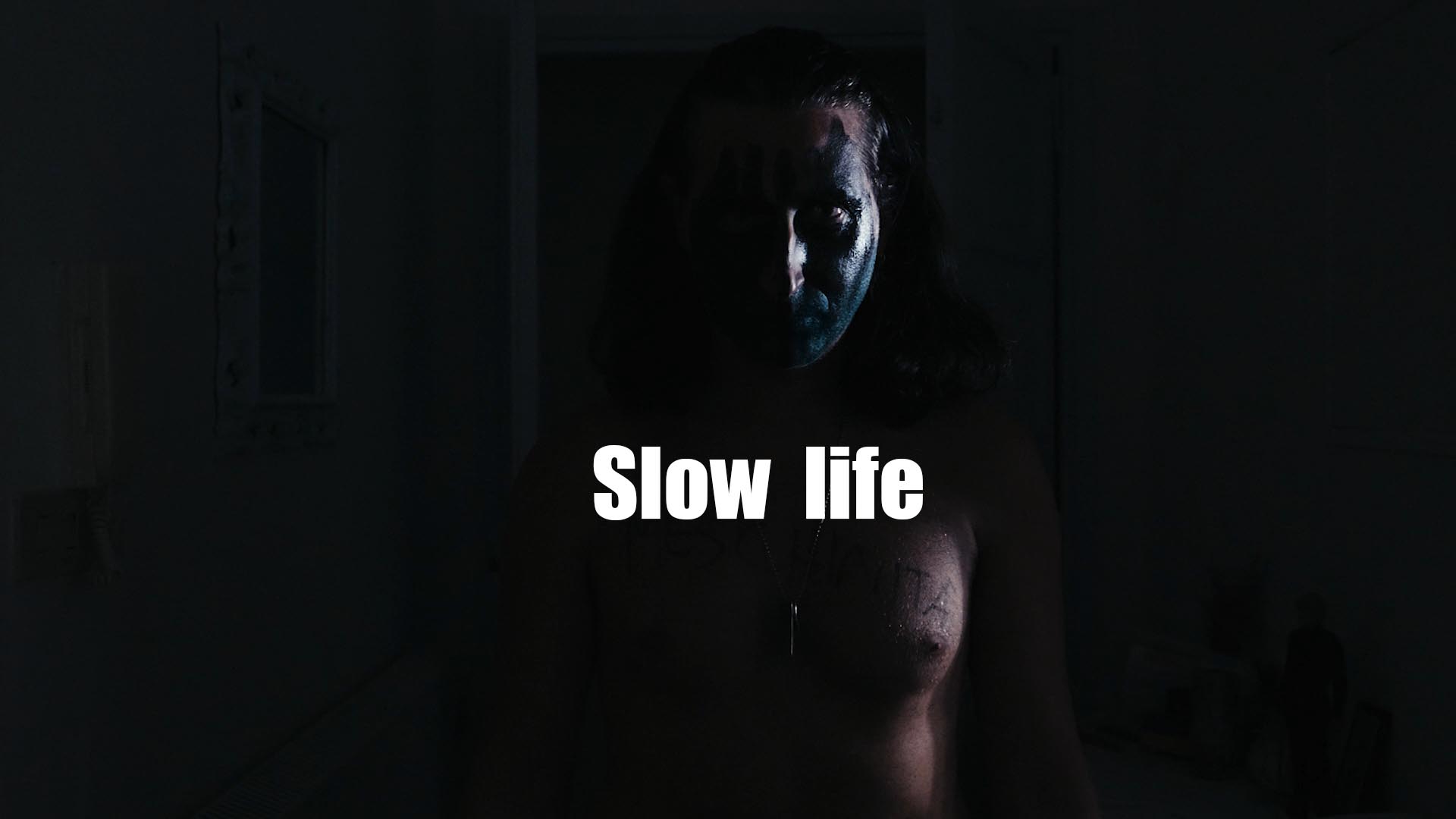
Drama, comedy, thriller, by Fabio Del Greco, Italy, 2021.
Lino Stella takes a period of vacation from his alienating job to devote himself to relaxation and his passion: drawing comics. But he did not foresee certain disturbing elements: the intrusive administrator of the building where he lives, the postman who delivers crazy fines and tax bills, an overbearing security guard, a very enterprising real estate agent, the old lady downstairs who raises the feline colony of the condominium. These characters will make his vacation hell.
Food for thought
The larger a social group is, the more rules and bureaucracy are needed, which often do not respect the individual. You have to learn to live with annoying people, but sometimes the social pressure and arrogance can become intolerable. The only laws that always come to our aid are the laws of Nature.
LANGUAGE: Italian
SUBTITLES: English, Spanish, French, German, Portuguese
The Killing of a Sacred Deer (2017)

Steven Murphy is a brilliant cardiac surgeon with a seemingly perfect life: a beautiful wife, two children, and an impeccable home. His orderly existence is disturbed, however, by his strange friendship with Martin, a fatherless teenager. When Steven introduces Martin to his family, inexplicable and terrifying events begin to manifest. Martin reveals to Steven that he must make an unthinkable sacrifice to atone for a past transgression.
Yorgos Lanthimos transposes the Greek tragedy of Iphigenia in Aulis to a sterile American suburb, creating a work of clinical and unbearable anguish. The suspense in The Killing of a Sacred Deer is not emotional, but cerebral and glacial. The director’s distinctive style, characterized by monotonous dialogue and deliberately unnatural performances, generates a strange and absurd atmosphere. The tension arises from the cold and inescapable logic of Martin’s curse: an archaic, almost biblical justice that befalls a modern and rational world. The impossible choice imposed on Steven—to sacrifice a member of his family to save the others—is the engine of an existential horror. There are no rational explanations; the characters are trapped in a fate that defies medical and scientific logic. Lanthimos forces us to confront the idea of a guilt that demands a terrible price, creating a film that is as much a psychological thriller as it is a mythological nightmare, where the greatest fear is the helplessness in the face of an absurd and cruel justice.
Get Out (2017)

Chris, a young African American photographer, is preparing to meet the parents of his white girlfriend, Rose. Despite his concerns, the Armitage family proves to be overly welcoming. However, a series of bizarre encounters and the unsettling behavior of the family’s Black servants cause a growing unease in Chris, leading him to uncover a terrifying secret beyond all imagination.
With Get Out, Jordan Peele coined the term “social thriller,” redefining the potential of the genre. The film is a masterclass in suspense that finds horror not in the supernatural, but in the very fabric of American society. The threat is not a masked monster, but the smiling, seemingly progressive face of liberal racism. The suspense is masterfully built through micro-moments: a misplaced comment, a stare that lingers too long, an atmosphere of forced politeness that hides a latent hostility. Peele uses powerful symbolism to articulate his critique. The “Sunken Place” is a brilliant metaphor for the marginalization and paralysis of the Black voice in the face of systemic oppression. The teacup, a symbol of bourgeois civility, becomes a tool of mental control. The film brilliantly subverts horror clichés: the isolated house is not haunted by ghosts, but by the legacy of slavery and the exploitation of the Black body. Get Out demonstrates that the most effective suspense is that which is rooted in real and collective fears, transforming a social anxiety into a tangible nightmare.
The stranger
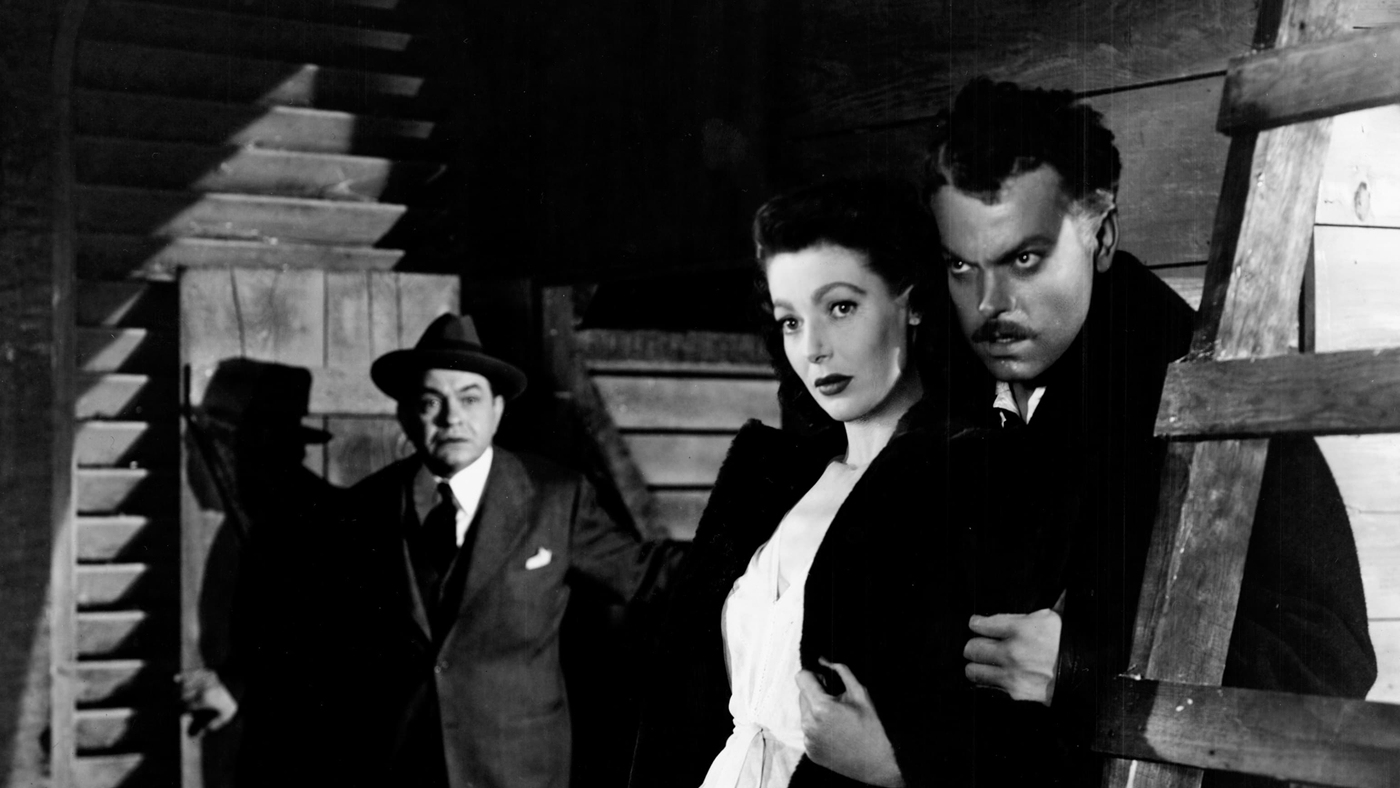
Thriller, by Orson Welles, United States, 1946.
Orson Welles, a filmmaker who has always been against the Hollywood system, did not like this film made inside the studios, but strangely he managed to create a commercial product beyond his own expectations, managing to insert his unmistakable style into it, leaving us an amazing movie. In the small town of Harper, lives Charles Rankin, who is about to marry the daughter of an important judge. But Charles Rankin is actually Frank Kindle, a Third Reich criminal who has created a new identity for himself. However, Inspector Wilson is on the trail of him.
Food for thought
Forget the untruths. For a while, you may feel a certain boredom, fear or lack of motivation: while what is false disappears, it takes time for what is real to assert itself. There will be a transition period. Let it happen, and hold on. Sooner or later your masks will fall, the falsehoods will dissolve, and your true face will appear.
LANGUAGE: english
SUBTITLES: Spanish, French, Germa, Italian, Portuguese
A vision curated by a filmmaker, not an algorithm
In this video I explain our vision
Green Room (2015)

A broke punk rock band, the Ain’t Rights, accepts a last-minute gig at an isolated club in the Oregon woods. After the concert, they discover the venue is a neo-Nazi den. When one of the band members witnesses a murder in the green room, the group barricades themselves inside, beginning a violent and desperate siege for survival against a ruthless enemy.
Jeremy Saulnier orchestrates a siege thriller of almost unbearable brutality and effectiveness. The suspense in Green Room is visceral, physical, and immediate. There is no time for psychological introspection; there is only the primal struggle to survive. The titular green room becomes both a refuge and a deadly trap, a claustrophobic microcosm where the tension is palpable. Saulnier deconstructs the heroism typical of the genre: the protagonists are not action heroes, but scared and unprepared musicians whose decisions are often dictated by panic. The violence is depicted realistically and unpleasantly, without any aesthetic gloss. The horror arises not from stylistic elegance, but from the chaotic and clumsy brutality of the situation. Every escape attempt, every improvised plan, only increases the pressure and reduces hope, making Green Room a tense and breathless experience, a perfect example of how a confined space can become the stage for the purest horror.
The Invitation (2015)

Will reluctantly accepts a dinner invitation to the home of his ex-wife, Eden, whom he hasn’t seen in two years, following the tragic death of their son. The evening, which reunites a group of old friends, is pervaded by a strange, forced cheerfulness and an increasingly unsettling atmosphere. Will, still tormented by grief, begins to suspect that Eden and her new partner have a sinister ulterior motive for the gathering.
Karyn Kusama‘s The Invitation is a masterpiece of slow-burn psychological suspense, set entirely in a single, luxurious house in the Hollywood Hills. Unlike a conventional thriller, the tension is not generated by immediate violence, but by a creeping social discomfort, gaslighting, and growing paranoia. The film masterfully exploits the protagonist’s grief. Will’s trauma makes him an unreliable narrator, and for much of the film, the viewer is forced to wonder if the threat is real or just a projection of his fragile mind. Kusama builds suspense through subtle details: a locked door, a disturbing video, the presence of strangers with ambiguous behavior. The beautiful house, a symbol of success and well-being, progressively becomes a suffocating prison. The explosion of violence in the finale is all the more effective because it comes after an excruciating wait, a slow burn that has brought the tension to a boiling point. It is a film that demonstrates how the deepest fear can arise from the suspicion that the people we once loved have become dangerous strangers.
Silent night, bloody night
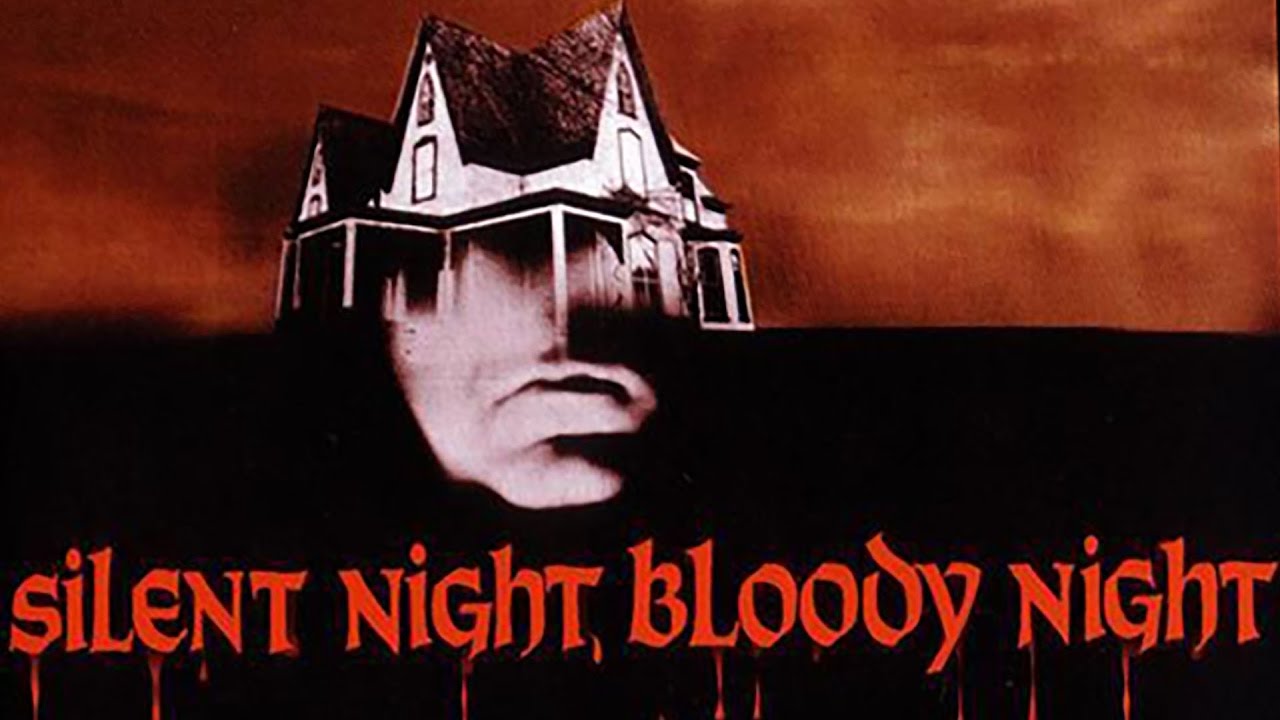
Horror, by Theodore Gershuny, United States, 1972.
1972 American Slasher, is a forerunner horror genre several years before Carpenter's Halloween, with a complex script and first person shooting of the killer, which inspired many subsequent films. Its originality and its narration are what manage to make it a small and little known pearl of the genre. A series of murders in a small New England town on Christmas Eve after a man inherits a family estate that was once a madhouse. Many of the cast and crew members were former Warhol superstars: Mary Woronov, Ondine, Candy Darling, Kristen Steen, Tally Brown, Lewis Love, director Jack Smith, and graduate Susan Rothenberg.
LANGUAGE: english
SUBTITLES: italian, french, spanish
The Witch (2015)

In 1630s New England, a Puritan family is banished from their community and settles on the edge of a foreboding forest. Their devout faith is tested when their newborn son mysteriously disappears. As the harvest fails and paranoia creeps in, the family begins to suspect that their teenage daughter, Thomasin, is a witch, unleashing a spiral of accusations, fear, and horror.
Robert Eggers, with an almost documentary-like philological rigor, creates a work of suspense that is as much a horror film as it is a historical drama. The strength of The Witch lies in its disconcerting authenticity. Using dialogue drawn from diaries and court records of the era, and photography lit almost exclusively by natural light, Eggers transports us to a world where witchcraft was not a fantasy, but a terrifying and tangible reality. The suspense arises not so much from the witch hiding in the woods, but from the psychological disintegration of the family itself. Isolation, hunger, and a suffocating religious fanaticism become fertile ground for suspicion and hysteria. The true horror is the ease with which family love turns into mortal hatred, fueled by fear of the unknown and the search for a scapegoat. The film deliberately leaves open the question of whether the evil is an external supernatural force or a manifestation of the family’s fears and repressed desires. It is this ambiguity that makes The Witch such a profoundly unsettling experience, an immersion into an era where the line between faith and madness was dangerously thin.
Goodnight Mommy (2014)
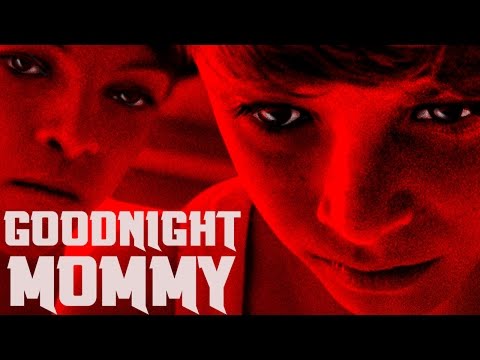
Two ten-year-old twins, Elias and Lukas, await their mother’s return to their isolated country home. When she arrives, her face is completely covered in bandages following cosmetic surgery. Her behavior is cold, distant, and cruel, and she begins to completely ignore Lukas. The boys become convinced that the woman under the bandages is not their real mother and decide to find out the truth by any means necessary.
Goodnight Mommy is a chilling and disturbing psychological thriller that plays with the Freudian concept of the uncanny: the transformation of the familiar into something strange and terrifying. The house, a modern and sterile environment, becomes a theater of psychological warfare between an unrecognizable mother and her suspicious sons. The suspense is built slowly, through an atmosphere of silence and distrust. The bandages on the mother’s face are a powerful visual device, dehumanizing her and turning her into a monstrous “other” in the children’s eyes. The directors, Veronika Franz and Severin Fiala, are masters at manipulating the viewer’s perspective. For much of the film, we are led to sympathize with the twins and doubt the mother’s identity. The violence, when it erupts, is brutal and hard to watch, forcing us to question who the real victim is. The final twist is not a simple narrative trick, but a tragic key that re-contextualizes the entire story, revealing it as a horrifying exploration of trauma, grief, and the fracture of the child psyche.
It Follows (2014)

After a seemingly innocent sexual encounter, nineteen-year-old Jay discovers she is being pursued by a supernatural force. This entity, which can take the form of anyone, follows her slowly but relentlessly. The only way to get rid of it is to pass the curse on to someone else through sexual intercourse. Together with her friends, Jay must find a way to escape a horror that is always just a few steps away.
It Follows intelligently subverts the “sex equals death” horror cliché. In David Robert Mitchell’s film, sex is not a transgression to be punished, but the vehicle for a curse that functions as a powerful and layered metaphor: it can represent sexually transmitted diseases, trauma, or more universally, mortality itself. The suspense is built on a foundation of a simple but brilliant idea: the threat is not fast or aggressive, but slow, constant, and unstoppable. This characteristic generates a pervasive, low-frequency anxiety, turning every person in the background, every figure walking in the distance, into a potential danger. The atmosphere is crucial. The film is immersed in a timeless aesthetic, mixing modern and retro elements, creating a dreamlike and suspended atmosphere, as if the story were taking place in a universal suburban nightmare. Mitchell’s direction is masterful in creating a sense of constant paranoia, using wide shots and slow camera movements to force the viewer to scan the horizon, just like the protagonists. The horror lies not in the jump scare, but in the inescapable awareness that, no matter where you go, “it” is following you.
A Better Life
Drama, thriller, by Fabio Del Greco, Italy, 2007.
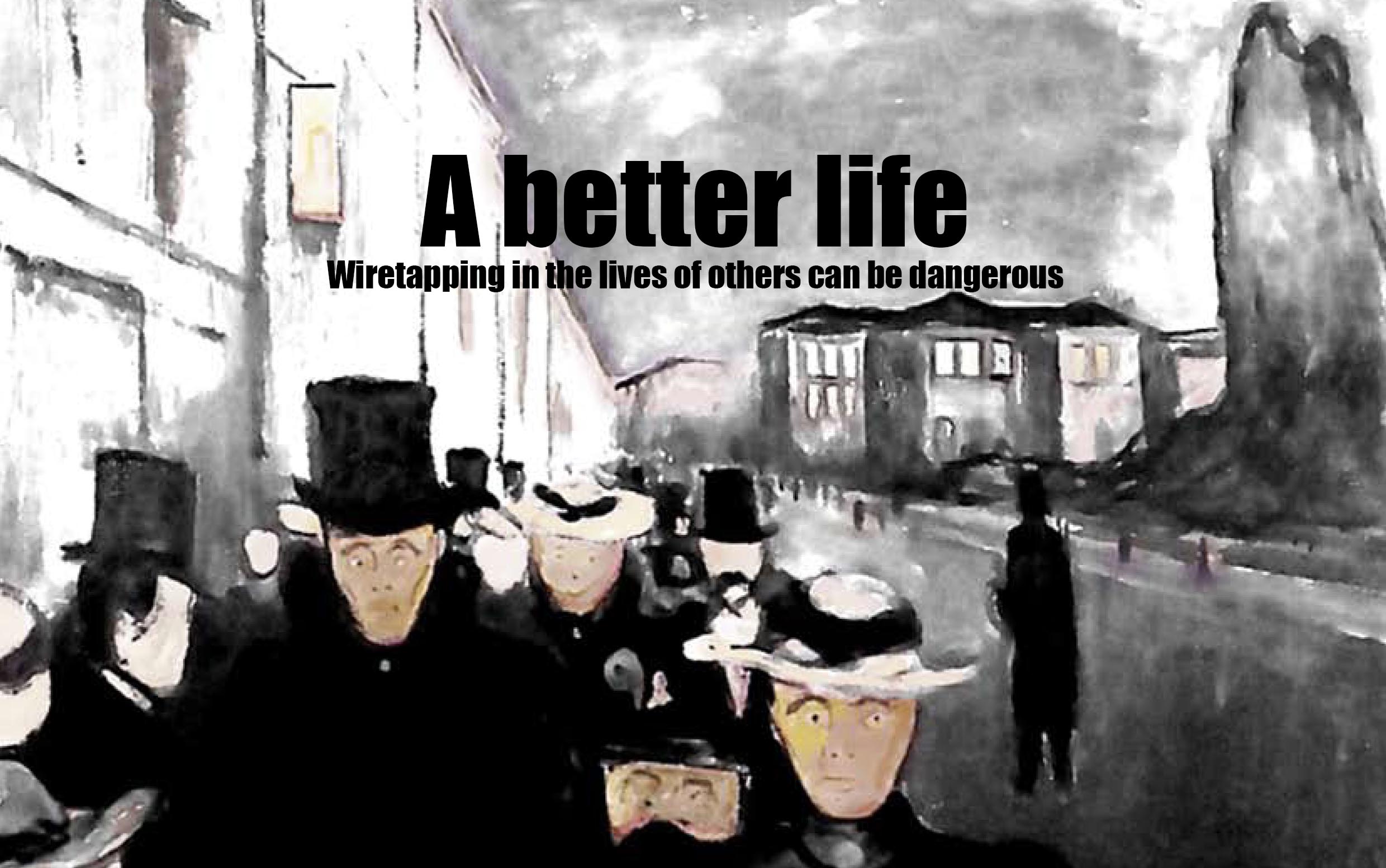
Rome: Andrea Casadei is a young investigator specializing in audio wiretapping who conducts investigations commissioned by husbands betrayed by their wives, or by parents worried about what their children are doing outside the home. But what interests him most is understanding the human soul, listening to casual conversations in the streets, knowing what people think. He often meets in Piazza Navona with his friend Gigi, a frustrated street artist obsessed with success at all costs, with whom he shares a passion for wiretapping. Shocked by the mystery of the disappearance of Ciccio Simpatia, another street artist common friend, Andrea decides to abandon the commissioned works to seek a better life and reflect on his own and others' existence. He will meet the actress Marina and with a bug he will slowly enter her life until he discovers her most unthinkable secrets. The film deals with an important theme of contemporary Western society: the lack of love. The mysterious and tormented figure of Marina is reflected in a gloomy and soulless Rome.
Director Fabio Del Greco declared about his film: "Perhaps this film is a reflection on the art of observing, of listening, in short, of what one does when one leaves the real world to tell about it. Perhaps he wants to talk about the subtle relationship between the mirages of success touted by today's society, power and the most authentic human relationships.A 'dark cloud' hangs over the city: it is engulfing everyone in a sort of indistinct, uniform mass, where everyone thinks the same things, where everyone they are more alone. Where is the truest part that makes us unique? Maybe you can try to intercept it only secretly."
LANGUAGE: Italian
SUBTITLES: English, Spanish, French, German, Portuguese, Dutch.
Coherence (2013)

During a dinner party among friends, the passage of a comet causes a blackout. When the power goes out, the group notices that only one house down the street is still lit. Some of them decide to go ask for help, but they return with a box containing their own photos, taken that same evening. They soon realize that the comet has fractured reality, creating an infinity of parallel universes and identical houses.
Coherence is a miracle of low-budget cinema, a striking demonstration of how a single location and a brilliant idea can generate breathtaking suspense. Shot almost entirely in director James Ward Byrkit‘s own home with a largely improvised script, the film draws its strength from its very production methodology. The tension is not just written, it is lived: the actors, who were given only their characters’ motivations day by day, convey an authentic confusion and paranoia. The premise, based on the Schrödinger’s cat paradox and quantum decoherence, transforms a normal dinner party into an existential nightmare. The suspense grows exponentially as the characters—and the viewer—lose all points of reference. Who is the “real” friend and who is a double from another reality? The house, a symbol of security, becomes a prison of distorting mirrors, where every decision can catapult the characters into a slightly different and more dangerous version of their lives. It is a psychological thriller that plays on our deepest fears: the loss of identity and the fragility of human relationships.
The House of the Devil (2009)

In the 1980s, Samantha, a college student short on cash, accepts a mysterious babysitting job on the night of a total lunar eclipse. She arrives at a large, isolated house where the elderly owners explain there is no child—she is actually there to look after the matriarch of the family. As the night progresses, Samantha begins to suspect that a sinister cult is planning something terrifying.
Ti West’s The House of the Devil is a love letter to the “Satanic Panic” films of the late 70s and early 80s. The film is a masterclass in slow-burn suspense, meticulously building tension through silence, geography, and a sense of mounting isolation. For much of the runtime, nothing overtly horrific happens, yet the audience is gripped by an inescapable feeling of dread. West uses the large, creaky house to its full potential, turning every shadow and locked door into a source of anxiety. The suspense is rooted in Samantha’s vulnerability; she is alone in a strange environment, and the mundane nature of her tasks only highlights the lurking abnormality of the situation. The payoff in the final act is explosive and visceral, providing a stark contrast to the quiet dread of the first hour. It is a film that rewards patience, demonstrating that the most effective suspense often comes from the anticipation of horror rather than the horror itself.
Oldboy (2003)
![Oldboy (2003) Original Trailer [HD]](https://blog.indiecinema.co/wp-content/plugins/wp-youtube-lyte/lyteCache.php?origThumbUrl=https%3A%2F%2Fi.ytimg.com%2Fvi%2FhBNBpNcuQHI%2F0.jpg)
Oh Dae-su, an ordinary man, is kidnapped and imprisoned in a hotel room for fifteen years without any explanation. During his captivity, he learns from television that he has been framed for his wife’s murder. Suddenly released, he is given a cell phone, money, and new clothes. He begins a violent and desperate quest for revenge to discover the identity of his jailer and the reason for his torture.
A masterpiece of South Korean cinema and the central chapter of Park Chan-wook’s “Vengeance Trilogy,” Oldboy is a brutal descent into the abyss of the human psyche. The film transcends the boundaries of the revenge thriller to become a modern Greek tragedy, where the suspense lies not only in the mystery of “who” and “why,” but in the devastating psychological impact of such prolonged isolation. Captivity transforms Dae-su into an obsessed beast, a man whose humanity has been eroded to its core. The violence, though stylized and at times hyperbolic, is never gratuitous; it is the physical expression of his inner torment. Park Chan-wook builds tension through a relentless pace and a series of shocking revelations. However, the film’s true stroke of genius is its ending. The discovery of the truth does not lead to the liberating catharsis of revenge, but to a psychological revelation so atrocious that it completely destroys the protagonist. The suspense transforms into existential horror, proving that some truths are more unbearable than imprisonment itself and that revenge is a cycle that consumes those who seek it.
Mulholland Drive (2001)

A dark-haired woman survives a car crash on Mulholland Drive but loses her memory. She takes refuge in a Hollywood apartment, where she is discovered by Betty Elms, a hopeful aspiring actress. Together, the two women try to uncover the identity of the mysterious “Rita,” venturing into a world of dreams, secrets, and dangers hidden behind the glittering facade of the City of Angels.
David Lynch, the ultimate auteur, uses suspense not as a plot mechanism, but as a state of mind, a pervasive atmosphere that permeates every frame. Mulholland Drive is a narrative labyrinth that operates according to the logic of a dream, where tension arises not from the fear of what might happen, but from the feeling that reality itself is unstable and on the verge of collapse. The first part of the film is an illusion, the idealized dream of Diane Selwyn, a failed actress, who reinvents herself as the talented and innocent Betty. In this dream, she transforms the woman she loves and who rejected her, Camilla, into the vulnerable and dependent Rita. The suspense is a thin veil covering an abyss of pain, jealousy, and failure. Lynch guides us through this dreamscape with recurring symbols—a blue key, a mysterious box—that act as anchors in a sea of surrealism. The brutal transition from the dream to the squalid reality in the final third of the film is the real twist: the accumulated suspense is discharged not in an explosion of violence, but in an emotional implosion. It is a film that must be “felt” before it is understood, an experience that demonstrates how the deepest suspense is that which arises from the mystery of identity itself.
Mystery of an Employee

Drama, thriller, by Fabio Del Greco, Italy, 2019.
Someone wants to control the life of the employee Giuseppe Russo: the products he buys, his political and religious faith, his private life, even his dreams. But he will do anything to escape control and find his true self. Giuseppe is a man of around 45, married, with a stable job and a home of his own. His life flows seemingly peacefully when he meets a mysterious tramp who gives him some old VHS video cassettes. Giuseppe begins to see video tapes in which he is filmed in some moments of his life since he was a child, then as a teenager and as a young man. Who shot those videos that he remembers nothing about? Giuseppe has the strange sensation of being constantly observed and begins to investigate what is happening. Through his investigation of him, he begins to rediscover his true identity and become aware of who he truly is.
Employee's Mystery is a film that highlights the danger of social control and shows a society where everyone is constantly monitored and conditioned in their deepest selves. The film is also an analysis of human nature and identity. Fabio Del Greco, who plays Giuseppe, gives an engaging performance. Equally good is Chiara Pavoni, in the role of Giada Rubin and Roberto Pensa in the role of the tramp. Employee's Mystery is a film that addresses important themes in an original way, a psychological thriller that keeps the viewer glued to the screen until the end: a metaphor for contemporary society, in which people are increasingly monitored and conditioned by the media and technologies . It is a courageous and provocative work, which addresses important themes in an original way.
LANGUAGE: Italian
SUBTITLES: English, Spanish, French, German, Portuguese
Donnie Darko (2001)

Donnie Darko is a troubled teenager who is awakened one night by a mysterious voice. He follows the voice and meets Frank, a disturbing figure in a rabbit costume, who announces the end of the world in 28 days. While he is outside, a jet engine crashes into his bedroom. Saved by this surreal event, Donnie begins to navigate between apocalyptic visions, time travel, and the typical anxieties of adolescence.
Independent cinema is the only place where a work as boldly unclassifiable as Donnie Darko could have been born. Richard Kelly blends teen drama, philosophical science fiction, and psychological thriller into a unique amalgam that defies every label. The film’s suspense derives not from a conventional threat, but from its deep and persistent ambiguity. Is Donnie a paranoid schizophrenic or a “Living Receiver” tasked with saving a tangent universe from destruction? The film refuses to give a definitive answer, and it is in this uncertainty that its strength lies. The narrative immerses us in a dreamlike, almost Lynchian atmosphere, where the logic of the real world unravels. The unease arises from the feeling that the forces at play are cosmic and incomprehensible, and that the fate of a single individual is tied to that of the entire universe. It is a cult film precisely because its suspense does not end with the viewing but continues to resonate in the viewer’s mind, inviting them to reassemble the pieces of an existential puzzle with no single solution.
Primer (2004)

Two young engineers, Aaron and Abe, work on tech projects in their garage. During an experiment aimed at reducing the weight of objects, they accidentally discover an unexpected side effect: a time machine. Initially, they use it for small gains in the stock market, but soon their discovery drags them into a vortex of paradoxes, duplicates, and paranoia, testing their friendship and their very perception of reality.
Primer is perhaps the most extreme example of intellectual suspense, a film that categorically refuses any compromise with the viewer. Made on a budget of only $7,000, Shane Carruth‘s film is an hermetic work that relies on dense, jargon-filled dialogue and an incredibly complex plot. The suspense arises not from the fear of an external threat, but from the intellectual terror of failing to understand the implications of what is happening. Carruth places us in the same position as his protagonists: we are witnesses to a revolutionary discovery, but we are just as incapable of controlling its consequences. The film’s minimalist aesthetic—the time machine is a simple gray box, the locations are anonymous garages and storage units—anchors the science-fiction idea in a prosaic reality, making it even more unsettling. The real tension of the film is the disintegration of trust between Aaron and Abe. The ability to alter the past destroys their relationship, creating a labyrinth of double-crosses and multiple versions of themselves. Primer is an experience that requires multiple viewings, a puzzle that demonstrates how the most effective suspense can derive not from clarity, but from a deep and deliberate confusion.
Memento (2000)

Leonard Shelby is an insurance investigator whose life is shattered by his wife’s murder. Due to a head injury sustained during the attack, he suffers from anterograde amnesia, which prevents him from creating new memories. To track down the killer, he relies on a system of Polaroids, notes, and tattoos, trying to piece together a puzzle whose image fades every few minutes.
Memento is not a film about memory loss; it is the cinematic experience of memory loss. Christopher Nolan, with a modest budget but a brilliant idea, does not just tell the story of his protagonist’s condition but imposes it on the viewer through a revolutionary narrative structure. The color sequences, which proceed backward, throw us into the same state of confusion as Leonard: each scene begins without the context of what preceded it. The suspense arises not from the question “what will happen next?” but from a distressing and continuous query: “why did what we just saw happen?” The black-and-white sequences, which move forward chronologically, provide an anchor, an apparent linear path to the truth. When the two timelines converge in the finale, the revelation offers not catharsis, but an existential vertigo. We realize that memory is not a reliable archive, but a narrative we construct to survive. It is a masterpiece of psychological suspense that demonstrates how the greatest innovation can arise not from an unlimited budget, but from the perfect fusion of form and content.
Pi (1998)

Max Cohen is a solitary and paranoid math genius, convinced that everything in nature can be understood through numbers. Using a self-built supercomputer in his Chinatown apartment, he tries to decipher the patterns of the stock market. His research leads him to discover a mysterious 216-digit number, which attracts the attention of both a powerful Wall Street firm and a sect of Kabbalistic Jews.
Darren Aronofsky‘s debut is a sensory assault, a micro-budget psychological thriller that transforms paranoia into an aesthetic. Shot on a shoestring budget on high-contrast black-and-white film, Pi is not just a stylistic choice but the visual representation of its protagonist’s fractured and obsessive mind. Max’s world is binary: order and chaos, black and white, rationality and madness. The grainy, overexposed photography immerses us in his claustrophobic perspective, while Clint Mansell‘s electronic score, combined with diegetic sounds like drills and drips, becomes the sonic transposition of his excruciating headaches. The suspense is not tied to a physical antagonist but to Max’s descent into the spiral of his own obsession. The search for a universal order becomes a curse, and the viewer is dragged into this feverish quest, forced to wonder where genius ends and madness begins. It is proof that independent cinema can create a totalizing and terrifying experience with minimal means, relying solely on the strength of a radical authorial vision.
Following (1998)

A young, unemployed writer, seeking inspiration, begins to follow random people through the streets of London. He imposes strict rules on himself to avoid being discovered, but soon breaks them, attracting the attention of one of the men he is tailing. The man reveals himself to be Cobb, a charismatic thief who introduces him to the world of burglary. The writer is thus drawn into a dangerous game of manipulation and deceit.
Before Memento and Inception, Christopher Nolan laid the groundwork for his labyrinthine cinema with this zero-budget debut. Following is a lean and essential neo-noir that already contains all the DNA of its author: a fascination with complex narrative structures, an obsession with identity and deception. Shot in 16mm black and white, the film transforms its production limitations into stylistic strengths. Its non-linear structure, which jumps between three different moments in the protagonist’s life, is not a stylistic whim but a narrative necessity. It allows Nolan to build the mystery and suspense piece by piece, revealing information in a fragmented way and forcing the viewer to question everything they see. The tension arises from the protagonist’s progressive loss of control, a voyeur who goes from being an observer to a pawn in a game much larger than himself. It is a debut feature that demonstrates how a strong authorial vision can shape a compelling thriller even with the most meager means, laying the foundation for one of the most significant careers in contemporary cinema.
A vision curated by a filmmaker, not an algorithm
In this video I explain our vision

