

But beyond the pyrotechnic spectacle, a cinema exists that uses action differently. It is a territory where violence is not just entertainment, but an extension of the character and a means to explore the human condition. It is a cinema that, often with limited resources, replaces lavish special effects with creativity, ingenuity, and a raw physicality.
The Best Action Movies of the 2020s
In the 2020s, action cinema breaks down every geographical and stylistic border. Indian productions like RRR redefine the concept of epic with a maximalism that the West had forgotten, blending mythology, musicals, and exaggerated violence. The genre also embraces the narrative chaos of the multiverse (Everything Everywhere All At Once), fusing kung fu and existential comedy. In parallel, a strand of rough, political action emerges (like Monkey Man), using the brutality of hand-to-hand combat to tell stories of social revenge and redemption in an increasingly complex world.
Boy Kills World (2024)

In a dystopian and deranged future, Boy is a deaf-mute young man with a vivid imagination, whose family was murdered by the tyrannical Van Der Koy dynasty. Fleeing into the jungle, he is trained by a mysterious shaman to become a lethal weapon. On the eve of the annual culling ritual, Boy returns to the city to exact his revenge, accompanied by an inner voice from a video game narrating his exploits.
Produced by Sam Raimi, this film is an acid trip of hyper-kinetic action. It blends the aesthetic of beat ’em up video games, anime, and splatter comedy. It is visually exuberant, colorful, and choreographed with a unique style that uses the camera in inventive ways (first-person shots, drones). It is not your usual serious action movie: it is a theme park of blood and visual creativity for those looking for something completely outside the box.

Kill (2024)

During a train journey to New Delhi, army commando Amrit discovers that the woman he loves has been forced into an arranged marriage and is on board with her family. The situation spirals when a gang of 40 knife-wielding bandits storms the train to rob it. Amrit and his fellow soldier turn the narrow, claustrophobic carriages into a slaughterhouse, unleashing total war against the bandits on the moving train.
This Indian film is action in its purest and most claustrophobic form, often compared to The Raid. Forget Bollywood dance numbers: this is about brutal martial arts, stabbings, and close-quarters combat in tight spaces. The choreography is incredible, and the violence escalates minute by minute into an operatic massacre. It is the most intense and physical action movie of the year, technically impressive.
Monkey Man (2024)

Inspired by the legend of Hanuman, the film follows Kid (Dev Patel), an anonymous young man who ekes out a living in an underground fight club where he gets beaten to a pulp night after night. After years of suppressed rage, Kid finds a way to infiltrate the city’s sinister elite enclave to hunt down the men who took everything from him as a child. Thus begins an explosive and bloody campaign of revenge through the slums and skyscrapers of a dystopian Mumbai.
Dev Patel’s directorial debut (produced by Jordan Peele), this film has been called the “Indian John Wick,” but with a much grittier and political soul. The action is not polished: it is sweaty, desperate, and visceral. The fight choreography is brutal, and the direction is frenetic. It is a pure action film that blends social critique and aesthetic violence with rare power.
Mayhem! (2023)

Sam is a model inmate who, during a leave, decides to escape to start a new life in Thailand with his family. Five years later, he lives quietly working as a porter, but his past catches up with him: a local boss forces him back into the criminal underworld. When his family is threatened and killed, Sam unleashes a vengeful fury across Thailand, using his Muay Thai skills to carve a path through his enemies.
Directed by Frenchman Xavier Gens, this is a lean and powerful revenge movie. The first part builds dramatic tension, the second is an explosion of martial violence. The hallway and elevator fight sequence is already modern action cinema anthology. It is a physical film, where you can feel bones breaking, perfect for those who love realistic martial arts cinema devoid of CGI.
A vision curated by a filmmaker, not an algorithm
In this video I explain our vision
Sisu (2023)

Finland, 1944. Aatami Korpi is a legendary ex-commando who has chosen to live in solitude panning for gold in the wilderness of Lapland. When he finally finds a rich vein, he encounters a Nazi patrol that decides to steal his treasure and kill him. Big mistake. The Nazis soon discover they haven’t messed with an ordinary man, but with an unstoppably killing machine who literally “refuses to die.”
From Finland comes this instant cult classic that is pure kinetic joy. The plot is stripped to the bone (almost silent), leaving room only for creative and ultra-violent action. It is a mix between Rambo and Mad Max, but with grotesque dark humor. Sisu is a hymn to physical resilience: explosions, mines, hand-to-hand combat, and a protagonist who survives the impossible. Sadistic entertainment of the highest level.
RRR (Rise Roar Revolt) (2022)

In colonial India of the 1920s, two legendary revolutionaries undertake opposite paths before meeting. Alluri Sitarama Raju is a police officer serving the British Empire with iron dedication (but with a secret plan), while Komaram Bheem is a tribal warrior who has come to Delhi to rescue a young girl kidnapped by the English governor. The two forge a brotherly friendship without knowing each other’s identities, until fate pits them against one another and then unites them against the Empire.
From India (a Tollywood production in the Telugu language, not Bollywood) arrives a cyclone of cinematic maximalism directed by S.S. Rajamouli. RRR laughs in the face of the laws of physics and Western minimalism. Everything is exaggerated, epic, colorful, and incredibly sincere. Analysis of the action scenes shows unbridled creativity mixing mythology, digital effects, and extreme wire-work.
The Best Action Movies of the 2010s
The 2010s saw a return to the purity of action thanks to directors coming from the stunt world (as in John Wick). Frenetic editing was abandoned in favor of long, steady, and geometric shots that clearly showcased the actors’ athletic abilities. It is the decade of tactical “Gun-Fu” and productions staking everything on extreme practical realism, like Mad Max: Fury Road and Mission: Impossible, where CGI is used only to erase safety wires and the actor risks their safety for the spectacle.
The Villainess (2017)

Sook-hee was trained from childhood to become a lethal assassin. After carrying out a bloody revenge, she is captured by a secret government agency that offers her a second chance: work for them as an undercover agent for ten years, and then gain her freedom and a new identity. But the past, and the enemies she left behind, are not easy to forget.
The Villainess (originally Ak-Nyeo) is an explosion of technical virtuosity that pushes the boundaries of action cinema. Director Jung Byung-gil creates sequences of astonishing visual complexity and audacity, starting with an incredible opening scene shot entirely in first-person, which feels like a cross between a video game and a nightmare. The film never stops, moving from sword fights to motorcycle chases with a fluidity and creativity that are breathtaking.
Mission: Impossible – Fallout (2018)

Ethan Hunt and his IMF team must recover three stolen plutonium cores before a terrorist group known as “The Apostles” uses them to cause a nuclear apocalypse. The mission initially fails, forcing Hunt into a race against time and into a partnership with a brutal CIA agent, August Walker, whose methods are diametrically opposed to his own.
The Mission: Impossible saga has always relied on practical stunts, but Fallout reaches unexplored heights. Christopher McQuarrie directs a film that is a collection of incredible set-pieces: the HALO (High Altitude Low Opening) jump from 25,000 feet, the motorcycle chase in Paris against traffic, and the final helicopter pursuit where Tom Cruise personally pilots the aircraft. It is a masterpiece of modern blockbuster engineering.
Upgrade (2018)

In the near future, a mechanic named Grey Trace is left paralyzed after a brutal assault in which his wife is killed. A billionaire inventor offers him an experimental cure: an artificial intelligence implant called STEM, which restores control of his body and grants him superhuman physical abilities. Grey uses his new powers to hunt down those responsible, uncovering a dark conspiracy.
Written and directed by Leigh Whannell, Upgrade is an intelligent, violent sci-fi film with biting black humor. The action stands out due to a unique camera technique synchronized with the actor’s movements, creating fluid, precise, and almost robotic fight sequences. It is a creative “B-movie” in the best sense, exploring transhumanism through a compelling revenge plot.
Mandy (2018)

Red Miller lives a quiet life in the woods with his beloved Mandy. Their existence is shattered when a deviant cult kidnaps Mandy. After witnessing an unimaginable horror, Red embarks on a surreal and bloody spiral of revenge, armed with a self-forged axe and an unquenchable thirst for blood.
Directed by Panos Cosmatos, Mandy is a psychedelic and hallucinatory journey steeped in an 80s heavy metal aesthetic. The film is divided into a dreamy first half and an explosion of primordial violence in the second. Nicolas Cage’s unhinged performance anchors this visionary work, which uses neon lights and red filters to create a cinematic fever dream.
Hell or High Water (2016)

In West Texas, two brothers—a divorced father and a trigger-happy ex-convict—carry out a series of bank robberies to save their family ranch from foreclosure. Their actions attract the attention of a Texas Ranger on the verge of retirement, who is determined to catch them in one last, great manhunt.
Written by Taylor Sheridan, Hell or High Water is a melancholy neo-western and a powerful portrait of an America in crisis. The film is a long-distance duel between the robbers and the law, set against a backdrop of economic desperation. It combines the suspense of a heist thriller with profound social commentary and memorable performances by Chris Pine and Jeff Bridges.
Bone Tomahawk (2015)

In the Old West, a tribe of troglodyte cannibals kidnaps several inhabitants of a quiet town. The local sheriff assembles an unlikely rescue party: an elderly deputy, an arrogant gunslinger, and a cowboy with a broken leg. The group ventures into hostile territory, unaware of the extreme horror that awaits them.
S. Craig Zahler’s directorial debut is a bold cross between a western and a horror movie. It utilizes a “slow-burn” approach, dedicating time to character building before exploding into shocking, explicit violence in the finale. The film makes no concessions to the viewer, emphasizing the brutality of a lawless world through a stoic and terrifying lens.
Green Room (2015)

A broke punk rock band, the “Ain’t Rights,” agrees to play a gig at an isolated club, only to discover it is a neo-Nazi den. After witnessing a murder in the green room, they are trapped by the club owner and his skinheads. A brutal and no-holds-barred siege ensues as the band fights to escape.
Jeremy Saulnier confirms his mastery of tension with this claustrophobic and ruthless thriller. Green Room is a survival horror that relies on plausibility, making the situation even more distressing. The film features a chilling performance by Patrick Stewart as the calculating leader of the skinheads and uses the raw energy of punk music as a backdrop for unfiltered violence.
’71 (2014)

Belfast, 1971, at the height of the “Troubles.” Gary Hook, a young British army recruit, is accidentally separated from his platoon during a riot in a Catholic neighborhood. Unarmed and lost in enemy territory, he must survive an entire night, hunted by IRA members in a city divided by hatred.
Yann Demange‘s debut is a tense, immersive survival thriller. Using a handheld camera to capture the chaos, the film makes the viewer feel the protagonist’s confusion and fear. ’71 doesn’t take political sides, instead focusing on the absurdity of conflict through the eyes of a soldier who is merely a pawn in a game he doesn’t understand.
The Guest (2014)

The Peterson family is grieving their son who died in Afghanistan when David, a polite former soldier and friend of their son, arrives at their home. As they welcome him, a series of mysterious and violent deaths occur in town. The daughter, Anna, begins to suspect that David’s charming exterior hides a lethal secret.
Directed by Adam Wingard, The Guest is a stylish homage to 80s action thrillers like The Terminator. It blends suspense, black humor, and a synth-pop soundtrack with modern flair. Dan Stevens provides a magnetic performance as the unpredictable and menacing “guest” in this self-aware and highly entertaining genre piece.
Blue Ruin (2013)

Dwight is a homeless man living out of his car who learns that the man who killed his parents is being released from prison. He returns to his hometown to carry out an act of revenge, but his incompetence as a killer triggers a bloody and unintended feud with his enemy’s family.
Jeremy Saulnier deconstructs the revenge thriller by focusing on a protagonist who is ordinary, scared, and unprepared. The violence in Blue Ruin is never spectacular; it is clumsy, dirty, and realistic. The film shows the true cost of violence, emphasizing that revenge often brings no catharsis, only an escalating cycle of suffering.
Dredd (2012)

In a dystopian future, Mega-City One is a violent metropolis where “Judges” act as judge, jury, and executioner. Judge Dredd is assigned to evaluate a psychic rookie during a mission into a 200-story mega-block controlled by the drug lord Ma-Ma. She seals the building and orders the inhabitants to kill the Judges.
Written by Alex Garland, Dredd is a faithful and gritty adaptation of the original comic. The film stands out for its unique visual style, particularly the “Slo-Mo” sequences that depict violence with hypnotic beauty. Karl Urban provides a perfect, implacable portrayal of Dredd in this essential and brutally efficient action film.
Attack the Block (2011)

During Guy Fawkes Night in London, a teenage gang robs a nurse, only to have their crime interrupted by a falling meteorite. After killing the small alien creature inside, the boys must defend their council estate from an invasion of larger, fiercer monsters, allying with their victim to survive.
Joe Cornish‘s debut is a fresh mix of sci-fi, horror, and social critique. By placing an alien invasion in a realistic urban context, the film subverts genre clichés. The protagonists use their street smarts and local knowledge to fight back, offering a sharp reflection on prejudice and heroism in a high-energy, independent British package.
Drive (2011)

A solitary stuntman moonlights as a getaway driver for robberies. His life, governed by strict rules and emotional detachment, changes when he falls for his neighbor, Irene. To protect her, he becomes entangled in a dangerous deal that unleashes a wave of unprecedented violence.
Nicolas Winding Refn directs this minimalist masterpiece of style. Drive is a sensory neo-noir where silence and aesthetic dominate. The action is rare but erupts with shocking brutality, contrasting with the neon-lit, synth-pop-heavy atmosphere of Los Angeles. Ryan Gosling‘s magnetic performance defines this contemplative and artistic take on the action genre.
13 Assassins (2010)

In 1844, the sadistic Lord Naritsugu threatens the stability of Japan. A samurai named Shinzaemon is charged with assembling a team of assassins to kill the Lord. Thirteen warriors ambush Naritsugu and his 200 guards in a village transformed into a labyrinthine death trap.
Takashi Miike directs this masterful remake, balancing a tense, political first hour with a spectacular 45-minute final battle. The samurai utilize explosives, barriers, and flaming oxen in a display of feudal urban guerrilla warfare. The film captures the raw desperation of combat, moving from elegant technique to a mud-and-blood struggle for survival.
The Raid: Redemption (2011)

A special police squad raids a dilapidated apartment building in Jakarta to take down a ruthless drug lord. The mission goes wrong, leaving the officers trapped inside. They must fight their way through hordes of armed criminals, floor by floor, in a desperate struggle to reach the top and survive.
Gareth Evans revolutionized action cinema with this Indonesian masterpiece. The Raid is 100 minutes of non-stop intensity, utilizing the Indonesian martial art of Pencak Silat. The choreographies are complex, fast, and brutal, setting a new benchmark for martial arts cinema. The film’s vertical arena structure creates a relentless, physical experience for the viewer.
The Best Action Movies of the 2000s
The 2000s reacted to the CGI excess of the previous decade by seeking a new visceral realism. The Bourne saga imposed the “shaky cam” style and rapid editing, making fights brutal and chaotic. Even James Bond adapted with a physical and suffering reboot in Casino Royale. In parallel, the success of Crouching Tiger, Hidden Dragon globalized the wuxia genre, demonstrating that action can be visual poetry, while Eastern cinema continued to push the limits of choreographed violence with works like Oldboy.
District 9 (2009)

In 1982, a massive alien spaceship stops over Johannesburg, South Africa. Thousands of malnourished aliens are found and transferred to a refugee camp called District 9. Twenty years later, the camp has become a slum. A clumsy bureaucrat is tasked with managing the aliens’ relocation, but an accident exposes him to a mysterious substance that will begin to transform him.
Produced by Peter Jackson and directed by newcomer Neill Blomkamp, District 9 is a science fiction film that strikes with its originality and metaphorical power. Shot in a mockumentary style, it is a powerful allegory of apartheid and xenophobia. The action is dirty, chaotic, and brutal, proving that science fiction can be both spectacular and profoundly political.
The Dark Knight (2008)

Batman, with the help of Lieutenant Gordon and District Attorney Harvey Dent, begins to dismantle Gotham’s criminal organizations. However, the emergence of a new criminal mastermind, the Joker, plunges the city into anarchy, forcing the Dark Knight to walk the fine line between heroism and vigilantism to save Gotham from its own madness.
Christopher Nolan transforms the superhero genre into an epic urban crime drama. The pioneering use of IMAX cameras lends an unprecedented scale to the action. The underground tunnel chase, culminating in the real flipping of an 18-wheeler without CGI, demonstrates Nolan’s commitment to practical realism, making the stakes feel dangerous and metallic.
In Bruges (2008)

After a job gone wrong in London, two Irish hitmen, veteran Ken and young Ray, are sent by their boss to Bruges, Belgium. While Ken is fascinated by the medieval city, Ray sinks into guilt over his mistake. The forced wait turns into an existential exploration among tourists, dwarves, and a dark code of honor.
Playwright Martin McDonagh makes his directorial debut with a perfect balance of black comedy and existential drama. The dialogue is as sharp as a blade, and the tension is built on uncertainty. When violence erupts, it does so suddenly and tragically, highlighting the absurdity of the human condition through exceptional performances by Colin Farrell and Brendan Gleeson.
Taken (2008)

Bryan Mills, a divorced former CIA agent, witnesses via telephone the kidnapping of his teenage daughter in Paris. With only 96 hours before the trail goes cold, Mills flies to Europe and unleashes his “very particular set of skills” to dismantle the criminal organization and save his daughter, showing no mercy.
Taken launched Liam Neeson as the archetype of the “geriatric action” star. The fighting style is economic and direct, based on Krav Maga and strikes designed to neutralize opponents as quickly as possible. There is no elegance here, only lethal efficiency, punctuated by one of the most iconic monologues in modern cinema history.
The Chaser (2008)

A former detective turned pimp frantically searches for a missing girl, suspecting a serial killer among his clients. Na Hong-jin’s debut is a relentless, morally ambiguous chase film that subverts genre expectations at every turn, generating suffocating tension from its very first frames.
Na Hong-jin constructs a masterclass in sustained dread, refusing the cathartic resolutions typical of the thriller genre. The film’s grimy Seoul streets become a labyrinth of institutional failure and human desperation. Song Joong-ki’s kinetic direction and Ha Jung-woo’s raw, physically committed performance elevate what could be mere pulp into genuinely disturbing social commentary about powerlessness and systemic indifference.
Hot Fuzz (2007)

Nicholas Angel is the best cop in London, so his superiors “promote” him to the quiet village of Sandford to stop making them look bad. Paired with a clumsy partner who is obsessed with action movies, Angel deals with village fairs until he discovers that Sandford hides a dark, violent secret.
Edgar Wright creates a love letter to “buddy cop” cinema. The film is a meticulous deconstruction of Hollywood clichés re-contextualized in the English countryside. Wright’s hyper-kinetic editing transforms mundane scenes into moments of great cinema, leading to a finale with shootouts that rival the blockbusters it pays homage to.
The Bourne Ultimatum (2007)

Jason Bourne, the former CIA assassin with no memory, continues his quest to uncover his true identity. Hunted by a new generation of killers, Bourne travels from Moscow to Tangier to settle the score with his past once and for all.
Paul Greengrass perfects the “shaky cam” style, using visual chaos to immerse the viewer in the immediacy of combat. Bourne uses any object at hand—a book, a towel—as an improvised weapon. The Waterloo Station sequence is a brilliant set-piece of mental and tactical tension, cementing Bourne as the gritty anti-Bond of the decade.
Casino Royale (2006)

James Bond, newly promoted to “00” status, must stop Le Chiffre, a banker who finances terrorists. The mission leads to a high-stakes poker tournament at Casino Royale, where Bond must bankrupt his opponent. But the game is only part of a larger and more violent intrigue.
Casino Royale performed a necessary reboot of the franchise, introducing a young, fallible, and highly physical Bond. Martin Campbell stripped 007 of implausible gadgets, turning action into sweat and blood. The opening Madagascar chase defines the character: while the terrorist moves with parkour fluidity, Bond crashes through walls like a “blunt instrument.”
The Host (2006)

An amphibious monster born from chemical pollution emerges from the Han River and kidnaps a young girl. Her eccentric family—a dim-witted father, alcoholic uncle, and archery champion aunt—decides to defy the army to save her.
Bong Joon-ho subverts the rules of the monster movie, mixing action, family drama, and political satire. The protagonists are not flawless heroes but a flawed, believable family. The monster is the catalyst that reveals societal cracks, making the film a brilliant and unpredictable work of independent spirit.
A Bittersweet Life (2005)

Kim Sun-woo is the loyal right-hand man of a mafia boss. When tasked with watching the boss’s young mistress, a moment of hesitation and pity changes his life forever, unleashing a bloody war against his former employers.
Director Kim Jee-woon delivers a visually stunning South Korean neo-noir. The action is choreographed like a deadly dance, both brutal and aesthetically impeccable. Beneath the revenge thriller lies an existential drama about solitude, where Lee Byung-hun masterfully conveys the inner turmoil of a man who loses everything for a single moment of humanity.
Layer Cake (2004)

A meticulous London cocaine dealer has planned his early retirement. However, his boss gives him two final tasks: to track down a drug-addicted daughter and to broker a massive ecstasy deal. These tasks suck him into the dangerous “layer cake” of the British underworld.
Matthew Vaughn’s directorial debut is a sophisticated and cynical thriller. It relies more on suspense and power plays than bombastic action, with violence that is swift and realistic. This film served as Daniel Craig‘s unofficial audition for James Bond, proving he could embody a character balanced between control and chaos.
Kill Bill: Volume 1 (2003)

The Bride, a former assassin, wakes from a four-year coma after being attacked on her wedding day. Having lost her baby, she draws up a death list and sets off on a global mission to kill the members of the “Deadly Viper Assassination Squad” and their leader, Bill.
Quentin Tarantino creates a pop blender of samurai films, spaghetti westerns, and anime. The battle at the “House of Blue Leaves” is a triumph of excessive choreography. Tarantino switches between color and black-and-white to pay homage to 70s cinema, transforming dismemberment into stylized abstract art and formal visual pleasure.
Oldboy (2003)
![Oldboy - Trailer [HD]](https://blog.indiecinema.co/wp-content/plugins/wp-youtube-lyte/lyteCache.php?origThumbUrl=https%3A%2F%2Fi.ytimg.com%2Fvi%2F2HkjrJ6IK5E%2F0.jpg)
Oh Dae-su is kidnapped and imprisoned in a hotel room for fifteen years without explanation. Suddenly released, he is challenged to discover the reason for his imprisonment in five days. His quest drags him into a spiral of conspiracy and a shocking truth.
Park Chan-wook’s masterpiece consecrated South Korean cinema globally. The iconic corridor fight, filmed in a single long take, metaphorically defines the protagonist: he is a desperate man moving forward with sheer willpower. Oldboy is a psychological tragedy where violence expresses primal rage and deep-seated guilt.
Ong-Bak: Muay Thai Warrior (2003)

When a sacred Buddha head is stolen from a Thai village, young Ting, an expert in Muay Thai, goes to Bangkok to retrieve it. He must fight his way through the city’s criminal underworld using his elbows and knees.
Ong-Bak is a manifesto of stunt purity: “No CGI, No Wire, No Stunt Doubles.” Tony Jaa executes jumps and kicks that seem impossible but are entirely real. The use of instant replay from multiple angles proves the physicality of the stunts to the viewer, bringing global attention back to pure athleticism and paving the way for a new generation of martial arts cinema.
City of God (2002)

Through the eyes of an aspiring photographer, the film chronicles two decades of organized crime in a Rio de Janeiro favela. It follows the rise of psychopathic drug lord Li’l Zé and the struggle of those looking for a way out of the cycle of violence.
City of God is an overwhelming, hyperkinetic experience. Shot in real favelas with largely non-professional actors, the film has a documentary power. The action is chaotic and dirty, capturing the energy of the margins. Its international success proved that the most powerful stories often come from the world’s most overlooked places.
Battle Royale (2000)

In a dystopian Japan, a ninth-grade class is randomly selected, taken to an island, and forced to fight to the death until only one remains. Each student is equipped with a random weapon and an explosive collar.
Directed by veteran Kinji Fukasaku, this film is a deeply subversive social satire. The violence is a vehicle for reflections on authoritarianism and the generation gap. The fighters are ordinary kids, and every death carries a tragic weight, making Battle Royale a chilling psychological experiment on the collapse of civilization.
Crouching Tiger, Hidden Dragon (2000)

In Qing Dynasty China, the legendary “Green Destiny” sword is stolen, forcing swordsman Li Mu Bai and warrior Yu Shu Lien to confront their past and a rebellious young aristocrat named Jen Yu.
Ang Lee elevated the wuxia genre to noble art. The action scenes are emotional extensions of the characters; the bamboo forest fight is a poetic peak of “wire-fu” that expresses master-student conflict and repressed desire. Lee demonstrates that action can be silent, elegant, and deeply romantic, defying gravity to respect emotion.
The Best Action Movies of the 1990s
The 1990s mark total hybridization. Hollywood absorbed the Hong Kong style (John Woo), bringing acrobatic shootouts (“Gun Fu”) and choreographic elegance to the mainstream. Simultaneously, Terminator 2 and The Matrix demonstrated how CGI could be used not just to create monsters, but to invent a new physics of action (like Bullet Time). It is a decade of perfect transition, blending the grandeur of old practical stunts with the infinite possibilities of digital, producing some of the genre’s most balanced and innovative masterpieces.
The Matrix (1999)

Thomas Anderson, a hacker known as Neo, discovers that reality is a computerized simulation created by machines to enslave humanity. Freed by a group of rebels led by Morpheus, Neo learns he is “The One,” a figure capable of manipulating the simulation’s rules to lead a revolution against the system.
The Wachowskis redefined cinema’s visual vocabulary by fusing cyberpunk philosophy, Hong Kong martial arts, and the revolutionary “Bullet Time” technique. This technology allowed the camera to move at normal speed around a subject slowed down in time, forever changing the perception of scenic space. The “Lobby Shootout” remains an iconic display of “Gun Fu,” blending digital innovation with massive practical destruction.
Ghost Dog: The Way of the Samurai (1999)

Ghost Dog is an African-American hitman living in Jersey City who follows the ancient code of the samurai. He serves a local mobster who once saved his life. When the mafia decides to eliminate him after a failed job, Ghost Dog uses his warrior philosophy to systematically confront his former masters.
Director Jim Jarmusch transformed the gangster genre into a meditative reflection on honor and culture. Blending the Hagakure philosophy with a hip-hop soundtrack by RZA, the film treats action as a ritual rather than spectacle. It is an “anti-action” movie that favors atmosphere and psychological depth over traditional pacing, proving the genre’s versatility in the hands of an auteur.
Run Lola Run (1998)

Manni has lost 100,000 marks belonging to a gangster and has only twenty minutes to recover them. He calls his girlfriend Lola, who begins a frantic race through Berlin. The film explores three different versions of this run, showing how minor variations in her path lead to vastly different outcomes for everyone she encounters.
Tom Tykwer’s German cult classic is an injection of pure cinematic adrenaline. By treating Lola’s runs like lives in a video game, the film explores themes of fate and free will through hyper-kinetic editing and a pounding techno score. It remains a landmark of 90s independent energy, using split-screens and animation to maintain a breathless narrative pace.
Heat (1995)

Neil McCauley is a disciplined professional thief; Vincent Hanna is the obsessive detective determined to catch him. Their lives collide in Los Angeles during a high-stakes bank heist that spirals into an all-out urban war, affecting their crews and personal lives alike.
Michael Mann’s crime epic features the most realistic shootout in cinema history: the bank escape. By recording the live, deafening roar of assault rifles and training actors with real SAS instructors, Mann achieved a level of tactical authenticity previously unseen. The sequence is studied in military academies for its accurate portrayal of movement, suppression fire, and weapon handling under pressure.
Léon: The Professional (1994)

Léon is a solitary hitman whose routine is shattered when he protects Mathilda, a twelve-year-old girl whose family was murdered by corrupt DEA agents. He reluctantly teaches her his “trade” so she can seek revenge, forming a deep, tragic bond that challenges his detached existence.
Luc Besson fused European stylistic sensibility with American thriller iconography. The film’s action is precise and lethal, particularly during the final claustrophobic SWAT siege. By focusing on the emotional growth of the protagonists—portrayed by Jean Reno and a debuting Natalie Portman—Besson elevated the hitman archetype into a narrative about redemption and lost innocence.
Speed (1994)

A terrorist plants a bomb on a city bus that will arm at 50 mph and explode if the speed drops below that limit. SWAT officer Jack Traven boards the moving vehicle and must navigate Los Angeles traffic while searching for a way to defuse the device without slowing down.
Speed is the ultimate “high concept” action movie, maintaining inexorable tension through a simple, relentless premise. Director Jan de Bont used the highway environment as a series of obstacles, utilizing superb practical effects—including a real bus jump—to keep the stakes visceral. It remains a masterclass in maintaining momentum within a confined setting.
Hard Boiled (1992)
![Hard Boiled (1992) ORIGINAL TRAILER [FHD]](https://blog.indiecinema.co/wp-content/plugins/wp-youtube-lyte/lyteCache.php?origThumbUrl=https%3A%2F%2Fi.ytimg.com%2Fvi%2F_fcwFheTLdE%2F0.jpg)
Inspector “Tequila” Yuen and an undercover agent named Alan team up to take down a brutal arms smuggling triad. Their mission culminates in a devastating siege on a hospital, where they must protect civilians while fighting through an army of criminals.
John Woo’s Hong Kong masterpiece is a symphony of “Heroic Bloodshed” and choreographed destruction. The film is legendary for its three-minute “oner”—a continuous long take through hospital corridors—and its staggering body count. It represents the pinnacle of analog action, where pyrotechnics and stunt work were synchronized with balletic precision.
El Mariachi (1992)

A traveling musician is mistaken for a ruthless hitman who hides weapons in a guitar case. Hunted by a local drug lord’s henchmen in a small Mexican town, the mariachi is forced to defend himself, transforming from a simple artist into a lethal man of action.
Robert Rodriguez’s debut is a legend of “guerrilla filmmaking,” shot for just $7,225. Using wheelchairs as dollies and non-professional actors, Rodriguez proved that ingenuity could replace a massive budget. The film’s raw energy and dynamic editing launched a career and inspired a generation of independent filmmakers to pursue their visions despite financial constraints.
Reservoir Dogs (1992)

Six criminals with code names are hired for a diamond heist that goes bloodily wrong due to a police tip-off. The survivors gather in a warehouse, where paranoia takes hold as they attempt to identify the informant among them.
Quentin Tarantino’s debut rewrote the rules by keeping the actual heist off-screen, focusing instead on the explosive dialogue and non-linear aftermath. It is a cerebral action-thriller where words are as lethal as bullets. The film’s single-location setting and pop-culture-heavy monologues made it a cornerstone of 90s independent cinema and “cool” auteur filmmaking.
Terminator 2: Judgment Day (1991)

The liquid metal T-1000 is sent from the future to kill a young John Connor. To protect him, the resistance sends a reprogrammed T-800. Together with John’s mother, Sarah, they attempt to stop the impending nuclear apocalypse orchestrated by the AI Skynet.
James Cameron revolutionized the industry by integrating pioneering CGI with heavy practical stunts. While the T-1000 showcased the future of digital effects, sequences like the drainage canal chase relied on real trucks and motorcycles leaping off bridges. The film’s crystalline spatial clarity and emotional depth set a benchmark for the “perfect” action blockbuster.
Point Break (1991)

FBI agent Johnny Utah goes undercover to infiltrate a group of surfers suspected of being the “Ex-Presidents” bank robbers. As he grows closer to the group’s charismatic leader, Bodhi, Utah becomes seduced by their adrenaline-fueled lifestyle, blurring the lines between law and loyalty.
Kathryn Bigelow turned a high-octane premise into a “Zen” exploration of male bonding and transcendence. The film’s foot chase used a revolutionary “pogo-cam” to put the viewer directly into the breathless pursuit. Bigelow’s direction treats action—surfing, skydiving, and shootouts—as an intense, spiritual experience, defining the “100% pure adrenaline” philosophy of the era.
The Best Action Movies of the 1980s
The 1980s are the decade of the “One Man Army.” Action was dominated by sculpted physiques like those of Stallone and Schwarzenegger, embodying an unstoppable force capable of defeating entire armies, reflecting the muscular politics of the Reagan era. However, towards the end of the decade, Die Hard brought about a Copernican revolution by introducing the vulnerable hero, who bleeds and suffers. It is the peak of practical special effects: explosions were real, stunts were performed live, and action cinema reached its maximum pyrotechnic power before the advent of digital.
The Killer (1989)

Jeff, a professional hitman with a code of honor, accidentally blinds a singer during a job. He takes one last contract to pay for her surgery, but finds himself betrayed by his bosses and pursued by a cop who begins to respect his integrity. The two must eventually form an uneasy alliance.
John Woo elevated the “Heroic Bloodshed” genre to a level of operatic tragedy. Using his signature “dual-wielding” gunplay and slow-motion sequences, Woo treated shootouts as ballets of sparks and debris. The final church sequence is a masterclass in emotional action, using the “Mexican standoff” to highlight the spiritual bond between the hunter and the hunted.
Die Hard (1988)

New York cop John McClane visits his wife in Los Angeles for Christmas, only for her office building to be seized by German terrorists. Barefoot and alone, McClane must navigate the Nakatomi Plaza to rescue the hostages and stop the heist led by the sophisticated Hans Gruber.
Die Hard fundamentally changed the action hero archetype. Bruce Willis played a vulnerable, “everyman” hero who actually gets hurt and expresses fear. Director John McTiernan’s use of “vertical geography” ensures the viewer always understands exactly where McClane is within the skyscraper, creating a coherent, high-stakes spatial logic that revolutionized the genre.
Aliens (1986)

After 57 years in hypersleep, Ellen Ripley returns to the planet where her crew first encountered the Xenomorph, this time accompanied by a squad of Colonial Marines. They soon discover that a colony has been overrun by an entire nest of the creatures.
James Cameron successfully pivoted from Ridley Scott’s atmospheric horror to an intense sci-fi war film. Sigourney Weaver’s Ripley became the ultimate action icon—a survivor driven by maternal instinct rather than military duty. Cameron’s “blue-collar” aesthetic makes the futuristic technology feel dirty and real, grounding the spectacular action in a believable industrial reality.
Police Story (1985)

Inspector Chan Ka-kui frames a drug lord but is subsequently framed for murder himself. He must protect a key witness and clear his name while facing waves of thugs in increasingly dangerous environments.
This film is a monument to physical risk. Jackie Chan performed stunts that remain legendary for their danger, most notably the final descent down a pole covered in live, exploding lights in a shopping mall. Unlike Hollywood, which used clever editing, Chan relied on pure athleticism and a willingness to endure real pain, defining the Hong Kong action style of the era.
First Blood (1982)

John Rambo, a traumatized Green Beret veteran, is harassed by a small-town sheriff. The mistreatment triggers his combat instincts, leading him to escape into the mountains and launch a guerrilla war against the police force hunting him.
While the sequels became synonymous with excessive violence, the original First Blood is a poignant character study on PTSD. Sylvester Stallone portrays Rambo as a broken man rather than a killing machine. The film’s “booby trap” choreography transformed the woods into a tactical extension of Rambo’s psyche, giving the action an emotional and political weight.
Mad Max 2: The Road Warrior (1981)

In a post-apocalyptic wasteland where gasoline is the only currency, Max helps a small community defend their oil refinery against a horde of marauders. He agrees to drive a fuel tanker through enemy lines in a desperate bid for freedom.
George Miller’s sequel is “kinetic poetry.” With minimal dialogue, the story is told entirely through visual momentum. The 15-minute final chase, performed with real vehicles and no CGI, set the standard for the punk-apocalyptic aesthetic. It is essentially a “Western on wheels,” where clear direction makes the brutal, high-speed collisions easy to follow.
Raiders of the Lost Ark (1981)

In 1936, archaeologist Indiana Jones is hired by the US government to find the Ark of the Covenant before the Nazis can use its supernatural power to become invincible. His journey takes him from the mountains of Nepal to the deserts of Egypt.
Spielberg and Lucas created the definitive adventure film by paying homage to 1930s serials. Harrison Ford’s Indy is an iconic yet fallible hero. The desert truck chase is a masterclass in “action geography,” clearly establishing the positions of all players to maintain a logical flow. The stunt where Indy passes under the moving truck remains a triumph of practical effects.
The Best Action Movies of the 1970s
The 1970s brought action to real streets and dojos. It was the global explosion of martial arts thanks to Bruce Lee, who transformed hand-to-hand combat into philosophy and pure spectacle. Simultaneously, American police cinema became rough, cynical, and documentary-like (as in The French Connection), with directors risking their lives filming unauthorized chases in real traffic. It is a decade dominated by solitary anti-heroes and a tangible sense of danger, where technical imperfection became synonymous with authenticity.
The Warriors (1979)
In New York, youth gangs gather for a truce, but when a charismatic leader is killed, the blame falls on “The Warriors.” Unarmed and far from home, they must cross the city in one night, pursued by every other gang and the police, fighting yard by yard to return to Coney Island.
Walter Hill’s stylized urban odyssey blends Greek mythology with comic book aesthetics. The action is a kinetic, continuous chase where every gang possesses a unique visual and fighting style. Hill’s use of neon, graffiti, and nighttime photography creates a surreal landscape, while the physicality of jumping turnstiles and bathroom brawls defined the “brawler” aesthetic for decades.
Mad Max (1979)

In a dystopian Australia on the brink of collapse, patrol officer Max Rockatansky witnesses the murder of his family by a motorcycle gang. Consumed by rage, he takes his V8 Interceptor onto the highways to hunt them down, transforming into a silent avenger.
George Miller’s “Ozploitation” manifesto turned a meager budget into a masterclass of motorized death. The stunts were notoriously dangerous, performed without CGI, capturing a sense of genuine peril as twisted metal collided under a blinding sun. This film didn’t just launch Mel Gibson; it birthed the modern post-apocalyptic anti-hero.
Drunken Master (1978)

Wong Fei-hung is an undisciplined youth sent to be trained by Beggar So, a sadistic and perpetually drunk master. Wong eventually learns the “Eight Drunken Immortals” style, a technique that uses unpredictable, off-balance movements to confuse opponents.
While Bruce Lee was stoic, Jackie Chan used this film to invent Kung Fu Comedy. The hero is fallible—he feels pain and frequently retreats. The choreography requires superhuman body control; Chan must appear to be falling while maintaining millimetric precision. Every fight is a rhythmic puzzle, establishing the standard for Hong Kong’s acrobatic action.
Sorcerer (1977)

Four international fugitives in a remote South American village agree to drive two trucks loaded with unstable, old dynamite through 200 miles of jungle. The slightest bump will cause the nitroglycerin to explode, making the journey a suicidal test of endurance.
William Friedkin’s masterpiece is the pinnacle of existential tension. The action is mechanical and sweaty, focusing on the sounds of straining engines and creaking wood. The rope bridge sequence, filmed with real trucks on an unstable structure during a storm, remains one of the most harrowing examples of practical stunt work in cinema history.
Enter the Dragon (1973)

A Shaolin monk named Lee is recruited to infiltrate a martial arts tournament on a private island owned by a drug lord. Lee seeks both justice and personal revenge, leading to a series of deadly duels that test his skills and philosophy.
This film consecrated Bruce Lee as an icon. He stripped away the theatricality of classic kung fu for an efficient, charisma-heavy brutality. The hall of mirrors finale is a thematic masterpiece; Lee must destroy illusions (reflections) to find the truth, serving as a perfect visual metaphor for his Jeet Kune Do philosophy.
The French Connection (1971)

New York detectives “Popeye” Doyle and Buddy Russo chase an international heroin ring. Doyle, an obsessive and often illegal cop, launches a frantic manhunt against a French smuggler amidst the freezing, dirty streets of Brooklyn.
William Friedkin redefined realism with “guerrilla filmmaking.” The legendary car-versus-train chase was shot largely without permits, launching a car into real Brooklyn traffic. The handheld camera work and fragmented editing create a sense of uncontrolled, terrifying chaos that abandoned “cool” choreography for raw, desperate immersion.
Dirty Harry (1971)

Harry Callahan, a San Francisco inspector who takes on the “dirty” jobs, hunts “Scorpio,” a psychopathic sniper blackmailing the city. Frustrated by bureaucratic constraints, Harry takes justice into his own hands with his .44 Magnum.
Don Siegel and Clint Eastwood codified the “rogue cop” archetype. The action isn’t acrobatic; it’s built on tension and overwhelming firepower. Harry doesn’t run—he walks with a determined stride. The use of San Francisco’s urban geography, from rooftops to stadiums, turned the city into a labyrinth of moral ambiguity and violence.
The Best Action Movies of the 1960s
The 1960s were a decade of radical disruption. On one hand, the James Bond phenomenon introduced the “techno-thriller,” combining action with espionage, gadgets, and pop exoticism. On the other, films like Bullitt invented the modern car chase, based on physical realism and speed. Towards the end of the decade, directors like Sam Peckinpah and Sergio Leone revolutionized the depiction of violence, using frenetic editing and slow motion to make shootouts a visceral, bloody, and operatic experience, erasing the innocence of old westerns forever.
The Wild Bunch (1969)

In 1913, as the Old West dies under the weight of modernity, a gang of aging outlaws attempts one last score. Chased by bounty hunters into the heart of the Mexican Revolution, they ultimately choose a suicidal act of honor against a corrupt general.
Sam Peckinpah revolutionized action editing with this film. By fragmenting scenes into hundreds of rapid-fire shots and mixing normal speed with slow motion, he created a “ballet of death.” The final “Battle of Bloody Porch” utilized innovative explosive squibs to show the visceral reality of gunfire, ending the era of the bloodless Western and ushering in hyper-violent modern cinema.
Bullitt (1968)

San Francisco police lieutenant Frank Bullitt is tasked with protecting a mob witness. When the witness is assassinated, Bullitt launches a personal investigation that leads to a legendary high-speed pursuit through the city’s iconic hills.
Bullitt set the gold standard for the car chase. Rejecting the “rear projection” tricks of the time, Steve McQueen and director Peter Yates filmed at actual speeds exceeding 100 mph. The sequence is defined by its lack of music, letting the roar of the V8 engines and the mechanical clang of suspensions provide the soundtrack. It transformed the vehicle into a primary character in action storytelling.
Dragon Inn (1967)

During the Ming Dynasty, a powerful eunuch executes a minister and hunts his children. The children find refuge in the Dragon Gate Inn, where a group of swordsmen and martial artists stage a strategic defense against an approaching army.
King Hu’s wuxia masterpiece turned a single location into a tactical chessboard. Technical analysis reveals a revolutionary use of vertical space, with fighters jumping between tables and mezzanines as if defying gravity. Hu treated action with a percussive, musical rhythm, elevating swordplay into a form of elegant abstract art that deeply influenced modern directors like Quentin Tarantino.
The Dirty Dozen (1967)

A rebellious Major is ordered to train twelve death-row convicts for a suicide mission: parachute behind enemy lines to destroy a Nazi retreat before D-Day. If they survive, they receive a pardon.
Robert Aldrich’s film is the progenitor of the “men on a mission” subgenre. It broke war movie taboos by portraying its protagonists as sociopaths and the mission as a brutal massacre. The final assault on the château—involving pouring gasoline into bunkers—replaced patriotic heroism with a gritty, nihilistic focus on survival at any cost.
The Good, the Bad and the Ugly (1966)

Three gunmen—Blondie, Tuco, and Angel Eyes—race across the battlefields of the American Civil War to find a buried stash of Confederate gold. Their journey culminates in a legendary three-way standoff in a desert cemetery.
Sergio Leone understood that tension is often more powerful than the explosion itself. He pioneered the “dilation of time,” using extreme close-ups of eyes and hands to build a sense of immense potential kinetic energy. The final “triello” (three-way duel) is a masterclass in editing, where the cuts shorten in synchronization with the music to reach a state of nervous exhaustion before a single shot is fired.
Goldfinger (1964)

James Bond investigates Auric Goldfinger, a magnate planning to contaminate the U.S. gold reserve at Fort Knox with an atomic bomb. Bond must dismantle “Operation Grand Slam” using his wits and a lethal array of high-tech gadgets.
Goldfinger perfected the “Bond formula,” introducing canonical elements like the gadget-laden Aston Martin DB5 and the physically overwhelming henchman, Oddjob. It marked a shift toward the “techno-thriller,” where action became a larger-than-life spectacle assisted by technology, moving the series away from the simpler spy roots of its predecessors.
The Great Escape (1963)

Allied escape experts are gathered in a maximum-security Nazi camp. They organize a massive plan to break out 250 men by digging three tunnels simultaneously, leading to a desperate manhunt across occupied Germany.
John Sturges’ film is a hymn to human ingenuity. While much of the tension is procedural—discerning the logistics of soil disposal and forged papers—the finale features one of cinema’s most iconic stunts: Steve McQueen’s motorcycle jump over barbed wire. Performed without digital tricks, the scene became a global symbol of rebellion and the power of practical action.
Yojimbo (1961)
![Yojimbo (1961) Original Trailer [4K]](https://blog.indiecinema.co/wp-content/plugins/wp-youtube-lyte/lyteCache.php?origThumbUrl=https%3A%2F%2Fi.ytimg.com%2Fvi%2Fnazk6Zpm_Ks%2F0.jpg)
A wandering ronin arrives in a town torn between two rival criminal bosses. He skillfully plays both sides against each other, manipulating the factions into mutual destruction to free the town from their tyranny.
Akira Kurosawa created the archetype of the cynical, solitary anti-hero that would eventually define the “Man with No Name.” Unlike the theatrical duels of early cinema, Yojimbo features explosive, brutal, and efficient combat. Kurosawa used composition, wind, and dust to create a geometric sense of dynamism, while Toshiro Mifune’s magnetic performance redefined “cool” for the global screen.
The Best Action Movies of the 1950s
The 1950s saw action expand thanks to new panoramic formats like CinemaScope, designed to compete with television. While Hollywood focused on spectacular thrillers à la Hitchcock, the true action revolution came from abroad. Akira Kurosawa in Japan forever redefined the rules of battles and kinetic editing with Seven Samurai, introducing the concept of the hero team and the use of telephoto lenses to immerse the viewer in the chaos of combat, influencing all subsequent Western cinema.
North by Northwest (1959)

Roger Thornhill, a sophisticated advertising executive, is mistaken for a non-existent spy. This case of mistaken identity triggers a cross-country chase where Thornhill must outrun both the police and a ring of assassins to uncover the truth and survive.
Alfred Hitchcock essentially invented the “set-piece” narrative that would become the blueprint for the James Bond franchise. Rather than a linear plot, the film is a series of spectacular action sequences connected by a thread of pursuit. The famous crop duster scene is a masterclass in subverting expectations: Hitchcock places the threat in a wide-open, sun-drenched field where there is nowhere to hide, proving that silence and open space can be as terrifying as any dark alley.
The Bridge on the River Kwai (1957)

British prisoners of war are forced to build a railway bridge for the Japanese in Burma. As the prisoners struggle to maintain their dignity through the construction, an Allied commando unit treks through the jungle with one goal: to destroy the bridge upon its completion.
David Lean’s war epic is a study of tragic irony. The action is divided between the grueling procedural mission of the commandos and the titanic feat of engineering. The film is legendary for its finale: the destruction of the bridge was not a miniature effect, but a real train driven off a real bridge built specifically for the production. This tangible authenticity gives the “big bang” a weight that modern CGI rarely captures.
The Searchers (1956)

Confederate veteran Ethan Edwards embarks on a years-long mission to rescue his niece from a Comanche tribe. As the search drags on, his hatred deepens, and his companions begin to fear that Ethan intends to kill the girl rather than “save” her from her captors.
John Ford used the VistaVision format to turn the American West into a vast, imposing character. The film is not about quick-draw duels but the brutal attrition of the frontier. Ford deconstructs the action hero, showing how the capacity for violence required to survive in the wilderness ultimately makes the hero an outcast from the civilization he is trying to protect.
Seven Samurai (1954)

A village of desperate farmers hires seven ronin to protect their crops from an impending raid by bandits. The samurai, each with unique skills, must train the peasants and prepare the village for a bloody, final confrontation in the mud and rain.
Akira Kurosawa’s masterpiece is arguably the most influential action film in history. It pioneered the “men on a mission” trope and the use of multiple cameras to capture the flow of combat from several angles simultaneously. The final battle is a visceral display of “controlled chaos,” where mud and rain act as physical obstacles that weigh down the warriors, stripping the combat of any romanticized glory.
The Wages of Fear (1953)
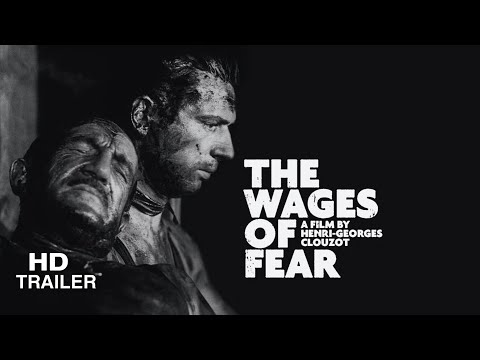
Four desperate men are hired to drive two trucks loaded with unstable nitroglycerin over treacherous mountain roads to extinguish an oil fire. Because the slightest jolt will cause an explosion, every inch of the journey is a grueling psychological and physical test.
Henri-Georges Clouzot created the “mother of all kinetic thrillers” by focusing on the tension of moving slowly. Action here is derived from static obstacles: a rotting ramp or a spilled oil slick become life-or-death hurdles. The film’s tangible realism—from the actors’ visible sweat to the groaning mechanics of the trucks—taught cinema that an extreme situation and a zero margin for error are all that is needed for high-octane action.
The Best Action Movies of the 1940s
Under the shadow of World War II, 1940s action cinema abandoned fairy-tale lightness to embrace realism and grit. War films became the core of action, bringing real military technologies, planes, and combat tactics to the screen that audiences saw in newsreels. In parallel, the influence of noir made urban action dirtier and more desperate. Fighting was no longer for honor or a lady, but for survival in a morally ambiguous world, laying the groundwork for the modern thriller.
White Heat (1949)

Cody Jarrett, a psychopathic gang leader with a mother complex, escapes prison to pull off a massive heist at a chemical plant. Unaware that his new partner is an undercover agent, Jarrett’s sanity unravels as the law closes in, leading to a fiery industrial standoff.
Raoul Walsh ended the decade by injecting the gangster genre with adrenaline and madness. James Cagney’s performance transformed the villain into an unpredictable force of nature. The final siege atop the gas tanks is a triumph of pyrotechnics and set design, shifting action from dark alleys to an “industrial apocalypse” that anticipated the high-stakes destruction of modern blockbusters.
Stray Dog (1949)
![Stray Dog (1949) Original Trailer [4K]](https://blog.indiecinema.co/wp-content/plugins/wp-youtube-lyte/lyteCache.php?origThumbUrl=https%3A%2F%2Fi.ytimg.com%2Fvi%2FafA0M0rO72I%2F0.jpg)
In the sweltering heat of post-war Tokyo, a young detective has his pistol stolen. Obsessed with guilt after the gun is used in a murder, he descends into the city’s underworld. Alongside a veteran partner, he pursues the thief through a city that feels like a physical furnace.
Akira Kurosawa effectively invented the “buddy cop” dynamic and the modern procedural thriller with this film. The action is defined by a kinetic, constant pursuit through an urban environment. By using rapid editing and handheld shots to capture the suffocating summer heat, Kurosawa made the city itself a physical obstacle, culminating in a mud-caked, unglamorous struggle that stripped action of its traditional Hollywood polish.
Red River (1948)

Thomas Dunson is a tyrannical rancher attempting to drive ten thousand cattle across dangerous territory. When his authoritarianism sparks a mutiny led by his adopted son, Dunson vows revenge, chasing the caravan across the plains in a clash of wills and physical endurance.
Howard Hawks utilized “mass movement” as the primary source of action. The cattle stampede sequence is one of the most impressive practical stunts ever filmed, featuring thousands of real animals and stuntmen in genuine peril. Hawks demonstrated that action could be the engine of a Shakespearean tragedy, using the sheer scale of the frontier to mirror the generational conflict between its protagonists.
My Darling Clementine (1946)
![My Darling Clementine (1946) ORIGINAL TRAILER [HD 1080p]](https://blog.indiecinema.co/wp-content/plugins/wp-youtube-lyte/lyteCache.php?origThumbUrl=https%3A%2F%2Fi.ytimg.com%2Fvi%2F2aF5QQoGgCE%2F0.jpg)
Wyatt Earp takes the job of town marshal in Tombstone to avenge his murdered brother. Supported by the dying Doc Holliday, Earp cleans up the town, leading to the inevitable and legendary showdown against the Clanton gang at the O.K. Corral.
John Ford used “action geometry” to turn a historical shootout into visual poetry. Unlike later, more bombastic versions, Ford relied on silence and the spatial positioning of the shooters. He taught that the moments of stasis before the first shot are as vital as the violence itself, defining the stoic hero who uses force only with surgical, moral efficiency.
Objective, Burma! (1945)

A paratrooper unit sabotages a Japanese radar station in the Burmese jungle. When their extraction fails, they must undertake a grueling march of hundreds of miles through hostile territory, pursued by an invisible and numerically superior enemy.
Raoul Walsh created the archetype for the “mission movie,” a spiritual precursor to Saving Private Ryan. The film is noted for its maniacal attention to tactical detail and the collective, rather than individual, nature of the heroism. By removing background music during firefights, Walsh achieved a documentary-like realism that captured the physical fatigue and raw brutality of jungle warfare.
Sahara (1943)

An American tank crew and a motley group of stragglers find themselves isolated in the Libyan desert. Barricaded at a nearly dry oasis, they must trick a thirsty German battalion into a brutal siege, relying on tactical deception and sheer grit to survive the scorching sun.
Zoltan Korda’s minimalist masterpiece focused on “implosive” action. The M3 Lee tank, “Lulubelle,” is treated as a character and a mobile fortress. The combat is raw and dusty, emphasizing strategy over grand maneuvers. It serves as a study in how geography—in this case, the lack of water—can be a more lethal enemy than the opposing army.
Air Force (1943)
[suspicious link removed]
The crew of a B-17 bomber arrives in Hawaii during the Pearl Harbor attack and must navigate a lethal odyssey across the Pacific. From the Philippines to the Coral Sea, they fight through waves of enemy fighters while struggling to keep their damaged plane in the air.
Howard Hawks focused on the “professionalism” of war. The film is a technical marvel for 1943, blending real footage with scale models so detailed they remain indistinguishable. The action is claustrophobic, often filmed from inside the fuselage to transmit the organized chaos and physical terror of aerial combat to the viewer.
High Sierra (1941)

Roy Earle, a career criminal seeking one last score, heads to the mountains to organize a resort heist. As fate turns against him, he is pursued through the Sierra Nevada, leading to a desperate, vertical siege among the high peaks.
Raoul Walsh moved the gangster genre from urban streets to vertiginous open spaces. Humphrey Bogart’s performance introduced the “weary man of action,” a prototype for the existential noir heroes of the future. The final sequence on the mountain peaks is a tour de force of spatial tension, using the landscape to heighten the tragedy of Earle’s final stand.
The Mark of Zorro (1940)

Don Diego Vega returns to Spanish California to find it oppressed by a corrupt regime. To fight back without endangering his family, he plays the part of a cowardly fop by day and the masked vigilante Zorro by night.
Rouben Mamoulian’s film is the pinnacle of the “swashbuckler” style. The final duel between Tyrone Power and Basil Rathbone is widely considered the greatest fencing scene in Hollywood history. By removing background music, Mamoulian allowed the metallic rhythm of the blades and the fighters’ breathing to create a kinetic tension that relied on real speed rather than camera tricks.
The Best Action Movies of the 1930s
With the advent of sound and color, the 1930s transformed action into a sophisticated and theatrical spectacle. It is the golden age of the “Swashbuckler” genre, dominated by the charisma of Errol Flynn. Action was no longer just acrobatic but became rhythmic and sonic: the clang of swords mixed with witty dialogue exchanged during duels. Directors began using massive orchestral scores to guide the emotion of the clashes, creating an ideal of romantic, elegant, and choreographed heroism that defined the classic Hollywood standard.
Stagecoach (1939)

A group of disparate passengers—including an outlaw, a doctor, and a banker—must cross the Arizona territory in a stagecoach. Their journey becomes a desperate fight for survival when they are pursued across a vast salt flat by Apache warriors.
John Ford essentially wrote the dictionary for the cinematic chase with this film. The sequence across the salt flat is legendary for the stunt work of Yakima Canutt, who performed feats of physical risk that remain shocking today. Canutt’s leap from a running horse onto the stagecoach team, and his subsequent fall between the animals, created a visual language of speed and danger that directly inspired modern classics like Raiders of the Lost Ark.
Gunga Din (1939)

Three British sergeants in colonial India discover a secret cult planning a massive revolt. Supported by Gunga Din, a humble water bearer who dreams of being a soldier, they face an army of fanatics in a series of pitched battles and heroic sacrifices.
George Stevens directed the spiritual grandfather of the “buddy movie.” Gunga Din combined grand-scale logistics—hundreds of extras and real explosions—with a lighthearted focus on camaraderie. The film’s rhythm and the way it uses action to strengthen character bonds provided the blueprint for Steven Spielberg’s Indiana Jones adventures decades later.
The Adventures of Robin Hood (1938)

Robin of Locksley takes to Sherwood Forest to lead a band of rebels against the tyrannical Prince John. His journey from noble outlaw to savior of the kingdom culminates in a legendary duel with the Sheriff of Nottingham for the fate of England.
This film is the pinnacle of the “swashbuckler” and a masterpiece of early Technicolor. Errol Flynn’s natural athleticism set a new standard for the “smiling hero.” The final duel between Flynn and Basil Rathbone is a landmark of action choreography; director Michael Curtiz used the geometry of the castle—stairs, candelabras, and massive shadows—to turn a sword fight into a lethal, rhythmic dance.
King Kong (1933)
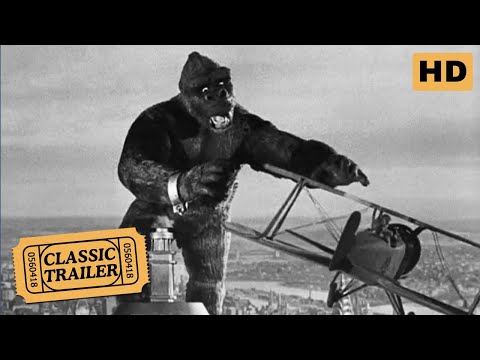
An ambitious filmmaker captures a prehistoric ape on a mysterious island and brings him to New York as a spectacle. Kong escapes, unleashing chaos across the city before making a final, tragic stand atop the Empire State Building against military biplanes.
King Kong is the foundational text for special-effects-driven action. Willis O’Brien’s stop-motion animation gave the fight between Kong and the T-Rex a sense of weight and visceral rage that transformed inanimate puppets into empathetic characters. The second half of the film serves as the first “disaster movie,” defining the grammar of the summer blockbuster by scaling the action from jungle brawls to urban destruction.
Scarface (1932)

Tony Camonte, a ruthless gangster, violently climbs the ranks of the Chicago underworld to control the bootlegging trade. His rise is fueled by paranoia and machine guns, leading to a final, nihilistic retreat into a steel-shuttered apartment for a desperate shootout against the police.
Howard Hawks pushed the boundaries of 1930s censorship with a film that treated machine guns as tools of mass destruction rather than simple accessories. The film’s dry, unsentimental direction and realistic car chases anticipated the gritty police dramas of the 1970s. By portraying Camonte as a predatory animal, Hawks taught Hollywood how to stage the spectacular, inevitable downfall of a cinematic anti-hero.
The Best Action Movies of the 1920s
In the 1920s, action cinema was born as a pure kinetic expression. Without the support of dialogue, the narrative had to be conveyed entirely through the actor’s body and the geometry of space. It is the era of reckless pioneers like Buster Keaton and Douglas Fairbanks, who used no stunt doubles or visual effects: every fall, every jump between train cars, and every duel was real and dangerous. This decade established the fundamental laws of the genre: rhythm, visual clarity, and the idea that action must be a physical dance that reveals the character’s personality through movement.
Metropolis (1927)

In a vertically segregated futuristic city, the son of the master of Metropolis falls in love with a revolutionary named Maria. A mad scientist creates a robotic duplicate of Maria to incite a violent uprising, threatening to destroy the city and drown the workers’ children, forcing a desperate rescue effort.
Fritz Lang’s masterpiece introduced the concept of “mass action.” Unlike the individual heroics of the era, the action here is scale-driven and apocalyptic. For the flooding of the underground city, Lang used hundreds of extras and thousands of gallons of real water, creating a tangible sense of disaster. The final confrontation on the cathedral roof moved away from acrobatic grace toward a brutal, expressionistic style of fighting that focused on raw, gothic tension.
The General (1926)

Johnny Gray, a railway engineer, is rejected from the Confederate army. When Union spies steal his locomotive, “The General,” along with his fiancée, he launches a solo pursuit across enemy lines to bring them both back.
Buster Keaton’s The General is the founding text of the modern chase movie. Keaton used the locomotive as an extension of his own body, performing stunts that required millimetric precision. In the legendary “cowcatcher” scene, he sat on the front of the moving train to clear obstacles from the track; any mistake would have been fatal. Keaton understood that action is a matter of geometry and continuous movement, and his “Great Stone Face” allowed the physical comedy to transition seamlessly into high-stakes suspense.
The Thief of Bagdad (1924)

Ahmed, a nimble thief, falls for the Princess of Bagdad and must compete with rival princes by undertaking a journey for a magical treasure. His quest leads him through monster-infested valleys and underwater kingdoms to eventually save the city from invasion.
This film represents the birth of “visionary action.” Douglas Fairbanks pushed the limits of special effects, integrating his own physical agility with massive sets and practical illusions. From the flying carpet to the scale of the mythical cities, the film proved that action could be the primary tool for creating a “sense of wonder,” translating fairy-tale magic into a kinetic, immersive experience.
Safety Last! (1923)

A small-town clerk in the big city organizes a publicity stunt involving a friend climbing a skyscraper. When the plan goes awry, he is forced to perform the climb himself, facing a series of increasingly absurd and dangerous hazards high above the street.
Harold Lloyd perfected “vertical suspense.” The image of him hanging from a clock hand is the ultimate icon of silent-era peril. While “forced perspective” helped manage the camera angles, the heights were real, and Lloyd—who was missing fingers from a previous onset accident—performed the climb with genuine physical risk. The film builds tension by turning a common urban environment into a lethal obstacle course.
The Mark of Zorro (1920)

Don Diego Vega returns to Spanish California to find it ruled by tyrants. He adopts the persona of Zorro, a masked vigilante, while pretending to be an effeminate dandy to avoid suspicion.
Douglas Fairbanks didn’t just invent the “masked hero” trope—he pioneered proto-parkour. His version of Zorro didn’t just fight; he leaped over tables, scaled walls, and utilized the entire environment as a playground. This “joy of living” in danger established the DNA of the Hollywood action hero as an agile, vital, and elegant figure, directly influencing the creation of Batman and countless other pulp heroes.
A vision curated by a filmmaker, not an algorithm
In this video I explain our vision

