
The werewolf is not just a monster; it is one of cinema’s most powerful and malleable metaphors. The collective imagination is marked by iconic transformations, howls at the moon, and horror masterpieces like An American Werewolf in London. These works defined the genre, using revolutionary special effects to show the terrifying metamorphosis from man to beast.

But beyond the spectacle of the transformation, the lycanthrope is a vehicle for exploring our most complex anxieties. The metamorphosis becomes a mirror for our duality, a visceral representation of the loss of control and the beast that lurks within all of us. It is a powerful symbol for repressed anger, fragmented identity, and rebellion against social norms.
This guide is a journey across the entire spectrum. It is a path that unites the great horror classics with the most audacious niche works. From genre-bending hybrids of action and comedy to its varied interpretations in European folk horror, this is an exploration into the wild, beating heart of a subgenre that continues to tell profoundly human stories.

Origins of the Myth of Werewolves
The myth of the werewolf has ancient roots and appears in many cultures and folkloric traditions worldwide. One of the earliest known references to a human-to-wolf transformation is found in Greek mythology, where the figure of Hecate was associated with this change.
In Europe, the werewolf legend was especially widespread during the Middle Ages, when the fear of transforming into a wolf was viewed as a divine punishment for sinful behavior. Werewolves were seen as evil creatures that attacked people at night, and countless folk stories emerged around this figure.
Over time, the werewolf myth has been adapted to different cultures and traditions. For instance, in American popular culture, werewolves have often been portrayed as solitary, melancholic beings who are seen as victims of their own power. The werewolf legend continues to be an important element of popular culture, constantly reinterpreted in art, literature, and, of course, in films.
The Werewolf of Washington
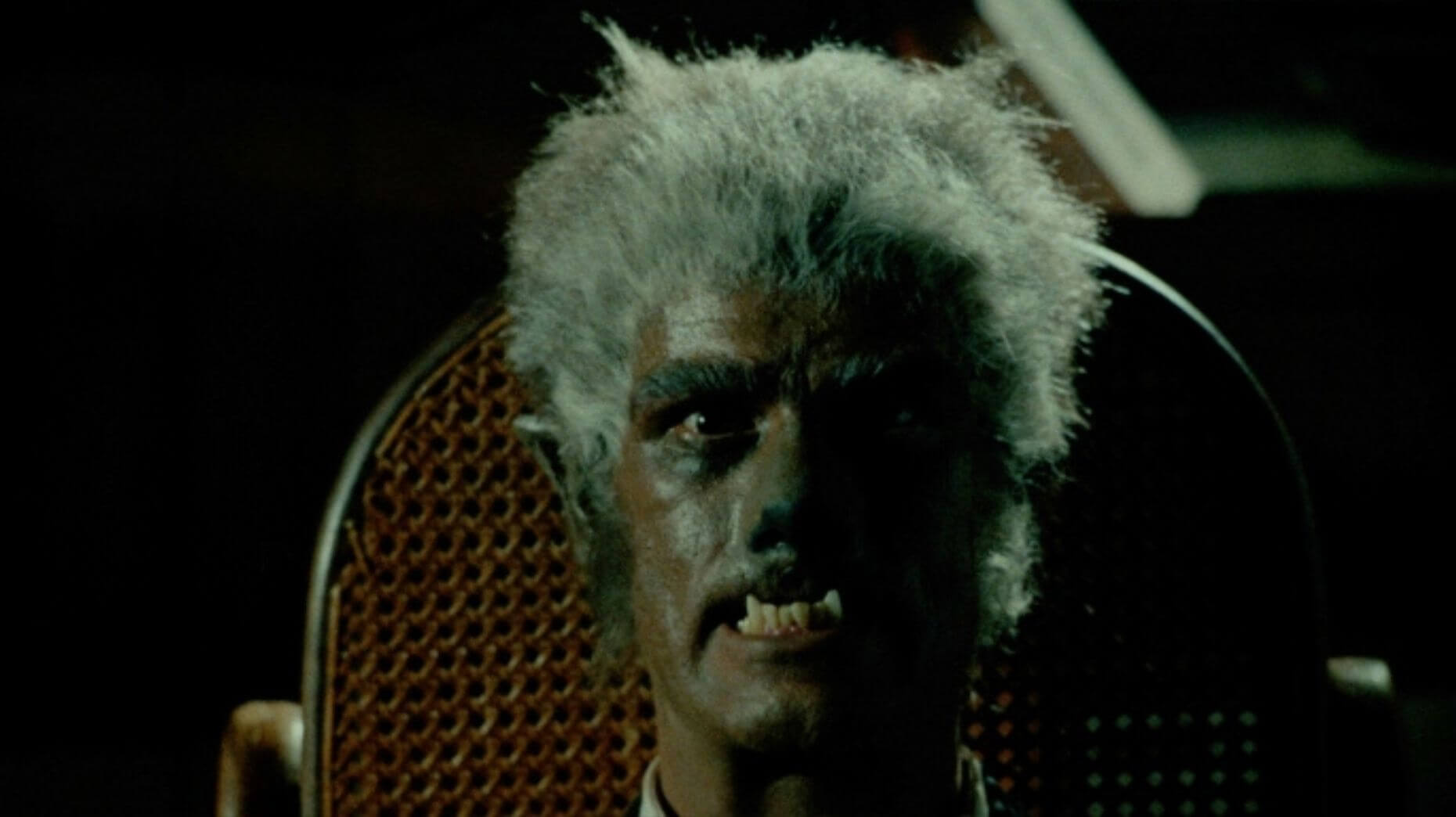
Horror, comedy, by Milton Moses Ginsberg, USA, 1973.
Jack Whittier is a reporter posted to Washington D.C. as correspondent from Budapest. Jack is infected by a werewolf during a party and begins to transform into a werewolf. Meanwhile, he tries to hide his new condition and keep his job as a journalist. As Jack tries to control his transformation, he encounters a series of unusual and frightening events, such as the disappearance of a top government official and the arrival of a strange figure who appears to be a witch. Jack also has to deal with his relationship with his girlfriend and his boss, who begin to suspect him. As Jack struggles with his new condition, he is invited to a formal dinner at the White House, where he discovers that the President of the United States is involved in a conspiracy.
Horror comedy that combines elements of black comedy, political satire and horror, was filmed in Washington D.C. and New York, directed by Milton Moses Ginsberg, who had previously worked as a director and writer on several low-budget films. The film was made on a relatively low budget and suffered from production problems, such as delays and problems with scenes requiring special effects. Stockwell's performance was critically acclaimed and his portrayal of the werewolf character is compelling and entertaining. The film was generally met with negative reviews upon its release and was not commercially successful. However, it has become a cult film in the following years and is appreciated for its black humor and social commentary.
LANGUAGE: English
SUBTITLES: Spanish, French, German, Portuguese
The Werewolf in Literature
Werewolves have been central figures in literature for centuries, appearing in both folkloric legends and works of fantasy. In popular legends, they were typically viewed as evil, menacing creatures that terrorized communities and needed to be destroyed to protect villages. In modern fantasy fiction, authors have reworked the concept of the werewolf in many different ways.
For example, in some romance-centered stories, werewolves appear as tragic heroes or protagonists struggling to control their animal nature or hide it from humans. In other tales, werewolves symbolize the inner conflict between our human side and our baser instincts. A well-known example in literature is “The Wolf Man,” a short story published in 1941 by Curt Siodmak, which later inspired numerous works in the werewolf movie genre.

Werewolf Films to Watch
Werewolves Within (2021)

New ranger Finn Wheeler arrives in the small, quirky town of Beaverfield, Vermont, to find it split in two by a proposal for a gas pipeline. When a snowstorm isolates the town and forces the residents to take refuge in the local inn, tensions explode. The situation deteriorates when a body is discovered, and everyone becomes convinced that a werewolf is hiding among them, forcing them into a deadly game to find out who the beast is.
Werewolves Within is one of the most successful and intelligent horror comedies of recent years. Based on a virtual reality video game, the film adopts a classic “whodunit” structure à la Agatha Christie and uses it as a pretext for a brilliant satire on the political and social polarization of contemporary America. The film’s true genius lies in showing how the residents of Beaverfield were already ready to tear each other apart long before any monster arrived.
The werewolf becomes the catalyst that brings out the paranoia, prejudice, and hostility that were already simmering beneath the surface. Accusations fly, based not on evidence but on political and personal stereotypes, turning the inn into a microcosm of the current climate of mistrust. With an exceptional ensemble cast, brilliant dialogue, and perfect pacing, the film manages to be both hilarious and tense. It is a sharp reflection on how the real threat, sometimes, is not the monster outside the door, but the beast of discord that is already within us.
The Cursed (2021)

In late 19th-century rural France, the brutal baron Seamus Laurent massacres a Romani clan to claim their land. Before dying, a woman from the clan casts a curse, forging a silver denture that unleashes a demonic force. Soon, the village is tormented by nightmares and a bestial creature that kidnaps children. A visiting pathologist, John McBride, realizes that this is not a common animal, but something much older and more sinister.
The Cursed is an ambitious and visually impressive attempt to reinvent the werewolf mythology. Director Sean Ellis abandons traditional lore to create a new and more complex origin, rooted in folk horror, colonial guilt, and an almost Lovecraftian body horror. The curse is not transmitted by a simple bite, but through a cursed object, the silver teeth, and the transformation is a horrible and painful process that imprisons the victim inside the beast.
The film excels in creating a gothic and oppressive atmosphere, with foggy and dark cinematography that enhances the horror. The creature design is original and terrifying, far from the classic wolf-man. Although the narrative can be problematic at times in its use of the “gypsy curse” stereotype, The Cursed is a powerful and unsettling work. It is a commentary on the violence of the land and human greed, a horror that shows how the sins of the fathers can generate very real monsters.
A vision curated by a filmmaker, not an algorithm
In this video I explain our vision
The Wolf of Snow Hollow (2020)

Officer John Marshall, a recovering alcoholic, struggles to manage his role in a small police station in a Utah ski town. Already strained by a sick sheriff father, a rebellious daughter, and a divorce, his life descends into chaos when a series of brutal murders shocks the community. As panic spreads and the townspeople become convinced the culprit is a werewolf, John must fight not only the monster out there, but also, and above all, the demons within himself.
With The Wolf of Snow Hollow, director, writer, and actor Jim Cummings creates a remarkably original work that blends horror, black comedy, and intense psychological drama. The film uses the figure of the werewolf less as a supernatural threat and more as a catalyst that explodes the frailties of a man on the edge of a breakdown. The real monstrosity is not the creature that tears victims apart under the full moon, but Marshall’s impotent rage, his alcoholism, and his inability to handle the pressures of his life.
Cummings delivers a masterful performance of a man whose toxic masculinity and stubborn skepticism blind him to the truth, whether supernatural or not. His refusal to believe in werewolves is emblematic of his refusal to face his own failures. The film is a touching and often hilarious portrait of the crisis of modern masculinity, where the true horror lies in the psychological disintegration of a man desperately trying to maintain control in a world he can no longer understand. The legacy of the Coen brothers and David Fincher is evident, but Cummings reworks it with a unique authorial voice, creating a werewolf film that speaks more about the human condition than the myth of the monster.
Teddy (2020)

Teddy is a rebellious nineteen-year-old with no prospects, living in a small, sleepy village in the French Pyrenees. Ostracized and mocked by everyone, his only anchor is his love for his girlfriend, Rebecca. One night, while in the woods, he is scratched by a mysterious beast. In the following weeks, Teddy begins to develop strange animalistic compulsions, slowly transforming into the monster his community, deep down, always thought he was.
With Teddy, brothers Ludovic and Zoran Boukherma deliver a tragic and sardonic reflection on social determinism. Lycanthropy, in this rural and desolate context, is not a simple supernatural curse, but the physical manifestation of a pre-existing marginalization. Teddy does not become a monster out of nowhere; the transformation amplifies and makes lethal the anger and frustration of a young man to whom society has never given a chance.
The film skillfully mixes body horror, with subtle yet disturbing transformation scenes, with a black comedy that exposes the hypocrisy and cruelty of provincial life. Anthony Bajon‘s performance is extraordinary in capturing Teddy’s duality: a vulnerable and love-struck boy, but also a “little bastard” who almost seems to be looking for trouble. His metamorphosis thus becomes a self-fulfilling prophecy, an explosion of violence that is as much the result of a bite as it is of years of humiliation. Teddy is a profoundly sad werewolf film that questions who the real monster is: the beast that howls at the moon or the society that created it.
Bloodthirsty (2020)

Grey is an indie singer-songwriter who, after a successful debut album, finds herself paralyzed by writer’s block. She also suffers from disturbing hallucinations in which she transforms into a wolf. Desperate, she accepts an invitation from Vaughn Daniels, a music producer as brilliant as he is infamous, to record her new album at his isolated villa in the woods. There, the creative process will force her to confront her true predatory nature, discovering that to create great art, it may be necessary to sacrifice her own humanity.
Bloodthirsty offers a fascinating and intelligent variation on the lycanthrope myth, using it as a powerful metaphor for artistic ambition and the concept of the “monstrous artist.” The film explores the idea that the creative process, in its purest and most intense form, is an act of predation. To create something authentic and powerful, Grey must tap into her darkest fears and instincts, “devouring” her own experiences and, metaphorically, those of others.
The figure of Vaughn, the mentor-producer, acts as a dark catalyst, pushing Grey to unleash her inner beast not because of a curse, but to achieve artistic greatness. The film poses an uncomfortable question: how far is an artist willing to go for their work? The transformation into a werewolf becomes a symbol of an all-consuming dedication that devours everything, including relationships and morality. It is a sharp analysis of the toxicity that can hide behind the pursuit of perfection, a horror story that finds its terror not in the full moon, but in the blank page and the hunger for success.
I Am Lisa (2020)

Lisa runs a small bookstore in a corrupt town, where she suffers at the hands of a local bully, the sheriff’s daughter. When she reports an assault, the law, instead of protecting her, turns against her. Viciously beaten by the sheriff and her accomplices and left for dead in the woods, Lisa is bitten by a wolf. Having survived and now endowed with new supernatural powers, she begins a brutal and methodical revenge against those who wronged her.
I Am Lisa fits squarely into the “rape-revenge” subgenre, using lycanthropy as the ultimate tool for female empowerment and justice. The film transforms the victim into a predator, giving Lisa the physical power to overturn a patriarchal and corrupt system that would have otherwise crushed her. Her transformation is not a curse, but a weapon, an embodiment of her repressed anger that finally finds an outlet.
Despite being a low-budget film, its strength lies in the clarity of its message. Lycanthropy becomes the symbol of a primordial and wild force that awakens to punish the oppressors. The film is a powerful commentary on how women, pushed to their limits, can find an unexpected ferocity within themselves to reclaim their agency. In a genre often dominated by male figures, I Am Lisa offers a fresh and cathartic perspective, proving that sometimes, to fight monsters, you have to become one.
A Werewolf in England (2020)

In Victorian England, a parish councilor is transporting a criminal when a violent storm forces them to seek refuge in an isolated and sinister inn. There, they soon discover that the innkeepers have made a deadly pact with the creatures that infest the surrounding woods: in exchange for their own safety, they offer their unsuspecting guests as food to a pack of werewolves. To survive the night, the two enemies will have to join forces.
A Werewolf in England is a fun and bloody homage to Hammer horror cinema, made with the rebellious spirit of a low-budget independent film. Director Charlie Steeds does not hide his influences, creating a work that mixes the gothic atmosphere of classic productions with a black humor and exaggerated violence reminiscent of The Evil Dead.
The film never takes itself too seriously, delighting the viewer with witty dialogue, over-the-top characters, and a generous dose of practical gore. Despite the obvious limitations of its budget, which make the special effects sometimes look homemade, the film compensates with a contagious energy and a genuine love for the genre. It is a campy, fun, and unpretentious work, a perfect representation of how independent cinema can revisit the classics with irreverence and passion, offering pure and unfiltered horror entertainment.
Wildling (2018)

Anna has spent her entire childhood locked in an attic, cared for by a man she calls “Daddy.” She has been taught to fear the outside world and a child-eating creature called the “Wildling.” Freed as a teenager by the local sheriff, Anna discovers society for the first time. But as her body begins to blossom in a way that “Daddy” desperately tried to suppress with injections, she discovers that the terrifying fairytale of her childhood may hide an incredible and dangerous truth about herself.
Wildling is a fascinating and original deconstruction of the werewolf myth, transforming it into a dark fairytale and a powerful coming-of-age story. The film abandons the traditional lore of curses and full moons to create its own mythology, more rooted in folklore and nature. Anna’s transformation is not a corruption, but a rediscovery of her true identity, a primordial nature that had been violently repressed.
The film works beautifully as a metaphor for patriarchal control. “Daddy’s” injections to stop Anna’s puberty are a literal attempt to prevent her maturation and sexual liberation. Her metamorphosis thus becomes an act of rebellion, the recovery of an ancestral and wild power. Bel Powley delivers an exceptional performance, capturing the wonder, fear, and ferocity of a creature learning to know itself. By inverting the myth of Little Red Riding Hood, where the virgin is the wolf, Wildling reveals itself as a visually suggestive and thematically rich work that celebrates wild nature as an indomitable force of female emancipation.
Good Manners (As Boas Maneiras) (2017)

Clara, a lonely nurse from the outskirts of São Paulo, is hired as a housekeeper and future nanny by the wealthy and mysterious Ana, a young pregnant woman living in isolation in a luxurious apartment. Despite their class differences, a deep and intimate bond forms between the two women. But Ana hides a dark secret related to the full moon nights, a secret that will forever change both of their lives in a tragic and unexpected way.
Good Manners is an extraordinary and bold work, a Brazilian film that blends different genres to create a unique and powerful tale. Directors Juliana Rojas and Marco Dutra begin with the tones of a social drama exploring the dynamics of class, race, and sexuality, then masterfully pivot to a gothic fairytale and supernatural horror. The film is divided into two distinct parts, each with its own visual and narrative style, which together compose a modern and moving epic.
Lycanthropy is treated with surprising sensitivity and originality, becoming a metaphor for motherhood, otherness, and unconditional love. The film is not afraid to be strange, tender, and terrifying at the same time, using visual elements that range from Disney-style painted backgrounds to visceral body horror. Winner of the Special Jury Prize at the Locarno Film Festival, Good Manners is a gem of contemporary genre cinema, a testament to the fantastic’s ability to tell profoundly human and socially relevant stories.
Valley of Shadows (Skyggenes Dal) (2017)

Aslak, a six-year-old boy, lives with his mother in a small Norwegian village, nestled between the sea and a vast, dark forest. After a family tragedy and the disappearance of his dog, Aslak becomes convinced that a wolf-like creature, responsible for the death of some local sheep, has taken his beloved pet. Ignoring the adults’ warnings, he ventures alone into the forest, a place of myths and fears, in search of answers.
Valley of Shadows is a film that whispers horror instead of screaming it. Director Jonas Matzow Gulbrandsen creates an atmospheric and psychological work of art, using the figure of the werewolf not as a concrete threat, but as a shadow, a possibility seen through the innocent and confused eyes of a child. The film moves on the border between reality and imagination, leaving the viewer in doubt as to whether the beast is real or a manifestation of Aslak’s fears and pain.
Inspired by Scandinavian gothic fairytales, the film is a breathtaking visual experience. The cinematography captures the majestic and yet menacing beauty of the Norwegian landscape, transforming the forest into a living, breathing character, a labyrinth of the unconscious. The slow and contemplative narrative, accompanied by an unsettling score, builds an almost unbearable tension. Valley of Shadows is not a conventional monster movie, but a deep and poetic exploration of grief, loneliness, and the way a child’s imagination processes an incomprehensible adult world.
Raw (Grave) (2016)

Justine, a sixteen-year-old raised in a family of vegetarian veterinarians, begins her first year at the same college as her older sister. During a brutal hazing ritual, she is forced to eat a raw rabbit kidney. This act, sacrilegious to her, awakens a primordial and unexpected hunger for flesh, particularly human flesh. Her descent into cannibalism becomes a terrifying and shocking journey of discovering her true nature and her family’s secrets.
Although Raw is not technically a werewolf film, its inclusion in this list is essential to understanding the evolution of body horror as a metaphor in independent genre cinema. Julia Ducournau‘s debut feature is a spiritual cousin to films like Ginger Snaps, and perhaps its most extreme and visceral incarnation. Here, cannibalism replaces lycanthropy as the vehicle for exploring the turmoil of transitioning to adulthood.
Justine’s transformation is a powerful and disturbing allegory for sexual awakening, the discovery of identity, and rebellion against imposed family values. The desire for flesh becomes a symbol of carnal desire, a hunger for experiences, and liberation from established patterns. Ducournau directs with impressive confidence, creating body horror scenes that are never gratuitous but always functional in representing the protagonist’s psychological and emotional chaos. Raw demonstrates how contemporary horror cinema can use the most grotesque transformations to tell profoundly human stories, making it an essential reference point for anyone wanting to analyze the theme of the “inner beast.”
Howl (2015)

Joe, a disillusioned train guard, finds himself working on a late-night train heading out of London. The journey takes a terrifying turn when the train comes to an abrupt halt in the middle of a remote, dark forest after hitting something on the tracks. The passengers, a diverse group of commuters, find themselves isolated and without communication. They soon discover they are not alone: a ferocious creature is hunting them from the darkness, turning the carriage into a death trap.
Howl is a tense, brutal, and extremely effective monster movie that makes the most of its claustrophobic premise. Director Paul Hyett, a special effects veteran known for his work on The Descent, puts his experience at the service of the story, creating an oppressive siege atmosphere and creatures with a practical and terrifying design. The train becomes a social microcosm, a non-place where tensions between passengers, representing different social classes, explode under the pressure of the external threat.
The film doesn’t reinvent the genre’s wheel, but it executes its formula with ruthless precision. The action is well-choreographed, the violence is visceral, and the suspense is kept high throughout. Howl is an excellent example of how a simple concept, a limited setting, and a direct approach can create an adrenaline-fueled and no-frills survival horror. It’s a film that wastes no time, grabs the viewer, and doesn’t let go until its bloody conclusion.
When Animals Dream (Når dyrene drømmer) (2014)
![When Animals Dream ft. Lars Mikkelsen, Sonia Suhl Official Trailer (2015) - Horror Movie [HD]](https://blog.indiecinema.co/wp-content/plugins/wp-youtube-lyte/lyteCache.php?origThumbUrl=https%3A%2F%2Fi.ytimg.com%2Fvi%2F6unRt3Bx87k%2F0.jpg)
Marie is a shy and introverted girl living with her parents in an isolated fishing village on the Danish coast. Her life is marked by her mother’s apathy, confined to a wheelchair by a mysterious illness. When Marie’s body begins to undergo strange and disturbing changes, she uncovers a dark family secret. Her transformation forces her to confront the fear and prejudice of her community, which seems to know her true nature better than she does.
When Animals Dream is a work of rare beauty and melancholy, a film that fits into the tradition of Scandinavian gothic to tell a story of lycanthropy as hereditary trauma and repressed female rage. Director Jonas Alexander Arnby uses the gray and oppressive atmosphere of the village to create a sense of suffocating isolation. Marie’s transformation is not presented as a sudden curse, but as an inevitable awakening, a biological inheritance that connects her to her mother’s condition.
The film explores lycanthropy not as an explosion of violence, but as a liberation of instincts and power in the face of social ostracism. Marie’s physical metamorphosis is an externalization of her internal struggle for identity and autonomy in a community that wants her weak and submissive. More than a conventional horror, it is a powerful and evocative psychological drama that questions how society labels and represses what it does not understand, especially when it comes to the female body and power. A dark and poetic tale about the beast we inherit and the one we choose to become.
WolfCop (2014)

Lou Garou is an alcoholic and lazy cop in the sleepy town of Woodhaven. His already disastrous life takes an unexpected turn when, after responding to a disturbance call in a wooded area, he gets involved in a satanic ritual and wakes up with a pentagram carved on his chest. At the next full moon, he transforms into a werewolf. Instead of succumbing to the curse, he decides to use his new powers to become the cop he never was: a hairy, justice-thirsty vigilante.
WolfCop is a shameless and glorious ode to B-movies, a film that embraces its absurdity with contagious enthusiasm. Written and directed by Lowell Dean, it is an explosion of comedy, over-the-top violence, and gory practical effects that pay homage to the grindhouse aesthetic of the ’70s and ’80s. The film has no pretense of psychological depth; its sole purpose is to entertain in the most outrageous way possible, and it succeeds magnificently.
Lou’s transformation into a hero, albeit a monstrous one, is hilarious. His new identity as “WolfCop” allows him to unleash cathartic violence against the town’s criminals and corrupt officials, who turn out to be part of an even more bizarre conspiracy. With its demented humor, a deliberately retro creature design, and a total lack of shame, WolfCop has deservedly earned its cult status. It is a film made by fans for fans, a celebration of the most fun and carefree side of horror.
Late Phases (2014)

Ambrose McKinley, a blind and cantankerous Vietnam veteran, moves into a quiet retirement community to spend his last days. His peace is shattered on the first night when a creature attacks his neighbor and kills his beloved guide dog. Realizing that the community is plagued by a werewolf that strikes every month, Ambrose, despite his disability, uses the next month to prepare for one last, epic battle against the beast.
Late Phases is a hidden gem and one of the most original and moving variations on the werewolf theme. The film bravely subverts genre conventions, replacing the usual teenage protagonists with an elderly and disabled hero. This choice transforms the story into a powerful reflection on mortality, dignity, and resilience in the face of inevitable decline.
Nick Damici‘s performance as Ambrose is simply extraordinary: his character is gruff, vulnerable, and incredibly tough, a tired warrior who decides not to go quietly. The film explores deep themes such as the conflicting relationship with his son and the sense of abandonment that pervades the elderly community, making the werewolf threat a metaphor for death itself, which Ambrose decides to face on his own terms. With a focus on characters, brilliant dialogue, and a cathartic and bloody finale, Late Phases is an intelligent and emotional cult movie.
Wer (2013)

In France, a family of tourists is massacred at a campsite. The only suspect is Talan Gwynek, a towering and hairy local man. American defense attorney Kate Moore and her team become convinced of his innocence, hypothesizing that he suffers from a rare genetic disorder, porphyria, which would make him physically incapable of such atrocities. But when Talan undergoes medical tests, his reaction unleashes an unimaginable wave of violence, revealing a much more terrifying truth.
Wer is a bold attempt to modernize and rationalize the werewolf myth, blending the aesthetics of found footage with the structure of a legal and police thriller. In the first part, the film develops as an investigation, seeking a medical and scientific explanation for what the audience knows to be supernatural. This approach creates an interesting tension, contrasting the logic of law and science with the primordial horror that is about to be unleashed.
When the violence explodes in the second half, the film transforms into a brutal and visceral experience. William Brent Bell’s direction captures the ferocity of the attacks with a chaotic and relentless energy, showing a “lycanthrope” that is more an unstoppable force of nature than a fairytale creature. Although the use of found footage is not always consistent, Wer stands out for its pseudo-realistic approach and its portrayal of a beast whose inhuman strength is as frightening as it is tragic.
Cursed (2005)

In Los Angeles, siblings Ellie and Jimmy Myers have a car accident on Mulholland Drive and are attacked by a ferocious creature. Both survive with scratches, but soon begin to notice strange changes: enhanced senses, a new aggressiveness, and an inexplicable attraction to danger. They realize they have been cursed and that, to break the spell, they must find and kill the werewolf that attacked them.
Cursed is one of the most famous and fascinating cases of a troubled production in horror cinema history. In the minds of director Wes Craven and screenwriter Kevin Williamson, it was meant to be for werewolves what Scream was for slashers: a meta-cinematic, intelligent, and scary deconstruction. However, constant studio interference, reshoots, cast changes, and the demand for a lower rating turned the film into a fragmented and compromised work.
Despite its obvious flaws, including dated CGI that replaced Rick Baker‘s practical effects, Cursed has become a cult classic precisely because of its troubled history. Fans love to analyze it, trying to glimpse through the cracks the masterpiece it could have been. The film still retains traces of Williamson’s typical humor and intelligence and some of Craven’s directorial flair. It is an imperfect but intriguing work, a ghost of a better film that continues to howl its story of lost potential.
Romasanta: The Werewolf Hunt (2004)

Spain, 1851. A series of mutilated corpses revives the legend of the “Werewolf of Allariz.” Manuel Romasanta, a charming traveling salesman, travels from village to village, seducing the local women. But behind his attractive appearance lies a deadly secret. When he confesses to thirteen murders, he defends himself by claiming to be the victim of a lycanthropic curse, forcing law and science to confront the inconceivable.
Directed by Paco Plaza, future co-director of the phenomenon [REC], Romasanta offers a lush and gothic reinterpretation of the same historical figure that inspired El bosque del lobo. Unlike its predecessor, which focused on psychological and social analysis, this film fully embraces the aesthetics of horror, while maintaining a remarkable ambiguity. The photography is sumptuous, the atmosphere is charged with sensuality and menace, and Julian Sands delivers a charismatic and unsettling performance as the protagonist.
The film’s true originality lies in its structure. Instead of culminating with the monster’s capture, Romasanta dedicates much of its runtime to the subsequent trial and interrogations. This transforms the story into a fascinating legal and medical drama, where 19th-century science, with its theories of phrenology and hypnosis, attempts to explain and “cure” a condition that belongs to myth. With a memorable “reverse” transformation sequence and an approach that favors mystery and elegance, Romasanta is a stylistically bold and fascinating interpretation of one of Spain’s darkest legends.
Dog Soldiers (2002)

A squad of British soldiers, on a routine training exercise in the remote Scottish Highlands, stumbles upon the massacred remains of a special forces unit. The only survivor, a severely wounded captain, mutters about an unimaginable enemy. Soon, the soldiers find themselves besieged in an isolated farmhouse by a pack of ferocious and relentless werewolves, forced to use their military training to survive a night of pure terror.
Neil Marshall‘s directorial debut, Dog Soldiers, is a pure adrenaline shot to the heart of the subgenre. Marshall himself described his film as “a soldier movie with werewolves, not a werewolf movie with soldiers,” and this distinction is crucial. The work almost completely abandons the psychological implications of lycanthropy to treat the monsters as an enemy force, an adversary to be fought with tactics, bullets, and courage. The result is a masterpiece of action and horror.
Influenced by classics like James Cameron‘s Aliens and Cy Endfield‘s Zulu, the film is a tense and claustrophobic siege, supported by impeccable pacing and a perfect cast. The real strength of Dog Soldiers lies in its black humor and the camaraderie among the soldiers. Their barracks-room banter, even in the face of unspeakable horror, makes the characters incredibly real and their fate all the more engaging. With its impressive practical effects, which give the werewolves a terrifying physical presence, and its relentless energy, Dog Soldiers has become a universally beloved cult classic, proof that the werewolf myth can be a perfect vehicle for the most unbridled action.
Brotherhood of the Wolf (Le Pacte des loups) (2001)

France, 1766. The rural province of Gévaudan is terrorized by a mysterious and ferocious beast that has massacred dozens of women and children. To end the panic, King Louis XV sends the knight and naturalist Grégoire de Fronsac and his traveling companion, the Iroquois Mani, to the area. What begins as a monster hunt soon turns into a complex investigation, uncovering a political and religious conspiracy far more dangerous than the creature itself.
Brotherhood of the Wolf is a cinematic explosion, a bold and spectacular work that defies any attempt at categorization. Director Christophe Gans takes the historical legend of the Beast of Gévaudan and uses it as a canvas to paint a fresco that breathtakingly blends costume drama, gothic horror, conspiracy thriller, romantic melodrama, and, above all, Hong Kong-style martial arts. The result is a unique, exaggerated, and incredibly entertaining film.
The film is a triumph of visual style, with sumptuous photography, magnificent costumes, and dynamically and hyper-stylized action scenes. The chemistry between the rational Fronsac and the mystical and lethal Mani (played by martial artist Mark Dacascos) is the beating heart of the narrative. Rejecting any form of historical realism in favor of pure, adrenaline-fueled entertainment, Brotherhood of the Wolf has become an international cult classic, a perfect example of how genre cinema can cross cultural boundaries and create something totally new and unexpected.
Ginger Snaps (2000)

Ginger and Brigitte Fitzgerald are two outcast teenage sisters obsessed with death. Their symbiotic bond is put to the test when Ginger, on the same night she gets her first period, is attacked and bitten by a mysterious creature. This event triggers a terrifying transformation that inextricably links her lycanthropy to her tumultuous entry into womanhood, threatening to destroy everything that unites them.
Ginger Snaps is not just a werewolf film; it is a milestone of feminist horror cinema and one of the sharpest and most ferocious analyses of female adolescence ever put on screen. The audacity of director John Fawcett and screenwriter Karen Walton lies in making explicit a metaphor the genre had only hinted at: lycanthropy as puberty. Ginger’s transformation is an explosion of body horror that visualizes the anxieties, fears, and changes of the female body. Blood, anomalous hair growth, mood swings, and a new, aggressive sexuality are not just symptoms of the curse, but a terrifying, exaggerated reflection of “becoming a woman” in a society that often treats it as a monstrous event.
The film radically subverts the trope of the “monstrous feminine,” not to condemn Ginger, but to critique the world around her. Her anger and violence become a form of power against bullying, male objectification, and the suffocating expectations of suburbia. The true heart of the film, however, is the tragic relationship between the two sisters. As Ginger embraces her new power, Brigitte desperately struggles to find a cure, representing the desperate attempt to cling to a childhood and a bond that the transformation is inexorably destroying. With its intelligence, brutality, and profound empathy, Ginger Snaps redefined what a werewolf film could be, cementing its status as an immortal cult classic.
Bad Moon (1996)

Lawyer Janet Harrison and her son Brett joyfully welcome Uncle Ted, a photojournalist just returned from an expedition in Nepal where his girlfriend was killed. The only one who doesn’t trust Ted is Thor, the family’s loyal German Shepherd, who immediately senses a threat in the newcomer. As a series of brutal murders shocks the area, Thor understands the truth: Ted is a werewolf, and it will be up to him to protect his family.
Bad Moon is an underrated gem from the ’90s, distinguished by a premise as simple as it is brilliant: telling a werewolf story almost entirely from the perspective of the family dog. Based on the novel “Thor” by Wayne Smith, the film transforms the pet into the hero of the story, an intelligent and brave protagonist who, unlike humans, cannot be deceived by appearances.
This narrative choice, reminiscent of a canine version of Fright Night, creates a unique and compelling dynamic. Thor’s frustration, unable to communicate the danger to his owners, is palpable, and his territorial rivalry with the werewolf Ted becomes the film’s beating heart. Added to this is one of the best werewolf designs ever created with practical effects: an imposing, agile, and terrifying creature. Despite a notorious and brief CGI sequence, Bad Moon is a solid, tense, and original horror film that celebrates the instinct and loyalty of man’s best friend in the face of supernatural horror.
Wolf (1994)

This film explores werewolf mythology through a contemporary corporate lens, featuring Jack Nicholson as an aging publisher bitten by a wolf. The narrative blends transformation horror with themes of power dynamics and personal awakening in modern society.
The film demonstrates how werewolf narratives can function as metaphors for human instinct and societal pressures. Its psychological approach to transformation and exploration of identity through the werewolf metaphor offers a sophisticated alternative to traditional monster horror.
Silver Bullet (1985)
The quiet town of Tarker’s Mills is terrorized by a series of gruesome murders that occur with every full moon. The only one to have seen the responsible creature and survived is Marty Coslaw, a paraplegic boy who gets around in a super-accessorized wheelchair, the “Silver Bullet.” Together with his older sister and their eccentric Uncle Red, Marty must convince a skeptical town of the terrible truth and find a way to stop the werewolf.
Based on Stephen King‘s novella “Cycle of the Werewolf,” Silver Bullet is an ’80s classic that has solidified its cult status over time. More than a pure horror film, it is an adventurous coming-of-age tale, imbued with that nostalgic charm typical of King’s works, where young protagonists face evil in a world of adults who don’t believe them.
The film shines for its heart and its characters. The choice of a disabled hero is significant and powerful, with Marty using his intelligence and ingenuity to compensate for his physical limitation. The dynamic between Marty, his sister, and Uncle Red, played by a memorable and over-the-top Gary Busey, is the emotional core of the story. Silver Bullet is a charming work that mixes suspense, humor, and a touch of melancholy, a perfect example of how ’80s horror cinema knew how to tell stories of courage and family bonds in the face of darkness.
Howling II: Your Sister Is a Werewolf (1985)

After the death of journalist Karen White, the protagonist of the first film, her brother Ben is approached by Stefan Crosscoe, a mysterious occult investigator. Crosscoe, played by the legendary Christopher Lee, reveals to an incredulous Ben that his sister was a werewolf and that to stop the plague they must travel to Transylvania. There, they will have to confront and destroy Stirba, the immortal and sensual queen of all lycanthropes, before an ancient ritual grants her supreme power.
Howling II: Your Sister Is a Werewolf is a masterpiece of “so bad it’s good” cinema. A sequel that completely abandons the intelligent satire and tense horror of its predecessor to dive headfirst into an abyss of camp absurdity, becoming one of the most bizarre and unintentionally hilarious experiences in horror movie history. The film is a delirious mishmash of ideas, mixing werewolf mythology with that of vampires, introducing titanium stakes as the only effective weapon, and setting it all in an ’80s punk-rock music video atmosphere.
The film has become legendary for its nonsensical plot, werewolf costumes that look like furry carpets, and, above all, for Sybil Danning‘s iconic performance as Stirba. Her magnetic presence and the infamous scene where she rips off her dress, repeated a full seventeen times during the end credits, have consecrated the film in the cult pantheon. It is a work to be watched not for its quality, but for its bold and glorious incompetence.
The Company of Wolves (1984)

In a dreamlike present, young Rosaleen falls asleep and dreams of living in a fairytale forest of the 18th century. Here, her grandmother’s unsettling stories about charming men who are “hairy on the inside” intertwine with her reality. As she ventures into the woods to reach her elderly relative’s home, she meets a charismatic huntsman whose eyebrows meet, a warning that foretells a dangerous game of seduction and the discovery of her own wild nature.
Before Ginger Snaps linked lycanthropy to puberty, Neil Jordan‘s The Company of Wolves, based on the stories of Angela Carter, had already explored the psychosexual depths of the myth. The film is a lavish and surreal deconstruction of the Little Red Riding Hood fairytale, stripped of its childish morality and immersed in a Freudian analysis of the unconscious. Jordan uses a dreamlike aesthetic, with theatrical sets and lush photography, to create a world where the line between desire and danger is constantly blurred.
The werewolf here is not simply a monster, but the embodiment of predatory male sexuality and, at the same time, a reflection of the protagonist’s repressed desires. The grandmother’s famous line, “Never stray from the path,” becomes a warning against sexual curiosity, a path that Rosaleen deliberately chooses to abandon. The film is steeped in symbolism: the red cape as a sign of menstruation and nascent sexuality, apples as Edenic temptation, and grotesque transformations as representations of the body horror linked to the loss of innocence. The ending, in which Rosaleen chooses to join the wolf rather than be its victim, is a powerful act of affirmation, an acceptance of her own “inner beast” and a rejection of conventions. A gothic, sensual, and profoundly intelligent work of art.
An American Werewolf in London (1981)
![An American Werewolf in London (1981) ORIGINAL TRAILER [HD 1080p]](https://blog.indiecinema.co/wp-content/plugins/wp-youtube-lyte/lyteCache.php?origThumbUrl=https%3A%2F%2Fi.ytimg.com%2Fvi%2FArJhUEAeiw0%2F0.jpg)
Two young American tourists, David and Jack, are backpacking across the desolate English moors when they are brutally attacked by a beastly creature. Jack is killed, while David survives with deep wounds. Hospitalized in London, David is tormented by terrifying nightmares and spectral visits from his decaying friend, who warns him: at the next full moon, he will turn into a werewolf.
An American Werewolf in London is a watershed work, a film that redefined the possibilities of horror cinema by masterfully balancing genuine terror and black comedy. Director John Landis, coming off comedy successes, struggled for a decade to find funding for a script considered too scary to be a comedy and too funny to be a horror film. The final result proved that the two tones could not only coexist but also amplify each other.
The film is famous for its revolutionary transformation sequence, a masterpiece of practical effects created by Rick Baker that earned him the first-ever Academy Award for Best Makeup. David’s agony, with bones breaking and flesh stretching, is a piece of body horror as iconic as it is harrowing, setting a new standard for visceral realism. But beyond the effects, the film shines for its intelligent script and macabre humor, embodied by Jack’s increasingly grotesque appearances. It is a tragic tale of the loss of innocence and the inevitability of fate, but also a sharp cultural satire. An immortal cult classic that changed the rules of the game.
The Howling (1981)

Karen White, a television journalist, is traumatized after being used as bait to catch a dangerous serial killer. To overcome the shock, her therapist recommends a stay at an isolated retreat called “The Colony,” an idyllic place where patients can “get in touch with their true nature.” Soon, Karen discovers that the residents of The Colony take this advice all too literally, revealing themselves to be a community of werewolves.
Released in the same year as An American Werewolf in London, Joe Dante‘s The Howling represents the other side of the coin of the 1980s lycanthropic cinema revolution. If Landis’s film was a black comedy with tragic elements, Dante’s is a sharp and cynical satire, targeting the self-help culture and New Age therapies that were gaining traction in California. The Colony is a parody of communes and spiritual retreats, where the idea of “unleashing the inner beast” is interpreted in the bloodiest way possible.
The film is a meta-cinematic work, full of references and in-jokes for horror genre fans, with characters named after directors of past werewolf films. Rob Bottin‘s special effects, rivaling those of Rick Baker, offer one of the most impressive and terrifying transformations in cinema history. The Howling is an intelligent and ruthless commentary on the superficiality of media culture and the danger of ideologies that promise easy liberation, showing that sometimes, scratching the surface of civilization reveals only a primordial hunger.
Wolfen (1981)

Part of 1981’s exceptional year for werewolf cinema, this film presents a unique take on the werewolf mythology. Rather than traditional supernatural transformation, Wolfen explores mysterious wolf-like creatures with intelligence and predatory sophistication in an urban setting.
The film stands out for its innovative approach to the werewolf concept, blending mystery and horror elements. Its distinct visual style and atmospheric tension distinguish it from conventional werewolf fare, making it a compelling alternative that expands the genre beyond traditional transformation narratives.
The Beast Must Die (1974)

Tom Newcliffe, an eccentric millionaire and big-game hunter, is convinced that one of his guests is a werewolf. He invites a diverse group of people to his isolated country estate, equipped with a sophisticated surveillance system, with a single purpose: to identify the creature during the full moon nights and hunt it down. As paranoia spreads among the guests, a deadly game of cat and mouse begins.
Produced by Amicus, Hammer’s historic rival, The Beast Must Die is a unique and fascinating cinematic experiment. The film blends gothic horror with the structure of an Agatha Christie-style mystery, creating a supernatural “whodunit.” Its most famous and bizarre feature is the “Werewolf Break”: a thirty-second interruption near the end of the film, where a narrator explicitly invites the audience to use the clues provided to guess the identity of the lycanthrope.
This gimmick, which pays homage to producer William Castle‘s tricks, makes the film an interactive and unforgettable experience. Beyond its meta-cinematic game, the work mixes elements of thriller, horror, and even blaxploitation (with its African-American protagonist, a bold choice for the time). Although the creature design may seem dated, the atmosphere of suspicion, the top-notch cast (including the legendary Peter Cushing), and its original premise make it an unmissable cult classic for any genre enthusiast.
El bosque del lobo (The Forest of the Wolf) (1970)

In rural Galicia in the 19th century, Benito Freire is a lonely traveling salesman, afflicted with epileptic seizures that make him an outcast. The superstitions and ignorance of the villages he passes through label him as a cursed being, a “lobishome” (werewolf). As a series of mysterious disappearances and murders terrorizes the region, the line between Benito’s illness, the cruelty of society, and a possible supernatural curse becomes increasingly thin and bloody.
Pedro Olea‘s El bosque del lobo is a masterpiece of Spanish fantastic cinema and a fundamental work of folk horror. Loosely based on the true story of Manuel Blanco Romasanta, the first documented serial killer in Spain, the film transcends a simple monster tale to become a powerful psychological investigation into the creation of monstrosity. The question that hangs over the entire film is not whether Benito is truly a werewolf, but whether it was his medical condition or the ostracism and fear of society that turned him into a murderer.
The film is a ruthless analysis of how isolation, superstition, and prejudice can generate violence. José Luis López Vázquez’s performance is extraordinary, a heartbreaking portrait of a tormented man, trapped between his physical suffering and the madness projected onto him by others. With its dark atmosphere and profound ambiguity, El bosque del lobo is a work of art that explores the horror that arises not from the supernatural, but from human nature itself.
The Curse of the Werewolf (1961)

A Hammer Films production featuring their classic bipedal werewolf design with beastly aesthetics. The film combines lush visuals with melodramatic storytelling and strong performances, creating a distinctive take on werewolf mythology rooted in vintage horror sensibilities.
With its emphasis on production design and atmospheric tension, the film exemplifies Hammer’s approach to horror. The powerful werewolf creature design and character-driven narrative make it essential for fans of vintage horror cinema and demonstrate the enduring appeal of Hammer’s monster legacy.
I Was a Teenage Werewolf (1957)

Tony Rivers is a troubled high school student, known for his violent temper and inability to control his anger. Concerned for his future, he turns to a hypnotherapist, Dr. Brandon, who sees the boy as the perfect guinea pig for an experimental serum. Through regressive therapy, the doctor unleashes Tony’s primordial instincts, transforming him into a ferocious werewolf that terrorizes his school and town.
I Was a Teenage Werewolf is a pivotal film, not so much for its cinematic quality as for its cultural impact. It is the work that originated the archetype of the “werewolf as a metaphor for teenage angst.” In a 1950s America obsessed with panic over juvenile delinquency and rebellion without a cause, the film channeled these social fears into a horror narrative. Tony’s transformation is not just physical; it is a symbol of the anger and uncontrollable impulses that adults feared were hiding behind every leather jacket.
With a young Michael Landon in a surprisingly intense performance, the film transformed lycanthropy from a European gothic curse into an American suburban problem. The metamorphosis becomes the extreme manifestation of teenage alienation, an explosion of violence against a world of uncomprehending adults. Despite its nature as a low-budget exploitation film, its central idea proved so powerful that it influenced decades of horror cinema, laying the groundwork for future works that would explore the link between monstrosity and growth with greater depth.
Frankenstein Meets the Wolf Man (1943)

This Universal monster classic brings together two iconic creatures in a groundbreaking crossover. Lon Chaney Jr. reprises his role as Larry Talbot, the werewolf, encountering Frankenstein’s creature in a film that established the template for monster team-ups.
The film demonstrates how Universal successfully leveraged its monster properties to create ambitious spectacles. By combining werewolf and Frankenstein mythology, it showcases the versatility of werewolf narratives and remains a cornerstone of classic horror cinema that influenced countless creature features.
The Wolf Man (1941)

Directed by George Waggner, this Universal classic practically defined the werewolf genre, setting the template for everything that followed. Lon Chaney Jr. gives a sympathetic performance as Larry Talbot, a man cursed to transform after being bitten by a werewolf.
The film transcends typical monster fare by presenting a tragic story of a man fighting an unwinnable battle. The melancholy atmosphere permeates every scene, making it essential viewing for understanding how werewolf cinema evolved and why this 1941 landmark remains influential across generations of horror filmmaking.
A vision curated by a filmmaker, not an algorithm
In this video I explain our vision

