

Killers of the Flower Moon (2023)

In 1920s Oklahoma, oil wealth brings tragedy to the Osage Nation as members are mysteriously murdered. FBI agent Tom White investigates the ‘Reign of Terror,’ uncovering a conspiracy involving greed, love, and betrayal among white settlers.
Martin Scorsese‘s epic indicts American avarice through intimate character studies, with Leonardo DiCaprio and Lily Gladstone delivering career-best performances. The film’s deliberate pacing builds outrage at systemic injustice, transforming true crime into a meditation on complicity and erasure of Indigenous history, bolstered by Robbie Robertson‘s evocative score.
The Northman (2022)

In 10th-century Iceland, young Prince Amleth witnesses the murder of his father, King Aurvandil, at the hands of his uncle Fjölnir, who also kidnaps his mother, Queen Gudrún. Escaped and raised as a fierce Viking warrior, Amleth never forgets his oath: to avenge his father, save his mother, and kill his uncle. Years later, he poses as a slave to infiltrate Fjölnir’s farm and carry out his bloody revenge.
With The Northman Robert Eggers attempts a bold undertaking: creating a Viking epic that is both an accessible blockbuster and an uncompromising auteur work, dedicated to a total immersion in the mindset of an era. Despite a sizable budget for a director with an independent background ($70-90 million), the film retains an arthouse sensibility, prioritizing historical and mythological accuracy over action film conventions. Eggers, known for his meticulous research, draws heavily on Norse sagas and archaeological discoveries to construct a world where the supernatural is real, visions are prophecies, and revenge is not just a motive but a sacred destiny.

The Green Knight (2021)

During the Christmas celebrations at King Arthur’s court, a mysterious, gigantic creature, the Green Knight, issues a challenge: whoever dares strike him may keep his axe, but must accept a similar blow a year and a day later. The young and ambitious Gawain, the king’s nephew, accepts the challenge and beheads the creature, but it rises, picks up its own head, and reminds him of the appointment. Thus begins an epic journey for Gawain to honor the pact.
David Lowery‘s work is a sumptuous and mesmerizing deconstruction of the chivalric myth. Rather than focusing on action and heroism, the film transforms the original medieval poem into an inner odyssey, a surreal and psychological journey into the mind of a protagonist struggling with his fears, desires, and the very idea of honor. The question the film asks is not whether Gawain is brave, but what it truly means to be brave in a world where legend matters more than reality.
The Tragedy of Macbeth (2021)

After receiving a prophecy from three witches that he will become king of Scotland, the valiant general Macbeth, driven by ambition and egged on by his wife, assassinates King Duncan to usurp the throne. Overwhelmed by guilt and paranoia, Macbeth transforms into a bloodthirsty tyrant, whose descent into madness will lead him to an inevitable and violent end, thus fulfilling the second part of the prophecy.
Joel Coen‘s take on Shakespeare’s tragedy is a work of austere and terrifying beauty. Shot in expressionistic black and white and set against minimalist, abstract sets, the film strips the story of all historical realism, transforming it into a timeless psychological nightmare. The influence of medieval masters of auteur cinema, such as Dreyer and Bergman, is evident in every frame, where the oppressive geometry of the spaces and the play of light and shadow reflect the moral disintegration of the protagonists.
Judas and the Black Messiah (2021)

In 1960s Chicago, FBI informant William O’Neal infiltrates the Illinois Black Panther Party, tasked with betraying charismatic chairman Fred Hampton. Their clash illuminates the fight for Black liberation amid government surveillance and violence.
Shaka King’s taut thriller humanizes history through Daniel Kaluuya‘s electrifying Hampton and LaKeith Stanfield’s conflicted O’Neal, earning Oscar recognition for its urgency. The film exposes COINTELPRO’s machinations with propulsive editing and period authenticity, transforming biography into a searing indictment of state-sponsored oppression.
A vision curated by a filmmaker, not an algorithm
In this video I explain our vision
Quo Vadis, Aida? (2020)

July 1995, Srebrenica. Aida is an interpreter working for the United Nations at the Dutch base where thousands of Bosnian civilians have sought refuge from the advancing Bosnian Serb army. As the situation deteriorates and the UN forces prove powerless, Aida embarks on a desperate race against time to try to save her husband and two sons from the impending massacre, using her credentials to navigate the bureaucratic and military chaos.
Jasmila Žbanić’s film is an almost documentary-like chronicle of a genocide, a work of unbearable tension and crucial historical importance. The narrative adopts Aida’s point of view, transforming a historical event into a breathtaking thriller and a heartbreaking family drama. The film does not indulge in explicit violence but shows its bureaucratic mechanisms and the impending horror, making it even more terrifying. It is a necessary work that confronts an open wound in recent European history with lucidity, courage, and profound humanity.
Portrait of a Lady on Fire (2019)

On an isolated island in Brittany at the end of the 18th century, the painter Marianne is commissioned to create the wedding portrait of Héloïse, a young woman fresh out of a convent and destined for a marriage she does not want. Since Héloïse refuses to pose, Marianne must observe her by day to paint her in secret at night. An intimacy of gazes, gestures, and words develops between the two women, transforming into an intense and forbidden love.
Céline Sciamma rewrites the history of art and desire through an exquisitely female gaze. The film is not just a love story but a profound reflection on the creative process, the relationship between artist and muse, and memory. The narrative subverts the traditional power dynamic, transforming the creation of the portrait into an act of collaboration and mutual love. With cinematography that evokes the painting of the era and a screenplay of rare emotional intelligence, the film creates an “affective archive” of female desire, telling a story that official history has almost always erased.
The Lighthouse (2019)
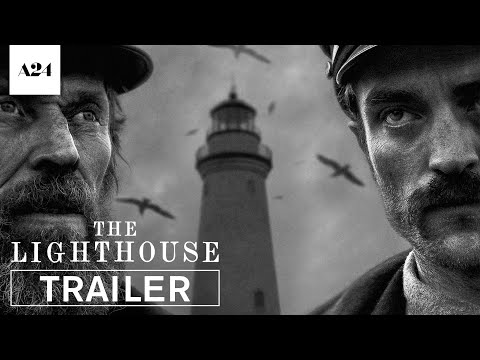
In the late 19th century, two lighthouse keepers, the veteran Thomas Wake and the rookie Ephraim Winslow, are sent to a remote, storm-battered island off the coast of New England. Isolation, hard work, and the secrets they both hide slowly push them toward paranoia, hallucination, and a mad descent into violence, fueled by alcohol and repressed homoerotic tensions.
Robert Eggers‘ second film is a psychological horror that draws heavily from maritime folklore, the literature of Melville and Lovecraft, and the aesthetics of German Expressionist cinema. Shot in claustrophobic black and white and with an almost square aspect ratio, The Lighthouse is a total immersion into the male psyche. The historical reconstruction is meticulous, especially in the archaic and slang-filled dialogue, but it serves to create a timeless atmosphere. The film uses its historical context to explore universal themes such as toxic masculinity, loneliness, and madness.
First Cow (2019)

In 1820s Oregon, on the edge of the American frontier, a lonely cook named “Cookie” Figowitz befriends King-Lu, a Chinese immigrant on the run. The two decide to go into business together, making and selling delicious oily cakes. Their secret ingredient is milk stolen at night from the only cow in the territory, owned by the rich and powerful Chief Factor. Their small success attracts attention and puts their enterprise and their lives at risk.
Kelly Reichardt offers a gentle and melancholic vision of the West, far from any epic. The film is a delicate story of male friendship and, at the same time, a subtle but sharp critique of the origins of American capitalism. The frontier is not a place of heroic opportunities but a precarious system where survival depends on small acts of collaboration and wealth is based on exploitation. First Cow is a minimalist and profoundly human work that shows how even the smallest of stories can contain a great truth about history.
The Favourite (2018)
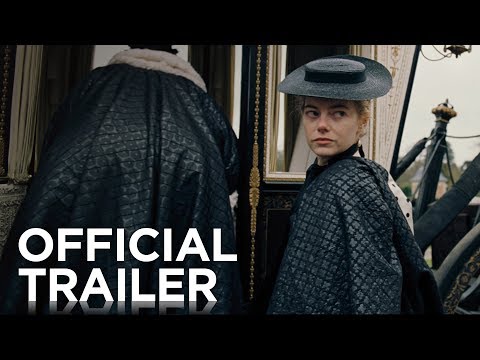
In the early 18th century, England is at war with France, and the frail and capricious Queen Anne sits on the throne. The country is effectively governed by her friend and advisor, Lady Sarah Churchill. The balance of power is upset by the arrival at court of Abigail Masham, Sarah’s cousin, an ambitious and cunning young servant. As Abigail ingratiates herself with the queen, a no-holds-barred war breaks out between the two women to become the favourite.
Yorgos Lanthimos deconstructs the costume drama, turning it into a sour, grotesque, and ruthless black comedy about power, sex, and deception. The use of wide-angle lenses that distort the lavish court spaces and the modern, vulgar dialogue demolish any veneer of nobility. The film is not interested in the politics of war, but in the psychological warfare fought in the chambers of power. It is a cruel and brilliant portrait of three women who use every weapon at their disposal to survive and dominate in a world ruled by men.
Roma (2018)

Set in Mexico City in the early 1970s, the film follows a year in the life of Cleo, a young domestic worker of Mixtec origin who works for a middle-class family in the Roma neighborhood. As the family faces its own internal turmoil, such as the father’s separation, Cleo’s life is upended by an unexpected pregnancy and violent political events, like the Corpus Christi massacre.
Alfonso Cuarón draws on his childhood memories to create a monumental and deeply intimate work. Shot in luminous digital black and white, Roma is a film where personal memory is inextricably intertwined with national history. The narrative focuses on Cleo’s perspective, a figure often invisible in both society and cinema, making her the emotional heart and silent witness of great private and public upheavals. It is an act of love for the women who raised the director and a powerful example of how micro-history can illuminate macro-history.
The Head Hunter (2018)

In a desolate and timeless kingdom, a lone warrior lives in an isolated hut, its walls adorned with the heads of the monstrous creatures he has slain. His existence is consumed by a single purpose: to hunt down and kill the monster that took his only daughter years before. Every day is a routine of preparation, anticipation, and brutal combat, fueled by a desire for revenge and an unquenchable pain.
The Head Hunter It’s a small miracle of micro-budget cinema, a stunning example of how creativity and vision can overcome financial constraints. Made for just $30,000, Jordan Downey’s film is an atmospheric and tense work that turns its limitations into strengths. With a single lead actor and almost no dialogue, the narrative relies entirely on visual and aural impact.
Hagazussa: A Heathen’s Curse (2017)

In an isolated 15th-century Alpine village, young Albrun lives on the fringes of the community, haunted by the memory of her mother, who died of the plague and was considered a witch. Marginalized and persecuted because of ancient superstitions and deep-rooted misogyny, Albrun grows up in solitude, finding solace only in her goats and the wilderness. Her fragile stability is shattered when the villagers’ cruelty pushes her into an abyss of madness and supernatural horror.
In Hagazu is a superb and terrifying example of contemporary folk horror. Director Lukas Feigelfeld creates a slow, atmospheric, and deeply disturbing work that explores how isolation, trauma, and social oppression can create a monster. The film, almost devoid of dialogue, relies on powerful images and a haunting sound design to build an almost unbearable tension. The Alpine landscape, magnificent yet hostile, becomes a reflection of the protagonist’s fractured psyche.
Pilgrimage (2017)

Ireland, 1209. A small group of monks is ordered to transport their monastery’s most sacred relic to Rome. Their perilous pilgrimage will take them across an island ravaged by tribal warfare and the Norman invasion. Accompanied by a mute crusader with a violent past, the monks will face mortal dangers and test their faith, discovering that the true threat is not theological doubt, but the merciless violence of man.
Pilgrimage is a brutal, tense, and linguistically ambitious medieval thriller. Shot on an independent budget, the film stands out for its bold choice to have the characters speak in their original languages (Irish, Norman French, Latin, and English), creating a sense of authenticity and cultural alienation. This is not the mythical Ireland of legends, but a wild and bloody land.
The Death of Stalin (2017)

Moscow, 1953. After suffering a stroke, the dictator Joseph Stalin dies. In the hours and days that follow, the members of his Central Committee, including Khrushchev, Malenkov, Beria, and Molotov, engage in a chaotic and ruthless power struggle to succeed him. Amidst intrigues, betrayals, and absurd decisions, the film depicts the paralysis and terror of a totalitarian regime deprived of its tyrant.
Armando Iannucci applies his brilliant satirical style to Soviet history, creating a hilarious and terrifying black comedy. The film uses political satire as a sharp tool to expose the absurdity and brutality of totalitarian power. The fast-paced, brilliant dialogue and the performances of an exceptional cast transform the Soviet leaders into farcical characters, without ever forgetting the real horror that lies behind their machinations. The Death of Stalin demonstrates how humor can be a powerful weapon to demystify history and reveal the banality of evil.
Loving Vincent (2016)

One year after Vincent van Gogh’s death, postman Roulin tasks his son Armand with delivering the painter’s last letter to his brother Theo. Armand, initially reluctant, embarks on a journey that leads him to meet the people who populated Vincent’s final days. Through their often contradictory memories, he tries to piece together the mystery of his death, discovering the complexity and passion of the man behind the artist.
This film is an unprecedented artistic endeavor: it is the first feature film entirely painted on canvas. Every single frame is an oil painting created in Van Gogh’s style by a team of over one hundred artists. The result is an impressionistic biography that does not just tell the artist’s life story but immerses the viewer in his visual universe. The history of art becomes a sensory experience, an investigative thriller that unfolds within the paintings themselves. It is a moving and technically stunning tribute that celebrates the transformative power of art.
Lady Macbeth (2016)

In rural England in 1865, young Katherine is trapped in a loveless marriage to an older, indifferent man. Stifled by boredom and rigid social conventions, she begins a passionate affair with a young groom. This transgression unleashes in her a ruthless determination and a thirst for freedom that will lead her to commit increasingly violent and shocking acts to protect her newfound independence.
William Oldroyd directs a psychological costume thriller that is a fierce critique of patriarchy. The film strips the period drama of all romanticism, transforming it into a story of brutal and amoral female rebellion. Florence Pugh delivers a magnetic performance, embodying a woman who refuses the role of victim and becomes a tormentor. Lady Macbeth uses the formal rigor of its Victorian setting to create a stark contrast with the primordial violence that erupts within it, offering a complex and disturbing portrait of a woman fighting for her liberation by any means necessary.
The Assassin (2015)

In 9th-century China, during the Tang dynasty, Nie Yinniang is trained from childhood to become an infallible assassin in the service of a nun who wants to eliminate corrupt governors. After failing a mission due to a moment of pity, she is tested with an even more difficult task: to return to her home province and kill the man to whom she was betrothed, now a powerful military leader.
Hou Hsiao-hsien creates a wuxia (Chinese martial arts film) that completely subverts the conventions of the genre. Instead of focusing on action and combat, the film prioritizes contemplation, atmosphere, and visual beauty. The plot is subordinate to aesthetics: long silences, painterly shots, and a meticulous historical reconstruction create an immersive and almost meditative experience. The Assassin is a historical film that becomes visual poetry, where history is not a tale of events but a state of mind, an inner landscape reflected in the magnificence of nature and the formal elegance of the Tang court.
Embrace of the Serpent (2015)

The film intertwines two stories, forty years apart, following Karamakate, an Amazonian shaman and the last survivor of his people. In both timelines, he accompanies two Western scientists, first the German Theodor Koch-Grünberg and then the American Richard Evans Schultes, along the Amazon River in search of yakruna, a sacred plant with powerful healing and hallucinogenic properties. The journey becomes a confrontation between cultures and a testament to the devastation of colonialism.
Shot in dreamlike and majestic black and white, Ciro Guerra‘s film adopts a radically different perspective, telling the story of colonization from an indigenous point of view. The jungle is not an exotic backdrop but a living entity, an archive of knowledge and spirituality that the white man cannot understand, only exploit and destroy. Embrace of the Serpent is a lament for a lost world and an indictment of the cultural violence of colonialism, a powerful work that rewrites the history of exploration as a story of loss.
It’s Hard to Be a God (2013)

A group of Earth scientists are sent on a mission to the planet Arkanar, an extraterrestrial civilization stuck in a historical phase identical to Earth’s Middle Ages. Operating incognito, their task is to observe without intervening. One of them, Don Rumata, lives among the planet’s inhabitants, who regard him as almost a deity, but he is powerless in the face of the brutality, ignorance, and systematic persecution of intellectuals around him.
Aleksei German’s posthumous work is one of the most extreme and immersive cinematic experiences ever made. More than a film, it’s a three-hour sensory immersion into a hell of mud, violence, and bodily fluids. Based on a science fiction novel by the Strugatsky brothers, the film uses its premise to create not a narrative, but an environment. The viewer is literally thrown into the world of Arkanar, a Bruegelian nightmare filmed in dazzling, hyper-detailed black and white.
A Field in England (2013)

During the 17th-century English Civil War, a small band of deserters flees a battle and is captured by an alchemist named O’Neil. After forcing them to consume hallucinogenic mushrooms, O’Neil forces them to dig in a field in search of hidden treasure. Under the influence of the drugs, reality disintegrates and the camp transforms into a psychedelic arena of paranoia, violence, and cosmic terror.
Ben Wheatley‘s film is a masterpiece of low-budget folk horror, a haunting and terrifying journey into the dark heart of history and the human psyche. Shot in evocative black and white, the film uses its historical setting not for faithful reconstruction, but as a starting point for an exploration of madness and mysticism. The camp is not just a place, but a character, a liminal space where the laws of physics and reason are suspended.
Ironclad (2011)

England, 1215. After being forced to sign the Magna Carta, the tyrannical King John assembles an army of Danish mercenaries to regain control of the country. A small band of rebel barons, led by a tormented Knight Templar, barricades themselves in Rochester Castle, a crucial strategic point, to resist the king’s siege. With fewer than twenty men, they must face an overwhelming force in a desperate battle for freedom.
Ironclad is a perfect example of independent action cinema, a film that eschews the romanticism and heroic veneer of the medieval genre to offer a visceral, brutal, and uncompromising experience. Made on a budget of $25 million, the result of complex international financing, the film stands out for its raw and realistic depiction of siege warfare. There’s no glittering armor or elegant duels here, just mud, blood, and almost unbearable violence.
Black Death (2010)

England, 1348. As the Black Death ravages the country, news reaches a remote village, sheltered by a swamp, seemingly immune to the contagion. Rumor has it that the village is ruled by a necromancer capable of resurrecting the dead. A group of ruthless knights, sent by the bishop, are sent to investigate. Leading them through the swamp is Osmund, a young monk whose faith will be severely tested by the journey and the horrors he uncovers.
Christopher Smith‘s work is a powerful and desolate fusion of historical drama and horror. Produced by a consortium of independent British and German companies, the film uses the plague setting to conduct a merciless investigation into the nature of faith and fanaticism. Osmund’s journey is not only physical, but spiritual, a descent into a hell where theological certainties crumble in the face of human suffering and cruelty.
The White Ribbon (2009)
In a small Protestant village in northern Germany on the eve of World War I, a series of strange and cruel “accidents” disturbs the apparent tranquility of the community. A doctor falls from his horse due to a tripwire, a barn is set on fire, a child is tortured. The local schoolteacher tries to investigate but is met with a wall of silence, hypocrisy, and authoritarianism. Suspicion falls on the village children’s choir, educated according to rigid principles of purity and discipline.
Michael Haneke directs a masterpiece in austere and chilling black and white, investigating the roots of totalitarianism. The film offers no easy answers but suggests that the evil that will explode with Nazism did not come from nowhere but was cultivated in a fertile ground of repression, humiliation, and psychological violence. The community, governed by the baron, the pastor, and the doctor, is a microcosm of the patriarchal and authoritarian society that will generate monsters.
Valhalla Rising (2009)
![Valhalla Rising - Official Trailer [HD]](https://blog.indiecinema.co/wp-content/plugins/wp-youtube-lyte/lyteCache.php?origThumbUrl=https%3A%2F%2Fi.ytimg.com%2Fvi%2FwBmPMuLgePs%2F0.jpg)
At an unspecified time in the Scottish Highlands, a mute, one-eyed warrior, held prisoner and forced to fight, manages to free himself by slaughtering his captors. Along with a young boy who follows him, he joins a group of Christian crusaders heading to the Holy Land. Their ship, however, is shrouded in impenetrable fog, and after a grueling journey, they land in an unknown and hostile land, a “new world” that will prove to be hell.
Valhalla Rising is the radical antithesis of the traditional Viking epic. Director Nicolas Winding Refn strips the genre of all conventional narrative elements to create a purely sensorial and metaphysical experience. With dialogue reduced to the bare minimum, the film relies on a brutal and hallucinatory aesthetic, an existential journey that evokes both the 2001: A Space Odyssey of Kubrick as the Heart of Darkness by Conrad. There is no plot, just an inexorable descent into an abyss of violence and silence.
A Prophet (2009)
Malik El Djebena, a young, illiterate French-Arab, is sentenced to six years in prison. Fragile and alone, he is taken under the wing of the Corsican mafia boss, César Luciani, who forces him to carry out a series of brutal missions. Slowly, Malik learns to read, write, and navigate the complex power dynamics of the prison, developing his own plan to emancipate himself and build his criminal empire.
Jacques Audiard‘s film, though set in the present, functions as a powerful historical film about a social microcosm. The prison is depicted as a mirror of contemporary French society, with its racial tensions, power hierarchies, and post-colonial dynamics. Malik’s rise is not just the story of a criminal but an allegory of the struggle for identity and self-determination of an outcast. Audiard mixes raw realism with almost dreamlike elements, creating a gangster movie that is also a profound sociological analysis.
Sauna (2008)

In 1595, at the end of a long and brutal war between Sweden and Russia, two Finnish brothers, members of a commission to demarcate the new borders, cross a desolate land. Erik is a hardened and ruthless soldier, while Knut, a scholar, is tormented by guilt for a sin committed during the war. Their journey leads them to a mysterious village lost in a swamp, where it is said there is a sauna that can wash away all sins.
This gem of Finnish horror cinema is a dark and atmospheric tale about the indelible burden of guilt. Set in a “no man’s land” that is not only geographical but also spiritual, on the border between Christianity and paganism, the film uses its historical setting to create a unique form of psychological terror. The titular sauna is not a place of purification, but a catalyst for horrors, a point of convergence where sins are not erased, but take on a physical and terrifying form.
The Motorcycle Diaries (2004)

In 1952, two young Argentine students, Ernesto Guevara and Alberto Granado, set off on a motorcycle trip across South America. What begins as a carefree adventure in search of fun and women gradually transforms into a journey of discovery. Through encounters with exploited miners, marginalized lepers, and the vestiges of ancient civilizations, the young Ernesto begins to develop a social and political consciousness that will transform him into the revolutionary icon known as “Che.”
Walter Salles avoids hagiography and chooses to tell the micro-history of an icon before he became one. The film is not a political biopic but a road movie about awakening consciousness. The film’s strength lies in its humanistic approach: we do not see the revolutionary, but the man. The camera captures the breathtaking beauty of the South American landscapes, which contrast with the poverty and social injustice the two friends encounter.
The Barbarian Invasions (2003)

Rémy, a cynical and libertine history professor, is dying of cancer in a Montreal hospital. His son Sébastien, a pragmatic and distant businessman, returns from London to be with him. To alleviate his father’s suffering, Sébastien gathers Rémy’s old circle of friends, intellectuals, and lovers at his bedside. Their conversations, full of memories, debates, and irony, become a way to come to terms with the past, both personal and collective.
Denys Arcand creates a film in which the “grand history” of the 20th century (communism, fascism, failed utopias) dissolves into the memories and private conversations of a group of friends. The title refers both to the disease invading Rémy’s body and to the “barbarians” (symbolized by his son’s pragmatism and the events of 9/11) who are supplanting the old intellectual culture. It is a profoundly human and moving historical film that suggests that history does not reside in books, but in the stories we tell each other, the relationships we build, and the way we face the end.
The Profession of Arms (2001)

In 1526, Giovanni de’ Medici, known as Giovanni dalle Bande Nere, leads the papal troops against the Landsknechts of Emperor Charles V. Young and impetuous, Giovanni is a master of traditional warfare, based on cavalry and hand-to-hand combat. However, he faces an enemy equipped with a new and devastating technology: firearms. His struggle against this new way of fighting symbolically marks the end of an era and the beginning of modern warfare.
Ermanno Olmi creates a historical film of absolute philological rigor and formal beauty. Far from any spectacularization, the film reconstructs the Renaissance with an almost documentary-like attention to detail, costumes, weapons, and light. The narrative focuses on the technological turning point that made chivalric warfare obsolete. The Profession of Arms is a melancholic reflection on the end of a world and the dehumanization of war.
The Thin Red Line (1998)

During World War II, a group of American soldiers is sent to fight in the decisive battle of Guadalcanal in the Pacific. Through the inner thoughts and reflections of various characters, from the private to the officer, the film explores not so much the military action as the spiritual and psychological impact of war on men and their relationship with a nature that is as beautiful as it is indifferent to their suffering.
Terrence Malick‘s return to directing after twenty years is a war film that transforms into a philosophical poem. Unlike traditional war films, The Thin Red Line does not focus on heroism or strategy but on the transcendental and inner experience of conflict. The war becomes a pretext to meditate on existential questions: the nature of evil, the loss of innocence, the search for meaning in a world dominated by violence.
Dead Man (1995)

William Blake, an accountant from Cleveland, ventures into the Wild West for a new job but quickly finds himself mortally wounded and on the run after an altercation. He is rescued by a Native American named Nobody, who mistakenly believes Blake is the eponymous English poet and painter. Together, they embark on a spiritual and psychedelic journey through a desolate and surreal American frontier, encountering bizarre characters as Blake inexorably approaches his destiny.
Jim Jarmusch deconstructs the Western genre with a hypnotic and philosophical black-and-white work. Dead Man is an anti-western that dismantles the myth of the frontier as a place of heroism and progress, instead depicting it as a brutal and chaotic purgatory. The improvised electric guitar score by Neil Young adds another layer of anachronism and melancholy. The film is an initiatory journey toward death, rewriting American history from the perspective of its outcasts and offering a profound meditation on violence, spirituality, and poetry in a meaningless world.
Underground (1995)

Two friends, Blacky and Marko, are partisans and profiteers in Nazi-occupied Belgrade during World War II. After the war, Marko deceives Blacky and a whole group of people, convincing them to remain hidden in a basement for decades, continuing to produce weapons while he gets rich and builds a career in Tito’s regime. Their personal story becomes a grotesque allegory of the history of Yugoslavia, from the resistance to the Cold War to the Balkan wars.
Emir Kusturica‘s masterpiece, winner of the Palme d’Or at Cannes, is a surreal, chaotic, and tragicomic epic. The film uses farce and excess to tell the trauma of a nation. The history of Yugoslavia is not presented as a linear chronicle but as a feverish and painful carnival, full of life and death. Underground is a powerful example of how cinema can use allegory and the grotesque to address historical wounds too complex and painful to be told in the language of realism.
Queen Margot (1994)
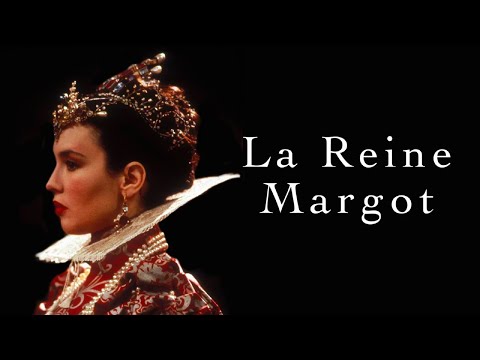
In 1572 France, torn by religious wars, the Catholic Marguerite de Valois, known as Margot, is married to the Huguenot Henry of Navarre to seal a precarious peace. The wedding, celebrated in Paris, turns into a bloodbath with the St. Bartholomew’s Day massacre. In this climate of court intrigues, betrayals, and violence, Margot finds herself trapped between her loyal family and an unexpected passion for a Protestant soldier.
Patrice Chéreau directs a carnal, visceral, and brutal historical drama that strips the 16th century of all romanticism. The film focuses on the physicality of bodies: blood, sweat, sex, and death are depicted with a raw and almost unbearable realism. The violence is not only political and religious but is inscribed in the flesh of the characters. Queen Margot is a powerful work that shows how power is exercised through the control and annihilation of bodies, transforming the grand history of the wars of religion into a claustrophobic and personal nightmare.
The Hour of the Pig (1993)

In 15th-century rural France, young Parisian lawyer Richard Courtois, seeking a simpler life, moves to the town of Abbeville. His hopes are quickly dashed when he finds himself immersed in a world governed by archaic superstitions and corruption. His idealism is severely tested when he is assigned a bizarre and seemingly impossible case: defending a pig accused of the murder of a Jewish child.
This unique and unjustly overlooked film is a darkly comic legal procedural that uses its surreal premise to explore the clash between the nascent rationality of the Renaissance and the superstitious dogmatism of the Middle Ages. The historical, real-life practice of trying animals for crimes becomes the pretext for a sharp satire on the nature of justice, faith, and prejudice.
Orlando (1992)

The story follows Orlando, a young nobleman in Elizabethan England whom Queen Elizabeth I orders never to grow old. Miraculously, Orlando travels through four centuries of British history, experiencing adventures, loves, and disappointments. Midway through his journey, during a diplomatic mission in Constantinople, he awakens transformed into a woman. This metamorphosis allows him to experience history from a completely new perspective, questioning social conventions about gender, power, and identity.
Sally Potter‘s adaptation of Virginia Woolf‘s novel is a historical film that plays with time and history to explore the fluidity of identity. The narrative is not an account of events but a philosophical and visually sumptuous journey through the ages. Tilda Swinton, with her androgynous presence, perfectly embodies Orlando’s changing nature. The film uses the past to deconstruct rigid notions of gender, demonstrating how they are social constructs that change over time.
The Name of the Rose (1986)

In 14th-century Italy, Franciscan monk William of Baskerville (Sean Connery) and his novice Adso investigate a series of mysterious deaths at a remote Benedictine abbey. Amidst a labyrinthine library and religious tensions, they uncover a web of heresy, poison, and forbidden knowledge threatening the monastery.
Jean-Jacques Annaud’s adaptation of Umberto Eco‘s novel masterfully blends detective thriller with medieval intellectual drama, evoking the era’s theological debates and monastic intrigue. Connery’s charismatic sleuth embodies rational inquiry against superstitious zealotry, while the film’s atmospheric production design—gloomy cloisters, flickering candles—immerses viewers in authentic 14th-century monastic life. Its exploration of censorship and faith resonates profoundly, cementing it as a pinnacle of historical mystery cinema.
Mishima: A Life in Four Chapters (1985)
![Mishima: A Life in Four Chapters (1985) ORIGINAL TRAILER [HD 1080p]](https://blog.indiecinema.co/wp-content/plugins/wp-youtube-lyte/lyteCache.php?origThumbUrl=https%3A%2F%2Fi.ytimg.com%2Fvi%2FLzaXtBr5210%2F0.jpg)
The film explores the last day in the life of the famous Japanese writer Yukio Mishima, intertwining it with black-and-white flashbacks of his youth and stylized, theatrical representations of three of his novels. The narrative converges on his final act: the attempted coup and ritual suicide (seppuku) he committed in 1970. The film is a complex portrait of his search for a union between art, life, and political action.
Paul Schrader creates an unconventional biography that shatters temporal linearity to convey the psychological and philosophical complexity of his subject. Instead of telling Mishima’s life story, the film evokes its essence, showing how his obsession with beauty, the body, and death was reflected in both his art and his existential choices. The hypnotic score by Philip Glass and the visionary production design by Eiko Ishioka transform the story into a total aesthetic experience.
Flesh + Blood (1985)

Italy, 1501. A group of mercenaries led by the charismatic Martin are betrayed and expelled by the nobleman Arnolfini, for whom they had just conquered a city. In revenge, they plunder Arnolfini’s caravan and kidnap his future daughter-in-law, the young and determined Agnes. Taking refuge in a castle, the mercenaries must brave Arnolfini’s siege and the plague, while Agnes uses her cunning to survive and manipulate her captors.
Paul Verhoeven’s first English-language film is a deliberate and shocking refutation of all chivalric romance.Flesh + Blood It’s an amoral, dirty, and cynical work that portrays the Renaissance not as an era of artistic rebirth, but as a time of violence, superstition, and opportunism. There are no heroes, only survivors, and every character is driven by greed, lust, or a desire for power.
Ran (1985)

Loosely based on Shakespeare’s King Lear, the film tells the story of Hidetora Ichimonji, an elderly and powerful warlord in 16th-century Japan. Determined to retire, he divides his kingdom between his three sons, Taro, Jiro, and Saburo. When his youngest son, Saburo, warns him that this decision will only lead to conflict, Hidetora banishes him in a fit of pride. Soon, the two eldest sons turn against their father, throwing him into a vortex of betrayal, war, and madness.
Akira Kurosawa‘s last great epic is a work of breathtaking visual beauty and shocking nihilism. Made when the director was nearly blind, Ran (meaning “chaos”) is the testament of a master who orchestrates destruction with the precision of a painter. Kurosawa prepared the film for years, creating hundreds of hand-painted storyboards that served as a guide for every single shot, composition, and color scheme. The result is a film where every frame is a work of art.
When the Raven Flies (1984)

Ireland, 9th century. A child helplessly watches his family massacred by a band of Viking raiders. Spared and raised far from his homeland, he returns to Iceland twenty years later, a man consumed by revenge. His goal is to track down and kill those responsible for the massacre, particularly their leader, Thord, who is now a powerful local leader.
This Icelandic film, often described as a “Viking Western,” is a seminal work in Nordic cinema and a precursor to the revisionism of the Viking genre. Director Hrafn Gunnlaugsson strips the myth of all romanticism and frills, eliminating the horned helmets and heroic narratives to offer a raw, dirty, and ruthless tale of revenge. The influence of Sergio Leone‘s westerns and Akira Kurosawa’s samurai films is evident, but it is reworked in a uniquely Icelandic context.
Fitzcarraldo (1982)
![Fitzcarraldo (1982) ORIGINAL TRAILER [HD 1080p]](https://blog.indiecinema.co/wp-content/plugins/wp-youtube-lyte/lyteCache.php?origThumbUrl=https%3A%2F%2Fi.ytimg.com%2Fvi%2FxWeb7i8IjYs%2F0.jpg)
At the beginning of the 20th century, Brian Sweeney “Fitzcarraldo” Fitzgerald, an Irish opera lover obsessed with building a grand opera house in the heart of the Amazon jungle to host his idol, Enrico Caruso, decides to venture into unexplored territory to exploit rubber. His insane plan involves dragging a huge steamship over a hill, from one river to another, to finance his impossible enterprise.
As with Aguirre, in Fitzcarraldo Werner Herzog merges cinema and life in an epic and dangerous production endeavor. The ship seen in the film was actually dragged over a hill, without special effects, physically embodying the protagonist’s delusion of omnipotence. The film thus becomes a powerful metaphor for man’s struggle against nature and, more deeply, the relationship between art and madness. Fitzcarraldo is not a greedy colonialist but a dreamer whose artistic passion assumes the proportions of a titanic hubris.
Perceval the Welshman (1978)

Young and naive Perceval, raised isolated from the world in the forest by his mother, accidentally encounters a group of knights and decides to travel to King Arthur’s court to become one of them. Thus begins his journey of learning, an adventure that will lead him to meet ladies, fight duels, and reach the Fisher King’s castle, where he witnesses the mysterious procession of the Holy Grail without daring to ask questions, making a mistake that will have grave consequences.
Éric Rohmer’s adaptation of Chrétien de Troyes’s Arthurian epic is a radically anti-realist work, a fascinating experiment that rejects all conventions of historical cinema. Rather than seeking immersion in a believable medieval world, Rohmer opts for a deliberate and stylized theatricality. The film is shot entirely in studio, with painted sets imitating medieval miniatures, cardboard trees, and a chorus that narrates and comments on the action.
The Duellists (1977)
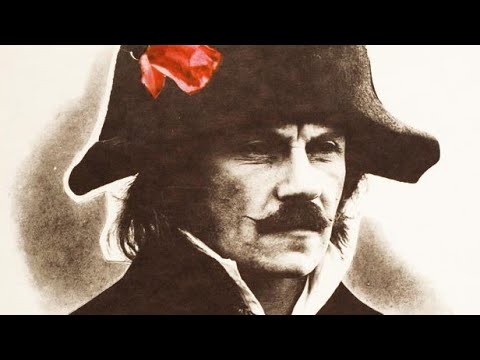
During the Napoleonic era, two French hussar officers, D’Hubert and Feraud, begin a feud over a trivial matter of honor. This initial clash turns into an obsession that consumes them for nearly twenty years, leading them to challenge each other to duels across Europe, while Napoleon’s great military campaigns rage in the background. Their private war becomes the common thread of their lives, an absurd and inextinguishable ritual.
Ridley Scott‘s directorial debut is a work of extraordinary visual beauty, inspired by the painting of the era, which uses a personal conflict to reflect on the absurdity of the code of honor and the nature of war. The film does not focus on the great Napoleonic battles but uses them as a framework for an intimate and psychological drama. The obsession that binds the two protagonists is a microcosm of the greater madness devouring Europe.
Raise Ravens (Cría cuervos) (1976)

In the summer of 1975, as General Franco lies in agony, eight-year-old Ana believes she has poisoned her authoritarian father, a high-ranking army officer. Haunted by visions of her deceased mother, the child moves through a suffocating house that serves as a microcosm of a dying dictatorship, mixing childhood fantasy with a lucid perception of hypocrisy and death.
Directed by Carlos Saura and filmed while the dictator was dying, this film is a direct, though still allegorical, confrontation with the end of Francoism. The timing is crucial: the work captures the suspended atmosphere of a nation in waiting. The death of Ana’s father, an unfaithful and emotionally absent military man, is a powerful metaphor for the death of the Caudillo himself, the great patriarch of the nation.
Monty Python and the Holy Grail (1975)

In the year 932, King Arthur and his faithful Knights of the Round Table receive a sacred mission from God himself: to find the Holy Grail. Their journey, undertaken on an evidently limited budget and with imaginary horses, will lead them to face a series of insane obstacles: an invincible black knight despite his mutilations, anarcho-syndicalist peasants, a murderous rabbit, and knights who say “Ni!
Monty Python and the Holy Grail It’s much more than a simple parody; it’s the definitive and most intelligent comic deconstruction of medieval myth. The Pythons’ genius lies in their ability to blend the wildest absurdity with a deep, almost academic knowledge of the historical period and its literary conventions. The film doesn’t just poke fun at knights and castles; it attacks the very foundations of the epic genre.
Barry Lyndon (1975)
![Barry Lyndon (1975) Original Trailer [FHD]](https://blog.indiecinema.co/wp-content/plugins/wp-youtube-lyte/lyteCache.php?origThumbUrl=https%3A%2F%2Fi.ytimg.com%2Fvi%2Fqo0wACaFcaM%2F0.jpg)
In 18th-century Ireland, the young and ambitious Redmond Barry is forced to flee his village after a duel. His life becomes a picaresque social climb that leads him to enlist in the British army, become a Prussian spy, and finally marry the wealthy and noble Lady Lyndon. Having won title and fortune, Barry will discover that maintaining his status in the rigid aristocratic society is a crueler battle than any war he has ever fought.
Although made with a considerable budget, Stanley Kubrick‘s approach is intrinsically authorial and independent in spirit. Barry Lyndon is the antithesis of the conventional historical drama. Shot entirely by candlelight thanks to special lenses developed by NASA, the film possesses a breathtaking pictorial beauty, with each frame resembling a painting by Hogarth or Gainsborough. This aesthetic is not a mere whim but a tool of social criticism.
The Spirit of the Beehive (1973)

In a desolate Castilian village in 1940, just after the Civil War, young Ana is mesmerized by a screening of the film Frankenstein. Her innocent fascination with the monster leads her to explore the silent, trauma-laden world of the adults around her, blurring the lines between fantasy and the harsh reality of a wounded and silenced nation.
Víctor Erice’s debut feature, released two years before Franco’s death, is the quintessential example of cinema as allegory under duress. Unable to confront the national trauma directly, Erice transfigures reality into a gothic fable, where every element carries overwhelming symbolic weight. Frankenstein’s monster is not a fantastical creature but the embodiment of the “other” generated by the war: the defeated Republican, the political dissident, the buried truth.
Aguirre, the Wrath of God (1972)

In 1560, an expedition of Spanish conquistadors descends the Amazon River in search of the mythical city of gold, El Dorado. When the official commander hesitates, his second-in-command, the fanatical and ruthless Lope de Aguirre, takes command through mutiny. Under his obsessive leadership, the expedition becomes a descent into hell, a journey into madness and megalomania, as the relentless jungle consumes men and hopes.
Werner Herzog‘s masterpiece is the definitive depiction of human obsession and colonial hubris. Shot in the harsh conditions of the Peruvian jungle, the film is inseparable from its legend, particularly the explosive relationship between the director and his lead actor, the indomitable Klaus Kinski. The palpable tension on set, the logistical challenges, and the wild, hostile nature of the location are not mere production anecdotes, but the very essence of the film, which exudes an oppressive, hallucinatory atmosphere.
The Canterbury Tales (1972)

The second installment in the “Life Trilogy,” the film adapts eight of Geoffrey Chaucer‘s tales, set in medieval England. A motley crew of pilgrims journeying to Canterbury entertain themselves with tales ranging from the comical to the grotesque, the licentious to the macabre. These include the tale of an old nobleman blinded after marrying an unfaithful young wife, and a final journey into a hell populated by greedy friars and flatulent devils.
If The Decameron it was a sunny celebration of life, The Canterbury Tales represents its flipside, a darker, more grotesque, and scatological work. Pasolini, who plays Chaucer himself here, shifts the setting from Mediterranean Italy to gray England, and this climactic shift is reflected in the film’s tone. The joy of the body is still present, but it is increasingly intertwined with pain, corruption, and death.
The Decameron (1971)
![The Decameron (1971) ORIGINAL TRAILER [HD 1080p]](https://blog.indiecinema.co/wp-content/plugins/wp-youtube-lyte/lyteCache.php?origThumbUrl=https%3A%2F%2Fi.ytimg.com%2Fvi%2FFA3R7ocHWpk%2F0.jpg)
Inspired by Giovanni Boccaccio‘s 14th-century work, the film interweaves a selection of his most earthy and licentious tales. The stories, set in a vibrant, working-class Naples, tell of cunning lovers, lustful nuns, grave robbers, and swindlers. Among the various episodes, the story of young Andreuccio da Perugia and that of Ser Ciappelletto, a hardened sinner who manages to be canonized on his deathbed, stand out.
First chapter of the “Trilogy of Life” by Pier Paolo Pasolini, The Decameron It is an exuberant and provocative celebration of pre-industrial sexuality, seen by the director as a vital and innocent force, not yet corrupted by consumerism and bourgeois hypocrisy. Pasolini makes a radical choice: he dismantles the aristocratic framework of Boccaccio’s book, populated by young nobles telling each other stories to escape the plague, and replaces it with the teeming and authentic world of the Neapolitan underclass.
Blanche (1971)

In a medieval castle, the young and beautiful Blanche is the wife of a much older lord of the castle. Her purity and beauty ignite the desire of all the men at court, including the visiting king and her husband’s stepson. Caught in a web of lustful glances, suspicion, and jealousy, Blanche’s virtue becomes the inadvertent cause of a bloody tragedy that will overwhelm everyone.
Polish director Walerian Borowczyk‘s work is a sublime example of formalist cinema, where the medieval setting becomes the pretext for an aesthetic composition of rare beauty and cruelty. More than a narrative drama, Blanche It’s a moving medieval tapestry, a pictorial work in which each frame is meticulously constructed like an early Renaissance painting. The style is hieratic, the dialogue sparse, and the atmosphere claustrophobic.
The Lion in Winter (1968)

Set during Christmas 1183, King Henry II gathers his imprisoned wife Eleanor of Aquitaine and their sons—Richard, Geoffrey, and John—to decide his successor. Familial betrayals, political machinations, and raw emotional confrontations erupt amid power struggles for the English throne.
Anthony Harvey‘s witty, literate drama, adapted from James Goldman‘s play, features powerhouse performances by Peter O’Toole and Katharine Hepburn, who spar with Shakespearean intensity. It humanizes Angevin dynasty politics through domestic turmoil, highlighting gender dynamics and succession crises. The anachronistic dialogue amplifies timeless themes of ambition and regret, making it a razor-sharp dissection of medieval royalty’s dysfunction, far beyond mere costume spectacle.
The Valley of the Bees (1968)

In the 13th century, young Ondřej is forced by his father to join the Teutonic Order as penance. Within the order, he develops a deep bond with Armin, a fanatical and devoted knight. Unable to endure the rigid discipline, Ondřej flees to return to his home and his former life. But Armin, bound by his oath and possessive affection, pursues him, determined to restore him to order or kill him.
Made by František Vláčil immediately after the monumental Marketa Lazarová, and using some of the same sets and costumes, The Valley of the Bees It’s a more restrained but no less powerful work. The film is a cold and austere allegory on the conflict between individual freedom and ideological fanaticism, a theme that resonated powerfully in Czechoslovakia in 1968, on the eve of the repression of the Prague Spring.
Marketa Lazarová (1967)
![Marketa Lazarová (1967) ORIGINAL TRAILER [HD 1080p]](https://blog.indiecinema.co/wp-content/plugins/wp-youtube-lyte/lyteCache.php?origThumbUrl=https%3A%2F%2Fi.ytimg.com%2Fvi%2FGR7YXgF3pPY%2F0.jpg)
In the 13th century, in a savage, pagan land, two rival bandit clans, the Kozlíks and the Lazars, clash in a brutal feud. During one of their raids, Kozlíks’ sons kidnap Marketa, Lazar’s young daughter, betrothed to God and destined for a convent. Torn from her pious life, Marketa is thrust into a world of primal violence, where the boundaries between love and brutality, Christianity and paganism, dissolve in bloody chaos.
Often voted the greatest Czech film ever made, Marketa Lazarová František Vláčil’s “The Dark Side of the Moon” is not a historical drama, but a total and uncompromising immersion in the alien mentality of the Middle Ages. Vláčil’s goal is not to tell a linear story, but to recreate the sensorial texture of a bygone era. The result is an almost physical cinematic experience, a feverish and disorienting epic that assails the viewer with its savage beauty and relentless cruelty.
Andrei Rublev (1966)
![Andrei Rublev | Restoration Trailer [HD] | Coolidge Corner Theatre](https://blog.indiecinema.co/wp-content/plugins/wp-youtube-lyte/lyteCache.php?origThumbUrl=https%3A%2F%2Fi.ytimg.com%2Fvi%2F-QygvxpUaJw%2F0.jpg)
The film traces, through eight episodes, the life of the 15th-century Russian icon painter Andrei Rublev. His spiritual and artistic journey unfolds during an era of unprecedented violence, marked by the Tatar invasions, plague, famine, and the brutality of Russian princes. Witnessing unspeakable horrors, Rublev suffers a profound crisis of faith, stops painting, and takes a vow of silence, questioning the meaning of art in a world seemingly abandoned by God.
Andrei Tarkovsky‘s epic is much more than a biopic; it is a monumental meditation on the role of the artist, the necessity of faith, and the resilience of the human spirit in the face of history’s cruelty. The film’s troubled production, long opposed and censored by Soviet authorities who deemed it too negative, violent, and spiritually complex, perfectly reflects its central theme: artistic creation as an act of resistance against an oppressive power. Tarkovsky is not interested in a conventional historical reconstruction, but in evoking the almost tactile materiality of an era.
Becket (1964)

King Henry II elevates his loyal friend Thomas Becket to Archbishop of Canterbury, expecting unwavering support. Becket’s embrace of spiritual duty sparks a bitter clash between church and state, culminating in exile, conflict, and martyrdom in 12th-century England.
Peter Glenville’s epic, starring Peter O’Toole and Richard Burton, dramatizes the historic rift with emotional depth and rhetorical grandeur. It probes loyalty, power, and conscience, portraying Becket’s transformation as a profound moral awakening. Lavish cinematography captures medieval grandeur, while the stars’ chemistry elevates historical biography into tragic poetry, influencing perceptions of church-state tensions enduring in cultural memory.
El Cid (1961)

11th-century Spanish knight Rodrigo Díaz de Vivar, known as El Cid, rises as a champion against Moorish invaders and internal betrayals. Exiled by a jealous king, he forges alliances, reconquers Valencia, and becomes a legendary hero uniting Christian Spain.
Anthony Mann‘s spectacle delivers operatic heroism with Charlton Heston as the stoic Cid and Sophia Loren as his devoted wife. Sweeping battles and romantic valor evoke epic poetry like the Cantar de Mio Cid, blending historical reverence with Hollywood grandeur. Its technical achievements—vast sets, innovative effects—immerse audiences in Reconquista fervor, cementing its status as a defining medieval adventure despite occasional melodrama.
The Virgin Spring (1960)

In 14th-century Sweden, young and devout Karin is sent by her pious parents to carry candles to church. While traveling through the forest, accompanied by her half-sister Ingeri, she is brutally raped and murdered by three shepherds. By a twist of fate, the murderers seek shelter at Karin’s parents’ farm. When her father, Töre, discovers the truth, his Christian faith clashes with a primal instinct for revenge.
Ingmar Bergman‘s early masterpiece, The Virgin’s Spring It is a cruel and powerful parable about the conflict between faith and violence, between the Christian morality of forgiveness and the ancient pagan law of an eye for an eye. Based on a medieval ballad, the film explores with almost unbearable clarity the dilemma of a man of faith forced to confront absolute evil. The depiction of violence, both that suffered by Karin and that inflicted by Töre, is direct and devoid of complacency, serving a purely theological purpose.
The Seventh Seal (1957)

Returning from the Crusades, the knight Antonius Block finds his homeland ravaged by the Black Death. On the shore, he encounters Death, who has come to claim him, and challenges him to a game of chess, hoping to gain time to find answers to his questions about life, faith, and the existence of God. On his journey, he is joined by a small troupe of traveling actors, whose simple joy for life contrasts with his existential anguish.
With The Seventh Seal Ingmar Bergman transforms a medieval allegory into a deeply personal and universal exploration of existential anguish. Shot in just 35 days on a shoestring budget, the film draws heavily on the director’s theatrical roots and his Lutheran upbringing, dramatizing the drama of faith in the modern world. The famous chess game is not just a narrative device, but a powerful metaphor for man’s struggle with mortality and his desperate search for meaning in a seemingly indifferent universe.
Francis, God’s Jester (1950)

Through a series of simple, joyful vignettes, the film recounts episodes from the life of Saint Francis of Assisi and his first followers. The scenes, taken from the Little Flowers, do not follow a linear plot, but illustrate the spirit of Franciscanism: humility, compassion, absolute faith, and the joy found in poverty and service. From a confrontation with a tyrant to preaching to the birds, the film paints a portrait of the search for holiness in everyday life.
In an era dominated by lavish Hollywood religious productions, Roberto Rossellini applies the principles of Italian Neorealism to a historical and spiritual subject, creating a work of revolutionary purity and authenticity. Co-written by Federico Fellini, the film rejects conventional dramaturgy for an almost documentary style. Rossellini’s most radical choice is to cast the roles of the friars in the role of real monks from the Nocera Inferiore convent, a decision that imbues the film with unparalleled sincerity and authenticity.
Alexander Nevsky (1938)

In 13th-century Russia, Prince Alexander Nevsky rallies his people against Teutonic Knights invading from the west. Through strategy and courage, he leads the decisive Battle on the Ice, defending Orthodox faith and Slavic lands from crusader aggression.
Sergei Eisenstein‘s propagandistic masterpiece fuses historical drama with montage innovation, choreographing the frozen lake battle as visceral symphony of clashing steel and ideological fervor. Prokofiev’s score amplifies mythic heroism, while stark visuals contrast Russian resilience against Teutonic barbarism. Beyond Soviet patriotism, it endures as a visually revolutionary portrayal of medieval warfare and national identity.
The Passion of Joan of Arc (1928)

Based on the original trial transcripts, the film focuses on the final hours of Joan of Arc, a prisoner of the English and tried for heresy by a French ecclesiastical court. Subjected to a psychologically grueling interrogation, Joan faces her accusers with unshakable faith, moving from fear to hope, from suffering to spiritual ecstasy, until her tragic fate at the stake.
A vision curated by a filmmaker, not an algorithm
In this video I explain our vision

