
Beyond the Peplum: The Definitive Guide to the Real Films About Ancient GreeceThe image we have of ancient Greece on the big screen is an illusion. It is a digital papier-mâché colossus built by Hollywood, a landscape of muscular heroes, shiny sandals, CGI monsters, and bombastic dialogue. From Clash of the Titans to Troy, mainstream cinema has turned the cradle of Western tragedy into a theme park. It has taken the myths, which were ritualistic tools for investigating the traumas of war, the fragility of democracy, and humanity’s relationship with the divine, and reduced them to pure spectacle. This is not just a historical betrayal, but above all, a philosophical one.

This guide is an antidote. It is a journey into independent cinema, searching for those directors who looked to Hellas not as an exotic backdrop, but as a living text. For the great auteurs, the Greek myth is a sharp scalpel. It is the tool Pier Paolo Pasolini uses to diagnose the mortal clash between an archaic, sacred world and the nihilism of modern capitalism. It is the allegory Theo Angelopoulos employs to deconstruct and stitch back together the traumas of Greek political history. It is the intrusion of logical, sacrificial horror that Yorgos Lanthimos unleashes upon our orderly bourgeois lives.
Mainstream films are easy because they offer answers and heroes. The auteur films we will explore are difficult because, like the original tragedies of Euripides or Sophocles, they pose unresolvable questions. They explore the limits of human reason, the insoluble conflict between the individual and the state, between free will and a destiny that takes the form of a natural law. In this, in their refusal of consolation, these films are paradoxically more faithful to the ritualistic and civic spirit of the Theatre of Dionysus than any computer-generated reconstruction.
You will notice that many of these directors, from Pasolini to Angelopoulos, actively avoided the “pretty postcard” of classical Greece, rejecting the tourist aesthetic of the Parthenon. They sought instead the archaic: a world that was older, dirtier, more authentic. Pasolini did not film in Greece, but in Morocco and Turkey, not because they were historically accurate, but because they were pre-industrial and pre-capitalist places, where the sacredness he saw as lost in the West still pulsed. Our journey will not be one of historical accuracy, but of philosophical authenticity.
Oedipus Rex (1967)

Sophocles’ tragedy about the man destined to kill his father and marry his mother. Pier Paolo Pasolini divides the film into three parts: an autobiographical prologue in 1920s Italy, the tragedy itself, set in an archaic and pre-industrial Morocco, and an epilogue in the industrialized Italy of the 1960s, with a blind Oedipus wandering through Bologna.
This is not a film about Oedipus; it is a film where Pasolini is Oedipus. It is his most open confession, a Freudian and Marxist analysis of his own life and times. The modern prologue establishes the bourgeois trauma and the Oedipal complex. The epilogue shows Oedipus/Pasolini as the blind artist-prophet, an outcast playing his flute in the squares of a capitalist world that has profaned and forgotten the sacred.
The choice of Morocco is the key to everything. Pasolini is not looking for classical Greece; Periclean Athens is, for him, already too rational, too bourgeois. He seeks an archaic world, a “third world” where myth is not a story but a reality, where the sun is a god and blood is sacred. The direction is hieratic, the costumes (by Danilo Donati) are ritual masks, the acting (by Franco Citti) rejects psychology. It is the transposition of a dream, an investigation into the inescapable nature of Fate.
The Lost Poet
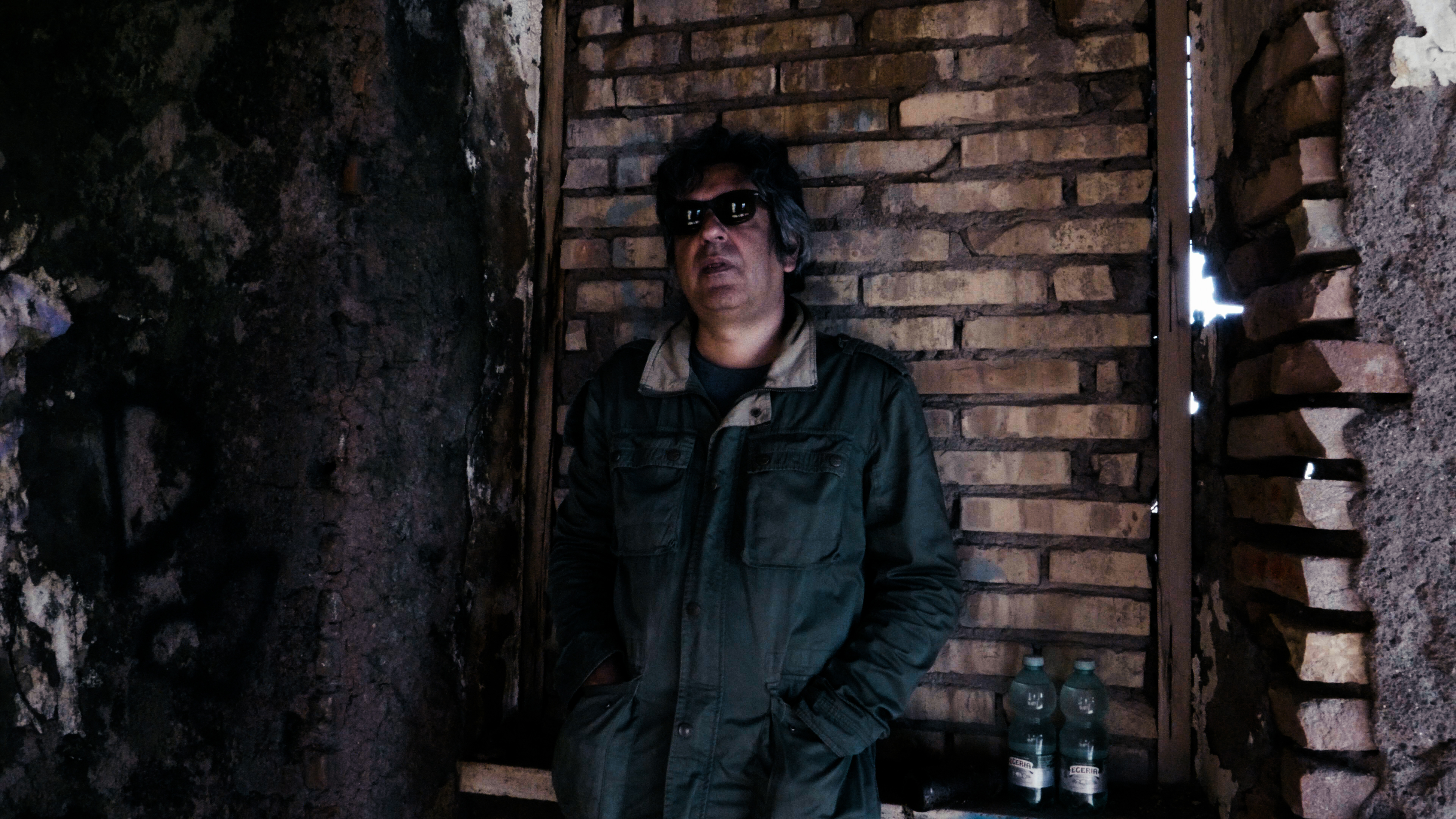
Drama, by Fabio Del Greco, Italy, 2024.
Dante Mezzadri wants to see an old friend, nicknamed the Iguana, whom he has lost sight of for many years, and who has managed to turn their shared youthful passion for poetry into a job, becoming a famous writer and poet. The man escapes from his bourgeois life and his wife to live homeless on the Roman coast, printing and trying to sell his poetry collections. At night he sleeps in a park of old carnival floats, inside a papier-mâché tank, and waits for the opportunity to meet his old friend, who however never shows up for appointments in the places they frequented when they were young, now in ruins. Dante's poetry books do not interest anyone and to support himself he is forced to "change product": he starts selling the infamous "cannibal pill" on behalf of young drug dealers, a new drug that sells like hot cakes and causes sensory and consumerist ecstasy. However, he realizes that this powerful drug is very dangerous for those who take it, he comes into conflict with his ethical conscience and throws all the pills into the sea. However, the dealers want to collect their money.
Shot over a period of 2 years, the film is a reflection on the cultural and artistic rubble of the society in which the protagonist lives, in an increasingly mechanized, consumerist and arid world. Dante Mezzadri is yet another human being who has renounced his inspiration and his creativity, but unlike many he is not willing to give his life to a system that distances him from his true identity. The physical world around him, however, seems constructed in such a way that it seems impossible to escape from this "invisible cage". The enthusiasm of the people he meets is ignited only by sensory gratification, by unreal visions of personal affirmation and success, by "metaverses" that offer an escape into an illusory and destructive reality. The poet's house on the coast, where he met with his friends as a young man, is just a pile of abandoned rubble. What happened to all those who wanted to become poets and ended up becoming something else? Are there internal forces with which that house can be "rebuilt"?
LANGUAGE: Italian
SUBTITLES: English, Spanish, French, German, Portuguese
Medea (1969)
![Medea (1969) Original Trailer [FHD]](https://blog.indiecinema.co/wp-content/plugins/wp-youtube-lyte/lyteCache.php?origThumbUrl=https%3A%2F%2Fi.ytimg.com%2Fvi%2FHN-KHdL1Hs0%2F0.jpg)
The barbarian sorceress Medea, played by the divine Maria Callas in her only, mute, and powerful film performance, helps Jason steal the Golden Fleece. Relocated to Corinth, she is betrayed by Jason, who decides to marry the king’s daughter for political power. Medea’s revenge will be a ritualistic and absolute act.
This film is Pasolini’s philosophical manifesto. It is not a psychological tragedy about jealousy; it is an anthropological epic about the clash between two irreconcilable worlds. Medea’s Colchis (filmed in Cappadocia, Turkey) is an archaic, pre-logical world, dominated by ritual, magic, and human sacrifice. It is a world where everything is sacred.
Jason’s Corinth is rational, secular, “modern,” and therefore profane. Jason is the first technocrat, the first bourgeois, a man who no longer understands the language of the sacred. The Centaur, a key figure, explains it: to the child Jason, he appears as a mythical creature; to the adult Jason, he appears as a man, explaining that in the new rational world, “the sacred no longer exists.” Medea’s revenge, the infanticide, is not an act of passion, but a political and ritual act: it is the only way for Medea to deny her children assimilation into Jason’s profane, capitalist world, an ultimate act of resistance against “cultural genocide.

Fellini Satyricon (1969)

Loosely based on the surviving fragments of Petronius’s work, the film follows the picaresque adventures of Encolpius and Ascilto, two young students, through a grotesque, surreal, and orgiastic fresco of imperial Rome in the time of Nero. A world of decadence, sex, violence, and dreams.
Although set in Rome, Satyricon is essential for understanding the end of the Greco-Roman era. If Pasolini shows us the sacred, Fellini shows us its terminal stage: a world that has lost its center, where the gods are dead and only appetites remain. It is the definitive representation of the decadence of classical culture.
Fellini himself called the film “science fiction of the past.” He was not reconstructing history; he was dreaming of an alien planet. The film is deliberately fragmentary, disconnected, and incomprehensible, like Petronius’s text. It makes us feel like archaeologists wandering through a nightmare. The aesthetic is dreamlike: unnatural colors, grotesque characters, a narrative that collapses. There are no heroes, there is no morality, only a pagan “journey to the end of the night.” It is the perfect counterpoint to Pasolini’s sacred: here, there is only the void.
Socrates (1971)

Produced for Italian television, this film by Roberto Rossellini is a didactic, austere, and rigorous reconstruction of the last days of Socrates. Drawing directly from Plato’s dialogues (Apology, Crito, Phaedo), the film follows the trial, imprisonment, and death of the philosopher, accused of corrupting the youth and not believing in the city’s gods.
This is a political film by Rossellini, the pinnacle of his educational cinema project for TV. It is the anti-spectacle, the total rejection of the peplum and the epic. Rossellini believes that the word of Socrates is more cinematic than any battle. The only “action” is the dialogue, the maieutics. The reconstructed Athens is deliberately sparse, almost theatrical, so as not to distract from the argument. The film is radical in its adherence to the text.
To strip the story of any Hollywood “stardom,” Rossellini uses non-professional or little-known actors. His Socrates is not a tragic hero; he is an elderly, unassuming but inflexible man. This choice, which applies the neorealist aesthetic to antiquity, creates an effect of profound humanity. The film does not ask us to admire Socrates, but to listen to and understand him.
Electra (1962)

The first film in the “Euripidean trilogy” by Greek-Cypriot director Michael Cacoyannis. Irene Papas plays an Electra hardened by grief, exiled in a peasant’s hut after the murder of her father Agamemnon. Her only, arid reason for living is to await the return of her brother Orestes to exact revenge on their mother Clytemnestra and her lover Aegisthus.
This film is a milestone of Greek cinema, a national re-appropriation of the myth. Cacoyannis does not use the Greek landscape as a backdrop, but as a prison and a witness. The harsh, sun-drenched Greek countryside, filmed in magnificent black and white by Walter Lassally, becomes the embodiment of Electra’s timeless pain.
The film defines Cacoyannis’s “hybrid” style: it has the narrative clarity and emotional tension of a Hollywood film, but the formal austerity, the use of the chorus (albeit modernized), and the psychological depth of European auteur cinema. The face of Irene Papas is a landscape in itself: it is archaic, proud, and embodies a primordial force. It is Tragedy incarnate.
A vision curated by a filmmaker, not an algorithm
In this video I explain our vision
The Trojan Women (1971)

The second chapter of the trilogy. Filmed in Spain with an international cast (Katharine Hepburn, Vanessa Redgrave, Geneviève Bujold, and Irene Papas as Helen). The film is a long funeral lament. After the fall of Troy, the surviving women (Hecuba, Cassandra, Andromache) wait on the beach to be divided as slaves and spoils of war by the Greek victors.
This is the most openly political film of the trilogy. Released during the Vietnam War and the dictatorship of the colonels in Greece, the film uses Euripides to launch a universal cry against the inhumanity of war. There are no heroes, no glory; only the inarticulate suffering of the victims, especially women and children, whose fate is decided by distant men.
The use of big Hollywood stars was a strategic move by Cacoyannis. He used their fame as a “Trojan horse” to deliver a radical political message to a global audience. Their acting style, deliberately theatrical and “larger than life,” merges with the raw reality of Euripides’ text. The confrontation between Hepburn’s Hecuba and Papas’s Helen is central: it is the agōn, the tragic debate, where rhetoric is a weapon of survival.
Iphigenia (1977)

The final and chronologically first chapter of the trilogy. The Greek army is stranded at Aulis, unable to sail for Troy due to a lack of wind. The oracle decrees that King Agamemnon must sacrifice his daughter, Iphigenia, to the goddess Artemis to appease the gods and allow the departure.
This film is the definitive critique of power. Agamemnon is not a grieving father; he is a weak politician, a general trapped between a bloodthirsty army pushing for war and his family responsibilities. The sacrifice of Iphigenia is not a religious act, but a state-sanctioned murder, an act of cynical Realpolitik to justify a military aggression.
The deception (Iphigenia is lured with the promise of marrying Achilles) and Clytemnestra’s (Irene Papas) desperate race against time to save her daughter create the tension of a thriller. The film is the perfect prologue to the entire saga of the Oresteia. Iphigenia’s sacrifice is the original sin that causes everything that follows: the fall of Troy, the murder of Agamemnon, and the revenge of Electra. Cacoyannis closes the circle, showing how the origin of mythology’s most famous war is an act of internal barbarism.
Helena (1924)

A colossal German silent film, directed by Manfred Noah. With a runtime of over three hours, this epic film tells the entire saga of the Trojan War, divided into two parts: “The Rape of Helen” and “The Fall of Troy.” It is one of the first and most ambitious productions dedicated to the Greek myth.
This film is an act of cinematic archaeology. Long considered lost, it has only recently been restored. To see it today is to witness the birth of a genre. Made in the Weimar Republic, Helena shows an approach to the epic completely different from the American one. It is dark, majestic, and almost expressionistic in its staging of masses and passions.
It represents an alternative path for mythological cinema. It is not a peplum driven by a muscular hero, but a choral and tragic fresco. Its scale and seriousness in tackling the myth make it a forgotten precursor to all the auteur cinema that would follow.
The Travelling Players (O Thiasos) (1975)

Theo Angelopoulos’s nearly four-hour epic. An itinerant company of actors (thiasos) travels through rural Greece between 1939 and 1952, attempting to stage a pastoral comedy. Their journeys and personal lives intertwine non-chronologically with the tumultuous events of modern Greek history: the Metaxas dictatorship, the Nazi occupation, and the brutal civil war.
This is Angelopoulos’s masterpiece and the most radical deconstruction of Greek myth. The film is not set in ancient Greece; it is ancient Greece in the present. The members of the troupe have the names of the Oresteia (Agamemnon, Clytemnestra, Orestes, Electra) and their actions (betrayals, murders, revenge) are the allegory for Greek history. Agamemnon (leader of the troupe) is killed by collaborators (Clytemnestra and Aegisthus), and Orestes (the communist partisan) avenges him.
The style is rigorously Brechtian. Angelopoulos refuses emotional identification. He uses extremely long sequence-shots (only 80 shots in 230 minutes) and a non-chronological narrative. The camera moves, and time changes within the same shot. For Angelopoulos, history (ancient and modern) is not progress, but a cyclical trauma. The myth is the invisible structure that forces the Greeks to repeat the same tragedy endlessly. A film shot in part, and at great risk, under the dictatorship of the colonels.
Orphée (Orpheus) (1950)

The poet and director Jean Cocteau transposes the myth of Orpheus and Eurydice to existentialist post-war Paris. Orpheus, a famous and bored poet, becomes obsessed with Death (a princess who travels in a Rolls-Royce) and with poetic messages transmitted by a car radio. He will lose Eurydice and must travel to the Underworld, a bureaucratic place accessed by passing through mirrors.
Cocteau is not interested in Greece; he is interested in the Poet. The film is an allegory about the artist, his obsession with death, inspiration (the radio), and immortality. The Underworld is not Hades, but the “Zone”: a dreamlike landscape made of ruins (filmed in the rubble of the Saint-Cyr military school, bombed during the war).
The intuition of the mirror as a portal is one of the most powerful in cinema history. It is the surface of reflection (literal) that the artist must cross to find truth. Cocteau subverts the myth: here, it is Death who falls in love with Orpheus and, breaking the rules, makes him immortal. It is a perfect fusion of surrealism and personal mythology.
From the Cloud to the Resistance (1979)

A radical film by the duo Jean-Marie Straub and Danièle Huillet. It is divided into two parts. The first adapts six of Cesare Pavese‘s Dialogues with Leucò: philosophical conversations between Greek mythological figures (like Oedipus, Tiresias, the Nymphs). The second adapts Pavese’s The Moon and the Bonfires, about the post-war partisan resistance.
This is anti-spectacle cinema at its purest. The Straub-Huillet approach is materialist. The actors (non-professionals) are dressed in bedsheets and recite a philosophical text in an Italian field, with direct sound. It is the total refusal of cinematic illusion. The emotion does not come from the acting (which is flat, Brechtian), but from the tension between the ancient word, the actor’s body, and the modern landscape.
The title is the film’s thesis. From the cloud” (myth, the divine, the oppression of the gods) “to the resistance” (human action, politics, the anti-fascist struggle). Straub-Huillet connect humanity’s struggle against Fate (myth) to the proletariat’s struggle against fascism (history). It is a work of Brechtian-Marxism applied to antiquity.
The Death of Empedocles (1986)

Another film by Straub-Huillet, based on the unfinished tragedy by Friedrich Hölderlin. The pre-Socratic philosopher Empedocles attempts to convince his fellow citizens of Agrigento to live in harmony with nature and reject the corrupt laws of the state. Exiled, he commits suicide by throwing himself into the crater of Mount Etna.
The film directly confronts a philosopher of ancient Greece, seen through the filter of Hölderlin and the Straubs as a proto-communist revolutionary. He is an “enemy of the state” who preaches a return to nature and the rejection of “law and custom.
Filmed in Sicily on Mount Etna, the film is an example of their radical aesthetic. They use only natural light and direct sound. The wind in the leaves, the sun, the volcanic rock are as important as Hölderlin’s text. Straub himself called the film a “communist utopia.” Empedocles’s suicide is not a defeat, but a final act of union with nature, a total rejection of corrupt society.
Black Orpheus (Orfeu Negro) (1959)

Palme d’Or at Cannes and Oscar for Best Foreign Language Film. French director Marcel Camus transposes the myth of Orpheus and Eurydice to the favelas of Rio de Janeiro during Carnival. Orpheus is a tram conductor and guitarist; Eurydice is a country girl fleeing a mysterious man who is the incarnation of Death.
This film is a double-edged sword. On one hand, it is a visually stunning, vibrant, musical work that launched Bossa Nova (with the soundtrack by Antônio Carlos Jobim and Luiz Bonfá) to the world. It is a film that defined the image of Brazil for a generation.
On the other hand, it is the “problematic” work par excellence. Brazil’s Cinema Novo movement (like Glauber Rocha) attacked it fiercely, calling it an act of neocolonialism. A French director imposing a European myth on an Afro-Brazilian culture, reducing the favela inhabitants to “happy simpletons” who “sing and dance all day,” ignoring their poverty and political struggle. Unlike Pasolini, who uses the “third world” to criticize the West, Black Orpheus uses it as an exotic postcard for the West.
Hercules in the Haunted World (1961)

The hero Hercules (bodybuilder Reg Park) must descend into Avernus (Hades) to retrieve a magic stone that can save his beloved Deianira from a curse. Meanwhile, the evil Lico (a glacial Christopher Lee) plots to usurp the throne.
This is the peplum (the Italian “sword and sandal” genre) meeting auteur cinema. It is directed (and photographed) by Mario Bava, the master of Italian gothic horror. Bava is not interested in mythology or action; he is interested in two things: Christopher Lee and Hades.
The descent into Hades is a masterpiece of pop and gothic aesthetics. With a non-existent budget, Bava creates an expressionist hell. Using only fog, papier-mâché rocks, and, above all, his brilliant psychedelic cinematography (purple, green, red lights), he creates a dreamlike world. It is an auteur comic book, a work of pop art that fuses the peplum with horror, anticipating the aesthetics of music videos by decades. An absolute cult classic.
The Illiac Passion (1967)

A lost-and-found masterpiece of Greek-American avant-garde cinema. Gregory Markopoulos loosely adapts Aeschylus’s Prometheus Bound, transporting it to the 1960s New York underground. The cast is a “who’s who” of the Factory and experimental film, with Andy Warhol (as Poseidon), Taylor Mead, and Jack Smith.
Markopoulos saw Greek myth as a living reality, and he mapped the Olympian gods onto the “mythical” figures of the underground. The film does not tell the story of Prometheus; it evokes his passion. It is a “film-poem” made of flashes of images, superimpositions, and a sensual use of color. The soundtrack fragments Thoreau’s translation of the Aeschylus text.
Markopoulos is a radical figure. At one point, he withdrew all his films from circulation, decreeing they could only be seen in a sacred space (the “Temenos”) in Greece. For him, cinema was a rite, an attempt to spiritually heal the viewer, an idea he linked directly to the ancient Greek healing temples.
Inauguration of the Pleasure Dome (1954)

A foundational short film of American experimental cinema. Kenneth Anger, occultist and follower of Aleister Crowley, orchestrates a ritualistic “masked ball.” Characters (gods, goddesses, mythological figures) meet in a psychedelic “pleasure dome” for a magical rite.
For Anger, ancient Greece is not history; it is occultism. He is a declared pagan. The Greek deities (Dionysus, Pan, Hecate) are real archetypes that can be invoked. The film is not a narrative; it is a visual incantation, a surrealist “midnight mass.” It is a chromatic and sensory assault.
As with Pasolini and Jarman, the return to paganism (and Greek myth) is a queer act. It is a rejection of Judeo-Christian morality in favor of a pre-Christian, magical, and sexually liberated world. (His lost 1943 film, Prisoner of Mars, which fused the Minotaur myth with science fiction, is also worth mentioning).
Sebastiane (1976)

Derek Jarman‘s directorial debut. It tells the story of Sebastian, a Roman soldier in the 4th century AD, exiled to a coastal garrison for his Christianity. There, he becomes the object of the obsessive and sadistic desire of his captain, Severus, leading to his eventual martyrdom.
Although Roman, the film is essential to the queer reception of classicism. Jarman taps into the homoerotic iconography of the classical male body. It is a meditation on the tension between desire and repression, power (Severus) and submission (Sebastian), paganism (the sun, the bodies) and Christianity (the martyrdom).
The film is entirely in Vulgar Latin. This radical choice has a dual effect: it gives a dirty and real authenticity, and it alienates the viewer from the dialogue, forcing them to look at the bodies and the landscape. The famous final martyrdom scene is filmed in slow motion, fusing the pain of the arrows with an almost sexual ecstasy. Jarman transforms the Christian saint into a queer icon and a pagan Adonis.
Nostos: The Return (1989)

A lyrical and visionary interpretation of Homer’s Odyssey. Director Franco Piavoli follows the hero’s (Nostos) journey home after the Trojan War. There are no monsters or epic battles, but an internal, sensorial journey, marked by the trauma of war (PTSD) and the relationship with nature.
Piavoli does the opposite of Hollywood. He strips the Odyssey of all plot to focus on the essence: Nostos (the “return,” the pain of memory). The film has minimal dialogue, spoken in an invented language that sounds like Homeric Greek. Like Jarman, Piavoli forces us to stop understanding and start feeling. The film becomes a “symphonic” experience.
The hero is “decentered.” He does not dominate the story. It is nature (the sea, the light, the forest) that is the true protagonist. Man is a small, traumatized being, trying to find his place in an indifferent cosmos. It is one of the most poetic and anti-epic transpositions of the Homeric myth.
The Killing of a Sacred Deer (2017)

From Greek director Yorgos Lanthimos. A successful surgeon, Steven, takes a disturbing teenager, Martin, under his wing. When Steven’s family life (his wife and two children) begins to inexplicably fall apart, Martin reveals the nature of his request: a blood sacrifice to atone for a past sin.
This film is the perfect transposition of Euripides’ Iphigenia in Aulis. Lanthimos understands that Greek tragedy is not psychology; it is logic. Steven (Agamemnon) “killed” Martin’s father (the “sacred deer”). To restore balance (the “calm” of the “wind”), Artemis (Martin) demands a sacrifice: Steven must kill a member of his family (Iphigenia).
The film’s horror derives from the clash between our modern rationality (science, the hospital, the bourgeois home) and the absolute irrationality of myth. Lanthimos’s famous “robotic” dialogue shows characters trapped in a logic from which they cannot escape. The ending, with its absurd and ritualistic violence, confirms that the barbaric and sacrificial logic of ancient Greece never died; it is just hidden beneath the sterile surface of our world.
Antigone (1992)

The second Greek adaptation by Straub-Huillet. The film uses Friedrich Hölderlin’s German translation and Bertolt Brecht‘s theatrical adaptation of Sophocles’ tragedy. Filmed in an open-air theatrical setting, it is an austere meditation on the text and its political resonance.
This is not Sophocles. It is Sophocles filtered through Hölderlin (the Romantic) and Brecht (the Marxist). It is a film about the history of the text’s reception, about how each era rereads antiquity to speak to itself. As in all their works, the acting is anti-psychological and anti-empathetic. The actors recite the text like a musical score, forcing the viewer to focus not on who is speaking, but on what is being said.
Filmed in the ancient Theatre of Segesta in Sicily, the film is another act of aesthetic resistance. The costumes are modern, the diction rigorous. Straub-Huillet use the eternal conflict between Antigone (moral law) and Creon (state law) to speak of modern tyrants.
Chi-Raq (2015)

Spike Lee‘s fiery adaptation of Aristophanes’ Lysistrata. After the murder of a little girl, the women of Chicago’s South Side (“Chi-Raq,” a portmanteau of Chicago and Iraq), led by Lysistrata, decide to enact a sex strike to force their men (members of rival gangs, the “Spartans” and the “Trojans”) to lay down their arms.
This film demonstrates the incredible modernity of Aristophanes. Spike Lee uses Greek comedy for what it was: a ferocious and serious political satire. The film is incredibly faithful to the spirit of the original: it is foul-mouthed, angry, sung (in rap verse), and profoundly serious about its goal: to stop a war.
Just as Aristophanes wrote Lysistrata during the “emergency” of the Peloponnesian War, Lee shoots Chi-Raq during the “emergency” of gang violence in Chicago. It is the perfect conclusion to this guide: Chi-Raq proves that the texts of ancient Greece are not museum relics. They are weapons. They are living narrative and political frameworks, capable of being used today to talk about sex, race, power, and violence with an urgency that mainstream cinema can never match.
Sócrates (2018)

An independent Brazilian film about the eponymous 15-year-old, Sócrates. After the sudden death of his mother, the boy must survive alone on the margins of São Paulo society, facing extreme poverty, grief, violence, and homophobia.
This film is not about ancient Greece, but uses the philosopher’s name as a bitter allegory. The modern “Socrates” is not an elderly philosopher dying for his ideas; he is a poor, gay boy who risks dying from the prejudice and indifference of his “polis.”
It is a necessary film on this list. Produced by the Querô Institute, it was co-written, produced, and acted by at-risk teenagers from low-income communities in São Paulo. This is independent cinema in its purest sense. The film uses the noblest name from ancient Greece to show the injustices of the present, asking a devastating question: what happens to philosophy when you are only fighting for survival?
A vision curated by a filmmaker, not an algorithm
In this video I explain our vision

