
The House That Watches You Back
You have stood in front of a house that did not want you there. Not a ruin, not an abandoned place — a lived-in house, full of light and furniture and the smell of other people’s lives, and yet the moment you approached the door something in your chest tightened as though the building itself were drawing breath, preparing to speak. You felt watched. You felt assessed. You felt, above everything else, insufficient.

That sensation — which most of us dismiss as nerves, social anxiety, the ordinary awkwardness of entering someone else’s territory — is one of the most precisely mapped psychological territories in twentieth-century literature. Daphne du Maurier spent a lifetime cartographing it. Not metaphorically, not as a literary device dusted off for atmospheric effect, but as the central preoccupation of her entire imaginative life: the idea that buildings are not containers for human drama but participants in it, that stone and timber and the arrangement of rooms can encode the will of the dead, the hunger of the obsessive, the slow suffocation of a self that never quite managed to become its own.
Consider the house that greets a young woman the first time she arrives as its mistress, invited and yet entirely unwelcome. The gates open, the drive curves through rhododendrons so dense they block the sky, and then the building reveals itself — enormous, grey, self-possessed — in a way that makes clear the invitation was never really extended to her at all. She is a guest in a story that was already finished before she arrived. The house has a protagonist, and it is not her. Every corridor confirms this. Every room is an argument she has already lost.
This is not gothic decoration. Gaston Bachelard, in his 1958 work The Poetics of Space, argued that the house is not merely a physical structure but the first universe of the human being, the original space through which we learn what it means to have an interior life. But du Maurier understood something Bachelard did not fully pursue: that the house can also be the instrument of another person’s interior life imposed upon your own. It can be a prison made entirely of aesthetics, of beautiful curtains and correctly placed silver, of the expectations of the dead pressing down on every surface like weather.
Architecture functions in du Maurier’s imagination the way trauma functions in the body — not as something you observe from the outside but as something that reorganizes you from within. The young woman in that cold, perfect house does not simply feel intimidated. She begins to disappear. Her own tastes, preferences, the tentative gestures toward selfhood she had assembled before marriage — these erode under the pressure of a space that was built to accommodate someone else entirely, someone whose absence is more commanding than any presence could be. Freud, in his 1919 essay on the uncanny, described the unheimlich — the unhomely — as precisely that quality of familiar spaces turned strange, the domestic made threatening. Du Maurier took that concept and made it structural, literal, architectural. The threat is not something lurking in the house. The house is the threat.
She was born in London in 1907, into a family that understood the performance of space. Her grandfather George du Maurier had illustrated Victorian England with exquisite sensitivity to its social architecture, its visible hierarchies made concrete in drawing rooms and doorways. Her father Gerald was one of the most celebrated actors of his generation, a man who made his living inhabiting spaces that belonged to other people’s stories. Daphne grew up watching adults perform themselves for audiences, understanding early and with uncomfortable clarity that the home was also always a stage, and that not everyone in the house had been cast in the role they were actually living.
Venetian Arcanum
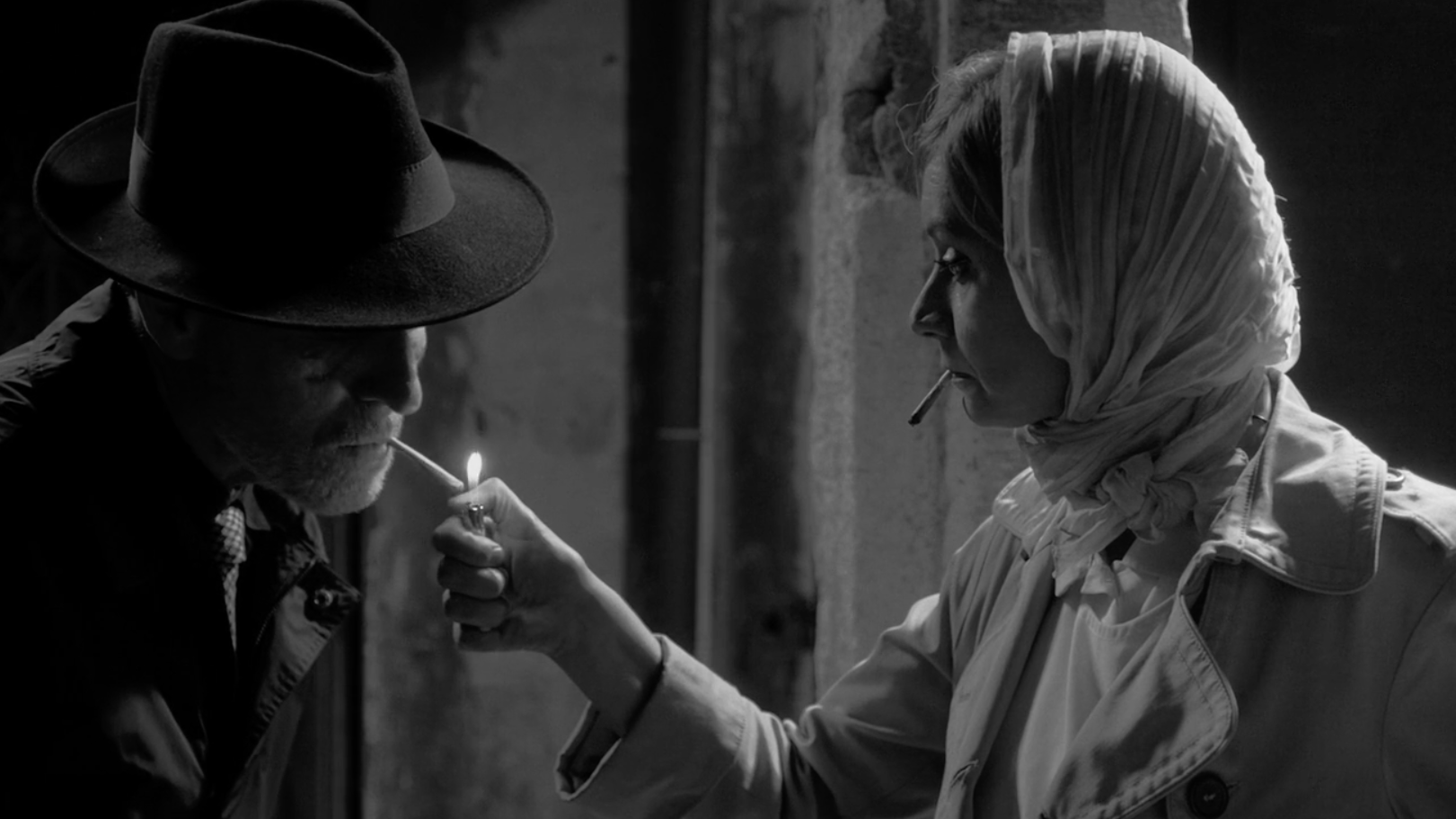
Thriller, by Serge Turgeon, Italy, 2025.
In Venice, a mysterious presence appears once every century or two, haunting the canals and hidden corners of the city. Driven by a sense of destiny, a woman decides to search for it. Following its elusive traces, she is drawn deeper and deeper into the city’s arcane secrets. Reality and myth begin to blur, and Venice itself transforms into a labyrinth of dangers.
LANGUAGE: Italian
SUBTITLES: English
Cornwall as a State of Mind
You drive the coastal road west of Bodmin and something changes before you can name it. It is not the light exactly, though the light does something — flattens, bleaches, turns silver in a way that feels less like weather and more like exposure. It is not the silence, because the wind here is never silent. It is the feeling that the land is watching you, that it has seen too many people arrive and be undone by it, and that it is entirely indifferent to whether you are next.
Daphne du Maurier first came to Cornwall as a girl and felt something she would spend the rest of her life trying to describe and failing to adequately contain in any single sentence. By the time she arrived at Menabilly in the 1920s — then a derelict manor house swallowed by rhododendron and neglect, its windows blind, its rooms hollowed out by decades of abandonment — she was not looking for a home. She was looking for the shape of something she already carried inside her. The house gave it form. She pushed through the overgrowth alone, without permission, without a key, and entered through a window into darkness. This is not metaphor. This is what happened. And she returned, obsessively, for years, until in 1943 she secured a tenancy and moved in as though completing a sentence she had begun writing at nineteen.
Gaston Bachelard argued in 1958 in La Poétique de l’espace that houses are not passive containers of memory but active generators of it — that the spaces we inhabit do not simply hold us, they produce us, shape the very structure of how we imagine and fear and desire. He wrote that the house is our first universe, the corner where we first learn to daydream, and that we carry its geometry inside us long after we have left. Du Maurier would not have described herself as a phenomenologist. But her entire body of work is a demonstration of Bachelard’s thesis so exact that it reads like an extended proof.
Cornwall in her fiction is never backdrop. It is not picturesque. It does not decorate. The moors above Jamaica Inn press down on their inhabitants with a physical weight that functions as psychological destiny. The estuary in Rebecca — that stretch of water between the house and the open sea — is not setting but symptom, the visible edge of everything the narrator cannot bring herself to know. The landscape does not reflect the character’s interior state. It precedes it. It creates the conditions under which certain thoughts become thinkable, certain violences become possible, certain silences become permanent.
This is the harder claim, and it takes a particular relationship with a particular place to understand it. When du Maurier wrote of the Cornish coast she was not writing about a location she had observed carefully. She was writing about a geography she had absorbed at the level where language has not yet formed, where experience is still sensation, still the cold coming off the cliffs in the early morning and the way the gorse smells in the heat and the specific shade of grey the sea turns when a storm is two hours away. These are not images she selected for effect. They are the furniture of her nervous system.
There is a scene she described from her years at Menabilly — waking before dawn, walking alone through the grounds while the household slept, standing at the edge of the trees where the formal gardens gave way to the wild. She said she felt, in those moments, entirely herself, and also entirely erased. Not lonely. Not peaceful. Something more precise than either. The land was doing something to her that no human relationship had managed. It was producing her, the way Bachelard’s houses produce their dreamers — not by containing what she was but by making her possible.

Rebecca and the Woman Who Has No Name
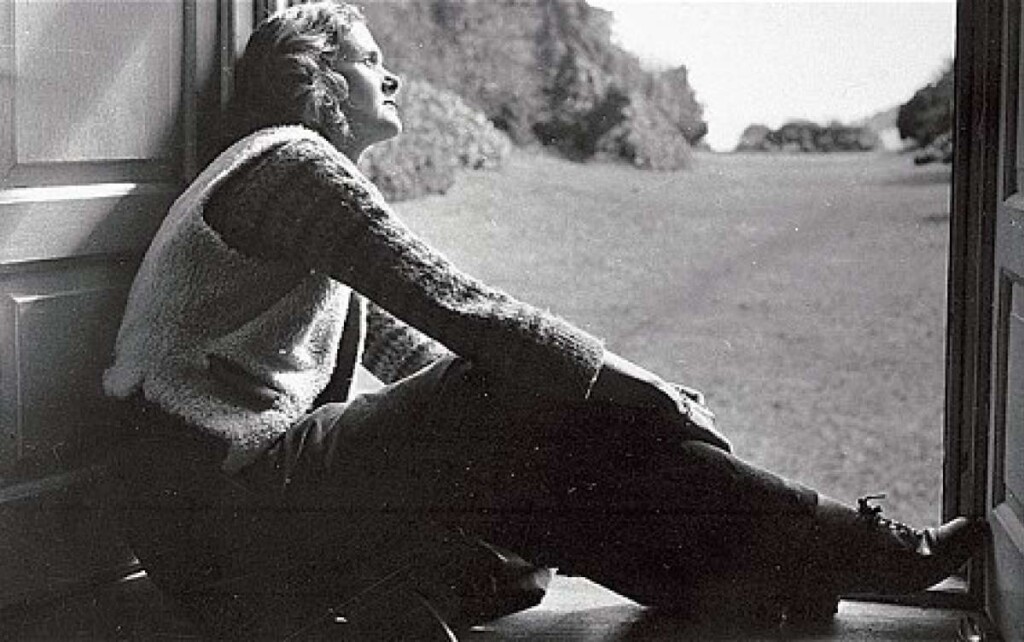
There is a moment — you may have lived it, even if the geography was different — when you walk into a room that belongs to someone else and feel, with absolute certainty, that you do not belong there. Not because anyone has told you. Because the room itself tells you. The furniture remembers a different body. The monogram on the pillowcase was sewn for a different name. The housekeeper looks at you with eyes that are polite and completely pitiless, and you understand, in the specific way that goes deeper than thought, that you are the replacement. The stand-in. The second draft of something that was, apparently, perfect the first time.
This is where Daphne du Maurier places you at the beginning of Rebecca, published in 1938, and never — not once, in eighty-six years — out of print. More than forty languages carry this story now, millions of copies in circulation, which is not a publishing statistic but a cultural confession. Something in this novel refuses to stop being true. The narrator has no name. Du Maurier makes this choice with surgical precision: the woman at the center of the story is referred to only as the second Mrs. de Winter, a title that contains her entire condition, because she is defined entirely by her position relative to others. Wife of Maxim. Successor to Rebecca. A grammatical function rather than a self.
Simone de Beauvoir, writing in The Second Sex in 1949, barely a decade after Rebecca appeared, would give this condition its philosophical name. Woman, de Beauvoir argued, is constructed as the Other — not a subject who exists for herself, but a mirror in which the male subject confirms his own existence. She is defined relationally, negatively, always in reference to something that is not her. The unnamed narrator embodies this so completely that she barely needs de Beauvoir’s analysis; she is the analysis, walking through corridors that smell of someone else’s flowers, touching a writing desk she is afraid to use because the handwriting on the notepad already belongs to another woman who had the desk before her.
What haunts Manderley is not Rebecca’s ghost. It is the idea of Rebecca — which is a different and more terrible thing. An idea cannot be argued with. An idea has no physical vulnerability, no human inconsistency, no bad mornings or fears or moments of smallness. The dead Rebecca has been purified by absence into something no living woman can compete with. She was beautiful, they say. She was brilliant. She moved through rooms the way rooms wanted to be moved through. And you — you who are present, you who are real, you who knock things over and do not know how to speak to the servants and wear the wrong dress — you are the diminished version. The photocopy of the original.
Du Maurier understood something that takes most people a lifetime to articulate: that domestic space is never neutral. Every household is an architecture of power, and the woman who enters a household already shaped by another woman’s taste, another woman’s authority, another woman’s legend, enters a surveillance structure that does not need guards. It runs on internalized shame. The narrator polices herself. She imagines what Rebecca would have done, how Rebecca would have stood, what Rebecca would have ordered for dinner. She becomes her own jailer, and the jailer she has hired looks exactly like an absence.
The novel has never stopped selling because women have never stopped recognizing this. Not necessarily because they have all entered grand houses with malevolent housekeepers, but because the structure — the sense of being measured against a predecessor who cannot be challenged because she is no longer there to be human — is one of the most precise descriptions of how female identity gets erased without a single act of explicit violence.
The Mask of the Respectable Life
She sets the table for dinner with the precision of someone who has rehearsed the gesture ten thousand times. The silver is polished, the flowers arranged, the children’s voices contained somewhere upstairs. Her husband will return at a predictable hour and she will greet him with a face she has been constructing since she was old enough to understand what was expected of it. The house runs perfectly. The house is, in some sense, a performance that never closes.
Daphne du Maurier understood this from the inside. She married Lieutenant General Frederick Browning in 1932, bore three children, maintained the household of a distinguished military man, and was by every external measure the picture of accomplished Englishwomen of her class and generation. She was also, simultaneously and privately, someone else entirely. She called it “the boy in the box” — a phrase that appeared in her letters with a frankness she never allowed into public life. The boy was not metaphor or affectation. He was, she insisted, a whole other self, and he was locked.
R.D. Laing, writing in The Divided Self in 1960, described precisely this architecture of survival. The false self, he argued, is not a symptom of pathology but a rational response to a world that will not accommodate what is real. The person constructs a persona adequate to the demands of their environment and sequesters the authentic self somewhere safer, somewhere unreachable by others. The tragedy, Laing observed, is that the concealment works so well it eventually becomes opaque even to the one doing the hiding. You look for yourself in a room you sealed from the inside.
Du Maurier’s relationships with women were not hidden exactly, but they were made invisible through the grammar of female friendship, which has always provided cover for intensities that polite society preferred not to name. Her relationship with actress Gertrude Lawrence was consuming in a way that her correspondence makes unmistakable. She wrote of Lawrence with the vocabulary of longing, of recognition, of a pull she described as deeper than anything she could fully rationalize. Later, her closeness with another actress carried the same quality — an almost unbearable attentiveness, a need to be known by someone who might recognize the locked self without requiring it to perform.
There is a scene in which a woman sits at a vanity mirror applying lipstick with extraordinary care. On the surface: composure, routine, the small daily theater of femininity. Underneath: a barely visible tremor in the wrist, a pause before she meets her own eyes in the glass, a flicker of something that passes so fast you might doubt you saw it. She is not thinking about the lipstick. She is thinking about a particular conversation that will never happen, about a version of herself that has no socially legible address.
Du Maurier gave her protagonists this interiority with a specificity that no one fully recognized as autobiography because it was too well disguised as gothic fiction. The unnamed narrator of Rebecca performs wifehood with the anxious diligence of an imposter, which is precisely the phenomenology Laing was describing — the sense that one’s social role is a borrowed costume worn with the constant fear of discovery. The house itself in that novel functions as the false-self system made architectural: grand, controlled, impenetrable, and haunted by everything it will not release.
She wrote once that she felt most like herself when she was writing, and least like herself at parties, at dinners, at the precisely laid tables of her own making. That split — between the self that writes and the self that performs — is not a quirk of artistic temperament. It is the condition of anyone who learned early that the price of belonging was the suppression of the one who actually belonged nowhere. The box stays shut. The boy inside it keeps writing.
Don’t Look Now and the Grief We Perform
There is a particular kind of grief that does not announce itself as grief. It moves through you wearing the costume of hope, of vigilance, of love still active and purposeful. You walk through a city — cobblestones, canal light, the persistent smell of winter damp — and you see, for a fraction of a second, the back of a small head. The red coat. The particular tilt of a child’s shoulders. Your body moves before your mind has the chance to intervene, and for three full seconds you are not mourning at all. You are simply a parent following a child through a crowd.
This is the trap du Maurier constructs with the precision of a surgeon in what is arguably her most psychologically devastating work of short fiction. The 1971 collection arrives late in her career, but it contains writing that is almost unbearably refined — grief compressed into the architecture of a city, into fog, into the grotesque and the almost-familiar. The story that gives the collection its name is essentially a study in what Freud, writing in 1917, called the distinction between mourning and melancholia. In “Mourning and Melancholia,” Freud draws a line that seems clinical until you feel it in your chest: mourning is the slow, painful work of reality-testing, of learning that the world no longer contains the person you loved, of detaching piece by piece from what is gone. Melancholia is something else entirely. It is grief that refuses the lesson, that turns inward, that colonizes the ego so thoroughly that the self can no longer distinguish between the lost object and itself. The mourner knows what they have lost. The melancholic has lost something and does not fully know what — or refuses, structurally, to acknowledge it.
Du Maurier’s couple wandering the labyrinthine streets of Venice are melancholics in Freud’s precise sense. Their daughter is dead. They carry this fact like a stone in a coat pocket — present, heavy, undeniable — and yet the husband cannot stop seeing her. Every narrow calle doubles back, every water-reflected light becomes a kind of accusation. The red-coated figure glimpsed from a distance is real, he insists. She is real. He is not mad. And the horror of the story — the thing that makes it function as something far more profound than a thriller — is that he is not entirely wrong to insist on it. The figure exists. Reality does not vindicate him.
What du Maurier understood about grief is something that academic psychology has only recently begun to map with any precision. The neuroscientist Mary-Frances O’Connor, in research published decades after du Maurier’s collection, identifies grief as a form of frustrated learning — the brain continues to generate predictions about where the loved person will appear, continues sending search signals into a world that no longer contains them. The husband in the Venetian labyrinth is not behaving irrationally. He is behaving exactly as a grieving brain behaves: scanning, pattern-matching, refusing on a neurological level to complete the update that consciousness has already accepted intellectually.
Du Maurier layers into this a further cruelty: the wife has apparently received a kind of psychic message, a warning, and he dismisses it as hysterical. His insistence on the visible, on what he believes he has rationally observed, is itself the irrationality. The masculine claim to empirical clarity becomes the mechanism of destruction. He trusts his eyes over every other signal available to him, and his eyes are the very instrument that grief has corrupted. He follows what he wants to see. He follows it to the end of a dark calle, to a door that should not have opened, to a figure that turns around.
The city does not care. Venice goes on with its slow, gorgeous sinking. The water takes no sides between the seen and the real.
A vision curated by a filmmaker, not an algorithm
In this video I explain our vision
The Birds and the Violence Beneath the Surface
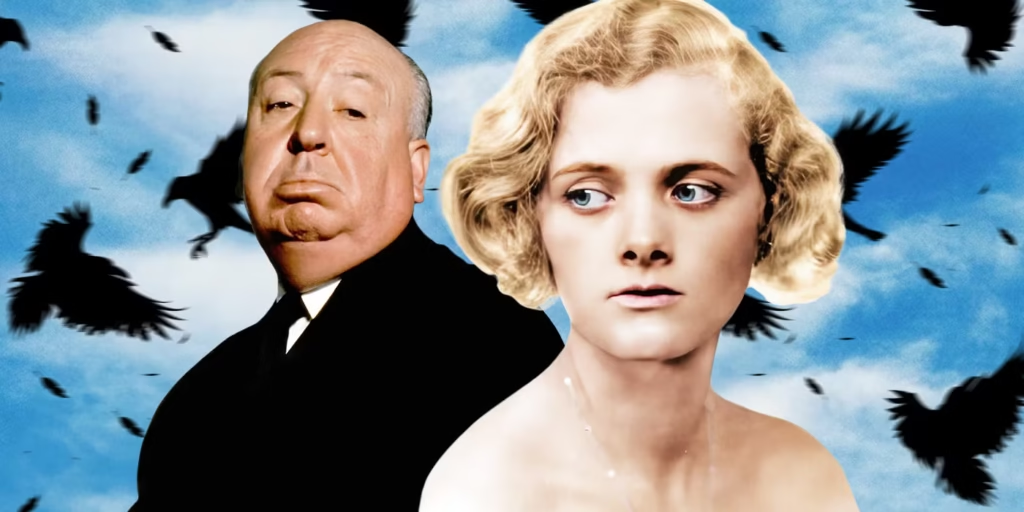
There is a moment, familiar to almost anyone who has lived in a house with windows, when you notice a bird on the sill and feel nothing. It is simply there, as furniture is simply there, as the sound of traffic is simply there — registered, filed, dismissed. The whole architecture of daily life depends on exactly this capacity for dismissal, this quiet confidence that the world outside has agreed, tacitly, to remain outside. Daphne du Maurier understood that this confidence was not instinct but institution, not nature but negotiation, and in 1952 she wrote a story about what happens when the negotiation ends without warning and without explanation.
The farmer in the story boards up his windows with the methodical calm of a man performing a familiar task. He nails planks over glass, stuffs rags into gaps, counts his supplies. What makes the scene unbearable is not the violence outside but his competence inside — the way ordinary hands perform ordinary actions in the face of something that has dissolved the category of ordinary entirely. Outside, thousands of birds move in coordinated silence toward human structures with an intentionality that feels ancient and organizational, like a principle long suppressed suddenly remembering itself. He works. He boards. He counts. And none of it is enough, and he knows it is not enough, and he does it anyway because the only alternative is to sit with the knowledge that the order he has built his entire life upon was always, at every moment, a courtesy extended by a universe that owed him nothing.
This is not horror in the genre sense. It is something philosophically colder. Hannah Arendt, writing in 1951 in The Origins of Totalitarianism, argued that the most terrifying feature of totalitarian violence was not its cruelty but its banality — the way structures of normality could be maintained right up to the moment of rupture, and then maintained again immediately afterward as if nothing had occurred. The banality was the point. It was the mechanism by which ordinary people continued to function within systems that had become catastrophic, because the alternative to functioning was to acknowledge that the structures themselves had always been provisional. Du Maurier’s birds perform a structurally identical revelation. They do not arrive from outside civilization. They arrive from inside the assumption that civilization is a settled fact rather than a daily renegotiation with contingency.
What du Maurier refuses to provide is causation. There is no scientific explanation, no government announcement that resolves into meaning, no villain whose defeat would restore the prior order. The birds simply turn, collectively, on a December day, and the turning is the entire story. This refusal is the text’s most radical gesture, because explanation would be consolation, and consolation would be a lie. The world does not owe us coherence. The arrangements we call society — the locked doors, the stocked pantries, the sense that tomorrow will resemble today — are habits that the world tolerates without endorsing. When they break, they break completely, and the person standing in the middle of the breakage is left with only their competence and their counting, neither of which was ever really the point.
The real rupture in the story is not between humans and birds. It is inside the human mind, at the moment when the man at the window understands that what he took for permanence was always only persistence — a thing that had continued so long it had begun to feel inevitable. The boards go up. The rags fill the gaps. The wind carries sounds from the village that suggest the village is no longer quite a village. And in the space between one nail and the next, the entire history of what we call civilization reveals itself as something built on a surface that was never as solid as we needed it to be.
Literary Dismissal and the Genre Trap
There is a particular kind of dismissal that masquerades as description. You call something romantic and everyone understands, without anyone having to say it plainly, that the conversation is over. The label does not open a door; it closes one. And for most of the twentieth century, that door was closed firmly on Daphne du Maurier’s work, with a politeness that made the exclusion almost impossible to challenge directly.
The critical establishment did not ignore her. That would have required a kind of courage, given the numbers. Her novels sold in the millions across multiple decades, with Rebecca alone moving over four million copies in its first decade and never going out of print. Hitchcock adapted her twice, and the adaptations became canonical texts of cinema history. Her stories entered the cultural bloodstream so thoroughly that their images — the burning house, the murderous birds, the drowned wife surfacing through the decades of a marriage — became archetypes that later writers would reach for without always knowing where they had first been planted. And yet the critical apparatus of the mid-century largely processed all of this as evidence of popularity rather than excellence, as though the two were mutually exclusive by definition, which is itself a social fiction worth examining.
Pierre Bourdieu argued in The Rules of Art, published in 1992, that prestige in cultural production is not assigned according to intrinsic quality but according to the position of a work and its producer within a field structured by hierarchies that have almost nothing to do with the work itself. The field rewards those who conform to its dominant codes of legitimacy, and it punishes — through condescension, through silence, through the particular cruelty of the qualified compliment — those who operate outside its sanctioned categories. Du Maurier operated outside them doubly: she was a woman writing in a tradition, the Gothic, that had been systematically feminized and then devalued precisely because of that association. What had been, in the hands of Horace Walpole or Matthew Lewis, a respectable mode of psychological excavation became, when practiced by women, merely escapism. The reclassification was not accidental.
Consider what that tradition actually contains. A narrator arrives in a house that belongs to someone else, someone dead, whose presence has organized every room, every habit, every breath of the living inhabitants around her invisible will. The narrator cannot compete with an absence. She cannot even be named. She moves through a psychological architecture of submission and surveillance so precise that it reads now less like romance than like a clinical study of how power internalizes itself, how the dominated come to enforce the terms of their own domination. This is not sentiment. This is a mechanism, rendered with the exactness of someone who has felt it from the inside.
Meanwhile, male writers mining identical psychological territory — the uncanny, the repressed, the domestic space as site of violence and derangement — received a critical vocabulary that honored what they were doing. Their darkness was depth. Her darkness was atmosphere. The distinction is not literary. It is social.
What makes this particularly sharp is that du Maurier herself resisted easy categorization in ways the romantic novelist label actively suppressed. She wrote across forms, produced psychological thrillers, historical fiction, biography, short stories of genuine menace. She thought carefully about gender, living outside its conventional boundaries in ways she explored obliquely in her fiction and more directly in her letters and private journals. The label not only diminished the range; it flattened the intelligence behind it into something more comfortable, more manageable, more safely shelved.
Bourdieu’s insight lands hardest here: the field does not simply evaluate work. It produces the very criteria by which evaluation seems natural and inevitable. To call du Maurier a romantic novelist was not to describe what she wrote. It was to decide, in advance, what it was worth.
What the Double Knows
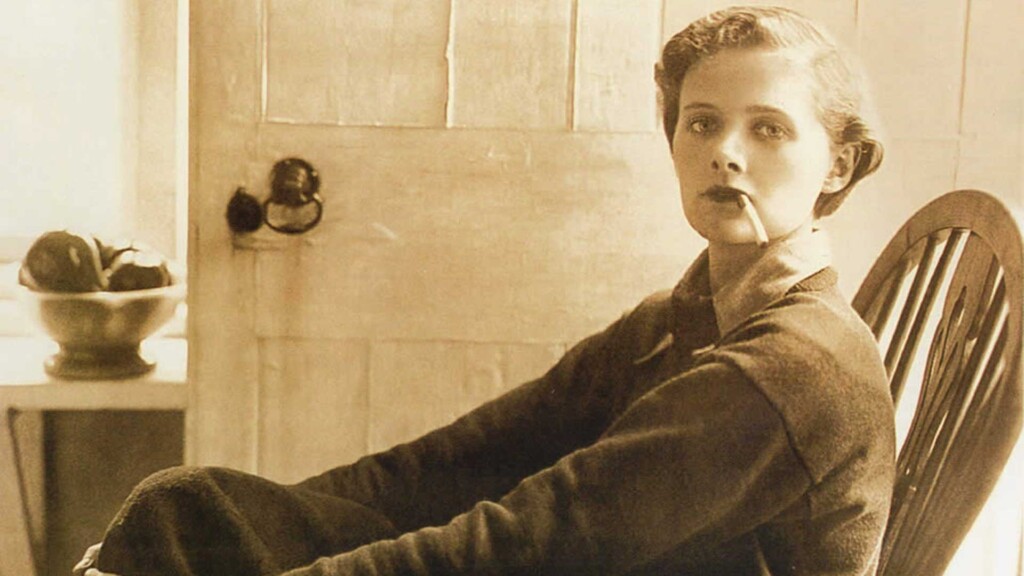
There is a moment — you have had it, even if you cannot name it — when you look at a photograph of yourself from years ago and feel something closer to recognition than memory. Not nostalgia. Something colder. The face looking back at you is not the face you wear now, and yet it is more familiar than the one in the mirror this morning. As if the person you became walked away from the person you were, and the abandoned one stayed put, waiting.
This is the crack in the floor that Daphne du Maurier spent a lifetime prying open. Not the ghost story, not the suspense, not even the romance — though all of these served as vehicles. The true obsession was always the double. The other self. The one you did not choose, or chose not to acknowledge, or were never permitted to become.
The most devastating version of this appears in a story she wrote in the early 1950s: a man assumes another man’s identity with such completeness that he begins to lose track of where the performance ends. And then the performance stops feeling like a performance. He walks into a room as someone else and realizes, with a terror that is also unmistakably relief, that this version of him moves more freely, breathes more easily, tells fewer lies. The impostor, it turns out, is not the usurper. The impostor is the liberation.
Otto Rank, writing in 1914 in his foundational study of the doppelgänger, argued that the double is never simply a monster or a literary device. It is an accusation. The shadow self that stalks the protagonist in literature and folklore is not some external threat but the return of everything the ego has suppressed in order to become socially legible. Rank, drawing on Freud’s early theorizations of narcissism, understood the double as the repository of the selves we murdered to survive — the desires we couldn’t carry, the identities we couldn’t afford, the truths that would have cost us too much to tell. When the double appears, it does not threaten the self from outside. It indicts it from within.
Du Maurier knew this in her bones before she knew it in theory. The second wife in Rebecca is haunted not by a dead woman but by the version of herself she cannot inhabit — confident, desired, named. She moves through Manderley like a ghost of her own life, watching someone else’s portrait on the wall and wondering if she will ever fill the frame. The horror is not that the first wife existed. The horror is that the second wife suspects the first wife was more real than she will ever be.
And then there is the mirror scene. You have stood before a mirror and not recognized yourself — not in the dramatic, crisis sense, but in the quiet, unsettling ordinary sense. The face is familiar and foreign simultaneously. You have performed this version of yourself so consistently, for so long, that you cannot remember whether you chose it or merely defaulted into it under pressure — parental expectation, social legibility, the slow erosion of possibility that accumulates, year by year, into what we call a life. Du Maurier wrote that territory obsessively, from both sides of the glass.
What makes her doubles terrifying is not that they are different from us. It is that they are not different enough. They know our passwords. They wear our faces. They have memorized our habits. And they walk through our days with a freedom we never permitted ourselves, as if the only thing standing between us and that life was our own cooperation with the story we were told about who we are.
The self you performed outlasted the self you buried. But burial, as du Maurier understood with quiet ferocity, is not the same as death.
🌿 Gothic Shadows, Female Voices, and Literary Mysteries
Daphne du Maurier’s work inhabits a twilight world of romantic obsession, psychological suspense, and deeply feminine storytelling. To understand her fully, one must trace the broader landscape of women writers who challenged the boundaries of literature, identity, and imagination. These related articles illuminate the cultural and intellectual currents that flow through du Maurier’s haunted narratives.
Virginia Woolf: Life and Works
Virginia Woolf stands as one of the most transformative literary figures of the twentieth century, reshaping the novel through stream of consciousness and radical introspection. Her exploration of feminine identity, memory, and the inner life shares a deep kinship with du Maurier’s psychological intensity, even as their styles diverge. Reading Woolf alongside du Maurier reveals how two very different women writers mapped the labyrinthine interior of female experience.
GO TO THE SELECTION: Virginia Woolf: Life and Works
Woolf’s A Room of One’s Own: Feminism and Writing
In A Room of One’s Own, Woolf argued passionately that women writers require both material independence and imaginative freedom to produce genuine literature. This feminist manifesto resonates powerfully when placed beside du Maurier’s career, in which she navigated commercial success while often being dismissed as merely a writer of romantic suspense. The essay invites us to reconsider how gender shaped the reception and misreading of du Maurier’s deeply subversive work.
GO TO THE SELECTION: Woolf’s A Room of One’s Own: Feminism and Writing
Simone de Beauvoir: Life and Philosophical Thought
Simone de Beauvoir’s philosophical thought illuminates the social and existential conditions that shaped women’s lives and creative output in the mid-twentieth century. Her analysis of ‘the Other’ and the constraints imposed on women’s selfhood echoes in the suffocating marriages, jealousy, and hidden identities that populate du Maurier’s fiction. Together, de Beauvoir and du Maurier offer complementary visions of how women negotiated freedom within patriarchal structures.
GO TO THE SELECTION: Simone de Beauvoir: Life and Philosophical Thought
Stream of Consciousness in Literature and Cinema
The stream of consciousness technique, explored here through its literary and cinematic manifestations, captures the fluid, associative nature of thought that both Woolf and du Maurier employed in different registers. Du Maurier’s unnamed narrator in Rebecca drifts through memory, anxiety, and fantasy in ways that owe much to this modernist tradition. Understanding stream of consciousness as a formal strategy deepens appreciation for the psychological architecture underlying du Maurier’s most celebrated novel.
GO TO THE SELECTION: Stream of Consciousness in Literature and Cinema
Discover the Cinema That Dares to Tell Other Stories
If the shadowy worlds of Daphne du Maurier stir your curiosity for stories that refuse easy answers, Indiecinema is your next destination. On our streaming platform you will find independent and auteur films that share du Maurier’s spirit of psychological depth, feminine complexity, and atmospheric mystery. Step inside and let the labyrinth continue.
👉 EXPLORE THE CATALOG: Watch Indie Films in Streaming
A vision curated by a filmmaker, not an algorithm
In this video I explain our vision

