
The Room That Was Never Yours
You are sitting at someone else’s desk. It might be the kitchen table, cleared for twenty minutes before the others wake, or the corner of a shared bedroom where the light comes in wrong and the chair was never adjusted for your height. You are writing, or trying to, in the narrow corridor between one obligation and the next — between the kettle’s whistle and the knock at the door, between the child’s cough and the husband’s question about where something is, always where something is. The thought you were holding, the sentence that was almost there, dissolves. You pick up the pen again. The sentence is gone.

This is not a metaphor. This is the material condition under which most of human thought has been produced by half the species, when it has been produced at all.
Virginia Woolf understood this not as grievance but as geometry. The architecture of the house was also the architecture of the mind — or rather, of whose mind was permitted to expand, to follow a thought to its conclusion, to fail productively in the silence that serious work requires. In 1929, when she published A Room of One's Own, she was doing something that looked like literary criticism and was actually closer to archaeology: excavating the structural conditions that had buried centuries of female intelligence before it could surface into form. Five hundred pounds a year and a room with a lock on the door. That was her formula. Not talent. Not education. Not even time, exactly — because time without space is just anxiety with better intentions.
She had lived the opposite long enough to know its weight. Before her aunt Caroline Emelia Stephen died in 1909 and left her a small inheritance, Woolf wrote in conditions that required constant negotiation with the needs of others. The household at 22 Hyde Park Gate, where she grew up after her mother’s death in 1895, was a place of Victorian emotional labor performed almost entirely by the women within it — her half-sister Stella, then Vanessa, then Virginia herself, tending to the grief and demands of Leslie Stephen with the kind of invisible diligence that the nineteenth century had elevated to feminine virtue. Thinking, in that house, was something you did between duties. It was residual. It was stolen.
The philosopher Pierre Bourdieu, in his 1998 work Masculine Domination, argued that the social order imposes itself most powerfully not through explicit rules but through the arrangement of space and time — through what he called the “doxic submission” to structures so naturalized they appear simply as reality. The woman who does not have a room of her own is not forbidden to think. She is simply placed in conditions where sustained thought becomes structurally improbable, and then her relative absence from the intellectual record is cited as evidence of lesser capacity. The circularity is elegant. It requires no conspiracy. It runs on habit and architecture.
Woolf saw this with a clarity that was almost cold. There is a scene — a real one, lived by real women across centuries — in which a person sits at the edge of someone else’s creative life and realizes that the role assigned to them is to make the center possible. To keep the house quiet, the calendar clear, the emotional atmosphere stable enough for someone else’s genius to breathe. The support structure is also the cage. The devotion is also the disappearance.
What makes Woolf extraordinary is not that she identified this — others had sensed it, resented it, wept over it. What makes her extraordinary is that she turned the analysis itself into literature, made the investigation of constraint into an act of liberation, and did it in a prose so precisely beautiful that the form became inseparable from the argument.
The room she wrote about was real. So was the one she didn’t have yet.
Eve of the Irises
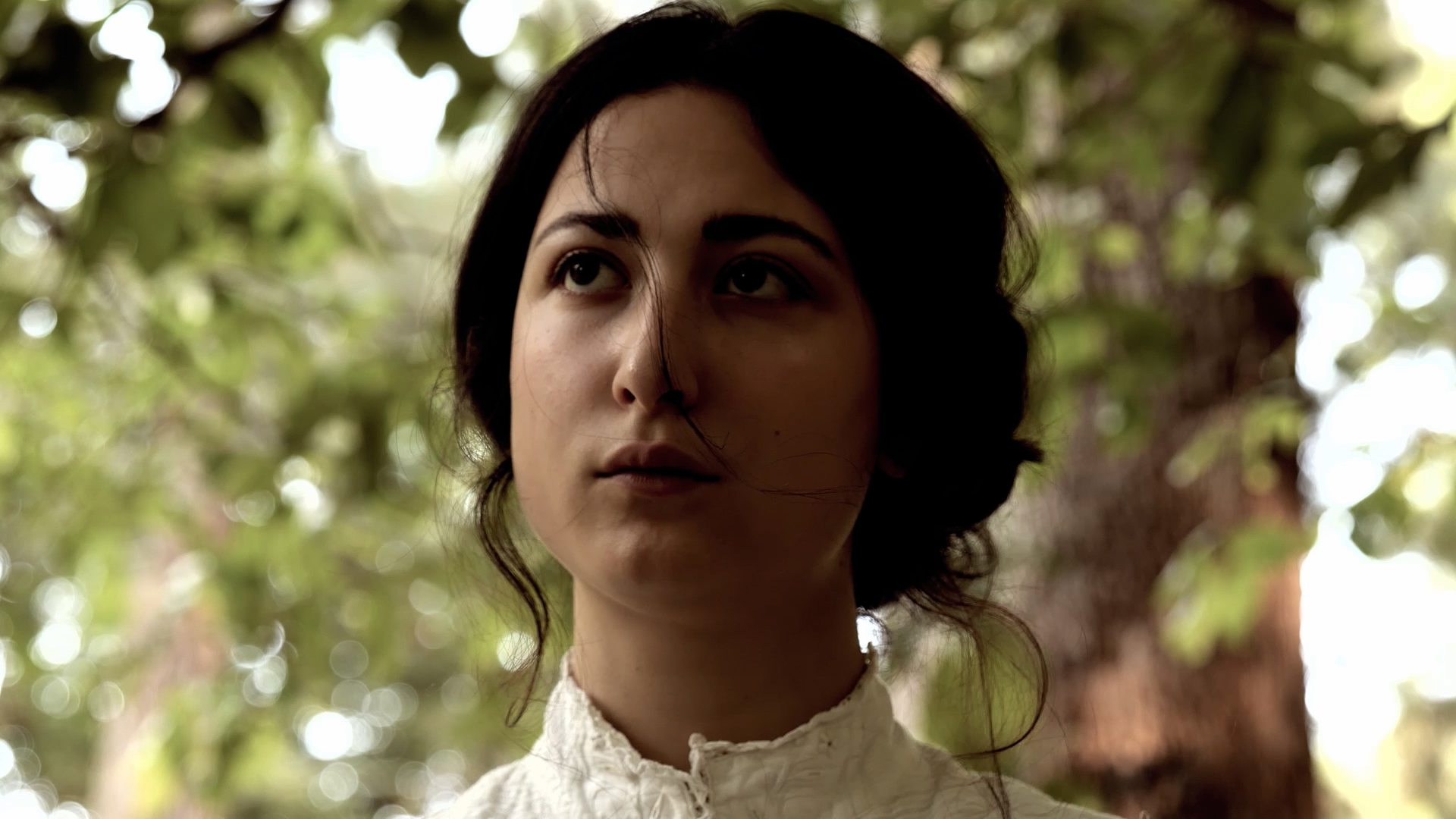
Documentary, by Isabel Russinova, Rodolfo Martinelli Carraresi, Italy, 2026
Eva of the Irises is a historical biographical docu-film about the scientist Eva Mameli Calvino, a botanist and pioneer of environmentalism in Italy, mother of the writer Italo, born in Sassari in 1886. The film, based on a multidisciplinary approach that combines several genres—such as theatre, documentary, cinema, and research—moves between memories, reflections on life, as well as the goals and missions the scholar still wished to achieve.
The multifaceted artistic sensibility of Isabel Russinova is expressed across many fields, from writing to acting, from directing to civic engagement, and finds one of its highest expressions in the docu-film Eva of the Irises, created with Rodolfo Martinelli Carraresi. The film blends scientific rigor and poetic refinement to portray the extraordinary figure of the botanist Eva Mameli Calvino, mother of Italo Calvino but above all an independent protagonist of 20th-century scientific culture. It is told through a combination of archival materials, interviews, and evocative staging capable of elegantly and profoundly conveying her intense human and professional story.
LANGUAGE: Italian
SUBTITLES: English, Spanish, French, Portuguese
Born Into the Architecture of Exclusion
There is a library in the house where you grew up, and you are not allowed inside it. Not by a locked door, not by a sign, not by anyone saying the words directly to you. You are simply expected to understand, the way children understand gravity before anyone explains physics, that certain rooms belong to certain bodies, and yours is not among them. You learn to read the architecture before you learn to read the books, and the architecture tells you everything about your place in the world.
Adeline Virginia Stephen was born on January 25, 1882, into a household saturated with intellect and organized around its systematic denial to her. Her father, Leslie Stephen, was one of the foremost literary critics of the Victorian age, founding editor of the Dictionary of National Biography, a man who filled 22 Hyde Park Gate in Kensington with books and arguments and serious men talking seriously about serious things. Her brothers Thoby and Adrian were sent to Cambridge. Virginia and her sister Vanessa were not. This was not cruelty. This was order. The distinction matters enormously, because cruelty you can name and resist, while order you simply inhabit, breathing it in like the air of a room you cannot leave.
What she received instead of a university education was her father’s library, accessed informally, and what Woolf herself would later describe as a haphazard, passionate reading life. She read everything she could reach. She also watched, with the clarity of someone permanently positioned at the margin, exactly how knowledge became power, how the rooms that excluded her were the same rooms where authority was manufactured. Pierre Bourdieu would have recognized the mechanism immediately: in his 1979 work Distinction, he showed how cultural capital is never simply accumulated but always distributed through structures that reproduce the very exclusions they claim are natural. Virginia did not need Bourdieu to understand this. She lived it as a physical fact before it was ever a theoretical proposition.
And then came the other architecture, the one built from loss and violation. Her mother, Julia Stephen, died in 1895, when Virginia was thirteen. The grief was enormous and, more importantly in that household, it was managed. Managed by expectation, by propriety, by the Victorian machinery that converted women’s suffering into decorative melancholy while men’s grief was granted philosophical weight. Then her half-sister Stella Duckworth died two years later. Then her father, after years of illness during which Virginia nursed him while her own needs dissolved into invisibility, died in 1904. Three deaths in nine years, and each one resetting the terms of the household, redistributing its burdens onto the women who remained.
And there was something else, something the family narrative kept folded away with the careful precision of a document too dangerous to read openly. Her half-brothers Gerald and George Duckworth had been abusing her since childhood. She wrote about it, fragmentarily, in memoir pieces that circulated privately for years. The abuse began when she was very young, continued into adolescence, and occurred inside the same house where serious men discussed serious literature. The simultaneity is not incidental. It is the point. The violation of her body and the violation of her intellectual access were not separate injuries. They were both expressions of the same fundamental claim: that her inner life, whether it expressed itself as desire for knowledge or as the simple right to physical safety, was not hers to own.
The breakdowns began early, and the era had a name ready for them. Madness. Neurasthenia. Hysteria. The vocabulary of the time was designed not to understand women in pain but to contain them, to reclassify their lucidity as dysfunction, their rage as illness. What Virginia Stephen was experiencing was the only rational response to an irrational arrangement, but rationality was not a category the Victorian medical establishment offered her gender.
She carried all of this forward into her writing like someone carrying water in cupped hands, losing a little with every step, but refusing to stop walking.

What the Stream of Consciousness Actually Was
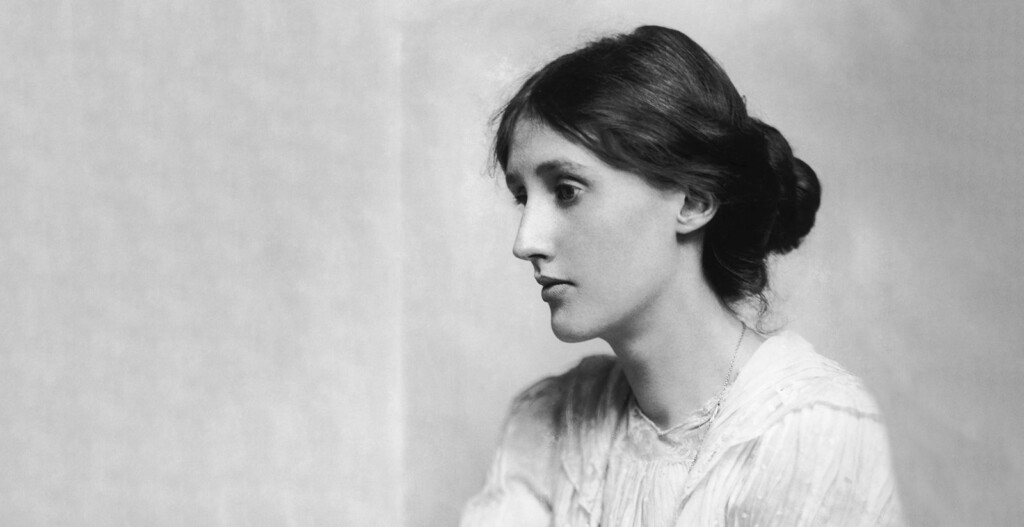
You already know what it feels like to lose an hour. Not to forget it, not to waste it in any measurable sense, but to have lived it so completely inward — tracking a memory that arrived uninvited, following a sensation back to its source, letting a face from twenty years ago resurface with the full weight of everything that face once meant — that when you return to the room, to the conversation, to the body sitting in the chair, nothing on the clock seems to account for where you have been. That hour is real. It happened. It simply has no place in the official record of the day.
This is exactly what Virginia Woolf refused to surrender.
When critics speak of her technique as stream of consciousness, they tend to domesticate it almost immediately, filing it under formal innovation, placing it in the family tree between Henry James and James Joyce, treating it as a sophisticated literary instrument rather than what it actually was: an act of epistemological defiance. The stream was not a style chosen for its musicality or its difficulty. It was a direct challenge to the assumption that the external, sequential, appointment-keeping structure of narrative — the kind of story organized around arrivals and departures, decisions made in rooms with doors that open and close — constitutes the real shape of a human life.
In Mrs Dalloway, published in 1925, Clarissa moves through a single day in London, preparing for a party. The external architecture is almost absurdly thin. And yet inside that single day, through the pressure of memory and association, decades unfold without being narrated, relationships reveal their entire weight without being explained, and time behaves the way it actually behaves in consciousness: not as a line but as a depth. Henri Bergson had already mapped this territory philosophically, arguing in Time and Free Will, published in 1889, that lived duration — what he called durée — bears no resemblance to the clock-time that science measures and society organizes itself around. Woolf was not illustrating Bergson. She was doing something far more radical: she was building a formal structure in which durée was the only time that counted.
The hours of soldiers, ministers, specialists, men with schedules — those hours appear in her prose like an ambient noise, the sound of the city, something that happens outside the window. The real events occur elsewhere. A woman remembers a girl she once loved. A man returning from war finds that the city has continued without him, indifferent, and that this indifference has a texture he can feel against his skin. In To the Lighthouse, published two years later, the middle section — titled Time Passes — performs the most devastating gesture: it collapses ten years of war, death, and historical catastrophe into a handful of parenthetical remarks, as if the deaths of the people you loved most, the deaths that rewrote everything, were footnotes to the weather. The irony is surgical. Woolf was not dismissing history. She was exposing the violence of a narrative convention that places wars and appointments at the center and relegates inner life to the margin.
William James had named the stream of consciousness in 1890, in his Principles of Psychology, as a metaphor for the continuity of mental life. But what he described as a psychological phenomenon, Woolf converted into a structural argument. If the mind does not experience itself as a sequence of discrete events but as a continuous, associative, layered current, then any novel that imposes chronological sequencing as its deep truth is not being neutral or objective. It is making a political choice. It is insisting that the kind of time men move through — measured, documented, consequential — is the kind of time that constitutes a life.
She disagreed. Formally, irrevocably, in sentences that do not end so much as open onto other sentences, she disagreed.
The Economics of the Imagination
You already know the room. You have walked past it, or lived in it, or been denied it — that small, lockable space where thought can happen without interruption, without the sound of someone else’s need pressing through the wall. Woolf did not write about it as a metaphor. She wrote about it as a lease agreement, as a bank balance, as a number: five hundred pounds a year. That is the figure she arrived at in 1929, and she arrived at it the way an economist arrives at a subsistence threshold, not the way a poet arrives at an image.
The argument of that extended lecture, delivered at Newnham and Girton and then expanded into prose, is one of the most ruthlessly materialist analyses of intellectual production in the twentieth century. It has been read as feminist memoir, as elegant provocation, as a period piece softened by its own wit. What it actually is, stripped of those comfortable misreadings, is a structural account of how genius gets manufactured — and who gets the raw materials. Woolf understood, with a clarity that most economists of her era lacked, that the history of great art is inseparable from the history of property transmission. The mind does not float free of its conditions. It eats. It sleeps somewhere. It requires silence that someone else must be prevented from breaking.
In 1900, women in Britain could not matriculate at Oxford. Cambridge would not grant them full degrees until 1948, nearly two decades after Woolf published her argument. The women’s colleges at both universities had been founded in the 1870s on charitable donations and perpetual financial precarity, while the men’s colleges sat on endowments accumulated across centuries — land, tithes, the residue of enclosures, the quiet compounding of inherited advantage. Woolf walked through a men’s college and felt the weight of that difference not as resentment but as arithmetic. The food was better. The wine was better. The buildings were older and more solid. None of this was accidental, and none of it was merely aesthetic. It was the material sedimentation of who had been allowed to think, for how long, and at whose expense.
The philosopher G.A. Cohen, writing much later in his work on the circumstances of justice, would argue that freedom is always a matter of what others are prevented from doing to you — that liberty without material support is a kind of theatre. Woolf arrived at the same conclusion through a different door. She watched her fictional Judith Shakespeare, William’s imagined sister, try to write plays in the sixteenth century and traced, step by step, exactly how the social machinery would have dismantled her: no schooling, an enforced marriage, pregnancy, and eventually madness or suicide, the creativity curdling inward because there was nowhere for it to go. The genius does not fail because she lacks talent. She fails because she lacks the room, and lacks the lock, and lacks the five hundred pounds that would have bought her two years of solitude and paper.
There is a man you may recognize, someone who reads widely and thinks of himself as self-made, who traces his intellectual formation to a particular bedroom in his parents’ house, to the shelf of books he was left alone with, to the long adolescent hours no one interrupted. He rarely considers who kept the house quiet for him, who took the telephone calls, who managed the thousand small urgencies that did not reach his door. That silence was not natural. It was produced. It was, in the precise sense Woolf intended, purchased — with someone else’s time, someone else’s interrupted thought, someone else’s room that had no lock because her function was to remain available.
The economics of imagination are never symmetrical. They never have been. And the ledger, when you finally open it, shows debts that compound across generations.
Waves Against the Self
There is a moment, somewhere between waking and standing at the kitchen window with a cup going cold in your hand, when you cannot locate yourself. Not in the dramatic sense of existential crisis — nothing so legible as that. Just a brief, almost chemical dissolution: who was speaking a moment ago, inside your head? Which version of you made the coffee, chose that particular shirt, decided not to call back? By the time you have formulated the question, something has already reassembled. The seam closes. You proceed.
Woolf spent years trying to write about what happens in that gap. The novel she finally completed in 1931 is her most radical attempt, and the strangest: six voices rising and falling against each other like water against a shore, none of them quite a person in the conventional sense, all of them somehow the same person broken open. Bernard, Susan, Rhoda, Neville, Jinny, Louis — they do not interact so much as they refract. They share a childhood, a set of images, the long arc of a life moving toward silence. But what the book insists on, with a structural stubbornness that can feel almost violent to a reader trained to expect psychology and plot, is that none of these voices is more real than the others, and none of them adds up to a whole.
William James had already mapped this territory in 1890, in the Principles of Psychology, where he described consciousness not as a unified stream but as something plural and shifting, a river that carries contradictory currents simultaneously. His concept of the “stream of consciousness” is often cited as a technical predecessor to modernist prose technique, but that framing misses the philosophical weight of what James was actually claiming: that the self is not an entity but a process, and a process that includes within it selves that do not know each other. The social self, the material self, the spiritual self — James catalogued them not as metaphor but as functional description. You behave differently with your mother than with a stranger on a train, and neither performance is false. Both are you, which means neither exhausts you.
Woolf was reading psychology seriously throughout the years she worked toward The Waves, and the novel feels like a response to James that bypasses argument entirely and simply demonstrates. Six voices, or one voice in six frequencies. Erving Goffman, writing more than two decades later in The Presentation of Self in Everyday Life in 1959, would give this phenomenon a sociological framework: we perform ourselves for different audiences, managing impressions, shifting registers, presenting faces calibrated to context. What Goffman analyzed as social strategy, Woolf experienced as something more vertiginous — less performance in the theatrical sense, more like the terrifying absence of a backstage. There is no single self waiting behind the masks. The masks are what there is.
This is what Rhoda knows, and why she cannot survive it. Among the six voices she is the one who keeps failing to cohere, who looks in mirrors and finds nothing confirmed, who exists in the space between one social moment and the next as pure unmoored perception. She is not mad in any clinical vocabulary Woolf would have recognized from her own biography. She is simply someone for whom the seam never quite closes, for whom the reassembly that happens automatically for most people each morning requires a conscious and exhausting effort that eventually fails entirely.
The novel does not treat this as tragedy in the operatic register. It treats it as weather. The waves in the italicized interludes that frame each section do not symbolize anything so neat as the unconscious or the passage of time — they are simply what continues, indifferent to whether the voices find their footing or not, moving against whatever surface they meet with the same rhythmic, impersonal force that moves through a person between waking and the first word of the day.
A vision curated by a filmmaker, not an algorithm
In this video I explain our vision
The Thin Membrane Between Brilliance and Breakdown

There is a moment in her diaries — written in the small hours, in the particular handwriting that loosened when she was unwell — where Woolf describes the onset of what she called her “breakdowns” not as darkness descending but as light becoming intolerable. Not the absence of perception but its violent excess. She writes of hearing voices, yes, but also of seeing the social performance of a dinner party with such crystalline precision that the sight became physically unbearable. The mask was not hidden. It was everywhere, and she could not stop seeing it.
This is the detail her contemporaries preferred to obscure, and that later mythologies preferred to aestheticize. The madwoman in the attic, the doomed genius, the tragic flower. Both readings share the same fundamental move: they relocate her suffering to a place safely outside the social world, make it either purely biological or purely romantic, and in doing so exempt that world from any responsibility in the production of that suffering. Leonard Woolf’s careful, devoted management of her health has been written about extensively, sometimes tenderly and sometimes with a modern suspicion about the control embedded in that tenderness. But the more unsettling question is not about Leonard. It is about what Virginia was seeing, in those moments when the seeing became too much.
Adam Phillips, in his long examination of psychoanalytic thought and its discontents, has argued consistently that unhappiness is not simply dysfunction. In work spanning from his 1993 “On Kissing, Tickling and Being Bored” to the later “Missing Out” in 2012, he builds a case that what we pathologize as illness is often an excess of truthfulness that the psyche cannot metabolize within the available social grammar. The person who breaks down is not always the person who has failed to cope. They may be the person who has refused, at some level below conscious choice, to perform the coping that the world requires. This is not a romanticization of suffering. It is a structural observation about where suffering gets placed.
Woolf was acutely, professionally aware of what her society defined as rationality, and she knew that definition was gendered to its core. The Lunacy Act of 1890, still operative during much of her life, gave husbands legal standing in the certification of wives. The boundary between eccentricity and madness, between artistic sensitivity and dangerous instability, was drawn by people who had direct material interest in drawing it in particular places. She had been treated during her early episodes with the rest cure devised by Silas Weir Mitchell — enforced stillness, enforced silence, the deliberate removal of writing, reading, thinking — a treatment designed, as Charlotte Perkins Gilman documented from the inside in 1892, to cure women of the very faculties that made them dangerous.
What is extraordinary is not that Woolf suffered. It is that she documented the suffering with the same intelligence she brought to her fiction, refusing to grant it the dignity of pure mystery. In her letters she is almost clinical about the early warning signs, the way a particular kind of social exhaustion preceded episodes, the way certain conversations felt like small deaths. She tracked herself like a naturalist tracking weather. There is no self-pity in this record, but there is something more uncomfortable than self-pity: there is precision. She knew what triggered the breaks. She knew it was often the friction between what she saw and what she was required to pretend not to see.
Phillips writes that the therapeutic goal of helping someone “adjust to reality” begs the entire question of whose reality is being adjusted to. Woolf was never confused about reality. She was in agony because of how clearly she perceived it — the social theater, the invisible violence of ordinary expectation, the cost of being a thinking woman in a room that had not been built for thinking women. Whether that constitutes madness depends entirely on who is allowed to define the word.
Orlando and the Costume of Gender
You wake up one morning and you are someone else. Not metaphorically. The body is different, the social permissions attached to it are different, the way strangers look at you on the street is different. Nothing internal has shifted — the memories are intact, the preferences are intact, the fundamental sense of self persists like a tune you cannot stop hearing — and yet the world has rearranged itself entirely around that altered surface. The clothes you are handed are different. The expectations sewn into them are different. And what astonishes you, slowly, devastatingly, is not the change itself but how quickly everyone around you treats the new costume as the truth.
This is the central provocation of Orlando, published in 1928, and it is not a fantasy. It is a philosophical argument delivered through narrative, and its precision has not aged by a single day. Woolf writes a protagonist who lives across four centuries and two sexes, accumulating time like sediment, and the point is never the magic of the transformation. The point is what remains constant and what does not. What remains: curiosity, desire, a particular quality of attention to the world, the capacity for love. What does not: almost everything society insists is essential. The name stays the same. Everything else is negotiated, imposed, revised by whoever happens to hold authority in the room.
Judith Butler would not publish Gender Trouble until 1990, but the argument she constructs there — that gender is not an expression of an inner essence but a performance repeated until it calcifies into apparent nature — is already present in Woolf’s novel in full, visceral, narrative form. Butler draws on Foucault and Derrida to demonstrate that the category of sex is itself produced by the very regulatory apparatuses that claim merely to describe it. Woolf demonstrates the same thing by showing you a person who moves through both categories and finds neither one to be a home, only a set of instructions pressed upon the body by social consensus. The costume is not chosen. It is fitted to you while you are still too disoriented to refuse.
And the novel knows something Butler’s theoretical framework perhaps underweights: the costumes are not neutral. When Orlando becomes a woman in the early eighteenth century, she loses legal standing, property rights, the freedom to walk unaccompanied. The shift is not aesthetic. It is juridical. The transformation of gender is also a transformation of power, and Woolf, who had watched her own intellectual life circumscribed by precisely these mechanisms, understood this not as a thought experiment but as a biographical fact. The women in her circle were not less intelligent than the men. They simply moved through a world that had decided, in advance, what intelligence looked like on a female body.
The novel was written for Vita Sackville-West, Woolf’s lover, and this origin matters because it means Orlando is also an act of attention, of portraiture, of love expressed through philosophical form. Vita had lost Knole, the ancestral estate, because she was a woman and could not inherit it. Woolf gave it back to her in fiction, then complicated the gift by making the inheritor unstable across centuries, unstable across sex, unstable as a fixed identity of any kind. The consolation, if it is one, is not that you will recover what was taken. It is that the categories that justified the taking are themselves fictions with a history, and histories can be read against the grain.
There is a scene in which Orlando, freshly arrived in womanhood, looks in a mirror and finds the reflection more or less continuous with what was there before. The continuity is the point. The discontinuity is the world’s invention, and the world enforces it with remarkable conviction, remarkable cruelty, and remarkable indifference to the evidence standing right in front of it.
The War She Saw Coming
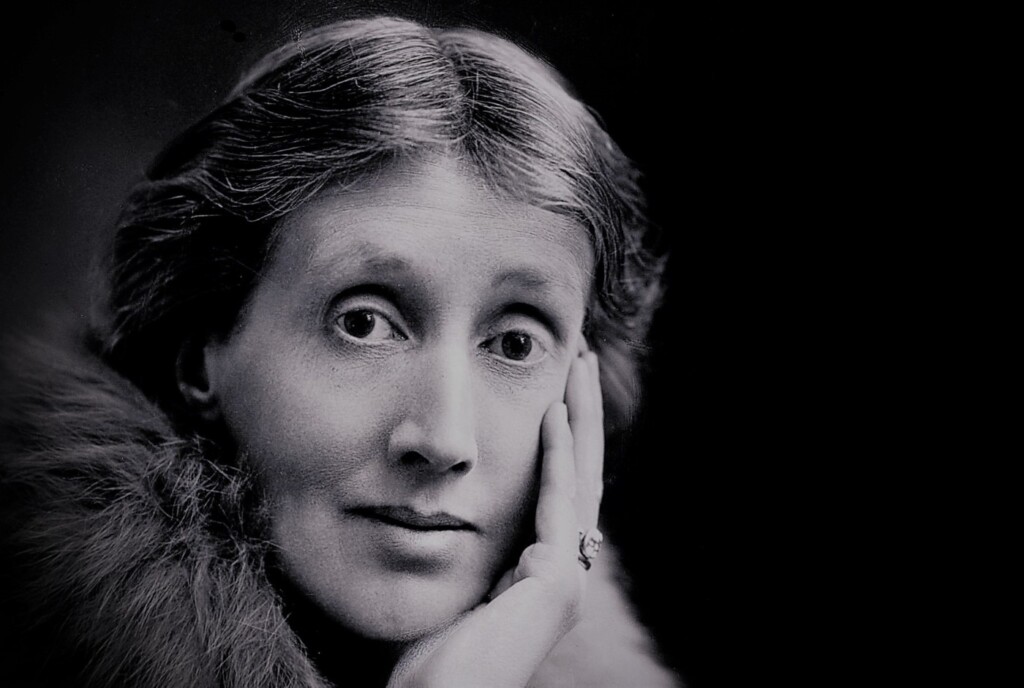
By 1938, with European capitals already rehearsing their capitulations and the smell of something irreversible in the air, she published the work that would cost her more than any other — not in sales or reviews, though those were damaging enough, but in the quieter currency of being quietly set aside. Three Guineas arrived into a world that was not ready for it and has never quite recovered the generosity required to take it seriously. It was not a lament. It was a prosecution.
The argument she made was simple enough to state and nearly impossible to absorb: the tyranny organizing itself across the Channel was not a foreign aberration, not a darkness arriving from outside the civilized order, but the logical extension of structures English society had always considered virtuous. The father who controlled the family’s money and called it protection. The headmaster who demanded obedience and called it education. The bishop who excluded women from authority and called it doctrine. These were not the opposites of fascism. They were its grammar lessons, its early drafts, its domestic rehearsals conducted in drawing rooms and school chapels long before anyone had given the phenomenon a name.
What made this unbearable to her contemporaries was not the radicalism of the claim in the abstract. It was the precision of the target. She was not indicting some other class, some other country, some foreign pathology. She was indicting the educated Englishman, the very figure who considered himself fascism’s natural enemy, and she was doing so by tracing the architecture of his authority back through institutions he loved and defended. Hannah Arendt would later describe the banality of evil — the Eichmann trial in Jerusalem in 1961 producing her famous formulation about evil as thoughtlessness, as the absence of reflection rather than the presence of malice. Woolf arrived at something related but more caustic more than two decades earlier: that the ordinary operations of ordinary power, conducted by ordinary men who believed themselves decent, produced the conditions in which catastrophic violence became possible, even inevitable.
The men who reviewed Three Guineas in 1938 largely dismissed it as hysterical, as the overreach of a brilliant mind that had wandered outside its proper territory. The word hysterical is worth pausing on. It comes from the Greek for uterus. The diagnosis has always been gendered, always been a way of returning a woman’s argument to her body rather than engaging it on its own terms, which is precisely the mechanism Woolf had spent the entire book anatomizing.
She understood that she would not be forgiven for it. There is a moment in her diaries from that period where she records the sensation of having written something true and knowing that the truth would be held against her, not refuted but simply surrounded with silence until it lost oxygen. The twentieth century has largely honored that prediction. Three Guineas is taught far less than A Room of One's Own, discussed far less than Mrs Dalloway or To the Lighthouse, treated as a biographical curiosity rather than the sharpest political text she ever produced. The gentler works get the seminars. The dangerous one gets the footnote.
She was writing in the specific year when the Anschluss absorbed Austria into the Reich, when Munich was still months away and the collective flinch of European democracy was well underway, and she was saying: look closer to home. Look at the man who owns the house you live in. Look at the school that decided you were not worth educating on equal terms. Look at the church that told you God preferred your silence. The war she saw coming was not only the one about to detonate across Europe. It was the one that had been running quietly, without declaration, for centuries.
🌊 Voices from the Stream: Consciousness, Writing, and Inner Life
Virginia Woolf’s writing cannot be fully understood without exploring the broader literary and philosophical currents that shaped her vision. These related articles illuminate the intellectual world she inhabited, from the modernist reinvention of subjectivity to the existential and phenomenological questions that haunted her prose.
Phenomenology of Nature: Husserl and Merleau-Ponty
Husserl and Merleau-Ponty’s phenomenology offers a philosophical framework remarkably close to Woolf’s literary intuitions about perception and lived experience. Their inquiry into consciousness as an embodied, flowing encounter with the world resonates deeply with the stream-of-consciousness technique Woolf pioneered in her novels. Reading their thought alongside Woolf’s fiction opens up new dimensions in understanding how inner life can be rendered on the page.
GO TO THE SELECTION: Phenomenology of Nature: Husserl and Merleau-Ponty
Montaigne’s Essays: Guide to Reading
Montaigne's Essays represent one of the earliest and most radical attempts to make the self the central subject of literary inquiry, a gesture that anticipates Woolf’s own inward turn by centuries. His conversational, fragmentary style and relentless self-examination established a tradition of introspective writing that Woolf both admired and transformed. Understanding Montaigne helps illuminate the deep roots of the personal and essayistic voice that runs throughout Woolf’s non-fiction and diaries.
GO TO THE SELECTION: Montaigne’s Essays: Guide to Reading
Hannah Arendt: the Philosopher Who Unmasked the Banality of Evil
Hannah Arendt, like Woolf, was a thinker who confronted the relationship between the private inner life and the brutal realities of the public world. Both women wrote with extraordinary intellectual courage at a time when women’s voices were systematically marginalized in official intellectual discourse. Exploring Arendt’s thought alongside Woolf’s reveals how two towering twentieth-century minds grappled with politics, identity, and the meaning of human existence.
GO TO THE SELECTION: Hannah Arendt: the Philosopher Who Unmasked the Banality of Evil
Montaigne: Life and Essays
Montaigne’s life and his invention of the essay as a literary form represent a cornerstone of the Western tradition of self-writing that deeply influenced Virginia Woolf. Woolf herself wrote admiringly of Montaigne, seeing in him a kindred spirit who dared to place personal experience at the center of philosophical reflection. This article traces the arc of a life spent in radical self-examination, offering essential context for anyone wishing to understand Woolf’s own literary heritage.
GO TO THE SELECTION: Montaigne: Life and Essays
Discover Independent Cinema on Indiecinema
If Virginia Woolf’s world of interiority, modernist sensibility, and bold literary vision resonates with you, Indiecinema is the streaming platform where those same qualities come alive on screen. Explore a curated selection of independent and avant-garde films that share Woolf’s commitment to depth, originality, and the courage to see the world differently. Join Indiecinema and let cinema take you further inward.
👉 EXPLORE THE CATALOG: Watch Indie Films in Streaming
A vision curated by a filmmaker, not an algorithm
In this video I explain our vision

