
The Red Coat You Cannot Stop Seeing
You see the red coat first. Before you have processed color, shape, height, the particular way a small figure moves through a crowd — before any of that has assembled itself into meaning — your body has already turned. Your chest has already done something that has no clean name in any language. The coat is red. The coat is the right size. And for approximately three seconds, which feel like a different unit of time entirely, you are not standing on a street in the present. You are somewhere else, or rather: the present has cracked open and something unbearable has leaked through.

Then the figure turns. Of course the figure turns. And it is no one. It was never going to be anyone. And you stand there in the ordinary light of an ordinary afternoon, breathing carefully, aware that something has just happened to you that no one around you witnessed, that leaves no mark visible to others, and that you will almost certainly not mention to anyone.
This is what grief does to perception. Not metaphorically. Physiologically. The brain, which is fundamentally a prediction machine — this is not poetic license, this is the basic architecture described by Karl Friston’s work on predictive processing, formalized across decades of neuroscientific research — does not passively receive the world. It generates the world it expects to see, and then corrects. When someone you love has died, the brain has not yet updated its model. It is still generating them. It is still predicting their presence in the crowd, at the kitchen table, in the particular silence of a room they once occupied. Grief, in this framework, is not merely an emotion. It is a perceptual disorder. The brain keeps making a world that contains the dead.
George Bonanno, in his research on bereavement at Columbia University, documented how grief does not follow the tidy stages that Elisabeth Kübler-Ross proposed in 1969 and that culture absorbed as scripture. The process is far stranger, far less linear, and far more perceptual than the stage model implies. People in acute grief report intrusive visions, phantom sounds, the absolute conviction that they have just heard a familiar voice in another room. This is not pathology in the clinical sense. It is the nervous system doing what nervous systems do — trying to maintain coherence, trying to reconcile the model with the evidence, failing, trying again.
What Daphne du Maurier understood, writing her story in 1971, was precisely this failure mode. Not the drama of loss as event, but the prolonged, strange, physiologically intimate experience of a world that keeps insisting on a presence that is no longer there. A father who cannot stop seeing his dead daughter. Who sees her, or believes he sees her, or whose body responds as though he sees her — and the distinction between these three things is, in practice, nearly impossible to maintain. This is the phenomenological trap at the center of everything that follows in the narrative: not whether the vision is real, but that the category of real has become unstable.
Maurice Merleau-Ponty, whose Phenomenology of Perception was published in 1945, argued that perception is never purely cognitive. The body perceives. The body has its own memory, its own anticipations, its own knowledge that precedes and sometimes overrides conscious thought. When your body turns toward a red coat in a crowd, that turning is not a mistake. It is the body being faithful to something it has not been told to stop expecting. The body does not know how to receive the news of death. It keeps filing the information incorrectly, or not at all.
And so the red coat appears again. And again. Always moving away, always at the edge of what can be confirmed, always just far enough ahead to require pursuit.
Venetian Arcanum
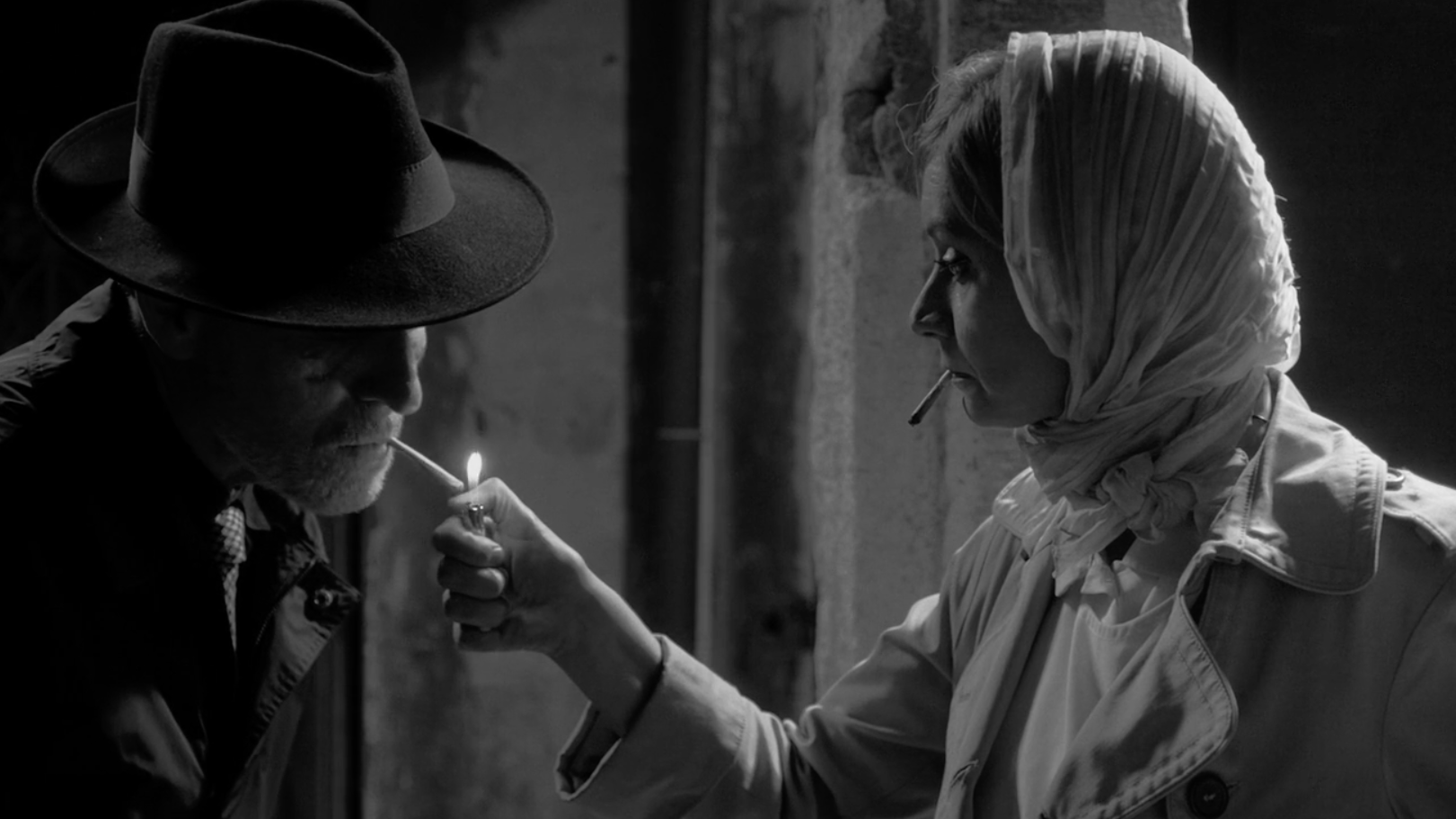
Thriller, by Serge Turgeon, Italy, 2025.
In Venice, a mysterious presence appears once every century or two, haunting the canals and hidden corners of the city. Driven by a sense of destiny, a woman decides to search for it. Following its elusive traces, she is drawn deeper and deeper into the city’s arcane secrets. Reality and myth begin to blur, and Venice itself transforms into a labyrinth of dangers.
LANGUAGE: Italian
SUBTITLES: English
Daphne du Maurier and the Geography of Dread
There is a particular way Daphne du Maurier would arrive at a place and feel it before she understood it. Not as atmosphere in the decorative sense, not as mood, but as something pressing against the inside of her skull, insisting on its own logic. She described this with unusual precision in her notebooks and letters: the sense that certain landscapes were not passive backdrops but active conditions, environments that reorganized the self from the outside in. Cornwall did this to her. Menabilly, the crumbling manor house she obsessed over for years before she was ever permitted inside it, did this to her in a way that produced Rebecca almost the way a fever produces a dream — not invented but secreted. The house wasn’t a metaphor. The house was a psychic event.
When she returned to this obsession in her 1962 essay collection The Rebecca Notebook, du Maurier articulated something that most writers leave buried in their practice: that for her, place was always the primary character, and human beings were what happened when a place encountered consciousness. The people in her stories are not navigating environments. They are being navigated by them. This distinction matters enormously, because it means that everything that appears to happen between characters is also, simultaneously, happening between a self and its geography — between what a person believes about their interior life and what the landscape refuses to confirm.
Venice, when she put it into “Don’t Look Now” in 1971, was already saturated with everyone else’s projections. It was Thomas Mann‘s city of dissolution and desire, Ruskin’s moral ruin, a thousand paintings of light on water that had trained the Western eye to find it beautiful in precisely the wrong way — aesthetically rather than viscerally. Du Maurier stripped all of that away. Her Venice is not the Venice of St. Mark’s Square or golden afternoons on the Grand Canal. It is November. The tourists have evacuated. The city empties into something that was always underneath the postcard version, and what remains is the labyrinth: narrow calles that dead-end into black water, the disorienting sameness of bridges that seem to lead you forward but deposit you somewhere behind yourself, a spatial logic that undermines the pedestrian’s most fundamental assumption — that if you walk toward something, you move toward it.
This is the city as unconscious. Not symbolically, but structurally. The unconscious does not work by hiding things in obvious places where you might find them if you look carefully enough. It works by making the path toward what you most need to confront loop back endlessly on itself, by ensuring that every passage that seems direct will prove to be circular. Venice’s geography enacts this with an almost contemptuous literalness: the city was built on unstable ground, on driven wooden stakes in tidal mud, and it has been sinking, very slowly, with absolute certainty, for centuries. The ground beneath you in Venice has never been reliable. This is not metaphor. This is geology. Du Maurier understood that the right setting is not one that illustrates a theme but one that is the theme, bone-deep and non-negotiable.
The psychoanalyst Christopher Bollas, writing about what he called “the unthought known” — those truths about ourselves that we carry in the body before the mind has language for them — might have been describing du Maurier’s method. The characters in her fiction are always moving through spaces that know something they don’t yet know they know. The landscape is ahead of the protagonist. It has already reached the conclusion that the protagonist is still resisting, and it is patient in the way that water is patient with stone. You don’t choose whether Venice changes you. You only choose, and only briefly, whether to notice that it already has.

What Freud Called the Uncanny and What He Got Wrong
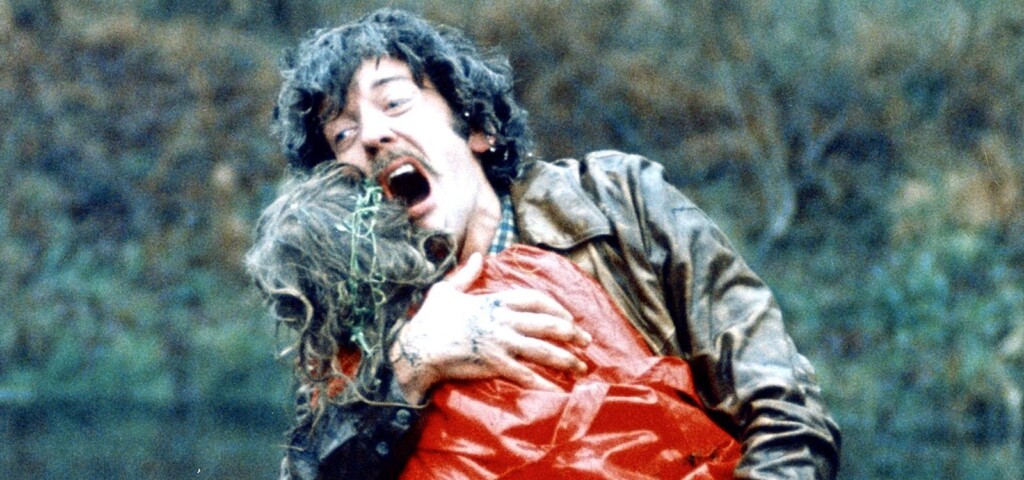
There is a moment when you return to a place you knew as a child — a hallway, a garden, a particular quality of afternoon light through a specific window — and something in your chest contracts before your mind has finished recognizing where you are. The body knows first. This is not nostalgia. This is something older and less comfortable than nostalgia, something that carries a faint current of dread alongside the familiarity, as though the known thing has grown a shadow you never noticed before. Sigmund Freud, writing in 1919 in what remains one of the strangest and most circling essays in the psychoanalytic canon, called this the unheimlich — the uncanny — and built his argument around a paradox that most people sense but rarely articulate: the most frightening things are not the alien ones. They are the familiar ones wearing the wrong expression.
Freud’s distinction is precise and worth holding carefully. The German heimlich means homely, intimate, belonging to the home — but Freud noticed that in its older usage the word had already begun to slide toward its own opposite, toward the concealed, the hidden, the kept-from-sight. The unheimlich, the uncanny, was therefore not simply the negation of the familiar but its dark interior, the secret the familiar had been keeping all along. What returns to unsettle us, in Freud’s account, is always something we once knew and then repressed — a childhood belief in the omnipotence of thought, a fear we convinced ourselves we had outgrown, an attachment we buried under the weight of adult rationality. The uncanny is repression’s receipt, delivered late and without warning.
This framework illuminates something real about the grief at the center of the story examined here. A father who cannot stop seeing his dead daughter in crowds, in narrow streets, in the flash of red cloth at the edge of vision — this fits Freud’s architecture almost too neatly. The repressed loss making its return, the mind refusing the reality of death and projecting the child back onto the world. Except that neat architecture is precisely the problem. Because what Freud describes is a return. And what this father experiences is not a return. It is a refusal of departure.
Nicolas Abraham and Maria Torok, writing together across decades of clinical and theoretical work gathered most completely in The Shell and the Kernel published in 1994, pushed against exactly this limitation. Their concept of the phantom — and more precisely of the crypt — describes a grief that does not operate through repression at all. Repression, in the classical Freudian sense, is something the ego does to its own experience. The crypt is different. It is a foreign body inside the psyche, a sealed chamber where an object that could not be mourned has been entombed rather than processed. The distinction matters enormously. Repressed material can theoretically be excavated, made conscious, worked through. The crypted object resists this entirely because it was never metabolized in the first place. It sits inside the mourner like a stone inside a living organ, not part of the tissue, not expelled, simply enclosed.
The child who appears at the end of a canal, who turns in a red coat that the eye catches before reason does — she has not returned from anywhere. She never left in the form that departure requires. Mourning, as Freud himself described it in 1917’s Mourning and Melancholia, demands a slow and painful withdrawal of libidinal investment from the lost object. It demands, in other words, a kind of internal act of letting go, performed piece by piece over time. But what Abraham and Torok understood is that some losses arrive in a form the psyche cannot process — too sudden, too total, too contaminated by guilt or by love so fused with identity that its object cannot be distinguished from the self. In those cases, the work of mourning never begins.
The Blind Seer and the Sighted Fool
There is a woman sitting across from you at a dinner table who is blind, and she tells you something about yourself that no one in the room could possibly know. Your instinct, before thought intervenes, is not skepticism. It is a cold recognition that moves through the chest before the mind has time to dismiss it. That instinct is older than rationalism, and rationalism has spent three centuries trying to silence it.
The older of the two sisters, Heather, cannot see the world that John Baxter moves through with such confident, architectural certainty. She perceives instead something the light does not carry — the presence of his dead daughter, a warning encoded not in visible signs but in a frequency the sighted have learned to ignore. And here is the inversion that the narrative performs so quietly you almost miss it: the woman who cannot see is the one who actually knows. The man with perfect vision is the one walking toward his death with his eyes wide open.
Paul Virilio argued in 1994 that Western modernity had constructed an ideology in which the visible became synonymous with the verifiable, the real, the trustworthy. The eye, in this framework, is not merely a sensory organ but an epistemological authority. To see something is to possess it, to know it, to control it. The machine of vision — surveillance cameras, satellite imaging, the cinema itself — became the infrastructure of a civilization that trusted only what could be optically confirmed. What Virilio understood, and what the culture largely refused to hear, is that this equation is not a discovery but a choice, a political arrangement disguised as natural fact.
The choice has losers. Among them are all the modes of knowing that operate without light — intuition, grief, premonition, the bodily knowledge that something is wrong before any evidence presents itself. These modes were not disproved by the Enlightenment. They were reclassified. Made superstition. Transferred from the category of knowledge to the category of pathology or primitive error.
In Scottish Gaelic tradition, the second sight — an dà shealladh, literally the two sights — was never understood as supernatural in the sense of impossible. It was understood as an additional perceptual channel, closer to a burden than a gift, often involuntary and frequently unwanted. The seer did not choose to know. The knowledge arrived unbidden, and it was almost always knowledge of death or disaster. Identical structures appear in Norse and Sami folk epistemology, where certain individuals were understood to perceive along axes that the ordinary waking eye could not access. These traditions were not making metaphysical claims about ghosts. They were making perceptual claims about the limits of vision — a distinction modern dismissiveness consistently collapses.
John’s tragedy is structured entirely around his insistence on seeing. He photographs, measures, restores. He is a man of surfaces brought back to their original legibility. When his wife begins to believe, when the sisters communicate something real about Christine’s continued presence, he responds with the logic of a man who has never once doubted the authority of his own eyes. He sees the figure in the red coat. He pursues it through the narrow streets with the urgency of someone who has finally obtained proof. The visible, for him, is the conclusive.
And the figure turns, and what he sees is not what he expected to see, and by then the seeing is already too late.
The blind seer already knew. She knew before he entered Venice, before he followed anything through the dark. Her knowledge did not require light or logic or the confirmable surface of things. It arrived the way grief arrives — before you have the language for it, before you can explain to anyone why you are already certain of something you cannot yet name.
John’s Refusal and the Masculine Architecture of Control
He is standing on scaffolding inside a crumbling Venetian church, supervising the restoration of ancient mosaics, giving precise instructions about which stones to replace and which to preserve, and there is something almost unbearable in watching a man this competent, this focused, this entirely in command of a structure that is not himself. The work is real. The measurements are exact. The damage is assessable, catalogued, addressed with professional authority. Everything around him is falling apart in ways he can name and therefore fix.
This is not stupidity. That is the first thing to understand, and perhaps the most important. John’s systematic refusal to hear what his wife is telling him, his methodical dismissal of the two women who see something in the water and in the air around them, his insistence on rational frameworks even as the city begins to fold inward around his grief — none of this comes from a failure of intelligence. It comes from something far more deeply installed. Raewyn Connell, in her landmark 1995 study Masculinities, describes hegemonic masculinity not as a set of personality traits but as a relational practice, a structure of dominance maintained precisely through the management of vulnerability. What hegemonic masculinity cannot afford, she argues, is not weakness itself but the acknowledgment of weakness — because acknowledgment dissolves the architecture that makes the masculine position legible and therefore powerful. John does not refuse to feel. He refuses to allow feeling to become visible information. There is a crucial difference.
The church restoration is not a metaphor in any simple sense. It operates as something Freud would have recognized immediately — displacement in the clinical meaning of the word, the redirection of psychic energy from an unbearable source toward a manageable substitute. Their daughter drowned. The fact sits at the center of everything like a wound that has not been treated, only bandaged with motion and obligation and the transatlantic distance of a work assignment. The grief has not gone anywhere. It has been outsourced to stone. He touches the ancient walls with a care he cannot extend to his own interior, reads damage in centuries-old mortar with an attentiveness he cannot bring to his marriage, his terror, his dreams. The building gives him something his sorrow does not: a problem with a solution.
Laura sees. Laura receives information through channels he has decided in advance are inadmissible. The two sisters at the restaurant, one of them blind, one of them speaking with a certainty that has nothing procedural about it — they tell her something and she believes it, not because she is credulous but because she is not defending anything. John’s response is not to engage with what they say but to reclassify the people saying it. They become unstable, possibly fraudulent, certainly not sources. This is not analysis. It is quarantine. He seals off the threatening information by delegitimizing its origin, which is a move so practiced it barely registers as a move at all. It registers as reasonableness.
What Connell’s framework illuminates is that this kind of reasonableness has a social history. It is not natural to John any more than the restoration project is natural to the building. Both are impositions of order onto what was already complex. The masculine position, as Connell traces it through institutional and cultural formations across the twentieth century, earns its authority by presenting its particular relationship to emotion and knowledge as simply the neutral, adult, accurate relationship to reality. Everyone else is reacting. He is assessing. Everyone else is feeling. He is thinking. The binary is maintained so automatically it no longer needs defending.
And meanwhile the city goes on being what Venice always is — a place built on water, on impermanence, on the slow certainty of subsidence — and the church he is fixing continues, stone by stone, to receive everything he cannot say to his wife in the dark.
A vision curated by a filmmaker, not an algorithm
In this video I explain our vision
Venice as the City That Has Already Drowned
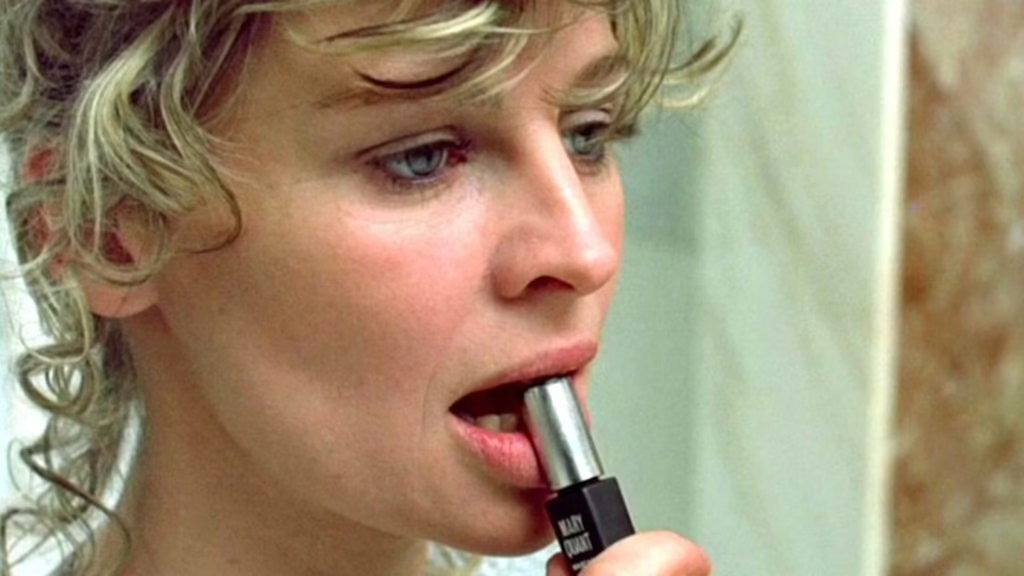
There is a city that has been sinking for nine hundred years and has never stopped being beautiful. That is not a metaphor. Venice subsides into its lagoon at a measurable rate — somewhere between one and two millimetres per year through natural compaction, accelerated through the twentieth century by industrial groundwater extraction until the pumping was stopped in the 1970s, by which point the city had already dropped nearly twenty-three centimetres in a hundred years. Acqua alta, the high water that floods the Piazza San Marco, now occurs more than a hundred times annually, up from a handful of events per year at the start of the last century. The city is not dying. The city has already died, in the only sense that matters, and yet it persists, drawing four million tourists a year into its gorgeous decomposition, asking nothing of them except that they find it ravishing.
John Ruskin arrived in Venice in the middle of the nineteenth century and saw what most visitors refused to see. In The Stones of Venice, published between 1851 and 1853, he made a claim that still disturbs: that the beauty of Venice was inseparable from its moral collapse, that the Renaissance ornament encrusting its facades was not a sign of triumph but of decadence, of a civilization that had traded genuine spiritual vitality for surface splendour. The stones were beautiful because they were dying. The city was a lesson in what happens when a culture mistakes refinement for health. Ruskin was wrong about many things, but not about this: that Venice teaches you to love what is already lost, and that this love is itself a kind of grief you have agreed to inhabit without naming it.
A man moves through those streets carrying exactly this unnamed grief, and the city meets him at every turn with its own. The water reflects but distorts. The alleys that look like thoroughfares terminate in walls, in water, in nothing. You follow a calle because it seems to lead somewhere and it simply stops, and you turn back, and the turning back feels less like navigation than confession. The canals go nowhere in the way that thought goes nowhere when it circles the same fixed point. He walks because walking gives the grief the shape of purpose, but the city will not cooperate with purpose. It is architecturally structured to frustrate forward motion, to return you to yourself, to the same bridge, the same water, the same face almost glimpsed and then gone around a corner.
This is what the labyrinth does that a grid cannot. A grid offers the illusion of rational traversal. The labyrinth insists that you are already inside, that you were inside before you arrived, that the walls are not obstacles to your destination but the destination itself. The dead ends are not failures of the map. They are the map. Freud, in his 1919 essay on the uncanny, identified the compulsion to return to the same place against one’s will as one of the clearest signatures of the unheimlich — the homely made unhomely, the familiar rendered alien. Venice does this architecturally. It is a city built on the principle of the uncanny, on the idea that home is somewhere beneath the water, that everything visible is a reflection of something drowned.
The grief a man carries here finds its objective correlative not in a single image but in the total environment. There is nowhere to go that is not also a return. There is no canal that does not show you your own face, darkened and moving, before it shows you anything else. And somewhere in the alleys, something small is running in a red coat, always just ahead, always just around the next corner that opens onto nothing but more water.
Precognition, Pattern Recognition, and the Mind That Knows Before It Knows
There is a moment you have probably lived without naming it. You walk into a room and something shifts in your chest before you have registered a single concrete detail — before your eyes have swept the space, before anyone has spoken, before cause has declared itself. You leave. Or you stay, because you have been trained to distrust exactly this. Because the culture you were raised in has a word for the knowledge that arrives before language, and that word is not wisdom. That word is anxiety, irrationality, superstition.
Daniel Kahneman spent decades mapping the architecture of this problem. In his 2011 synthesis of a lifetime’s research, he described the human mind as operating through two systems: one fast, associative, automatic, running beneath the threshold of conscious attention; the other slow, deliberate, verbal, the system that writes reports and gives reasons. Western rationalism built its entire cathedral on the second system while treating the first as noise to be filtered out. What Kahneman demonstrated, with uncomfortable precision, is that the fast system is often right in ways the slow system cannot explain and sometimes cannot even detect. The knowledge is real. The language for it simply hasn’t arrived yet.
Antonio Damasio pushed this further in a direction that should have been more disturbing than it was received. In 1994 he documented something he called the somatic marker hypothesis — the idea that the body stores evaluative information about past experience and delivers it to present decisions in the form of physical sensation, emotional tone, gut response, before conscious reasoning has had time to process the incoming data. The body knows first. The mind catches up, or doesn’t, or invents a story about why the feeling was wrong.
A man sits across a restaurant from two women and cannot stop looking at one of them. Something about her face pulls at him with a force that has no name. He believes he is grieving, and he is, but the pull is not grief — it is recognition of a kind the slow mind has no category for. He follows it. He follows it even when his wife tells him to stop, even when every rational structure around him insists he is projecting, disintegrating, failing to process loss appropriately. He follows it straight into the blade. And what the story refuses to tell you is that he was right. The knowledge was real. What killed him was not that he trusted it — it was that he trusted it partially, intermittently, while simultaneously being bullied by the slow system’s need for coherent narrative. He saw the figure in the red coat and knew. He also doubted. The doubt is what moved his feet forward into the dark.
Neuroscientific research on threat detection has consistently shown that the amygdala processes fear-relevant stimuli faster than the visual cortex completes its analysis of the same stimuli. You react to the snake before you have consciously seen the snake. The system that knows first is evolutionarily ancient, subcortical, not symbolic. It does not express itself in propositions. It expresses itself in the body tightening, in the sudden reluctance to enter a space, in the inexplicable need to turn back. Rationalist culture has pathologized this entire register of knowing precisely because it cannot be audited. You cannot file a report on it. You cannot be held accountable for it in language. And so it gets reclassified: as neurosis, as magical thinking, as the unprocessed residue of trauma.
The cruelest irony is structural. The people most likely to receive the signal clearly are also, often, the people most brutalized by their culture into disbelieving it. They know. They have always known. They walk toward the thing that will end them with their eyes open and their mouths full of reasons why they must be wrong.
The Ending That Was Always the Beginning

There is a moment when the narrow alley finally ends and you see the face, and the face is not what you expected, and in the same instant you understand that nothing about the preceding hours was ever what you thought it was. The canal, the fog, the glimpse of red — none of it was a hunt. It was a homecoming you were too frightened to recognize as such.
This is what retroactive structure does to a life. Paul Ricoeur, writing in Time and Narrative in 1984, argued that narrative does not merely record experience but fundamentally reconstitutes it — that the end of a story reaches backward through every prior moment and reorders what those moments meant. He called this the capacity of narrative to reveal what was already there but could not be seen from within the forward momentum of living. The ending does not explain what came before. It detonates it. Every scene you witnessed reassembles itself in the light of a truth that was present from the first frame, from the first footstep on wet stone, from the first glimpse of something small and red moving away around a corner that should have been empty.
John has been following his daughter. He has been following her through every canal, every dead-end passage, every moment of breathless pursuit through a city that seemed designed to swallow people whole. He could not know this because knowing it would have meant accepting that she was gone, that the red coat contained nothing he was permitted to hold, that love at its most desperate does not rescue — it haunts. His grief had dressed itself in the clothing of a premonition, then in the clothing of a search, and finally in the clothing of heroism. He was going to save something. He was always already too late, and in being too late, he had been circling the same wound for the entire duration of what he mistook for forward motion.
Walter Benjamin wrote in the Arcades Project about the Jetztzeit — the now of recognizability — that singular instant when an image of the past suddenly becomes legible in the present, not as memory but as a flash of truth that reorganizes what you know. For Benjamin, this flash was not comfort. It was collision. The past does not gently offer itself up for understanding; it strikes. And when it strikes, it does not leave the present intact.
The figure turns. The face is not a child’s face. And in the space of that recognition, every choice made since the drowning — the decision to stay in Venice, the rejection of the sisters’ warnings, the pursuit through streets that seemed to want to be escaped — every choice unmakes itself and reveals the only choice that was ever actually being made: the choice not to arrive at the truth. The story was never about what would happen next. It was about what had already happened and could not be named.
You have done this too. Not in Venice, not with a red coat, not with a knife in a cold room — but in your own version of the same architecture. You have followed something around corners because following felt like agency and stopping felt like surrender. You have called your circling a search. You have named your repetition a journey. The city you moved through was not trying to trap you; it was showing you, again and again, the same door, and you were moving too fast, too purposefully, too committed to the story of pursuit to notice that arrival and departure had long since become the same gesture.
The ending was always the beginning. The figure in red was always stationary. You were the one moving.
🌊 Between Vision and Dread: Art at the Edge of Reality
Daphne du Maurier’s ‘Don’t Look Now’ is a masterpiece of psychological unease, weaving grief, premonition, and the uncanny into a labyrinth of meaning. To fully inhabit its world, one must explore the deeper currents of consciousness, symbolism, and the fragile boundary between perception and dream. These articles open the doors to those territories.
Stream of Consciousness in Literature and Cinema
Du Maurier’s story operates precisely in the space that stream of consciousness literature and cinema inhabit: a mind overwhelmed by grief that can no longer distinguish the real from the imagined. This article traces the rich tradition of interior narration from Virginia Woolf to experimental film, revealing how subjective time and fragmented perception become literary and cinematic languages in their own right. Understanding this current illuminates how ‘Don’t Look Now’ dismantles linear storytelling to mirror a psyche in collapse.
GO TO THE SELECTION: Stream of Consciousness in Literature and Cinema
The Unconscious and its Relationship With Cinema
Few stories invite psychoanalytic reading as urgently as du Maurier’s tale, in which repressed grief surfaces as hallucination, premonition, and fatal misrecognition. This article examines the deep structural relationship between cinema and the Freudian and Jungian unconscious, exploring how film becomes a screen onto which the mind projects its most forbidden desires and fears. The blind seer, the drowned child, the red coat: all are symbols that cinema and the unconscious share as a mother tongue.
GO TO THE SELECTION: The Unconscious and its Relationship With Cinema
Jacques Lacan and the Mirror Stage
Jacques Lacan’s concept of the mirror stage offers one of the most powerful keys to unlocking the dread at the heart of ‘Don’t Look Now’: the moment John Baxter glimpses himself not as subject but as an object caught in another’s gaze. This article explores Lacan’s foundational theory of identity, misrecognition, and the split self, showing how the mirror becomes a site of existential vertigo. The final revelation of the story is, in Lacanian terms, the catastrophic collapse of the imaginary order.
GO TO THE SELECTION: Jacques Lacan and the Mirror Stage
Mystical Films not to Be Missed
The supernatural in du Maurier never announces itself with thunder; it seeps through the cracks of ordinary life like water through ancient stone, which is precisely the grammar of the great mystical and visionary films. This curated selection of mystical cinema explores how filmmakers across traditions have used image, sound, and silence to approach the ineffable — death, fate, and the beyond. Watching these films alongside reading du Maurier is an exercise in training the eye to see what hides in plain sight.
GO TO THE SELECTION: Mystical Films not to Be Missed
Discover Independent Cinema on Indiecinema
If ‘Don’t Look Now’ has stirred something restless in you — that vertigo of not knowing what is real — then independent cinema is your natural home. On Indiecinema streaming you will find films that refuse easy comfort, works that look directly into grief, mystery, and the hidden architecture of consciousness. Come and lose yourself, deliberately, in cinema that matters.
👉 EXPLORE THE CATALOG: Watch Indie Films in Streaming
A vision curated by a filmmaker, not an algorithm
In this video I explain our vision

