
The Dinner Table That Never Ends
You are sitting at a table you have sat at a thousand times, and someone says a word — not even a full sentence, just a word, maybe a name, maybe a sound that was once a name — and the entire room laughs. You laugh too, or you try to, because you know the shape of that laugh even if you have forgotten what first caused it. The joke has no origin anymore. It has become something more durable than a joke: it has become grammar. It is the grammar of this particular family, spoken nowhere else on earth, translatable to no outsider, and you grew up inside it the way you grew up inside the walls of the house, never once questioning whether the walls were a shelter or a boundary, because for years the two things were indistinguishable.

This is the opening condition of Natalia Ginzburg’s Lessico famigliare, published in Italy in 1963 and translated into English as Family Lexicon. The book — formally a novel, though Ginzburg herself insisted on its documentary truth — reconstructs the private language of her family, the Levis of Turin, through a recitation of their repeated phrases, their habitual insults, their domestic incantations. Her father shouts that people are imbeciles. Her mother murmurs half-sentences no one finishes. Her brothers quote passages from poets the way other families quote scripture. None of it requires explanation inside the household. All of it becomes opaque the moment you step outside it. That opacity is not incidental to the book’s meaning. It is the book’s meaning.
What Ginzburg understood, with the precision of someone who had spent decades inside a particular linguistic enclosure, is that private family language does not merely describe reality — it constitutes it. Ludwig Wittgenstein’s later philosophy, developed in the Philosophical Investigations of 1953, argued that the limits of one’s language are the limits of one’s world. Ginzburg wrote no philosophy, but she inhabited the same recognition from the inside, from the position of a daughter rather than a logician. The lexicon of a family is not decoration applied over a pre-existing life. It is the architecture of how that life is experienced, remembered, and ultimately made transmissible. You do not only remember what happened. You remember it in the words your family gave you to describe it, and those words carry everything: the affection, the cruelty, the specific contempt your father had for weakness, the specific tenderness your mother expressed through complaint.
The problem — and Ginzburg was too honest a writer to pretend there was no problem — is that this architecture is also a cage whose bars are made of warmth. The same phrases that bond you to the people you love are the phrases that fix you in a position relative to them. You are always the child who once mispronounced a word and made everyone laugh. You are always the one who cried at a certain film, the one who burned the rice, the one about whom your father said that particular thing in that particular tone which everyone at the table still recalls thirty years later when someone repeats it. Family lexicon is, among other things, a system of permanent characterization. It assigns you a role in an ongoing story whose author is collective and whose revisions are nearly impossible.
This tension — between the profound consolation of being known and the suffocating weight of being known in only one way — is what makes Ginzburg’s book something more than a memoir of a remarkable antifascist intellectual family in twentieth-century Italy. It is an anatomy of the mechanism by which intimacy operates as soft power, how love and language conspire to make you legible to the people around you while simultaneously making it very difficult to become someone those people have not already named.
The Smartphone Woman
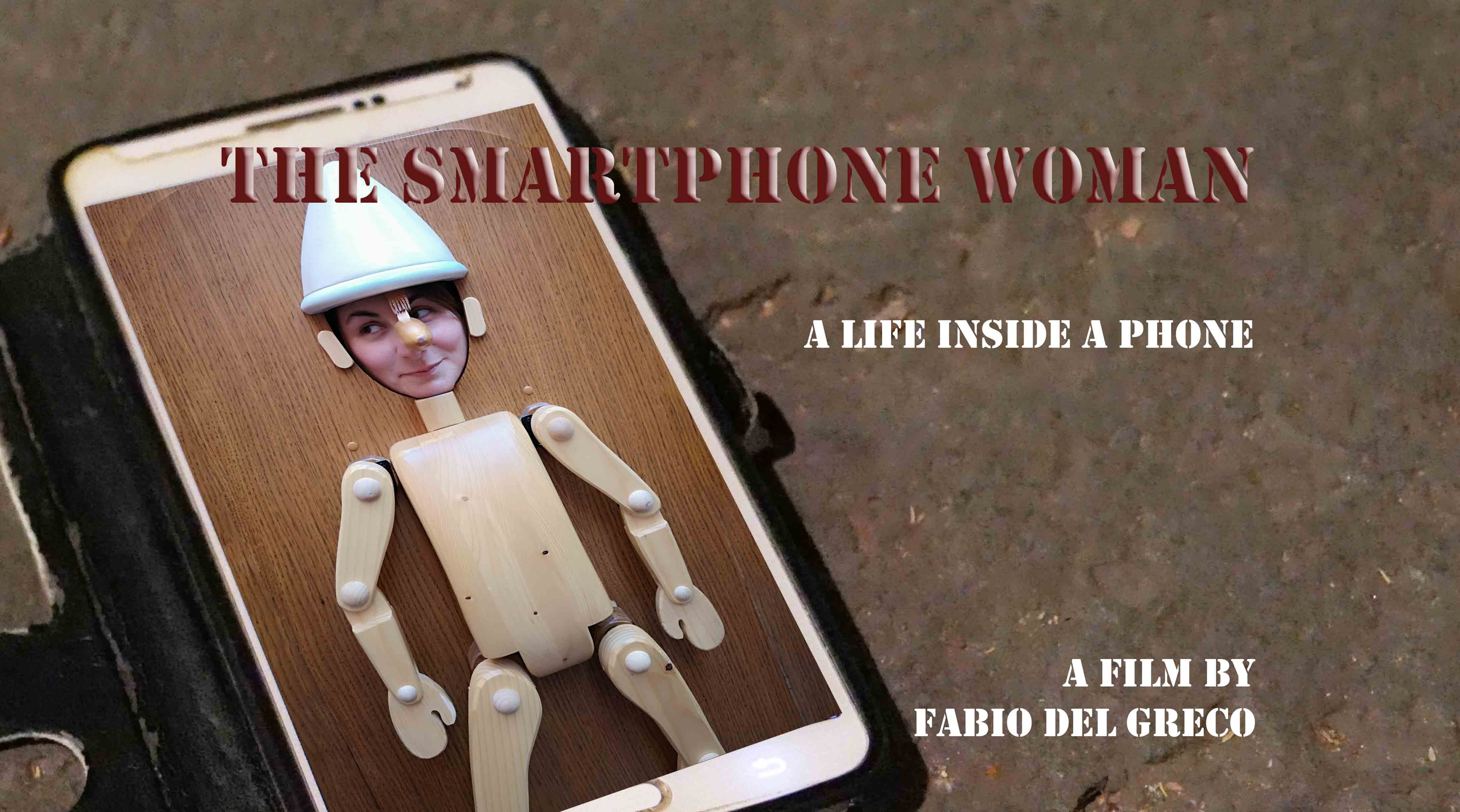
Drama, thriller, dark comedy, by Fabio Del Greco, Italy 2020.
On a bridge over the Tiber River, an elderly and severely ill man has decided to end his life, but an unusual discovery changes his mind: he comes across a lost smartphone. Intrigued, he decides to return home and watch the videos contained within it. On the screen, a series of videos unfold, telling the story of a woman who has emigrated from southern Italy to Rome to work as a teacher in schools and her struggles with integration in a social reality she cannot fully grasp.
"The Smartphone Woman" is a realistic tale of a woman's life and her complex relationship with an "infernal" city. It portrays the challenges she faces, her connection to her origins, the social discomfort she discovers in the outskirts, and the eerie presence of the ghosts of ancient Roman empire. Fabio Del Greco employs a fragmented style, using pieces of "real life" shot with the smartphone, to construct a narrative that ambiguously oscillates between fiction and truth. This creates a captivating exploration of the discomfort and alienation within the bustling city, contrasting with the peaceful village life from which the protagonist hails. The film is constructed with a variety of heterogeneous characters and situations, an emotional kaleidoscope, weaving between evenings of exploration in the Eternal City and daily struggles. Realistic smartphone-shot videos are alternated with a narrative thread reminiscent of film noir and, ultimately, surrealism in the finale. On screen, a succession of grotesque characters unfolds, representing the director's vision of a tumultuous humanity. The film's potency lies in the emotion it manages to convey and in the protagonist's naive perspective. "The Smartphone Woman" is a must-see for enthusiasts of independent and experimental cinema.
LANGUAGE: italian
SUBTITLES: English, French, German, Portuguese, Spanish
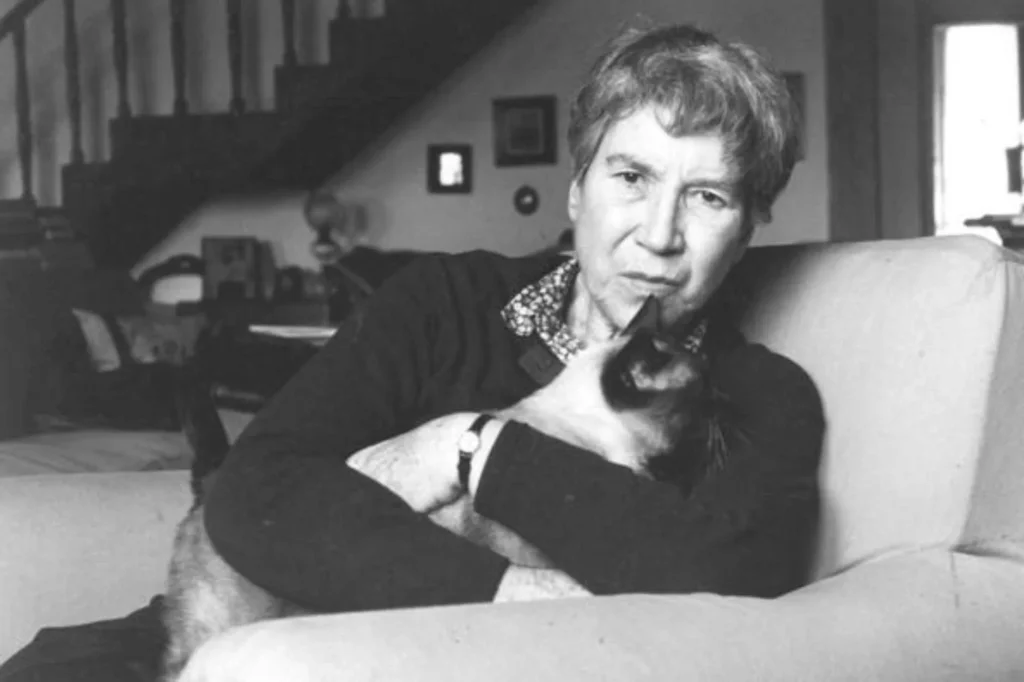
Natalia Ginzburg and the Grammar of Survival
You are reading the words of a woman who watched everything get taken. Not gradually, not metaphorically — taken in the specific, bureaucratic, and then violent way that the twentieth century perfected. Her father, Giuseppe Levi, was a Jewish biologist in Turin, a man whose voice apparently filled every room he entered with opinions he delivered as though they were facts of physics. Her mother, Lidia, moved through domestic life with a particular kind of elegance that was itself a form of resistance, though no one would have called it that at the time. The family gathered around a table in a city that was still, in the early decades of the century, trying to believe that Italian Jews were simply Italians. They had been, legally, since 1870. What the Racial Laws of 1938 clarified, with the cold precision of legislation, was how thin that belief had always been.
Natalia Ginzburg was born in Palermo in 1916, grew up in Turin, and published her first story at nineteen under a pseudonym because her Jewish surname had become, by the late 1930s, professionally and personally dangerous. She married Leone Ginzburg in 1938 — the same year the Fascist government issued the manifesto stripping Italian Jews of citizenship, employment, and the right to attend public schools. Leone was a Russian-born intellectual, a founding editor of the Einaudi publishing house, a man whose antifascist activity was not theoretical. He organized. He published underground material. He was arrested, imprisoned, sent to internal exile in the Abruzzese village of Pizzoli, where Natalia joined him with their children. In February 1944, the Germans arrested him in Rome. He died in Regina Coeli prison weeks later, under torture or from its consequences — the historical record uses careful language, but the body’s record is less careful. He was thirty-five years old.
What Natalia Ginzburg did with this history, across the nineteen years between Leone’s death and the publication of Lessico famigliare in 1963, is one of the stranger and more instructive acts in modern European literature. She did not write a memoir of grief. She did not construct a monument. She wrote a book whose formal premise is almost aggressively modest: a reconstruction of the phrases, jokes, recurring expressions, and verbal rituals that constituted the private language of her family of origin. The Strega Prize jury that awarded it Italy’s most important literary distinction in 1963 was honoring something they may not have fully understood, because the book does not behave like a prize-winning book. It resists the rhetoric of survival. It refuses the consolation of meaning.
This refusal is structural, not emotional. When Maurice Halbwachs theorized collective memory in the 1920s, arguing in Les cadres sociaux de la mémoire that individual remembering is always scaffolded by communal frameworks, he was describing a condition that catastrophe exposes by destroying it. When the community is dispersed, imprisoned, murdered, exiled, the frameworks collapse, and what remains is something more fragile and more tenacious — the private, almost accidental residue of shared life. A phrase your father always mispronounced. The specific word your mother used for a cold that had gone to the chest. The way disagreement was encoded in a tone rather than a sentence. These are not symbols. They are the last standing walls of a house that no longer exists.
Ginzburg understood, perhaps before she could have theorized it, what the linguist Emile Benveniste would articulate more formally: that subjectivity is constructed in and through language, that the self is not prior to its utterances but produced by them. If the language of a family is its shared self, then its destruction is not only a political event. It is an ontological one. Lessico famigliare is, among other things, a book about what you do when the grammar of your existence has been violently revised by forces that considered your family a problem to be administratively solved.

Language as the Architecture of Identity
You already know the feeling, even if you have never named it. You call your mother and within thirty seconds you have slipped into a register of speech that does not exist anywhere else on earth — a private shorthand assembled over decades, dense with allusion, alive with references that would be opaque to any outsider, and yet utterly transparent to the two of you. Certain words arrive pre-loaded with entire histories. A single phrase can carry the weight of a particular summer, a particular argument, a particular person who is no longer alive. You are not merely talking. You are inhabiting a structure.
This is precisely what Ludwig Wittgenstein meant when he described language not as a neutral tool for transmitting information but as a “form of life” — a phrase he used in the Philosophical Investigations, published in 1953, two years after his death, to insist that meaning is never self-contained. Words do not carry their definitions inside themselves like seeds. They derive their sense from the practices, rituals, and shared agreements of the community in which they circulate. Language is not something a human being does; it is something a human being is embedded in. It is the medium through which reality becomes legible at all. And the smallest, most intimate version of this medium — the original laboratory in which every human being learns that words and things are not the same thing, and that the gap between them must be managed collectively — is the family.
Natalia Ginzburg understood this before she had the philosophy to name it. What she assembled in her 1963 memoir is not a family portrait but a family grammar — a record of the specific rules through which one household organized its relationship to experience. The Levi family’s lexicon was not decoration. It was architecture. The recurring words her father used to dismiss certain books as “gloomy” or her mother to elevate certain people as “fine” were not opinions. They were load-bearing walls. They held up the structure of what was thinkable, what was laughable, what was beneath comment and what deserved the highest possible attention. To grow up inside that lexicon was to inherit not just a vocabulary but a cognitive skeleton, a set of instinctive categories through which the entire world would subsequently be filtered.
Wittgenstein described these shared systems as “language-games,” and the family is, in this sense, the most total and least escapable language-game a person ever plays. It precedes every other. A child does not choose it. A child is born into its rules the way a person is born into a climate — before there is any capacity for comparison, before there is any awareness that other climates exist. The philosopher Charles Taylor, developing this tradition in Sources of the Self in 1989, argued that selfhood is not a private interior fact but something constituted in and through the webs of interlocution we inhabit from the beginning. The self is not made alone. It is made in dialogue, within structures of meaning that arrive before we do.
What Ginzburg captures with such precision is the consequence of this: that the family lexicon does not merely describe the self, it produces it. The words her family repeated became the grooves along which thought flowed. When she later moved through the catastrophic events of the 1930s and 1940s — the racial laws of 1938, the anti-Jewish legislation that effectively removed her father from his professorship and her family from civil life, the war, the loss of her first husband Leone Ginzburg to a Fascist prison in 1944 — she carried that grammar with her. It did not protect her. It did not explain what was happening. But it persisted, stubbornly, as a proof that something had existed before the destruction, as evidence that a particular form of life had been real. The language was the last room of the house still standing.
The Words You Didn’t Choose But Became
There is a particular disorientation that arrives, usually in your thirties, when you catch yourself using a phrase your mother used — not quoting her, not thinking of her, just using it, as though the words grew inside you independently, as though you chose them. The phrase emerges fully formed, carries her exact cadence, and lands in a conversation with someone who never knew her, and for a split second you cannot tell where she ends and you begin. Natalia Ginzburg understood this as something more than sentiment. The entire architecture of her 1963 memoir rests on the recognition that the family lexicon is not merely a collection of verbal habits but the actual substance through which reality is filtered and sorted before the conscious mind ever gets involved.
Pierre Bourdieu spent the better part of his intellectual life trying to name this mechanism precisely. His concept of habitus, developed most rigorously in The Logic of Practice in 1980, describes the system of durable, transposable dispositions that structure perception, thought, and action without ever presenting themselves as external constraints. The habitus is not a set of rules followed consciously. It is the very shape of the lens through which the world becomes legible. What Ginzburg renders in memoir form is essentially a literary phenomenology of how linguistic habitus is transmitted — how the family’s particular way of naming things becomes the child’s way of seeing things, long before the child has any capacity to evaluate or resist. The words don’t arrive as ideology. They arrive as the texture of reality itself.
This is the precise trap Ginzburg exposes by making the lexicon visible. In the Levi household, certain words and phrases carry the full weight of moral evaluation, aesthetic judgment, social classification. To call something “tragic” in the family’s private register meant something specific and layered, charged with the father’s particular dismissiveness or the mother’s ironic distance. These were not neutral descriptors. They were inherited verdicts, applied to experience before experience was fully processed. The child who grows up inside such a lexicon does not learn to perceive the world and then describe it. She learns to perceive it through the description, which arrived first. Bourdieu would call this the conversion of social history into bodily and cognitive nature — the family’s accumulated experience, its class position, its political anxieties, its aesthetic preferences, all sedimented into the automatic gesture of word choice.
What makes Ginzburg’s method genuinely unsettling is that she does not present this as tragedy. There is no mourning for the lost authentic self who might have spoken differently. Instead, the tone is one of fascinated recognition — almost archaeological, as though she is excavating not to protest but to understand what she was made of and by whom. This refusal to frame linguistic inheritance as violation is itself a philosophical position. It refuses the liberal fantasy of the self as originary and self-authorizing, the self that chooses its words from some neutral pre-linguistic space. That self has never existed. What exists is the person shaped by the particular lexicon of the particular family in the particular historical moment, and the question is not whether this shaping occurred but whether it can ever be seen clearly enough to be inhabited consciously rather than merely endured.
The complication Bourdieu introduces — and Ginzburg dramatizes without naming — is that the habitus does not feel like inheritance. It feels like perception. The family’s way of seeing does not announce itself as one possible way among many. It presents itself as what things simply are. When Ginzburg reproduces the exact phrases her father used to dismiss or celebrate, she is not only doing an act of memory. She is showing how those phrases structured what was available to be thought at all, how they created the grooves along which experience would naturally flow. The self that emerges from this process believes itself to be encountering the world freshly each time, when in fact it is
Memory Against History
You already know what a Holocaust memoir is supposed to look like. You have the architecture memorized: the escalating dread, the transport, the camps rendered in a prose stripped of ornamentation because ornamentation would feel obscene beside such facts. You know the moral grammar of the genre — the obligation of witness, the sacredness of naming the dead, the closing silence that implies what language cannot hold. Natalia Ginzburg knew this grammar too, and she chose to write something that violates nearly every one of its conventions, which is not an accident but a method, and the method is the argument.
What she wrote instead was a book saturated with the ridiculous. Her father roaring at the dinner table about mountains. Her mother’s theatrical sighs. The particular way her family mispronounced words, borrowed phrases, created a private currency of speech that meant nothing outside their walls and everything inside them. Leone Ginzburg, her husband, is arrested, tortured, and dies in Regina Coeli prison in 1944 — and the book does not pause for the weight of this the way a memorial would. It moves. It keeps the texture of ordinary time around his absence, which is a far more devastating formal choice than any elegy could be, because it mirrors how grief actually operates inside a life that has no choice but to continue. The domestic is not a retreat from history. In Ginzburg’s hands, it is the only instrument precise enough to measure what history destroys.
This is where Paul Celan becomes necessary. Celan, writing in German — the language of the people who had just attempted to exterminate his family, who murdered his mother in a camp in Transnistria in 1942 — understood that the Nazi project was not only a project of physical annihilation. It was a project of semantic colonization. The language itself had been conscripted: words were hollowed, inverted, weaponized. “Sonderbehandlung” meant murder. “Umsiedlung” meant deportation. The bureaucratic sublime of Nazi German was built on the systematic corruption of meaning, and Celan’s response — in poems like “Todesfuge,” published in 1952 — was not to abandon the language but to detonate it from within, to push German syntax to its fracture point until the violence embedded in official speech became impossible to ignore. Language, for Celan, was the primary site of the crime and therefore the primary site of resistance.
Ginzburg’s operation is quieter but structurally related. What the family lexicon preserves is precisely what totalitarian language seeks to erase: the idiosyncratic, the untranslatable, the word that means something only because of a specific evening in 1931 when a specific person said it in a specific tone and everyone laughed. These words cannot be conscripted because they cannot be generalized. They exist only in the relational web of people who share a history granular enough to be immune to abstraction. When the state needs to move populations, classify bodies, administer death at scale, it requires a language of categories. Ginzburg’s book is a sustained demonstration that her family refused, perhaps without entirely knowing they were refusing, to live inside categories. The lexicon is the residue of that refusal.
And yet there is something she does not protect herself from. The book, for all its comic warmth, does not pretend that the lexicon survived intact. The people who spoke it are mostly dead by the time she writes. The words remain, but the community of speakers that gave them life has been shattered — some by the war, some by time, some by the ordinary dispersal of families across geography and generation. So the act of writing them down carries an elegy inside it that the tone refuses to announce. She is not mourning in the register the reader expects, which means the mourning lands somewhere the reader cannot defend against. The reclamation of family words is political precisely because it is also inconsolable, and the inconsolability arrives without permission, between sentences about vegetables and hiking boots, in the middle of a joke someone’s father used to tell.
A vision curated by a filmmaker, not an algorithm
In this video I explain our vision
The Trap Disguised as Warmth

There is a particular kind of silence that happens not when someone refuses to speak, but when they realize the language available to them cannot carry what they need to say. You have felt it, probably, at a table surrounded by people who love you — the exact moment when something true about who you are has no word in the room’s vocabulary, and so it simply goes unspoken, folded back inside you like a letter never sent. Ginzburg documents the Levi family’s lexicon with such tenderness, such precision, that it is easy to miss what is also being documented: the architecture of a cage built entirely from affection.
Erving Goffman, writing in Stigma in 1963, made a distinction that still cuts cleanly: the difference between the person one is and the person one is permitted to be within a given social performance. His argument was not that identity is false, but that it is always being managed — calibrated against an audience, measured against what the audience already expects and rewards. The family, in Goffman’s framework, is not a refuge from that performance. It is where the performance is first rehearsed, where the original casting happens, and where the role is most stubbornly enforced precisely because it is enforced through love rather than law. Nobody tells you who to be. They simply have no word for who else you might become.
The Levi family’s private language is generous and vivid and alive — and it is also a closed system. Every closed system, regardless of how warmly it was assembled, exerts pressure toward its own interior logic. When a family has a specific word for a certain kind of foolishness, a certain way of moving through the world, a certain emotional register, they are not merely naming reality. They are pre-sorting it. The child who fits those categories receives fluency; the child who doesn’t begins to experience themselves as linguistically illegible, as someone the household grammar cannot parse. Ginzburg herself circles this without quite landing on it — she writes about her parents’ dismissals, their judgments rendered in shorthand, their established verdicts on types of people, on pretension, on weakness. The shorthand is warm. It is also final.
What Goffman understood, and what families rarely admit, is that the management of identity through social performance becomes most coercive when the audience is also the people you cannot afford to lose. Stigma operates most devastatingly in intimate contexts, not public ones, because public rejection can be survived and even redefined. But the family’s withdrawal of linguistic recognition — the experience of bringing something real about yourself to the table and watching it find no word, no category, no story that holds it — produces a particular kind of erasure. It does not feel like oppression. It feels like confusion. You wonder if the thing you are trying to say is even real, or whether you simply imagined a self the room has no use for.
The brutality of this mechanism is that it requires no malice. The Levis were not cruel people. They were, by any reading of Ginzburg’s account, extraordinary people — courageous, funny, intellectually alive, morally serious. And yet the lexicon they built, the one she recounts with such love, was also a verdict delivered in advance on every possible version of their children. To speak a family language fluently is to have already accepted certain limits on what can be said. The child who grows up bilingual in that sense — who learns both the family tongue and some private interior language the household has no name for — carries a translation burden no one around them can fully see. They are always, at some level, converting. They are always losing something in the process, some precision, some rawness, some version of themselves that exists only in the untranslated original, which they may eventually stop consulting because the effort of carrying it has become indistinguishable from loneliness.
What Happens When You Leave the Lexicon
You leave before you leave. That is the unbearable truth no one tells you about outgrowing a family lexicon — it happens in stages so quiet that by the time the distance becomes visible, it has already become irreversible. The first sign is usually not an argument. It is a pause. A moment at the dinner table when someone uses a word, a phrase, a tone that once landed in your chest like a bell striking its exact frequency, and now you hear it the way you might hear a language you once spoke as a child but have since let go dormant. You understand it, technically. You simply no longer live inside it.
Natalia Ginzburg understood this loss as one of the most precise and underexamined forms of grief available to a human being. What she mapped in her family’s private vocabulary was not nostalgia for a happy past, but a structural account of how identity forms in the shared repetition of particular words, gestures, and tones — and therefore how identity partially dissolves when those repetitions stop being shared. The lexicon was never decoration. It was the architecture. And architecture, when you step outside it, does not disappear. It simply becomes the thing you are now standing outside of.
The modern version of this displacement wears many faces, and almost none of them are recognized as grief by the people experiencing them. The first-generation child of immigrants who earns a graduate degree and returns for a holiday dinner inhabits a version of this fracture that is particularly acute, because it is layered. The language of the new world has not simply been added on top of the old one; it has reorganized the entire system of perception. What the family calls common sense now registers as a set of assumptions. What they call love now arrives wrapped in patterns that the newly educated eye can name, categorize, and therefore no longer simply receive. Stuart Hall, writing about cultural identity and diaspora in the late 1980s, described identity not as something fixed and stable but as a production that is never complete — always in process. What he meant, in part, was that to move between cultural systems is to discover that you were always being produced by one, which is another way of saying: you were always inside a lexicon you mistook for reality.
This is what Ginzburg’s book does to a careful reader. It does not allow you to believe that your family’s private language is innocent, or neutral, or simply warm. It shows you that every family lexicon is also a border. And borders determine who belongs. The person who stops using the family’s phrases, who winces at its recurring jokes, who can no longer perform the expected emotional register at the expected moments — that person has not necessarily become cold, or arrogant, or lost. They may have simply learned a competing grammar, one that makes the original untranslatable in both directions. They cannot explain what they now know in terms the family would accept. And the family cannot extend its language far enough to reach where that person now stands.
The philosopher Charles Taylor argued in Sources of the Self, published in 1989, that human beings are self-interpreting animals — that we understand ourselves only through the webs of interlocution in which we are embedded, through the languages available to us in our particular communities. What Taylor’s framework implies, though he does not press this wound directly, is that to leave a web of interlocution is to partially lose the self that was formed inside it. Not to destroy it. To lose it the way you lose the ability to recall a dream in full — knowing something was there, feeling its texture without being able to hold its edges. The person who migrates, who assimilates, who simply grows into a vocabulary their family cannot follow, does not only lose the family. They lose the version of themselves that the family’s language made possible. And that version does not get replaced cleanly. It gets
The Word That Has No Translation
There is a moment that almost everyone has experienced and almost no one has named correctly: you are far from home, in a city where no one knows you, and someone asks you a simple question — who are you, where do you come from, what do you like — and you open your mouth and the words that arrive feel borrowed, approximate, slightly wrong, like clothes that fit but were not made for your body. You answer, but the answer lands hollow, not because you are lying, but because the language you are using to describe yourself was never really yours to begin with. It was the family’s. And now, without them, without the kitchen and the recurring jokes and the private names for ordinary things, you discover something the self-help literature has spent decades concealing from you: that without the lexicon, there is no self to liberate. There is only the blankness the lexicon was always covering.
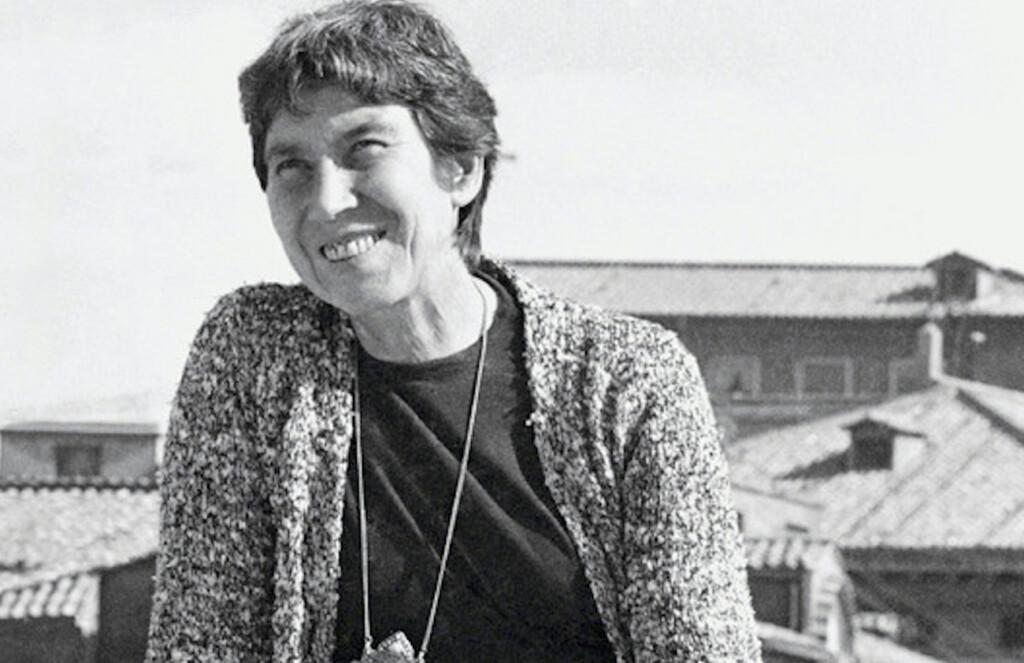
Natalia Ginzburg understood this before she had the philosophical vocabulary to say it plainly. Family Lexicon, published in 1963, performs this understanding rather than argues it. The book does not mourn the loss of family as sentiment; it mourns it as epistemology. When the people who shared the language begin to die — her father, her first husband Leone killed by the Fascists in Regina Coeli prison in 1944, her friends scattered by history — something more than presence disappears. The shared words become untranslatable, not into other languages, but into any surviving conversation. They are orphaned sounds. And Ginzburg, writing decades after the fact, is not recovering a past so much as she is mapping the exact coordinates of a void.
Giorgio Agamben, working across a body of thought that includes the 1995 Homo Sacer, gave a name to the condition that sits beneath all political and symbolic identity: bare life, zoe as opposed to bios, the naked biological fact of being alive stripped of the forms, institutions, and languages that make that life meaningful within a community. Agamben was writing about sovereign power and its capacity to reduce human beings to pure expendability, but the concept carries a quieter and more domestic charge when held against Ginzburg’s work. The family lexicon is not merely habit or nostalgia. It is the primary structure through which bios is constructed — through which bare life is clothed in particularity, in history, in the feeling of being someone rather than simply something that breathes. Strip it away, and what you find beneath is not freedom. What you find is the terrifying neutrality of the unformed, the self before it has been given a shape by the words others used to call it into being.
This is what makes the contemporary fantasy of self-reinvention so precisely cruel. The idea that one can leave the family, shed its language, and arrive at some purer, self-authored identity is not liberation theory — it is a failure to account for what language actually does to a person. Language is not a tool the self uses; it is the material the self is made from. When Wittgenstein wrote, in the Philosophical Investigations, that the limits of my language are the limits of my world, he was not speaking abstractly about linguistics. He was describing the exact experience of standing in a foreign city with a hollow answer on your tongue. The family lexicon is the first and most intimate version of those limits. And the exile who escapes it does not thereby become limitless. They become, in the most precise sense, disoriented — turned away from the original East, the first direction from which meaning ever came.
What Ginzburg leaves the reader with is not grief and not celebration. It is something rarer: the recognition that the words we were given were never ours, and that we cannot live without them, and that this double truth is not a problem to be solved but a condition to be inhabited — which is, in the end, the only honest definition of what it means to have been born into a family at all.
🗺️ Memory, Identity, and the Family as Living Archive
Natalia Ginzburg’s Family Lexicon explores how language, memory, and family bonds weave together to form a unique and irreplaceable identity. The following articles deepen the themes of autobiography, collective memory, and the literary reconstruction of the self through cultural and social lenses.
Annie Ernaux: Life and Works
Annie Ernaux has built her entire literary career on the excavation of personal and familial memory as a form of sociological testimony. Like Ginzburg, she transforms private experience into a universal portrait of class, language, and identity. Her autobiographical method offers a compelling parallel to the Ginzburg family’s shared lexicon as a tool of belonging and resistance.
GO TO THE SELECTION: Annie Ernaux: Life and Works
Eribon’s Returning to Reims: Analysis
Didier Eribon’s Returning to Reims is a memoir that confronts the author with the language and silences of his working-class origins, much as Ginzburg reconstructs her Jewish-intellectual Turin family through recurring words and phrases. The book raises fundamental questions about how family shapes—and sometimes stifles—the formation of identity. It stands as one of the most powerful contemporary meditations on the gap between the world we come from and the world we inhabit.
GO TO THE SELECTION: Eribon’s Returning to Reims: Analysis
Paul Ricœur: Life and Philosophy of Memory
Paul Ricœur’s philosophy of memory and narrative identity provides a rich theoretical framework for understanding what Ginzburg does intuitively in Family Lexicon. For Ricœur, the self is constituted through the stories we tell about ourselves and our communities, a process deeply embedded in the repetition of shared language. His work illuminates why the family lexicon functions not merely as nostalgia but as an active construction of who we are.
GO TO THE SELECTION: Paul Ricœur: Life and Philosophy of Memory
Jan Assmann and Cultural Memory
Jan Assmann’s theory of cultural memory explores how groups preserve their identity through shared symbols, rituals, and repeated phrases across generations. Ginzburg’s private family vocabulary can be read as a micro-form of cultural memory, a domestic archive that survives even the tragedies of Fascism and war. Assmann’s framework helps explain the deeper anthropological stakes of Ginzburg’s seemingly intimate literary project.
GO TO THE SELECTION: Jan Assmann and Cultural Memory
Discover the Cinema of Memory and Identity on Indiecinema
If Ginzburg’s exploration of memory, language, and family resonates with you, Indiecinema is the streaming platform where these themes come alive on screen. Discover independent and art-house films that trace the fragile threads connecting identity, history, and the stories we inherit. Join Indiecinema and let cinema become your own living lexicon.
👉 EXPLORE THE CATALOG: Watch Indie Films in Streaming
A vision curated by a filmmaker, not an algorithm
In this video I explain our vision

