
The Shame That Stays
You are sitting at a table that is not yours. Not in the way that borrowed furniture is not yours, but in the deeper, more humiliating sense — the table belongs to a world that has decided, without consulting you, that you do not quite fit at it. Maybe it is a dinner at a colleague’s apartment, the kind where the wine is discussed before it is opened and the bookshelves are arranged by aesthetic rather than accident. You say something. You mispronounce a name, or you reach for the wrong glass, or you laugh a half-second too late at a joke whose reference you caught only partially. Nobody corrects you. Nobody needs to. The silence that follows is its own correction, and you feel it in your sternum, a small but precise collapse, the body registering what the mind is still trying to argue away.

That feeling has a history. It did not begin at that table. It began much earlier, in a kitchen that smelled of fried food and cheap soap, in a house where books were not decorative objects but suspicious ones, where the language spoken was not the language that opened doors. It began the moment you understood, without anyone explaining it to you, that the world was divided into those who moved through it with ease and those who spent their entire lives managing the friction.
There was a girl who grew up in Yvetot, a small town in Normandy, the daughter of people who ran a café and grocery combined, who had climbed from laborer to small shopkeeper in the way that post-war France made briefly possible. Her parents worked with their bodies. They spoke with an accent. They were proud, and that pride was indistinguishable from vigilance, from the constant effort not to be seen as less. She watched her father be humiliated once in front of her — a quiet, definitive humiliation, the kind that doesn’t shout, that simply arranges itself in the air between people — and she carried that image for decades before she could write it. When she finally did, she wrote it not to heal it but to make it legible, to insist that it had happened and that it mattered and that literature had no right to look away from it.
Annie Ernaux did not become a writer in order to transcend her origins. That is the story the literary world prefers — the one about escape, elevation, the civilizing journey from the margins to the center. She became a writer in order to stay exactly where the wound was, to press on it until its shape became visible. This is a different project, and a harder one, because it refuses the consolations that narrative usually offers. It refuses resolution. It refuses the comfortable arc in which suffering becomes wisdom and poverty becomes character-building.
The sociologist Pierre Bourdieu, whose work on class distinction and cultural capital reshaped how the twentieth century understood social reproduction, spent years documenting what he called the habitus — the embodied set of dispositions, tastes, and reflexes that mark a person’s class position as something carried in the body rather than merely held in the mind. His major work on this, published in 1979, demonstrated with statistical rigor what Ernaux was already demonstrating with prose: that class is not a circumstance you leave behind when you get an education or a better salary. It is a grammar you learned before you learned to read, and it shapes every sentence you speak afterward, including the ones you think you are speaking freely.
What Ernaux understood — and what makes her work something other than memoir, something closer to an autopsy of the social — is that shame does not dissolve with success. It mutates. It becomes the gap between who you are and who the world briefly let you pretend to be.
Trench

Thriller, Mystery, by Serge Turgeon, Italy, 2023.
In Venice, an art historian realizes that her brilliant mind will not be enough to solve the mystery surrounding the disappearance of an unknown woman. In addition to regaining trust in her intuition and her heart, she will need the help of a series of colorful characters from her community.
The idea behind Trench is to tell, through a detective story, the journey of an intellectual woman who suffered while growing up in a working-class district of Venice, where she never felt truly valued. In order to solve a mystery, she must face danger and rely on the help of the “non-intellectual” members of her community, rediscovering along the way her resourcefulness, her Venetian identity, and her true self.
LANGUAGE: Italian
SUBTITLES: English, Spanish, French, German, Portuguese
A Body Born Into Place
There is a particular kind of silence that exists in homes where money is always almost enough. Not poverty exactly, not the silence of real deprivation, but something more complicated — a silence that comes from watching every word because words cost something too, because aspiration is a fragile thing and one wrong sentence can shatter it. Annie Ernaux grew up inside that silence, in Yvetot, a small town in the Seine-Maritime department of Normandy, where her parents ran a grocery-café that occupied the ground floor of their lives in the most literal sense. The shop was the family. The family was the shop. You ate in the back room behind the counter, you fell asleep to the sound of the last customers leaving, you understood before you could articulate it that your body existed in a specific relationship to other bodies — the bodies of those who were served and the bodies of those who served.
What Pierre Bourdieu called habitus — that system of durable, transposable dispositions inscribed in the body before consciousness can intervene — is not a concept you encounter first in a sociology textbook. You encounter it in the way your mother straightened her back when a certain type of customer walked in. In the way your father’s voice changed register, not servile exactly, but accommodating, finding the precise social frequency that kept the transaction smooth and the dignity intact. Bourdieu spent years documenting these micro-performances in his work on social reproduction, particularly in Distinction, published in 1979, and La Reproduction, co-written with Jean-Claude Passeron in 1970. His argument was that class is not merely economic but is sedimented into gesture, into taste, into the angle at which you hold your body in a room full of people who have more than you. Ernaux did not need to read Bourdieu to know this. She was already living the data.
The grocery-café was a threshold space, neither fully working-class nor capable of climbing out of the gravitational field of the working class. Her parents had hauled themselves up from manual labor through the sheer mechanical force of long hours and small savings, and that effort had left its mark — not as pride exactly, but as a kind of vigilance. You can see a version of this world in the way a kitchen is filmed when no one is trying to make it beautiful: the oilcloth on the table, the specific weight of ceramic cups, the way a woman moves through a small space with the economical grace of someone who has learned not to bump into things. These interiors carry their own epistemology. They tell you what is valued and what is merely endured, what is kept because it is useful and what has never been considered as an object of desire at all.
Ernaux’s parents wanted education for their daughter with the intensity of people who understood, in their bones, what the absence of it had cost them. But education is a strange gift to give a child from a home like theirs, because it does not simply open doors — it moves the child into a different relationship with the door itself, with the house behind it, with the people still standing in the back room. The sociologist would call this social mobility. Ernaux would later call it something closer to a wound. Not because learning is damaging but because the learning carried her somewhere her parents could not follow, and she could feel the distance accumulating with every book she read, every sentence she mastered, every way of speaking that was not the way they spoke.
Her body was born into a specific place, a specific set of gestures, a specific grammar of survival and small ambition. The whole of her later work is, in some sense, the attempt to return to that body without falsifying it, without draping it in the retrospective tenderness that would make it easier but less true.

The Violence of Upward Mobility
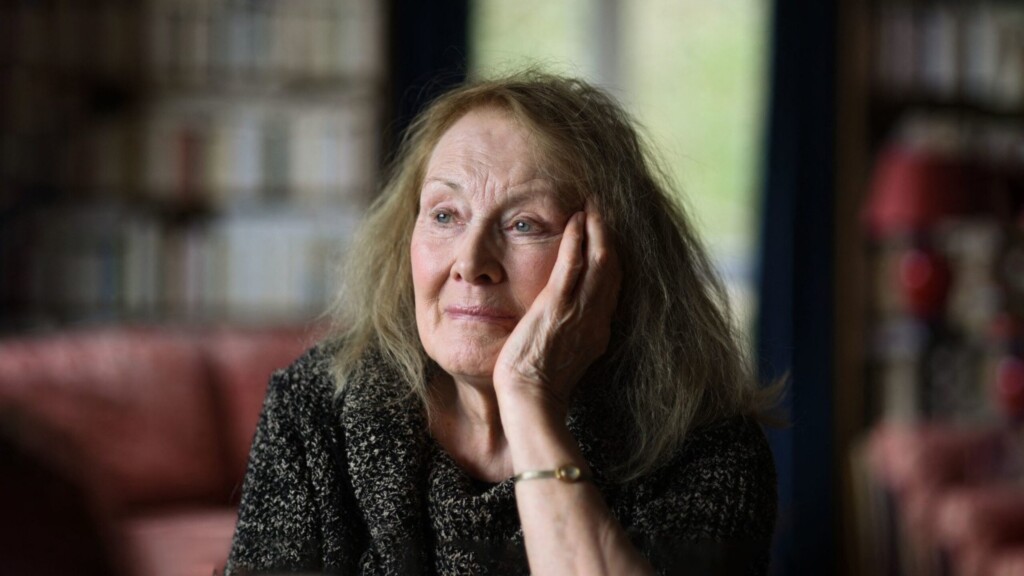
There is a moment, sometime in your late twenties or early thirties, when you realize you have become fluent in a language that is not yours. You know how to order wine without asking the price. You know which fork. You know how to let a silence land in a dinner conversation without filling it with nervous laughter. And then someone — a cousin, your mother, an old neighbor — says something at a family gathering, pronounces a word wrong or tells the wrong kind of joke, and you feel a small, precise flinch move through you before you can stop it. That flinch is the evidence. It tells you exactly what education cost you, and it tells you the debt will never be fully repaid.
Annie Ernaux has spent her entire literary life refusing to look away from that flinch. Not to celebrate it, not to mourn it tidily, but to hold it up to the light and ask what kind of violence produces such a reflex in a person who loved the people she flinched at. Her father worked in a café-grocery in Yvetot, Normandy. Her parents’ bodies carried the grammar of labor — the gestures, the volume, the specific relationship to physical space that marks a person before they even open their mouth. Education, in Ernaux’s account, did not simply add something to her. It subtracted. It taught her to perceive her origins as a deficit.
Pierre Bourdieu and Jean-Claude Passeron named this mechanism with clinical precision in 1970, in a work that the academic world largely received as sociology and that Ernaux’s fiction reveals to be something far more intimate: a description of surgery performed without anesthetic. Their argument was that the educational system does not transmit neutral knowledge. It transmits the cultural capital of the dominant class while presenting that transmission as merit, as achievement, as the natural flowering of talent. The child who arrives already holding that capital — already knowing the right books, the right references, the right tone — is simply recognized. The child who arrives without it must choose between two forms of loss: fail to acquire it and remain excluded, or acquire it and become, in some irreducible way, estranged from the world that made them.
There is a scene that stays with you — a young woman returning to her parents’ home after months at university, watching her mother set the table, noticing the plastic tablecloth, the particular way her father sits, and feeling, for the first time, the full unbearable weight of the distance she has crossed. Not triumph. Not relief. Something closer to bereavement, because the crossing was real and nothing about it was free. She has learned to see her own family through the eyes of those who would condescend to them, and she cannot unlearn it. That double vision — belonging nowhere completely, fluent in two worlds but native to neither — is precisely what Ernaux describes as the defining wound of her existence.
What makes this violence so difficult to name is that it presents itself as opportunity. The scholarship, the examination passed, the door opened — these are structurally legible as gifts. Bourdieu called the mechanism symbolic violence: domination exercised not through force but through the tacit consent of those who are dominated, consent that is manufactured by making the dominated experience the dominant culture’s values as universal, as simply how things are. You do not feel the hand on your back pushing you to renounce yourself. You feel ambition. You feel gratitude. You feel the clean narrative of a life improving.
Ernaux’s writing refuses that narrative its comfort. It keeps returning to what was left behind, to the specific texture of a world that did not have the right words for itself but was not, for that reason, lesser. The shame she felt about her origins was not a personal failure of character. It was the intended outcome of a system designed to make upward mobility feel like individual achievement while quietly demanding the surrender of everything you were.
Writing the Body, Writing Desire
There is a woman sitting by the telephone. Not waiting, exactly — that word implies passivity, implies a gap between what she wants and what she does. What she is doing is more precise than waiting: she is organizing her entire existence around the possibility of a call. She has cleared her schedule. She has made herself available in the way that a country makes itself available to an invasion — completely, and with full knowledge of what that means. The man she is thinking about is not extraordinary. She knows this. The knowledge changes nothing.
This is the opening movement of a kind of desire that literature, for centuries, refused to narrate from the inside. Female desire has been documented endlessly — in medical texts, in morality tales, in the long tradition of novels where a woman’s wanting destroys her — but almost never from the sovereign position of the one who wants. Simone de Beauvoir, writing in 1949, identified the structural problem with surgical precision: woman has been constituted culturally and philosophically as the immanent object, the one who is looked at, chosen, acted upon, while man occupies the position of transcendent subject who looks, chooses, acts. The entire architecture of heterosexual desire, as it has been narrated, assigns these roles with the rigidity of a caste system. What Ernaux does in her writing of the body is something that de Beauvoir theorized as necessary but never quite performed herself: she claims the subject position absolutely, without apology and without the compensatory gesture of suffering for it.
Passion Simple, published in 1991, is not a love story. It is a document. Ernaux tracks her obsession with a married Eastern European diplomat with the same detachment she would bring to an anthropological field study — except the subject is herself, and the detachment is itself a form of sovereignty. She notes what she buys, what she wears when she expects him, how time reorganizes itself around his visits. She does not aestheticize the obsession or redeem it. She does not apologize for the wanting or elevate it into spiritual metaphor. The scandal of the book, which made many readers deeply uncomfortable, was precisely this: that a woman could want with this intensity, document that wanting with this precision, and offer no moral framework within which the reader might safely contain what they were reading. There is no punishment in the text. There is no lesson.
The discomfort has a history. Female desire narrated without a redemptive arc has, for most of Western literary and medical tradition, been classified as pathology. Hysteria, diagnosed predominantly in women from ancient Greece through the late nineteenth century, was essentially a medicalization of unsanctioned female interiority — a way of naming and containing what could not be permitted to simply exist. The woman who wants too much, who organizes herself around desire rather than suppressing it in service of domestic order, required explanation. Freud offered one framework; the novel of adultery, from Flaubert onward, offered another, always culminating in the woman’s destruction as narrative necessity.
In L’Occupation, from 2002, Ernaux examines a different register of the same territory: jealousy as a form of desire, the way the ex-lover’s new woman becomes an obsessive figure, something to be imagined and reconstructed compulsively. She is watching herself watch. She is aware of the indignity and proceeds anyway, treating the indignity not as something to transcend but as data, as part of the honest record. A woman watching, waiting, wanting — these are, in Ernaux’s rendering, not symptoms of weakness but sovereign acts of attention. To watch with full consciousness is to refuse the role of the one who is only ever watched. To document the watching is to insist that this interiority matters, that it belongs to the history of real experience rather than to the pathology ward or the confessional.
The Flat Word and the Surgical Sentence
There is a sentence she writes about her mother’s hands. Not beautiful hands, not weathered hands, not hands that carry the weight of years — just hands, performing an action, in a room, on a specific day. The sentence ends. No echo, no adornment, no signal that you are supposed to feel something. And yet something tears.
This is not minimalism as aesthetic posture. It is something harder and more deliberate than that. The flat sentence, what Ernaux herself calls the écriture plate, is a calculated refusal — of warmth, of seduction, of the literary graces that soften reality into something the educated reader can consume without discomfort. Roland Barthes understood in 1953 that writing style is never innocent, that every ornamental choice is also a social credential, a membership card flashed at the door of culture. The bourgeoisie has its own prose, and it is recognizable: the long subordinate clause, the qualifying adjective, the metaphor that aestheticizes suffering into something almost pleasurable. That prose does not belong to the woman who worked the register at the grocery store. It does not belong to the father who could not finish a sentence in front of educated people without going red. To write in that inherited style would be to betray them twice — first by leaving, then by decorating the departure.
So Ernaux strips the sentence down to its skeleton. Subject, verb, object. Event, date, consequence. What happened, when, to whom. The refusal of ornament is itself a political declaration: reality does not require your literary intervention to be real. The suffering of the poor does not need a metaphor to justify its inclusion in literature. It is already there, it was always already there, and you will look at it directly or you will look away — but Ernaux will not arrange the lighting for you.
There is a scene that exists somewhere between documentary and witness: a face filmed in close-up, without music, without cut-away, held for an almost unbearable duration while nothing happens on that face and everything happens on that face. No score rises to tell you how to feel. No editing rhythm releases you from the discomfort of presence. The camera simply stays, and reality, unmediated, becomes devastating in a way that no orchestrated scene ever quite achieves. This is what Ernaux’s flat sentence does. It holds the shot. It refuses the music. It trusts — or rather demands — that the fact itself is enough.
The philosopher J.L. Austin spent years demonstrating that language does not only describe the world but performs actions within it. Ernaux’s écriture plate performs a specific action: it removes the literary apparatus that normally mediates between class experience and the reader, the apparatus that says, essentially, I have transformed this pain into something worthy of your attention. She refuses the transformation. The pain was already worthy. The life was already worthy. The sentence that records it without elevation is not poverty of style — it is precision of ethics.
Pierre Bourdieu, whose 1979 Distinction mapped with sociological exactitude how cultural taste functions as a mechanism of class reproduction, would have recognized immediately what Ernaux is doing at the level of the sentence. The ornate style is not just pretty — it is a gate. It says: this text belongs to people who have learned to read this way, who have been trained to find this beautiful, whose education produced in them the reflex of aesthetic appreciation as a sign of human depth. The flat sentence kicks the gate off its hinges. It says: there is no entry requirement here. But it also says something else, something Bourdieu never quite said: the most devastating thing you can do to a reader who has been trained to expect aesthetic mediation is to remove it entirely, and let them stand, unprotected, in front of what actually happened.
The sentence ends. No echo.
A vision curated by a filmmaker, not an algorithm
In this video I explain our vision
Memory as Excavation, Not Nostalgia

There is a photograph you cannot quite place. It sits in a box somewhere — or perhaps it has already been lost — and in it you are wearing something you no longer own, standing somewhere you no longer go, next to someone whose name requires a second of effort to retrieve. What strikes you is not the grief of that distance but something stranger: the person in the photograph seems to be obeying rules you have since forgotten existed. The angle of the body, the expression rehearsed for the camera, the clothes that were not merely clothes but a declaration of belonging to a particular moment — all of it speaks a social language you once spoke fluently and have since, without noticing, stopped speaking entirely.
This is the sensation that runs through Ernaux’s most architecturally ambitious work, published in 2008, a book that refuses to call itself a memoir because it refuses to pretend that memory is a private possession. The book assembles a life — her life, a generation’s life, the same life — through photographs described in the third person, through the jingles of television commercials, through the phrases that circulated like currency in particular decades and then quietly retired, through the objects on kitchen tables, the smells of certain products, the texture of specific fabrics. There is no “I” at the center performing interiority. There is instead a “she” who is also a “we,” observed from a distance that is neither cold nor sentimental but something more difficult: honest.
Walter Benjamin wrote, in his unfinished Arcades Project — that vast ruin of notes assembled across more than a decade and left incomplete at his death in 1940 — that history makes itself legible not in monuments but in debris. The fragment does not need to be arranged into meaning; it carries meaning precisely because it has not been domesticated. What gets thrown away, what accumulates at the edges of official narrative, what no one thought to preserve because it seemed too ordinary — that is where the truth of an era hides. Ernaux understood this before she could have articulated it as theory. She was doing archaeology in the landfill.
The conventional memoir operates on entirely different logic. It selects, it curates, it arranges the fragments into a story with a shape that can be recognized and therefore comforted by. The past becomes a country you once lived in and still miss, which is another way of saying the past becomes a projection of your current desire for coherence. Someone sits at a kitchen table trying to recover what they felt during a particular summer — the quality of the light, the specific weight of an afternoon — and what they produce, if they are being truthful, is not a recovery but a reconstruction, and the gap between the two is where most memoir quietly lies.
What Ernaux does instead is refuse the consolation of coherence. A winter coat described in clinical detail. A game show that everyone watched on Friday evenings. A phrase that meant sophistication in 1974 and means nothing now, or means something embarrassing. These do not add up to a meaning. They accumulate into a pressure, a density, the feeling of having been formed by forces you never chose and barely noticed. Simone de Beauvoir argued in The Second Sex that women are made, not born — but Ernaux extends the logic: all of us are made, continuously, by the material and symbolic environment we inhale without realizing it is shaping the very organ with which we will later try to remember.
The coldness people sometimes feel reading this kind of memory is not the coldness of indifference. It is the coldness of recognition without rescue. You find yourself in the description of an era and what you find is not warmth but accuracy, which turns out to be more disturbing than any nostalgia, because it removes the distance you had been using as protection.
The Nobel and What It Reveals
There is a specific kind of silence that falls in a room when someone unexpected walks to the front of it. Not the silence of respect. The silence of recalibration — of people adjusting their faces, deciding in real time what expression to wear. You have been in that room. You know the quality of that particular quiet.
When the Swedish Academy announced on October 6, 2022, that Annie Ernaux had won the Nobel Prize in Literature, describing her work as uncovering “the roots, estrangements and collective restraints of personal memory,” something stranger than celebration happened. The institution that exists to consecrate literature had just handed its highest honor to a woman who had spent fifty years methodically dismantling the very hierarchies that institution was built to protect. The applause, in certain quarters, had the same texture as that silence.
Nathalie Heinich, in her sociological study of artistic recognition, has argued that consecration is never neutral — it is always an act of incorporation, a way of absorbing the disruptive into the manageable. The institution does not reward the work that challenged it; it rewards the work it has decided it can now survive. The prize tells you less about the writer than about the moment when the establishment finally exhales and says: we can contain this. What Heinich calls the “regime of singularity” — the demand that the recognized artist be exceptional enough to be set apart from ordinary life — is precisely the logic Ernaux spent her career refusing. She did not want to be singular. She wanted to be structural. She wanted to show that her story was not hers alone, that the shame of her origins was not a personal affliction but a social mechanism with a name and a history. Consecrating her as a singular genius is, in a quiet way, the most elegant possible act of misreading.
The discomfort was audible. Certain critics, mostly French, returned to the familiar arsenal: too confessional, too naked, too angry, not literary enough, not universal enough, too obsessed with sex and class and the specific grievances of a specific woman from a specific town. One French literary figure, responding to the prize, implied that what she did was sociology dressed in the clothes of literature, as if that were a diminishment rather than an achievement that most novelists would not survive attempting. What they were describing, without knowing it, was the symptom. The accusation of being too autobiographical is always launched most furiously against those whose autobiographies indict the accuser’s world. The discomfort was never aesthetic. It was political in the most visceral sense — the sense of recognizing, in someone else’s careful inventory, your own house.
Think of the moment when a woman enters a room she has technically been allowed into and finds that the room’s architecture was not designed for her body. The doors open but the chairs are wrong, the lighting is wrong, the language being spoken is a dialect she can translate but did not grow up speaking. She performs fluency. She is awarded for her fluency. The award is real. The foreignness never stops being real either. Ernaux herself said, after the Nobel was announced, that she felt a “responsibility” — not gratitude, not triumph, but responsibility. The word of someone who knows that recognition arrives with a mechanism attached, and that the mechanism wants something from you in return.
What the prize reveals, then, is not the arrival of Ernaux into legitimacy. It is the exposure of how legitimacy works — how late it comes, how selectively, how the terms of acceptance are always set by those who spent the longest time refusing. The room applauds. The room has always had the power to applaud or not.
What She Did Not Forgive
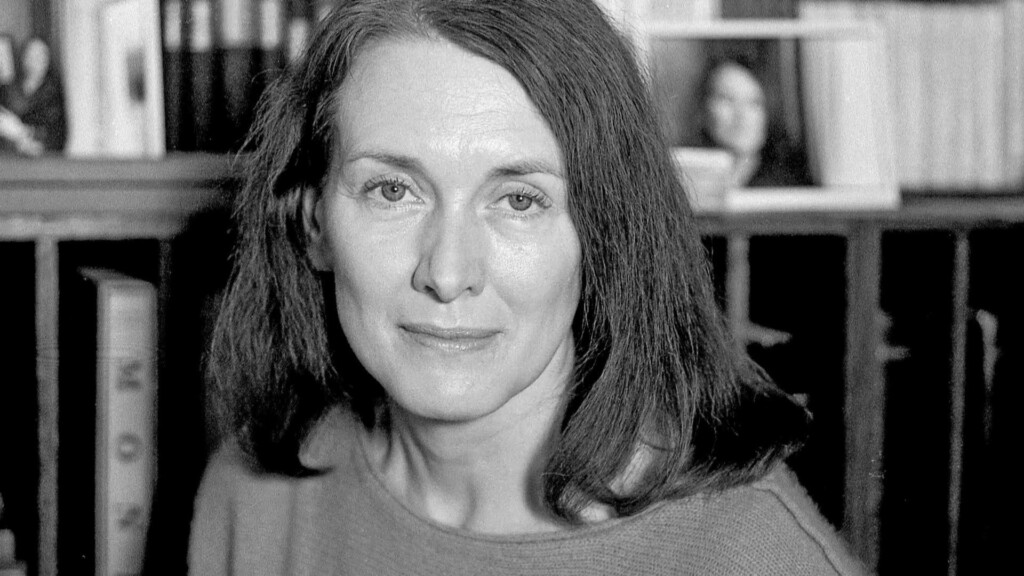
There is a moment when you are standing at the grave of someone who never read a book for pleasure, never took a vacation, never once described their own feelings out loud, and you realize that you do not know how to mourn them properly because every tool you have for mourning was built by a culture that excluded them. The flowers feel borrowed. The silence feels theatrical. The words that rise in you are the wrong kind of beautiful, and beauty itself begins to feel like a betrayal.
This is the ethical knot at the center of Ernaux’s writing about her parents — not grief as sentiment, but grief as an impossible translation. Her father, a man who moved from laborer to small shopkeeper, who kept his ambitions in a locked drawer he never opened in front of her, who died carrying the specific dignity of someone who had learned not to want too much. Her mother, who worked beside him, whose body and mind deteriorated slowly and publicly, whose final years unraveled the self that had held everything together through sheer stubbornness. To write about them with literary grace would have been a kind of violence. To aestheticize their lives, to give their poverty a certain melancholy light or their silences a poetic resonance, would have been to make them legible to a world that had always made them invisible on its own terms. Ernaux understood this with a precision that is almost physiological. She writes their stories the way a pathologist works: with care, with rigor, without decoration.
Paul Ricœur, in his 1990 work Oneself as Another, argues that narrative identity is not simply the story we tell about ourselves but the ethical responsibility we carry toward the stories of others — that to testify is already a moral act, that how we narrate a life shapes what that life is allowed to mean. Ernaux takes this further than Ricœur perhaps intended. For her, the ethics of testimony toward those who left no written trace of themselves demands a specific kind of aesthetic restraint. Not minimalism as style, but minimalism as fidelity. The flat sentence, the unadorned fact, the refusal of metaphor — these are not choices made in a workshop. They are acts of conscience.
What she did not forgive is harder to name than what she mourned. It is not her parents she cannot forgive — she writes about them with something closer to ferocious tenderness — but rather the system of distances that placed her on one side and kept them on the other. The education that gave her language and took away the ease of using it at home. The cultural ascension that made her an observer of the world she came from. There is a scene — a meal, a kitchen, an ordinary Sunday — where she watches her father move through a room and understands for the first time that he does not know how to exist inside the life she is building, and that she does not know how to reach back across that gap without condescending to him. That realization does not resolve. It calcifies.
Ricœur wrote that the victim who testifies becomes the guardian of a history that would otherwise disappear. Ernaux is not exactly a victim, and her parents are not exactly victims either — they are something more complicated, people shaped by a class position they did not choose and could not fully see. But she is their guardian. The books she wrote about them are not monuments. They are more like vigils — a sustained refusal to let the record be sanitized, to let anyone claim that those lives were small because those lives were quiet.
What stays in the room after you put the book down is not an answer but a pressure, the feeling that you have been shown something about inheritance and loss and the cost of leaving that cannot be undone by having seen it.
✍️ Writing, Memory, and the Female Voice
Annie Ernaux’s work stands at the intersection of autobiography, social history, and feminist consciousness, transforming private experience into collective testimony. These related articles explore the literary, philosophical, and cultural currents that illuminate her extraordinary contribution to contemporary literature.
Virginia Woolf: Life and Works
Virginia Woolf pioneered the use of interior monologue and feminine subjectivity in literature, forging a path that writers like Ernaux would later follow with radical honesty. Her insistence on the material and psychological conditions necessary for women to write remains one of the most powerful arguments in literary history. Reading Woolf alongside Ernaux reveals how the struggle for a female voice in literature spans generations and continents.
GO TO THE SELECTION: Virginia Woolf: Life and Works
Woolf’s A Room of One’s Own: Feminism and Writing
In A Room of One's Own, Woolf argues that women’s exclusion from literary culture is not a matter of talent but of social and economic power — a thesis that deeply resonates with Ernaux’s own working-class origins and her fight for self-expression. This foundational feminist essay dismantles the myth of the solitary genius and replaces it with a vision of writing as a socially conditioned act. It is essential reading for understanding the broader tradition in which Ernaux’s autofiction takes root.
GO TO THE SELECTION: Woolf’s A Room of One’s Own: Feminism and Writing
Simone de Beauvoir: Life and Philosophical Thought
Simone de Beauvoir‘s philosophical thought, especially her analysis of woman as ‘Other,’ provides a crucial theoretical framework for understanding Ernaux’s autobiographical project. De Beauvoir showed how femininity is constructed through social norms and power relations, a perspective that Ernaux internalizes and transforms into lived narrative. Their shared intellectual lineage makes de Beauvoir an indispensable companion to any serious reading of Ernaux.
GO TO THE SELECTION: Simone de Beauvoir: Life and Philosophical Thought
Paul Ricœur: Life and Philosophy of Memory
Paul Ricœur‘s philosophy of memory and narrative identity offers a profound lens through which to read Ernaux’s autobiographical writing, which constantly interrogates the relationship between past experience and present self. For Ricœur, memory is not passive retrieval but an active, interpretive act — a claim that Ernaux enacts in every page of her work. His concept of narrative identity helps explain why Ernaux’s writing feels simultaneously intimate and universal.
GO TO THE SELECTION: Paul Ricœur: Life and Philosophy of Memory
Discover Cinema That Tells Untold Stories
If the literature of Annie Ernaux moves you to explore the deeper currents of memory, identity, and female experience, Indiecinema streaming offers a carefully curated selection of independent and auteur films that share the same courageous spirit. Step beyond the mainstream and discover cinema that, like great literature, refuses to look away.
👉 EXPLORE THE CATALOG: Watch Indie Films in Streaming
A vision curated by a filmmaker, not an algorithm
In this video I explain our vision

