
The Notebook on the Nightstand
You reach for the glass before you remember. Your hand is already moving, already certain of what it will find — the familiar weight, the specific temperature of something that belonged to the daily order of your life together — and then the fact of it arrives not as a thought but as a sensation that travels from your palm to your sternum in less than a second. The glass is there. That is almost the cruelest part. The object remains perfectly intact while the person who last touched it has ceased to exist in any form you can reach. You stand in the kitchen at seven in the morning, the light coming through the same window it always came through, and the ordinary geometry of the room becomes suddenly unbearable in its indifference. Nothing has rearranged itself to acknowledge what happened. The chairs are still pulled out at the same angles. The kettle is cold in the same way it was always cold before anyone had thought to fill it.

This is the moment that grief theorists almost never manage to describe accurately, because they tend to arrive too late, after the shock has been named and categorized, after the bereaved person has been handed a language that fits over the experience like a garment made for someone slightly different. Elisabeth Kübler-Ross published her five stages in 1969, and for fifty years those stages have functioned less as a description and more as a prescription — a map that tells you where you ought to be emotionally and therefore makes you feel aberrant when you are somewhere the map doesn’t acknowledge. But before the stages, before the language, before the grief counselor or the well-meaning friend who sits across from you and nods with practiced sorrow, there is just that moment in the kitchen. The hand moving before the mind has caught up. The glass. The particular quality of silence that is not peaceful at all but is instead the acoustic signature of a missing voice.
Clive Staples Lewis was fifty-nine years old in 1960 when his wife, Joy Davidman, died of cancer. They had been married for four years in any conventional sense, though the intimacy of their bond had been compressed into a density that longer marriages sometimes never achieve. What he did in the weeks following her death was not unusual for a writer — he picked up a notebook and began to fill it. What was unusual was what he wrote in it, and more specifically, what he refused to write. He did not reach for consolation. He did not reach for the theological architecture he had spent his entire intellectual career constructing. He reached, instead, for the exact texture of the experience as it was arriving in real time, with the same instinctive honesty as a hand reaching for a glass that still sits where someone else left it.
Those notebooks became the book published in 1961 under the pseudonym N.W. Clerk — A Grief Observed — and the pseudonym itself is worth pausing on. Lewis was by then one of the most recognizable Christian apologists in the English-speaking world. Mere Christianity, published in 1952, had sold in numbers that would have satisfied any publisher and had installed him in a particular role in the culture: the rational defender of faith, the man who could make belief seem not only emotionally compelling but intellectually inevitable. The pseudonym was not vanity or cowardice. It was the acknowledgment that what he was about to say could not be said by that man. The man who wrote those notebooks was someone else entirely — or perhaps, more accurately, someone prior. Someone who had not yet arranged his devastation into argument.
What he found in those pages, and what continues to unsettle readers more than six decades later, is not a crisis of faith. That framing is too comfortable, too narrative, too easily resolved.
The Smartphone Woman

Drama, thriller, dark comedy, by Fabio Del Greco, Italy 2020.
On a bridge over the Tiber River, an elderly and severely ill man has decided to end his life, but an unusual discovery changes his mind: he comes across a lost smartphone. Intrigued, he decides to return home and watch the videos contained within it. On the screen, a series of videos unfold, telling the story of a woman who has emigrated from southern Italy to Rome to work as a teacher in schools and her struggles with integration in a social reality she cannot fully grasp.
"The Smartphone Woman" is a realistic tale of a woman's life and her complex relationship with an "infernal" city. It portrays the challenges she faces, her connection to her origins, the social discomfort she discovers in the outskirts, and the eerie presence of the ghosts of ancient Roman empire. Fabio Del Greco employs a fragmented style, using pieces of "real life" shot with the smartphone, to construct a narrative that ambiguously oscillates between fiction and truth. This creates a captivating exploration of the discomfort and alienation within the bustling city, contrasting with the peaceful village life from which the protagonist hails. The film is constructed with a variety of heterogeneous characters and situations, an emotional kaleidoscope, weaving between evenings of exploration in the Eternal City and daily struggles. Realistic smartphone-shot videos are alternated with a narrative thread reminiscent of film noir and, ultimately, surrealism in the finale. On screen, a succession of grotesque characters unfolds, representing the director's vision of a tumultuous humanity. The film's potency lies in the emotion it manages to convey and in the protagonist's naive perspective. "The Smartphone Woman" is a must-see for enthusiasts of independent and experimental cinema.
LANGUAGE: italian
SUBTITLES: English, French, German, Portuguese, Spanish
Jack and Joy: The Improbable Architecture of a Late Love
She was, by any conventional measure, an unlikely candidate for the role fate assigned her. Born in New York in 1915 to a secular Jewish family, she had been a Communist Party member, a poet who won the prestigious Yale Younger Poets prize in 1938 for her collection Letter to a Young Man, and a woman who had converted to Christianity through a crisis so acute it arrived, by her own account, as a presence she could not rationalize away. She had written to Lewis first, as a reader writes to an author — intellectually, combatively, without deference — and he had written back the same way. When she came to England in 1952, they met as equals, which was the rarest possible beginning. She was sharp in the way that unsettles men who are used to being the sharpest in the room. He found it exhilarating in a way he apparently had no category for.
What followed was not a romance in any soft sense of the word. Joy was still married — unhappily, ruinously — to the American writer William Gresham, a marriage that ended in divorce in 1954. She returned to England with her two sons, David and Douglas, and the practical arrangement that began as friendship and intellectual companionship slowly became something neither of them seemed to have planned. Lewis married her in a civil ceremony in April 1956, primarily to allow her to remain in England as a British citizen. He was fifty-seven. She was forty. By his own later account, he did not fully understand what the marriage meant to him until it was almost taken away.
In October of that year, Joy collapsed. The diagnosis was bone cancer, already advanced, already in her femur and her breast. The prognosis was a kind of sentence. A Church of England priest named Peter Bide came to her hospital bed in early 1957 and performed a Christian marriage ceremony there, blessing a union that Lewis had by then understood to be the central fact of his adult life. And then, in one of those turns that make people either believe in grace or distrust it entirely, Joy went into remission. She walked again. They went to Ireland together in the summer of 1958. They had something — not long, but dense with ordinary living, with evenings and arguments and the boys growing and the particular texture of a shared household that Lewis had never known before.
She died on July 13, 1960. The cancer had returned months earlier, quietly, the way catastrophe often does. She was forty-five. Lewis was sixty-one, and he was left inside a house that still held her shape, surrounded by a faith he had publicly defended for twenty years and privately now could not find. The man who had once written that grief felt like fear — and who had not yet written those words, because she had not yet died — was standing at the exact threshold where all the architecture of a defended life is revealed, at last, as decoration.

What the Grieving Man Actually Wrote
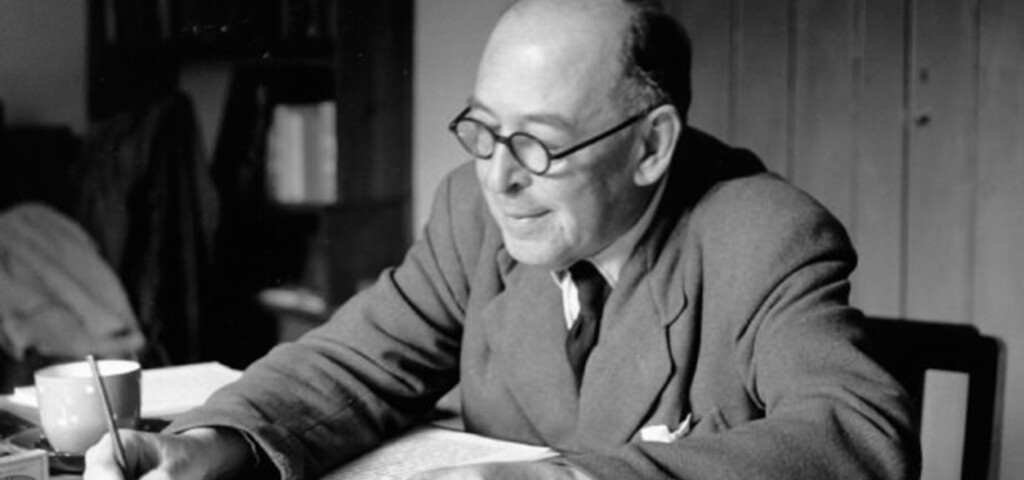
There is a kind of writing that does not ask to be read so much as survived. You know it when you encounter it — the sentences do not build toward meaning, they strip meaning away, word by word, until you are left holding something that looks like a page of prose but functions more like an open wound. That is what Lewis produced in the months after Joy Davidman died in July 1960. He filled four notebooks. He did not call it a book. He called it nothing, because he was not making something — he was recording what it felt like to be unmade.
When it was eventually published in 1961, it appeared under the pseudonym N.W. Clerk, a name Lewis borrowed from an old English phrase meaning “I know not what scholar.” The disguise was not entirely successful — his voice was too distinct, too relentlessly honest — but the attempt itself tells you something. He was not writing for an audience. He was not writing to instruct, to comfort, to demonstrate faith under pressure. He was writing because the alternative was silence, and silence, for him, had become something dangerous and close.
What the notebooks contained was not grief as a spiritual exercise. It was grief as demolition. In the very first lines he compared bereavement to fear — the same fluttering in the stomach, the same restlessness, the yawning mouth, the swallowing. He noted that no one had ever told him grief felt so much like being afraid. And in that observation, so small and so precise, the entire architecture of consolatory literature begins to crack. Because what Lewis was naming was not sorrow that points upward, not the noble ache that refines the soul — he was naming the animal thing, the body’s refusal to understand where someone has gone.
Then he wrote the sentence that should not have been possible from him, the sentence that still lands like a stone dropped into standing water: he described turning to God in his extremity and finding not comfort, not mystery, not even the silence of a God who is present but withheld — he found a door slammed in his face, and the sound of bolting on the other side. He went further. He asked whether God might not be, in fact, what he called the Cosmic Sadist. Not the absence of God. Not atheism. Something worse — the possibility that the thing at the center of the universe is not indifferent but actively, architecturally cruel, and that its cruelty wears the face of love because that is the most efficient instrument of suffering. He wrote this in 1961. He was the man who had written Mere Christianity in 1952, who had broadcast on the BBC during the war, who had become the most widely read Christian apologist of the twentieth century. He was that man, and he wrote that.
The catastrophe of it is not theological. The catastrophe is that he meant it. He was not staging a dark night of the soul as a narrative device through which faith is tested and confirmed. He was not Job performing patience for a watching God. He was a man in a cold house with a dead wife and four notebooks, and what came out when he stopped performing was something that had been living underneath all the careful argument, all the brilliant exposition — something that had been waiting for the right kind of pain to surface. Dostoevsky understood this mechanism: in The Brothers Karamazov, completed in 1880, Ivan Karamazov does not reject God through philosophy but through a single image of a child’s suffering. Lewis arrived at the same place not through thought but through the particular weight of one woman’s absence in every room he entered.
He had spent decades building a rational architecture for belief. Joy’s death did not disprove it. It did something more permanent — it made the architecture feel beside the point, the way a blueprint feels beside the point when the house is already on fire.
The Social Script for Grief — and Who Wrote It
You wake up one morning, three weeks after the funeral, and someone at work asks how you are doing. You say fine, or getting there, or taking it one day at a time — and both of you are relieved. The conversation moves on. You have performed the expected thing, which is to signal that your grief is progressing along its proper schedule, that you are somewhere in the middle of a known sequence, and that you will, in due course, arrive at the other end. Nobody designed this exchange consciously. Nobody chose to make grief into a project with milestones. And yet here it is, fully operational, as reliable as a company handbook.
Elisabeth Kübler-Ross published On Death and Dying in 1969, and what she offered the world was something genuinely compassionate: a framework drawn from hundreds of interviews with terminally ill patients, describing what she observed them moving through — denial, anger, bargaining, depression, acceptance. She was precise about her intent. These were not stages in the legislative sense. They were patterns, sometimes overlapping, sometimes absent, sometimes arriving in no particular order. She was describing, not prescribing. But the culture received her work the way it always receives a tidy sequence: as a map, and then as a law. By the 1970s and 1980s, the five stages had migrated out of clinical oncology wards and into self-help shelves, grief counseling curricula, HR bereavement policies, and the implicit social contract governing what a grieving person was expected to produce. The compassion had become a timetable.
What the cultural adoption of Kübler-Ross obscures is everything that Philippe Ariès spent decades excavating. In The Hour of Our Death, published in 1981, Ariès traced the long transformation of dying and mourning across a thousand years of Western history, and what he found was an almost catastrophic reversal. In medieval Europe, death was public, communal, and fully integrated into ordinary life. People died at home, surrounded by neighbors and children. Mourning was a collective ritual that made no apology for its visibility and made no promise of a deadline. Grief was allowed to be inconvenient because it was understood as real. What Ariès called the tame death — death accepted as a shared human event — began eroding sometime around the seventeenth and eighteenth centuries, as medicine, urbanization, and the Enlightenment’s drive toward rationalism progressively removed the dying from common sight. By the twentieth century, most people in the industrialized West died in hospitals rather than homes. The corpse was handled by professionals. Mourning, stripped of its public rituals and collective containers, became something a person did quietly, privately, and with the unspoken understanding that they should finish doing it within a reasonable window.
Lewis was writing A Grief Observed in 1960, nine years before Kübler-Ross and twenty-one before Ariès, but he was already living inside the very architecture they would later describe. He noticed that people changed when they saw him coming. They crossed to the other side of the street. They fell silent or switched subjects. He called it the embarrassment that grief creates, and he was not wrong about its social function: the grieving person disturbs the fiction that loss is temporary and manageable and that the world, after a brief interruption, resumes its prior shape. His suffering made people uncomfortable not because they were cruel but because they had no cultural script for sitting inside unresolved pain. The script they had was for moving through it.
And here is what becomes troubling, the longer you sit with Ariès and with Lewis together: the sequencing of grief was not designed to help the grieving. It was designed to help everyone else. The five stages, whatever Kübler-Ross intended, gave the living permission to expect resolution from those who were suffering — to treat mourning as a finite medical episode rather than an ongoing alteration of the self. Lewis knew something that the framework could not accommodate: that Joy’s death had not interrupted his life. It had restructured the person doing the living, and no amount of progressive movement through named stages would return him to the man who had existed before the morning of November 13, 1960.
The Trap Inside the Comfort
There comes a moment, usually around the third week, when the casseroles stop arriving. The phone goes quiet. The condolence cards, which had been accumulating on the kitchen counter in a kind of paper monument to loss, cease. And the people around you — the ones who held your hand at the funeral, who said all the right things with eyes that genuinely meant them — begin to look at you with something that is not quite impatience but is uncomfortably close to it. You are expected, by now, to be returning. To be functioning. To be, in the polite vocabulary of survival, “doing better.” Lewis knew this pressure with the precision of someone who had been crushed by it. He wrote in the weeks after Joy’s death that the moment he mentioned her name, people around him would change the subject — not from malice, he noted, but from something almost worse: a kind of embarrassed protectiveness, directed not at him but at themselves.
Émile Durkheim, writing in 1912 in The Elementary Forms of Religious Life, argued that ritual is not primarily about the dead. It is about the living. Mourning ceremonies, collective weeping, prescribed periods of lamentation — these practices serve a social function, which is to manage the disruption that death introduces into a community. When someone dies, the social fabric tears. Ritual is the needle and thread. It gives the community a controlled, bounded experience of grief, after which the tear is considered mended and normal life is expected to resume. The genius of Durkheim’s observation is also its horror: the rituals are not for you. They are for the group, which needs you to stop grieving on a schedule that suits its own coherence. The casserole is an act of love, yes, but it is also a transaction. It purchases the right to later expect your recovery.
What this means, practically, is that prolonged grief becomes a social problem. Not a medical one — though the psychiatric establishment eventually obliged by introducing “prolonged grief disorder” as a diagnosable condition in DSM-5-TR, as if duration of pain were a pathology rather than a proportion to love. A social problem. The person who is still undone at month four, still unable to eat without thinking of the shape of absence at the other end of the table, makes others feel their own mortality too acutely. Judith Butler, in Precarious Life, published in 2004 in the immediate wake of collective American grief after September 2001, made an argument that cuts even deeper: not all grief is permitted equally, because not all lives are considered equally grievable. The political and cultural infrastructure of a society quietly decides whose losses count as losses worth witnessing — and for how long. Butler was writing about war, about which deaths get public mourning and which are administratively disappeared, but the mechanism operates at the intimate scale too. The widow who cannot stop is, in the social imagination, performing something excessive. She is grieving beyond her allotment.
Lewis, an Oxford and Cambridge don, a celebrated Christian apologist, a man whose intellectual armor had been forged over decades — even he felt this. He described feeling invisible in his grief, or worse, treated like an embarrassing problem. What his account reveals is that the social apparatus of comfort is not designed to witness disintegration. It is designed to abbreviate it. The flowers, the cards, the rituals of condolence are a kind of collective flinching, a way of standing near devastation without actually touching it. They say: we acknowledge this happened, and now we would very much like it to stop happening. They perform solidarity while quietly insisting on a return to legibility, to a self that functions, that answers the door, that eventually stops reaching across the bed in the dark for someone who will never again be there. And what Lewis refused — what he documented with almost violent honesty — was that return. Not because he was self-indulgent, but because
A vision curated by a filmmaker, not an algorithm
In this video I explain our vision
When Faith Fails Its Own Believer

What he described in the pages he began writing almost immediately after her death was not simply the loss of a woman he loved. It was the collapse of the very architecture through which he had understood loss. This is what might be called epistemic grief — a grief that does not only take the person but dismantles the framework you had built to make sense of losing anyone at all. Ordinary grief is devastating enough: the absence of a specific face, a specific voice, the particular weight of another body in a shared space. But epistemic grief is something more destabilizing, because it does not leave you sad within a coherent world. It leaves you in a world that no longer coheres. Lewis had a theology. He had a language for suffering. He had a God who was, in his own words, the great iconoclast, always shattering our false images of him. And now, when he turned toward that God in his most acute need, he described the experience as approaching a door that was slammed shut and bolted from the inside, followed by silence so absolute it felt like contempt.
Viktor Frankl, writing from inside the incomprehensible brutality of Auschwitz and publishing his account in 1946, had arrived at something Lewis would have recognized: that human beings can endure almost any form of suffering if they can locate it within a meaning-structure, if the suffering can be made to point at something beyond itself. Frankl’s logotherapy rests on this foundation — that the will to meaning is more fundamental than the will to pleasure or even survival, and that suffering stripped of meaning does not merely hurt, it annihilates. For Frankl, the prisoner who could say his suffering served something — a love, a future work, a witness to be given — was the prisoner who survived not just physically but psychologically. Meaning was the filament that kept the self from going dark.
Lewis knew all of this, implicitly if not in Frankl’s specific terms. His entire intellectual life had been organized around the idea that suffering was meaningful, that it was not random noise but signal, not punishment but instruction. And yet what he recorded in his grief journal was not the discovery of meaning but the refusal to manufacture it. He would not perform consolation for himself. He would not reach for the theological formula that had once served him so well and apply it like a compress to the wound. There is something almost savage about this honesty, because he understood what he was refusing. He understood that meaning, even artificial meaning, even meaning you construct knowing it is a construction, tends to work anyway. The mind that can say this happened for a reason generally suffers less than the mind that cannot. Lewis knew this and still would not do it. He wrote instead about the smothering quality of grief, the way it made thinking feel like moving through wet sand, the way he could not remember her face when he tried hardest to see it.
What he was doing, without naming it this way, was insisting that the real thing — whatever the real thing was — could only be reached by refusing the comforting substitution. That to manufacture meaning would be to lose not just Joy, but the truth of having lost her.
The Rawness That Cannot Be Archived
You notice it first in the small failures. You reach for your phone to tell someone something funny, and then you remember. You walk into a room and forget why you went there, but the forgetting feels different this time — heavier, somehow structural, as if the architecture of the house itself has shifted. Lewis described this in his notebooks with an almost clinical precision that makes it worse to read, not better. He wrote about feeling mildly drunk, about the cottony unreality that settled over ordinary tasks, about an absent-mindedness so pervasive it seemed less like distraction and more like his mind had simply decided to stop cooperating with the world as it now existed. He noted that grief felt, in its early hours, startlingly similar to fear — that same hollowing in the chest, that same hypervigilance, that same sense of standing at the edge of something that has no railing. He had written enough theology to know that fear and grief both carry within them an anticipatory structure, a leaning toward what is not yet present or what is no longer present, and yet knowing this did nothing to interrupt the sensation. The mind kept making its calculations and the body kept presenting its bill.
What Lewis was documenting in those pages, without the vocabulary to fully name it, was something that neuroscience has only recently begun to map with any precision. Mary-Frances O’Connor, in her 2022 work The Grieving Brain, draws on years of neuroimaging research to argue that the brain does not simply register loss as an absence. It registers it as a problem to be solved. The brain operates through predictive processing — it is, at its most fundamental level, a prediction machine, constantly modeling the world based on past experience and updating those models when reality fails to match expectations. When someone you love has been present in your life for years, your brain has built extraordinarily detailed predictive maps around that person: where they will be at certain times, how their voice will sound in the kitchen in the morning, the particular weight of their presence in a shared room. Those maps do not dissolve when the person dies. They persist, and the brain keeps running them, keeps generating the expectation, and keeps receiving the signal that the prediction has failed. This is not metaphor. This is measurable neural activity. The body does not know the person is gone. It keeps expecting them.
Lewis was circling this exact experience when he wrote that he was surprised by how much grief resembled the feeling of waiting — not passive waiting, but active, almost urgent waiting, the kind that makes you keep glancing toward the door. Joy had been so present, so architecturally integrated into the structure of his daily perception, that her absence registered not as stillness but as a constant interruption. Every room was a failed prediction. Every morning was a hypothesis that immediately disproved itself. He described how he would begin a thought clearly and then lose it midway through, not because he was distracted in the ordinary sense, but because the thought had been constructed for a world that still contained her, and somewhere in the middle of forming it, reality corrected him. This is what makes grief so cognitively exhausting in ways that people who have not experienced recent loss often fail to understand. It is not sadness resting quietly in the background. It is the brain running a broken program, over and over, expending enormous resources on predictions that will never be confirmed.
The Question the Notebook Refuses to Answer
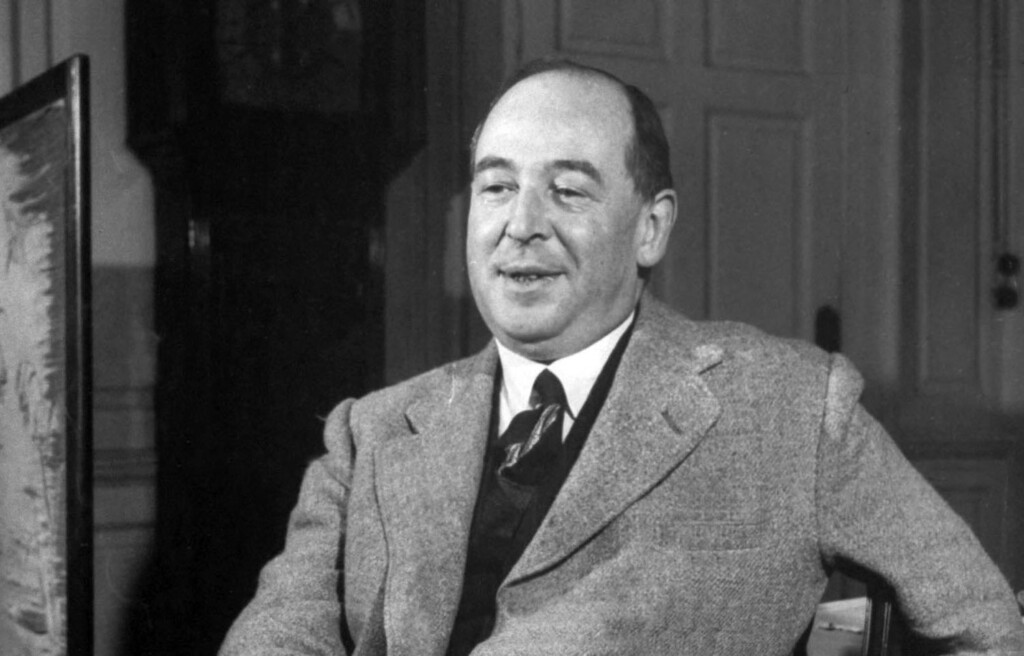
There is a moment near the end of Lewis’s notebooks when something shifts, and it is almost more disturbing than the grief that preceded it. He does not announce it. There is no declaration of restored faith, no clean reconciliation with God, no tidy arc in which suffering produces wisdom and wisdom produces peace. What happens is stranger and less comfortable than any of that. He writes that he feels, briefly and without explanation, something like Joy’s presence. Not her ghost. Not a vision. Something more like a quality of attention — as though the very act of having written through the worst of it had worn the panic down to a surface where something quieter could finally be heard. He is suspicious of it immediately. He wonders if he is simply exhausted, or whether the mind, having spent itself entirely on loss, simply invents a consolation to survive. And that suspicion is itself the most honest thing in the book.
What Lewis had been doing, without fully realizing it, was undergoing what the philosopher Paul Ricoeur described as the work of narrative identity — the process by which a self understands itself not as a fixed essence but as a story it tells about its own continuity through time. Ricoeur, whose major work Oneself as Another appeared in 1992, argued that identity is not a possession but a construction, and a fragile one, dependent on the threads we weave between memory, body, and the relationships that give us our sense of coherent selfhood. When Joy died, Lewis did not simply lose her. He lost the version of himself that had only ever existed in relation to her. The notebooks are, in this reading, not an elegy for a dead woman but a desperate attempt to reconstruct a self that her absence had made incoherent.
This is what grief rarely admits publicly, because admitting it feels like a betrayal of the dead. To say that mourning is, at some depth, about the mourner rather than the mourned — that it is a crisis of identity as much as a crisis of love — sounds selfish in a cultural context that insists grief be performed as pure devotion to the lost. But the psychologist Colin Murray Parkes, whose landmark study Bereavement was published in 1972, documented precisely this in clinical populations: the bereaved do not simply miss the other person, they miss the version of themselves that the relationship had called into being. The roles, the habits, the daily grammar of being known by someone — when those collapse, the survivor is left not only bereft but structurally uncertain about who they are and whether that person can persist without the other’s witnessing.
Lewis felt this. He wrote it without naming it that way, which is why the notebooks survive as something more than personal testimony. He wrote about reaching for a habit and finding it pointed toward someone who was no longer there to receive it. He wrote about the strangeness of his own voice in an empty house. He wrote, with a precision that still cuts, about how grief feels less like missing someone and more like amputation — not the loss of something external, but the removal of something that had become structurally part of yourself.
And so when that faint sense of presence returned to him near the end, it may not have been Joy he was encountering at all. It may have been the first evidence that a new self was beginning, tentatively, to cohere — one that had incorporated her absence so completely that it could hold her differently, not as a wound but as a constituent fact. Whether that constitutes faith, or philosophy, or simply the biology of survival, Lewis does not say. He ends the notebooks without resolution, still asking, and the question he leaves open is not whether she exists somewhere beyond death, but whether he, without her, still does.
🕯️ Faith, Loss, and the Labyrinth of the Soul
C.S. Lewis’s ‘A Grief Observed’ plunges into the darkest corridors of human experience: the shattering of faith, the silence of God, and the impossible task of living after loss. These themes echo across philosophy, literature, and existential thought, connecting Lewis to a wider tradition of thinkers who dared to confront suffering, meaning, and the fragile architecture of belief.
Viktor Frankl: Life and Logotherapy
Viktor Frankl survived the Nazi concentration camps and emerged with a radical insight: meaning is not found but chosen, even in the most devastating circumstances. His logotherapy offers a philosophical companion to Lewis’s grief, mapping how the human spirit searches for purpose when all external certainty has been stripped away. Like Lewis, Frankl understood that suffering without meaning is unbearable, but suffering transformed by meaning can become a doorway to deeper life.
GO TO THE SELECTION: Viktor Frankl: Life and Logotherapy
Albert Camus: Life and Philosophical Thought
Albert Camus confronted the absurd—the collision between humanity’s need for meaning and the universe’s indifferent silence—with unflinching intellectual honesty. His philosophical journey runs parallel to Lewis’s anguished questioning of God during bereavement, both men staring into a void that refuses to answer. Where Lewis ultimately returned to faith, Camus chose defiant rebellion, making their divergent paths an illuminating dialogue about how grief and absence reshape one’s entire vision of existence.
GO TO THE SELECTION: Albert Camus: Life and Philosophical Thought
Schopenhauer: Life and Philosophical Thought
Schopenhauer built his philosophy around the recognition that suffering is not an accident of life but its very substance, rooted in an insatiable will that drives all living things. His concept of compassion as the highest ethical response to universal pain resonates deeply with Lewis’s raw account of mourning, where love and loss reveal themselves to be inseparable. Reading Schopenhauer alongside Lewis offers a darker, more pessimistic counterpoint to Christian hope, illuminating just how radical Lewis’s eventual acceptance truly was.
GO TO THE SELECTION: Schopenhauer: Life and Philosophical Thought
Paul Ricœur: Life and Philosophy of Memory
Paul Ricœur dedicated much of his philosophical life to understanding memory, narrative, and the way human beings construct identity through time and loss. His reflection on mourning as a narrative act—where the bereaved must rewrite the story of their life without the beloved—speaks directly to the literary and spiritual work Lewis performed in ‘A Grief Observed.’ Ricœur’s philosophy reveals why writing grief is never mere self-expression but a profound act of meaning-making in the face of absence.
GO TO THE SELECTION: Paul Ricœur: Life and Philosophy of Memory
Cinema That Explores the Depths of Grief and Faith
If these reflections on loss, love, and the search for meaning have moved you, Indiecinema offers a curated selection of independent and auteur films that explore the same invisible landscapes of the soul. Discover stories that dare to sit with grief, silence, and transformation—stream them now on Indiecinema.
👉 EXPLORE THE CATALOG: Watch Indie Films in Streaming
A vision curated by a filmmaker, not an algorithm
In this video I explain our vision

