
The Bedroom That Smells Like Shame
You are lying in a room that no longer belongs to you. The furniture is still yours, the curtains you chose, the bureau your wife selected with care and which you have always secretly disliked — all of it unchanged, yet everything has shifted its allegiance. The objects remain; they have simply stopped pretending to be on your side. And in the doorway, your colleagues arrive one after another, their faces arranged in the correct expression, and you watch them perform solemnity the way a man performs confidence in a job interview — technically sound, hollow at the center. They are not grieving. They are rehearsing. What they feel, beneath the pressed jackets and lowered voices, is relief that it is you and not them, a relief so automatic and so human that they will never name it, not even to themselves.

This is precisely where Leo Tolstoy places the reader in the opening pages of The Death of Ivan Ilyich, published in 1886 after a period of profound spiritual crisis that had already produced A Confession, a text in which Tolstoy described standing at the edge of his own annihilation and finding that everything civilized life had given him — status, aesthetics, literary fame — offered nothing capable of holding him back. He returned from that edge changed, and the novella is the document of what he saw when he looked at the world from that altitude. What he saw was not tragedy. Tragedy has grandeur, a shape, a reason. What he saw was something closer to administrative failure — a life processed correctly through every expected station and arriving at death without ever having been inhabited.
Ivan Ilyich Golovin is not a monster and not a saint. He is a high-court judge in Tsarist Russia, a man who built his existence according to what Tolstoy calls the most simple, ordinary, and terrible principle: doing what was considered proper by people of the highest standing. The philosopher Charles Taylor, writing nearly a century later in Sources of the Self, would call this mode of existence a borrowed identity — a self constructed entirely from the reflected approval of a particular social stratum, with no internal axis to hold it upright when the external scaffolding collapses. Ivan Ilyich never needed an internal axis because the scaffolding never collapsed. Until it did. Until a bruise on his left side refused to fade, and the man who had organized his entire existence around the avoidance of discomfort found himself imprisoned inside a body producing nothing but discomfort, surrounded by people whose only wish was that he would have the decency to suffer quietly and recover quickly.
What Tolstoy diagnoses here with the precision of a surgeon is the way dying becomes a social inconvenience before it becomes a personal catastrophe. The dying man disturbs the household schedule. He makes dinners awkward. His wife, Praskovya Fyodorovna, manages his illness the way one manages a household renovation — with budgets, specialists, and a visible resentment toward the project for taking longer than anticipated. His daughter continues her courtship. His colleagues at the court, learned in the opening pages that Ivan Ilyich has died, spend their first private moment calculating which of them will inherit his position. The dead man has barely cooled before he becomes an opportunity, and no one in that room feels the grotesquerie of it because the room itself, the entire architecture of that social world, was built to make such calculations feel like common sense.
The smell of illness in Ivan Ilyich’s bedroom — Tolstoy never lets you forget it, that particular sweetish decay that no amount of incense can fully suppress — is the one thing in the novel that refuses to be managed, decorated, or performed around. It is the body insisting on its own reality in a world that has spent decades pretending the body can be indefinitely postponed.
I Am Nothing
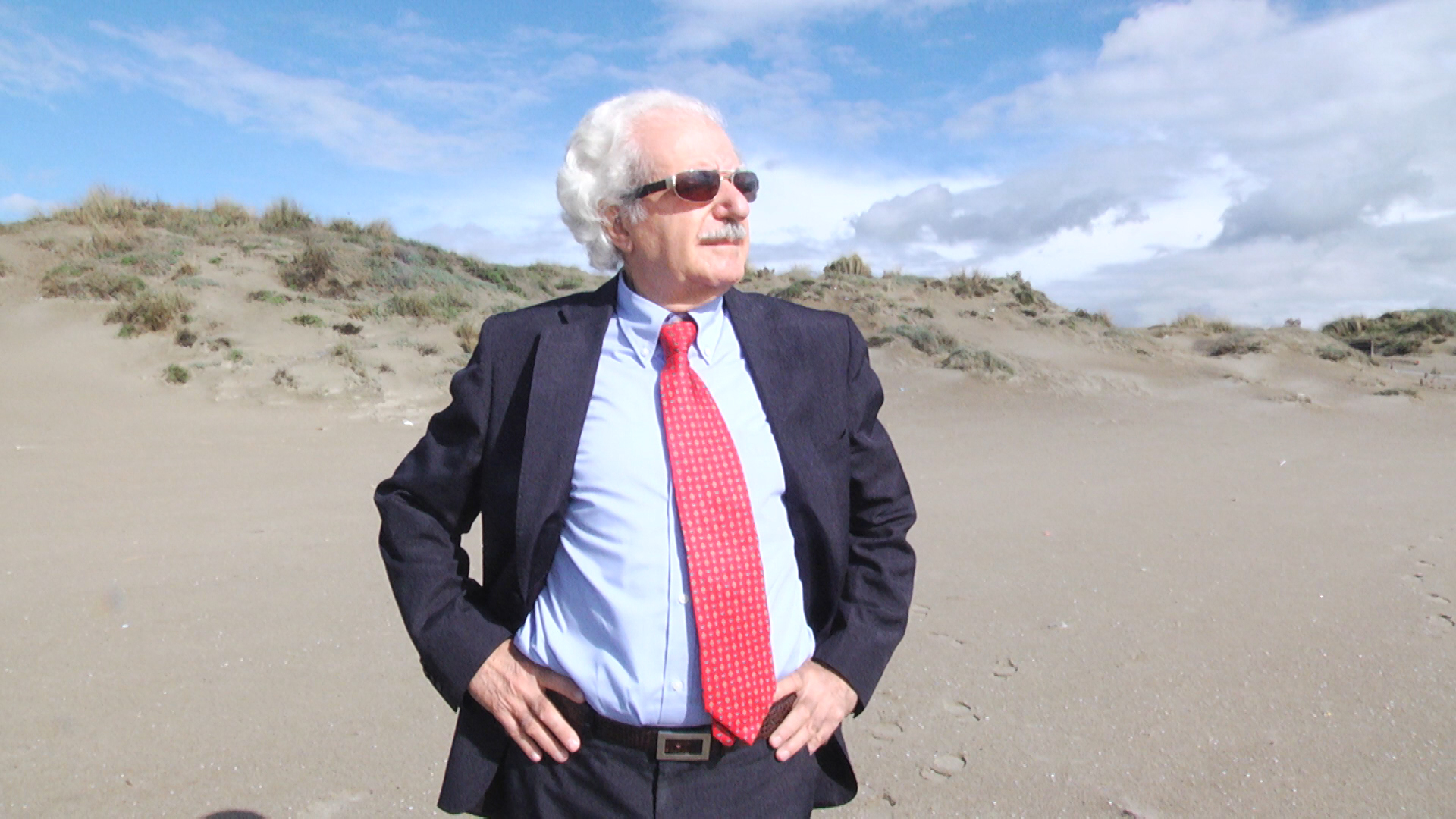
Drama, thriller, by Fabio Del Greco, Italy, 2015.
The story revolves around Vasco, a Roman builder who, at the age of 74, enjoys a life of absolute comfort. His human parable takes a dramatic turn when a mysterious encounter leads him to an ambush. Having survived, but marked by a long coma, Vasco wakes up with a new sensitivity, developing an intimate and poetic bond with nature. This new relationship with the world around him leads him to deeply explore himself, in an internal and external journey. through Italy, the United States and India, in search of a higher meaning and a cure. In parallel, the threat of a planetary cataclysm adds an epic dimension to the story.
I Am Nothing explores universal themes such as time, memory, oblivion and the connection with nature. Fabio Del Greco creates an existential drama full of food for thought. The director skillfully combines different visual materials, mixing archive images with nature photographs and dreamlike visions. This visual experimentation translates into an editing that captures the viewer's attention, guiding him through a cycle of creation and destruction. The sequences that alternate the buildings, Vasco's pride, with Indian landfills and natural landscapes create a hypnotic rhythm, underlining the beauty and fragility of life. Vasco's existential journey is a hymn to transformation and rebirth. The evolution of the protagonist, from unbridled luxury to the rediscovery of purity, represents a powerful metaphor on the meaning of life and the need to reconnect with authentic values. Io sono nulla stands out for its ability to combine introspection and visual experimentation, offering a suggestive and engaging narration. It is a film that invites us to reflect on the human condition, on our relationship with power and nature, and on the possibility of finding ourselves through change. A work that leaves its mark and lends itself to multiple readings.
LANGUAGE: Italian
SUBTITLES: English, Spanish, French, German, Portuguese
The Career as a Form of Self-Erasure
You have been promoted. The letter arrives, the title changes, the salary adjusts upward by a precise and satisfying increment, and something inside you — not pride exactly, more like relief — settles into place. You do not ask what it has settled over. You do not notice what it has covered.
Ivan Ilyich Golovin rises through the ranks of the Russian judicial system in a manner that Tolstoy renders with almost clinical detachment, and the horror of it is not that Ivan is corrupted by power but that he is never fully present long enough to be corrupted. His entire ascent is a process of replacement — the slow, methodical substitution of a living interiority with a set of approved behaviors, titles, and postures. Each promotion does not add to Ivan; it narrows him. He becomes, by degrees, the position he holds. And the position requires nothing from him that could be called a self.
Erving Goffman, writing in 1959 in The Presentation of Self in Everyday Life, argued that social life is a performance in which individuals manage impressions the way an actor manages a stage — selecting props, rehearsing gestures, adjusting the performance to the expectations of the audience. What Goffman described as a universal human condition, Tolstoy had dramatized with terrifying specificity eighty years earlier. Ivan Ilyich does not merely perform his role; he has mistaken the performance for the man. The front stage and the backstage have collapsed into each other. There is no private room left where Ivan takes off the costume, no hour in which he speaks in a voice that does not carry the cadences of institutional approval.
The particular quality of this erasure is its pleasantness. Tolstoy is careful not to make Ivan’s professional life grim or tyrannical. Ivan finds his work agreeable. He takes satisfaction in the clarity of legal procedure, in the clean separation of relevant from irrelevant, in the authority conferred by the bench. What he loves about his role, significantly, is its capacity to exclude life in all its messiness — to take complicated human suffering and reduce it to a question of procedural correctness. The law does not ask Ivan to feel. It asks him to decide. And in that exchange, he trades his inner life for a sense of competence that requires no examination.
By the time Ivan reaches the position that most satisfies him — a judgeship in Petersburg obtained in 1880 after a period of humiliating financial strain — he furnishes his apartment according to what he imagines people of refined taste consider appropriate. Every decision is externally referenced. The drapes, the ornaments, the arrangement of rooms: all of it is calibrated to produce an impression on visitors, and the terrifying detail Tolstoy inserts is that Ivan believes he is exercising personal taste. He cannot tell the difference between desire and imitation. The sociologist C. Wright Mills would call this kind of alienation a cheerful robot — a condition in which the machinery of social compliance runs so smoothly that the person inside it never feels the friction that would announce the machinery’s presence.
What makes this more than a Victorian morality tale about vanity is that Ivan’s condition is not a failure. It is a success. He has done exactly what the institutional world asked of him — performed reliably, advanced appropriately, furnished tastefully — and been rewarded at every step. The social contract was honored. The system worked. And somewhere inside that functioning system, a man disappeared so gradually that no single moment could be named as the moment of disappearance. This is the cruelty Tolstoy is describing: not the cruelty of exceptional circumstance, but the cruelty embedded in a life that, by every available external measure, is going extraordinarily well. The diagnosis that arrives later in the novel does not introduce tragedy into Ivan’s life. It merely makes visible the tragedy that was already there, quietly administrative, perfectly dressed.

Propriety as a Slow Poison
You have spent years arranging your life so that no one could criticize it. Not your home, not your career, not your marriage, not the way you hold a fork at dinner. You have not done this consciously — that is precisely the point. The adjustments happened so early and so continuously that they stopped feeling like adjustments at all. They became you, or what you took to be you, which is an entirely different and far more dangerous thing.
Tolstoy gives this condition a name in his novella, though he never turns it into a manifesto. Ivan Ilyich Golovin organizes his entire existence around the Russian bourgeois ideal of comme il faut — the demand that one’s life be correct, presentable, free from anything that might cause discomfort in the drawing rooms of St. Petersburg’s professional class. This is not mere snobbery. It is a total epistemology, a way of deciding what counts as real, what counts as worth wanting, what counts as a life worth living. Ivan does not follow these rules cynically. He follows them with genuine conviction, which is the only way such rules ever do their worst damage.
Pierre Bourdieu spent much of his career describing the mechanism by which social structures inscribe themselves into the body before the mind has any chance to evaluate them. In The Logic of Practice, published in 1980, he called this process the habitus — the internalized grammar of a class or culture that operates below the threshold of deliberate choice, generating behavior that feels natural precisely because it has never been experienced as chosen. The habitus does not announce itself as a cage. It presents itself as taste, as instinct, as common sense. You do not feel its walls because you have never tried to walk through them — and you have never tried to walk through them because it does not occur to you that there is a wall at all.
Ivan’s entire professional ascent follows this logic with clinical precision. He cultivates the right friendships, takes the right positions, decorates his new house in the right style — a house that Tolstoy describes as resembling every other house of its kind, not through poverty of imagination but through the rigorous application of taste. The decorator’s choices, the velvet curtains, the antique china, the careful arrangement of objects meant to signal cultivation — all of it is the labor of a man who believes he is expressing himself while in fact erasing himself. The tragedy is not that Ivan chose badly. The tragedy is that the concept of choosing was never truly available to him.
What comme il faut accomplished in nineteenth-century Russian bourgeois culture was the production of a self that could not survive contact with its own interior. The code demanded exteriors — polished, consistent, legible exteriors — and had no grammar for interiority at all. When Ivan begins to experience pain, both physical and eventually existential, the machinery he has built around himself becomes actively hostile to him. His colleagues perform their concern correctly. His wife manages the situation correctly. The doctors speak the correct language of diagnosis and prognosis. All of it is comme il faut, which means none of it touches him. He is dying inside a form of life that has no apparatus for dying honestly.
This is where the cultural technology reveals its true cost. A code that cannot accommodate suffering does not make suffering disappear. It makes suffering unspeakable, which is not the same thing as unbearable — it is worse. The unspeakable pain is the pain you cannot even name to yourself, because the naming would require a vocabulary that your entire formation has withheld from you. Ivan Ilyich lies in his curtained room and finds that decades of correct living have left him without a single honest word.
The Body as the First Honest Narrator
You are sitting in a room that looks exactly like it should. The furniture is correct. The conversation is correct. Someone asks how you are feeling and you say fine, because that is what the room requires, and everyone nods, because that is what the answer requires, and the whole architecture holds. Then something in your body says otherwise. Not loudly. A pressure behind the eye. A weight in the chest that has no business being there. And suddenly the room, which was so solid a moment ago, becomes a stage set you can see through.
This is the precise mechanism Tolstoy had already lived before he gave it to Ivan. In September 1869, traveling toward the Penza province to inspect an estate he was considering purchasing, Tolstoy stopped for the night in the town of Arzamas. Sometime in the early hours he woke in his rented room gripped by a terror so complete and so sourceless that it remained the defining psychological event of his adult life. He was forty-one, healthy by every external measure, surrounded by the ordinary furniture of a provincial inn. What arrived had no object — it was not fear of a specific threat but fear as a condition of existence itself, the sudden visceral recognition that death was not an event waiting in the future but a property of the present moment, woven into every second of being alive. He wrote about it in letters, processed it through his notebooks, and eventually fictionalized a version of it in a fragment now known as the Arzamas story. The novel he would publish sixteen years later, in 1886, is in many ways the formal completion of what that night began.
When Ivan Ilyich’s body starts to betray him, the novel shifts register entirely. The social world around him continues to operate according to its agreements — his wife maintains her composure, his colleagues manage their discomfort, the doctors perform their authority with the practiced ease of men who have learned to speak at illness rather than about it. But the body refuses to participate in these performances. The pain does not observe the social calendar. It arrives during dinner, during official functions, in the middle of conversations that have nothing to do with mortality. Maurice Merleau-Ponty, in his 1945 Phenomenology of Perception, argued that the lived body is not an object we possess but the very medium through which we inhabit the world — and that when it malfunctions, it does not merely inconvenience us but reorganizes our entire relationship to reality. Ivan’s pain is not a subplot. It is an epistemological event. It makes true things visible that the social world has collectively agreed to keep invisible.
What is most devastating in Tolstoy’s construction is not the pain itself but the isolation it produces. Illness in the novel functions as a private language that no one around Ivan chooses to learn. Sociologist Arthur Frank, in his 1995 work The Wounded Storyteller, described how modern medical culture consistently converts the patient’s embodied narrative into a clinical object, stripping it of its first-person authority. Tolstoy anticipates this dynamic with extraordinary precision: the doctors Ivan consults are not cruel men, but they are absolutely committed to a professional grammar that translates his dying into a technical problem with variable outcomes. His own grammar — the raw, ungoverned sensation of a body that will not be managed — has no place in their conversation. He returns home from each consultation having been processed, not heard.
The cruelty is structural, not personal, which is what makes it so difficult to assign and so impossible to escape. Ivan does not live among villains. He lives among people who have learned, as he himself learned for forty-five years, that the body’s unscripted testimony must be quietly overruled in the interest of keeping the room’s architecture intact.
The Geometry of Domestic Cruelty
You are sitting at your own dinner table and no one is looking at you. Not because they are distracted, but because looking would cost them something they are not prepared to pay. The dishes move. The conversation fills the air with the precise texture of normalcy — the price of a property, a remark about the theatre, a child’s progress at school. And you, the one for whom each shift in posture is a negotiation with pain, have become a kind of furniture around which the meal arranges itself. This is not neglect in any simple sense. It is a collaborative performance requiring more discipline than love ever demanded.
Tolstoy renders this with a precision that is almost geometrical. Praskovya Fyodorovna has not stopped caring about her husband in any crude way — what she has done is more sophisticated and more devastating: she has decided that his suffering is an inconvenience he is inflicting on the household. By 1886, when the novella was published, this redefinition of the dying as a burden rather than a witness was already well underway in bourgeois European domestic life, and Tolstoy saw it not as a failure of feeling but as a structural feature of a class that had organized its entire existence around the management of appearances. The family around that table is not monstrous. They are, in fact, recognizable to an almost unbearable degree — which is the whole trap.
Against this architecture of evasion stands Gerasim, the peasant servant, and his significance in the novel is frequently misread as a kind of pastoral romanticism, as if Tolstoy were simply idealizing the uncorrupted peasant against the corrupted gentry. But what Gerasim offers is not wisdom. He has not thought deeply about mortality. He has simply not yet been taught to flinch from it. He holds Ivan Ilyich’s legs because the position brings relief, and when thanked, he says only that it is no trouble, that they will all of them come to this one day. There is no philosophy in it. There is only the absence of the pretension that makes pretension necessary — the pretension that death is the exception rather than the condition, that the suffering body is a scandal rather than a fact. The educated characters in the novel cannot afford this absence. Their social identity is constituted by exactly the distance from bodily reality that Gerasim has never had occasion to construct.
Ivan Illich — the sociologist, not the fictional judge — wrote in Medical Nemesis in 1975 that modern industrial societies had systematically expropriated from individuals the capacity to experience their own illness and death as personal, meaningful events. He called this process the medicalization of life, and he was precise about its mechanism: when institutions — hospitals, insurance systems, the entire diagnostic apparatus — take ownership of dying, they render the person dying into a patient, which is to say a passive recipient of procedures rather than an agent of their own passage. What Tolstoy diagnosed in 1886 through the language of social performance, Illich reframed nearly a century later as institutional architecture. The two analyses arrive at the same room from different directions: a room in which the dying person has been made, by the very structures meant to care for them, into an absence.
This is what the dinner table scene in the novel actually is: not a scene of private failure but a microcosm of a social technology. The family does not invent their denial. They inherit it, practice it, and then transmit it — to the children who watch how a sick father is treated, learning already what inconvenient bodies deserve. The geometric cruelty of it is that no one in the room is the villain. Everyone is the product.
A vision curated by a filmmaker, not an algorithm
In this video I explain our vision
Suffering Without Witness

You are sitting in a room where something enormous is happening to you, and everyone around you is discussing the curtains. Not metaphorically — they are talking about the drapes, the light, the doctor’s schedule, the appropriate expression to wear when they enter. The dying person becomes a kind of administrative problem, and the terrible efficiency with which the living manage this problem is itself a form of erasure.
This is the precise horror that Tolstoy constructed in Ivan Ilyich’s final weeks, and it operates at a level far beneath social criticism. Emmanuel Levinas, in Totality and Infinity published in 1961, argued that the human face is not simply a physical feature but an ethical demand — the face of another person calls you into responsibility before you have decided anything, before you have consented to care. The face says: do not let me disappear. What Tolstoy depicts is a household that has collectively learned to look at Ivan without seeing his face in this sense. They see a patient. They see an inconvenience. They see their own futures reflected back at them in a form they cannot tolerate. The ethical summons has been intercepted and rerouted into performance.
What makes this particular refusal so devastating is that it arrives dressed as attentiveness. Praskovya Fyodorovna asks about Ivan’s pain with a kind of precise, clinical concern that contains not one molecule of actual acknowledgment. The doctors measure and deliberate and speak to each other across his body as though the body were already an object of study rather than a man still living inside it. Gerasim alone performs his physical tasks with a directness that Ivan experiences as relief, not because Gerasim understands him philosophically but because Gerasim does not pretend the dying is not happening. That simple refusal to pretend — that bare, uneducated honesty — does more for Ivan than every medical consultation combined, because it gives him back the reality of his own experience.
Sociologist Arthur Frank, writing in The Wounded Storyteller in 1995, identified what he called the restitution narrative as the dominant cultural script imposed on sick people: the illness is a problem, medicine is the solution, the goal is return to the previous state. Any dying that refuses this arc becomes socially illegible, because it has no resolution the living can use. Ivan Ilyich is dying in a way that will not resolve into recovery, and so his household simply refuses to receive the story he is living. The isolation this produces is not the isolation of being alone. It is the far more precise horror of being surrounded by people who will not confirm that what is happening to you is real.
There is a particular cruelty in the way care can function as its own form of abandonment. When every act of concern is oriented toward managing the sick person’s effect on the healthy — quieting their complaints, minimizing the disruption of their decline, steering conversation away from what they are actually experiencing — the person being cared for is not being met. They are being contained. The difference between meeting someone and containing them is not visible from the outside. Both can look like attention. Only the person inside the experience knows which one they are receiving, and Ivan knows with absolute certainty, in the silence after each visit, that no one has been in the room with him.
Levinas also wrote that death is the event the other person cannot share with you — not because dying is solitary by nature, but because it becomes solitary when those around you treat your extinction as primarily a social management problem. The question Tolstoy embeds in the novella is not whether Ivan dies with dignity, but whether he was ever allowed to be truly present in his own dying — and whether the people who failed him even knew what they were refusing to give.
The Three Days and the Black Sack
You are already three days into dying before you understand that you have never once lived in the direction of your own life. Not metaphorically. Physiologically. The pain has removed every social performance available to you — the correct expression for visitors, the managed grimace, the reassuring murmur toward your wife — and what remains is something that cannot be named with the vocabulary you spent fifty years acquiring.
Tolstoy compresses the final seventy-two hours into a space that feels less like narrative time and more like pressure. Ivan Ilyich screams for three days without interruption. Not from physical agony alone, though the agony is real and documented with clinical precision — Tolstoy had studied death closely, had watched his brother Nikolai die of tuberculosis in 1860, had stood at that bedside taking notes that would wait nearly a quarter century before becoming this novella. The screaming is ontological. It is the sound a man makes when every structure he used to call himself collapses simultaneously and he cannot find anything underneath.
Martin Heidegger argued in Being and Time, published in 1927, that the self most people inhabit is not genuinely their own. He called it das Man — the they-self — a mode of existence in which one lives as people live, thinks as one thinks, fears what it is appropriate to fear. The they-self is not a villain. It is a comfort, a distribution of responsibility so total that no single person ever has to confront the weight of their own finite existence. Death, for das Man, is always something that happens to others, something acknowledged in the abstract and immediately dissolved back into the busyness of the everyday. Heidegger’s term for the rupture that destroys this arrangement is authentic being-toward-death — not the contemplation of mortality as a philosophical exercise, but the moment when the irreversibility of one’s own ending becomes structurally undeniable and the they-self has nowhere left to retreat.
Ivan’s black sack is not a symbol of passage. It is the geometric form of that rupture. Tolstoy describes him as being pushed from behind into a narrow black bag, unable to pass through, struggling, suffocating — and then suddenly the resistance gives and he falls through into light. Every religious reading of this image wants to stop at the light. But the violence is the content. The being-pushed, the narrowness, the inability to breathe, the walls of the sack pressing from every side — this is not a metaphor for dying. It is a metaphor for the destruction of a false architecture that had been load-bearing. The light on the other side is not consolation. It is what was always there once the structure came down, which means the structure had been keeping it out.
What Ivan discovers in those final hours is not grace in any theological sense but rather that the terror he had been experiencing for weeks was not fear of death — it was fear of the recognition that his life had been constructed in the wrong direction entirely. The moment he stops resisting, stops insisting that his life was good and proper and correctly arranged, the pain loses its meaning as punishment and becomes simply the last sensation of a body finishing. Gerasim, the peasant servant who alone has been honest with Ivan throughout the illness, represents nothing supernatural. He represents the possibility that had always existed of living without the performance — a possibility Ivan could not access while the social architecture was intact and therefore never knew he was refusing.
The catastrophe is not that Ivan dies. The catastrophe is the arithmetic: the revelation arrives when there are exactly three days left to spend it, and no mechanism exists within Tolstoy’s text, or within any life structured the way Ivan’s was structured, by which that arithmetic could have been different.
What Gets Passed On
You are sitting at a bedside that smells of disinfectant and something underneath the disinfectant, and you know without being told that everyone in the hallway outside is waiting for this to be over. Not coldly. With love, even. But there is a schedule pressing against the grief, a life that cannot be suspended indefinitely, and somewhere in the back of your own mind you are already calculating how long you can stay.
Tolstoy finished the novella in 1886, two years after the death of a provincial prosecutor named Ivan Ilyich Mechnikov whose dying had struck those who witnessed it as somehow exemplary in its ordinariness. The text circulated first through Russian literary journals, then through translations that multiplied across European languages before the century turned, then into the curricula of medical schools in the late twentieth century, where it became assigned reading in bioethics courses precisely because it described something that hospitals were producing at scale. By the 1990s, palliative care researchers were citing it alongside clinical literature on pain management and patient dignity, treating a work of literary imagination as empirical evidence about institutional failure. Atul Gawande’s 2014 account of modern dying quoted the novella’s logic without quoting its sentences, because the logic had become so ambient in the field that attribution seemed redundant.
This is the strange career of a text that diagnosed something correctly: it gets absorbed, institutionalized, taught, and the thing it diagnosed continues undisturbed beneath the pedagogy. The novella enters the syllabus and the syllabus enters the student and the student enters the profession and the profession continues to organize dying around the comfort of the living. The absorption is not hypocritical. It is something more structurally interesting. When a critique is accurate enough to be recognized, the recognition itself becomes the substitute for change. We cite the discomfort instead of sitting inside it.
What Tolstoy understood, and what sociologist Norbert Elias documented with cold precision in The Loneliness of the Dying published a century later in 1985, is that modern societies have developed an entire infrastructure for keeping the fact of death at a manageable distance from the living. Not distance as cruelty but distance as a learned social reflex so deep that it feels like kindness. Elias argued that the isolation of the dying is not a failure of empathy but a feature of societies organized around productivity, continuity, and the suppression of reminders that the body is mortal and uncontrollable. The dying person, in this arrangement, becomes inconvenient not personally but structurally.
The grief industry that emerged over the same decades as the palliative care movement is not a contradiction of this. Elaborate funerals, curated memorial services, the whole performance of collective mourning — these are the forms through which a society demonstrates that it valued the person who is gone, which is different from having been present with them while they were dying. The performance comes after because it can be scheduled, shared, controlled. The dying itself resists all three. It does not conform to emotional timelines or social calendars. It demands a presence that most lives, as currently constructed, cannot actually sustain.
To have read Tolstoy on this subject and to have been genuinely moved is not the same as having become capable of staying. The novella has been right for over a century and a quarter, translated into dozens of languages, pressed into the hands of nursing students and philosophy undergraduates and hospice volunteers, and the ward outside the room where someone is dying still empties toward evening when the visitors have flights to catch and children to put to bed and a self to return to that does not yet know it is also moving, with absolute certainty, in the same direction as the person they just left behind.
⚰️ Death, Meaning, and the Examined Life
Tolstoy’s The Death of Ivan Ilyich confronts us with mortality, self-deception, and the terrifying clarity that arrives only at the end of a wasted life. These related articles explore the philosophical and literary currents that illuminate Ilyich’s anguished journey — from grief and existential reckoning to the search for meaning in the face of death.
C.S. Lewis and the Death of His Wife: A Grief Observed
C.S. Lewis’s A Grief Observed is a raw and unflinching account of mourning written after the death of his wife, Joy Davidman. Like Ivan Ilyich’s deathbed confrontation with what truly matters, Lewis is forced to strip away comfortable illusions and face life’s irreducible pain. This article examines how grief became for Lewis both a philosophical crisis and a path toward honest self-knowledge.
GO TO THE SELECTION: C.S. Lewis and the Death of His Wife: A Grief Observed
Joan Didion and Loss: The Year of Magical Thinking
Joan Didion’s The Year of Magical Thinking stands as one of the most penetrating literary meditations on loss and the disorientation that death leaves in its wake. Much as Tolstoy strips Ivan Ilyich of every social pretense in his final hours, Didion’s prose lays bare the fragile fictions we construct to avoid confronting mortality. This article traces how Didion transforms personal catastrophe into a universal inquiry into grief, memory, and survival.
GO TO THE SELECTION: Joan Didion and Loss: The Year of Magical Thinking
Frankl’s Man’s Search for Meaning: Analysis
Viktor Frankl’s Man’s Search for Meaning explores how human beings can endure extreme suffering by discovering — or creating — a sense of purpose, a question that lies at the very heart of Ivan Ilyich’s dying crisis. Frankl’s logotherapy posits that the confrontation with death can become the most clarifying experience of a human life. This analysis examines how Frankl’s ideas resonate deeply with Tolstoy’s portrait of a man awakening to authenticity only when there is almost no time left.
GO TO THE SELECTION: Frankl’s Man’s Search for Meaning: Analysis
Heidegger’s Being and Time: Guide to Reading
Heidegger’s Being and Time offers perhaps the most rigorous philosophical framework for understanding Ivan Ilyich’s predicament, particularly through its concept of Being-toward-death as the condition that alone makes authentic existence possible. Heidegger argues that most people flee from the awareness of their finitude into the anonymous comfort of das Man — the crowd — precisely the trap into which Ivan Ilyich falls for most of his life. This guide to reading Being and Time illuminates how Heidegger’s existential analytics transforms the fear of death into a call toward genuine selfhood.
GO TO THE SELECTION: Heidegger’s Being and Time: Guide to Reading
Explore the Cinema of Mortality and Awakening on Indiecinema
If Tolstoy’s meditation on death and authenticity has stirred something in you, independent cinema offers some of the most profound visual explorations of these very themes. On Indiecinema you can discover films that dare to look mortality in the eye with the same unflinching honesty that defines great literature — stream them now and let the journey continue.
👉 EXPLORE THE CATALOG: Watch Indie Films in Streaming
A vision curated by a filmmaker, not an algorithm
In this video I explain our vision

