
The Morning You Stopped Asking Why
You wake up and everything is fine. That is the problem.

The alarm goes off at the same time it always does, the coffee maker starts because you set it the night before, the shower runs hot within thirty seconds. You have a job that pays enough, maybe more than enough. You have people who love you, or at least people who would notice if you disappeared. Your health is not something you think about, which means it is probably fine. By every measurable index available to the civilization that produced you, you are doing well. And yet somewhere between the alarm and the coffee there is a moment — brief, almost imperceptible, like a draft from a window you cannot locate — where something in you asks a question it cannot finish. Not “what is wrong?” Because nothing is wrong. Something closer to “what is this for?” And then the day begins and the question dissolves, because the day is very good at dissolving questions.
You have felt this. Not once, not during a difficult period you can point to and say: that was when I struggled. You have felt it on ordinary Tuesdays. You have felt it after moments that were supposed to be meaningful — a promotion, a trip, a evening with people you genuinely like. The feeling is not sadness. Sadness has weight and direction. This is more like standing in a room where the furniture has been arranged perfectly and realizing the room has no windows. Everything is in place. The place means nothing.
Viktor Frankl spent three years in four concentration camps, including Auschwitz and Dachau. He arrived at Theresienstadt in 1942 and was transferred progressively through a system designed not merely to kill but to unmake — to strip a human being of every external marker of identity until what remained could be treated as raw material. He lost his wife, his parents, his brother. He lost the manuscript of his first major work, which he had sewn into the lining of his coat and which was confiscated upon arrival. He lost, in the most literal sense available, everything that a person can lose. And what he observed, both in himself and in those around him, was that the capacity to survive — not physically, but as a self, as something coherent and continuous — was not determined by strength, by age, by prior advantage. It was determined by meaning. Those who had a reason to endure, endured longer. Those who lost the thread of meaning — who could no longer construct an answer to Nietzsche’s question of why — deteriorated faster than their physical conditions alone could explain.
He published “Man’s Search for Meaning” in 1946, first in German as “Ein Psychologe erlebt das Konzentrationslager.” It has since sold over sixteen million copies in more than fifty languages, which is one of those data points that sounds like a marketing fact but is actually a cultural symptom. Sixteen million people reached for a book written by a concentration camp survivor, not because they were suffering in any comparable way, but because something in the title named an experience they recognized. The search. Not the finding. The search, as condition, as permanent modern weather.
What Frankl identified, and what no amount of therapeutic self-help has managed to dissolve in the decades since, is that the central suffering of the contemporary world is not material. It is not the suffering of lack. It is the suffering of a life that functions and does not resonate. He called it the “existential vacuum” — and he was careful to distinguish it from depression, from anxiety, from the diagnostic categories that medicine was already proliferating in his time and has continued to multiply exponentially since. The existential vacuum is not a pathology in the clinical sense. It is the experience of freedom without direction, of choice without ground, of a self that has been given everything except a reason to be a self.
That draft you feel in the morning, between the alarm and the coffee, is not a malfunction. It is a diagnosis.
Don Barry: A Quixotic Exploration

Docufiction, Experimental, by Paul Smart, Mexico, 2026.
Don Barry: A Quixotic Exploration is a debut feature that places the biography of an eighty-year-old experimental filmmaker and artist, Barry Gerson, within the metanarrative of Miguel de Cervantes’ Don Quixote. Don Barry was filmed in the city of Guanajuato during the 51st edition of the Cervantino Festival, as well as during the vibrant Day of the Dead celebrations held in the city’s UNESCO-listed tunnels. The film honors the director’s long friendship with artist Barry Gerson, drawing inspiration from Cervantes’ Don Quixote. Paul Smart’s directorial choices create something new that celebrates life and goes beyond conventional storytelling. A search for magic in our real lives. A moving film about the meaning of life, art, and death. Not to be missed.
Paul Smart is a proud outsider filmmaker with a long history of film screenings. In the 1980s, he emerged in New York’s vibrant youth art scene, working in theater production and later filmmaking, before retreating to rural upstate New York, in the Catskill Mountains, where he made a living writing and screening independent films in old parish halls for rural audiences, many of whom had never seen a film.
LANGUAGE: English
SUBTITLES: Spanish, French, German, Portuguese
Auschwitz as a Laboratory of the Human Soul
There is a moment, documented in the testimonies of survivors with an almost unbearable consistency, when a man arrives at the gates of a camp and everything is taken from him in sequence. Not metaphorically. Literally, in order: his luggage, his clothes, his hair, his name. What remains standing in the cold is a body that the system has already decided is not a person. And yet something in that body is still deciding. Still watching. Still, in some terrible and irreducible way, present.
Viktor Frankl arrived at Auschwitz in October 1942, transported from Theresienstadt along with his wife Tilly, his parents, and his brother. He was thirty-seven years old and had spent years developing a psychological framework he called logotherapy, a theory built on the premise that the primary human drive is not pleasure, as Freud argued, nor power, as Adler maintained, but meaning. He had written a manuscript articulating this thesis. When he arrived at the camp, it was confiscated and destroyed. What happened next was not a detour from his intellectual life. It was its most brutal and definitive experiment.
Between 1942 and 1945, Frankl passed through four camps: Auschwitz, Kaufering, Türkheim, and Dachau. His father died of pulmonary edema in Theresienstadt. His mother was killed at Auschwitz. His brother died in the camps. His wife Tilly, from whom he was separated upon arrival and to whose face he clung mentally through the worst of what followed, died in Bergen-Belsen in early 1945, weeks before liberation. He lost, in the space of three years, almost everyone he had ever loved, his life’s work in manuscript form, and every social structure that had previously given his identity external coherence.
What he did not lose, and what became the obsessive empirical focus of everything he would later write, was the capacity to observe. A figure stands in the pre-dawn dark of a forced labor march, feet wrapped in rags, stumbling over frozen ground, and something inside him turns toward a distant light in the sky over the mountains, a pale yellow strip that appears and deepens, and for a moment the suffering does not disappear but is held inside something larger. The external world has reduced him to a number tattooed on his forearm. And yet this man, in this moment, is doing something the system cannot account for: he is being moved by beauty. He is choosing, however briefly and provisionally, to orient himself toward something.
Frankl recognized this as data, not sentiment. The philosopher William James had argued at the turn of the twentieth century that the greatest revolution of his generation was the discovery that human beings can alter the outer aspects of their lives by altering the inner attitudes of their minds. Frankl tested this against conditions James could not have imagined. What he found was not that attitude conquers circumstance in any triumphant or consoling sense. What he found was more precise and more unsettling: that even where circumstance is absolute, the relationship to circumstance retains a degree of freedom that the external world cannot fully colonize.
This is the thesis that Auschwitz forced him to stop theorizing and start proving with his own body. The prisoners who survived longest were not necessarily the strongest physically. Some of the most physically robust broke apart within weeks. What distinguished certain individuals, Frankl observed with the clinical attention of a psychiatrist who refused to stop being one even in extremis, was something like orientation. A sense, however faint and threatened, that there was still a reason. A person waiting. A work unfinished. A meaning deferred but not erased.
He was not romanticizing the camps. He was doing something harder: refusing to let the camps be the final argument. And that refusal, which could not be imposed from outside by any theory or institution or ideology, had to be made, again and again, in the specific and unrepeatable interior of each person who made it.

When Freedom Becomes the Unbearable Thing

You have everything. This is the sentence nobody warned you would become the most dangerous one. Not a threat, not a diagnosis — just a description of a Tuesday afternoon in a well-lit apartment with a good salary, a functioning relationship, and a calendar full of options you chose freely. And yet something in the chest refuses to settle. Something that has no name precisely because nothing is wrong.
Viktor Frankl called this the existential vacuum, and he was careful to note that it was not a product of suffering. It was a product of its absence — or rather, of the removal of every external structure that had once, however brutally, organized the question of what to do next. He observed it spreading through his clinical practice in the postwar decades, watching patients arrive not with neuroses born of repression or trauma, but with a peculiar blankness, a Sunday afternoon malaise that could not be metabolized into action or language. By the 1960s he was writing that this vacuum affected a significant portion of the Western population, that it generated depression, aggression, and addiction as substitute excitements, and that its most insidious feature was that it looked, from the outside, exactly like freedom.
Erich Fromm had anticipated something structurally identical in 1941, in a book that read the rise of fascism not as an aberration but as a symptom. His argument in Escape from Freedom was that the modern individual, liberated from the feudal bonds of tradition, guild, and church, found herself not exhilarated but terrified. Freedom from is not freedom for. The absence of chains is not the presence of direction. And when direction is absent, Fromm argued, human beings do not typically invent it heroically — they flee into submission, into authoritarian structures, into the comfort of being told. The escape is not from oppression. The escape is from the vertigo of self-determination.
Sartre would have accepted the diagnosis and rejected the pity. For him, the anguish of radical freedom was not a malfunction — it was the accurate perception of the human condition. We are condemned to be free, he wrote, meaning not that freedom is pleasant but that it is inescapable, that even choosing not to choose is a choice, that bad faith — the pretense of necessity where there is only contingency — is the primary human temptation. The man who says he had no choice has made a choice. The woman who follows the expected path and calls it fate is exercising agency she refuses to acknowledge. Frankl did not fully share Sartre’s existentialism, but he recognized the same structural wound: the horror of standing in an open field with no walls to push against.
There is a man you may recognize. He has been handed everything — wealth, mobility, the dissolution of every obstacle his parents fought against. He stands in a large house and cannot complete a sentence about what he wants. Not because he is stupid or ungrateful, but because desire requires resistance to take shape, because wanting something fully means foreclosing other things, and foreclosing things feels like a small death in a life that promised infinite possibility. He drifts. He acquires. He renovates the house and then feels the same way about the renovated version. This is not a metaphor. This is what the existential vacuum looks like from the inside when it wears the costume of success.
Consumer culture understood this wound and decided to sell into it rather than heal it. Not cynically, necessarily — more structurally, the way a river does not decide to erode a bank. Every product promises not just utility but significance. The car is not transportation, it is identity. The vacation is not rest, it is transformation. The platform algorithm does not offer distraction, it offers a curated self. What is being sold, always, is the sensation of meaning — affect without architecture, the feeling of direction without the commitment that direction requires. And the cruel efficiency of this system is that it works just long enough to require repetition, that each purchase briefly quiets the vacuum before the vacuum reasserts itself, slightly larger, slightly more difficult to name.
The Lost Poet
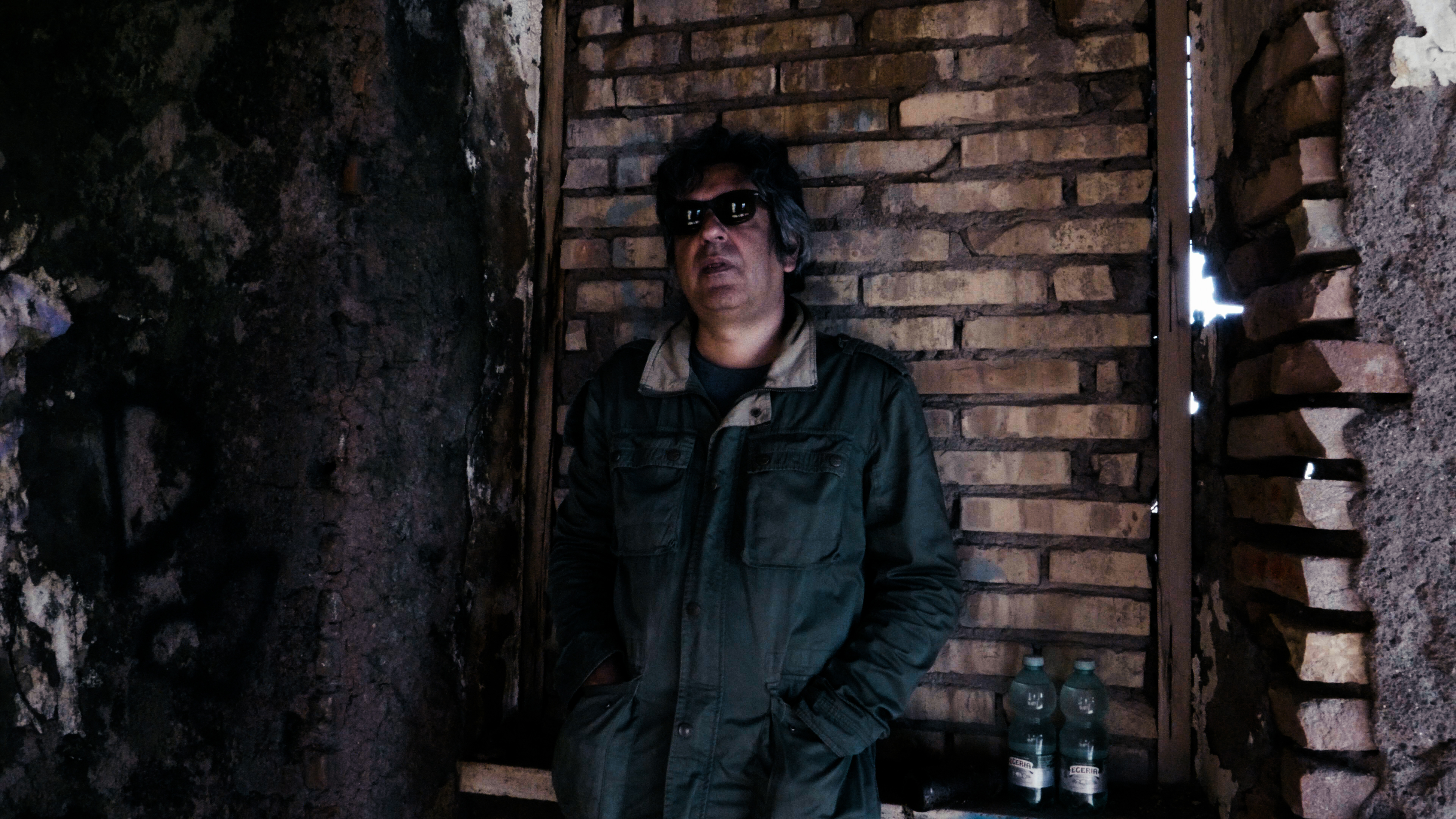
Drama, by Fabio Del Greco, Italy, 2024.
Dante Mezzadri wants to see an old friend, nicknamed the Iguana, whom he has lost sight of for many years, and who has managed to turn their shared youthful passion for poetry into a job, becoming a famous writer and poet. The man escapes from his bourgeois life and his wife to live homeless on the Roman coast, printing and trying to sell his poetry collections. At night he sleeps in a park of old carnival floats, inside a papier-mâché tank, and waits for the opportunity to meet his old friend, who however never shows up for appointments in the places they frequented when they were young, now in ruins. Dante's poetry books do not interest anyone and to support himself he is forced to "change product": he starts selling the infamous "cannibal pill" on behalf of young drug dealers, a new drug that sells like hot cakes and causes sensory and consumerist ecstasy. However, he realizes that this powerful drug is very dangerous for those who take it, he comes into conflict with his ethical conscience and throws all the pills into the sea. However, the dealers want to collect their money.
Shot over a period of 2 years, the film is a reflection on the cultural and artistic rubble of the society in which the protagonist lives, in an increasingly mechanized, consumerist and arid world. Dante Mezzadri is yet another human being who has renounced his inspiration and his creativity, but unlike many he is not willing to give his life to a system that distances him from his true identity. The physical world around him, however, seems constructed in such a way that it seems impossible to escape from this "invisible cage". The enthusiasm of the people he meets is ignited only by sensory gratification, by unreal visions of personal affirmation and success, by "metaverses" that offer an escape into an illusory and destructive reality. The poet's house on the coast, where he met with his friends as a young man, is just a pile of abandoned rubble. What happened to all those who wanted to become poets and ended up becoming something else? Are there internal forces with which that house can be "rebuilt"?
LANGUAGE: Italian
SUBTITLES: English, Spanish, French, German, Portuguese
The Lie of Happiness as a Goal
There is a particular kind of emptiness that arrives only after everything goes right. You get the promotion, the apartment, the relationship that looks correct from the outside, and somewhere in the first quiet Tuesday evening of your new life, sitting in a room that contains everything you said you wanted, something in your chest goes hollow. Not broken. Not grieving. Just hollow. As if the thing you were moving toward was never actually there, and the movement itself was the only substance.
This is not a personal failure. It is the logical outcome of a cultural instruction so deeply embedded that most people never think to question it: the instruction that happiness is a destination, that it can be aimed at directly, that the good life is the life optimally arranged for pleasant feeling. Frankl called this the existential vacuum, and he described it not as a rare clinical condition but as the mass neurosis of modernity — a widespread sense of inner emptiness that surfaces most violently precisely when external conditions improve. The person who has nothing can still organize themselves around survival. The person who has everything must confront the question that survival was successfully postponing.
Aristotle was the first to draw the line with sufficient precision. Eudaimonia, which generations of translators have lazily rendered as happiness, means something far more demanding: flourishing through the exercise of one’s highest capacities in accordance with virtue. It is not a feeling. It is an activity, a quality of engagement with existence. Aristotle understood that the pleasant life and the good life are not the same architecture. Pleasure arrives and departs according to circumstance. Eudaimonia is what happens when you are genuinely using yourself, when your life has the texture of something purposefully undertaken. Frankl read this tradition and carried it into the rubble of the twentieth century, where the distance between the two had never been more brutally legible.
Nietzsche understood the same thing from a different angle. The will to power was never, despite its misreadings, a hunger for domination. It was the drive toward self-overcoming, toward creative tension, toward the productive friction of a life spent against resistance. Nietzsche despised what he called the last man — the figure who blinks and seeks only warmth, comfort, and the elimination of difficulty, who has invented happiness and cannot stop congratulating himself for it. The last man is not suffering. He is simply going nowhere, and the nowhere is so comfortable that he mistakes it for arrival.
Consider the man who has arranged his life into exactly the shape society told him to want. There is a scene — lived, not invented — in which a person of considerable achievement stands in a glass office overlooking a city he has spent two decades conquering, and he cannot feel it. Not numbness from trauma. Numbness from saturation. He obtained everything the instruction manual specified. The manual did not mention what comes after. What comes after, it turns out, is the question the achievement was supposed to answer but never could, because the question was never about achievement at all.
Frankl published his account in 1946, one year after liberation. The book found nine million readers across forty-six languages, which is not a publishing statistic so much as a seismograph reading. That many people do not seek out a book about meaning-making in concentration camps because they are curious. They seek it out because something in them already knows the hollow Tuesday feeling, already suspects that the pursuit of happiness as a direct object is a category error, that you cannot hunt meaning the way you hunt a salary or a partner. Frankl was explicit: happiness cannot be pursued. It must ensue. It is the byproduct of a life aimed at something outside itself, a consequence rather than a cause.
The pursuit of happiness, written into the American Declaration of Independence in 1776, may be the most consequential grammatical trap in modern history. Not because happiness is wrong, but because pursuit implies a chase, a quarry, a moment of capture — and meaning refuses to be captured that way. It arrives sideways, through commitment and loss and the decision to continue anyway.
Suffering That Does Not Redeem and Suffering That Does
There is a moment when a man sits in a room that used to belong to his son. The boy is gone — not estranged, not distant, simply gone in the way that closes every door permanently. The father does not weep. He has already done that, in all the ways weeping can be done. He sits in the chair beside the empty bed and he looks at the small dents in the wall where posters once hung, and something happens that he will never quite be able to explain to anyone. He does not find comfort. He finds, instead, a kind of terrible precision — the exact outline of what his life had been organized around, made visible only now that it is absent. The shape of meaning revealed by its removal, like a fossil pressed into stone.
This is not redemption in any recognizable sense. Viktor Frankl would have been careful about that word. Redemption implies an exchange, a compensation, a ledger that balances. What Frankl described was something structurally different and philosophically far more demanding: not that suffering is redeemed by meaning, but that meaning can be found within suffering, through the one freedom no external force can confiscate — the freedom to choose one’s attitude toward what cannot be changed. He called this the last of the human freedoms. In “Man’s Search for Meaning,” first published in German in 1946 under the title “Ein Psychologe erlebt das Konzentrationslager,” he documented how this freedom operated not as an abstraction but as a daily, hourly, sometimes minute-by-minute act of will performed under conditions designed specifically to destroy the will entirely.
The historical irony is almost unbearable to contemplate. The intellectual framework that would go on to resist both nihilism and the shallow optimism of much postwar psychology was built inside Auschwitz and Dachau, forged precisely where every argument for the meaningfulness of human existence appeared most spectacularly refuted. Frankl arrived at his conclusions not despite the evidence around him but through it, which is why logotherapy carries a weight that therapeutic systems developed in consulting rooms cannot quite replicate. It did not emerge from theory. It emerged from the lived encounter with the absolute.
The concept he called “tragic optimism” is among the most misunderstood ideas in modern psychology, frequently softened into a kind of resilience rhetoric it was never meant to support. Frankl was explicit: tragic optimism is not the claim that things will improve, or that loss will eventually make sense, or that pain will be followed by gain. It is the capacity to affirm life’s potential meaning in spite of its tragic triad — pain, guilt, and death — and to turn suffering into human achievement, guilt into an occasion for transformation, and the transience of life into an incentive for responsible action. This is not consolation. It is something closer to the opposite of consolation: a refusal to look away dressed up as courage rather than as hope.
The therapeutic technique he called “dereflection” carries these philosophical implications into clinical practice. Where hyperreflection — the obsessive, self-monitoring attention to one’s own psychological state — traps a person inside the closed loop of their own suffering, dereflection redirects attention outward, toward the world, toward others, toward something the person is called to do or create or love. It does not deny the suffering. It refuses to make the suffering the final object of attention. The philosophical implication is substantial: meaning is never found by searching for meaning directly. It is found as a byproduct of commitment to something or someone beyond the self. Frankl borrowed from Kierkegaard without always citing him — the idea that the door to the self opens outward.
The father in that room is not looking for meaning. He is not performing recovery. He is simply sitting with the precise shape of what he was for, tracing its edges in the silence, and the tracing itself — that act of remaining present to the loss without fleeing into either despair or forced acceptance — is already something. Not redemption. Something older and less comfortable than that.
A vision curated by a filmmaker, not an algorithm
In this video I explain our vision
The Question Life Is Asking You

There is a moment most people recognize but rarely name: you are sitting somewhere ordinary — a waiting room, a car idling at a red light, a kitchen at six in the morning before anyone else is awake — and something shifts. Not dramatically. Not with music. The silence simply becomes pointed, as though it has been waiting for you to stop moving long enough to hear it.
Frankl’s most radical insight was not that life has meaning. It was that the question runs in the opposite direction from everything modern culture assumes. You do not interrogate life from a position of sovereign selfhood, demanding that it justify itself to your expectations, your timeline, your vision board. Life interrogates you. It presents you with a situation — a diagnosis, a betrayal, a child who needs you, a piece of work left unfinished — and it waits. Your response is not a philosophical statement. It is your answer, whether you intended to give one or not.
This reversal is so complete, so structurally opposed to the logic of consumer culture, that the self-help industry absorbed Frankl’s language precisely by eliminating his logic. By the early 2000s, “finding your purpose” had become a genre, then a market segment, then an algorithm. Apps promised meaning in seven minutes. Retreats sold clarity at three thousand dollars a weekend. The wellness industry, valued at over four trillion dollars globally by 2023, commodified the very hunger Frankl described — but repackaged it as a product you could purchase rather than a demand you were obligated to answer. Viktor Frankl, who wrote “Man’s Search for Meaning” in nine days in 1945, who had watched meaning become the last interior freedom available to human beings stripped of everything external, would have recognized the irony with a precision that has no comfortable name.
Rollo May, writing in “The Courage to Create” in 1975, observed that anxiety is not the enemy of meaning but its precondition — that the moment you feel summoned by something larger than your preferences, the terror you experience is not a symptom to be treated but a signal to be read. Modern therapeutic culture, which Frankl’s work inadvertently helped authorize, has largely inverted this too: anxiety becomes pathology, and the goal of treatment is its elimination rather than its navigation. You are meant to feel better. The question of what you owe, what you were asked, what answer your life has been constituting without your full awareness — that remains largely unaddressed in the consulting room.
There is a scene that belongs to no particular story because it belongs to all of them: a man stands in a room that was once full and is now empty. He has survived something — not heroically, not cleanly. He looks at his own hands as though seeing them for the first time, and what crosses his face is not relief, not grief, not triumph. It is the expression of someone who has just understood, irreversibly and without comfort, what was being asked of him all along. Not what he should have wanted. What he was responsible for. The difference between those two things is the entire distance between a life consumed and a life lived.
Hannah Arendt argued in “The Human Condition” in 1958 that action — genuine action, as distinct from labor or work — only becomes meaningful in retrospect, in the space between what you did and how it was received by a world that outlasts you. Frankl, who survived Auschwitz while his wife, his parents, and his brother did not, understood this not as philosophy but as scar tissue. The meaning was never in the asking. It was in the answering.
So the question is not what you want life to give you, or what narrative you would prefer to inhabit, or what version of yourself you are currently optimizing toward. The question is what has already been asked of you, in the terms life chose rather than the terms you would have preferred — and what your existence, in all its specific and irreversible particularity, has already begun to answer.
🔍 Meaning, Existence & the Search Within
Viktor Frankl‘s exploration of meaning in the darkest human conditions resonates far beyond the walls of a concentration camp. It touches philosophy, psychology, spirituality, and the deepest questions of what it means to live consciously. The articles below trace parallel paths through existence, suffering, and the human need to make sense of the world.
Must-See Movies About the Meaning of Life
Like Frankl’s logotherapy, cinema has long served as a mirror for humanity’s most urgent existential questions. Films about the meaning of life invite viewers to confront mortality, freedom, and purpose in ways that resonate deeply with Frankl’s core insights. This curated list explores cinematic works that dare to ask why we are here.
GO TO THE SELECTION: Must-See Movies About the Meaning of Life
Hannah Arendt: the Philosopher Who Unmasked the Banality of Evil
Hannah Arendt‘s philosophical work confronts the nature of evil, responsibility, and moral consciousness in ways that parallel Frankl’s direct experience in the Nazi camps. Both thinkers emerged from the horrors of the twentieth century with a profound commitment to understanding human agency under totalitarian oppression. Reading Arendt alongside Frankl offers a complementary lens on how thought can survive and resist the most dehumanizing conditions.
GO TO THE SELECTION: Hannah Arendt: the Philosopher Who Unmasked the Banality of Evil
Jiddu Krishnamurti: the Man Who Refused to Be God
Jiddu Krishnamurti, like Frankl, rejected external dogma and turned inward to locate authentic meaning and freedom. His lifelong inquiry into consciousness, suffering, and self-knowledge resonates powerfully with the existential dimension of logotherapy. Both thinkers challenge us to take radical responsibility for the quality of our inner life.
GO TO THE SELECTION: Jiddu Krishnamurti: the Man Who Refused to Be God
Universal Consciousness
The concept of universal consciousness offers a metaphysical backdrop to Frankl’s conviction that meaning is always available, even in suffering. Exploring the broader terrain of consciousness studies reveals how individual meaning-making connects to larger frameworks of being and awareness. This article provides a contemplative expansion of the existential themes central to Frankl’s vision.
GO TO THE SELECTION: Universal Consciousness
Discover the Cinema That Asks the Real Questions
If Frankl’s search for meaning has stirred something in you, Indiecinema is the streaming home for films that go beyond entertainment to explore the depths of human experience. From existential dramas to contemplative documentaries, our catalog is curated for those who believe cinema can be a path to inner discovery. Join us and keep searching.
👉 EXPLORE THE CATALOG: Watch Indie Films in Streaming
A vision curated by a filmmaker, not an algorithm
In this video I explain our vision

