
The Smell of Ambition
You iron the shirt twice. The collar has to lie flat in a specific way — not the way it falls naturally, but the way you have seen it fall on people who do not think about how their collar lies. You stand in front of the mirror and you rehearse the angle of your chin, slightly elevated, not so much that it reads as effort, just enough that it does not read as apology. You have been practicing this for longer than you will ever admit to anyone, including yourself. The rehearsal is not vanity. It is survival dressed as vanity, which is something far more expensive.

There is a particular kind of hunger that does not live in the stomach. It lives in the jaw, in the way you slow your vowels down before they leave your mouth, in the half-second pause before you say a word that you have always pronounced one way and must now pronounce another. Linguists have a name for this — hypercorrection — the phenomenon by which people who are learning a prestige dialect overshoot its rules, landing somewhere more formal than the native speakers themselves. But the clinical term dissolves the agony of the thing. What it actually feels like is a constant low-grade performance of someone you are not yet, executed with enough consistency that the world begins to treat you as if you already are.
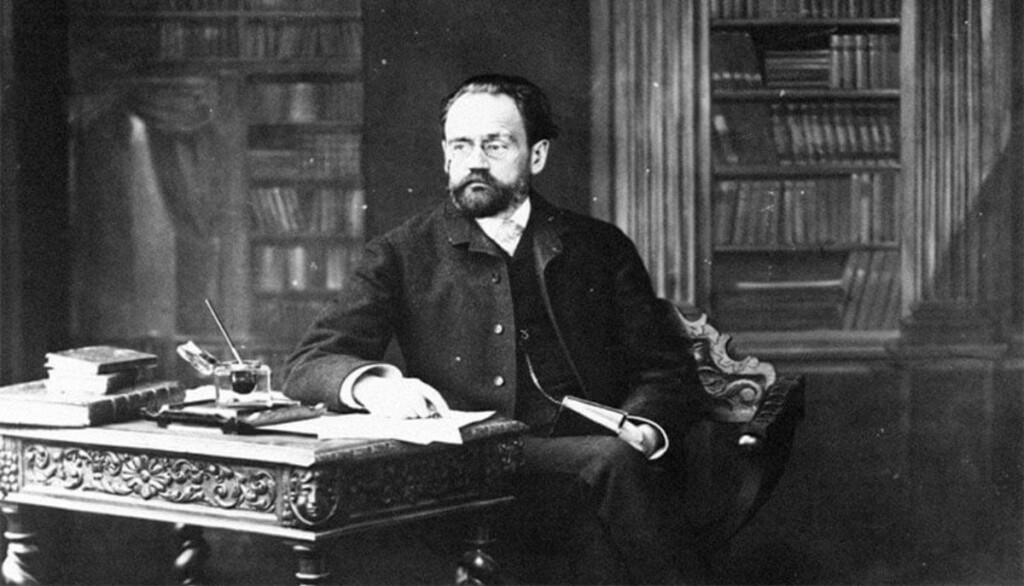
Émile Zola understood this before sociology had the language to describe it. He was writing in the 1870s and 1880s, producing his twenty-novel Rougon-Macquart cycle as a kind of autopsy of French society under the Second Empire, and what he found inside the body was not corruption as a moral failure but as a biological and environmental fact. His ambition was methodological: he called himself a naturalist, borrowing the term from Claude Bernard’s 1865 Introduction to the Study of Experimental Medicine, insisting that the novelist could apply the same observational rigor to human beings that a scientist applied to tissue samples. The novel, for Zola, was a laboratory. And the specimen under the lens was always desire — specifically, the desire to rise.
What made this dangerous, as a literary project, was not its pessimism but its honesty about the mechanics of class performance. Zola did not moralize. He recorded. In Pot-Bouille, published in 1882, he dissected the bourgeois apartment building as an ecosystem of pretense — every resident performing respectability on the public staircase while the private courtyard reeked of what was actually happening behind the doors. The smell is not metaphorical in Zola. He was obsessed with odor as social data, with the way class leaves a physical residue on bodies, on rooms, on the air itself. To move upward socially is, in his world, to learn to smell different, to scrub away the particular scent of where you came from and replace it with something that registers as neutral to those who have always lived without noticing their own smell.
This is the detail that theory tends to skip and that the body never forgets. Pierre Bourdieu would later theorize the concept of habitus — the set of dispositions, tastes, and bodily habits so thoroughly internalized through class upbringing that they feel like nature rather than history — but Zola had already shown it in operation a century before Distinction appeared in 1979. He showed it not as a concept but as a texture: the way Octave Mouret moves through a room, the way Nana understands intuitively which gestures will be read as seductive and which will be read as common, the way ambition is always also a form of self-erasure. You do not climb toward something. You climb away from yourself, which means the summit, if you reach it, is populated by someone you have not yet met.
Altin in the City

Drama, thriller, by Fabio Del Greco, Italy 2017.
Altin, aspiring Albanian writer arrived in Italy aboard a large ferry in the 90‘s, works in a butcher shop when he’s selected to audition for a reality of writers and finally sees a chance to be successful with his book “the journey of Ismail.” Unfortunately, this is the begin of the adventures which will lead him to learn about revenge, loneliness and extreme poverty, to the dark side of wealth and success.
The theme of Altin in the City should not lead to the assumption that it is merely the story of a young immigrant trying to integrate. In reality, it is a tale where greed, thirst for power and success, cynicism, and ambition intertwine, creating a sort of modern-day Faust and a new "pact with the devil" belonging to the 22nd century, which we could summarize as: show business. The reality show becomes the Mecca, the keystone, and the springboard for those who wish to achieve success without effort. Del Greco presents this world with subtle irony, characterized by kitsch nuances and parodic tones. However, success without effort comes at a price: Altin has sold his soul to the devil and, from being an easy prey of television showbiz, will soon become a victim of himself.
LANGUAGE: Italian
SUBTITLES: English, French, Spanish, German.
Zola’s Laboratory and the Lie of Neutrality
You are handed a document and told it is science. The pages describe human beings the way a chemist might describe a reaction: inputs, conditions, outputs. The language is cold, the ambition total. You read it and feel, beneath the clinical surface, something that is not calm at all.
In 1880, Émile Zola published Le Roman expérimental, a text that attempted to place the novel on the same epistemological ground as Claude Bernard’s Introduction à l’étude de la médecine expérimentale from 1865. Bernard had argued that the physician must observe, hypothesize, and test — that the body was a legible system governed by deterministic laws. Zola borrowed this architecture wholesale and applied it to society. The novelist, he insisted, was not an artist giving shape to feeling but an experimenter placing human subjects into controlled conditions and recording what happened. Heredity, environment, the pressures of poverty or desire — these were the variables. The Rougon-Macquart cycle, twenty novels published between 1871 and 1893, was meant to be the data set. A single family tracked across five generations, across the full social spectrum of the Second Empire, from the mines of Germinal to the financial markets of L’Argent to the department store floors of Au Bonheur des Dames. The ambition was staggering and the claim was simple: this is not opinion. This is observation.
What makes this claim interesting is not that it was wrong but that it was structurally necessary. The Second Empire under Napoleon III had developed a particular obsession with legibility — with the classification, mapping, and cataloguing of social bodies. Baron Haussmann’s reconstruction of Paris between 1853 and 1870 was not merely an urban project; it was an epistemological one. The old city, with its narrow streets and illegible poor quarters, was demolished precisely because it could not be surveyed. The new boulevards were wide enough for troops and transparent enough for surveillance. The state needed to see. Zola inherited this desire entirely, dressed it in the vocabulary of Bernard’s laboratory, and called it literature. His detachment was not a departure from Second Empire ideology; it was its most refined expression.
The paradox cuts deeper when you look at what the supposedly neutral gaze actually produced. Zola’s miners in Germinal are not observed without judgment — they are rendered as a geological force, subterranean, volcanic, barely human in their collective motion. His working-class women metabolize desire into destruction with a consistency that owes more to bourgeois anxiety about female sexuality than to any clinical observation. The prostitute Nana, who rises from the slums to devastate the men of the upper class before dying alone of smallpox in 1870 as the Prussians march on Paris, is presented as a force of nature, as if her social circumstances were not historical facts but biological destiny. Zola believed he was removing himself from the equation. He was, in reality, encoding the fears of his own class position — the upwardly mobile intellectual who had escaped poverty and now needed a theory that explained why others had not.
Pierre Bourdieu would later describe this as the scholastic fallacy: the tendency of those who occupy positions of intellectual privilege to mistake their situated perspective for a view from nowhere. Zola’s laboratory was never a neutral space. It was a room with one window, facing a particular direction, in a building owned by a specific historical moment. The novelist who claimed to observe without intervening was himself the most consequential variable in every experiment he designed, selecting which lives to examine, which outcomes to weight as inevitable, which suffering to frame as the tragic but logical result of nature working through matter.
The neutrality was the lie. But the lie was not cynical — and that is the more disturbing part.

The Rougon-Macquart Machine
You open the first volume and you think you are reading about a family. By the fifth, you realize you are reading about a machine.
The twenty novels Zola published between 1871 and 1893 under the banner of the Rougon-Macquart series were organized around a single premise that sounds scientific and functions like a verdict: heredity and environment determine everything. The founding document of the enterprise, the preparatory dossier Zola compiled before writing a single page of fiction, reads less like a novelist’s notebook than like a case file assembled by a court that has already reached its decision. He drew genealogical trees. He assigned temperaments to bloodlines. He distributed fates before his characters had spoken a word. The Second Empire of Napoleon III became not a historical backdrop but a laboratory sealed shut, and the Rougon branch ascending through greed and ambition while the Macquart branch descends through alcoholism and violence were never permitted to surprise the experimenter. Claude Bernard’s Introduction to the Study of Experimental Medicine, published in 1865, had argued that the scientist observes conditions and records outcomes with rigorous neutrality. Zola borrowed the methodology and quietly discarded the neutrality.
What makes this machinery so seductive and so troubling in equal measure is that it was correct about the wrong things. The crushing poverty of the Voreux mine in Germinal, published in 1885, is not invented. The forty thousand striking miners of the Nord coalfields in 1884, the year before the novel appeared, had already proved it in flesh and cold. Nana’s trajectory from working-class daughter of a laundress to expensive courtesan to corpse was not a morality tale; it was a documented economic pathway that thousands of women in Second Empire Paris navigated under the same architectural pressure. Zola read police reports, visited hospitals, descended into actual mines with a lantern. The detail is forensic. And yet the forensic precision serves a structure that ultimately cannot distinguish between describing a trap and endorsing it. When a character’s ruin is pre-inscribed in the blood they carry, the social conditions that shaped those bodies over generations quietly disappear behind the language of biology.
This is the precise point where critique folds back into justification without anyone noticing the fold. Hippolyte Taine, whose formula of race, milieu, and moment provided the intellectual scaffolding for an entire generation of deterministic thinkers in France, had argued in his History of English Literature in 1863 that human beings are products of forces larger than themselves. Zola absorbed this and turned it into narrative momentum, but momentum in a closed system always points toward the drain. The workers of Germinal rise, strike, and are eventually crushed not because Zola wanted to celebrate their crushing, but because the machine he built had no exit valve. Etienne Lantier walks away at the end of the novel with ideas of revolution stirring in him, but he is still a Macquart, still carrying the inherited flaw, and the reader who has followed twenty volumes knows what that means for every subsequent generation. The critique of capitalism required, within Zola’s own structural logic, characters too damaged by their inheritance to fully transcend it.
There is something almost theological about this architecture. The characters know their condition with extraordinary lucidity. Gervaise in L’Assommoir, published in 1877, names her own destruction as she slides into it, observing herself with the detached clarity of someone reading their own autopsy. The self-awareness changes nothing. It is not ignorance that keeps these people trapped but the very mechanism Zola designed to expose their entrapment. To build a system that shows the cage so vividly that the reader can count every bar is not the same as showing the door. The question the cycle never answers, and perhaps was never designed to answer, is whether the act of rendering suffering as inevitable was itself a political choice dressed in the white coat of science.
Desire as Social Grammar
You are standing in a department store in Paris, 1869, and you do not know what you want. What you know is that the woman to your left is reaching for a particular shade of fabric, and that something in her gesture — the ease of it, the absence of hesitation — tells you that she already belongs to a world you are only approximating. You reach for the same fabric. This is not imitation. It is grammar.
Thorstein Veblen published The Theory of the Leisure Class in 1899, and what he diagnosed was not vanity but syntax. The ruling classes of industrial capitalism had developed a precise and legible code through what he named conspicuous consumption — the public expenditure of wealth not for utility but for visibility. To consume was to speak. To consume correctly was to be heard. The object mattered less than its placement within a shared system of meanings, and that system was not invented by any individual: it was inherited, absorbed, enforced by the social body itself without anyone ever issuing explicit instructions.
What Zola understood before Veblen named it is that this grammar reaches far below the luxury tier. Gervaise in L’Assommoir does not desire rest in any abstract or philosophical sense — she desires the particular form of rest that her milieu has coded as arrival: a clean shop, a Sunday dinner with neighbors, the visible evidence of having risen. When that evidence crumbles, it does not crumble as a personal failure. It crumbles as an expulsion from legibility itself. She is no longer readable within the only social text she has ever been given. Zola tracks that illegibility with the patience of a clinician, watching a woman become untranslatable to herself.
The trap embedded in Veblen’s analysis — and the one naturalism keeps springing open — is that desire feels authored. It arrives as urgency, as need, as something that rises from the body and the gut rather than from the street and the shop window. Ernest Gellner, writing much later about the structures of industrial society, observed that modernity did not liberate individuals into authentic self-expression; it produced standardized units of need that could be satisfied by standardized units of supply. The feeling of wanting is real. The content of the want is borrowed. This is not a comfortable distinction to sit with, because it does not leave a clean outside from which to critique the system — you are already inside it, already speaking its sentences as though they were your own.
Nana, in the novel that bears her name, accumulates lovers and jewels and carriage horses with an appetite that reads, on the surface, as excess. Bourgeois critics of Zola’s time read it exactly that way: as pathology, as the unbounded hunger of a class that does not know how to want correctly. But the novel does something more precise. It shows that Nana’s desire is not excessive in relation to the desires of the men who surround her — it is merely unentitled. The count who ruins himself for her is not accused of excess. His consumption of bodies and pleasure is invisible as consumption because the grammar permits it. Hers is visible, punishable, spectacular, because the grammar assigns women of her position the role of object rather than subject of wanting. The novel does not moralize this. It anatomizes it.
What Veblen called the leisure class and what Zola called the social milieu are, at their structural core, the same mechanism described from different angles: a world in which the capacity to want certain things, in certain ways, with certain objects, is distributed as unevenly as capital itself. And the cruelest refinement of this distribution is that those excluded from legitimate desire are taught to experience that exclusion as personal failure, as weakness of character, as something they did rather than something done to them before they were old enough to ask what they wanted in the first place.
The Body That Betrays You
You are standing in a room full of people who belong there, and you know — not because anyone has told you, but because your hands don’t know where to go — that you do not.
That knowledge lives below language. It is not a thought you think; it is a temperature your body reads before your mind has processed anything at all. Pierre Bourdieu spent much of his career trying to name this phenomenon, and what he arrived at in Distinction, published in 1979, was the concept of habitus: the system of durable, transposable dispositions that each person carries inside them, deposited there not by choice but by the accumulated sediment of their social history. Habitus is not personality. It is not even identity in the way the word is commonly used. It is the specific grammar of your body — how you hold a fork, how long you pause before speaking in a meeting, whether you laugh at the right moment or half a second too late, whether your vowels open too wide or your shoulders close too quickly when a stranger addresses you. These are not quirks. They are class, made flesh.
What Bourdieu understood, with a clarity that was partly sociological and partly autobiographical — he was himself a provincial from Béarn navigating the Parisian academic world — was that the body is the most ruthless archivist of origin. It stores everything your family could not afford, every room you were never invited into, every silence that fell when you asked the wrong question. And it stores these things in ways you cannot simply decide to overwrite. You can learn the correct vocabulary of a social world above your own. You can memorize its aesthetic preferences, its table manners, its references. What you cannot do, at least not fully, is make the learning feel like breathing. The person who has acquired the rules always moves with the faint mechanical quality of someone following instructions, while the person who was born into them moves with the carelessness of someone who has never had to think about them at all. That carelessness is the real currency. It cannot be counterfeited without the counterfeit showing.
Zola’s characters break against precisely this wall. Octave Mouret in Pot-Bouille, published in 1882, is a man of formidable intelligence, relentless drive, and genuine commercial genius. He reads his environment correctly, positions himself shrewdly, and understands what people want before they articulate it. And yet there is always a register in which he is wrong — a moment of excess in his charm, a calculation that surfaces too visibly, a hunger that the truly secure would never permit themselves to display. His ambition, in other words, is itself the wound. The fact that he wants upward mobility so legibly marks him as someone who began without it. The bourgeoisie he wants to enter does not merely evaluate what you have achieved; it evaluates whether you seem to need achievement at all. Needing is lower-class. Wanting is suspicious. The truly incorporated member of the dominant class desires refinement the way the body desires oxygen — without drama, without announcement, without the trembling around the edges that betrays effort.
Gervaise Macquart’s failure in L’Assommoir, from 1877, operates on this same axis but with even less mercy. Her ambition is modest by any reasonable standard — a small laundry, a room that belongs to her, a table where her children eat regularly. But her body, shaped by alcoholism, physical labor, and inherited precarity across the entire Rougon-Macquart genealogy that Zola had already architected before the novel began, is not a body that can sustain even modest ascent. It is not that she lacks willpower in the way a morality tale would frame it. It is that the physical substrate of her existence has been structured by forces that preceded her by a generation. Her posture, her exhaustion, her vulnerabilities are not hers alone. They are the postures and exhaustions of everyone who came before her, crystallized into muscle memory and neurological habit, into a body that was never designed to hold ambition without cracking under its weight.
A vision curated by a filmmaker, not an algorithm
In this video I explain our vision
When the System Rewards Cruelty

Picture a manager at a company reviewing the quarterly numbers. He is not cruel by temperament — his colleagues describe him as warm, someone who remembers birthdays, who once drove a sick employee to the hospital at midnight. He looks at the spreadsheet and identifies a redundancy: a position that has become structurally unnecessary since the merger. The person in that position is a forty-seven-year-old woman who has held the role for nineteen years, whose salary has climbed to a level no longer justifiable against the output metrics, and who would take eighteen months to replace, at which point the division would have already restructured around her absence. He signs the termination. The system has not malfunctioned. It has worked precisely as intended.
Zola understood this mechanism with a precision that most of his contemporary critics found almost obscene. What disturbed them about the Rougon-Macquart cycle was not its darkness per se but its refusal to assign that darkness to individual failure or moral corruption. In Germinal, published in 1885 after three years of meticulous research in the coal mines of northern France, the mine directors who decide to cut wages during a period of financial crisis are not sadists. They are responding to investor pressure, to market conditions, to a logic of capital that would have produced the same outcome regardless of who occupied their chairs. The strike that follows, the starvation, the violence, the final catastrophic flooding of the mine — none of it emerges from anyone’s malice. It emerges from a structure that has made cruelty the rational choice at every juncture.
This is where naturalism departs most sharply from the reformist fiction that preceded it. The Victorian moral novel — and Dickens is the clearest example — locates evil in particular individuals: the miser, the hypocrite, the cold administrator with ice where his heart should be. The correction it implies is moral education, or the awakening of conscience, or the intervention of a compassionate benefactor. Zola refuses this consolation because he has read Darwin and Spencer carefully enough to see that what they described was not a temporary deviation from natural harmony but the operating principle of social organization itself. Herbert Spencer’s application of evolutionary theory to human society, which he codified throughout the 1860s and 1870s in his Principles of Biology and later works, gave Zola a framework in which suffering was not an anomaly to be corrected but an output of selection pressure. The strong configurations survive. The others are absorbed or eliminated.
What Zola adds to Spencer — and here is the precision that makes him more than a sociologist in prose — is the subjective cost. He is not interested only in the aggregate. He insists on following one body, one nervous system, one inherited disposition through the machinery of the structure. Catherine Maheu in Germinal does not represent the working class. She is a specific young woman whose specific exhaustion, whose specific desire for something beyond the shaft and the lamp, is crushed not by a villain but by arithmetic. The price of coal. The thickness of a seam. The rate of return demanded by shareholders in Paris who have never descended below street level. The distance between cause and effect is so vast that accountability dissolves entirely, which is precisely what the structure requires.
Sociology would later develop a name for this kind of dissolution. C. Wright Mills, writing in 1959 in The Sociological Imagination, distinguished between personal troubles and public issues — arguing that what individuals experience as private failure is almost always the surface expression of structural arrangements they did not design and cannot individually escape. But Mills was writing analysis. Zola had been writing it first as sensation, as smell, as the weight of wet coal dust in a lung that will never fully exhale again. The system does not need to be malevolent to be lethal. It only needs to be consistent.
The Myth of the Self-Made Ascent
You have been told, at some point in your life, that the ones who made it simply wanted it more. The sentence arrives casually, dropped into conversations about success the way people drop sugar into coffee — automatically, without examining what it dissolves. It feels like an observation. It is, in fact, a verdict on everyone who did not rise.
The Third Republic prided itself on meritocracy with an almost liturgical fervor. The grandes écoles, the concours, the republican ideal of careers open to talent — all of it was institutionally real and statistically negligible. Between 1870 and 1900, the period during which Zola was producing the Rougon-Macquart cycle, vertical social mobility across class lines in France remained extraordinarily limited. Historical sociologist Charles Tilly, in Durable Inequality published in 1998, documented how categorical distinctions — between propertied and wage-dependent, between educated and functionally literate — reproduced themselves not through overt discrimination alone but through the structural organization of opportunity itself. The ladder existed. The rungs were simply spaced in ways that favored those who already stood higher.
Zola understood this architecturally. What makes Germinal, published in 1885, so formally uncomfortable is that it refuses the consolation of an exceptional individual. Étienne Lantier arrives in the mining basin of Borinage with more literacy and more political consciousness than those around him, and it changes almost nothing for the collective and very little for himself. The system does not punish him because he is weak. It contains him because it is designed to contain. The genius of the novel is that ambition is portrayed not as the engine of ascent but as the fuel that burns inside a sealed engine — producing heat, producing suffering, producing nothing that escapes.
Yet Zola’s readers were not miners. His readership was overwhelmingly bourgeois, the very class whose comfort rested on the conditions he described. When Germinal sold tens of thousands of copies and was debated in Parisian salons, the working-class body it depicted functioned less as a political indictment than as a kind of controlled aesthetic shock — suffering observed from a safe elevation, suffering that confirmed the reader’s distance from it. This is not a cynical reading of Zola’s intentions. It is an accurate account of how naturalism was metabolized by the culture that consumed it. The spectacle of deprivation, rendered with documentary precision, paradoxically stabilized the social imagination of those who could afford to read about it in upholstered chairs.
Pierre Bourdieu, developing his concept of cultural capital across several decades of empirical research culminating in Distinction in 1979, showed that the consumption of serious literature was itself a class performance — a way of accumulating symbolic prestige that reinforced, rather than questioned, hierarchical position. The bourgeois reader of Zola was not being radicalized. He was being cultivated. His seriousness, his willingness to confront difficult social material, confirmed him as someone with the refinement to handle it — which is to say, someone clearly not implicated in it.
Ambition, then, is not a private virtue. It is a permission slip, and the signatories are not neutral. What gets called self-determination in retrospect is almost always the story of someone whose ambition encountered the right infrastructure at the right moment — a scholarship that existed, a mentor who recognized something, a city that was absorbing a certain class of worker precisely that decade. The mythology strips the infrastructure away and leaves only the individual standing in the light of their own effort, which feels heroic and is, in measurable fact, a selective narrative imposed on a far messier set of causes.
What the myth of self-made ascent most reliably accomplishes is not the inspiration of those below. It is the moral insulation of those already above, who can point to their own trajectory as evidence that the structure is fair — when all they have actually proven is that the structure, on that occasion, chose them.
What Naturalism Could Not Say
You are reading a man destroyed by the system he was born into, and the destruction is rendered with such precision, such clinical tenderness, that you finish the final page feeling you have witnessed something true — and then, slowly, the discomfort sets in, because the truth you witnessed had no door in it.
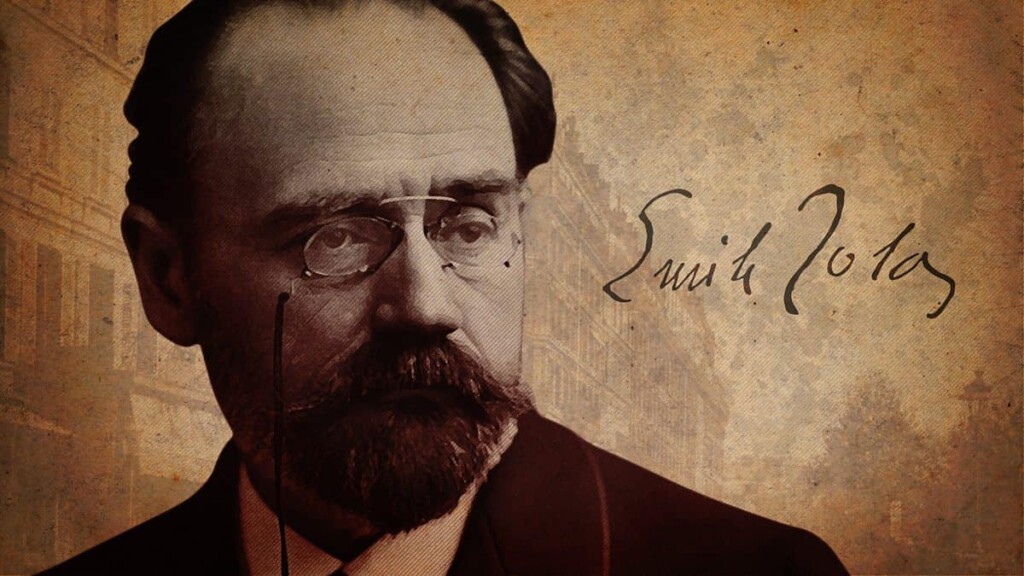
This is the unspoken ceiling of Émile Zola’s entire naturalist architecture. The Rougon-Macquart cycle, all twenty novels completed between 1871 and 1893, constitutes one of the most exhaustive sociological portraits of a civilization ever assembled in fiction — heredity, labour, capital, desire, addiction, class, flesh. Zola read Claude Bernard’s Introduction to the Study of Experimental Medicine and took the method literally: the novelist as scientist, the novel as controlled experiment, the character as specimen placed under observable conditions. What the scientist cannot do, however, is step outside the laboratory’s walls, and Zola never did.
The vocabulary of naturalism was borrowed from the very structure it claimed to examine. When Zola depicted ambition — in Octave Mouret’s ruthless construction of the department store in Au Bonheur des Dames, published in 1883, or in Eugène Rougon’s parliamentary ascent — he used the language of progress, accumulation, and upward movement as though these were neutral coordinates, geographic facts rather than ideological choices. Progress toward what? Accumulation of what? The questions were left sealed inside the prose, treated as self-evident, because the nineteenth-century positivist framework that gave naturalism its intellectual legitimacy could not generate those questions from within itself. Auguste Comte had declared that the scientific era represented the final and highest stage of human thought, and naturalism, despite its darkness, never fully escaped that inherited triumphalism.
Herbert Spencer was translating Darwin into social grammar at the same moment Zola was writing, and the contamination ran deep: the idea that society could be documented like a biological organism carried with it the silent assumption that its hierarchies were, at some level, natural — observable, measurable, perhaps lamentable, but not fundamentally challengeable within the terms of the description. When Zola showed a miner crushed by the mine, he showed it with fury and compassion, but the mine itself, as a structure of organized extraction, remained a feature of the landscape rather than a question. Germinal, published in 1885, ends with the earth trembling, with something underground beginning to move — the famous final image of germination — but the image is biological, not political. It promises growth without specifying what grows, hope without specifying hope for what, because the naturalist method could record pressure but could not theorize rupture.
What the reader is left holding, then, is a mirror of exceptional craftsmanship. The reflection is accurate. The light is unsparing. The faces in the glass are recognizable, sometimes devastatingly so. But a mirror cannot show you what is behind you, cannot show you the room that the room you are standing in replaced, cannot show you the door that was bricked over before you were born. Sociologist Pierre Bourdieu would later argue, in Distinction, published in 1979, that one of the most powerful functions of cultural systems is precisely this: to make the arbitrary appear inevitable, to present the historical as the natural. Zola documented the arbitrary with enormous moral seriousness, but the language he used to document it — aspiration, failure, rise, fall, the organism struggling against its environment — was itself a product of the same cultural system, a vocabulary shaped by the industrial capitalism whose violence he spent a lifetime cataloguing.
The trap of naturalism, finally, is that it could make you feel the walls with extraordinary vividness, map every brick, measure every shadow, and still leave you standing inside, because the imagination of an outside requires a language that did not yet exist within the discourse of progress — and Zola, for all his furious genius, had only the words his century gave him.
🏙️ Society, Ambition, and the Naturalist Gaze
Zola’s naturalism dissects social ambition with the precision of a surgeon, exposing how class, desire, and environment shape human destiny. These related articles trace the intellectual currents that run alongside and beneath Zola’s literary project, from the sociology of taste to the literature of working-class identity.
Bourdieu’s Distinction: Taste and Social Class
Pierre Bourdieu’s landmark study ‘Distinction’ reveals how aesthetic preferences are never innocent but deeply tied to social class and inherited capital. This framework resonates powerfully with Zola’s naturalist world, where characters’ tastes, manners, and aspirations betray their origins. Bourdieu gives us the sociological vocabulary to decode what Zola rendered in dramatic narrative form.
GO TO THE SELECTION: Bourdieu’s Distinction: Taste and Social Class
Ernaux’s A Man’s Place: Analysis
Annie Ernaux’s ‘A Man’s Place’ is a sober, almost clinical account of her father’s life and the unbridgeable distances created by social mobility. Like Zola, Ernaux observes how ambition and class ascent carry a hidden cost — shame, estrangement, and the erasure of one’s origins. Her prose inherits the naturalist tradition’s commitment to unflinching social truth.
GO TO THE SELECTION: Ernaux’s A Man’s Place: Analysis
Eribon’s Returning to Reims: Analysis
Didier Eribon’s ‘Returning to Reims’ revisits his working-class origins through the lens of sociology and autobiography, interrogating how class shapes identity and political consciousness. The book echoes Zola’s preoccupation with heredity and environment as forces that constrain and define individuals. Eribon demonstrates that the naturalist question — how does society produce the person? — remains urgently contemporary.
GO TO THE SELECTION: Eribon’s Returning to Reims: Analysis
Karl Marx and Alienation: Economic and Philosophical Manuscripts
Marx’s early manuscripts on alienation provide a philosophical foundation for understanding the dehumanizing forces that Zola dramatized in the mines, factories, and bourgeois salons of his Rougon-Macquart cycle. Alienated labor transforms workers into instruments of a system indifferent to their humanity, a vision Zola translated into visceral literary flesh. Reading Marx alongside Zola reveals how literature and political economy can illuminate the same social wound from different angles.
GO TO THE SELECTION: Karl Marx and Alienation: Economic and Philosophical Manuscripts
Discover the Cinema of Social Truth on Indiecinema
If Zola’s naturalism has stirred something in you — a hunger for stories that confront society without flinching — then Indiecinema is your next destination. Our streaming platform curates independent and auteur films that carry that same unflinching gaze, from working-class portraits to radical social dramas rarely seen on mainstream screens. Come explore a cinema that believes, as Zola did, that art must tell the truth.
👉 EXPLORE THE CATALOG: Watch Indie Films in Streaming
A vision curated by a filmmaker, not an algorithm
In this video I explain our vision

