
The Meal You Didn’t Know Was a Test
You reach for the bread before anyone else does, and something shifts in the room. Not dramatically — no one says a word, no eyebrow visibly rises — but you feel it, that almost imperceptible recalibration of the air, the way a conversation doesn’t quite stop but loses a half-beat of momentum. You put the bread down. You pick up the wrong glass. The music playing through the speakers is something you don’t recognize, something without a melody you can hold onto, and the host mentions the composer’s name with a casualness that implies you should already know it. You smile and nod and spend the next three hours in a state of low-grade vigilance, monitoring every gesture, every word, every moment of laughter — laughing a half-second after everyone else because you’re waiting to understand what’s funny before you commit.

This is not a social anxiety problem. This is not about confidence or self-esteem or the particular cruelty of that host. This is the architecture of social life itself, functioning exactly as it was designed to function. The examination was always already underway. You simply weren’t given the syllabus, because the syllabus is the point — its concealment is what makes the whole mechanism work.
Pierre Bourdieu spent the better part of three decades trying to name what you felt at that table. His landmark 1979 work, La Distinction: Critique sociale du jugement, published in English in 1984 as Distinction: A Social Critique of the Judgement of Taste, is arguably the most unsettling sociology book ever written — not because it presents disturbing facts about the world, but because it describes the ordinary fabric of daily life with a precision that feels like exposure. Bourdieu surveyed roughly 1,200 French people across different social classes, asking them about their aesthetic preferences, their leisure habits, their relationship to food, music, furniture, film. What emerged was not a catalogue of tastes but a map of domination.
The central claim is as simple as it is devastating: taste is not personal. What you find beautiful, what food you consider refined, what music you think is sophisticated — none of it rises from some authentic interior self. It rises from your social position, from the conditions under which you were formed, from the particular class fraction that shaped your earliest and most unremarkable experiences. Bourdieu called this the habitus — that deeply embodied set of dispositions, perceptions, and practices that you carry without knowing you carry them, that operate below the threshold of consciousness, that make certain things feel natural and others feel coarse, certain gestures feel elegant and others feel grotesque. The habitus is not ideology. It is not false consciousness in the old Marxist sense. It is something more intimate and therefore harder to dislodge: it is your second nature mistaken for your first.
What makes the dinner table scene so precise as a diagnostic instrument is exactly that nobody explains the rules. That is structural, not accidental. Norbert Elias had already traced in The Civilizing Process, published in 1939, how the codification of table manners across European courts served to distinguish the aristocracy not by explicit proclamation but by the naturalization of refinement — the fork held just so, the elbows never on the table, the body disciplined into a performance of ease that signals mastery through its apparent effortlessness. The key word there is apparent. What looks like ease is years of training so thoroughly absorbed it no longer looks like training at all.
You reach for the bread. Someone else already knew not to. They didn’t decide not to — they simply didn’t want to, not yet, not first. Their desire itself had already been educated. And that education is invisible, which is precisely why it functions as capital.
The Lost Poet

Drama, by Fabio Del Greco, Italy, 2024.
Dante Mezzadri wants to see an old friend, nicknamed the Iguana, whom he has lost sight of for many years, and who has managed to turn their shared youthful passion for poetry into a job, becoming a famous writer and poet. The man escapes from his bourgeois life and his wife to live homeless on the Roman coast, printing and trying to sell his poetry collections. At night he sleeps in a park of old carnival floats, inside a papier-mâché tank, and waits for the opportunity to meet his old friend, who however never shows up for appointments in the places they frequented when they were young, now in ruins. Dante's poetry books do not interest anyone and to support himself he is forced to "change product": he starts selling the infamous "cannibal pill" on behalf of young drug dealers, a new drug that sells like hot cakes and causes sensory and consumerist ecstasy. However, he realizes that this powerful drug is very dangerous for those who take it, he comes into conflict with his ethical conscience and throws all the pills into the sea. However, the dealers want to collect their money.
Shot over a period of 2 years, the film is a reflection on the cultural and artistic rubble of the society in which the protagonist lives, in an increasingly mechanized, consumerist and arid world. Dante Mezzadri is yet another human being who has renounced his inspiration and his creativity, but unlike many he is not willing to give his life to a system that distances him from his true identity. The physical world around him, however, seems constructed in such a way that it seems impossible to escape from this "invisible cage". The enthusiasm of the people he meets is ignited only by sensory gratification, by unreal visions of personal affirmation and success, by "metaverses" that offer an escape into an illusory and destructive reality. The poet's house on the coast, where he met with his friends as a young man, is just a pile of abandoned rubble. What happened to all those who wanted to become poets and ended up becoming something else? Are there internal forces with which that house can be "rebuilt"?
LANGUAGE: Italian
SUBTITLES: English, Spanish, French, German, Portuguese
Pierre Bourdieu and the Unmasking of Taste
He knew the feeling from the inside. Not as a concept, not as something he had read about in the library of the École Normale Supérieure, but as a physical sensation — the slight tightening in the chest when you enter a room and understand immediately, before anyone speaks, that you do not belong to it in the same way the others do. Pierre Bourdieu was born in 1930 in Denguin, a small commune in the Béarn region of southwestern France, to a father who sorted mail for the postal service. He arrived in Paris on a scholarship, carrying with him an accent, a set of reflexes, a way of holding a fork, a relationship to silence at the dinner table that marked him as surely as a brand. He never forgot that gap. In fact, he spent his entire intellectual life turning it into a scalpel.
What made Bourdieu unusual among the great French theorists of his generation was precisely this: he had no interest in pretending the wound did not exist. Where others aestheticized their provincial origins or dissolved them into abstraction, Bourdieu kept returning to the concrete social machinery that had produced him and, more pressingly, that continued to reproduce itself around him with perfect, invisible efficiency. His move from Béarn to the corridors of one of the most elite academic institutions in Europe was not a triumph over the system. It was, he would come to understand, the system operating exactly as designed — selecting just enough exceptions to convince everyone that the selection was fair.
The book that crystallized this understanding took nearly two decades to build. Bourdieu and his research team conducted extensive surveys across France throughout the 1960s, interviewing people from different class positions about their preferences in music, painting, food, furniture, clothing, sport, and home décor. The resulting data was not primarily about what people liked. It was about what liking certain things did — socially, structurally, politically. When Distinction: A Social Critique of the Judgement of Taste was published in 1979, it ran to nearly six hundred pages and landed like a slow-moving but irreversible flood. By the time its waters receded, very little of the intellectual landscape looked quite the same.
The central argument was deceptively simple and devastating in its implications. Taste, Bourdieu demonstrated, is not a personal attribute. It is not the expression of some inner self finally free to choose. It is the internalized map of a class position, learned so early and so thoroughly that it feels like nature. He called this the habitus — the system of durable dispositions acquired through socialization, which generates perceptions, judgments, and practices that are structurally consistent with the conditions that produced them. You do not decide to find a certain kind of painting vulgar or a certain piece of music uplifting. You were trained to, in a training so long and so diffuse that it left no memory of itself.
This is why Distinction became one of the most cited works in the entire history of social science — not because it offered a particularly elegant theory, though it did, but because it described something people recognized with uncomfortable precision. It exposed the polite violence hidden inside the phrase “I just have good taste.” It showed that the distance between what is considered refined and what is considered crude is not aesthetic but political. It mapped the ways in which cultural hierarchies serve as class hierarchies wearing better clothes.
Bourdieu had seen it happen to himself. He had watched his own preferences shift, had felt the old ones become sources of embarrassment, had noticed the process by which a displaced person slowly learns to be ashamed of what they once loved without anyone ever directly telling them to. He wrote Distinction the way someone writes a letter they have been composing in their head for thirty years.

Habitus: The Grammar You Learned Before You Could Speak
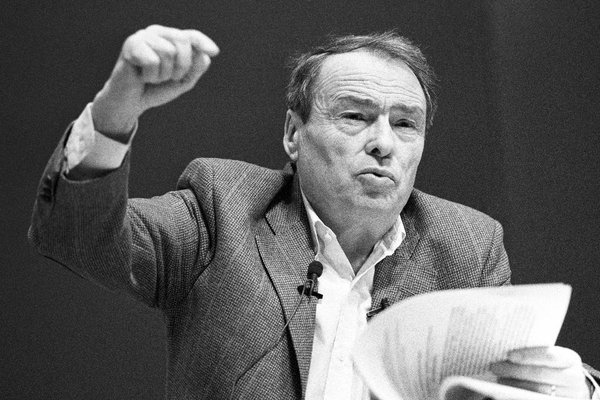
You walk into the room and something happens before a single thought forms. Not anxiety, not self-consciousness — something more primitive than either of those. Your shoulders do something. Your hands, which a moment ago had a place, suddenly do not. The air in the room has a texture you have never learned to breathe comfortably, and you know this not because you analyzed it but because your body already knows, the way a muscle knows a movement it has never been trained for. You have not been rejected. No one has looked at you with anything you could name. And yet the knowledge is already there, inscribed somewhere below the sternum, that you do not belong here.
This is not a psychological event. It is a somatic one. And Pierre Bourdieu spent the better part of his intellectual life trying to give it a name precise enough to do it justice. He called it habitus — a concept he developed most rigorously in The Logic of Practice, published in 1980, building on years of fieldwork in Algeria and in the French educational system. Habitus is the system of durable, transposable dispositions through which we perceive, judge, and act in the world. It is not ideology you were taught. It is not a set of rules you memorized. It is the grammar of your existence, absorbed so early and so thoroughly that it operates beneath the threshold of conscious choice, structuring your responses before your mind has the chance to intervene.
Your posture is part of it. The angle at which you hold your chin when addressing someone with authority. The volume you modulate your voice to when entering a room that smells of money. The speed at which you eat, the way you hold a fork, whether you read the wine list with interest or with something that flickers briefly between curiosity and dread. None of these are accidents. Every one of them is a sediment of history — of your family’s place in the social order, of the schools you attended or didn’t, of the kitchens and living rooms and waiting rooms where your body learned what it was.
Norbert Elias had seen this mechanism decades earlier, from a different angle. In The Civilizing Process, published in 1939 and largely ignored until its rediscovery in the 1970s, Elias traced how manners — the rituals around eating, bodily functions, forms of address — were not simply expressions of refinement but instruments of social differentiation and, ultimately, of power. The court aristocracy of early modern Europe did not develop elaborate codes of etiquette out of hygiene or aesthetic preference. They developed them as a technology of exclusion, a constantly recalibrating system that ensured the newly arrived, the upwardly mobile, the ambitious outsider, would always betray themselves through the body before they could betray themselves through speech. Bourdieu extends this logic into the modern democratic era, where the aristocracy of birth has been replaced by the aristocracy of culture, but the body remains the primary site where social order is enforced and reproduced.
What makes habitus so difficult to escape is precisely that it does not feel like a cage. It feels like yourself. The preferences you experience as genuine — the music that moves you, the spaces where you feel at ease, the styles of speech that feel natural versus affected — are not arbitrary personal traits. They are the embodied record of where you came from. And because they feel like you, questioning them requires something close to a violence against the self, a willingness to notice that the most intimate parts of your identity were never entirely your own to begin with.
The man who feels his shoulders drop when the sommelier ignores him is not being paranoid. He is reading a room that has been arranged, for centuries, to be read exactly that way.
Cultural Capital and the Invisible Inheritance
You passed the entrance exam. You scored in the top percentile. Your application was technically flawless, your grades a testament to years of disciplined effort, of libraries stayed open until closing time, of textbooks bought secondhand with cracked spines. And then you walked into that first seminar room and understood, within approximately four minutes, that the exam had been the easy part.
It is not that you did not know things. It is that you did not know how to wear what you knew. You spoke too directly. You laughed at a moment when the others simply smiled. You referenced something popular when the room expected something obscure, and when someone name-dropped a mid-century German philosopher as casually as a weather observation, you felt the specific shame of not knowing whether to nod or admit ignorance, and you chose to nod, which was its own kind of defeat.
This is precisely where Bourdieu’s architecture of capital becomes most ruthless in its precision. In his framework, capital operates in three principal registers: economic capital, which is wealth and its direct convertibility; social capital, which is the network of durable relationships and mutual recognition that opens doors before you even knock; and cultural capital, which is the accumulated knowledge, dispositions, linguistic competencies and aesthetic sensibilities that allow a person to navigate, and be recognized within, the fields that matter. Of these three, cultural capital is the most dangerous instrument of social reproduction, not because it is the most powerful in raw terms, but because it is the most effectively disguised. Economic inheritance is visible. Cultural inheritance presents itself as natural intelligence, as sensitivity, as effortless good taste. It arrives wearing the costume of the individual.
Bourdieu identified cultural capital as operating in three states: the embodied state, which is the long-lasting dispositions of the mind and body; the objectified state, which is cultural goods like books, instruments, art objects; and the institutionalized state, which is academic credentials that formally consecrate what was already inherited. The credential feels like a meritocratic endpoint. What Bourdieu insists on is that it is merely the formal recognition of a process that began in the cradle, in the dinner table conversation, in the museum visit at age seven, in the parent who corrected your grammar not as correction but as habitual speech.
Annette Lareau documented this mechanism with the kind of patient, empirical granularity that makes abstract theory impossible to dismiss. Her 2003 study Unequal Childhoods followed families across race and class lines and identified two fundamentally different parenting logics operating as class-stratified cultural practices. Middle-class families engaged in what she called concerted cultivation: the deliberate, organized development of children’s talents through structured activities, reasoned negotiation, and the cultivation of a sense of entitlement to engage with institutions as equals. Working-class and poor families operated through what she termed the accomplishment of natural growth: providing children with safety, love and basic provision while allowing them to develop through unstructured time, peer interaction and family networks. Neither logic is morally superior. But only one of them, as Lareau demonstrates with uncomfortable precision, produces children who arrive at institutions already fluent in their unspoken languages.
The young person who walked into that seminar room was not less intelligent. They were less rehearsed in the performance that intelligence is supposed to wear in rooms like that one. And this is the trap that cultural capital springs so elegantly: because the performance looks like the thing itself, because the ease looks like aptitude, because the reference dropped without effort looks like genuine knowledge, the person who cannot perform it is read not as culturally underprepared but as simply less capable. The inheritance remains invisible. The deficit is made to appear personal.
The Aesthetic Gaze as Class Weapon
There is a particular kind of silence that fills a room when a film slows down beyond what the audience expected. Not silence from absorption, but the silence of people deciding whether they are bored or whether they are supposed to feel something. You have probably been in that room. Maybe you were the one shifting in your seat, checking how much time remained, wondering if your discomfort was a failure of yours or a failure of the work. And maybe, sitting next to you, someone was perfectly still, breathing slowly, watching a man walk across a grey landscape for four uninterrupted minutes with the expression of someone receiving a gift. The distance between those two experiences is not a distance of intelligence. It is a distance of training, and training is always a distance from something else — specifically, from the pressure of necessity.
Kant believed that genuine aesthetic experience required what he called disinterested pleasure. In the Critique of Judgment, published in 1790, he argued that to truly perceive the beautiful, the observer must bracket all personal interest, all desire, all utility. The beautiful is not beautiful because it serves you. It is beautiful because it arrests you without demanding anything in return. This capacity for pure, functionless contemplation Kant presented as a universal potential of human reason — not a privilege, not a social achievement, but the natural posture of any mind capable of rising above mere appetite. The aesthetic gaze, in this framework, belongs to everyone in principle precisely because it belongs to no one in particular.
Bourdieu spent an entire career showing what that universalism was concealing. In Distinction, published in French in 1979 and based on surveys of French society conducted throughout the 1960s and early 1970s, he demonstrated that the capacity for disinterested aesthetic contemplation is not a natural faculty lying dormant in every human being, waiting only to be awakened by contact with great art. It is a competence produced by specific material and educational conditions, conditions that require, above all, that you have been sufficiently insulated from economic urgency to develop a relationship to the world that is not primarily functional. What Kant calls universal, Bourdieu calls aristocratic. Not in the sense of nobility, but in the etymological sense: the disposition of those who have never had to ask what something is for before they could afford to ask what it looks like.
The person sitting still in that darkened room, finding meaning in the four-minute walk across grey stone, has almost certainly grown up in an environment where culture was consumed without apology, where art was not a reward or an occasion but a texture of daily life, where the correct response to a painting was to linger rather than to understand, and where boredom in the face of slow form was reframed early as a failure of attention rather than a signal that your time was being wasted. This is what Bourdieu means by the aesthetic disposition: a trained relationship to the world that suspends the practical, that has learned to look at form for its own sake because there was always someone nearby to model that looking, and because the alternative — admitting that something left you cold — carried social costs.
The violence in this is almost invisible precisely because it borrows the language of sensibility rather than power. When the person who remained unmoved is described as someone who simply did not connect, who lacked the patience, who needs to develop their palate, the social mechanism disguises itself as an invitation. You are welcome to join. You just have to learn how. But the learning required is not a matter of watching more films or reading more criticism. It is a matter of having lived differently, which is to say, having been someone else from the beginning.
A vision curated by a filmmaker, not an algorithm
In this video I explain our vision
Distinction as Social Violence

You have been to that dinner. You know the one. The table is set with a confidence that announces itself without speaking — the right wine chosen without consultation, the restaurant mentioned in passing as though location were obvious, as though everyone naturally knows the difference between a place you go and a place you merely eat. And then someone at the table, perhaps you, perhaps the person next to you, mentions somewhere else, somewhere enjoyed genuinely and without apology, and the pause that follows is only half a second long but contains an entire verdict. Nobody laughs cruelly. The laugh, when it comes, arrives a fraction too late, calibrated precisely enough to include and exclude simultaneously. You feel it in the sternum before you understand it in the mind.
This is not rudeness. Rudeness would be easier to name and therefore easier to survive. This is something Erving Goffman spent his career dissecting with the patience of a surgeon who already knows the patient will not recover. In The Presentation of Self in Everyday Life, published in 1959, Goffman argued that social interaction is fundamentally theatrical — that every encounter is a performance in which participants manage impressions, protect faces, and above all signal membership. What he identified was not hypocrisy but structure: the self is not expressed in social situations so much as it is produced by them, constrained by the dramaturgy of the scene, the expectations of the audience, the invisible script that everyone follows and nobody acknowledges. His later work on stigma pushed this further, showing how certain marks — of class, of body, of origin — function as information that spoils identity before the person carrying it has spoken a single word.
What Bourdieu mapped sociologically, Goffman had already observed theatrically. The difference is one of scale and mechanism. Goffman saw the theater; Bourdieu saw who built the stage, who owns the lights, and who never gets a script. Distinction, in Bourdieu’s architecture, is not the byproduct of taste but its primary function. The enjoyment of a particular wine, a particular novel, a particular way of holding a conversation — these are real, but their social power lies not in the pleasure they generate but in the distance they produce. Taste is the instrument through which class reproduces itself while pretending to be about something else entirely. It claims to be about beauty, about quality, about sensitivity, and in doing so it achieves something that naked economic power never could: it makes the hierarchy feel natural, even inevitable, even deserved.
The cruelty of this system is that it operates most effectively precisely when it feels least coercive. No one at that dinner table issued a decree. No one consulted a rulebook. The half-second pause and the slightly late laugh required no coordination because the coordination was already accomplished, years before, through schools attended and books read and summers spent in particular places with particular people. Bourdieu’s data from the 1960s surveys that formed the empirical backbone of Distinction showed that cultural preferences did not vary randomly across the French population but clustered with remarkable precision around educational capital and class position, such that knowing a person’s relationship to legitimate culture allowed you to reconstruct their social trajectory with unsettling accuracy.
The man who cannot quite place the reference, the woman who laughs at the wrong moment, the couple who chose the wrong restaurant — they have not made errors of taste. They have revealed coordinates. And the revelation is not received as information. It is received as evidence of something deeper, something almost moral, a failure of formation that no subsequent performance can fully correct. Goffman called this the spoiled identity. Bourdieu called it the dominated habitus. Both were describing the same wound, inflicted in the same half-second of social time, with a smile that never quite reaches cruelty because it never needs to.
The Trap of the Dominated Aesthetic
There is a table somewhere in your memory, even if you have never sat at it yourself. It is long and loud, covered in dishes that arrived without ceremony, food passed hand to hand before everyone has sat down, elbows touching, someone already talking with their mouth full because the story cannot wait. The pleasure here is not deferred. It does not require preparation or the correct vocabulary. It simply arrives, dense and immediate, and everyone receives it in the body before the mind has a chance to organize a response.
This is not a failure of refinement. It is a complete aesthetic system, internally coherent, governed by its own logic. The logic is one of directness: things are what they appear to be, pleasure is acknowledged rather than sublimated, and beauty is inseparable from use. Richard Hoggart understood this with a clarity that academic sociology rarely permitted itself. Writing in 1957 in The Uses of Literacy, he documented the texture of working-class cultural life in northern England not as a deficit to be corrected but as a living structure, dense with its own values — warmth, solidarity, a distrust of abstraction that was not ignorance but earned wisdom about who abstraction tends to serve. The ornamental, the purposeless, the thing that exists only to signal that its owner has transcended necessity — these were recognized, often correctly, as the aesthetic expressions of people who had never known necessity at all.
Stuart Hall pushed this further, insisting that popular culture is never simply absorbed from above but is always a site of negotiation, struggle, partial resistance. The meanings circulating through working-class music, humor, sport, and food are not pale imitations of legitimate culture. They are encodings of a different relationship to the world — one in which the body is not an embarrassment to be disciplined but the primary instrument of knowledge and pleasure. When you feel music in your chest before you have processed it with your ears, that is not a lesser form of aesthetic experience. It is a different epistemology.
And yet the dominant class does not read it as different. It reads it as lacking. There is a man who sits at that loud table and feels something close to pity, though he would never name it that. He watches the laughter that needs no setup, the emotion that asks no permission, and he experiences it as excess, as a kind of failure to manage oneself. He has been trained, over years of education and social calibration, to experience restraint as taste and immediacy as vulgarity. Bourdieu called this the naturalization of the arbitrary — the process by which one particular class’s relationship to culture comes to feel like culture itself, universal and self-evident, so that everything outside it registers not as different but as deficient.
The cruelty of this mechanism is that it does not require conscious contempt. It operates through the quiet withdrawal of recognition. Working-class aesthetic forms are not attacked; they are simply not seen as aesthetics at all. The humor that doesn’t need explanation, that travels through a room like electricity because everyone in it has lived the same thing — this is classified as low comedy. The directness with which grief or love or pride is expressed, without the mediating apparatus of irony or understatement, is read as sentimentality. The collective pleasure of bodies moving together to music that asks nothing of you except that you surrender to it — this is filed under entertainment, which is to say, filed under the things that do not count.
What is being devalued is not a set of cultural products. What is being devalued is a way of being in the world, one organized around the shared and the immediate rather than the individual and the deferred. And the devaluation does not happen because this way of being is inferior. It happens because the people who live it do not hold the instruments that decide what counts.
When the Classified Begins to Classify Themselves

There is a moment that arrives without announcement. You are at a table, or standing in front of a canvas, or sitting in a darkened room watching images move slowly across a screen, and you feel it — not embarrassment exactly, but something that precedes embarrassment, something quieter and more devastating. The sense that you do not belong here, and worse, that you have always known this, and worse still, that the knowing itself is proof.
This is what Bourdieu called symbolic violence, and the word violence is not rhetorical. It is precise. In “Pascalian Meditations” published in 1997, and running through the entire architecture of “Distinction” fifteen years earlier, he identified the most efficient form of domination as the one that requires no force, no explicit coercion, no visible authority. It operates through consent. Not the consent of a contract or a choice, but the consent of a body that has learned, over years of small corrections and silences and averted gazes, to recognize the hierarchy as natural. The dominated, he wrote, apply to the relations of domination the categories produced by those relations, making those relations appear as natural.
You saw a man once, seated at a long table where the conversation moved through references he could not follow — names of composers, the precise terminology of architectural periods, the casual assumption that everyone present had stood in certain rooms in certain cities. He did not pretend to know. He became quiet in a way that looked like choice but was not. That quietness was the violence. No one had excluded him. He had assembled the exclusion himself, from the inside, using tools the dominant culture had handed him years before he ever sat at that table.
This is the mechanism that goes deeper than mere aspiration or envy. Envy at least grants the other person their foreignness. What symbolic violence produces is the internalization of a gaze — a way of seeing yourself from outside, from above, through the eyes of a culture that has already rendered its verdict on your manner of speaking, your hesitations, your relationship to time and silence and aesthetic experience. The woman who apologizes before voicing an opinion in a gallery, who qualifies her response before she has even given it, who says I don’t really know about these things but — she is not being modest. She is performing a self-diminishment that was rehearsed across an entire childhood, in classrooms and living rooms and encounters where the message arrived without being spoken.
What makes this almost unbearable to sit with is that it cannot be undone by knowledge alone. Bourdieu himself, born in a small village in the Béarn region of southwestern France to a postal worker father, spent decades studying the very mechanisms that had shaped him, and still described the physical sensation of social unease in ways that made clear the body remembers what the intellect has long since processed. Understanding the game does not remove you from it. It simply adds a second layer of consciousness — the awareness that you are being classified, that your discomfort is data, that the fork and the painting and the slow cinema were never tests of intelligence but instruments of sorting. And knowing this does not stop the sorting.
The dinner table remains. The gallery remains. The darkened room where images ask something of you that no one ever taught you to give. And somewhere in the chest, beneath the learned vocabulary and the accumulated cultural references, beneath every adjustment and correction and strategic adoption of another class’s manner of being in the world, there is the original discomfort, still intact, still recognizable — the moment you first understood that someone else’s eyes were the mirror you were supposed to use, and that when you looked into them, you were already being found wanting.
🎭 Taste, Power, and the Social Body
Bourdieu’s Distinction reveals how aesthetic preferences are never innocent — they are weapons in the silent war of social stratification. These related articles explore the forces of power, culture, and identity that shape who we are allowed to be and what we are permitted to admire.
Mass Social Homologation Today
Mass social homologation is one of the central mechanisms Bourdieu analyzed in Distinction: the tendency of cultural consumption to reproduce class hierarchies under the guise of personal taste. This article examines how conformity is manufactured and normalized in contemporary societies. Understanding homologation is essential to grasping why Bourdieu called culture a form of symbolic violence.
GO TO THE SELECTION: Mass Social Homologation Today
Herbert Marcuse and Art: The Aesthetic Dimension
Herbert Marcuse argued that art holds a unique potential to rupture the one-dimensional logic of capitalist society — a thesis that resonates deeply with Bourdieu’s sociology of cultural fields. This article explores Marcuse’s Aesthetic Dimension, where art becomes a form of resistance against administered culture. Together, Marcuse and Bourdieu illuminate the contested territory between aesthetic freedom and social reproduction.
GO TO THE SELECTION: Herbert Marcuse and Art: The Aesthetic Dimension
Antonio Gramsci: vita e pensiero politico
Antonio Gramsci‘s concept of cultural hegemony is perhaps the most powerful companion framework to Bourdieu’s theory of distinction and symbolic capital. This article traces Gramsci’s life and political thought, showing how dominant classes maintain power not through force alone but through the naturalization of their cultural norms. Reading Gramsci alongside Bourdieu reveals the deep architecture of social consent.
GO TO THE SELECTION: Antonio Gramsci: vita e pensiero politico
La Bohème: History and Myth of the Poor Artist
The myth of the poor artist and the Bohemian lifestyle is itself a product of a specific field position within Bourdieu’s cultural landscape — a form of symbolic capital that masquerades as its rejection. This article investigates how the figure of the struggling artist became a cultural ideal and a social role with precise class implications. Bourdieu himself devoted significant attention to the field of artistic production and the paradoxes it generates.
GO TO THE SELECTION: La Bohème: History and Myth of the Poor Artist
Cinema as a Field of Distinction
If Bourdieu taught us that taste is never neutral, cinema is one of the most revealing arenas where class, culture, and identity collide. On Indiecinema you will find independent films that challenge the dominant aesthetic order and offer perspectives that escape the logic of the cultural mainstream — because the best cinema is always a form of distinction from below.
👉 EXPLORE THE CATALOG: Watch Indie Films in Streaming
A vision curated by a filmmaker, not an algorithm
In this video I explain our vision

