
The Man in the Mirror of His Own Films
You are watching yourself disappear and you know it, which is the worst part. Not the disappearance itself but the clarity with which you observe it, the way an artist’s eye never fully surrenders even when the man behind it is dissolving. You pour another drink at three in the morning in a Bombay apartment where the walls hold the silence of someone who has stopped expecting the phone to ring, and somewhere in the distance between your hand and the glass there is a film you made, a face you loved, a sequence you shot with such precision that it looked like grief had learned to compose itself. You are not sure anymore whether you made the film to survive the feeling or whether the feeling was only ever an excuse to make the film.

Guru Dutt died in October 1964, aged thirty-nine, in circumstances that even now resist the clean verdict of either accident or intention. The forensic ambiguity is not incidental. It is structural to everything he left behind, because the man spent the better part of a decade building a body of work in which the distance between creating and self-consuming had been methodically erased. Between 1957 and 1964, he produced a sequence of films — Pyaasa, Kaagaz Ke Phool, Sahib Bibi Aur Ghulam among them — that are today recognized as among the most formally sophisticated cinema produced anywhere in the world during that period. Kaagaz Ke Phool, released in 1959, was the first Indian film shot in CinemaScope, a technical ambition that made its commercial failure all the more catastrophic. Dutt withdrew his director’s credit from subsequent prints and never directed under his own name again. The film’s subject was a director destroyed by the gap between his vision and the world’s capacity to receive it.
What makes that convergence more than biographical footnote is that it points toward something genuinely disturbing about the relationship between artistic self-consciousness and psychological fragility. The psychoanalyst Heinz Kohut, writing in The Analysis of the Self in 1971, described what he called the “tragic man” as distinct from the guilty man of classical Freudian theory — not someone crushed by forbidden desire but someone whose core self fails to cohere, whose ambitions and ideals cannot find the mirroring they require to feel real. Dutt’s films are populated almost exclusively by men of exactly this type: poets, artists, and dreamers who require recognition not as vanity but as ontological necessity, who literally cannot confirm their own existence without an audience that sees them fully. The tragedy is never that they want too much. It is that they want the one thing the world structurally cannot give.
Indian cinema in the 1950s was not built to hold that kind of interiority. The industry operated under a studio logic inherited partly from Hollywood’s golden era and partly from the commercial imperatives of a newly independent nation hungry for spectacle, music, and the consolations of resolution. Pyaasa, released in 1957, ends with its poet protagonist walking away from a society that only celebrated him once it believed him dead — a rejection of recognition itself as compromised, tainted, too late. Audiences were unsettled. Critics admired it from a careful distance. The film earned back its budget but nothing close to what its ambition warranted, and Dutt understood the arithmetic precisely.
He was not naive about the market. He had worked inside the system since 1951, understood its rhythms, had produced genuine commercial successes. The radicalism of his later work was not the radicalism of ignorance but of someone who knew exactly what he was refusing, which makes it something closer to a sustained wager against his own survival — artistic, financial, and finally in ways that cannot be disentangled from the personal.
Bollywood as a Dream Factory Built on Amnesia
You walk into a cinema hall in Bombay in 1955 and the darkness asks nothing of you except that you forget. The lights die, the projector hums, and for three hours the nation agrees, collectively and without negotiation, to remember itself as something it is not quite yet. This is not escapism in the simple sense psychologists like to diagnose — it is a political technology, a consensual hallucination that a newly independent country required the way a wound requires bandaging before it can be examined.
The Hindi film industry emerging from 1947 was not simply entertainment responding to public appetite. It was, with eerie precision, an instrument of national mood management. The Indian state had inherited the colonial infrastructure and immediately faced the catastrophic arithmetic of Partition — roughly fourteen million people displaced, somewhere between two hundred thousand and two million dead depending on which historian you believe and which sources survived the chaos. Jawaharlal Nehru’s government understood, even if it never said so plainly, that cinema could stitch a narrative over this rupture. The Films Division of India, established in 1948, produced government newsreels that ran before every feature, literally framing the fictional dream with official reality. What the audience received was a layered instruction: here is your country, now here is the story of your country as it should feel.
The studio system that housed this project operated on logic borrowed partly from Hollywood and partly from the old Parsi theatre traditions — spectacle, sentiment, song placed at emotional pressure points to release tension before it could become thought. The major studios like Bombay Talkies and Filmistan had collapsed or were collapsing by the early 1950s, and what replaced them was a producer-distributor system that concentrated creative control into the hands of men whose primary relationship was with territory rights and advance payments, not with the interior life of characters. A film traveled in pieces — sold region by region before a single frame was shot — which meant its emotional content had to be legible across languages, castes, and economic classes simultaneously. Ambiguity was a commercial liability. Grief without redemption was a commercial catastrophe.
Sociologist Ashis Nandy, writing decades later in The Secret Politics of Our Desires, identified something corrosive in this structure: Indian popular cinema, he argued, was not a mirror held up to society but a screen onto which society projected what it could not afford to confront directly. The industry did not reflect the unconscious — it managed it. Songs about rain became songs about longing that could never name its actual object. Villains absorbed every social anxiety — about modernity, about money, about the body — so that the hero could remain luminous and uncontradicted. The formal logic of the happy ending was not a preference; it was a covenant between the industry and a population that needed to believe suffering was temporary and virtue was eventually recognized.
What this machinery could not metabolize was an artist who refused the covenant. The commercial architecture had tolerance for sadness as a station on the way to joy, but none whatsoever for melancholy as a permanent condition of being human. A filmmaker who looked at a beautiful woman and filmed her not as an object of desire but as a person disappearing inside someone else’s idea of her — such a filmmaker was introducing a frequency the system had no receiver for. The distributor sitting across the table could feel it without being able to name it: something in the footage refused to close, refused to reassure, refused to tell the audience that looking was enough and that love, however ruinous, would be legible in the end.
The industry of 1950s Bombay ran on a very specific amnesia — not the forgetting of the audience alone, but the institutional forgetting of the people who made the films, who were expected to pour authentic feeling into a container designed to neutralize exactly that feeling the moment it became dangerous.

What Pyaasa Actually Destroyed
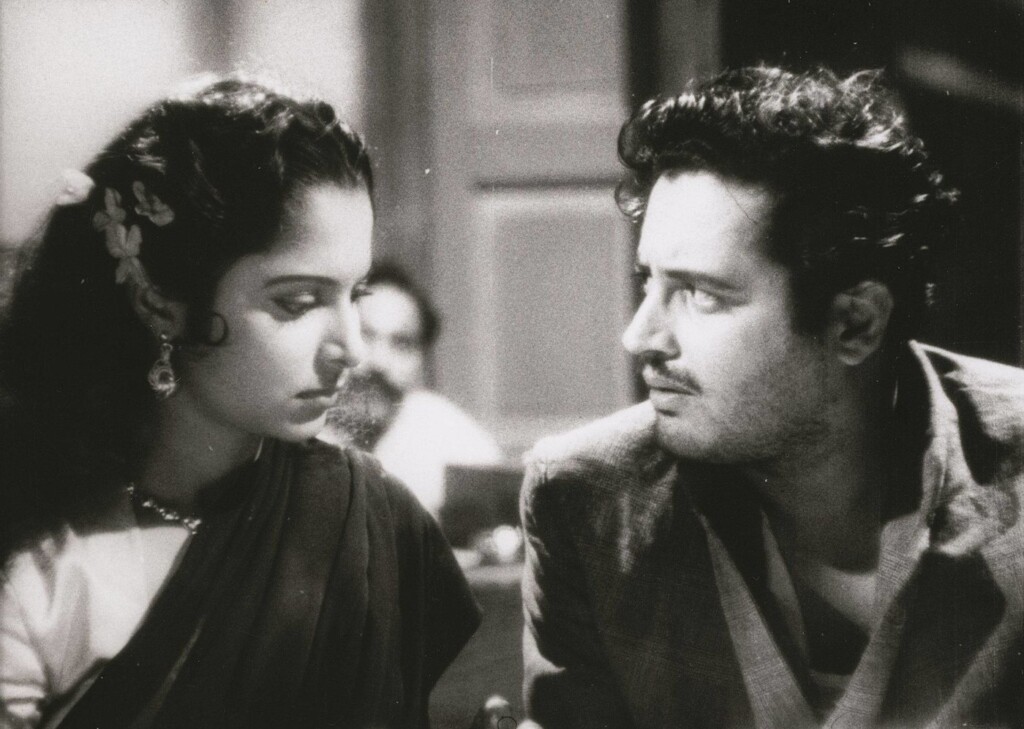
You are sitting in a darkened theater in Bombay, 1957, and the man on the screen is singing his own obituary. Not metaphorically. The poet Vijay, played by the director himself, wanders through a city that has already decided he does not exist, and the horror is not that he suffers — suffering was already the expected currency of artistic mythology — but that the city is entirely right about him. He is invisible not because the world is cruel but because the world is functioning exactly as designed.
Indian audiences had spent decades constructing a very particular story about the artist: that genius is recognized eventually, that beauty finds its audience, that the man who creates from the depths of his soul will be vindicated by time if not by his contemporaries. This is not an Indian story exclusively — it is the story that every culture tells to make the abandonment of artists bearable, to convert negligence into a kind of tragic dignity. What Pyaasa did, with methodical and almost surgical patience across its 146 minutes, was demonstrate that this story is a mechanism of complicity. The romantic myth of the suffering artist does not protect artists. It protects the systems that erase them by assigning that erasure a redemptive narrative arc.
Walter Benjamin, writing in 1935 in “The Work of Art in the Age of Mechanical Reproduction,” identified something he called the aura — that irreducible singularity of an original work, its embedment in a specific time, place, and tradition, the quality that makes it unrepeatable. What Benjamin observed was that modern reproduction technologies were systematically destroying this quality, detaching cultural objects from their origins and flooding them into contexts stripped of meaning. But what Guru Dutt understood, whether or not he ever read a word of Benjamin, was that the marketplace does not simply reproduce art — it reproduces the image of the artist as a product, and in doing so erases the actual person who made the work. Vijay’s poems circulate only after the commercial apparatus decides he is dead. The aura is not destroyed by technology alone. It is destroyed by the moment the artist becomes more valuable as a symbol than as a living, inconvenient human being.
The film’s most devastating sequence is not the grief or the poverty but a publishing house scene, in which men who rejected Vijay’s manuscript are now printing it in enormous quantities, building a minor empire on his presumed death. This is not satire. It is a documentary account of how cultural capital works. Pierre Bourdieu spent most of his career, particularly in “The Field of Cultural Production” published in 1993, mapping exactly this dynamic: the way the artistic field canonizes its figures retroactively, after the risks have been absorbed and the unpredictability has been removed. The living artist is dangerous because he can still change, still demand, still contradict the interpretation being placed on him. The dead artist, or the artist rendered socially dead by poverty and dismissal, is infinitely more useful.
What Pyaasa destroyed was not the myth of the suffering artist but the audience’s comfortable position as witness to that suffering. Guru Dutt did not allow viewers to watch Vijay’s pain from a safe distance of aesthetic appreciation. The camera kept returning the gaze — not to the art, but to the transaction. Who profits from the decision that beauty cannot be recognized while the beautiful person is still alive and inconvenient? The film implicated its audience in the answer, and 1957 Indian audiences felt that implication in their bodies, which is why the film was only a moderate commercial success during its initial release and became mythological only after its creator died, in 1964, at thirty-nine, in circumstances that have never been satisfactorily explained.
The Gendered Trap of Sensitivity
You are watching a man cry at his own reflection — not from vanity, but from recognition. He sees something in the mirror that the world has already decided is embarrassing: the fact that he feels things too completely, that beauty undoes him, that longing is not a private inconvenience he manages but the entire architecture of how he moves through the world. The camera holds on his face a moment longer than comfort allows, and that excess duration is itself the argument.
Silvan Tomkins, working through the middle decades of the twentieth century in his monumental Affect Imagery Consciousness, identified shame not as the experience of having done something wrong, but as the interruption of positive affect — the sudden severing of interest or joy by the gaze of another who signals that your feeling is inappropriate. What Tomkins diagnosed in clinical terms was something Guru Dutt was living cinematically in exactly the same years. The films of the late 1950s, Pyaasa above all, are structured around a protagonist whose primary crime is that his interior life is too legible. He does not conceal his wounds behind ambition or humor or aggression. He simply stands there, feeling, and the world reads this as pathology.
The cultural mechanism at work here is older than cinema. Masculine emotional display had been systematically delegitimized across European and colonial frameworks throughout the nineteenth century, with sentimentality reclassified as a feminine register — acceptable in women because it confirmed their subordination, dangerous in men because it destabilized the fiction of rational control on which patriarchal authority depended. When this taxonomy arrived in colonial India and merged with existing codes of respectable masculinity among the urban middle class, it produced a particularly cruel double standard: art that depicted male anguish was celebrated precisely because it could be aestheticized, framed, and therefore safely contained — but the man who generated it from genuine experience was simultaneously suspected of weakness, instability, psychological unsoundness.
This is the trap Dutt fell into with a kind of terrible elegance. His collaborator and composer S.D. Burman, his lyricist Sahir Ludhianvi, his cinematographer V.K. Murthy — they all contributed to a visual and sonic language of male grief that was considered sublime when projected onto a screen and troubling when identified as the director’s own psychological condition. Critics wrote about Pyaasa’s poet-protagonist as a universal figure of artistic alienation. They wrote about Guru Dutt the person as someone who was perhaps too sensitive for his own good, too emotionally unguarded, too available to suffering. The art was canonized; the affect that produced it was quietly medicalized.
What no one wanted to name directly was that the very qualities his films made sacred — the willingness to dissolve, to remain porous to beauty and pain without fortifying against them — were qualities his immediate social world treated as symptoms. His tumultuous personal life, his reported bouts of depression, his complicated entanglement with actress Waheeda Rehman who represented on screen the luminous alterity he could never quite possess in life — all of this was narrated retrospectively as evidence of a man who couldn’t cope, rather than as evidence of a man who refused the anaesthetic of emotional numbness that his culture was prescribing.
There is a specific violence in being told that the way you feel is the reason you are suffering, rather than the conditions that surround that feeling. It forecloses the possibility of structural critique entirely and relocates all pain inside the individual as malfunction. A man who grieves visibly in a culture that has decided visible grief is weakness will eventually begin to grieve his own grief, to feel shame about the shame, compounding the original wound in a recursion that Tomkins would have recognized immediately as the shame-humiliation spiral — the psychological loop in which the very awareness of exposure deepens the exposure.
Dutt made Kaagaz Ke Phool in 1959, the first Indian film shot in CinemaScope, and it failed spectacularly at the box office.
Waheeda, Geeta, and the Women Who Saw Him Clearly
There is a moment, documented in enough separate accounts to resist dismissal, where Waheeda Rehman walked off a set mid-production and refused to return until a specific scene was rewritten — not because her character was diminished, but because the emotional logic of the scene was false. Guru Dutt, by most accounts, listened. Not immediately, not without resistance, but he listened. What is remarkable is not the concession but what the concession reveals: that the women working closest to him were not mirrors reflecting his genius back at him, but independent intelligences capable of diagnosing precisely where his vision was failing itself.
Biographical legend operates through a particular kind of selective deafness. The architect of a myth requires that certain voices remain decorative — present in the frame, emotionally legible, but never authoritative. Geeta Dutt’s voice, literally one of the most recognizable in mid-century Indian music, was treated by subsequent hagiography as a symptom of the marriage’s tragedy rather than as evidence of a distinct artistic consciousness navigating an impossible domestic arrangement. She recorded songs of devastating interiority, collaborated with composers across multiple registers, and built a career that preceded her marriage and would, had circumstances been otherwise, have extended far beyond it. The legend converts her into a woman destroyed by proximity to greatness, which is precisely the kind of story that makes the greatness look larger and the woman disappear.
Simone de Beauvoir, writing in 1949 in “The Second Sex,” identified the mechanism with uncomfortable precision: the category of the Other is defined not by what the woman is but by what the man needs her to be in order to remain coherent to himself. Applied to artistic mythology, this means that the woman who sees the man clearly — who recognizes his self-destruction, his evasions, his brilliance and its costs simultaneously — cannot be permitted to remain a witness. She must be recategorized as a casualty, a muse, or an obstacle, because a clear-eyed witness destabilizes the myth’s central claim, which is that the artist’s suffering was singular and essentially private.
What makes Waheeda Rehman’s position historically unusual is that she survived the recategorization. Her career continued, her artistic reputation remained independent, and her later interviews contain observations about Guru Dutt that are precise without being cruel, which is the hardest tonal register to maintain when speaking of someone whose suffering was real and whose behavior was also, at times, genuinely destructive to the people around him. She describes the work as collaborative in ways that the standard auteur narrative cannot accommodate — not because she is claiming credit, but because she is describing a reality in which two people were genuinely building something together, and one of them happened to be the one whose name went above the title.
The auteur theory itself, formalized in France in the late 1950s by critics writing in Cahiers du Cinéma and imported into global film culture through Andrew Sarris’s 1962 essay in Film Culture, was always as much an ideological instrument as a critical tool. It concentrated interpretive authority in a single consciousness precisely at the historical moment when the industrial nature of filmmaking made such concentration most fictional. In Guru Dutt’s case, the films themselves actually argue against this concentration — they are too porous, too dependent on the specific gravity of the performances he drew out of others, too shaped by Abrar Alvi’s screenplay intelligence and V.K. Murthy’s cinematographic decisions, to belong to a single authorial will. The myth requires a solitary dreamer. The films keep showing you a room full of people who understood each other at a frequency that had nothing to do with hierarchy.
Geeta’s voice entering a darkened theater in 1957 was not background. It was the thing the scene was made of, and everyone in that room knew whose voice it was, and what it cost her to sing it that way.
A vision curated by a filmmaker, not an algorithm
In this video I explain our vision
The Colonial Inheritance Nobody Names

You were taught, at some point, that the artists who suffer most are the ones who feel most — that the wound is the credential, that genius and ruin travel together the way monsoon and mud do, inseparable, almost romantic. You absorbed this not from a textbook but from the atmosphere of the culture around you, from the way people spoke about certain names in hushed, reverent tones, from the particular silence that followed when someone died young and brilliant and broken. It felt indigenous. It felt like something India had always known about itself.
It did not originate here.
The archetype of the doomed artist — sensitive beyond the tolerance of ordinary life, destroyed by the very depth of his perception — is a specific European historical construction, assembled with precision during the Romantic period of the late eighteenth and early nineteenth centuries. It crystallized around figures like Keats dead at twenty-five, Chatterton poisoned at seventeen, Schiller wearing his body to nothing in the service of beauty. By 1774, Goethe had already given the template its most infectious popular form: a young man of extraordinary feeling who exhausts himself against the indifference of the world and chooses obliteration over compromise. The book sold across Europe in waves of imitation and genuine grief. Young men dressed like its protagonist. Some killed themselves. What was being transmitted was not a psychological truth but a cultural technology — a way of organizing the relationship between artistic seriousness and self-destruction that served specific ideological purposes within a specific class in a specific civilization.
Frantz Fanon, writing in “The Wretched of the Earth” in 1961, identified something that has never been sufficiently applied to the Indian cultural context: the colonized intellectual does not simply reject the colonizer’s frameworks. He internalizes them so completely that they begin to feel like the most authentic expression of his own inner life. The mechanism is not imitation; it is deeper and more dangerous than imitation. The colonized subject adopts the colonizer’s categories of value, suffering, beauty, and failure, and then experiences those categories as private revelation, as something welling up from the deepest chambers of his own cultural identity. The foreign template becomes invisible precisely because it has been fully digested. What remains visible is only the emotion it produces — which feels real, because it is real, even if the structure generating it was imported.
Indian creative culture under and after British colonialism absorbed the Romantic archetype of the doomed artist through multiple channels simultaneously: through English-medium education that treated Byron and Shelley as the gold standard of lyrical seriousness, through a colonial aesthetic infrastructure that measured Indian artistic achievement against European benchmarks, through the gradual equation of suffering with depth that served colonial interests by making the colonized intellectual’s despair seem like personal sensitivity rather than structural violence. By the time Hindi cinema was constructing its vocabulary of artistic identity in the 1950s, the doomed genius had already been naturalized to the point of invisibility. He seemed like a figure drawn from classical Indian philosophical traditions about maya and the suffering of the perceptive soul. The colonial watermark had faded from the paper.
What this means concretely is that generations of genuinely talented people were handed a script for their own destruction and told it was a map of their inner truth. The tragedy was not that they suffered — the conditions for suffering were real and material, rooted in partition, poverty, the violence of rapid modernization, the psychic dislocation of a newly independent nation still dreaming in borrowed aesthetic languages. The tragedy was that the framework available for interpreting that suffering aestheticized it in ways that made self-destruction feel like artistic integrity, that made the refusal of survival look like the ultimate proof of having felt something real.
Kaagaz Ke Phool and the Audience That Refused
You are sitting in a cinema in Bombay in 1959, watching a film about a man being swallowed alive by the very industry that once celebrated him, and you walk out unmoved. Not because the film failed to reach you. Because it reached you too precisely, and that felt like an accusation.
Kaagaz Ke Phool arrived in Indian cinemas as the country’s first CinemaScope production, a technical and aesthetic ambition that itself announced something — that Guru Dutt was not adjusting his vision to meet the room, he was expanding the room and expecting the audience to follow. They did not follow. The film was pulled from theaters after a catastrophic run, and Dutt, who directed it without credit in later prints out of what witnesses described as a wound that had no clean name, never directed another film. The box office delivered its verdict in the only language commercial culture speaks fluently: silence measured in empty seats.
Pierre Bourdieu’s analysis of what he called the field of cultural production, developed across Distinction in 1979 and The Rules of Art in 1992, offers a framework that feels almost clinical when held against this moment. Bourdieu argued that cultural fields operate through a logic of recognition — that legitimacy is not intrinsic to a work but is granted or withheld through the accumulated judgments of audiences, critics, gatekeepers, and institutional structures. The field determines what counts as art and what counts as failure, and it does so not through objective aesthetic criteria but through the reproduction of existing taste hierarchies. An audience that rejects a work is not simply expressing preference. It is exercising a form of symbolic power, one that forecloses the conditions under which the rejected artist can continue to operate.
What makes the failure of Kaagaz Ke Phool historically specific rather than merely tragic is the gap it exposes between cultural production and cultural readiness. The film is a meditation on obsolescence, on the violence of forgetting, on the way industries consume individuals and discard them when their utility expires. It was, in 1959, asking Indian popular audiences to mourn a grief they had not yet been culturally equipped to name, to sit with a visual language — shadows eating faces, compositions that made grandeur feel like entrapment — that demanded a kind of trained discomfort most viewers had no reason to have cultivated. Bourdieu would recognize this as a mismatch between the habitus of the audience and the symbolic capital being offered. The film was legible, but it required a literacy that the popular field had not yet produced.
The cruelty is that rejection at this scale is not passive. An audience that refuses a work does not simply leave it alone — it removes the financial and institutional oxygen that would allow the artist to continue. Dutt lost not just a film’s commercial life but the structural conditions that made future risk-taking possible. The economy of cultural recognition operates like credit: past validation permits future experimentation, and when that credit is withdrawn, the experimentation stops not because the artist has stopped imagining but because the infrastructure that converts imagination into realized work collapses. By 1959, Dutt had already produced Pyaasa, already demonstrated the range that serious critics would spend decades excavating. None of that accumulated weight insulated him from the verdict.
There is something specific to the popular form that sharpens this mechanism. High art institutions — galleries, literary presses, state-funded theaters — contain buffer zones that allow difficult work to survive initial rejection and accrue value over time. Popular cinema in 1959 Bombay had no such buffer. The box office was immediate, total, and irreversible. A film that failed in its first weeks failed permanently, and the artist who made it absorbed that permanence into their body as a kind of biological fact, not merely a professional setback. What Bourdieu’s theory illuminates but cannot fully hold is the weight that lands on the specific person when the field closes against them — the way institutional rejection becomes private annihilation.
The October 1964 Question That Has No Answer
You wake up one morning having read everything there is to read about a man, and you still do not know how he died. Not in the way that archival gaps leave historians frustrated, but in the way that the question itself begins to feel like a trap — as though the act of demanding an answer already misunderstands the problem.
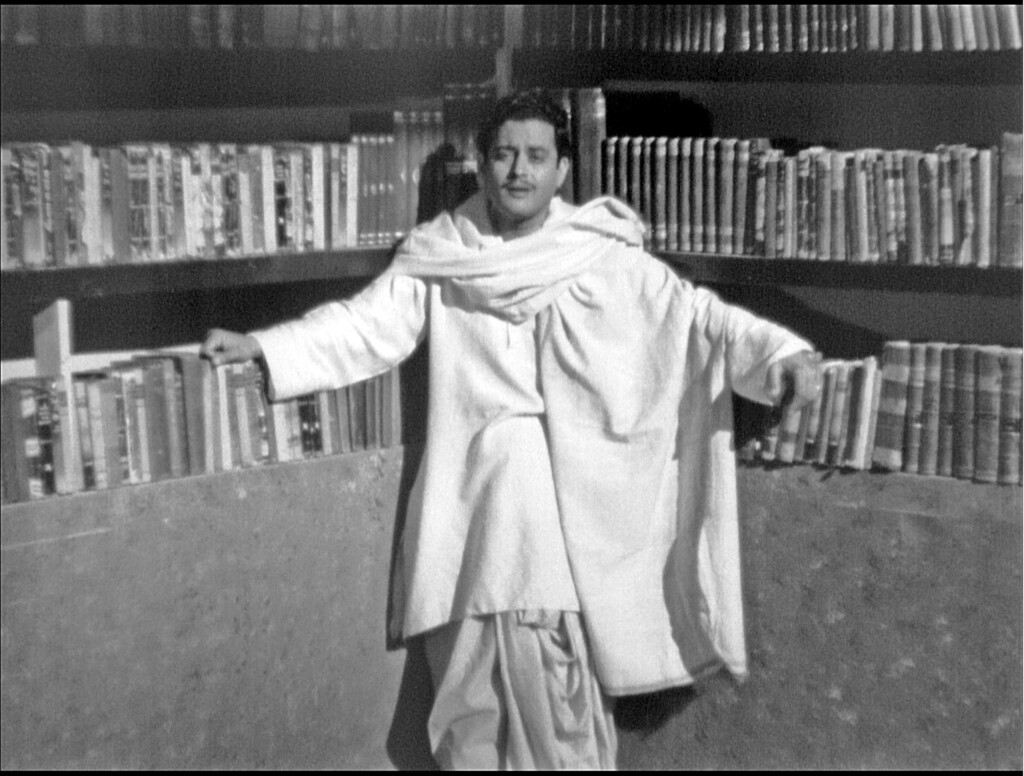
On the morning of October 10, 1964, Guru Dutt was found dead in his Peddar Road apartment in Bombay, an empty bottle of sleeping pills and an emptied bottle of whisky beside him. He was thirty-nine years old. It was, by any forensic accounting, the third such episode — two prior incidents had been recorded, attributed to the same combination, survived. The coroner’s report returned an open verdict. The industry mourned collectively and moved on with the practiced speed of people who understand that grief, like a production schedule, has a deadline. What remained was the ambiguity, and what is remarkable is not that the ambiguity exists but that virtually no one who encounters Guru Dutt’s story can tolerate leaving it unresolved.
The compulsion to adjudicate — to declare it suicide, to insist on accident, to argue that depression plus alcohol plus sleeping pills constitutes a verdict regardless of intent — this compulsion belongs entirely to the observer and tells us almost nothing about the man. Roland Barthes, in his 1967 essay “The Death of the Author,” made the argument that the moment a text is released into the world, the author’s intentions become irrelevant, even actively misleading, because the meaning of a work lives in the reader’s encounter with it, not in the originating consciousness. But what happens when that logic is applied not to a text but to a body — when the biographical fact of a death becomes the final scene in a narrative that an audience has already decided it understands? The posthumous Guru Dutt is not retrieved from history. He is continuously written by everyone who encounters his films and then reaches backward to make his life conform to their emotional needs.
This is the mechanism by which melancholy becomes mythology. Pyaasa was released in 1957 to critical admiration and middling commercial returns. Kaagaz Ke Phool, released in 1959, failed so completely at the box office that Dutt never directed under his own name again — a fact that carries an almost unbearable irony given that it is now regularly cited among the greatest films ever made in South Asia. The gap between what he produced and what his contemporaries were willing to receive is a real historical wound, not a narrative device. But once a death arrives with ambiguity attached, those wounds get reorganized. The failed films become prophecy. The alcoholism becomes testimony. The broken marriage to Geeta Dutt, the sustained entanglement with Waheeda Rehman, the professional retreat — each becomes a coordinate in a map drawn after the destination is already known.
What the obsession with resolving October 1964 actually reveals is a collective discomfort with the idea that great art can be made by someone whose inner life remains genuinely opaque to us. We want the films to explain the man, and we want the man’s death to confirm what we felt watching the films. That closed circuit is consoling. It makes the tragedy legible, purposeful, even beautiful in a way that accidental death — a body that simply gave out, a miscalculation in the dark — refuses to be. Accidental death is banal. It grants the dead no final authorship over their own ending. And perhaps that is exactly what is unbearable: that a filmmaker of such precise and deliberate vision might have exited the world in a moment of pure contingency, with no last cut, no final composition, no frame chosen to close the image.
🌒 Dreams, Poetry, and the Burden of the Visionary Soul
Guru Dutt’s cinema was a universe built from longing, beauty, and self-destruction — a place where art and despair were inseparable. To understand him fully, we must trace the deeper currents that fed his imagination: the cursed poet, the failed dreamer, the artist crushed by a world that cannot love what it cannot understand.
The Cursed Poet: History and Figures
The figure of the cursed poet — from Verlaine to Rimbaud — casts a long shadow over any artist who dares to place beauty above survival. Guru Dutt inhabited this archetype with devastating authenticity, making films that bled his own anguish onto the screen. Like the poètes maudits, he was consumed by the very fire he sought to illuminate.
GO TO THE SELECTION: The Cursed Poet: History and Figures
Existentialist Noir: History and Meaning
Existentialist noir is the cinematic space where moral ambiguity, fate, and the weight of consciousness converge — and few filmmakers embodied this territory more fully than Guru Dutt. His films carry the same suffocating atmosphere of entrapment and metaphysical despair found in the great noir tradition. The shadows in Pyaasa are not merely visual; they are existential.
GO TO THE SELECTION: Existentialist Noir: History and Meaning
Fernando Pessoa: Life and Works
Fernando Pessoa invented multiple selves to survive the unbearable weight of a single identity — a strategy hauntingly mirrored in Guru Dutt’s fragmented screen personas. Both men were architects of melancholy, constructing elaborate inner worlds that shielded them from a reality they found unbearable. Their art is inseparable from their suffering.
GO TO THE SELECTION: Fernando Pessoa: Life and Works
La Bohème: History and Myth of the Poor Artist
The myth of the poor artist — romantic, doomed, transfigured by poverty into genius — is precisely the social and cultural construct that Guru Dutt both embodied and critiqued in Pyaasa. La Bohème tradition romanticizes artistic misery while the world withholds recognition until it is too late. Dutt understood this cruel paradox from the inside.
GO TO THE SELECTION: La Bohème: History and Myth of the Poor Artist
Discover Visionary Cinema on Indiecinema
If Guru Dutt’s poetic cinema has stirred something in you — that restless hunger for films that dare to feel deeply — then Indiecinema is your natural destination. Our streaming platform gathers the world’s most visionary independent and art-house films, the ones that refuse easy answers and leave a mark on the soul. Come explore cinema as it was always meant to be: a mirror held up to the infinite.
👉 EXPLORE THE CATALOG: Watch Indie Films in Streaming
A vision curated by a filmmaker, not an algorithm
In this video I explain our vision

