
The Glamour of the Garret
You wake up and your breath fogs the air inside your own room. The radiator has been broken for two weeks and you have decided, for reasons that feel both practical and vaguely heroic, that calling the landlord would somehow compromise something essential about the life you are trying to live. The rent is late. Not dramatically late, not the kind of late that ends in eviction notices slid under the door, but late in the quiet, corrosive way that sits at the back of your throat every time you check your phone. In the kitchen there is half a jar of peanut butter, some pasta of an unspecified shape, and a single onion that has begun, tentatively, to sprout. You eat standing up, because sitting at the table would make it feel like a meal, and you are not sure you are entitled to that yet, not until you finish the thing, not until the work justifies the life.

And here is the part that should disturb you but somehow does not: you are, in some subterranean register of yourself, enjoying this.
Not the cold, precisely. Not the hunger, not the low-grade financial panic that wakes you at three in the morning with the specificity of a creditor. But something around all of it, something that the cold and the hunger and the panic make possible, a certain sharpness of self-perception, a feeling that you are living at the exact temperature at which real things happen. You have inherited this feeling from somewhere so deep in the culture that tracing it feels like trying to find the source of a river by walking upstream through a city. It predates your parents. It predates their parents. It is a mythology so thoroughly absorbed that it has become indistinguishable from personality.
The mythology has a name, and the name is Bohemia, and it was never a place. It was a story that nineteenth-century Paris told itself about artists, and then told so convincingly that the artists began telling it back, and then the whole transaction got so tangled that nobody could remember who had started it or why. Henri Murger published his Scènes de la vie de bohème in serial form between 1845 and 1849, loose, affectionate sketches of young writers and painters surviving on wit and camaraderie in the Latin Quarter, and the book was such a success that it spawned a play, and the play was such a success that it eventually gave Puccini the libretto for an opera that has made audiences weep for over a century. Somewhere in that chain of transformations, poverty became picturesque.
What gets lost in the transformation is the body. The actual, specific, unredeemable body that is cold right now, that has not slept properly because anxiety and a thin mattress are a merciless combination, that is aging in ways that poor nutrition makes faster and that no amount of romantic framing will slow down. A young man sits in a room not unlike yours, everything around him stripped to the minimum, and you can see on his face the precise architecture of someone who has confused suffering with meaning for long enough that he no longer knows how to take care of himself without feeling like a traitor to his own ambitions. The confusion is so complete it looks like peace.
Thorstein Veblen, writing in 1899 in The Theory of the Leisure Class, identified the mechanism with a precision that still cuts: certain forms of conspicuous deprivation function as status signals just as surely as conspicuous consumption. The poor artist who disdains comfort is performing a kind of inverted luxury, demonstrating through sacrifice that he operates in a realm above material need. The performance is sincere. That is what makes it a trap.
The Lost Poet
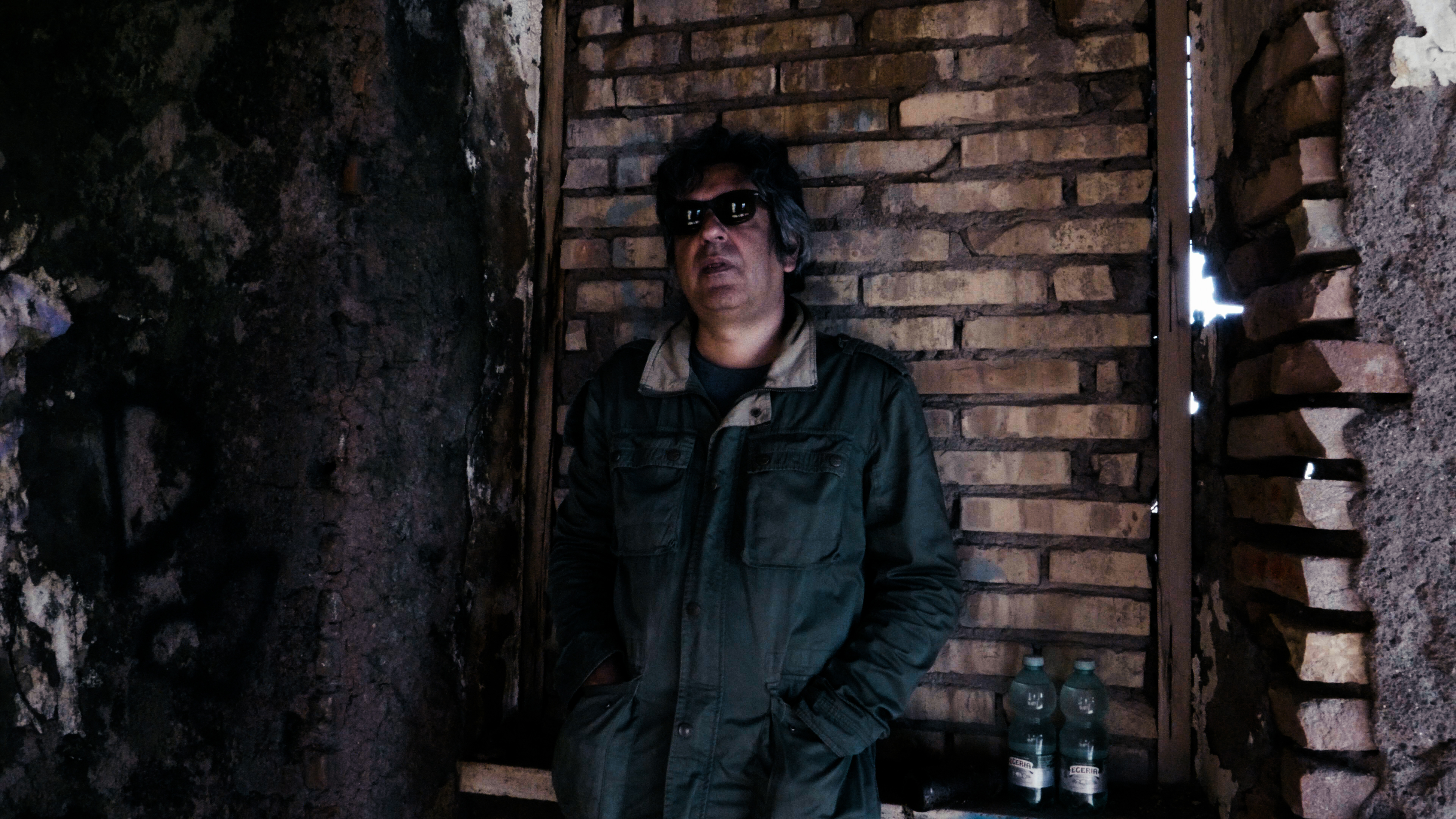
Drama, by Fabio Del Greco, Italy, 2024.
Dante Mezzadri wants to see an old friend, nicknamed the Iguana, whom he has lost sight of for many years, and who has managed to turn their shared youthful passion for poetry into a job, becoming a famous writer and poet. The man escapes from his bourgeois life and his wife to live homeless on the Roman coast, printing and trying to sell his poetry collections. At night he sleeps in a park of old carnival floats, inside a papier-mâché tank, and waits for the opportunity to meet his old friend, who however never shows up for appointments in the places they frequented when they were young, now in ruins. Dante's poetry books do not interest anyone and to support himself he is forced to "change product": he starts selling the infamous "cannibal pill" on behalf of young drug dealers, a new drug that sells like hot cakes and causes sensory and consumerist ecstasy. However, he realizes that this powerful drug is very dangerous for those who take it, he comes into conflict with his ethical conscience and throws all the pills into the sea. However, the dealers want to collect their money.
Shot over a period of 2 years, the film is a reflection on the cultural and artistic rubble of the society in which the protagonist lives, in an increasingly mechanized, consumerist and arid world. Dante Mezzadri is yet another human being who has renounced his inspiration and his creativity, but unlike many he is not willing to give his life to a system that distances him from his true identity. The physical world around him, however, seems constructed in such a way that it seems impossible to escape from this "invisible cage". The enthusiasm of the people he meets is ignited only by sensory gratification, by unreal visions of personal affirmation and success, by "metaverses" that offer an escape into an illusory and destructive reality. The poet's house on the coast, where he met with his friends as a young man, is just a pile of abandoned rubble. What happened to all those who wanted to become poets and ended up becoming something else? Are there internal forces with which that house can be "rebuilt"?
LANGUAGE: Italian
SUBTITLES: English, Spanish, French, German, Portuguese
Henri Murger and the Invention of Bohemia
There is a particular kind of lie that works because the person telling it believes it themselves, at least partially. Henri Murger believed in bohemia just enough to write about it with genuine feeling, and not enough to stay in it once the money arrived.
Murger was born in 1822 in Paris, the son of a concierge and tailor, a man who grew up watching the bourgeoisie from the service entrance. He spent the 1840s genuinely poor, moving between unheated rooms in the Latin Quarter, occasionally going without food, watching friends die of tuberculosis with the particular speed that poverty accelerates everything. This was not romantic. It was cold and it smelled bad and it ended several of the people he loved before they turned thirty. Then, between 1845 and 1849, he began publishing serialized sketches in a small magazine called Le Corsaire, loosely fictionalized accounts of this life, and something unexpected happened: the bourgeois readers of Paris found it charming.
The collected volume, Scènes de la vie de bohème, appeared in 1851, and by then Murger had already understood what he had done. He had taken genuine suffering and given it a costume. He had translated cold and hunger and early death into something a comfortable reader could consume with their morning coffee and feel pleasantly wistful about. The stage adaptation, which opened in Paris in 1849 before the book even existed in its final form, was an immediate success. Murger moved to better apartments. He dined with the people his father had served. The bohemians he had written about, or the survivors among them, watched him cross over and did not entirely forgive him for it.
What Murger invented was not bohemia itself, which had existed as a social reality for decades, but the mythology of bohemia as a product. The actual artistic poor of Paris in the 1840s were products of specific historical forces: the Romantic movement had created a surplus of young men who believed in artistic genius but found no institutional support for it; the expansion of the press had created a market for cultural labor that paid almost nothing; the political upheavals of 1830 and 1848 had generated a generation of educated young people with radical aspirations and no economic footing. These were material conditions. Murger transformed them into atmosphere.
Walter Benjamin, writing about the Paris of exactly this period in his unfinished Arcades Project, identified the process with uncomfortable precision: the city was becoming a great machine for converting lived experience into spectacle, and the figure of the artist-in-poverty was one of its most profitable exhibits. The bohemian was already, from the beginning, something the bourgeoisie purchased at a safe distance. Murger understood this intuitively, which is why his sketches are so carefully calibrated. The suffering is present but never overwhelming, the squalor is picturesque rather than degrading, and crucially, the artists in his pages have a lightness about them, a freedom that the reader behind their desk can envy without genuinely wanting to trade places.
The word bohémien itself is worth holding for a moment. It came from the French term for the Romani people, nomads associated in the European imagination with freedom from property, from fixed address, from bourgeois respectability. To call a young artist bohémien was to aestheticize a kind of marginality that, in its original form, was neither chosen nor celebrated. Murger borrowed the romance of displacement while erasing the violence that produced it. This is, as the cultural historian Jerrold Seigel argued in his 1986 study Bohemian Paris, the founding gesture of the entire mythology: the appropriation of involuntary poverty as voluntary style.
By the time Puccini set Murger’s characters to music in 1896, the transformation was complete. Mimi dies beautifully, in a warm tenor light, and the audience weeps and goes home to dinner.

Puccini’s Beautiful Lie
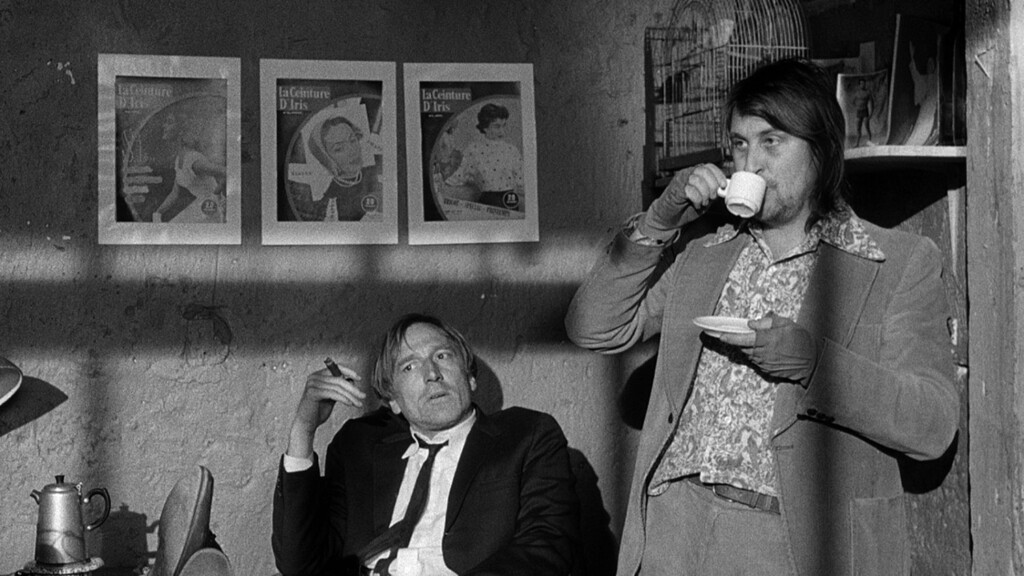
There is a moment when a young woman sets down her embroidery needle, presses her fingers against her sternum, and coughs — softly, almost musically — into the candlelit dark of a freezing Paris garret. The cough does not sound like illness. It sounds like longing. The candle gutters. Her face catches the light at exactly the right angle. And somehow, in the architecture of that moment, poverty has been transfigured into something you want to inhabit. You do not pity her. You envy her.
This is the lie that Giacomo Puccini perfected in 1896, and it has been running undisturbed ever since.
When Puccini and his librettists Luigi Illica and Giuseppe Giacosa adapted Henri Murger‘s Scènes de la vie de bohème for the stage at the Teatro Regio in Turin, they made a series of choices so elegant and so ruthless that they have largely escaped notice. Murger’s original work — serialized through the 1840s and published as a novel in 1851 — was fundamentally ambivalent about its own material. His bohemians were funny and desperate in almost equal measure. They were also, crucially, going somewhere or going nowhere, and Murger himself was never entirely sure which. The illness, the debt, the cold, the casual cruelty of their circumstances — these were present not as romantic backdrop but as grinding atmospheric fact. Rodolphe and his friends were not beautiful people in beautiful poverty. They were people being worn down by the specific, unglamorous mechanics of having no money.
Puccini removed the gears. What remained was the glow.
The sociologist Thorstein Veblen, writing in The Theory of the Leisure Class in 1899, just three years after the opera’s premiere, described what he called “conspicuous consumption” — the way that aesthetic display functions as a form of social power. What he could not have anticipated, though his framework contains the seed of it, is the inverted version: conspicuous deprivation. The performance of beautiful poverty as a marker of spiritual elevation, of sensibility, of being the kind of person who feels things more deeply than those who simply own them. Puccini’s opera did not invent this logic, but it codified it with a force that no sociological treatise could match, because it made you feel it in your chest before you had time to think.
Mimì dies beautifully. This is the central ideological act. She dies with her hair arranged, with her friends gathered, with a muff warming her hands — a gift that arrives just in time to serve as a prop for the final tableau. Real tuberculosis, the disease that killed roughly one in four adults in nineteenth-century Europe, was not like this. It was prolonged, disfiguring, embarrassing in its physicality. It smelled. It destroyed the face and the body incrementally, over months and years, in ways that made beauty impossible to maintain as a social performance. The historian Frank Ryan, in Tuberculosis: The Greatest Story Never Told, traces the disease’s particular grip on artistic mythology precisely to this gap between clinical reality and romantic representation. The consumptive artist became, over the course of the nineteenth century, a figure of almost sacred cultural authority — suffering as proof of depth, illness as evidence of refinement.
Puccini took that pre-existing myth and gave it a score. He gave it melody lines that rise exactly when they should, harmonies that make grief feel like something you would choose if you could. He made the attic warm with music even when the libretto insists it is cold. And this is where sentiment stops being merely sentimental and becomes something more troubling — because the moment suffering is made beautiful, the conditions that produce it become invisible.
The candle stays lit. The cough stays soft. And the hunger, the actual hunger, is nowhere in the room.
The Market That Feeds on Martyrs
There is a particular kind of collector who will tell you, with genuine emotion in his voice, that he discovered the artist before anyone else did. He says it at dinner parties, in gallery openings, in the breathless cadence of someone confessing a love affair. What he never says, what the sentence structurally prevents him from saying, is that the discovery was only possible because the artist was already dead. The timing is not incidental. It is the entire mechanism.
The art market does not simply benefit from the myth of the suffering artist. It requires it the way an engine requires combustion. Pierre Bourdieu, in his 1993 work The Field of Cultural Production, laid out with surgical precision the logic that governs this territory: the field operates through a systematic inversion of economic values, where the disavowal of commercial interest becomes the very condition of accumulating what he calls symbolic capital. The artist who sells nothing, who lives on almost nothing, who is visibly indifferent to money, accrues a form of prestige that the successful commercial producer can never touch. But here is the trap Bourdieu exposes without sentiment: this symbolic capital only converts into economic capital after the artist is no longer present to collect it. The poverty is not incidental to the value. The poverty is the value, deferred.
Vincent van Gogh sold one painting in his lifetime. Possibly one. The Red Vineyard, in 1890, for four hundred francs, roughly the equivalent of a month’s modest wage for a Parisian worker. He produced over nine hundred paintings and more than eleven hundred drawings. In 2022, a single work sold at auction for eighty-three million dollars. The distance between four hundred francs and eighty-three million dollars is not just economic. It is a narrative distance, a story that required his suffering, his letters to Theo begging for paint money, his ear, his asylum stays, his suicide at thirty-seven, to become fully legible as meaning. Remove the biography and the price collapses. The market knows this. The market has always known this.
Amedeo Modigliani died in 1920 at thirty-five, from tubercular meningitis, in a Paris charity ward. He had spent years selling portraits for the price of a meal, or trading them directly for wine. His companion Jeanne Hébuterne, nine months pregnant, threw herself from a window two days after his death. By the 1950s his nudes were already entering the realm of the iconic. In 2015, Nu couché sold for one hundred and seventy million dollars at Christie’s New York, making it among the most expensive paintings ever auctioned. The story of his death, her death, the unborn child, the freezing studio, the alcohol, the rejection — none of this is separable from that number. The biography is not background. It is the product.
What Bourdieu identified was not a corruption of the system but its internal grammar. A painter who dies wealthy and celebrated during their own lifetime — think of someone like Damien Hirst, who sold a spot painting series for over one hundred million dollars in 2008 while living — generates a completely different kind of cultural meaning, one shot through with suspicion, with the lingering question of whether it is really art or merely commerce dressed in its costume. The market punishes survival. Or more precisely, it rewards death with the retrospective consecration it withheld during life.
This is the structure a young artist walks into today, often without knowing it exists. He walks into a room where the rules are written in invisible ink and the contract he is signing is not about his work but about his willingness to perform scarcity convincingly enough, long enough, to make the posthumous valuation credible. The suffering is not a side effect. Someone, somewhere, is waiting for it to mature.
The Psychological Trap: Suffering as Proof of Authenticity
There is a moment, and you have probably lived it, when someone offers you something reasonable. A stable contract, a well-paid commission, a position that does not humiliate you. And instead of the relief you expected to feel, something cold and defensive rises in your chest. You find a reason to say no. The work is not interesting enough. The client does not understand your vision. The timing is wrong. You walk away from the table with a sensation that resembles dignity but functions exactly like self-destruction, and somewhere beneath the justifications you cannot quite name what just happened.
What happened is that you chose the myth over the meal. And the tragedy is not the poverty that follows. The tragedy is that the choice felt like integrity.
Otto Rank understood this with a precision that still cuts. In Art and Artist, published in 1932, he described the creative personality as fundamentally divided between the will to individuate, to become fully oneself through the work, and the terror of that very individuation, which isolates and exposes. The neurosis, Rank argued, is not incidental to artistic life. It is structural. The artist needs suffering not because suffering is generative but because suffering is proof. Proof that the work costs something, that the self is being genuinely spent, that nothing comfortable or compromised is passing for creation. Poverty becomes, in this economy, a kind of receipt.
This is where Erving Goffman’s analysis of stigma becomes almost unbearably precise. In his 1963 study, Goffman described how individuals who carry a socially devalued identity learn to manage that identity, sometimes by inverting its sign entirely, transforming what marks them as lesser into the very source of their claimed superiority. The artist who cannot pay rent does not simply endure the stigma of failure. He metabolizes it. He makes it the evidence of his refusal to participate in a system he has decided is corrupt. The poverty is no longer a condition to be escaped. It becomes a credential.
The inversion is seductive because it is partially true. There are real compromises that destroy real work. There are commissions that hollow out a sensibility and contracts that colonize an imagination. The danger is not in recognizing this. The danger is in the expansion of the category, in the gradual drift toward a position where any stability becomes suspect, where any livable condition looks like co-optation. A man sits in a cold room, and he has turned down a reasonable offer three weeks earlier, and he is working with the ferocious concentration of someone who needs the cold to believe in himself. The work may even be good. But the mechanism that produced the cold is not artistic discernment. It is psychological compulsion wearing the costume of artistic integrity.
You recognize this from inside because the internal voice does not sound like compulsion. It sounds like values. It sounds like the clearest, most honest version of yourself speaking. This is precisely what makes the trap so elegant and so total. The person who destroys a viable opportunity in the name of their art is not lying to themselves in any simple way. They are obeying a logic that has been so thoroughly internalized that it has become indistinguishable from character. Rank would say they are caught between the fear of life and the fear of death, between the terror of dissolving into comfort and the terror of standing fully exposed in their own singular existence. Poverty resolves the tension cheaply. It keeps you in the drama without forcing the confrontation.
What you never quite ask yourself, in the cold room with the work that may be good, is whether the suffering is producing the art or whether the art is being used to justify the suffering. The order of causality matters enormously. It is also almost impossible to determine from the inside.
A vision curated by a filmmaker, not an algorithm
In this video I explain our vision
Gender, Class, and Who Gets to Be Bohemian
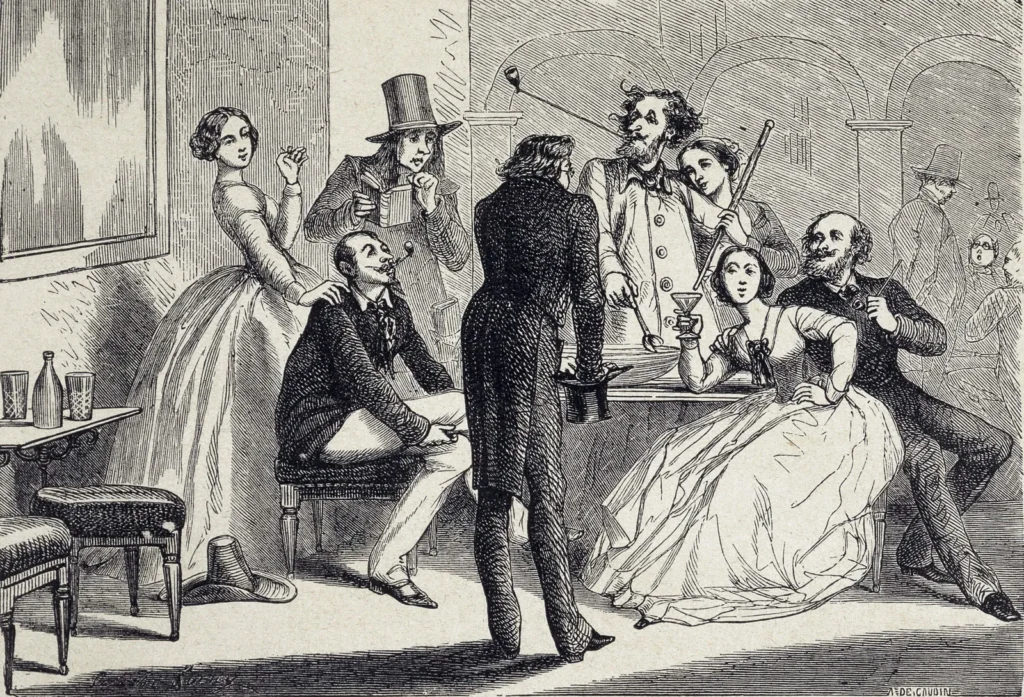
There is a woman in the same attic. She has been there the whole time, in the background of every painting, every novel, every romanticized account of garret life and artistic suffering. She is the one who posed. She is the one who sewed through the night to pay the rent while he painted. She is the one who got sick first, whose cough was not poetic but simply lethal, whose death at twenty-four was not a tragedy that launched a career but simply a death. Her poverty was never romantic because no one was watching her poverty with the intention of transforming it into myth.
The bohemian fantasy, in its foundational architecture, required her to be there but not visible as a subject. She was the muse, the model, the mistress, the casualty. She was the proof that the male artist was alive and feeling, the warm body against which his cold genius could press itself and confirm its own sensitivity. Linda Nochlin, in her 1971 essay Why Have There Been No Great Women Artists?, dismantled this arrangement with the precision of someone who had spent years watching the machinery run. The question in the title was not naive. It was a trap laid for everyone who had ever answered it by listing female inadequacies. Nochlin’s actual argument was structural: women had been excluded from the very institutions that produced greatness, denied access to the academies, barred from life-drawing classes where the nude model was male, refused the professional networks that turned raw talent into recognized genius. The Ecole des Beaux-Arts in Paris did not admit women until 1897. Until that point, the training that defined canonical Western art was simply not available to them.
So the garret myth, when examined from her side of the room, reveals something uglier than nostalgia. The young man who suffered beautifully for his art was suffering inside a system that had handed him, despite everything, the fundamental credential of being taken seriously as a potential genius. His poverty was a temporary indignity on the way to possible recognition. Hers was a permanent condition with no institutional exit. He could be discovered. She could not, because the apparatus of discovery was not looking in her direction.
Think of what it meant to be a woman painter in nineteenth-century Paris, living in the same cheap arrondissements, breathing the same damp air, feeling the same compulsion to make something. You painted in secret, or in the margins of acceptable femininity, or in the domestic genres that the academies had conveniently classified as lesser. You did not attend the café debates because women in cafés were categorized by a different taxonomy entirely. You did not have a studio because studios were rented to men. You had a room, and in that room you were either a model or a wife or a failure. The bohemian myth had no grammar for what you were.
Pierre Bourdieu‘s analysis of cultural capital as something distributed unequally across class and gender lines makes this concrete in a way that Romantic mythology never could. The capacity to convert poverty into artistic identity, to wear destitution as a sign of spiritual election rather than social failure, was itself a form of privilege. It required that someone, somewhere, be willing to read your suffering as meaningful. That readership was constituted by men, looking at men, extending to other men the benefit of aesthetic doubt.
The woman in the attic did not get to be bohemian. She got to be cold. She got to be hungry. She got to die young in a way that, if anyone remembered her at all, was folded into someone else’s story of suffering and transcendence. Her poverty did not produce myth. It produced silence, and the silence was so complete that for a long time no one even noticed it was there.
The Contemporary Version: The Gig Economy in a Vintage Frame
You have seen the apartment on Instagram before you ever set foot in it. The exposed brick, the mismatched mugs, the laptop open on a wooden table scarred with coffee rings, a half-eaten croissant suggesting a life interrupted by creative urgency. The caption reads something like “another morning, another pitch” with a small red heart at the end. What the caption does not read is: unpaid, again.
This is the contemporary face of bohemia, and it has been laundered so thoroughly through the aesthetics of authenticity that the exploitation inside it has become almost invisible, even to the person living it. Especially to the person living it.
Luc Boltanski and Ève Chiapello, in their monumental 1999 work The New Spirit of Capitalism, argued that capitalism does not simply crush its critics. It absorbs them. It takes the language of liberation, of autonomy, of creative self-determination, and repackages it as the very justification for new forms of domination. The artist who once stood outside the market as its conscience becomes, in this operation, its most efficient unpaid recruiter. The bohemian ideal, that life organized around passion rather than profit is the only life worth living, does not disappear. It gets a LinkedIn profile.
There is a scene that has repeated itself in a thousand cities in the last two decades. A young woman sits across from a creative director in a glass-walled office. She has submitted thirty pages of original work as part of a “spec assignment,” a term that means: prove to us you are worthy before we consider paying you. The creative director speaks warmly about the company’s culture, about how everyone here is passionate, about the rare opportunity to work on projects that matter. What is not said, and what she already knows because she needs the line on her résumé more than he needs her labor, is that three other candidates submitted thirty pages too, that none of them will be compensated, and that the work may well appear in the campaign regardless of who gets the job. She smiles and nods. She has already internalized the grammar of this transaction as something other than theft.
The word “passion” is doing extraordinary ideological work in this sentence. Boltanski and Chiapello traced how the artistic critique of capitalism, which demanded meaning, creativity, and authenticity in work rather than just fair wages, was systematically incorporated into managerial discourse from the 1980s onward. By the 1990s, the language of self-realization had migrated entirely into corporate rhetoric. By the 2010s, it had colonized the very sectors where precarity is most acute. The gig economy did not invent bohemia. It franchised it.
Think about what “hustle culture” actually describes when you strip the motivational veneer away. It describes a person doing multiple jobs simultaneously, none of which provide stability or benefits, all of which are framed not as economic necessity but as personal brand building. The poverty is real. The rent is real. The anxiety that wakes you at four in the morning is real. But the narrative available to describe these conditions, the narrative that has been handed to you along with the vintage aesthetic and the carefully curated feed, insists that what you are experiencing is not exploitation. It is the price of living authentically. It is what separates you from those who sold out.
And here is the precision of the trap: it is almost impossible to reject the narrative without feeling like you are rejecting yourself. Because you did choose this. You do love the work. The passion is not entirely manufactured. That is exactly what makes the mechanism so elegant, and so brutal. The system does not need to coerce you when it has already convinced you that your compliance is your freedom, that the croissant on the scarred table is a symbol of how alive you are, and not of how little you are worth.
What the Cold Actually Feels Like
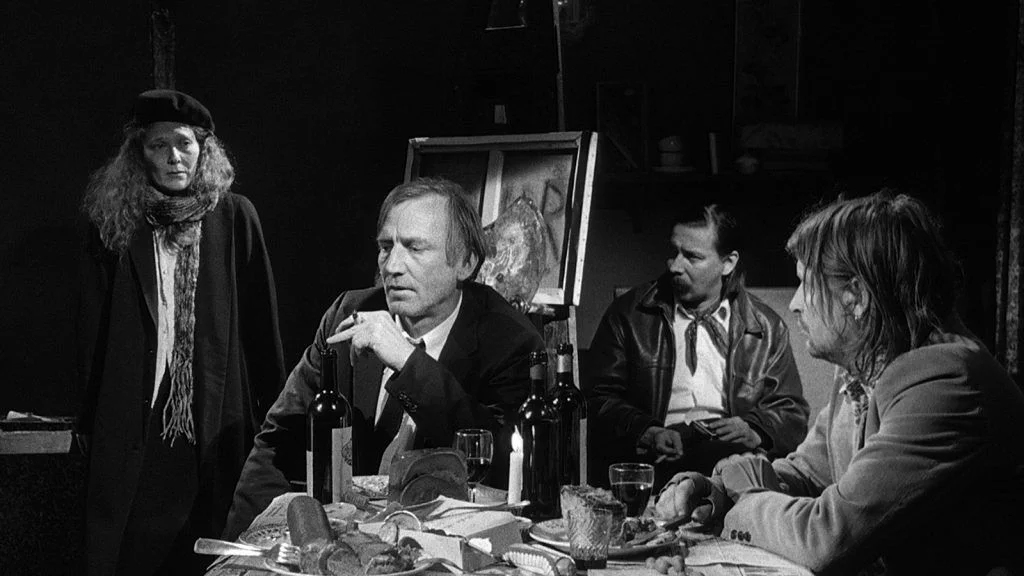
There is a specific temperature that precedes creative thought, and it is not the romantic chill of a garret window left open to the Paris sky. It is the temperature of a body that has been cold for so long it has stopped noticing the cold as a sensation and begun experiencing it as a baseline condition — a permanent background hum of the nervous system that crowds out everything else. You do not think about your novel when your feet are numb. You think about your feet.
Sendhil Mullainathan and Eldar Shafir spent years documenting what happens to the human mind under conditions of material scarcity, publishing their findings in 2013 in work that should have permanently dismantled the romantic myth of productive poverty. Their central discovery was not merely that poor people have less money. It was that scarcity colonizes cognitive bandwidth — that the mental load of managing deprivation, of calculating whether you can afford the bus fare, whether the electricity will last through the week, whether the late payment will cascade into something worse, consumes the same finite neural resources that are required for abstract thought, for sustained attention, for the kind of deep imaginative work that making something original actually demands. They measured this. The cognitive deficit imposed by financial anxiety is equivalent, in their studies, to losing a full night of sleep, or to a temporary drop of roughly thirteen IQ points. Poverty does not sharpen the mind. It taxes it continuously, like a process running in the background that you cannot close, draining battery that was never infinite to begin with.
A man sits at a table covered in unopened envelopes. He knows what is in them. He has known for weeks, which is precisely why they remain unopened — because the act of opening them would transform diffuse dread into specific numbers, and specific numbers require specific responses, and he does not have the resources for specific responses. So he sits with the envelopes and tries to write, and what he produces in those hours is not the concentrated distillate of suffering that the myth promises. It is thin, distracted, eaten through by the part of his mind that never stops calculating. The myth would have you believe this is the crucible. What it actually is, is damage.
The artists who survived their poverty and became famous did not become famous because of it. They became famous in spite of it, and many of them said so, in letters and diaries and interviews that the culture systematically ignores because they contradict the story we need to tell about why we do not pay artists. Keats wrote about the humiliation of debt. Orwell, who lived the research for Down and Out in Paris and London through 1933, was unambiguous that destitution narrowed him, not expanded him. Kafka held his day job not as an ironic counterpoint to his genius but because he understood, with the practical clarity of someone who had watched what financial precarity did to people, that a mind constantly negotiating survival is a mind partially unavailable for everything else.
What would it mean to make art without the myth attached to the making — without the narrative that the difficulty is the point, that the cold is the teacher, that the hunger is somehow earning something? It would mean art made by people who slept enough, who ate regularly, who did not check their bank balance with the particular physiological response that registers in the body before the eyes have finished reading the number. It would mean work produced from fullness rather than depletion, from chosen attention rather than stolen fragments of cognitive capacity not yet consumed by survival. The question is not whether such work would be better. The question is whether, stripped of its mythology of suffering, we would still believe it had been paid for — and whether we have become so fluent in the language of artistic sacrifice that we would no longer know how to recognize the thing itself.
🎭 Art, Poverty, and the Myth of the Creative Soul
The figure of the poor artist is not simply a historical condition but a cultural myth that has shaped how Western society imagines creativity, freedom, and sacrifice. From the cursed poets of nineteenth-century Paris to the bohemian ateliers of Montmartre, this archetype weaves together aesthetics, politics, and existential longing. The following articles explore the deepest roots of this enduring legend.
The Cursed Poet: History and Figures
The ‘cursed poet’ is perhaps the most direct ancestor of the bohemian artist myth celebrated in La Bohème. Figures like Verlaine, Rimbaud, and Baudelaire transformed poverty, illness, and social marginalization into a badge of artistic authenticity. Their lives embodied the romantic idea that true genius must suffer and be misunderstood by a philistine society.
GO TO THE SELECTION: The Cursed Poet: History and Figures
Herbert Marcuse and Art: The Aesthetic Dimension
Herbert Marcuse argued that authentic art preserves a utopian dimension that resists the logic of capitalist society, making it inherently subversive. His aesthetic theory helps explain why the image of the poor artist has such ideological power: it represents a refusal of bourgeois comfort in favor of creative freedom. Understanding Marcuse illuminates the deeper political charge behind the romantic myth of bohemian life.
GO TO THE SELECTION: Herbert Marcuse and Art: The Aesthetic Dimension
Shelley and the Defence of Poetry: Poets as Legislators
Shelley’s famous claim that poets are ‘the unacknowledged legislators of the world’ is one of the foundational texts of the artist-as-prophet tradition. His Defence of Poetry articulates the belief that creative imagination holds a higher moral and social truth than any political institution. This vision of the artist as visionary outsider feeds directly into the bohemian ideal that La Bohème dramatizes so powerfully.
GO TO THE SELECTION: Shelley and the Defence of Poetry: Poets as Legislators
Mass Social Homologation Today
The bohemian myth of the poor artist was partly constructed in opposition to the homogenizing pressures of modern bourgeois society. Mass social homologation flattens individual expression and commodifies culture, making the figure of the nonconformist artist appear all the more heroic and necessary. Examining contemporary forms of social conformity reveals why the romantic image of the struggling creative still resonates so deeply today.
GO TO THE SELECTION: Mass Social Homologation Today
Discover the Free Spirit of Independent Cinema
If the myth of the bohemian artist stirs something in you, Indiecinema streaming is the place where that spirit lives on screen. Explore a curated selection of independent films that celebrate creative freedom, nonconformity, and the courage to make art outside the mainstream. Join the community of curious minds who choose cinema as a form of deeper understanding.
👉 EXPLORE THE CATALOG: Watch Indie Films in Streaming
A vision curated by a filmmaker, not an algorithm
In this video I explain our vision

