
The Familiar Face That Undoes You
You trusted the voice before you trusted the words. That is the oldest trap, and you walked into it the way everyone does — not blindly, but with your eyes wide open, scanning for danger in all the wrong directions. The coffee was still warm. The light through the window was the same light it always was. And the sentence that ended everything was delivered in the same register as every other sentence that person had ever said to you, the same rhythm, the same slight upward inflection at the end, as if asking permission for what had already been decided. That is what no one tells you about betrayal: it does not arrive wearing a different face. It arrives wearing the most familiar face you know.

Literature has been circling this fact for roughly three thousand years without fully saying it plainly. What the oldest narratives understand — and what the most sophisticated theoretical frameworks often obscure — is that betrayal is not primarily a moral category. It is an ontological one. It does not just damage a relationship. It retroactively dismantles the architecture of a self. When someone who helped you construct your sense of reality turns out to have been operating from a different blueprint entirely, the problem is not that you have been wronged. The problem is that you no longer know which of your memories are true.
Erik Erikson, writing in 1950 in Childhood and Society, argued that the foundation of psychological development is basic trust — the infant’s first experience of a world that responds, that holds, that is reliable. He was not writing metaphor. He meant that the capacity to exist coherently in relation to other people is built on a biological wager made before language, before reason, before choice. What betrayal does, in its most serious forms, is not break a promise. It breaks the neurological grammar through which a person organizes experience. This is why survivors of intimate betrayal often describe what sounds like a perceptual disorder — an inability to trust their own recollections, a sense that the ground has become provisional.
The literary tradition seized on this long before psychology named it. The texts that endure are not the ones built around villains who were always obviously villainous. They are built around figures who were genuinely trusted, who perhaps even trusted themselves. Sophocles understood in the fifth century BCE that the most devastating reversals are the ones where the catastrophe and the devotion share the same root. Oedipus is not betrayed by an enemy. He is undone by the very intelligence and determination that defined him as a hero. The self that sought the truth was incapable of surviving it. That structure — where your greatest strength is the instrument of your unmaking — recurs across world literature not because writers are drawn to irony but because it reflects something accurate about how identity is constructed and how it collapses.
What makes betrayal uniquely generative as a literary theme, across cultures and across centuries, is precisely this doubling: it is simultaneously a social event and a private catastrophe. The external facts can often be stated in a single sentence. The internal devastation takes years, sometimes an entire lifetime, to map. Dante placed betrayers in the ninth and lowest circle of Hell not because betrayal was the most visibly violent sin but because it required the deepest perversion of something sacred — the specific warmth of intimacy turned into a weapon. He understood, writing in the early fourteenth century, that what is wounded in betrayal is not pride or property but the part of a person that decided, against all evolutionary caution, to be known.
To be known and then used. That specific sequence is what literature returns to, century after century, because it is the sequence that most reliably destroys not just happiness but coherence.
Loyalty as a Social Construction
You are six years old the first time someone calls you a traitor. You have not stolen anything, harmed anyone, or broken a single rule you were aware of. You have simply chosen to sit with a different group at lunch, and by the time the afternoon is over, a word that carries the weight of centuries has been pressed against your chest like a brand. No one explains to you that loyalty was invented. No one mentions that the feeling of betrayal your former friends are performing — that theatrical wound — is not a natural human response but a learned one, rehearsed across generations so thoroughly that it now arrives before thought, before language, before any reasonable accounting of what actually happened.
The Romans had a word, fides, which their philosophers and legal theorists treated as the very foundation of civilization. Cicero, in De Officiis, written in 44 BCE, argued that fides was the basis of iustitia itself — the keeping of promises and agreements as the primary civic virtue. But fides was never symmetrical. It bound the client to the patron, the soldier to the commander, the conquered people to Rome, while the obligations flowing in the other direction remained discretionary, governed by honor rather than contract. The emotional architecture of betrayal was already built into this asymmetry: those with less power were always more capable of betraying than those with more, because the whole system depended on their compliance, and any deviation from it was legible only as rupture.
Feudal Europe refined this structure with extraordinary precision. The oath of fealty sworn at Strasbourg in 842 — the earliest surviving document in both Old French and Old High German — bound vassal to lord through a ritual that mixed God, blood, and land into something that felt primordial and eternal. It was neither. It was a technology, engineered to solve a specific problem: how to hold together a fragile Carolingian inheritance without a functioning bureaucratic state. The oath made loyalty feel sacred precisely because it had no other enforcement mechanism. When a vassal broke faith, the betrayal was cosmological in its framing — a sin against God, a violation of nature — because anything less dramatic would have exposed the contract for what it was: a piece of political theater performed at sword-point.
Georges Duby spent decades excavating these arrangements, particularly in The Three Orders, published in 1978, and what he found beneath the spiritual vocabulary was a relentlessly material logic. Lords needed peasants and knights to stay in place, to fight in particular directions, to hand over particular portions of their harvest. Loyalty was the name given to this immobility when it was voluntary, and treachery was the name given to it when it stopped being so. The moral charge was always retrospective — assigned after the fact by whoever retained enough power to write the account.
This is the mechanism that persists, stripped of its liturgical costume, in every workplace, every family, every friendship where one person’s needs quietly become the structural expectation that others must meet. When a child leaves the religion of their parents, they are called a betrayer of the family. When a worker organizes with colleagues against management, they are called disloyal to the company. The language does not shift because the underlying logic has not shifted: there is always someone who benefits from a definition of loyalty that cannot be questioned without appearing to commit the very crime the questioning exposes.
Sigmund Freud noticed something adjacent to this in his 1921 essay Group Psychology and the Analysis of the Ego, where he observed that group cohesion depends on a shared identification with an authority figure that converts individual anxiety into collective belonging. What he did not fully pursue is that this conversion is also a foreclosure — the moment you belong, the terms of your belonging have already been set by someone else, and the first time you act outside those terms, you will discover that you have apparently always been capable of betrayal, and that everyone around you somehow knew it before you did.

Judas, Brutus, and the Mythology of the Traitor
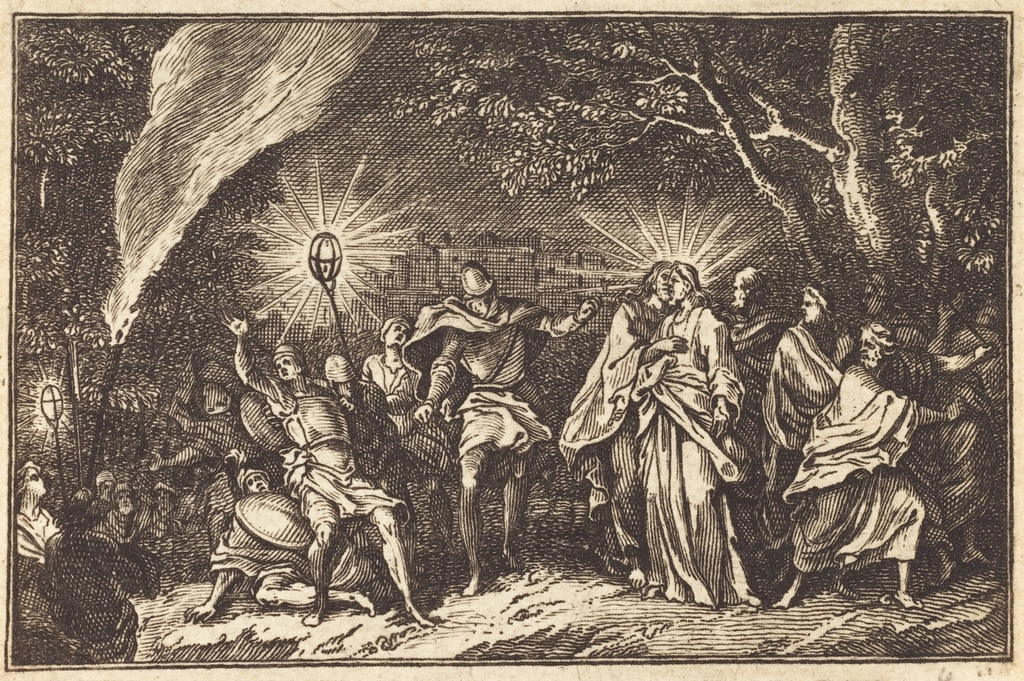
You have probably stood at some point in your life before a person who failed you and felt the specific, almost chemical need to find the exact moment they decided to become your enemy. Not the accumulation of small divergences, not the slow erosion of shared understanding, but a single deliberate choice — a room, a handshake, a whispered name. That need is not psychological. It is theological. And literature has been feeding it for centuries with extraordinary precision.
Dante places Judas Iscariot, Brutus, and Cassius in the lowest circle of Hell, frozen to their waists in ice inside the three mouths of Satan himself — an image from Canto XXXIV of the Inferno so structurally extreme that it reveals its own logic by excess. These three men are not simply punished more severely than murderers or heretics. They occupy a cosmologically separate category: the betrayers of benefactors. What makes this classification theologically significant is not what these men did, but what their condemnation accomplishes for everyone else. By fixing betrayal in a named, frozen, eternal body, the entire surrounding system of power — the Roman Republic, the Christian church, the Florentine political order Dante himself navigated — is retroactively exempted from scrutiny. Judas carries the failure of a divine project that should have been self-sustaining. Brutus and Cassius carry the weight of a republic that was already devouring itself through civil war, debt, and the collapse of senatorial legitimacy decades before Caesar crossed the Rubicon. The ice does not preserve the guilty. It preserves the story that makes everyone else innocent.
Shakespeare understood this mechanism with a kind of cold surgical awareness that his play barely conceals. In Julius Caesar, written around 1599, Brutus is constructed not as a villain but as a man of almost suffocating moral sincerity — which is precisely what makes him so useful to the myth. A cynical Brutus would threaten the structure of the narrative; a Brutus who genuinely believes he is saving Rome forces the audience into the uncomfortable position of watching virtue produce catastrophe. But what Shakespeare actually documents, beneath the rhetoric and the assassination, is a political vacuum that existed before any single act of violence: a city where popular loyalty had become transferable, where the Senate had already lost its functional authority, where the question was never whether Caesar would be killed but what shape the power struggle would take afterward. Brutus does not cause this. He simply steps into it, believing language about the republic that the republic had already stopped meaning.
René Girard, in his 1972 work La Violence et le sacré, argued that collective communities stabilize themselves by concentrating ambient social violence onto a single sacrificial figure — the scapegoat whose expulsion or destruction temporarily resolves tensions that are in fact structural and diffuse. What literary traitors perform is a narrative version of exactly this function. Judas and Brutus are not remembered because their betrayals were uniquely consequential. History is dense with conspiracy, defection, and political murder that produced outcomes just as catastrophic. They are remembered because their names absorbed the explanatory burden that would otherwise fall on institutions, on crowds, on the slow anonymous processes by which collective arrangements rot from within.
There is something deeply revealing in the fact that cultures require their traitors to have been intimate. Distance disqualifies. The Roman senators who shared no personal bond with Caesar are historical footnotes. Brutus, who was rumored to be his son, who was publicly loved by him, becomes the archetype. Judas, who ate at the same table, who received the same bread — the proximity is load-bearing, because betrayal only functions mythologically when it destroys something that was supposed to be inviolable. The stranger who harms you is simply dangerous. Only the intimate who turns can be made to carry the proof that trust itself was the original error, that the wound was not accidental but written in from the beginning.
The Betrayed Self: When You Are Both Sides
You have rehearsed the lie so many times that you no longer feel the rehearsal. The version of yourself you present at the table, at the interview, at the family dinner — you have defended it so consistently, with such practiced fluency, that challenging it now feels not like honesty but like aggression. This is where the truly irreversible damage happens, not in the moment someone else turns against you, but in the moment you turn against your own perception to make the social situation survivable.
Jean-Paul Sartre named this mechanism with clinical precision in Being and Nothingness, published in 1943, calling it mauvaise foi — bad faith — the act of pretending to yourself that you have no choice when in fact you are choosing, constantly, at every second. His waiter who performs being a waiter so completely that he forgets he is performing anything is not a comic figure. He is a portrait of what consciousness does when freedom becomes too heavy to carry openly. The terrifying implication Sartre buries in that image is that the performance is not cynical. The waiter is not lying to anyone in particular. He has simply made the performance load-bearing, let it become the architecture of his selfhood, so that dismantling it would mean dismantling the floor he stands on.
What literature does with this condition that philosophy alone cannot is show you the before — the moment of capitulation, small enough to be invisible, permanent enough to be fatal. Fyodor Dostoevsky‘s narrator in Notes from Underground, written in 1864, is a man who has spent forty years watching himself betray his own perceptions in real time and narrating the process with grotesque lucidity. He knows when he is performing resentment rather than feeling it. He knows when his spite is manufactured to give himself a coherent identity. He describes this not as pathology but as the logical endpoint of being sufficiently intelligent in a world that rewards consistency over truth. The underground is not a metaphor for depression. It is the space a person retreats to when they have understood that honesty about their own contradictions makes them socially unintelligible, and they are not willing to go fully unintelligible, not yet.
The self-betrayal that literature keeps returning to is almost never dramatic. It does not arrive with the weight of a formal decision. It accumulates in the micro-adjustments — the softened opinion at the dinner table, the enthusiasm performed for a career you chose because someone else needed you to, the grief you compressed into a socially acceptable duration because extended mourning makes other people uncomfortable. Erik Erikson, writing on identity formation in the 1950s and 60s, observed that the consolidation of a coherent self requires the suppression of alternatives, and that this suppression is not always conscious. The person who could have become someone else is not mourned because they were never fully acknowledged as real. Literature’s function is to make that ghost legible.
What makes the underground man so specifically unbearable to read is that his self-awareness does not save him. He sees the mechanism. He can describe it in extraordinary detail. He knows he is performing, knows the performance is corrosive, knows that his relationships are staged encounters between two fictions, and he continues anyway — not because he cannot stop but because stopping would require him to exist in a form he has no practice inhabiting. The awareness becomes its own trap, another layer of performance, the man who knows he is performing, performing the role of the man who knows. This is the structural cruelty at the center of self-betrayal as a literary subject: consciousness is not the cure. Seeing yourself clearly is not the same as being able to live differently, and the distance between those two things is where most people quietly reside.
Women Who Betray and the Violence of That Label
You are sitting in a theater watching a woman pick up an axe, and the entire machinery of the ancient world has arranged itself to make that axe look like evidence of her depravity rather than the consequence of a decade of accumulated grievance.
Clytemnestra killed Agamemnon in 458 BCE as Aeschylus rendered it in the Oresteia, and the play’s brilliant cruelty is that it allows her to speak her reasons with complete lucidity — the sacrifice of Iphigenia, the insult of Cassandra brought home as a war trophy, ten years of abandoned sovereignty — while simultaneously constructing a cosmological framework in which her act damns the entire female principle. By the trilogy’s end, the Furies who defend her are literally driven underground, and a new juridical order, Athenian, patriarchal, and self-congratulatory, rises over her buried logic. Aeschylus did not invent this move. He codified it so thoroughly that Western literature inherited it as a default grammar: the woman who acts decisively against the order that contains her will be coded not as an agent with cause, but as a catastrophe with a womb.
What makes this coding so durable is that it survives the transition from mythological to realist fiction without losing a single tooth. When Tolstoy published Anna Karenina in serial installments between 1875 and 1877, he placed a woman’s desire for autonomous feeling against the full weight of Russian aristocratic society and then, with the peculiar honesty of genius, showed the reader exactly how that society crushes her — while still allowing the novel’s moral architecture to frame her destruction as somehow internally generated, a product of her own passion’s excess. The epigraph from Romans, “Vengeance is mine; I will repay,” does not point at Karenin or at the social structure. It points at Anna. Her betrayal of the marriage is recorded by the novel as a metaphysical transgression, and the train that kills her arrives with the weight of cosmic justice rather than social murder.
Gary Saul Morson, writing in Hidden in Plain View in 1987, identified what he called the “sideshadowing” in Tolstoy — the sense that other futures were genuinely available, that Anna’s death was not inevitable. That observation is devastating precisely because the novel works so hard to make it feel inevitable, to make the reader experience her self-determination as self-destruction, to confuse the two until they are indistinguishable. The label of betrayer does exactly this work: it retroactively naturalizes whatever punishment follows.
Henrik Ibsen understood the mechanism from the other direction. When Nora Helmer walks out of the door at the end of A Doll’s House in 1879, she commits what the play’s contemporary audiences experienced as an act of monstrous betrayal — of her husband, her children, and the social contract itself. The violence of that response, the fury of the reviews, the productions that added alternative endings to spare audiences the sound of that closing door, reveals what was actually at stake. Nora did not betray anyone. She withdrew consent from an arrangement that had never asked for her consent in the first place. The betrayal narrative was applied to her departure precisely because there was no other available language for a woman choosing herself over her assigned role.
Sandra Gilbert and Susan Gubar in The Madwoman in the Attic, published in 1979, traced how nineteenth-century literature systematically split the female figure into the angel and the monster, and the hinge between those two categories is almost always an act of self-determination. The woman who remains contained is beatified. The woman who moves is monstrous. What this binary actually encodes is a terror of female agency so profound that it required the entire apparatus of literary tradition — tragedy, realism, social comedy — to continuously restage and re-prosecute the same offense, generation after generation, as though the verdict kept failing to hold.
A vision curated by a filmmaker, not an algorithm
In this video I explain our vision
Colonial Betrayal and the Collaborator Narrative

You are handed a new identity the morning the soldiers arrive, and it fits well enough that you almost forget you chose to put it on. The new language comes first, then the new name, then the small courtesies extended to those who make themselves useful. By the time the occupation has lasted a decade, you have forgotten what refusing would have looked like.
Frantz Fanon understood this not as weakness but as a structural production. In The Wretched of the Earth, published in 1961, he described how colonial systems do not merely conquer territory — they reorganize the psychological interior of the colonized subject, installing a hierarchy of worth in which proximity to the colonizer becomes the only available grammar of dignity. The collaborator, in this framework, is not someone who chose betrayal from a menu of free options. He is someone who was handed a menu with one item and praised for his excellent taste.
What makes the label of traitor so lethal in occupied societies is precisely that it travels independently of the truth. It does not require evidence of actual harm caused to one’s community. It requires only visible comfort, visible access, a child enrolled in the colonial school rather than the resistance’s clandestine one. Albert Memmi traced this mechanism in The Colonizer and the Colonized in 1957, noting that the most dangerous figure for both sides of any occupation is the person who refuses the binary entirely — who neither assimilates fully nor resists purely. That figure becomes a screen onto which every collective anxiety is projected, and the accusation of betrayal is the stone thrown to make the screen go blank.
Literature seized this figure precisely because it could not be processed by political discourse alone. Chinua Achebe‘s 1958 novel Things Fall Apart builds an entire civilization’s collapse around the question of who bears the cost of cultural survival, and the most devastating judgment in the novel is not rendered by the British administration but by Okonkwo’s own community, which mistakes rigidity for integrity and condemns accommodation as surrender. The real betrayal in Achebe is committed by a social order so terrified of appearing compromised that it destroys what it claims to protect.
This is where the collaborator narrative becomes a mechanism of collective discipline rather than moral reckoning. Under occupation, the accusation functions as a tool for enforcing a specific version of resistance — the one that benefits those issuing the accusation most. Communities under pressure have historically used the traitor label to silence dissent, to neutralize rivals, and to redirect legitimate frustration away from structures of power and toward individuals who can be named, shamed, and expelled. The French Resistance tribunals of 1944 and 1945 sentenced thousands on evidence thin enough to dissolve in water, and historians like Henry Rousso, writing in The Vichy Syndrome in 1987, documented how the purge was as much about rewriting collective memory as about punishing actual collaboration. Communities needed traitors in order to reconstruct an image of themselves as having been, at heart, uncorrupted.
The literature that survives this process is the literature that refuses to distribute the blame cleanly. Assia Djebar’s novels of the Algerian war circle endlessly around the figure of the woman who speaks to the wrong person in the wrong language, whose survival is later read as evidence against her character. The accusation of betrayal in those texts is never separable from the accusation of being a woman who moved too freely through spaces men were controlling. Collaboration and transgression collapse into each other under enough pressure, and the literature that is honest about this cannot offer the reader a side to stand on without implicating them in the process of condemnation itself.
What the collaborator narrative ultimately enforces is not loyalty but legibility — the demand that every person under occupation be readable as either fully inside or fully outside the collective.
The Second Scene: A Room Where Everyone Stays Quiet
You are standing in a conference room — not metaphorically, but with your body, your chair, your coffee going cold — and someone has just said something true. Not provocatively true, not strategically true, but factually, verifiably, undeniably true: a name was suppressed, a number was falsified, a decision was made that harmed people who had no voice in the room when it was made. You watched the speaker’s face as they said it. You watched the room’s face after. And what happened next was not denial. Denial would have been cleaner, more honest in its dishonesty. What happened was a particular quality of silence — weighted, collective, almost liturgical — the kind that does not occur naturally but must be practiced, inherited, agreed upon without anyone ever agreeing to it aloud.
Hannah Arendt, writing in “Eichmann in Jerusalem” in 1963, was not primarily interested in monsters. She was interested in the bureaucratic texture of participation — the way ordinary institutional life trains people to experience obedience as neutrality and silence as the absence of a position. The shock of her argument was not that evil could be banal but that banality could be structural: that organizations do not require consent to atrocity, only the reliable suspension of individual moral vocabulary at the moment it becomes professionally inconvenient. The conference room does not produce villains. It produces people who would be horrified to be called villains, who go home and are kind to their children, who understand perfectly what was said and what it meant and who choose, with the full weight of their cognition, to treat understanding as something that does not obligate them to speak.
What makes this form of betrayal so difficult to name is that it wears the disguise of professionalism. Sociologist Erving Goffman, in “The Presentation of Self in Everyday Life” published in 1959, mapped the way social roles function as performances that constrain the actor as much as they construct the audience’s perception. The person who stays quiet in that room is not simply afraid, although fear is present. They are inhabiting a role whose unwritten script includes the line: this is not the moment, this is not my place, this is above my pay grade, this will be handled through the appropriate channels. The role of the institutional professional contains within it a pre-emptive absolution — a structure that converts complicity into procedure.
In 1971, Philip Zimbardo’s Stanford Prison Experiment demonstrated something the ethical committees that later banned such research perhaps did not fully absorb: that the assignment of a role is sufficient to alter behavior in ways the individual would retrospectively find unrecognizable. Ordinary students, given uniforms and titles, developed within days the reflex of institutional cruelty. No one had told them to be cruel. The structure had told them. And the structure in that conference room tells everyone the same thing: the person who speaks is the disruption, not the injustice that preceded their speech.
This is where betrayal loses its dramatic silhouette — the knife, the letter, the confession extracted at midnight — and becomes something you could photograph and see nothing. The person who was harmed sits outside the room or inside it without a voice, and the people who know remain in a formation so practiced it resembles solidarity. They would not call it loyalty to each other. They might not call it anything. But the one who was betrayed knows with the precision of the excluded exactly what it is, because the silence is not neutral — it has a direction, a beneficiary, a protected interest. Georg Simmel, in his 1906 essay “The Sociology of Secrecy and of Secret Societies,” observed that shared concealment produces a form of social bonding tighter than shared disclosure — that the group that does not speak of something is bound by that silence more completely than by any oath.
Literature's Refusal to Forgive or Condemn
You have read the last page, closed the book, and sat with it — not because it moved you toward understanding, but because it refused to.
J.M. Coetzee’s Disgrace, published in 1999, performs something almost unbearable: it surrounds a sexual violation,, a father’s inadequate love, a farm burning in post-apartheid South Africa, and never once tells you where to stand. David Lurie betrays his student Melanie Isaacs, betrays his daughter Lucy through his inability to protect her, betrays himself through a kind of aristocratic self-pity he mistakes for stoicism — and the novel does not punish him sufficiently, nor does it forgive him adequately. Readers regularly experience this as a flaw in the novel’s moral architecture. They are wrong. That discomfort is precisely the load-bearing structure.
What Coetzee understood, and what separates genuinely serious fiction from morally instructive fiction, is that the demand for verdict — for the text to land on guilt or absolution — is itself a form of evasion. When a reader insists that a novel should condemn its betrayer more forcefully, they are not seeking moral clarity. They are seeking to be relieved of the work of sitting with the irreducible complexity of a person who did wrong and remained, in some other register, recognizably human. The verdict outsources the discomfort. Literature at its most serious refuses that transaction.
Chinua Achebe’s Things Fall Apart operates under similar pressure, though through a completely different cultural grammar. Okonkwo’s betrayal of his adoptive son Ikemefuna — participating in his execution to avoid appearing weak — is rendered without authorial judgment, embedded instead in a world where masculinity, colonial disruption, and clan loyalty all press in simultaneously. Achebe, writing in 1958 during the late period of British colonial rule in Nigeria, was fully aware that Western readers would arrive already equipped with a verdict: the act is monstrous. He structures the novel to make that verdict feel both available and insufficient, because Okonkwo’s world is governed by a coherence the reader does not share and cannot fully access from outside. The betrayal is not excused by context — it is complicated by it, which is not the same thing.
What these two novels share, separated by four decades and two entirely different geographies of conscience, is an ethics that operates without the machinery of resolution. Martha Nussbaum, in Poetic Justice from 1995, argued that literary narrative cultivates a form of moral perception — what she called the “narrative imagination” — that no philosophical treatise can fully replicate, because fiction forces emotional proximity to a specific individual life rather than permitting the clean distance of principle. But Nussbaum’s argument still contained an implicit optimism: that this proximity leads somewhere, produces some cultivated capacity for judgment. Coetzee and Achebe are more ruthless. They suggest that proximity to a betrayer may produce nothing more than the experience of being unable to judge — which is not a failure of the reader, but a form of moral education that resembles defeat.
There is something the tradition of tragedy understood and that contemporary literary culture keeps trying to forget: the purpose of witnessing a serious wrong is not to emerge cleansed, instructed, or confirmed in your existing ethical preferences. Aristotle’s catharsis in the Poetics was never a comfortable resolution — it was a violent emotional discharge that left something changed and unrecovered in the spectator. The greatest literary treatments of betrayal work in exactly this register. They do not ask whether the act was justified. They ask what it means that the person who committed it is still here, still thinking, still in some sense yours to understand — and that you cannot stop understanding them even when you most wish you could.
🗡️ When Trust Shatters: Betrayal Across Cultures and Pages
Betrayal is one of the oldest wounds in world literature, cutting across cultures, centuries, and genres. From the intimate treachery of love to the grand deceptions of power, writers have always returned to this theme to illuminate the darkest corridors of the human soul. The articles below trace betrayal’s many masks through literary history and psychological depth.
Stendhal and Social Climbing: The Red and the Black
Stendhal’s Julien Sorel navigates a society built on false promises and social deception, where loyalty is always conditional and ambition breeds inevitable betrayal. The Red and the Black remains one of literature’s sharpest dissections of how class and hypocrisy corrode trust between individuals. Stendhal shows that to climb is always, in some way, to betray.
GO TO THE SELECTION: Stendhal and Social Climbing: The Red and the Black
Impossible Desire: Adultery as Rebellion
Adultery in literature is rarely just a moral transgression — it is an act of betrayal layered with desperate longing and social rebellion. From Flaubert’s Emma Bovary to Tolstoy’s Anna Karenina, the adulterous figure illuminates how suffocating social contracts can make betrayal feel like the only available form of freedom. This theme resonates across world literature precisely because it speaks to the universal tension between duty and desire.
GO TO THE SELECTION: Impossible Desire: Adultery as Rebellion
Balzac’s Lost Illusions: Analysis
Balzac’s Lost Illusions chronicles the slow, devastating betrayal of youthful ideals as the young poet Lucien de Rubempré collides with the corrupt machinery of Parisian literary and social life. The novel reveals how betrayal is often not a single dramatic act but a gradual erosion of principle under the pressure of ambition and survival. Balzac’s vision remains hauntingly relevant to any reader who has watched innocence dissolve in the face of the real world.
GO TO THE SELECTION: Balzac’s Lost Illusions: Analysis
Social Hypocrisy: The Double Face of Respectability
Social hypocrisy is the silent accomplice of every act of literary betrayal, providing the masks behind which characters deceive both others and themselves. Across world literature, from Molière’s Tartuffe to the novels of Jane Austen and Henry James, respectability functions as a carefully maintained lie that enables deeper treacheries to flourish unseen. Exploring this theme reveals that the greatest betrayals are often those society itself refuses to name.
GO TO THE SELECTION: Social Hypocrisy: The Double Face of Respectability
Discover the Cinema of Moral Complexity on Indiecinema
If betrayal as a theme stirs something essential in you, independent cinema has explored it with a courage and intimacy that mainstream films rarely dare. On Indiecinema streaming you will find films that share this same literary courage — stories where loyalty, deception, and human fragility are examined without easy resolutions. Come and explore a cinema that, like the greatest world literature, refuses to look away.
👉 EXPLORE THE CATALOG: Watch Indie Films in Streaming
A vision curated by a filmmaker, not an algorithm
In this video I explain our vision

