
The Exhaustion You Scheduled Yourself Into
You open your laptop at 6:47 in the morning not because you have to but because the silence of not opening it feels worse. The coffee is there. The notifications are there. The inbox has already accumulated seventeen messages since midnight, three of which are marked urgent by people who marked the last thirty things urgent, and you read them all with a focused, professional attention that would impress anyone watching. No one is watching. You respond to two of them before your partner has come downstairs, and when they ask how you slept you say fine, because the alternative requires a conversation you don’t have the bandwidth for, and bandwidth has become the unit in which you measure everything now — your patience, your affection, your capacity to be a person in a room with other people.

This is not a breakdown. That is precisely what makes it so difficult to name. Breakdowns have edges, they create incidents, they give you a before and an after. What you are living has no such mercy. You are functioning at a level most people around you would describe as impressive. You deliver. You meet deadlines. You perform competence with the fluency of someone who has been performing it for so long that the performance has consumed the performer, and what remains is a very efficient machine wearing your face, running on cortisol and the phantom memory of why any of this once mattered.
Herbert Freudenberger introduced the clinical term burnout in 1974, in a paper published in the Journal of Social Issues, and what made his observation radical at the time was not the concept of exhaustion — exhaustion was ancient — but the specific population he identified it in: the dedicated, the driven, the idealistic. Not the reluctant worker ground down by alienation, but the committed one destroyed by commitment itself. The trap, he understood, was not laziness. It was the opposite. It was the person who cared too much, too consistently, for too long, without any internal mechanism to stop.
What Freudenberger could not fully account for was the structural transformation of work that would come in the decades following his paper. The introduction of email in the 1990s, the smartphone in the late 2000s, and the normalization of remote work after 2020 did not simply extend the working day — they dissolved the membrane between work and everything else. Christina Maslach, whose Maslach Burnout Inventory became the dominant diagnostic instrument in occupational psychology, identified three core dimensions of burnout: exhaustion, cynicism, and a diminished sense of personal efficacy. What the data showed, across hundreds of studies conducted through the 1990s and 2000s, was that cynicism often arrived before exhaustion — a quiet withdrawal of meaning that preceded the physical collapse by months or years.
You probably recognized that withdrawal in yourself before you recognized the exhaustion. There was a meeting, sometime last year or the year before, where you sat and watched people argue about something that had once made you lean forward in your chair, and you felt nothing except a faint, clinical interest in your own flatness. You noted it the way a doctor notes a symptom — with detachment, with mild professional concern — and then you moved to the next item on the agenda because there was always a next item. The schedule is, in this sense, not just a tool for organizing time. It is the architecture of a life that has outsourced its own pacing to external demand, and what gets quietly buried beneath the back-to-back calendar blocks is the question of whether the person who built that schedule still exists inside it.
Productivity as a Moral Verdict
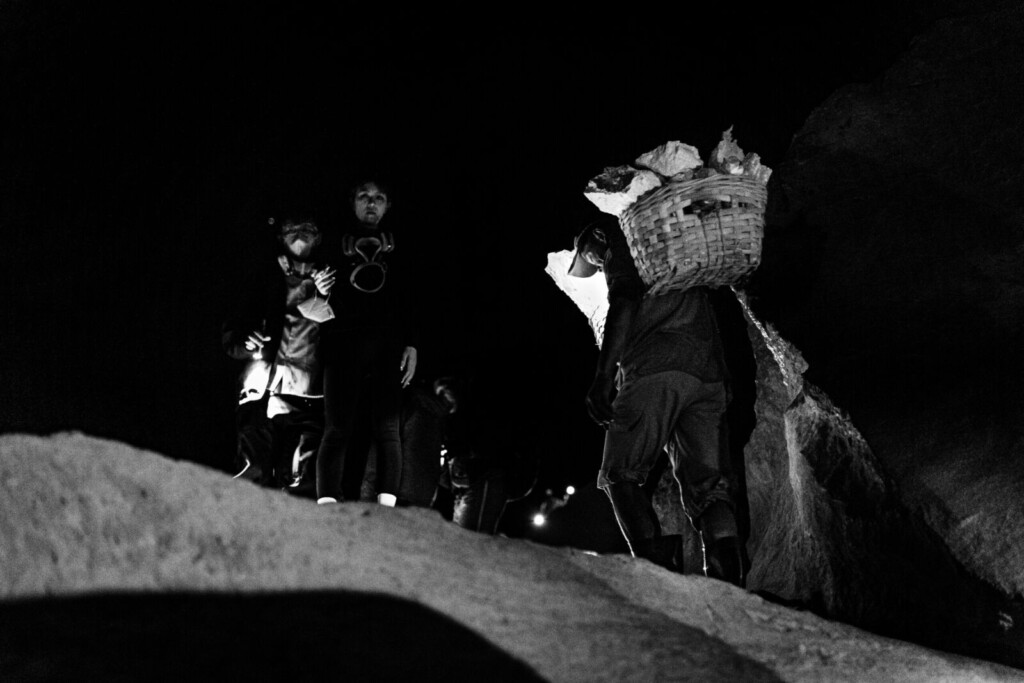
You wake up one morning and realize you cannot remember the last time you worked without feeling guilty about not working harder. The task completed yesterday already feels insufficient. The email answered at eleven in the evening should have been answered at nine. There is no arrival point, no moment when the account is settled — only an ever-receding threshold of adequacy that moves precisely as fast as you do.
Max Weber identified the mechanism with almost clinical precision in 1905, though he was describing something far older than the industrial office. In The Protestant Ethic and the Spirit of Capitalism, he traced how Calvinist theology, particularly its doctrine of predestination, created an unbearable psychological problem: if salvation was already determined and no human act could alter it, how could the believer tolerate the uncertainty of not knowing which side of that determination they were on? The answer the tradition produced was work. Not as a means to earn grace — that was theologically impossible — but as a sign of it. Disciplined, tireless, profitable labor became the visible symptom of divine election. To rest was not simply to be unproductive. It was to resemble the damned.
What Weber saw, and what the twentieth century largely forgot to examine, was that this logic did not require religion to survive. The theological container dissolved; the moral charge remained. By the time Frederick Winslow Taylor published The Principles of Scientific Management in 1911, the framework was already fully secularized: human beings were now units of measurable output, and their value was synonymous with their efficiency. The language changed from salvation to optimization, but the underlying verdict was identical. To produce less than your maximum capacity was a form of moral deficit. The worker who did not push to the edge of their ability was not merely underperforming — they were, in some poorly articulated but deeply felt sense, failing as a person.
This is the inheritance that sits inside the chest of anyone who cannot stop working even when they are physically collapsing. The guilt is not irrational. It is perfectly rational within a value system that has been absorbing them since childhood — a system in which rest is framed as earned rather than inherent, in which the question “what do you do?” functions as a complete inquiry into identity, and in which the word “busy” has become, somewhere in the late twentieth century, a status signal rather than a complaint. A 2019 Harvard Business Review study found that Americans consistently rated people described as having no leisure time as higher in status and competence than those with abundant free time, regardless of any other information provided. The busyness was the credential.
When burnout arrives under these conditions, the sufferer does not experience it primarily as an injury. They experience it as a confession. The body’s refusal to continue becomes, in the internal logic of the ethic, evidence of a fundamental insufficiency that was always already there. The stronger colleagues who have not broken down become proof of what you lacked. Christina Maslach, whose work through the 1970s and 1980s built the clinical architecture for understanding burnout as an occupational phenomenon with identifiable stages, noted repeatedly that the people most devastated by it were not the cynical or the disengaged — they were the most committed, the ones who had believed most thoroughly in the equation between effort and worth. The trap required believers. It had no use for the indifferent.
There is something almost architectural about how this guilt is constructed — layer upon layer of cultural sediment, each generation adding weight without examining what was already there underneath, until the structure is so dense that the person standing inside it cannot imagine the walls were ever built at all.

The Architecture of Invisible Exploitation
You set your alarm fifteen minutes earlier than necessary, not because your job requires it, but because you have decided, privately and without any external instruction, that getting ahead of the day is the responsible thing to do. No manager demanded this. No contract stipulated it. The optimization was entirely your own invention, and that is precisely the problem.
The philosopher Byung-Chul Han, writing in 2010 in The Burnout Society, identified a structural mutation in how power operates inside contemporary labor. The old mechanisms of discipline — the factory floor, the punch clock, the foreman’s gaze — produced docile bodies through external surveillance. What replaced them is more elegant and considerably more lethal: the achievement-subject, a person who no longer needs to be commanded because they have absorbed the logic of command entirely into their own psychology. Han draws on Foucault’s disciplinary society not to extend it but to mark its obsolescence. The cage has dissolved. What remains is a creature that runs because it has forgotten that stillness was ever a possibility.
This is not metaphor dressed as analysis. Between 2001 and 2019, the average number of hours worked annually by high-income professionals in OECD countries declined statistically while reported exhaustion, anxiety, and emotional depletion increased dramatically — a paradox that makes no sense under a model of simple overwork, but becomes entirely coherent once you understand that duration is not the real variable. The damage is not in the hours. It is in the continuous self-monitoring, the perpetual internal audit, the quiet compulsion to justify your existence through measurable output. A person working sixty hours under explicit coercion at least retains the psychological clarity of having an adversary. The achievement-subject has no adversary. They have a mirror.
What makes Han’s diagnosis genuinely destabilizing is not its darkness but its precision about why resistance fails. Traditional labor organizing was coherent because it presupposed a legible structure of exploitation: a class that extracted, a class that produced, a contract that could be renegotiated. The contemporary exhausted professional does not fit that architecture. They often own shares in the company depleting them. They describe their work as their passion. They frame collapse as personal failure rather than systemic outcome, because the system has successfully convinced them that they are the system. A strike requires an identifiable enemy. You cannot picket your own nervous system.
The sociologist Arlie Hochschild documented in The Managed Heart, published in 1983, how emotional labor — the work of performing feeling as a professional requirement — produces a specific form of alienation where workers lose access to their own emotional responses over time. Flight attendants trained to smile under duress eventually stopped knowing whether the smile was genuine. That estrangement from interior life is not an accident of a particular industry. It is the template that spread outward into virtually every service economy role over the following four decades, until the performance of enthusiasm became a hiring criterion more reliable than competence.
The achievement-subject does not merely perform enthusiasm. They have genuinely ceased to distinguish between authentic desire and conditioned drive. This is what makes the burnout that follows so profoundly disorienting: it does not feel like the consequence of someone else’s demand. It feels like a personal betrayal, as if the body has turned against a project that was freely chosen. The grief is real. The freedom was not.
There is a specific cruelty in systems that extract maximum output by eliminating the subjective experience of being extracted from. The injury is not only material. It is epistemological — a dismantling of the capacity to read one’s own situation accurately enough to name what is happening before it has already happened entirely.
When the Self Becomes the Job Description

There is a woman who has taught third grade for nineteen years, and when someone at a dinner party asks what she does, she says “I’m a teacher” with a completeness that forecloses every other answer — not because she is proud, though she is, but because no other sentence would feel true. She has not taken a full Saturday off since 2017. She does not experience this as deprivation. She experiences it as devotion, which is precisely why no one around her — not her principal, not her union, not the parents who send her grateful emails in June — has any reason to intervene.
What makes vocational cultures so structurally devastating is not that they demand sacrifice but that they have learned to make sacrifice indistinguishable from identity. Teaching, nursing, social work, and pastoral care all share an ideological architecture in which the practitioner is not someone who performs a function but someone who embodies a calling. The language of vocation is ancient — it derives from the Latin vocare, to call — and it carries a theological residue that has never fully secularized. To be called is to be chosen, which means that refusing the call, or simply exhausting one’s capacity to answer it, becomes a kind of spiritual failure rather than a physiological limit. The worker who breaks is not a victim of institutional underfunding; she is someone who perhaps was not truly called after all.
This is the mechanism by which meaning becomes a weapon. In 2019, the World Health Organization formally classified burnout in the eleventh revision of the International Classification of Diseases — not as a medical condition but as an occupational phenomenon, defined by three dimensions: feelings of energy depletion or exhaustion, increased mental distance from one’s job, and reduced professional efficacy. The precision of that classification matters less than what it revealed about the scale of the denial preceding it. For decades, the psychological literature had been accumulating evidence — Christina Maslach’s foundational 1981 Maslach Burnout Inventory, her subsequent work with Michael Leiter in “The Truth About Burnout” in 1997 — and still the dominant cultural response to a burned-out teacher or an exhausted hospice nurse was not systemic reform but individual counseling, resilience workshops, and the suggestion that mindfulness might restore what thirty years of chronic understaffing had consumed. The WHO classification did not solve anything. It simply made it harder to pretend the problem was personal.
What Maslach identified, and what organizational psychology has spent four decades confirming, is that burnout is not produced by too much work in isolation. It is produced by a specific mismatch between a worker’s values and the values enacted by the institution that employs her. A teacher who believes that education is relational and unhurried is placed inside a system that measures value through standardized test scores and throughput. The mismatch does not announce itself as a contradiction. It arrives as fatigue, then as cynicism, then as the strange dissociation of performing care while feeling nothing — what Arlie Hochschild, writing in “The Managed Heart” in 1983, called emotional labor: the management of feeling as a form of work, sold alongside the technical skill, rarely compensated, almost never acknowledged.
The cruelest irony of vocational burnout is that the people most likely to suffer it are those who entered their fields with the most genuine investment. Cynicism is a late symptom, not a character defect — it is what idealism looks like after years of institutional betrayal without the language to name the betrayal as such. The teacher who once believed she was shaping futures and now counts the days until retirement has not become a different person. She has become a person whose idealism was never met with the structural support it required to survive.
The Trap That Looks Like Freedom
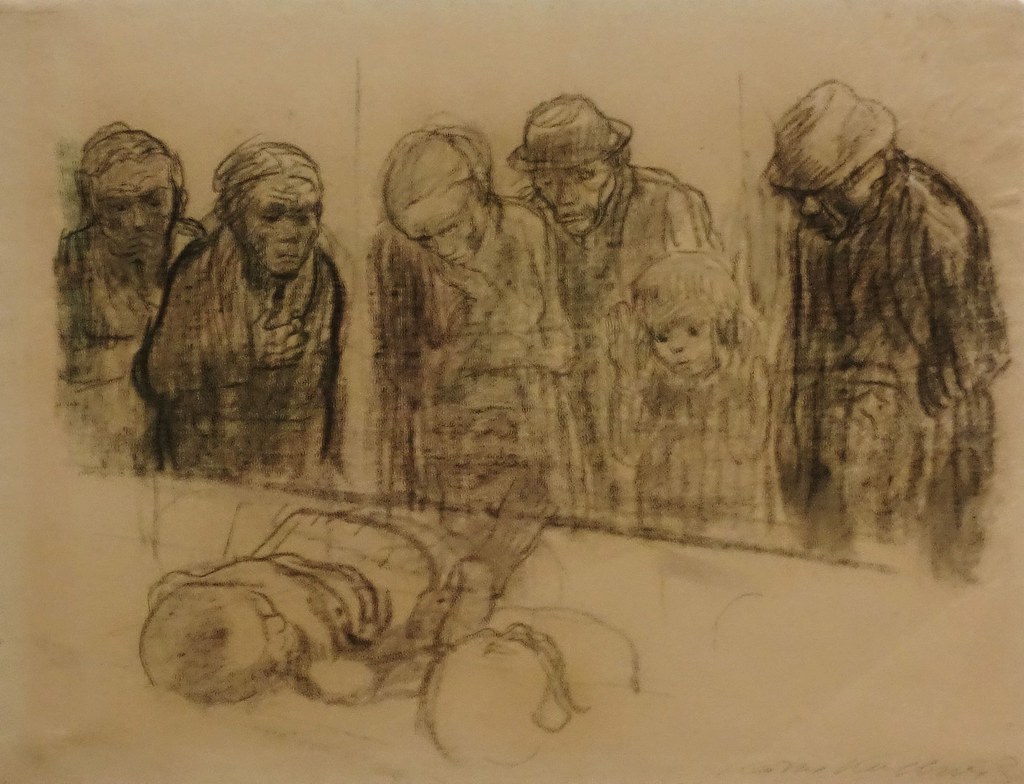
You chose this. That’s the part that makes it so hard to leave — not the salary, not the benefits, not even the habit of showing up. You chose it because you believed it mattered, because someone, somewhere along the way, convinced you that the highest form of a human life was one in which work and self became indistinguishable. The trap closed the moment you agreed that loving what you do was not a luxury but a moral obligation.
Barbara Ehrenreich spent years documenting what happens when optimism stops being a mood and becomes a mandate. In Bright-Sided, published in 2009, she traced how positive thinking migrated from self-help shelves into corporate culture, hospitals, and eventually the grammar of everyday ambition — transforming the imperative to feel good about your circumstances into a form of social control so seamless it no longer required enforcement. Nobody needs to threaten you. The ideology is internal. You police your own doubt, reframe your own exhaustion, and interpret every warning sign as a personal failure of attitude rather than evidence that something outside you is broken.
The historical timing matters here. Martin Seligman launched what he called positive psychology in 1998, during his presidential address to the American Psychological Association, arguing that the discipline had spent a century cataloguing human suffering and neglecting human flourishing. The intention was not sinister. But what followed was a rapid colonization of workplace culture by a language of strengths, flow states, and authentic engagement — concepts that originated in genuine research and were almost immediately stripped of their complexity by HR departments and leadership consultants who needed employees not merely to comply, but to feel fulfilled while doing so. By the time this vocabulary reached annual performance reviews and company retreat agendas, it had inverted entirely: instead of workplaces adapting to human psychological needs, humans were expected to locate within themselves the psychological resources to sustain whatever the workplace demanded.
What makes this architecture so durable is that it offers something real. The desire for meaningful work is not manufactured — it runs through human history in every form of craft, vocation, and communal labor. When someone hands you a language that names that desire and ties it to a specific job, a specific company, a specific mission statement, you do not feel manipulated. You feel seen. And once you feel seen by an institution, you will defend it against your own experience. You will explain away the sleeplessness, rationalize the cancelled vacations, and describe your deterioration in the vocabulary the institution provided — not burnout, but passion; not exploitation, but dedication; not a trap, but a calling.
The sociologist Arlie Hochschild identified something adjacent to this in The Managed Heart in 1983, describing how certain professions require workers to commodify their emotional lives, to perform feeling as part of the job itself. But the contemporary version has gone further: it no longer asks only that you perform passion — it asks that you actually possess it, and if you don’t, the deficit is yours to correct. Therapy, mindfulness, journaling, executive coaching — the entire apparatus of self-optimization exists partly to help people manufacture the internal states their employment contracts implicitly require.
And so the question that sits underneath all of this is not whether you are burned out. It is whether the version of yourself that agreed to these terms — the one who believed that blurring the line between life and work was an achievement rather than a surrender — was ever really free to choose otherwise, or whether that choice was already shaped by a culture that had decided, long before you arrived, that the most compliant worker is the one who has learned to call the cage a vocation.
A vision curated by a filmmaker, not an algorithm
In this video I explain our vision
🔄 When Life Becomes a Cage: Traps of the Modern Self
Professional burnout does not emerge in a vacuum — it grows from the same cultural soil that breeds alienation, obsession with success, and the relentless machinery of contemporary work. These articles trace the invisible walls of the mazes we build around ourselves, and the psychological, philosophical, and social forces that keep us locked inside.
The Obsession with Success in Contemporary Culture
The relentless cult of achievement has become one of the defining anxieties of our era, turning ambition into a form of self-destruction. This article explores how contemporary culture glorifies success to the point where failure to achieve it — or even pausing to rest — carries a profound psychological cost. Understanding this dynamic is essential to grasping why so many professionals find themselves burned out and unable to stop.
GO TO THE SELECTION: The Obsession with Success in Contemporary Culture
Mobbing: Psychology and the Culture of Toxic Work
Mobbing and toxic workplace dynamics represent the social architecture of burnout, transforming professional environments into spaces of chronic stress and psychological harm. This article examines how systemic mistreatment in the workplace operates, the mechanisms of institutional violence, and the long-term damage it inflicts on individuals. It is an indispensable companion to understanding how work stops being meaningful and becomes a source of suffering.
GO TO THE SELECTION: Mobbing: Psychology and the Culture of Toxic Work
Karl Marx and Alienation: Economic and Philosophical Manuscripts
Karl Marx identified alienation as the fundamental wound of modern labor — the moment when work ceases to express the human being and instead consumes them. This article revisits his Economic and Philosophical Manuscripts to show how the estrangement from one’s own productive activity foreshadows what we now clinically call burnout. The trap of work, Marx argued, is not accidental but structural.
GO TO THE SELECTION: Karl Marx and Alienation: Economic and Philosophical Manuscripts
Loneliness in Contemporary Society
Loneliness in contemporary society is both a consequence and an amplifier of professional exhaustion, isolating individuals precisely when they most need connection and support. This article investigates the cultural and psychological roots of modern isolation, showing how the breakdown of community bonds leaves workers without the emotional resources to resist systemic pressure. The labyrinth of burnout is hardest to escape when one is navigating it alone.
GO TO THE SELECTION: Loneliness in Contemporary Society
Cinema That Sees What Work Does to Us
If these themes resonate with you, Indiecinema offers a curated selection of independent and art-house films that explore alienation, inner crisis, and the search for meaning beyond the walls of modern life. Stream films that dare to ask the difficult questions — and sometimes, to find unexpected exits from the maze.
👉 EXPLORE THE CATALOG: Watch Indie Films in Streaming
A vision curated by a filmmaker, not an algorithm
In this video I explain our vision

