
The Architecture of Abandonment
You stop counting the days somewhere around the third week. Not because time has stopped — you can hear it moving, faintly, in the refrigerator’s hum, in the creak of the building settling at night, in the particular quality of light that tells you it is Tuesday or Wednesday or something else entirely — but because the days have ceased to differ from one another in any way that the body can register. The phone sits on the table. You have already memorized the pattern of cracks in the ceiling above the armchair. Your daughter called on Sunday, or perhaps Saturday, and you told her you were fine because you could hear in her voice that she needed you to be fine, and so you were.

What happened inside those apartments, those single rooms, those care facilities locked down in March 2020 was not merely an inconvenience scaled up to catastrophic proportions. It was something structurally different — a revelation about how societies had already organized themselves around the managed disappearance of their oldest members, and how a virus simply made that architecture visible by removing its decorative elements. Before the pandemic, the isolation was softened by transit, by the weekly visit, by the hairdresser who remembered your name. Strip those away and what remains is not an emergency state. It is the baseline, finally legible.
The numbers carry weight precisely because they resist sentiment. In the United Kingdom, Age UK estimated that 1.4 million older people were already chronically lonely before any lockdown was announced. In the United States, a 2020 National Academies of Sciences report concluded that more than one-third of adults aged 45 and older experienced significant loneliness, with the figure climbing sharply past the age of 70. These were not pandemic statistics. They were pre-existing conditions of social design, documented with the same clinical detachment one might apply to cholesterol levels or blood pressure readings — as if loneliness in old age were a metabolic inevitability rather than a political choice encoded in zoning laws, pension structures, family leave policies, and the spatial logic of cities built for people who move quickly.
John Cacioppo, who spent decades at the University of Chicago studying what he called the biology of loneliness, demonstrated by 2008 that chronic social isolation produces measurable deterioration in immune function, sleep architecture, and cardiovascular health — effects comparable in mortality risk to smoking fifteen cigarettes a day. His work, published with William Patrick in Loneliness: Human Nature and the Need for Social Connection, made clear that the human nervous system does not distinguish between physical and social pain at the level of neural processing. The anterior cingulate cortex activates the same way. The body treats exclusion as a wound. Which means that what elderly people experienced during pandemic lockdowns was not a metaphorical injury. It was a literal one, sustained over months, in buildings designated for their care, by policies designed to keep them alive.
There is a particular cruelty in the logic of protective isolation that went largely unexamined during the acute phase of the crisis. The populations most shielded from the virus were simultaneously the populations for whom social contact was not supplemental but constitutive — for whom a grandchild’s visit was not recreational but neurological, structural, a mechanism by which the self continued to cohere across time. To protect the body by eliminating the conditions under which the body remains worth inhabiting is not protection in any complete sense of the word. It is a transaction made by people who would not themselves have to bear its cost, administered through institutions that had long since learned to treat endurance as a sufficient definition of life.
Loneliness as a Social Technology
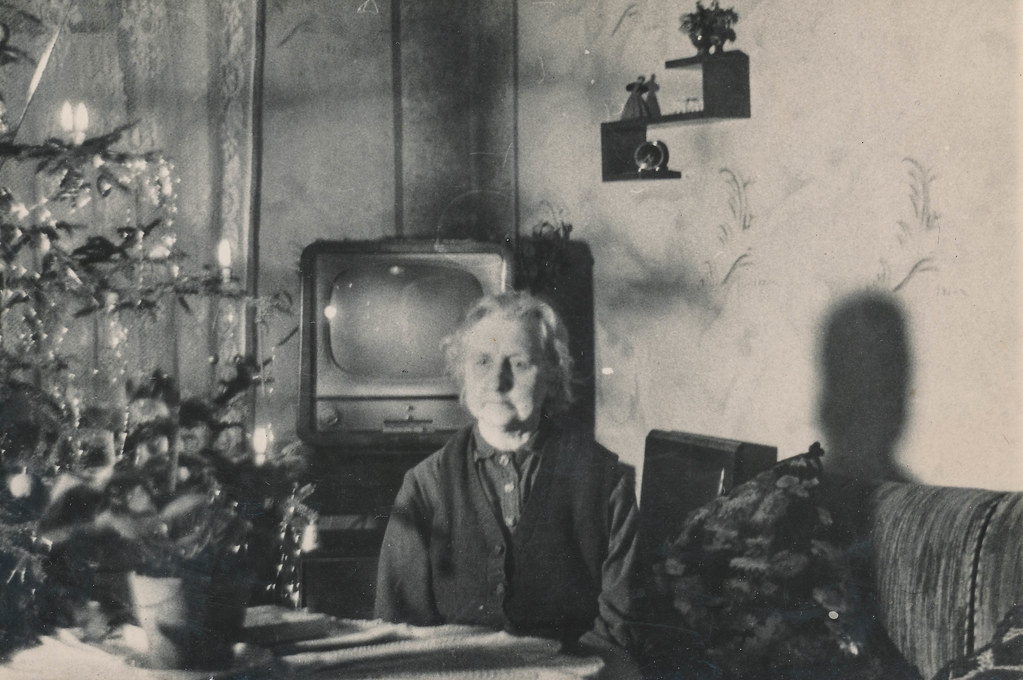
You have probably never thought of a nursing home as an argument. Not a place, not a facility, not even a policy — but a claim society makes about who counts, dressed in linoleum floors and scheduled meal times. The elderly person behind that door did not arrive there because family failed or medicine succeeded. They arrived there because an entire architecture of modern life had been quietly, methodically built to make their presence elsewhere feel inappropriate.
Zygmunt Bauman spent decades mapping what he called liquid modernity — a condition described with full weight in his 2000 book of the same name — in which stable social bonds dissolve under the acid of market logic and individual mobility. What he observed was not merely cultural loosening but a structural reorganization of human relationships around utility. Bonds that cannot be quickly formed and quickly severed become burdens. The elderly, whose relationships are slow, whose needs are accumulative, whose time horizons compress rather than expand, become the most visible casualties of this restructuring. They are not abandoned out of cruelty. They are sidelined out of incompatibility with a rhythm they did not choose and cannot match.
What makes this machinery so difficult to see is that it presents itself as care. The institutions built to contain aging were never framed as exclusion zones. They were framed as expertise, as specialization, as the humane application of medical knowledge to vulnerable lives. But specialization, in this context, functions precisely as segregation does in others — by constructing a professional boundary that ordinary citizens are not equipped to cross, it relieves them of the social obligation to try. You do not visit because the nurses know better. You do not integrate the old into daily life because daily life has been engineered to require a pace, a productivity, and a digital fluency that makes their presence feel like friction.
John Cacioppo, whose research across nearly three decades culminated in his 2008 book Loneliness: Human Nature and the Social Connection, demonstrated through neurological and physiological measurement that chronic social isolation degrades the body with the same biological seriousness as smoking fifteen cigarettes a day. The immune system weakens. Cortisol levels rise and fail to regulate. Sleep architecture fragments. The brain, deprived of the regulatory feedback that comes from genuine social contact, begins to read ambiguous cues as threatening — a process Cacioppo called hypervigilance — which makes the isolated person progressively less capable of the trust required to reconnect. Loneliness, in other words, is not a feeling that precedes social withdrawal. It is a neurological condition that chronic structural exclusion produces, and then uses, to make that exclusion self-reinforcing and permanent.
When pandemic lockdowns descended in March 2020, governments across Europe and North America moved with unusual speed to designate care homes as sealed units. The logic was epidemiological and, in narrow terms, defensible. But the speed and totality of the sealing revealed something that had always been true: these populations were already administratively separate, already managed at a distance from civic life, already understood as a category apart. The lockdown did not create their isolation. It simply removed the visiting hours that had been the last ceremonial thread connecting them to a world that had otherwise reorganized itself entirely around their absence. What looked like an emergency measure was the honest face of an ordinary arrangement, stripped of its polite disguise.
Between March and June 2020, studies across the United Kingdom recorded that approximately 1.4 million older adults reported having no meaningful social contact for weeks. That number does not represent a failure of pandemic management. It represents the counting of people who were already, before any virus arrived, living at the precise margin where social existence becomes statistical.

The Myth of the Protected Generation
You were told it was for your safety. The phrase arrived in every official communiqué, every press briefing, every laminated notice taped to the glass doors of care homes in March 2020. It carried the syntactic structure of tenderness — subject, verb, possessive — and it asked nothing of you except compliance, which it had already decided was the same thing as gratitude. If you were over seventy, over eighty, if your body had accumulated the particular vulnerabilities that decades produce, then the world would now organize itself around your protection. You would be kept inside. The people you loved would be kept out. This was care.
Philippe Ariès spent decades excavating the history of how Western societies have related to death, and what he found in “The Hour of Our Death,” published in 1981, was not a story of increasing tenderness but of progressive expulsion. Medieval communities kept the dying at the center of social life — death was a managed, collective, visible event, attended by neighbors, children, strangers who happened to pass through. The slow historical movement he traced was not toward greater compassion but toward greater concealment, a centuries-long process of removing death and those approaching it from communal view, first into designated rooms, then into hospitals, then into facilities designed so that the rest of life could proceed without interruption. The language of each removal was always the language of care. The dying were being spared the indignity of public suffering. The living were being spared unnecessary distress. The machinery of separation was perpetually dressed in mercy.
What 2020 accomplished was the institutional completion of that trajectory, compressed into days, authorized by emergency decree, and rendered unchallengeable because any resistance to it could be framed as a desire to kill the vulnerable. The care home became the terminus of a very long historical project, the place where old age had already been stored before the virus arrived, and now that storage was simply sealed. Visitors banned. Communal dining suspended. Residents confined to rooms. In England alone, between April and June 2020, the Office for National Statistics recorded over twenty-eight thousand excess deaths in care homes beyond the five-year average — a statistic that has been read primarily as evidence of viral transmission, and almost never as evidence of what extreme social rupture does to bodies that were already fragile, already dependent on human contact as a physiological requirement, not a luxury.
The word “protection,” when applied to a human being who has been placed beyond the reach of their family, does something linguistically violent. It relocates the subject of the sentence. The person being protected becomes an object of protection — passive, managed, grateful in theory for an intervention they were never asked to consent to. Sociologist Zygmunt Bauman, in “Mortality, Immortality and Other Life Strategies” from 1992, argued that modern culture’s relationship to death is fundamentally one of strategy — of manufacturing distance, routine, and institutional procedure to prevent death from contaminating the productive machinery of daily life. The elderly during the pandemic were not protected from the virus so much as they were positioned at maximum distance from the cultural discomfort their visibility had always generated.
There is a particular cruelty in a mercy that cannot be refused. When the protection is compulsory, when the care arrives without consultation, when safety is defined by those who will not themselves experience its terms, the act of protection becomes indistinguishable from the act of disposal — and the difference exists only in the intentions of those who imposed it, which the person inside the sealed room has no mechanism to verify.
When Visibility Becomes Erasure

A woman in her late seventies sits in front of a laptop screen, her face illuminated by the pale rectangle of a video call. Her daughter is talking, and the woman nods at the right moments, and the call ends after eleven minutes, and the daughter closes her laptop feeling she has done something. The woman sits a little longer in front of the dark screen, looking at her own reflection where her daughter’s face just was.
The pandemic produced an extraordinary consensus around a single word: connection. Governments, technology companies, journalists, and well-meaning relatives all converged on the idea that digital tools could serve as a prosthesis for physical presence, that a screen could hold what a body normally holds. The rollout was rapid, morally confident, and almost entirely unexamined. Tablets were distributed to care homes across the United Kingdom in 2020 under schemes with names that implied warmth and continuity. Video calling platforms reported hundreds of millions of new users in the first months of lockdown. The infrastructure of remote contact expanded at a speed that felt like rescue.
Sherry Turkle spent years documenting, in her 2015 book Reclaiming Conversation, the precise ways in which communication technologies erode the quality of human presence while generating the sensation of closeness. Her argument was not nostalgic. It was structural: the substitution of full-bodied, unpredictable, interruptible human contact with managed, optimized, easily terminated digital interaction does not fill the gap left by absence — it teaches us to prefer the gap. The person on the other side of the screen can be muted. The call can be ended. The discomfort of genuine encounter, the moment when another person’s need exceeds what you planned to give, is architecturally removed from the experience. What remains feels like love but functions like administration.
For elderly people, many of whom were already navigating a world that had ceased to build environments around their needs, the substitution was not merely insufficient — it was epistemically violent in a quiet, invisible way. To be seen through a screen is to be confirmed as someone who can be managed from a distance. The technology did not bridge the separation; it formalized it. It gave the separation a user interface. Families who might have felt the pull of genuine physical obligation discovered that the pull could be satisfied, or at least silenced, by eleven minutes of adequate eye contact. What had been an uncomfortable absence became a completed task.
Erik Erikson, writing about the final stages of adult development in the 1950s, identified the central psychological tension of late life as one between integrity and despair — the capacity to look at one’s existence as coherent and meaningful against the terror that it was not. What he could not have anticipated was a condition in which the crisis is not interior but relational: a despair produced not by one’s own assessment of a life, but by the accumulating evidence that others have already made their assessment and moved on. The screen offers just enough contact to prevent the accusation of neglect while delivering, with mathematical precision, the message that contact has been rationed.
There is a particular cruelty in a solution that makes the problem invisible to everyone except the person experiencing it. The daughter who closed her laptop felt she had been present. The institution that distributed the tablet felt it had innovated. The policy document that counted video calls as social engagement felt it had measured something real. The woman sitting in front of the dark screen had no language that would have been heard, because the language available — loneliness, isolation, abandonment — had already been officially addressed by the glowing rectangle that now reflected only her face back at her.
The Debt That Cannot Be Counted
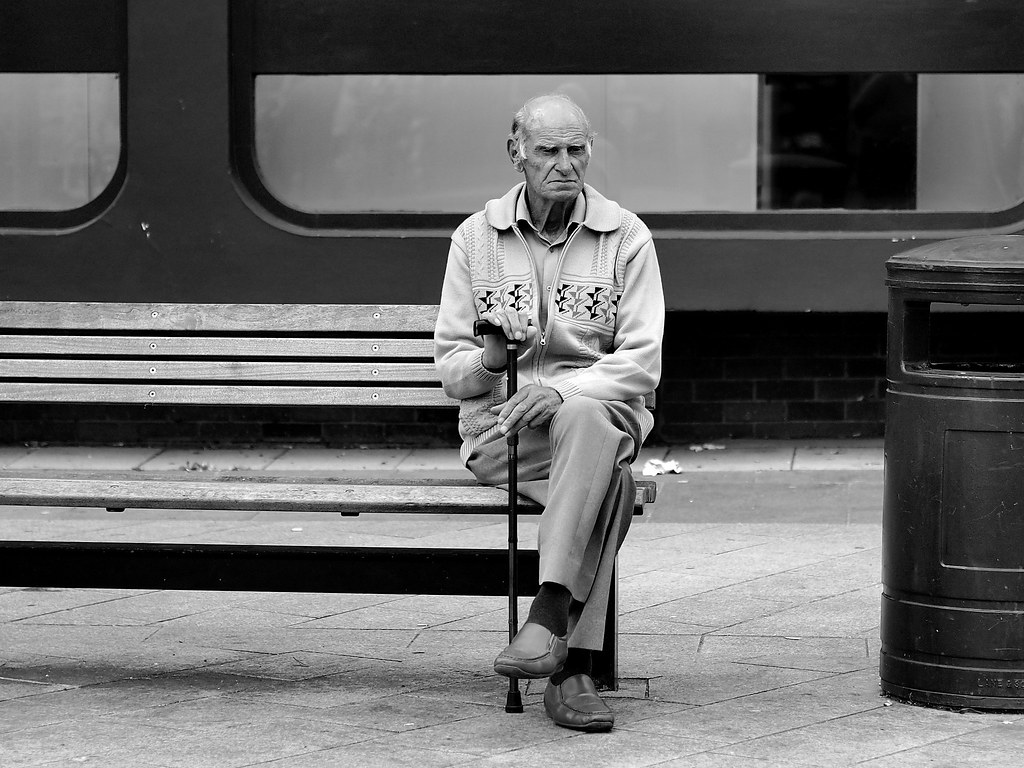
You stood in your window during the first lockdown and applauded. Eight o’clock, every evening, the sound rising from the streets like a collective exhalation of conscience — and it felt, in that moment, like solidarity made audible, like the body politic remembering it had a body.
Meanwhile, in care homes across France, the United Kingdom, Canada, and Spain, people were dying at a rate that the word “tragic” cannot metabolize. Between March and June of 2020, excess mortality in long-term care facilities across Europe accounted for somewhere between 40 and 60 percent of all COVID-19 deaths, depending on the country — figures compiled afterward by the International Long-Term Care Policy Network, released in reports that received a fraction of the attention given to daily infection tallies. In Ontario, care home residents represented less than 1 percent of the provincial population and more than 60 percent of its COVID deaths during the first wave. These are not projections or estimates. They are administrative records, filed quietly, absorbed into the statistical body of a crisis the public had already narrated in a different register.
What makes this morally complex rather than merely catastrophic is that the decisions driving those numbers were not made by indifferent strangers. They were made by health ministries operating under genuine pressure, by hospital administrators rationing resources, by families who could not enter facilities and trusted that institutions would hold. The philosopher Zygmunt Bauman spent decades describing what he called “moral distance” — the bureaucratic architecture that allows ordinary people to participate in harm without ever touching it, the way responsibility diffuses across a system until no single hand is traceable. By 2020, that architecture was not hypothetical. It was a spreadsheet.
Governments in the United Kingdom and several Canadian provinces made explicit decisions in March and April of 2020 to discharge hospital patients — some untested, some confirmed positive — back into care homes, in order to preserve acute-care capacity. The logic was coherent within its own terms: flatten the hospital curve, protect the National Health Service. The consequence was that the curve did not disappear; it relocated. Public Health England’s own data, released in June 2020, showed a spike in care home deaths that followed the discharge policy by approximately two weeks — the precise length of an incubation period. Causality of this kind rarely survives political time, which moves faster than accountability.
There is a particular kind of cultural forgetting that is not amnesia but preference. The sociologist Paul Connerton, in his 2008 essay “Seven Types of Forgetting,” distinguishes between forgetting as loss and forgetting as constitutive of identity — the things a community cannot remember without ceasing to be the community it believes itself to be. Societies that build their self-image on the protection of the vulnerable cannot easily integrate the evidence that, under pressure, they exposed the most vulnerable first. The applause was real. The deaths were real. Holding both simultaneously requires a moral tolerance for contradiction that public discourse rarely sustains longer than a news cycle.
What gets buried along with the uncounted is not only the dead but the question their deaths generate — a question about what protection actually means when it is tested rather than declared. Every official statement from 2020 onward claimed that the elderly were the priority, the population most deserving of shelter. The excess mortality data from those same months tells a different story, not of malice, but of a hierarchy so deeply embedded in the architecture of crisis response that it operated below the threshold of any individual decision, expressed not in policy language but in the distribution of who survived, and who was quietly, statistically, left behind.
A vision curated by a filmmaker, not an algorithm
In this video I explain our vision
🧩 When the World Grows Distant: Minds in Solitude
The pandemic revealed with brutal clarity how fragile the bonds between the elderly and the living world can be. Isolation is not merely a physical condition — it reshapes identity, memory, and the will to exist. These articles explore the psychological and cultural landscapes that surround loneliness, aging, and the slow erosion of human connection.
Loneliness in Contemporary Society
Loneliness in contemporary society has reached epidemic proportions long before any pandemic arrived to deepen it. This article examines the sociological and psychological roots of modern isolation, tracing how urban life, digital culture, and broken community structures leave individuals — especially the elderly — profoundly alone. Understanding loneliness as a systemic condition rather than a personal failure is the first step toward addressing it.
GO TO THE SELECTION: Loneliness in Contemporary Society
Grief and the Processing of Loss
Grief and the processing of loss sit at the heart of the elderly experience during times of collective crisis. The pandemic multiplied losses — of loved ones, of routines, of physical freedom — and left many older people without the rituals or social support needed to mourn. This article explores how human beings navigate loss and what happens when the grieving process is interrupted or denied.
GO TO THE SELECTION: Grief and the Processing of Loss
Putnam’s Bowling Alone: Analysis
Robert Putnam’s landmark work on social capital, analyzed in this article, offers a powerful framework for understanding why isolation devastates communities and individuals alike. Putnam demonstrated that the decline of civic participation and neighborhood bonds leaves the most vulnerable — including the elderly — without the invisible safety nets that give life meaning. His research reads today as a prophetic map of the wounds the pandemic would expose.
GO TO THE SELECTION: Putnam’s Bowling Alone: Analysis
Existential Emptiness: When Life Loses Meaning
Existential emptiness — the sensation that life has lost its direction, its warmth, its reason — is one of the most devastating consequences of prolonged isolation for elderly people. This article delves into the philosophical and psychological dimensions of meaninglessness, drawing on thinkers who understood the void not as weakness but as a signal demanding attention. For those who spent months or years cut off from the world, this exploration speaks directly to their silent interior struggle.
GO TO THE SELECTION: Existential Emptiness: When Life Loses Meaning
Discover the Human Story Through Independent Cinema
The themes of loneliness, aging, and isolation have inspired some of the most powerful and compassionate works in independent cinema — films that refuse to look away from invisible suffering. On Indiecinema, you can explore a carefully curated streaming catalog of independent films that give voice to those the mainstream forgets. Come and discover stories that see, listen, and remember.
👉 EXPLORE THE CATALOG: Watch Indie Films in Streaming
A vision curated by a filmmaker, not an algorithm
In this video I explain our vision

