
The Inherited Architecture of the Self
You sit down at the table without thinking about it. The chair scrapes back at the same angle it always does, your hands find the cutlery with the certainty of a body that has never needed to be taught where things belong, and somewhere between lifting the fork and bringing it to your mouth you are already halfway through a thought that has nothing to do with eating. This is the unremarkable texture of a life that feels like yours. It feels authored. It feels continuous. It does not feel, in any sense you could name right now, like an inheritance.

But architecture does not announce itself. You were handed the floor plan before you could speak, and by the time you were old enough to walk through the rooms you had already stopped noticing the walls.
Maurice Halbwachs, writing in 1925 in Les cadres sociaux de la mémoire, made an observation so structurally disruptive that a century of social science has never quite recovered from it: memory is not housed in the individual mind. It never was. What we call personal memory is always organized within social frameworks — cadres — that pre-exist the individual and give remembering its shape, its direction, its very grammar. A memory without a social frame is not a weak memory or an uncertain one. It is, in the most precise sense, not a memory at all. It is noise. The frames are what make signal possible. The frames are what make you possible.
This is not a metaphor about influence, the comfortable kind where we acknowledge that culture shapes us while retaining the fantasy that a core self remains untouched beneath the shaping. Halbwachs was pointing at something more radical and more unsettling: the self that does the remembering is itself a product of collective structures. There is no prior, uncontaminated witness who then receives cultural imprinting. The witness and the imprinting arrive together. You did not exist before your social frameworks and then get furnished by them. You were assembled inside them, the way a sentence only becomes a sentence inside a grammar it did not choose and cannot escape.
What this means in practice is that every act of recollection is also an act of social participation. When you remember your childhood, you are not excavating a private archive. You are, whether you recognize it or not, running a collective operation. The categories you use to organize what happened — what counts as a significant event, what qualifies as a wound, what gets elevated to the status of formative — those categories were not invented by you in the privacy of your experience. They were handed down through family, through language, through the particular historical moment your body arrived into. The year you were born is not a biographical detail. It is a structural condition.
History does not live in textbooks. That is, in fact, precisely where it goes to die, pinned down into dates and causes where it can be safely examined from a distance and then forgotten after the examination. The actual transmission of historical consciousness happens in the unremarkable moments — the way a parent tenses at a certain kind of news report, the words a grandparent never uses, the silences at a table that are somehow louder than the conversation around them. These are the true documents. They are not archived anywhere. They are archived in you, in the muscular memory of a body that learned what to fear and what to want long before it learned to read.
The individual self, then, is less an origin than a junction point — a place where multiple historical streams meet and briefly take the form of a person who believes, with absolute sincerity, that they are thinking their own thoughts.
Ancestral
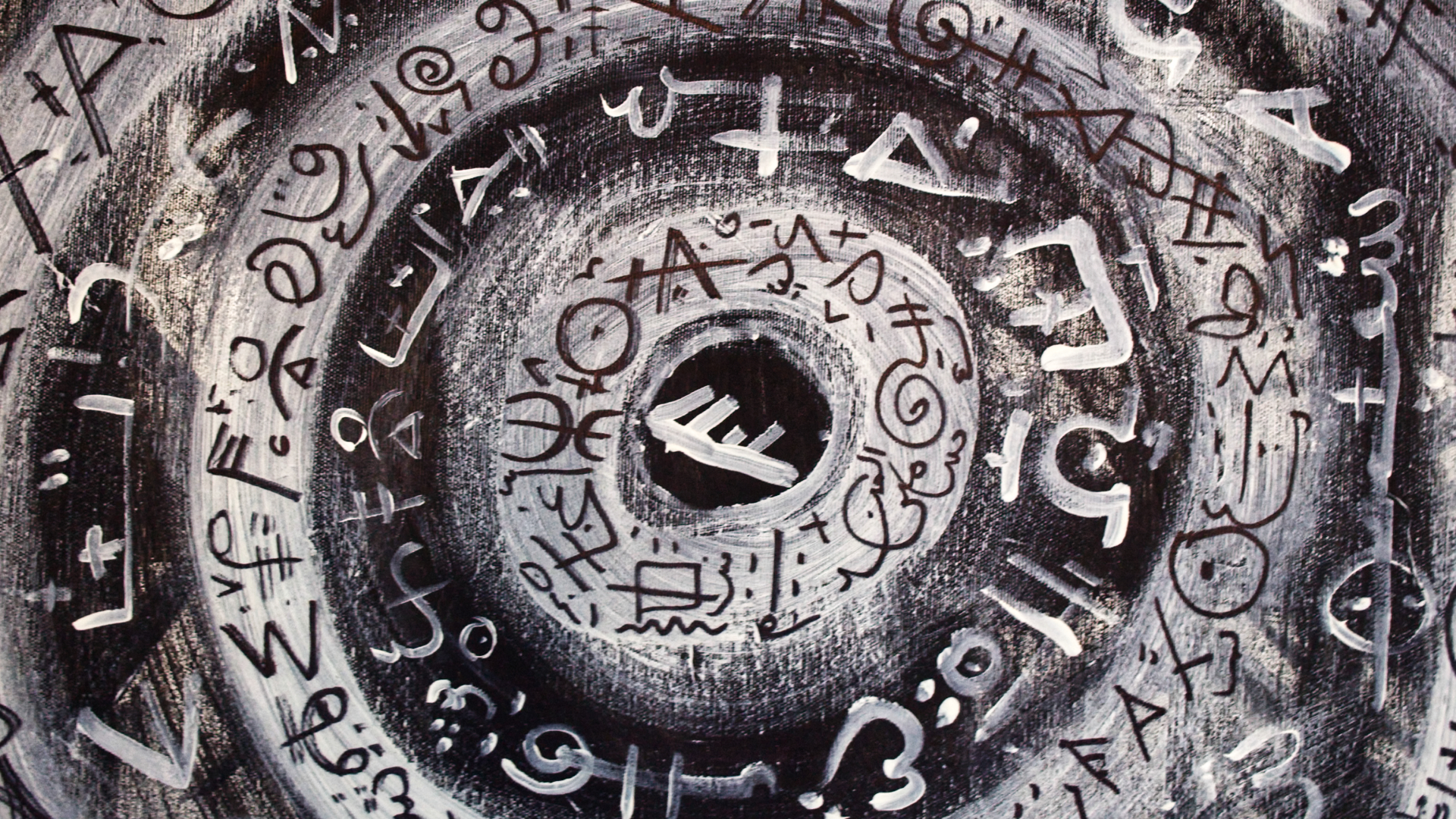
Documentary, by Lumar Brothers, Italy, 2023.
“Ancestral: Life and Art of Massinissa Askeur” is a documentary that explores the life and art of Algerian painter Massinissa Askeur. The film follows Askeur on his creative journey, showing his artistic process and his commitment to the preservation of Berber culture and tradition. Through interviews with Askeur, his family, friends and testimonies from people who knew him on a personal, professional and artistic level, the documentary tells the story of his past and his deep connection to his Berber roots. Askeur displays his art, from canvases to sculptures, which are inspired by the shapes and symbols of Berber culture, representing his search for a connection between the past and the present.
The documentary also explores the challenges Askeur faced throughout his life, including racial discrimination, poverty and the difficulty of making his art known outside of Algeria. However, despite these difficulties, Askeur continues to create and promote his art as a form of cultural resistance and celebration of his ancestral heritage. A vision far from art as a commercial product and very close, instead, to the exploration of the depths of one's own soul and the soul of the world. Massinissa's mission is to leave a testimony of his time to future generations.
LANGUAGE: Italian
SUBTITLES: English, Spanish, French, German, Portuguese
The Political Manufacture of Forgetting
You are handed a textbook in school, and somewhere in its four hundred pages on national history, an entire continent of violence has been compressed into a single subordinate clause — “during the period of overseas expansion” — before the sentence moves on to trade statistics and the names of decorated admirals.
The compression is not accidental. Paul Connerton argued in How Societies Remember that what holds a collective together is not the accuracy of its historical record but the choreography of its commemorative practices — the parade routes, the monument placements, the school calendar holidays that train the body before they reach the mind. Memory, in this account, is less a matter of what happened than of what gets rehearsed. The corollary, which Connerton left largely implicit and which history has since made explicit, is that the rehearsal can be engineered in reverse: the state does not only inscribe, it erases, and it erases with the same institutional precision it brings to commemoration.
France provides the most forensically documented case. The loi du 23 février 2005 — passed by the French parliament and never fully repealed in spirit even after its most egregious article was struck — legally mandated that school curricula present the French colonial presence in North Africa in terms of its “positive role.” The lobbying that produced that clause had been working quietly through the Ministry of Education for decades before anyone thought to formalize it in statute. Between 1962, when Algeria achieved independence after a war that killed somewhere between four hundred thousand and one and a half million Algerians depending on which government’s arithmetic you accept, and the late 1990s, the war itself had no stable name in French public discourse — it was officially called “the events in Algeria” until 1999, when a parliamentary vote finally permitted the word “war” to be used. Thirty-seven years of institutional euphemism do not emerge from indifference. They require active maintenance.
Germany is held up as the global model of Vergangenheitsbewältigung — the working-through of the past — and in certain institutional dimensions the reputation is earned. Yet the denazification tribunals that ran between 1945 and 1948 under Allied administration processed roughly 900,000 cases and delivered serious penalties in fewer than 35,000. By 1951, the Bundestag had passed an amnesty law that effectively restored civil service positions to former Nazi functionaries. Theodor Adorno, lecturing in Frankfurt in 1959 in what became the essay “What Does Coming to Terms with the Past Mean?”, noticed that the phrase itself had already become a mechanism of closure rather than inquiry — that to “come to terms” with something is to conclude the account, to balance the ledger and close the book. The very grammar of reconciliation was being used to end the examination before it had properly begun.
What makes selective forgetting structurally durable is that it does not present itself as forgetting at all. It presents as emphasis, as proportion, as the reasonable editorial judgment that not everything fits in a curriculum designed for adolescents with limited attention spans. The omission is laundered through pedagogy. And because the absence leaves no visible mark — because a child who has never been told about the Sétif massacre of 1945, in which French forces killed somewhere between six thousand and forty-five thousand Algerians in a single week of suppression, has no awareness of a gap — the erasure is self-concealing in a way that no monument vandalism or archive burning could ever be. The destroyed document leaves a hole in the record. The document never written leaves a generation that does not know what questions it is not asking.

Trauma as Undigested Historical Material
You wake up afraid of something you have never experienced. Not a vague existential dread, but a specific texture of fear — particular sounds, particular silences, particular kinds of men in particular kinds of uniforms — that your nervous system recognizes with a precision your biography cannot account for. You have no memory of the event. You were not there. And yet your body insists otherwise.
Marianne Hirsch spent decades studying exactly this phenomenon in the children and grandchildren of Holocaust survivors, and what she documented in The Generation of Postmemory in 2012 dismantles one of the most comfortable assumptions of modern selfhood: that you begin where your parents’ experience ends. Postmemory, as Hirsch defines it, is not nostalgia, not inherited ideology, not even storytelling. It is the affective and imaginative structure that forms in those who grow up dominated by narratives of events that occurred before their birth — narratives so catastrophic, so saturating, that they constitute the very environment in which identity takes shape. The child does not remember the camps. The child remembers the quality of the silence that descended whenever someone almost mentioned the camps. That silence becomes architecture. It organizes what can be said, what can be wanted, what feels safe to love.
What makes this more than a psychological metaphor is that the biology has begun to confirm it. Research conducted at Mount Sinai Hospital in New York on the children of Holocaust survivors — published in 2016 by Rachel Yehuda and her team in the journal Biological Psychiatry — found measurable epigenetic changes in genes associated with stress regulation. These were not learned responses. They were chemical modifications to the genome itself, heritable alterations in how the body reads its own instructions under conditions of threat. The survivors’ children showed hormonal profiles distinct from control groups with no such ancestry: lower cortisol levels, a biological signature associated with heightened stress sensitivity. Trauma had written itself not into memory but into cell regulation. The clean biographical slate was never clean.
The liberal tradition built its entire architecture of rights and responsibility on the assumption that the individual stands at a sufficient remove from history to be genuinely free. John Locke’s blank slate, tabula rasa, was always more than an epistemological claim — it was a political necessity. If you arrive in the world unencumbered, then your failures are yours, your poverty is yours, your anxiety is yours. Society can wash its hands of the generational residue it has deposited inside you. The epigenetic evidence does not merely complicate this picture; it prosecutes it. When a state conducts a genocide, or a sustained campaign of displacement, or a decades-long system of enforced poverty and racial terror, it does not only destroy the generation it targets. It rewrites the biochemical inheritance of every generation that follows. And then, with extraordinary consistency, it tells those subsequent generations that they are starting fresh.
What gets called resilience in communities that survived historical violence is sometimes genuine adaptation. But often it is something more unsettling — it is the successful suppression of a wound so deep that articulating it would require admitting a causality that the surrounding society has no interest in recognizing. Toni Morrison understood this when she described in interviews the way slavery operated not only as a historical event but as a persistent grammar — a set of rules about whose interiority counted, whose grief was legible, whose loss warranted the formal structures of mourning. That grammar does not end with emancipation. It continues in the architecture of cities, in school funding formulas, in the specific way a police officer’s hand moves toward his weapon before his conscious mind has registered a decision.
The wound does not announce itself as historical. It presents as personality, as limitation, as a feeling that this is simply how the world works and always will.
The Trap of Commemorative Culture

She stands at the edge of the crowd, holding a candle she was handed at the entrance along with a printed program, and she feels, with some surprise, that she is moved. The names are being read aloud. There is a choir. The mayor speaks of the obligation to remember, of the debt owed to those who suffered, of the sacred trust between the living and the dead. She wipes her eyes and means it entirely. And when she drives home an hour later, the housing policy that will displace the neighborhood where most of the victims’ descendants still live will pass its third legislative reading without a single objection from anyone who was standing in that square.
Pierre Nora recognized something uncomfortable in 1984 when he introduced the concept of lieux de mémoire in the first volume of his monumental collaborative project: that societies build memory sites precisely when living memory has already died. The archive, the monument, the anniversary ceremony — these are not expressions of memory but its prosthetics. They appear at the moment when the organic transmission of a shared past has broken down, filling the void with a curated, stabilized, nationalized substitute. What Nora observed in the French relationship to its revolutionary tradition applies with surgical precision to almost every commemorative infrastructure built in the late twentieth century. The proliferation of Holocaust museums across the United States in the 1990s, the explosion of Truth and Reconciliation frameworks across post-conflict societies, the UNESCO-certified heritage sites multiplying at a rate of roughly twenty per year since 1978 — all of these share a structural logic that Nora’s framework quietly indicts: they convert the unfinished and demanding work of historical accountability into a finished and visitable object.
Andreas Huyssen, writing in 2003 in “Present Pasts: Urban Palimpsests and the Politics of Memory,” named this phenomenon with a phrase that deserves to be treated as a diagnostic instrument rather than a theoretical observation. The memory boom of the late twentieth century, he argued, was inseparable from the accelerating pace of modernization and the anxiety it produced — a compensatory gesture by cultures that were destroying their own continuity at speed and needed to memorialize what they were actively erasing. The monument goes up in the same decade the community it honors is priced out of existence. The apology is issued in the same parliamentary session that cuts the reparative budget line. This is not hypocrisy in the ordinary sense, which would imply a cynical actor who knows the difference between what they say and what they do. It is something structurally more insidious: a system in which the performance of conscience genuinely substitutes for conscience itself, in which the feeling of having remembered becomes indistinguishable from the act of having changed.
What commemorative culture produces, at its most sophisticated, is what a physician in a different context might call inoculation. A small, controlled, emotionally managed dose of historical guilt is administered to the body politic at regular intervals — on anniversaries, at dedications, in school curricula carefully designed to produce empathy without implication. The immune response that follows makes the body resistant to the full infection. You cannot accuse a nation that has built seventeen memorials of indifference to its past. The memorials are the alibi. And the alibi is more durable than the grievance it addresses, because it is made of stone and funded by the state, while the grievance remains in the bodies of people who have no equivalent institutional mass behind their claim.
The woman in the square was not deceived in any simple sense. Her grief was real. But grief that flows smoothly into a pre-designed channel, that arrives on schedule and concludes with the extinguishing of candles, has already been separated from the historical forces that would make it dangerous.
Consciousness as a Contested Archaeological Site
You grew up believing the map was the territory. Not a metaphor — literally: the version of history you absorbed before the age of twelve, through textbooks and family silences and the particular way certain dates were commemorated and others were never mentioned, became the architecture of what you call reality. You did not choose it. It was installed.
Frantz Fanon understood this installation as a form of violence more durable than the physical kind. In The Wretched of the Earth, published in 1961, he argued that colonialism’s deepest wound was not the stolen land or the extracted labor but the epistemic occupation — the systematic replacement of the colonized people’s relationship to their own past with a narrative that made their subjugation appear natural, logical, even merciful. The colonized subject does not simply lose history. The subject is made to carry the colonizer’s history as if it were their own, to look at themselves through a lens ground by someone else’s interests, and to interpret their own condition as evidence of their inadequacy rather than as the documented outcome of organized dispossession. Fanon’s prescription was not therapy and not reconciliation. It was destruction — the deliberate, conscious demolition of the imposed narrative as the necessary precondition for any authentic subjectivity to emerge at all.
What makes this violently relevant today is that the condition Fanon diagnosed in colonial contexts has metastasized into the internal logic of every fragmented democracy on the planet. The fracture is no longer cleanly between colonizer and colonized, though that wound never sealed. It runs now through the center of societies that nominally share a flag, a currency, a legal system — and share almost nothing else. In the United States, surveys conducted between 2015 and 2022 revealed that white and Black Americans not only disagree about the significance of historical events but frequently disagree about whether those events occurred in the form documented. The 1619 Project, published by The New York Times Magazine in 2019, did not introduce new facts so much as it shifted the gravitational center of the national narrative — placing the arrival of enslaved Africans, rather than the Declaration of Independence, as the founding rupture of American life. The response was not scholarly debate. It was legislative panic. Seven states moved to restrict its teaching within two years. What was being protected was not historical accuracy. What was being protected was a particular community’s ability to recognize itself in the national story.
This is the mechanism that academic consensus struggles to name without flinching: collective consciousness is not a shared resource. It is a contested archaeological site where different communities are excavating toward entirely different layers, each convinced that what they are uncovering is bedrock. Two groups inhabiting the same city, governed by the same laws, breathing the same polluted air, are not living in the same present — because the present is always an interpretation of accumulated time, and their accumulated times have been radically, structurally different. When politicians speak of national unity, they are almost never proposing that these divergent histories be examined together with honesty. They are proposing that one version be treated as universal and the others be quiet.
The philosopher Paul Ricoeur spent decades arguing, across works including Memory, History, Forgetting published in 2000, that the ethical obligation of a society is not consensus about the past but what he called “just memory” — a willingness to hold the suffering of others as real even when it destabilizes your own self-understanding. That willingness has never been culturally distributed equally, because the people who benefit most from a particular historical narrative are precisely the ones with the least incentive to interrogate it, and the most institutional power to ensure that their version remains the one taught to children who have not yet learned to ask which hand is holding the pen.
A vision curated by a filmmaker, not an algorithm
In this video I explain our vision
🧠 Memory, Time, and the Threads That Bind Us
Historical memory is not a passive archive — it is the living tissue through which communities understand who they are. The following articles explore the deep entanglement between collective consciousness, the transmission of memory across generations, and the philosophical frameworks that help us navigate the weight of the past.
Jan Assmann and Cultural Memory
Jan Assmann’s concept of cultural memory offers one of the most rigorous frameworks for understanding how societies preserve and transmit collective identity across centuries. His work distinguishes between communicative memory, rooted in lived experience, and cultural memory, encoded in rituals, texts, and monuments. This distinction illuminates how historical consciousness is never purely individual but always already social.
GO TO THE SELECTION: Jan Assmann and Cultural Memory
Pierre Nora and the Sites of Memory
Pierre Nora’s monumental inquiry into the ‘sites of memory’ reshaped how historians and philosophers think about the relationship between history and collective remembrance. He argued that as living memory fades, societies compensate by constructing symbolic anchors — museums, commemorations, archives — that crystallize the past into shared identity. His work remains essential for anyone seeking to understand how nations and communities construct their sense of continuity.
GO TO THE SELECTION: Pierre Nora and the Sites of Memory
Paul Ricœur: Life and Philosophy of Memory
Paul Ricœur devoted much of his philosophical career to exploring the intricate connections between memory, history, and forgetting, arguing that memory is not a simple record but an interpretive act shaped by narrative. His philosophy reveals that collective consciousness is always a kind of story a community tells itself about its own past. Understanding Ricœur is indispensable for grasping why historical memory is both a moral responsibility and a creative act.
GO TO THE SELECTION: Paul Ricœur: Life and Philosophy of Memory
Intergenerational Transmission: What We Leave to Our Children
The concept of intergenerational transmission asks how trauma, values, and identity are passed from one generation to the next — often through channels that bypass conscious awareness. Psychological and sociological research increasingly shows that collective memory is not only stored in institutions and texts but is literally embodied in family structures and emotional legacies. This article explores how the past continues to shape the present through the invisible inheritance we carry within us.
GO TO THE SELECTION: Intergenerational Transmission: What We Leave to Our Children
Discover Stories That Remember on Indiecinema
Independent cinema has always been one of the most powerful vessels for collective memory — a space where marginalized histories find a voice and forgotten truths resurface. On Indiecinema streaming you will find films that dare to engage with the depth of historical consciousness, inviting you to see the world through lenses that mainstream culture rarely offers. Explore our catalog and let cinema be your guide through the labyrinth of shared memory.
👉 EXPLORE THE CATALOG: Watch Indie Films in Streaming
A vision curated by a filmmaker, not an algorithm
In this video I explain our vision

