
The Aesthetics of Deliberate Failure
You are watching a man fail in slow motion and you cannot look away. The treasure is real, the gold dust is real, the years of labor were real, and yet the wind takes all of it — particle by particle, grain by grain, back into the Mexican desert from which it was dragged at such cost. The figure on screen laughs. Not the laugh of a broken man, not the laugh of irony, but something older and more disturbing: the laugh of someone who has finally understood the joke and finds it, against all reasonable expectation, genuinely funny. The film does not cut to consolation. It does not locate a surviving meaning in the wreckage. It simply ends with the dust still moving and that laughter still echoing, and you sit in your seat aware that something has refused to happen — some narrative debt that every instinct in your cultural formation told you would be paid has been deliberately, almost cheerfully, cancelled.

John Huston made that refusal the organizing principle of a career spanning five decades, from The Maltese Falcon in 1941 to The Dead in 1987, and the Hollywood apparatus never quite knew what to do with him because of it. The industry’s foundational grammar — inherited from nineteenth-century melodrama and hardened into commercial law by the studio system — demands that suffering generate meaning, that effort produce proportion, that the screen universe ultimately honor the emotional investment of its audience. Huston found this contract not merely aesthetically limiting but philosophically dishonest. His films are structured around the systematic withdrawal of that promised payment.
This is not the same as nihilism, which is itself a kind of thesis, a strong claim about the nature of things. What Huston practiced was closer to what the phenomenologist Maurice Merleau-Ponty described in his 1945 work Phénoménologie de la Perception as the irreducibility of ambiguity in lived experience — the fact that perception never delivers clean objects but always partial, perspectival, unresolved encounters with a world that exceeds our categories. Huston translated this perceptual truth into narrative grammar. His plots do not fail to resolve; they enact the discovery that resolution was the wrong question.
Hollywood’s compulsive need to redeem its own fictions has a precise historical address. By 1934, the Hays Code had institutionalized not just moral but metaphysical requirements: crime could not pay, transgression had to be punished, and the universe of the screen had to be seen to operate on principles of intelligible justice. What this produced, beyond its obvious moral policing, was an epistemological distortion — a trained audience expectation that narrative coherence and moral coherence were the same thing, that a story which ended without redemption was a story that had somehow malfunctioned. Huston spent his career manufacturing exactly that malfunction, with extraordinary technical precision.
The precision matters because it separates his practice from mere iconoclasm. Huston was a craftsman of the highest order, trained in theater, educated in painting — he studied under Diego Rivera in Mexico in the early 1930s — and obsessively attentive to the visual composition of every frame. His deliberate narrative failures are not the product of indifference or incapacity. They require the full apparatus of classical filmmaking to land correctly: the audience must be brought close enough to the promise of resolution to feel its withdrawal as a physical event. You cannot deny a reader something they were never offered. The sophistication of the setup is what makes the refusal meaningful rather than arbitrary.
What this means is that Huston was engaged in a kind of structural critique from within the institution itself, using Hollywood’s own vocabulary to expose the ideology embedded in Hollywood’s own grammar — and doing it commercially, inside the studio system, without the shelter of the European art cinema that would later provide institutional support for exactly this kind of formal dissidence.
Hollywood's Moral Economy and Its Discontents
You are sitting in a theater in 1948, and the lights have not yet gone down. Around you, the audience is already performing its surrender — coats folded, posture softened, the particular slackening of jaw that signals willingness. What is about to happen to them is not entertainment in any neutral sense. It is a transaction, and they are paying not just with money but with the temporary loan of their nervous systems.
C. Wright Mills, writing in 1956 in “The Power Elite,” identified what he called the cultural apparatus — the ensemble of organizations and institutions through which images, stories, and symbols are produced and distributed, shaping not only what people think but the very categories through which thinking becomes possible. He was describing journalism, advertising, and broadcast media, but the description fits Hollywood with surgical precision. The studio system was not a factory that happened to make films. It was an apparatus that manufactured a specific experience of reality, and its most powerful instrument was not the camera but narrative structure — the invisible grammar that determines which desires are legitimate, which suffering is meaningful, and which resolutions feel like truth.
The Production Code, enforced with genuine institutional teeth from 1934 onward by Joseph Breen’s office, is usually discussed as a system of censorship — a list of prohibitions about sexuality, violence, and religious content. This framing is accurate but insufficient. The Code’s deepest function was not prohibitive but generative. It compelled stories toward a particular moral architecture: crime punished, virtue rewarded, transgression contained. By legislating endings, it legislated the emotional experience of causality itself, training audiences to feel that consequence is justice, that narrative closure is moral order. Aristotle had theorized catharsis as a process of purification through pity and fear; Hollywood industrialized it, turning the release of tension into a commodity delivered on schedule, a hundred minutes of controlled disturbance ending always in equilibrium. The audience left restored, which is another way of saying undisturbed.
What this meant for a director operating inside that system was that subversion had to be structural, lodged in the body of a film rather than announced at its surface. A filmmaker who simply violated the Code’s explicit rules would be stopped before reaching the audience. But a filmmaker who honored the letter of the Code while quietly dismantling its emotional logic — who delivered the required punishment while making the criminal more alive than the detective, who provided the mandated resolution while ensuring it felt hollow — could move through the apparatus like a slow toxin.
Howard Hawks built a career on genre pleasures so perfectly executed that their conservatism went unexamined. Frank Capra made the apparatus’s ideology so emotionally overwhelming that questioning it felt like ingratitude. These are not criticisms — they are descriptions of two entirely coherent strategies for working within a system that rewarded coherence. What made Huston anomalous was his evident indifference to whether the audience felt good at the end. Not hostility — indifference, which is far more radical. The difference between a director who wants to unsettle you and one who simply doesn’t prioritize your comfort is the difference between provocation and vision.
“The Maltese Falcon,” released in 1941, works through this indifference with an almost clinical precision. Spade hands Brigid O’Shaughnessy to the police not because justice demands it but because the alternative is personal inconvenience — the erosion of a professional code that is itself purely pragmatic, a set of operational rules, not moral convictions. The film provides the Code with its criminal punished, its detective triumphant, its social order nominally restored. But the emotional register is one of blankness rather than satisfaction, and blankness is the one feeling the apparatus was never designed to produce, because it sends the audience back into the street still thinking, still unsettled, still holding the question the film declined to answer.

Masculinity as a Broken Instrument

You are standing in the desert with everything you came for, and it is already destroying you. The gold is real, the claim is legal, the labor was yours — and still something in the architecture of the wanting has curdled so completely that winning and losing have become indistinguishable. This is not a story about greed in the moralistic sense, the cautionary fable where a man takes too much and pays the price. Something colder and more precise is happening: the competence itself is the trap.
Huston returned obsessively to men who are genuinely good at what they do. Fred Dobbs can survive. Sam Spade can read a room faster than anyone in it. The boxer in the ring has real skill, real endurance, real craft earned across years of damage. Huston does not stack the deck against them with incompetence or stupidity — he does something far more unsettling. He lets them be exactly as capable as they believe themselves to be, and then watches that capability detonate from the inside. The competence is not a shield. It is the fuse.
Karen Horney, writing in 1945 in Our Inner Conflicts, identified what she called the neurotic need for personal admiration — a structure in which the self becomes so identified with its own idealized image that any gap between the image and reality triggers not correction but aggression, either outward or inward. Horney was describing a psychological pattern, but she was also, without knowing it, describing the Huston male protagonist with clinical precision. These men do not fail because they are weak. They fail because they have built an entire interior architecture around the performance of a particular kind of strength, and that architecture has no load-bearing capacity for ambiguity, dependence, or the simple fact that other people exist outside their control.
The detective Spade in The Maltese Falcon, released in 1941 and drawn from Dashiell Hammett’s 1930 novel, is a useful case study in this paradox. He is perhaps the most functionally competent character Huston ever filmed — perceptive, emotionally controlled, immune to sentimentality. And yet the entire logic of the narrative is structured around a fundamental object that does not exist in the way anyone believes it does. The falcon is a fake. Spade’s brilliance, applied with ruthless precision across the entire story, produces nothing. The competence was real. The terrain it operated on was hollow.
Huston shot his male bodies in ways that emphasized fatigue over heroism. The soldiers in The Red Badge of Courage, adapted in 1951 from Stephen Crane’s 1895 novel, are not rendered epic in their suffering — they are rendered confused, muddy, and physiologically exhausted by an experience that refuses to organize itself into the narrative of courage they brought with them. The young soldier who fantasizes about proving himself discovers that battle does not provide the clean drama of self-revelation. It provides noise, chaos, and the humiliation of discovering that the body has its own responses that have nothing to do with what the self believes about itself.
This gap between the performed self and the physiological self is precisely where Horney’s analysis cuts deepest. The neurotic structure she describes in men oriented around dominance and achievement is not simply about wanting too much — it is about having colonized the self so thoroughly with an image of what strength looks like that actual experience becomes unreadable except as confirmation or threat. Huston’s men cannot tolerate the middle register of experience, the ambiguous outcome, the partial success, the survival that costs something unnamed. They need the world to be legible in terms their self-image can process, and the world, in every Huston film, declines to cooperate.
What makes this pattern cinematically significant rather than merely psychologically interesting is that Huston never editorializes it.
Documentary Impulse Against Fictional Comfort
You stand in a military hospital in 1945, watching a man try to light a cigarette. His hands will not stop shaking. He has been trying for four minutes. The nurses have stopped looking. You are holding a camera.
What Huston filmed in those ward corridors at Mason General Hospital on Long Island was not war in any sense the War Department had commissioned. The footage showed soldiers who had returned from combat theaters technically intact — no missing limbs, no visible wounds — but whose nervous systems had been catastrophically reorganized by what they had witnessed and survived. Men who flinched at sounds that were not there. Men who wept without being able to say why. Men whose hands trembled so severely they could not perform the simplest self-sufficient act. Huston assembled this material into a documentary he called Let There Be Light, completing it in 1946, and the Army immediately classified it, seizing every print and denying public access for thirty-five years. The official justification shifted over time — privacy concerns for the soldiers, consent issues — but the actual reason was structurally simpler: the footage was incompatible with the narrative of clean victory that postwar American culture required as its psychological foundation.
Allan Berubé’s research into the psychological processing of World War II military personnel, documented extensively in his work on the social history of gay Americans in the war but touching inevitably on the broader apparatus of military psychiatric evaluation, revealed that the Army screened out hundreds of thousands of men before deployment for psychological vulnerability, then discharged hundreds of thousands more during and after combat for what the medical bureaucracy called psychoneurosis. By 1943, psychiatric casualties accounted for more American military hospital admissions than any category of physical wound. The scale of psychological damage was not a marginal phenomenon — it was, in Berubé’s account, a systemic feature of industrialized combat that the institutional apparatus of military medicine both documented obsessively and quarantined from public knowledge with equal obsession. Huston had filmed the quarantine breaking open.
The suppression did something specific to his understanding of narrative. A filmmaker who completes a work and watches it disappear into classification learns something that cannot be unlearned: that resolution is not a formal achievement but a political one, that the satisfying closure of any story is a decision made somewhere upstream of the audience about what they are permitted to feel finished with. Every subsequent fiction Huston directed carries the ghost of that lesson — not as explicit protest, not as documentary intrusion, but as a structural refusal to manufacture the emotional permission slip that mainstream cinema sells as its primary product.
The trembling hands become a grammar. When his fictional characters fail — and they fail with a consistency that separates him from virtually every major Hollywood director of his era — they do not fail in ways that generate redemptive insight or clarifying tragedy. They fail opaquely, partially, in ways that leave the audience holding unresolved weight. The man cannot light the cigarette. The story does not explain why, does not show him learning to live without cigarettes, does not cut to a later scene in which his hands are steady. The camera simply stays on the trembling until it becomes unbearable, and then the film ends, and you are left with the trembling inside you, where it continues without narrative permission to stop.
This is not a technique Huston chose from a menu of artistic options. It is what happens to a person who tries to show something true and watches an institution decide that truth is a security risk. The camera becomes permanently skeptical of its own capacity to deliver what audiences have been conditioned to demand — not because the director has adopted a theoretical position about representation, but because he has personally watched the machinery that decides which images get to exist and which get locked in a vault until the people in them are too old for anyone to recognize.
The Geography of Moral Exposure
You are moving through the Sahara and you do not know it yet, but the sand is not scenery — it is an argument. The heat is not atmosphere. It is a methodology. Something is being taken from you with each hour, and what is being taken is not water or strength but the entire architecture of who you believed yourself to be before the landscape got hold of you.
Huston understood, with a precision that most filmmakers never approached, that the natural world functions as a kind of philosophical instrument — not backdrop but interrogation chamber. The desert, the sea, the jungle do not care about your reputation, your social role, your carefully maintained self-image. They are epistemologically ruthless in a way that civilization, with its rituals of courtesy and distraction, simply cannot afford to be. Erving Goffman spent much of his career, particularly in The Presentation of Self in Everyday Life published in 1959, documenting how ordinary social life is essentially a performance sustained by cooperative audiences — everyone tacitly agrees to accept the masks because the alternative is too destabilizing. Geography dissolves that contract overnight.
What Huston’s hostile landscapes expose is not weakness in the melodramatic sense — cowardice revealed, villainy unmasked — but something structurally deeper: the degree to which human identity is a transaction with context. Remove the context brutally enough and the transaction collapses. The prospector who was honorable in a saloon becomes something unrecognizable under the pressure of gold dust and thirst and months without another face to perform for. This is not a moral fable about greed. It is a cognitive demonstration: the self that felt permanent was always conditional.
Anthropologists working in the tradition of Gregory Bateson, whose 1972 collection Steps to an Ecology of Mind reframed identity as an interactive system rather than a fixed interior, would recognize exactly what Huston’s terrain keeps doing to his characters. They do not degrade. They de-contextualize. And de-contextualization reveals that what they called their character was actually their relationship to a particular set of stable environmental cues. Take away the cues — the town, the contract, the hierarchy, the other people who reflect you back to yourself — and the residue is neither heroic nor damnable. It is simply raw.
The sea sequences that recur across his filmography perform the same operation with different physics. Water has no memory of what you were on land. A man who commanded deference in boardrooms or barrooms finds that the ocean extends no professional courtesy whatsoever. Herman Melville intuited this about maritime space in ways that the nineteenth century was not quite ready to theorize — the whale does not negotiate, does not recognize rank, does not care that Ahab has suffered — but Huston found the cinematic grammar for exactly that indifference. His cameras do not romanticize the landscape’s hostility. They hold on it long enough for the audience to feel its patience, which is infinite compared to any human agenda.
What makes this more than simple naturalism is that Huston never uses the landscape to punish his characters morally. He is not deploying nature as divine judgment. The jungle is not retribution. The sea is not consequence. This is the crucial distinction between his sensibility and the essentially moralistic tradition of adventure cinema that surrounded him commercially throughout the 1950s and 1960s. In that tradition, harsh environments separate the worthy from the unworthy and confirm the audience’s existing categories. In Huston’s films, the harsh environment simply removes the conditions under which any such category could be maintained — and leaves the character standing in the wreckage of the person they were certain they were, without the story offering any replacement certainty to fill the gap.
A vision curated by a filmmaker, not an algorithm
In this video I explain our vision
Adaptation as Philosophical Method

You sit with a novel long enough and it starts to feel like a person — one you cannot fully know, one who refuses to be reduced to the sum of what they have said. John Huston understood this in a way that most filmmakers, and indeed most readers, do not. When he adapted Malcolm Lowry’s “Under the Volcano” in 1984, after carrying the project for decades like a stone in his coat pocket, he was not attempting fidelity. Fidelity is a librarian’s ambition. What Huston was attempting was something closer to what Walter Benjamin described in his 1923 essay “The Task of the Translator” — the idea that translation does not reproduce an original but reveals what the original could not say in its own language. The Consul’s alcoholic dissolution, his magnificent and squalid refusal to be saved, loses in film the labyrinthine interiority that Lowry built across 400 pages of associative prose. But it gains a body. It gains a face — Albert Finney’s face, ruined and luminous — and in that substitution something true about the novel surfaces that the novel itself had buried beneath its own brilliance.
What makes this a philosophical method rather than a practical compromise is Huston’s consistency across radically different source material. The problem he kept returning to was not aesthetic but structural: literature can hold contradiction without resolving it because it unfolds in time that belongs entirely to the reader. Cinema, by institutional contract, must end. The studio system that shaped Huston’s early career and continued to exert pressure on his late work was built on the assumption that audiences require closure — moral, narrative, emotional. Huston spent fifty years smuggling irresolution past that checkpoint. When he adapted Flannery O’Connor’s “Wise Blood” in 1979, the grotesque theology of Hazel Motes — a man who founds a church without Christ as an act of violent faith — arrived onscreen almost untranslated, which is to say, almost faithfully wrong. The comedy was preserved but the grace was made structural rather than stated, embedded in the film’s refusal to explain its protagonist to a camera that watches him the way O’Connor’s God watches her characters: with total attention and zero mercy.
Kipling presented a different problem. “The Man Who Would Be King,” adapted in 1975 with Sean Connery and Michael Caine, takes a story of imperial delusion — two British adventurers who blunder into a remote kingdom and attempt to rule it as gods — and asks cinema to hold simultaneously the roar of masculine adventure and the precise, cold diagnosis of that roar as pathology. Kipling wrote it in 1888 as entertainment that knew it was something more. Huston filmed it as tragedy that knew it was something less. The productive betrayal Benjamin theorized is not the betrayal of getting things wrong; it is the betrayal that comes from being honest about the gap between what language can hold and what another medium can reach, and choosing to leap across that gap anyway, knowing you will land somewhere new.
Melville’s “Moby-Dick” in 1956, co-written with Ray Bradbury, pushed the method to its limit. The novel is fundamentally resistant to image because its meanings accumulate through digression — the cetology chapters, the sermon, the long philosophical spirals that Melville uses to destabilize every certainty the narrative appears to establish. A film cannot digress without losing its audience to physical restlessness. What Huston kept was Ahab’s monomania and stripped away the ocean of qualification surrounding it, which had the paradoxical effect of making the monomania more frightening, more nakedly political, more legible as a portrait of a man who has decided that the universe owes him a confrontation. Gregory Peck was miscast by most accounts, and that miscasting — the handsome, reasonable face attached to a character who is neither — generates an unease no perfectly cast actor could have produced.
The Collaborator's Paradox and Collective Authorship
You are watching someone refuse to be the most important person in the room, and it is making everyone around them deeply uncomfortable. John Huston would arrive on set having read everything, having thought everything through, and then he would hand the actors back their own instincts as if they were gifts he had no use for. Humphrey Bogart did not simply perform Fred C. Dobbs in The Treasure of the Sierra Madre — he was given enough structural rope to hang the character from a different rafter than the script had anticipated, and Huston stood back and watched the hanging with something close to satisfaction. That is not directorial generosity. It is a fundamentally different theory of where art comes from.
Howard Becker published Art Worlds in 1982 and did something quietly devastating to the entire mythology of solitary creative genius. He demonstrated, through the patient sociology of jazz musicians, photographers, and painters, that every artwork is the product of a coordinated network — what he called a “world” — of suppliers, technicians, conventions, and collaborators whose invisible labor the finished work absorbs and erases. The romantic attribution of a film to its director is not merely a simplification; it is an active distortion that requires suppressing the contributions of everyone else in order to function. Huston made that distortion unusually difficult to sustain, not because he was modest but because his process kept leaving fingerprints that did not belong to him.
The Maltese Falcon, shot in 1941 when Huston was thirty-five and directing his first feature, was co-shaped cinematographically by Arthur Edeson in ways that went well beyond execution of a vision. The deep-focus compositions that make Kasper Gutman feel physically oppressive, the low-angle framings that give Bogart’s Spade an almost mythological verticality — these were negotiations, not instructions. Ben Maddow, who co-wrote the screenplay for The Asphalt Jungle in 1950, brought a documentary realism to the criminal underworld that Huston had not been capable of manufacturing alone, and the film knows it, wearing that sociological specificity as its most durable quality. When authorship is distributed this way, the auteur theory does not merely bend — it becomes the wrong instrument for the measurement entirely.
What made Huston’s irregularity so philosophically strange is that he was not practicing collaborative humility out of some democratic ideology. He was constitutionally uninterested in the kind of total control that other directors treated as a professional minimum. Orson Welles spent years at war with studios precisely because he understood the finished work as an extension of his singular consciousness and could not tolerate contamination. Huston spent years in a different kind of war — against his own boredom, against repetition, against the suffocation of too much certainty before the camera rolled. He needed the collaborators to surprise him, because if the film did not surprise him, he suspected it would not surprise anyone worth surprising.
This is where Becker’s framework becomes genuinely uncomfortable for the way we consume cinema. We attend to directors as authors because authorship gives us a stable interpretive anchor — it tells us where meaning is located and who is responsible for it. Huston’s films resist that anchor without announcing their resistance. The African Queen feels like a Katharine Hepburn film and a Humphrey Bogart film and a James Agee film simultaneously, Agee having co-written the screenplay while in a state of personal dissolution that bled directly into the dialogue’s strange intimacy. Fat City, made in 1972, carries Stacy Keach and Jeff Bridges with such actorly autonomy that Huston’s direction becomes nearly invisible — not because it is absent but because it has been dissolved into performance so thoroughly that the seam cannot be found.
What the auteur model cannot account for is a director who treats the dissolution of his own authority as a creative method rather than a failure of nerve.
Failure as Unassimilated Historical Truth
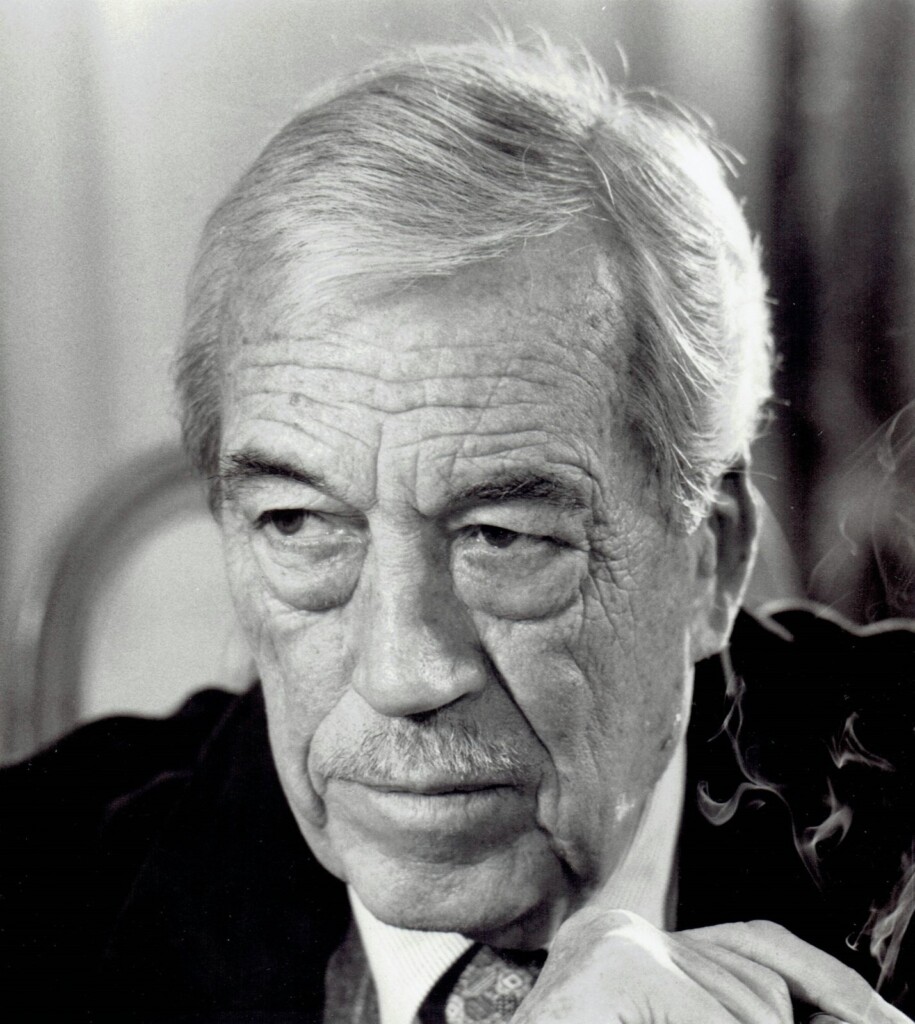
You are watching a man lose everything he built over forty years, and the camera does not look away, but it does not lean in either. It simply holds the frame while the world inside it comes apart, and you realize the discomfort you feel is not grief for the character but something closer to embarrassment — the specific embarrassment of having expected the film to rescue you from what it was showing.
That refusal to rescue is the thing critics have never quite known what to do with John Huston. The categories available to American cultural journalism — populist entertainer or serious auteur, genre craftsman or visionary artist — are not flexible enough to hold a filmmaker who spent five decades producing work that satisfied neither demand. The entertainment industry wanted catharsis, resolution, the reliable emotional transaction. The art-house establishment wanted difficulty worn visibly, like a credential. Huston delivered neither. His darkness was not redemptive, and his craftsmanship was never ironic. He meant what he made, and what he made refused to mean what audiences had been trained to expect meaning to feel like.
Daniel Boorstin, writing in “The Image” in 1962, identified the mechanism with sociological precision: American culture had developed an extraordinary capacity to take genuine experience and convert it into what he called the pseudo-event — a manufactured, pre-interpreted version of reality designed to be consumed without the friction of actual encounter. The photograph replaces the journey. The celebrity replaces the hero. The synopsis replaces the film. What Boorstin diagnosed in journalism and politics is structurally identical to what happened to Huston’s reputation across the decades: critics did not engage his films so much as produce convenient summaries of them that fit existing slots, and when the films resisted the slots, the films were judged deficient rather than the slots.
The evidence runs in a straight line through the historical record. “The Treasure of the Sierra Madre” won three Academy Awards in 1948 and was simultaneously dismissed by emerging critical voices as too commercial for serious consideration. “The Asphalt Jungle” in 1950 was praised for its technical realism and then buried under the genre label of heist film, which effectively excused critics from examining why every character in it is destroyed not by greed but by the specific texture of their longing. “Fat City” in 1972 appeared and disappeared in less than a season, earning admiration from a small number of writers who noted its ruthlessness and puzzlement from everyone else who could not locate the point at which the audience was supposed to feel better. A film without a point of redemption is not a failed film. It is a film that has declined to perform a particular social function, and the culture’s response was to treat that refusal as an artistic deficiency.
What makes this misclassification historically significant rather than merely unfair is what it reveals about the categories themselves. A critical apparatus that cannot process work unless it delivers either pleasure or prestige is not a neutral instrument of evaluation. It is a gatekeeper for a specific set of social needs — the need to be entertained without being disturbed, or the need to be disturbed in ways that confer distinction. Huston’s films disturb without conferring anything. They leave the viewer with the image and no instructions, which is precisely the condition Boorstin identified as the thing American mass culture was engineered to prevent.
The persistent misreading is therefore not incidental biographical data about a director who slipped through the cracks. It is evidence that the cracks are load-bearing — that the cultural architecture requires them to exist, because a system built on the conversion of experience into consumable image cannot afford to fully acknowledge the work of someone who kept insisting, across five decades and thirty-seven films, that some things do not convert.
🎬 The Craft of Unconventional Filmmakers
John Huston stands as one of cinema’s most restless and unpredictable auteurs, defying genre and convention with every project he undertook. To understand his singular vision, it helps to explore the wider landscape of irregular, contemplative, and psychoanalytically charged filmmaking. These related readings open doors into the aesthetic and intellectual worlds that shaped and echo Huston’s irreverent craft.
Slow and contemplative cinema: the aesthetic of slow cinema
Slow and contemplative cinema represents a radical counter-movement to mainstream narrative film, embracing duration, silence, and ambiguity as expressive tools. Huston’s own irregular rhythms and refusal to conform to Hollywood pacing place him in dialogue with this tradition, even if his work predates its formal theorization. Understanding slow cinema illuminates how deliberate irregularity can itself become a cinematic language.
GO TO THE SELECTION: Slow and contemplative cinema: the aesthetic of slow cinema
Cinematography as a narrative language
Cinematography as a narrative language explores how the camera itself tells stories beyond dialogue and plot, through framing, light, and movement. Huston was a master of visual storytelling, collaborating with great cinematographers to construct images that carry psychological and moral weight. This article provides the theoretical grounding to appreciate how Huston’s visual choices were never merely decorative but always dramatically essential.
GO TO THE SELECTION: Cinematography as a narrative language
Psychoanalysis and cinema: when the couch becomes the screen
The relationship between psychoanalysis and cinema is one of the most fertile intellectual territories in film studies, revealing how the screen functions as a space for projection, desire, and the unconscious. Huston himself directed Freud: The Secret Passion and was deeply fascinated by the inner life of his characters. This piece traces how the couch and the camera have always shared a common obsession with what lies beneath the surface.
GO TO THE SELECTION: Psychoanalysis and cinema: when the couch becomes the screen
Michelangelo Antonioni and alienation in relationships
Michelangelo Antonioni’s cinema of alienation offers one of the most compelling parallels to Huston’s exploration of characters adrift in hostile or indifferent worlds. Both directors refused easy resolutions, preferring to leave their protagonists suspended in existential uncertainty. Studying Antonioni deepens our understanding of how postwar cinema grappled with disconnection, moral ambiguity, and the failure of communication.
GO TO THE SELECTION: Michelangelo Antonioni and alienation in relationships
Discover Irregular Cinema on Indiecinema
If John Huston’s refusal to play by the rules speaks to you, Indiecinema is the streaming destination built for curious, demanding viewers like you. Explore a curated selection of independent and auteur films that celebrate the irregular, the challenging, and the unforgettable. Join the community of those who believe cinema is at its best when it dares to be different.
👉 EXPLORE THE CATALOG: Watch Indie Films in Streaming
A vision curated by a filmmaker, not an algorithm
In this video I explain our vision

