The Body Before the Plot
You are sitting in the dark and nothing is happening. A man walks across a field. The camera does not follow him with any urgency — it simply watches, the way a window watches, without appetite. He reaches the far edge of the frame and you wait for a cut that does not arrive. The grass moves. Somewhere, a bird. The man has almost disappeared into the treeline and still the shot holds, and you become aware, with a peculiar embarrassment, of your own heartbeat, your own impatience, the way your hand moves toward your phone before you catch yourself. You are not bored in the ordinary sense. You are exposed. The cinema has stopped performing for you, and in that silence you can hear yourself wanting it to.

This is the first and least discussed achievement of what critics began calling slow cinema sometime in the early 2000s — not its visual beauty, not its silence, not even its refusal of narrative convention, but its capacity to make the viewer a subject of study. The shot does not ask you to feel anything about the man in the field. It asks you to notice what you were already feeling before he appeared. Duration, deployed this way, functions less like a stylistic choice and more like a diagnostic instrument. It does not slow time so much as it strips away the machinery that normally keeps you from experiencing time at all — the cut, the music cue, the reaction shot, the line of dialogue that tells you what to think about the previous line of dialogue.
Henri Bergson argued in Matter and Memory, published in 1896, that human perception is not a passive recording of reality but an active filtration of it — we perceive what is useful and suppress what is not. Cinema as an industrial form perfected this filtration over a century of practice, training audiences to receive information in precisely calibrated doses, to move through stories the way commuters move through stations: efficiently, without dwelling. The Hollywood continuity system, codified through the 1920s and 1930s, is at its foundation a system for managing the viewer’s attention so completely that the management itself becomes invisible. You never notice the edit because the edit was designed to exploit the limits of your visual cortex, landing precisely at the moment your brain is already anticipating motion in a new direction.
Slow cinema breaks this contract not by being its opposite but by being its withdrawal. Béla Tarr‘s Sátántangó, released in 1994 and running to seven and a half hours, does not use duration as provocation or endurance test — it uses it as the only honest unit of measurement available for the kind of social devastation it is depicting. The Hungarian countryside it maps is one of people for whom time has ceased to move toward anything, and the film’s refusal to abbreviate that stasis is not aesthetic posturing but ontological fidelity. You cannot understand what it means to wait for a salvation that will never arrive if the film cuts away before the waiting has registered in your muscles.
What is being asked of the body here is something cinema scholarship has historically undervalued, preferring to analyze meaning at the level of image content, narrative structure, or ideological implication. The phenomenologist Vivian Sobchack, in her 1992 study The Address of the Eye, argued that film experience is not primarily cognitive but carnal — that we respond to movies first with our flesh, not our intellect, and that academic discourse has spent decades trying to talk its way around this inconvenient fact. Slow cinema makes that evasion impossible. When a shot lasts four minutes and contains almost no movement, there is no plot mechanism available to redirect your awareness away from the fact that you have a body sitting in a chair, that you are aging in real time, that duration is not an abstraction.
The Sands
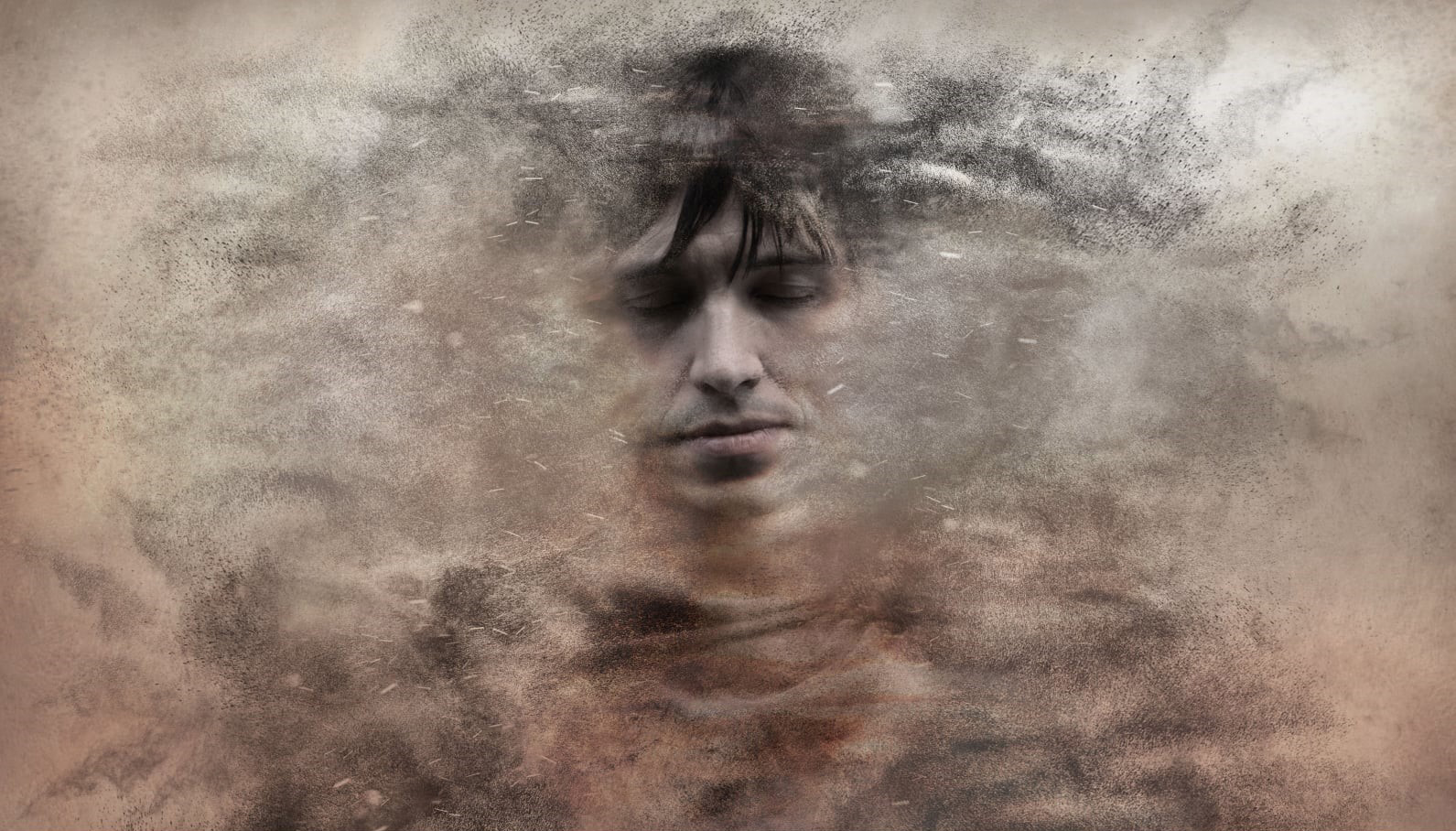
Science fiction, by Noah Paganotto, Argentina, 2022.
In an undetermined location on planet Earth, in an unknown time, Zoilo lives with his family in a wasteland surrounded by ruins. They live uprooted, without mothers, knowing that pregnancy for women is synonymous with death. For them there is only one collective routine; keep the fire alive. Only Zoilo escapes this logic, observing, intrigued, details that others do not see and therefore do not appreciate. Zoilo's personal search for answers will increase the differences with his relatives, increasingly revealing an empty world of interiority.
Avant-garde film that burns slowly in the first part and then reveals in the second the profound conflicts of a family prisoner of archaic beliefs. It is a dystopian and visionary work, with wonderful photography and images of rare power that allow us to grasp the depth of the story and its poetic potential. The faces of the actors, especially the protagonist boy, are perfect. The Sands metaphorically represents the world we live in: an alienated society, where what keeps us alive is demonized and blamed for death. In opposition to the fast pace of the typical mainstream film, The Sands is a meditative journey into the depths of images. The film was shot in natural environments in the city of Necochea, Buenos Aires province, Argentina.
LANGUAGE: Spanish
SUBTITLES: English, Spanish, French, German, Portuguese
Duration as Philosophical Weapon
You are sitting in a theater — or more likely alone in front of a screen — and approximately four minutes have passed in which nothing has happened by any conventional measure. A man walks across a field. The camera does not cut. The wind moves through grass. You feel, with uncomfortable precision, the exact weight of your own impatience, and that feeling is not incidental to the experience. It is the experience. The film has not failed to entertain you. It has succeeded in exposing you.
Henri Bergson published Time and Free Will in 1889 with a central argument that most of Western modernity has spent the subsequent century and a half actively ignoring: that consciousness does not experience time as a sequence of discrete measurable units but as a continuous flow he called durée — duration as lived from the inside, irreducible to the clock, to the schedule, to the edited montage of productive hours. The tragedy Bergson identified was not philosophical abstraction. It was the violence done to this inner continuity by a civilization that had decided to spatialize time — to lay it flat, divide it into units, assign each unit a measurable output. Industrial capitalism did not merely organize labor. It restructured the nervous system.
What slow cinema does, formally and with full intention, is refuse that restructuring. When a director holds a shot for seven, twelve, twenty minutes without cutting, the camera is not being lazy or indulgent. It is performing an act of temporal resistance. The viewer trained by decades of accelerated editing — the average Hollywood shot length dropped from approximately eight seconds in the 1970s to under three seconds by the 2010s, a compression that Walter Murch, the editor and theorist, described as moving toward the threshold of neurological coercion — that viewer arrives at a long take with reflexes that are simply useless. The usual cognitive shortcuts do not fire. The brain, expecting a cut that does not come, is left with no option but to inhabit the moment rather than consume it.
This is where Bergson’s durée stops being a philosophical concept and becomes something you feel in your chest. The discomfort of watching a static long take is not the discomfort of boredom, though it is easy to mistake them. Boredom is the sensation of time resisting your demand that it produce something. What slow cinema engineers is categorically different: it is the sensation of time opening, of duration revealing its texture, of the present moment becoming genuinely present rather than merely transitional. Guy Debord argued in 1967 that the spectacle had converted all lived experience into representation — that modernity had left people watching their own lives from the outside. A long take that refuses to resolve, to explain, to proceed, is a structural refusal of that outside position.
The contemplative filmmaker is not offering you a slower version of the same product. The formal decision to extend duration is philosophically loaded in a way that genre cinema’s formal decisions almost never are. A jump cut serves narrative efficiency. A two-hour unbroken conversation in real time serves something else entirely: it collapses the distance between screen time and lived time until the viewer can no longer maintain the comfortable posture of the observer. You are no longer watching time pass. You are inside its passage, which means you are, briefly and uncomfortably, inside your own existence rather than at a spectatorial remove from it.
Simone Weil wrote in the 1940s that attention — genuine, sustained, non-instrumental attention — was one of the rarest and most morally significant human capacities, one that industrial life was systematically eroding not through malice but through structural necessity. Slow cinema does not ask for your attention in the way an advertisement does, by grabbing it. It waits. And in that waiting, it reveals exactly how little practice you have had at offering it freely.

The Economics of Attention
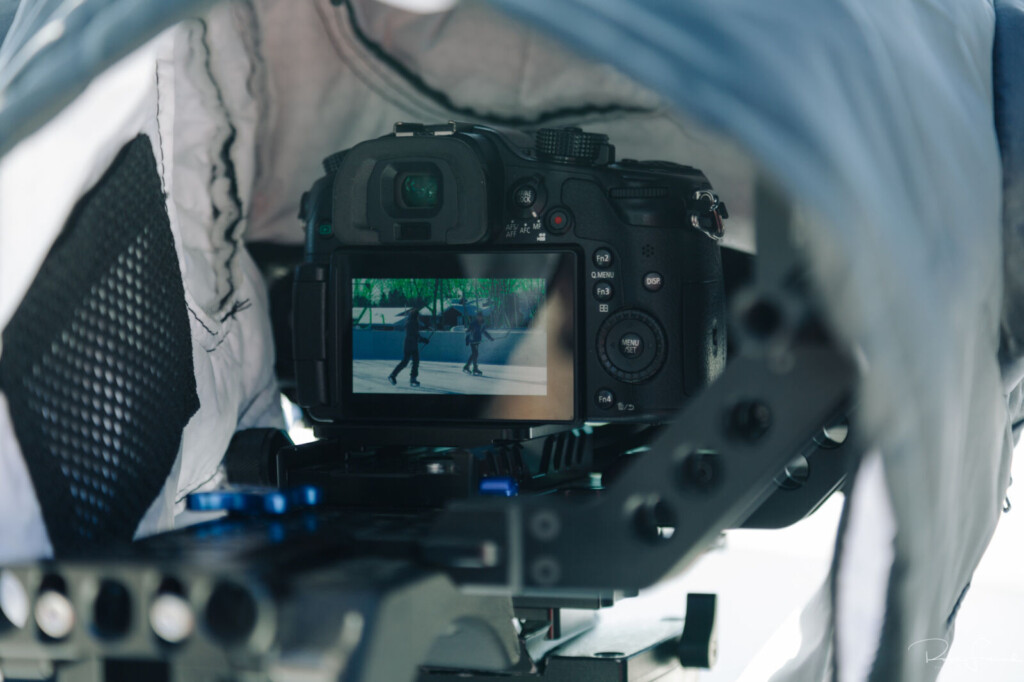
You are watching a film and you realize, somewhere around the fortieth minute, that nothing has happened — not in the way you were trained to expect something to happen. A woman walks across a field. The camera does not cut. The wind moves through the grass in a direction you cannot name. You feel the first tremor of what contemporary neuroscience would call attentional dysregulation, but what is actually something older and more honest: the discomfort of a mind that has forgotten how to wait.
The numbers are not metaphorical. In the 1960s, the average shot length in a mainstream American film hovered around eight seconds — already a compressed grammar compared to the long takes that defined early sound cinema, but still a duration long enough for a human eye to finish reading a face. By the 1990s that number had been halved. By the 2010s, the median shot in a Hollywood production lasted under two and a half seconds, a rhythm closer to the physiological rate of the saccade — the involuntary micro-movement of the eye scanning for threat — than to anything resembling contemplation. This is not coincidence. It is engineering.
Herbert Simon wrote in 1971, in a passage that has aged into prophecy, that a wealth of information creates a poverty of attention, and that the only scarce resource in an information-rich world is the attention of those who receive it. What Simon could not fully anticipate was the degree to which that scarcity would be deliberately manufactured rather than merely observed. The entertainment industry did not simply respond to shrinking attention spans — it produced them, methodically, across decades, recalibrating the nervous system of its audience the way a tolerance is built for a drug, requiring ever-faster cuts to deliver the same neurochemical yield of engagement. By the time Tim Wu documented this process in The Attention Merchants in 2016, the infrastructure was already so naturalized that most viewers experienced the hunger for rapid editing not as an induced craving but as an innate preference.
What slow cinema refuses, then, is not pace in the abstract. It refuses the premise that perception is a resource to be harvested. When Béla Tarr holds a shot for six, eight, twelve minutes — as he does repeatedly across the seven and a half hours of Sátántangó, released in 1994 — he is not being indulgent or punishing his audience. He is declining to participate in an economy. The shot that does not cut is a shot that cannot be monetized in the same way, cannot be sliced into a trailer, cannot be reduced to a clip, cannot generate the micro-reward loop that keeps the algorithmic feed moving. It is, structurally, waste — and waste, in a system built on the conversion of every second of human consciousness into measurable engagement, is the only form of genuine resistance available to an image.
The cultural logic that demands acceleration is also a logic of substitution: the quick cut tells you what to feel before you have time to feel it independently, preempting the viewer’s own perceptual labor with an editorial verdict. A close-up of a tear instructs grief. A smash cut instructs shock. The viewer is not invited to encounter the image; they are guided through it at a pace that forecloses the lateral, associative, sometimes ungovernable movement of actual thought. Slow cinema, by contrast, creates what the film theorist David Bordwell identified as parametric narration — a mode in which style itself becomes the primary carrier of meaning, independent of and sometimes antagonistic to narrative information. The long take does not withhold story; it reveals that story, as Hollywood sells it, was always the most efficient delivery mechanism for keeping you from noticing what the image was actually doing to your body.
What the image does to your body when you are given no instruction is something the industry spent fifty years trying to ensure you would never have to find out.
What Realism Was Always Hiding
You sit in the dark and something in you relaxes, convinced at last that you are being shown the truth. The camera holds a field for four minutes without cutting. A man walks the length of a road. Rain falls on a concrete roof. Something in the aesthetic contract being offered tells you that this is what the world actually looks like when no one is performing for you — that the absence of manipulation is itself a form of access to the real. That conviction is the most sophisticated manipulation in the history of moving images.
Siegfried Kracauer spent the 1950s constructing his argument that cinema has a privileged relationship to physical reality, that the camera’s mechanical indifference to beauty, drama, and narrative makes it uniquely capable of redemption — his word — of the material world. His Theory of Film, published in 1960, positioned the medium as almost ontologically suited to capturing what he called the “flow of life,” the unstaged, the accidental, the transient. It was a seductive architecture of ideas, and it buried something essential: the flow of life does not look like anything until a frame decides where it begins and ends. Kracauer’s blind spot was not naivety but desire — the desire to believe that somewhere beneath the noise of modern alienation, the camera could touch something unmediated. Slow cinema inherited that desire wholesale, without inheriting the philosophical burden of examining it.
What a long take actually does is manufacture the sensation of duration while eliminating its discomfort. Real waiting — waiting for a bus, waiting for a diagnosis, waiting for someone to say what they mean — is saturated with interior noise, with distraction, with the body’s small rebellions against stillness. The camera held on a figure in a landscape produces something that resembles waiting but strips it of everything that makes waiting unbearable. It aestheticizes endurance into something a viewer can sustain because it has been precision-engineered: the composition chosen, the light calibrated, the sound design layered with textures that feel organic but were assembled in post-production across dozens of tracks. The naturalness is a product.
Roland Barthes, writing in Mythologies in 1957, identified the essential operation of ideology as the transformation of history into nature — the way a culture takes its own contingent arrangements and presents them as simply how things are. The aesthetic grammar of slow cinema performs exactly this operation on cinematic form itself. By presenting deliberate duration, compositional austerity, and non-dramatic narrative as the default condition of honest looking, it naturalizes a very specific and historically recent set of artistic decisions. What is actually a rigorous formal choice appears as the absence of choice — as transparency, as documentary humility, as the camera finally getting out of the way of the world.
The historical irony is that the films most aggressively marketed as unmanipulated — at festivals, in critical discourse, in the vocabulary of “contemplative” — are among the most technically controlled objects produced in contemporary cinema. Shooting ratios on these films routinely exceed one hundred to one. A moment that reads as found, as accidentally true, as the world surprising the lens, may represent six days of location scouting, three weeks of waiting for the precise quality of afternoon light, and forty takes of a figure crossing a threshold at the exact pace the director has choreographed. The viewer who feels they are being liberated from artifice is being handled with extraordinary craft.
There is something almost theological in the way slow cinema positions itself against spectacle. It constructs itself as the negative image of commercial manipulation, which means it requires commercial cinema to exist as a foil, a villain, a contrast that legitimates its own claims to honesty. But a form that needs an opposing lie to define its truth has not escaped the problem of falsehood —
The Geography of Stillness
You are sitting in a waiting room that has no door you can see from where you are seated. The chairs are plastic, the fluorescent light hums at a frequency just below discomfort, and the man across from you has been staring at the same fixed point on the wall for what feels like eleven minutes. Nothing is happening, and yet something enormous is accumulating in the room — a pressure, a history, a grief that has never been given a form precise enough to hold it.
The concentration of slow cinema’s most significant practitioners across a remarkably narrow band of geopolitical coordinates between 1990 and 2020 is not an aesthetic coincidence. Romania, Iran, Taiwan, the Philippines — these are not simply places where patient filmmakers happened to be born. They are societies that underwent ruptures so total, so structurally violent, that the conventional machinery of narrative cinema — its causality, its resolution, its faith in the legibility of time — became not just inadequate but actively dishonest. When Cristi Puiu made The Death of Mr. Lazarescu in 2005, the eleven-minute unbroken ambulance ride through Bucharest was not a stylistic choice imposed on a story. It was the only honest container for what it meant to be a body inside a post-Ceaușescu state apparatus — bureaucratic, exhausted, constitutionally indifferent to individual suffering in a way that decades of totalitarian administration had calcified into reflex.
Iran’s contribution to this geography carries a different historical sediment. The Islamic Revolution of 1979 severed a modernizing society from one version of itself with extraordinary violence, and the cinema that emerged in the years following — particularly in the work of Abbas Kiarostami, whose 1990 film Close-Up placed documentary time directly against fictional time without resolving the tension between them — operates in the gap left by that severance. The long take in Kiarostami is not contemplative in the Western art-cinema sense of inviting the viewer to meditate. It is forensic. It holds the image open because the culture it is recording has learned, at profound cost, that closing an image too quickly is a form of lying.
Taiwan’s New Cinema, which crystallized around figures like Hou Hsiao-hsien in the early 1980s, emerged precisely at the moment the island was beginning to process what four decades of Kuomintang martial law had done to the relationship between personal memory and official history. Hou’s use of deep focus and stationary long takes in films like A City of Sadness — released in 1989, the first Taiwanese film to address the 1947 February 28 massacre openly — creates a visual grammar in which historical suppression becomes spatially legible. The camera refuses to cut away because the culture was, for decades, refused the right to look.
The Philippines enters this cartography through Lav Diaz, whose films routinely run between eight and fourteen hours and are set almost exclusively in landscapes marked by Spanish colonialism, American occupation, and Marcos-era authoritarianism. The extraordinary duration of these works is not provocation for its own sake. In a country whose recorded history was systematically written by its occupiers, duration itself becomes a form of decolonization — the insistence that Filipino time, Filipino grief, Filipino silence has the right to unfold at its own pace without being edited into a shape more convenient for outside comprehension.
What these four traditions share is not a unified aesthetic program but a common epistemological condition: the knowledge that linear narrative, with its implicit faith in cause leading to consequence and consequence leading to resolution, encodes an assumption about historical progress that these particular histories flatly refuse. The long take does not simply slow time — it creates a zone in which the official story loses its grip long enough for something unprocessed and unreconciled to become visible, not as content, not as theme, but as the texture of duration itself pressing against the frame from the inside.
A vision curated by a filmmaker, not an algorithm
In this video I explain our vision
Suffering and the Spectator's Complicity

You are watching a man carry stones. Not symbolically — stones, actual stones, each one lifted from a pile, transported across a field of mud, set down, and then the man walks back. The camera does not cut. It does not find a better angle or compress the journey into a montage that grants the labor some redemptive arc. It simply holds, for minutes that feel geological, on the body doing the work. Your eyes begin to negotiate with the image. You look for meaning in the repetition because the alternative — that there is no meaning, that this is simply what exhaustion looks like from the outside — is somehow harder to accept than the labor itself.
Susan Sontag spent the final years of her life circling a question that slow cinema makes unavoidable. In Regarding the Pain of Others, published in 2003, she dismantled the comfortable assumption that prolonged exposure to suffering produces empathy rather than aesthetic distance. Her argument was not that images of hardship are wrong to make or to show, but that the act of sustained looking transforms the viewer into something other than a witness. The gaze, held long enough, converts suffering into a kind of composition. What began as documentation becomes, through the very patience the viewer brings to it, an object of contemplation — which is to say, an object of pleasure, however uncomfortable that pleasure is to name.
The discomfort matters here because slow cinema wears its discomfort as a credential. Festival audiences in Venice and Cannes sit through these durations voluntarily, even proudly, and that voluntary endurance becomes its own transaction. There is cultural capital being accumulated in the darkness. The willingness to remain, to not need the cut, signals a particular kind of sophistication — and that signal is inseparable from the conditions under which the films are received. A farmhand in the region being filmed does not experience the forty-minute take as an aesthetic provocation. He experiences it as Tuesday.
This asymmetry is not a failure of individual filmmakers; it is structural. The sociologist Pierre Bourdieu mapped, in Distinction published in 1979, how aesthetic judgments that present themselves as pure sensibility are always also class positions. The capacity to find beauty in duration, to tolerate and even celebrate the withholding of conventional pleasure, is a trained response — trained by education, by cultural access, by having enough economic stability that boredom has never been a condition of survival. When a film transforms a peasant’s repetitive labor into a meditation on time, it is not simply recording a life. It is translating that life into a language legible only to those who have never been required to live it.
What makes this genuinely difficult to disentangle is that the filmmakers themselves often come from the communities they film, or arrive with a political commitment to visibility that is anything but ornamental. The Romanian New Wave, the Thai films of the early 2000s, the slow cinema emerging from post-Soviet republics — these are not exercises in exoticizing the peripheral. Yet the moment a film enters the festival circuit, it is rerouted through an infrastructure of reception that reframes its meaning regardless of intention. The work does not travel alone. It travels with the press kit, the Q&A, the critical vocabulary that will be applied to it, and all of that apparatus subtly instructs the audience on how to feel refined rather than implicated.
Sontag’s deepest provocation was not that looking is passive but that it can function as a substitute for any other form of relation to suffering. The slow cinema spectator who sits for three hours with a film about rural poverty and leaves the theater feeling that they have understood something — perhaps even feeling enlarged by the experience — has not necessarily moved any closer to the life on screen.
The Festival Circuit as Filter
You watch a film from the Philippines, three hours long, shot in a village where nothing moves except the light. It wins the top prize at a major European festival. The following year, a critic in London writes that slow cinema is a global phenomenon, proof that the world’s filmmakers have independently arrived at the same aesthetic truth. The word “independently” is doing enormous work in that sentence, and no one stops to question it.
The festival circuit that canonized contemplative filmmaking between the mid-1990s and the 2020s was not a neutral amplifier. Cannes, Venice, and Locarno operated — and still operate — as taste-making institutions with selection committees, programming philosophies, and aesthetic inheritances that were formed in Western Europe and have never been fully examined for what they exclude. When a film from Romania, Thailand, or Argentina enters this system and wins, the temptation is to read that as the system opening outward. The more honest reading is that the film has successfully spoken a language the system already recognized. The prize confirms the film’s legibility, not the system’s breadth.
What makes a slow film legible to a European festival jury is rarely articulated explicitly, but its features are consistent enough to map: long takes without dramatic payoff, diegetic sound treated as texture rather than signal, narratives that resist the kind of climactic structure associated with Hollywood but that still maintain a coherent interiority, often anchored in a single character whose suffering is quiet and photogenic. Susan Sontag wrote in 1964 in her essay “Against Interpretation” that the habit of interpretation is a way of taming experience — of replacing the sensory encounter with a meaning the critic can carry away. The festival apparatus does something structurally similar: it selects for films whose slowness is already pre-interpreted, whose refusal of convention is itself conventionally legible as refusal, and therefore safe.
The consequences of this selection are invisible precisely because the rejected films leave no archive. Slow films from West Africa, from Central Asia, from Indigenous filmmakers working entirely outside the festival submission economy never accumulate the kind of critical mass that generates retrospectives, academic monographs, or Criterion releases. Their absence from the discourse is then mistaken for their non-existence. By 2010, the academic literature on slow cinema was already dense enough to generate its own canonical names — a list that overlapped almost perfectly with festival prize records, which overlapped almost perfectly with films that had received European co-production funding, which brought with it a set of aesthetic expectations embedded in the funding contracts themselves. The circle closed without anyone drawing it.
The sociologist Pierre Bourdieu, in his 1992 study “The Rules of Art,” described the literary field as a space where economic logic operates in disguise, translated into the vocabulary of purity and disinterest. The international film festival circuit reproduces this structure with remarkable fidelity. The prestige of slowness is not just aesthetic; it is economic and institutional. A filmmaker from Senegal or Kazakhstan who wants access to European distribution, to critical infrastructure, to the educational pipelines that produce the next generation of viewers for serious cinema, must enter a system that rewards a specific kind of formal behavior. Calling the result “global slow cinema” is accurate only in the geographical sense. Culturally, it describes one aesthetic tradition that has been scaled to appear universal.
What gets called universalism in art is almost always a provincial taste that has acquired the resources to travel. The contemplative, the patient, the temporally expansive — these are not neutral human values that filmmakers everywhere spontaneously discovered. They are values with a history, with patrons, with border-crossing privileges that were never evenly distributed, and the films that embodied them in ways the jury could not quite place were returned, without ceremony, to their silence.
Silence as Unfinished Argument
You are sitting in a theater — or more likely alone, a laptop screen in a dim room — and nothing is happening. A figure stands at a window. The light shifts almost imperceptibly. No music tells you how to feel. No voice explains the figure’s interiority. And yet something is pressing against you from inside the frame, something that feels less like observation and less like emotion and more like an argument being made in a language you were never formally taught but somehow already know.
Roland Barthes, writing in Camera Lucida in 1980, identified a quality in certain photographs that he called the punctum — not the studied, intentional meaning of the image, but the detail that wounds, that pierces without announcing itself, that was never placed there for you and yet finds you anyway. Barthes was speaking of static images, of the frozen instant, but the logic extends with uncomfortable precision into the territory of cinema that refuses to move quickly. In a film stripped of dialogue and orchestral instruction, every creak of a door, every held posture, every deliberate angle of afternoon light becomes capable of operating as punctum — not as symbol, not as metaphor, but as pressure. The director has removed the scaffolding that normally insulates the viewer from the raw ideological weight of what is being shown, and what remains is not neutrality. What remains is density.
This is where the silence becomes something other than absence. Conventional film grammar trains audiences to locate meaning in dialogue, in scored emotion, in the cut that resolves ambiguity. When these instruments are withdrawn, the viewer does not encounter emptiness — they encounter the enormous gravitational pull of everything withheld. A hand that does not reach. A door that is not opened. A conversation that never begins. These withheld gestures do not reduce the argument onscreen; they concentrate it into a single point that cannot be diluted by explanation. Explanation, as any scientist of persuasion understands, is always also a form of containment.
What slow cinema’s silence exposes, with a kind of cold precision, is how thoroughly conventional cinema has colonized the audience’s interpretive reflex. Viewers accustomed to narrative signposting experience the stripped frame not as freedom but as disorientation, even as hostility. They call it boring because the word boring is the only available translation for the sensation of being required to produce meaning rather than receive it. The discomfort is ideological before it is aesthetic. It is the discomfort of a reader confronting a sentence that will not resolve, that refuses the grammatical comfort of a period.
Spatial composition in this context stops being backdrop and becomes the primary medium of argument. The positioning of a body in a landscape — small, peripheral, dwarfed by architecture or weather — carries propositions about power, about insignificance, about the relationship between individual interiority and structural indifference that no dialogue could deliver without reducing them to polemic. Jean-Luc Nancy argued in The Ground of the Image that the image does not represent but presents — it does not stand in for something absent but insists on its own pressure as a thing in the world. Slow cinema treats this as an operational principle. The frame is not a window onto a story. It is an event with its own mass.
And the silence is not incidental to this event — it is its condition. Sound, in conventional cinema, creates permeability between the screen and the viewer’s nervous system, guiding the body’s responses through tempo and orchestration, ensuring that feeling arrives pre-labeled. Silence, by contrast, is an act of refusal that transfers sovereignty to the viewer’s body without warning them, leaving them exposed to the full unmediated weight of what light and space and stillness can say when no one interrupts them to explain what they mean.
🎞️ The Art of Stillness: Cinema, Time and the Gaze
Slow cinema is not merely a stylistic choice — it is a philosophical stance toward time, perception, and the invisible rhythms of human experience. To understand its aesthetic depth, one must explore the broader cultural currents that shaped it: from the alienation of modern relationships to the poetry of consciousness itself. These articles open doorways into the intellectual world that slow cinema inhabits.
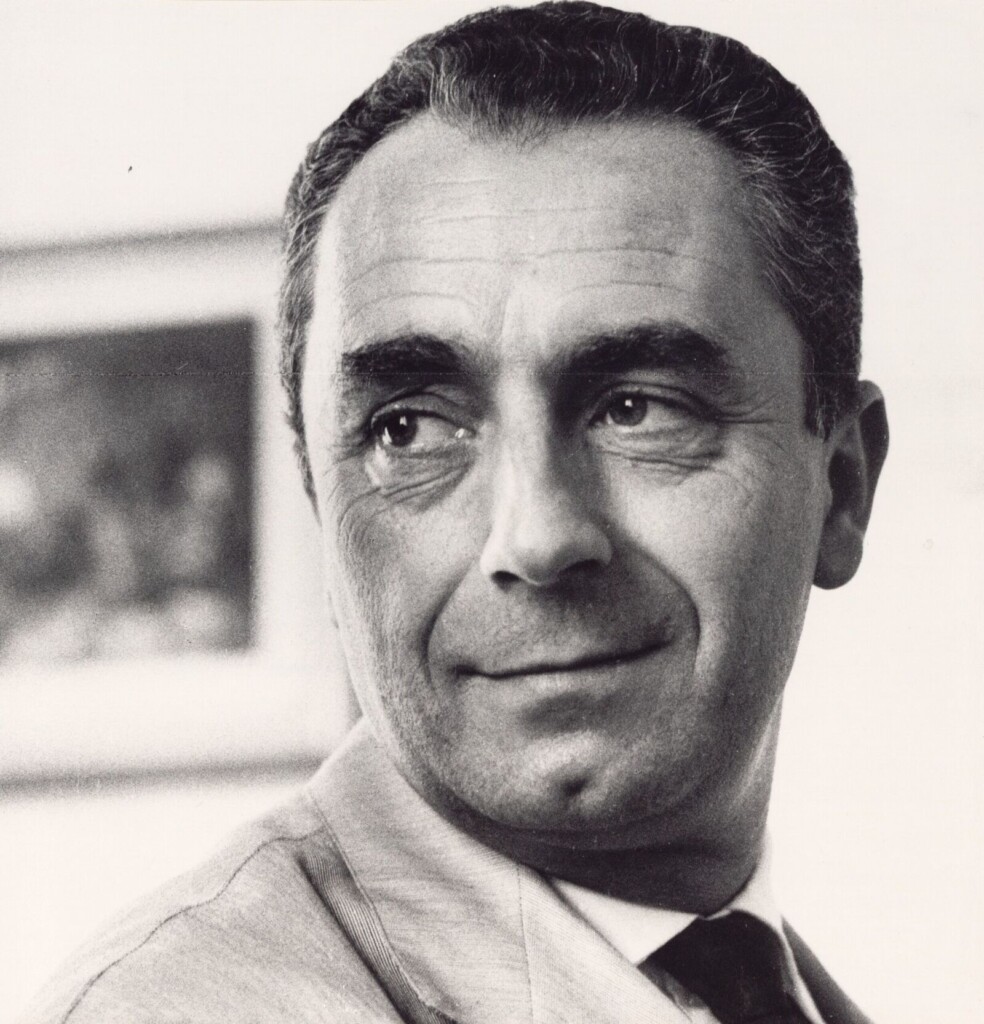
Michelangelo Antonioni and alienation in relationships
Michelangelo Antonioni is one of the spiritual ancestors of slow cinema, a filmmaker who transformed emotional distance into pure visual language. His films — L’Avventura, La Notte, L’Eclisse — move at the pace of anxiety itself, lingering on empty spaces and silent gestures. Understanding his work is essential to grasping why slowness in cinema is not absence, but presence of another kind.
GO TO THE SELECTION: Michelangelo Antonioni and alienation in relationships
Stream of Consciousness in Literature and Cinema
Stream of consciousness, as a literary and cinematic technique, finds its natural home in the slow cinema tradition, where the camera becomes a surrogate for interior thought. From Virginia Woolf to Andrei Tarkovsky, the attempt to render subjective time on screen has defined some of the most radical experiments in modern art. This article traces the deep connection between consciousness, duration, and the moving image.
GO TO THE SELECTION: Stream of Consciousness in Literature and Cinema
Japanese Aesthetics: Wabi-Sabi Mono no Aware and Yugen
Japanese aesthetics — particularly the concepts of wabi-sabi, mono no aware, and yūgen — offer perhaps the most precise cultural vocabulary for what slow cinema seeks to express. The beauty of impermanence, the melancholy of passing moments, and the sense of profound mystery in the ordinary are all central to filmmakers like Yasujirō Ozu and Hirokazu Kore-eda. Exploring these ideas illuminates why slowness is not emptiness but a form of heightened attention.
GO TO THE SELECTION: Japanese Aesthetics: Wabi-Sabi Mono no Aware and Yugen
The Slow Life: Philosophy and Culture of Slowing Down
The philosophy of slow life provides the ethical and existential framework within which slow cinema becomes more than an aesthetic movement — it becomes a cultural resistance. Against the acceleration of digital culture and the tyranny of instant stimulation, slowness reclaims interiority, silence, and contemplative depth. This article explores how the culture of slowing down intersects with art, cinema, and the search for meaning.
GO TO THE SELECTION: The Slow Life: Philosophy and Culture of Slowing Down
Discover Slow and Independent Cinema on Indiecinema
If these ideas have stirred something in you — a desire for cinema that breathes, that trusts silence, that respects your gaze — then Indiecinema is your destination. Our streaming platform is dedicated to independent and auteur films that dare to move slowly, think deeply, and feel honestly. Come and explore a world of cinema that the mainstream has forgotten to make room for.
👉 EXPLORE THE CATALOG: Watch Indie Films in Streaming
👉 Questo articolo fa parte dell'hub Psychology: The Complete Guide to Mind, Behavior, and Human Nature
A vision curated by a filmmaker, not an algorithm
In this video I explain our vision