
The bureaucratic threshold as existential limbo
You hand your documents to the officer behind the reinforced glass and watch his face register nothing — not suspicion, not recognition, not the ordinary human flicker of one stranger acknowledging another. He types. He waits. He types again. You have traveled perhaps four thousand kilometers through conditions you will spend years trying to forget, and in this moment the entire apparatus of international protection reduces itself to a cursor blinking on a government database that may or may not contain your name spelled correctly.

What happens next is not a decision. It is a procedure, and that distinction is the first thing the system needs you to fail to notice. A decision implies a subject being evaluated by another subject, two humans in a room negotiating the terms of a shared world. A procedure implies a body being processed by a mechanism, and mechanisms do not recognize the people they sort — they recognize categories. The moment you entered the checkpoint, you ceased to be a person with a history and became an applicant, a file number, a claim awaiting adjudication. The legal vocabulary is precise about this in ways the ordinary person never examines: you are not granted protection, you are determined to be eligible for it, retroactively, after a period of suspension that can last months or years, during which you are technically present in a country but belong to none of the frameworks that make presence meaningful.
Hannah Arendt identified this mechanism at its structural root long before the contemporary refugee system calcified into its current form. Writing in 1951, in “The Origins of Totalitarianism,” she described statelessness not as a misfortune that happened to befall certain populations but as a deliberate political production — a condition in which human beings, stripped of national membership, discovered that their abstract humanity counted for almost nothing in a world organized exclusively around the rights of citizens. The phrase she coined, “the right to have rights,” sounds circular until you understand what she means by the outer ring: the first right is not freedom of speech or protection from torture, it is membership in a political community that will enforce those other rights on your behalf. Without that membership, the inner rights are paper. The stateless person, Arendt observed, was not treated as an enemy, which would at least have assigned them a legible place in a political drama. They were treated as something the existing legal order simply had no category for — and that categorical invisibility was its own form of violence.
The contemporary asylum procedure does not eliminate this condition. It manages it, which is a different thing entirely. The 1951 Refugee Convention, signed by 149 states, established the legal definition of a refugee and prohibited refoulement — the return of a person to a country where they face persecution. What it did not establish was any right to have an application processed within a particular timeframe, any right to work while waiting, any right to remain in the first country you reach rather than being transferred to another under mechanisms like the Dublin Regulation, which since its first version in 1990 has bound asylum seekers to the member state of first entry regardless of where their family, their language, their community of survival might actually be. The Convention gave people a floor. The implementing procedures built a waiting room underneath it.
That waiting room has a specific psychological architecture that researchers have begun to map with disturbing precision. Economist Jens Hainmueller and political scientist Dominik Hangartner, studying Swiss asylum seekers between 1994 and 2004, found that prolonged uncertainty — not poverty, not physical hardship, but the specific condition of not knowing — produced measurable deteriorations in mental health, employment outcomes, and social integration that persisted long after status was eventually granted. The suspension itself was the wound.
The 1951 Refugee Convention and its architectural contradictions
You are handed a document and told it protects you. Seventy-three years of international consensus, the signatures of 149 states, the weight of post-war moral reckoning pressed into legal language — and somewhere inside that architecture, your particular suffering does not qualify.
The 1951 Refugee Convention was drafted in Geneva by men who were thinking about one specific kind of person: the European intellectual, the political dissident, the individual who had crossed the wrong ideological line in a continent freshly scarred by totalitarianism. Hannah Arendt had already diagnosed, in “The Origins of Totalitarianism” published that same year, how statelessness strips a person of the right to have rights — but the Convention’s drafters were not solving the general problem of statelessness. They were solving a Cold War problem. The definition they produced reflects this with surgical precision: a refugee is someone with a well-founded fear of persecution based on race, religion, nationality, membership of a particular social group, or political opinion. Five grounds. A closed list. A taxonomy of suffering that was already a political argument dressed as a universal principle.
The temporal limitation written into the original text is revealing in its honesty. The 1951 Convention initially applied only to events occurring before January 1, 1951, and states could further restrict it to European events. The 1967 Protocol eventually removed these geographic and temporal constraints, but the definitional core remained untouched. What the international community chose to preserve — the five-ground framework, the individual persecution model, the requirement of state or quasi-state agency — was precisely the structure most useful for processing defectors from Soviet bloc countries and least useful for the vast majority of people who would flee violence, famine, and displacement in the following decades.
The epistemological burden this places on asylum seekers is extraordinary. The Convention demands that persecution be individualized: a Honduran woman fleeing a criminal syndicate that has killed three members of her family must demonstrate that she was targeted specifically, that her persecution fits a recognized category, that it was not simply generalized violence. The legal scholar James C. Hathaway argued in “The Law of Refugee Status” in 1991 that the Convention’s drafters embedded a fundamentally liberal political philosophy into what appeared to be humanitarian law — one that valued the persecuted individual over the displaced collective, political conscience over material survival. A Soviet poet who printed forbidden verse was legible to this system. A Sahel farmer whose land became desert over fifteen years is not.
Climate displacement now affects hundreds of millions of people who have no legal category waiting for them. The Internal Displacement Monitoring Centre recorded 7.7 million new disaster displacements in the first half of 2023 alone — movement driven by floods, droughts, and storms that no state deliberately engineered against any individual. The Convention was not written for them because 1951 had not yet named what was coming, but more precisely because the drafters were constructing a legal instrument shaped by ideological competition rather than humanitarian imagination. The hierarchy they embedded — the persecuted individual above the displaced community, political suffering above economic destitution — was not a neutral technical choice. It was a value judgment that international law has been slow to name as such.
What makes this architecture durable is not its justice but its institutional inertia. UNHCR, founded in 1950 with an initial three-year mandate that has been renewed continuously ever since, operates within a framework it did not author and cannot unilaterally revise. States invoke the Convention’s language when it serves their border policies and quietly ignore it when it does not, exploiting the gap between legal text and enforcement mechanism that the drafters left deliberately wide. The Convention has no court empowered to compel state compliance. Its authority rests entirely on the willingness of sovereign governments to constrain themselves — which is another way of saying it rests on very little at all when political pressure runs in the opposite direction.

Sovereignty versus protection: the state's irresolvable double bind
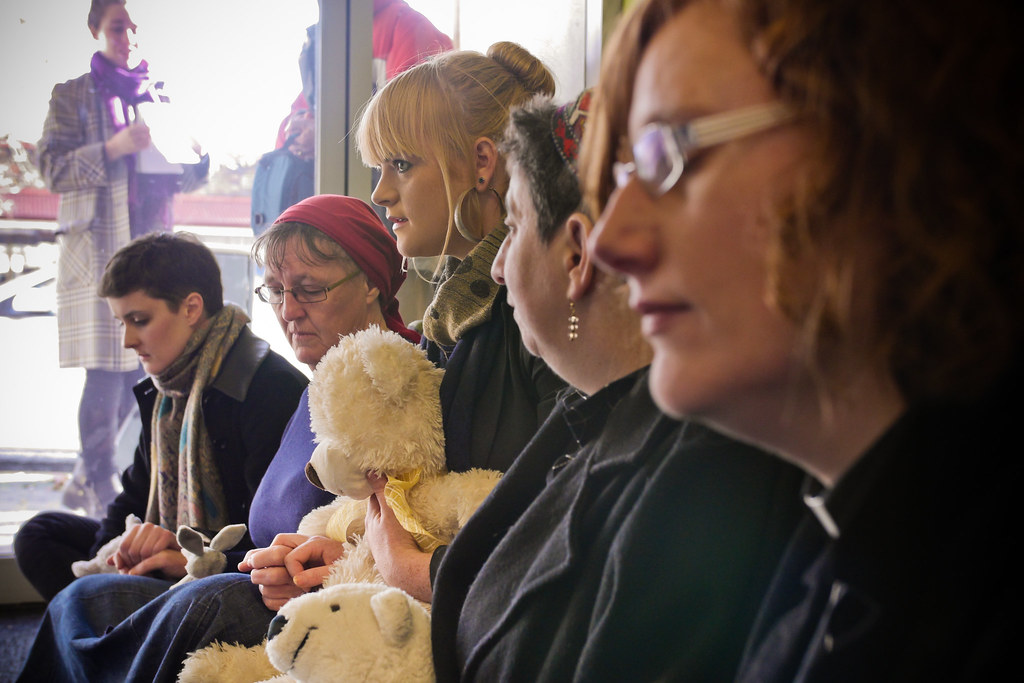
You are standing at a checkpoint that exists, officially, to protect you. The guard’s uniform carries an insignia of humanitarian mandate — UNHCR accreditation numbers, EU border protocols, multilateral agreements signed in Geneva and Maastricht. The machinery around you is elaborate, expensive, designed to signal seriousness of purpose. And yet every procedural delay, every document request, every transfer to an offshore processing facility communicates something structurally opposite to protection: that your presence here is the problem to be managed, not the violence you fled.
Nation-states have always carried this contradiction without resolving it, because resolving it would require surrendering something they cannot surrender. Sovereignty, in its Westphalian inheritance, is precisely the right to determine who belongs and who does not — a right that cannot be shared with an external moral claim without ceasing to be sovereignty in any meaningful sense. The 1951 Refugee Convention attempted to thread this needle by making non-refoulement an obligation while leaving enforcement mechanisms deliberately weak. States signed. States also immediately began constructing administrative architectures to circumvent what they had signed, because the alternative was to admit that international humanitarian law could override domestic political will.
Michel Foucault’s lectures at the Collège de France between 1975 and 1976, later published as “Society Must Be Defended,” introduced the concept of biopolitics as the governmental technology through which populations — not individuals — become the object of state power. What border management actually administers is not the threat posed by any particular person crossing any particular line, but the composition, health, and legibility of the national body as a whole. The asylum seeker does not threaten the state through violence; they threaten it by being ungovernable, by arriving outside the statistical and administrative categories through which modern states render populations manageable. Giorgio Agamben pushed this further in “Homo Sacer” in 1995, arguing that the refugee exposes the fiction that rights inhere in persons rather than in citizenship — that the human stripped of national belonging is not a rights-bearing subject but what he called bare life, zoe rather than bios, biological existence without political form.
The European Union’s externalization policy, accelerated dramatically after the 2015 Syrian refugee surge that brought over one million arrivals across Mediterranean routes, is the cleanest contemporary expression of this logic. The EU-Turkey Statement of March 2016 effectively paid a neighboring state approximately six billion euros to hold people the EU was legally obligated to process on its own territory. This is not a security arrangement. It is a sovereignty outsourcing mechanism — a way of maintaining plausible humanitarian deniability while physically preventing the claim from ever being formally lodged. Libya’s coast guard, funded and trained through EU channels, intercepts vessels in international waters and returns their passengers to detention facilities documented by the UN as sites of systematic torture. The EU does not do this. It funds the people who do, at one jurisdictional remove.
Australia refined this architecture earlier and with less diplomatic embarrassment. The Pacific Solution, reactivated in 2012 after a brief suspension, transfers asylum seekers intercepted at sea to processing facilities in Nauru and Papua New Guinea — territories outside Australian jurisdiction where Australian law does not formally apply. Between 2012 and 2019, over three thousand people were held in indefinite offshore detention, some for more than six years, in conditions that produced documented rates of self-harm and suicide that would trigger immediate legislative response if they occurred in any domestic prison population. The Australian government’s own commissioned reports acknowledged this. The policy continued. Because the political cost of admission — of people arriving and being seen to arrive — exceeded any other consideration, including the cost of what was happening to human beings in facilities the state was operating and financing at a distance carefully calibrated to be legally deniable.
What this reveals is not hypocrisy in the ordinary sense, the gap between stated values and actual behavior that every government navigates. It is something more structural: that the humanitarian obligation and the deterrence incentive are not in tension within the state’s framework but are, in fact, the same gesture performed for different audiences simultaneously.
The credibility assessment as theatre of suspicion
You sit across from a stranger in a government office, and you have approximately ninety minutes to convince them that the worst thing that ever happened to you is true. The room is fluorescent. There is a recorder. There is an interpreter who may share your ethnicity but not your dialect, your region but not your village, your language but not its particular inflections of grief. You are asked to begin at the beginning, proceed to the middle, arrive at the end. You are asked to be consistent.
The legal architecture of asylum adjudication rests on a concept called credibility, which sounds neutral and procedural until you understand what it actually demands. What it demands is narrative coherence — a story with stable dates, fixed geographical details, consistent emotional register, and a logical sequence of cause and effect. The officer sitting across from you has been trained, formally or informally, to treat deviation from this model as evidence of fabrication. A date that shifts between interviews, an account of violence that omits a detail mentioned earlier, a response delivered without visible distress — any of these can sink a claim. The system has built a portrait of the truthful traumatized person and then asked every applicant to fit inside it.
Jane Herlihy and Stuart Turner, working at the Centre for the Study of Emotion and Law in London, published research beginning in the early 2000s that should have dismantled this architecture entirely. Their work demonstrated, with clinical precision, that post-traumatic stress disorder does not impair memory uniformly — it shatters it selectively and in ways that are the precise opposite of what legal credibility assessments expect. Traumatic memory is encoded differently from ordinary memory. It is fragmentary, non-linear, emotionally saturated in some registers and entirely blank in others. The survivor of sustained persecution may recall with devastating vividness the smell of a cell and be completely unable to say which month it was. They may give a different account of events in a second interview not because they are lying but because retrieval of traumatic memory is itself destabilized by stress — and nothing produces stress quite like being asked to prove your suffering to a bureaucrat with decision-making power over your life.
What Herlihy and Turner identified was a structural inversion at the heart of the process: the asylum interview, designed to surface truth, is in fact calibrated to reward those least affected by what they claim to have experienced. A person who escaped mild administrative harassment may be able to produce a clean, consistent, emotionally proportionate account. A person who survived torture, sexual violence, or the murder of family members may be physiologically and cognitively incapable of doing so. The system mistakes the symptom for the lie.
This is not an accident of poor training that could be corrected with a better manual. It reflects a deeper epistemological assumption about how truth presents itself — the assumption that authentic experience, if it really happened, leaves a legible and stable record in the mind of the person who lived it. This assumption has been falsified by decades of trauma psychology, and yet it continues to organize legal practice across jurisdictions from the United Kingdom to Australia to the United States. The 1951 Refugee Convention gave states enormous discretionary latitude in determining credibility, and states have used that latitude to construct a standard that systematically disadvantages the genuinely persecuted.
There is also the question of what an officer can actually perceive in ninety minutes through an interpreter. Research on cross-cultural emotional expression has documented consistent misreadings of affect — what registers as stoicism in one cultural context reads as suspicious detachment in another; what presents as visible distress in one tradition appears to a Western evaluator as performance. The interviewer brings their own embodied assumptions into the room, and those assumptions are invisible to them precisely because they have never had to be named.
Detention as productive apparatus, not punitive failure
You are processed on a Tuesday. Not admitted, not rejected — processed. An officer in a blue vest photographs your left hand, then your right, then asks you to look at a small camera mounted on a tripod that is slightly too short for a standing adult, so you have to bend your knees. Nobody explains what happens next. What happens next is that you wait, in a facility that is not a prison and is not a hotel and is not named as either, while the administrative clock ticks at a speed that has no relationship to the urgency of your situation.
The reflex of liberal democracies when confronted with images of immigration detention is to read those images as evidence of dysfunction — overcrowding, understaffing, legal backlogs, humanitarian failure. This reading is politically convenient because it implies a solution: more funding, better procedures, faster processing. What it refuses to examine is whether the apparent dysfunction is in fact the system working precisely as intended. Giorgio Agamben, in Homo Sacer published in 1995, proposed that the camp — not the nation-state, not the court, not the parliament — is the hidden paradigm of Western political space. The camp is where the exception becomes the rule, where a human being is stripped of political identity while biological life continues. Detention facilities for asylum seekers are not aberrations from this logic. They are its contemporary expression.
The productive function of detention is legible in the numbers. The United States detention system held an average of 34,000 people per day in 2019, generating approximately 3.1 billion dollars in annual revenue for private contractors like GEO Group and CoreCivic, companies whose stock valuations move inversely to immigration reform proposals. When detention contracts are renewed regardless of case outcomes — regardless of whether the detained person is eventually granted asylum, deported, or released — the incentive structure becomes transparent. The detained person is not the problem to be solved. The detained person is the raw material from which the apparatus extracts its justification for existing.
What detention produces politically is even more durable than its economic output. It manufactures a category of person who is present without being recognized, who occupies space without occupying rights, who can be pointed to as evidence that the border is being defended without ever being expelled or integrated. Hannah Arendt wrote in The Origins of Totalitarianism in 1951 that the stateless person reveals the brutal truth behind the concept of universal human rights — that rights, in practice, are granted by states to their members, and those outside membership have no real recourse to them. The detained asylum seeker lives this argument daily, in a facility that is often indistinguishable from a medium-security prison except that no crime has been charged and no sentence has been handed down.
There is a specific form of psychological damage that prolonged detention inflicts that is distinct from the trauma that drove the person to flee in the first place. Researchers from the University of New South Wales published findings in 2018 documenting that asylum seekers held in closed detention for more than one year showed rates of major depressive disorder and PTSD exceeding 80 percent, and that these rates continued rising with each additional month of confinement rather than plateauing. The detained person is not waiting in a neutral state of suspension. They are actively being damaged by the suspension itself, at a pace that correlates directly with administrative delay. When the system is described as slow, what is being described, more precisely, is a process of incremental harm whose endpoint — even if eventual release — leaves behind a person measurably less capable of rebuilding a life than the one who entered.
The vocabulary of crisis that surrounds detention centers ensures that the population inside them remains legible only as a problem to be managed, not as people to whom something is being done.
A vision curated by a filmmaker, not an algorithm
In this video I explain our vision
The language of hospitality and its violent inheritance

You are handed a form at the border and told, in a language you may not speak, that you are being welcomed. The word used is always some variant of welcome — bienvenido, bienvenue, willkommen — and it arrives alongside a fingerprint scanner, a detention hold, and a caseworker who has fourteen minutes allocated to your file.
The philosophical tradition behind that word is longer and more dishonest than the form suggests. In 1795, Immanuel Kant proposed in “Perpetual Peace” what he called cosmopolitan right — the universal entitlement of any stranger not to be treated with hostility upon arriving at another’s territory. He was careful, almost surgical, about the limit: this was a right of visit, not a right of settlement. The stranger could not be turned away violently, but could not stay indefinitely. Kant built the welcome with one hand and installed the exit with the other, and every liberal asylum framework since has inherited that double gesture without acknowledging it as a contradiction.
Jacques Derrida spent the better part of the 1990s pulling that contradiction apart. In “Of Hospitality,” the 1997 series of seminars later published with Anne Dufourmantaux, he identified the structural impossibility at the core of any conditional welcome: the moment you attach conditions to hospitality, you have already made it something else. Pure hospitality, in his formulation, would require welcoming the stranger before knowing their name, their origin, their legal status — before asking any question at all. What states practice instead is what he called hospitality of invitation, extended only to those already identified, screened, and found acceptable. The rest receive what looks like welcome but functions as interrogation.
Contemporary asylum procedure has perfected this inversion. The 1951 Refugee Convention, ratified by 149 states, defines protection as a legal entitlement for those meeting specific criteria, but the determination of whether someone meets those criteria is left entirely to the receiving state. This creates what scholars of international law now call the protection gap — a structural space where the language of rights persists while the machinery of exclusion operates beneath it. Between 2015 and 2023, the European Union rejected between 45 and 60 percent of first-instance asylum applications depending on the year, according to Eurostat. The legal framework says everyone deserves a hearing. The administrative reality ensures that most hearings produce a negative.
What makes this more than bureaucratic failure is the geography of the burden. More than 75 percent of the world’s refugees are hosted not by the wealthy democracies that drafted the Refugee Convention but by countries in sub-Saharan Africa, South Asia, and the Middle East — Uganda, Pakistan, Turkey — states with vastly fewer resources and no comparable political incentive to maintain the fiction of universal welcome. The philosopher Achille Mbembe described this asymmetry in “Necropolitics” as a continuation of the colonial logic of sorting: some lives are portable, some are fixed; some deaths require explanation, others require only a file closure. The Global North exports the language of protection while offshoring its material cost onto countries it spent centuries extracting from.
There is a specific cruelty embedded in being processed through the grammar of compassion while being systematically denied its substance. When receiving states speak of managed migration, orderly procedures, and dignified return, they are deploying a vocabulary of care that insulates the speaker from the violence of the outcome. The asylum seeker who is deported after three years of legal limbo has been welcomed throughout — welcomed into the procedure, welcomed into the waiting, welcomed into the decision that their fear was insufficiently documented. The form you were handed at the border was not a lie exactly. It was something more refined than a lie: it was a structure that produces exclusion while using the syntax of inclusion to describe itself, fluently, in multiple languages, to anyone who asks.
Numbers as moral anesthesia
You have seen the number. Fifty-eight million. Then eighty-nine million. Then one hundred and seventeen million. Each year UNHCR releases its Global Trends report and the figure climbs, and you read it, and something in you that should crack open instead closes quietly, like a door pulled shut by a draft you cannot feel.
Paul Slovic, a psychologist at the University of Oregon who has spent decades mapping the architecture of human moral perception, documented something he called the collapse of compassion — the counterintuitive finding, supported by experiments conducted through the 1990s and early 2000s, that willingness to help does not scale with need. It does not even hold steady. It declines. Present a single child in danger and the emotional response is acute, almost unbearable. Add a second child and the response begins to attenuate. By the time you reach eight, or eighty, or eight million, the psyche has performed a kind of triage on itself, retreating into numbness not out of cruelty but out of a cognitive architecture that was never designed to grieve at scale. The number does not move us because the number cannot be inhabited. There is no body inside a statistic.
This is what makes the quantification of asylum — the annual tallies, the recognition rates, the percentages of claims deemed unfounded — not merely insufficient but actively corrosive. The European Union’s Asylum Agency reported that in 2022, EU member states issued roughly 996,000 first-instance decisions on asylum applications, with an overall recognition rate hovering around 40 percent. These figures circulate in policy briefs, in parliamentary debates, in newspaper infographics rendered in clean gradients of blue and orange. They are presented as clarity. What they produce is something closer to analgesia — a reduction in the felt stakes of each individual determination. When a Afghan woman’s claim is rejected in a Vienna processing center at two in the afternoon on a Tuesday, that rejection exists inside a spreadsheet as a single subtracted unit from a recognition rate. The spreadsheet does not record what she told the interviewer, or what she could not bring herself to say.
Slovic also identified what he called the identified victim effect — the documented phenomenon whereby a single named, photographed, individuated person in distress generates donations, political action, and emotional mobilization that no aggregate figure can approach. The photograph of a three-year-old boy face-down on a Turkish beach in September 2015 produced more donations to refugee relief organizations in seventy-two hours than months of statistical reporting had achieved. Governments announced emergency measures. Citizens appeared at train stations with handmade signs. And then the news cycle moved, the emergency framing dissolved, and the structural conditions that had placed that child on that inflatable raft — the closed legal pathways, the interdiction agreements, the externalized border controls — remained precisely as they were. The identified victim effect is not a solution. It is a spasm.
What the numbers conceal, beneath their apparent transparency, is the procedural machinery they summarize. A recognition rate of 40 percent does not tell you that outcomes vary by country of origin, by interviewing officer, by whether a legal representative was present, by whether the applicant had slept the night before. Research published in the Journal of Refugee Studies has shown that identical cases adjudicated by different officers within the same national system can yield divergent outcomes at rates that no principle of legal consistency could justify. The number flattens this variance into a single decimal point and offers it to the public as information, when what it is, more precisely, is a form of resolution — a way of closing a question that the individual cases composing it have not answered and in many instances cannot answer within the procedural time permitted.
The moral problem with statistics is not that they lie. It is that they tell a truth so compressed it becomes indistinguishable from silence.
Integration as an assimilation demand and its cultural erasure
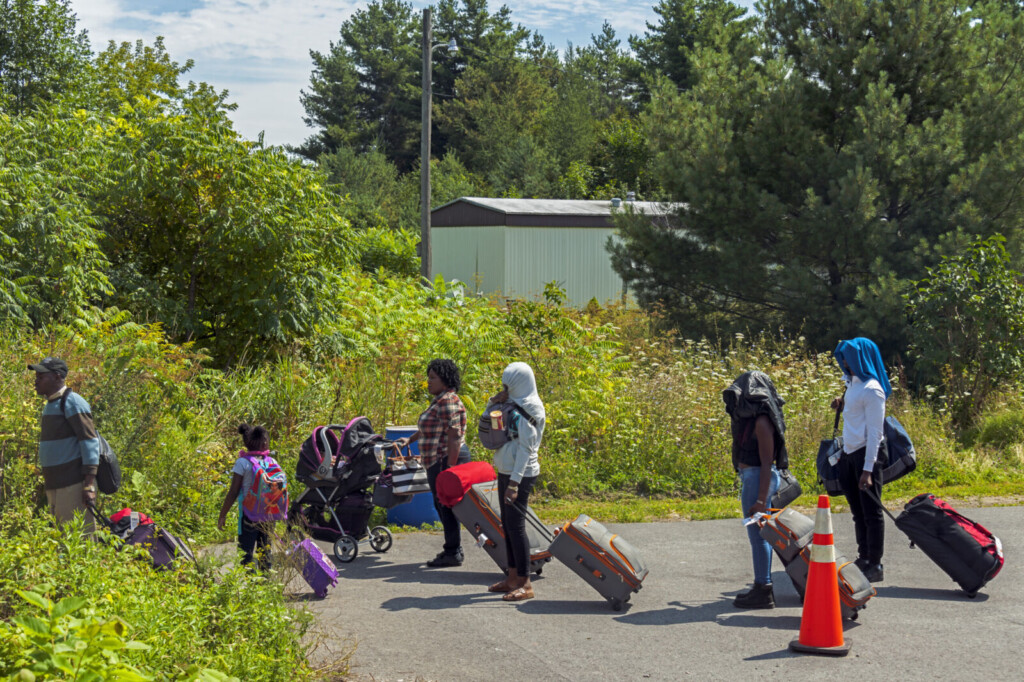
She attends the language class on Tuesday and Thursday mornings, sits under fluorescent lights with a workbook that teaches her to introduce herself, describe her daily routine, express gratitude. The instructor is kind. The curriculum is not. Every exercise is structured around a self that does not yet exist — a self with a local bank account, a local employer, a local sense of what counts as a reasonable complaint. She passes the civic integration exam on her second attempt, correctly answering questions about national holidays and democratic values, and walks out holding a certificate that proves she has learned to perform belonging to the satisfaction of the state that granted her refuge.
What is rarely examined in the liberal celebration of integration programs is the precise structure of what is being demanded. Integration, in virtually every Western European framework adopted between 2000 and 2015, does not mean participation — it means conversion. The Dutch Wet inburgering, the German Integrationskurs, the French contrat d’intégration républicaine: each of these instruments packages a normative identity script and presents it as a neutral civic offering. Signing means accepting the premise that the receiving culture is the unmarked default against which the refugee’s prior selfhood is measured as deviation. Zygmunt Bauman, in his 2004 work on wasted lives, identified this logic precisely: the figure of the refugee is made tolerable only when it becomes legible, and legibility requires translation into categories the host society already possesses, which means the untranslatable parts must be discarded quietly, without ceremony.
The philosopher Charles Taylor spent decades arguing that recognition is the fundamental need of modern political subjects, that misrecognition — being seen falsely or incompletely — constitutes a genuine injury. What he did not foreground, and what the integration industry exploits daily, is the possibility that recognition can itself be weaponized: that you can be formally seen, documented, certified, and welcomed in a way that structurally requires you to stop being what you were before you were seen. The refugee who passes the language exam and signs the integration contract is recognized not as who she is but as who the host state is willing to receive, which is a different person wearing the same face.
Scholars of postcolonial identity, including Homi Bhabha in his 1994 analysis of colonial mimicry, trace how subjected populations were trained to approximate the colonizer’s norms closely enough to function but never closely enough to threaten. The integration demand operates by a parallel mechanism, except that the approximation is now voluntary in the legal sense — the refugee signs the contract, attends the classes, takes the oath — which renders invisible the coercive architecture underneath the consent. Refusal is theoretically possible. Practically, it means the withdrawal of housing support, employment access, permanent residency pathways. Consent under those conditions is a formality, not a freedom.
What gets lost in this process is not abstract. Linguistic communities carry epistemologies — ways of categorizing time, obligation, kinship, and moral weight that do not survive translation into administrative Dutch or bureaucratic German. The anthropologist Keith Basso, in his 1996 study of the Western Apache relationship to landscape and language, showed how a people’s moral universe can be encoded in place names and grammatical structures invisible to outsiders. When integration demands full operational fluency in the host language as the price of civic membership, it is not asking for a practical skill — it is demanding a cognitive relocation from which return is structurally improbable. The second language does not merely add to the self; at sufficient depth of immersion and institutional dependence, it begins to reorganize it.
The asylum system, then, does not end with the grant of refugee status. It modulates into a softer apparatus that continues shaping, sorting, and conditioning the person — only now with the person’s documented agreement, which means the dispossession carries no name anyone is willing to use.
🌍 Rights, Borders, and the Struggle for Dignity
Asylum seekers navigate a labyrinthine system of legal procedures, bureaucratic barriers, and social hostility that shapes their daily reality. To understand their condition fully, one must explore the broader landscape of migration, civil rights, social exclusion, and repatriation. These interconnected themes illuminate the human cost of policies that too often reduce people to legal categories.
Migration and integration: stories of starting over
Migration is never merely a logistical event but a profound psychological and social rupture that demands enormous resilience from those who undertake it. This article traces the real stories behind the statistics, exploring how individuals rebuild identity, language, and belonging in unfamiliar environments. It is essential reading for anyone seeking to understand what integration truly means beyond political rhetoric.
GO TO THE SELECTION: Migration and integration: stories of starting over
Repatriation: Meaning, definition, and historical dynamics
Repatriation sits at the opposite end of the asylum process, carrying with it a complex web of legal, historical, and deeply personal implications. Whether voluntary or forced, the return to a country of origin raises urgent questions about safety, dignity, and the obligations of receiving states. Understanding this concept is indispensable for grasping the full arc of the asylum seeker’s precarious journey.
GO TO THE SELECTION: Repatriation: Meaning, definition, and historical dynamics
History of civil rights: Minorities, laws, and social achievements
The history of civil rights is the history of minorities fighting against systems designed to exclude and silence them. This article charts the long and often painful road traveled by marginalized communities to secure legal recognition and social protection. The struggles documented here resonate powerfully with the contemporary situation of asylum seekers navigating hostile legal landscapes.
GO TO THE SELECTION: History of civil rights: Minorities, laws, and social achievements
Social Exclusion: Causes, Dynamics and Ways Out
Social exclusion is not a passive condition but an active process driven by economic, cultural, and institutional mechanisms that push certain groups to the margins of society. This article analyzes the causes and dynamics of exclusion, offering a structural lens through which the vulnerability of asylum seekers can be better understood. Recognizing these dynamics is the first step toward building genuinely inclusive societies.
GO TO THE SELECTION: Social Exclusion: Causes, Dynamics and Ways Out
Discover the Human Stories Behind the Headlines on Indiecinema
Independent cinema has always been the space where the stories power ignores find their most urgent and honest expression. On Indiecinema, you can explore documentaries and films that place asylum seekers, migrants, and displaced people at the center of the frame — not as statistics, but as human beings. Join us and let independent voices challenge the way you see the world.
👉 EXPLORE THE CATALOG: Watch Indie Films in Streaming
A vision curated by a filmmaker, not an algorithm
In this video I explain our vision

