
The Optics of Depth: Defining Depth of Field as a Cinematic Tool
Depth of field refers to the range of distance within a shot in which subjects appear acceptably sharp to the human eye. It is one of the most fundamental and expressive parameters available to a cinematographer, sitting at the precise intersection of optics, technology, and narrative intention. Unlike many elements of film grammar that operate on the editing table or in the sound mix, depth of field is determined before a single frame is recorded, built into the physical relationship between the lens, the aperture, and the imaging surface itself. Understanding it requires a brief descent into optics, because the choices a director of photography makes about focus are never purely technical — they carry emotional and storytelling weight that audiences feel even when they cannot name it.

At the most basic mechanical level, three variables govern depth of field: aperture, focal length, and the size of the imaging sensor or film format. The aperture is the adjustable opening within the lens through which light passes, measured in f-stops. A wide aperture, denoted by a low f-stop number such as f/1.4 or f/2, allows a large quantity of light into the lens and produces a shallow depth of field, meaning only a narrow plane of the scene remains in sharp focus while everything in front of and behind that plane dissolves into soft, creamy blur — what cinematographers call bokeh. Conversely, stopping down to a high f-stop number such as f/11 or f/16 restricts the aperture to a small opening, and the optical result is a deep depth of field in which near and far elements of the frame can appear simultaneously sharp. Focal length adds another dimension to this equation. Long lenses — telephoto lenses in the range of 85mm, 135mm, or beyond — compress spatial relationships and dramatically reduce depth of field even at equivalent aperture settings, isolating subjects against defocused backgrounds. Wide-angle lenses, from 24mm down to extreme fisheye optics, expand spatial relationships and increase depth of field, rendering environments with crisp detail from foreground to horizon. Finally, sensor size matters enormously: larger imaging surfaces, such as those of a full-frame digital sensor or a 65mm film negative, produce shallower depth of field than smaller formats at identical focal lengths and apertures, which is why the arrival of large-sensor digital cinema cameras fundamentally altered how contemporary cinematographers approach focus.
The cinematographer’s practical setup for achieving shallow focus typically involves opening the aperture to its widest setting, selecting a longer focal length, and positioning the camera close to the subject. In bright exterior conditions, achieving a wide aperture without overexposing the image requires the use of neutral density filters, which reduce incoming light without affecting color, allowing the lens to stay wide open. For deep focus, the logic inverts: the cinematographer stops down the aperture, often chooses a wide-angle lens, and must compensate for the reduced light by flooding the scene with significantly more illumination, whether through powerful artificial sources or by shooting in conditions of intense natural light.
These purely optical decisions translate directly into narrative function. Shallow depth of field is an instrument of psychological focus: when a single actor’s face is razor-sharp against a blurred background, the frame is issuing a directive to the viewer’s attention. It isolates, it privileges, it declares that this face, this expression, this moment is what the story requires you to inhabit. It can also create a sense of intimacy or vulnerability, stripping away environmental context and sealing the character in a kind of visual solitude. Deep focus, by contrast, is democratic and spatial. When foreground, middle ground, and background are all rendered in equal sharpness, the filmmaker distributes narrative information across the entire frame and trusts the viewer to read it. Characters in separate planes of depth can be shown in simultaneous relation without cutting, and the architecture of a space, a room, a landscape, becomes as narratively charged as the human figure standing within it. This is not merely a stylistic preference but a philosophical stance about where meaning lives in the image: in the individual, or in the world that contains them.
Masters of Focus: Depth of Field in Practice Across Key Films
Few films in the history of cinema have weaponized depth of field as systematically as Citizen Kane. Orson Welles, working alongside cinematographer Gregg Toland, constructed an entire visual rhetoric around deep focus — a technique that keeps every plane of the image, from the extreme foreground to the distant background, in simultaneous sharp resolution. In the famous scene depicting young Charles Foster Kane playing in the snow outside his family home, Toland achieves something architecturally radical: the boy is visible through the window in the far background, fully legible, while his parents and the banker Thatcher negotiate his fate in the foreground. The audience is never told where to look. The geography of power is rendered spatially, with the child’s innocence physically removed from the transaction that will destroy it. Toland achieved this through a combination of wide-angle lenses, which naturally extend depth of field, and exceptionally controlled studio lighting that allowed for very small apertures — maximizing the range of acceptable focus across the entire frame. The result is not merely aesthetic; it is a democratic distribution of narrative information that forces the viewer to read the image rather than simply receive it.
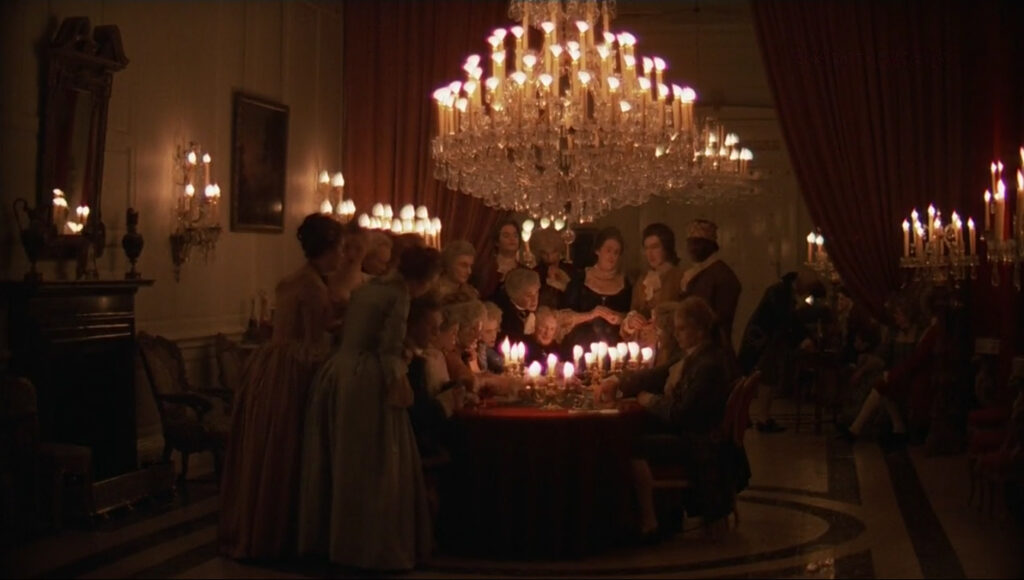
Stanley Kubrick deployed an entirely opposite philosophy in Barry Lyndon, and the results are no less extraordinary. Cinematographer John Alcott, working with specially modified Zeiss lenses originally designed for NASA, captured scenes lit exclusively by candlelight. These lenses operated at an aperture of around f/0.7, one of the widest ever used in professional filmmaking. The consequence was an extremely shallow depth of field that reduced the background to warm, painterly abstraction. In the gambling and aristocratic interior scenes, characters emerge from pools of candlelight while the world behind them dissolves into a soft, anachronistic haze. This was not a limitation but a controlled expressive decision. The shallow focus mirrors Barry’s psychological tunnel vision — his obsession with social climbing, his inability to perceive the consequences gathering in his peripheral world. The lens renders him as isolated as he truly is, even when surrounded by people, because the visual field grants no depth to the society he is trying to penetrate.
Jean-Luc Godard’s Breathless operates in a categorically different register, shaped not by studio control but by the improvisational aesthetics of the French New Wave. The film’s outdoor sequences, shot in available light on the streets of Paris by cinematographer Raoul Coutard, produce a variable depth of field that constantly shifts with the natural light conditions. In the lengthy apartment sequence between Michel and Patricia, close-up framings with fast film stock create an intimacy that flattens the background into irrelevance. The shallow focus here is not the product of optical precision but of documentary urgency — the characters dominate a present-tense reality that acknowledges no scenographic depth behind them. Godard’s contribution was to embrace this accident as style, allowing the inconsistency of focus to register as nervous energy rather than technical failure.
Ang Lee‘s Crouching Tiger, Hidden Dragon, shot by Peter Pau, brings rack focus into its full dramatic role as a tool of psychological revelation. In several confrontation scenes between Yu Shu Lien and Jen Yu, Pau employs deliberate focus pulls that shift sharp resolution from one character to the other mid-shot, without cutting. The technique externalizes internal power shifts — the moment the dramatic weight transfers from one character to the other is made optically visible. Unlike a cut, which is an editorial declaration, the rack focus performs a gradual transfer of attention, allowing tension to build across the transition itself. The viewer feels the shift as a physical event. Pau also uses deep focus extensively in the wuxia combat sequences set against open landscapes, where both fighter and environment retain clarity, reinforcing the philosophical connection between the characters and the natural world they inhabit. In each of these four films, depth of field functions as a form of directed perception — a cinematographic argument about what deserves to exist in the viewer’s conscious attention.

From Deep Focus to Bokeh Aesthetics: The Evolution of Depth of Field in Cinema History
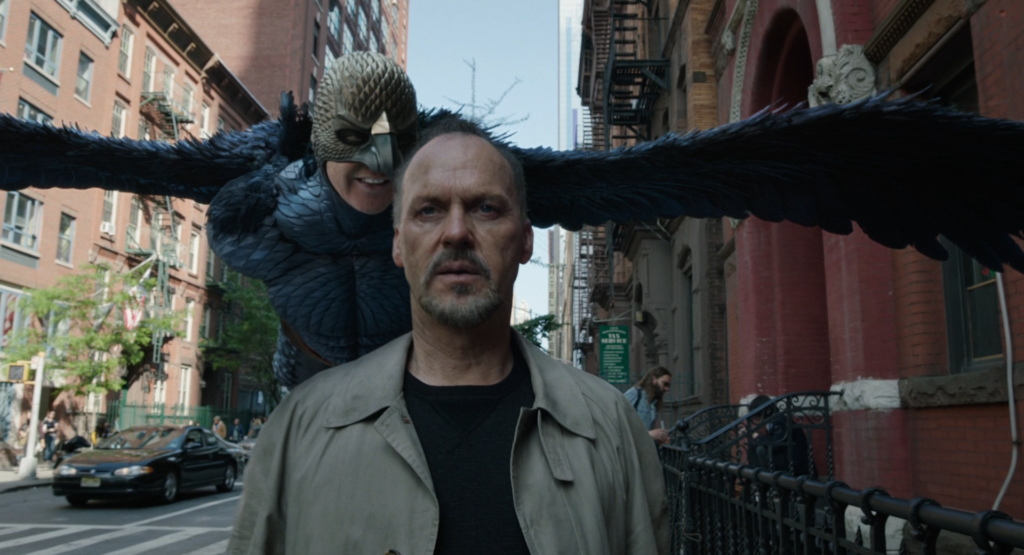
The history of depth of field in cinema is, in many ways, the history of what filmmakers have chosen to hide. Every era has developed its own optical grammar, its own philosophy about what deserves to live in sharp relief and what must surrender to blur, and tracing that arc reveals not merely technological change but a continuous renegotiation of where cinematic meaning resides.
Classical Hollywood and the concurrent explosion of Italian Neorealism represented the high watermark of deep focus as an aesthetic ideology. Orson Welles and cinematographer Gregg Toland pushed Citizen Kane (1941) into technical territory that still astonishes: the simultaneous rendering of foreground faces, mid-ground action, and deep backgrounds in tack-sharp clarity forced the viewer into an active interpretive role. Welles understood that denying the audience an optical hierarchy meant denying them an easy emotional shortcut. Around the same period, Italian Neorealist directors like Vittorio De Sica shot Bicycle Thieves (1948) in the open streets of Rome with a similar commitment to environmental totality, where the physical world surrounding characters carried as much narrative weight as the performances themselves. The city was not backdrop; it was co-author. Deep focus made that authorship visible.
The soft-focus glamour of the studio era operated as a deliberate counterpoint. Portrait lenses with wide apertures were deployed to bathe stars in a shallow halo of focus, separating them from their environments and elevating them into a semi-mythological register. This was depth of field as industrial tool, as a mechanism for constructing and protecting stardom. The shallow focus around a leading actress was not an artistic choice so much as a contractual obligation to the studio’s investment in a human face.
New Hollywood cinema of the late 1960s and 1970s reclaimed selective focus as an expressive instrument rather than a commercial one. The rack focus, a technique in which the focal plane shifts mid-shot from one subject to another, became a signature device for directors navigating stories of moral ambiguity and fractured attention. In Klute (1971), Gordon Willis used racking focus to physically externalize paranoia, pulling the audience’s perceptual certainty away just as the protagonist’s certainty collapsed. The technique acknowledged that the camera itself could be unreliable, that what it chose to clarify was an editorial act loaded with meaning.
The arrival of digital cinematography and the widespread adoption of full-frame sensors in the twenty-first century introduced a new chapter in this evolution, one defined paradoxically by excess. Full-frame sensors gather light across a significantly larger photosite area, and when paired with fast prime lenses or large-format anamorphic glass, they produce an extremely shallow depth of field that renders backgrounds into smooth, luminous gradients of defocused light. The bokeh aesthetic, named after the Japanese term for the quality of out-of-focus areas, became not just a technical byproduct but a deliberate stylistic signature. Directors of photography began designing shots around the quality of background blur, treating the circles of confusion produced by a particular lens as compositional elements in themselves.
Anamorphic lenses added a further dimension to this contemporary grammar. The elliptical bokeh, horizontal lens flares, and characteristic barrel distortion of anamorphic glass produce a depth of field that feels qualitatively different from spherical optics, carrying an association with a certain widescreen cinematic heritage that filmmakers exploit for tonal and nostalgic effect. Roger Deakins, Emmanuel Lubezki, and Hoyte van Hoytema have each demonstrated that focus, in the digital era, is a chromatic and textural instrument as much as a spatial one.
What remains constant across all of these historical moments is the fundamental principle that depth of field is never neutral. Whether a director chooses the democratic sharpness of deep focus, the isolating compression of a shallow plane, or the mid-shot revelation of a rack focus, each decision encodes an argument about where significance lives within the frame. The lens does not merely record the world; it editorializes it. Understanding depth of field means understanding that every act of focusing is simultaneously an act of interpretation, a declaration about what, in this story, at this moment, is allowed to be seen clearly.
🎞️ Dive Deeper Into the Art of the Cinematic Image
Depth of field is just one of the many visual tools filmmakers use to guide our eyes and shape meaning on screen. Understanding how it works opens the door to a broader appreciation of cinematic language as a whole. Explore these related articles to build a richer picture of how auteur directors craft their images.
A Guide to Scene Composition and Auteur Mise-en-Scène
Depth of field is inseparable from the broader practice of scene composition and mise-en-scène. This guide explores how auteur filmmakers orchestrate every visual element within the frame, revealing how focus and space work together to create meaning and emotional tone.
👉 GO TO THE SELECTION: A Guide to Scene Composition and Auteur Mise-en-Scène
The Grammar of the Gaze: Meaning of Shots in Cinema
Every shot carries a grammar, and the control of focus is a key part of that visual vocabulary. This article maps out the meaning behind different shot types in cinema, providing essential context for understanding why a director might choose to isolate a subject with a shallow depth of field or embrace sharp, deep focus.
👉 GO TO THE SELECTION: The Grammar of the Gaze: Meaning of Shots in Cinema
The Writing of the Gaze: A Guide to Camera Movements in Auteur Cinema
Camera movement and depth of field are deeply interconnected tools in the filmmaker’s arsenal. This guide to camera movements in auteur cinema explores how motion through space interacts with focus to create tension, intimacy, and narrative momentum.
👉 GO TO THE SELECTION: The Writing of the Gaze: A Guide to Camera Movements in Auteur Cinema
Analysis of the Point-of-View Shot in Cinema
The point-of-view shot is one of the most powerful applications of selective focus in cinema. This analysis examines how directors use the POV shot to place us inside a character’s perspective, a technique that relies heavily on depth of field to simulate human vision and emotional immersion.
👉 GO TO THE SELECTION: Analysis of the Point-of-View Shot in Cinema
See Depth of Field Mastery in Action on Indiecinema
Reading about cinematic technique is one thing — experiencing it in a great film is another. On the Indiecinema streaming catalog, you’ll find a curated selection of independent films where every frame is a deliberate visual choice. Dive in and discover the work of filmmakers who treat the camera as their truest language.
👉 EXPLORE THE CATALOG: Watch Indie Films in Streaming
Conclusion
Depth of field is not merely a technical parameter adjusted on a lens barrel or a camera menu. It is a fundamental act of authorial intention, a declaration of where meaning lives within the frame. Every choice a director makes in collaboration with a cinematographer — whether to isolate a face against a dissolving background or to hold an entire landscape in razor-sharp focus from foreground to horizon — is a choice about what the audience is permitted to see, what they are invited to feel, and what they are quietly denied. To master depth of field is to understand that the camera is never a neutral recorder of reality. It is an instrument of selection, emphasis, and, ultimately, persuasion.
The history of cinema demonstrates with remarkable consistency that the filmmakers who have used depth of field most powerfully are those who understood its dramatic weight before reaching for it as a stylistic flourish. Welles composed his deep-focus frames in Citizen Kane because the architecture of power and memory demanded that past and present coexist simultaneously within a single image. Kubrick flooded his corridors with light in Barry Lyndon because the indifference of aristocratic society required every surface to be seen with cold, democratic clarity. The technique followed the idea, never the reverse. That discipline is the lesson that endures across every decade of film history.
For the student of cinema, the practical exercise is straightforward: watch a film once for narrative, then watch it again exclusively tracking focus. Notice when the rack pull happens and what emotional beat it accompanies. Notice which character is kept soft while another stays sharp, and ask what that hierarchy communicates about power, knowledge, or desire. Depth of field, studied this way, reveals itself as one of the most intimate languages a director possesses — silent, invisible to the casual viewer, and yet operating continuously beneath every frame, shaping perception with a precision that no line of dialogue can replicate.
A vision curated by a filmmaker, not an algorithm
In this video I explain our vision

