
Cinema, in its purest form, doesn’t just tell stories; it shows us life. And no genre captures the chaotic, contradictory, and bittersweet essence of human existence like the dramatic comedy, or “dramedy.” It is the cinematic form that most closely mirrors our reality: a place where laughter and pain not only coexist, but often spring from the exact same situation.

In this emotionally complex territory of comedy, cinema finds its natural habitat. Expressive freedom allows directors to prioritize the psychological depth of their characters over spectacle, to explore complex emotional states, and to leave resolutions open and ambiguous, just as they are in life. The genre needs the authenticity and ingenuity that are often born from the absence of commercial pressures.
At the heart of these films, we almost always find the imperfect protagonist. Not classic heroes, but ordinary people, outsiders, individuals struggling with anxiety, trauma, and their place in the world. These characters’ journeys are not about overcoming their flaws. It is a path of acceptance. This guide is a path that unites the most famous films with the most intimate independent productions. It is a celebration of human fragility.
Little Miss Sunshine (2006)
![Little Miss Sunshine - Official Trailer [HD]](https://blog.indiecinema.co/wp-content/plugins/wp-youtube-lyte/lyteCache.php?origThumbUrl=https%3A%2F%2Fi.ytimg.com%2Fvi%2FwvwVkllXT80%2F0.jpg)
A dysfunctional family, where each member harbors their own personal failure, embarks on a chaotic cross-country road trip in a decrepit VW bus. Their mission is to get their seven-year-old daughter, Olive, to the finals of the “Little Miss Sunshine” beauty pageant. The journey will force their collective anxieties and resentments to the surface, pushing them to the brink.
This film is the antithesis of the American dream based on success at all costs. It systematically dismantles the obsession with winning, celebrating instead the beauty of shared failure. Each character is defined by a failure: Richard is a failed motivational speaker, Dwayne sees his dream of becoming a pilot shattered, and Uncle Frank is a Proust scholar recovering from a suicide attempt. The film uses the grotesque absurdity of the children’s beauty pageant as a stage to redefine the concept of a “loser.” The climax is not Olive’s victory, but the entire family joining her on stage to dance to “Super Freak.” It is the ultimate act of refusing defeat, not by conforming to standards, but by embracing their own authentic and wonderful imperfection. The broken-down, unreliable VW bus becomes a powerful metaphor for the family itself: broken, dysfunctional, but able to move forward only when everyone gets out and pushes together.
Juno (2007)

When the brilliant and witty sixteen-year-old Juno MacGuff discovers she’s pregnant, she decides against abortion and sets out to find the perfect adoptive parents for her baby. Her choice leads her to a wealthy suburban couple, Mark and Vanessa Loring, forcing her to confront the complexities of adulthood, love, and family much sooner than she had anticipated.
Juno gave voice to a generation, capturing the spirit of mid-2000s teenagers with stylized, pop-culture-laden dialogue. The character of Juno subverts stereotypes related to teenage pregnancy: she faces the situation with pragmatism and sharp sarcasm, refusing the roles of victim or lost girl. The dramedy structure is fundamental: humor arises from her ability to navigate adult situations with disarming composure, while the drama stems from the emotional weight of her choice and her growing understanding of what love and family mean. The film doesn’t take a political stance but is profoundly in favor of maturity and the power of choice. Her search for the “perfect” family for her baby leads her to confront the reality that perfection is often a facade. Her own messy but authentic family proves to be much more solid than the seemingly ideal Loring couple, showing that true stability lies in honest, albeit imperfect, relationships.

Lost in Translation (2003)

Two lonely Americans, fading movie star Bob Harris and neglected young newlywed Charlotte, find themselves adrift in the neon-lit alienation of Tokyo. Their chance meeting in a hotel bar sparks an unlikely and profound connection. In a few shared days, they explore their mutual feelings of displacement and existential crisis, forming a bond as fleeting as it is unforgettable.
Sofia Coppola’s film masterfully uses its setting to externalize the protagonists’ states of mind. The humor derives from cultural clashes, like Bob’s disastrous whiskey commercial or the language barriers, while the pathos arises from the deep, silent loneliness that this environment amplifies. The cinematography reinforces this theme, with wide shots portraying the characters as tiny figures in vast, impersonal urban landscapes. Their connection is so powerful precisely because it is a small island of understanding in a sea of incommunicability. Lost in Translation challenges romantic clichés. The relationship between Bob and Charlotte is platonic yet incredibly intimate, based on shared emotional states rather than physical attraction. The famous final whisper, inaudible to the viewer, is the ultimate expression of this bond: what is said is irrelevant; all that matters is the moment of pure connection that transcends words. It is a parenthesis that allows both to return to their own lives with a renewed self-awareness.
Eternal Sunshine of the Spotless Mind (2004)

After a painful breakup, Clementine Kruczynski undergoes a procedure to erase every memory of her ex, Joel Barish. Devastated, Joel decides to do the same. But as the technicians work inside his mind, erasing Clementine memory by memory, Joel realizes he doesn’t want to forget. Thus begins a desperate and surreal journey into his subconscious to save what remains of their love.
This film uses a science-fiction premise to explore a universal human truth: love is inseparable from pain. The non-linear narrative structure, which retraces the relationship backward, is the heart of its genius. The drama is the suffering of the breakup and the tragedy of erasure, while the comedy is found in the surreal logic of memories and the incompetence of the Lacuna Inc. technicians. Michel Gondry’s inventive direction creates a world that is both whimsical and profoundly melancholic. The central philosophical question of the film is whether a “spotless mind” is truly desirable. Joel realizes that to erase the pain, he must also sacrifice the joy, the moments of intimacy, and the experiences that shaped him. The bittersweet ending, in which Joel and Clementine, aware of their failed past, decide to try again, is a powerful anthem to embracing life in its complex, painful, and wonderful entirety.
Sideways (2004)

Miles Raymond, a failed novelist, depressed oenophile, and English teacher, takes his best friend Jack, who is about to get married, on a week-long trip through California’s wine country. What is supposed to be a sophisticated final adventure turns into a hilarious and heartbreaking exploration of mid-life crisis, questionable decisions, and the search for a reason to feel hopeful again.
Alexander Payne’s film uses wine as a central metaphor to explore the personalities and life philosophies of its protagonists. Miles is obsessed with Pinot Noir, a difficult and capricious grape, seeing his own complexity reflected in it. Jack, in contrast, will settle for anything, especially Merlot, which is simple and loved by all, and which Miles despises. This contrast is the engine of the dramedy: the comedy arises from Jack’s escapades and the absurd situations that result; the drama from Miles’s deep, paralyzing depression. Sideways is also one of the great modern films about male friendship. Miles and Jack are deeply flawed individuals who, while feeding each other’s worst instincts, share a genuine bond. The film is not afraid to show their failures, finding humor in their misadventures without ever hiding the emotional damage they cause. The mature, bittersweet ending suggests that growth is possible, but it is a slow and painful process that requires confronting one’s own mediocrity.
A vision curated by a filmmaker, not an algorithm
In this video I explain our vision
Garden State (2004)

Andrew Largeman, an emotionally detached twenty-six-year-old actor, hasn’t been home in nine years. After stopping his antidepressants, he returns to his hometown in New Jersey for his mother’s funeral. As he attempts to reconnect with a series of strange acquaintances, including his father, he slowly begins to see his life in a new light, forging a bond with an eccentric girl.
This film perfectly captured the restlessness and apathy of a generation of millennials. It is an exploration of emotional paralysis caused by medication and repressed trauma, a journey back to one’s roots to reawaken long-dormant feelings. The carefully curated indie soundtrack became a hallmark of the genre in the 2000s, almost a character in itself. The film is also famous for crystallizing the “Manic Pixie Dream Girl” character, an eccentric female figure whose sole function seems to be to save the male protagonist from his sadness. Although this cliché is viewed more critically today, the film remains a sincere and touching snapshot of an era and a generational sensibility.
2 Below 0
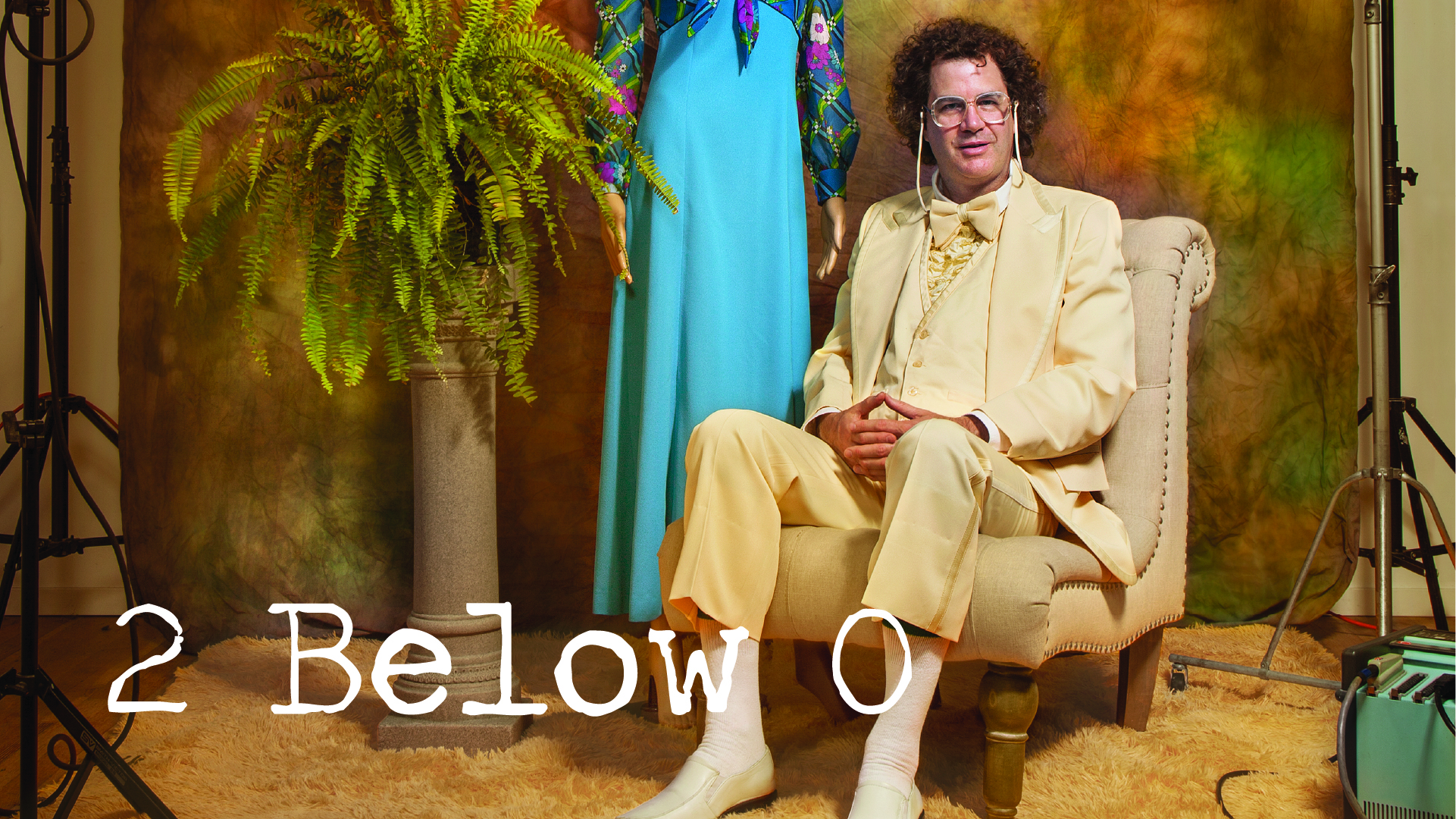
Comedy, by Tim Cash, United States, 2019.
Rusty is a poet who sold everything he owned in his town, bought a trailer, and moved to the middle of a desolate, snowy wasteland in a small American provincial village. In reality, he is going through a deep internal crisis and refuses to accept that Alice has left his life, keeping her close to him in the form of a female mannequin. Rusty meets three women who always hang out at the entrance of the only store in the area: Babs, Fran, and Ruth-Ann. Rusty awakens their desires and ambitions; one of the women is an aspiring writer and believes that the writer can help her publish her first novel. But it seems that the man has a girlfriend, and the three women decide to investigate as the temperature drops to '2 below zero'.
A humorous comedy set in the midst of the snow, with vibrant colors that constantly punctuate the white landscape. Tim Cash comically and grotesquely tells a story in which, hidden deep within, the drama of the protagonist Rusty's abandonment by his girlfriend Alice unfolds. This storytelling style was already appreciated in another of his films, "The Astronot," where the ending suddenly transformed a comedy into a tragedy. Rich in surreal moments and slow-motion scenes, this film bubbles with rock vitality and a direction that maximizes all available elements. Special applause goes to actor and composer Pennan Brae, who is perfect and empathetic in the role of Rusty.
LANGUAGE: English
SUBTITLES: Spanish, French, German, Portuguese
(500) Days of Summer (2009)

This is not a love story. It’s the story of Tom, a hopeless romantic who falls head over heels for Summer, a girl who doesn’t believe in true love. The film traces the 500 days of their relationship in a non-linear fashion, jumping between happy and painful moments, as Tom tries to figure out where it all went wrong.
(500) Days of Summer is a brilliant deconstruction of the traditional romantic comedy. Its fragmented structure mimics the way memory works, recalling the peaks and valleys of a relationship in a disordered way. The famous “Expectations vs. Reality” sequence is a genius commentary on the dangers of idealizing a partner, showing the gap between the story we tell ourselves in our heads and the harsh truth. The film forces us to see the story from Tom’s perspective, making us empathize with him, only to subtly reveal how his vision was selfish and blind to Summer’s autonomy and desires. It’s a bittersweet lesson on personal growth and accepting that love is sometimes unrequited, but no less formative for it.
Punch-Drunk Love (2002)

Barry Egan is a lonely entrepreneur who sells novelty toilet plungers, tormented by seven overbearing sisters and prone to sudden fits of rage. His anxious and isolated life is turned upside down when he meets the mysterious Lena and, simultaneously, is blackmailed by a phone sex line. Thus begins a surreal journey to find love and escape his demons.
Paul Thomas Anderson performs a near-miraculous feat: he takes Adam Sandler’s comedic persona, usually associated with lowbrow films, and channels it into a deep and artistic exploration of social anxiety, repressed anger, and the almost magical, transformative power of love. The use of color, particularly the blue of Barry’s suit and the red of Lena’s dress, and a dissonant, pounding score, creates an atmosphere of emotional entrapment. Love is not presented as a cure, but as a force just as chaotic and unpredictable as Barry’s anger, the only thing capable of giving him the strength to fight back. It is an absurd and touching romantic comedy, a work of art that demonstrates an actor’s versatility and a director’s genius.
Me and You and Everyone We Know (2005)
![Me and You and Everyone We Know (2005) ORIGINAL TRAILER [HD 1080p]](https://blog.indiecinema.co/wp-content/plugins/wp-youtube-lyte/lyteCache.php?origThumbUrl=https%3A%2F%2Fi.ytimg.com%2Fvi%2FKlhRAJ6js-s%2F0.jpg)
Christine is an artist and a driver for the elderly who seeks connection in the modern world. Richard is a newly separated shoe salesman and father of two. Their lives intertwine with those of other characters, including Richard’s sons, who are exploring their first online relationships, and neighborhood teenagers preparing for the future. Everyone is looking for a bond in an increasingly fragmented world.
Miranda July’s debut film is a mosaic of solitudes that brush against each other, an exploration of the search for intimacy in the nascent digital age. With an episodic structure and an eccentric style, the film finds a deep and unexpected beauty in the most awkward and mundane interactions. The famous line from the child who fantasizes about “pooping back and forth, forever” with an online chat partner is the film’s emblem: a bizarre but desperately sincere expression of the human desire for unconditional connection. It is a tender, strange, and profoundly human work that captures the vulnerability and hope hidden behind our often clumsy attempts to connect with one another.
The Farewell (2019)

Billi, a young Chinese-American writer, discovers that her beloved grandmother, Nai Nai, in China, has only a few weeks to live. The family decides to hide the terminal diagnosis from her and organizes a fake wedding as a pretext to gather everyone one last time. Billi, torn between her Western sensibilities and respect for family tradition, participates in this elaborate “good lie.”
The Farewell is a dramatic comedy born from a cultural clash. The film uses the device of the “good lie” to delicately and intelligently explore themes of family, grief, and the differences between Eastern collectivism and Western individualism. The humor arises from the complex staging of the deception and the awkward interactions of a family trying to appear happy while harboring deep sorrow. The drama, however, lies in Billi’s ethical dilemma and the poignant awareness of impending loss. Director Lulu Wang, drawing from her own true story, does not judge either culture but shows how the immigrant identity is a constant negotiation between different worlds, creating a universal and deeply moving work.
Along For The Ride
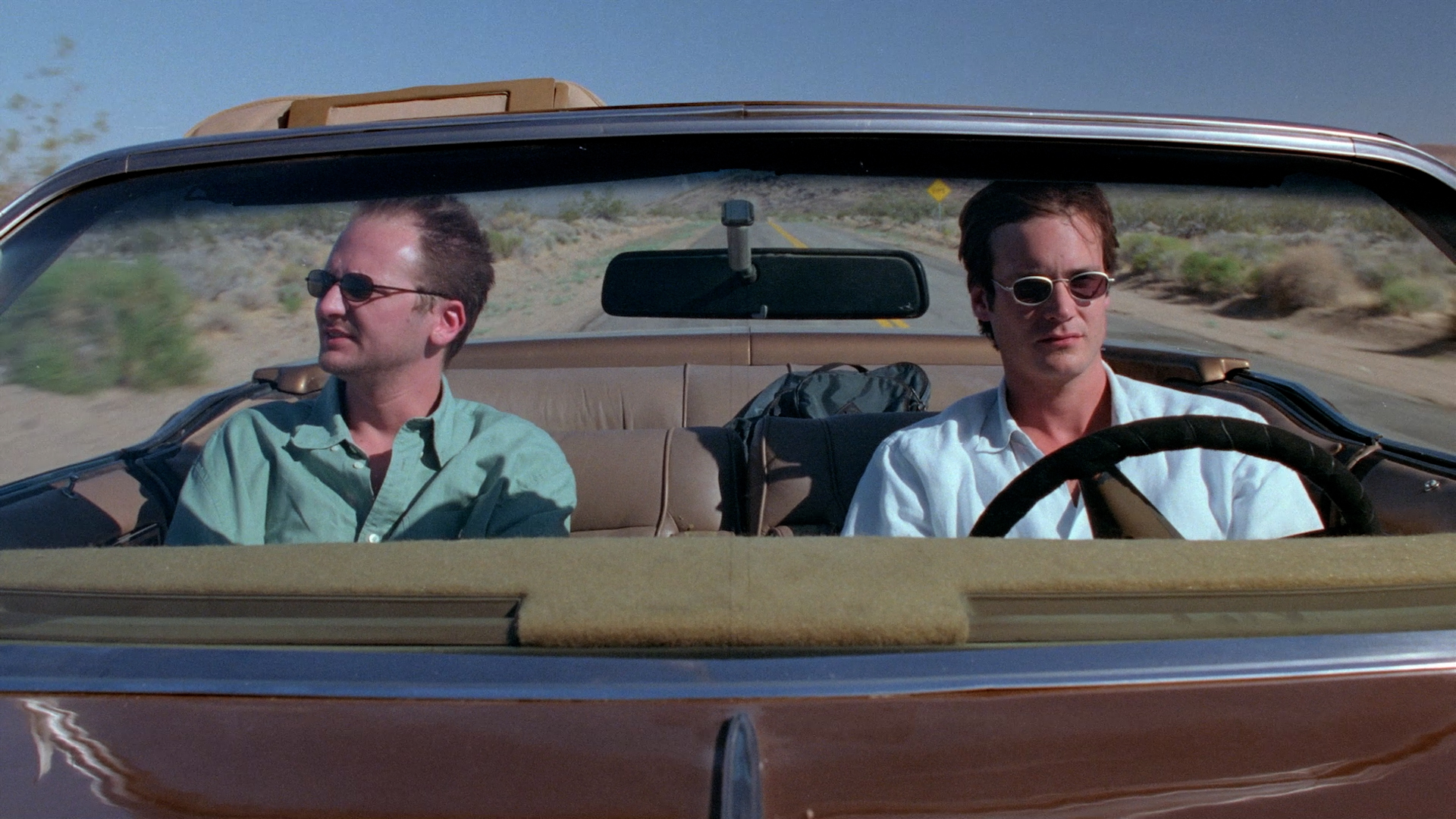
Drama, Comedy, by Bryan Simon, USA, 2001.
Two brothers, Terry (Randy Batinkoff) and Vance (Dylan Haggerty), embark on a journey into the desert with the body of their recently deceased father. Their goal is to find a burial site for him, but along the way unresolved family conflicts resurface. Terry, a successful former baseball player, has always exerted a dominant influence on the younger Vance, a humble mailman. Both carry within themselves the burden of a complicated relationship with their father, Jake (J.E. Freeman), a former professional player obsessed with sports. Even after his death, Jake appears to his children in dream sequences, but instead of offering wise advice, he continues to be distant and authoritarian. The journey thus becomes not only a physical but an emotional journey, in which the two brothers confront their mutual grudges and the emotional legacy of their father.
The film, directed by Bryan Simon with a budget of 150,000 dollars, was shot in extreme weather conditions, with a screenplay adapted by Jim Moores from a work by Randall Wheatley. The film also explores the role of sport as a vehicle for communication between father and son. For many men, expressing feelings is difficult, while talking about sport is a natural and shared language. "Along for the Ride" addresses these issues with sensitivity and realism, resulting in a touching work for those who have experienced similar family dynamics. An indie not to be missed for lovers of quality independent cinema.
LANGUAGE: English
SUBTITLES: Spanish, French, German, Portuguese
Lady Bird (2017)

Christine “Lady Bird” McPherson is in her senior year at a Catholic high school in Sacramento, California, which she calls “the Midwest of California.” She dreams of escaping her city to attend a college on the East Coast, constantly clashing with her mother, a strong-willed and hyper-critical nurse. The film follows her turbulent year of transition, through first loves, friendships, and the difficult search for her own identity.
Greta Gerwig’s directorial debut is the quintessential coming-of-age comedy. The beating heart of the film is the stormy and incredibly realistic relationship between Lady Bird and her mother. Their relationship is a battlefield of love, made of fierce arguments and moments of unexpected tenderness, representing the painful but necessary process of separation and self-definition that every teenager must face. The film is funny, touching, and brutally honest in portraying the insecurities and pretensions of adolescence, without ever judging its protagonist. It is an affectionate and melancholic tribute to the place we call home and the people who help us, even through conflict, to become who we are.
Eighth Grade (2018)

Kayla Day is facing the last, terrible week of middle school. Armed with her smartphone, she tries to overcome social anxiety by creating motivational YouTube videos that no one watches. As she struggles to be accepted by her more popular peers and tries to communicate with her single father, Kayla lives an odyssey of pool parties, crushes, and social embarrassments.
Bo Burnham has created a frighteningly authentic portrait of adolescence in the age of social media. The film is a dramatic comedy that generates an almost painful humor based on embarrassment and relatability (cringe), but it does so with a deep and never condescending empathy. We see the world through Kayla’s anxious eyes, feeling her every humiliation and every small victory. Eighth Grade is not just a film about being a teenager today; it is a universal exploration of anxiety, the desire to be seen, and the difficulty of presenting a version of ourselves to the world that feels authentic. It is an essential film for understanding the pressure and loneliness of growing up in the digital age.
Frances Ha (2012)

Frances, a 27-year-old dancer in New York, sees her life fall apart when her best friend and roommate, Sophie, decides to move out. Suddenly homeless and adrift, Frances embarks on a series of precarious adventures, jumping from one apartment to another, taking an impulsive trip to Paris, and trying to find her place in the world and in her art.
Shot in a black and white that evokes the French New Wave, Frances Ha is the portrait of a “quarter-life crisis.” The film by Noah Baumbach and Greta Gerwig explores with lightness and melancholy deeply modern themes: the almost romantic nature of female friendships, job insecurity, and the struggle to maintain one’s identity in the face of societal expectations. Frances is not a heroine; she is clumsy, often embarrassing, but her determination and unwavering optimism make her irresistible. It is a celebration of the confusion and beauty of being young, broke, and without a plan, but with the certainty that, somehow, everything will be okay.
The Worst Person in the World (2021)

Julie is about to turn thirty and still has no idea what to do with her life. She drifts from one university major to another and from one relationship to another, in a constant search for herself. Torn between the reassuring love for Aksel, a successful comic book artist older than her, and the spontaneous attraction to Eivind, whom she meets at a party, Julie navigates the turbulent waters of love, career, and the meaning of existence in contemporary Oslo.
This Norwegian film, directed by Joachim Trier, updates the coming-of-age narrative for the millennial generation. Structured in twelve chapters, a prologue, and an epilogue, it explores restlessness, romantic indecision, and the search for identity in a world that seems to offer endless possibilities but often leads to paralysis. Renate Reinsve’s performance is extraordinary, capturing Julie’s joy, anxiety, and confusion. One scene in particular, where the world literally stops to allow her to run towards a new love, is a moment of pure cinematic magic. It is an intelligent, funny, and deeply moving work about the difficulty of growing up, at any age.
Sunrise: A Song of Two Humans
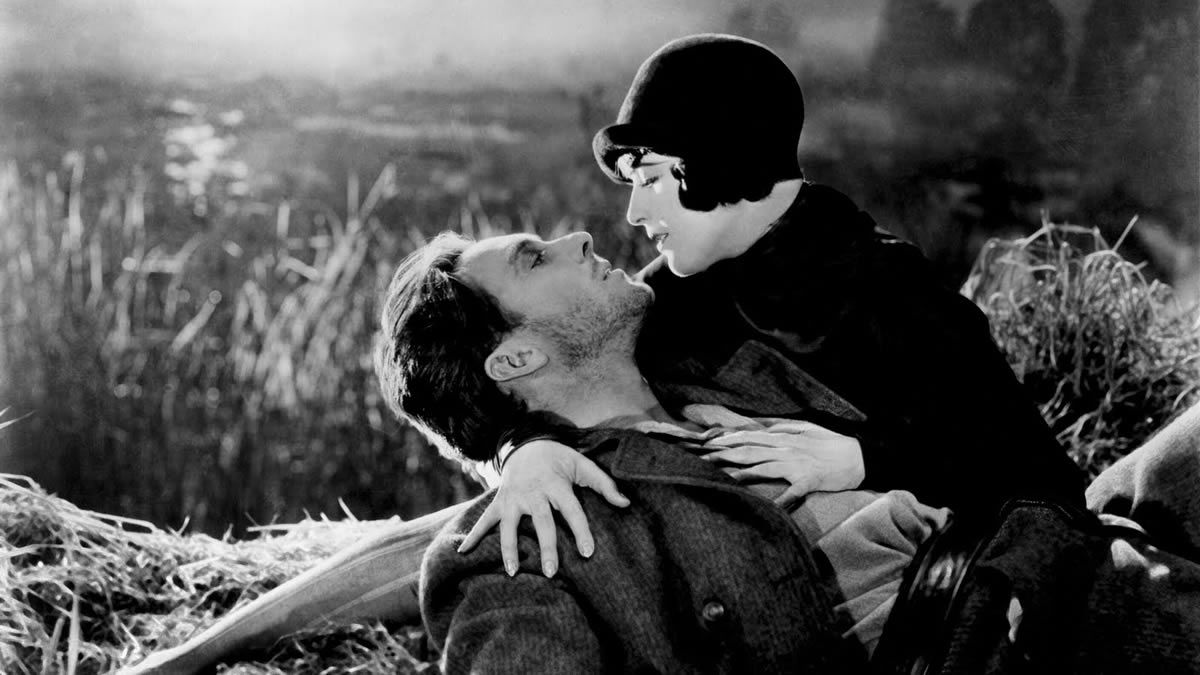
Drama, romance, noir, by Friedrich Wilhelm Murnau, United States, 1927
A big-city woman on vacation (Margaret Livingston) stays in a small lakeside town. After dark she goes to a farm where the man (George O'Brien) and his wife (Janet Gaynor) are looking after their child. She calls to the man from the fence outside. The man is undecided, but finally walks away, leaving his other wife alone. The man and also the woman meet in the moonlight and kiss passionately. She wants him to sell her farm to go with her to the city. When she suggests that he solve her wife problem by drowning her, he attempts to violently strangle her, but then completely changes his attitude towards her. When the man and her wife leave for a boat trip on the lake, he prepares to throw her into the water. But when she begs for her mercy, he realizes he can't do it. The man rows frantically for shore, and when the boat comes ashore, his wife flees in a panic.
Sunrise: A Song of Two Humans, directed by German director FW Murnau in his American film debut is based on Carl Mayer's short story "The Excursion to Tilsit", released in 1917.
Murnau chose to use the new Fox Movietone sound system, making Aurora one of the very first feature films with a synchronized soundtrack and sound effects. Janet Gaynor won the first Academy Award for Best Actress in a Leading Role for her portrayal in the film. The film is now commonly regarded as a masterpiece, among the best films ever made. Many have called it the greatest film of the silent film age. Murnau, master of expressionist cinema, was invited by William Fox to make an expressionist film in Hollywood. The film's language and photography are revolutionary: elegant tracking shots, long sequences of pure action without dialogue in Murnau's signature style. The characters remain nameless, creating the perception of a universal story.
LANGUAGE: English
SUBTITLES: Spanish, French, German, Portuguese
Another Round (2020)

Four bored and unmotivated high school teachers decide to test a theory that humans are born with a blood alcohol deficiency. They begin an experiment: to maintain a constant blood alcohol level of 0.05% during the day to improve their lives. Initially, the results are surprising and liberating, but the experiment soon gets out of hand.
The Oscar-winning Danish film by Thomas Vinterberg uses a bold premise to explore mid-life crisis, male friendship, and the search for vitality. The film maintains a masterful balance between the euphoric comedy of the experiment’s initial phase, where the protagonists rediscover their passion for teaching and life, and the inevitable drama of the consequences. It is not a moralistic film about alcoholism, but a bittersweet reflection on the sadness and monotony that can creep into adult life. The final scene, with Mads Mikkelsen launching into a cathartic and liberating dance, is one of the most powerful and unforgettable moments in recent cinema.
The Intouchables (2011)

Philippe, a wealthy quadriplegic aristocrat, hires Driss, a young Senegalese man just out of prison from the Parisian banlieues, as his caregiver. Despite their enormous cultural and social differences, an unlikely and deep friendship develops between them, based on honesty, irreverence, and an unexpected complicity. Driss brings chaos and vitality into Philippe’s orderly life, who in turn offers Driss a new perspective.
Based on a true story, this French film became a global phenomenon thanks to its ability to tackle themes like disability, social class, and prejudice with incredible lightness and a huge heart. The humor arises from the clash of two worlds, but it is never cruel. Driss doesn’t treat Philippe with pity, but with a brutal frankness that is exactly what Philippe needs to feel alive again. It is a celebration of friendship that overcomes all barriers, a film that makes you laugh out loud and moves you to tears, proving that true human connection knows no boundaries.
Toni Erdmann (2016)

Winfried, a lonely and prank-loving music teacher, decides to reconnect with his daughter Ines, an ambitious and workaholic business consultant living in Bucharest. After a failed first attempt, Winfried reappears in the guise of his absurd alter ego, “Toni Erdmann,” a life coach with a wig and fake teeth, who insinuates himself into Ines’s professional life, creating chaos and embarrassing situations.
This German masterpiece is one of the most original and profound comedies of recent decades. The film, nearly three hours long, slowly builds an atmosphere of embarrassment and discomfort, generating laughter that is often through gritted teeth. The humor arises from the absurdity of the situations created by Toni, which unmask the hypocrisy and emptiness of the corporate world. But beneath the comedic surface lies a heartbreaking drama about a father desperately trying to reach a daughter who has lost her sense of joy. Two scenes in particular, an awkward but liberating performance of a Whitney Houston song and an impromptu “naked party,” are unforgettable cinematic moments that perfectly encapsulate the balance between the ridiculous and the sublime.
Captain Fantastic (2016)
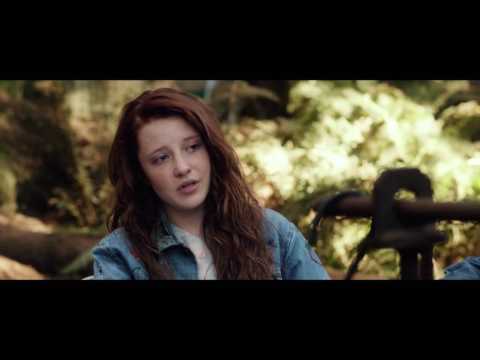
Ben Cash has raised his six children isolated from society in the forests of the Pacific Northwest, teaching them survival skills and a rigorous education based on philosophy and literature. When a family tragedy forces them to leave their paradise and confront the modern world, their ideals and Ben’s educational methods are put to the test.
Captain Fantastic is an intelligent and moving reflection on education, society, and compromise. The comedy arises from the clash between the Cash family, with their brutal honesty and ignorance of social conventions, and the outside world, consumerist and superficial. The drama emerges when Ben is forced to question his choices, wondering if his attempt to protect his children has actually made them vulnerable and unprepared. Viggo Mortensen delivers an extraordinary performance as a loving but dogmatic father, in a film that offers no easy answers but invites reflection on what it truly means to prepare one’s children for life.
C’mon C’mon (2021)

Johnny, a radio journalist, is working on a project interviewing children and teenagers across America about their future. When his sister asks him to look after her nine-year-old son, Jesse, Johnny finds himself having to balance his work with the responsibilities of being a makeshift parent. The journey they undertake together, from Los Angeles to New York to New Orleans, will lead them to create an unexpected and profound bond.
Shot in elegant black and white, Mike Mills‘ film is a work of rare delicacy and humanity. It is a meditation on listening, memory, and the complexities of family ties. Johnny’s work becomes a metaphor for the film itself: an attempt to give a voice to those who are often not heard. The relationship between Johnny (a tender and vulnerable Joaquin Phoenix) and young Jesse is the heart of the film, depicted with an authenticity that avoids any sentimentality. C’mon C’mon has no major plot twists, but its strength lies in the small moments of connection, the honest conversations, and the ability to capture the bittersweet beauty of passing time.
Aftersun (2022)

In the late 1990s, eleven-year-old Sophie spends a holiday at a Turkish resort with her young and loving father, Calum. Twenty years later, an adult Sophie reflects on those days, using her memories and grainy camcorder footage to try to understand the man she knew and the one who was a stranger to her—a father struggling with a melancholy she could only guess at at the time.
Charlotte Wells‘ debut film is a masterpiece of suggestion and the unsaid. It operates on the fine line that separates a happy memory from an impending tragedy, creating a sense of nostalgia pervaded by an unexpressed sorrow. The warm, sun-drenched images and the use of home videos perfectly capture the atmosphere of a summer holiday, but small details and moments of silence reveal Calum’s deep sadness. It is not a film that explains, but one that evokes. Its fragmented structure reflects the very nature of memory, made of flashes, sensations, and unanswered questions. It is a devastating and beautiful work on memory, grief, and the impossible attempt to truly know the people we love.
CODA (2021)
![Coda (1987) ORIGINAL TRAILER [HD]](https://blog.indiecinema.co/wp-content/plugins/wp-youtube-lyte/lyteCache.php?origThumbUrl=https%3A%2F%2Fi.ytimg.com%2Fvi%2FjQLOadAG46Y%2F0.jpg)
Ruby Rossi is the only hearing person in a deaf family. Her life is divided between helping the family with their fishing business and her secret passion for singing. When her choir teacher encourages her to audition for a prestigious music school, Ruby faces an impossible choice: follow her dream or stay to help her family, who depend on her as an interpreter.
Winner of the Oscar for Best Picture, CODA (an acronym for Child of Deaf Adults) is a heartwarming dramatic comedy that is never cloying. The film sensitively explores themes of family, duty, and finding one’s own voice. The unique and powerful central conflict generates both moments of comedic misunderstanding and scenes of deep emotional resonance. The sequence in which the deaf father “listens” to his daughter sing by placing his hands on her throat to feel the vibrations is disarmingly beautiful. It is an uplifting and inclusive coming-of-age story that celebrates the power of music and unconditional family love.
Minari (2020)

In the 1980s, a Korean-American family moves from California to a rural farm in Arkansas in pursuit of their own American dream. As the father, Jacob, invests all his hopes in growing Korean vegetables, the family must face the difficulties of isolation, the challenges of the land, and the arrival of their grandmother from Korea, an eccentric and unconventional woman.
Minari is an intimate and delicate look at the immigrant experience and the resilience of family ties. The film finds gentle humor and profound drama in the small daily struggles of the Yi family. It is not a story of grand events, but of small gestures, of faith put to the test, and of the hard work of putting down roots in a foreign land. The minari, a Korean herb that grows lushly wherever it is planted, becomes a symbol of the family’s ability to adapt and thrive. It is a film full of grace and authenticity, a universal portrait of hope and what it truly means to build a home.
Kajillionaire (2020)

Old Dolio was raised by her parents, two small-time con artists, not as a daughter, but as an accomplice in their bizarre and petty scams. Their cold and transactional family dynamic is upended when, during a heist, they involve a stranger, Melanie, who shows Old Dolio a world of warmth and affection she had never known.
Once again, Miranda July explores the strangeness of human connections, this time focusing on the emotional damage of an affectionless upbringing. The absurd and surreal comedy arises from the family’s outlandish scams, like avoiding the landlord by hiding behind a wall of foam leaking from the factory next door. The drama, however, emerges from Old Dolio’s slow and painful awakening to the realization that she has never been loved. It is a profoundly original and touching film about the late discovery of love and the possibility of choosing one’s own family.
Shoplifters (2018)

In a corner of Tokyo, a makeshift family survives on the fringes of society through petty scams and shoplifting. One day, they take in a mistreated little girl they find alone in the cold. Despite their poverty, they share what they have with her, creating a bond that seems stronger than blood. But an unforeseen event will bring to light the secrets that unite them and threaten to destroy their fragile balance.
Winner of the Palme d’Or at Cannes, Hirokazu Kore-eda’s masterpiece questions the very definition of family. The film portrays this group of small-time criminals with a warmth and humor that immediately endears them to us. We experience with them the small moments of joy and affection before a dramatic turn reveals the heartbreaking truths behind their union. Shoplifters is a work of immense sensitivity, a powerful but never preachy social critique that asks us what truly makes a family: blood ties or the bonds chosen and nurtured with love, even in the most desperate circumstances.
The Big Sick (2017)

Kumail, a comedian of Pakistani origin, falls in love with Emily, an American graduate student, but their relationship is complicated by the pressures of his traditional family, who expect an arranged marriage for him. When Emily is struck by a mysterious illness and falls into a coma, Kumail finds himself having to manage the crisis with her parents, whom he had never met, while facing the conflict between his family and his heart.
Based on the true story of screenwriters Kumail Nanjiani and Emily V. Gordon, The Big Sick is an intelligent, funny, and incredibly touching romantic comedy. The film skillfully navigates the world of stand-up comedy, the dynamics of a cultural clash, and the almost surreal drama of a medical crisis. The humor is never forced, and the drama is never melodramatic. It is an honest story about love, family, and compromise, which manages to be specific in its cultural representation and at the same time universal in its themes.
Hunt for the Wilderpeople (2016)

Ricky Baker is a rebellious and troubled city kid placed with a new foster family in the remote New Zealand countryside. After a sudden tragedy, Ricky and his grumpy foster “uncle” Hec find themselves the subjects of a national manhunt, forced to flee together into the wild bush. Thus begins a hilarious and moving adventure.
Taika Waititi’s film is an explosion of eccentric humor, lightning-fast dialogue, and heart. The chemistry between the young Julian Dennison and the veteran Sam Neill is perfect, creating one of the most unlikely and lovable duos in recent cinema. The film masterfully balances the almost slapstick comedy of their misadventures with a genuinely moving story about the search for a family and a place in the world. It is an adventure that celebrates the wilderness of New Zealand and the indomitable spirit of two outsiders who find in each other what they never had.
Paterson (2016)

Paterson is a bus driver in the city of Paterson, New Jersey. His life is marked by a reassuring routine: he drives the bus, listens to passengers‘ conversations, writes poems in a secret notebook, walks the dog, and has a beer at the same bar every night. His wife Laura, on the other hand, is an explosion of creativity, with ever-new dreams, from becoming a country music star to launching a cupcake business.
Jim Jarmusch’s minimalist masterpiece is a hymn to the beauty of everyday life. The film follows a week in Paterson’s life, finding poetry in small rituals and ordinary observations. The humor is gentle and subtle, and the drama emerges not from grand events, but from small incidents that threaten to break the delicate balance of his existence. Adam Driver delivers a performance of extraordinary quietness and depth. Paterson is a film that teaches us to see the world with different eyes, to find art and wonder in routine, and to understand that a simple life can be a full and happy life.
Amélie (2001)

Amélie Poulain is a shy and dreamy waitress living in a magical, idealized world of Montmartre, Paris. After finding an old box of memories in her apartment and returning it to its owner, she decides to dedicate her life to secretly orchestrating small moments of joy for the people around her. But as she tends to the happiness of others, she risks neglecting her own.
Visually stunning and full of charm, Le Fabuleux Destin d’Amélie Poulain is a modern fairy tale that has captivated the world. The comedy arises from Amélie’s elaborate and imaginative machinations, while the underlying drama is her own loneliness and her difficulty in connecting directly with others. Jean-Pierre Jeunet’s direction creates a hyper-real Paris, saturated with warm colors and whimsical details, which perfectly reflects his protagonist’s worldview. It is a film that celebrates the small pleasures, kindness, and the courage to open up to love.
Submarine (2010)

Oliver Tate is a pretentious and awkward fifteen-year-old with two goals: to lose his virginity to his pyromaniac classmate, Jordana, and to save his parents’ marriage, suspecting his mother is having an affair with a new-age neighbor. Narrating his misadventures with the eloquence of a seasoned novelist, Oliver navigates the turbulent waters of first love and family crisis.
Richard Ayoade’s directorial debut is a stylish and intelligent British coming-of-age comedy. The dry, witty humor derives largely from Oliver’s first-person narration, as he analyzes every situation with comic seriousness and an intellectual’s vocabulary. Beneath this ironic surface, however, lies a sincere drama about adolescent insecurity, the fear of losing one’s family, and the awkwardness of first love. With an aesthetic that pays homage to the French New Wave and a melancholic soundtrack by Alex Turner, Submarine is a sharp and funny portrait of that age when you feel like the protagonist of a film no one is watching.
Beyond the Happy Ending
Looking back on this journey through thirty gems of independent cinema, a common thread emerges: a profound emotional honesty. These films do not offer the reassuring escapism or easy resolutions typical of much mainstream cinema. They reject the idea that life is neatly divided into comedy and tragedy, choosing instead to inhabit the intermediate space—the most authentic and recognizable one—where laughter is often a defense mechanism against pain, and tears can spring from a moment of unexpected beauty.
The celebration of imperfection is their gospel. The protagonists are not heroes to be admired, but mirrors in which to see ourselves. Their struggle is not against an external enemy, but against their own alienation, their own anxiety, their own inability to connect. And victory, when it comes, is not a trophy, but an embrace, a clumsy dance, an incomprehensible whisper, the acceptance of an imperfect love. These films offer us something more precious than escapism: they offer us catharsis, empathy, and the deep recognition that, in the bittersweet disorder of life, we find the truest reflection of ourselves. They are an invitation to immerse ourselves in a rich and rewarding cinematic world that is not afraid to face the complexity of being human.
A vision curated by a filmmaker, not an algorithm
In this video I explain our vision

