
The romantic comedy, as a genre, evokes a powerful imaginary, often defined by a recognizable formula and sugary endings. But the reality of love is often more chaotic, imperfect, and wonderful. Far from the blinding lights of major studios, in that fertile territory that is auteur cinema, the genre has been dismantled, reinvented, and restored to its most authentic essence.

This is not a list of fairy tales, but a definitive guide to those hidden gems of comedy that have redefined what a love story can be on screen. These are films born from low-budget productions, discovered at festivals like Sundance, and animated by a visceral desire to tell authentic narratives. Here, alternative romance is not a stylistic whim, but an expressive necessity to explore complex relationships and conduct a deep emotional exploration.
Here is a curated selection of films that perfectly embody the bittersweet humor and raw honesty of unconventional love stories. It is a path that unites the most famous films with the most intimate independent productions. These are works that remind us of a fundamental truth: real love is often indie.
Past Lives (2023)

Nora and Hae Sung, two deeply connected childhood friends, are separated when Nora’s family emigrates from Seoul. Twenty years later, they reunite in New York for a crucial week. Nora is now married to an American, and Hae Sung has come to visit her from Korea. The two confront their past, the choices they’ve made, and the Korean concept of “In-Yun,” an idea of providence that connects souls across past lives.
Produced by A24, Past Lives is the pinnacle of the modern arthouse romantic comedy: a mature, subdued, and achingly beautiful independent film. Director Celine Song avoids all forms of melodrama, building an emotional tension that arises not from a love triangle, but from Nora’s internal conflict. It is an unconventional love story that explores identity, memory, and the paths not taken. The concept of “In-Yun” elevates the film to a philosophical reflection on love, suggesting that some connections transcend time and space, even if they are not destined to be realized.
Love on the Run
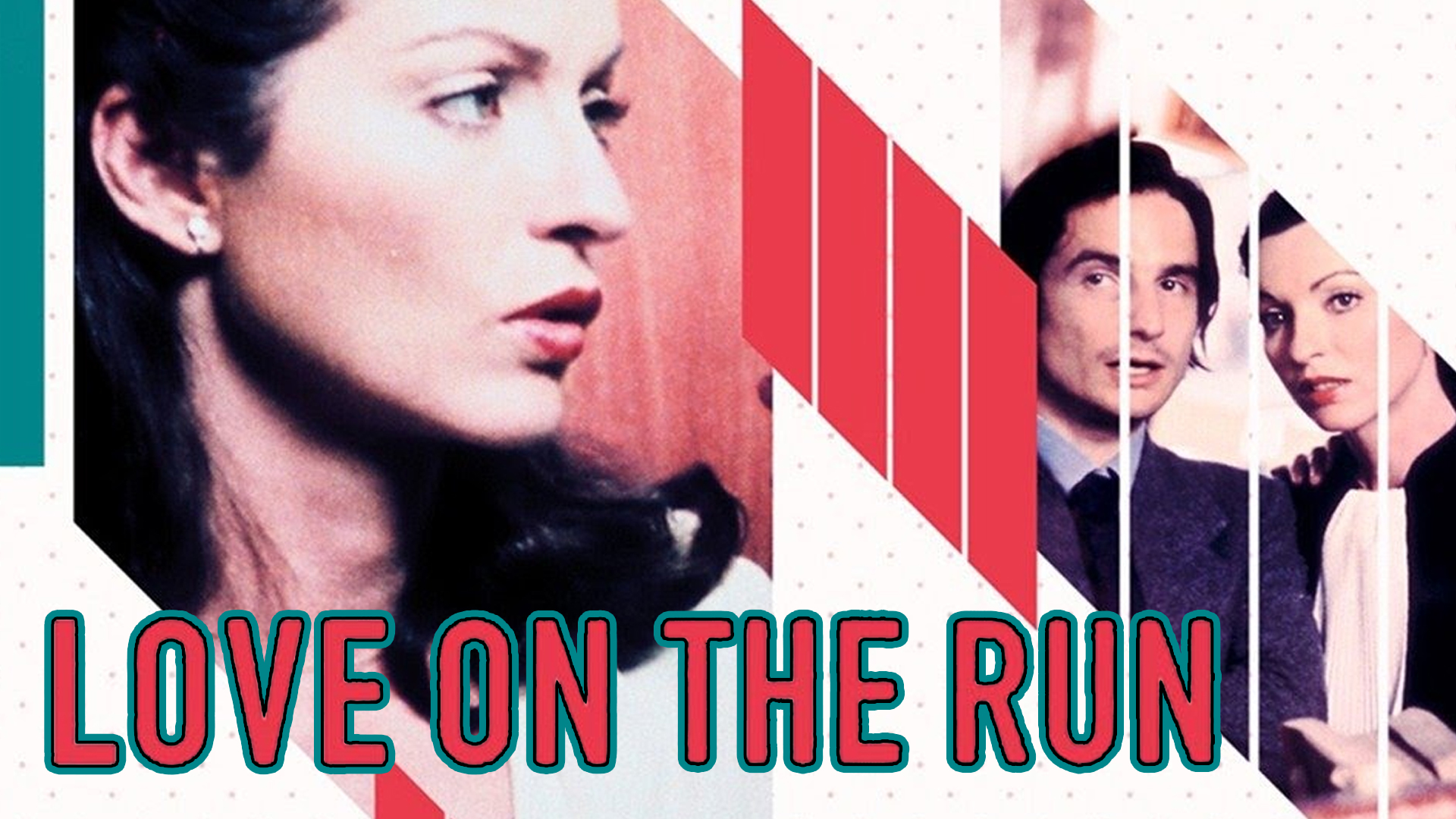
Comedy, romance, by Francois Truffaut, France, 1978.
After seven years Antoine and Christine divorce, while remaining good friends. Antoine is in a relationship with Liliane, friend of Christine, has published an autobiography about his loves and finds work as a proofreader and also begins a cheerful, if tumultuous relationship, with Sabine, a saleswoman in a record store.
It is the fifth and final film in the series of 'Antoine Doinel', which follows the life of the main character from childhood to adulthood. The film won the Jury Prize at that year's Cannes Film Festival. It is a significant representation of human relationships, an intelligent and ironic reflection on the themes of love, loss and personal growth. It is also an homage to French cinema of the 60s and 70s, a sort of synthesis of cinematic themes and styles that Truffaut had explored throughout his career. Léaud had played the character in all the films of the "Antoine Doinel" series and his performance in "Love on the Run" was considered one of the best of his career. "Love on the Run" was well received by critics and is considered one of Truffaut's best films.
LANGUAGE: french
SUBTITLES: english, italian
Cha Cha Real Smooth (2022)

Fresh out of college and with no clear plan, 22-year-old Andrew moves back home with his family. During a bar mitzvah, he discovers he has a natural talent as a “party starter.” This new job leads him to meet Domino, a young mother, and her autistic daughter, Lola. Andrew forms a special bond with both, starting to babysit Lola and developing complex feelings for Domino.
Winner of the Audience Award at the Sundance Film Festival, Cha Cha Real Smooth is an indie comedy that confirms Cooper Raiff‘s talent as an emerging voice in American cinema. The film is a sensitive and honest portrait of post-college confusion and the complexities of love at different ages. It is an unconventional, tender, and mature love story that delicately explores themes like mental health and parenthood, with outstanding performances from Raiff and Dakota Johnson.

Shithouse (2020)

Alex, a college freshman, feels lonely and struggles to adjust to college life. One night, he reluctantly goes to a party at a fraternity called “Shithouse.” There he meets Maggie, his sophomore RA. The two spend the night together, walking and talking, creating a deep and vulnerable connection. The next morning, however, reality and insecurities resurface.
Winner of the Grand Jury Prize at the SXSW festival, Shithouse is a stunning debut from director and star Cooper Raiff. It is a low-budget film that captures the anxiety and loneliness of the first college experience with an authentic and disarming narrative. The long night-time conversation between Alex and Maggie is reminiscent of Linklater’s Before trilogy, but with a language and sensibility perfectly tuned to Generation Z. It is an intimate and honest look at the difficulty of creating genuine connections.
The Big Sick (2017)

Based on the true story of screenwriters Kumail Nanjiani and Emily V. Gordon, the film follows Kumail, a Pakistani-born comedian, who falls in love with American graduate student Emily. Their relationship is complicated by the pressures of his family, who insist on an arranged marriage. When Emily is struck by a mysterious illness and placed in a medically induced coma, Kumail finds himself managing the crisis alongside her parents, whom he had never met before.
This independent film subverts every cliché of the romantic comedy. The “getting to know you” phase doesn’t happen between the two lovers, but between the protagonist and his potential in-laws in a hospital waiting room. It is a masterful example of how bittersweet humor can be used to address profound themes such as cultural clash, illness, and family. This story, born from an emerging voice and a deeply personal experience, shows how authentic narratives can create a universal emotional exploration, turning a potential tragedy into one of the most moving and original indie comedies of the decade.
Sing Street (2016)

In 1980s Dublin, in the midst of an economic recession, young Conor is forced to change schools, moving from a private institution to a rough public school. To impress the mysterious and charming Raphina, he tells her he has a band and asks her to appear in their music video. Now Conor just has to form a band, write songs, and learn to play.
John Carney, director of Once, delivers another love letter to music and youth. Sing Street is an irresistible indie comedy, a hymn to the redemptive power of creativity. The film perfectly captures the spirit of the 80s, with Conor’s band changing their musical style with every new Duran Duran or The Cure video they see on TV. It is an unconventional love story about dreams, escape, and the ability of music to transform a gray reality into something magical.
A vision curated by a filmmaker, not an algorithm
In this video I explain our vision
Lolo (2015)

A Parisian fashion editor vacationing in the countryside meets a gentle, provincial programmer and brings him back to the city. Her teenage son, however, is determined to sabotage the relationship through increasingly elaborate and darkly comic schemes of psychological warfare.
Julie Delpy directs with sharp wit and genuine affection for her deeply flawed characters, crafting a romantic comedy that is simultaneously tender and bracingly cynical. The film interrogates modern Parisian bourgeois life with an anthropologist’s eye, finding both absurdity and melancholy in the eternal conflict between romantic hope and the suffocating weight of family obligation.
Appropriate Behavior (2014)

Shirin, a bisexual Iranian-American woman in Brooklyn, navigates a painful breakup with her girlfriend while simultaneously hiding her sexuality from her traditional Persian family. Moving between past and present, the film traces her search for identity, belonging, and a new sense of herself.
Writer-director Desiree Akhavan announces herself as a major voice with this assured, deeply personal debut. Drawing comparisons to early Woody Allen while carving out entirely original cultural terrain, Akhavan balances sharp comic timing with genuine emotional vulnerability. The film’s frank treatment of bisexuality and immigrant identity makes it both groundbreaking and disarmingly human.
Obvious Child (2014)

Donna Stern is a stand-up comedian whose life is falling apart: she gets dumped by her boyfriend and loses her job. After a one-night stand with Max, a kind and somewhat naive guy, she discovers she is pregnant. Donna decides to have an abortion and schedules an appointment for Valentine’s Day. In the meantime, she starts getting to know Max better, finding herself navigating a potential new relationship while facing one of the most important decisions of her life.
Obvious Child has been called the first “abortion romantic comedy,” and this label, however bold, captures its essence. It is an indie comedy that tackles a taboo subject with disarming honesty, humor, and warmth. The film is not a political statement, but an intimate and deeply human look at one woman’s experience. Jenny Slate‘s performance is extraordinary, and the love story that develops is a perfect example of alternative romance, based on vulnerability and mutual understanding.
What If (2013)

Wallace, a medical school dropout disillusioned with love after a series of failed relationships, meets Chantry at a party and feels an instant connection. Unfortunately, Chantry is happily in a long-term relationship. The two decide to remain just friends, but their undeniable chemistry makes the situation increasingly complicated, forcing them to ask: is it possible for your best friend to also be the love of your life?
This indie comedy tackles one of the most classic relationship dilemmas—the “friend zone”—with freshness and intelligence. With witty dialogue and two irresistible leads (Daniel Radcliffe and Zoe Kazan), the film explores the nuances of friendship and attraction with a humor that is both cynical and hopeful. It is an unconventional love story that questions the nature of bonds, offering a modern and authentic perspective on a timeless question.
The Spectacular Now (2013)

Sutter Keely is the classic popular high school senior: charming, self-assured, and always with a drink in his hand. After being dumped by his girlfriend, he gets drunk and wakes up on the lawn of Aimee Finecky, a shy, intelligent girl nobody seems to notice. What starts as Sutter’s attempt to “save” Aimee turns into a deep relationship that forces both of them to confront their problems and their future.
Light-years away from glossy teen comedies, The Spectacular Now is a raw and honest portrait of the last sliver of youth. It is an independent film that is not afraid to show the frailties and flaws of its protagonists, particularly Sutter’s struggle with alcoholism. The chemistry between Miles Teller and Shailene Woodley is electric and lends an authentic narrative to a love story that is as tender as it is painful. It is an arthouse film about coming of age, exploring complex relationships with a rare maturity.
In a World… (2013)

Carol, a struggling vocal coach living in her famous voice-over father’s shadow, unexpectedly lands a major trailer narration gig, igniting professional rivalry and romantic complications. Lake Bell‘s debut feature cleverly uses the niche world of voice acting to explore female ambition, family dynamics, and unexpected connection.
Lake Bell writes, directs, and stars with remarkable assurance, constructing a comedy that is both genuinely funny and quietly feminist. The film’s eccentric supporting characters and sharp dialogue reflect an independent sensibility deeply aware of genre conventions yet determined to subvert them. It stands as an underseen gem that rewards patient, attentive viewing.
Drinking Buddies (2013)

Kate and Luke work together at a craft brewery in Chicago. They are best friends, drinking buddies, and there is an obvious and undeniable chemistry between them. The problem is, they are both in serious relationships with other people. A weekend at a lake house with their respective partners highlights the cracks in their current relationships and the unresolved attraction between them.
Joe Swanberg, another key figure in mumblecore, directs an almost entirely improvised indie comedy that relies on the extraordinary chemistry of its cast. Drinking Buddies is a mature and subtle analysis of the blurred line between friendship and love. The film avoids grand dramas, focusing instead on small glances, unspoken conversations, and latent tension. It is an authentic narrative about complex relationships, leaving the viewer to ponder the choices and compromises we make in love.
Frances Ha (2012)

Frances Halladay is a 27-year-old dancer, or rather an apprentice, who navigates life in New York with a clumsy but contagious energy. When her best friend and roommate, Sophie, decides to move out, Frances’s world falls apart. The film, shot in elegant black and white, follows her attempts to find a place in the world, a stable apartment, and a sense of self, while her friendship with Sophie is put to the test.
Frances Ha is one of the purest and most touching unconventional love stories ever brought to the screen, because its emotional core is not a couple, but a platonic friendship. Noah Baumbach and Greta Gerwig (co-writer and star) create a generational portrait that elevates mumblecore to arthouse cinema. The black-and-white photography is not a whim, but a tribute to the French New Wave, which gives a timeless romantic aura to modern precarity. It is an authentic narrative about the importance of the bonds that define us, a hidden gem that explores sisterly love with disarming grace and honesty.
Ruby Sparks (2012)

Calvin Weir-Fields is a young novelist who, after a dazzling debut, is stuck with classic writer’s block. On his therapist’s advice, he starts writing about a girl named Ruby Sparks, his ideal female character. The next day, Calvin finds Ruby in the flesh in his kitchen. He discovers he has the power to control her every action and feeling simply by writing it on his typewriter.
This indie comedy, written by star Zoe Kazan, is a brilliant and at times unsettling metaphor for power dynamics in relationships. What begins as a romantic fantasy turns into an exploration of the pitfalls of control and idealization. It is an unconventional love story that questions the viewer: do we love a person for who they are or for the idea we have of them? An arthouse film that uses the fantastic to reveal uncomfortable truths about complex relationships.
Your Sister's Sister (2011)
![Your Sister's Sister Official Trailer [HD]: Mark Duplass, Emily Blunt and Rosemarie DeWitt](https://blog.indiecinema.co/wp-content/plugins/wp-youtube-lyte/lyteCache.php?origThumbUrl=https%3A%2F%2Fi.ytimg.com%2Fvi%2FobkXTBwlmTc%2F0.jpg)
A year after his brother’s death, Jack is still emotionally adrift. His best friend, Iris, offers him some time alone at her family’s cabin on a remote island. Upon arrival, however, Jack finds Iris’s sister, Hannah, who is recovering from a breakup. After a night of tequila and confessions, the two end up in bed together. The situation becomes unexpectedly complicated the next morning with Iris’s arrival.
This largely improvised indie comedy is a brilliant example of mumblecore cinema taken to the next level. Director Lynn Shelton creates an intimate and realistic look at a triangle of complex relationships, where love, friendship, and family ties intertwine in a messy and unpredictable way. It is an authentic narrative that thrives on the naturalistic performances of its actors, exploring with humor and sensitivity the secrets and lies that can both unite and divide people.
Safety Not Guaranteed (2012)

Darius, a disillusioned magazine intern, joins two colleagues to investigate a bizarre newspaper ad: “Wanted: Someone to go back in time with me. This is not a joke. Payment upon return. Must bring your own weapons. Safety not guaranteed.” The ad’s author is Kenneth, a paranoid but strangely charming supermarket employee who firmly believes he has built a time machine.
This indie comedy is a hidden gem that mixes low-budget science fiction, quirky humor, and a surprisingly big heart. Beyond the bizarre premise, the film is a tender exploration of faith, regret, and the need to find someone who believes in us. The relationship that develops between Darius and Kenneth is a perfect example of alternative romance, founded not on conventional attraction, but on sharing a vulnerability and a desire to escape a disappointing present.
Celeste and Jesse Forever (2012)
![CELESTE AND JESSE FOREVER [2012] - Official Trailer (HD)](https://blog.indiecinema.co/wp-content/plugins/wp-youtube-lyte/lyteCache.php?origThumbUrl=https%3A%2F%2Fi.ytimg.com%2Fvi%2FaJYjR00zCMc%2F0.jpg)
Celeste and Jesse, best friends and soon-to-be-divorced couple, struggle to maintain their unique bond while moving on with their lives. As Jesse begins dating someone new, Celeste confronts her own emotional contradictions in this bittersweet portrait of modern love and self-deception.
Rashida Jones, who co-wrote the screenplay, delivers a nuanced performance that elevates familiar material into something genuinely affecting. Director Lee Toland Krieger resists easy resolutions, allowing the film to sit uncomfortably in emotional ambiguity. It is a rare romantic comedy that treats heartbreak as a process of self-reckoning rather than a problem awaiting a tidy solution.
Like Crazy (2011)

A British student and an American boy fall passionately in love during college, only to be separated by visa complications. Their relationship stretches across years and continents, testing whether love can survive distance, time, and the slow erosion of who two people once were to each other.
Shot largely on a Canon 7D with improvisational performances from Felicity Jones and Anton Yelchin, Drake Doremus crafts an intimately textured love story that feels raw and emotionally honest. The film understands that relationships can be simultaneously the most vivid and most damaging experiences of a life, capturing longing with rare cinematic precision.
Submarine (2010)

Oliver Tate is a 15-year-old Welsh boy with two goals: to lose his virginity before his next birthday with his girlfriend, the pyromaniac Jordana, and to stop his mother from leaving his father for a new-age guru. With his hyperactive imagination and a worldview worthy of a French New Wave director, Oliver navigates the turbulent waters of adolescence.
Richard Ayoade‘s directorial debut is a masterpiece of bittersweet humor and visual style. Inspired as much by Godard as by Wes Anderson, Submarine is an indie comedy that captures the essence of teenage angst with disarming originality. It is a coming-of-age story that rejects every cliché, offering an intimate and authentic look at the first, clumsy experiences of love and the complexity of family dynamics. The soundtrack by Alex Turner of the Arctic Monkeys adds another layer of poetic melancholy to this unforgettable independent film.
(500) Days of Summer (2009)

Tom Hansen, an aspiring architect working as a greeting card writer, is a hopeless romantic who believes in fate. When he meets Summer Finn, his boss’s new assistant, he falls head over heels for her. The film follows the 500 days of their “story” in a non-chronological order, exploring the highs and lows of a relationship from the perspective of a man who clashes with a woman who doesn’t believe in love.
This film is the manifesto of the modern anti-rom-com. More than a love story, it’s an autopsy of a failed relationship and a sharp deconstruction of romantic fantasies. Marc Webb‘s direction, with its split-screens and dream sequences, traps us in Tom’s subjective and idealized perspective, making us experience his euphoria and his despair. It is an arthouse film disguised as an indie comedy, using bittersweet humor to question the very foundations of the genre, showing how idealization is the first enemy of love.
Lars and the Real Girl (2007)

Lars Lindstrom is a sweet but extremely lonely and socially awkward young man who lives in his brother and sister-in-law’s garage. One day, he introduces his family to his new girlfriend, Bianca, a life-sized doll he ordered online. On the advice of a psychologist, his family and the entire community decide to go along with his delusion, treating Bianca as a real person.
This hidden gem is one of the bravest and most tender unconventional love stories ever made. The film uses a surreal premise not for easy laughs, but to conduct a deep emotional exploration of loneliness, trauma, and the healing power of community. Lars’s romance with Bianca becomes the catalyst that allows an entire town to show empathy and acceptance. It is an arthouse film that redefines love, showing it not just as a bond between two people, but as a collective act of kindness.
Eagle vs Shark (2007)

Lily, a shy fast-food cashier, has a crush on Jarrod, an eccentric and socially awkward regular. When she manages to get invited to his “dress as your favorite animal” party, she shows up as a shark and wins him over with her video game skills. Thus begins a relationship between two misfits, which leads her to follow him to his hometown, where he plans to get revenge on his high school bully.
Before conquering Hollywood with Thor, Taika Waititi directed this delightful and quirky indie comedy, the quintessence of his unique humor. Eagle vs Shark is an affectionate portrait of two clumsy souls trying to connect. With a style reminiscent of Napoleon Dynamite but with a warmer heart, the film celebrates being different. It is a perfect example of alternative romance, where love is born not from perfection, but from the mutual acceptance of one’s own quirks.
Once (2007)

A Dublin street musician, who repairs vacuum cleaners in his father’s shop by day, meets a young Czech immigrant who sells flowers. Both are artists with broken hearts and shattered dreams. Over one intense week, they discover a deep musical and personal connection, writing and recording songs that tell their unspoken love story.
Shot with a low-budget production and an almost documentary-like style, Once is one of the purest and most authentic love stories ever told. It is an anti-Hollywood musical where the songs do not interrupt the narrative, but embody it. The chemistry between the leads (who are musicians in real life) is palpable, and their bond is expressed through artistic creation. It is an independent film that celebrates platonic love and the fleeting moments that change a life, proving that the deepest connections do not always need a conventional happy ending.
Waitress (2007)

Jenna is a waitress in a Southern diner, trapped in an unhappy marriage with a possessive and childish husband. Her only escape is creating extraordinary pies, which she names after events in her life. When she discovers she is pregnant, her desperation turns into determination. The arrival of a new and charming doctor in town offers her the chance for a new beginning.
Written, directed by, and starring the late Adrienne Shelly, Waitress is an indie comedy full of heart and hope. With a tone that mixes quirky humor with touching drama, the film is a modern fairy tale about female empowerment. It is an unconventional love story that celebrates a woman’s strength in taking back her own life, finding happiness not just in a man, but above all in herself and her passion.
Wristcutters: A Love Story (2006)

After taking his own life, Zia finds himself in a desolate, monochromatic afterlife reserved exclusively for those who have committed suicide. It’s a world strangely similar to ours, only a little worse. When he discovers that his ex-girlfriend has also killed herself, Zia sets off on a surreal road trip to find her, accompanied by an eccentric Russian musician and a mysterious hitchhiker named Mikal.
This dark and surreal indie comedy is a hidden gem that tackles heavy themes with bittersweet humor and unexpected lightness. The film uses its bizarre purgatory as a metaphor for depression and disconnection, but ultimately reveals itself to be a surprisingly hopeful story. It is an unconventional love story that suggests human connection can be found even in the darkest places, and that perhaps life is worth living even when all seems lost.
The Puffy Chair (2005)

Josh needs to pick up a “puffy” armchair he bought on eBay as a birthday present for his father. He turns the journey into a road trip with his girlfriend Emily, but things get complicated when Josh’s free-spirited and slightly crazy brother, Rhett, joins them. What was supposed to be a simple road trip turns into a ruthless analysis of their relationship.
Directed by the Duplass brothers, pioneers of mumblecore, The Puffy Chair is a low-budget road movie that perfectly embodies the spirit of independent cinema. The film uses a simple premise to explore the cracks and tensions of a long-term relationship. With dialogue that feels real and painfully recognizable situations, it is an emotional exploration of disappointed expectations and the difficulty of communication. An indie comedy that finds humor and drama in the ordinary.
Eternal Sunshine of the Spotless Mind (2004)

After a painful breakup, Clementine decides to undergo an experimental procedure to erase every memory of her ex-boyfriend, Joel. When Joel finds out, he heartbrokenly decides to do the same. However, as his memories of Clementine are progressively deleted, Joel realizes he doesn’t want to let her go and begins a desperate escape within his own mind to save their love.
Written by the genius Charlie Kaufman and directed by Michel Gondry, this film is an independent cinema masterpiece that transcends all genres. It is a romantic comedy, a psychological drama, and a surreal science fiction work, all in one. Its fragmented narrative and unique visual aesthetic create an unprecedented emotional exploration of pain, memory, and the indelible nature of love. It is the quintessence of alternative romance, a film that suggests that even the most painful relationships are worth living.
Garden State (2004)

Andrew Largeman, an apathetic television actor heavily sedated by medication, returns to his hometown in New Jersey after nine years for his mother’s funeral. There, free from the influence of lithium and his psychiatrist father, he begins to awaken from his emotional stupor. The encounter with Sam, a pathological liar full of life and quirks, accelerates this process, forcing him to confront the pain he has suppressed for so long.
Garden State is the manifesto-film of a generation of “young adults” who grew up at the turn of the new millennium, a work that defined the aesthetic and sound of early 2000s independent cinema. Although it has been criticized for crystallizing the “Manic Pixie Dream Girl” stereotype, the film is actually a profound inner journey. It is a story about the need to face one’s own demons before being able to love someone else, an emotional exploration that uses alternative romance as a catalyst for personal healing.
Me and You and Everyone We Know (2005)

Christine, an artist and “Eldercab” driver, falls for Richard, a newly separated shoe salesman and father of two. As the two adults awkwardly try to connect, Richard’s sons explore sexuality in curious and sometimes unsettling ways. Their stories intertwine with those of other lonely characters in an anonymous suburb, all desperately seeking human connection.
Miranda July‘s directorial debut is a masterpiece of independent cinema, an eccentric and deeply touching work of art that won the Caméra d’Or at Cannes. It is an indie comedy that defies all conventions, using surreal and at times disturbing humor to explore loneliness and desire in the digital age. It is an intimate look at human fragility, an authentic narrative that captures the beauty and strangeness of our attempts to communicate.
Funny Ha Ha (2002)

Marnie has just graduated from college and has no idea what to do with her life. She drifts between temp jobs, awkward parties, and a series of clumsy social interactions, all while trying to figure out her feelings for her friend Alex, who seems unattainable. The film captures her post-graduation drift with almost documentary-like realism.
Considered the film that launched the mumblecore movement, Funny Ha Ha is a foundational work of American independent cinema. Andrew Bujalski‘s direction, with its low-budget aesthetic, semi-improvised dialogue, and naturalistic performances, creates an authentic narrative that is the antithesis of any conventional romantic comedy. Here, love is not made of grand declarations, but of hesitations, silences, and unspoken desires. It is an intimate and honest look at the confusion of youth.
Before Sunrise (1995)

Jesse, a young American, and Céline, a French student, meet on a train in Europe. Feeling an immediate and deep connection, Jesse convinces Céline to get off with him in Vienna to spend the hours before his flight home together. The two wander the city all night, talking about love, life, death, and dreams, knowing that at sunrise they will have to part, perhaps forever.
Richard Linklater‘s film is the quintessence of dialogue-driven independent cinema. It is a love story built almost entirely on conversations, a philosophical and romantic exploration that unfolds in real time. The film’s magic lies in its simplicity and its authentic narrative. There are no plot twists or external obstacles; the drama and romance arise solely from the chemistry between the two protagonists and the vulnerability of their words. It is an arthouse film that celebrates the beauty of a fleeting encounter and its potential to change a life.
A vision curated by a filmmaker, not an algorithm
In this video I explain our vision

