
Cinema, at its deepest core, is an art of investigation. When it confronts corruption, it transcends the simple telling of a crime to become a dissection of the pathologies of power, an autopsy of moral dynamics, and a seismograph of social fractures. Corruption is not just a theme but a powerful narrative device that allows filmmakers to explore the very nature of justice, the ambiguity of the human soul, and the fragility of the institutions that are supposed to protect us.

This guide is a journey through the multiple faces with which cinema has depicted malfeasance. We will start from classic moral tales, where a lone hero stood against a rotten but contained system, and arrive at the complex contemporary visions of a systemic, global, and often invisible decay. Through the analysis of styles, subgenres, and key works, we will discover how the camera has become an essential tool for understanding, denouncing, and sometimes even anticipating the crises of our time.
Anatomy of Deviant Power: The Evolution of Corruption as a Theme in Cinema
The cinematic representation of corruption has evolved in parallel with society’s disillusionment. While early works maintained an almost unwavering faith in the system’s ability to self-correct, later cinema began to question the system itself, eventually describing it as an inescapable atmospheric condition, an original sin upon which modern civilization is founded.
The starting point is often a conflict between a virtuous individual and an enclave of wrongdoing. In Frank Capra’s Mr. Smith Goes to Washington (1939), the idealistic Senator Jefferson Smith, played by James Stewart, clashes with a deep-rooted and powerful political machine. His battle, culminating in an exhausting filibuster, is the emblem of a vision where one man’s honesty can still redeem institutions. Yet, at the time, the film was accused of being “anti-American” for its unflattering portrayal of the government, revealing a primordial tension in how cinema could critique the pillars of the nation.
Just a decade later, Robert Rossen’s All the King’s Men (1949) offers a much darker and more cynical parable. Its protagonist, Willie Stark, begins as a populist fighting corruption, but once he attains power, he is devoured by it, transforming into what he had sworn to destroy. This marks a crucial thematic shift: corruption is no longer just an external enemy, but an internal force that seduces and contaminates.
The 1970s represent the golden age of the genre, a decade in which real political scandals fueled a wave of complex and paranoid thrillers. In the United States, the trauma of Vietnam and the Watergate scandal shattered public trust, giving rise to the New Hollywood aesthetic, steeped in moral ambiguity and skepticism toward authority. Films like All the President’s Men (1976) elevated investigative journalism to a heroic force against state corruption, while Chinatown (1974) used the neo-noir framework to suggest that corruption is not an aberration, but the founding act of power. In Italy, the “Years of Lead” and chronic political instability generated “cinema d’impegno civile” (civil commitment cinema), a form of militant cinema that denounced institutional rot.
In the contemporary era, corruption becomes an abstract and faceless system. Works like Traffic (2000) and Syriana (2005) use interlocking narratives to illustrate the interconnected networks of the global drug and oil trade, where malfeasance is an intrinsic feature of the system. More recent films like The Big Short (2015) or The Laundromat (2019) tackle the intangible nature of modern financial crime, where the villain is not a person but an algorithm, a legal loophole, or a shell company, reflecting a world where power is increasingly opaque and accountability almost impossible to assign.
The Style of Denunciation: Aesthetics and Languages of Cinema on Corruption
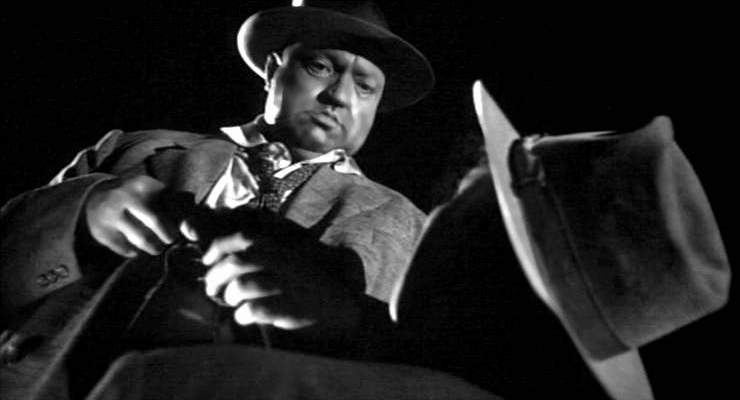
The way a film tells the story of corruption is as important as the story itself. Stylistic choices are not mere ornaments; they represent different theories on how malfeasance can be understood: as a set of facts to be uncovered, as a pervasive atmosphere to be felt, or as an absurdity so extreme it can only be grasped through satire.
The realism of the investigation is perhaps the most direct approach. Francesco Rosi, a master of the “film-inchiesta” (investigative film), uses a hyper-realistic, almost documentary style in Hands Over the City (1963) to denounce the collusion between politics and real estate speculation in post-war Naples. His camera acts like a scalpel, revealing the mechanisms of power with surgical precision. This tradition of procedural realism finds an echo decades later in films like Spotlight (2015), which meticulously reconstructs journalistic work, emphasizing the daily grind and attention to detail required to unmask large-scale institutional cover-ups.
In the 1970s, a true grammar of paranoia developed. Francis Ford Coppola’s The Conversation (1974) is the definitive film on surveillance, where sound design becomes the protagonist. The obsessive act of listening and re-listening to a recording externalizes the protagonist’s moral crisis and paranoia. Alan J. Pakula, with his “paranoia trilogy” culminating in All the President’s Men, defines the visual style of the genre: deep-focus photography, menacing shadows, and compositions that crush characters within vast, impersonal architecture, symbolizing the individual’s struggle against an oppressive state apparatus.
Finally, the grotesque and excess become tools to stage a moral decay so extreme it borders on the surreal. In Il Divo (2008), Paolo Sorrentino transforms Giulio Andreotti into a grotesque, almost supernatural mask, using an operatic aesthetic and a pop soundtrack to critique the impenetrable and theatrical nature of Italian power. Similarly, in The Wolf of Wall Street (2013), Martin Scorsese employs a frantic, hallucinatory aesthetic to represent the moral vacuum of high finance. The debauchery is not just a backdrop but the subject of the film itself, the depiction of a system completely disconnected from reality and its consequences.

Geographies of Malfeasance: Political, Financial, and Criminal Corruption
Corruption does not manifest in the same way everywhere. Cinema has mapped its different geographies, showing how malfeasance adapts and thrives in different contexts, from the hushed corridors of power to the violent streets of megalopolises, to the abstract spaces of global finance. The physical setting of these films is never random but a metaphor for the type of corruption being portrayed.
In the halls of power, cinema has explored political, judicial, and police corruption. This ranges from the systemic culture of bribery fought by the lone cop Frank Serpico in Serpico (1973), to the endemic rot of the 1950s Los Angeles police force in L.A. Confidential (1997). The pinnacle of impunity is reached in Elio Petri’s Investigation of a Citizen Above Suspicion (1970), where a police chief kills his mistress precisely to prove he is untouchable. This subgenre extends to the alliance between state and church in the Russian film Leviathan (2014), a bleak allegory in which secular and religious power collude to annihilate the individual.
Amidst the glass towers of Wall Street, cinema has staged financial and corporate corruption. Oliver Stone’s Wall Street (1987) created the archetypal villain Gordon Gekko and his mantra “Greed is good,” a phrase born as a critique and which, paradoxically, became an ethic for generations of brokers. After the 2008 crisis, the subgenre matured: Margin Call (2011) recounts in real-time the moral calculations of a group of bankers who decide to knowingly sell toxic assets to save their firm, while Dark Waters (2019) denounces decades of corruption by the chemical giant DuPont, which poisoned a community for profit.
On the streets and borders, corruption becomes the operating system of organized crime. In Italy, films like Gomorrah (2008) and Suburra (2015) describe a world where the lines between crime, business, and politics are completely blurred. In the United States, the border with Mexico becomes a “land of wolves” in Sicario (2015), where the war on drugs has made the American government indistinguishable from the cartels it fights. In Brazil, City of God (2002) shows how systemic poverty and state neglect create a vacuum in the favelas, filled by the hyper-violent logic of gangs.
The Hero and the Antihero: Cultural Impact and Reflections on the Individual vs. the System
Films about corruption do not just reflect reality; they shape it, creating archetypes and language that enter the collective imagination. The suffix “-gate” has become a universal signifier for political scandal, a direct legacy of the Watergate investigation and its iconic film adaptation. These works force us to question the role of the individual in the face of a corrupt system, offering a range of answers that oscillate between hope and the deepest pessimism.
On one hand, we celebrate the troubled consciences, the last bastions against the spread of malfeasance. The whistleblower, often a tragic figure like Jeffrey Wigand in The Insider (1999), who sacrifices everything to expose the lies of the tobacco industry. Or the investigative journalist, a hero of democracy in All the President’s Men and, more recently, in Spotlight, a film that celebrates the slow, methodical, and collaborative work of a newsroom that stands up to a powerful institution. These films reaffirm a faith in the power of truth.
On the other hand, cinema offers us a dark mirror, forcing us to see corruption from the perpetrator’s point of view. These more complex and disturbing films move beyond the dichotomy of good and evil. Investigation of a Citizen Above Suspicion is a psychological study of a man so fused with power that he feels above guilt. Captain Hank Quinlan in Orson Welles’ Touch of Evil (1958) is a monstrous figure, a corrupt cop whose investigative skill is inseparable from his willingness to manipulate evidence, forever blurring the line between justice and crime.
There is a fascinating paradox in this genre. Films conceived as fierce critiques end up creating charismatic antiheroes who are emulated. Oliver Stone intended Gordon Gekko as a warning against greed, but generations of young financiers adopted him as a role model, quoting his speech without irony. Similarly, the seductive aesthetic with which Martin Scorsese portrays excess in The Wolf of Wall Street risks making the lifestyle it intends to condemn attractive. Cinema cannot help but make what it frames compelling, and in doing so, it risks making corruption fascinating even as it denounces it. The final question this cinematic genre poses is whether an individual can truly change a corrupt system. There is no single answer, but the enduring value of these works lies in their function as a collective civic conscience, relentlessly forcing us to confront the abuse of power.
30 Films About Corruption You Absolutely Must See
This guide is a journey across the entire spectrum. It is a path that unites the great masterpieces that defined the genre with the sharpest independent visions. These are works that do not offer easy catharsis, but become essential for understanding our time.
A vision curated by a filmmaker, not an algorithm
In this video I explain our vision
Mr. Smith Goes to Washington (1939)

An naive and idealistic youth leader, Jefferson Smith, is appointed to the United States Senate. His plans immediately clash with a corrupt political system and the machinations of his own mentor. Smith must fight a lonely battle to defend his principles and the integrity of democratic institutions.
Frank Capra’s analysis is a moral tale that embodies the American faith in the individual’s ability to redeem the system. While it may seem optimistic today, the film is a milestone that establishes the archetypal conflict between individual idealism and entrenched corruption, showing how the denunciation of political malfeasance was a hot-button issue even in Hollywood’s early days.
A Better Life
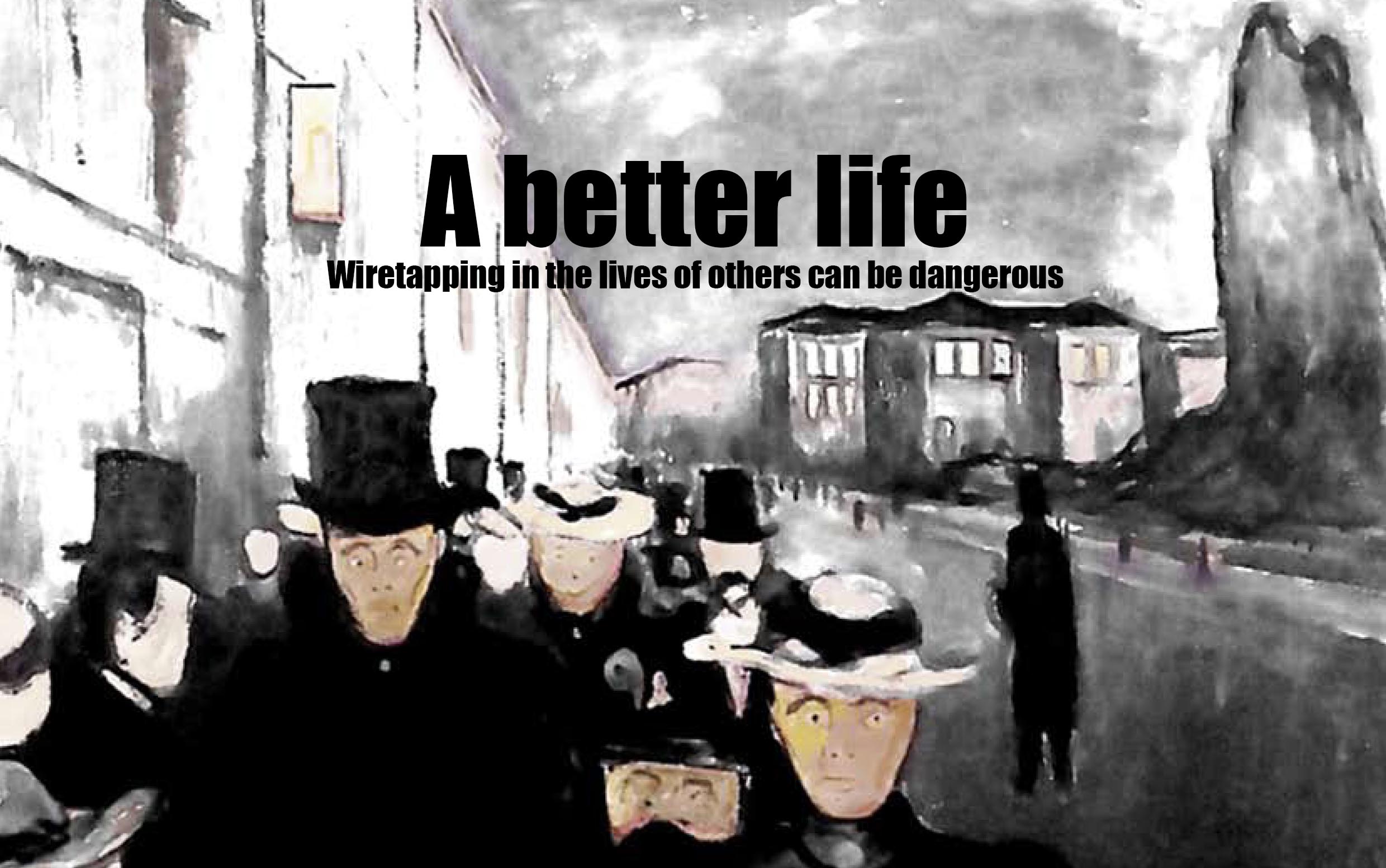
Drama, thriller, by Fabio Del Greco, Italy, 2007.
Rome: Andrea Casadei is a young investigator specializing in audio wiretapping who conducts investigations commissioned by husbands betrayed by their wives, or by parents worried about what their children are doing outside the home. But what interests him most is understanding the human soul, listening to casual conversations in the streets, knowing what people think. He often meets in Piazza Navona with his friend Gigi, a frustrated street artist obsessed with success at all costs, with whom he shares a passion for wiretapping. Shocked by the mystery of the disappearance of Ciccio Simpatia, another street artist common friend, Andrea decides to abandon the commissioned works to seek a better life and reflect on his own and others' existence. He will meet the actress Marina and with a bug he will slowly enter her life until he discovers her most unthinkable secrets. The film deals with an important theme of contemporary Western society: the lack of love. The mysterious and tormented figure of Marina is reflected in a gloomy and soulless Rome.
Director Fabio Del Greco declared about his film: "Perhaps this film is a reflection on the art of observing, of listening, in short, of what one does when one leaves the real world to tell about it. Perhaps he wants to talk about the subtle relationship between the mirages of success touted by today's society, power and the most authentic human relationships.A 'dark cloud' hangs over the city: it is engulfing everyone in a sort of indistinct, uniform mass, where everyone thinks the same things, where everyone they are more alone. Where is the truest part that makes us unique? Maybe you can try to intercept it only secretly."
LANGUAGE: Italian
SUBTITLES: English, Spanish, French, German, Portuguese, Dutch.
All the King’s Men (1949)

The film follows the rise and fall of Willie Stark, a populist politician from the American South. Initially honest and determined to fight corruption, Stark is progressively consumed by the power he accumulates, becoming a ruthless and manipulative leader, not unlike those he had fought against.
Inspired by the figure of Louisiana Governor Huey Long, this film is a tragic parable about the corrupting nature of power. Unlike Capra’s film, there is no redemption here. Robert Rossen’s analysis is ruthless: corruption is not an evil to be eradicated, but a virus that infects even the best intentions, turning the hero into a tyrant.
Touch of Evil (1958)
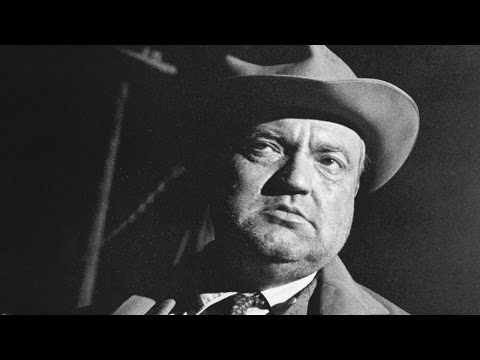
In a murky border town between Mexico and the United States, a Mexican narcotics agent, Mike Vargas, clashes with American police captain Hank Quinlan during an investigation into a bombing. Vargas soon discovers that Quinlan, despite being a legendary cop, is accustomed to planting evidence to bring criminals to justice.
Orson Welles directs and stars in one of the greatest noirs of all time, a baroque and decadent independent film about moral corruption. Quinlan is a monumental and tragic figure, a man whose thirst for justice is so perverted that it makes him a monster. The film dissolves all boundaries, not just geographical but also ethical, between good and evil, law and crime.
Hands Over the City (1963)

In Naples, the collapse of a residential building triggers a parliamentary inquiry. At the center of the story is the real estate developer Edoardo Nottola, an unscrupulous man who, through political alliances and speculative maneuvers, aims to become the councilor for urban planning to control the city’s development.
A masterpiece of Italian “cinema d’impegno civile” by Francesco Rosi, the film is a ruthless and documentary-like denunciation of real estate speculation and the collusion between economic and political power. With an almost neorealistic style, Rosi doesn’t just tell a story but reveals a mechanism: that of a system where private profit prevails over the public good, an analysis that remains terribly relevant today.
Investigation of a Citizen Above Suspicion (1970)

The head of the homicide squad, just promoted to an even more powerful position, murders his mistress. Instead of covering his tracks, he deliberately leaves a series of clues at the crime scene that point to him, daring his own subordinates to incriminate him to test the extent to which power makes him untouchable.
Elio Petri’s film is a grotesque and chilling analysis of the neurosis of power. The murder is not the end, but the means for a psychological experiment on impunity. Gian Maria Volonté gives a masterful performance as a man who is not simply corrupt, but who so completely identifies with the repressive authority of the state that he considers himself above the law itself.
Altin in the City
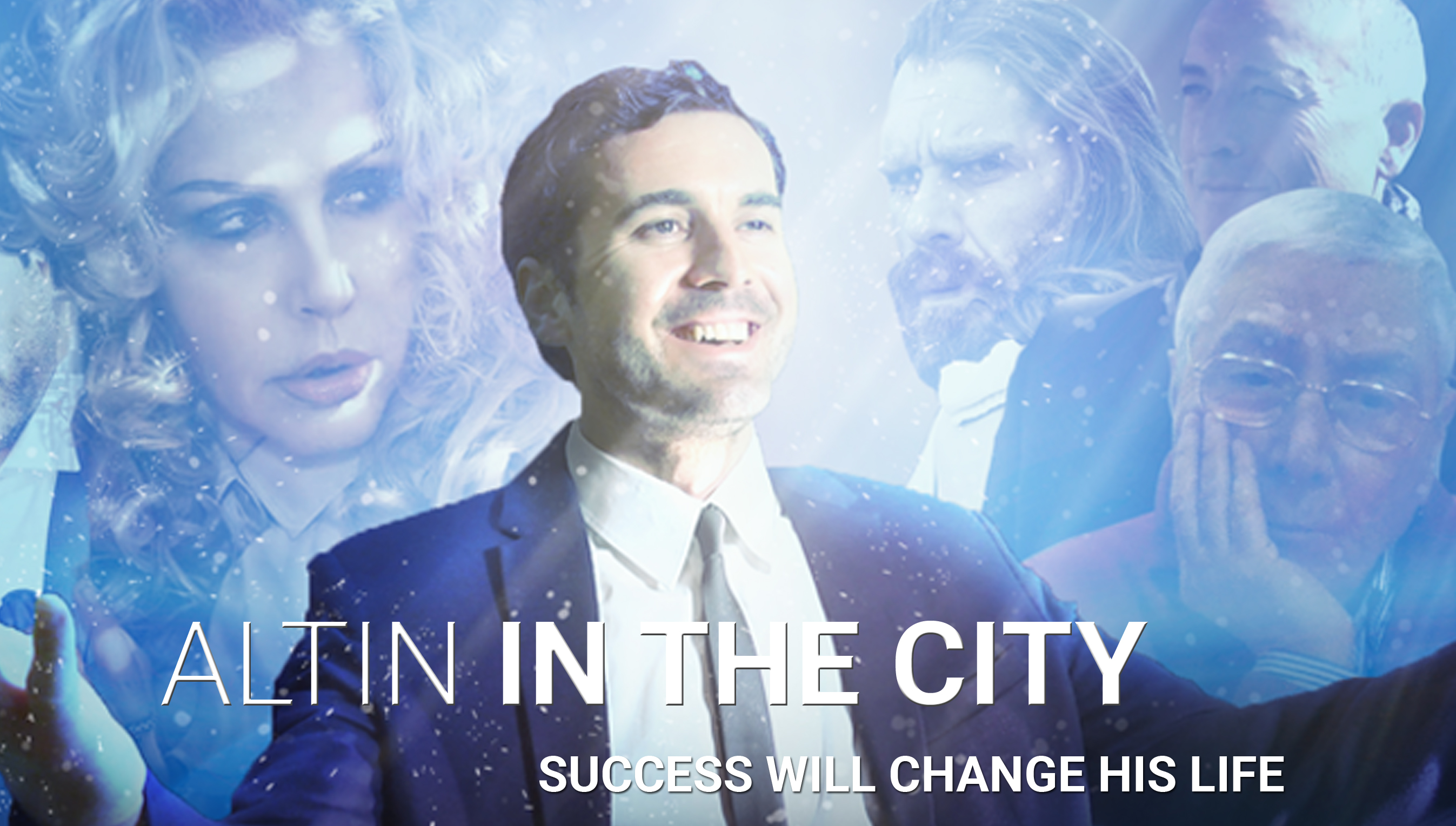
Drama, thriller, by Fabio Del Greco, Italy 2017.
Altin, aspiring Albanian writer arrived in Italy aboard a large ferry in the 90‘s, works in a butcher shop when he’s selected to audition for a reality of writers and finally sees a chance to be successful with his book “the journey of Ismail.” Unfortunately, this is the begin of the adventures which will lead him to learn about revenge, loneliness and extreme poverty, to the dark side of wealth and success.
The theme of Altin in the City should not lead to the assumption that it is merely the story of a young immigrant trying to integrate. In reality, it is a tale where greed, thirst for power and success, cynicism, and ambition intertwine, creating a sort of modern-day Faust and a new "pact with the devil" belonging to the 22nd century, which we could summarize as: show business. The reality show becomes the Mecca, the keystone, and the springboard for those who wish to achieve success without effort. Del Greco presents this world with subtle irony, characterized by kitsch nuances and parodic tones. However, success without effort comes at a price: Altin has sold his soul to the devil and, from being an easy prey of television showbiz, will soon become a victim of himself.
LANGUAGE: Italian
SUBTITLES: English, French, Spanish, German.
Chinatown (1974)

In 1930s Los Angeles, private investigator J.J. Gittes is hired for a trivial case of adultery but finds himself entangled in a much larger conspiracy involving murder, incest, and systemic corruption related to the city’s water supply. At the center of it all is the patriarchal and omnipotent figure of Noah Cross.
Roman Polanski’s masterpiece is the quintessence of neo-noir and one of the most pessimistic reflections on corruption ever put on screen. Here, corruption is not an anomaly but the very foundation of civilization. The famous ending suggests that evil is so entrenched and powerful that the only possible reaction for the individual is resignation.
The Conversation (1974)

Harry Caul is a surveillance expert, an obsessive and solitary professional. After recording a young couple’s conversation, he begins to suspect that his tapes could lead to their murder. Tormented by guilt from a past case that ended in tragedy, Caul breaks his rule of not getting involved, spiraling into paranoia.
Made by Francis Ford Coppola between the first two Godfather films, this is a masterpiece of post-Watergate paranoia. The analysis is not on the corruption of external power, but on the internal corrosion of the soul. Surveillance technology becomes a metaphor for modern alienation, where the act of observing destroys the ability to understand and act morally.
Serpico (1973)

Frank Serpico is a young and idealistic New York police officer who discovers a widespread and systemic culture of corruption within the department. Refusing to accept bribes, he is ostracized and threatened by his own colleagues. His lonely fight to expose the rot will lead him to risk his life and career.
Based on a true story, Sidney Lumet’s film, with an iconic performance by Al Pacino, is the definitive portrait of individual honesty against institutional corruption. Serpico is not just a police thriller but a bitter reflection on the personal price of integrity in a world that sees it as a threat.
All the President’s Men (1976)

Two young Washington Post reporters, Bob Woodward and Carl Bernstein, begin investigating a seemingly minor break-in at the Watergate complex. Guided by a mysterious source, “Deep Throat,” they uncover a vast conspiracy of political espionage and cover-ups that reaches the highest levels of the White House and the presidency of Richard Nixon.
Alan J. Pakula’s film is the tense and meticulous chronicle of one of the greatest journalistic investigations in history. It is a political thriller that celebrates the power of the press as the fourth estate, a bulwark of democracy against government corruption. Its aesthetic, made of shadows and oppressive spaces, defined the imagery of 1970s political paranoia.
I Am Nothing
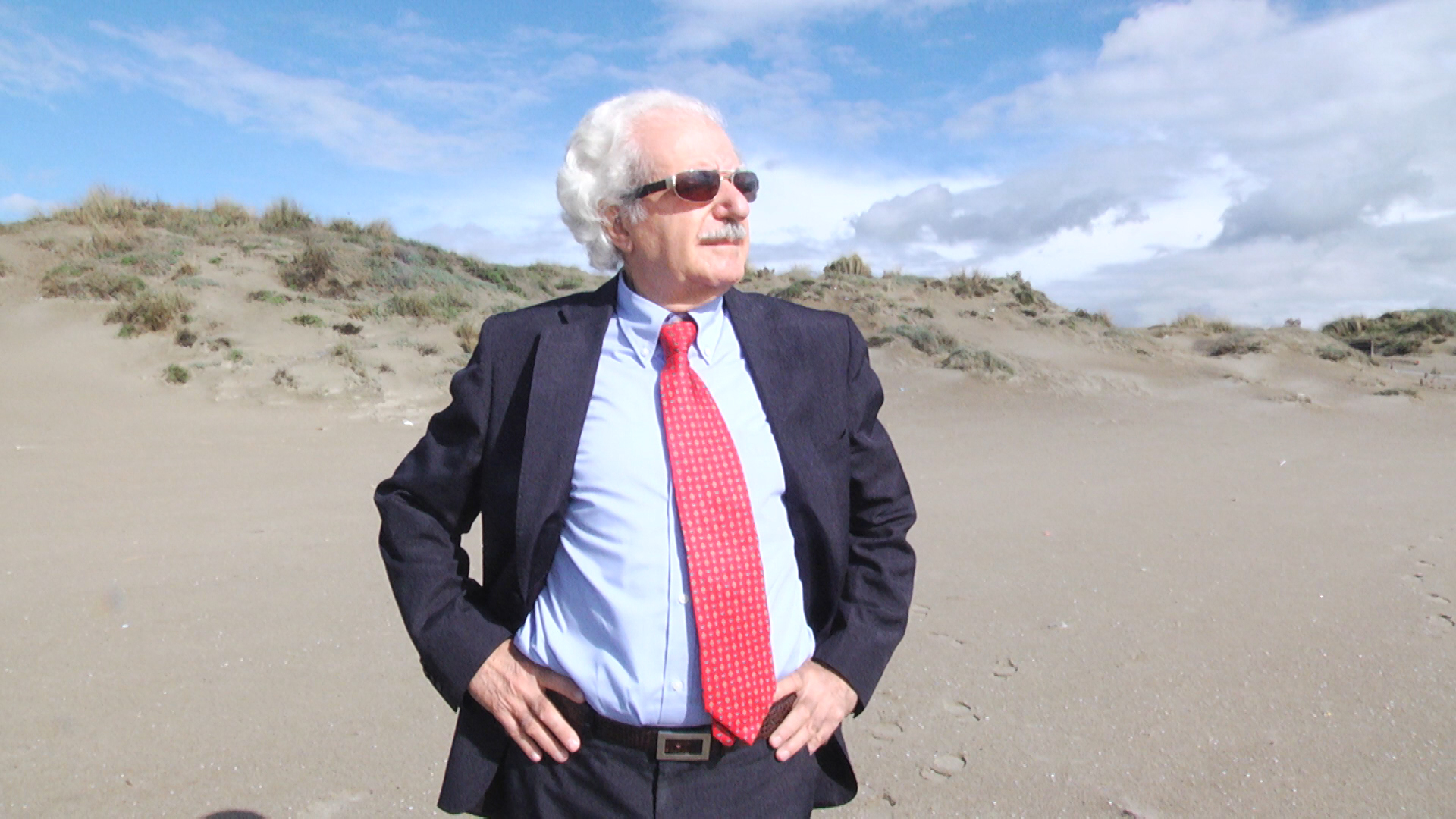
Drama, thriller, by Fabio Del Greco, Italy, 2015.
The story revolves around Vasco, a Roman builder who, at the age of 74, enjoys a life of absolute comfort. His human parable takes a dramatic turn when a mysterious encounter leads him to an ambush. Having survived, but marked by a long coma, Vasco wakes up with a new sensitivity, developing an intimate and poetic bond with nature. This new relationship with the world around him leads him to deeply explore himself, in an internal and external journey. through Italy, the United States and India, in search of a higher meaning and a cure. In parallel, the threat of a planetary cataclysm adds an epic dimension to the story.
I Am Nothing explores universal themes such as time, memory, oblivion and the connection with nature. Fabio Del Greco creates an existential drama full of food for thought. The director skillfully combines different visual materials, mixing archive images with nature photographs and dreamlike visions. This visual experimentation translates into an editing that captures the viewer's attention, guiding him through a cycle of creation and destruction. The sequences that alternate the buildings, Vasco's pride, with Indian landfills and natural landscapes create a hypnotic rhythm, underlining the beauty and fragility of life. Vasco's existential journey is a hymn to transformation and rebirth. The evolution of the protagonist, from unbridled luxury to the rediscovery of purity, represents a powerful metaphor on the meaning of life and the need to reconnect with authentic values. Io sono nulla stands out for its ability to combine introspection and visual experimentation, offering a suggestive and engaging narration. It is a film that invites us to reflect on the human condition, on our relationship with power and nature, and on the possibility of finding ourselves through change. A work that leaves its mark and lends itself to multiple readings.
LANGUAGE: Italian
SUBTITLES: English, Spanish, French, German, Portuguese
Network (1976)

Howard Beale, an aging anchorman, announces on air that he will commit suicide during his final broadcast after being fired. The incident causes a ratings spike, and a cynical television producer decides to exploit his mental instability, turning him into a “mad prophet of the airwaves” in pursuit of profit.
Written by Paddy Chayefsky and directed by Sidney Lumet, Network is a fierce and prophetic satire on media corruption. The film denounces how the obsessive pursuit of ratings and corporate profit can pervert the informational function of journalism, turning popular anger into an entertainment product and truth into a commodity.
Wall Street (1987)
![Wall Street (1987) ORIGINAL TRAILER [HD 1080p]](https://blog.indiecinema.co/wp-content/plugins/wp-youtube-lyte/lyteCache.php?origThumbUrl=https%3A%2F%2Fi.ytimg.com%2Fvi%2FNtTkHu8R2_Q%2F0.jpg)
Bud Fox, a young and ambitious broker, manages to win the favor of the legendary and ruthless financial shark Gordon Gekko. Seduced by luxury and power, Bud gets involved in insider trading and unscrupulous speculation, until a deal that threatens his father’s company forces him into a crisis of conscience.
Oliver Stone’s film defined the imagery of the 1980s, embodying the hedonism and greed of the Reagan era. Gordon Gekko, with his famous “Greed is good” monologue, became a cultural icon, a symbol of the moral corruption hidden behind the myth of financial success at any cost.
L.A. Confidential (1997)

In the glittering and corrupt Los Angeles of the 1950s, three very different police officers—one by-the-book, one violent, and one celebrity-obsessed—investigate a massacre at a coffee shop. Their investigation leads them to uncover a dense web of corruption linking the police department, politics, and the world of Hollywood.
This superb neo-noir by Curtis Hanson is a complex and stylistically impeccable immersion into an era of apparent innocence and hidden rot. The film explores various forms of corruption, from institutional to personal, showing how in a sick system even men seeking justice are forced to get their hands dirty.
The Insider (1999)

Jeffrey Wigand, a former executive at a major tobacco company, decides to publicly reveal that his bosses deliberately lied about the dangers of nicotine. He is aided by Lowell Bergman, a producer for the TV show “60 Minutes,” but both find themselves under immense pressure from the tobacco lobby and the television network itself.
Michael Mann’s masterpiece is the definitive thriller on whistleblowing. It is a powerful analysis of corporate corruption and the struggle of an ordinary man against an economic giant. The film explores the human cost of truth, showing how legal, economic, and media pressures can nearly destroy those who dare to challenge power.
Traffic (2000)
![Traffic (2000) ORIGINAL TRAILER [HD 1080p]](https://blog.indiecinema.co/wp-content/plugins/wp-youtube-lyte/lyteCache.php?origThumbUrl=https%3A%2F%2Fi.ytimg.com%2Fvi%2FBNSSeq1_OB8%2F0.jpg)
Through three intertwined stories, the film explores the complex world of drug trafficking. A conservative judge appointed to lead the war on drugs discovers his daughter is an addict; a Mexican police officer navigates a pervasively corrupt environment; and the wife of an arrested drug lord takes over the family business.
Steven Soderbergh directs a choral and stylistically bold work that portrays the war on drugs as a failure on all fronts. Corruption is not the exception but the rule governing a global system where everyone is involved and no one is innocent. The film is a powerful indictment of the hypocrisy and complexity of a problem with no easy solutions.
City of God (2002)

The film chronicles the growth of organized crime in the “City of God,” a violent favela in Rio de Janeiro, through the eyes of Buscapé, a boy who dreams of becoming a photographer. From the 1960s to the 1980s, we witness the escalation of violence, drug trafficking, and gang wars that define life in the neighborhood.
Directed by Fernando Meirelles, City of God is an energetic and brutal immersion into a world where corruption is not just political or economic, but an existential condition. It arises from extreme poverty and the absence of the state, creating an alternative system based on violence. It is a devastating analysis of how social inequality breeds its own monsters.
Syriana (2005)

A CIA agent in the Middle East, an energy analyst in Geneva, a lawyer in Washington, and a young Pakistani worker in a Gulf oil field. Their stories intertwine in a complex geopolitical thriller that exposes the corruption, greed, and machinations governing the global oil industry.
Written and directed by Stephen Gaghan, Syriana is a dense and challenging film that portrays corruption as a global, sprawling system. There are no heroes or villains, only players in a ruthless power game where the interests of multinationals, intelligence agencies, and governments merge, with devastating consequences for ordinary people.
The Lives of Others (2006)

In East Berlin in 1984, a loyal and meticulous Stasi captain, Gerd Wiesler, is assigned to spy on a successful playwright and his partner. By listening to their lives, filled with art, love, and ideas, Wiesler begins to question the repressive system he serves and feels unexpected empathy for his victims.
This Oscar-winning film is a powerful reflection on the moral corruption of a totalitarian regime. Surveillance is not just a tool of political control but an act that corrupts the soul of both the spied upon and the spy. Wiesler’s transformation arc shows how humanity and conscience can emerge even in the most inhumane circumstances.
Michael Clayton (2007)

Michael Clayton is a “fixer” for a prestigious New York law firm, a lawyer who cleans up the messes of the wealthiest clients. His life is thrown into crisis when his colleague and friend, the firm’s top lawyer, has a psychological breakdown and threatens to sabotage a multi-billion dollar class-action lawsuit against a corporate client.
Tony Gilroy directs a tense and intelligent legal thriller that explores corruption in the world of large corporations and the law firms that defend them. The film is a sharp analysis of the crisis of conscience of a man who has spent his life serving a morally compromised system and finds himself facing an impossible choice between loyalty and justice.
Il Divo (2008)

The film is a satirical and grotesque portrait of Giulio Andreotti, one of the most powerful and enigmatic political figures in Italian history, during the period when he faces trial for mafia association. The narrative moves between historical facts, suggestions, and a surreal, operatic staging.
Paolo Sorrentino creates a visually stunning work that does not seek to be a journalistic investigation but to capture the inscrutable essence of power. Andreotti, played by a chameleonic Toni Servillo, becomes a mask, a symbol of corruption as a system of occult relationships, silences, and unspeakable pacts that defined Italy’s First Republic.
Gomorrah (2008)

Based on Roberto Saviano’s investigative book, the film weaves together five stories set in the world of the Camorra, between Scampia and Casal di Principe. From the illegal disposal of toxic waste to drug dealing, through high-fashion tailoring and the ambitions of two young criminals, the film shows the “System” as an octopus that controls every aspect of life.
Matteo Garrone adopts an almost documentary-like style to portray organized crime not as a gangster epic, but as a ruthless and pervasive enterprise. Gomorrah is a chilling analysis of corruption as a form of territorial governance, an economic and social system that thrives where the state is absent or complicit.
Margin Call (2011)

In the 24 hours preceding the 2008 financial crisis, a junior analyst at a major investment bank discovers that the firm is on the brink of collapse due to toxic investments. The bank’s top executives gather for a long night to make a fateful decision: save themselves by selling off all the worthless assets, knowing they will trigger market panic.
J.C. Chandor directs a tense and claustrophobic chamber thriller that exposes the ethical corruption of high finance. The film does not focus on the technical complexity of the crisis, but on the human and moral drama of people who, faced with disaster, choose cynicism and self-interest, revealing the absence of accountability at the top of the system.
The Wolf of Wall Street (2013)

The film chronicles the rise and fall of Jordan Belfort, a New York stockbroker who builds an immense fortune through financial scams and a brazen approach to the stock market. His life is a whirlwind of unbridled excess: drugs, sex, parties, and limitless greed, which inevitably brings him into the FBI’s crosshairs.
Martin Scorsese directs an epic and overwhelming black comedy that doesn’t just denounce financial corruption but stages it as a grotesque and intoxicating spectacle. The film is an immersion into the moral vacuum of a world driven solely by money, where excess is not a side effect but the very essence of the system.
Leviathan (2014)

In a desolate coastal town in northern Russia, Kolya, a mechanic, fights against the corrupt mayor who wants to expropriate his house and land. He seeks help from a lawyer friend from Moscow, but his battle against the system—a rotten alliance of political power, bureaucracy, and the Orthodox Church—will lead him to lose everything.
Andrey Zvyagintsev directs a modern and bleak retelling of the Book of Job, a powerful parable about state corruption in Putin’s Russia. The “Leviathan” of the title is a monstrous and unfeeling state power that crushes the individual. It is a visually majestic and philosophically desolate work on the futility of the fight for justice.
Suburra (2015)

In an apocalyptic and rainy Rome, over the course of seven days, the fates of a corrupt politician, a crime boss, a young criminal, a PR man, and a gypsy clan leader intertwine. All are involved in a massive real estate speculation project on the Ostia coastline, a deal that will unleash a no-holds-barred power struggle.
Stefano Sollima directs a tense and violent noir that depicts the capital as a battlefield where organized crime, politics, and the Vatican are inextricably linked. Suburra is a ruthless analysis of corruption as the universal language of power in Rome, a city where the sacred and the profane mix in a whirlwind of violence and greed.
Sicario (2015)

Kate Macer, an idealistic FBI agent, is recruited into a secret government task force to combat Mexican drug cartels. She soon finds herself in a dark, lawless world, led by an enigmatic consultant and a CIA agent who use brutal and illegal methods, forcing her to question everything she believes in.
Denis Villeneuve directs a tense and morally ambiguous action thriller that explores the gray area of the war on drugs. The film shows how, to combat the violence and corruption of the cartels, the state is willing to become just as corrupt and ruthless, turning the border between Mexico and the United States into a lawless land where the end justifies any means.
The Big Short (2015)

While the big banks, the media, and the US government refuse to see reality, a small group of unconventional investors discovers that the US housing market is a giant bubble destined to burst. They decide to bet against the system, a move that will earn them billions but also force them to confront the deep corruption of the financial world.
Adam McKay directs a brilliant and innovative film that manages to explain the complex 2008 subprime mortgage crisis with humor and anger. The Big Short is a sharp denunciation of the stupidity, greed, and systemic fraud that led to the global economic collapse, showing a financial system corrupt to its core.
Spotlight (2015)

In 2001, the “Spotlight” team of investigative journalists at the Boston Globe, prompted by their new editor, begins to investigate a case of sexual abuse by a local priest. The investigation opens a Pandora’s box, revealing decades of systematic abuse by dozens of priests, systematically covered up by the Archdiocese of Boston.
Winner of the Oscar for Best Picture, Tom McCarthy’s film is a sober and powerful tribute to investigative journalism. The film portrays corruption not as a single act, but as a system of silence and complicity that allowed a powerful institution to protect its criminals. It is a celebration of the patient and determined work required to bring the truth to light.
The Laundromat (2019)

When her dream of a quiet retirement is shattered by an insurance fraud, a tenacious widow begins to investigate, following a trail that leads her to two Panama City lawyers. These men, Jürgen Mossack and Ramón Fonseca, are the architects of a global system of shell companies, tax evasion, and money laundering for the world’s rich and powerful.
Steven Soderbergh directs a satirical and surreal comedy that attempts to explain the Panama Papers scandal. Through a series of vignettes, the film exposes the mechanisms of global financial corruption, showing how an opaque legal system allows the super-rich to operate above the rules that apply to everyone else.
Dark Waters (2019)

Robert Bilott is a corporate defense attorney for major chemical companies. His life changes when he is contacted by a West Virginia farmer who convinces him that DuPont is dumping toxic waste on his land, poisoning his cows and the community’s water. Bilott begins a decades-long legal battle against the chemical giant.
Todd Haynes directs a sober and distressing legal thriller based on a shocking true story. The film is a powerful denunciation of corporate corruption and how large companies, with the complicity of government agencies, can endanger public health for decades in the name of profit, while hiding the truth.
Parasite (2019)

The poor, unemployed Kim family lives in a semi-basement apartment. With a clever plan, they manage to infiltrate the lives of the wealthy Park family one by one, getting hired as a tutor, driver, and housekeeper. Their seemingly perfect symbiosis is shattered by an unexpected discovery, unleashing a spiral of violence.
Bong Joon-ho’s masterpiece, winner of the Palme d’Or and the Oscar, is a brilliant and unpredictable metaphor for social inequality. The corruption here is not strictly political or financial, but a moral and systemic corruption generated by capitalism itself. The film shows how class struggle turns into a war among the poor, a ruthless critique of a world with no room for solidarity.
A vision curated by a filmmaker, not an algorithm
In this video I explain our vision

