
The Architecture of Forgetting
You arrive in a country that theoretically belongs to you, carrying everything you own in two suitcases, and the country looks away. Not with hostility — hostility would at least constitute acknowledgment. It looks away the way people look away from something that complicates a story they have already decided to tell about themselves. Between 1943 and 1954, somewhere between 250,000 and 350,000 Italians — Istrians, Dalmatians, Fiume residents — abandoned or were expelled from territories that passed under Yugoslav control, leaving behind houses, cemeteries, professions, and a particular way of inhabiting the world that had accumulated over centuries. What followed their arrival on Italian soil was not tragedy met with solidarity. It was something more corrosive: organized indifference, and in some documented cases, active obstruction.

The silence that settled over this exodus was not the natural silence of collective grief needing time to surface. It was an engineered silence, and its engineering required the cooperation of adversaries. The Italian Communist Party and the Christian Democrats agreed on very little in the postwar decades, but they converged, with remarkable efficiency, on the suppression of a narrative that was inconvenient to both. For the PCI, whose ideological loyalty ran toward Tito’s Yugoslavia and the broader project of socialist internationalism, the foibe — the mass killings of Italians by Yugoslav partisans, beginning in 1943 — represented an atrocity committed by political allies. Palmiro Togliatti, who led the party through the crucial postwar years, never found a satisfactory way to address what had happened in those karst sinkholes, and so the party largely chose not to address it at all, framing the exodus instead as a reactionary attempt to rehabilitate fascist irredentism.
The Christian Democrats had a different problem but arrived at the same solution. Acknowledging the full complexity of the Adriatic border — its violence, its ethnic cleansing, its forced departures — meant reopening questions about the Peace Treaty of 1947, which Italy had signed and which the DC had accepted as the price of postwar reintegration into the Western order. To mourn publicly and politically for Istria was to indict a settlement that the party had ratified. Beyond this, the esuli — the exiles — arrived in a country that was rebuilding its antifascist identity from scratch, and the identity of many Istrian communities was entangled, however partially and unevenly, with a pre-fascist and fascist-era Italian nationalism that the republic preferred to treat as a closed parenthesis rather than a living inheritance.
What makes this particular erasure so instructive is that it operated not through censorship in any crude sense but through the architecture of cultural legitimacy. Italian literature, cinema, and historiography of the 1950s and 1960s produced a rich and serious reckoning with the Resistance, with deportation, with the experience of the southern peasantry. The dominant intellectual institutions — publishing houses, film schools, literary prizes — were largely oriented toward a left-leaning antifascist culture that had no conceptual framework for Italian civilians as victims of postwar Yugoslav state violence. The result was not a banned subject but an unnarrated one, which is far more durable. A banned subject creates martyrs and samizdat. An unnarrated subject simply fails to accumulate the cultural mass required to enter public consciousness.
The philosopher Paul Connerton, in How Societies Forget, published in 1989, distinguished between forgetting as failure and forgetting as practice — an active social performance that serves specific functions for specific groups. The Istrian-Dalmatian case belongs emphatically to the second category. The exiles who settled in reception centers across Italy, sometimes housed in former concentration camps with bitter irony, found that the very language available to describe displacement and persecution had been reserved, politically and morally, for other experiences. Their grief was not denied exactly — it was simply left without a vocabulary, which amounts to the same erasure by a longer route.
Faces of Memory
By Isabel Russinova, Rodolfo Martinelli, documentary, Italy, 2020.
Istria of exodus and sinkholes through the testimonies of those who suffered the atrocities of the Second World War, losing everything: their identity, their home and very often their life. A journey towards memory through the testimonies, memories, truths of those who were there and lived through the drama of the Second World War and the exodus.
The documentary has as its main theme the difficult confrontation that history has with the eastern Italian border, and brings attention back to that world of injustice and pain that spreads and spreads over time, fixing the memory of those who can still tell their own experience of life in the years between the second conflict and immediately after the war. The voices, faces, stories of men and women who lived through those terrible years when they were very young and who still preserve images, sounds, sensations: they are the last witnesses of that time, a precious asset for all of humanity. Stories that fix an era that would otherwise be lost, modified, forgotten. A memory of horrors, injustices, prejudices. Only through knowledge, memory, reflection, awareness can we help the new generations. Know not to make mistakes again.
LANGUAGE: Italian
SUBTITLES: English
Cartographies of Belonging
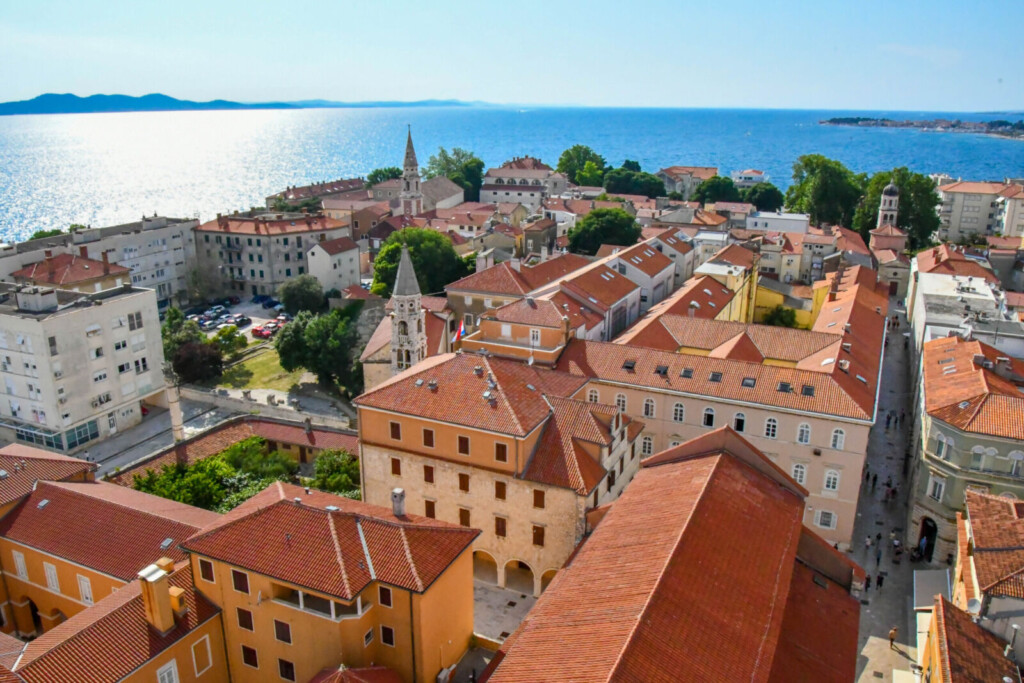
You open a drawer you haven’t touched in forty years and find a postcard addressed to a street that no longer exists. Not demolished, not rebuilt — simply renamed, syllable by syllable, into something your tongue was never trained to hold. The address is written in your grandmother’s handwriting: Via Roma, Zara. But the city on the other side of the Adriatic is called Zadar now, and Via Roma has been absorbed into a Croatian nomenclature that carries none of the sediment she pressed into that ink. The postcard is not a relic. It is a document of amputation.
What happened to Zara, to Pola, to Fiume was not merely administrative. The renaming of a city is an act that operates at a frequency most political analysis cannot hear — it strikes not at citizenship or property or legal status, but at the interior architecture of the person who grew up calling a place by one sound and is now told that sound was always wrong. Pierre Nora, writing in the first volume of Les Lieux de Mémoire published in 1984, described how memory and history enter into a fundamental tension: memory is living, carried by groups and individuals, rooted in the concrete and the sensory; history is a reconstruction, always incomplete, always operating at the remove of retrospect. What the Istrian and Dalmatian exiles experienced after 1945 was the violent conversion of their living memory into historical error — their cities were not renamed, they were corrected, as though the Italian topography had always been a mispronunciation of something truer underneath.
This is a specific kind of ontological violence, distinct from physical destruction. A bombed city can still be mourned at its coordinates. Its ruins are still located where the grief expects them. But when Pola becomes Pula, when Fiume becomes Rijeka, the coordinates themselves are severed from the emotional geography that made them meaningful. The exile who returns — and some did return, decades later, on strange pilgrimages of self — finds the streets physically intact and experientially illegible. The buildings stand. The café on the corner may still serve coffee. But every sign, every official surface, every public utterance of the city’s name confirms that the version of this place that formed them has been declared nonexistent. The body registers this as something close to gaslighting rendered in stone.
Geography, in this sense, is never neutral. The geographer Yi-Fu Tuan argued in Topophilia, published in 1974, that the bond between people and place is not sentimental decoration but a structural component of identity — place shapes perception, organizes memory, provides the spatial grammar through which a self becomes coherent over time. To strip a place of the names given to it by a living community is to delete the index through which that community accesses its own past. What remains is not a wound you can point to on a map, because the map has been redrawn. The wound is the gap between the map you carry inside and the one the world presents.
The approximately 350,000 Italians who fled Istria, Fiume, and Dalmatia between 1943 and 1956 did not carry their cities with them in any portable form. They carried the sounds of streets, the weight of light at a particular hour on a particular piazza, the smell of salt air arriving from a specific direction. These are not transferable to documentation. They cannot be submitted as evidence. And yet they constitute the deepest layer of what it meant to belong to those places — a layer that no treaty, not the 1947 Paris Peace Treaty that ceded Istria to Yugoslavia, not the 1975 Treaty of Osimo that formally closed the question, could legislate out of existence in the bodies of the people who left.
Memory, detached from its geography, does not dissolve. It calcifies.

Numbers as Testimony

You open a document and find a number: 350,000. Not a statistic attached to a war front, not a casualty figure from a battlefield with a named date and a named general. Just people — people who had lived for generations on land that had been theirs, or felt like theirs, or had been legislated into theirs by a series of treaties nobody they knew had signed — and who, between 1943 and 1956, ceased to exist as a presence on that land. They became, instead, a dispersal. They scattered across receiving centers in Trieste, in southern Italy, in Sardinia, in camps that had been built for other displaced populations and now swallowed another kind of loss. The number floats between 250,000 and 350,000 depending on which historian you consult, which archive you open, which political season produced the count. That variance itself is not a footnote. It is the subject.
Parallel to that dispersal runs a figure far harder to carry: somewhere between 5,000 and 11,000 people killed in the foibe — the karst sinkholes and ravines into which bodies were thrown, sometimes after execution, sometimes before death had finished its work. The range is not imprecision born of incompetence. It reflects decades of deliberately incomplete excavation, politically inconvenient forensics, and the particular silence that settles over evidence when the political inheritors of the perpetrators are sitting at the same table as the political inheritors of the victims. Jože Pirjevec, the Slovenian-Italian historian whose 2018 work on the foibe remains one of the most rigorous treatments of the subject, documented how post-war Yugoslav authorities actively obstructed efforts to catalog the killings. What was buried was buried twice — once in limestone, once in institutional forgetting.
Italian institutions did not establish February 10 as a national Day of Remembrance until 2004. The law passed with broad parliamentary support, which was itself a symptom of something: sixty years had to pass, the Cold War had to end, the Italian Communist Party had to dissolve and rebrand and rebrand again, before the state could afford to grieve publicly for people whose suffering had been administratively inconvenient. The inconvenience was structural. Italy’s postwar political legitimacy rested in significant part on the antifascist resistance, and the resistance had been substantially organized by the left, and the left had maintained fraternal relations with Tito’s Yugoslavia throughout the Cold War. To grieve the foibe loudly was to implicate an allied political tradition. To acknowledge the full scale of the exodus was to complicate a narrative in which the Adriatic frontier represented socialist liberation rather than ethnic expulsion. Grief was not suppressed because the state was cruel. It was suppressed because the state was legible — because it needed a coherent story about who the good people were and what they had done.
What the fifty-year delay actually reveals is the mechanism by which modern democratic states manage the relationship between official memory and political coalition. This is not unique to Italy. Every nation that has undergone a transition from one legitimizing ideology to another has produced a similar architecture of selective mourning. What varies is only the duration of the delay and the quality of the eventual admission. The French state waited decades before acknowledging its institutional role in the deportation of Jews under Vichy — it was not until Jacques Chirac‘s speech in July 1995 that France officially accepted responsibility, abandoning the Gaullist fiction of a nation entirely resistant. The pattern is consistent enough to constitute something close to a law: states grieve when grief becomes politically costless, and not one moment before.
The exiles from Istria and Dalmatia waited inside that calculation. Their suffering was real in 1946, documentable in 1952, and officially recognized in 2004 — not because the evidence appeared late, but because the audience for that evidence was not yet willing to receive it without the reception destabilizing something else they needed to believe.
The Epistemology of the Displaced
You arrive at the gate of what was once a military barracks, a suitcase held together with rope, and the guard looks through you rather than at you. Not hostility, exactly — something more corrosive than hostility. Indifference structured as policy.
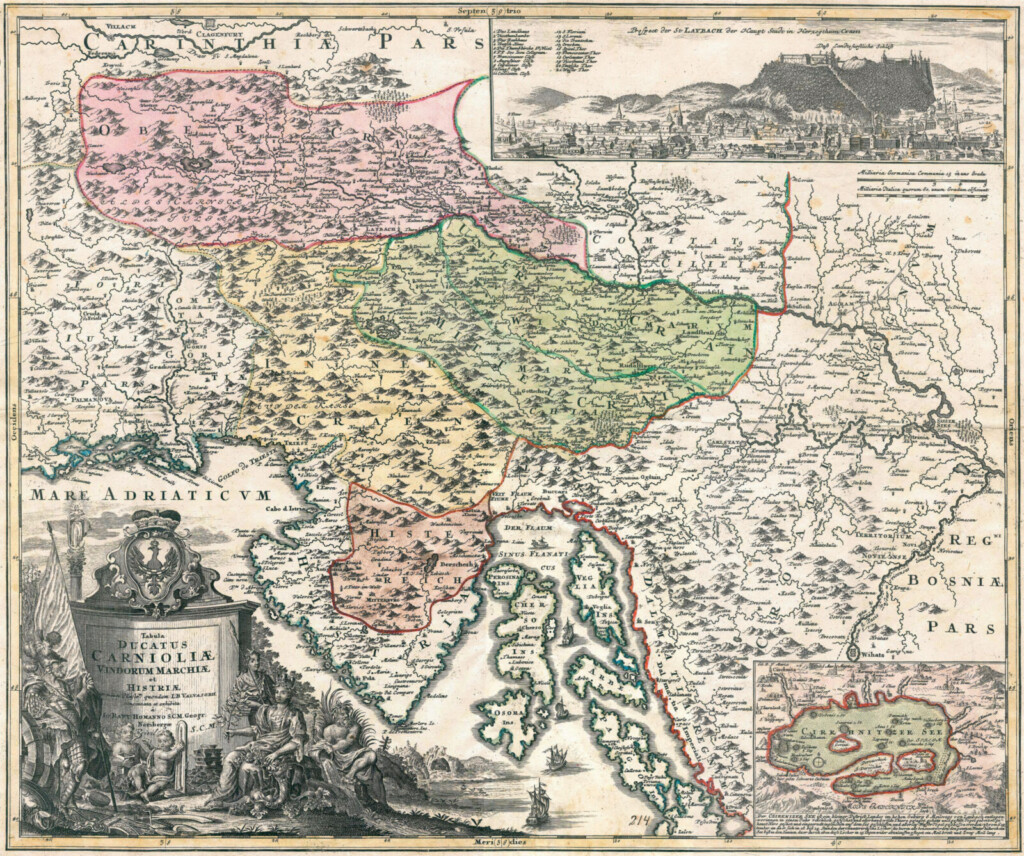
This is what tens of thousands of Istrian, Fiumano, and Dalmatian esuli encountered when they reached the Italian peninsula between 1945 and the early 1950s, funneled into reception camps — Padriciano near Trieste, Laterina in Tuscany, Fossoli repurposed again after its wartime horrors — where the state warehoused them in a bureaucratic limbo that could last years. They had fled, or been expelled, from territories ceded to Yugoslavia under the 1947 Treaty of Paris. They spoke Italian, often had fought for Italy, held Italian surnames and Catholic feast days in their bones. And yet the Republic that received them treated their presence as a logistical inconvenience rather than a human emergency. The camps were underfunded, overcrowded, surveilled. The surrounding communities, many of them Communist-leaning and ideologically aligned with Tito’s Yugoslavia, sometimes refused to rent apartments to the profughi, refused to serve them in shops, chalked slogans on walls.
What happens, philosophically, to a person whose memory has no landscape to attach itself to? Maurice Halbwachs argued in Les cadres sociaux de la mémoire, published in 1925, that individual memory is always socially framed — that we remember through groups, through places, through the material infrastructure of shared life. Strip away the piazza of Pola, the harbor of Zara, the particular smell of a stairwell in Fiume, and you do not simply lose geography. You lose the scaffolding of identity itself. The esuli did not only lose property; they lost the spatial grammar through which their past had been organized and made retrievable. Memory, for them, became something held in the body without a map to orient it — a knowledge that could no longer point anywhere outside itself.
This is where Paul Connerton’s analysis in How Societies Remember, published in 2008, cuts with unusual precision into the specific wound of the Giuliano-Dalmatian experience. Connerton identified one of the primary mechanisms of social forgetting as what he called “prescriptive forgetting” — a deliberate, institutionally endorsed erasure designed to serve the political needs of a new order. Postwar Italy needed its relationship with Yugoslavia to be manageable; it needed its left-wing electorate to remain coherent; it could not afford, politically or psychologically, to make the esuli’s suffering legible at a national scale. So their testimony was not violently suppressed so much as gently, persistently made to seem beside the point. The Italian Communist Party dismissed the exodus as a fabrication of the bourgeois press. Mainstream historiography for decades treated the foibe massacres — the extrajudicial killings of Italians by Yugoslav Partisans that preceded and accompanied the exodus — as a marginal footnote. The profughi were cast, when cast at all, as vaguely fascist remnants, people whose loss of home was awkwardly tangled with the wrong side of history.
What this produced in the esuli themselves was a cognitive split that no therapy of the era could name. They held memories that their adoptive society declared irrelevant, a past whose legitimacy depended on a political consensus that did not exist. Testimony given into a social vacuum does not simply go unheard — it begins to warp in the speaker’s own hands. Survivors from Padriciano, interviewed decades later by researchers like Raoul Pupo and Roberto Spazzali, describe not only grief but a specific epistemological dislocation: the sense that what they knew to be true about their own lives had somehow become inadmissible, that their grief was a form of bad taste. One woman recalled being told by a neighbor in Venice to stop speaking Istrian dialect in public because it made people uncomfortable — not because the dialect was incomprehensible, but because it was a reminder of something the nation had agreed, without ever quite saying so, to forget.
A vision curated by a filmmaker, not an algorithm
In this video I explain our vision

