
Defining Minimalist Cinema: Grammar of Reduction and Restraint
Minimalist cinema is not the absence of language. It is a highly controlled formal system in which every element of the filmmaking apparatus, from the placement of the camera to the duration of a cut, is reduced to its irreducible function. Where classical Hollywood grammar relies on a continuous architecture of coverage, shot-reverse-shot, motivated camera movement, and scored emotional cues to guide the viewer through narrative space, minimalist cinema operates through deliberate subtraction. It removes the ornamental, the redundant, and the explanatory, leaving only what is structurally necessary. The result is not emptiness but density, a kind of pressurized cinematic space in which meaning accumulates in what is withheld rather than what is shown.

To understand minimalist cinema as a formal system, one must begin with the long take. In conventional editing practice, a scene is broken down into multiple angles to control pace, direct attention, and modulate emotional response. The long take refuses this fragmentation. The camera remains with a subject, often in a static shot, allowing real time to accumulate on screen without the mediation of the cut. This is not a passive choice. The long take places the entire burden of performance and space on the frame itself, and it demands that the viewer become an active participant, scanning the image for information that a conventional edit would have delivered automatically. Duration becomes a compositional tool.
The static shot, closely related but technically distinct, refers to a camera that does not pan, tilt, track, or zoom throughout its operation. It observes. This observational stance, borrowed in part from the ontological theories of André Bazin, treats the frame as a window rather than a constructed argument. But in minimalist filmmaking, the static shot is never neutral. Its stillness amplifies movement within the frame, and its refusal to follow or emphasize action forces the viewer to determine what matters. The director delegates interpretive authority to the audience.
Editing in minimalist cinema operates on the principle of elliptical editing, a practice in which narrative transitions omit conventional connective tissue. Events are not bridged by cutaways, establishing shots, or reaction inserts. Scenes begin late and end early. Causal links are implied rather than demonstrated, and the gaps between sequences function as active narrative spaces. The ellipsis is not laziness or obscurity. It is a structural argument: what happens in the space between shots carries as much weight as what is shown. The viewer’s inference, their private reconstruction of absent events, becomes part of the film’s meaning.
Sound design in minimalist cinema adheres to a strict economy. The dominant mode is diegetic silence, or more precisely, an exclusive reliance on diegetic sound, those sounds that originate within the story world, the ambient noise of a room, footsteps on stone, the creak of a door. Non-diegetic scoring, the conventional orchestral apparatus that instructs an audience how to feel, is removed or drastically reduced. This absence is profoundly disorienting at first, then clarifying. Emotion is no longer administered from outside the frame. It must arise from within it, from performance, from the grain of a voice, from the way a character occupies silence.
Finally, minimalist mise-en-scène is structured around negative space, the deliberate use of empty areas within the frame to create compositional tension and psychological weight. A figure placed at the edge of the screen with a large unoccupied background is not a staging accident. It is a formal statement about isolation, about what the world will not provide to fill that emptiness. These five concepts, the long take, the static shot, elliptical editing, diegetic silence, and negative space, form the core grammar of reduction through which minimalist cinema generates its singular, irreducible power.
Four Technical Pillars: Selected Films and Their Formal Architecture
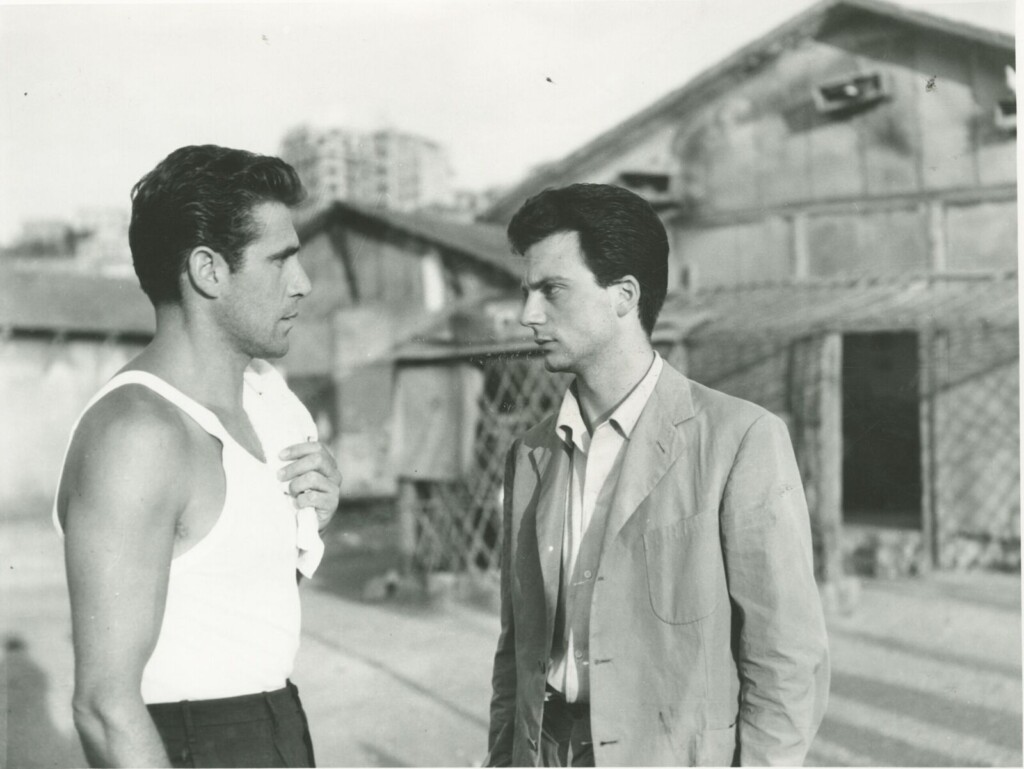
The four films examined here do not simply share an aesthetic temperament; they each construct minimalism as a rigorous technical system, deploying specific formal instruments with a consistency that borders on the architectural. Taken together, they constitute a grammar of restraint that rewards close, methodical analysis.
Chantal Akerman‘s Jeanne Dielman, 23 Commerce Quay, 1080 Brussels is perhaps the most structurally radical of the four. The camera is fixed throughout virtually the entire three-hour-twenty-minute running time, positioned at a height that corresponds precisely to the eye level of a seated observer, roughly one meter from the floor. This deliberate lowering of the axis refuses the dominant gaze of classical Hollywood framing, placing the spectator in a posture of patient witness rather than authoritative surveyor. The editing rhythm is calibrated to real duration: Akerman allows Jeanne to peel potatoes, polish shoes, and prepare veal cutlets in unbroken, unellided time. There are no cutaways to relieve the domestic repetition, no non-diegetic score to emotionally annotate the labor. Sound is exclusively environmental, the scrape of a fork against a plate, the running of tap water, the click of a light switch, and each of these sonic events carries disproportionate narrative weight precisely because no musical track competes with them. The formal strategy is measurable and intentional: by refusing ellipsis in the editing of routine tasks, Akerman transforms duration itself into dramatic pressure.
Robert Bresson‘s Au Hasard Balthazar operates through a different but equally disciplined formal logic. Bresson’s performance direction is among the most extreme in cinema history. His actors, whom he famously called models, are instructed to suppress every conventional signal of interior emotion. Gesture is reduced to its functional minimum, facial expression to near-neutrality. The result is a systematic emptying of the usual codes through which narrative film communicates psychological state. The camera, often in medium shot or tight close-up on isolated body parts, hands closing around a rope, feet moving across gravel, registers action without interpretive editorializing. Schubert’s Piano Sonata No. 20 appears briefly and intermittently, never as continuous underscore but as punctuation, arriving and departing without warning. The ellipsis in Bresson’s editing is equally severe: entire causal sequences are omitted, and the spectator is deposited into consequences without having witnessed causes, a strategy that enforces a kind of moral attention rather than narrative passivity.
Yasujirō Ozu’s Tokyo Story institutionalized what is now known as the tatami shot, a camera position set at approximately thirty-five to fifty centimeters above floor level, simulating the perspective of someone seated on a traditional Japanese mat. This axis is maintained with such rigidity that it becomes the film’s spatial signature. Ozu also employs his characteristic pillow shots, brief static images of rooftops, laundry lines, or industrial chimneys, which function as editorial pauses between scenes rather than as narrative connective tissue. These transitional inserts suppress dramatic momentum and redirect attention toward texture and atmosphere. His 360-degree editing system, which violates classical continuity rules by ignoring screen direction, creates a mild but persistent spatial disorientation that subtly undermines the viewer’s sense of stable, mastered geography.
Kelly Reichardt‘s Wendy and Lucy translates these precedents into a contemporary American independent context with precise economy. The film runs seventy-three minutes and operates almost entirely without non-diegetic music. The camera favors medium and long shots that refuse to privilege the protagonist’s emotional state through close-up amplification. Ellipsis is deployed aggressively in the editing: bureaucratic processes, phone calls, and logistical efforts are routinely omitted, leaving only arrival and outcome. The effect is a systematic stripping of the melodramatic apparatus, forcing the dramatic weight onto environmental sound, onto the ambient noise of a rail yard, the distant traffic, the specific acoustic texture of economic precarity rendered in purely diegetic terms.

Scene Deconstruction: Behind the Technical Decisions
The opening sequence of Pickpocket (Robert Bresson, 1959) offers one of the most instructive case studies in minimalist directing available to any student of cinema. Bresson shoots Michel’s first theft at the racetrack using a series of tight, fragmented close-ups: the hand entering a coat pocket, the wallet transferring between fingers, the eyes scanning without expression. There is no establishing shot to orient the viewer spatially in the conventional sense, no reaction shot coded with legible emotion. The focal length hovers in the mid-range, avoiding the distortion of a wide angle while keeping the frame compressed and claustrophobic around the act itself. Bresson’s model actor theory, his insistence on casting non-professionals and suppressing any theatrical performance, manifests here with absolute clarity. The hands do not perform stealing; they simply steal. The face does not register guilt or excitement; it registers nothing readable. This flatness is not a deficiency but a calculated technical choice: by stripping the human body of expressive intention, Bresson transfers the entire burden of meaning onto the editing rhythm, which cuts between fragments at a pace that builds tension through accumulation rather than through conventional dramatic escalation. The cutting frequency is moderate but metronomic, each cut arriving not at a moment of emotional peak but at the precise instant when the action completes itself mechanically.
Chantal Akerman’s Jeanne Dielman, 23, quai du Commerce, 1080 Bruxelles (1975) demands a different kind of granular attention, because its formal power resides almost entirely in duration. The sequence in which Jeanne prepares potatoes runs for several uninterrupted minutes, shot in a single static take from a fixed medium distance, the camera placed at Akerman’s deliberately chosen height corresponding to Jeanne’s eye level, asserting a horizontal axis of equality rather than the downward angle of surveillance. The focal length is standard, neither compressing nor expanding the kitchen space. There is no score, no ambient sound beyond the actual acoustic texture of water running and a knife making contact with a cutting board. The real-time duration here is not a stylistic flourish but a formal argument: the viewer is forced to experience labor as labor, to feel the weight of repetition without the editing abbreviation that conventional cinema uses to spare the audience from boredom. When Akerman does cut, it is to an equally static, equally long-duration take of an adjacent action, and the cut itself arrives not because something narratively significant has occurred but because the shot has geometrically completed itself.
Yasujiro Ozu‘s pillow shots in Tokyo Story (1953) function through an entirely different mechanism, that of graphic composition used as structural punctuation. Between scenes of domestic tension, Ozu inserts brief static shots of chimneys, rooftops, or a corridor in the inn, images that carry no narrative information and introduce no character present in the surrounding scenes. The camera sits low, as it does throughout Ozu’s mature work, typically somewhere between thirty and fifty centimeters from the floor, producing a geometry of horizontal lines and flat pictorial space. The focal length is consistently longer than would be natural for the interior distances involved, which subtly flattens depth and renders the image as graphic surface rather than three-dimensional window. These shots do not function as cutaways in the conventional editorial sense; they do not show us something a character is looking at, nor do they establish a new location. Their function is rhythmic and tonal, inserting a beat of visual silence between emotional sequences in much the way a rest functions in musical notation. The absence of diegetic logic is precisely the point.
Minimalism Across Optical and Narrative Registers

Minimalist cinema operates on two distinct but deeply interdependent registers, and understanding how they function in tandem is essential to grasping the full formal logic of the mode. The optical register governs what the camera sees and how it sees it, while the narrative register governs what the story chooses to tell, withhold, and imply. Neither register alone produces the characteristic minimalist effect. It is their convergence, their mutual reinforcement, that generates the peculiar density of silence and implication that defines the style at its most rigorous.
On the optical side, the management of depth of field is among the most decisive tools available to a minimalist filmmaker. Where classical Hollywood cinematography frequently employed deep focus to pack the frame with legible information across multiple planes, the minimalist tendency moves in the opposite direction. Shallow focus compresses pictorial information, flattening the image and isolating the subject from its environment in a way that strips the frame of narrative redundancy. The viewer is denied the comfort of spatial orientation, of reading background details as contextual clues. What remains is purely the figure, and even the figure is often partially withheld, framed from behind, observed in profile, or caught at a distance that resists identification. Robert Bresson’s work provides the textbook illustration of this approach, particularly in the systematic fragmentation of the human body across the frame, where hands, doors, and floors carry as much visual weight as faces, deliberately dismantling the hierarchy of expressivity that conventional cinematography maintains.
Wide-angle lenses, by contrast, serve a different but equally minimalist function. Rather than isolating the figure, they anchor it within environmental space, making the landscape or the room an active participant in the composition. In the films of Chantal Akerman, the static wide-angle shot transforms domestic space into a kind of visual pressure, the apartment walls becoming as structurally present as the character who moves between them. The lens does not flatter or dramatize; it simply records, with a fidelity so clinical that the absence of inflection becomes its own form of emphasis.
The narrative register operates through a complementary set of suppressions and displacements. Elliptical storytelling removes the connective tissue of conventional plot, leaving gaps where expository scenes would ordinarily occur. The viewer arrives in the middle of situations, departs before resolutions, and is never offered the retrospective summary that classical dramaturgy provides. Expository dialogue, the scene in which characters explain their pasts, their motivations, or the significance of what is happening, is systematically excised. What characters say, when they speak at all, tends toward the functional and the deflective. The emotional content migrates away from speech entirely.
Off-screen action becomes, in this framework, a primary structural tool rather than a secondary one. Events that would in conventional cinema be staged and shot as dramatic set pieces are displaced beyond the frame’s edge, communicated only through their acoustic residue or through the reaction of a figure who has witnessed what the viewer has not. This technique, which inverts the standard relationship between showing and telling, places enormous responsibility on diegetic sound. The ambient texture of an environment, footsteps in a hallway, the mechanical rhythm of domestic labor, rain against a window, carries the emotional and narrative information that has been evacuated from image and dialogue alike.
What makes the most fully realized minimalist works so formally coherent is precisely the way these two registers seal against each other. A shallow-focus image that withholds spatial information is reinforced by a narrative that withholds causal information. An off-screen event is made credible by a camera that has already trained the viewer to trust implication over demonstration. The result is a film language in which every element of withholding amplifies every other, producing a unified grammar of restraint whose cumulative force is anything but small.
Evolution of Minimalist Language: From Classical Economy to Contemporary Practice
The lineage of minimalist cinema does not begin with a manifesto but with a set of material and economic constraints that gradually revealed themselves as aesthetic virtues. In the rubble of postwar Europe, filmmakers working with depleted budgets, scarce studio infrastructure, and an urgent need to document a shattered reality discovered that restraint was not a limitation but a grammar. Italian Neorealism established the foundational principle: the world, observed with patience and without embellishment, contains more expressive density than any constructed spectacle. From that premise, the European art film movements of the 1950s and 1960s refined minimalism into a deliberately intellectual proposition. Bresson codified the suppression of performance affect. Antonioni extended duration until landscape absorbed psychology. These were not merely stylistic choices but arguments about what cinema was for, about the relationship between screen time and lived experience, about the moral implications of the edited cut.
The transition from that classical economy to the Slow Cinema wave of the late 1990s and 2000s represents both a continuation and an intensification. Directors such as Béla Tarr, whose long-take choreography in Sátántangó and The Turin Horse extends single shots to durations that restructure the viewer’s physiological relationship with time, absorbed the lessons of Tarkovsky and Jancsó and pushed them toward something closer to pure durational sculpture. Tarr’s camera does not simply observe; it participates in the weight of time, moving through fog and mud with a lateral persistence that makes the cut feel, when it finally arrives, like a small violence. Carlos Reygadas, working in Mexico and drawing equally on Bresson and Tarr, introduced a further variable: the use of non-professional actors within long-take frameworks that blur the boundary between documentary observation and staged fiction. In Silent Light and Post Tenebras Lux, Reygadas employs golden-hour photography and near-static compositions to create a diegetic world that feels simultaneously ethnographic and transcendent, where the formal economy of the image becomes the primary carrier of meaning. Kelly Reichardt, operating within the American independent tradition and closer to the compressed budgets and modest running times of that industrial context, demonstrates that minimalism does not require extreme duration to function. In Wendy and Lucy and First Cow, her economy is one of narrative selection and tonal restraint, of trusting the audience to infer emotional consequence from the geometry of a shot rather than from expository dialogue.
The shift from celluloid to digital acquisition has reshaped minimalist aesthetics in ways that are still being fully understood. The grain structure of 16mm and 35mm film carried an inherent temporal texture, a physical reminder of the photochemical process that introduced a subtle organic variability into long takes, making duration feel materially grounded. Digital sensors, by contrast, produce a cleaner signal that can, paradoxically, make extreme duration feel more abstract, more clinical, unless the filmmaker actively works against the medium’s native tendencies through lens selection, lighting temperature, and post-production grading. Some directors have embraced this abstraction as a formal quality in itself. Others, including Tarr in his final films, and numerous contemporaries working in DCP formats, have used digital grain overlays and aspect ratio choices to recover a sense of material presence that the technology otherwise effaces.
The final and perhaps most consequential pressure on minimalist cinema in the contemporary moment comes from the streaming economy, where platform algorithms, viewer retention metrics, and the culture of interrupted, device-mediated consumption sit in structural tension with the formal demands of extreme durational filmmaking. Yet minimalism has always survived institutional resistance precisely because its power operates at the level of individual perception rather than collective spectacle, and that intimate transaction between a sustained image and an attentive eye remains, regardless of the delivery format, the irreducible core of what this mode of filmmaking does and why it endures.
A vision curated by a filmmaker, not an algorithm
In this video I explain our vision
🎞️ The Art of Silence: Cinema's Most Essential Choices
Minimalist cinema draws its strength not from excess, but from precision — every frame, every silence, every glance carries the weight of the unspoken. To truly understand this cinema of restraint, one must first grasp the fundamental tools that filmmakers use to say more by showing less. These articles illuminate the visual grammar behind the most essential storytelling choices.
A Guide to Scene Composition and Auteur Mise-en-Scène
Minimalist mise-en-scène is perhaps the most direct expression of auteur restraint, where every object placed in frame and every spatial decision becomes a deliberate act of meaning. A bare room, a single source of light, or an actor positioned at the edge of the frame can speak volumes without a single word of dialogue. This guide decodes the compositional philosophy that separates purposeful emptiness from simple poverty of vision.
GO TO THE SELECTION: A Guide to Scene Composition and Auteur Mise-en-Scène
The Writing of the Gaze: A Guide to Camera Movements in Auteur Cinema
In minimalist cinema, the camera rarely moves without reason — each pan, tilt, or slow track carries an emotional charge that dialogue would only dilute. Understanding the language of camera movement is essential to appreciating how directors like Chantal Akerman or Jim Jarmusch transform stillness into profound narrative tension. This guide offers a rigorous map of the gestures through which the camera becomes the film’s truest voice.
GO TO THE SELECTION: The Writing of the Gaze: A Guide to Camera Movements in Auteur Cinema
The Grammar of the Gaze: Meaning of Shots in Cinema
The meaning of a shot in minimalist cinema is never accidental — the distance between camera and subject, the angle of vision, and the duration of a take all conspire to shape the viewer’s emotional and intellectual experience. This exploration of cinematic grammar reveals how masters of restraint use the shot itself as their primary tool of expression. Reading a film’s visual language begins here.
GO TO THE SELECTION: The Grammar of the Gaze: Meaning of Shots in Cinema
Analysis of the Point-of-View Shot in Cinema
The point-of-view shot is one of minimalist cinema’s most potent weapons, placing the audience directly behind the eyes of a character without the need for explanatory dialogue or expository framing. When used sparingly and with intention, it creates an intimacy that excess can never achieve. This analysis unpacks the subtle mechanics and profound emotional impact of one of cinema’s most essential devices.
GO TO THE SELECTION: Analysis of the Point-of-View Shot in Cinema
Discover the Power of Essential Cinema on Indiecinema
These tools of minimalist storytelling come alive in the films that dare to trust the viewer’s intelligence and sensitivity. On Indiecinema, our streaming catalog celebrates independent and auteur cinema that embraces silence, space, and the essential — films that linger long after the screen goes dark. Join us and explore a world of cinema where less is always, beautifully, more.
👉 EXPLORE THE CATALOG: Watch Indie Films in Streaming
A vision curated by a filmmaker, not an algorithm
In this video I explain our vision

