
The slasher film occupies a singular and often misunderstood position in the history of cinema. Born from the collision of Grand Guignol theatrical tradition, Italian giallo excess, and the raw anxieties of postwar American culture, it emerged as one of the most viscerally honest genres the medium has ever produced. Where other forms of dramatic storytelling encode social tension beneath layers of metaphor and restraint, the slasher strips that encoding away entirely, confronting its audience with violence, vulnerability, and mortality in their most unmediated forms. To dismiss it as mere exploitation is to misread both its history and its ambition.

What the genre has always understood, often better than its critics, is that fear is a profoundly democratic emotion. The slasher film democratized horror itself, relocating dread from the aristocratic castles and fog-laden moors of classical Gothic cinema into suburban bedrooms, summer camps, and high school corridors. It made the ordinary landscape menacing. It populated its narratives with working-class teenagers, babysitters, and outsiders rather than tormented nobility, and in doing so it spoke directly to audiences who had never seen their own environments reflected on screen as sites of genuine danger. That cultural intimacy accounts for much of the genre’s enduring power and its remarkable capacity for reinvention across decades.
The finest slasher cinema operates simultaneously as genre exercise and cultural diagnosis, embedding within its formal conventions a sharp commentary on gender, class, repression, and the violence latent in everyday social structures. Across its history, the genre has attracted filmmakers of genuine artistic seriousness who recognized in its strict formal grammar, the masked antagonist, the isolated setting, the dwindling ensemble, a framework capacious enough to carry substantial thematic weight. The result is a body of work far richer, stranger, and more rewarding than mainstream critical discourse has typically acknowledged, one that demands the same attentive, serious engagement the art house has always reserved for quieter forms of cinema.
X (2022)

X (2022), directed by Ti West, unfolds in rural Texas in 1979, where a group of young filmmakers travel to a remote farm to shoot an adult film. The elderly couple who own the property, Howard and Pearl, initially seem like eccentric but harmless landowners. As night falls and the production crew pursues their work, Pearl’s obsession with the performers spirals into violence, transforming the pastoral landscape into a killing ground drenched in blood and repressed desire.
Ti West’s film distinguishes itself within the slasher tradition by treating the genre not as a vehicle for cheap thrills but as a genuine aesthetic inquiry. Shooting on 16mm and evoking the grainy textures of 1970s exploitation cinema, West channels the spirit of Tobe Hooper‘s The Texas Chain Saw Massacre while constructing something far more melancholic. The film’s true horror emerges from Pearl’s anguished confrontation with aging and erotic obsolescence, transforming the killer into a figure of tragic self-recognition. Mia Goth‘s dual performance, playing both a young actress and the murderous Pearl beneath elaborate prosthetics, anchors the film’s thematic ambitions and elevates X into one of contemporary horror’s most intellectually compelling entries.
The Girl from the Back Desk
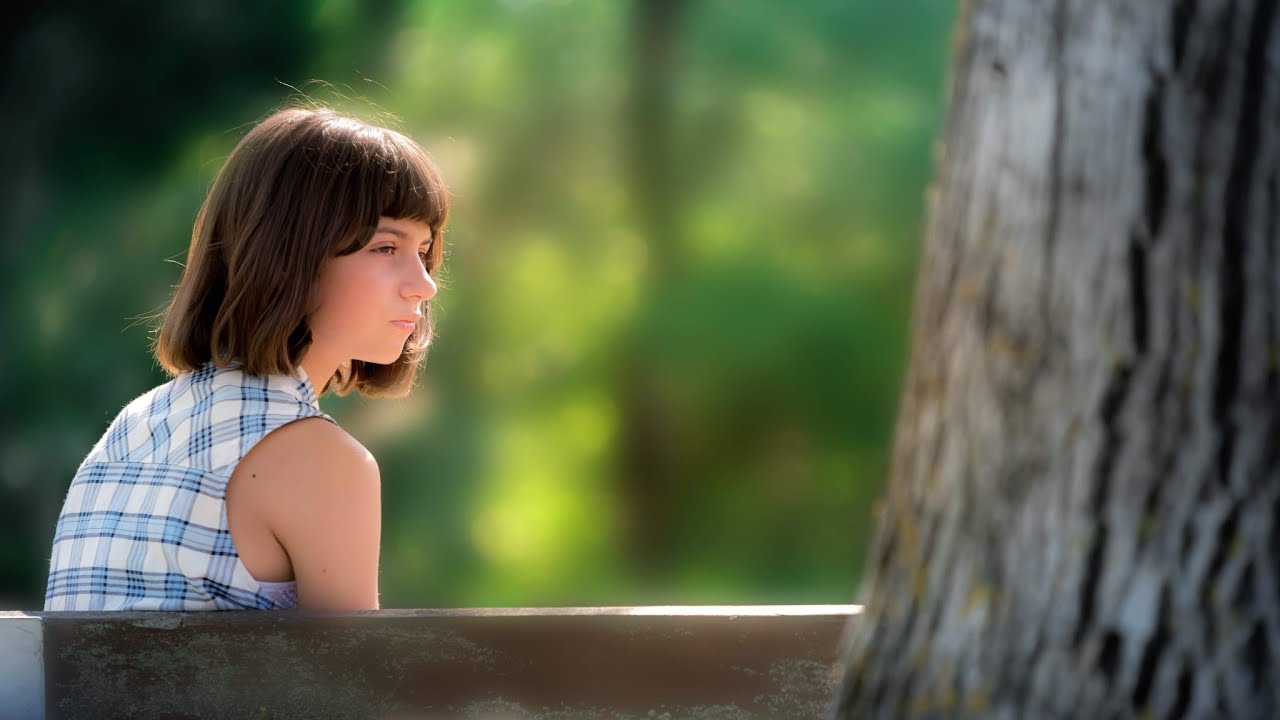
Drama, by Matteo Piacenti, Corrado Bonicelli, Italy, 2020.
Viola is a lonely teenager who feels out of place in the world around her, inadequate and imperfect. The comfort and support of her parents and friends are of no use. Art is the only way she has to express herself: like a colorful mosaic, Viola represents her own world and her way of seeing reality, one drawing at a time. Then she meets Giacomo, her new deskmate. From the relationship between the two, something opens up in the shell that imprisons Viola in loneliness and social isolation. A new path opens up for her in this difficult adolescent phase, which leads her to realize something more about herself and the reality around her.
This is a film made by very young boys and girls who share a passion for films, theater, and art. The film explores the sensitivity of young people, encourages them to reflect on their own self-perception in relation to society, with a positive message and attitude towards themselves and the community. "The Girl from the Back Desk" highlights the values that adolescents believe are essential for a healthy society: respect, generosity, kindness, trust in others, courage in defending their ideals, and participation.
LANGUAGE: Italian
SUBTITLES: English, Spanish, French, German, Portuguese
Halloween Kills (2021)

David Gordon Green‘s Halloween Kills (2021) arrives as the second chapter of his reimagined trilogy, picking up precisely where Halloween (2018) left off — Michael Myers escaping the burning Strode house and resuming his carnage through Haddonfield on the same cursed Halloween night. Laurie Strode, played again with fierce conviction by Jamie Lee Curtis, finds herself hospitalized while the town erupts into vigilante chaos. Karen and Allyson, her daughter and granddaughter, join a growing mob of survivors led by Tommy Doyle, a childhood witness to Myers’ original 1978 rampage. The film escalates the body count to extraordinary levels, leaning hard into its slasher roots while attempting to interrogate the mythology of pure, unstoppable evil.
Where Green’s film distinguishes itself within the slasher canon is in its unflinching examination of collective hysteria and the mob mentality that violence breeds. The script provocatively argues that fear corrupts communities as savagely as any masked killer ever could — a thematic ambition that separates it from simple franchise continuation. The set pieces are brutal and deliberately excessive, cinematographer Michael Simmonds bathing Haddonfield’s suburban streets in neon-drenched shadows that recall John Carpenter‘s original visual grammar while asserting a distinctly modern sensibility. The chant “Evil dies tonight” becomes an ironic refrain, exposing how ordinary people transform into something monstrous when consumed by righteous terror. As a slasher film, it delivers relentless carnage; as cultural commentary, it lands with surprising weight.

The Black Phone (2021)

Set in 1978 suburban Colorado, The Black Phone follows thirteen-year-old Finney Shaw, a quiet and bullied boy who is abducted by a sadistic killer known only as the Grabber, played with unsettling menace by Ethan Hawke behind a fragmented demon mask. Trapped in a soundproofed basement, Finney begins receiving calls on a disconnected black telephone from the Grabber’s previous victims, each ghost offering clues that might help him survive. Director Scott Derrickson, working from a Joe Hill short story, crafts a film steeped in period atmosphere, childhood dread, and supernatural unease.
What elevates The Black Phone above the crowded slasher landscape is its refusal to treat violence as spectacle. Derrickson is far more interested in psychological survival than in gore, drawing on the tradition of films like Halloween while injecting genuine emotional weight through Finney’s resilience and his sister Gwen’s fierce, visionary determination. Hawke’s restrained yet deeply disturbing performance anchors a film that understands the true engine of effective horror: the unbearable vulnerability of the innocent confronting absolute, predatory evil.
Freaky (2020)

Christopher Landon‘s Freaky (2020) merges the body-swap comedy with the slasher genre in a collision that proves far more coherent and purposeful than its high-concept premise might suggest. Vince Vaughn plays the Blissfield Butcher, a serial killer who, through a cursed ancient dagger, swaps bodies with a shy teenage girl named Millie, played by Kathryn Newton. The film wastes no time establishing its slasher credentials, opening with a brutal, inventively staged quadruple murder that signals Landon’s genuine affection for the genre’s mechanics of dread and spectacle. The premise is gleefully absurd, yet the execution is disciplined and surprisingly generous in its emotional intelligence.
What elevates Freaky within the broader slasher tradition is Landon’s understanding that the genre, at its most resonant, has always been a vehicle for identity anxiety. By placing a queer teenage protagonist inside the body of an aging male killer, the film literalizes the outsider experience in ways that feel genuinely subversive. Vaughn’s performance, committing fully to Millie’s mannerisms and vulnerability, is a masterclass in physical comedy underscored by real pathos. Landon, who previously revitalized the slasher calendar with Happy Death Day (2017), once again demonstrates that formal playfulness and genre respect are not contradictory impulses but complementary ones.
Happy Death Day 2U (2019)

Christopher Landon’s Happy Death Day 2U (2019) picks up immediately where its predecessor left off, thrusting Tree Gelbman back into a time-loop nightmare she believed she had already escaped. This sequel boldly expands the mythology of the original by introducing a science-fiction framework — a quantum reactor built by her classmate Ryan — that explains the loop’s mechanics while simultaneously fracturing the timeline into an alternate dimension. Tree must once again survive the relentless pursuit of the Babyface killer, but this time she is also forced to choose between two versions of reality, each carrying devastating emotional consequences.
What distinguishes Happy Death Day 2U within the slasher canon is its audacious refusal to simply replicate the formula that made Happy Death Day (2017) such a fresh genre entry. Landon leans deeper into dark comedy and genuine emotional pathos, particularly through Tree’s agonizing confrontation with her deceased mother, alive again in the alternate timeline. Jessica Rothe‘s performance carries tremendous weight, elevating the slasher mechanics into something surprisingly affecting. The film proves that the genre can sustain genuine psychological and emotional complexity without sacrificing the visceral thrills that define its identity.
A vision curated by a filmmaker, not an algorithm
In this video I explain our vision
Ready or Not (2019)
![READY OR NOT | Red Band Trailer [HD] | FOX Searchlight](https://blog.indiecinema.co/wp-content/plugins/wp-youtube-lyte/lyteCache.php?origThumbUrl=https%3A%2F%2Fi.ytimg.com%2Fvi%2FZtYTwUxhAoI%2F0.jpg)
On her wedding night, Grace finds herself hunted through the sprawling estate of the Le Domas family — a dynasty built on board games and bound by a lethal tradition. When the newest family member draws the card for hide-and-seek at midnight, the game turns deadly: the entire household, armed with crossbows, axes, and rifles, must kill her before dawn or face a demonic pact’s consequences. Directed by Matt Bettinelli-Olpin and Tyler Gillett, the film transforms matrimonial anxiety into a relentless, blood-soaked chase through candlelit corridors and secret chambers.
What elevates Ready or Not beyond its genre peers is its razor-sharp class satire stitched seamlessly into the slasher framework. The Le Domas clan embodies inherited privilege rotting from within — incompetent, paranoid, and utterly dependent on a system they barely understand. Samara Weaving delivers a career-defining performance, her white wedding dress progressively shredded and bloodied becoming the film’s most potent visual metaphor. Where films like You’re Next explored similar domestic siege territory, this entry distinguishes itself through genuine wit and a ferociously satisfying finale that few slashers dare to attempt.
Halloween (2018)

Halloween (2018), directed by David Gordon Green and produced with the direct involvement of franchise architect John Carpenter, serves as a direct sequel to the original 1978 film, erasing decades of convoluted continuity. Laurie Strode, played once again by Jamie Lee Curtis, has spent forty years living in isolation, consumed by paranoid preparation for Michael Myers’ inevitable return. When Myers escapes during a prison transfer, the collision between predator and survivor becomes the film’s brutal, relentless engine. Curtis delivers a performance of extraordinary emotional complexity, transforming Laurie from victim into a hardened, traumatized warrior.
What distinguishes this entry within the broader landscape of slasher cinema is its willingness to interrogate the genre’s own mythology. Green and co-writer Danny McBride strip away the supernatural explanations that diluted earlier sequels, restoring Myers to his most terrifying incarnation: pure, inexplicable human violence. The film engages seriously with the long-term psychological damage inflicted on survivors, a theme rarely explored with such depth in slasher filmmaking. Carpenter’s returning, modernized score amplifies the dread with visceral precision, and the result is a rare franchise revival that earns its place alongside the original as essential genre cinema.
The Strangers: Prey at Night (2018)

Johannes Roberts‘s sequel to Bryan Bertino‘s 2008 home invasion nightmare transplants the masked terror of Dollface, Pin-Up Girl, and the Man in the Mask from an isolated farmhouse to an equally desolate trailer park, where a fractured family on a last road trip together becomes the prey. Kinsey, her brother Luke, and their parents arrive at a relative’s holiday campsite only to find the grounds abandoned and the strangers already waiting. The premise is stripped to its bones, lean and efficient, with Roberts trusting the architecture of the location and the oppressive darkness of the night to generate dread before a single act of violence occurs.
What elevates The Strangers: Prey at Night (2018) within the slasher canon is Roberts’s conscious homage to the neon-soaked aesthetics of 1980s genre cinema, invoking the spirit of John Carpenter with a swimming pool sequence bathed in shifting colored light that ranks among the most visually audacious set pieces in recent horror memory. The killers retain their original, deeply unsettling philosophy of randomness, reinforcing the genre’s most existential terror: the victim’s innocence is entirely irrelevant. Unlike many contemporary slashers that drown in self-awareness or meta-irony, this film commits fully to its own rules, delivering genuine suspense, muscular pacing, and a nihilistic emotional punch that rewards any serious student of the form.
Happy Death Day (2017)

Christopher Landon’s Happy Death Day (2017) follows Tree Gelbman, a self-absorbed college student who is murdered on her birthday and forced to relive the same day in an endless loop — each time waking up again until she identifies her masked killer. Produced by Blumhouse Productions, the film blends the time-loop mechanics of Groundhog Day with classic slasher conventions, centering its mystery on a baby-faced mask that has since become one of the more memorable icons of late-2010s horror. Jessica Rothe delivers a genuinely compelling performance, anchoring the film’s tonal balancing act between genuine dread and sharp comedic self-awareness.
What elevates Happy Death Day within the slasher canon is its willingness to interrogate the genre’s traditional relationship with its female protagonist. Rather than positioning Tree as a passive victim, Landon transforms the slasher formula into a vehicle for character growth, forcing her to confront her own moral failures alongside the external threat. The film belongs to a lineage of self-reflexive horror — following where Scream led — that uses genre conventions as a mirror. It remains essential viewing for anyone tracing how the modern slasher has evolved from exploitation roots toward something more psychologically textured and, surprisingly, emotionally resonant.
It (2017)

Andy Muschietti‘s adaptation of Stephen King‘s sprawling novel arrives as a masterclass in translating literary dread into visceral cinematic horror. Set in the fictional town of Derry, Maine, the film follows a group of outcast adolescents — the self-styled Losers’ Club — as they confront a shape-shifting entity that resurfaces every twenty-seven years to prey upon children. Pennywise, rendered with unsettling physicality by Bill Skarsgård, takes the form of a dancing clown whose hollow eyes and distended grin weaponize childhood innocence against itself. The film grounds its supernatural terror in the lived anxieties of early adolescence, making the monster a grotesque externalization of every fear its young protagonists cannot yet name.
What distinguishes It (2017) within the slasher canon is its insistence on emotional architecture as the foundation for horror. Unlike genre entries that reduce their characters to screaming vessels awaiting the blade, Muschietti invests deeply in the Losers’ friendships, allowing dread to accumulate through attachment rather than shock. The set pieces — particularly the haunting sequence inside Neibolt House — deploy genuine spatial terror reminiscent of the best work of Wes Craven or John Carpenter. Skarsgård’s Pennywise carries enough anarchic menace to recall A Nightmare on Elm Street’s Freddy Krueger, yet remains entirely his own nightmare. The film proved that mainstream horror could reclaim psychological complexity without sacrificing raw, crowd-pleasing terror.
Terrifier (2016)

Damien Leone‘s Terrifier (2016) follows Art the Clown, a sadistic and mute serial killer who stalks and brutally murders a group of young women on Halloween night in a decaying urban landscape. Originally introduced in Leone’s anthology All Hallows’ Eve (2013), Art graduates here to feature-length carnage, dispatching victims with gleeful, theatrical cruelty across a grimy, abandoned warehouse setting that strips the slasher formula down to its most primal and unnerving bones.
What distinguishes Terrifier within the slasher canon is its unapologetic rejection of irony and postmodern self-awareness. Where the genre had spent decades winking at its own conventions, Leone commits fully to genuine, stomach-churning dread. David Howard Thornton‘s performance as Art the Clown is a masterclass in physical menace — wordless, disturbingly playful, and utterly devoid of sympathetic motivation. The film’s practical effects work recalls the grimy sincerity of 1980s grindhouse horror, and its refusal to soften its violence marks it as an essential, if deeply confrontational, entry in the slasher tradition.
You're Next (2011)

Adam Wingard‘s You’re Next (2011) arrives at the intersection of home-invasion horror and slasher tradition with a sharpness that cuts through genre complacency. The film centers on a wealthy family gathering at a remote estate, brutally ambushed by masked killers wielding crossbows, axes, and wire traps. What begins as a seemingly standard siege narrative reveals itself as something far more cunning, largely thanks to Sharni Vinson‘s Erin, a protagonist whose resourcefulness transforms the film’s power dynamic entirely. The script by Simon Barrett refuses to let its heroine remain passive, reconfiguring the final girl archetype into something genuinely threatening and tactically brilliant.
What distinguishes You’re Next within the broader slasher canon is its meticulous awareness of the genre’s own conventions, deployed not as mere postmodern winking but as structural weaponry. Wingard, working within the mumblecore-adjacent indie filmmaking circle, brings an economic visual intelligence to sequences that lesser directors would render chaotic and incoherent. The film’s tension derives not from supernatural menace but from human predation and cold domestic betrayal, grounding its violence in unsettling psychological territory. For any serious exploration of where the slasher genre can evolve while retaining its primal visceral charge, You’re Next remains essential and bracingly uncompromising.
Scream 4 (2011)

Wes Craven returns to his most iconic franchise with Scream 4 (2011), bringing Sidney Prescott back to Woodsboro fifteen years after the original murders. The film opens with a series of audacious false-start sequences that gleefully mock the conventions of horror sequels and remakes, before plunging into a new Ghostface killing spree targeting Sidney’s teenage niece Jill and her circle of film-obsessed friends. Kevin Williamson‘s screenplay crackles with self-awareness, weaving genuine menace alongside sharp cultural commentary about celebrity culture, social media, and the increasingly blurred line between victim and spectacle.
What distinguishes Scream 4 within the slasher canon is its unflinching interrogation of the remake era itself, a decade defined by studios cannibalizing their own horror libraries. Craven and Williamson transform this cultural exhaustion into subversive ammunition, crafting a villain whose motivation is rooted not in trauma or madness but in the desperate hunger for viral fame. This chilling update of the original Scream’s media critique feels disturbingly prescient, and the film’s final act delivers genuine shock alongside genuine sadness, reminding audiences why the franchise earned its place among the essential works of the slasher genre.
The House of the Devil (2009)

Ti West’s 2009 slow-burn horror masterpiece is set in the early 1980s and follows Samantha Hughes, a cash-strapped college student who takes a mysterious babysitting job at a remote, imposing mansion on the night of a lunar eclipse. Upon arriving, she discovers there is no child to watch — only an elderly, unsettling couple and a house full of dread. As the night deepens, Samantha gradually uncovers the horrifying truth about her employers and the satanic ritual she has been unwittingly recruited to serve.
What elevates The House of the Devil far above the generic slasher template is West’s almost surgical commitment to period authenticity and atmospheric tension. Shot on 16mm film stock, framed with deliberate stillness, and scored with synth-driven dread, the film does not merely imitate the aesthetic of early-decade horror — it fully inhabits it. West borrows the patient, suffocating build of Italian giallo and the ritualistic darkness of films like Rosemary’s Baby, subordinating gore to psychological unease. Within the slasher canon, it stands as a rare work of genuine craft, reminding audiences that the genre, at its finest, is an art of anticipation rather than spectacle.
Hatchet (2006)

Adam Green‘s Hatchet (2006) arrives as a gleeful, unapologetic love letter to the golden age of American slasher cinema, set deep in the murky bayous of New Orleans. A group of tourists on a haunted swamp tour find themselves hunted by Victor Crowley, a hideously deformed and supernaturally powerful killer with an insatiable appetite for brutal carnage. Green strips the premise down to its essential pleasures — atmosphere, dread, and spectacularly inventive practical gore effects — delivering a body count that escalates with almost gleeful momentum. The film stars Joel David Moore, Tamara Feldman, and a roster of beloved genre icons including Robert Englund and Kane Hodder.
What makes Hatchet genuinely essential viewing within the slasher canon is Green’s remarkable clarity of intention. Rather than deconstructing or ironizing the genre in the manner of Scream (1996), he embraces its conventions with sincere, infectious enthusiasm. Hodder’s Crowley is a ferocious physical creation, an old-school monster realized entirely through practical prosthetics and makeup at a time when digital effects had come to dominate horror filmmaking. Green understands that the slasher genre’s greatest strength lies in tactile, visceral immediacy, and every kill sequence here carries genuine weight and invention. It is precisely this commitment to craft and tradition that earns Hatchet its rightful place among slasher films no serious genre enthusiast should overlook.
The Descent (2005)

Neil Marshall‘s 2005 survival horror film follows six women who descend into an uncharted cave system in the Appalachian Mountains, only to find themselves hunted by blind, humanoid creatures evolved for subterranean life. What begins as an outdoor adventure among estranged friends rapidly collapses into a claustrophobic nightmare of narrow passages, darkness, and desperate survival. The film is grounded in a genuinely tragic backstory involving protagonist Sarah, whose grief and psychological fracturing become as threatening as the creatures lurking in the dark.
What distinguishes The Descent within the slasher tradition is its radical commitment to atmosphere before bloodshed. Marshall constructs dread through geography itself — the caves suffocate long before any blade or claw appears. The all-female ensemble is written and performed with rare psychological depth, subverting the genre’s historical tendency to treat women as passive victims. The film also operates on a second, entirely valid reading: that the creatures are projections of Sarah’s shattered psyche, transforming conventional slasher mechanics into a meditation on grief, guilt, and survivorship that places it alongside the most sophisticated horror cinema of its decade.
Saw (2004)

James Wan‘s Saw (2004) opens with two men chained in a decaying bathroom, a corpse between them, and a cassette tape that will change everything. The film operates less as a traditional slasher and more as a pressure-cooker thriller, stripping the subgenre down to its psychological core. Dr. Lawrence Gordon and Adam Stanheight must piece together cryptic clues left by the elusive Jigsaw Killer, a figure who never wields a blade himself but engineers elaborate death traps designed to force his victims into brutal acts of self-preservation. The genius of the screenplay, co-written by Wan and Leigh Whannell, lies in its economy — almost the entire film unfolds within a single claustrophobic room, generating suffocating dread from architectural minimalism rather than elaborate set pieces.
What distinguishes Saw within the slasher canon is its radical reframing of the killer’s moral logic. Jigsaw, portrayed in fragments and flashbacks with chilling restraint by Tobin Bell, does not kill for pleasure or compulsion but presents himself as a grotesque philosopher of survival. This ideological dimension elevates the film beyond simple gore mechanics, inviting uncomfortable questions about agency, desperation, and human endurance. The now-legendary final twist, executed with brutal efficiency, redefined what a horror finale could achieve cinematically. Shot on a budget of approximately one million dollars, the film announced Wan as a significant voice in genre cinema and spawned one of horror’s most commercially dominant franchises, proving that genuine craft and a genuinely unsettling premise could transform institutional poverty into artistic power.
Wrong Turn (2003)

Directed by Rob Schmidt and released in 2003, Wrong Turn follows a group of young travelers stranded in the remote forests of West Virginia after a car accident, where they become hunted prey for a clan of severely deformed, cannibalistic mountain men. Chris Flynn, played by Desmond Harrington, crosses paths with Jessie and her friends, and what begins as a desperate survival situation quickly spirals into a relentless, blood-soaked chase through dense, unforgiving wilderness. The film draws heavily from the backwoods horror tradition established by The Texas Chain Saw Massacre and Deliverance, grounding its terror in geographic isolation and the vulnerability of outsiders far from civilization.
What distinguishes Wrong Turn within the slasher canon is its disciplined commitment to practical tension rather than ironic self-awareness, a quality that set it apart from the post-Scream wave of knowing, meta-horror. Schmidt stages sequences with genuine spatial coherence, making the forest feel like a labyrinthine trap rather than a simple backdrop. The antagonists — grotesquely realized through prosthetic makeup rather than digital effects — carry a menacing physicality reminiscent of the best creature-driven horror. For audiences seeking a slasher that trades cleverness for raw, unrelenting dread and a throwback sincerity about the genre’s most primal pleasures, this film remains a thoroughly effective and underappreciated entry.
Valentine (2001)

Valentine (2001), directed by Jamie Blanks and based on Tom Savage’s novel, follows a group of young women in San Francisco who begin receiving disturbing Valentine’s Day cards and are subsequently hunted by a masked killer — one wearing a cherubic Cupid mask — whose identity connects to a humiliation suffered at a middle school dance years earlier. The film stars Denise Richards, Marley Shelton, David Boreanaz, and Jessica Capshaw, blending the glossy aesthetic of late-nineties teen horror with the slasher revival momentum ignited by Scream (1996) and its successors.
What makes Valentine a worthwhile entry in any serious survey of the slasher genre is its cynical inversion of romantic iconography. Blanks weaponizes the saccharine imagery of Valentine’s Day — chocolates, roses, greeting cards — transforming tokens of affection into instruments of dread. The Cupid mask itself is a genuinely unsettling creation, its porcelain innocence curdling into menace. While critics dismissed the film on release as derivative, its sardonic tone and polished kills reward revisitation, particularly as a cultural artifact capturing the slasher genre’s millennial exhaustion and its compulsion to dress cruelty in the language of sentiment.
Urban Legend (1998)

Set on the campus of Pendleton University, Urban Legend (1998) follows a group of students who begin dying in gruesome ways that mirror the most infamous urban myths of American folklore — the killer in the backseat, the roommate found dead in the dark, the poodle in the microwave. Directed by Jamie Blanks, the film stars Alicia Witt, Jared Leto, Rebecca Gayheart, and Tara Reid, assembling a cast squarely aimed at the post-Scream (1996) demographic hungry for self-aware, campus-set horror. The mystery unfolds as Natalie, haunted by a past incident, tries to unmask a killer before becoming the next victim.
What elevates Urban Legend within the slasher canon is its genuinely clever structural conceit: the murders are not merely gore set pieces but elaborate recreations of cultural mythology, transforming collective anxiety into cinematic violence. The film arrives during the late 1990s renaissance of the genre, when slashers were permitted a degree of meta-awareness previously unseen, and Blanks exploits this license with considerable craft, staging kills that reward viewers familiar with folklore. The hooded parka-clad killer remains a striking visual icon, and the film’s willingness to implicate the very stories people tell each other — campfire tales weaponized — gives it a thematic density that separates it from mere imitation.
I Know What You Did Last Summer (1997)
![I KNOW WHAT YOU DID LAST SUMMER [1997] - Official Trailer (HD) | Now on 4K Ultra HD](https://blog.indiecinema.co/wp-content/plugins/wp-youtube-lyte/lyteCache.php?origThumbUrl=https%3A%2F%2Fi.ytimg.com%2Fvi%2FrEnCEM48QaY%2F0.jpg)
Four teenagers — Ray, Julie, Helen, and Barry — are celebrating their graduation on a coastal North Carolina night when they accidentally strike a pedestrian with their car. Panicked and unwilling to face consequences, they dispose of the body in the ocean and swear a pact of silence. One year later, Julie receives an anonymous note reading simply “I know what you did last summer,” and a hook-wielding figure in a fisherman’s slicker begins hunting them down one by one.
Directed by Jim Gillespie from a screenplay by Kevin Williamson, fresh off his triumph writing Scream (1996), I Know What You Did Last Summer occupies a fascinating and frequently undervalued position within the slasher canon. Williamson’s script transplants the genre’s familiar architecture into the specific register of Southern Gothic coastal dread, trading the suburban anonymity of earlier slashers for the fog-thick, working-class harbors of North Carolina. The film is less interested in pure shock mechanics than in the slow psychological corrosion of guilt, and that moral undercurrent — rare in a genre so often content with spectacle — gives it a lingering unease that distinguishes it from its contemporaries. Jennifer Love Hewitt and Sarah Michelle Gellar anchor the ensemble with performances that genuinely register the weight of complicity, while the hooded fisherman, wielding his meat hook with methodical patience, becomes an effective avatar of consequence itself, a figure risen not from pure evil but from the specific sin of cowardice. Gillespie’s direction leans heavily on atmosphere over carnage, and the film’s rain-soaked parade sequence remains one of the most effectively staged set pieces of late-1990s horror, a masterclass in tension built from stillness and dread rather than gore.
Scream (1996)

Wes Craven’s Scream (1996) arrived at a moment when the slasher genre had grown exhausted and self-parodic, reduced to diminishing sequels and increasingly formulaic kills. Craven, working from Kevin Williamson’s razor-sharp screenplay, responded with a film that dismantled the very conventions it inhabited, producing a meta-horror experience that simultaneously honored and eviscerated its predecessors. Set in the fictional town of Woodsboro, the film follows Sidney Prescott, played with remarkable emotional depth by Neve Campbell, as she becomes the target of a masked killer known as Ghostface, one year after her mother’s brutal murder. The opening sequence alone, featuring Drew Barrymore in a devastating subversion of star-power expectations, announced that this was a slasher film that understood its own grammar fluently.
What elevates Scream beyond clever postmodern exercise is its genuine investment in dread and character. The film’s central tension never dissolves into mere winking self-awareness; Craven maintains authentic menace throughout, ensuring that every reference to Halloween (1978) or Friday the 13th (1980) functions as both homage and structural commentary. Randy’s famous “rules of surviving a horror movie” scene is not simply comic relief but a mechanism that deepens the audience’s complicity, making viewers acutely conscious of their own voyeuristic relationship with genre violence. For any serious exploration of slasher cinema, Scream remains indispensable, a film that revitalized an entire tradition while exposing its psychological and cultural architecture with surgical precision.
Candyman (1992)

Candyman (1992), directed by Bernard Rose and adapted from Clive Barker‘s short story “The Forbidden,” follows Helen Lyle, a graduate student researching urban legends in Chicago. Her investigation into the myth of the Candyman — a hook-handed supernatural killer summoned by repeating his name five times before a mirror — leads her deep into the Cabrini-Green housing projects, where fear and folklore have become instruments of social control. As the boundary between legend and reality dissolves, Helen finds herself accused of murders she cannot explain.
What elevates Candyman far above the conventions of the slasher genre is its unflinching interrogation of race, poverty, and the violence embedded in American mythology. Rose uses the horror framework to expose how marginalized communities are rendered invisible until tragedy forces attention upon them. Philip Glass‘s haunting score lends the film an operatic grandeur rarely associated with slasher cinema, while Tony Todd‘s performance transforms the Candyman into a figure of genuine tragic menace rather than mere shock value. The film owes debts to classics like Halloween (1978) and A Nightmare on Elm Street (1984), yet surpasses them in cultural ambition, making it essential viewing for anyone serious about the genre’s capacity for social commentary.
Child’s Play (1988)

Tom Holland‘s 1988 horror film centers on Andy Barclay, a six-year-old boy who receives a Good Guy doll as a birthday gift from his desperate, loving mother. Unknown to both, the doll houses the soul of serial killer Charles Lee Ray, played with gleeful menace by Brad Dourif in a voice performance that became one of horror’s most iconic. As Chucky begins his murderous rampage through Chicago, the adults around Andy refuse to believe the child’s increasingly frantic warnings, trapping the boy in a nightmare no one will validate.
What distinguishes Child’s Play within the slasher canon is its shrewd inversion of the genre’s standard power dynamics. Rather than a towering masked killer pursuing helpless teenagers, Holland places the threat inside a child’s toy, exploiting primal anxieties about the objects we trust most intimately. Dourif’s voice work transforms Chucky into something genuinely unsettling rather than merely ridiculous, and the film’s Chicago working-class setting grounds the supernatural horror in recognizable economic reality. Where films like Halloween and A Nightmare on Elm Street externalize evil as an intruder, Child’s Play smuggles it inside domesticity itself, making it an essential and psychologically richer entry in the slasher tradition.
A Nightmare on Elm Street (1984)

Wes Craven’s 1984 masterwork arrives in the quiet suburban town of Springwood, Ohio, where a group of teenagers begin sharing the same terrifying dreams — dreams haunted by a disfigured killer named Freddy Krueger, who wears a tattered hat and a glove fitted with razor-sharp knives. When the teens realize that dying in the dream means dying in reality, the film’s central protagonist Nancy Thompson, played with raw determination by Heather Langenkamp, must find a way to confront the monster before sleep itself becomes fatal.
What distinguishes A Nightmare on Elm Street (1984) from virtually every other entry in the slasher canon is Craven’s radical decision to make the unconscious mind itself the killing ground. Where films like Halloween (1978) or Friday the 13th (1980) ground their terror in physical space, Craven dissolves the boundary between waking life and nightmare, transforming the most intimate and unavoidable human act into an arena of dread. The result is a slasher film that operates simultaneously as psychological horror and social commentary, with Freddy Krueger embodying the sins of a community that chose silence over justice — a monster birthed not from the wilderness but from collective guilt.
Friday the 13th (1980)

Sean S. Cunningham’s Friday the 13th (1980) unfolds at Camp Crystal Lake, a remote New Jersey summer retreat with a cursed past. A group of young counselors arrives to reopen the camp, only to be stalked and killed one by one by an unseen assailant. The film withholds the identity of its killer until a genuinely shocking final act, building dread through point-of-view cinematography borrowed liberally from Dario Argento and John Carpenter’s Halloween (1978), transforming the pastoral wilderness into a suffocating arena of paranoia and sudden violence.
What distinguishes Friday the 13th within the slasher canon is its ruthless commitment to atmosphere over explanation. Tom Savini‘s practical gore effects remain viscerally convincing decades later, grounding the supernatural menace in disturbingly physical terms. Adrienne King’s performance anchors the film’s emotional stakes, while Harry Manfredini‘s iconic score, with its whispering percussive motif, weaponizes sound itself. The film established a template — isolated setting, ensemble of unknowns, methodical predation — that entire decades of horror cinema would perpetually revisit, deconstruct, and struggle to surpass.
Suspiria (1977)

Dario Argento’s Suspiria (1977) follows Suzy Bannion, a young American ballet student who travels to a prestigious dance academy in Freiburg, Germany, only to discover that the institution harbors a coven of witches responsible for a series of brutal, inexplicable murders. From its opening sequence — a young woman fleeing into a storm-lashed night before meeting a savage, viscerally choreographed death — the film establishes itself as a sensory assault unlike anything else in the horror genre. The narrative is deliberately thin, functioning more as a dreamlike descent into terror than a conventionally structured thriller.
What elevates Suspiria far beyond the slasher template it superficially resembles is Argento’s transformation of violence into pure visual and auditory spectacle. The murders are staged as grotesque set pieces drenched in supersaturated Technicolor reds and blues, while Goblin’s iconic prog-rock score pulses beneath every frame like a second heartbeat. Where most slasher films deploy kills as mechanical plot devices, Argento treats each death as a baroque painting in motion, imbuing the film with an operatic intensity that has influenced generations of horror filmmakers from Wes Craven to Ari Aster.
The Texas Chain Saw Massacre (1974)

Tobe Hooper’s debut feature remains the foundational text of American horror cinema, a raw and relentless document of dread that redefined what the slasher genre could accomplish. Set in the scorched backroads of rural Texas, the film follows a group of young travelers who stumble upon a family of cannibalistic killers, culminating in one of the most sustained sequences of pure terror ever committed to celluloid. Shot on grainy 16mm by cinematographer Daniel Pearl, the film has the nauseating texture of a snuff film, a quality that convinced early audiences they were witnessing something genuinely prohibited. Leatherface, the chainsaw-wielding antagonist wearing a mask of human skin, became an instantly iconic figure precisely because Hooper presented him not as a supernatural monster but as a terrifyingly plausible product of poverty, isolation, and psychosis.
What separates this film from the countless slashers it inspired is its refusal to aestheticize violence. Unlike the elegantly staged kills of later genre entries such as Halloween or Friday the 13th, Hooper keeps the camera uncomfortably close, denying the audience the distance required to transform brutality into spectacle. The dinner table sequence, an extended ordeal of psychological torture, is arguably more disturbing than anything that precedes it, demonstrating that horror lives most powerfully in anticipation and degradation rather than gore. Decades after its release, the film retains every ounce of its original ferocity, standing as proof that low-budget independent filmmaking, when driven by genuine artistic vision, can produce work that permanently alters the cultural imagination.
Psycho (1960)

Alfred Hitchcock‘s Psycho (1960) stands as the foundational text of the slasher genre, a film that essentially invented the conventions every subsequent horror filmmaker would either honor or subvert. Marion Crane, a secretary who impulsively steals forty thousand dollars from her employer, checks into the remote Bates Motel and encounters the quietly disturbed Norman Bates, a young man living under the psychological shadow of his domineering mother. The shower sequence, among the most analyzed minutes in cinema history, delivers the genre’s first definitive statement: the protagonist is expendable, safety is an illusion, and violence can arrive with shocking, rhythmic brutality.
What separates Psycho from the countless slashers it inspired is Hitchcock’s rigorous formal intelligence. Bernard Herrmann‘s shrieking string score, the jagged editing of the shower scene, and the clinical framing of the Bates house against a bruised sky transform genre mechanics into genuine psychological excavation. Norman Bates remains the prototype of the slasher’s killer — sympathetic on the surface, monstrous beneath — and the film’s unflinching willingness to dissect repression, identity, and voyeurism gives it a weight that films like Halloween (1978) and Scream (1996) would consciously inherit. This is not merely a film to admire historically; it remains viscerally, unsettlingly alive.
🔪 Into the Dark: Essential Horror Cinema Picks
Slasher films are just one terrifying corner of the vast horror universe. If you love the tension, the dread, and the visceral thrills of the genre, these curated guides will lead you deeper into the shadows of cinema’s most chilling territories.
Horror Cult Movies to Watch Absolutely
Horror cult movies represent the raw, unfiltered heartbeat of genre filmmaking, where low budgets and bold ideas created some of the most enduring nightmares on screen. This guide dives into the essential titles that built devoted followings and redefined what horror could mean. If slashers are your entry point, these cult classics will take your obsession to the next level.
GO TO THE SELECTION: Horror Cult Movies to Watch Absolutely
1980s Horror Movies: Cult Films That Stuck in the Imaginary
The 1980s were the golden era of slasher cinema, spawning iconic franchises and unforgettable masked killers that still haunt audiences today. This guide explores the decade’s most influential horror films, tracing how low-budget shockers became genuine cultural touchstones. Understanding the ’80s horror boom is essential for any fan who wants to grasp the full legacy of the slasher genre.
GO TO THE SELECTION: 1980s Horror Movies: Cult Films That Stuck in the Imaginary
The 40 Scariest Horror Movies of All Time
The scariest horror movies of all time reach beyond jump scares and gore to tap into something far more primal and unsettling. This definitive ranking spans decades and subgenres, showcasing the films that left lasting psychological marks on their viewers. Many of the genre’s most celebrated slashers appear here, placed in conversation with the broader tradition of cinematic fear.
GO TO THE SELECTION: The 40 Scariest Horror Movies of All Time
Must-See Films About Serial Killers
Slasher films and serial killer narratives share a deep, disturbing DNA, both fascinated by the mechanics of predation and the psychology of violence. This essential guide explores the most compelling films built around history’s most chilling figures, blending true-crime tension with masterful suspense filmmaking. For fans of the slasher genre eager to explore its darker, more realistic underbelly, this list is an unmissable companion.
GO TO THE SELECTION: Must-See Films About Serial Killers
Discover More on Indiecinema Streaming
The horror genre is endlessly rich, and the most daring titles rarely make it to mainstream platforms. Indiecinema is your gateway to independent and arthouse horror, cult classics, and hidden gems that challenge, terrify, and inspire — stream them all and explore cinema beyond the ordinary.
👉 EXPLORE THE CATALOG: Watch Indie Films on Streaming
A vision curated by a filmmaker, not an algorithm
In this video I explain our vision

