
The planet, like every living being, has its own spirituality but most of society seems not to notice it at all. Each person but also each organization and each state has its own spiritual life, which has a fundamental impact on one’s personal growth. But the political and economic approach of those in power seems to take into account only the matter.

The policies of states around the world are a long series of failures. They seem designed specifically to sow fear and frustration. The twentieth century was the century with the most millions of deaths in the history of mankind. After a brief period of recovery in the post-war period, humanity has plunged back into greyness, this time disguised as democracy.
The true face of democracies seems to be only an awareness of the powerful that they can no longer exercise the dictatorship directly. A mask worn to avoid total rebellion and the failure of all the darkest policies. Wars, fanaticism, repression, discrimination and financial crack: there is something for everyone.
The opposite of spirituality: globalized materialism
The orientation of power and the media is to completely deny the existence of spirituality. TV, newspapers and politics do not deal with it at all, except for a few small columns on the last page. Theirs is an attitude of superiority towards something that seems not useful in solving the practical problems of society. Growing up in a purely materialistic lifestyle we try to satisfy only our material needs and we are unable to interpret our ailments.
Finance and economics seem to increasingly take away any possibility from individuals and small local organizations. Their idea is to impose few products and few guidelines on everyone with no choice. They all focus on the clash of civilizations between the West and Islam causing wars and conflicts one after another, while poverty is rampant in poor countries in the West other types of illness such as depression, unhappiness and the continuing fear of the economic crisis spread. But why does all this happen? Is the catastrophe really so global is it inevitable?
Why does this negative energy seem to possess the power of virtually every state on the planet? Materialism seeks to impose itself everywhere as the only reality: the spiritual forces that govern the destinies of the planet are not mentioned at all in the mainstream media. Television and newspapers offer a stream of news that seems to have been designed to plunge us into a kind of deep sleep.
The daily and obsessive repetition of tragic news, dramatic events and pessimism affects us every day. Through this obsessive repetition that continues over the decades and tells only the most tragic events of materialism, our spiritual energies are colored black. The audiovisual stunning of certain films full of special effects seems to be created precisely on the model of how the world is presented to us by the media: explosions, sensationalisms, tragedies one after another without the basis of any script.
This guide is a journey across the entire spectrum of the spiritual search. It is a path that unites the great masterpieces that defined the genre with the most profound independent visions. We will explore films that are meditations on life, death, connection, and consciousness—works that do not just tell, but aim to transform the viewer.
Samsara

Completed over a period of 5 years in 25 different countries around the world, it was filmed in 70mm in electronic format. The film premiered at the 2011 Toronto International Film Festival and had a limited release in August 2012.
The main website describes the film: “Expanding on the themes they covered in Baraka (1992) and Chronos (1985), Samsara discovers the wonders of our world from the mundane to the transcendent, considering the incomprehensible limits of the spirituality of humanity and also the human experience. a conventional documentary or a travelogue, Samsara feels more like a non-verbal guided meditation.

Inner Worlds, Outer Worlds

There is a field vibration that connects all things. It has been called Akasha, Logos, the primordial OM, the music of the spheres, the Higgs field, dark energy and a thousand other names throughout history. It is the common link between all religions, all sciences, and the link between our inner worlds and our outer worlds.
Spring, Summer, Autumn, Winter … And Spring

Nel middle of a wild Korean land, a Buddhist teacher patiently helps a young boy to mature in wisdom and compassion, through experience and countless exercises. Once the student finds his desire linked to sex, he seems lost in the contemplative life and also follows his love, but soon fails to adapt to the modern world, ends up in prison for a criminal activity and returns to the teacher in search of spiritual redemption and reconciliation with karma.
I Am

I Am is a 2010 American documentary created, directed and also narrated by Tom Shadyac. The film raises the concern: “What’s wrong with the world, and what can we do about it?”, And uncovers Shadyac’s individual journey after a bicycle accident in 2007 that led him to the answers “the nature of ‘humanity’, ‘the world’s ever-increasing dependence on materialism’, as well as ‘human bonds. Shot with a group of 4, the film stands in stark contrast to the director’s most prominent comic works, such as Ace Ventura: Pet Detective, Liar Liar and even Bruce Almighty, all of whom worked alongside Canadian comedian Jim Carrey.
A vision curated by a filmmaker, not an algorithm
In this video I explain our vision
Tuning In

Tuning is a practice that refers to the moments when a person, normally in a trance state, establishes a psychic bond with a spiritual being. The channeler is then able to act as a dimensional intermediary in bringing various other humans to touch the entity, along with analyzing the entity’s messages.
For the first time ever, six of the most famous American channelers are featured in the same film to get the right understanding of the sensation, along with the information obtained. The entities that come through each with a strong and distinctive character were interviewed in detail by the director and the result is exceptional: through space and time we discover that the entities speak as one, conveying a clear and broad message of empowerment for humanity.
Home
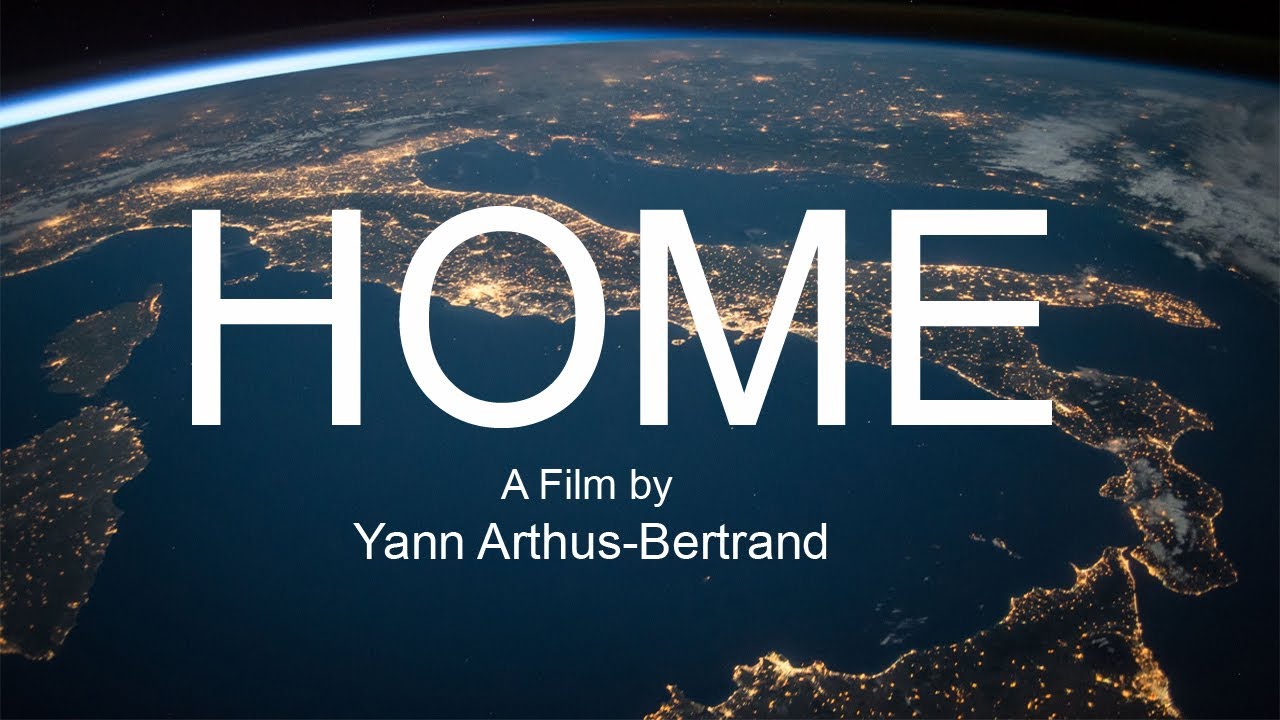
Documentary, by Yann Arthus-Bertrand, France, 2009.
Spectacular documentary on environment and climate change with the narration voice of Glenn Close, produced by Luc Besson, Home shows us the exploitation of natural resources, lifestyles and destructive habits of man and the repercussions on the climate, investigating in a fascinating way the links between the planet and all living being. Shot in over eighteen months of time, the film is composed almost entirely of aerial shots taken in over fifty countries around the world.
LANGUAGE: english
SUBTITLES: italian
Awake: The Life of Yogananda

Awake: The Life of Yogananda is an unconventional biography of the Hindu Swami who brought yoga and meditation to the West in the 1920s. By personalizing his pursuit of enlightenment and sharing his struggles along the path, Yogananda made the ancient Vedic teachings accessible to a modern audience, attracting many followers and inspiring millions of yoga practitioners today.
Shot over 3 years with the participation of 30 nations around the world, the documentary takes a look at the world of yoga, ancient and modern, Eastern and Western, and also checks why millions of people today have transformed their interest in the inner world, limiting the mundane world in search of self-realization.
Baraka

Baraka is a documentary film without narration or commentary. Explore the motifs through a collection of natural events, life, human activities and phenomena filmed in 24 countries on 6 continents over a period of 14 months. The film takes its name from the Sufi idea of baraka, which indicates essence, blessing or breath.
The film is Ron Fricke ‘s sequel to Godfrey Reggio’s non-verbal documentary Koyaanisqatsi. Fricke was director of photography and collaborator of the Reggio film, and for Baraka he began by himself to refine and expand the photographic strategies used on Koyaanisqatsi. Shot in 70mm, it is made up of a mix of photographic styles consisting of slow motion and time-lapse. To achieve this, two shooting systems were used. A Todd-AO system was used to shoot traditional pricing, but to make the time-lapse series of the film Fricke built a special camera that integrated time-lapse digital photography with impeccably handled motion.
I Heart Huckabees

A “existential fun” film, I Heart Huckabees tells of investigators (Dustin Hoffman and Lily Tomlin) who investigate the lives of their clients (Jude Law, Jason Schwartzman, Mark Wahlberg and Naomi Watts). As the different investigations cross, both their opponent and Bane (Isabelle Huppert) try to drag their clients towards meaning in their lives.
Young Albert Markovski heads the “Open Spaces Coalition” ecological team. Among their existing works is the abandonment of the construction of a new “big-box” outlet store, Huckabees. Albert is a rival to Brad Stand, a Huckabees executive. Brad infiltrates Open Spaces and overrides Albert as the leader. Dawn Campbell is Brad’s girlfriend and the face and voice of the Huckabees; appears in all shop announcements.
The Fountain

Tomás Verde in New Spain fights the Mayans to enter a pyramid, where he is attacked by a Mayan shepherd. The story ends with a similar looking man. A third man, cosmetic surgeon Tom Creo, is losing his wife Izzi to a brain tumor. Tom is working with a remedy using samples from a tree found during the expedition to Guatemala, which are checked for medical use for degenerative brain conditions in his laboratory. He writes a short story titled “The Fountain” about Queen Isabella giving her kingdom to the Inquisition and offering a payment to Tomás Verde to search for the tree of life in the Central American forest in Mayan territory.
I Am Nothing
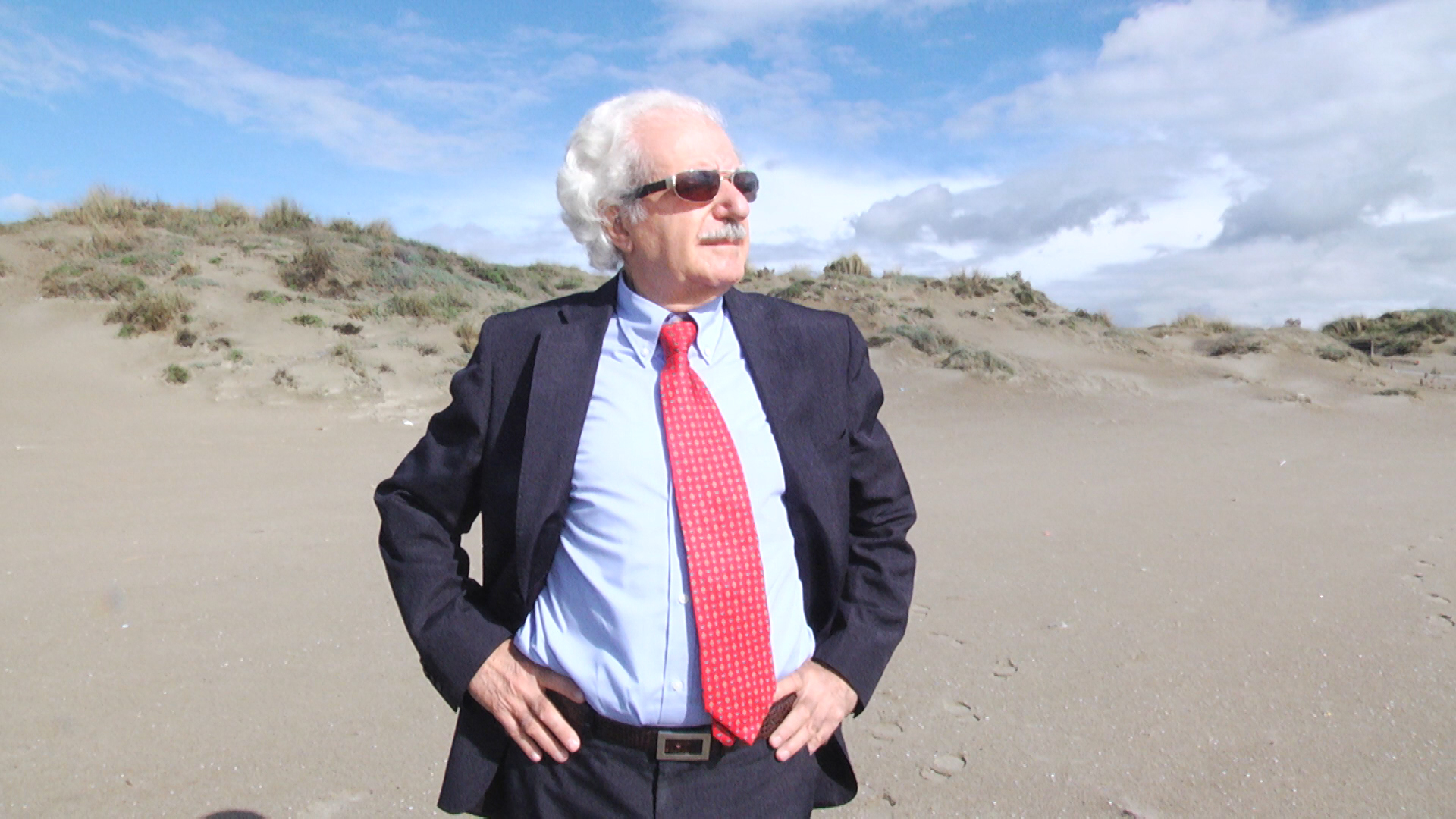
Drama, thriller, by Fabio Del Greco, Italy, 2015.
The story revolves around Vasco, a Roman builder who, at the age of 74, enjoys a life of absolute comfort. His human parable takes a dramatic turn when a mysterious encounter leads him to an ambush. Having survived, but marked by a long coma, Vasco wakes up with a new sensitivity, developing an intimate and poetic bond with nature. This new relationship with the world around him leads him to deeply explore himself, in an internal and external journey. through Italy, the United States and India, in search of a higher meaning and a cure. In parallel, the threat of a planetary cataclysm adds an epic dimension to the story.
I Am Nothing explores universal themes such as time, memory, oblivion and the connection with nature. Fabio Del Greco creates an existential drama full of food for thought. The director skillfully combines different visual materials, mixing archive images with nature photographs and dreamlike visions. This visual experimentation translates into an editing that captures the viewer's attention, guiding him through a cycle of creation and destruction. The sequences that alternate the buildings, Vasco's pride, with Indian landfills and natural landscapes create a hypnotic rhythm, underlining the beauty and fragility of life. Vasco's existential journey is a hymn to transformation and rebirth. The evolution of the protagonist, from unbridled luxury to the rediscovery of purity, represents a powerful metaphor on the meaning of life and the need to reconnect with authentic values. Io sono nulla stands out for its ability to combine introspection and visual experimentation, offering a suggestive and engaging narration. It is a film that invites us to reflect on the human condition, on our relationship with power and nature, and on the possibility of finding ourselves through change. A work that leaves its mark and lends itself to multiple readings.
LANGUAGE: Italian
SUBTITLES: English, Spanish, French, German, Portuguese
Happy
![Happy - Official Trailer [HD] 2012 (Documentary)](https://blog.indiecinema.co/wp-content/plugins/wp-youtube-lyte/lyteCache.php?origThumbUrl=https%3A%2F%2Fi.ytimg.com%2Fvi%2F4vZ1LutLRRY%2F0.jpg)
Happy is a 2011 documentary film directed, written and co-produced by Roko Belic. Investigate human happiness with encounters with people from all walks of life in 14 different countries, weaving together the latest findings in positive psychology.
Roko Belic was inspired to create the film after producer / director Tom Shadyac showed him an article in the New York Times titled “A new measure of well-being from a happy little kingdom.” The article ranks the United States as the 23rd happiest country in the world.
I Origins

A boy who is smashing a PhD, Ian Gray, is studying eye development with fellow research fellow, Kenny, as well as first-year lab assistant, Karen. At a Halloween party, Gray meets Sofi, a young woman with slightly hazel blue eyes. She then takes him straight to the bathroom to make love before quickly leaving.
Mystical synchronicities, like the recurring number 11, project Gray onto a sign on which she recognizes Sofi’s eyes. Eventually he sees her on a train. They start a relationship even if his rationalism collides with his spirituality. Eventually they decide to get married, but they would have to wait a day for a license.
Dark City

The protagonist receives a phone call from Dr. Daniel Schreber, who urges him to flee the hotel to escape a group of pale men chasing him. He escapes from the scene, just as the group of men arrives, later identified as “the Strangers.
Following ideas, Murdoch learns his name and also discovers that he has a wife named Emma; Police Inspector Frank Bumstead also wants Murdoch to be a suspect in an investigation of murders around town, even though he can’t eliminate anyone. Wanted by Strangers, Murdoch discovers he has psychokinesis – the ability to change the truth at will – which Strangers possess and also describe as “attunement. He deals with using these powers to escape.
Planetary

Planetary asks us to rethink who we really are, to reconsider our relationship with ourselves, others and the world around us – to remember that. In a stunning visual exploration, the film weaves images of NASA’s Apollo missions with visions of the Milky Way, Buddhist monasteries in the Himalayas and the cacophonous sounds of downtown Tokyo and Manhattan, with intimate interviews from renowned experts including astronauts Ron Garan and Mae Jemison (the first African American woman in space), celebrated environmentalist Bill McKibben, National Book Award winner Barry Lopez, anthropologist Wade Davis, National Geographic explorer Elizabeth Lindsey, and the head of the Kagyu Tibetan Buddhist school, the 17th Karmapa. They shed new light on the ways our worldview is profoundly affecting life on our planet.
In the footsteps of Buddha
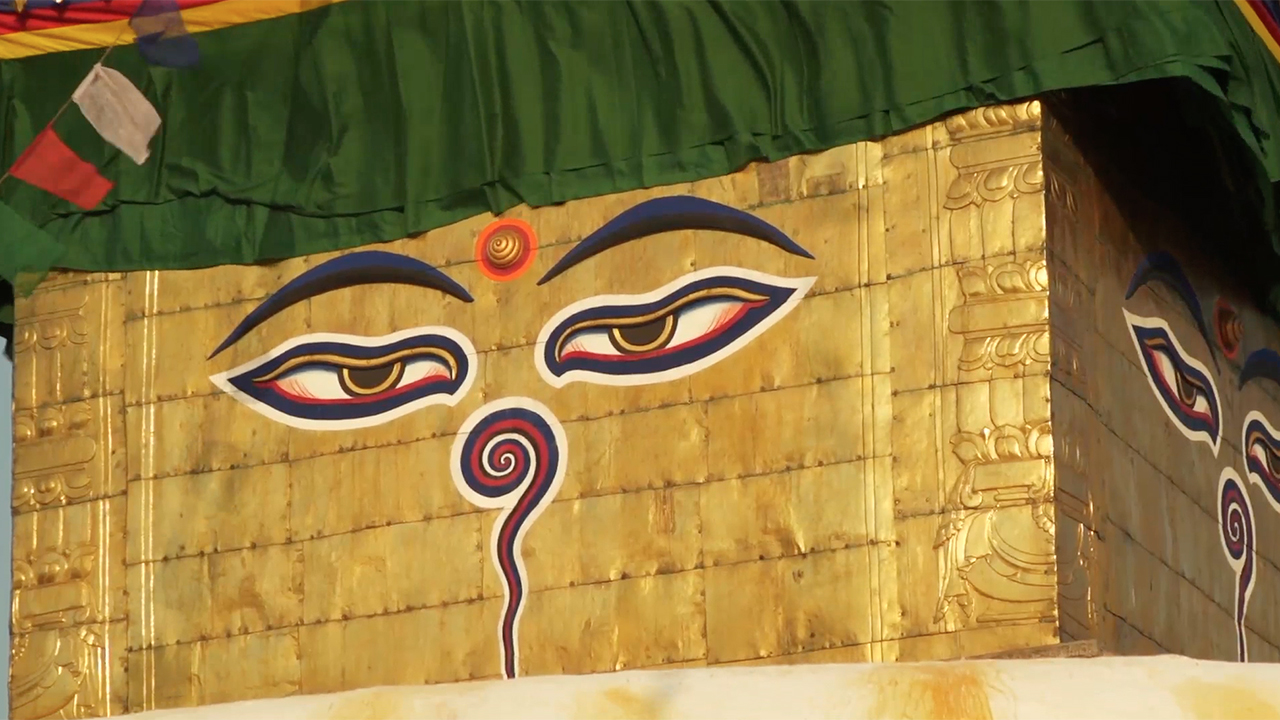
Documentary, by Jon Braeley, USA, 2014.
In the Footsteps of Buddha is a journey across India tracing the same route that Buddha walked on his path enlightenment. Siddhartha Guatama lived 2500 years ago in an ancient land called Maghada, known today as Bihar, the poorest state in India. He was born in Lumbini (Nepal today) into a noble family. At the age of twenty nine he renounced all wealth and as a homeless wanderer, set out to seek the nature of our existence. To seek the truth. For six years he would wander as a homeless Shramana or spiritual seeker. In summer the dust would blind his eyes and fill his nostrils. In the monsoon season the mud would cake his bare feet. Breaking his journey only for meditation. Going deeper and deeper as he explored his sub-conscious until finally, as he meditated under a tree through the night, he broke free of attachment and suffering. “I am free from desire. Free from ignorance. Free from the taint of being, said Siddhartha. “I was asleep but now I am awake in reality. In Nirvana.” When he got up he was the Buddha. The Awakened One. Although Buddhism spread around the world, it was forgotten in the land of it's birth and was removed from Indian history for 1500 years. It was not until colonial archeologists unearthed the monuments of the Buddhist civilization that this story could now be told. Today pilgrims from around the world undertake the same journey as the Buddha on a specially commissioned train, the Mahaparinirvan Express, that will follow in his footsteps from birth to enlightenment to teaching and to his death. Step on board as we take you to the world’s most important Buddhist destinations. Lumbini - Rajgir - Bodhgaya - Sarnath - Sravasti - Kushinagar.
LANGUAGE: English
SUBTITLES: Spanish, French, German, Portuguese
Kymatica

Kumatica is a documentary about when you start to think that there is a controlling elite, a hand behind the curtains leading the planet to destruction.
When you think the end is near, the apocalypse, the Armageddon, and when you think that as a species we are doomed, it’s not them, it’s you who caused this, and for a very good reason. Stop panicking about global tyranny and natural disaster and be careful, because the world is telling you something; tells you exactly what’s wrong with you and how to fix it.
Zeitgeist: Addendum

Zeitgeist: Addendum is a 2008 film directed by Peter Joseph, and is a sequel to the 2007 film, Zeitgeist: The Movie. It premiered at the 5th Annual Artivist Film Festival in Los Angeles, California on October 2, 2008.
The film begins and ends with excerpts from a speech by Jiddu Krishnamurti. The rest of the film is narrated by Peter Joseph and divided into 4 parts, which are preceded by on-screen quotes from Krishnamurti, John Adams, Bernard Lietaer and Thomas Paine respectively. The film suggests that culture is manipulated into economic slavery through debt-based financial plans, requiring people to work to pay off their financial debt.
Life in a Day

Life in a Day is a crowd-sourced documentary film that composes an organized series of videos selected from 80,000 clips sent to the YouTube video sharing website, clips showing particular events from around the world in one day, July 24, 2010.
The film lasts 94 minutes and 53 seconds and also includes scenes from 4,500 hours of video footage from 192 countries. The completed film premiered at the Sundance Film Festival on January 27, 2011, and the premiere was also streamed on YouTube.
Surviving Progress
![Surviving Progress Trailer [HD]](https://blog.indiecinema.co/wp-content/plugins/wp-youtube-lyte/lyteCache.php?origThumbUrl=https%3A%2F%2Fi.ytimg.com%2Fvi%2FsDdhA_qCfYw%2F0.jpg)
The film is structured as a series of interviews from around the world. The film is said to be “inspired” by Wright’s lectures: the documentary focuses on the influence of today’s world, consisting in the impact of wealth. The underlying message is that current financial developments have no practical links to the real world. That is to say, the absence of a moral foundation in modern global economic methods is directly responsible for the excessive consumption and exploitation of natural resources to the extent that the increasingly possible future population collapse would surely lead to the end of modern society.
Mystery of an Employee
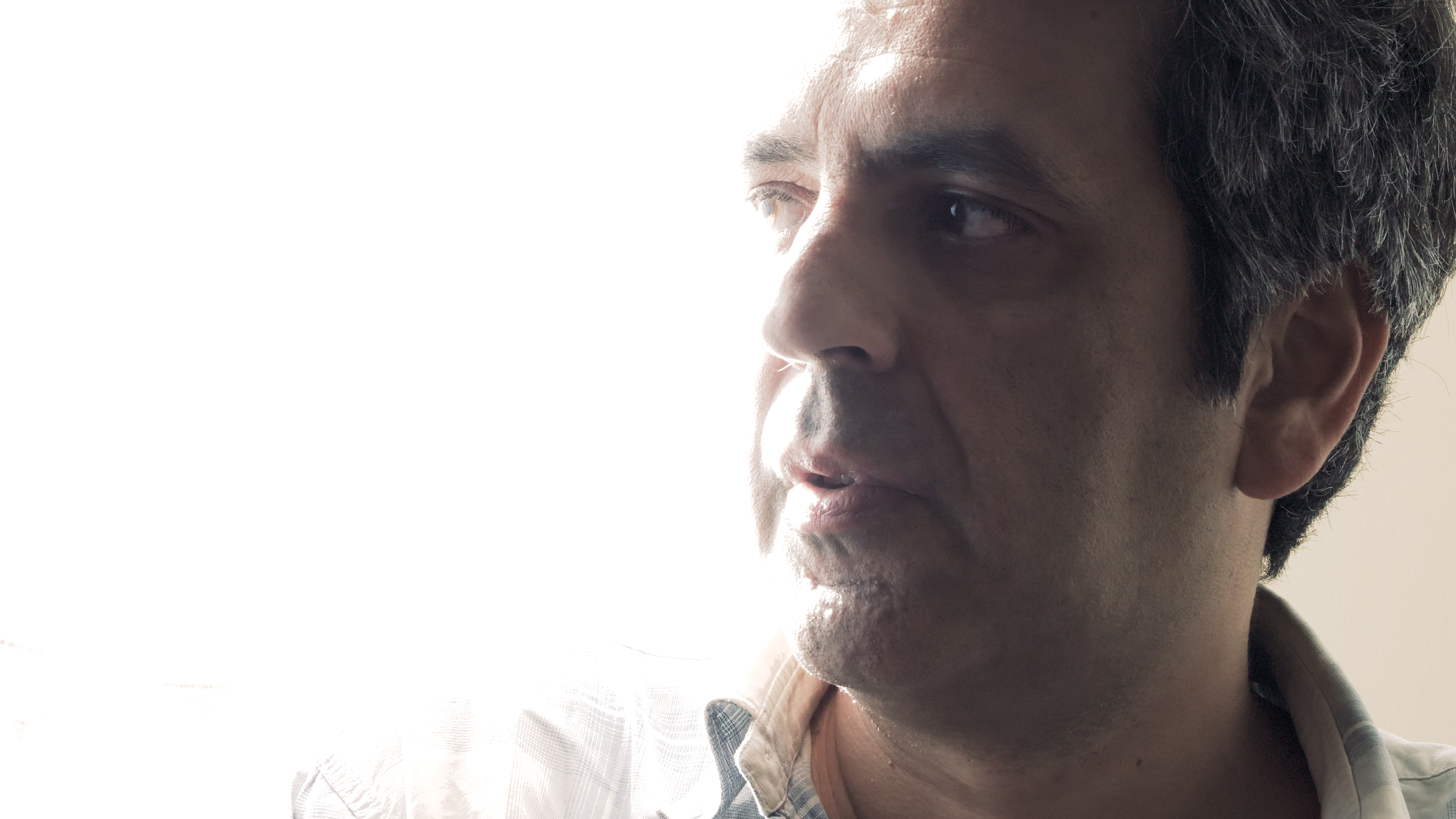
Drama, thriller, by Fabio Del Greco, Italy, 2019.
Someone wants to control the life of the employee Giuseppe Russo: the products he buys, his political and religious faith, his private life, even his dreams. But he will do anything to escape control and find his true self. Giuseppe is a man of around 45, married, with a stable job and a home of his own. His life flows seemingly peacefully when he meets a mysterious tramp who gives him some old VHS video cassettes. Giuseppe begins to see video tapes in which he is filmed in some moments of his life since he was a child, then as a teenager and as a young man. Who shot those videos that he remembers nothing about? Giuseppe has the strange sensation of being constantly observed and begins to investigate what is happening. Through his investigation of him, he begins to rediscover his true identity and become aware of who he truly is.
Employee's Mystery is a film that highlights the danger of social control and shows a society where everyone is constantly monitored and conditioned in their deepest selves. The film is also an analysis of human nature and identity. Fabio Del Greco, who plays Giuseppe, gives an engaging performance. Equally good is Chiara Pavoni, in the role of Giada Rubin and Roberto Pensa in the role of the tramp. Employee's Mystery is a film that addresses important themes in an original way, a psychological thriller that keeps the viewer glued to the screen until the end: a metaphor for contemporary society, in which people are increasingly monitored and conditioned by the media and technologies . It is a courageous and provocative work, which addresses important themes in an original way.
LANGUAGE: Italian
SUBTITLES: English, Spanish, French, German, Portuguese
Finding Joe

If you don’t mind being lectured for 80 minutes, Patrick Takaya Solomon’s Finding Joe offers a great introduction to the critical mentors and explorations of the late mythologist Joseph Campbell. Only a few old photos of the famous professor Sarah Lawrence appear on the screen, and the film does not consist of a single encounter with him. Rather Solomon tracks down 20 “enthusiasts” to share Campbell’s significant research in his study of mythology.
These extraordinarily radiant, sometimes even jubilant faces make a statement regarding Campbell’s wisdom, often completing each other’s sentences. Much of this is taken from Campbell’s critical publication, The Hero’s Journey, published in 1949. A basic introduction to the standard theory behind much of the work of famed writer and lecturer Joseph Campbell, the hero’s journey, the structure of all mythological narrative.
The Dhamma Brothers

Set in the premier security prison in the state of Alabama, an African American man recounts. It shows the inscription Donaldson Prison Bessemer Alabama, May 2002. Rows of boys training by walking in a straight line back and forth with their hands handcuffed behind them. A male voice over shots of inmate cell doors opening with prisoners’ hands cuffed behind their backs “Donaldson is a pretty damaging area.
Physical violence and stabbing are a typical occurrence.” Dr. Ron Cavanaugh, director of treatment for the Alabama Correctional Department, has decided to try something extraordinary. Alabama is a heavily Christian part of the country, with one of the worst prisons in the United States. For the first time in a maximum security prison, inmates would participate in Vipassana meditation: an ancient practice based on the Dhamma, the trainings of the Buddha.
Other insights on spirituality
Here are some food for thought to deepen some themes related to spirituality.
The matter and the randomness of events

The dominant culture imposes on us the philosophy of chance right from school. There is no specific purpose or design for our lives. The events that happen one after the other are just fortuitous happenings, unrelated actions, anarchic forces of nature operating without a specific purpose. The characters of a person, a family, a place are random, as are wars, accidents, gambling or migratory flows.
The reaction of many to this lack of meaning is to take as much stuff for themselves as possible, accumulate wealth for themselves and build walls to defend themselves from the outside. Earn everything there is to earn by any means by cheating on others. Throw yourself into the competition and come out victorious, without any ethics. It happened in high finance to Martin Scorsese’s wolves of Wall street and in many other sectors. With this philosophy of life the disasters are amplified more and more, and you never see the light at the end of the tunnel.
All this makes us slaves to a meaningless life. Spirituality is what it takes to become free: to understand the universe in which we find ourselves, what is its meaning and what our true goals may be. How can we focus our thoughts, our actions, our feelings in a context where everything has meaning? How can we have a clear idea of what goals are worth pursuing?
If up to a certain point in our life we have had the impression of committing only mistakes that we must then laboriously remedy, a spiritual approach can offer us a clearer vision of what is really important. It is necessary to go beyond looking at the flat surface of things and become aware that there are many dimensions and connections that are behind appearances.
The Holy Mountain
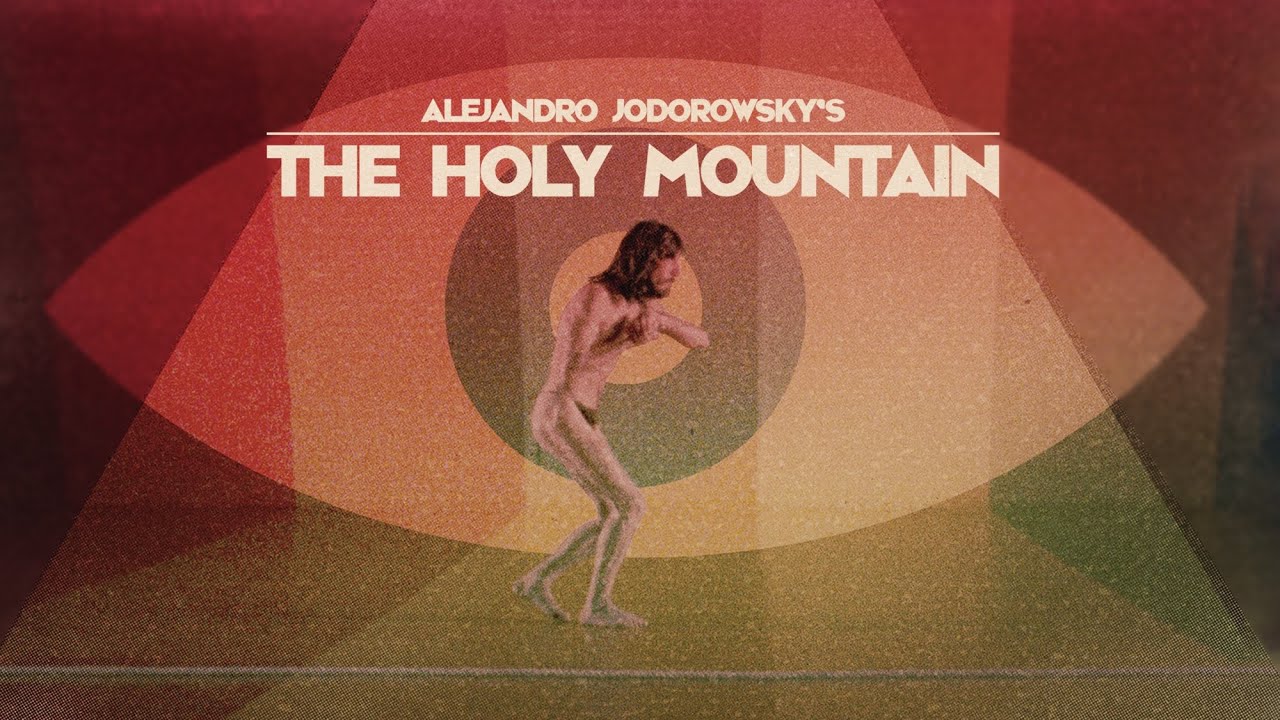
Sci-fi, drama, by Alejandro Jodorowsky, 1973, Mexico.
A man, nicknamed The thief, who represents the Fool's card in the Tarot, lies unconscious in a desert, among swarms of flies. When he wakes up he encounters a footless and handless dwarf representing the Five of Swords. The two become friends and go to the nearest town where they earn money by entertaining tourists. The thief resembles Jesus Christ, and after a quarrel with a priest, he eats the face of a wax statue of Christ, symbolically eating his body and offering "himself" to Heaven. After many misadventures he arrives at the top of a tower which is the laboratory of a mysterious alchemist. Participating in various initiation rites, the alchemist introduces him to the seven most powerful people on Earth, who work in the industries of welfare, weapons, art, entertainment, law enforcement, construction and the economy. Together they will have to reach the Sacred Mountain, a legendary mountain on a nonexistent island, where there are nine sages who know the secret of immortality. Their aim is to eliminate them and take their place.
Food for thought
In India they call the reality of the world around us Maya, which means illusion. The truth is hidden: it's like a movie screen on which you project your dreams and desires. Physicists have investigated what matter is and have come to the conclusion that it does not exist. So what is the matter of things made of? It is only condensed energy, which vibrates at very high speed, appearance. At a deep level, matter does not exist.
LANGUAGE: English
SUBTITLES: Spanish, French, German, Portuguese
Spirituality and its channels
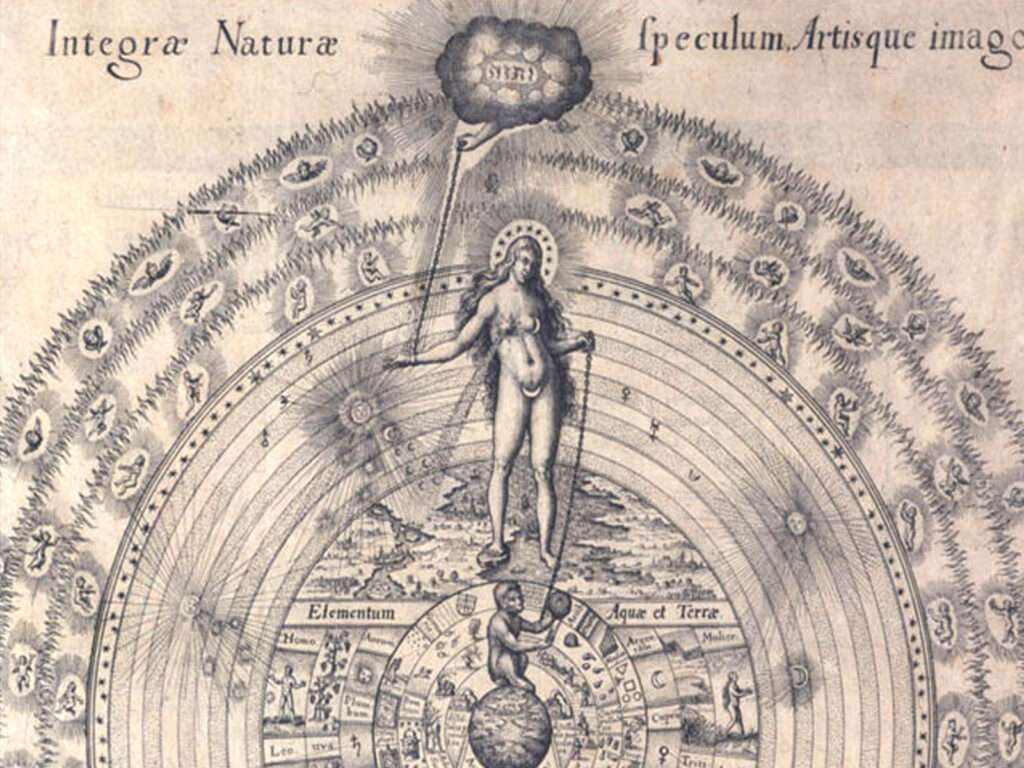
Scientists who believe in the analysis of matter argue that to analyze something you have to select it in smaller and smaller units. But what happens in the end when we arrive at something infinitely small and no longer analysable? It happens that that thing disappears, it no longer exists. We discover that deep down it is only energy. We have the intuition that matter comes from somewhere else, from another dimension.
With a spiritual approach it becomes possible to give an answer to the infinitely small, to those particles that seem to come out of nowhere. Spirituality is precisely the tool to get in touch with this dimension. It is the same dimension of our thinking in the noblest and most positive form. Thought is a frequent visitor to the spiritual worlds where all that is matter is designed and created.
Beginning to understand that everything that comes outside is born in the inner world and that collective and social events also originate from the spiritual world, then the perspective changes sharply. Every now and then we are faced with strange intuitions. Coincidences, moments of light, new understandings that give us the suspicion that material life is not everything.
Someone ignores these signs and forgets them soon after. Someone else starts looking for new ones and following their directions. The spiritual life has been experiencing unprecedented growth in many countries of the world in recent years. A large part of humanity is no longer willing to believe the lies of materialism.
The truth is that every event in life should not be interpreted only through matter. Malaise, pain or illness should be interpreted from a spiritual perspective, because that is where the causes come from. A lot of people are beginning to understand that it is the soul that drives the events of the material world and that many problems can be solved at the root only by looking into the spiritual world.
The world of spirituality affects matter

There are spiritual therapists able to identify the true causes of a disease in the spiritual aura that blinds every human being, through the Chakras, the points of our body connected to spiritual energy. When the chakra is suffocated or absorbs negative energy this dysfunction manifests itself in the physical body as a disease.
By recognizing the spiritual causes it is possible to eradicate the disease at its root. But Western medicine deals little or nothing with these methods. In this area too, the approach is almost exclusively materialistic. The piece of the diseased body is identified and tried to cure it. If the diagnosis is serious, an attempt is made to completely replace it with a new piece. But efforts to recognize the spiritual roots of a disease and treat it with this approach are a practice recognized only in the East.
The spiritual energy within us works through its connecting channels to the physical body. By blocking these channels it is possible to obtain a weakening of the individual and his total inability to react to certain situations. Negative powers systematically use their knowledge of the spirit world to achieve certain effects. The invisible spiritual world not only directs individual existences, but also those of territories, cities and nations. The individual soul becomes a collective soul in social organizations at every level.
The growth of spirituality today
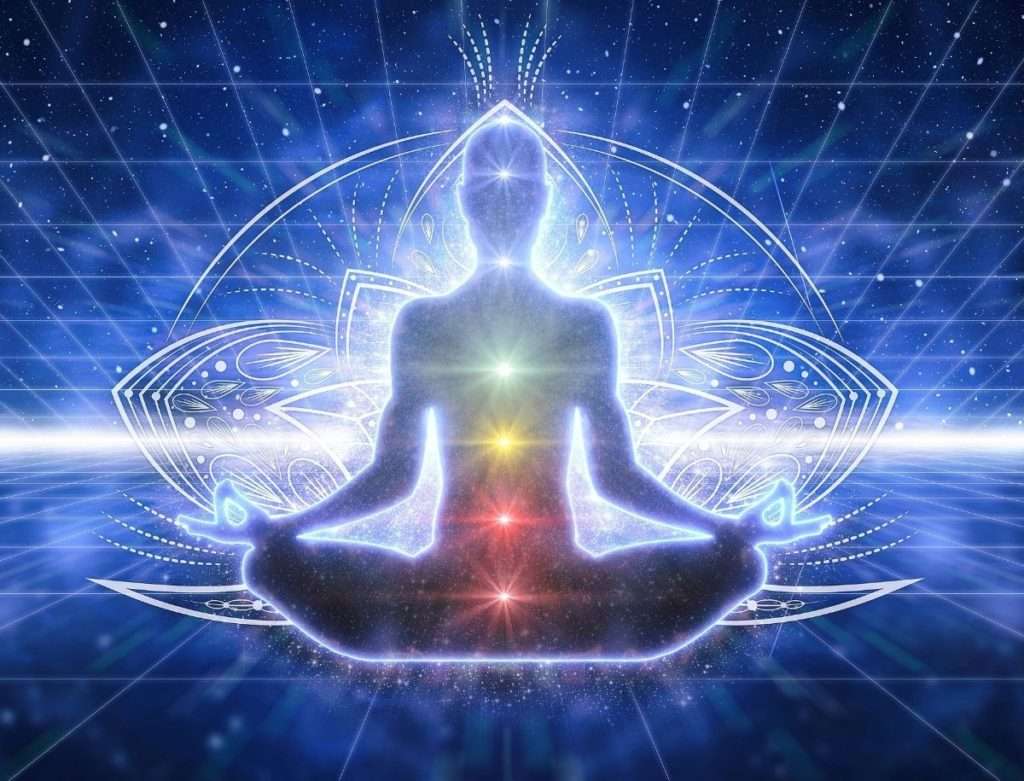
For about twenty years there has been an explosion of interest in spiritual themes which is being expressed in various forms. New Age, yoga, books, seminars, meditation. A great awakening of consciousness is taking place all over the world. The more dramatic and violent the theater of media and power becomes, the more a growing number of people decide to say enough is enough.
The wrong reaction to materialism is that every now and then someone decides to make a radical change, and goes to a cave on a mountain to be an ascetic. Or he leaves his family to volunteer in Africa. And there, far from everything, he ends up drying up his heart. It is not by moving away from one’s work, one’s family and one’s daily life that one obtains true contact with one’s own spirituality.
Instead, it is a question of making an inner change of starting to look at everyday life with different eyes. To act differently. The material world doesn’t have much meaning unless we look at it from a spiritual perspective. The best strategy is to stay in balance, between spirit and matter. Suddenly we realize that there is a general sense of things, that there is a positive plan and that we can create it in our everyday life, integrating our material and spiritual sides.
This perception spreads more and more on an individual level but not yet successful on a collective level. The inner life of each of us does not belong to any organized religion. Any religion we believe in can be of great help to us if our pursuit is individual. Spirituality is born and transformed in our inner world. External events can only act as a catalyst if we know how to interpret them.
Spirituality and cinema
The interesting fact is that cinema has allowed us to discover the unknown worlds of Eastern spirituality which for some time has also submerged the West like a great wave. We were finally able to see the images, faces and places of that distant spirituality we had only read about in books. As often happens, mainstream productions have treated the subject in the most superficial way possible, using clichés and ideas packaged for the mass audience.
But there are authors, filmmakers and documentary makers who explore the spiritual reality in more depth. There is a huge literature on the subject of spirituality that we can find in bookstores. But the cinema has dealt with it much less, preferring the big themes with which it is easier to find the necessary budget for production. Or by telling stories of spiritual leaders but they don’t have a direct impact on people’s need for spirituality.
The Kempinsky method

Drama, by Federico Salsano, Italy 2020.
The introspective imaginary road movie of a man in the maze of his own mind, his memories of his youth, his never dormant passions and contradictory truths. The road is made of water, the destination is falsely unknown. His traveling companions are three mysterious men, projections of his imagination and of different aspects of his personality: the perennial melancholy, the crazy creative, the introverted child. He is also followed by a female presence that tells the umpteenth human story. At a certain point of the crossing he decides to abandon the boat and his ghosts of him diving into the sea and arrives swimming on a deserted beach, naked, with a small Pinocchio puppet closed by a padlock.
Food for thought
Life is like a long sea voyage and the human being is a small creature confronting immensity. Sometimes the ocean is calm, other times there are terrible storms. Sometimes we are captains of a boat with a well-defined route, other times we are shipwrecked in search of a land in which to save ourselves. But despite the long journey and the movement in physical space, there are other questions that resonate in the mind: who are these men I travel with? What is the mystery of this immense mass of water that seems to be made of my memories? You can circumnavigate the whole world but the main question always remains the same: who am I really?
LANGUAGE: italian
SUBTITLES: english, spanish, portuguese, german, french
Great filmmakers of the spirit

One of the most significant modern film on spirituality that have been made is Wim Wenders‘ Wings of Desire, a film that develops a fundamental concept of the invisible world: the connection between matter and spirit. What does it mean to be an angel and witness the suffering of men, hoping that they can get away with it? How terrible is it to witness the victory of evil helpless? And how attractive is it to go back to living in that world of senses and passions for an angel? According to Wenders, our guardian angels look at us lovingly and cheer for us, but they do not intervene: it is our responsibility to make a qualitative leap and gain awareness.
The great cinema of spirituality certainly belongs to a large part of Bresson’s and Bergman’s filmography. The first is the author of a lean and essential style, a cinema with a strong religious component, Christian and Jansenist, in constant search of Grace. Its themes are the loss of innocence, rebellion against God, social destruction by man, loneliness that meets Evil. The second recounted the existential crisis of man in an exemplary way with films of love and death, tormented journeys in search of God. A philosophical and existentialist cinema, capable of awakening conscience, devoted to solitude and self-seeking.
In more recent times, some documentaries are also making a great contribution to the knowledge of spirituality. Films that transport us into the practices of Yoga or that introduce us to the Zen philosophy, shot with the intention of bringing this knowledge to the widest possible audience, with the possibility of applying these disciplines to everyday life.
It is the right time to use cinema to tell about spirituality in the right way, to create more awareness. There is no longer a need for stars or special effects to convince an audience that wants to know more in a more authentic way. Spirituality is the light that illuminates things and cinema is the art of light, and it is no coincidence that its inventors were called Lumière.
A vision curated by a filmmaker, not an algorithm
In this video I explain our vision

