
The Grammar of Dread: Defining Atmospheric Tension as a Technical System
There is a persistent misconception in popular film discourse that atmosphere is something a film simply has, an ineffable quality born from a director’s instinct or a story’s inherent darkness. In technical terms, this is inaccurate. Atmospheric tension in thriller cinema is not a mood that descends upon a production; it is an engineered system, constructed frame by frame through a set of precise, reproducible decisions that operate simultaneously across multiple formal registers. Understanding how fear is manufactured on screen requires dismantling the illusion of spontaneity and examining the machinery underneath.

The first register is spatial. Camera placement is never neutral. When a cinematographer positions the lens below eye level, the subject gains an implicit authority or menace that has nothing to do with performance. When the camera is placed above, the subject becomes diminished, vulnerable, surveilled. In thriller grammar, the overhead angle functions as an establishing instrument of powerlessness, communicating to the audience that the character occupies a space that is watched, that the world extends beyond their perception in threatening directions. The choice of lens focal length compounds this effect dramatically. A long lens, by compressing depth of field and flattening spatial relationships, removes the audience’s ability to read the environment around a character. Threat can exist in that shallow, blurred background and remain unresolved. A wide-angle lens, conversely, distorts peripheral space, making rooms feel simultaneously vast and oppressive, stretching corridors and warping faces into something subtly wrong. These are not aesthetic preferences; they are instruments of controlled psychological manipulation.
Lighting ratio is the second major technical axis. The contrast between illuminated and unilluminated areas within a frame, what classical cinematographers measured as the key-to-fill ratio, directly governs how much of the world the audience is permitted to see. High-contrast chiaroscuro lighting, with its deep blacks and isolated pools of light, does not simply look dramatic. It performs a specific narrative function: it withholds information. Shadow is the visual equivalent of silence in a musical score, and like silence, it carries anticipatory weight. The audience’s imagination, denied visual resolution, fills the darkness with content shaped by its own anxieties. The director who masters lighting ratio is, in effect, outsourcing the work of terror to the viewer’s own psychology.
Sound design constitutes the third pillar of this system, and it may be the most technically misunderstood. Diegetic sound, the sounds that exist within the world of the film, carries tension when it is conspicuously absent, unnaturally present, or displaced from its expected source. The creak that arrives two seconds after a door closes, the ambient hum of a room that drops suddenly to total silence, the footstep heard off-screen before its owner is seen — each of these is a precisely timed compositional decision. Non-diegetic sound design, including score and synthesized texture, operates beneath conscious perception when deployed correctly, driving physiological responses through frequency, dynamics, and rhythm.
Editing rhythm completes the framework. The duration of a shot communicates safety or danger independently of its content. Long takes allow anxiety to accumulate; the audience waits, alert, for the cut that does not come. Rapid cutting produces a different response, one of cognitive overload and disorientation. The thriller director modulates between these tempos the way a composer modulates between time signatures, using the contrast itself as an expressive device.
What unifies all four registers is the principle of controlled withholding. Atmospheric tension, understood technically, is the systematic management of information — what the audience sees, hears, knows, and crucially, does not yet know. The machinery of dread is, at its core, a machinery of delay.
Camera Language and Spatial Manipulation: How Framing Builds Unease
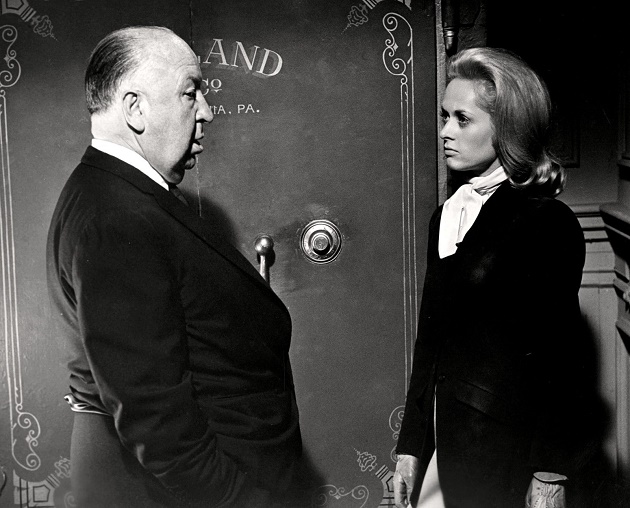
The camera, in the hands of a skilled thriller director, is never a neutral observer. It is an instrument of psychological pressure, capable of distorting the viewer’s sense of space, safety, and social hierarchy long before any explicit threat materializes on screen. The geometry of the frame — where the camera sits in relation to its subject, how much of the visible world it chooses to render in sharp focus, and crucially, how much it leaves in deliberate shadow or outside the image entirely — constitutes a grammar of unease that operates below conscious recognition.
Low-angle shots communicate vulnerability inversion. When the camera is positioned below the eyeline of a figure approaching another character, it grants that figure a visual dominance that the narrative may not yet have confirmed. The viewer feels the imbalance of power through pure optics before dialogue or action has justified the sensation. High-angle shots produce the opposite but equally destabilizing effect: they shrink the protagonist, rendering them small within a hostile spatial field, exposed and surveillable. Carol Reed deployed both extremes with extraordinary precision throughout The Third Man (1949), shot by Robert Krasker, who won the Academy Award for his cinematography. Reed and Krasker pushed the camera to canted angles — the now-famous Dutch tilts that ran through nearly every exterior sequence in postwar Vienna — not as stylistic affectation but as a systematic spatial argument. Nothing in this world sits level. The moral geometry of the city is broken, and the tilted horizon line forces the viewer’s vestibular system into a state of low-grade resistance. A figure walking toward Holly Martins in a doorway arch becomes architecturally monstrous because the frame has already dismantled the viewer’s sense of what vertical means.
Alfred Hitchcock‘s Rear Window (1954) operates through an entirely different but equally calculated spatial strategy. L.B. Jefferies, confined to his wheelchair in a single apartment, transforms the courtyard beyond his window into a field of directed and withheld vision. Hitchcock rigorously controls depth of field to manage what the viewer can and cannot resolve. When Jefferies watches through his telephoto lens, shallow focus isolates a single apartment across the courtyard, collapsing the background into an indistinct mass from which threat might emerge at any moment. The off-screen space — the zones outside the lens’s focal plane, the edges of the courtyard, the dark windows above and below — functions as constant negative space that accumulates tension precisely because the camera refuses to illuminate it. Diegetic sound from off-screen sources — a song rehearsed on a piano, a woman’s scream cut short — arrives before any corresponding image, forcing the viewer to construct visual threat from audio alone. This is one of cinema’s most efficient mechanisms for generating fear: the mind, given a sound without an image, defaults to its worst hypothesis.
The dolly movement deserves particular attention as a tool of spatial manipulation. A slow push toward a face, executed below the threshold of conscious perception, gradually eliminates the breathing room between viewer and subject, producing claustrophobia without any cut. Held against this, the static frame — a locked-off camera observing a space where something may or may not happen — generates tension through duration and the probability of intrusion. Reed used sustained static framings in the sewer sequences of The Third Man, allowing the cavernous geometry of the tunnels to work on the viewer’s sense of scale. The camera does not move because the space itself is the threat. In both cases, the mechanism is identical: the manipulation of spatial expectation to keep the viewer in a state of anticipatory dread, the fear aimed at something that has not yet arrived within the frame.

Editing Rhythms and the Architecture of Suspense
If atmosphere is built in the camera’s eye, then fear is ultimately assembled on the editing table. The duration of a shot is not a neutral technical decision; it is a psychological instrument. A frame held two seconds longer than the viewer expects begins to generate unease. A cut arriving half a second too early denies the eye its natural rest and produces a subliminal jolt that the conscious mind struggles to name. Editing rhythm, in this sense, operates below the threshold of critical awareness, manipulating the nervous system before the intellect has time to analyze what is happening on screen.
The foundational principle at work here is the Kuleshov effect, that landmark discovery from Soviet montage theory demonstrating that meaning is not contained within a single image but generated in the collision between consecutive images. When an editor places a close-up of a face between two contextually different shots, the audience projects emotion onto the neutral expression. Applied to the thriller genre, this principle becomes a weapon. The director withholds the object of fear, showing only the face of the character who perceives it, and the audience’s imagination performs the most terrifying work. What is not shown is precisely what cannot be refuted or domesticated by rationality.
Cross-cutting, or parallel editing, exploits this withholding strategy at a structural level. By alternating between two simultaneous lines of action, the editor creates the sensation of converging danger without ever needing to make the threat explicit within a single continuous space. The geography of dread becomes fragmented and therefore unmappable. Elliptical editing operates through a different but equally potent mechanism, compressing or expanding time by removing connective tissue from the narrative fabric. A cut that skips over an action rather than completing it leaves a gap that the viewer’s anxiety rushes to fill, and the content generated by that anxiety is invariably more disturbing than anything the production could have staged.
David Fincher‘s Se7en is among the most instructive case studies in the deliberate architecture of editorial tension. Fincher and editor Richard Francis-Bruce construct the film’s rhythm around a fundamental paradox: a relentlessly kinetic visual texture combined with a narrative pace that withholds resolution almost pathologically. The opening credit sequence itself, cut against Nine Inch Nails‘ industrial score, establishes a grammar of fragmented glimpses and graphic match cuts that trains the viewer’s eye to expect incompleteness. Nothing in Se7en is shown whole. Crime scenes are approached obliquely, crucial evidence appears in partial frames, and the editing consistently denies the satisfying wide shot that would allow spatial orientation.
The tempo modulation across the film’s second and third acts is particularly instructive. As Mills and Somerset move deeper into John Doe‘s logic, Fincher slows the cutting frequency during investigative sequences, forcing the viewer to inhabit the same exhausted, disoriented time as the detectives. Then, during the discovery of each murder tableau, the editing accelerates into staccato rhythms that mimic the physiological response to shock. The contrast between these two registers creates a ratcheting tension: the viewer is trained to dread the acceleration because the slower passages teach them exactly what is coming.
This approach stands in sharp contrast to classical continuity editing, in which cutting serves transparency, seamlessly stitching together space and time to create the illusion of uninterrupted reality. Classical Hollywood suspense, as codified by directors such as Hitchcock, often exploited the extended take precisely because duration within continuous space amplified the viewer’s awareness of threat accumulating in real time. The contemporary fragmented approach pioneered and refined by Fincher surrenders that spatial coherence deliberately, replacing it with an editorial texture that makes the world itself feel unstable, as though the cuts are evidence of a reality that no longer holds together.
Sound Design and the Diegetic Contract: What the Audience Hears and Why It Terrifies Them

Sound operates in cinema along two fundamental axes, and the thriller genre exploits both with surgical precision. Diegetic sound belongs to the world of the story — footsteps on a wooden floor, a telephone ringing in an empty house, the shallow breathing of a character pressed against a wall. Non-diegetic sound exists outside that world, audible only to the audience: the orchestral score, the dissonant string cluster that arrives a half-second before comprehension. The sophistication of atmospheric thriller construction lies precisely in the manipulation of the boundary between these two registers, and in the strategic deployment of silence as a third, equally powerful element.
Bernard Herrmann codified the grammar of dissonant thriller scoring across his collaborations with Alfred Hitchcock, most devastatingly in Psycho (1960), where the string orchestra becomes an instrument of pure neurological disruption. Herrmann’s approach abandoned melodic resolution in favor of unresolved intervallic tension — minor seconds, tritones, and cascading glissandi that deny the ear any point of rest. The technical effect is physiological before it is emotional: the auditory cortex, receiving harmonically unstable input, triggers a low-level stress response that primes the viewer for danger before the image has provided any rational justification for fear. This is sound design working beneath conscious perception, shaping the body’s readiness before the mind has caught up.
Jonathan Demme understood this principle and extended it into a more psychologically refined territory in The Silence of the Lambs (1991). Demme’s sound mixing choices are inseparable from his famous direct-address close-ups. When Hannibal Lecter speaks directly into the lens, the audio mix places his voice with an unusual dryness and immediacy — minimal reverb, no ambient room tone, the voice arriving as though from inside the viewer’s own skull. This is a deliberate violation of the diegetic contract. Conventional sound mixing uses reverb and spatial cues to locate a voice within a physical environment, thereby maintaining the comfortable distance of fiction. Demme and his sound team strip those spatial markers away, collapsing the distance between character and audience, making Lecter’s address feel less like watching a scene and more like receiving a direct threat.
Silence itself functions as an active compositional tool rather than an absence of content. When ambient texture — the hum of ventilation, the distant murmur of institutional life — is suddenly removed from a soundtrack, the brain interprets that withdrawal as a sign of predatory stillness, an evolutionary alarm inherited from environments where silence meant something large had stopped moving. Skilled sound designers use this response with precision, cutting ambient beds mid-scene to produce a sudden, disorienting quiet that communicates danger more effectively than any stinger chord.
The diegetic register carries its own particular terror because it implicates the character’s physical reality in real time. A creak on a staircase is frightening not because it is loud but because it confirms presence — something is there, weight is being applied to a surface, the world of the story is responding to an intruder. Michael Mann‘s use of environmental sound in Manhunter (1986) layers industrial ambient textures and low-frequency drones beneath his scenes, sounds that exist ambiguously between the diegetic and non-diegetic, belonging neither fully to the story world nor fully to the score. This deliberate blurring creates a sonic unreality that destabilizes the viewer’s sense of where danger is located, whether inside the frame or outside it entirely.
The cumulative technical principle across all these strategies is suggestion over declaration. Sound that implies — a footstep, a breath, a dissonant half-resolved chord — activates the imagination’s own threat-construction machinery, producing a fear that is genuinely personal because the audience has partially authored it themselves.
The Evolution of Tension: From Classical Suspense Construction to Contemporary Slow Cinema
The grammar of cinematic fear has never been fixed. It has shifted continuously across decades, each generation of filmmakers inheriting a set of technical tools and then systematically dismantling or expanding them in response to new aesthetic pressures, new audience expectations, and new technological possibilities. Understanding this evolution is essential for any serious student of film language, because the history of atmospheric tension is ultimately a history of how directors have renegotiated the contract between image and dread.
The classical Hitchcockian model, consolidated through the studio era of the 1940s and 1950s, operated on principles of maximum information control. Hitchcock’s system was fundamentally one of orchestrated knowledge: the spectator was given precisely as much visual and sonic information as the director calculated necessary to generate suspense, and no more. The camera worked in close collaboration with the editing table, with shot scale, eyeline matching, and rhythmic cutting all functioning as instruments of psychological calibration. The bomb under the table, the shadow on the frosted glass, the tracking shot that isolates a character within a crowd — these were techniques of deliberate, almost surgical manipulation. The spectator was not left to feel; they were guided to feel, along a precisely engineered path.
New Hollywood, emerging through the late 1960s and into the 1970s, introduced a paranoid irregularity into this model. Directors like Alan J. Pakula and Sidney Lumet absorbed the grammar of European art cinema and reconfigured it for narratives rooted in institutional dread and political anxiety. The wide-angle lens, the deep-focus composition that rendered both foreground and background equally in focus and equally menacing, the willingness to allow dead space within the frame — these choices reflected a worldview in which threat was structural and omnidirectional rather than localized and legible. Editing rhythms became less predictable, and silence was deployed with a bluntness that classical Hollywood would never have permitted.
The most radical reconfiguration of atmospheric tension in recent decades has come through what critics and scholars identify as slow cinema, a broad tendency encompassing filmmakers from Michael Haneke to Carlos Reygadas to Béla Tarr. Haneke’s approach in particular represents a direct inversion of the Hitchcockian model. Where Hitchcock controlled information to generate suspense, Haneke withholds resolution entirely, forcing the spectator to sit inside duration itself as the primary vehicle of unease. In a film like Caché, the fixed-frame long take is not simply a stylistic preference but a structural argument: the camera’s refusal to move, its willingness to hold a seemingly neutral image far past the point of narrative comfort, transforms the act of watching into an experience of exposure. Frame distance replaces montage as the dominant tool. The spectator cannot locate the threat because the image refuses to prioritize any element within it.
Digital cinematography and contemporary post-production techniques have significantly expanded the technical vocabulary available for this kind of atmospheric construction. The extraordinary sensitivity of modern digital sensors allows filmmakers to shoot in near-total darkness, preserving grain and shadow detail that would have been technically unachievable on film stock without artificial lighting intervention. Sound design has become increasingly granular, with practitioners layering subsonic frequencies and asymmetrical ambient textures that operate below the threshold of conscious identification but register powerfully in the body. Spatial audio formats have further extended this capacity, allowing sound to become genuinely environmental rather than merely directional.
What connects the studio-era model of Hitchcock to the austerity of contemporary slow cinema is not technique but intent: the shared conviction that fear, properly constructed, lives in the anticipation and not the revelation, in the frame’s edge and not its center, in the moment just before the image finally discloses what the spectator has spent the entire film dreading.
A vision curated by a filmmaker, not an algorithm
In this video I explain our vision
🌀 The Invisible Architecture of Cinematic Fear
Atmosphere and tension in thrillers are rarely built through shock alone — they emerge from a precise orchestration of visual language, camera choices, and spatial composition. Understanding the technical and artistic tools behind these choices reveals how filmmakers transform ordinary scenes into labyrinths of dread. These related articles illuminate the craft that makes fear feel inescapable.
A Guide to Scene Composition and Auteur Mise-en-Scène
Mise-en-scène is the invisible hand that shapes every frame, controlling where characters stand, how light falls, and what remains hidden in the shadows. In thrillers, the auteur’s compositional decisions often do more to generate unease than any plot twist could. This guide unpacks how scene construction becomes a tool for psychological manipulation.
GO TO THE SELECTION: A Guide to Scene Composition and Auteur Mise-en-Scène
The Writing of the Gaze: A Guide to Camera Movements in Auteur Cinema
Camera movement is one of the most powerful emotional triggers in a thriller, capable of suggesting pursuit, entrapment, or creeping dread without a single word of dialogue. A slow dolly or an unsettling handheld drift can transform a neutral space into a hostile one. This guide explores how auteur directors use movement as a vocabulary of fear.
GO TO THE SELECTION: The Writing of the Gaze: A Guide to Camera Movements in Auteur Cinema
The Grammar of the Gaze: Meaning of Shots in Cinema
Every shot in cinema carries an emotional charge, and in the thriller genre, the choice of angle, distance, and framing becomes a weapon of tension. A low angle can make a figure loom with menace, while a wide shot can isolate a character in suffocating emptiness. Understanding shot grammar is essential to decoding how thrillers speak to our deepest anxieties.
GO TO THE SELECTION: The Grammar of the Gaze: Meaning of Shots in Cinema
Analysis of the Point-of-View Shot in Cinema
The point-of-view shot is perhaps the most intimate and destabilizing technique in a thriller’s arsenal, forcing the audience to inhabit the perspective of either the hunter or the hunted. When we see through a character’s eyes, fear becomes visceral and immediate, collapsing the safe distance between viewer and screen. This analysis examines how POV shots manufacture suspense and complicity in equal measure.
GO TO THE SELECTION: Analysis of the Point-of-View Shot in Cinema
Discover the Masters of Tension on Indiecinema
If these layers of cinematic craft have sparked your curiosity, Indiecinema streaming is the perfect place to experience them in action. Our curated catalog of independent and auteur films showcases directors who wield atmosphere and tension as their primary language. Dive in and let the maze begin.
👉 EXPLORE THE CATALOG: Watch Indie Films in Streaming
A vision curated by a filmmaker, not an algorithm
In this video I explain our vision

