
The Profile as Ontological Act
You spend forty minutes choosing the photograph. Not because you are vain — or not only — but because something much stranger is happening: you are deciding, with the gravity of a medieval cartographer drawing coastlines from rumor and hope, what kind of person will exist in the world tomorrow. The photo you select is not a record of who you were last Saturday. It is a legislative act. It proposes a self to strangers who will never meet the version of you that burns toast or cries in parking lots, and in doing so it begins to replace that version with something more governable, more coherent, more fit for public ratification.

What unfolds in that forty minutes is not self-expression. It is self-fabrication — and the distinction carries the weight of an entire civilizational shift. Self-expression assumes a prior self, something interior and already formed that presses outward seeking recognition. Self-fabrication runs in the opposite direction: the artifact precedes the experience, the profile precedes the person, and the curated image gradually colonizes the interiority it was supposedly only describing. This is not a metaphor for how social media distorts identity. It is a structural description of how identity now operates — not as something discovered through living but as something assembled through signaling.
Zygmunt Bauman spent the better part of four decades mapping the architecture of this shift. His 2000 work Liquid Modernity argued that the stable, solid institutions of the twentieth century — the lifelong career, the coherent political ideology, the neighborhood defined by generations of shared presence — had dissolved into something fluid, adaptive, and therefore perpetually unfinished. Identity, in solid modernity, was something a person could inherit or forge through sustained commitment. A steel worker in 1955 Sheffield knew who he was through the accumulated weight of labor, union membership, parish, and pub. The social coordinates were heavy enough to hold him in place, and that heaviness, however suffocating, produced something legible — to him, to his neighbors, to himself at three in the morning. Bauman was not nostalgic for that rigidity. He understood its violence, its exclusions, its tolerance for erasure. But he was precise about what was lost when it dissolved: the conditions under which a self could calcify into something durable enough to be known.
What replaced those conditions was not freedom, though it was sold as freedom. It was the obligation to remain permanently provisional. The sociologist Richard Sennett, writing in 1998 in The Corrosion of Character, described workers in the new flexible economy who had internalized impermanence so thoroughly that they could no longer construct coherent personal narratives. They could not answer the question their children asked — who are you, really — because the honest answer was: someone who has learned to become whoever the current context rewards. Social media did not invent this condition. It gave it an interface, a feedback loop, and a quantification mechanism precise enough to make the performance feel like discovery.
The profile is where this mechanism becomes visible in its most naked form. Every element of its construction — the selection of images, the calibration of language, the strategic decision about which affiliations to display and which to leave in the dark — enacts a theory of personhood that the person constructing it almost certainly has never examined. That theory holds that identity is not felt but shown, not inhabited but broadcast, not accumulated through time but refreshed through iteration. It is a theory with a long philosophical pedigree: the American pragmatist William James suggested in his 1890 Principles of Psychology that a person has as many social selves as there are individuals who recognize them. But James described a phenomenon. The profile has turned it into an industry, and industries do not merely describe human tendencies — they amplify, reward, and ultimately reshape the tendencies they claim to serve.
Dear Beasts
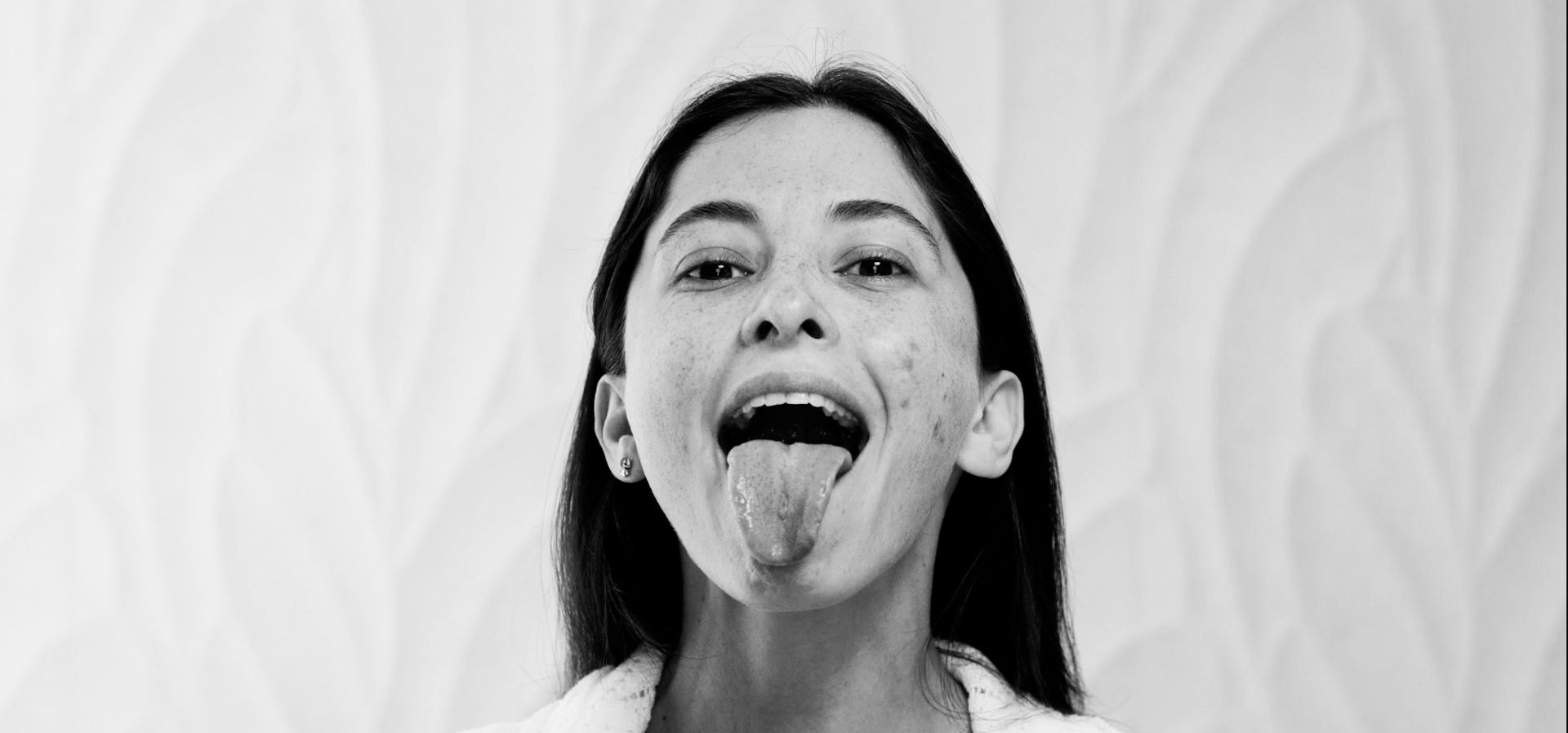
Drama, by Andrea Malandra, Italy, 2023.
The protagonist, Trudy, is an influencer who "showcases" the lives of pets on social networks to promote their well-being. But his love is not sincere. A video of her mistreating the homeless Narco and her dog suddenly ruins her reputation.
Dear Beasts, Malandra's third feature film, is a story that is also a reflection on the theme of the interactivity of the web and how it conditions the lives of individuals, leading to a loss of identity not only among people, but also towards the animal world . As in the tradition of many of Malandra's previous works, this feature film also has the tone of surreal comedy within a dystopian world.
LANGUAGE: Italian
SUBTITLES: English, Spanish, French, German, Portuguese
Bauman's Liquid Modernity and the Dissolution of Fixed Selfhood
You are performing yourself right now. Not for an audience you can see, but for one you have trained yourself to imagine — a distributed, faceless mass of evaluators whose approval arrives in quantified pulses, and whose disapproval is simply silence. The performance is not occasional. It is structural. You wake up and the first decision you make, before coffee, before speech, is whether to document the morning or let it pass undocumented, which has begun to feel, in some barely articulable way, like letting it pass entirely.
Zygmunt Bauman published Liquid Modernity in 2000, two years before Friendster, four years before Facebook, seven before the iPhone. The timing is almost cruel in its precision, because what he diagnosed structurally was about to be technologically accelerated beyond anything his sociology had reason to anticipate. His central claim was not about the internet. It was about capitalism’s systematic dismantling of the durable — stable employment, inherited community, lifelong institutions, ideological certainty — and the replacement of all of it with a permanent condition of provisional arrangement. The solid, he argued, was already melting. People in late modernity were no longer embedded in structures that told them who they were over time. They were released into freedom, which is another word for groundlessness.
What Bauman tracked in labor markets and urban geography, subsequent generations absorbed as an interior weather condition. The scholarship on this translation is extensive and uncomfortable. The sociologist Anthony Giddens had already noted in The Consequences of Modernity in 1990 that the self in late modern conditions becomes a reflexive project — something you construct rather than inherit, revise rather than inhabit. But Giddens still imagined this project as something a person undertook with some degree of intention and continuity. What the digital infrastructure built after 2004 did was colonize that reflexive project entirely, providing both the mirror and the audience and the metric by which the project’s success could be measured, in real time, publicly, with a numerical verdict.
The philosopher Charles Taylor, in Sources of the Self from 1989, traced how modernity gradually evacuated the external moral frameworks that had once given selfhood its orientation — religious, aristocratic, communal — and replaced them with the demand that the individual author their own meaning. Taylor called this the burden of authenticity. What he could not have seen is that authenticity would eventually become a brand category, a content strategy, a filter applied to photographs to simulate spontaneity. The demand to author your own meaning did not disappear under digital culture; it intensified, while simultaneously becoming subject to market logic.
The platforms themselves are not neutral containers. Facebook’s architecture, introduced with the News Feed in 2006, made identity into a continuous publication event. Instagram, launched in 2010 and acquired by Meta in 2012 for one billion dollars, added the visual grammar of aspirational selfhood. TikTok’s recommendation algorithm, which by 2021 had over one billion monthly active users, pushed this further by rewarding not consistency of identity but volatility of performance — the willingness to reinvent, to pivot, to become something new before the audience’s attention migrated elsewhere. Each platform trained its users toward a different psychic posture, but all of them shared the same underlying architecture: selfhood as content, continuous, public, and subject to revision based on reception data.
What Bauman called liquid modernity was a sociological description of structural conditions. What it became, inside the bodies of people who grew up scrolling, is something more intimate and more difficult to name — a felt sense that no version of yourself is final, that every presentation is a draft, that the stable core you were told to locate and express is either a fiction or a moving target, and that the motion itself has somehow become the only available substitute for identity.

The Market Logic Beneath the Aesthetic of Authenticity
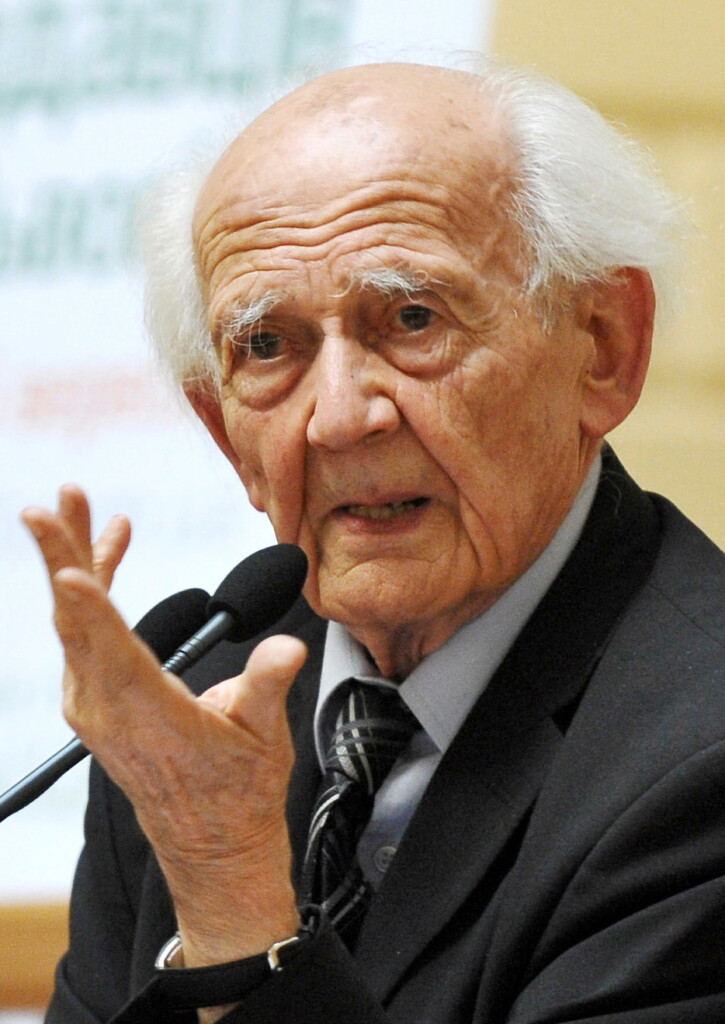
You have a brand now. You may not have chosen this, but the architecture chose it for you the moment you posted something and watched the number beneath it either climb or stay flat.
That number is not measuring your sincerity. It is measuring your market fitness. And the distinction — which feels enormous from the inside, from the place where you believe you are simply sharing something real — collapses entirely when you observe what the number does to your next decision. You post differently after a failure. You calibrate. You learn, without anyone teaching you, which version of yourself the system rewards. This is not corruption. This is operant conditioning running inside an economy, and Zygmunt Bauman saw its structural logic with unusual clarity in Consuming Life, published in 2007, the year the iPhone arrived and made the market portable, wearable, inseparable from the body.
Bauman’s argument in that book is not that consumer society encourages people to buy things. It is far more corrosive than that. He contends that consumer society transforms people themselves into commodities — that the imperative is no longer to consume objects but to construct a self that is itself legible, desirable, and tradeable on a social market. The commodity is the person. The shelf life is short. The packaging must be refreshed constantly to avoid the only fate worse than criticism, which is irrelevance. What Bauman could not have fully anticipated, writing in 2007, was the degree to which this logic would be encoded into literal infrastructure — into recommendation algorithms that measure retention rates, into engagement dashboards that assign numerical scores to human expression, into the A/B testing logic that platforms use to determine which emotional registers generate more advertising revenue.
TikTok’s recommendation engine does not care whether you are being authentic. It cares whether viewers complete your video. Instagram’s algorithm does not distinguish between a genuine confession and a performed one — it measures saves, shares, time-on-screen. The result is a selection pressure that operates below the level of conscious decision: the selves that survive are the selves that convert. Everything else is deprioritized, buried, effectively deleted by the weight of what the system promotes above it. What this produces is not inauthenticity in the simple, accusatory sense. It produces something stranger and more disturbing — a population that genuinely believes it is being authentic while enacting, with remarkable precision, the behavioral profile that maximizes platform revenue.
The vocabulary of authenticity was never neutral. It arrived in mass culture at a specific historical moment, accelerated by the wellness industry and the personal branding movement of the early 2010s, and it carried inside it a set of market assumptions disguised as existential advice. To be authentic, in this framework, is to identify your unique value proposition — your niche, your aesthetic, your “story” — and to deliver it consistently to an audience. This is indistinguishable, structurally, from what a product manager does when optimizing a SKU for a retail shelf. The language of soul and the language of supply chain have become grammatically interchangeable, and most people moving between them do not notice the translation.
What makes this particularly difficult to see clearly is that the constraint is invisible precisely because it operates through desire rather than prohibition. Nobody is forbidden from posting the version of themselves that earns no engagement. They are simply unrewarded for it, which in an attention economy is functionally equivalent to erasure. The philosopher Byung-Chul Han, in The Transparency Society published in 2012, described this as the violence of positivity — not the violence of the no, but the violence of the relentless, suffocating yes, the imperative to produce, perform, and expose without limit, a compulsion that wears the face of freedom while functioning as its precise inversion.
The self that emerges from this architecture is not chosen. It is optimized.
Permanence Without Stability: The Archive as Trap
You deleted the post, but the post did not delete. It sits in a server cache somewhere in Virginia or Singapore, indexed and retrievable, a version of you that you have since outgrown but cannot bury. The discomfort of that fact is not merely technical — it is ontological. It means that the self you are performing today exists simultaneously with every self you performed before it, and that no act of reinvention actually erases what preceded it.
Fluidity, as a metaphor, always implied the possibility of leaving no trace. Water moves and the ground dries. But the digital environment is not ground — it is sediment, accumulating layer upon layer, preserving each stratum with forensic fidelity. The person who understood identity as an ongoing creative project, something shaped and reshaped according to new circumstances and new desires, was reasoning within an analog logic that the infrastructure of networked life has since rendered obsolete. The architecture was not designed for forgetting. It was designed, at every level, for retrieval.
Byung-Chul Han argued in 2012 that the society of transparency is not a society of truth — it is a society of exposure, in which everything must be made visible and nothing is permitted the dignity of concealment. What he identified was not a political program but a structural compulsion: the system does not demand honesty from you, it simply makes opacity increasingly difficult to sustain. The exposed self is not a freer self. It is a self under permanent audit, unable to claim the distance between who it was and who it has become, because that distance is now a public record anyone can traverse in minutes. Transparency, in this light, is not liberation but a kind of administrative totalitarianism that operates without a totalitarian state.
The consequences arrive in forms that feel almost mundane. A hiring manager scrolls through seven years of a candidate’s public statements. An ex-partner cites a message from 2017 during an argument in 2024. A political opponent surfaces an opinion that its author no longer holds, has explicitly renounced, and would now argue against — and the renunciation is treated not as evidence of growth but as confirmation of untrustworthiness. What the archive produces, in these moments, is a new form of existential accountability that has no precedent in the history of selfhood: accountability not only for what you did but for what you thought, in public, at any point after you acquired a screen.
Medieval theology had the concept of permanent record — God’s ledger, in which every act was inscribed for final judgment. The secular modern world spent several centuries dismantling that framework, insisting on the possibility of reinvention, of starting over, of being more than your worst moment. The American mythology of the second chance, the European legal tradition of rehabilitation, the therapeutic culture’s insistence on growth beyond trauma — all of these were predicated on the eventual mercy of forgetting. The digital archive is theology without mercy, judgment without grace, a ledger kept not by a deity who might forgive but by an infrastructure that has no category for forgiveness in its operating logic.
What makes this particularly strange is that the archive coexists with a culture still loudly committed to the rhetoric of self-reinvention. The same platforms that preserve every version of you in amber also serve you advertisements for life coaches, career pivots, and identity transformations. You are simultaneously told that you can become anyone and reminded, algorithmically, of exactly who you have been. The self is invited to be liquid in its self-conception while remaining solid in its public record — and the gap between those two conditions is not a technical glitch but the central psychic wound of networked existence.
What no one has yet fully reckoned with is what it does to a person over time, to know that their evolution is being watched not as a story but as evidence.
Community Without Belonging: The Swarm as Social Form
You have watched something you spent three years building trend for forty-eight hours. The petitions signed, the hashtags replicated across a hundred thousand profiles, the flood of profile pictures updated with your cause’s colors — and then, without announcement or apology, the attention moved. Not gradually. Overnight. The algorithm found a new emotional frequency, and the congregation dissolved as instantly as it had formed, leaving you with a spreadsheet of follower counts that meant nothing and a silence that felt almost biological in its coldness.
What happened was not abandonment in any psychologically meaningful sense, because that would require prior attachment. What dissolved was something Zygmunt Bauman identified in his 2001 book “Community” as a fundamental substitution at the heart of contemporary social life: the replacement of belonging with what he called the peg community, a temporary emotional congregation assembled around a shared stimulus and dispersed the moment that stimulus loses intensity. Bauman’s argument was not sentimental nostalgia for village solidarity. It was a structural claim — that the conditions which once forced people into durable interdependence, shared risk, shared fate, have been systematically dismantled, and what fills the resulting vacuum is congregation without commitment, proximity without reciprocity.
The word solidarity once carried specific weight. In its original sociological usage, drawn from Émile Durkheim’s division of labor theory published in 1893, solidarity described the invisible glue of mutual dependence — organic or mechanical, but always structural, always produced by the fact that people genuinely needed each other to survive. Digital platforms have manufactured the appearance of solidarity while evacuating its structural precondition. When a cause trends, the emotional experience for each individual participant is real enough — the rush of alignment, of shared indignation, of being part of something larger. But because that participation costs nothing durable, requires no sacrifice, demands no ongoing presence, it produces congregations that are, as Bauman wrote, as light and brief as the emotions that summon them.
The sociologist Paolo Gerbaudo, in his 2012 study “Tweets and the Streets,” observed that digital mobilization does produce real-world action — bodies did appear in Tahrir Square, in Puerta del Sol, in Zuccotti Park. But he also noted what he called the choreographic function of social media: platforms do not build movements, they choreograph emotional peaks. The movement exists most intensely at the moment of maximum visibility and begins its structural weakening precisely as its trending metrics climb. The spike is not evidence of depth. It is often its inverse.
What liquid identity contributes to this dynamic is the identity of the participant themselves. A person whose sense of self is assembled from shifting affiliations, updated commitments, and curated performances of value cannot offer durable solidarity because they cannot offer a durable self. The solidarity they extend is genuine in the moment and structurally weightless across time — not because they are cynical or dishonest, but because the identity from which that solidarity is extended is itself a temporary configuration. You cannot pledge yourself from a self that has not been pledged.
Bauman drew a distinction between ethical proximity — the felt obligation toward the specific other whom you genuinely see, the neighbor in Lévinas’s sense — and aesthetic proximity, the pleasurable sensation of emotional alignment with a crowd of strangers united by the same image on the same screen. Social media scales aesthetic proximity to a size previously impossible, producing the sensation of universal solidarity while making ethical proximity, with its demands and its mess and its irreversibility, feel comparatively primitive. Activism becomes a genre. Outrage becomes a content category. And the person who spent three years on the ground, organizing without a trending moment, remains invisible to a system that cannot distinguish between depth and volume, between the slow weight of actual commitment and the sudden brightness of a cause that is performing well this week.
A vision curated by a filmmaker, not an algorithm
In this video I explain our vision
Recognition, Misrecognition, and the Hegelian Wound

You refresh the page before you have finished reading what was already there. The number has not changed, and something in your chest registers this as information about your worth — not metaphorically, not as a loose analogy, but as a brute physiological fact, the same neural circuitry that once processed tribal exclusion now processing the absence of a small red notification.
Hegel understood, long before the infrastructure existed to demonstrate it so efficiently, that selfhood is not self-generated. In the Phenomenology of Spirit, published in 1807, he argued that consciousness requires an other to recognize it — that the self only becomes real to itself through the eyes of another subject who confirms its existence as something more than mere biological noise. This is not a psychological observation dressed in philosophical language. It is a structural claim: without recognition, the self remains incomplete, suspended in a kind of ontological incompleteness that no amount of internal conviction can resolve. The struggle for recognition is therefore not vanity. It is survival at the level of subjecthood.
Axel Honneth spent much of his career translating this structure into the sociological terms of everyday life, and in The Struggle for Recognition, published in 1992, he identified three irreducible dimensions through which recognition must operate to produce a healthy self: love, which confirms that one’s needs matter; legal respect, which confirms one’s standing as a rights-bearing person; and social esteem, which confirms the value of one’s particular contribution to a shared world. The cruelty of Honneth’s framework, applied to the present moment, is its precision. Each of these dimensions requires something the like-and-follow economy is structurally incapable of providing: a subject on the other side who has actually received you.
What the platform delivers instead is a count. Not a person, not an encounter, not a witness — a number that aggregates invisibles into a figure that mimics the feeling of being seen while evacuating its content entirely. The mechanism is not neutral. It is specifically designed to produce the phenomenology of recognition — the warmth, the brief expansion of the chest — without requiring any actual perceiving other to be present. Thousands of people can perform the micro-gesture of approval without a single one of them having engaged with what was offered. The result is not recognition. It is what Honneth would identify as misrecognition, the condition in which the self receives a distorted or falsified reflection rather than a genuine one, and is thereby damaged at the level of its self-relation in ways it may not be able to name.
What makes this particular form of misrecognition so difficult to exit is that it is dressed in the complete visual grammar of its opposite. The interface does not signal its substitution. There is no visible difference between a number that reflects genuine encounter and one that reflects algorithmic amplification of something provocative, aesthetically frictionless, or emotionally pandering. The self cannot distinguish between being known and being clicked. Over time, this indistinguishability does not produce skepticism. It produces adaptation. The self begins calibrating its outputs not toward authentic expression but toward what the system can register — which means it begins producing itself for misrecognition, treating the distorted mirror as the only mirror available, and slowly reshaping itself to look coherent inside a reflection that was never accurate to begin with.
This is where the wound becomes generative in the darkest sense. A self that has been formed inside misrecognition does not simply fail to be seen — it loses the internal reference point by which it could even detect the loss. Charles Taylor, writing in The Ethics of Authenticity in 1991, warned that the collapse of genuine horizons of significance produces not liberation but a kind of soft disorientation, a freedom that cannot locate what it was free for. The person refreshing the page is not broken. They are operating with complete logical consistency inside a system that has replaced the condition of selfhood with its most convincing available simulation.
The Generational Acceleration: Zoomers, Algorithms, and Compressed Identity Cycles
You are sixteen years old and your entire aesthetic self — the music you defend, the slang you carry, the political posture you wear like a second skeleton — is already six months out of date according to the platform that taught it to you.
This is not metaphor. The compression is measurable. Where Erik Erikson, writing in 1968 in Identity: Youth and Crisis, described adolescent identity formation as a psychosocial moratorium spanning years — a protected interval in which young people could experiment with roles before committing — the architecture of networked publics has collapsed that interval into something closer to a content cycle. The moratorium still happens, but it now runs at algorithmic speed, which is to say it runs at the speed of what is monetizable this quarter.
Danah boyd spent years between roughly 2005 and 2012 conducting fieldwork with American teenagers navigating MySpace, Facebook, and early Twitter, and what she documented in It’s Complicated: The Social Lives of Networked Teens, published in 2014, resists the comfortable panic of most adult commentary on the subject. Boyd’s central finding was that teenagers were not passive recipients of platform logic — they were engaged in sophisticated contextual navigation, managing audiences, constructing what she called “networked publics” where visibility and persistence and searchability changed the stakes of self-expression without eliminating its intelligence. What she could not fully anticipate, writing a decade before the short-video feed achieved total dominance, was the degree to which the platform would eventually remove even the slow friction of curation — the moment when the algorithm stopped waiting for the user to construct a self and began constructing one on their behalf through the simple violence of what it chose to show them next.
The generational data now available is not abstract. A 2023 Pew Research Center report found that 46 percent of American teenagers described themselves as online “almost constantly,” a figure that had nearly doubled from 2015. TikTok’s recommendation engine, according to internal documentation that surfaced in reporting by multiple technology journalists, can establish a stable “interest profile” for a new user within approximately 90 minutes of engagement. What this means in practice is that the exploratory chaos of early adolescence — the phase in which a person might cycle through contradictory self-images over months and emerge with something durable — is now being interrupted and pre-resolved by a system that has strong commercial incentives to stabilize the user’s appetite rather than let it wander productively toward its own conclusions.
The irony that Bauman himself might have savored is that liquid identity, the very condition he described as the post-traditional burden of endless reinvention, is now being sold to young people as liberation while operating structurally as its opposite. Each new aesthetic identity available for adoption — the cottagecore phase, the dark academia phase, the hyperpop phase — presents itself as radical self-expression while arriving pre-packaged with its approved soundtrack, its approved visual grammar, its approved emotional register, and a shelf life calibrated not by the young person’s own growth but by the platform’s need for novelty-driven engagement. The self that emerges from this process is not liquid in Bauman’s sense. It is something closer to repeatedly recast in cheap plastic — the appearance of transformation without any of the friction that makes transformation psychologically real.
Jean Twenge’s longitudinal research, tracking personality and psychological data across American cohorts since the 1970s, found in her 2017 work iGen that the generation born after 1995 showed statistically significant increases in loneliness, anxiety, and what she termed a delayed assumption of adult roles — not because they were immature but because the social infrastructure that once scaffolded identity had been replaced by something faster and less load-bearing. The platform does not leave room for the productive confusion that actual self-formation requires, because productive confusion generates no data worth selling.
Freedom as Compulsion: The Unbearable Lightness of the Editable Self
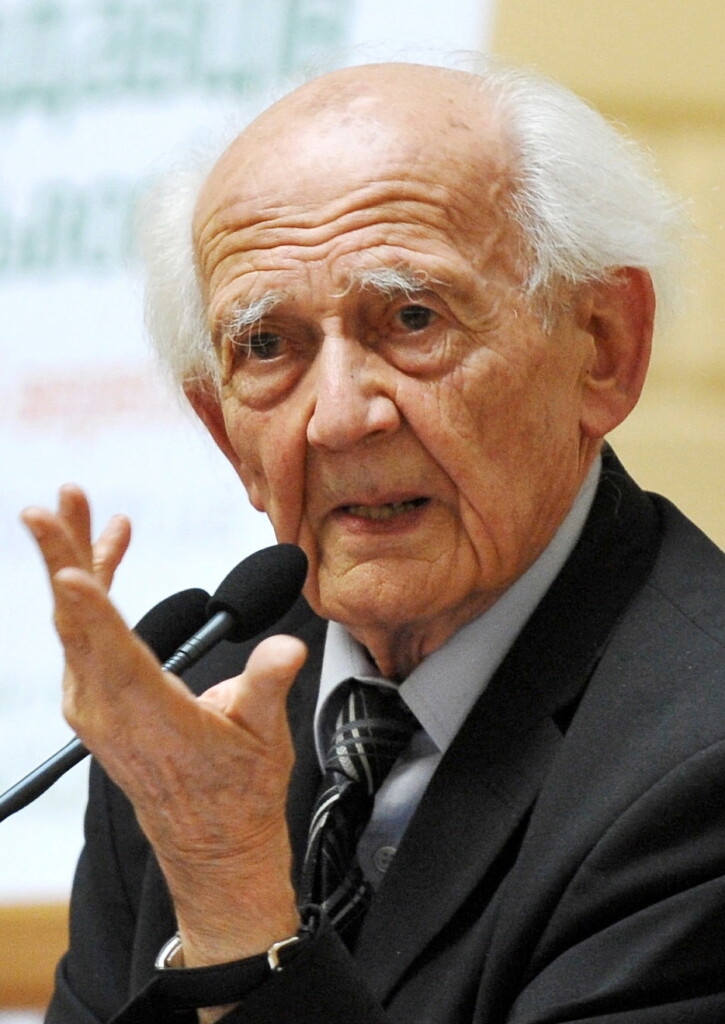
You have deleted yourself before. Not dramatically, not with the weight of genuine rupture, but quietly — a profile photo swapped, a bio reworded, three years of posts archived in a single afternoon. It felt like hygiene. It felt, if you are honest, like relief.
That relief is worth examining with some suspicion, because what passes for freedom in the architecture of social media is structurally indistinguishable from compulsion. The platforms do not merely permit reinvention — they demand it. Stasis is algorithmically punished. Accounts that go quiet lose reach; selves that stop performing lose their audience and, by the logic these systems have installed in us, lose their reality. Jean-Paul Sartre argued in Being and Nothingness that human consciousness is condemned to freedom, that the inability to simply be a fixed thing is the source of both human dignity and existential anguish. What the digital condition has produced is a grotesque parody of that insight: a freedom so total, so perpetually on offer, that it collapses into its opposite. When every version of you is equally available, equally deletable, equally replaceable by the next iteration, no version of you carries any particular weight.
Psychologists studying identity development have long understood commitment as constitutive rather than merely expressive — you do not discover who you are and then commit to it; you become someone partly through the act of committing. James Marcia’s 1966 expansion of Erik Erikson‘s framework identified identity foreclosure and identity diffusion as failure modes, but he was describing adolescent crises, not the permanent institutional adolescence that digital platforms have engineered into adulthood. The person who can always rebrand has no incentive to undergo the friction that makes a self durable. The edit button is not a tool for growth. It is an escape hatch from the consequences of having been someone specific.
This is not a trivial aesthetic problem. Societies depend on individuals who can be held accountable across time, which requires that a person yesterday and a person today be recognizably continuous. Legal identity, moral responsibility, the basic grammar of trust between people — all of these rest on a presumption of narrative selfhood, the idea that what you said last year and what you say today belong to the same story. When the infrastructure of everyday social life trains people to treat their past selves as prior drafts rather than prior acts, the ethical architecture built on continuity begins to corrode in ways that are difficult to name precisely because they feel like liberation.
The sociologist Richard Sennett documented something adjacent to this in The Corrosion of Character, published in 1998, tracking how flexible capitalism produced flexible selves — people who adapted so fluidly to shifting professional contexts that they lost the capacity for long-term narrative commitments, the kind that sustain loyalty, craftsmanship, and what he called character in the old moral sense. What Sennett saw in labor markets, the attention economy has generalized into the whole of personal existence. The self is now a startup — perpetually in beta, perpetually pivoting, perpetually accountable to engagement metrics rather than to any internal standard of coherence.
And there is something quietly devastating in the way this has been framed as empowerment. The language of personal branding, of curating your narrative, of owning your story — this vocabulary presents the self as sovereign author when in practice it has handed authorship to the platform’s incentive structure. You write your bio, but the character limit was decided elsewhere. You choose your image, but the cropping algorithm was not your choice. You feel free because the cage is made of options rather than bars.
The question that resists easy answer is whether a self built entirely from available options — assembled, reassembled, and stored in a server farm — still constitutes a self in any sense that the word was designed to carry, or whether we are watching the birth of something for which no existing vocabulary is quite adequate.
🌊 Fluid Selves: Identity, Society, and the Digital Age
Zygmunt Bauman‘s concept of liquid modernity finds its most vivid arena in social media, where identity becomes a perpetually unfinished project. The articles below trace the philosophical, sociological, and psychological threads that weave through Bauman’s thought, from surveillance capitalism to the performance of the self.
Zygmunt Bauman and Surveillance: Liquid Surveillance
Zygmunt Bauman‘s collaboration with David Lyon on liquid surveillance reveals how digital monitoring is no longer a top-down panopticon but a participatory spectacle in which users willingly expose themselves. This article explores how social media transforms surveillance into a seductive social ritual, making Bauman’s liquid metaphors essential for understanding contemporary digital life. The erosion of privacy becomes inseparable from the erosion of a stable self.
GO TO THE SELECTION: Zygmunt Bauman and Surveillance: Liquid Surveillance
Shoshana Zuboff: Surveillance Capitalism
Shoshana Zuboff‘s theory of surveillance capitalism describes how the behavioral data harvested from social media users is commodified into predictive products sold to advertisers and power brokers. This framework extends Bauman’s analysis of liquid identity by showing how the fluid self is not merely a cultural phenomenon but an economic raw material. Understanding Zuboff alongside Bauman illuminates the structural forces that make identity permanently unstable and commercially exploitable.
GO TO THE SELECTION: Shoshana Zuboff: Surveillance Capitalism
Celebrity as a Trap in Contemporary Culture
The relentless pursuit of personal branding on social media mirrors Bauman’s diagnosis of a society in which identity must be constantly performed, updated, and marketed to remain relevant. This article examines how celebrity culture has migrated into everyday life, turning ordinary users into micro-celebrities trapped by the metrics of visibility and approval. The trap of fame, even in its minor digital forms, is a direct consequence of liquid modernity’s demand for perpetual self-reinvention.
GO TO THE SELECTION: Celebrity as a Trap in Contemporary Culture
The Masks We Wear: Identity and Fiction in Everyday Life
Bauman argued that in liquid modernity the self becomes a collection of masks with no stable face beneath them, a thesis that finds striking confirmation in the sociology of everyday online self-presentation. This article explores how the masks we wear in social interaction gradually replace the authentic self, creating a loop of performance with no exit. The digital world has accelerated this dynamic to an unprecedented degree, turning identity into an endless theatrical negotiation.
GO TO THE SELECTION: The Masks We Wear: Identity and Fiction in Everyday Life
Discover the Cinema That Asks the Same Questions
If these ideas about liquid identity, surveillance, and the performance of the self resonate with you, independent cinema has long explored the same anxieties with images and stories that theory alone cannot reach. On Indiecinema you will find a carefully curated selection of films that challenge, provoke, and illuminate the human condition in the digital age. Come and watch the world differently.
👉 EXPLORE THE CATALOG: Watch Indie Films in Streaming
A vision curated by a filmmaker, not an algorithm
In this video I explain our vision

