

But this is only part of the story. Beyond the soundstages of Cinecittà, a more complex and contradictory Italy exists. It is a cinema born from an expressive urgency, a need to tell stories that the market considers too risky or niche. It is the true creative laboratory of the seventh art in Italy, where new languages are born and bold narrative forms are tested.
The Eight Mountains (2022)

Pietro is a city boy, Bruno is the last child of a forgotten mountain village. Their summers spent at the foot of Monte Rosa give rise to a deep and indissoluble friendship. But while Pietro will travel the world, Bruno will remain faithful to his mountain. Their lives will take different paths, but an invisible bond will always bring them back there, to that place that was the cradle of their friendship and the reflection of their souls.
Based on the novel by Paolo Cognetti, the film by Belgian directors Felix Van Groeningen and Charlotte Vandermeersch is a poignant and majestic meditation on friendship, the relationship between father and son, and our place in the world. Awarded the Jury Prize at Cannes, The Eight Mountains is a work of universal scope, which uses the mountain as a metaphor for life: there are those who, like Pietro, need to explore the eight mountains of the world, and those who, like Bruno, are content to reach the summit of the highest one, their Sumeru.
The direction captures the imposing beauty and harshness of nature with an almost square format (4:3) that enhances the verticality of the mountains. Alessandro Borghi and Luca Marinelli, in perfect harmony, bring to life a male friendship told with a rare delicacy and depth. It is a film that moves and makes you think, an intimate epic that reminds us of the importance of the roots and bonds that define us.
Katabasis
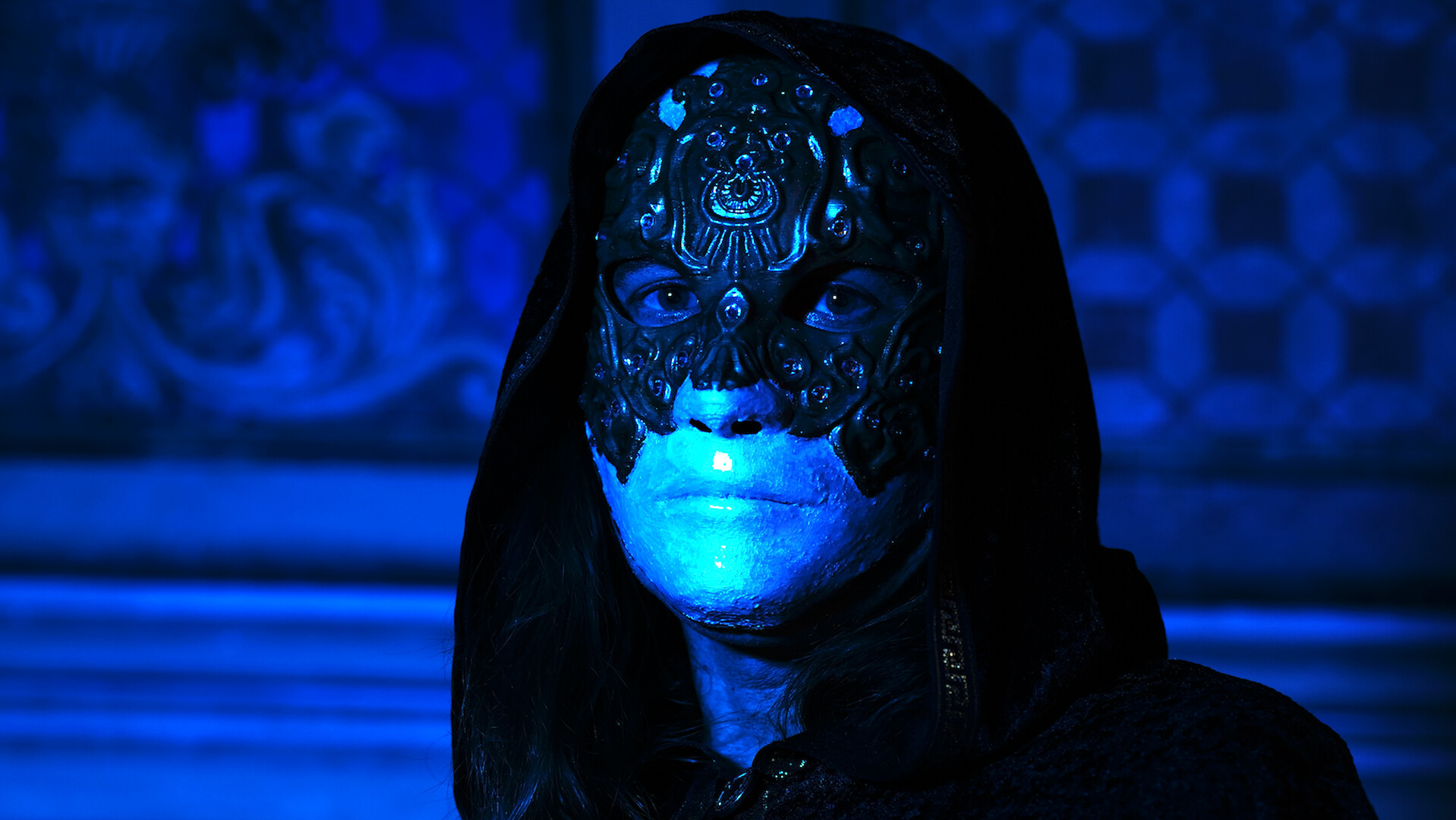
Drama, Mystery, by Samantha Casella, Italy, 2025.
“Katabasis” is a journey into the underworld. Nora experienced that dark realm as a child, when she suffered abuse. This marked her, shaping her into an ambiguous and manipulative woman, dangerous in her inscrutability, constantly seeking disturbing situations to relive the only condition she has profoundly internalized: pain. And the love story between Nora and Aron is tormented, strictly secret. Aron is a young orphan oppressed by the star system which, orchestrated by Jacob, a cynical manager, made him a star and imposes another façade of life on him. In fact, only the people who revolve around the house-prison where the couple lives are aware of Nora's existence. That majestic villa is the stage for secrets, lies, deceit, as well as unsettling episodes, since Nora is able to communicate with the souls from the beyond.
Director Biography – Samantha Casella
Samantha Casella studied various aspects of cinema, including screenwriting, directing, cinematography, and acting, across Turin, Florence, Rome, and Los Angeles. Her directing thesis, the short film "Juliette," won 19 awards, including the "European Massimo Troisi Award." She continued her path directing surreal short films including "Silenzio Interrotto," "Memoria all'Isola dei Morti," and "Agape." In 2019, she directed "I Am Banksy." At the charismatic TCL Chinese Theater in Los Angeles, at the Golden State Film Festival, she won the award for Best International Short Film. In 2020, she directed the short film "A un Dio Sconosciuto." "Santa Guerra" is her feature film debut.
LANGUAGE: Italian
SUBTITLES: English, Spanish, French, German, Portuguese
Piranhas (2019)

Naples, Rione Sanità. Nicola and his friends are a group of fifteen-year-olds who spend their days on scooters, playing video games, and experiencing first loves. Tired of suffering the abuses of local clans and seeing their families pay protection money, they decide to take matters into their own hands. They get weapons and form their own “paranza,” a criminal group of teenagers, to conquer control of the neighborhood. But the game will soon turn into a spiral of violence with no return.
Based on the novel of the same name by Roberto Saviano, Claudio Giovannesi‘s film is a lucid and chilling portrait of the “Gomorrah generation.” Unlike seasoned bosses, the protagonists of Piranhas are teenagers who chase the myths of consumerism – designer clothes, tables in trendy clubs, easy money – through the language of crime. Theirs is a rebellion that transforms into a tragic imitation of the power they wish to fight.
Giovannesi adopts a realistic and immersive style, following the boys with a shoulder-mounted camera that captures their energy, naivety, and frightening recklessness. The film does not judge, but observes with empathy the process of the corruption of innocence, showing how the universal desire for belonging and redemption can be diverted into a path of self-destruction. Awarded Best Screenplay in Berlin, it is a necessary work to understand the present.

Dogman (2018)

In a desolate suburb on the Lazio coast, Marcello runs a dog grooming shop, “Dogman.” He is a meek man, loved by everyone in the neighborhood, who tries to make ends meet for the love of his daughter. His quiet life, however, is plagued by his relationship with Simoncino, a violent and cocaine-addicted former boxer who terrorizes the community. Subjugated and humiliated, Marcello will suffer an injustice that will push him to plan a terrible and unexpected revenge.
Drawing freely from one of the most heinous Italian crime stories, the crime of the Canaro della Magliana, Matteo Garrone creates a universal work about oppression and the struggle for dignity. Dogman is an urban western, a moral parable set in a world abandoned by God and the law, where only the law of the strongest prevails. The spectral landscape of Villaggio Coppola, the same as in The Embalmer, becomes the stage for an archetypal clash between David and Goliath.
Marcello Fonte, awarded Best Actor at Cannes, gives an unforgettable performance, embodying the fragility and goodness of an ordinary man pushed to the limit. His humanity, expressed in his love for dogs and his daughter, clashes with the bestial violence of Simoncino. Garrone’s direction is essential and powerful, capable of creating almost unbearable tension and exploring, without any moral judgment, the thin line that separates the victim from the executioner.
The Lost Poet
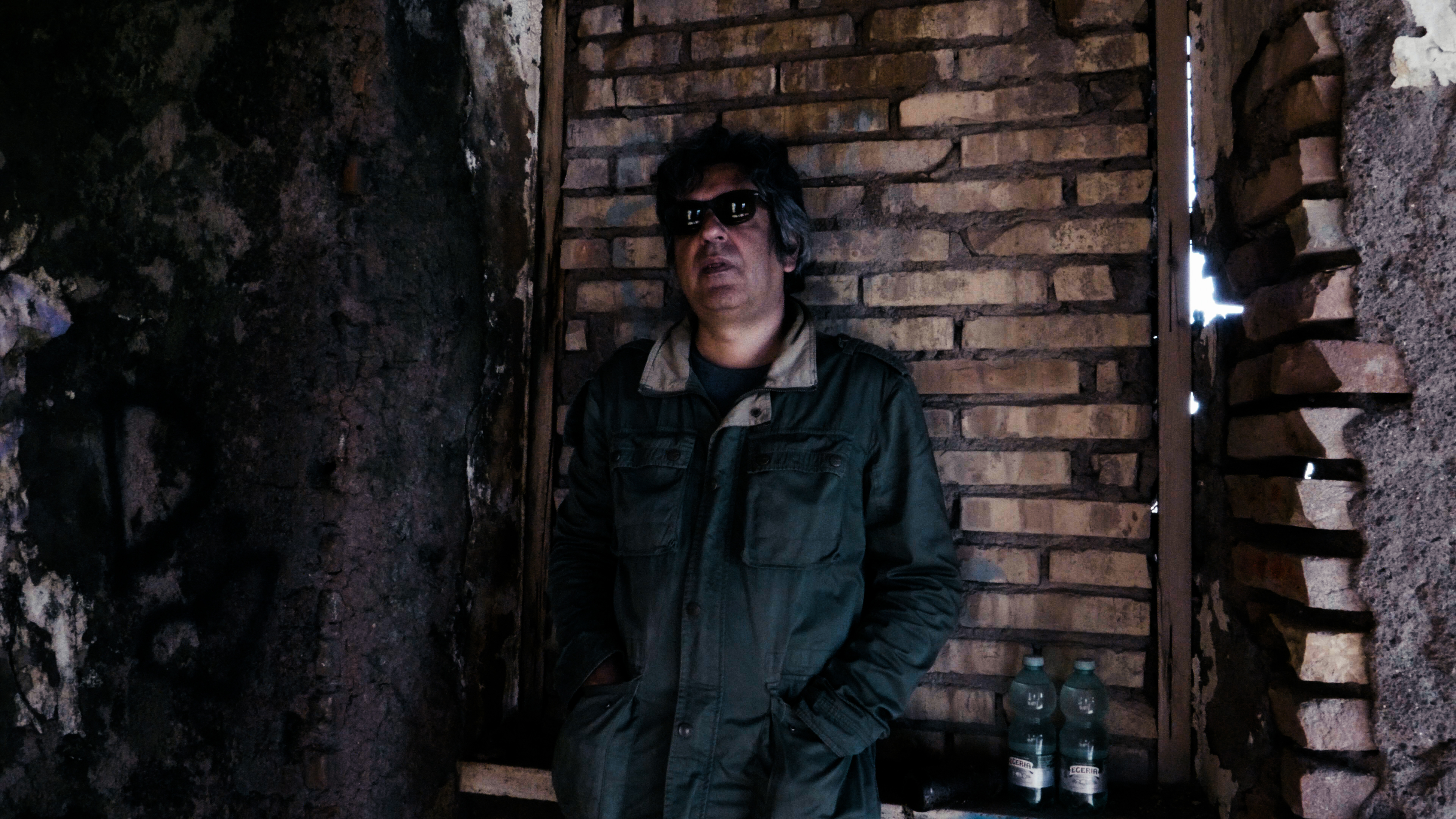
Drama, by Fabio Del Greco, Italy, 2024.
Dante Mezzadri wants to see an old friend, nicknamed the Iguana, whom he has lost sight of for many years, and who has managed to turn their shared youthful passion for poetry into a job, becoming a famous writer and poet. The man escapes from his bourgeois life and his wife to live homeless on the Roman coast, printing and trying to sell his poetry collections. At night he sleeps in a park of old carnival floats, inside a papier-mâché tank, and waits for the opportunity to meet his old friend, who however never shows up for appointments in the places they frequented when they were young, now in ruins. Dante's poetry books do not interest anyone and to support himself he is forced to "change product": he starts selling the infamous "cannibal pill" on behalf of young drug dealers, a new drug that sells like hot cakes and causes sensory and consumerist ecstasy. However, he realizes that this powerful drug is very dangerous for those who take it, he comes into conflict with his ethical conscience and throws all the pills into the sea. However, the dealers want to collect their money.
Shot over a period of 2 years, the film is a reflection on the cultural and artistic rubble of the society in which the protagonist lives, in an increasingly mechanized, consumerist and arid world. Dante Mezzadri is yet another human being who has renounced his inspiration and his creativity, but unlike many he is not willing to give his life to a system that distances him from his true identity. The physical world around him, however, seems constructed in such a way that it seems impossible to escape from this "invisible cage". The enthusiasm of the people he meets is ignited only by sensory gratification, by unreal visions of personal affirmation and success, by "metaverses" that offer an escape into an illusory and destructive reality. The poet's house on the coast, where he met with his friends as a young man, is just a pile of abandoned rubble. What happened to all those who wanted to become poets and ended up becoming something else? Are there internal forces with which that house can be "rebuilt"?
LANGUAGE: Italian
SUBTITLES: English, Spanish, French, German, Portuguese
Suspiria (2018)

More than four decades after its initial release, the iconic horror classic by Dario Argento has been reimagined in a gripping remake directed by the renowned Luca Guadagnino. This modern version, like its predecessor, is set within the eerie confines of a mysterious dance academy. Here, the unsettling narrative unfolds as a series of brutal murders targeting women comes to the fore. The film’s central character is portrayed with remarkable intensity by Dakota Johnson, who is supported by an exceptional cast including Chloë Grace Moretz, Mia Goth, Tilda Swinton, and Sylvie Testud. These talented actors breathe life into the sinister, authoritarian figures who guide the academy with an iron fist, veiling hidden dangers lurking beneath their stern facades.Suspiria is one of the most eagerly awaited horror films of 2018, captivating audiences with a fresh narrative take that distinguishes it starkly from Argento’s original creation. Under Guadagnino’s adept direction, this film transcends the typical boundaries of supernatural horror, crafting instead a cinematic masterpiece that delves into the profound depths of the human psyche. The director’s expansive cinematic language transforms the chilling tale into an artful homage to the horror genre, simultaneously drawing from and expanding upon its traditional elements. The result is not merely a movie but an extraordinary piece of arthouse cinema that has emerged from the recent offerings within the horror genre landscape—a work that, without question, stands among the finest films produced in the past two decades.
A Ciambra (2017)

In Gioia Tauro, Calabria, lives the Ciambra, a settled Romani community. Pio Amato is a fourteen-year-old who wants to grow up fast. He smokes, drinks, and follows his older brother Cosimo like a shadow, learning the tricks of the trade: petty theft and scams. His world is a complex balance between his family, the local Italians, and the African migrants. When Cosimo is arrested, it’s time for Pio to prove he’s a man.
Jonas Carpignano, an Italian-American director, completely immerses himself in the reality he portrays, creating a work of shocking authenticity. The second chapter of his trilogy on Gioia Tauro, A Ciambra is a film that blurs the lines between fiction and documentary. The director works with the real Amato family, who play themselves, building a narrative that stems directly from their lives. The camera, handheld and nervous, follows Pio, drawing us into his world with a rare physicality and immediacy.
The film is a powerful coming-of-age story set in a context of social marginalization, but it avoids all stereotypes. Carpignano does not judge his characters, but observes them with empathy, showing the complexity of their bonds, their codes of honor, and their struggle for survival. It is an immersive cinema that takes us to a specific place to tell a universal story about family, friendship, and the difficult choices that mark the transition to adulthood.
Apennines

Documentary, by Emiliano Dante, Italy, 2017.
Appennino is a cinematographic diary that begins with the slow reconstruction of L 'Aquila, the director's city, in Italy, and continues with the earthquakes in the central Apennines of 2016-17, up to the very long and exhausting asylum of the new earthquake victims in S. Benedetto of Tronto. An intimate and ironic, lyrical and geometric story, where the question of living in a seismic area becomes the tool to reflect on the very meaning of making cinema of reality.
LANGUAGE: Italian
SUBTITLES: English
A vision curated by a filmmaker, not an algorithm
In this video I explain our vision
The Intruder (2017)

Giovanna runs “La Masseria,” a recreational center for children in a tough neighborhood of Naples, an oasis of legality and hope snatched from decay. The precarious balance of her community is threatened when Maria, the young wife of a recently arrested Camorra boss, seeks refuge in the center with her two children. Her presence unleashes fear and anger among the other parents, forcing Giovanna into an impossible choice between welcome and security.
Leonardo Di Costanzo, with a background as a documentarian, creates a work of extraordinary psychological finesse and moral rigor. The Intruder is not a film about the Camorra, but about those who are forced to live with its shadow, about the complex dynamics of a community trying to build an alternative. The film takes place almost entirely within the walls of the center, an enclosed space that becomes the stage for a universal ethical dilemma.
The direction is minimalist and observational, attentive to gestures, glances, and unspoken tensions. Di Costanzo does not offer easy solutions, but explores the gray areas of solidarity, fear, and responsibility. It is a civil cinema in the noblest sense of the term, which questions the foundations of coexistence and the difficulty of drawing a clear line between right and wrong in a context where every choice has unpredictable consequences.
Abacuc (2015)

And experimental movie that challenges the audience with innovations that really manages to find new elements in the cinematic language, which is now very rare these days. The movie tells the daily life of a surreal character who is not easily forgotten, Abacuc, a man condemned to wander in an icy provincial town in northern Italy that looks like a frozen, lifeless hell. Abacuc is a man weighing almost 200 kilos, who invests his time in limbo away from any kind of sensation, he mainly goes to the cemetery, to the theme parks of the Romagna Riviera. Abacuc represents the need of cinematographic art to self-extinguish and implode in itself. The work of director Luca Ferri is very important, because it creates new paths of avant-garde cinema, paths forgotten and ignored by critics and the public but which are the foundations of the cinema of the future.
Corona days
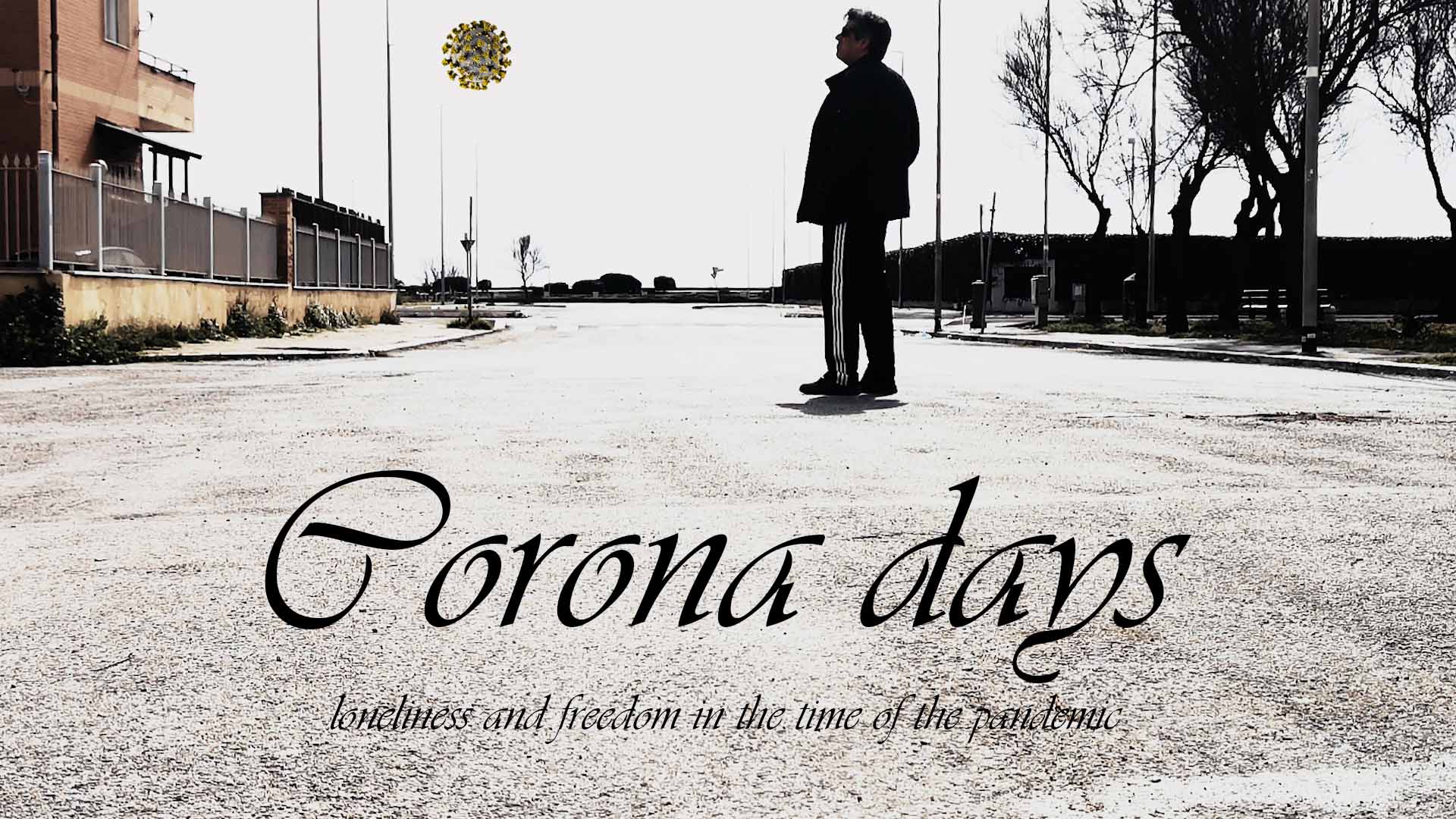
Drama, by Fabio Del Greco, Italy, 2020.
A man remains alone at home due to the Corona virus emergency measures. Solitude, time, and space become his adversaries, while imagination, memories, and the yearning for freedom become his allies. Director Fabio Del Greco intimately and personally documents the days of Corona virus isolation, filming outdoor scenes exclusively with a smartphone. The chronicle of these peculiar days serves as a catalyst for reflection on the relativity of time and space, and how freedom is something that can transcend reality to find its place within our souls.
In the times of the Corona virus, a genuine and instinctive filmmaker like Del Greco has reaped the fruits of his eccentric "cinediary" crafted during the quarantine weeks. He captured his own solitude up close, and from a safe distance, that of his friends and relatives. Above all, he seized the limited "hours of air" granted by authorities to film in a world emptied of humanity and subjected to rigorous police checks. All seen through the lens of an author who, as usual, is playful, disillusioned, and subtly ironic, even when he steps in as an actor. As he continues to explore reality, amidst melancholic insights and flashes of irony, Fabio Del Greco transcends this initial intent and transforms his feature film into a set of Russian nesting dolls, where diverse audiovisual contributions converge. These contributions may be chronologically disparate, yet they are all profoundly stimulating and laden with meaning. The interplay between present and past, expertly orchestrated even in the editing, creates a short-circuit where the past isn't merely an almanac of memories but another escape into the realm of imagination. As a socio-political critique surfaces, albeit legitimate, the narrative gradually shifts toward a broader existential framework.
LANGUAGE: italian
SUBTITLES: english, french, german, portuguese, spanish
Don’t Be Bad (2015)

Ostia, 1995. Vittorio and Cesare have been friends forever, “brothers for life.” Their days are spent dealing synthetic drugs, brawling, and clubbing. They live in a marginal and violent world where the future seems not to exist. When Vittorio, after a near-death experience, decides to change his life and find an honest job, he tries to drag Cesare along with him, but saving him from his self-destructive demon will be an almost impossible task.
The spiritual testament of Claudio Caligari, a cult director who passed away shortly after filming ended, Don’t Be Bad is a powerful and desperate work, a punch to the gut that ideally closes the trilogy on Roman marginality that began with Amore tossico. The film is a Pasolinian tale, raw and lyrical at the same time, that looks at its characters without judgment, but with a deep and sorrowful humanity.
The production of the film itself is an act of independent cinema, completed thanks to the tenacity of actor Valerio Mastandrea and an entire film community. Alessandro Borghi and Luca Marinelli, in due straordinarie interpretazioni, danno corpo e anima a una generazione perduta, intrappolata in un presente senza vie d’uscita. È un cinema viscerale che non risparmia nulla e che ci restituisce un pezzo di realtà italiana con una sincerità brutale e commovente.
Sworn Virgin (2015)

To escape a destiny of submission in an archaic and patriarchal society in the mountains of Albania, young Hana appeals to an ancient law, the Kanun. She swears to remain a virgin forever and becomes a man, Mark, obtaining the same rights and freedoms as other men. Years later, Mark moves to Italy to live with his sister and there, in a completely different world, begins a difficult and painful journey to rediscover her body and her repressed femininity.
Laura Bispuri’s debut feature is an intense and delicate film that explores with great sensitivity the themes of gender identity, memory, and freedom. The story of the Albanian “sworn virgins” becomes a universal metaphor for the construction of identity and the possibility of reinventing oneself. The film constantly moves between two timelines and two places: the past in the rugged Albanian mountains and the present in a modern Italian city, reflecting the protagonist’s inner conflict.
Alba Rohrwacher gives an extraordinary performance, all played on subtraction and physicality. Her rigid and awkward body, her masculine gestures, and her lost gaze tell, better than any dialogue, the prison in which she has locked herself. Bispuri’s direction is intimate and sensory, attentive to the details and small epiphanies that mark Hana/Mark’s journey towards reclaiming herself.
Black Souls (2014)

Three brothers from Africo, in Aspromonte, embody three different destinies linked to the ‘Ndrangheta. Luigi is an international drug trafficker who lives between Milan and Amsterdam. Rocco is an entrepreneur who launders dirty money, seeking an impossible bourgeois respectability. Luciano, the eldest, has remained in Calabria, clinging to an illusion of pastoral purity. A reckless act by Luciano’s young son will reignite an old feud, dragging everyone into an inescapable spiral of violence.
Francesco Munzi creates a powerful and austere work that elevates the mafia film to the stature of Greek tragedy. Far from the spectacularization of Gomorrah, Black Souls is a film that delves into the anthropological and psychological roots of crime, exploring the weight of blood, land, and a past that cannot be erased. The harsh and archaic landscape of Aspromonte is not just a backdrop, but a character that looms over the destinies of men.
The direction is rigorous, almost ritualistic, attentive to the silences and gestures of a world governed by ancient codes. Munzi evita i cliché del genere per concentrarsi sul dramma interiore dei suoi personaggi, sulla loro lotta impossibile per sfuggire a un destino già scritto. È un film che non offre speranza, ma una lucida e terribile comprensione della logica della vendetta, un capolavoro di tensione e profondità che ha lasciato un segno indelebile nel cinema italiano.
The Kempinsky Method

Drama, by Federico Salsano, Italy 2020.
The introspective imaginary road movie of a man in the maze of his own mind, his memories of his youth, his never dormant passions and contradictory truths. The road is made of water, the destination is falsely unknown. His traveling companions are three mysterious men, projections of his imagination and of different aspects of his personality: the perennial melancholy, the crazy creative, the introverted child. He is also followed by a female presence that tells the umpteenth human story. At a certain point of the crossing he decides to abandon the boat and his ghosts of him diving into the sea and arrives swimming on a deserted beach, naked, with a small Pinocchio puppet closed by a padlock.
In this splendid film life is like a long sea voyage and the human being is a small creature confronting immensity. Sometimes the ocean is calm, other times there are terrible storms. Sometimes we are captains of a boat with a well-defined route, other times we are shipwrecked in search of a land in which to save ourselves. But despite the long journey and the movement in physical space, there are other questions that resonate in the mind: who are these men I travel with? What is the mystery of this immense mass of water that seems to be made of my memories? You can circumnavigate the whole world but the main question always remains the same: who am I really?
LANGUAGE: italian
SUBTITLES: english, spanish, portuguese, german, french
The Great Beauty (2013)

Jep Gambardella is a 65-year-old journalist, charming and disillusioned, the king of the social nights of a decadent and magnificent Rome. After a single successful novel written in his youth, he has wasted his talent in a life of parties, chatter, and cynicism. The news of his first love’s death forces him to come to terms with the past, pushing him on a dreamlike journey through the city, in search of a lost meaning and a “great beauty” that seems to have vanished.
Winner of the Academy Award for Best Foreign Language Film, The Great Beauty is the work that established Paolo Sorrentino worldwide. Often compared to Fellini’s La Dolce Vita, the film is actually a profoundly personal and contemporary work, a requiem for a decaying world and a poignant meditation on time, memory, and artistic creation. Sorrentino’s Rome is an unreal stage, a labyrinth of lavish terraces, ancient palaces, and silent ruins, where the sacred and the profane mix in a melancholic carnival.
The direction is a triumph of visual virtuosity, a symphony of opulent images that capture the ephemeral beauty and profound emptiness of Jep’s life. Toni Servillo, once again, is sublime in giving body and voice to a complex character, a cynical aesthete who hides an incurable nostalgia for innocence. It is a film that questions the meaning of art and life in an era that seems to have lost all values, a masterpiece that has brought Italian cinema back to the center of the international stage.
Sacro GRA (2013)

Far from the monumental center of Rome, another city pulses along the edges of the Grande Raccordo Anulare, the highway that encircles the capital. Here, in this territory invisible to most, live and work extraordinary characters: a botanist who studies palms infested by a parasite, an eel fisherman who lives on a barge on the Tiber, a decadent nobleman, a paramedic who assists victims of road accidents. A mosaic of lives on the borders of the metropolis.
The first and only documentary to win the Golden Lion at the Venice Film Festival, Sacro GRA is a work that redefines the boundaries of reality cinema. Gianfranco Rosi, with his patient and curious gaze, immerses himself for years in this submerged world, finding the epic in the everyday and poetry in the ordinary. The film has no thesis to prove nor a story to tell in the traditional sense; it is rather a human fresco, a “secular mystery” that reveals the humanity hidden in seemingly anonymous places.
Rosi’s direction is precise and pictorial. Each shot is carefully composed, transforming the marginal landscapes of the Raccordo into scenes full of meaning. The director does not interview his characters, but observes them living, capturing moments of intimacy, irony, and melancholy. It is a cinema that richiede allo spettatore di abbandonare le aspettative narrative per lasciarsi trasportare da un flusso di immagini e incontri, alla scoperta della bellezza inaspettata che giace ai margini del visibile.
Reality (2012)

Luciano, a charming and exuberant Neapolitan fishmonger, makes ends meet with small scams and dreams of a different life. Pushed by his family, he auditions for “Big Brother.” That seemingly harmless experience triggers a totalizing obsession in him. Convinced that he is constantly being watched by the reality show’s production, Luciano spirals into a paranoia that progressively distances him from reality, turning his dream of celebrity into a nightmare.
After the raw reality of Gomorrah, Matteo Garrone surprises everyone with a dark, grotesque, and painful fable about contemporary Italy and its obsession with fame. Reality is a ruthless critique of the “spectacularization of nothing,” of a society where appearing has replaced being. Garrone abandons the documentary style to embrace a more Fellini-esque register, using hyperbole and the surreal to describe the absurdity of a world shaped by television.
The film is a bitter parable about the loss of innocence and human fragility in the face of the mirage of easy success. The performance of Aniello Arena, an actor with a past as a life prisoner, is extraordinary for its ability to embody Luciano’s good-natured naivety and his subsequent descent into madness. Awarded the Grand Prix at Cannes, Reality confirms the versatility of an author capable of reading the pathologies of the present with a sharp and profoundly human gaze.
Caesar Must Die (2012)

In the high-security wing of Rebibbia prison in Rome, a group of inmates, many of whom are convicted of mafia crimes, stage William Shakespeare‘s “Julius Caesar.” During rehearsals, the words of the English playwright merge with their lives, their memories, and their codes of honor. The line between fiction and reality blurs, and the theater becomes a mirror in which to reflect on themes such as betrayal, power, and freedom.
Winner of the Golden Bear at the Berlin Film Festival, Caesar Must Die is an extraordinary work that hybridizes documentary, fiction, and theater. The Taviani brothers, masters of Italian cinema, create a powerful and moving film in which the strength of Shakespeare’s text is amplified by the truth of the faces and experiences of the inmate-actors. The choice to shoot almost entirely in black and white within the prison walls creates a claustrophobic and timeless atmosphere.
The film explores the cathartic function of art. For these men, acting is not just an escape, but a way to confront their past and their condition. The famosa frase finale di uno dei protagonisti – “Da quando ho conosciuto l’arte, questa cella è diventata una prigione” – racchiude il paradosso del film: l’arte libera la mente, ma rende ancora più acuta la consapevolezza della reclusione fisica. Un’opera di rara intelligenza e umanità.
Mystery of an Employee
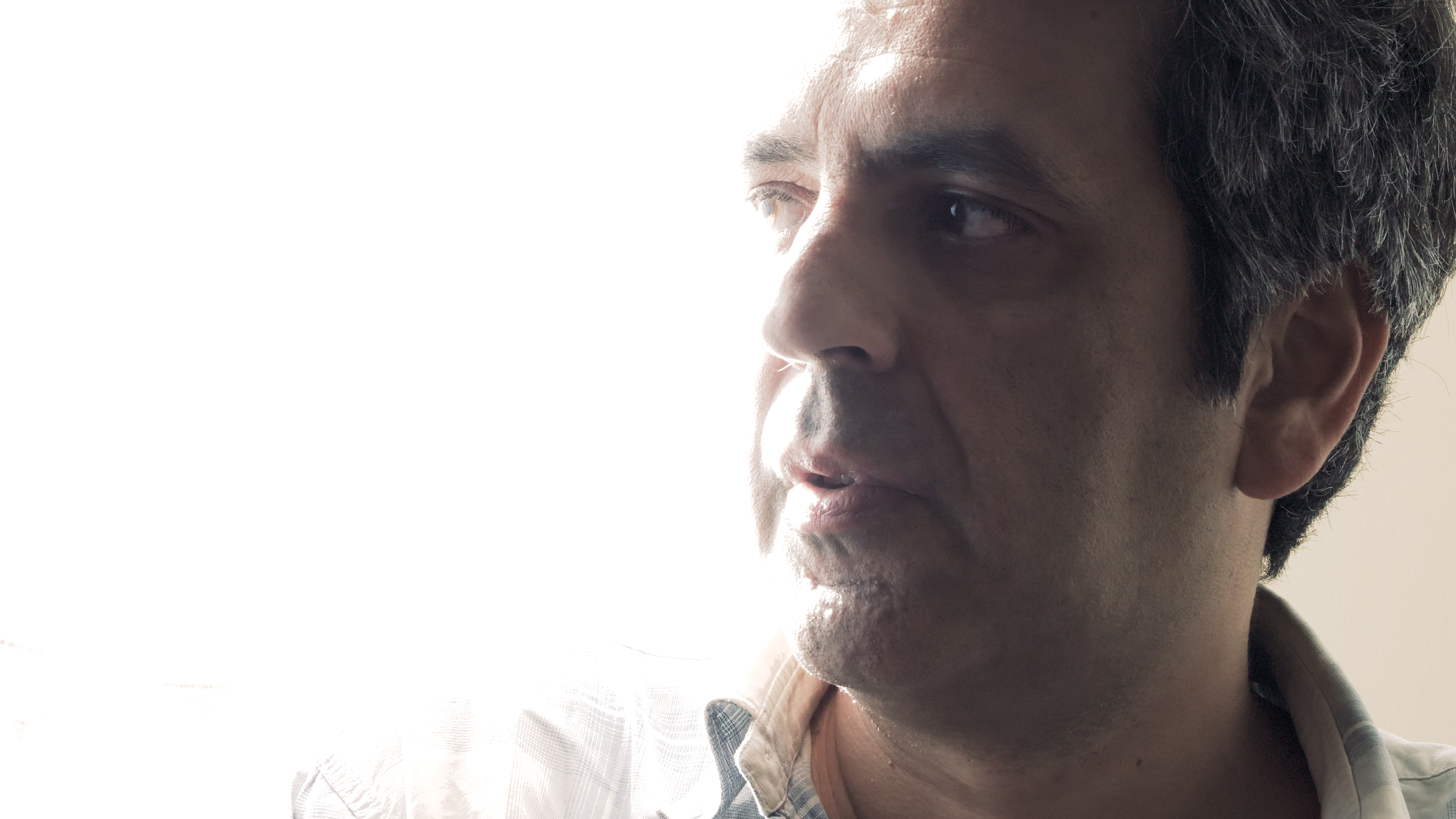
Drama, thriller, by Fabio Del Greco, Italy, 2019.
Someone wants to control the life of the employee Giuseppe Russo: the products he buys, his political and religious faith, his private life, even his dreams. But he will do anything to escape control and find his true self. Giuseppe is a man of around 45, married, with a stable job and a home of his own. His life flows seemingly peacefully when he meets a mysterious tramp who gives him some old VHS video cassettes. Giuseppe begins to see video tapes in which he is filmed in some moments of his life since he was a child, then as a teenager and as a young man. Who shot those videos that he remembers nothing about? Giuseppe has the strange sensation of being constantly observed and begins to investigate what is happening. Through his investigation of him, he begins to rediscover his true identity and become aware of who he truly is.
Employee's Mystery is a film that highlights the danger of social control and shows a society where everyone is constantly monitored and conditioned in their deepest selves. The film is also an analysis of human nature and identity. Fabio Del Greco, who plays Giuseppe, gives an engaging performance. Equally good is Chiara Pavoni, in the role of Giada Rubin and Roberto Pensa in the role of the tramp. Employee's Mystery is a film that addresses important themes in an original way, a psychological thriller that keeps the viewer glued to the screen until the end: a metaphor for contemporary society, in which people are increasingly monitored and conditioned by the media and technologies . It is a courageous and provocative work, which addresses important themes in an original way.
LANGUAGE: Italian
SUBTITLES: English, Spanish, French, German, Portuguese
The Four Times (2010)
![Le Quattro Volte (2011) Official Trailer [HD]](https://blog.indiecinema.co/wp-content/plugins/wp-youtube-lyte/lyteCache.php?origThumbUrl=https%3A%2F%2Fi.ytimg.com%2Fvi%2FNZDO4GJehQs%2F0.jpg)
In a small, ancient village in Calabria, life flows according to immutable rhythms. An old, sick shepherd spends his last days tending to his goats. His soul, according to Pythagorean doctrine, will be reincarnated in a newborn kid, then in a majestic fir tree, and finally in the charcoal produced from that tree. An eternal cycle of transformation that unites the human, animal, vegetable, and mineral kingdoms in a single, silent symphony.
Michelangelo Frammartino crea un’opera radicale e poetica, un film quasi privo di dialoghi che si affida unicamente alla forza delle immagini e ai suoni della natura. Le quattro volte è un esempio puro di “slow cinema”, un cinema contemplativo che invita lo spettatore a rallentare, a osservare, a percepire le connessioni invisibili che legano ogni forma di vita. Non è un documentario, ma un poema visivo che esplora concetti filosofici complessi con una semplicità disarmante.
Frammartino’s direction is rigorous and patient. The camera, often fixed, captures the austere beauty of the Calabrian landscape and the rituality of daily gestures, finding the universal in the particular. It is a cinema that rejects narrative conventions to become a sensory and spiritual experience, a courageous work that demonstrates the ability of independent cinema to explore new linguistic territories and achieve a rare depth.
Gomorrah (2008)

Based on the investigative novel by Roberto Saviano, the film weaves together five stories that reveal the pervasive power of the Camorra in the Neapolitan hinterland. From the disposal of toxic waste to high fashion, from drug trafficking to the criminal aspirations of two overexcited youths, the events show a system where violence is the only law and human life has a negligible price. A choral and ruthless fresco that documents the normality of evil.
Gomorrah is a point of no return for Italian cinema and for the representation of organized crime. Matteo Garrone carries out a radical operation: he abandons all mafia romanticism to adopt an almost documentary-like, raw, and observational style. There are no heroes or anti-heroes, only individuals trapped in a mechanism bigger than themselves. The camera follows the characters, recording their actions with a coldness that amplifies the horror.
The film is an immersive and suffocating experience. The use of non-professional actors, the thick dialect, and the real locations contribute to creating an oppressive sense of authenticity. Garrone does not explain, he shows. He rejects the didacticism of traditional investigative cinema to restore reality in its fragmented brutality. Its international success demonstrated the existence of a global audience hungry for Italian stories told without filters, redefining the genre and influencing an entire generation of directors.
The Consequences of Love (2004)

For eight years, Titta Di Girolamo has lived a sterile and methodical existence in an anonymous hotel in Italian-speaking Switzerland. His every day is marked by an immutable routine, by an apparent apathy that hides an unconfessable secret: he is serving a sentence on behalf of the Cosa Nostra. The encounter with Sofia, the young and curious hotel barmaid, cracks his armor of loneliness, triggering a chain of events that will lead him to make a gesture as romantic as it is fatal.
Se L’uomo in più era un’esplosione di talento, Le conseguenze dell’amore ne è la consacrazione stilistica. Paolo Sorrentino dirige un’opera di una perfezione formale quasi geometrica, dove ogni inquadratura, ogni movimento di macchina, ogni silenzio è calibrato per costruire una prigione esistenziale attorno al suo protagonista. Il film è un thriller dell’anima, un noir metafisico che trasforma una storia di mafia in una riflessione profonda sulla libertà, il destino e il prezzo delle emozioni.
Toni Servillo gives one of his most iconic performances, embodying the loneliness and dignity of a man who has given up everything. Sorrentino’s direction is glacial yet vibrant, capable of creating an unbearable tension through the repetition of gestures and the masterful use of the soundtrack. It is a cinema that abandons action to focus on inner states, a modernist work that shows how formal elegance can become the most effective tool for telling the story of the chaos of the human soul.
The Embalmer (2002)

Peppino, a dwarf taxidermist as skilled as he is ambiguous, lives and works in the desolate Villaggio Coppola, a non-place on the Caserta coast. His solitary life is turned upside down by his encounter with Valerio, a young man of extraordinary beauty whom he hires as an assistant. A morbid relationship of dependence and control develops between the two, a deadly triangle completed by the arrival of Deborah, Valerio’s girlfriend, destined for a tragic end.
Prima del successo internazionale di Gomorra, Matteo Garrone aveva già dimostrato una rara capacità di scrutare gli abissi dell’animo umano con uno stile crudo e quasi tattile. L’imbalsamatore è un’opera fondamentale che segna una svolta nel nuovo cinema italiano, un noir atipico che si trasforma in un melodramma nerissimo. Ispirato a un fatto di cronaca reale, il film usa il mestiere della tassidermia come una potente metafora: Peppino non si limita a imbalsamare animali, ma cerca di possedere e pietrificare la bellezza di Valerio, per renderla eterna e innocua.
The spectral landscape of Villaggio Coppola, with its illegal and decadent architecture, is not just a backdrop, but a mirror of the characters’ inner desolation. Garrone films the bodies and places with an unfiltered realism, making the grotesque disturbing and plausible. It is a physical cinema, which immerses the viewer in an atmosphere of moral and affective putrescence, marking the birth of a new Italian noir, detached from American models and deeply rooted in the country’s social anxieties.
One Man Up (2001)

Naples, 1980s. The parallel lives of two men with the same name, Antonio Pisapia, intersect and diverge. One is a successful singer, Tony, a cocaine addict and brazen; the other is a shy and rigorous footballer, Antonio. Both are at the peak of their careers, but a cruel fate will push them towards an inexorable and tragicomic decline, forcing them to confront failure, loneliness, and the search for an impossible freedom.
Con il suo sfolgorante esordio, Paolo Sorrentino getta le basi di tutto il suo cinema futuro. L’uomo in più non è solo un film; è un manifesto poetico. Qui nascono i temi che diventeranno la sua ossessione: la solitudine dei personaggi pubblici, la dialettica tra successo e fallimento, la maschera grottesca che nasconde una malinconia profonda. Ispirandosi alle figure reali di Franco Califano e Agostino Di Bartolomei, il film trascende la biografia per farsi metafora universale dell’esistenza.
It is also the beginning of the almost symbiotic artistic partnership with Toni Servillo, whose Tony Pisapia is already a perfect Sorrentinian archetype: a man who hides his fragility behind an impenetrable armor of cynicism and irony. The style is already unmistakable: sumptuous direction that finds the sublime in the sordid, brilliant dialogues, and a unique ability to transform news stories into an existential parable.
Feast

Documentary, by Franco Piavoli, 2018, Italy.
Franco Piavoli, author of the masterpiece "The Blue Planet", returns to the director to capture the "evening of the day of celebration", between Leopardi and Pascoli. A journey between the poetic and the anthropological. What is a "feast"? What does it represent, from a symbolic and material point of view? What burdens, or what relieves, does it bring to people's minds? And what value does it take when it turns into a collective act? It does not need any tinsel, Festa, and arrives right in the spectator's heart without stratification, without any deviation from the path, without any addition.
Language: Italian
Subtitles: English
The Tree of Wooden Clogs (1978)

It is a 1978 Italian movie written and directed by Ermanno Olmi. The movie tells the story of Lombard peasant life on a late 19th century farm. It bears some similarities to the earlier Italian neo-realist movement, and the parts were played by real peasants and residents, rather than professional actors. The movie won fourteen awards including the Palme d’Or at Cannes and the César Award for best foreign movie. The initial variation of the movie is spoken in Bergamo Lombardo.
4 peasant families who worked farms for the same master scrape together a meager profit in 1898 in the Bergamo countryside. Over the course of a year, children are born, crops are planted, animals are slaughtered, and couples are married; prayers and stories are exchanged on the families’ shared farm. Transformative undercurrents are sensed by peasants, but mostly ignored, a communist rebel gives a speech at a regional fair, and when a newly wed couple visit the big city of Milan and witness the arrest of political prisoners. Spring arrives, the father cuts down a tree to make wooden clogs that his child can wear on his feet to go to school, however the landowner notices this, and the family is forced to leave the land.
Suspiria (1977)

An American student attending a ballet academy in Germany uncovers that the school is merely a façade for something sinister, set against a backdrop of a string of gruesome murders. This chilling narrative is expertly directed by Dario Argento. The film features Jessica Harper, Stefania Casini, Flavio Bucci, and Miguel Bosé, bringing the story to life with their compelling performances. Argento, a master of thriller filmmaking, crafts a cinematic experience that grips the audience, keeping them on the edge of their seats, instilling a sense of doubt and unease throughout.
This movie stands out as a fascinating, sophisticated, and exceptionally vibrant piece of work, characterized by its bizarre and captivating visual style, enhanced by the outstanding cinematography of Vittorio Storaro. Although the dialogue may occasionally falter, Suspiria enchants and terrifies with its focus on blood and fear. The director consciously maintains a minimalistic plot, opting instead to highlight the film’s stunning visuals, in contrast to his previous works, pushing the boundaries of horror and maintaining an intense and eerie atmosphere.
The House with Laughing Windows (1976)

The House with Laughing Windows is a haunting tale that delves deeply into the spine-chilling world of Italian horror. Stefano, an enthusiastic and talented young art restorer, has the unique opportunity to work on a mysterious fresco nestled within the walls of the church in a secluded, eerie village far removed from the hustle and bustle of modern life. Under the skilled direction of Pupi Avati, and brought to life by the compelling performances of Lino Capolicchio, Francesca Marciano, Gianni Cavina, and Giulio Pizzirani, this film delivers a gripping narrative that captivates audiences from start to finish.
While fans of Italian horror might find certain films in the genre predictable or formulaic, this gothic masterpiece distinguishes itself by creating an overwhelming sense of unease and lingering suspense, artfully weaving a tapestry of horror that supersedes its contemporaries. As the plot unravels, the pervasive dread intensifies, gripping viewers in a relentless embrace that refuses to let go, ultimately expanding to an intolerable crescendo as the story reaches its chilling climax.
L’uccello dalle piume di cristallo (1970)

It is a 1970 Italian movie directed by the master of Italian Giallo Dario Argento in his directorial debut. The movie is the first in the Giallo italiano category which ushered in a long period of success for this kind of movie. Upon its release, the movie was a big hit at the box office. It was also a success outside Italy.
Sam Dalmas is an American writer vacationing in Rome with his English girlfriend, Julia, who is going through writer’s block and is on the verge of returning to America, however he witnesses a woman being attacked in an art gallery by of a strange guy with black gloves and raincoat. Trying to reach him, Sam is trapped between 2 mechanically operated glass doors and can only see the man escape. The girl, Monica Ranieri, was attacked and the authorities took Sam’s passport to prevent him from leaving the country. The attacker is believed to be a serial killer who’s been eliminating women all over town, and Sam is a major witness.
The Conformist (1970)
![The Conformist (1970) Original Trailer [HD]](https://blog.indiecinema.co/wp-content/plugins/wp-youtube-lyte/lyteCache.php?origThumbUrl=https%3A%2F%2Fi.ytimg.com%2Fvi%2Fw2djvGyhZ-k%2F0.jpg)
Bernardo Bertolucci‘s psychological thriller examines a fascist assassin who attempts to establish normalcy through marriage while ordered to murder his former professor, exploring themes of political complicity, identity, and moral compromise during Mussolini’s regime.
Shot with extraordinary visual sophistication, Bertolucci uses cinematography and mise-en-scène to probe the psychology of fascism and conformity. The film’s formal brilliance and thematic depth create a haunting meditation on how individuals rationalize participation in oppressive systems.
Dillinger Is Dead (1969)

It is a 1969 Italian drama directed by Marco Ferreri. In the cast Michel Piccoli, Anita Pallenberg and Annie Girardot. The story is a darkly satirical mix of dream and reality. The movie follows a bored and alienated man through the night at his home. The title originates from a newspaper article included in the movie declaring the death of American gangster John Dillinger. The movie appeared objectionable in its preliminary release for its subject matter and violence, but is now generally considered the most important piece of art in Ferreri’s movieography. He was well known to the major French movie publication Cahiers du cinéma and Ferreri later lived and worked in Paris for several years.
Glauco, a middle-aged commercial gas mask designer, is tired of his profession. After discussing alienation with a partner at the factory, he returns home. His wife lies in bed with a headache but has left his dinner on the table, which has gone cold. He is disappointed with the food and starts preparing himself a better meal.
Ugly Birds and Little Birds (1966)

It is a 1966 Italian movie directed by Pier Paolo Pasolini. The film participated in the 1966 Cannes movie Festival where he received a “Special Mention” for Totò. The movie can be described as partly neorealist and deals with Marxist issues of hardship and class conflict. It includes the popular Italian comic actor Totò accompanied on a journey by his son, played by Ninetto Davoli. This is the last movie starring Totò before his death in 1967.
Totò and his son Ninetto wander through the Roman countryside. During their walk, they observe a body being taken from a house following a murder. They next come across a talking crow, which is explained in the captions: “For the benefit of those who were not taking note or remain in doubt, we advise you that the crow is – as you claim – a left-wing intellectual of the type alive before the death of Palmiro Togliatti. After many failures the 2 characters find the language of birds and manage to preach love to families, but the hawks continue to kill and eat the sparrows, as it is in their nature.
The Ape Woman (1964)

The 1964 Italian film, expertly directed by Marco Ferreri, delves into intriguing and thought-provoking themes while exploring the complexities of human nature. This cinematic work made its mark by being showcased at the prestigious 1964 Cannes Film Festival, capturing the attention of audiences and critics alike. The film takes its inspiration from the poignant real-life narrative of Julia Pastrana, who lived in the 19th century and faced numerous adversities due to her unique condition.The story unfolds around Marie, often referred to as the \”Monkey Woman,\” a character who faces scrutiny and exploitation due to her body being completely covered in hair. Discovered by the entrepreneur Focaccia in a convent in Naples, her life takes a drastic turn. The nuns, protective yet pragmatic, insist that Focaccia marry her as a prerequisite for her release. Once married, Focaccia embarks on a journey of showcasing Marie to the public, driven by a desire to profit from her uniqueness.In a reflection of societal attitudes, Focaccia endeavors to offer her to a young man as a symbol of untouched purity, yet Marie remains hesitant to comply with such arrangements. As she achieves a measure of acclaim in Paris, her life takes a tragic turn. Marie tragically passes away during childbirth, a poignant ending to a tumultuous life. Undeterred by her death, Focaccia retrieves her body from the naturalistic museum, choosing to exhibit it in Naples, ensuring that her story continues to evoke fascination and reflection long after her demise.
8½ (1963)

Federico Fellini’s cinematic masterpiece delves deeply into the life of a celebrated film director who is grappling with a profound creative paralysis. Immersed in the throes of his personal turmoil and the existential bewilderment that surrounds him, he finds himself at a crossroads. The director is ensnared in a web of artistic blockage just as he endeavors to bring his latest cinematic vision to fruition. Throughout the narrative, he must confront the tumultuous chaos pervading both his professional obligations and the intricate dynamics of his intimate relationships. This evocative exploration presents an intricate portrait of a man who is both artistically and personally adrift, striving to piece together his fractured world amidst the swirling eddies of confusion and uncertainty that threaten to overwhelm him at every turn.
This groundbreaking masterpiece transformed the world of cinema by introducing a unique and innovative narrative structure that seamlessly intertwined reality with imaginative fantasy sequences. Fellini’s insightful and reflective exploration of the artistic journey, coupled with his profound examination of human relationships, pushed the boundaries of what was considered possible in film. This work opened up new formal possibilities and set a precedent that inspired countless directors across generations. Its substantial impact on the art form has cemented its standing as one of the most monumental achievements in the history of cinema, celebrating both creative expression and the complexities of the human experience.
The Leopard (1963)
Luchino Visconti’s epic drama chronicles the decline of Sicilian aristocracy during the unification of Italy, following a noble family navigating political upheaval, generational conflict, and the inevitable transformation of their world during the Risorgimento.
Visconti’s monumental achievement combines intimate character study with sweeping historical scope through stunning cinematography and meticulous production design. Burt Lancaster‘s performance as the aging prince captures both dignity and resignation, while the film explores themes of inevitable historical change and personal obsolescence.
Black Sabbath (1963)
![Black Sabbath (1963) ORIGINAL TRAILER [HD 1080p]](https://blog.indiecinema.co/wp-content/plugins/wp-youtube-lyte/lyteCache.php?origThumbUrl=https%3A%2F%2Fi.ytimg.com%2Fvi%2FJO8LJjLjncc%2F0.jpg)
Boris Karloff stars in a trio of scary stories including an abused call girl, a vampire making the most of his home, and a nurse who is being haunted by her ring’s rightful owner. Movie director: Mario Bava. Starring: Michèle Mercier, Lidia Alfonsi, Boris Karloff, Mark Damon. The scariest element of the movie is its style, especially the dirty and heavy interiors of The Drop of Water, while the performance is less convincing. Even the sound and optical forcings sometimes appear too extreme: a greater rigor would have benefited the movie.
The Eclipse (1962)

It is a 1962 Italian arthouse movie written and directed by Michelangelo Antonioni and played by Alain Delon and Monica Vitti. Shot between Rome and Verona, the story follows a girl (Vitti) who has a relationship with a young stockbroker at the financial market (Delon). When a solar eclipse occurs in Florence, Antonioni associated some of his inspirations with the movie. The movie is the end of a trilogy and is preceded by L’Avventura (1960) and La Notte (1961). L’Eclisse won the Special Jury Prize at the 1962 Cannes movie Festival and was chosen for the Palme d’Or. Defined by Martin Scorsese as the boldest movie of the trilogy, it is among the director’s best-known works.
One Monday in July 1961, at dawn, Vittoria, a young literary translator, ends her relationship with Riccardo in his apartment in the EUR real estate district of Rome, after a long night of discussions. Riccardo tries to persuade her to stay, but she informs him that she no longer loves him and leaves. As she strolls through the deserted early morning streets past the EUR water tower, Riccardo joins her and walks her through a wooded place to her apartment, where they say goodbye for the last time.
Accattone (1961)

Vittorio (Franco Citti), nicknamed “Accattone”, leads a life of slacker until his street woman, Maddalena, is exploited by her competitors and convicted. With no steady income, he initially tries to make up with his child’s mother, but is rejected by his parents; whereupon he meets a girl from the township, Stella, and attempts to make her a prostitute for him, but when his first client beats her, she runs away. Accattone tries to console her, but leaves her, after she has an unusual vision of her own death, to go with her friends.
Although it was shot with a script, Accattone is a cinematic version of Pasolini’s early stories, especially Ragazzi di vita and Una vita violenta. It was the first movie of Pierpaolo Pasolini as a director, and uses directing styles that would surely have been seen as Pasolini’s trademark characteristics: non-professional actors from the place where the movie is set, it is among the excellent cinematographic works to be seen certainly on people affected by hardship.
Il posto (1961)

It is a 1961 Italian movie directed by Ermanno Olmi. Typically cited as Olmi’s first major work, it is an example of Italian neorealism. Olmi won the David di Donatello for best director for his deal with the movie. The movie tells the story of Domenico, a boy who gives up school because his family needs money and has to go to work. Landing a job at a large city corporation, he goes through a strange series of exams, tests and interviews. During a short break from rehearsals, he meets Antonietta, a girl who, like him, has given up on her education because she needs money to support herself and her mother. During this meeting, they have coffee in a café and talk about their lives and aspirations. Domenico is attracted to her, but they are separated when they get jobs in various departments.
La Notte (1961)

Michelangelo Antonioni‘s masterpiece depicts a married couple—a successful novelist and his wife—spending a night in Milan re-examining their emotional bonds, wandering through the city’s nightlife and intellectual circles while confronting estrangement and existential uncertainty.
Antonioni’s precise mise-en-scène and mobile camera work transform urban landscapes into emotional topographies. The film’s sustained exploration of marital alienation and modern disconnection, anchored by luminous performances from Marcello Mastroianni and Jeanne Moreau, established Antonioni’s definitive style in depicting contemporary ennui.
The Adventure (1960)
![L'Avventura (1960) ORIGINAL TRAILER [FHD]](https://blog.indiecinema.co/wp-content/plugins/wp-youtube-lyte/lyteCache.php?origThumbUrl=https%3A%2F%2Fi.ytimg.com%2Fvi%2FOeTTaScAHLU%2F0.jpg)
This italian movie is based on a story by Michelangelo Antonioni written with co-writers Elio Bartolini and Tonino Guerra, an arthouse movie about the disappearance of a lady (Lea Massari) during a boat trip in the Mediterranean, and also about the subsequent betrayal of her admirer (Gabriele Ferzetti) with his partner (Monica Vitti) It was movieed in Rome, the Aeolian Islands and Sicily in 1959 in difficult economic and logistical conditions. A work of art to see to understand the essence of Antonioni’s cinema and its effect on all other moviemakers.
While Claudia waits downstairs, Anna and Sandro have sex at her house. The following morning the personal luxury yacht reaches the Aeolian Islands in northern Sicily. Having passed Basiluzzo, Anna impulsively dives into the water for a swim and Sandro leaps after her. Sandro tries to save her when Anna sobs that she actually saw a shark. Anna confesses to Claudia that the shark was a lie to arouse Sandro’s interest. After seeing Claudia liking her blouse, he tells her to put it on, that it fits much better than her, and that she can keep it. Anna is dissatisfied with Sandro’s long business trips, who ignores her problems and sleeps on the rocks.
Black Sunday (1960)

A witch and her evil servant return from the grave and embark on a bloody strategy to recover the body of the witch’s descendant. Movie director:Mario Bava. Starring: Barbara Steele, John Richardson, Andrea Checchi, Ivo Garrani. Modern Italian cinema critics panned the movie negatively, although some enjoyed the cinematography. The movie has nice camera movements and Bava’s visual style produces poetry and feeling as well as fear. Bava is an author of pictorial movies and this is among his best works.
Eyes Without a Face (1960)

The instructor Génessier, a well-known plastic surgeon who deals with transplants, is responsible for a car accident from which his daughter Christiane came out alive but with a terribly mutilated face. With the help of an assistant, he lures women into his workshop to rip the skin off their faces and use it on his daughter’s wounds. An operation so difficult that it is necessary to repeat it systematically, after each failure of the grafts. Christiane, a mask on her face, still does not understand absolutely anything …
French critics claimed that it was an imitation of the German Expressionism or simply a mistake for the director’s leap from documentaries to genre movies. The British press claimed that when a director like Georges Francis does a movie horror, one cannot try to find allegories or levels of reading. Eyes Without a Face was re-released theatrically in September 1986 to accompany retrospectives at London’s National movie Theater and the Cinémathèque Française, and the movie began to be re-evaluated. French reviews of the movie have been particularly more encouraging than they were upon its preliminary release. Audiences discovered the poetic nature of the movie by comparing it with the work of the French poet and director Jean Cocteau. Franju uses a strange poem in which Cocteau’s inspiration appears.
La Dolce Vita (1960)

Federico Fellini’s nearly three-hour character study follows a tabloid journalist through episodic encounters in Rome’s high society, revealing the decadent allure and moral decay of la dolce vita—the sweet life—through encounters with aristocrats, celebrities, and society figures.
This profoundly stylish film transcends its length through magnetic storytelling and Marcello Mastroianni’s captivating performance. It captures the essence of Italian society while exploring themes of desire, spirituality, and disillusionment, making it Roger Ebert’s favorite film and a touchstone of cinema history.
The Cry (1957)

It is a 1957 Italian movie directed by Michelangelo Antonioni and starring Steve Cochran, Alida Valli, Betsy Blair and Dorian Gray. Based on a short story by Antonioni, the movie tells of a man who wanders aimlessly, far from his city, far from the woman he liked, and ends up being mentally and socially unstable. Il Grido won the Golden Leopard at the Locarno International movie Festival in 1957 and the Silver Ribbon for Best Cinematography (Gianni di Venanzo) in 1958.
Aldo worked at the sugar factory in Goriano for 7 years. His fiancée, Irma, discovers that her partner, who had left for Australia years earlier to look for work, has recently died there. Irma goes to the sugar factory and brings Aldo lunch. Aldo returns to your house where they discuss the death of his spouse. Aldo says that after 7 years they can finally get married and legitimize their little girl, Rosina. The next day, Irma reveals to him that she likes someone else. Aldo can’t believe his words. Over the next few days he frantically tries to change her mind, but to no avail, and the affair ends with him slapping her in public.
Abandoned (1955)

It is a 1955 Italian movie set during the aftermath of the Allied invasion of Italy in 1943 during World War II. The movie went to the 1955 Venice movie Festival. It is the directorial launch ofFrancis Maselli. The music was composed by Giovanni Fusco and staged by Ennio Morricone.
In the summer of 1943, the Countess Luisa and her son Andrea leave Milan because of the Allied battles in the city and retire to their property outside the city, where they host 2 of Andrea’s peers, her cousin Carlo, the son of a fascist for Switzerland, and his friend Ferruccio, son of an army officer who took part in the war. The 3 young people kill time in sweet idleness, sunbathing along the river, barely aware of the ongoing quarrel, thanks to the broadcasts of Radio London. They begin to become aware of the gravity of the scenario when the displaced people arrive from the city and Andrea is obliged to accept hosting some of them on the property, to the discomfort of his mother.
Bicycle Thieves (1948)

In the Roman district of Val Melaina after the Second World War, Antonio Ricci (Lamberto Maggiorani) has no hope of work to support his wife Maria (Lianella Carell) and their child Bruno (Enzo Staiola). Since the activity requires a bicycle, he advises Maria that she cannot purchase one. Maria takes the sheets of her dowry off the bed and takes them to the pawnshop, where they are paid in suitable cash for the purchase of Antonio’s bicycle.
The neorealist artwork of Vittorio de Sica is rooted in a world where owning a bicycle is essential to work, yet it could also be set in a world where lack of a car, or affordable daycare, or a home, or social security are overwhelming barriers to putting food on the table. This is what makes it a movie both for post-war Italy and for any era.
La terra trema (1948)

It is a 1948 Italian neorealist movie directed, co-written and produced by Luchino Visconti. A loose adaptation of the 1881 novel I Malavoglia by Giovanni Verga, the movie chronicles the individual sufferings of Sicilian fishermen. The movie is documentary-style, includes a cast of non-professional actors, and a mix of scripted and unscripted series. It is considered one of the important movies of the neorealist movement and is among the best movies ever.
The Valastros are a working-class fishing family in Aci Trezza, a small fishing town on the east coast of Sicily. The first part tells the fishermen’s effort to improve their lives. The fishermen ask for a higher cost for their fish, pushed by the eldest son ‘Ntoni, to rebel against the wholesalers. The fishermen end up in prison. The wholesalers realize that it is more rewarding to have ‘Ntoni and his friends fishing, so they release the fishermen. Ntoni, who has lived outside Sicily for a while, had brought back some new concepts to his country, and tries to form a cooperative, but no one joins him. Choosing to go it alone, he convinces his family to mortgage the house to buy a boat and starts his new life.
Germany, Year Zero (1948)

It is a 1948 italian movie directed by Roberto Rossellini, and is also the last movie in the trilogy of war movie by Rossellini, which follows Rome, Open City and Paisà. Germany Year Zero is set in Allied-occupied Germany, unlike the others which take place in German-occupied Rome and during the Allied invasion of Italy.
As in many neorealist movies, Rossellini mainly used non-professional actors. Shot in Berlin the year after its near-total destruction in World War II, it includes meaningful images of ruined Berlin and the human struggle for survival amid the destruction of Nazi Germany. Many movie critics who had previously applauded Rossellini condemned the movie as theatrical and unwise. An innovative movie, defined by Charlie Chaplin as the most beautiful Italian movie he had ever seen, it is a movie production very far from the visual canons of Hollywood.
Paisà (1946)

It’s a drama movie of Italian neorealist war of 1946 directed byRoberto Rossellini. In 6 independent episodes, it tells of Italy’s freedom from Allied pressure during the last phase of the Second World War. The movie premiered at the Venice International movie Festival and won numerous national and global awards.
All over the world the movie has acquired important recognitions. The French critic André Bazin chose it as the essential movie to reveal the value of Italian neorealism, highlighting its grasp of truth with an amalgam of documentary and fiction. He has achieved recognition in the United States, Belgium, Japan and Switzerland.
Rome, Open City (1945)

German SS soldiers attempt to imprison Giorgio Manfredi, Communist engineer and leader of the Resistance against Italian Nazis and Fascists. They think Giorgio is a policeman, however when he hints that he is a Confederate Giorgio asks him to send money to a group of Resistance fighters outside the city, as he is now recognized by the Gestapo and cannot do solo.
Few movie movements can boast the success of Italian neorealism, a post-World War II wave that participated in the battle of the working class that produced many art movies. Roberto Rossellini he was among the leading directors of neorealism. This drama of repression and resistance boasts some of the most incredible scenes in all of cinema.
Obsession (1943)

It is a 1943 Italian movie based on the 1934 novel The Postman Always Rings Twice by James M. Cain. The first feature movie by Luchino Visconti, is considered by many to be the first Italian neorealist movie, although whether that classification is accurate is debated. It has some commonalities with the calligraphy style.
A vision curated by a filmmaker, not an algorithm
In this video I explain our vision

