
The true history of rebellion on screen is an underground narrative, woven at the margins of the industry. While the popular imagination often associates counterculture with seminal works produced by major studios, such as narratives about the 1968 movements that frequently end up romanticizing or co-opting youth dissent, truly radical cinema operates outside of these structures. Underground and independent films do not seek the comfortable catharsis that the mainstream offers; instead, they prefer alienation, dysfunction, and raw aesthetics, refusing to provide easily digestible solutions.

This guide draws a sharp line between mass counterculture and radical cinema, understood as a continuous act of aesthetic guerrilla warfare and political critique. The very act of making a film with one’s own means, rejecting the conventional language and production norms of power, is in itself a rebellious gesture. This cinema not only speaks of dissent but is dissent, challenging ideological orthodoxy and exposing what can be called the “State lie” or the historical simplification imposed by dominant narratives. The rejection of traditional narrative structures is not merely a stylistic choice but a political declaration against cultural standardization.
The exploration of avant-garde cinema and global political dissent leads us through movements that used the camera as a weapon. From Cinema Novo in Brazil, which responded to political violence with its “Aesthetics of Hunger,” to the No Wave Cinema in New York, which translated the DIY ethos of punk into lo-fi, anarchic images, we observe a coherence in the method: productive independence guarantees the integrity of the message. The selected works here are milestones that broke with tradition in ways often violent or grotesque, reflecting existential and social crisis without the comforting filter of commercial narratives. This exploration provides a comprehensive map of global counterculture.
Syndromes and a Century (2006)

Two parallel narratives unfold in a rural hospital and a modern urban clinic, both loosely inspired by Apichatpong Weerasethakul‘s parents, who were doctors. The film drifts between memory, routine, and inexplicable moments of grace, dismantling causality in favor of pure sensory and emotional attentiveness.
A luminous meditation on memory, healing, and the passage of time, Syndromes and a Century exemplifies Weerasethakul’s ability to locate the transcendent within the mundane. Its mirrored structure generates meaning through contrast rather than explanation, and its final abstract sequence — bodies moving in mechanical darkness — stands among the most genuinely radical images in contemporary world cinema.
Don Barry: A Quixotic Exploration
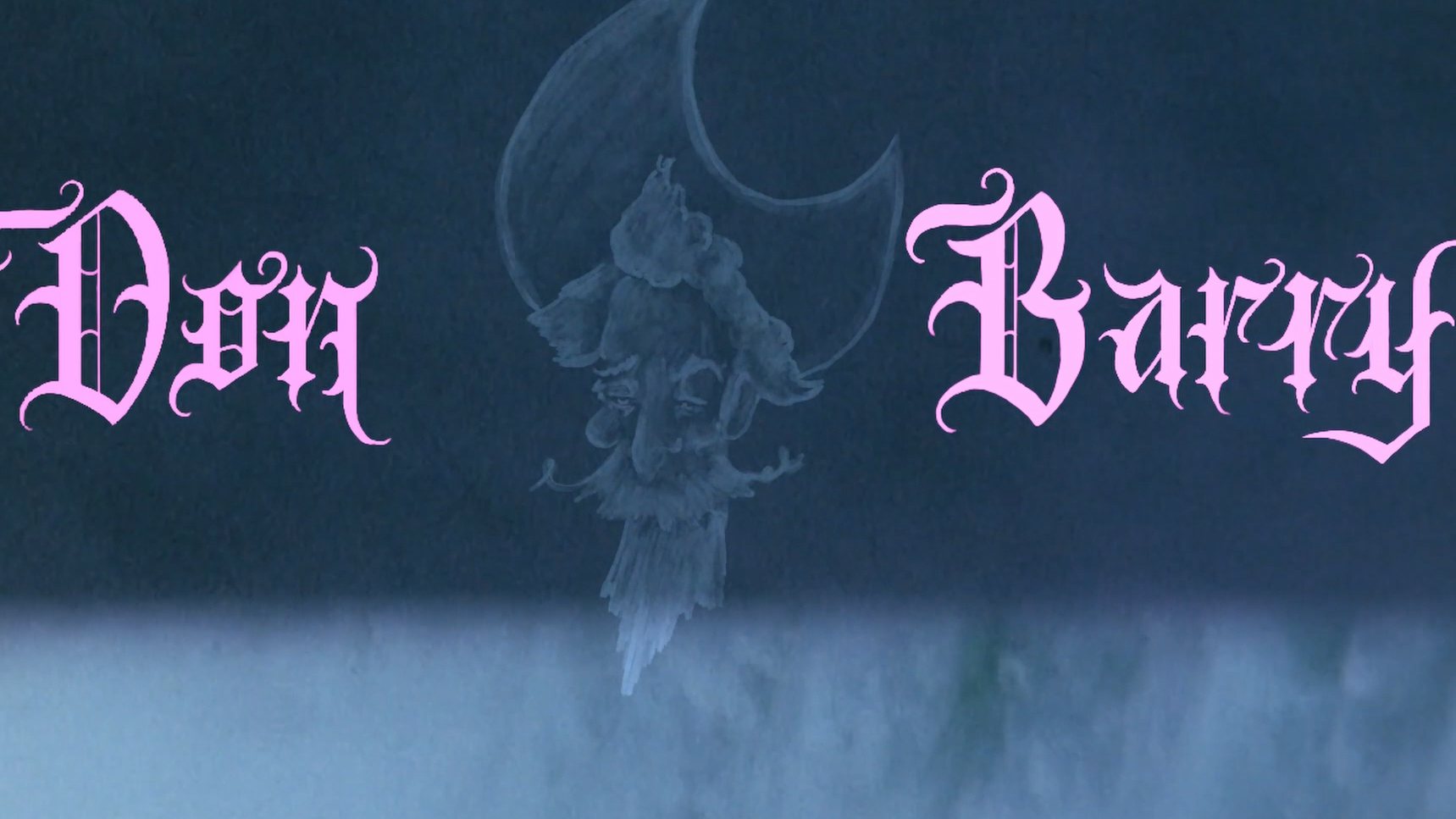
Docufiction, Experimental, by Paul Smart, Mexico, 2026.
Don Barry: A Quixotic Exploration is a debut feature that places the biography of an eighty-year-old experimental filmmaker and artist, Barry Gerson, within the metanarrative of Miguel de Cervantes’ Don Quixote. Don Barry was filmed in the city of Guanajuato during the 51st edition of the Cervantino Festival, as well as during the vibrant Day of the Dead celebrations held in the city’s UNESCO-listed tunnels. The film honors the director’s long friendship with artist Barry Gerson, drawing inspiration from Cervantes’ Don Quixote. Paul Smart’s directorial choices create something new that celebrates life and goes beyond conventional storytelling. A search for magic in our real lives. A moving film about the meaning of life, art, and death. Not to be missed.
Paul Smart is a proud outsider filmmaker with a long history of film screenings. In the 1980s, he emerged in New York’s vibrant youth art scene, working in theater production and later filmmaking, before retreating to rural upstate New York, in the Catskill Mountains, where he made a living writing and screening independent films in old parish halls for rural audiences, many of whom had never seen a film.
LANGUAGE: English
SUBTITLES: Spanish, French, German, Portuguese
Tropical Malady (2004)

A Thai soldier and a young villager develop a tender romance that dissolves midway into a haunting jungle fable, where the soldier hunts a spirit that may be his lost lover transformed into a tiger. The film fractures into two distinct halves, merging realism with myth.
Apichatpong Weerasethakul’s Palme d’Or-nominated masterpiece defies every convention of linear storytelling, weaving queer desire, Buddhist cosmology, and animist folklore into an experience that operates on an almost subconscious level. Its bold structural rupture demands active surrender from the viewer, rewarding patience with imagery of extraordinary spiritual and sensory power.

Tarnation (2003)

Filmmaker Jonathan Caouette assembles decades of home movies, answering machine recordings, photographs, and theatrical self-portraits into a fragmented autobiographical portrait of his traumatic childhood, mentally ill mother, and queer self-discovery. Remarkably, the entire film was initially edited on iMovie for virtually no cost.
Tarnation is one of the most startling debuts in independent cinema history, a genuinely underground work born from personal desperation rather than institutional support. Its collage aesthetic anticipates the digital memoir form while remaining wholly singular, collapsing the boundaries between therapy, performance, and documentary into something raw, hallucinatory, and deeply moving.
The Lost Poet

Drama, by Fabio Del Greco, Italy, 2024.
Dante Mezzadri wants to see an old friend, nicknamed the Iguana, whom he has lost sight of for many years, and who has managed to turn their shared youthful passion for poetry into a job, becoming a famous writer and poet. The man escapes from his bourgeois life and his wife to live homeless on the Roman coast, printing and trying to sell his poetry collections. At night he sleeps in a park of old carnival floats, inside a papier-mâché tank, and waits for the opportunity to meet his old friend, who however never shows up for appointments in the places they frequented when they were young, now in ruins. Dante's poetry books do not interest anyone and to support himself he is forced to "change product": he starts selling the infamous "cannibal pill" on behalf of young drug dealers, a new drug that sells like hot cakes and causes sensory and consumerist ecstasy. However, he realizes that this powerful drug is very dangerous for those who take it, he comes into conflict with his ethical conscience and throws all the pills into the sea. However, the dealers want to collect their money.
Shot over a period of 2 years, the film is a reflection on the cultural and artistic rubble of the society in which the protagonist lives, in an increasingly mechanized, consumerist and arid world. Dante Mezzadri is yet another human being who has renounced his inspiration and his creativity, but unlike many he is not willing to give his life to a system that distances him from his true identity. The physical world around him, however, seems constructed in such a way that it seems impossible to escape from this "invisible cage". The enthusiasm of the people he meets is ignited only by sensory gratification, by unreal visions of personal affirmation and success, by "metaverses" that offer an escape into an illusory and destructive reality. The poet's house on the coast, where he met with his friends as a young man, is just a pile of abandoned rubble. What happened to all those who wanted to become poets and ended up becoming something else? Are there internal forces with which that house can be "rebuilt"?
LANGUAGE: Italian
SUBTITLES: English, Spanish, French, German, Portuguese
Elephant (2003)

A ordinary day at an American high school unfolds through overlapping perspectives of various students, leading toward a school shooting rendered with chilling detachment. Gus Van Sant refuses explanation or moral judgment, observing teenage existence with a cool, documentary-like gaze that amplifies rather than diminishes the horror.
Winner of the Palme d’Or at Cannes, Elephant is a formally daring rejection of the cause-and-effect narratives Hollywood typically imposes on tragedy. Its long tracking shots through institutional corridors, its fractured chronology, and its deliberate emotional blankness constitute a genuinely subversive act, transforming a cultural wound into austere, deeply unsettling art cinema.
Gerry (2002)

Two friends named Gerry venture into a desert wilderness and become hopelessly lost. With no dialogue, no plot mechanics, and no rescue, the film strips cinema down to pure duration, landscape, and the slow terror of human insignificance against an indifferent natural world.
Gus Van Sant’s radical minimalist experiment dissolves narrative entirely in favor of meditative long takes and an almost geological sense of time. Deeply influenced by Béla Tarr, the film challenges every commercial expectation of what cinema should deliver, transforming aimlessness into a devastating philosophical statement about mortality and the void.
The Sands

Science fiction, by Noah Paganotto, Argentina, 2022.
In an undetermined location on planet Earth, in an unknown time, Zoilo lives with his family in a wasteland surrounded by ruins. They live uprooted, without mothers, knowing that pregnancy for women is synonymous with death. For them there is only one collective routine; keep the fire alive. Only Zoilo escapes this logic, observing, intrigued, details that others do not see and therefore do not appreciate. Zoilo's personal search for answers will increase the differences with his relatives, increasingly revealing an empty world of interiority.
Avant-garde film that burns slowly in the first part and then reveals in the second the profound conflicts of a family prisoner of archaic beliefs. It is a dystopian and visionary work, with wonderful photography and images of rare power that allow us to grasp the depth of the story and its poetic potential. The faces of the actors, especially the protagonist boy, are perfect. The Sands metaphorically represents the world we live in: an alienated society, where what keeps us alive is demonized and blamed for death. In opposition to the fast pace of the typical mainstream film, The Sands is a meditative journey into the depths of images. The film was shot in natural environments in the city of Necochea, Buenos Aires province, Argentina.
LANGUAGE: Spanish
SUBTITLES: English, Spanish, French, German, Portuguese
A vision curated by a filmmaker, not an algorithm
In this video I explain our vision
SLC Punk! (1998)

James Merendino (1998) follows Stevo and Heroin Bob, two young punks struggling for authenticity and anti-conformism in an extremely conservative environment like Salt Lake City, Utah.
An analysis of cultural micro-resistance. The punk rebellion here is not a revolutionary mass movement but a personal and daily resistance against religious and social conformity. The film celebrates the punk DIY ethos as the only possible response to youth homogenization, positioning itself as an analysis of counterculture in an unexpected geographic area.
Gummo (1997)
![Gummo (1997) ORIGINAL TRAILER [HD 1080p]](https://blog.indiecinema.co/wp-content/plugins/wp-youtube-lyte/lyteCache.php?origThumbUrl=https%3A%2F%2Fi.ytimg.com%2Fvi%2FhYalnCwEd5c%2F0.jpg)
Harmony Korine (1997) explores life in the rural slums of Ohio, in a world marked by poverty, casual violence, and degradation, presented through disconnected vignettes.
Korine creates an aesthetic of anti-beauty and anti-narrative. The rebellion is in the refusal to attach meaning or moral judgment to decay. It is an uncomfortable and fragmented portrait of the American periphery, challenging the clean and orderly image of suburban life and operating outside conventional narrative structures.
River of Grass (1994)

Kelly Reichardt (1994) debuts with a minimalist road movie about a dissatisfied woman who flees home believing she has committed a murder in Florida.
Reichardt rebels against the spectacularization of crime and escape. It is anti-spectacular cinema and deeply introspective, where alienation and boredom are the true protagonists. The rebellion is subdued, an existential journey that rejects Hollywood grandeur, establishing a model for introspective independent filmmaking.
Man Bites Dog (1992)

Rémy Belvaux, André Bonzel, and Benoît Poelvoorde (1992) create a mockumentary about the life of a serial killer who comments on his “art.”
This is black satire and radical meta-cinematic critique. The rebellion is in the moral inversion, where the audience and crew allow themselves to be seduced by evil. The film denounces media apathy and the exploitation of violence, pushing the concept of non-fiction and the ethics of representation to the limit.
Daughters of the Dust (1991)

Julie Dash (1991) poetically narrates the story of a Gullah/Geechee family preparing to leave their island for the mainland at the beginning of the 20th century.
A masterpiece of independent African-American cinema, it represents an act of cultural and identity rebellion. The film is a reclamation of African memory and resistance against American cultural assimilation, shot in a non-linear, poetic style, essential outside the Hollywood system.
Hardware (1990)
![Hardware (1990) | Official Trailer [HD]](https://blog.indiecinema.co/wp-content/plugins/wp-youtube-lyte/lyteCache.php?origThumbUrl=https%3A%2F%2Fi.ytimg.com%2Fvi%2Fe0k2YvEns-M%2F0.jpg)
Richard Stanley (1990) directs a low-budget dystopian sci-fi, set in a post-apocalyptic, toxic future, where a war machine reactivates and attacks the inhabitants, symbolizing technology as nemesis.
A fundamental example of underground cyber-rebellion. The film critiques technological excess, corporate control, and militarism. It shows a future where humanity is reduced to surviving among scraps, making the struggle for human autonomy against the machine and the system its main form of dissent.
Do the Right Thing (1989)

Spike Lee (1989) concentrates racial and social tensions into a hot summer day in Bedford-Stuyvesant, Brooklyn, culminating in an explosion of urban violence.
Although Lee’s best-known work, it was produced outside the studio system and with a radical vision. The film’s rebellion is its lack of moral resolution. Lee refuses to provide easy answers, offering an unvarnished critique of systemic rage and police violence that challenges the audience’s conscience and the media narrative of racial conflict.
You Killed Me First (1985)

A representative short film by Richard Kern (1985), a central figure of the Cinema of Transgression in New York, which focuses on extreme stories of violence and revenge.
The Cinema of Transgression embodies the DIY ethos of punk applied to filmmaking, with a focus on explicit violence and urban despair. Kern uses a raw, unfiltered aesthetic to provoke shock, arguing that only the breaking of moral limits can constitute a meaningful act of rebellion in the age of media saturation.
Stranger Than Paradise (1984)

Jim Jarmusch (1984) follows three alienated characters—Willie, Eddie, and Eva—on a directionless road trip from New York to Florida, presented as a series of black and white vignettes.
Jarmusch creates the aesthetic of stasis, an eccentric anti-road movie that rebels against the epic and narrative dynamism of traditional American cinema. The characters’ rebellion is their cold indifference and alienation, registered with a stylistic minimalism that would become the trademark of independent cinema in the 1980s. Their resistance lies in the total refusal to participate in the American Dream, preferring apathy as a form of dissent.
Boy Meets Girl (1984)

Leos Carax (1984) directs a melancholic and stylized black and white debut that captures youthful angst in Paris, between loneliness and desire.
Carax’s rebellion is in his extreme formalism and lyricism. While less overtly political than No Wave, it embodies existential and romantic dissent against bourgeois pragmatism, representing a final, elegant resurgence of the Nouvelle Vague as a lifestyle.
Born in Flames (1983)

Lizzie Borden (1983) sets the film in a socialist but still deeply patriarchal New York, where two feminist radio stations unite in an armed struggle against the government and law enforcement.
A cornerstone of radical feminist rebellion and part of the No Wave movement. Borden criticizes the idea that a simple change in political regime can eradicate patriarchy and racism. It is a film about intersectional dissent and the necessity of media guerrilla warfare (through pirate radio) and physical resistance to achieve true liberation, a clear example of political dissent taken to its extreme consequences.
Liquid Sky (1982)

Slava Tsukerman (1982) tells the story of an androgynous, drug-addicted model in the Lower East Side of New York, who becomes prey to an alien that feeds on the energy released by human orgasms.
A classic of No Wave Cinema, the film is a lo-fi, sci-fi exploration of urban alienation and fluid sexuality in the New York punk context. The rebellion is the escape into hedonism and androgyny as a rejection of imposed social and gender categories. The kitsch and futuristic aesthetic, produced with underground cinema means, challenges all productive conventions.
Jubilee (1978)

Derek Jarman (1978) transports Queen Elizabeth I to the post-apocalyptic and anarchic London of the 1970s, a dystopian landscape populated by punk gangs.
This film captured the essence of the British punk rebellion. Jarman uses a revolutionary mix of history, satire, anger, and experimentation, featuring punk icons like Adam Ant and Toyah Willcox. His dystopian vision is a direct critique of the monarchy and the establishment, where aesthetic destruction and anarchy are presented as the only possible response to generational disillusionment.
Eraserhead (1977)
![Eraserhead (1977) Trailer [HD]](https://blog.indiecinema.co/wp-content/plugins/wp-youtube-lyte/lyteCache.php?origThumbUrl=https%3A%2F%2Fi.ytimg.com%2Fvi%2FzVJICfUx8M0%2F0.jpg)
David Lynch’s debut work (1977), a surreal and lo-fi nightmare shot in black and white, exploring the fear of fatherhood and the claustrophobia of industrial life.
Eraserhead is an exploration of the grotesque as resistance. Produced on a minimal budget and over a long period, the film is the perfect example of how the underground uses surrealism and body horror to articulate a profound existential rebellion against normalcy. Lynch distorts reality to express the anguish of domestication and responsibility.
The Killing of a Chinese Bookie (1976)

John Cassavetes (1976) follows Cosmo Vitelli, the owner of a nightclub, who falls into debt with the mafia and must kill to survive.
This film deconstructs the gangster genre by providing a pathetic anti-hero, a man seeking dignity in the underworld. Cassavetes, operating with complete productive autonomy, uses failure and alienation to critique predatory capitalism that destroys even its marginalized and dreaming elements.
Salò, or the 120 Days of Sodom (1975)

Pier Paolo Pasolini (1975) creates his final and most controversial film, set in the Republic of Salò as an allegory of power that commodifies and humiliates the body and soul.
Cited as an example of extreme cinema that operates in open opposition to the dominant culture, Salò is an uncompromising condemnation of bourgeois power, which Pasolini identified as the last and most perverse manifestation of fascism. Rebellion, in this extreme case, lies not in hope, but in bringing to light the hidden brutality of consumer society through outrage, challenging the viewer with moral horror.
Welfare (1975)

Frederick Wiseman (1975) documents with an almost clinical, uncommented style the dehumanizing procedures of a welfare office in New York.
Wiseman’s cinema is a documentary of structural dissidence. Without voiceover or explicit judgment, it exposes the dehumanizing bureaucracy and the frustration of citizens trapped in the system. The rebellion lies in pure observation, which reveals the hidden violence of state institutions and their inability to help the citizen.
A Woman Under the Influence (1974)

Cassavetes again (1974), who portrays the devastating descent of Mabel, a mother and wife whose inability to conform to rigid social and family expectations leads her to be labeled as “crazy” by her loved ones and society.
The rebellion in this work is the dramatic crisis of female identity under patriarchy. Mabel tries to be authentic (“But I am myself, who else would I be?”) but is denied this possibility. The film is a powerful indictment of the family institution as a tool of psychological repression and control, realized with a visceral and relentless style, typical of Cassavetes’ independent cinema.
Sweet Movie (1974)

Makavejev (1974) offers a grotesque and outrageous satire on global ideological collapse, featuring scenes of extreme sexuality and a corrosive critique of consumerism and real socialism.
Surpassing even WR in terms of shock potential, Sweet Movie is an anarchic attack that spares no ideology. Using explicit sexuality, scatology, and black humor, Makavejev forces the viewer to confront disgust, asserting that only total transgression can unmask failed ideologies and liberate the individual.
Céline and Julie Go Boating (1974)

Jacques Rivette (1974), a classic of the extended and experimental Nouvelle Vague, where two women step in and out of a recurring domestic drama, challenging narrative logic.
The rebellion here is narrative and playful. The film challenges the logic of time and space and the authority of the author. The two protagonists rebel against oppressive reality through play and fantasy, a form of existential dissent against rigid realism.
Female Trouble (1974)

John Waters (1974) tells the life of Dawn Davenport (Divine), a woman who believes that crime and deviance are the only true forms of beauty.
Waters continues his saga of trash as dissent. Dawn’s rebellion is against all standards of gender, beauty, and morality. It is an ode to the freedom to be brutal and authentic, a total rejection of the puritanical society that seeks to impose its view of the world.
The Holy Mountain (1973)

Jodorowsky (1973) continues his surrealist exploration, following seven individuals who represent the planets on an alchemical search for immortality.
The film is an esoteric satire on consumerism, religion, and war. Its radical nature lies in its overtly allegorical structure and the rejection of any realism, a work of spiritual and visual dissidence intended exclusively for a niche, countercultural audience.
Pink Flamingos (1972)
![Pink Flamingos (1972) - "Filth are my politics, filth is my life!" [HD]](https://blog.indiecinema.co/wp-content/plugins/wp-youtube-lyte/lyteCache.php?origThumbUrl=https%3A%2F%2Fi.ytimg.com%2Fvi%2Fuh4caBkxlcQ%2F0.jpg)
Waters again (1972), with Divine trying to defend her title as the “filthiest person alive,” in an escalation of oscenità.
This film radicalizes the trash aesthetic as a manifesto. Cited as an example of true counterculture that is not satisfied with fleeting trends, Pink Flamingos is a declaration of absolute freedom of expression and identity. Rebellion manifests in the exploration and celebration of extreme taboos, making disgust a genuine act of aesthetic liberation.
The Last House on the Left (1972)
![The Last House on the Left (1972) ORIGINAL TRAILER [HD]](https://blog.indiecinema.co/wp-content/plugins/wp-youtube-lyte/lyteCache.php?origThumbUrl=https%3A%2F%2Fi.ytimg.com%2Fvi%2Fgftu8RjqJ_o%2F0.jpg)
Wes Craven (1972) makes his debut with this raw and brutal horror film, produced completely independently, about a cross-vengeance between criminals and bourgeois parents.
This film is a rebellion against the polished horror cinema of the era. It uses graphic, lo-fi violence to reflect the anguish of the Vietnam War and the moral decay of America. The rebellion is the denunciation of latent violence that resides even within the respectable bourgeoisie, a fierce critique disguised as a genre film.
The Inner Scar (1972)

Philippe Garrel (1972) films Nico and Pierre Clémenti in a desolate landscape, an almost silent film that explores toxic love and alienation with extreme lyricism.
In-Depth Analysis: Garrel is the archetype of the maudit director who operates at the industry’s margins. The rebellion is the poetry of self-destruction. The film is a radical rejection of dialogue and conventional narrative, transforming cinema into a meditative experience on the existential crisis.
WR: Mysteries of the Organism (1971)

Dušan Makavejev (1971) merges a documentary about the controversial psychoanalyst Wilhelm Reich (and his orgone theory) with a story of love and murder in communist Yugoslavia, exploring the direct link between sexual and political repression.
In-Depth Analysis: Makavejev is the master of “erotic socialism.” The film is an act of dissidence against Yugoslav communist orthodoxy, arguing that political authoritarianism is intrinsically rooted in the control and repression of sexual desire. Its metaphorical, satirical style and constant interruption of narrative linearity made it an immediately censored work, a true example of radical cinema that challenges ideological dogma.
Wanda (1970)

Barbara Loden (1970) directs and stars as Wanda, an apathetic working-class woman who finds herself wandering and passively enduring events, including involvement in a robbery.
A rare example of independent feminist cinema in the 1970s that rebels not through the celebration of a heroine, but through the exploration of passive victimization as an inevitable consequence of class and gender oppression. Its neo-realist rawness stands in stark contrast to any easy Hollywood narrative of emancipation.
Multiple Maniacs (1970)

John Waters (1970) presents Divine running a traveling show of violence and depravity, culminating in an orgy of murder and blasphemy.
Waters is the pioneer of trash camp cinema; his rebellion is directed against bourgeois good taste and puritanical morality. Creating a film that is intentionally dirty, outrageous, and ultra-low-budget is a powerful act of cultural dissociation, where deviance and criminality are elevated to the only remaining forms of authenticity.
El Topo (1970)

Alejandro Jodorowsky (1970) directs this acid, surrealist Western, a spiritual and violent journey of a black-clad gunslinger.
A pillar of Midnight Movie cinema and the spiritual counterculture of the 1970s. Jodorowsky’s rebellion is mystical and psychedelic, an attack on religious and military values and rational narrative. Its distribution outside conventional channels cemented its status as underground cinema and a cult classic.
Gimme Shelter (1970)

A documentary by Albert and David Maysles (1970) that records the decline of the hippie ideal, culminating in the disaster and violence of the Altamont concert.
An involuntary act of rebellion, as it exposes the fragility and intrinsic violence within the countercultural movement. The film is a raw, unmediated chronicle of the end of a dream, a radical documentary that rejects the idealization of peace and love, showing the uncomfortable truth behind the myth.
Blood of the Condor (1969)
![Trailer: Yawar Mallku [Sangre de cóndor] (Jorge Sanjinés, 1969)](https://blog.indiecinema.co/wp-content/plugins/wp-youtube-lyte/lyteCache.php?origThumbUrl=https%3A%2F%2Fi.ytimg.com%2Fvi%2FksR3AzoEiXE%2F0.jpg)
Jorge Sanjinés (1969) and the Grupo Ukamau denounce in this film the forced sterilizations perpetrated by an American aid organization against indigenous Bolivian women.
A crucial example of indigenous and direct struggle cinema, the film is a cry of rebellion and a claim to sovereignty over the indigenous body and culture. Its politically radical staging and anti-imperialist message made it an extremely dangerous work for South American regimes, transforming it into a vehicle for political dissent.
Putney Swope (1969)
![Putney Swope (1969) ORIGINAL TRAILER [HD 1080p]](https://blog.indiecinema.co/wp-content/plugins/wp-youtube-lyte/lyteCache.php?origThumbUrl=https%3A%2F%2Fi.ytimg.com%2Fvi%2FvO5aZjfOIPs%2F0.jpg)
Robert Downey Sr. (1969) creates a fierce satire on racism, capitalism, and the advertising industry, when an African-American man is unexpectedly put in charge of a major agency.
An underground comedy that uses absurdity and nihilistic humor to denounce white hypocrisy and corporate exploitation. Its raw aesthetic and subversive content make it a crucial example of protest cinema that was unafraid to offend the system.
Our Lady of the Turks (1968)
![Carmelo Bene | Nostra Signora dei Turchi trailer [HD] 1968](https://blog.indiecinema.co/wp-content/plugins/wp-youtube-lyte/lyteCache.php?origThumbUrl=https%3A%2F%2Fi.ytimg.com%2Fvi%2FcjJBiEQRbsk%2F0.jpg)
Carmelo Bene‘s 1968 experimental masterpiece is a radical assault on film logic and religious institutions. The narrative is intentionally fragmented, a chaotic, baroque spiral set in Salento, featuring a man, a monk, and the Madonna as figures in a stream of consciousness that destroys all spatial and temporal coherence.
This is the quintessence of total rebellion and avant-garde cinema demanded by the underground. Bene does not merely criticize institutions (Church, State); he demolishes the very language through which the dominant culture expresses itself. The obsessive use of repetition, deconstruction, and nihilistic monologue is an anarchic act that challenges the idea that cinema must necessarily “communicate” or narrate conventionally. Rebellion, according to this radical view, is the non-acceptance of reality as a shared convention.
The Hour of the Furnaces (1968)

A militant documentary by Fernando Solanas and Octavio Getino (1968), this epic investigation (over four hours long) analyzes neocolonialism and systemic violence in Argentina, structured as a true instrument of political agitation.
This film represents the manifesto par excellence of Third Cinema. It is not a film about rebellion, but an act of cinematic liberation. Its duration, its three segments, and its structure were deliberately conceived for clandestine screening, with mandatory interruptions for collective debate. By rejecting Western distribution circuits, the film enacts a logistical as well as ideological rebellion, affirming that radical cinema must be a tool for popular liberation and not for entertainment.
Memories of Underdevelopment (1968)

Tomás Gutiérrez Alea (1968) presents the point of view of Sergio, a bourgeois intellectual who chooses to remain in Cuba after the Revolution and observes the decay of his world with detachment and melancholy.
This work is a sophisticated form of dissidence within the Revolution. It is not a counter-revolutionary attack, but a critique of intellectual alienation and the old bourgeoisie’s inability to adapt to the new order. The rebellion, in this case, is a melancholic and subtle resistance to the propaganda and ideological simplification that often accompanies great social changes.
Terra em Transe (1967)

Glauber Rocha (1967), a central figure of Brazilian Cinema Novo, directs this baroque and furious allegory about the political crisis in an imaginary South American country, portraying the failure of democracy and systemic corruption.
Terra em Transe perfectly embodies Rocha’s “Aesthetics of Hunger,” a manifesto arguing that a raw, violent aesthetic is the necessary language to express political violence and the people’s desperation. The film was immediately banned by the Brazilian military dictatorship, undeniable proof of its effectiveness as a document of political dissidence that rejects European exoticism and the idealization of struggle.
I Am Curious (1967)

Vilgot Sjöman (1967) mixes documentary and fiction to explore sexuality, politics, and power dynamics in Sweden.
Extremely controversial for its explicit sexuality (it was the subject of lengthy legal battles in the US), the film is an act of sexual rebellion and social critique that challenges moral hypocrisy. Sjöman demonstrates how the liberation of the body is inseparable from political discussion and power structures.
Black Girl (1966)
![Black Girl (1966) OFFICIAL TRAILER [HD 1080p]](https://blog.indiecinema.co/wp-content/plugins/wp-youtube-lyte/lyteCache.php?origThumbUrl=https%3A%2F%2Fi.ytimg.com%2Fvi%2FmnN5Scc3ldY%2F0.jpg)
Ousmane Sembène (1966), recognized as the father of African cinema, narrates the tragedy of Diouana, a young Senegalese woman who moves to France for work and discovers isolation and moral imprisonment in the neocolonial context.
Sembène’s work is an essential act of cultural rebellion against the dominant colonial narrative. The film offers a ruthless and deeply moving critique of how political independence did not halt economic and cultural oppression. The rebellion here lies in giving voice to the betrayed hope of decolonization, using cinema as a weapon against injustice and corruption.
The Flicker (1966)

Tony Conrad (1966) creates an experimental film composed entirely of alternating black and white frames, creating an intense stroboscopic effect.
The rebellion here is purely aesthetic and neurological. Conrad destroys the very idea of representation and narrative, reducing cinema to a form of pure optical stimulus. It is the ultimate act of conceptual dissent in avant-garde cinema, challenging the passivity of the spectator.
Fists in the Pocket (1965)

Marco Bellocchio’s debut film (1965) tells the story of Alessandro, a young epileptic who, oppressed by his sick and suffocating bourgeois family, orchestrates a macabre plan to destroy it.
This work embodies Italian youth political dissent before it manifested as a mass movement. Rebellion here is an internalized, pathological violence. The murder of familial bonds serves as a powerful metaphor for the need to annihilate the bourgeois cell as the first step towards social and ideological liberation. Its independent production and extreme nature firmly place it within Italian radical cinema.
Before the Revolution (1964)

Bernardo Bertolucci (1964) explores the political and existential ambivalence of Fabrizio, a young bourgeois man in Parma who, despite feeling obliged to embrace communist ideology, is hopelessly seduced by his aunt Gina, in an intertwining of idealism and betrayal.
This work is fundamental for analyzing the theme of betrayed or unfinished rebellion. Fabrizio is the divided intellectual, caught between personal desire and political discipline. The film analyzes the deep reason for the failure of revolutionary aspirations, suggesting that often it is not external repression that stops them, but a subtle form of bourgeois complicity and internal indecision. It is an act of political-existential self-criticism rare in the cinema of the time.
The Exiles (1961)

Kent Mackenzie (1961) documents the nightlife and difficulties of a group of young Native Americans in Bunker Hill, Los Angeles.
A pioneering example of independent cinema that gives voice to a marginalized minority. The film is a silent dissent against imposed social invisibility, shot with a documentary style that anticipates cinéma vérité, focusing attention on the urban margins.
Breathless (1960)

Jean-Luc Godard (1960) revolutionized the noir genre with the story of Michel Poiccard, a small-time criminal who, after killing a policeman, seeks refuge in Paris with the American student Patricia. Their relationship is an existential ballet steeped in cynicism and a lack of conventional morality.
In-Depth Analysis: Although often associated with the Nouvelle Vague, Breathless is a foundational act of formal dissent that paved the way for much of global independent cinema. The iconoclastic use of jump cuts was a deliberate rejection of Hollywood’s narrative continuity, an act of aesthetic rebellion that declared the death of classical industry rules. Michel’s rebellion is purely nihilistic and cool, embodying a failing anti-heroism that would become a hallmark of counterculture.
Shadows (1959)
![Shadows (1959) ORIGINAL TRAILER [HD 1080p]](https://blog.indiecinema.co/wp-content/plugins/wp-youtube-lyte/lyteCache.php?origThumbUrl=https%3A%2F%2Fi.ytimg.com%2Fvi%2FaheU7PJK-Is%2F0.jpg)
John Cassavetes (1959) debuts with this semi-improvised film following the lives of three siblings in New York, focusing on the drama of their sister, whose white lover discovers her African-American heritage.
Shadows is a birth act for American independent cinema. It deliberately rejects the gloss and professionalism of Hollywood to embrace raw authenticity and improvisation. The rebellion resides in its anti-narrative structure and its focus on unresolved racial and social anxieties, an approach that establishes it as a pioneer of authentic underground cinema.
Pather Panchali (1955)

Satyajit Ray (1955) offers a neo-realist and intensely human portrait of the life of a rural family immersed in the most extreme poverty in Bengal.
Although devoid of explicit protest, Pather Panchali is a crucial act of rebellion against the productive and thematic orthodoxy of the Bollywood industry. Made with extreme independence and limited means, it imposed an uncompromising social realism on the struggle for survival, ignoring commercial norms that mandated melodrama or spectacle. Its rebellion lies in the dignity and visibility granted to those who were traditionally invisible to the eye of commercial cinema.
A vision curated by a filmmaker, not an algorithm
In this video I explain our vision

